JUDICIARY AND THE ARTS
The subcommittee on civic education and speakers’ bureau works closely with schools throughout the Second Circuit to provide opportunities for students and the public to learn about the work of the courts. Subcommittee projects include celebrating Law Day and Constitution Day annually, hosting student mock trial and moot court programs, presenting court library labs for students, offering teacher professional development programs, and visiting schools for in-building education programs. The subcommittee has developed a strong relationship with the New York City Department of Education and the Justice Resource Center.
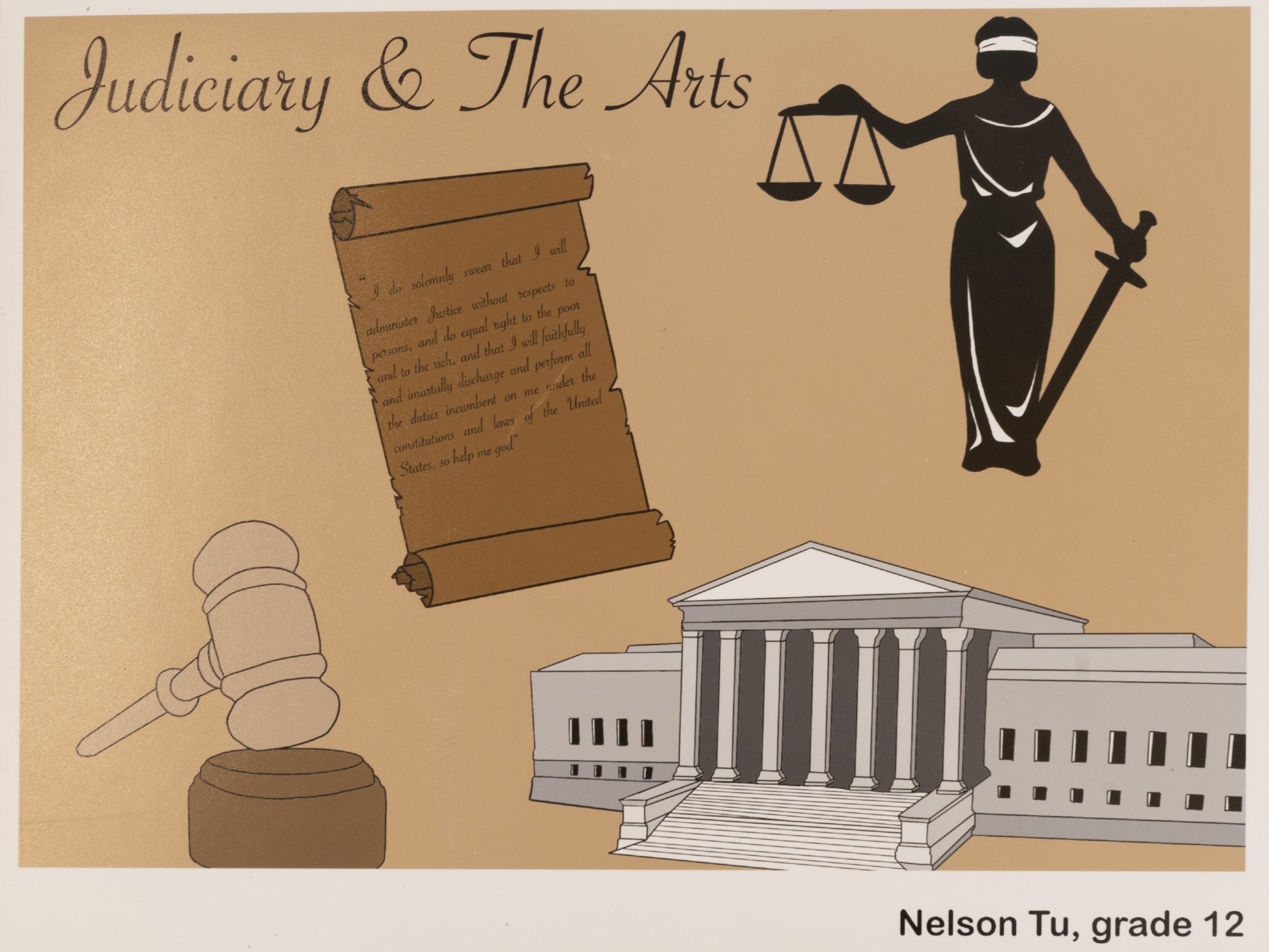
Judiciary and the Arts arose from the subcommittee’s interest in expanding its programs to reach students who are developing their skills to express their ideas through the arts, including visual media. During the spring semester, specially selected high school visual arts educators are invited to develop an instructional plan with their art students. These plans actively engage the students with the judiciary as a civic institution committed to the fair and effective administration of justice, honor student voices, and culminate in a visual representation of the knowledge gained by the students about the judiciary and the rule of law in the United States. The project is consistent with the pedagogical practices described in the New York City Blueprint for Teaching and Learning in Visual Arts and the New York State Standards for the Arts.
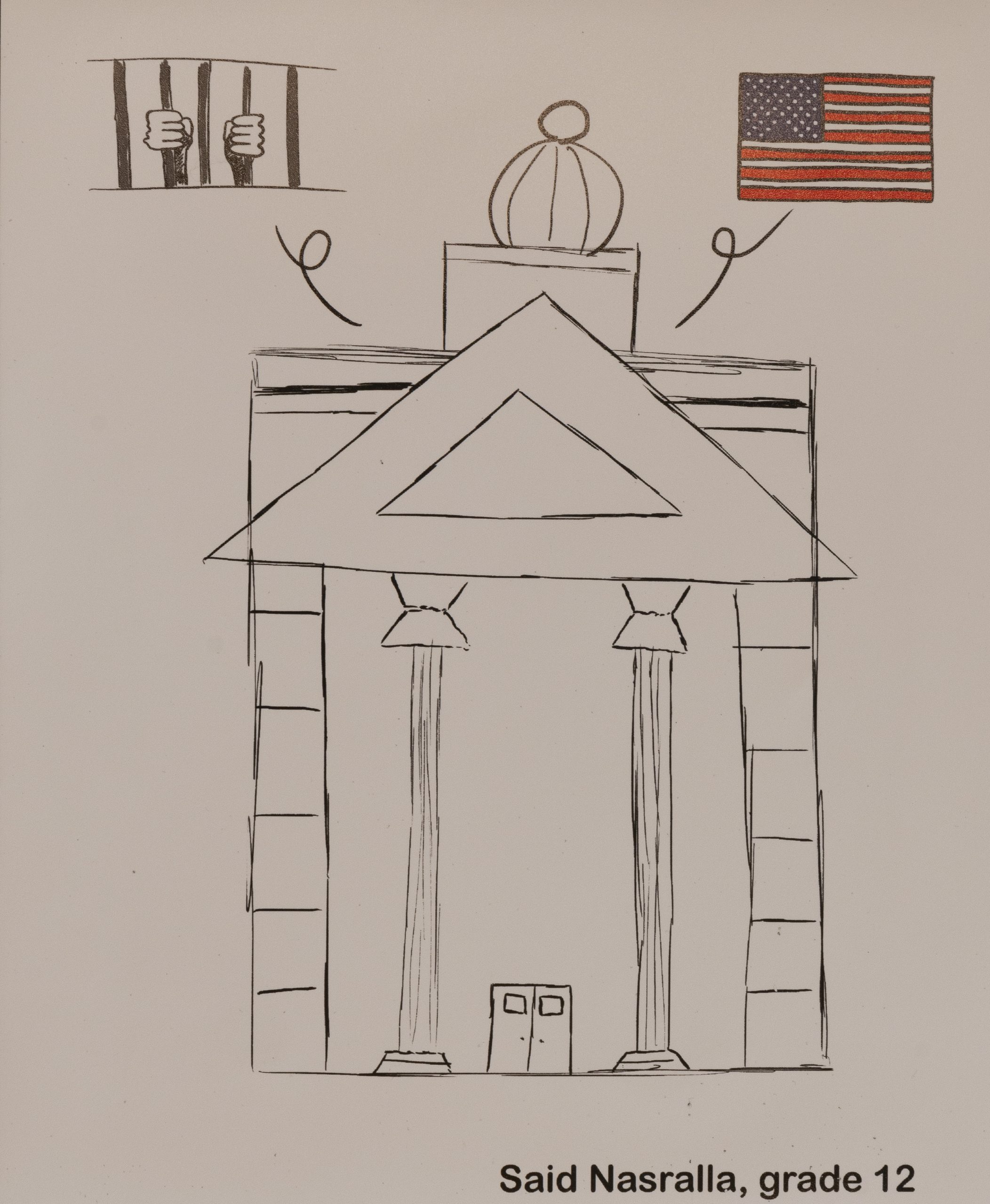
We are pleased to share digital copies of the artwork created by the students below.
The Matisse Foundation provided support to the Justice Resource Center for this project.
2025 THURGOOD MARSHALL U.S. COURTHOUSE
Principal: Joaquin Vega
Teacher: Rachel Levine
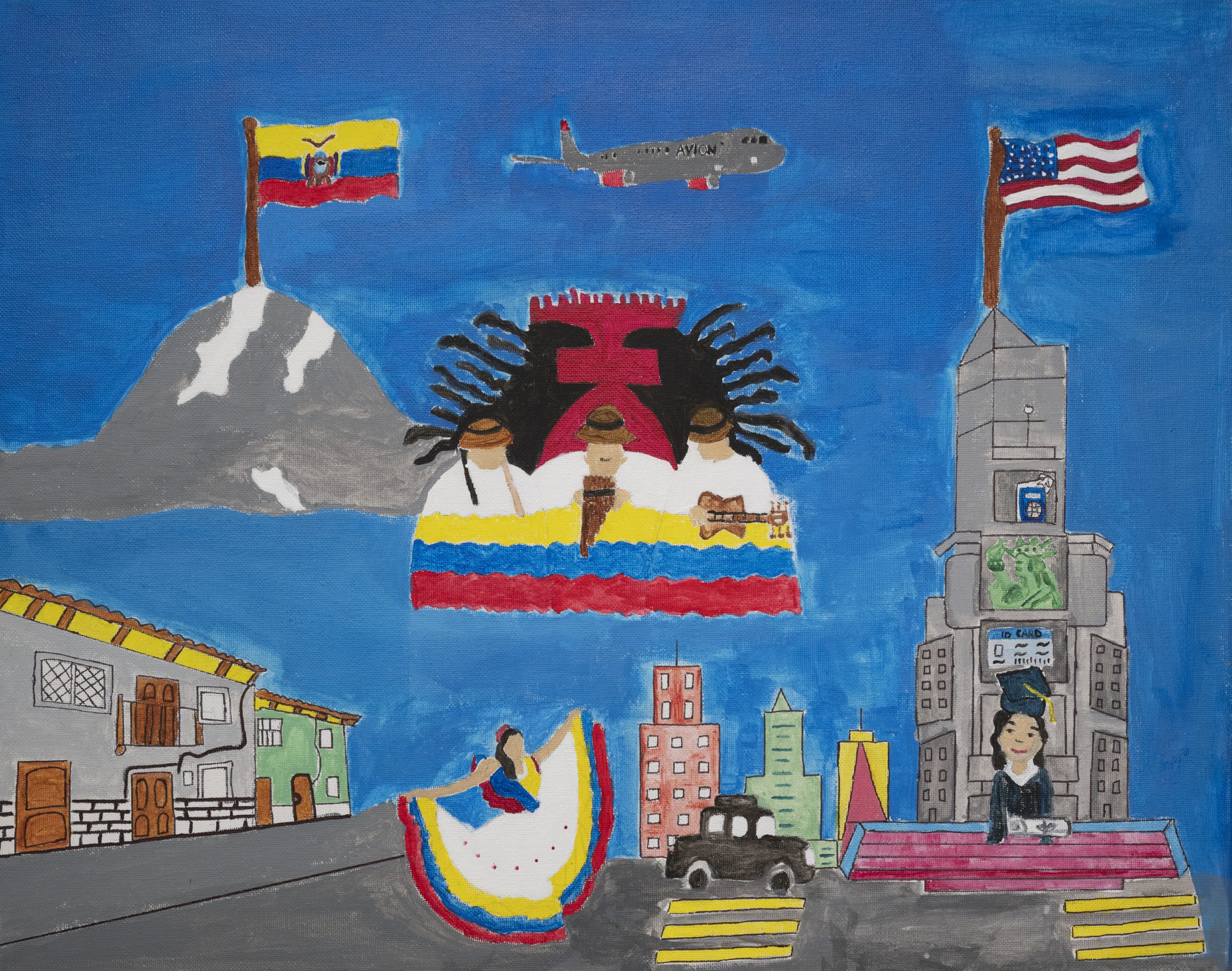
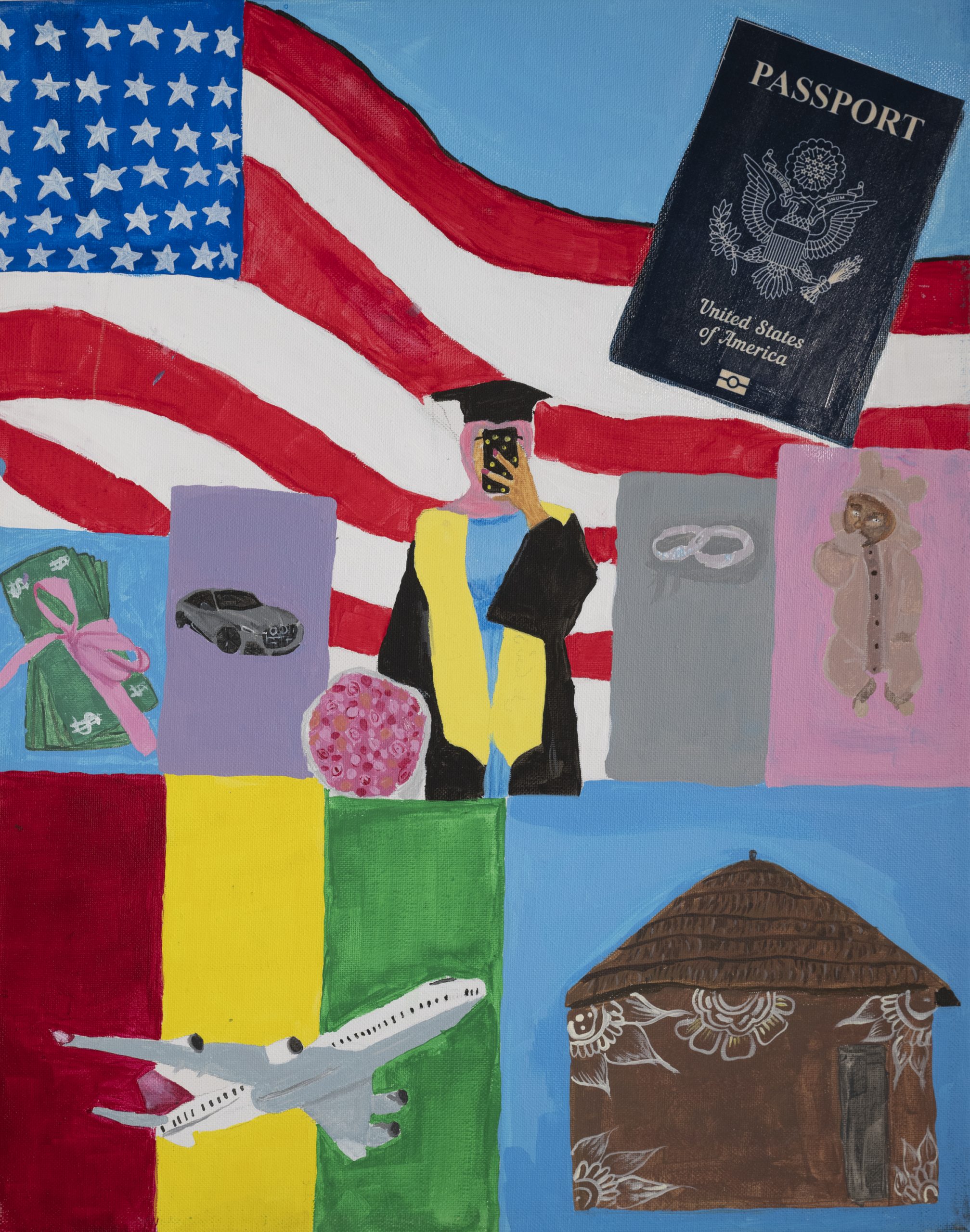
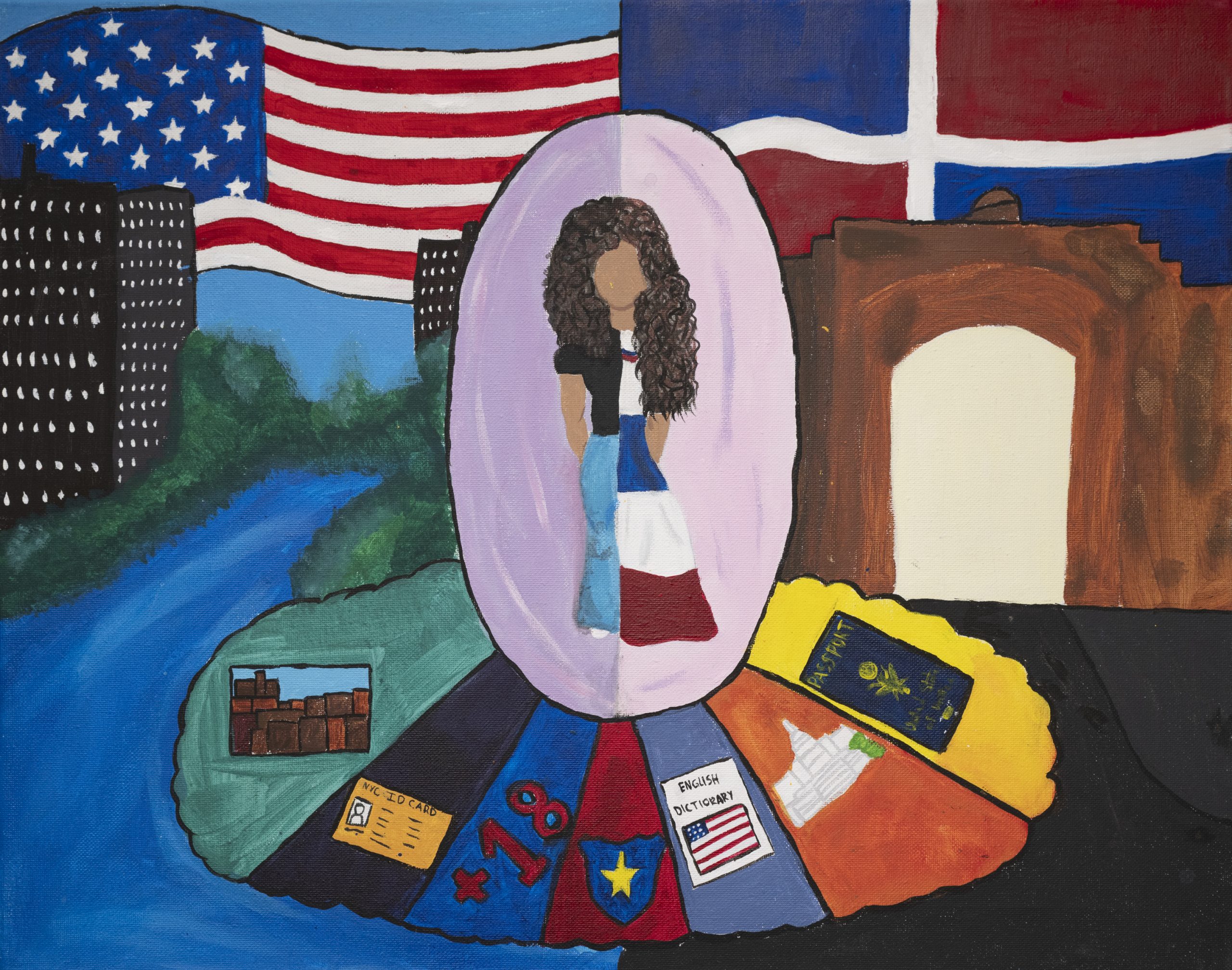
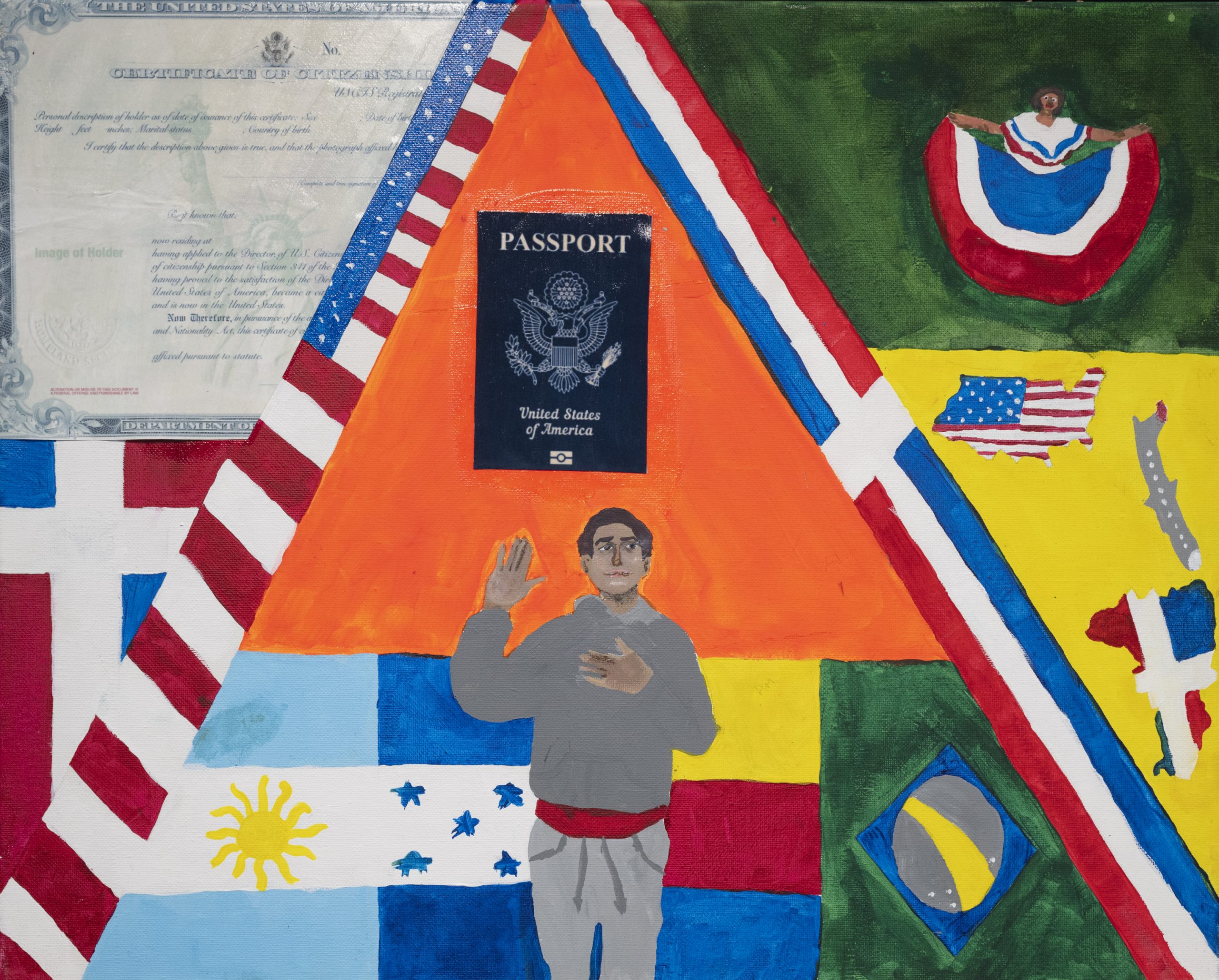
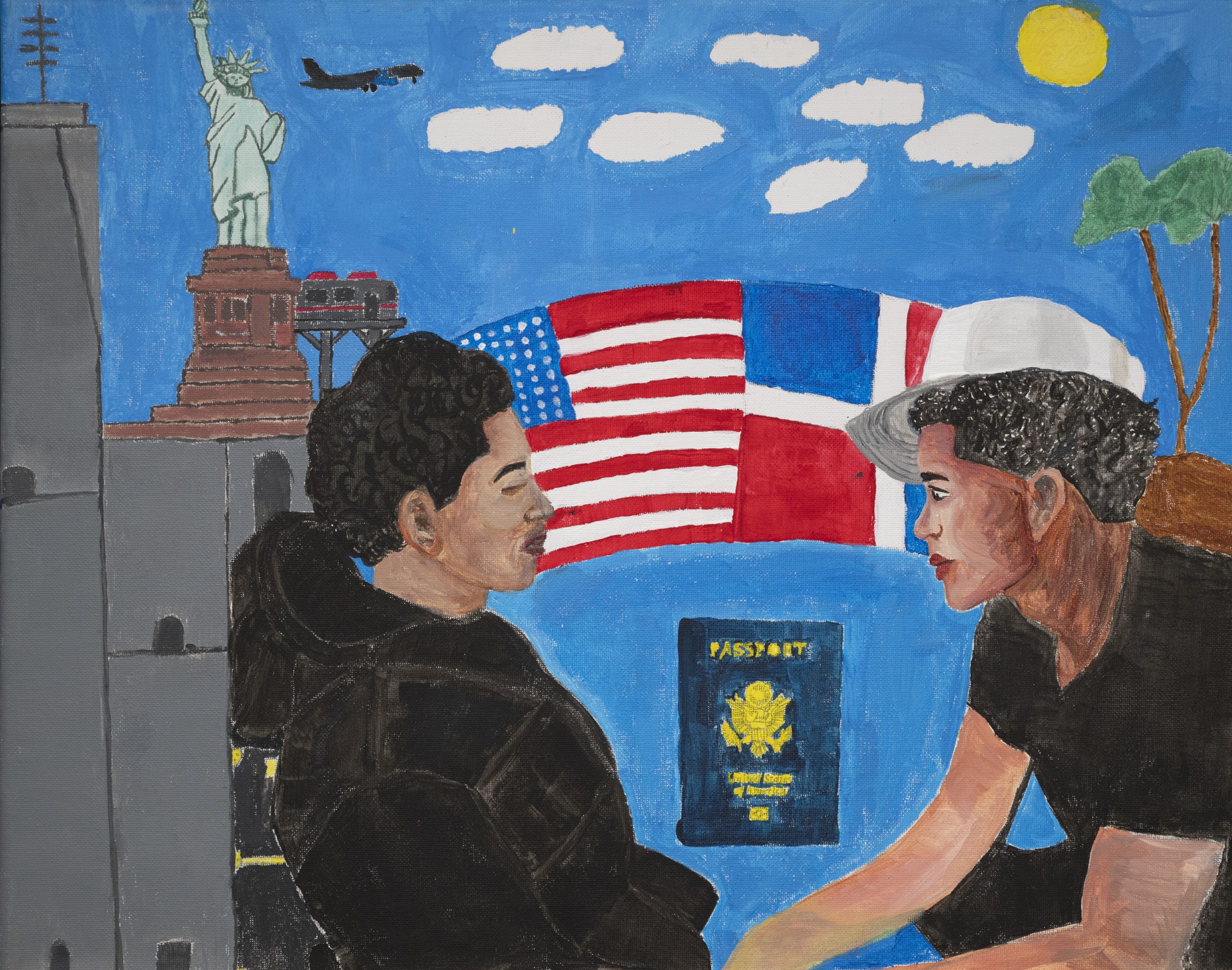
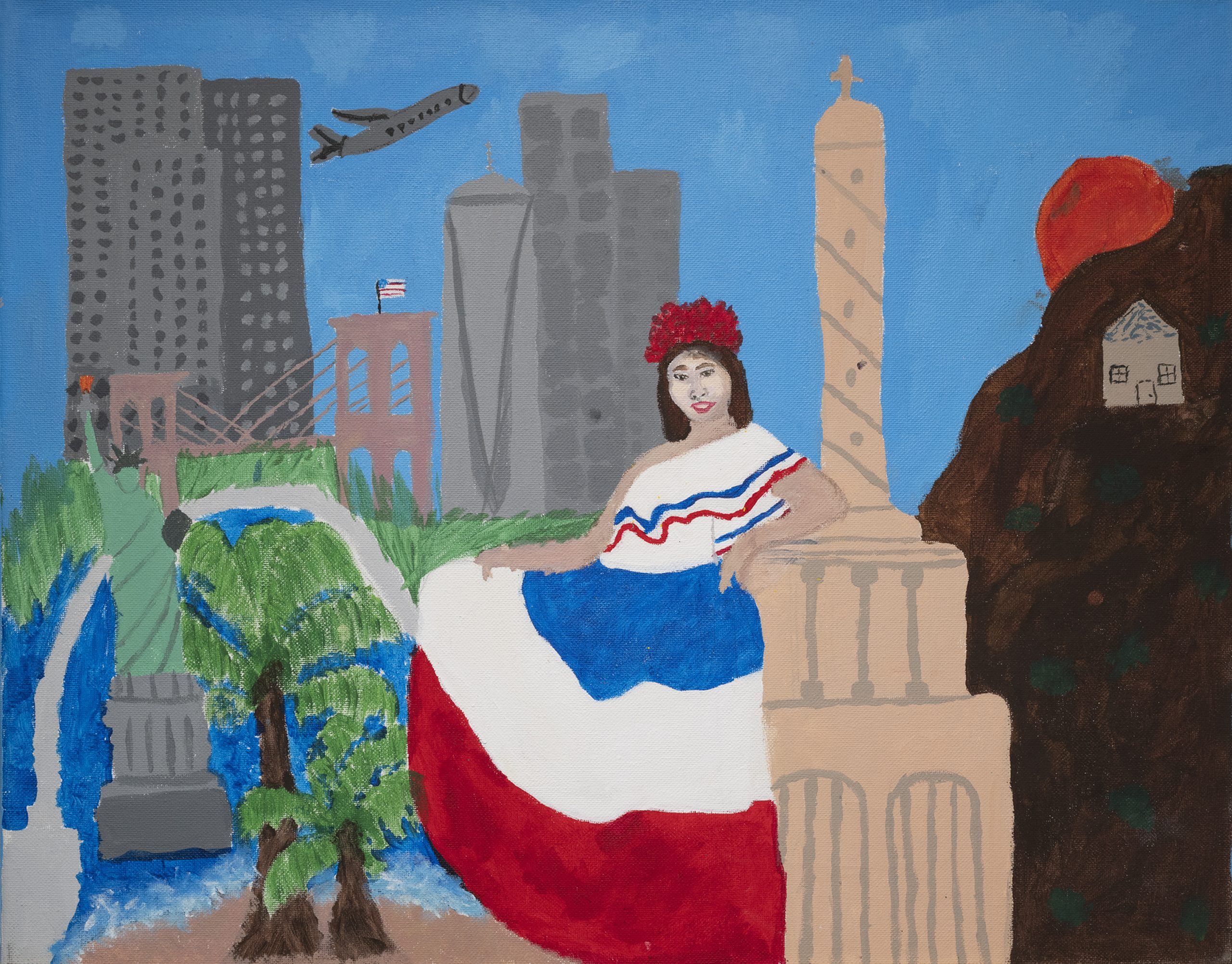
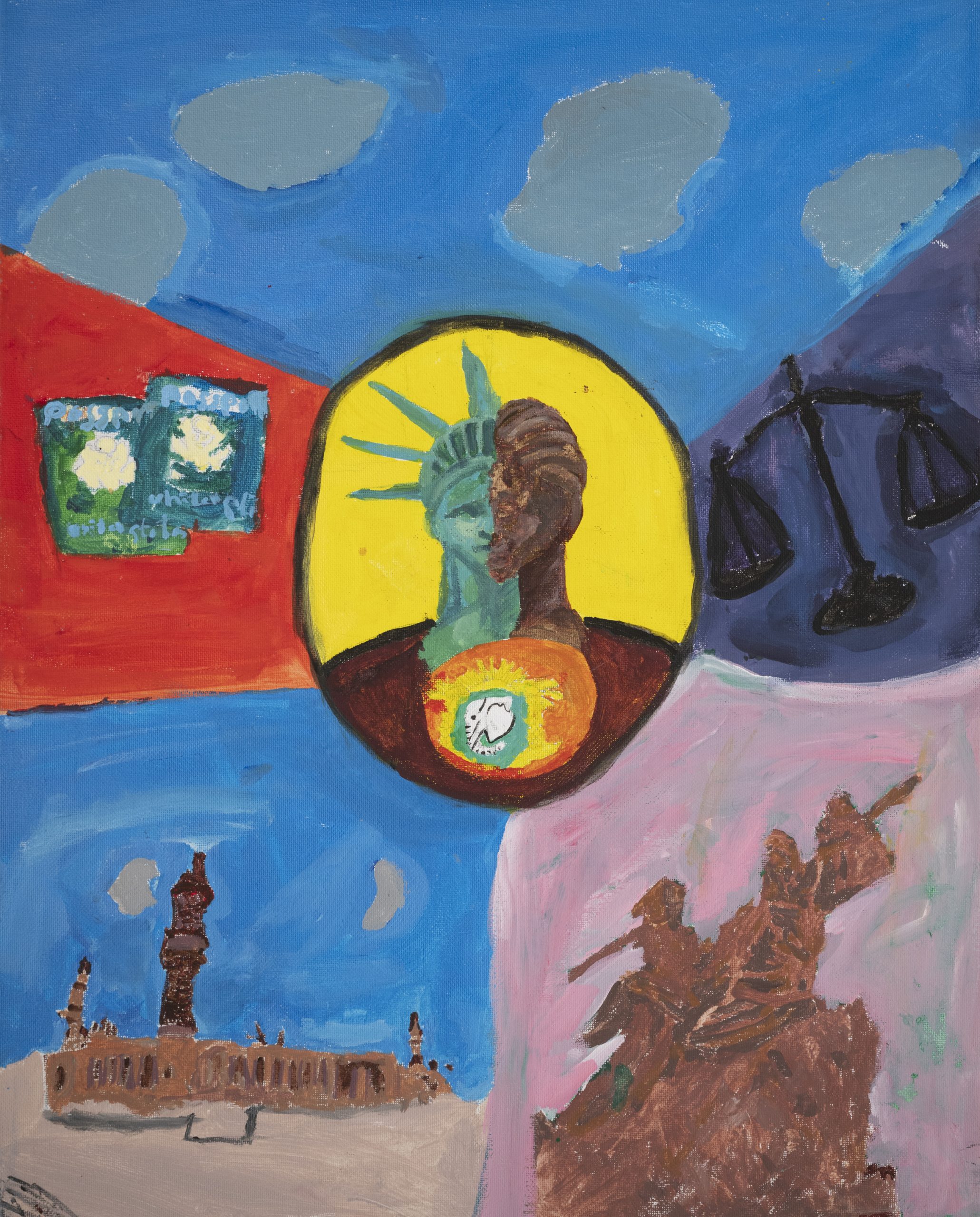
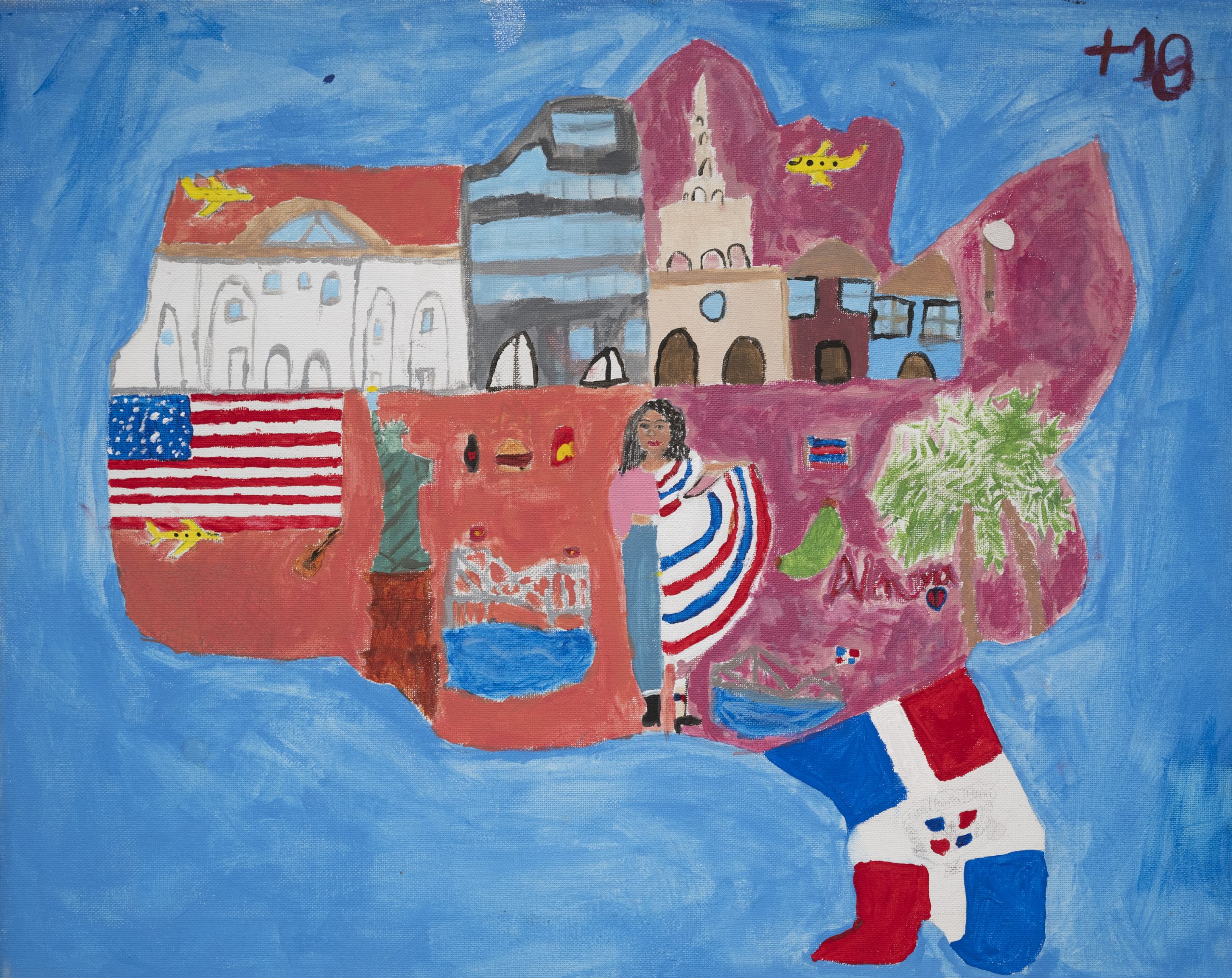
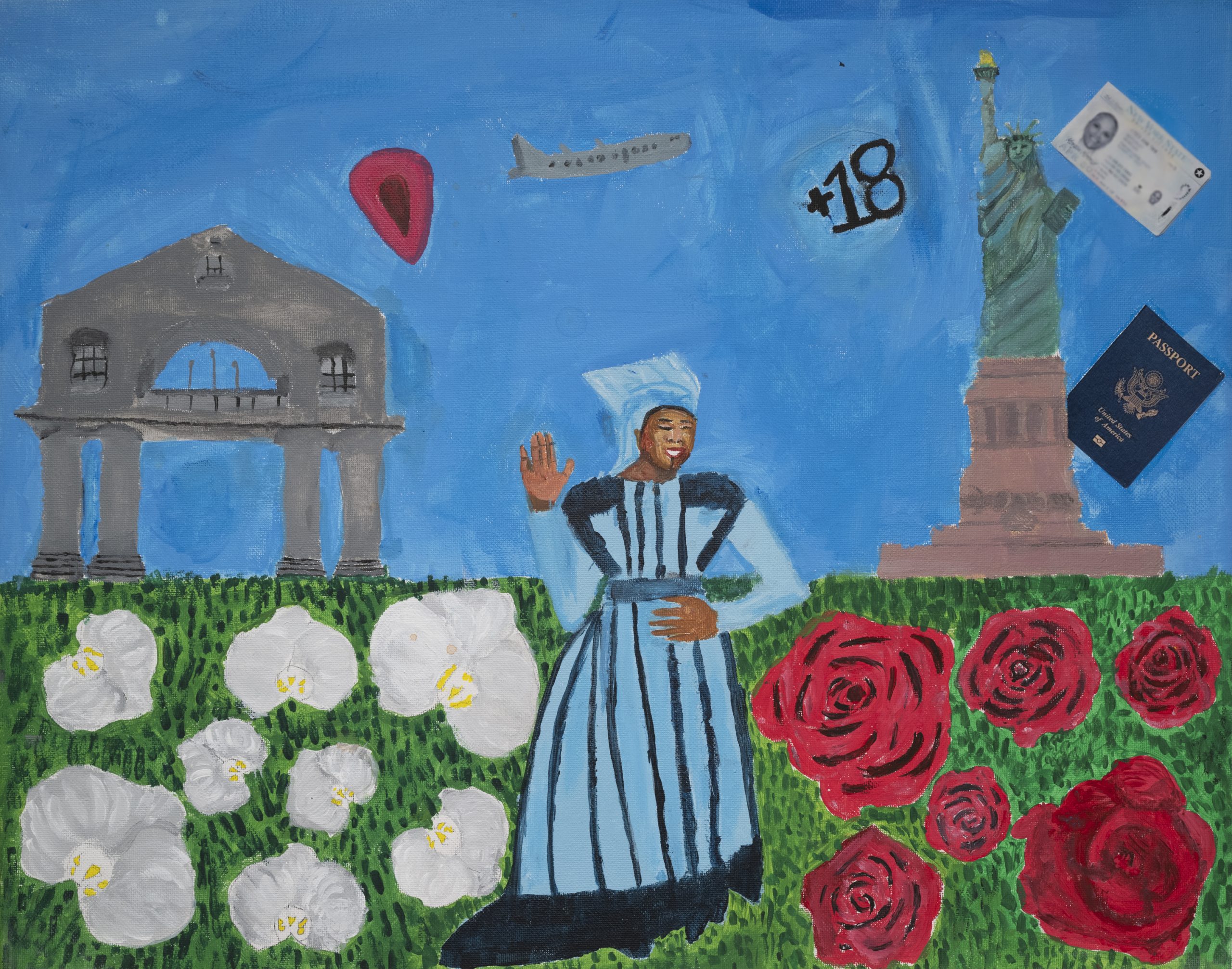
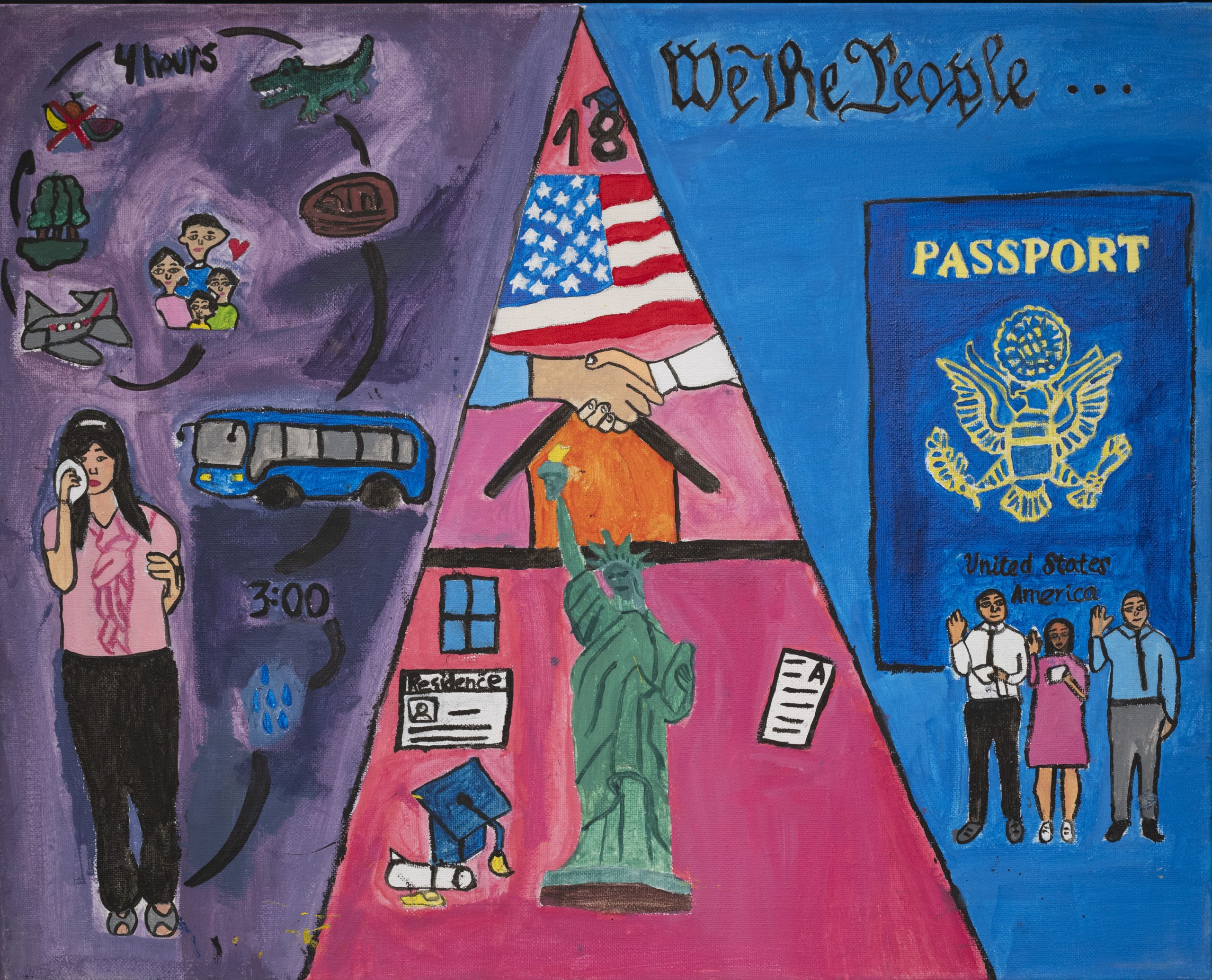
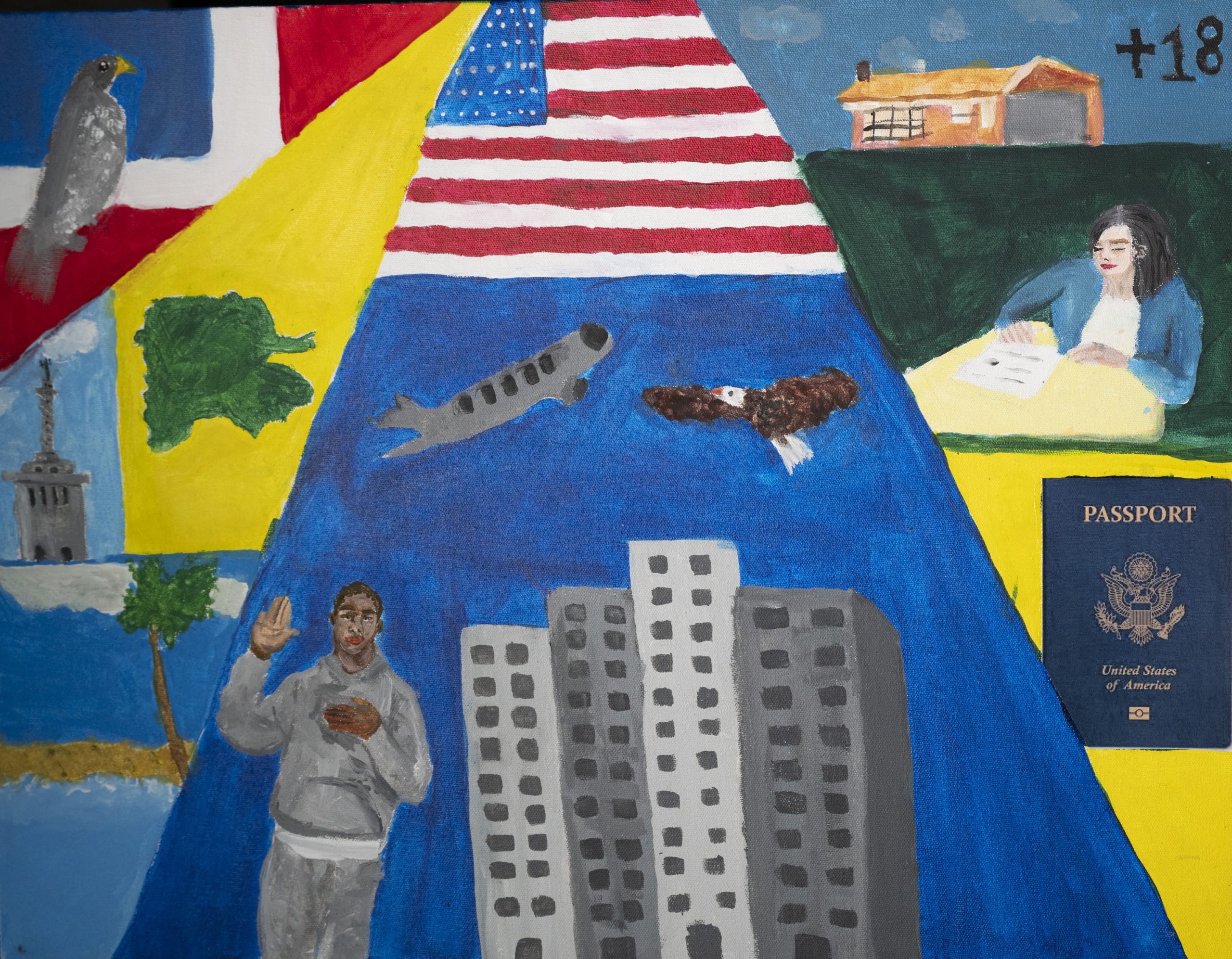
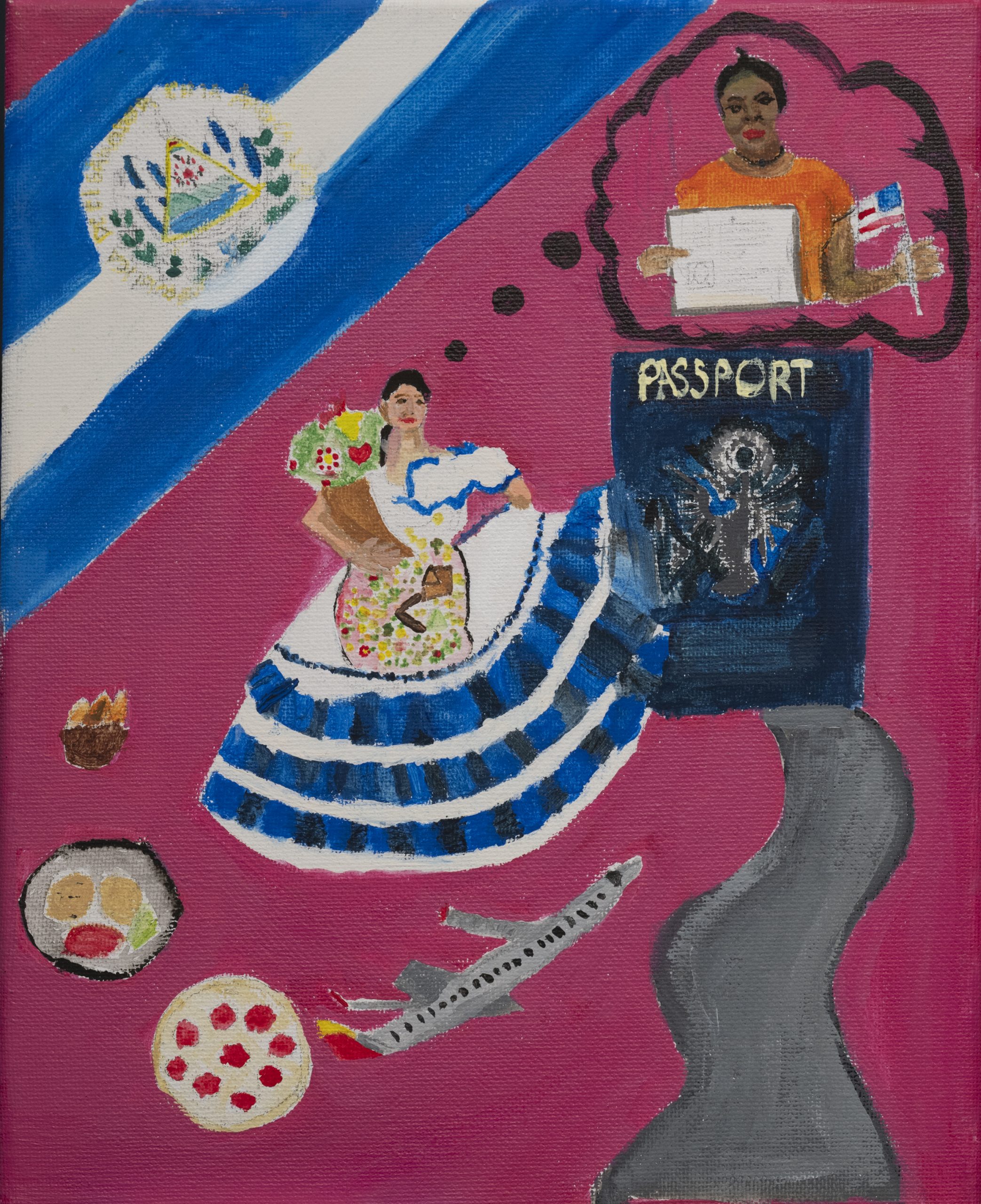
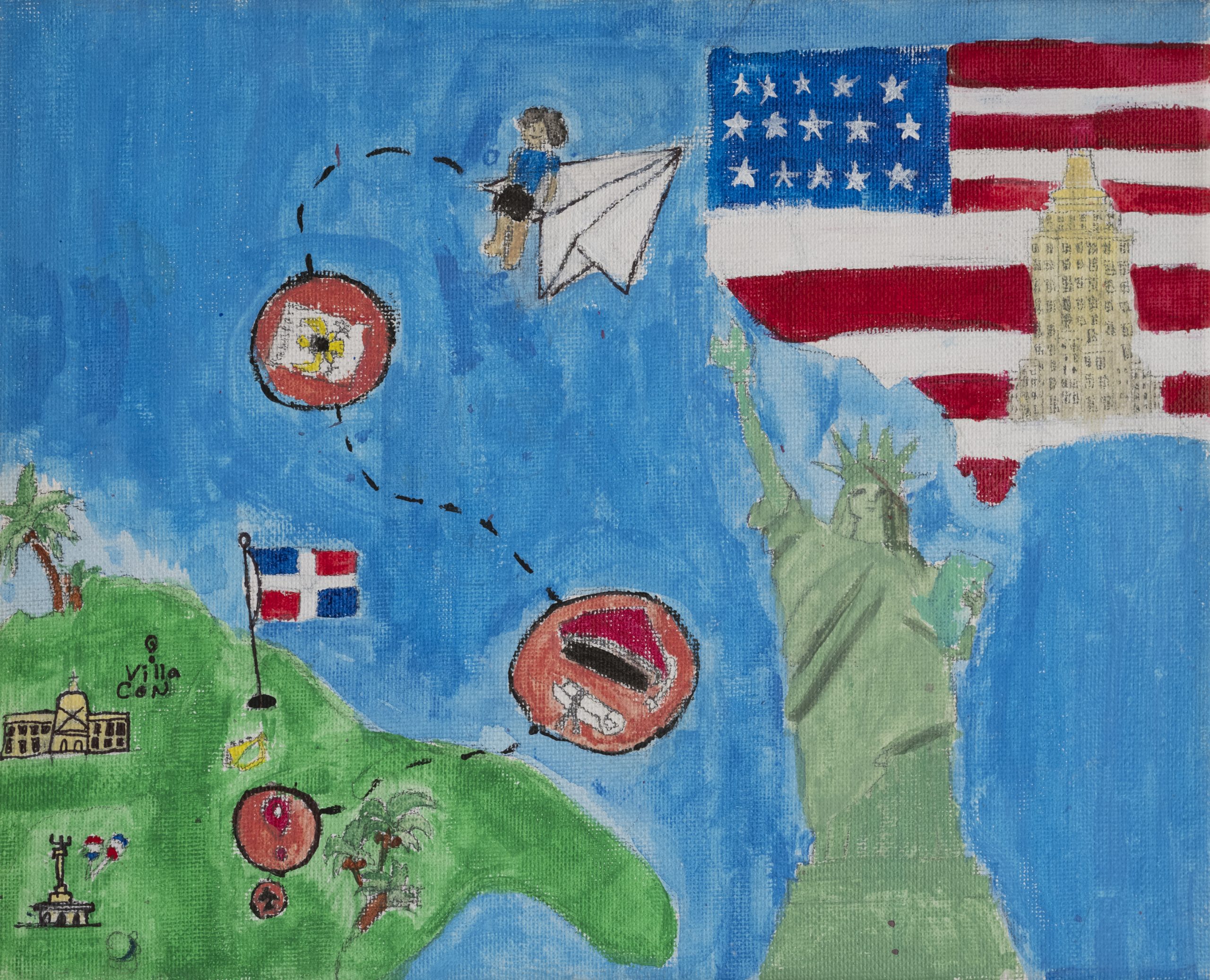
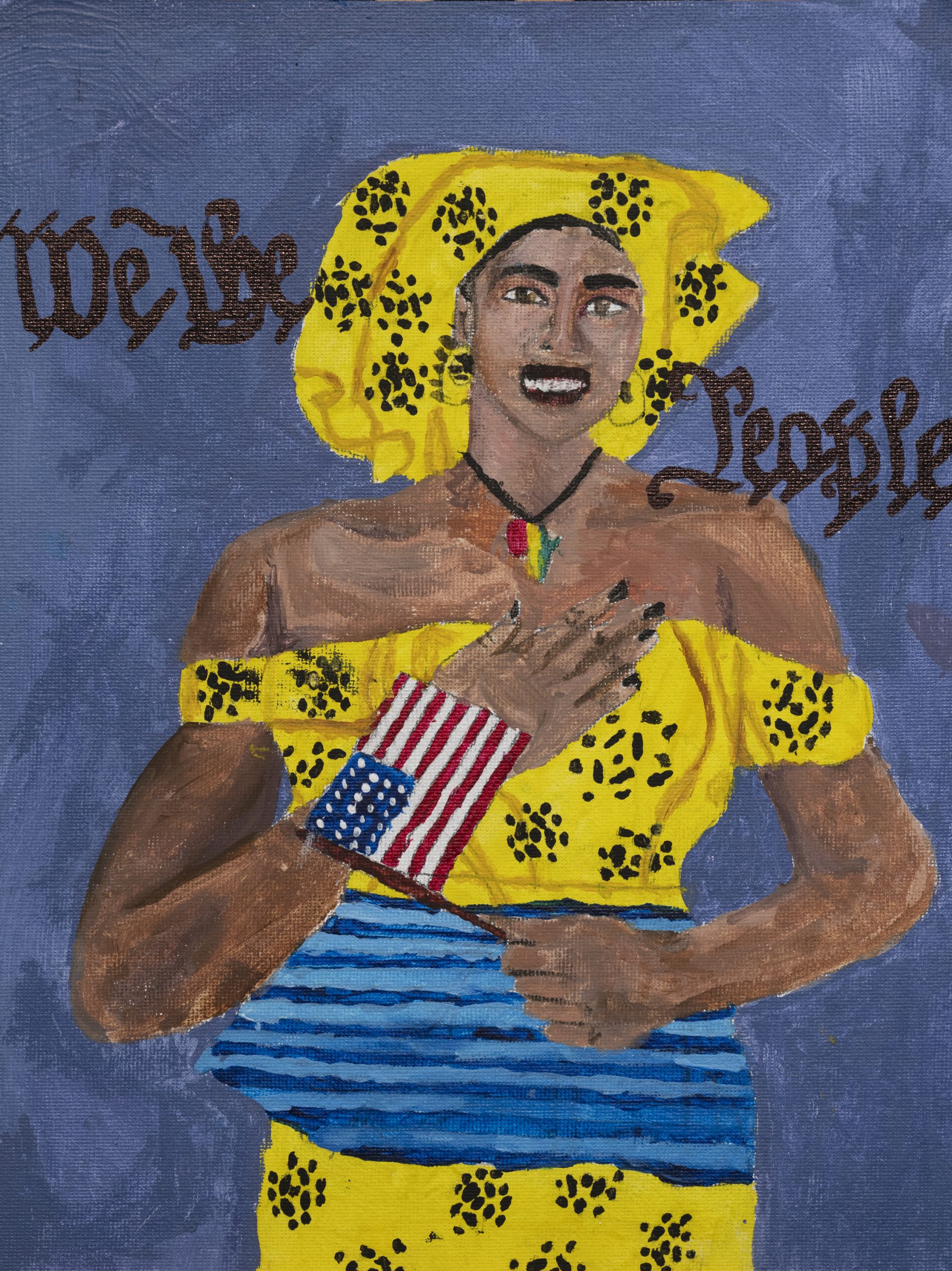
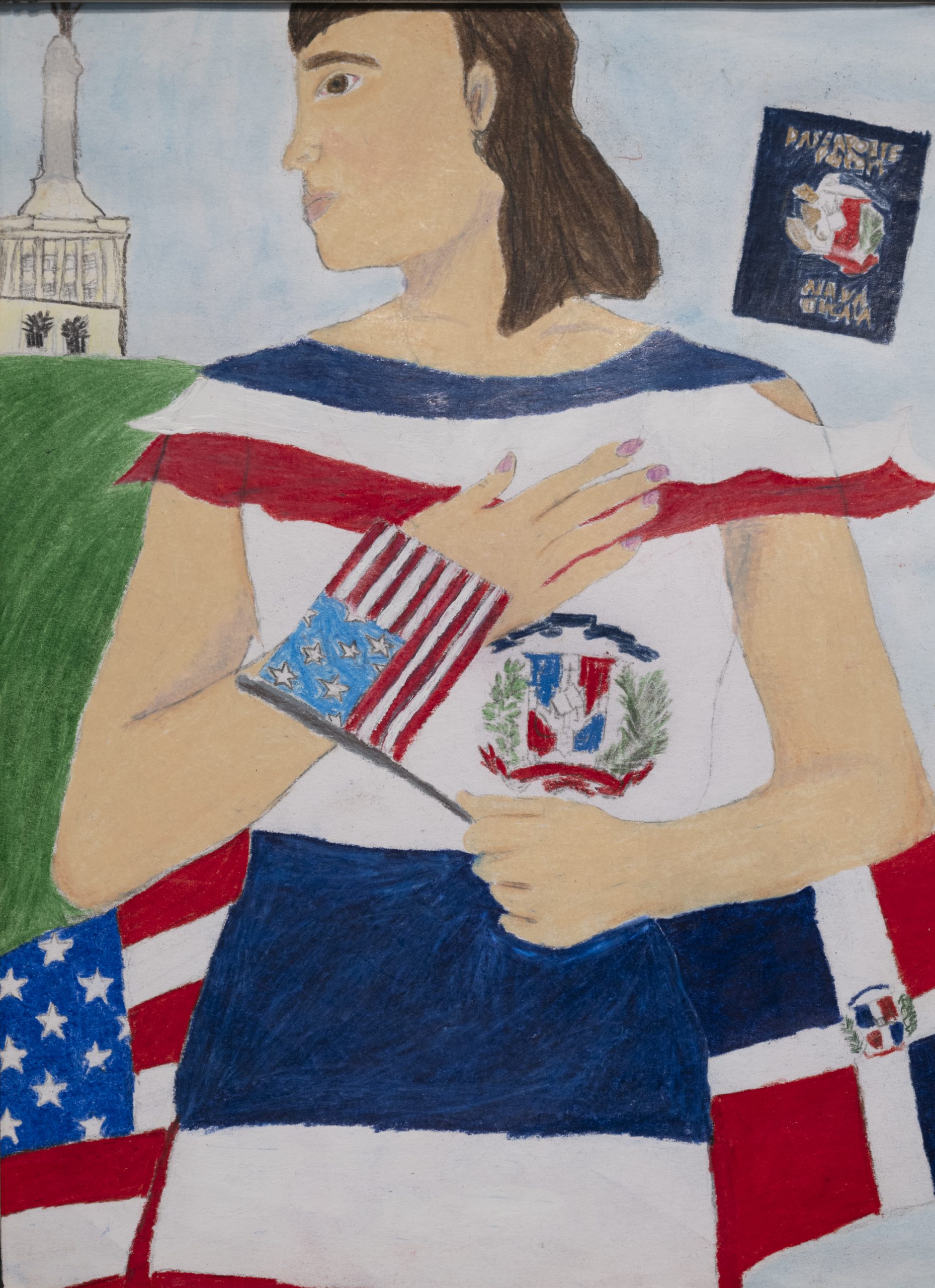
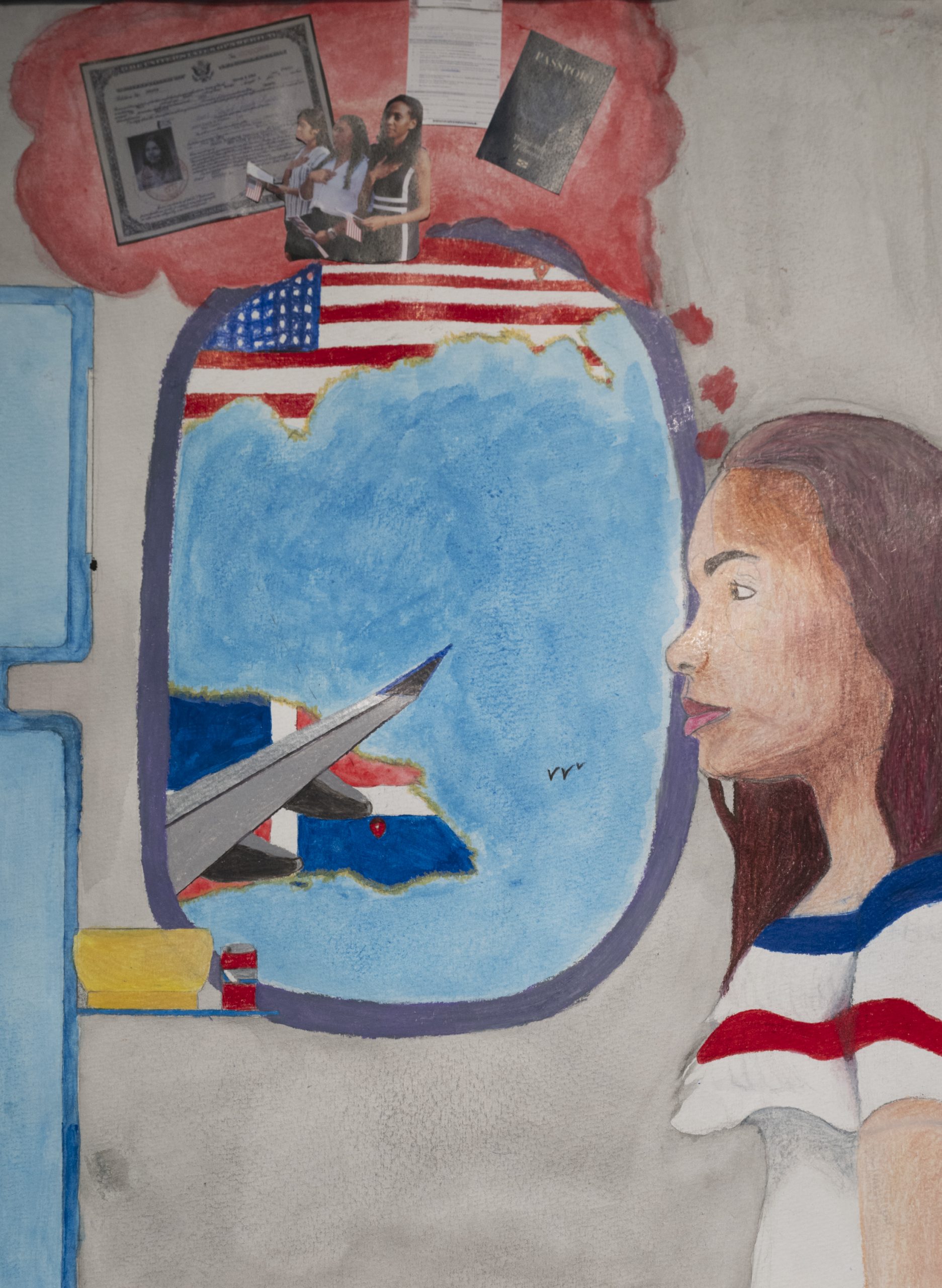
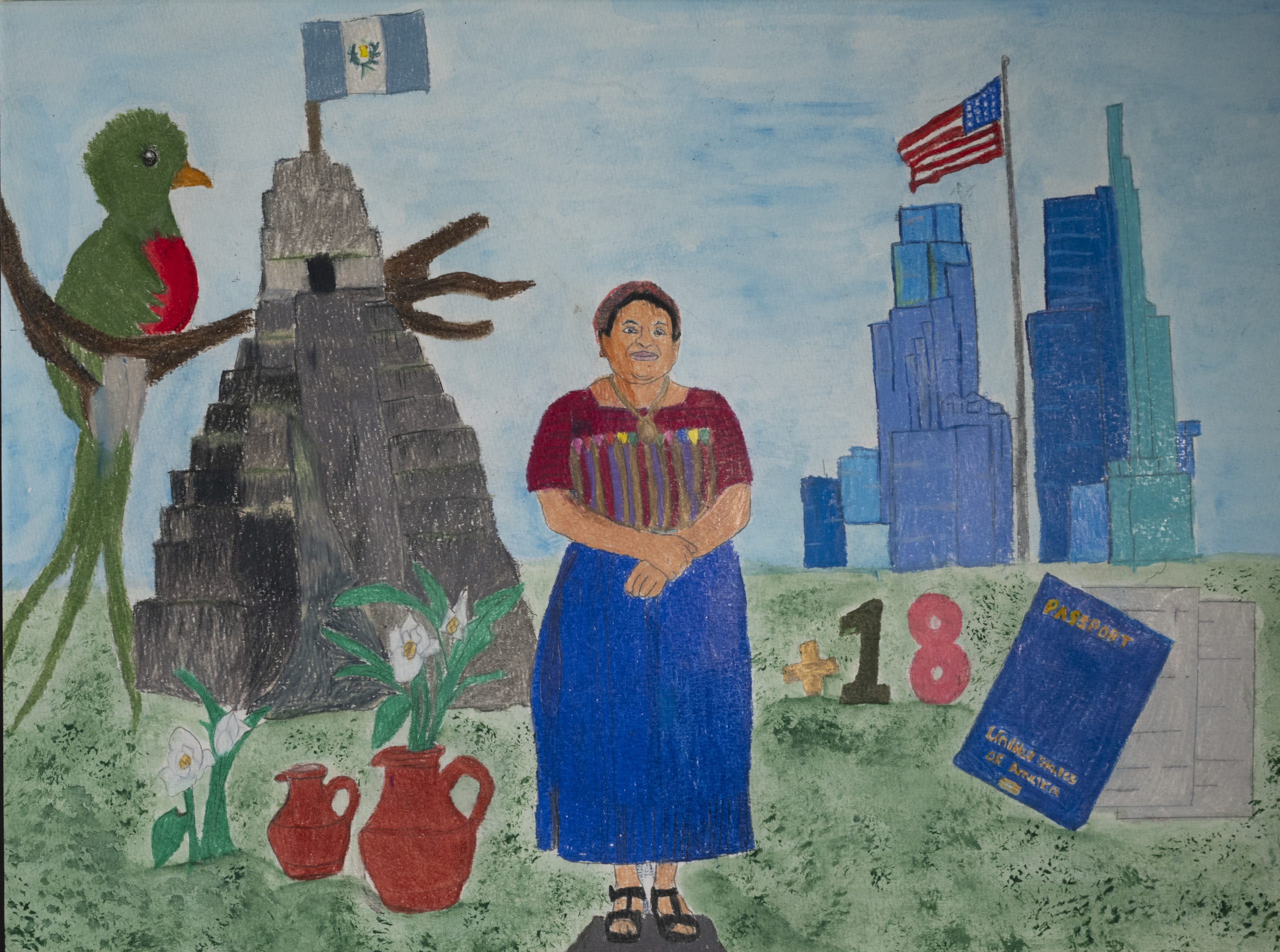
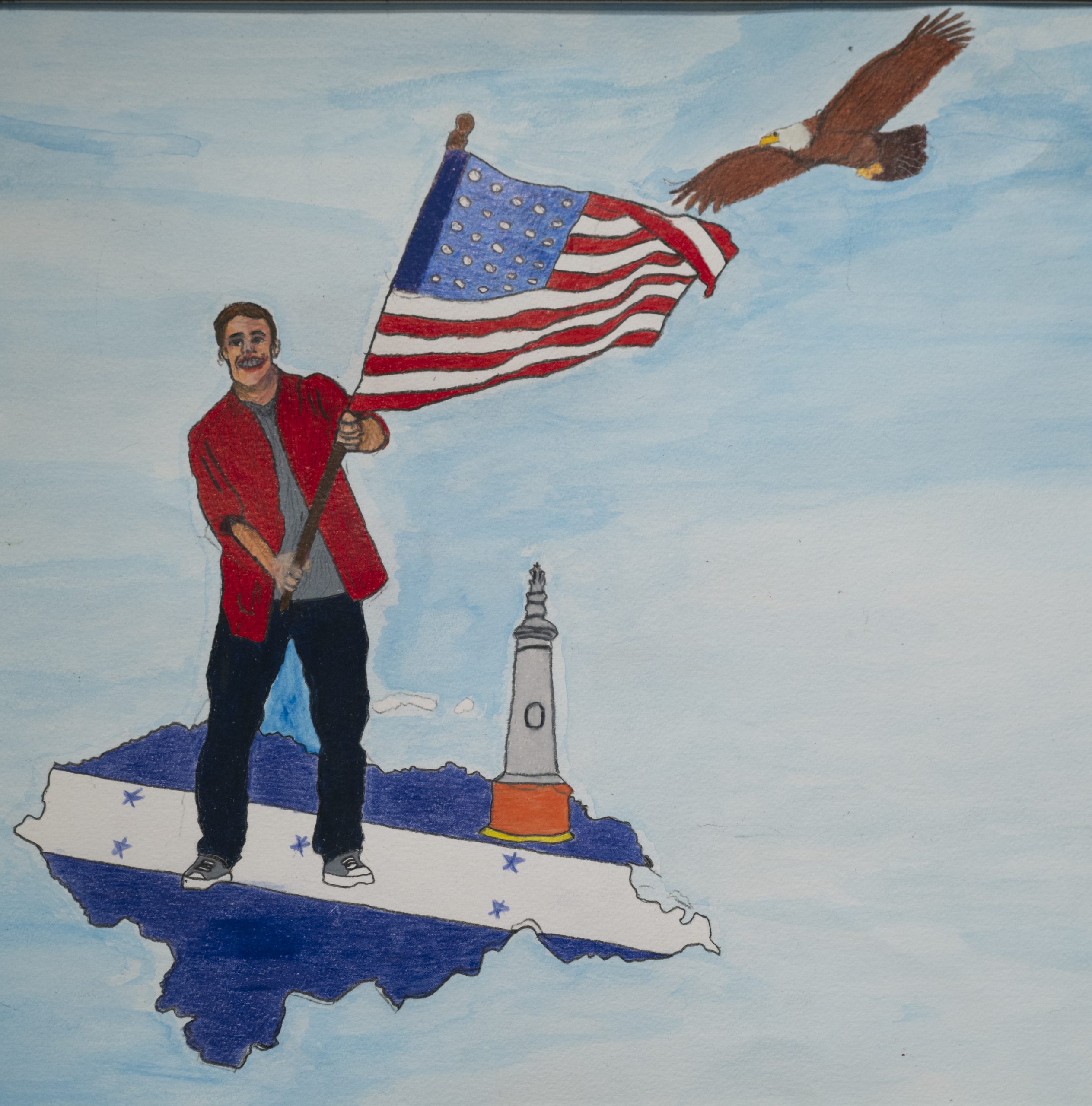
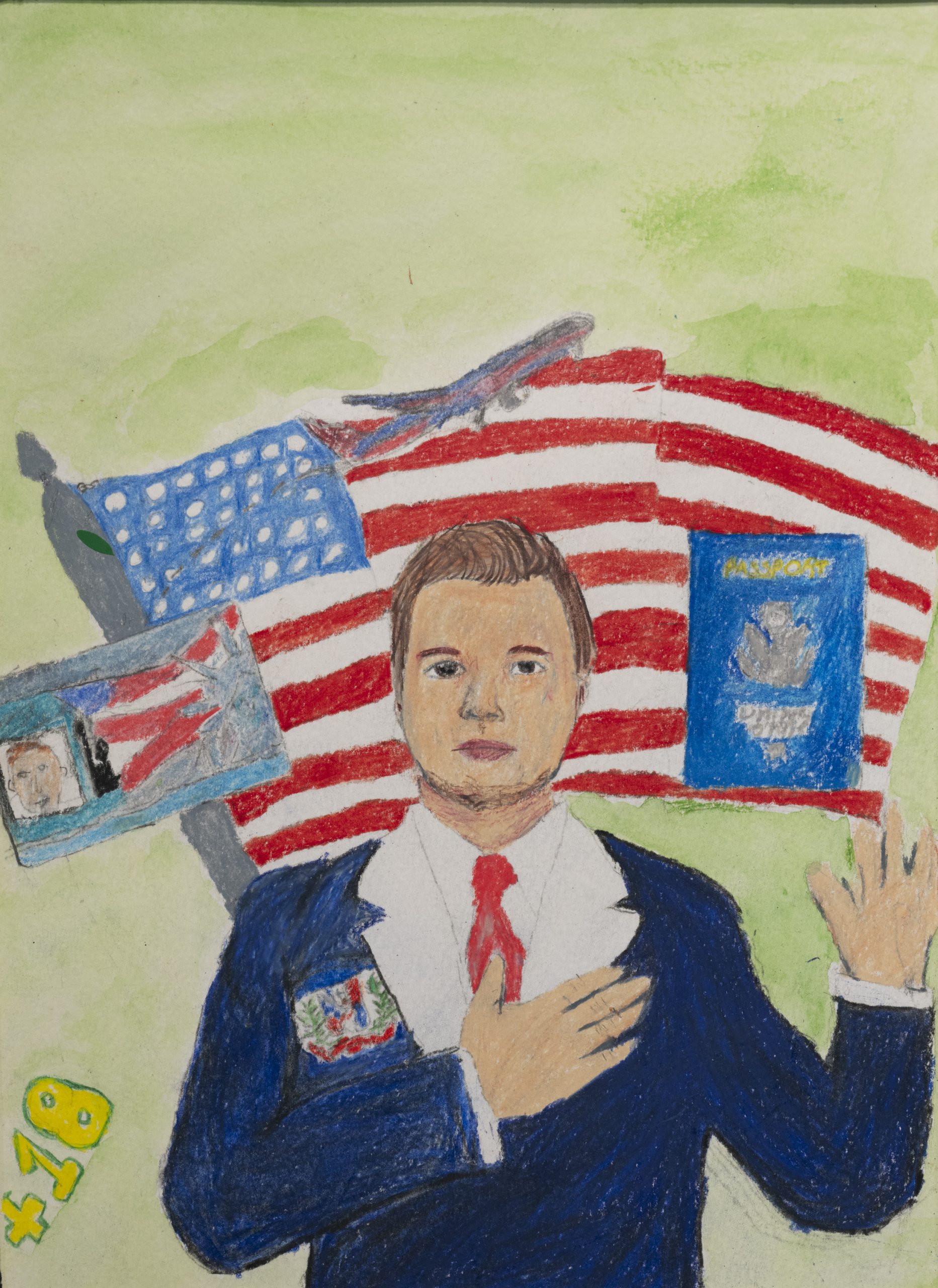
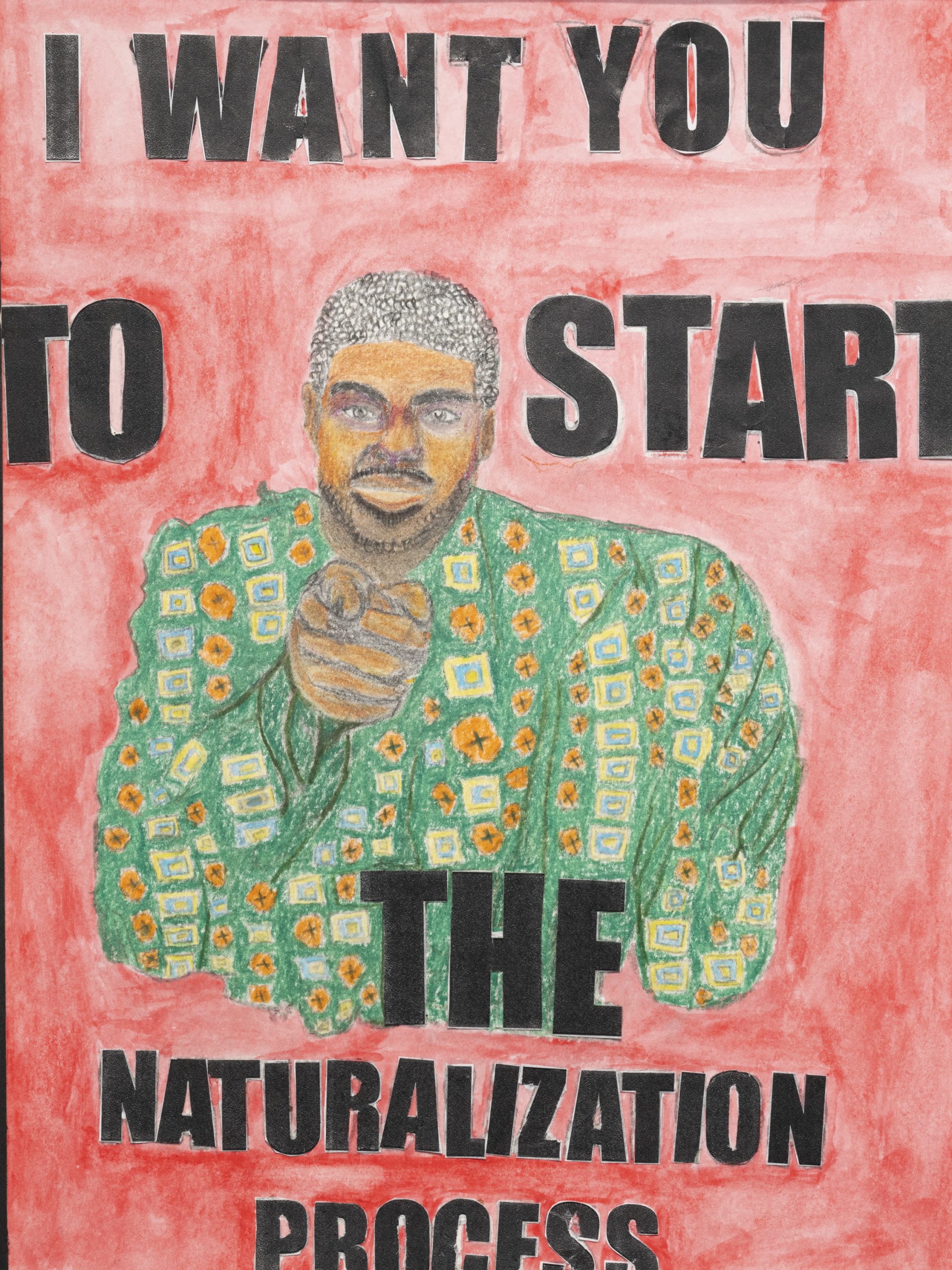
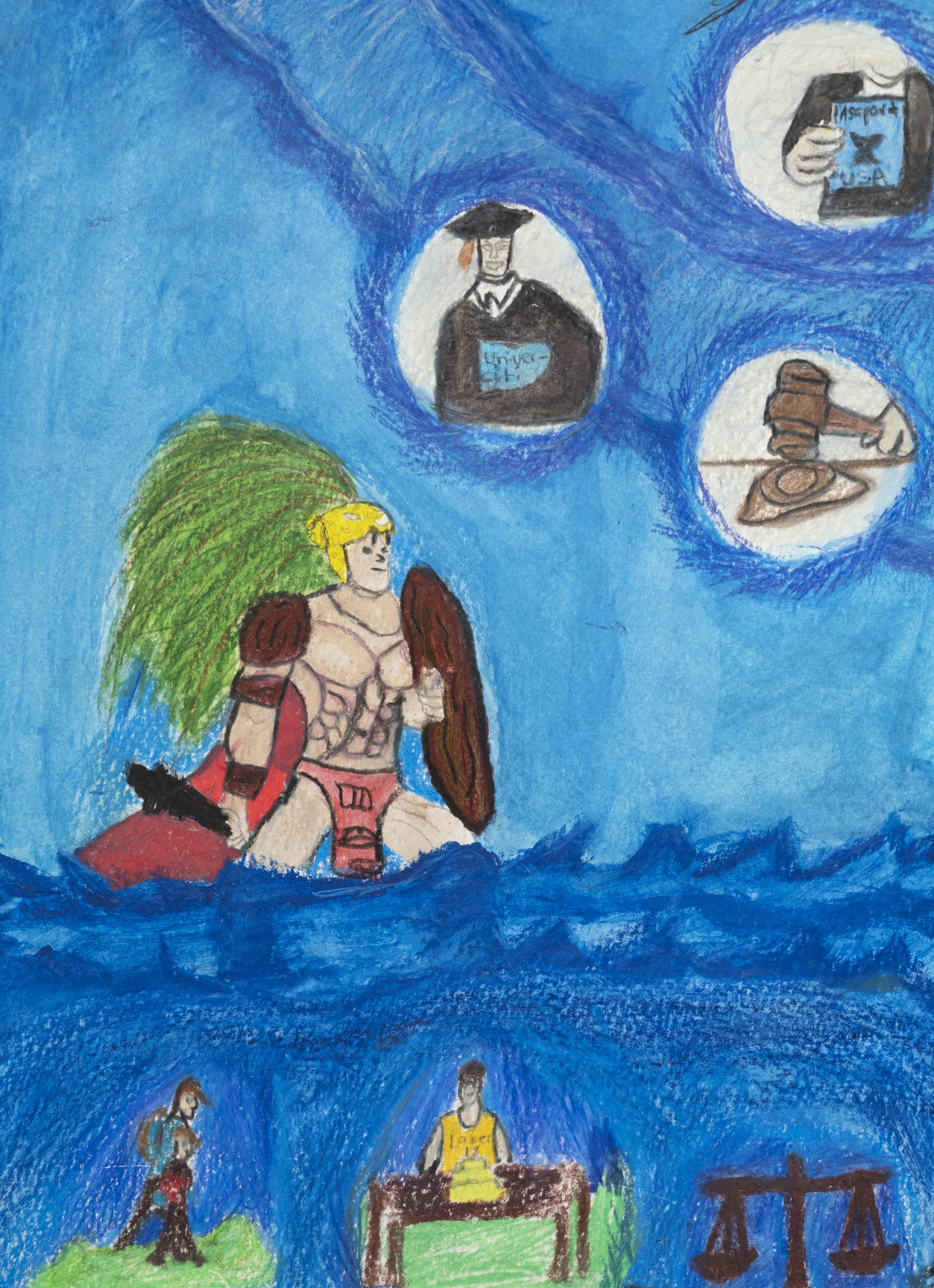
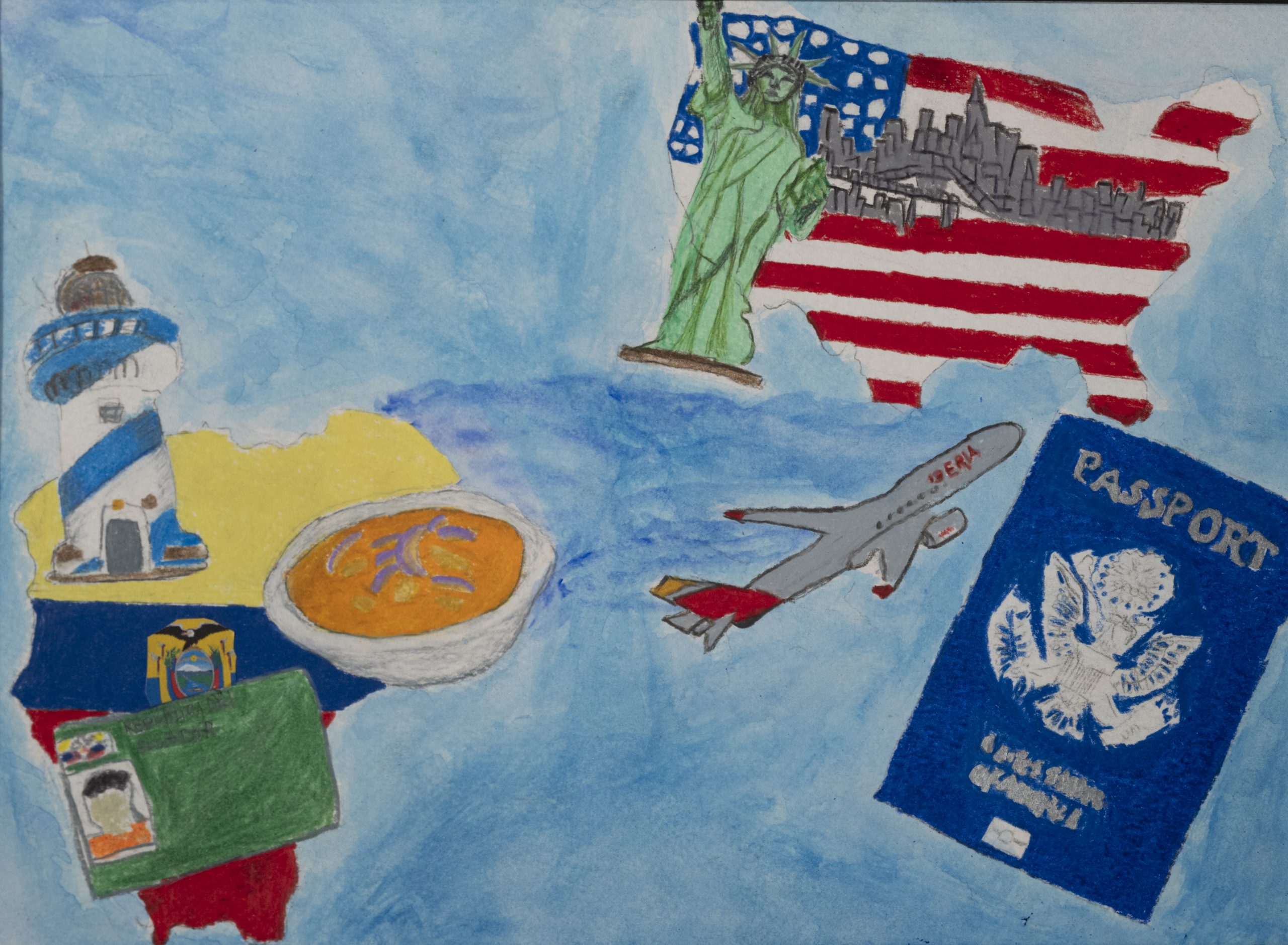
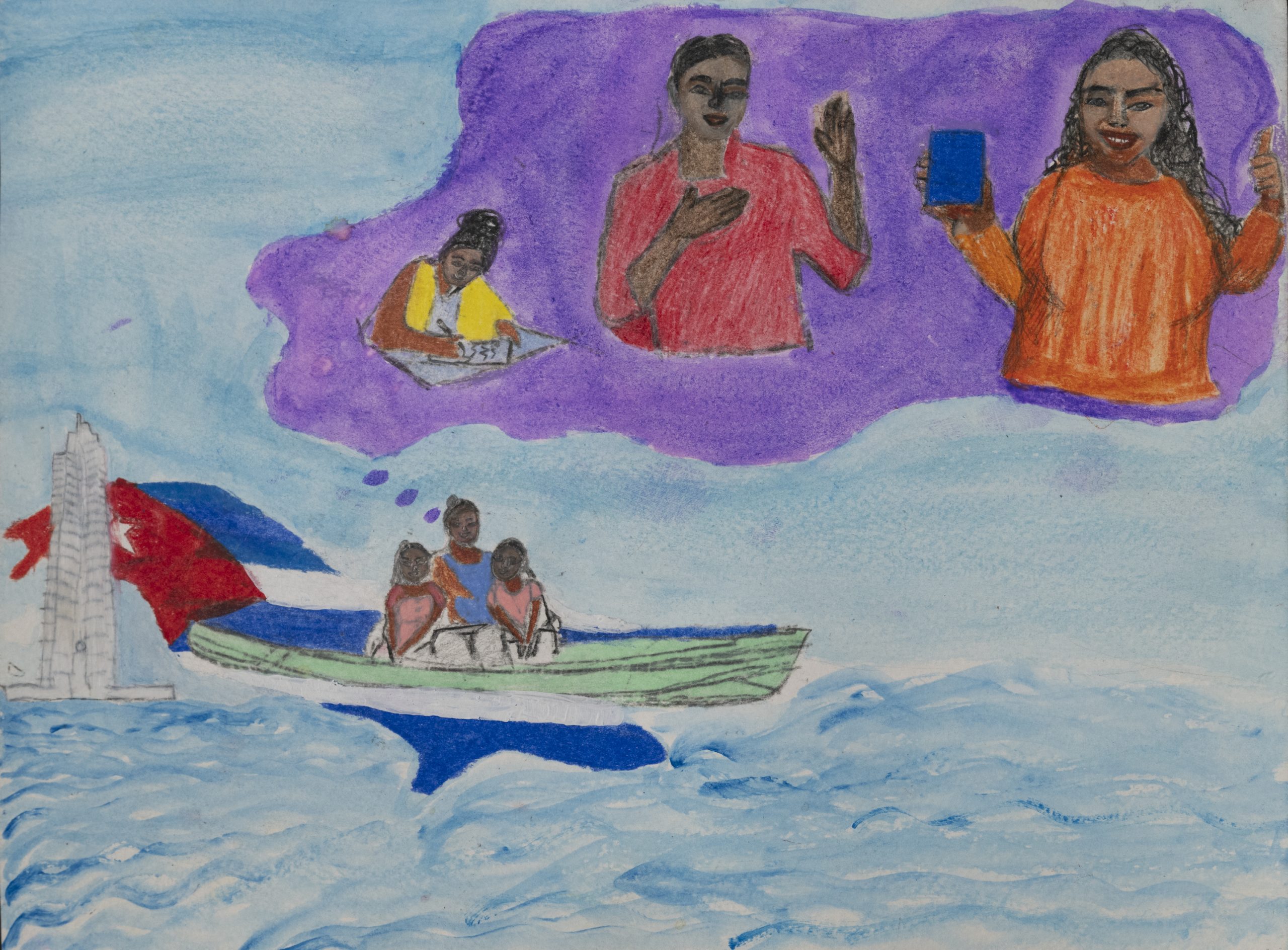
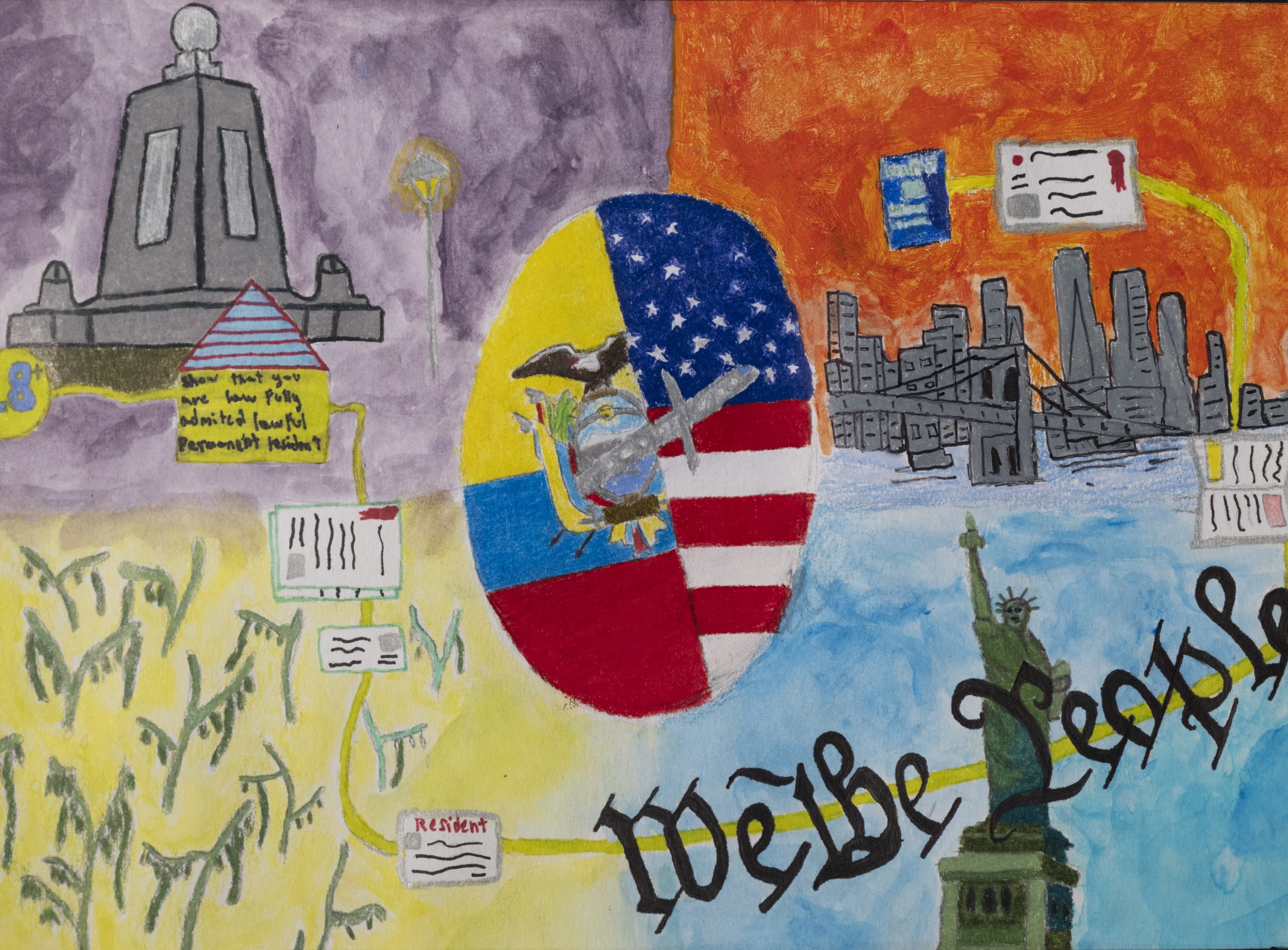
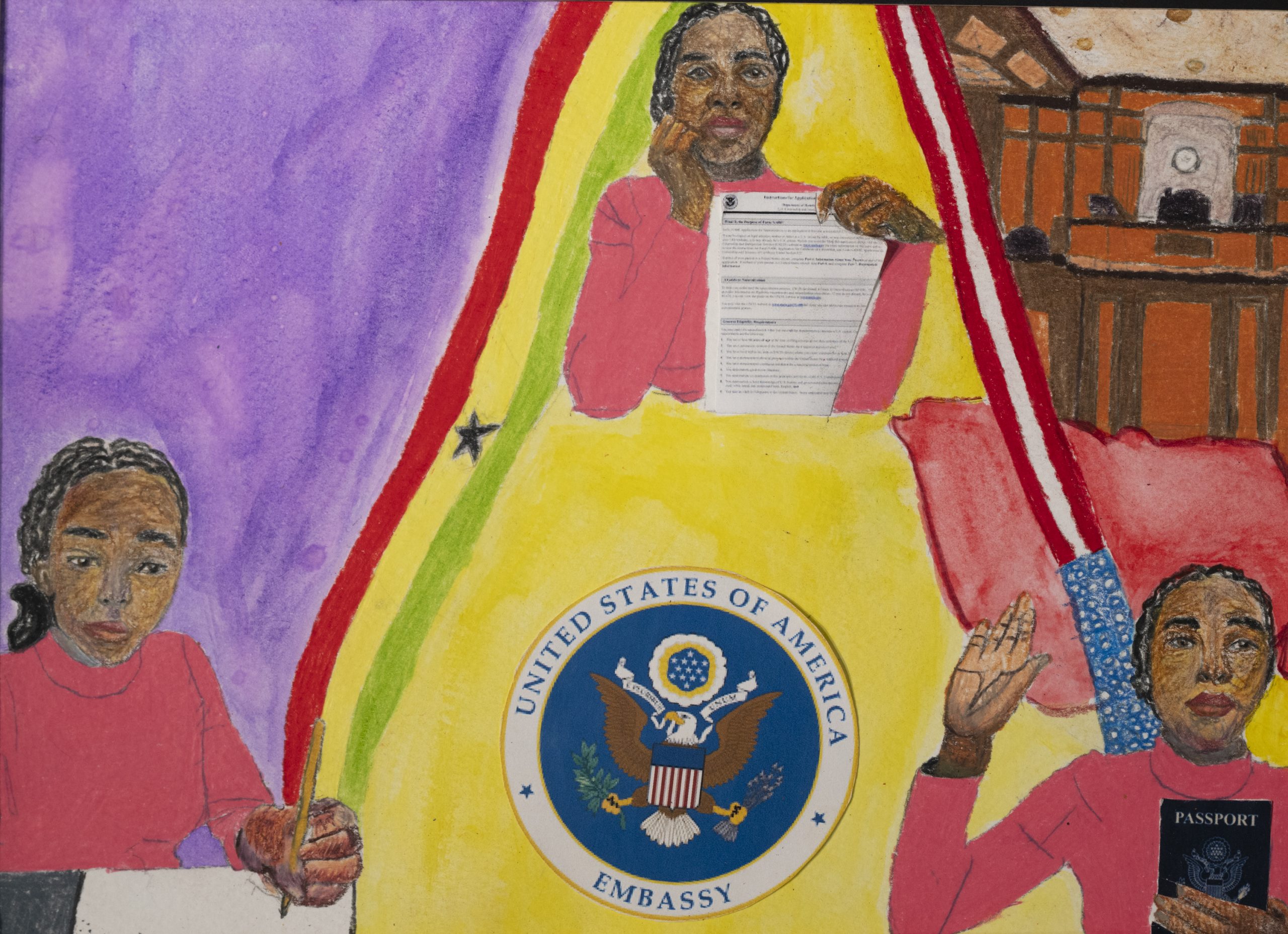
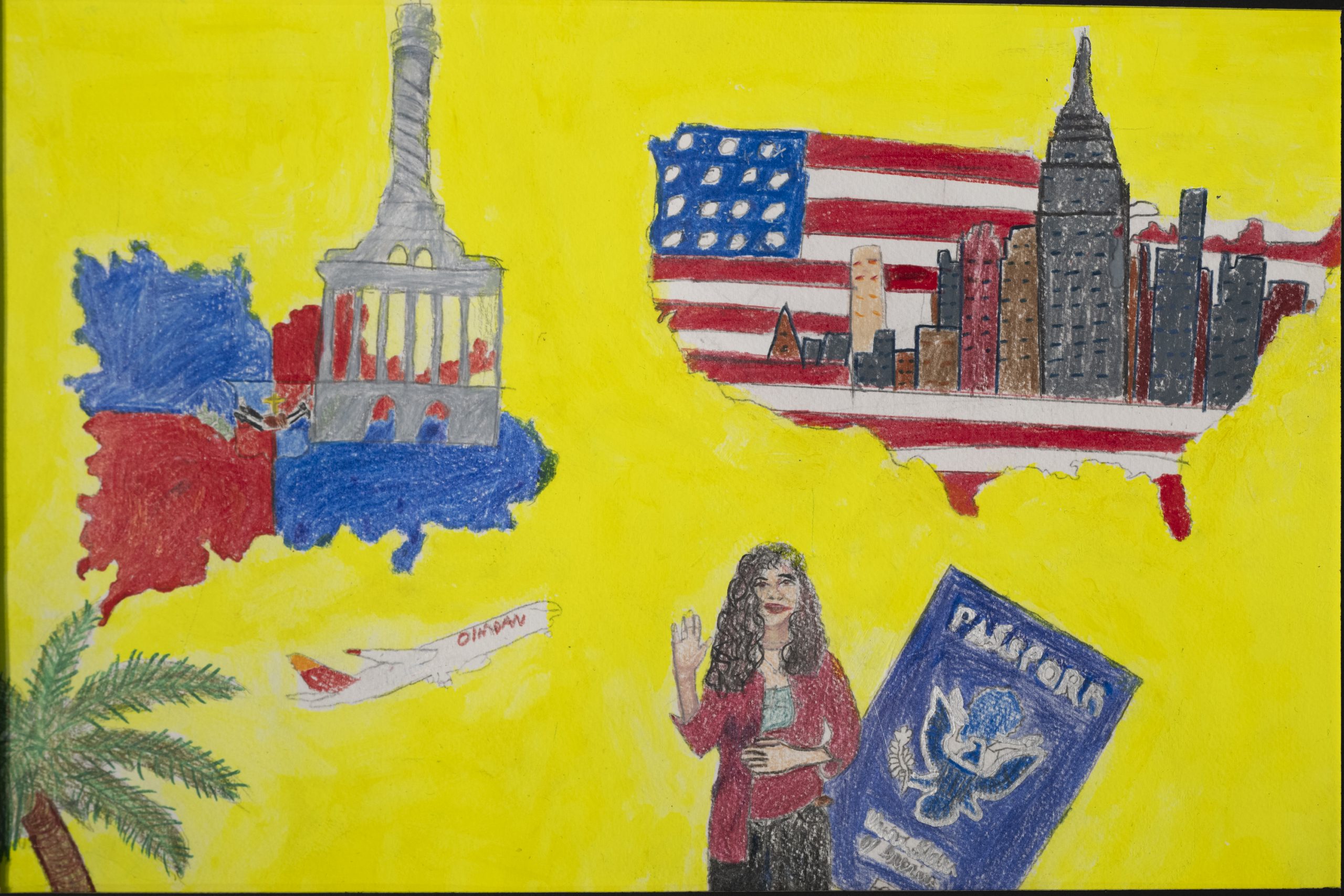
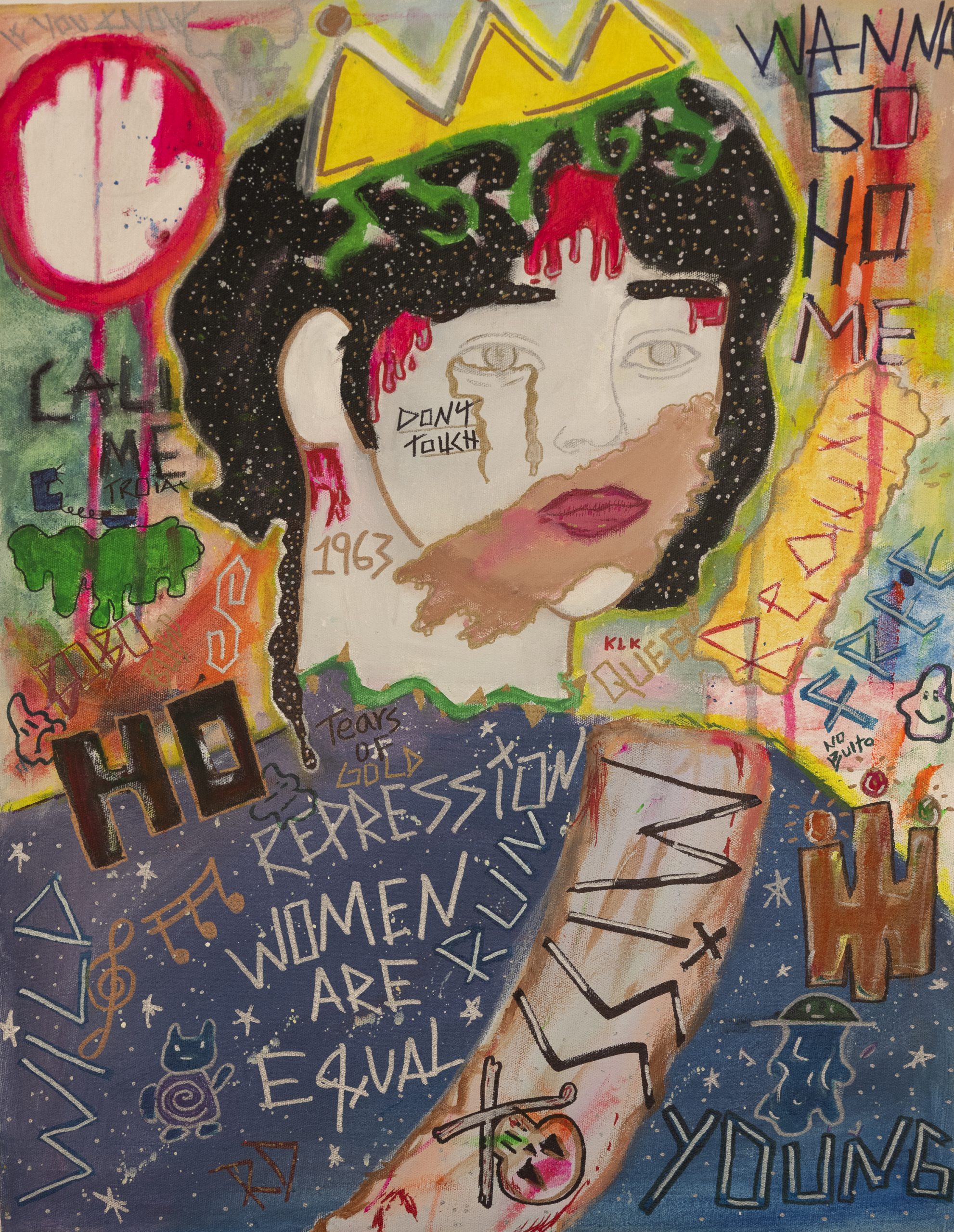
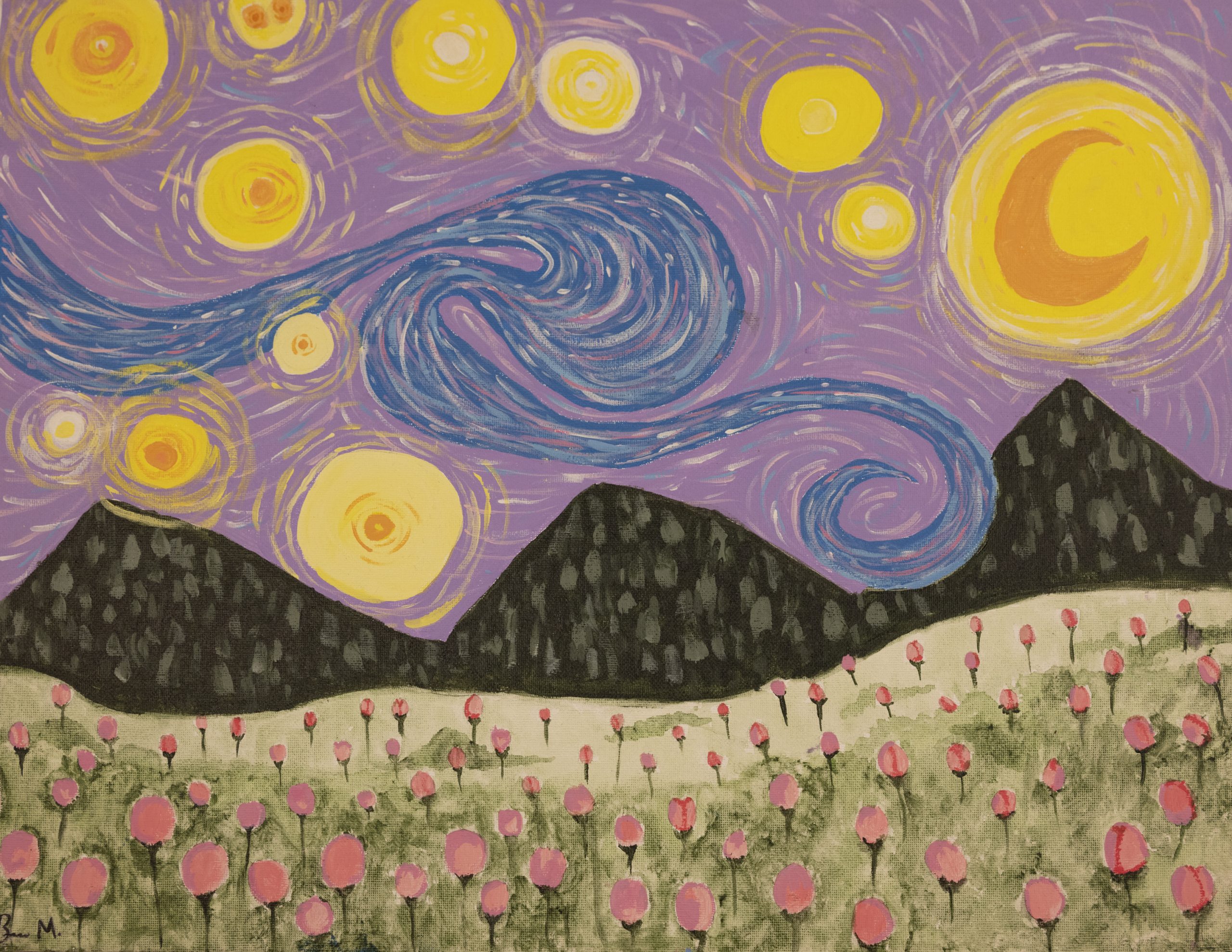
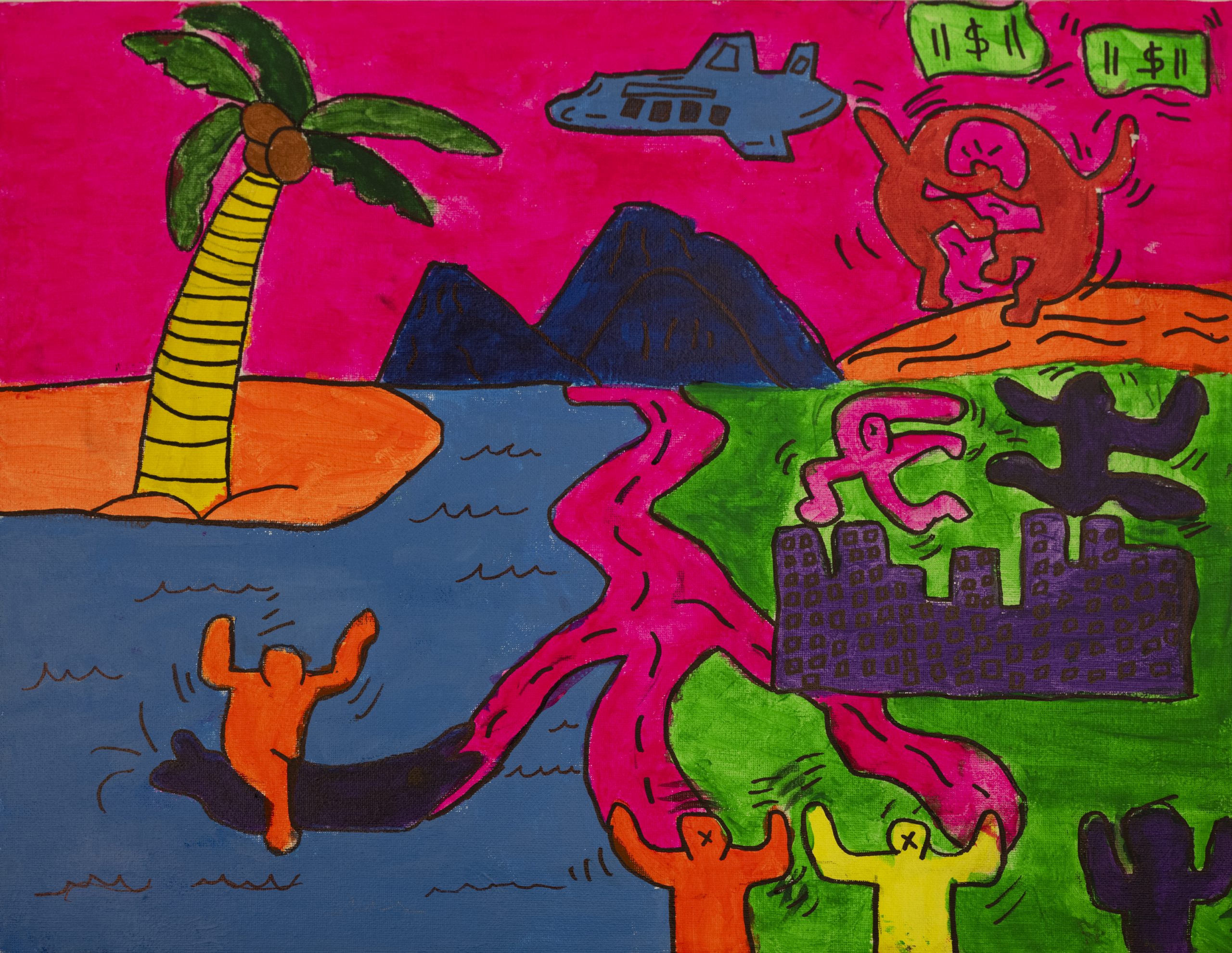
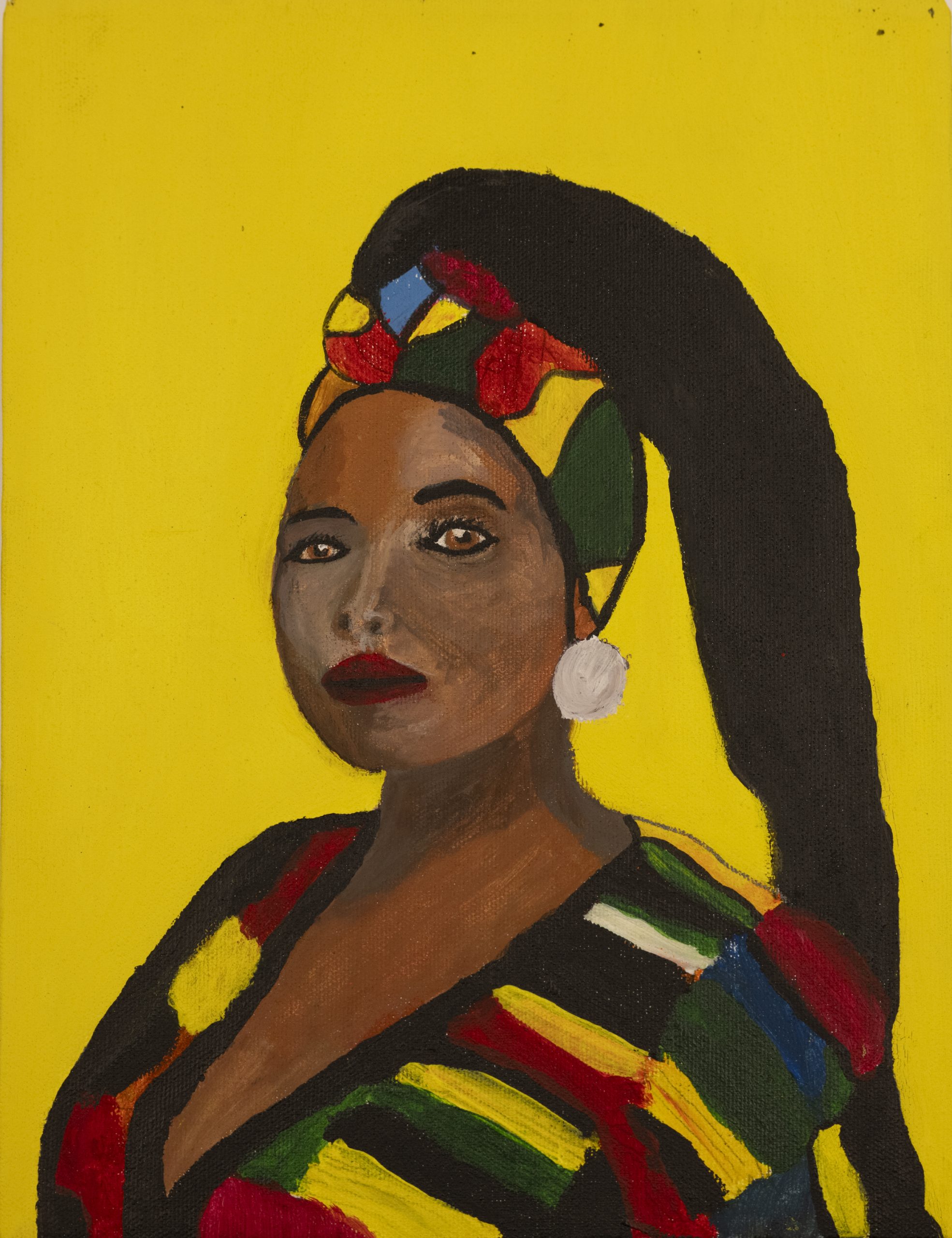
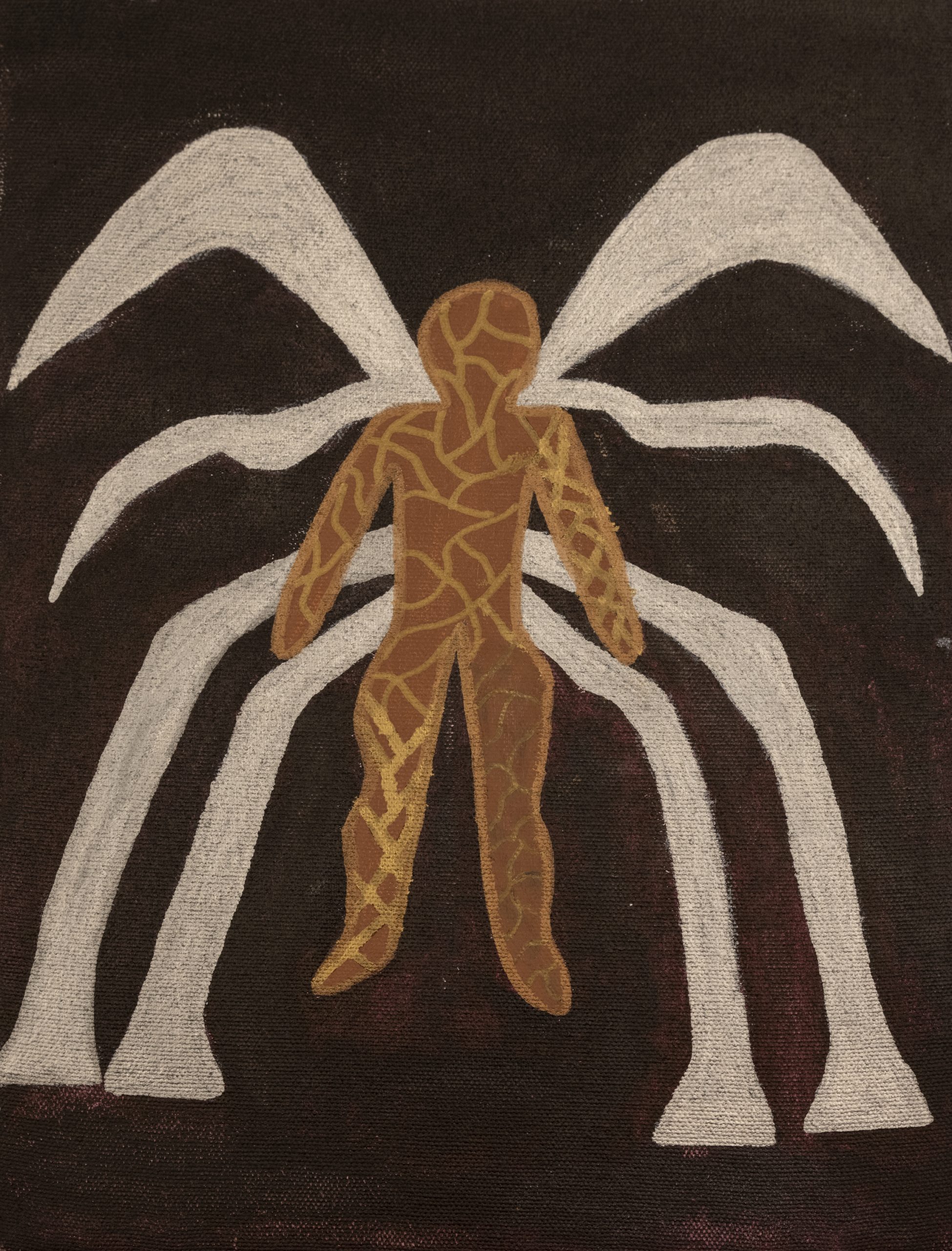
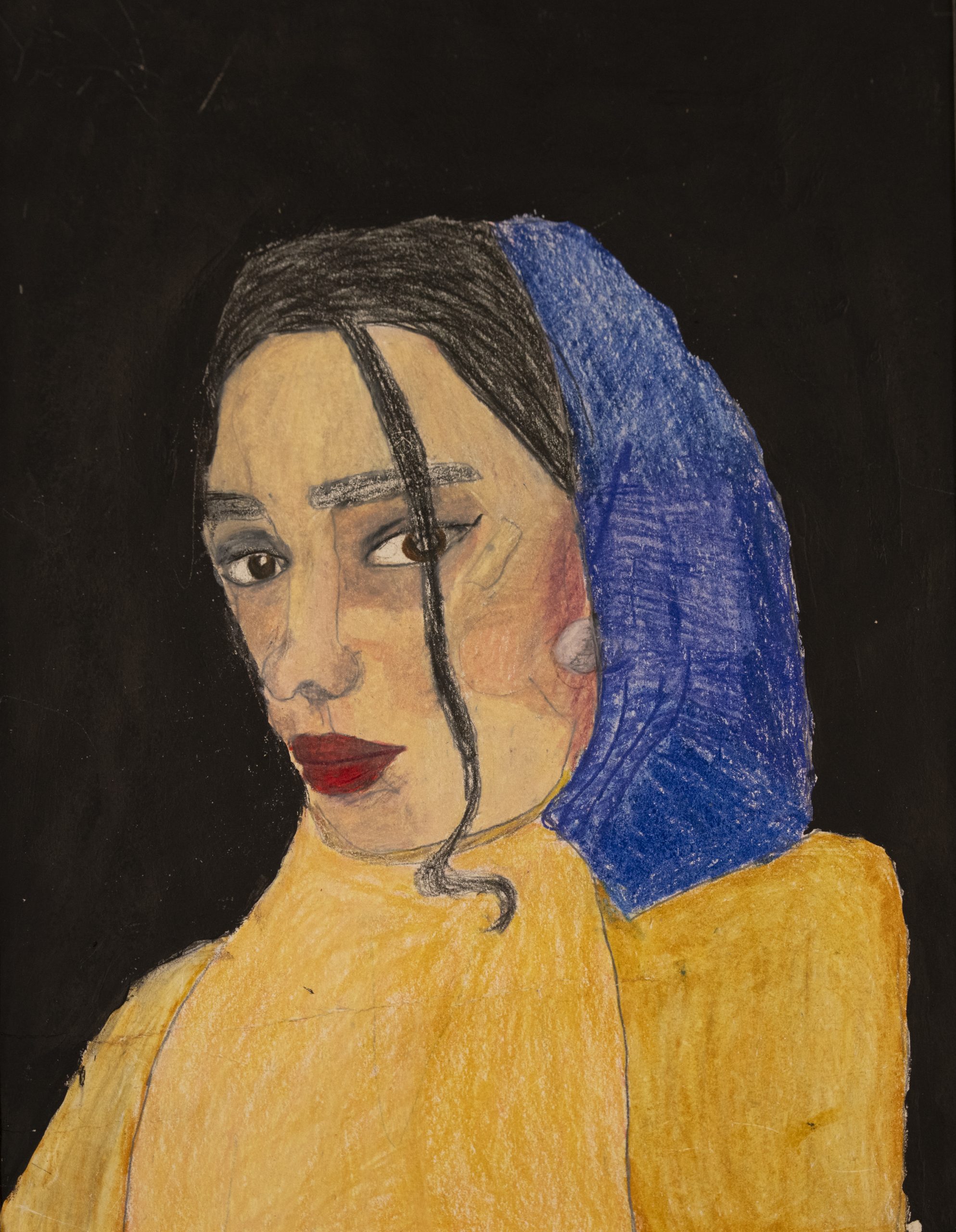
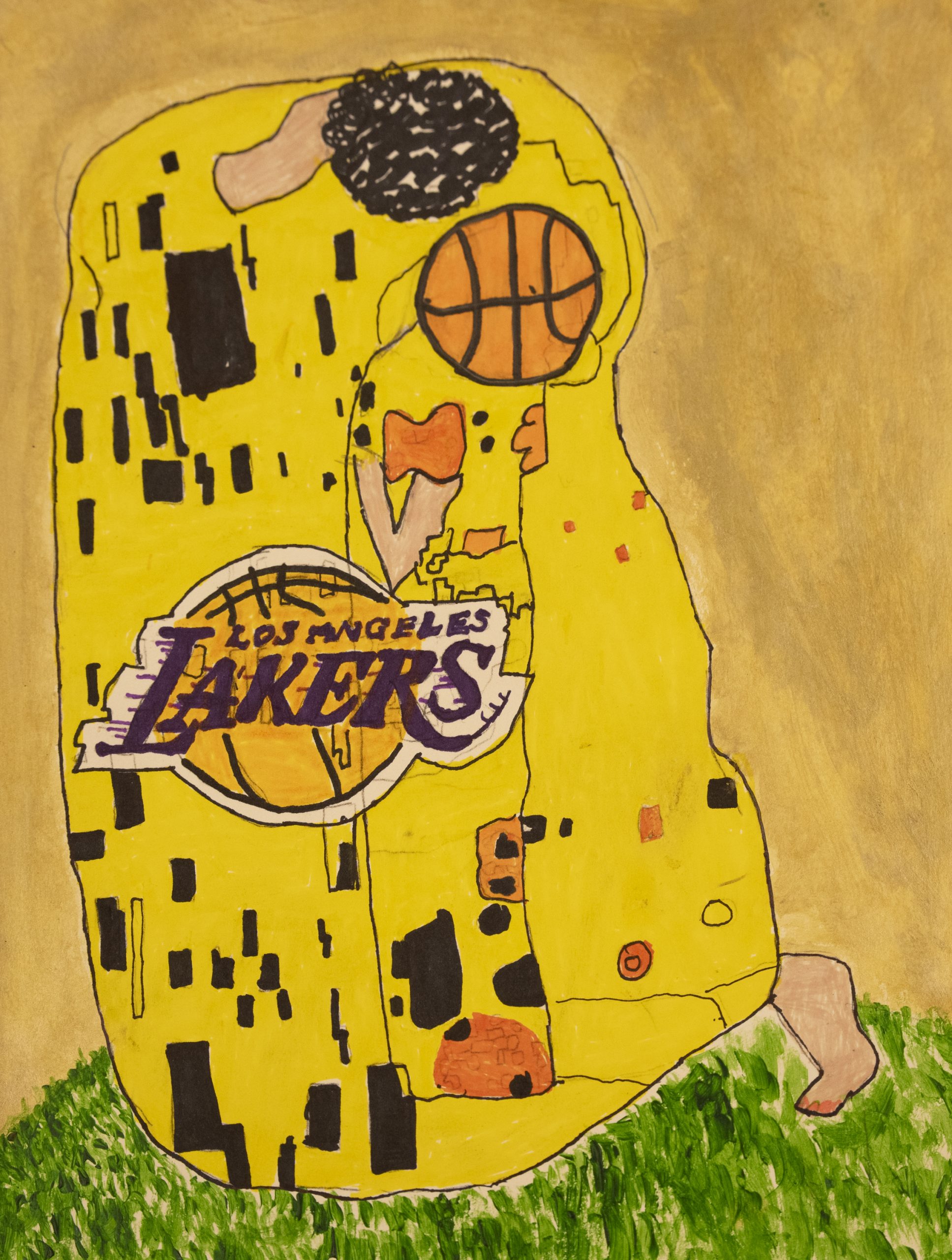
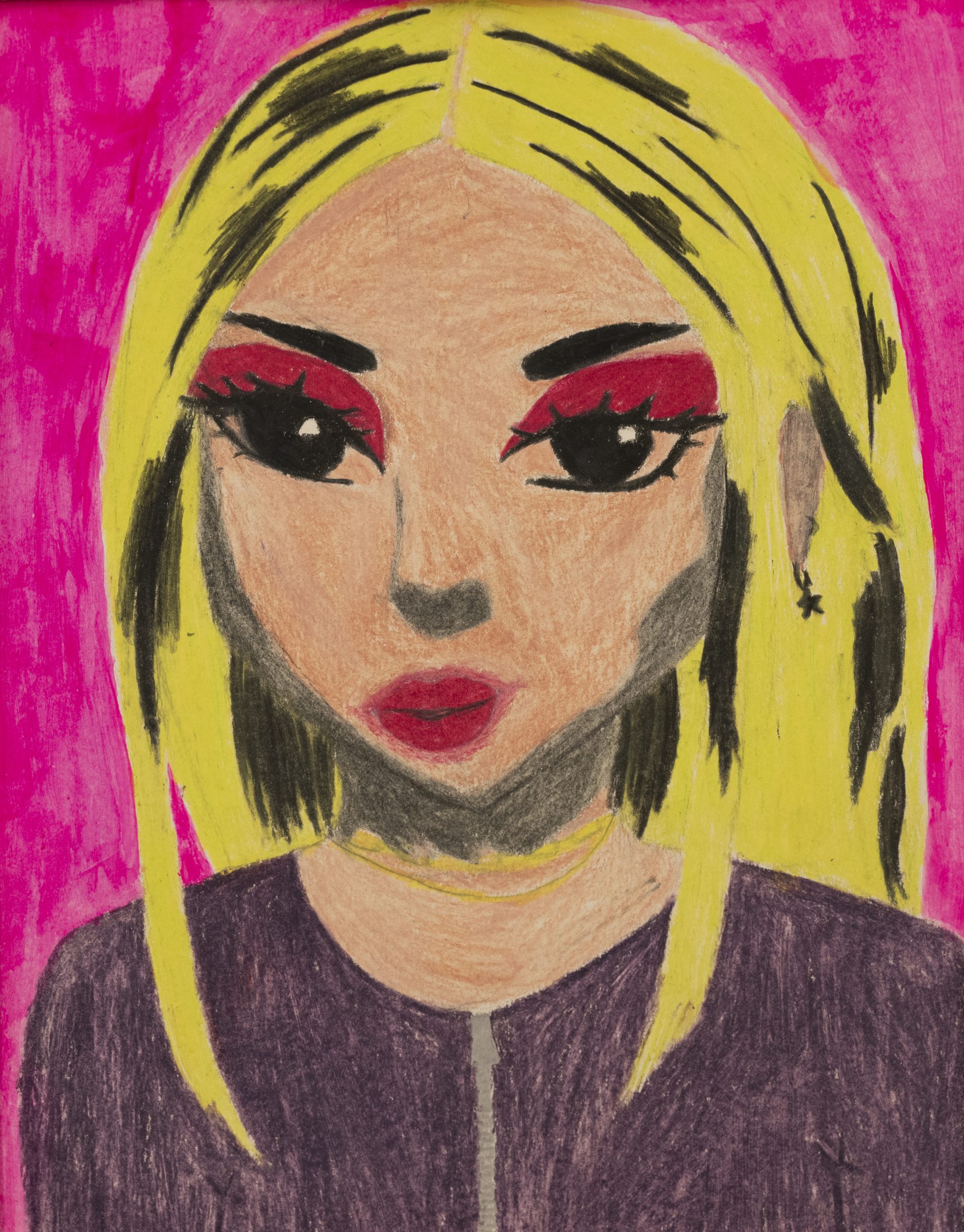
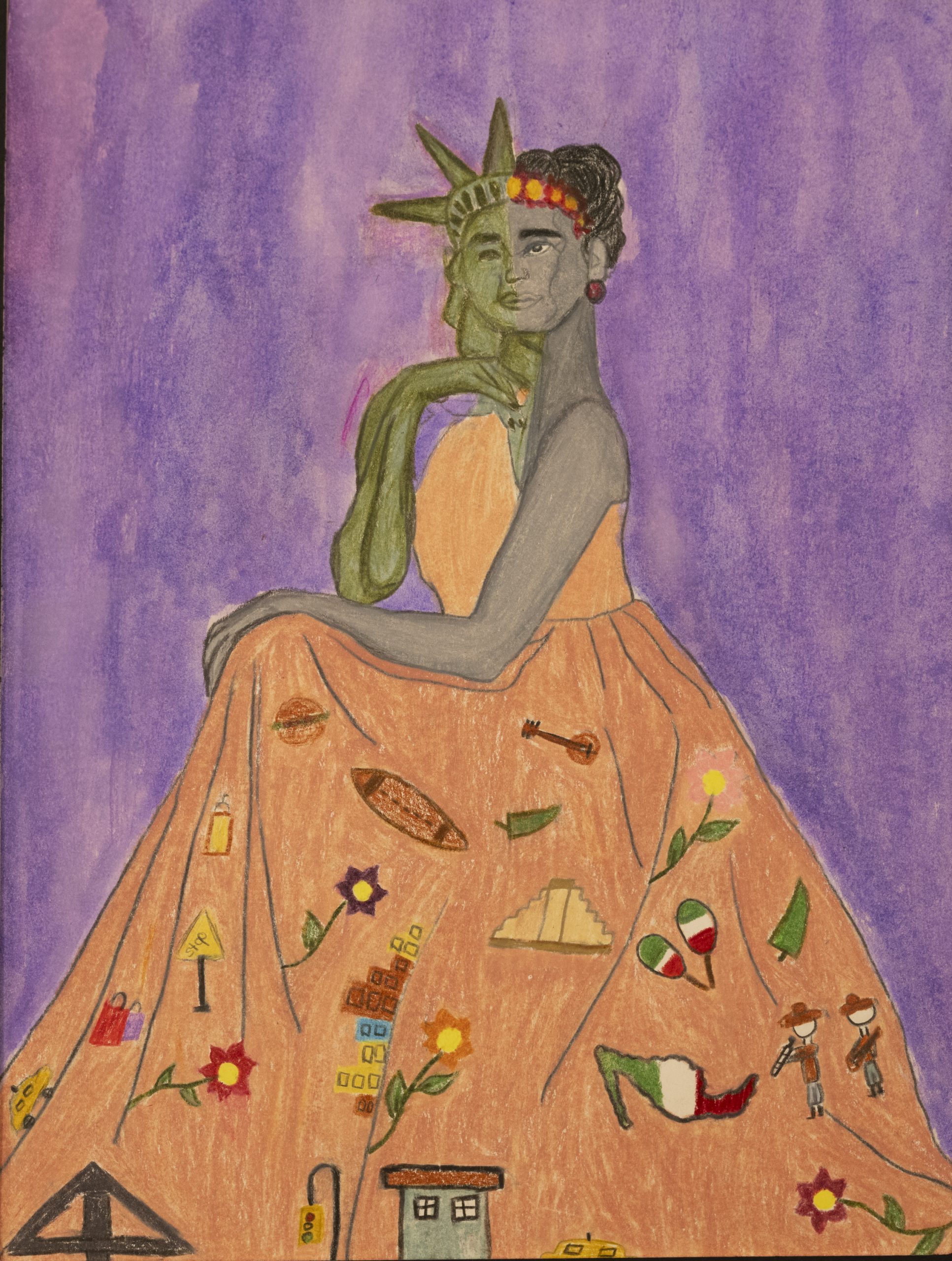
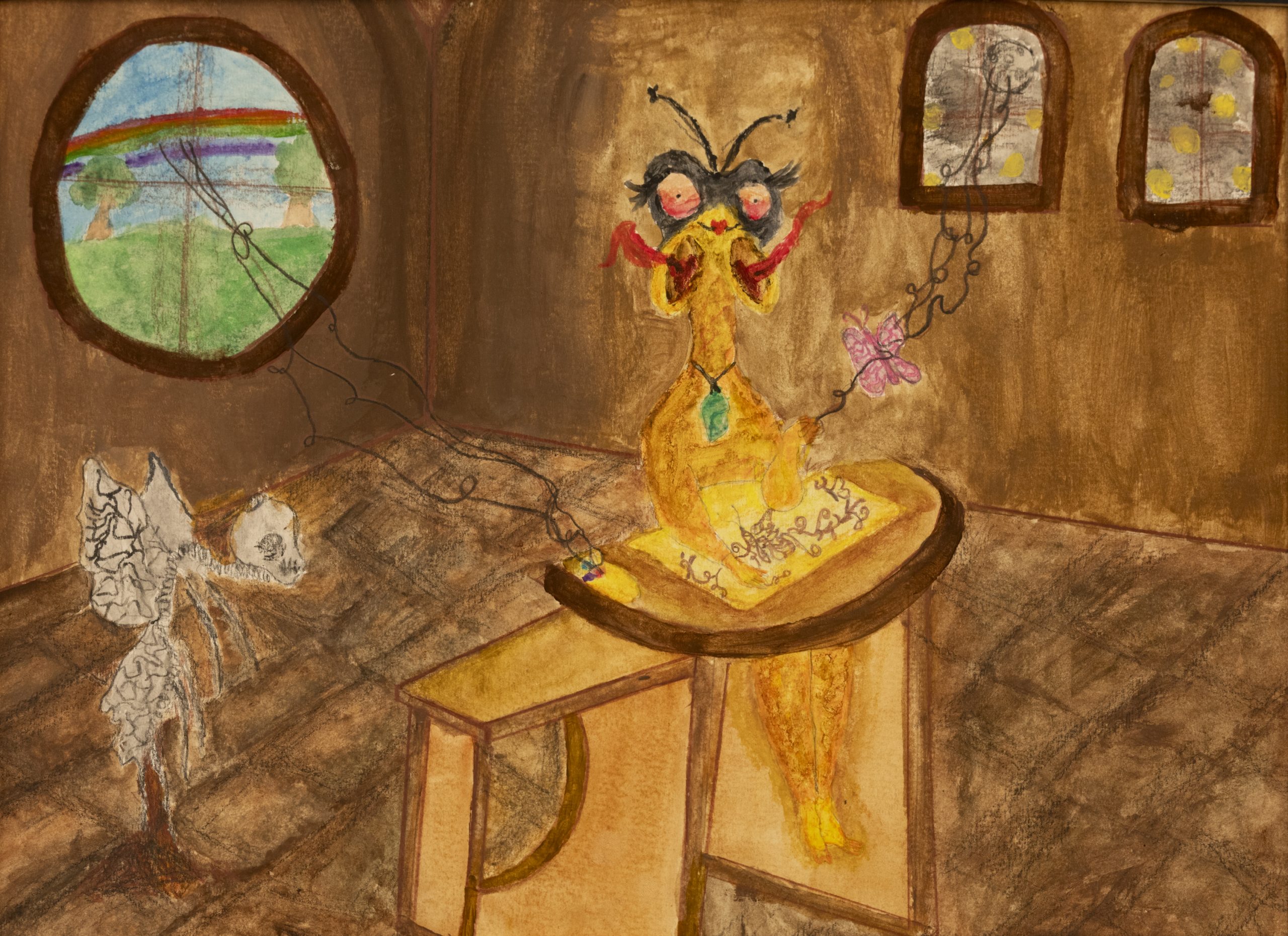
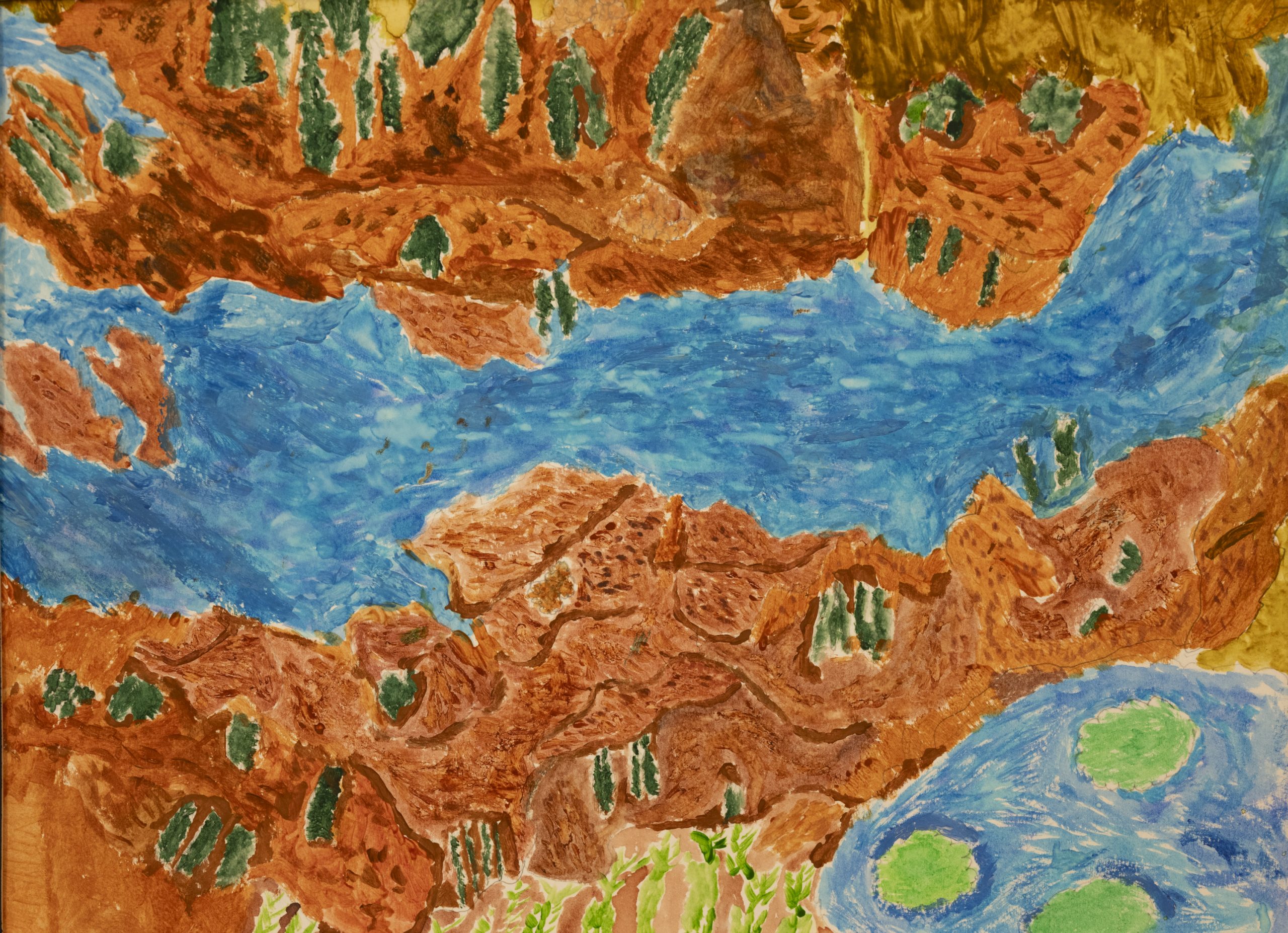
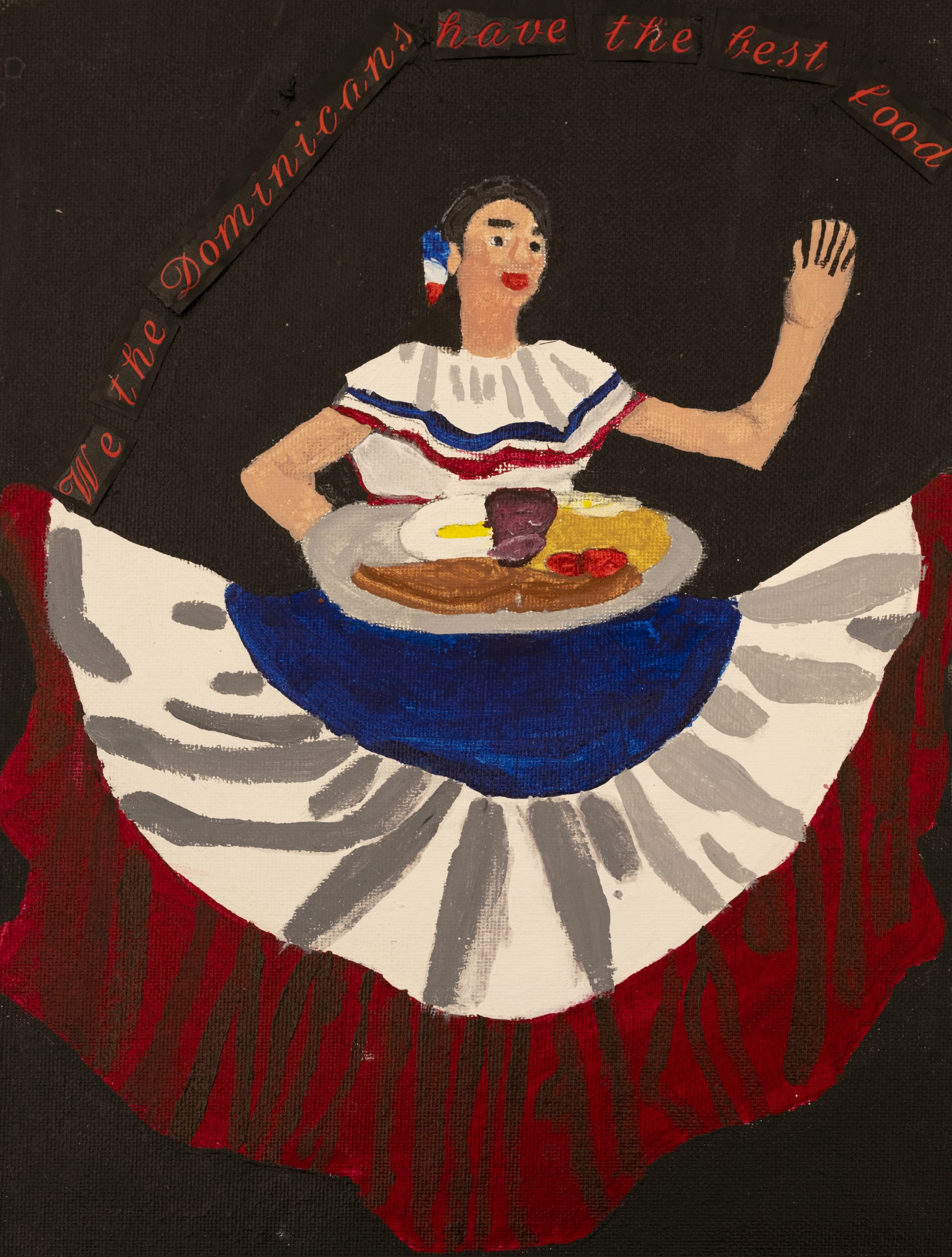
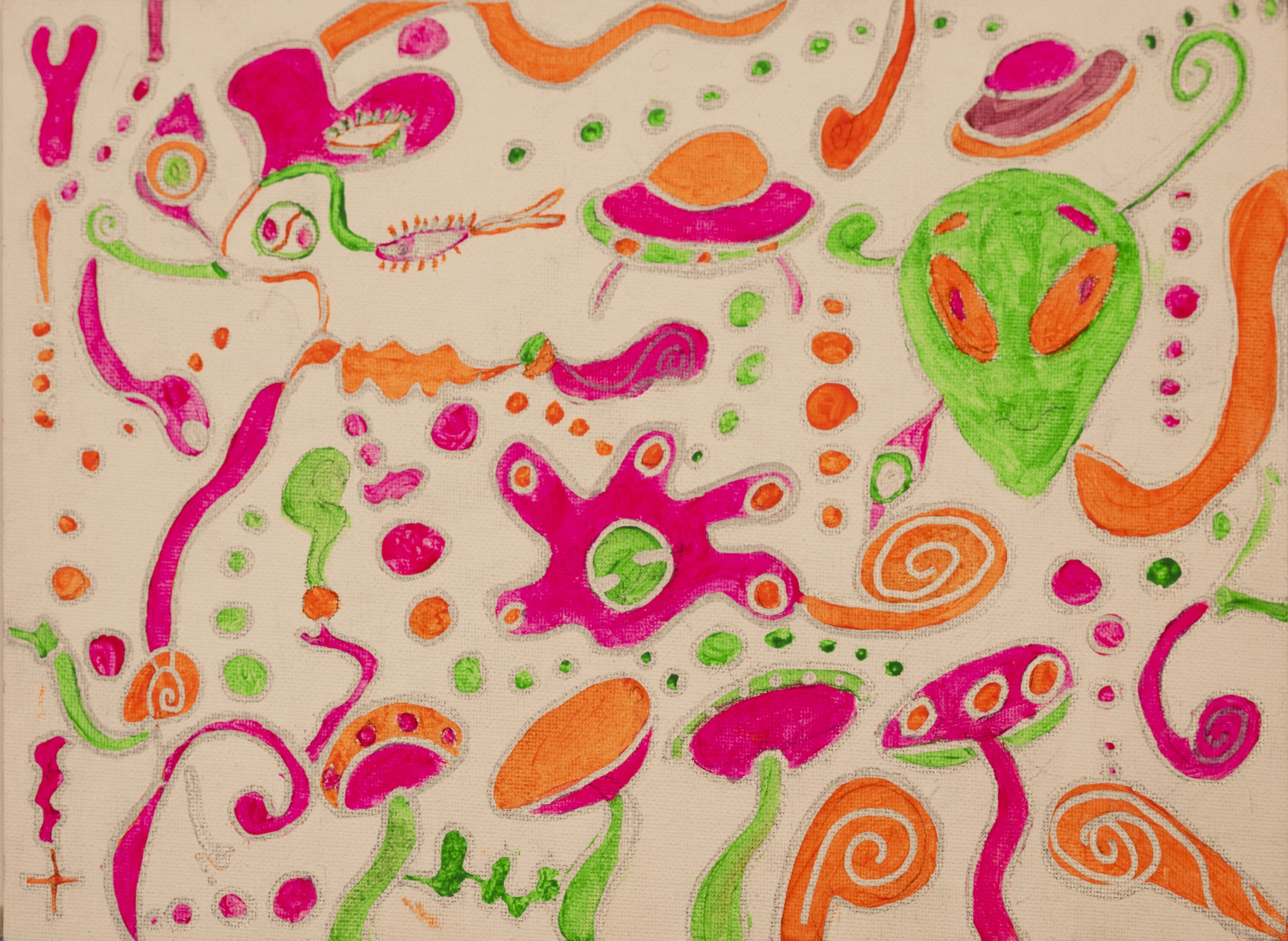
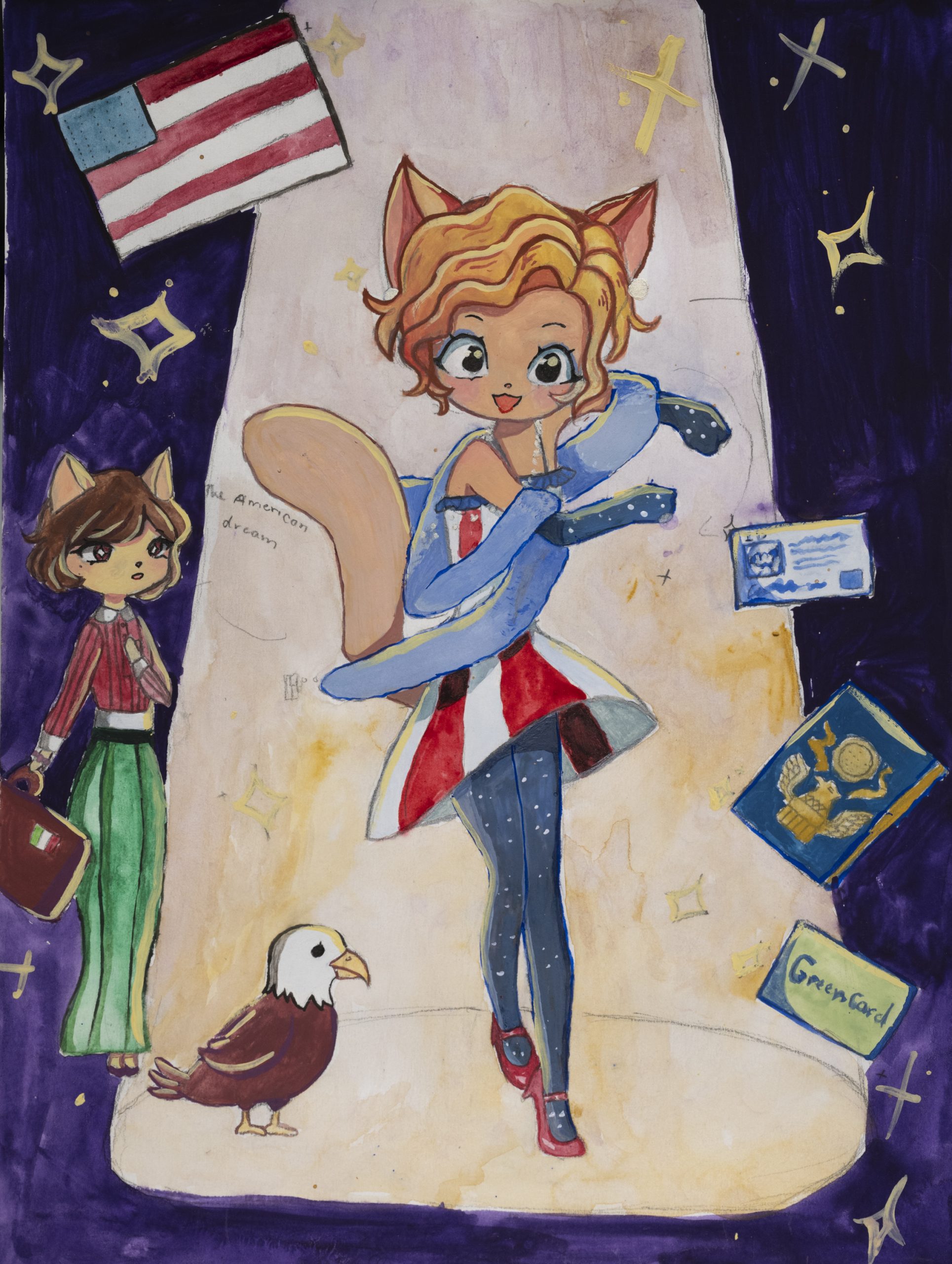
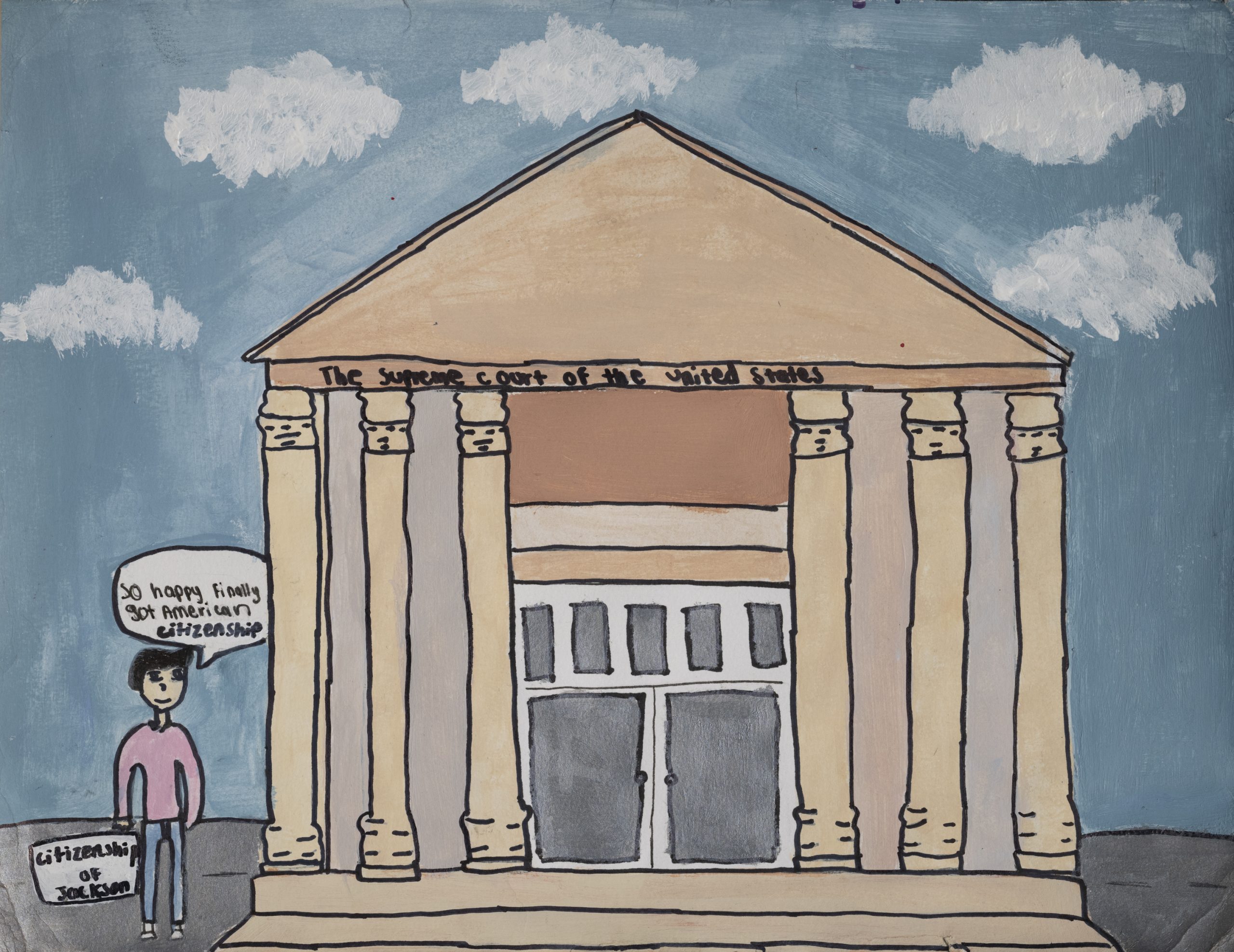
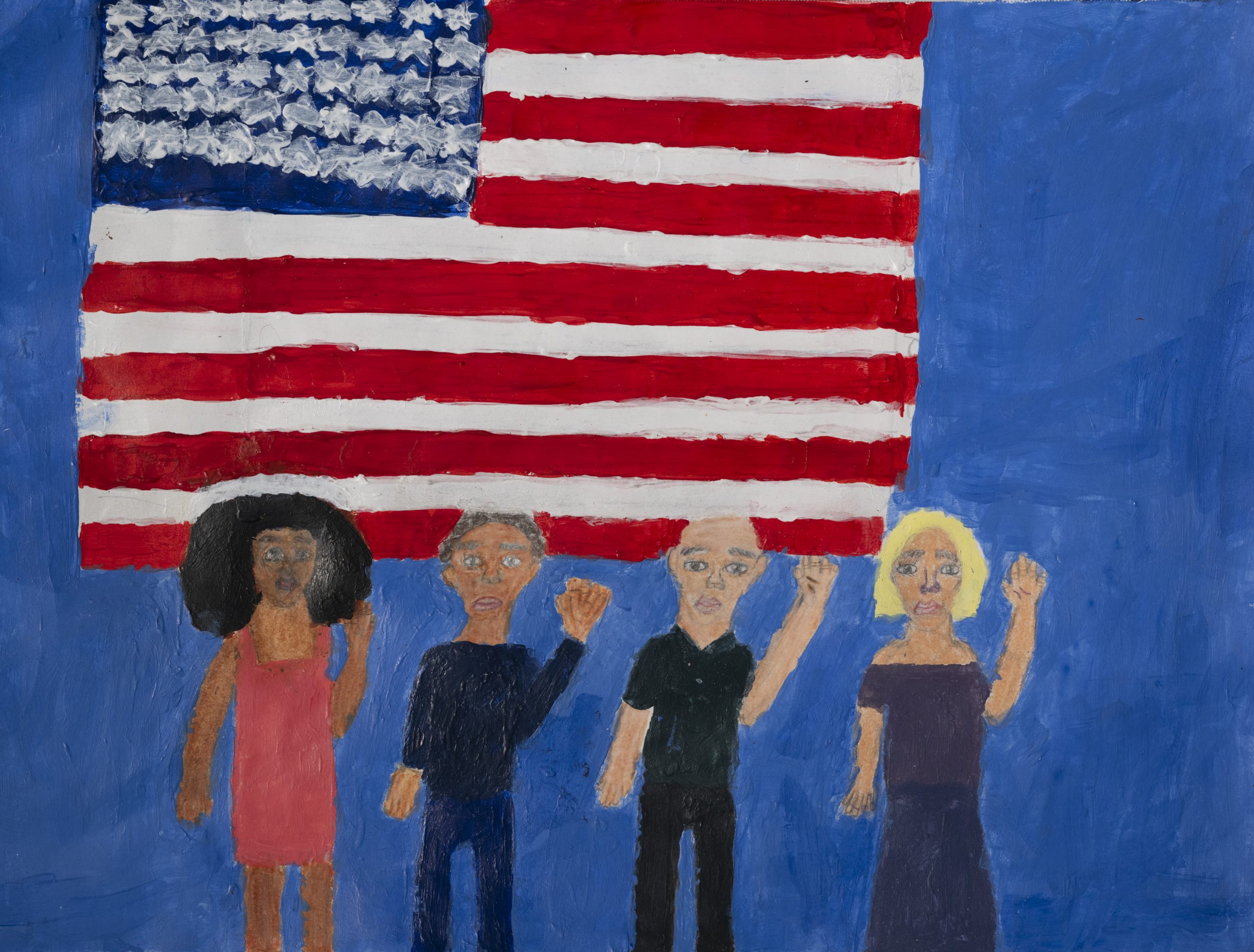
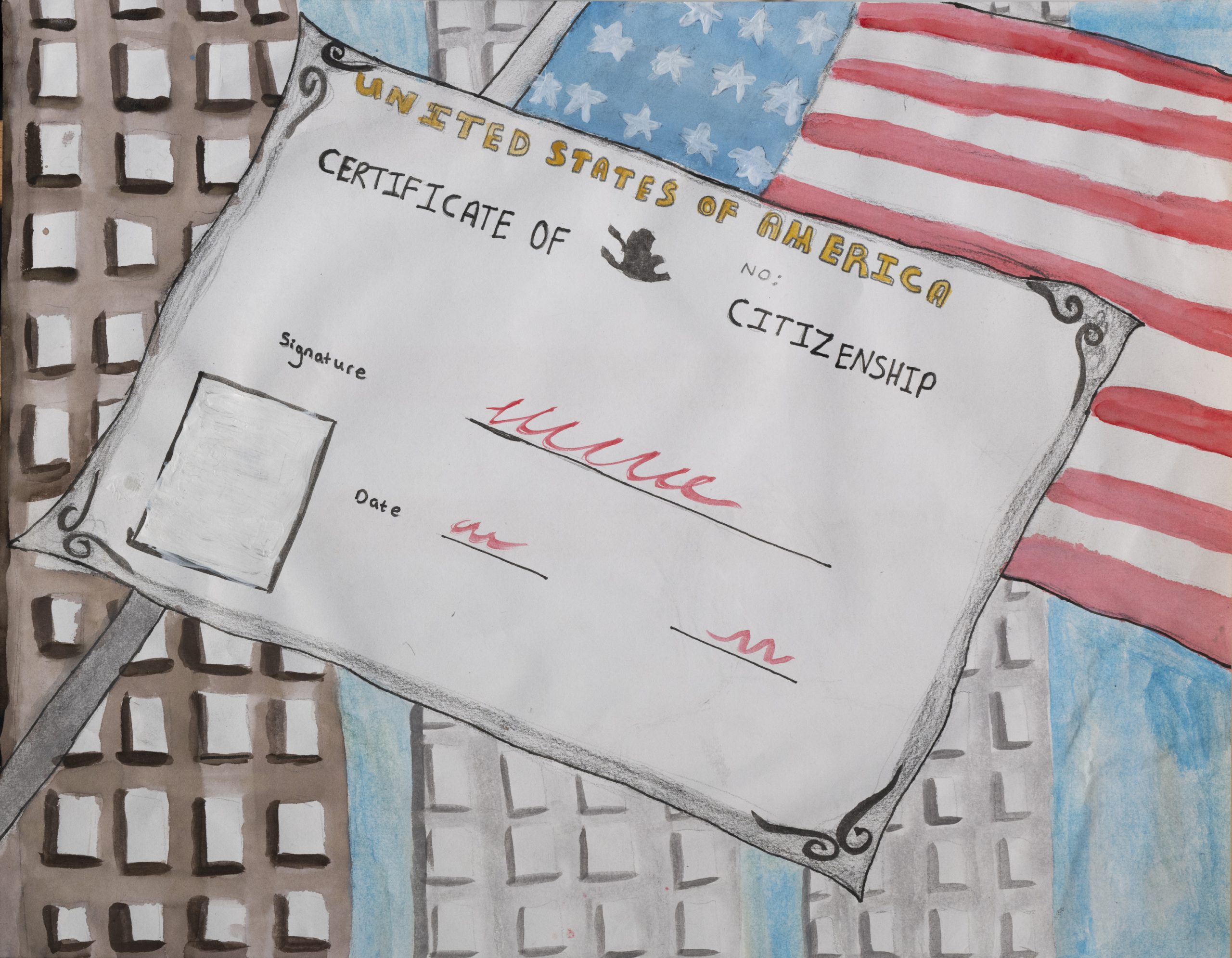
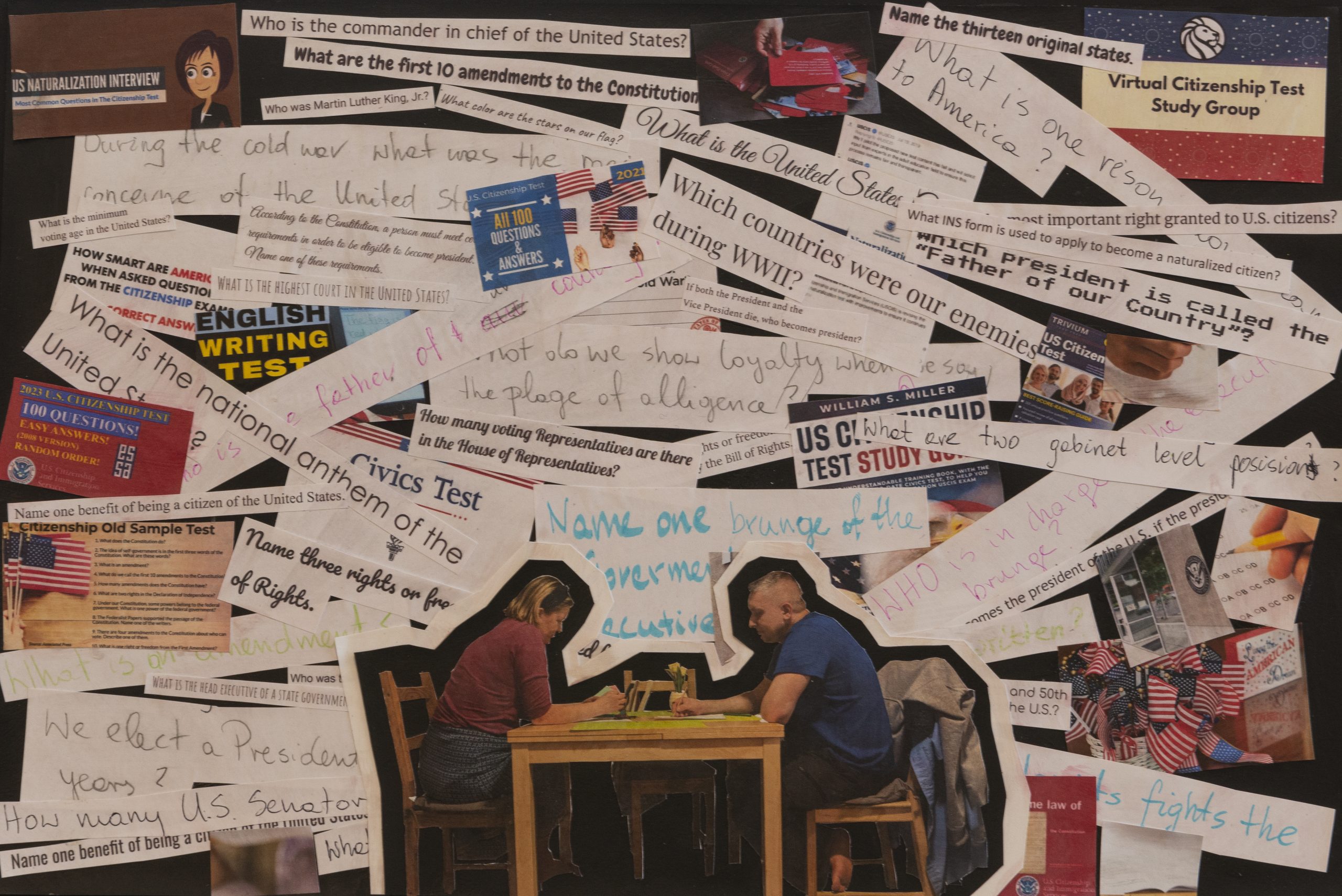
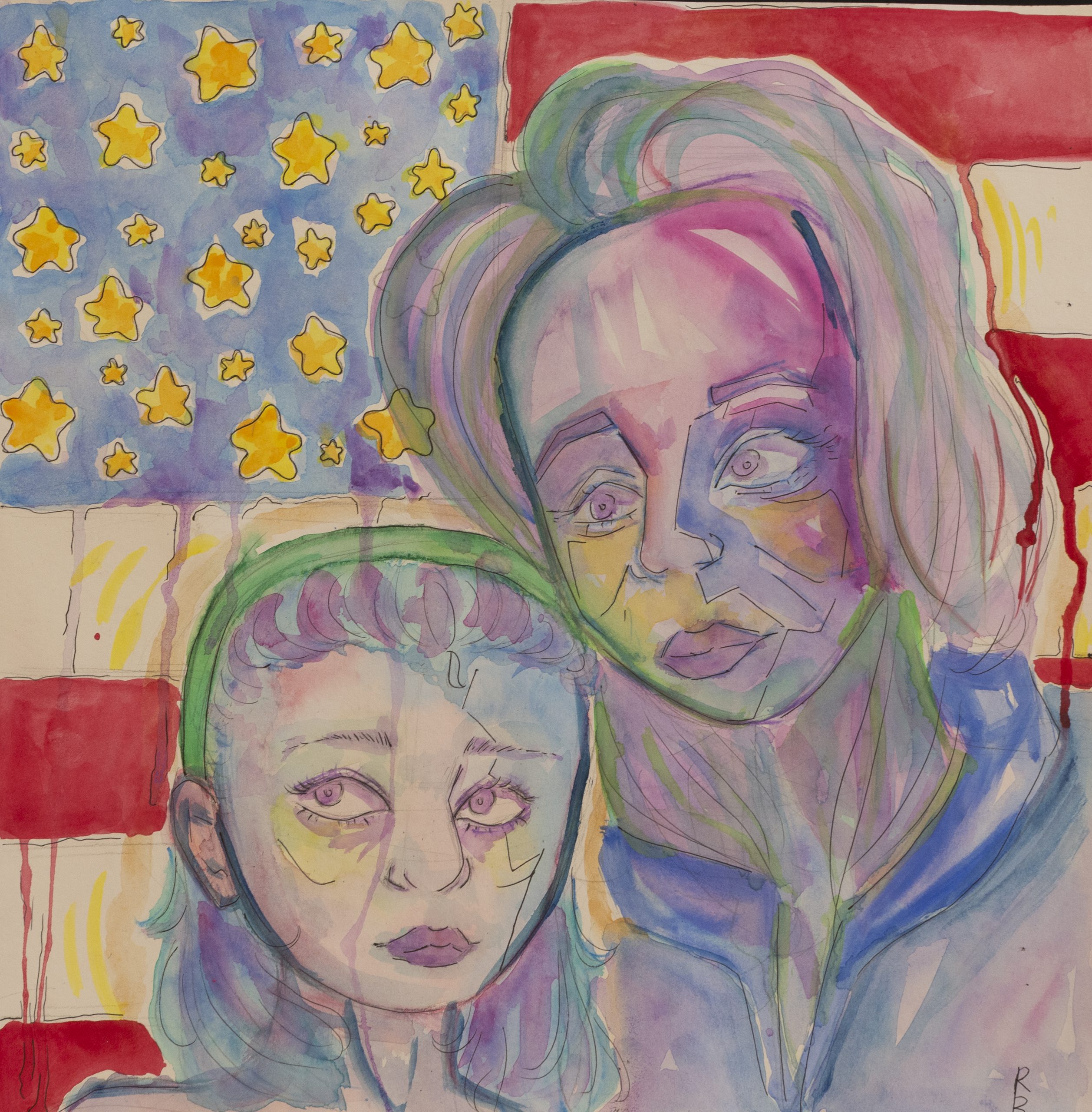
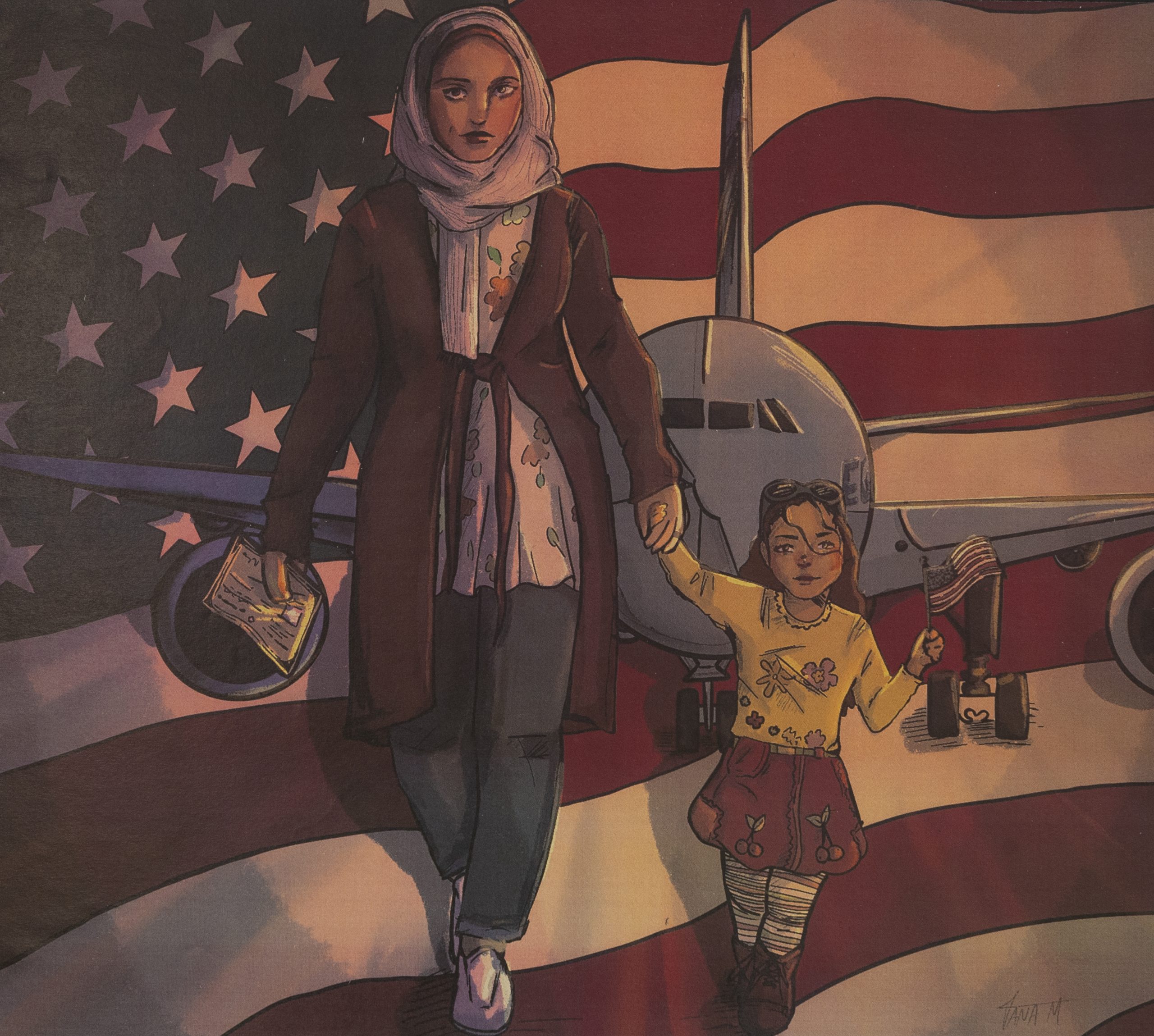
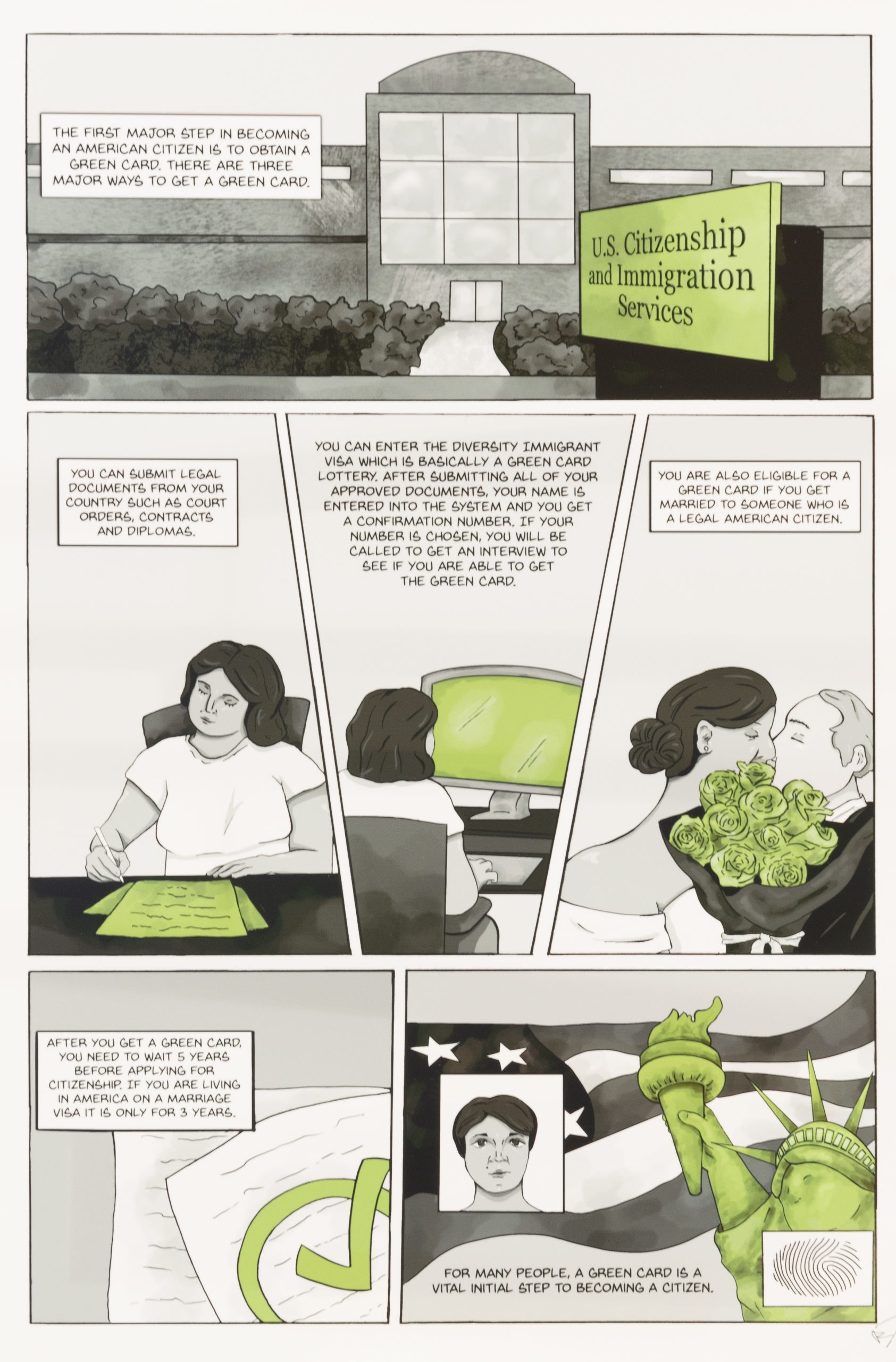
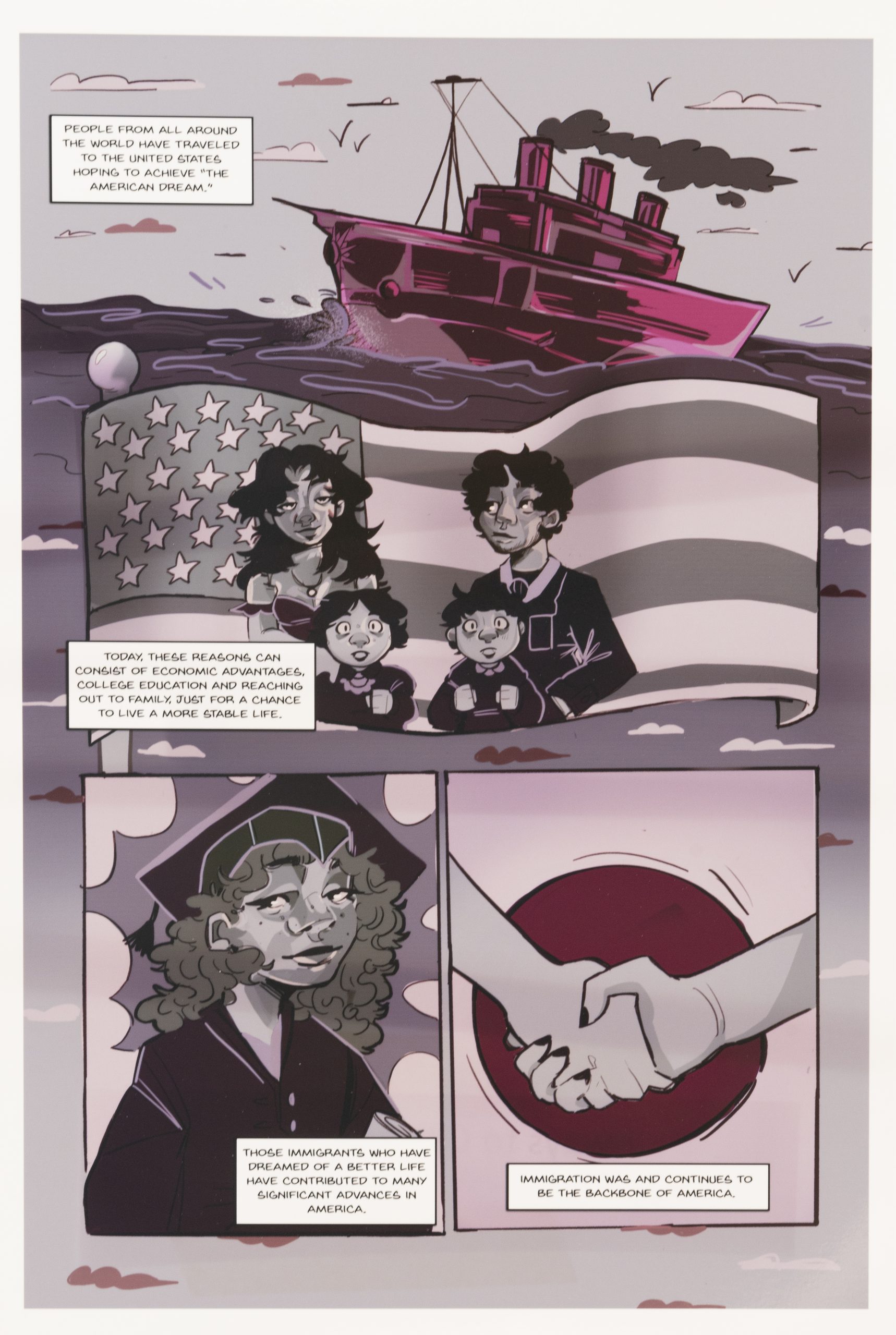
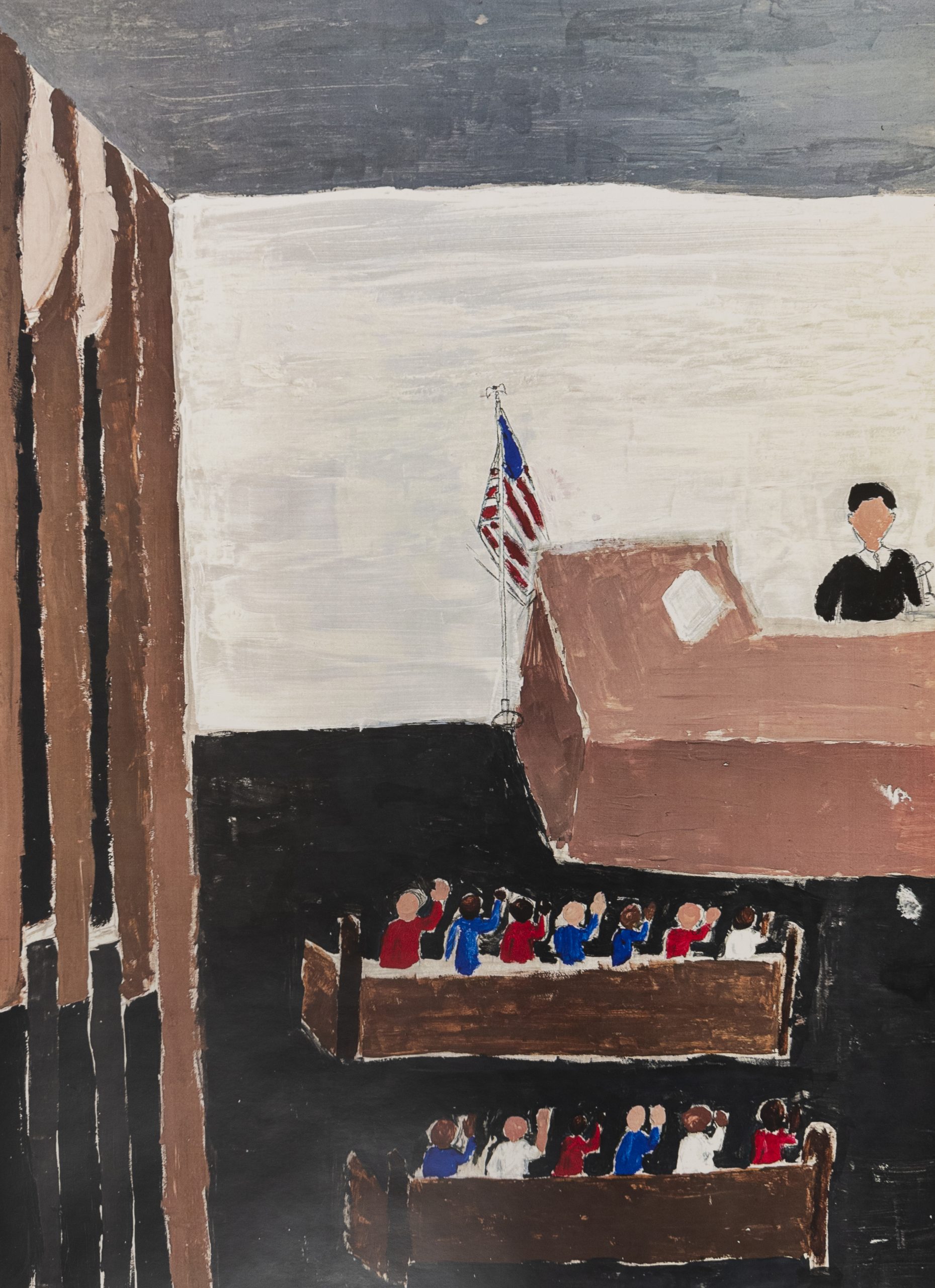
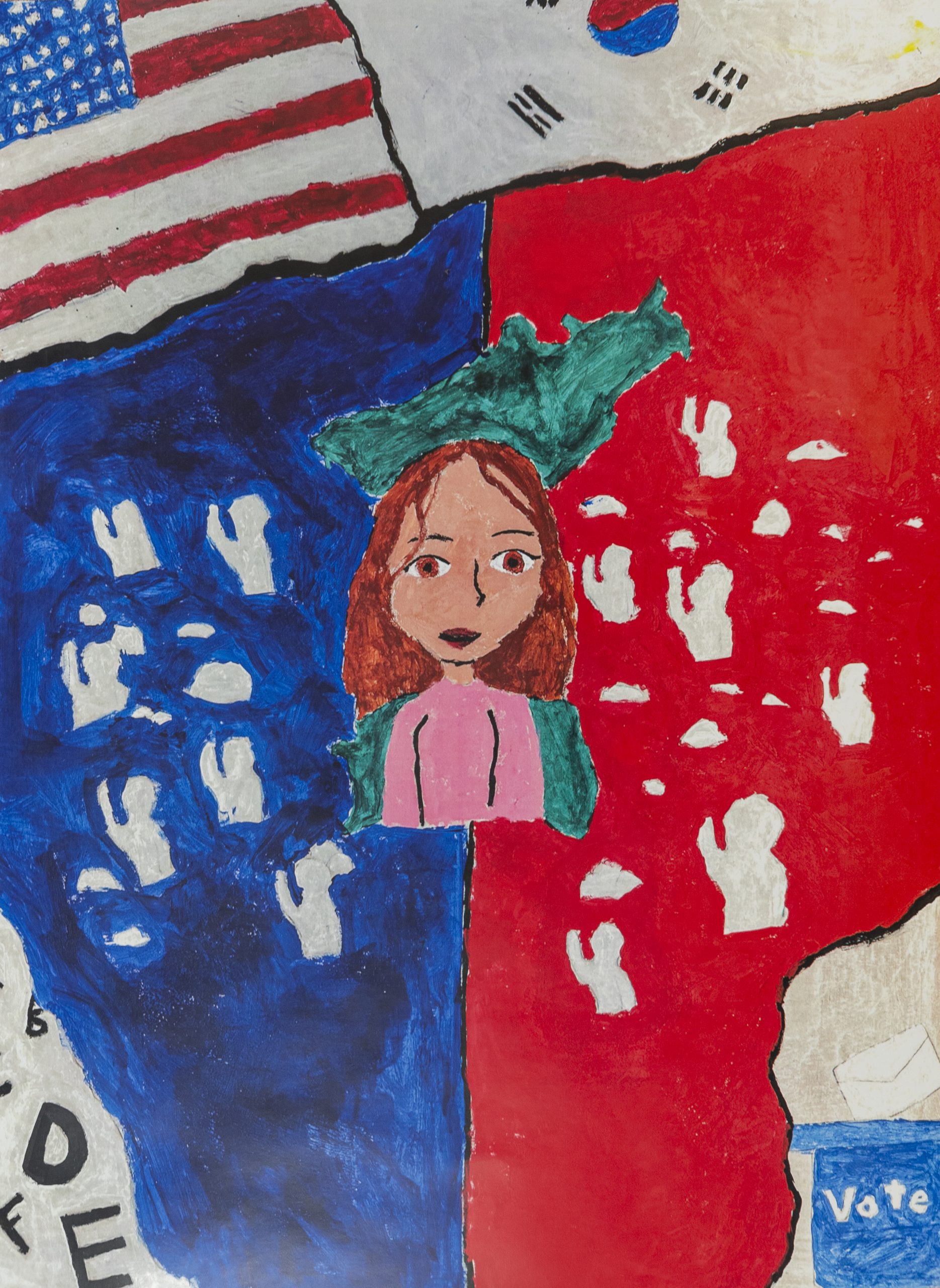
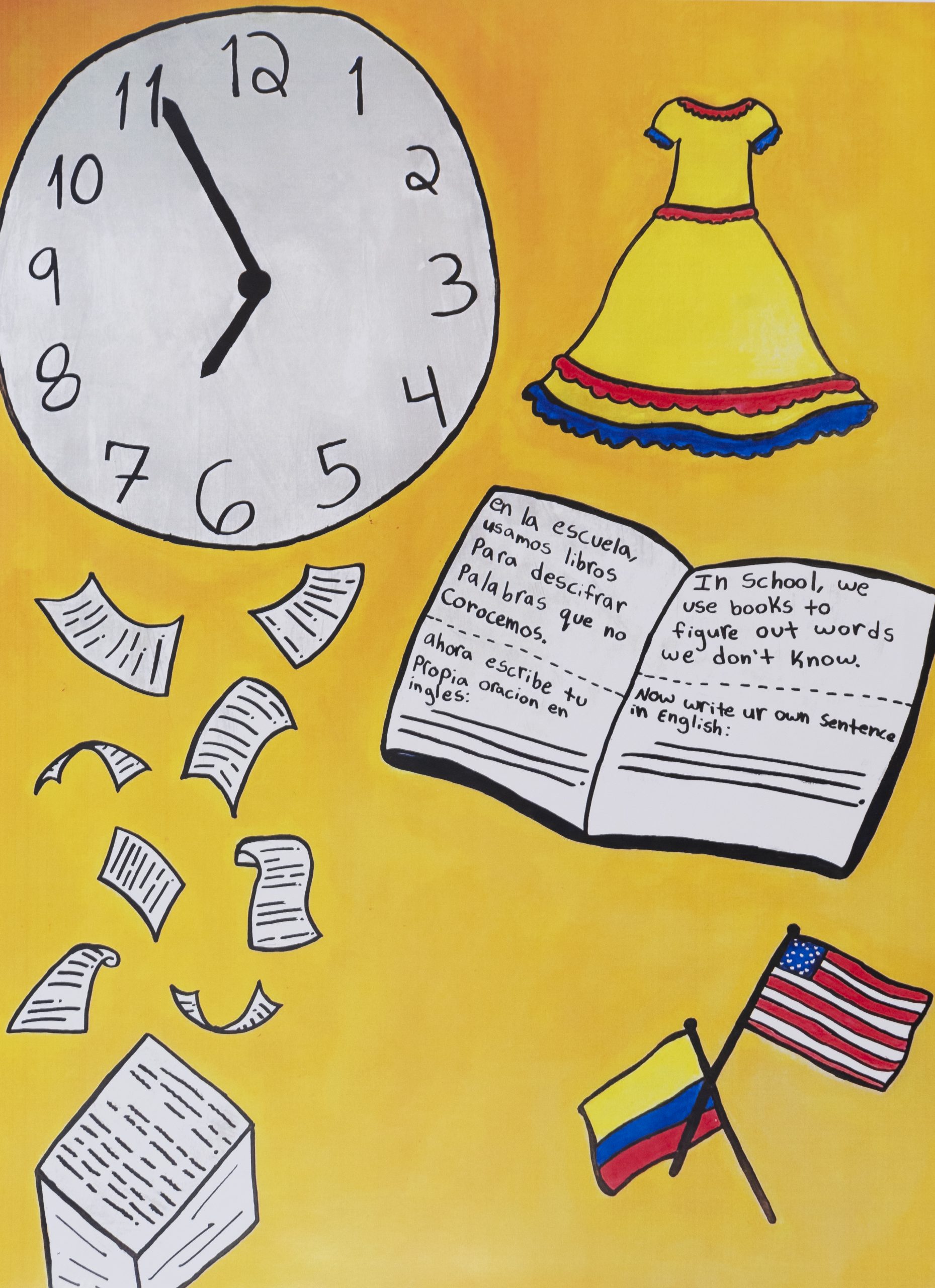
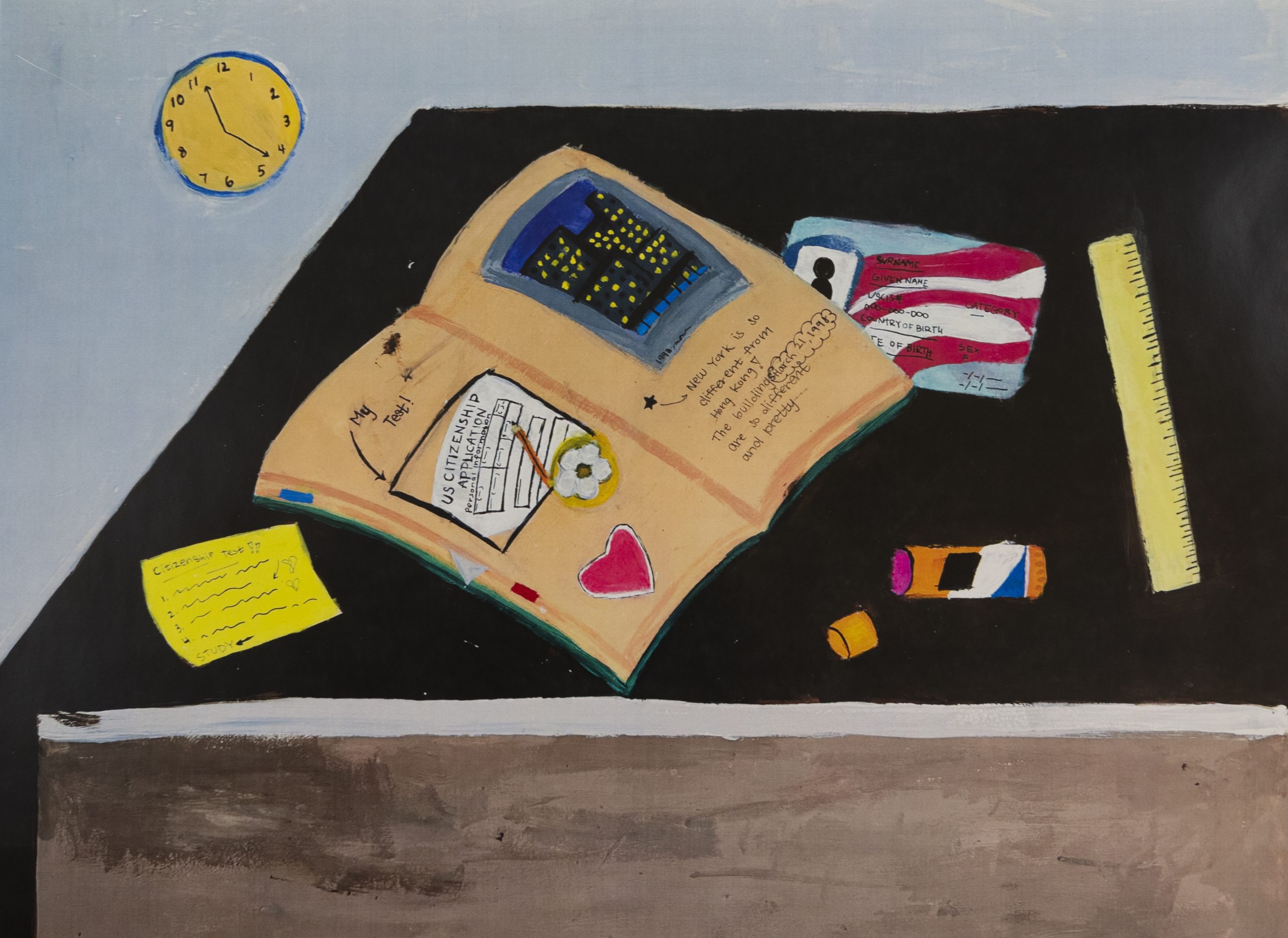
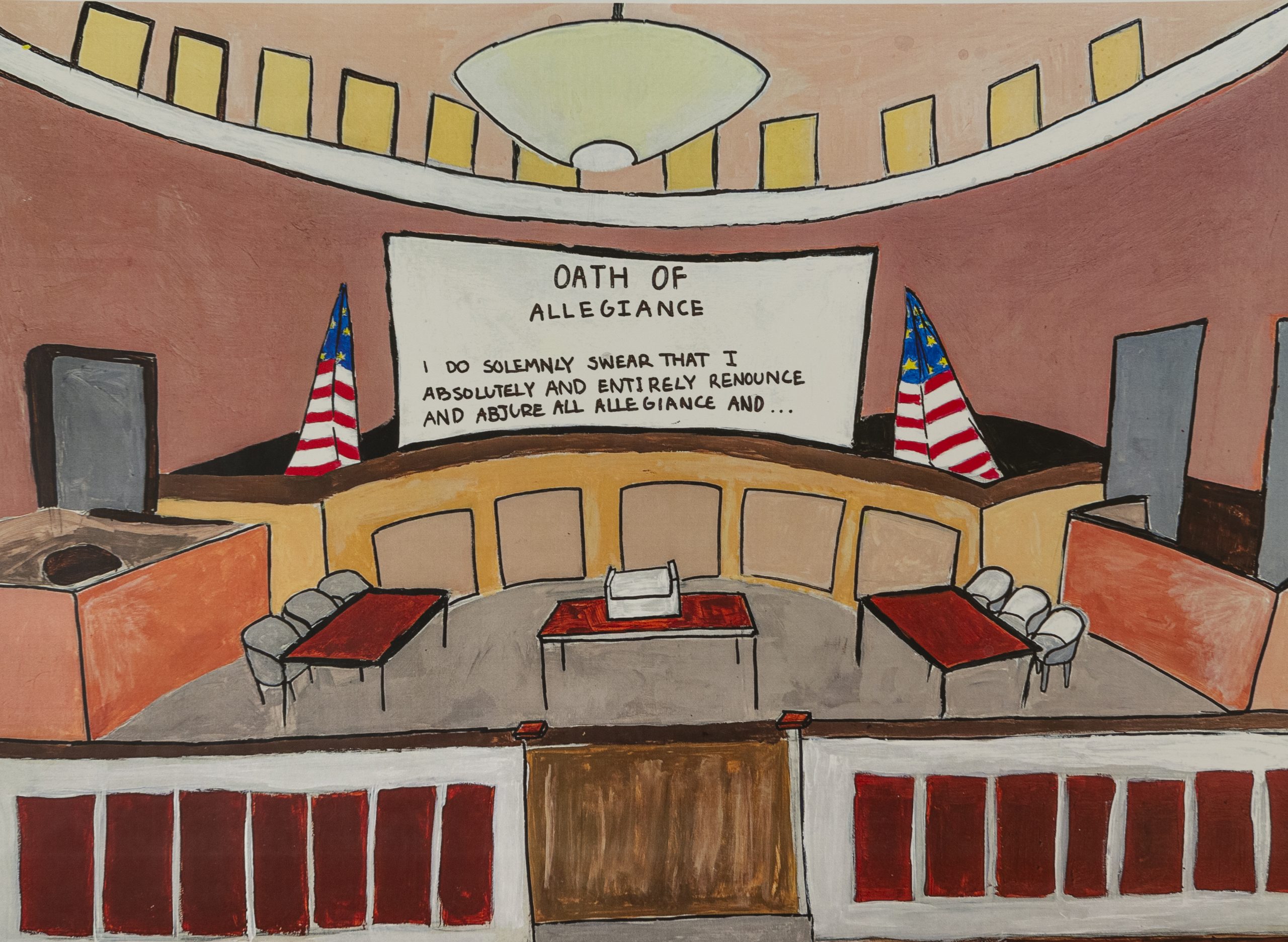
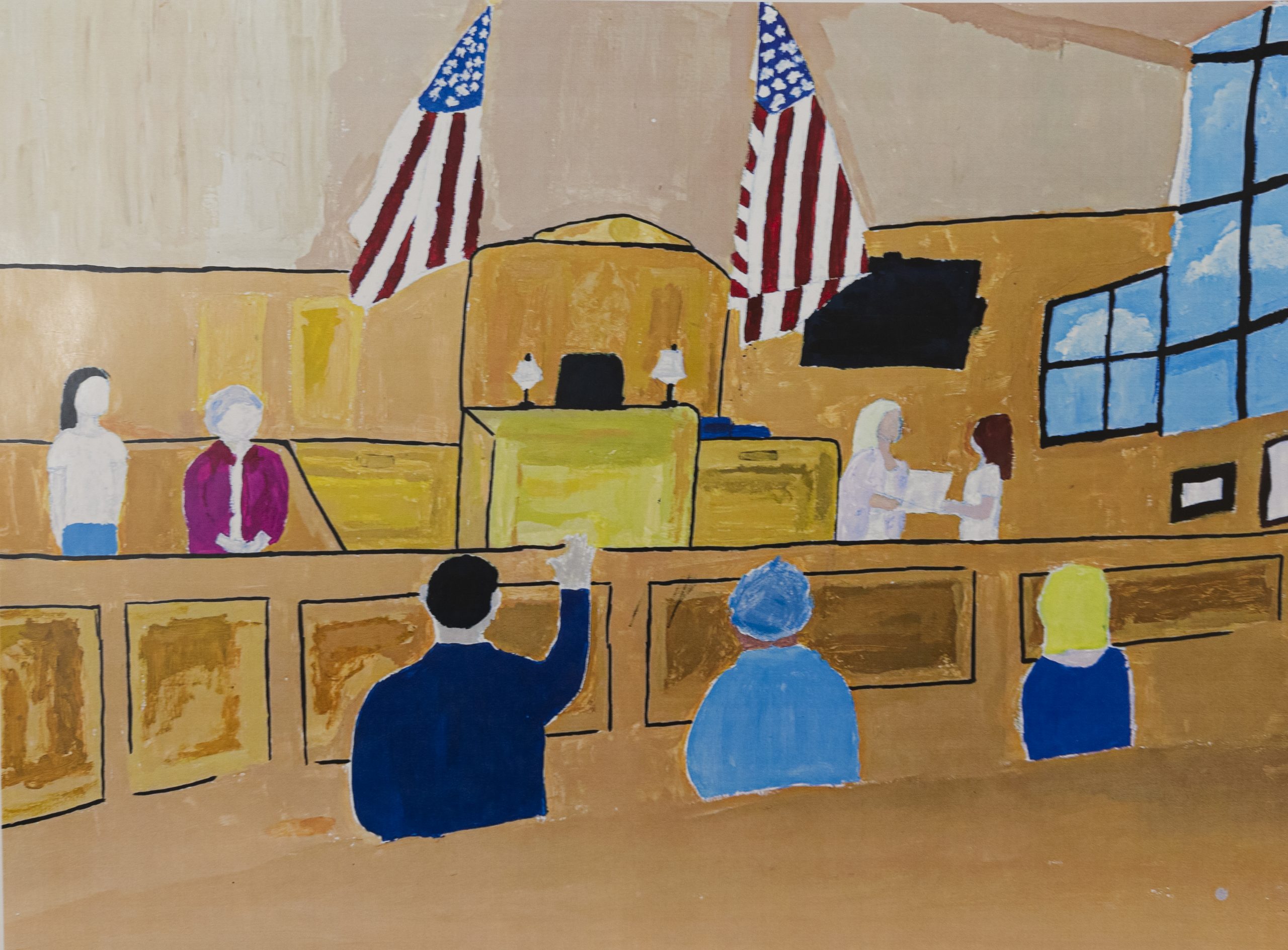
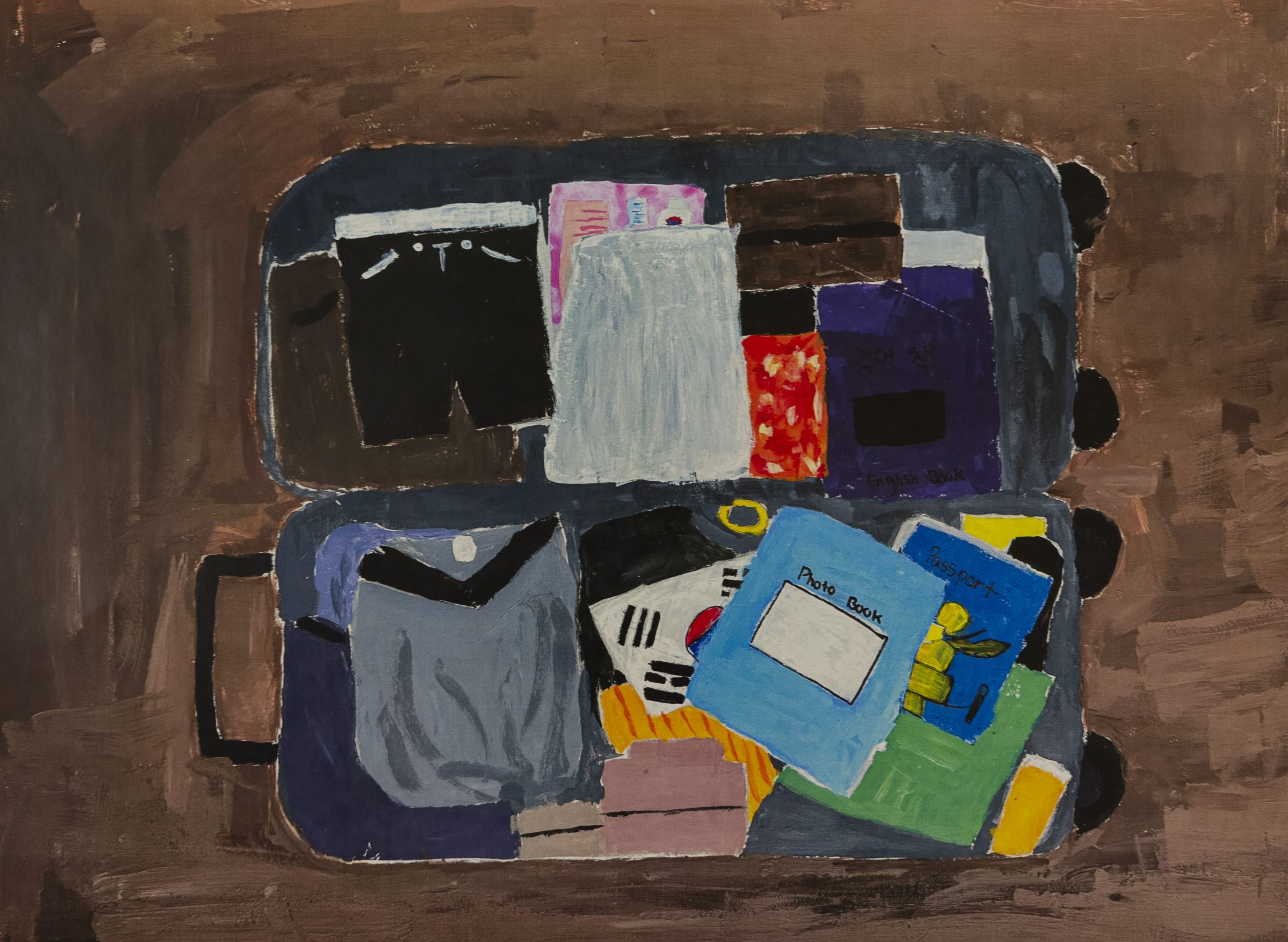
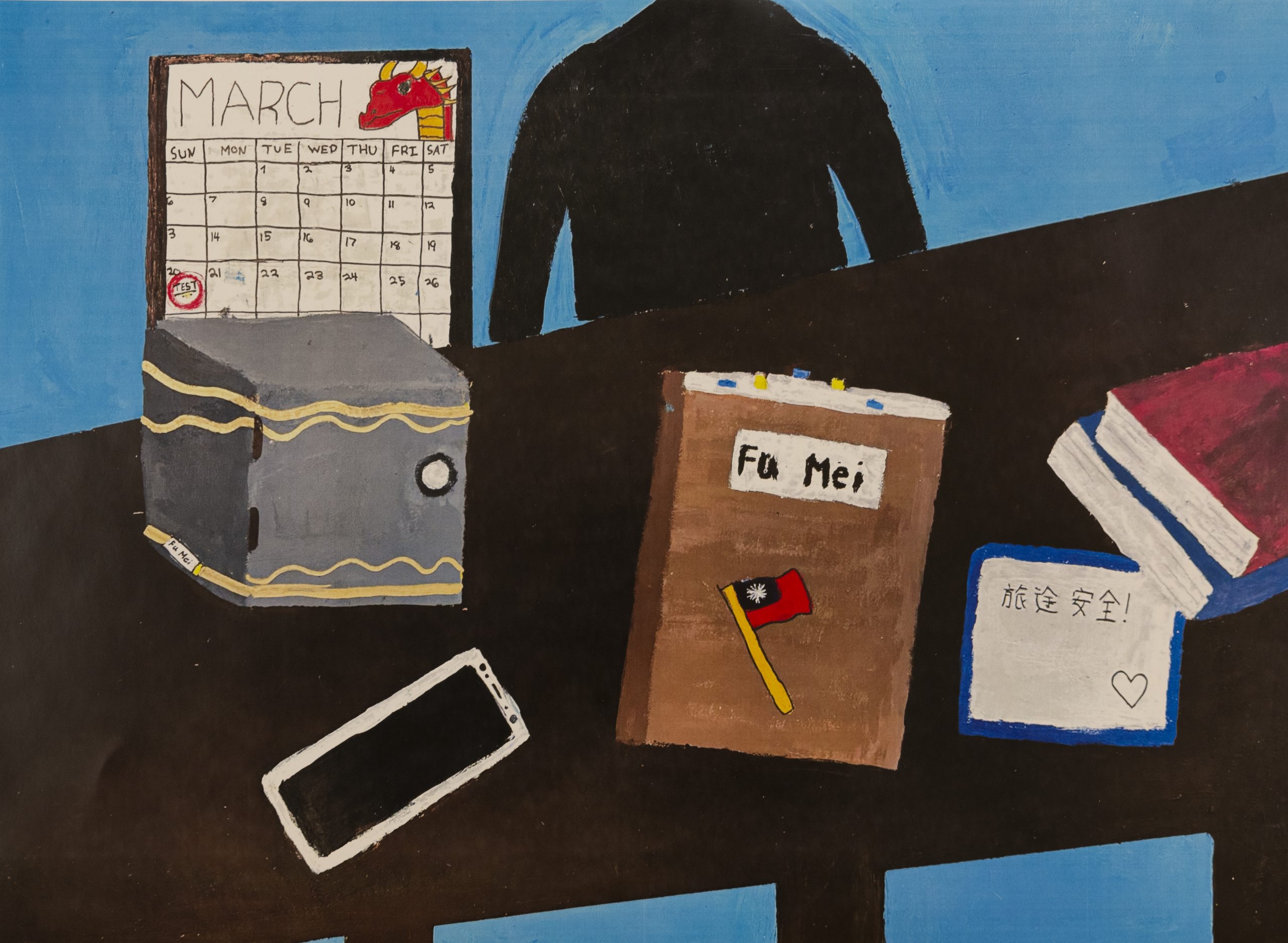
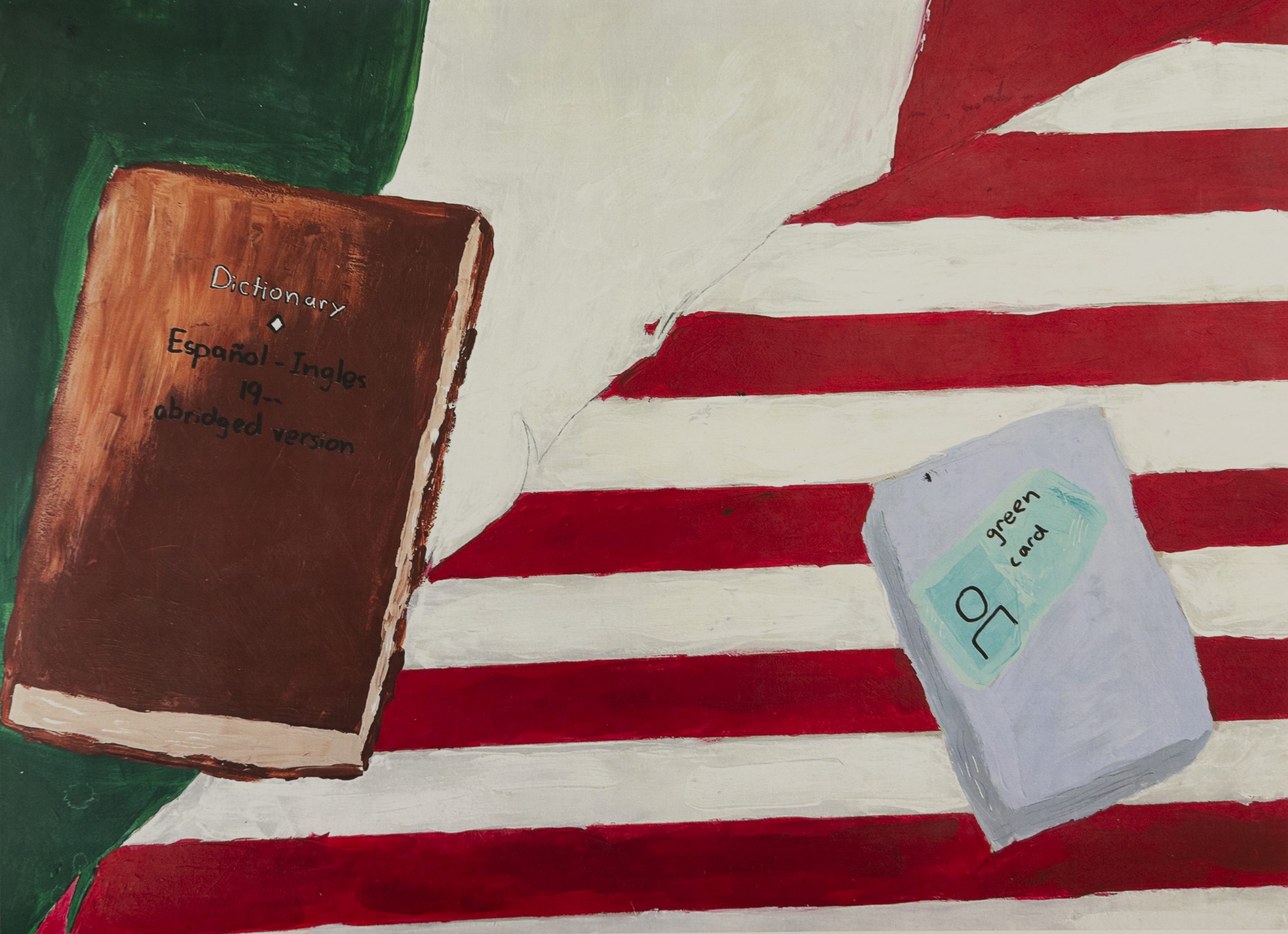
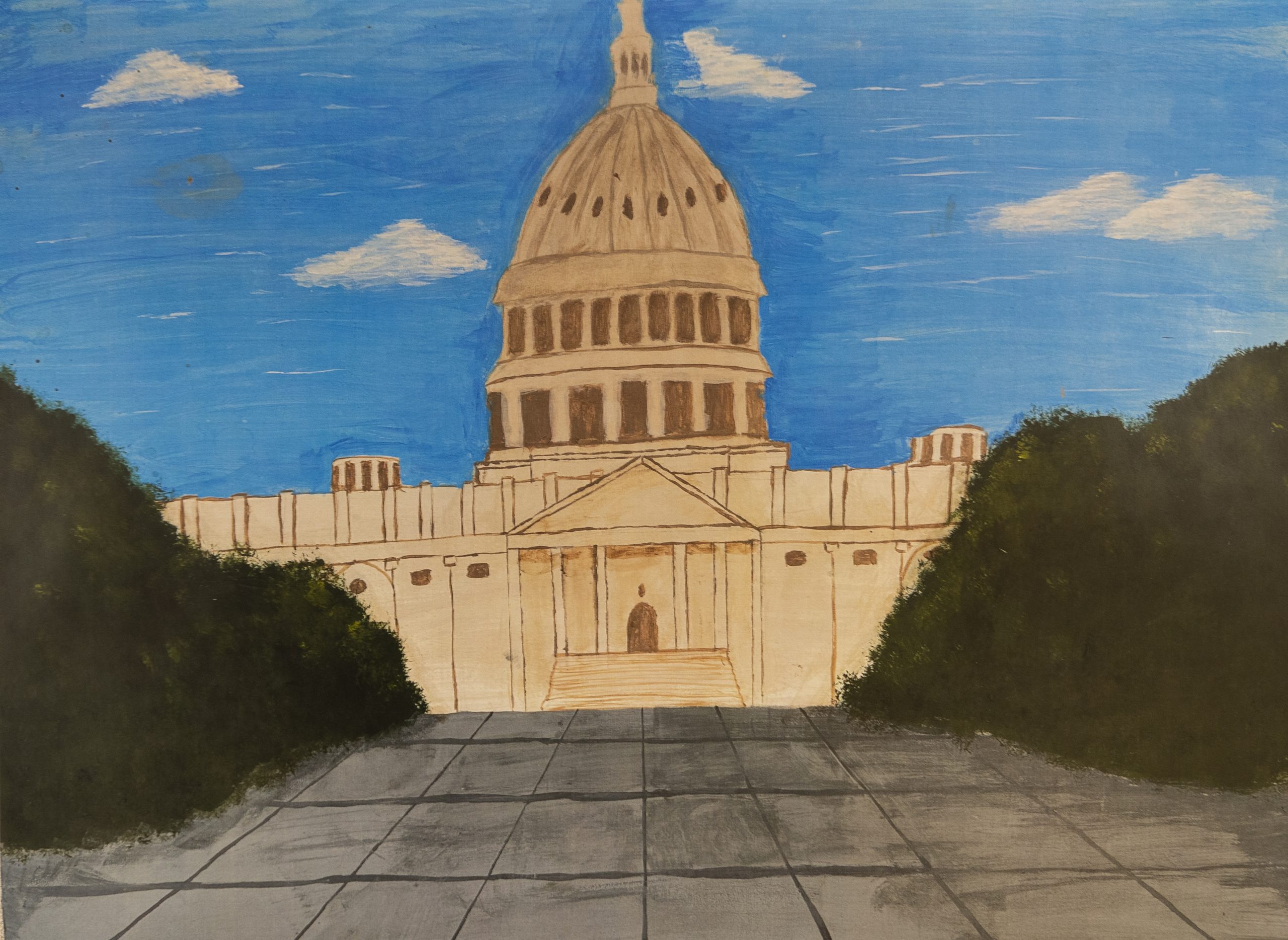
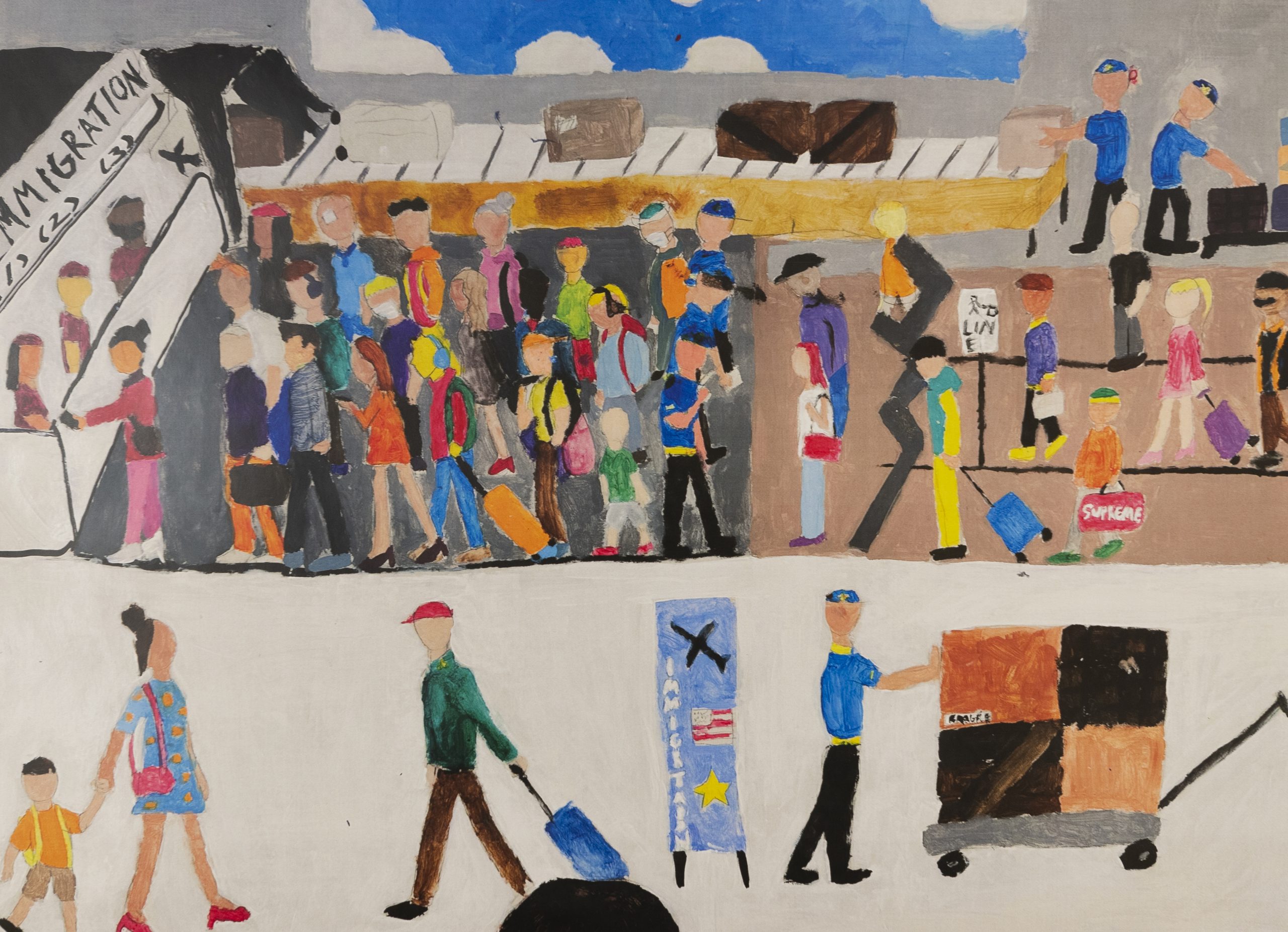
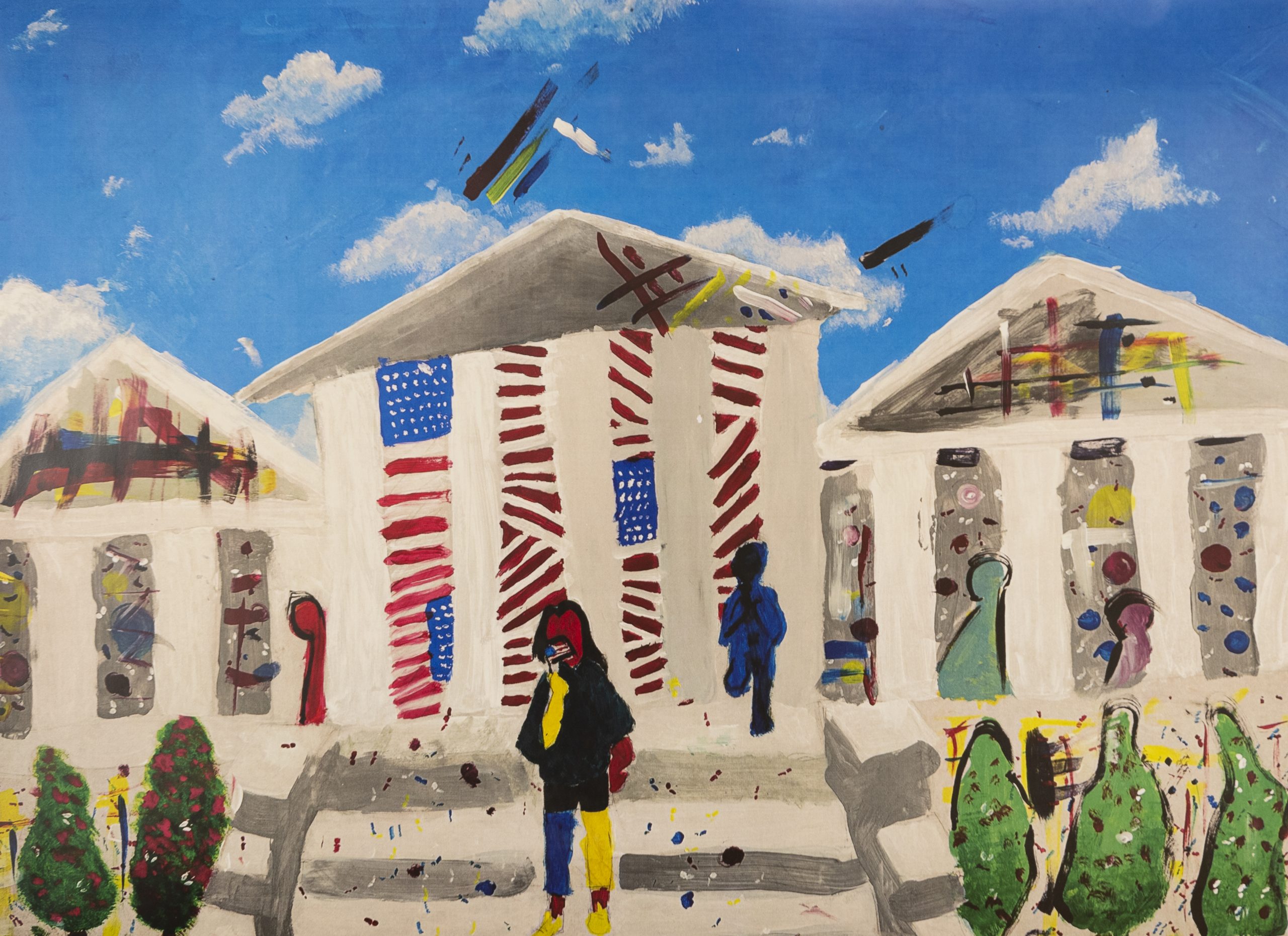
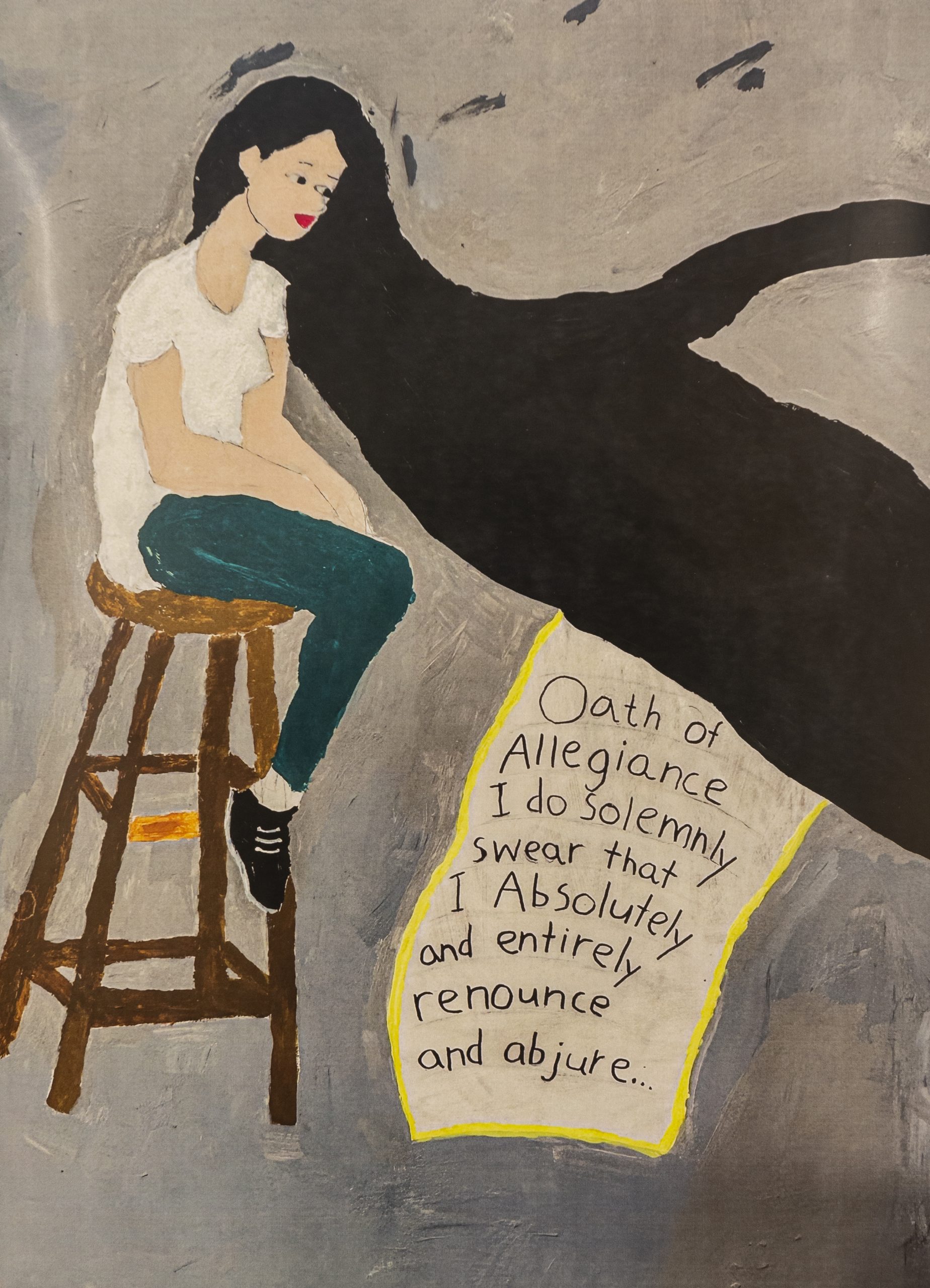
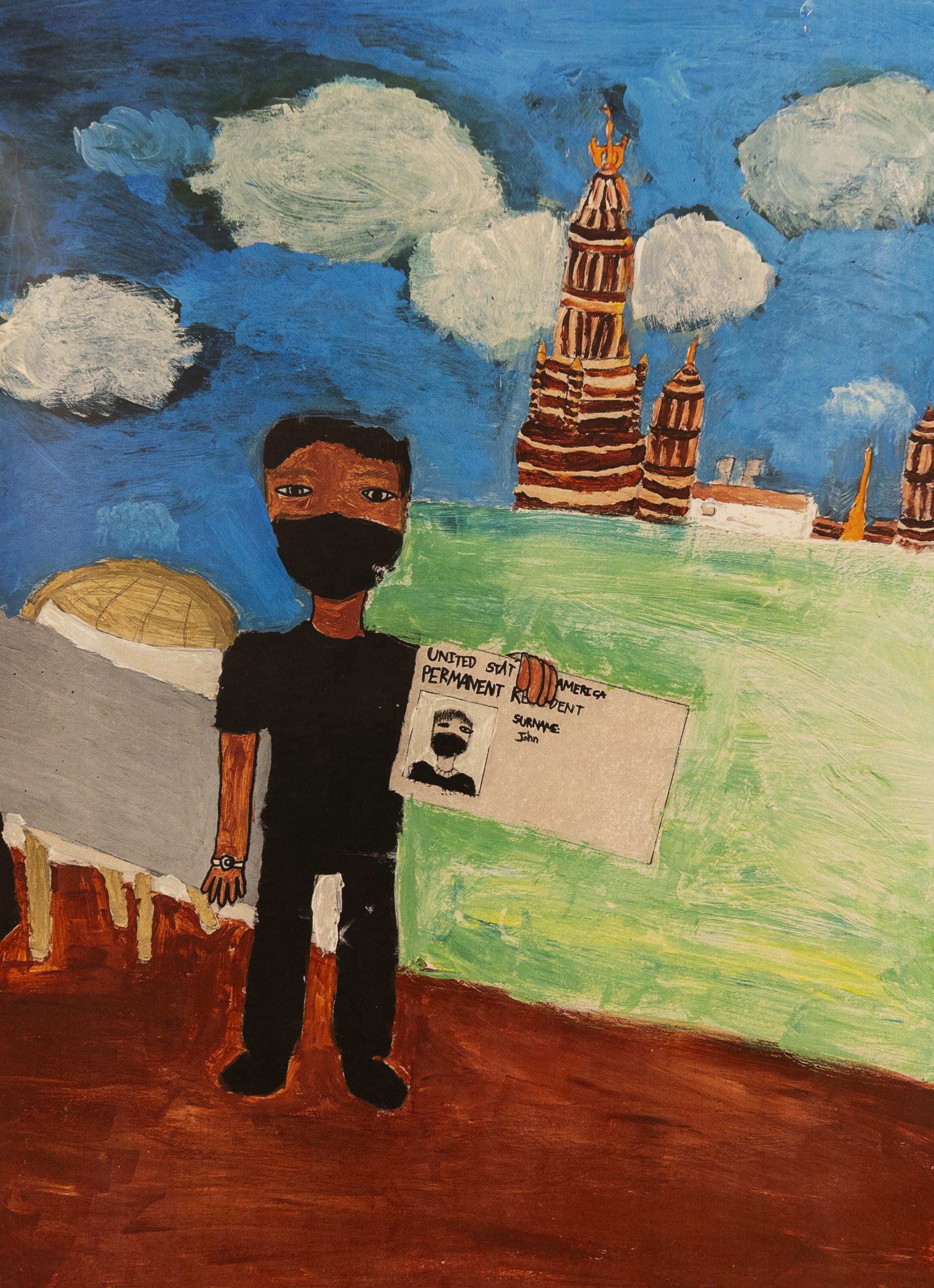
Project Title: THE IMMIGRANT EXPERIENCE AND THE NATURALIZATION PROCESS
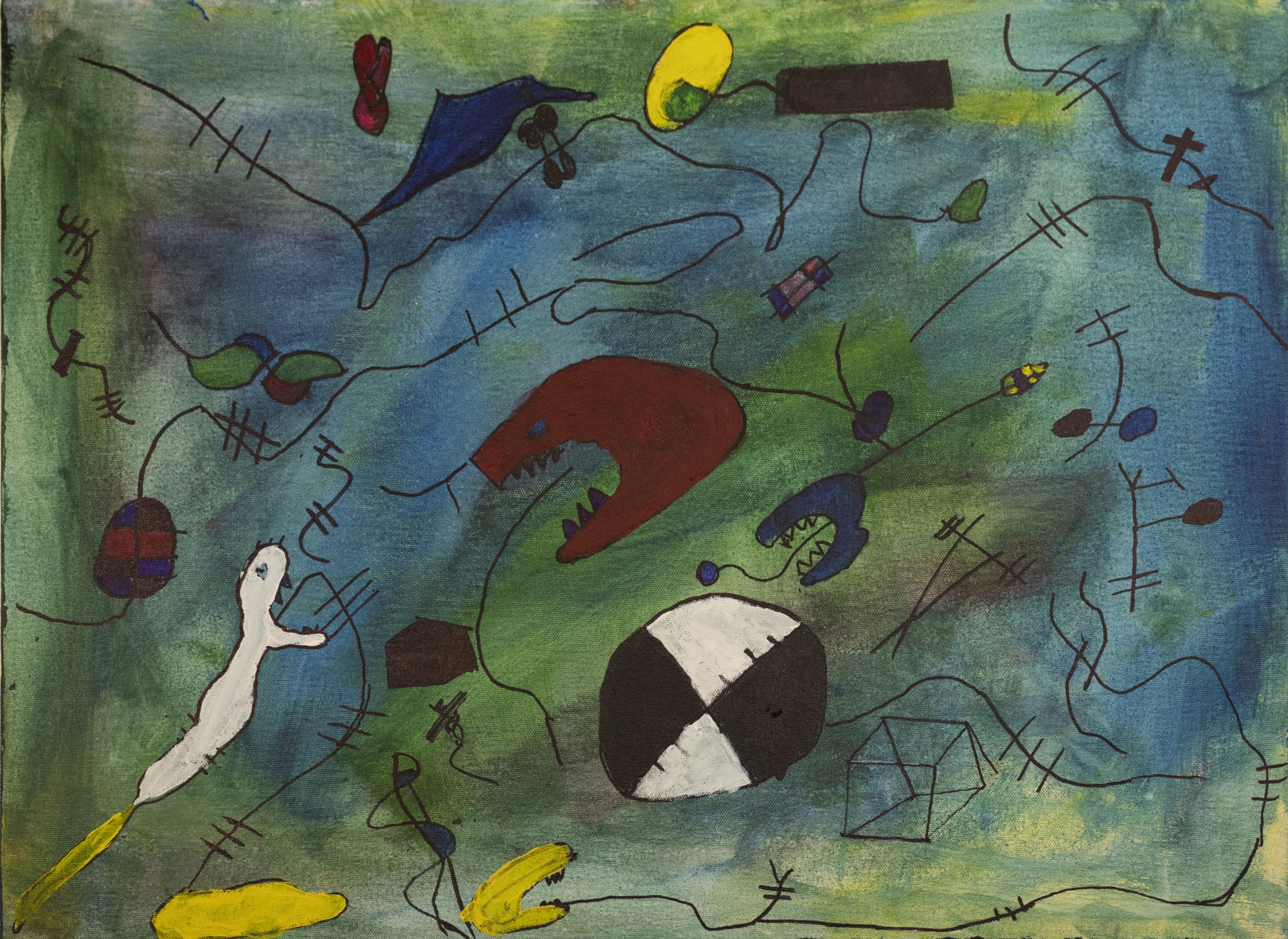
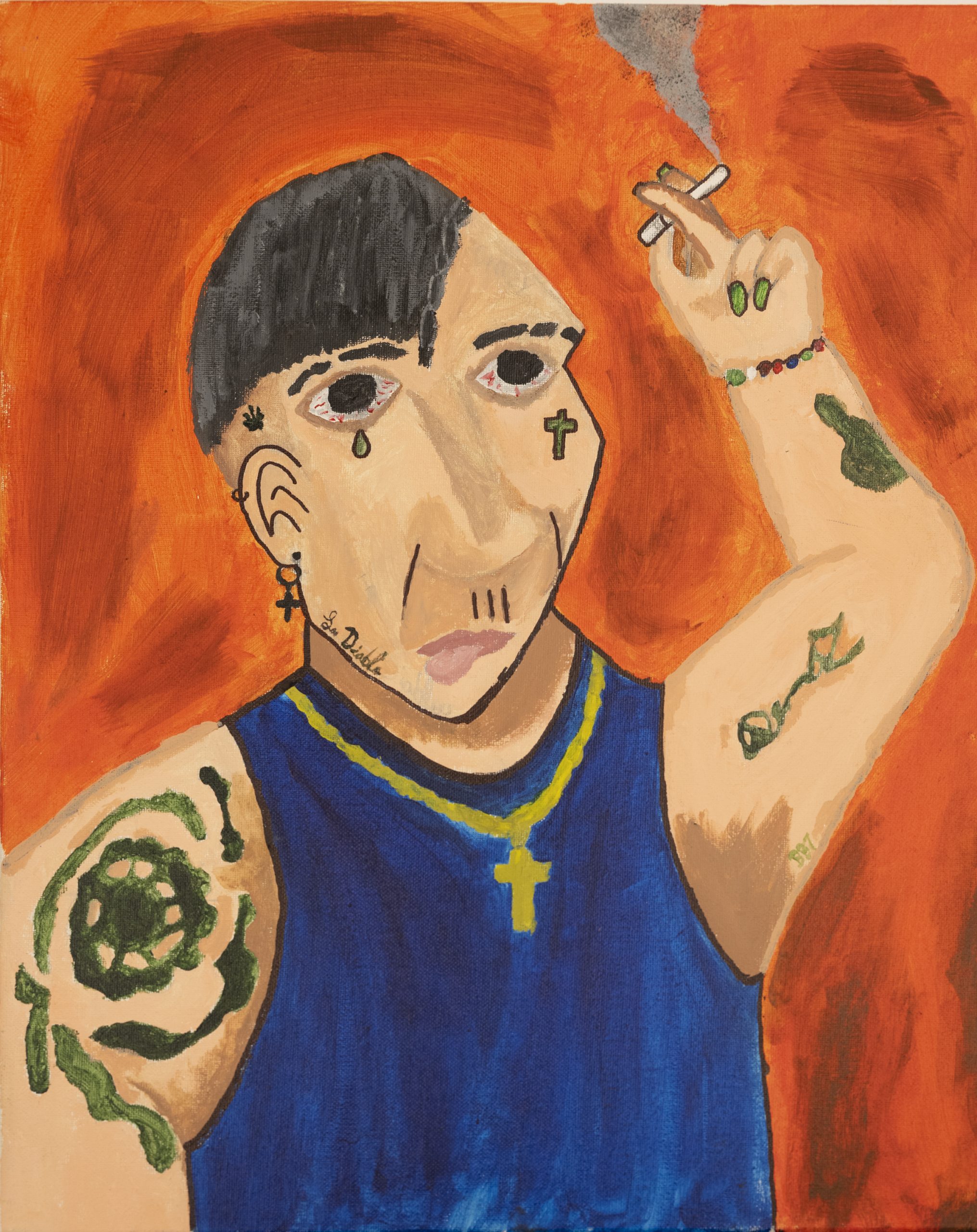
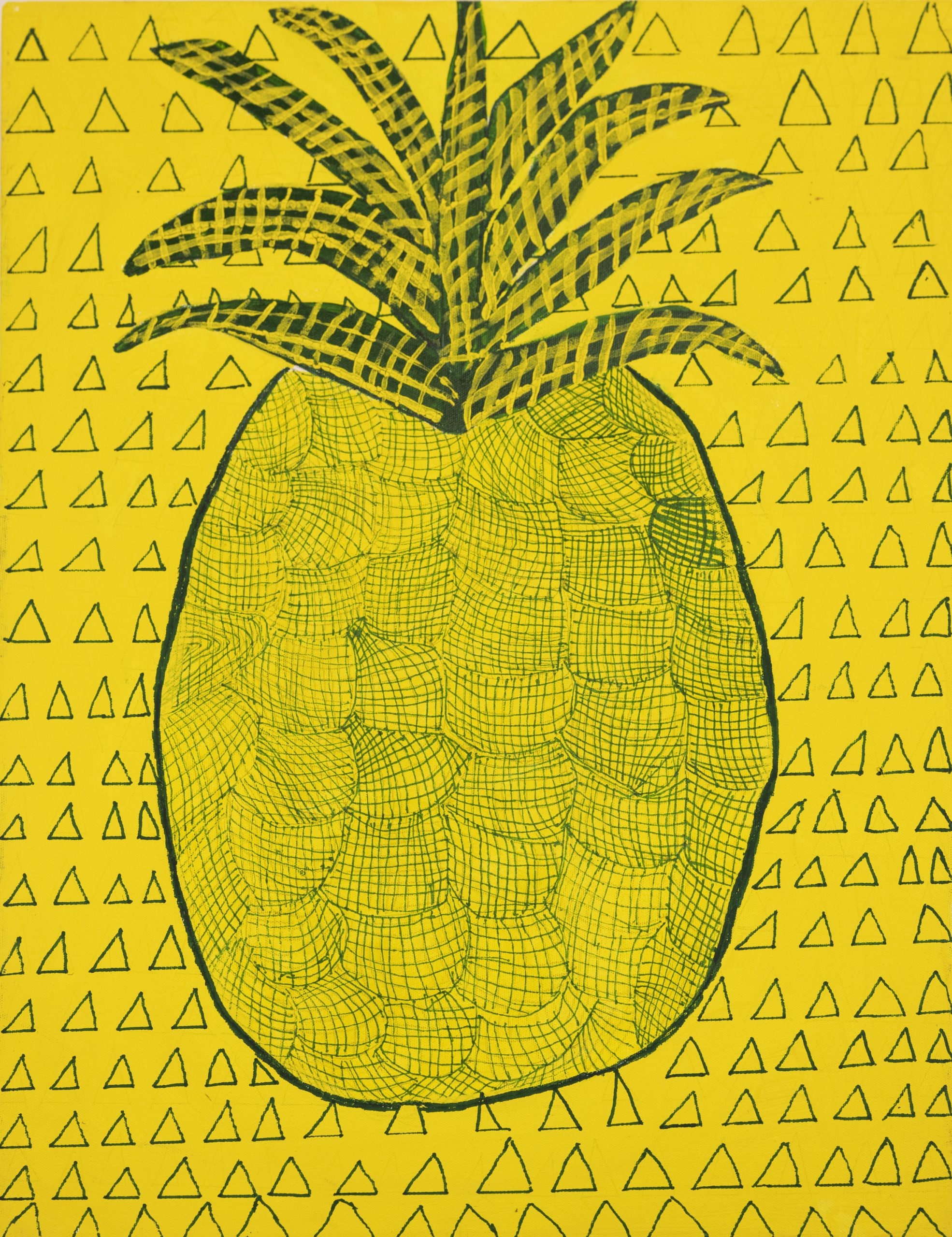
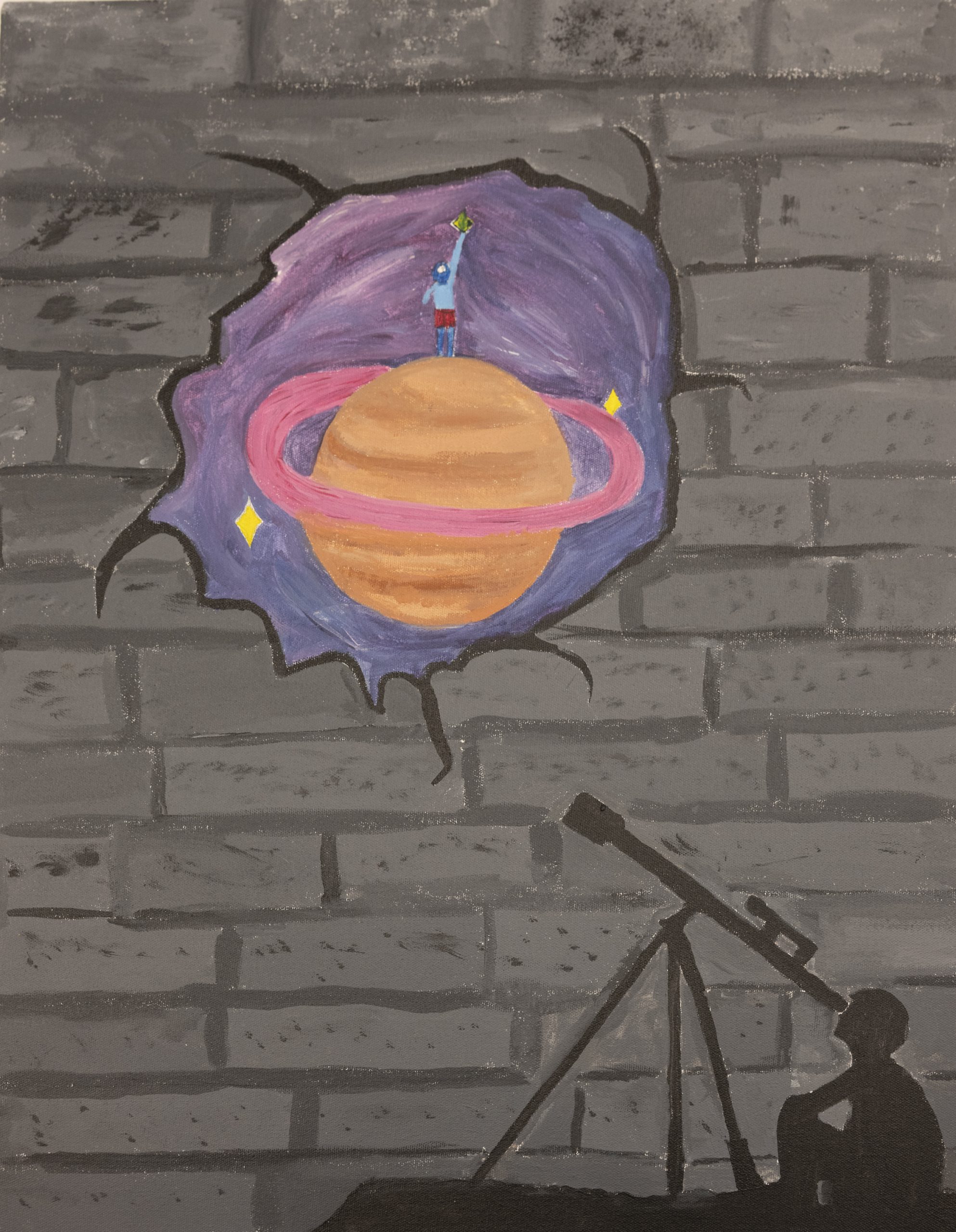
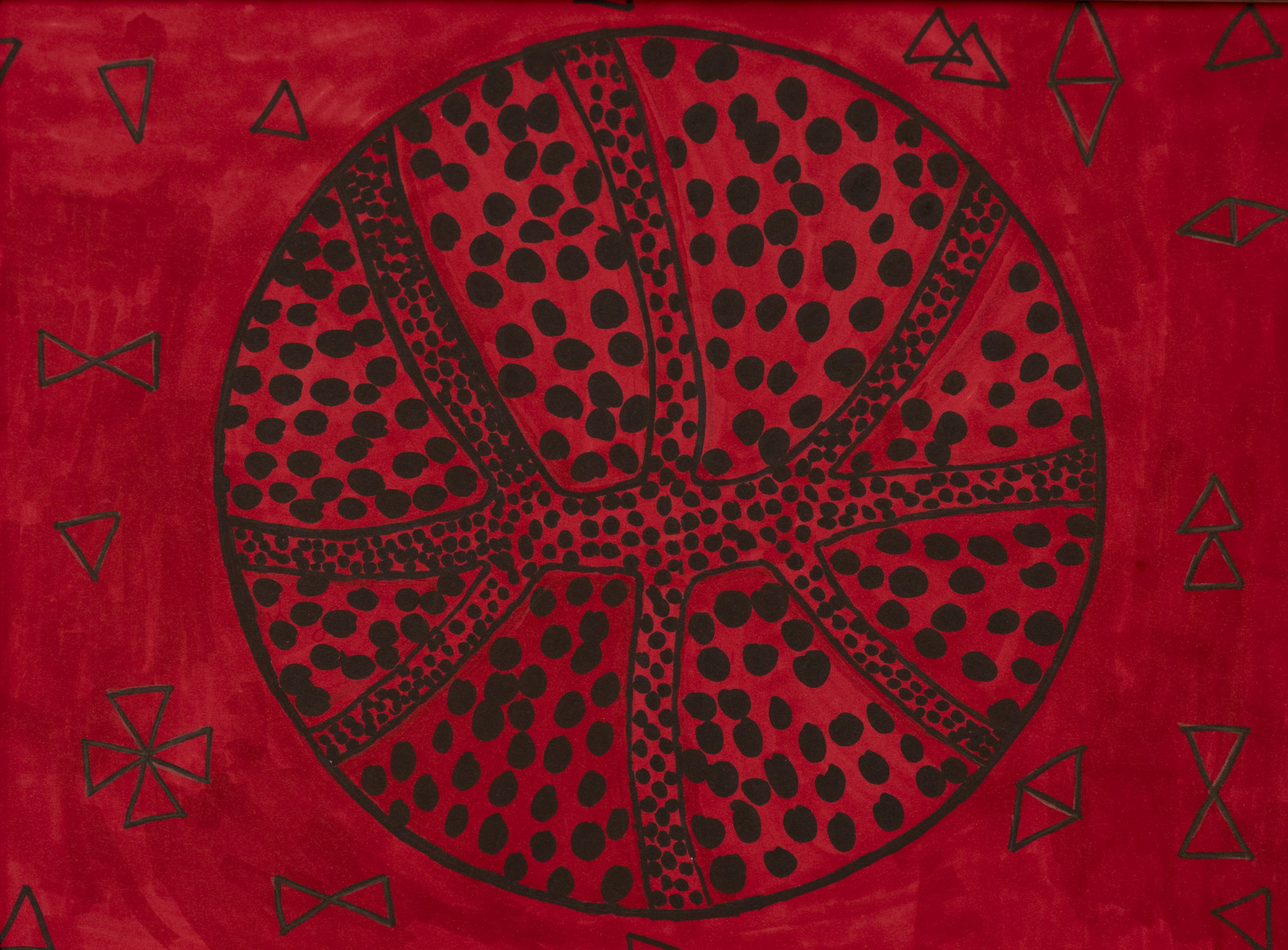
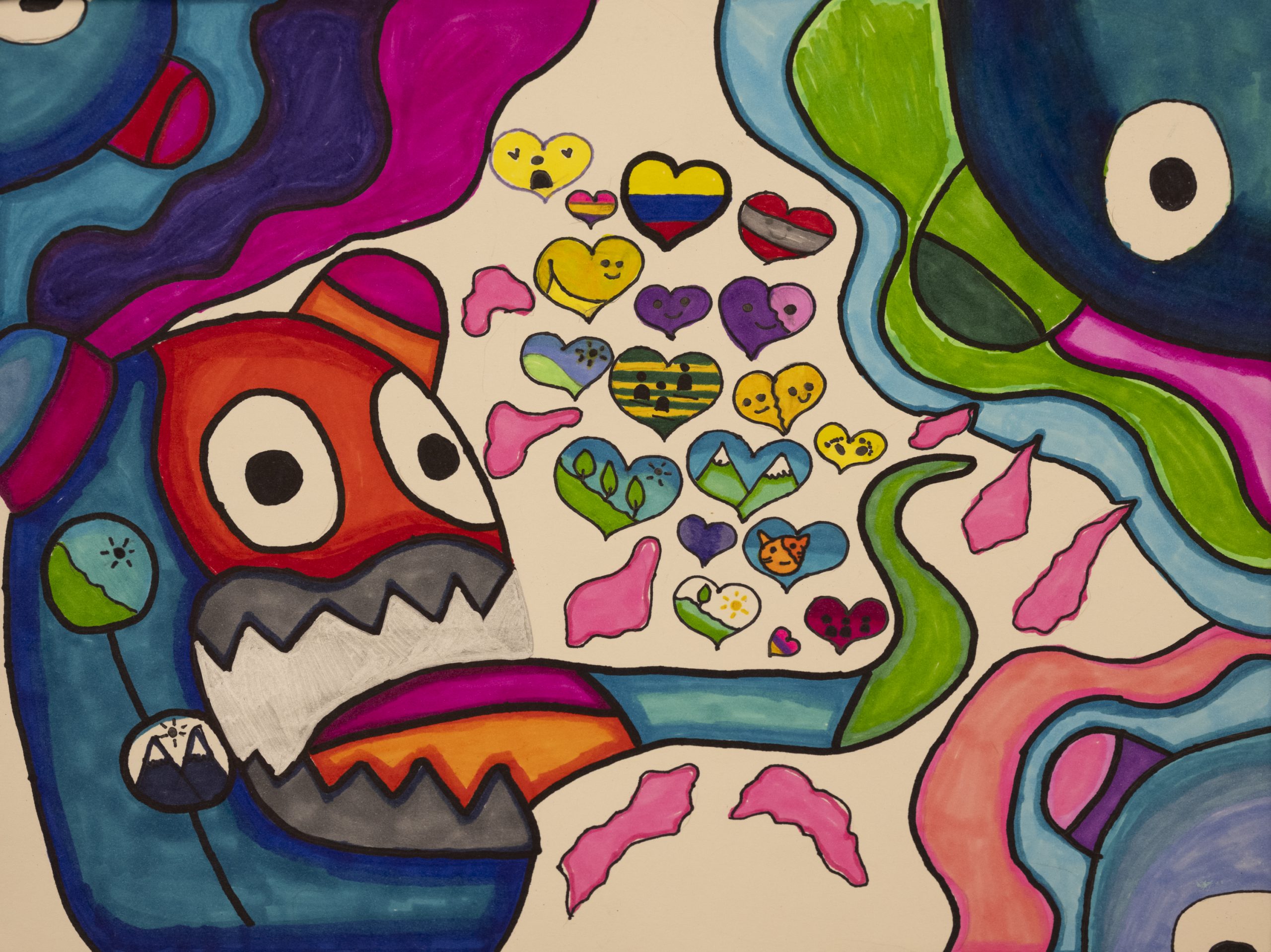
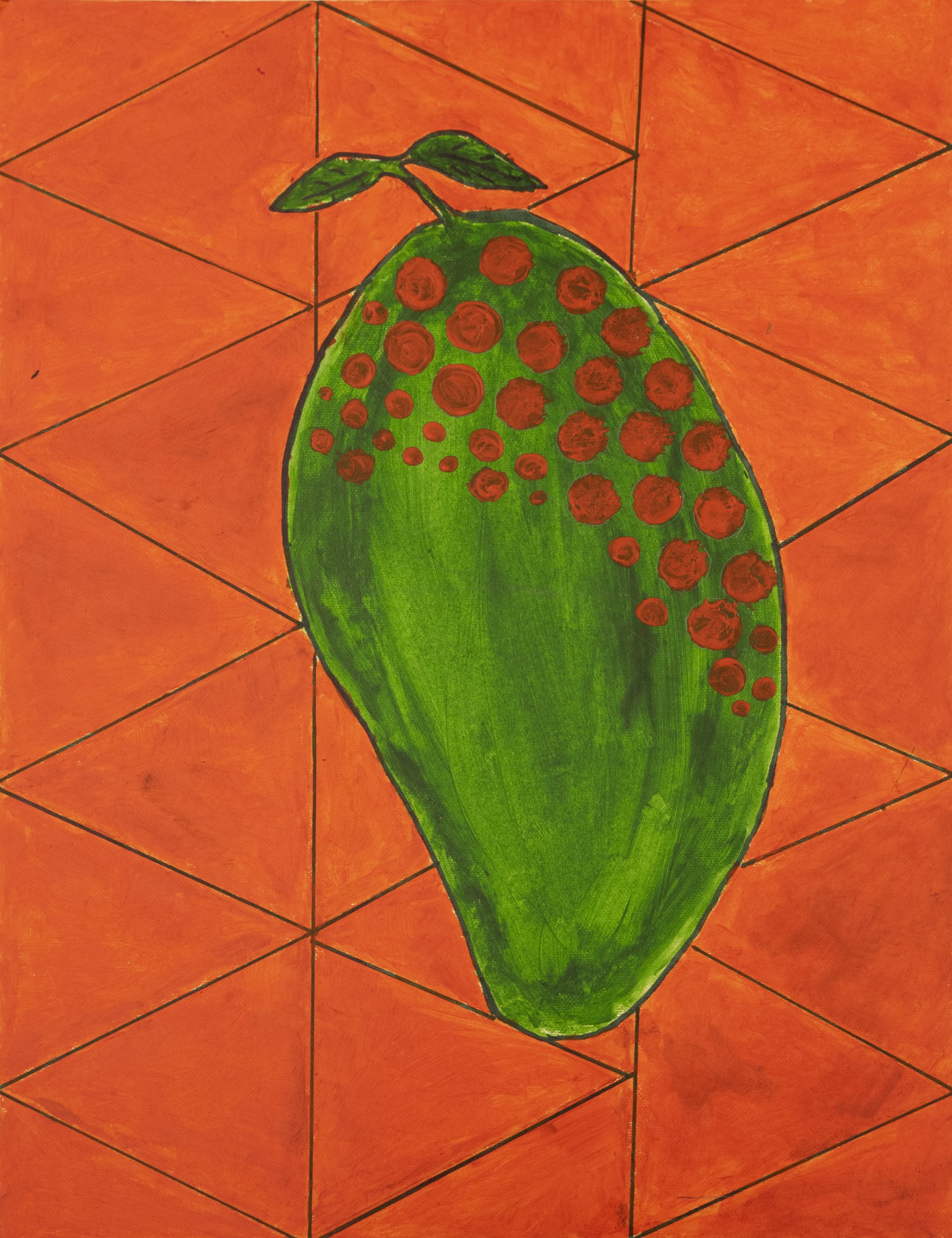
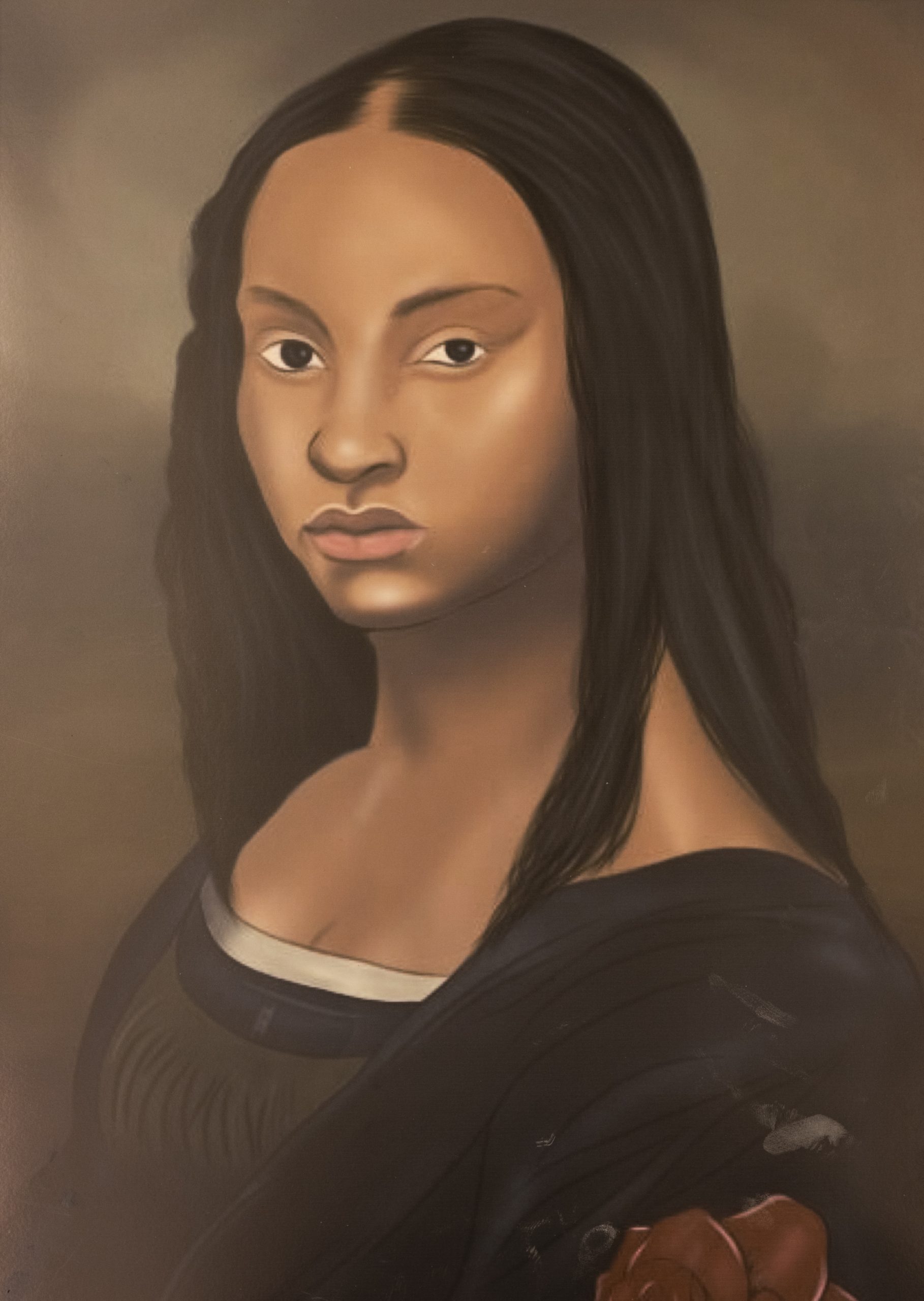
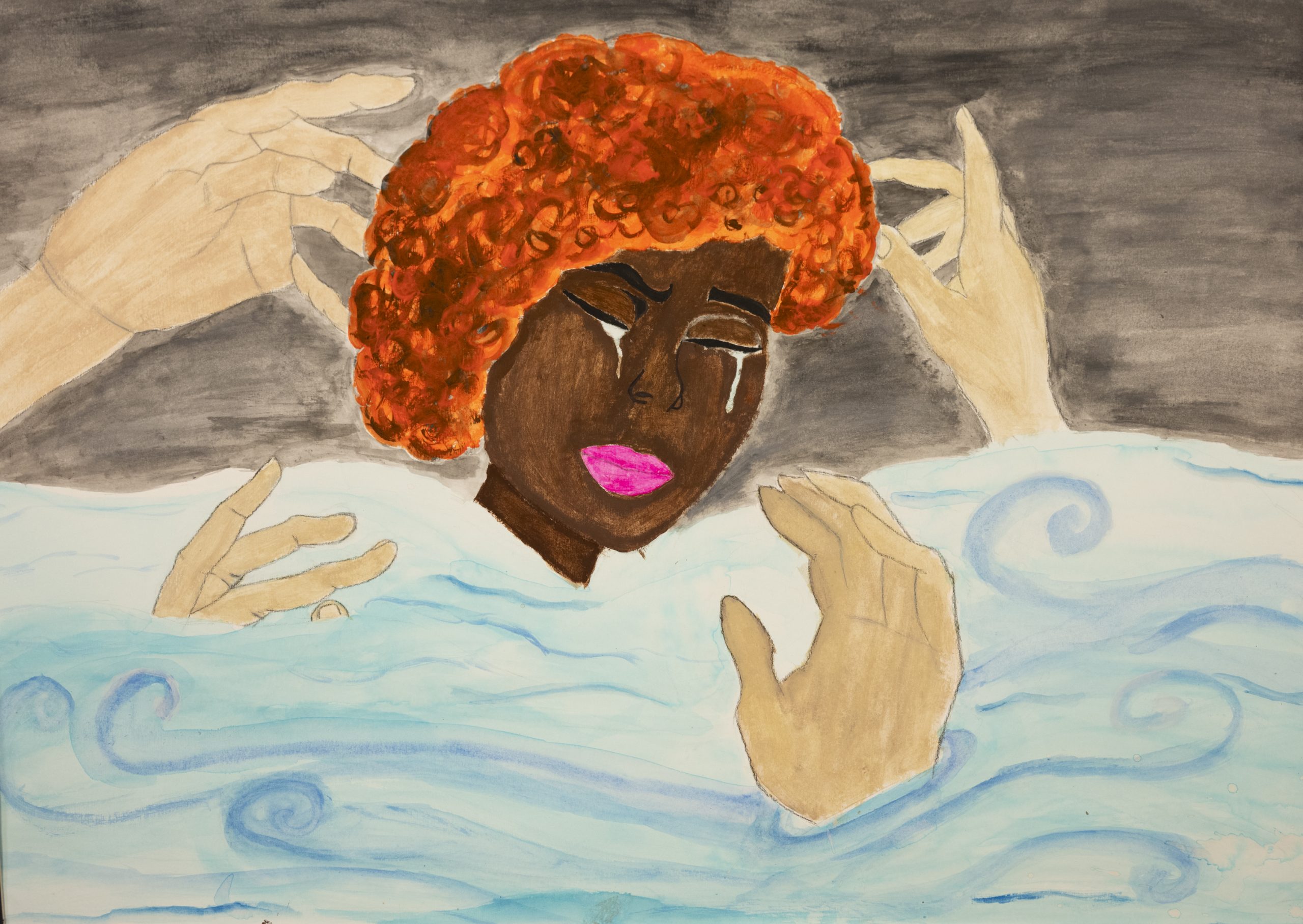
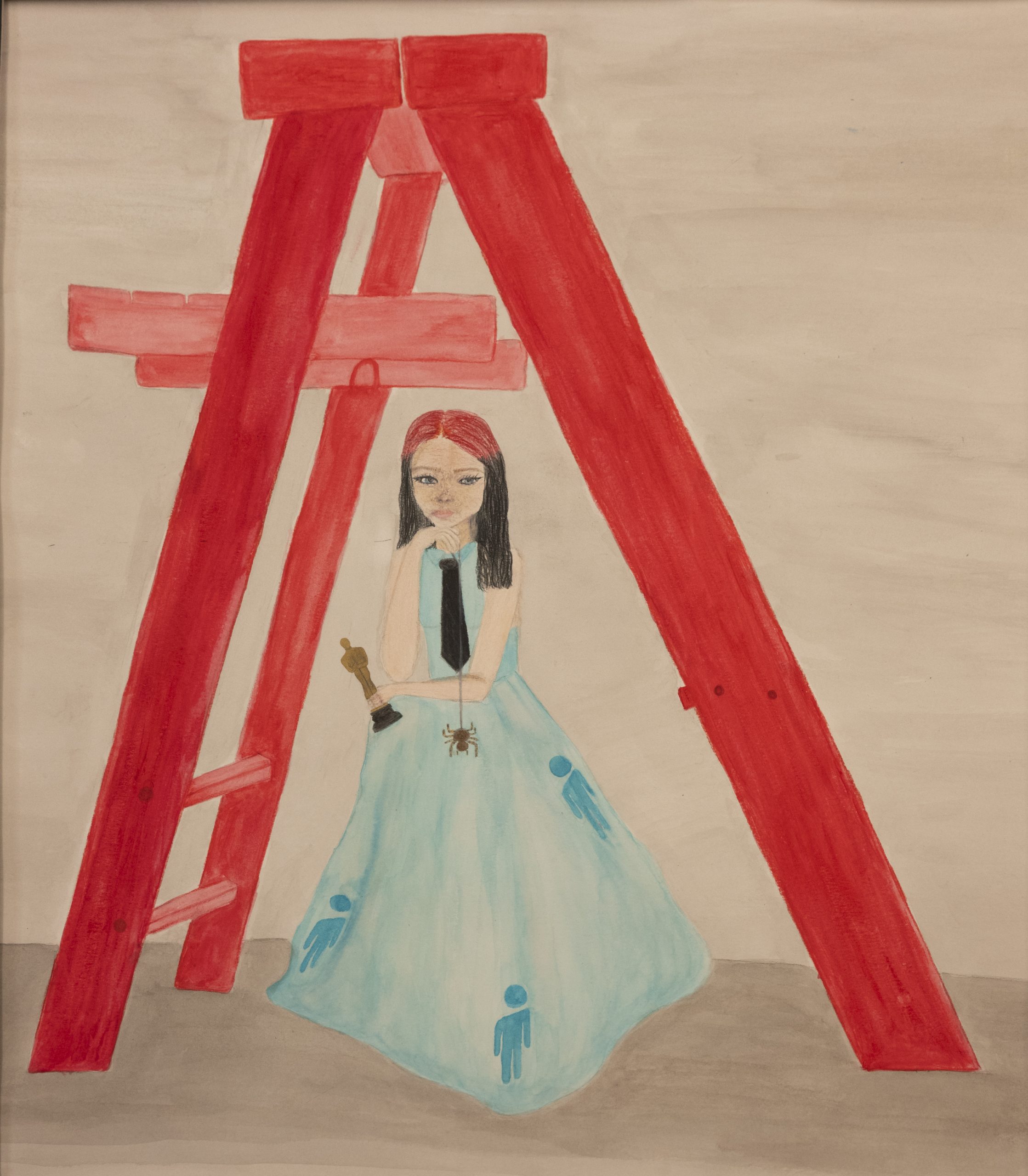
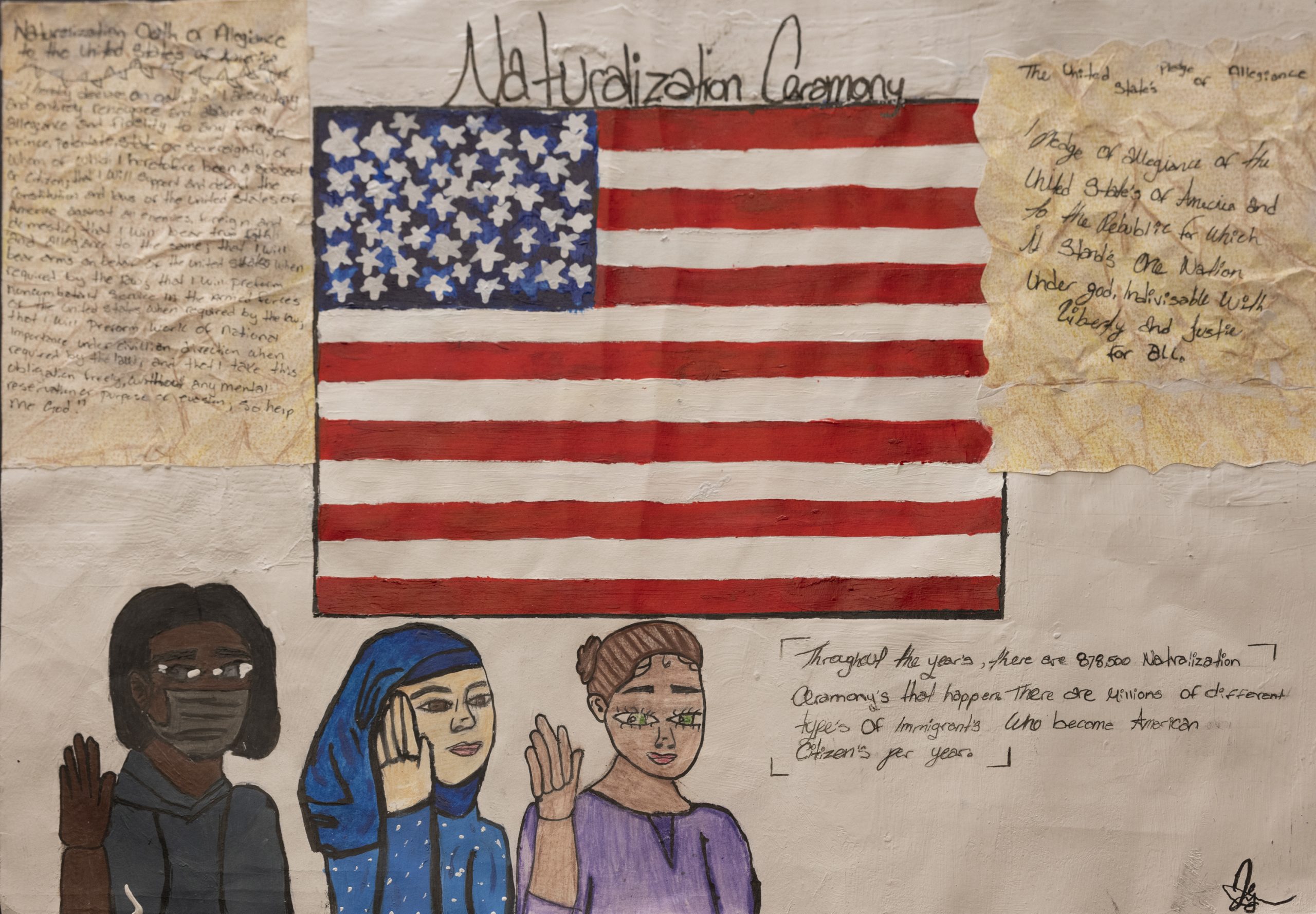
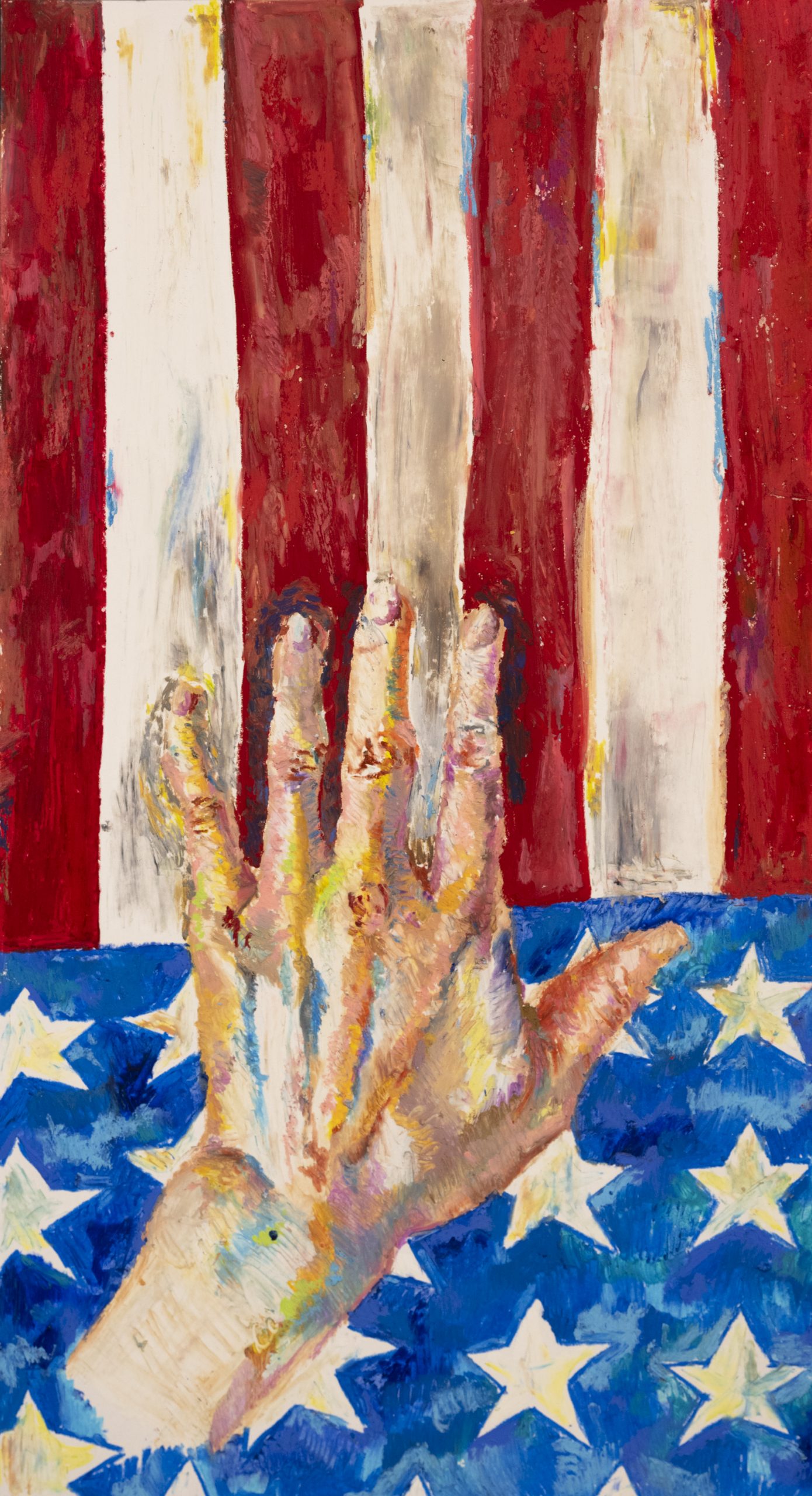
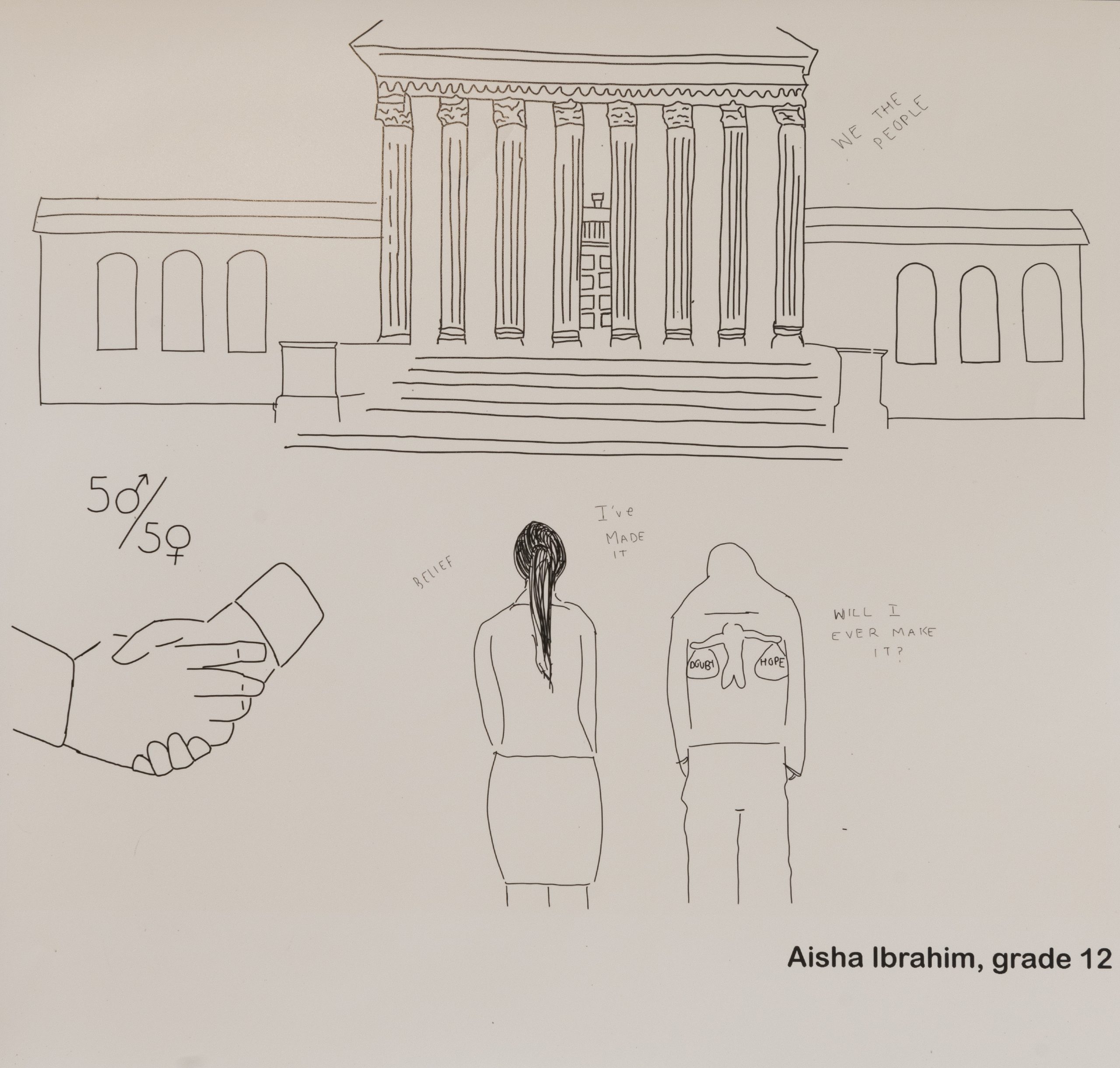
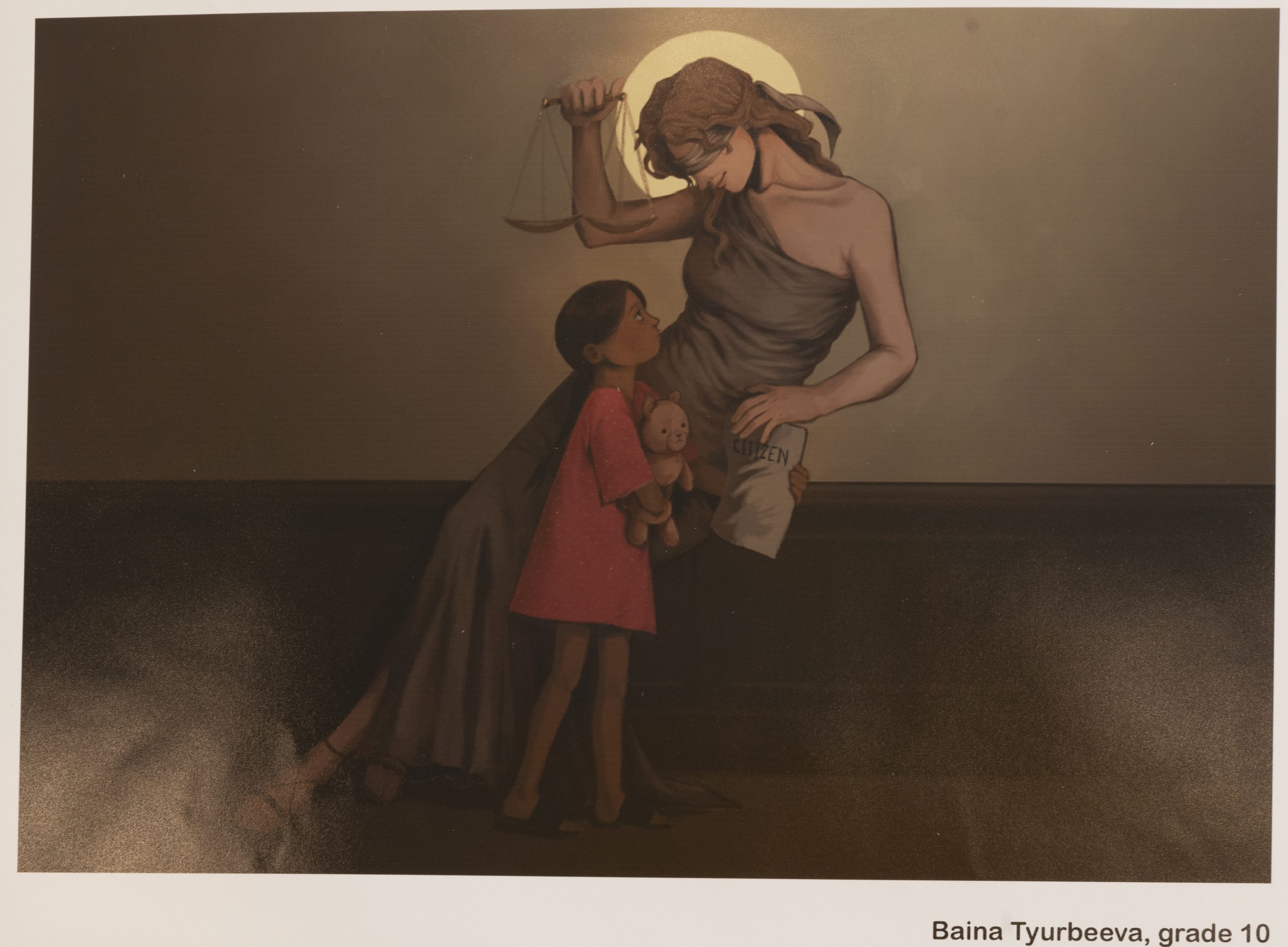
The students learned about the naturalization process and what steps immigrants need to take to obtain American citizenship. The students learned about immigrant artists who have fought to raise awareness and promote immigrant rights in the United States. The students used these artists’ pieces as frameworks for their own compositions and ideas connecting their experiences and cultures to their pieces. The students reflected on their personal desires to participate in or opt out of the naturalization process and their reasons behind their possible choices. The project prompted class discussions in which the students were able to share their experiences with classmates and process their feelings about the naturalization process.
Principal: Burnedette Drysdale
Teacher: Christopher Curti
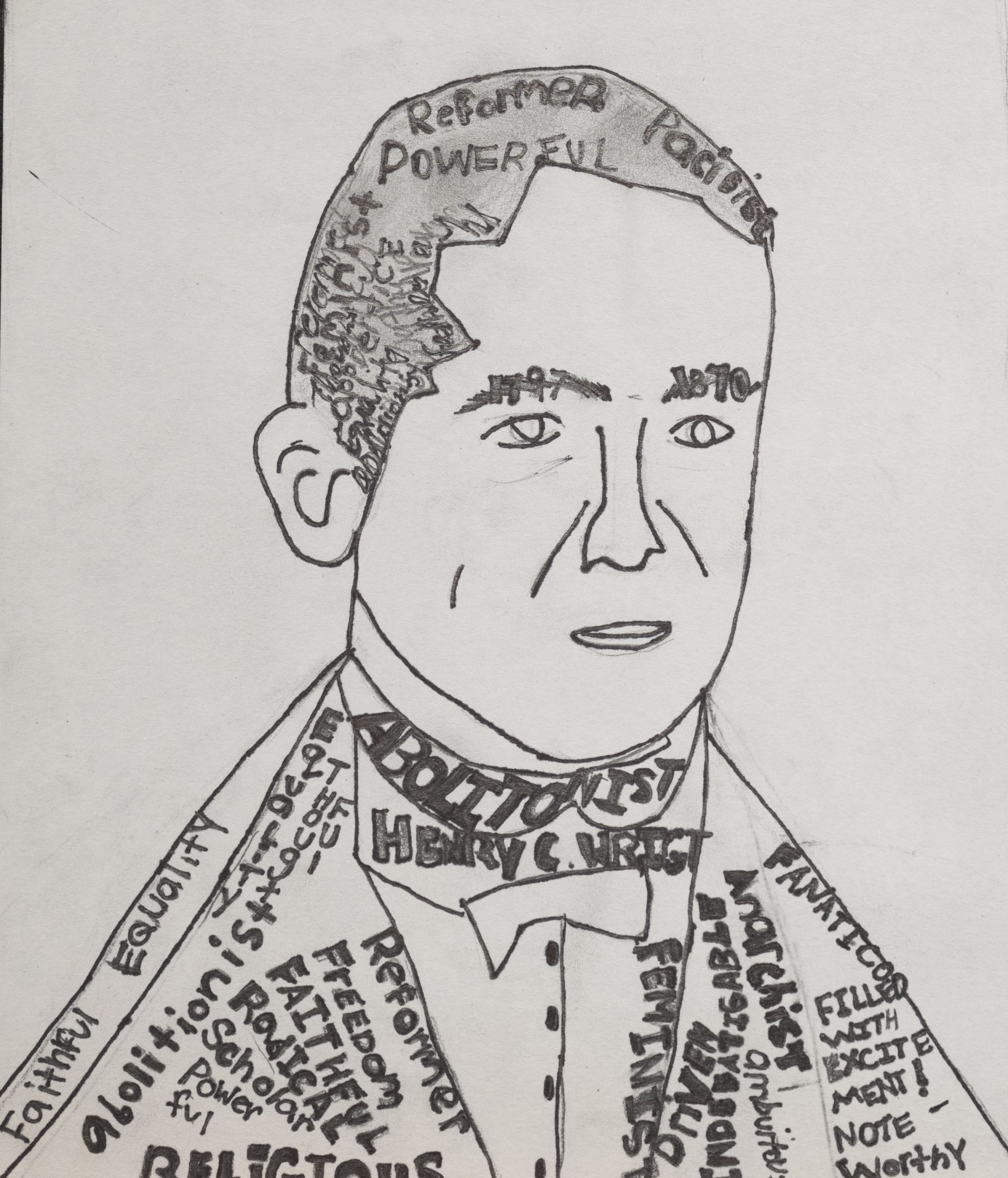
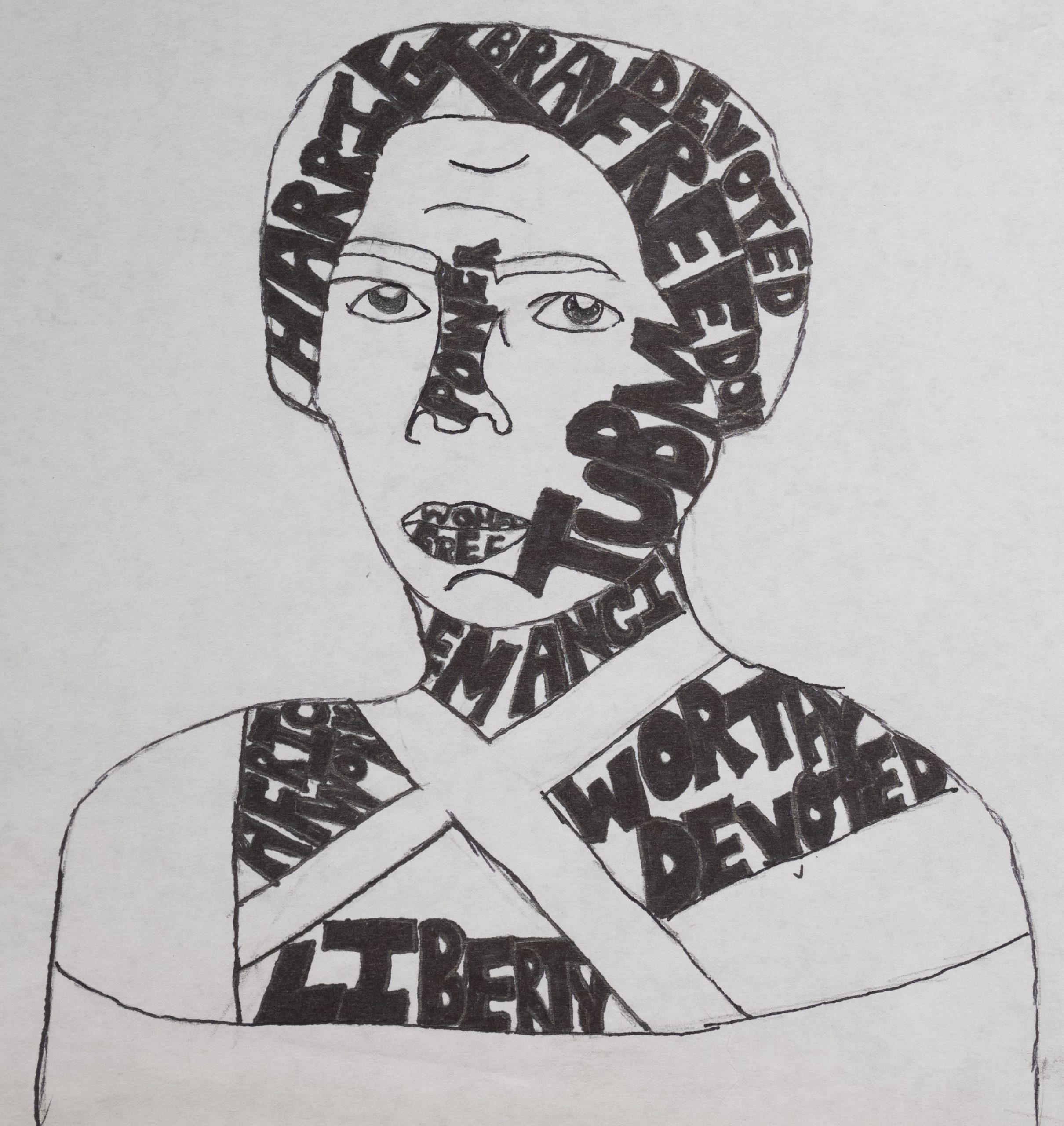
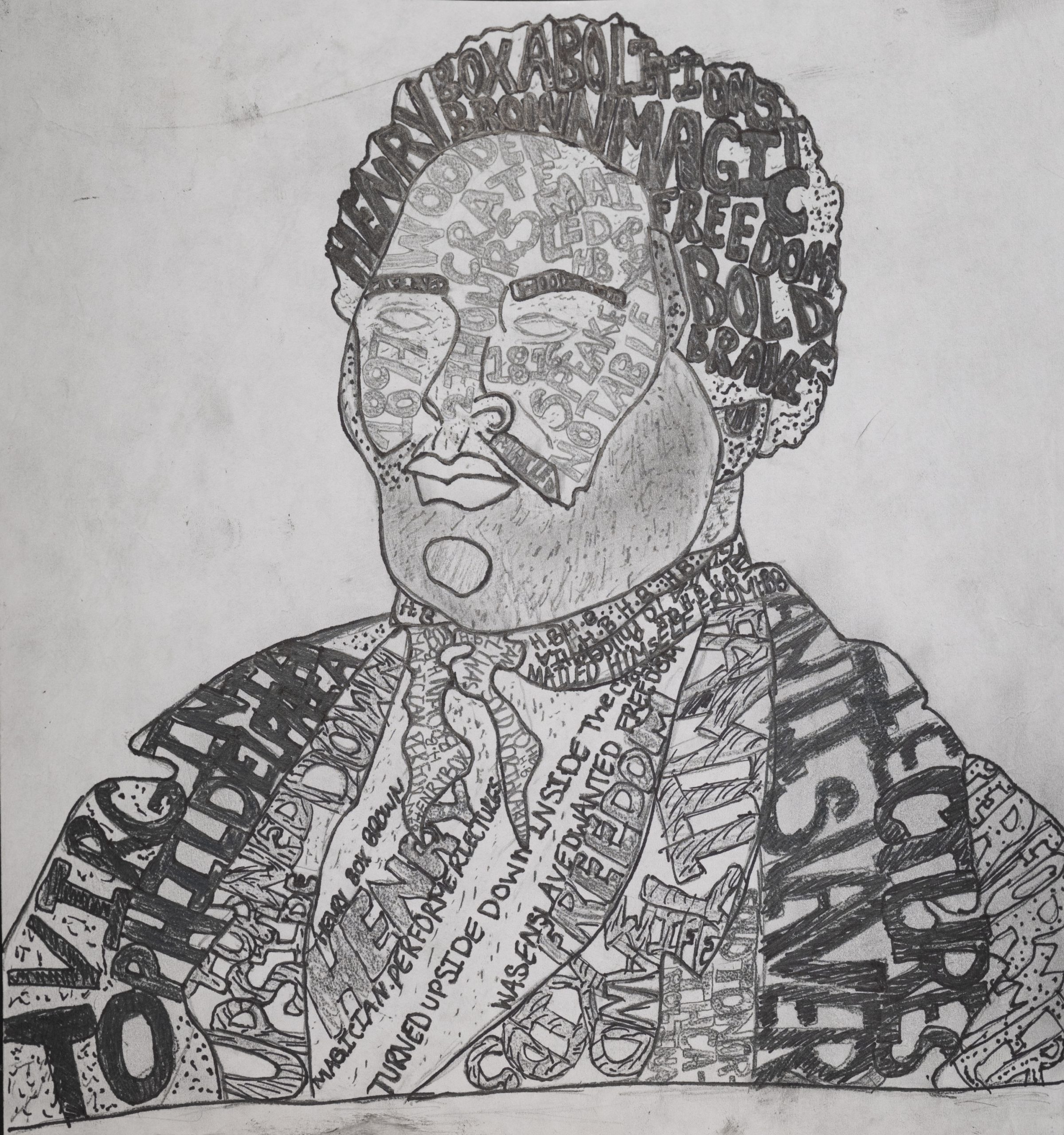
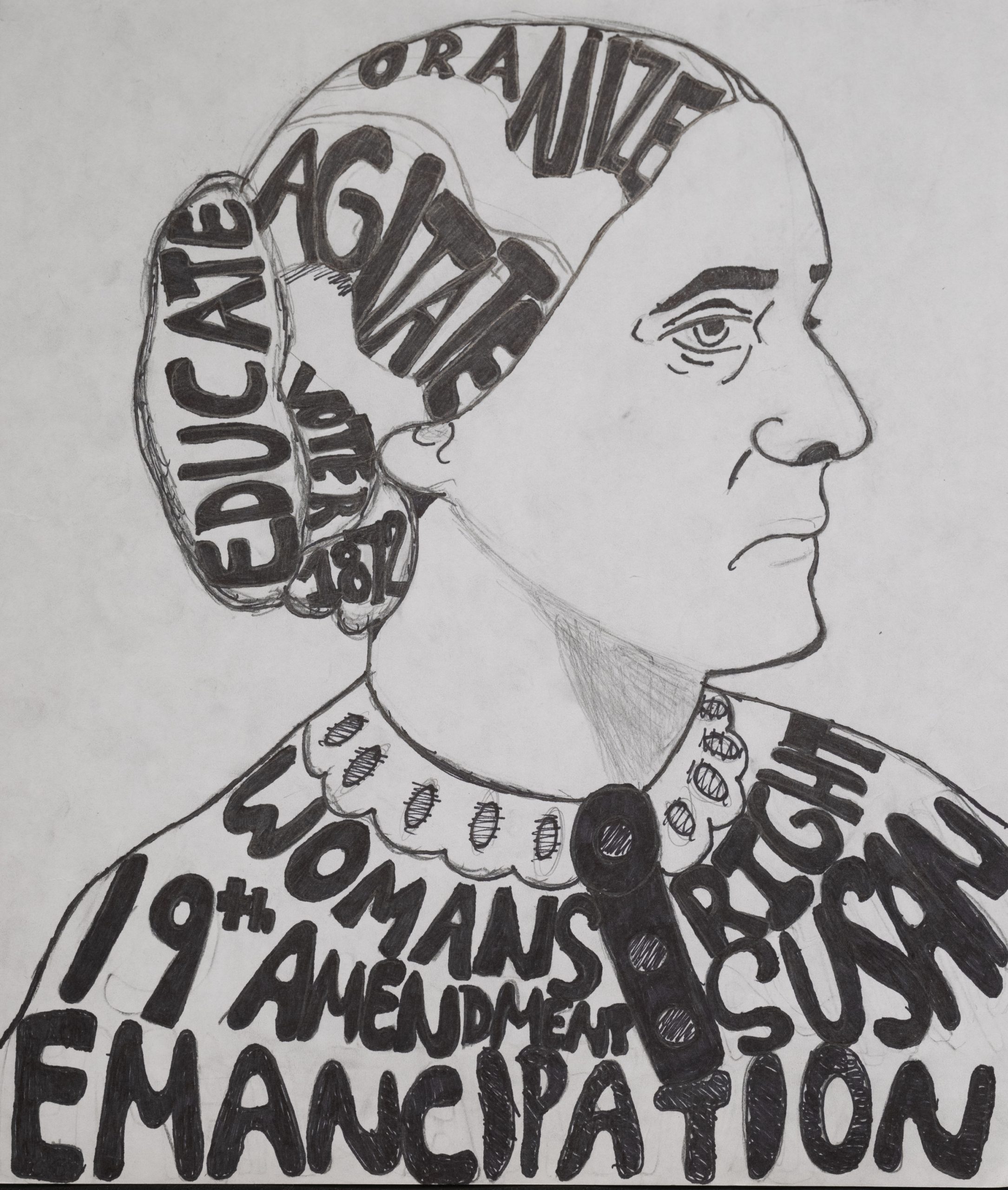
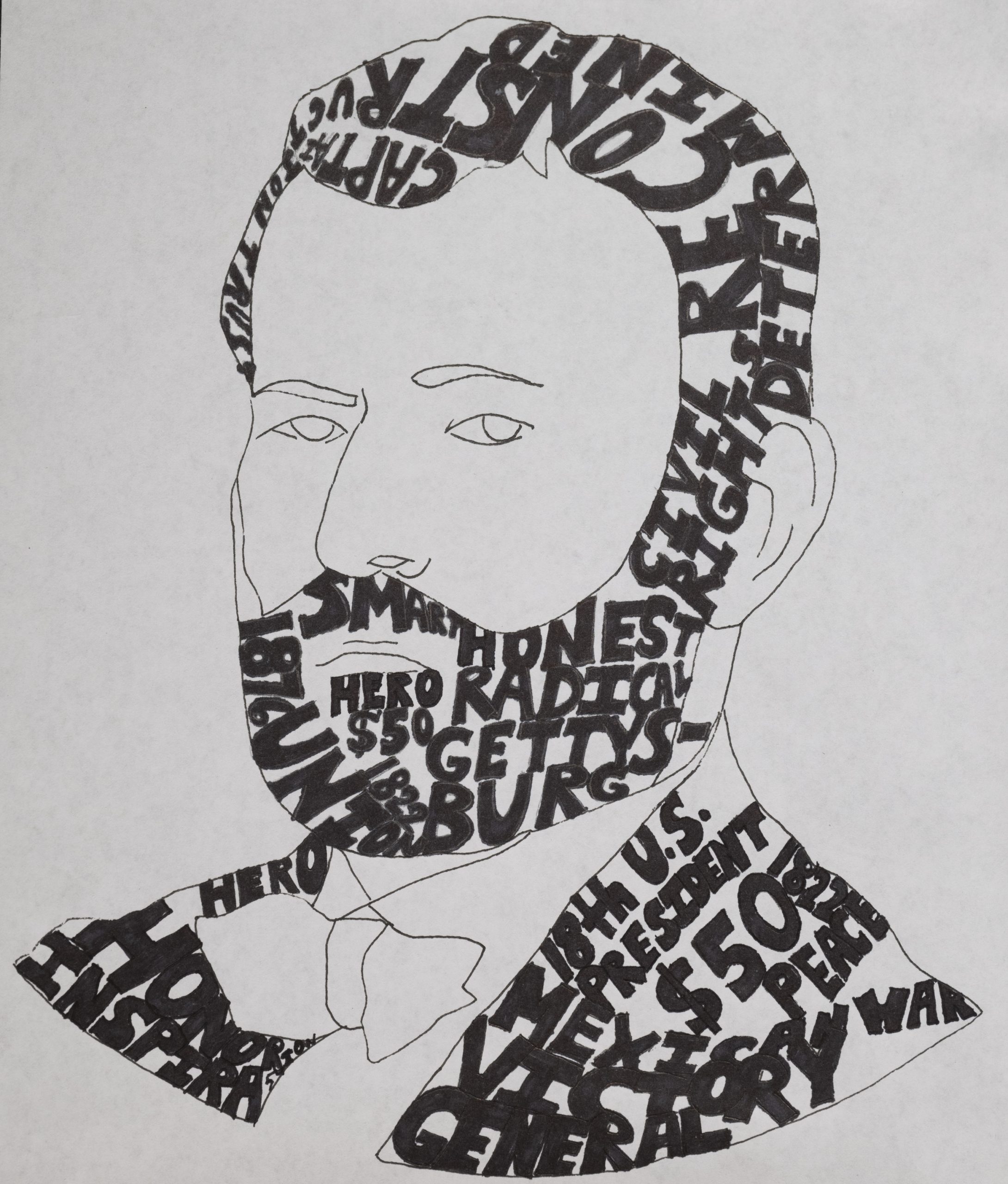
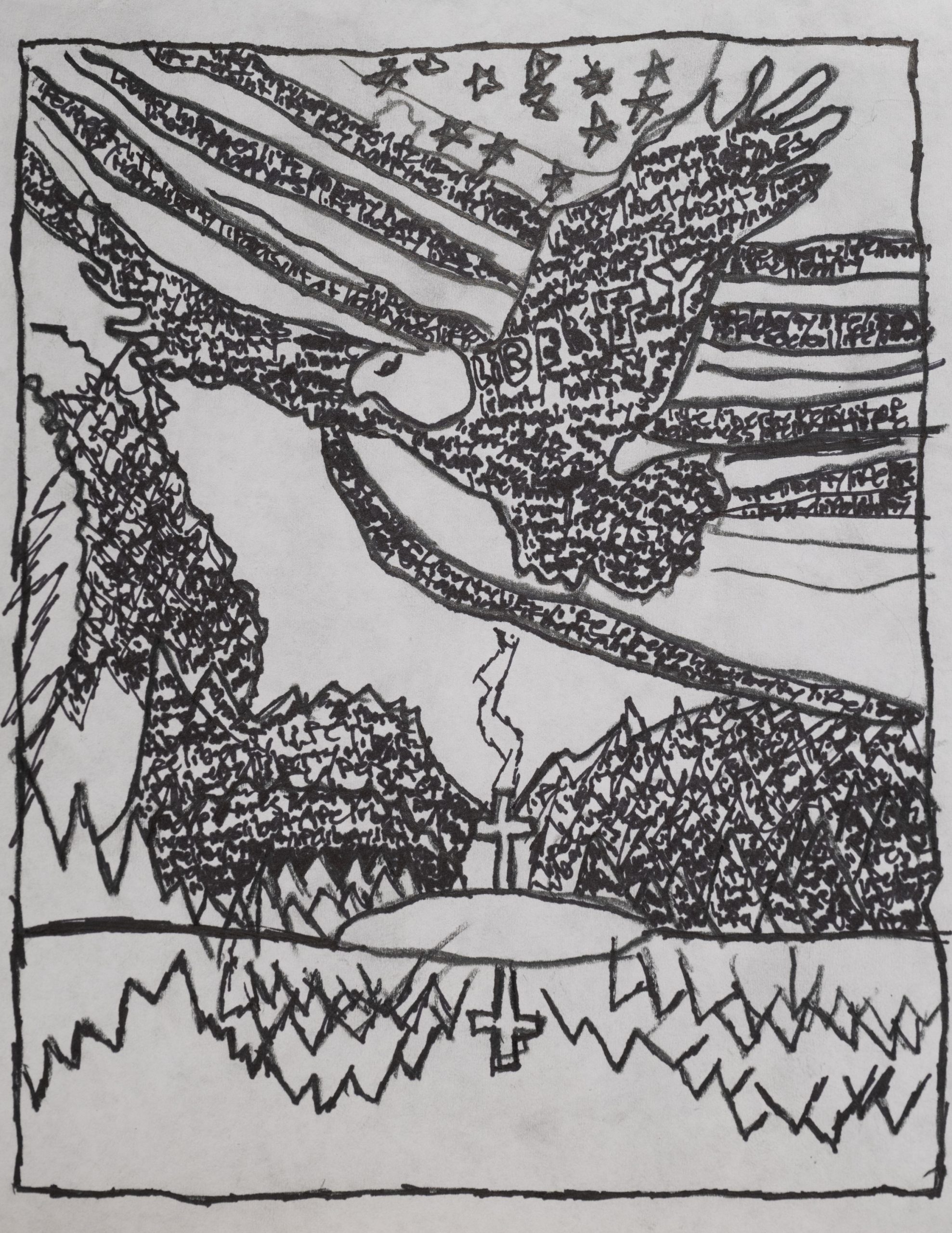
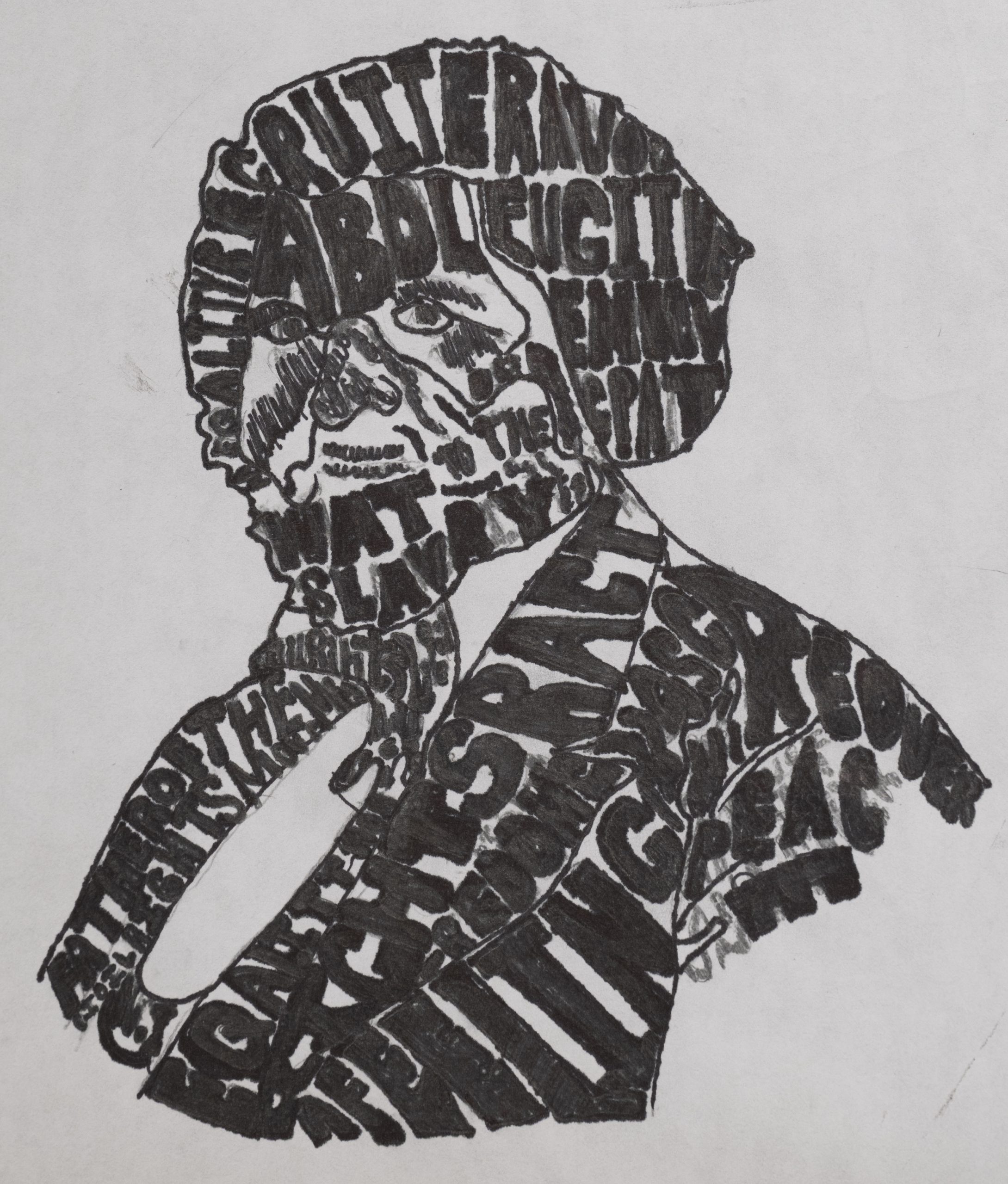
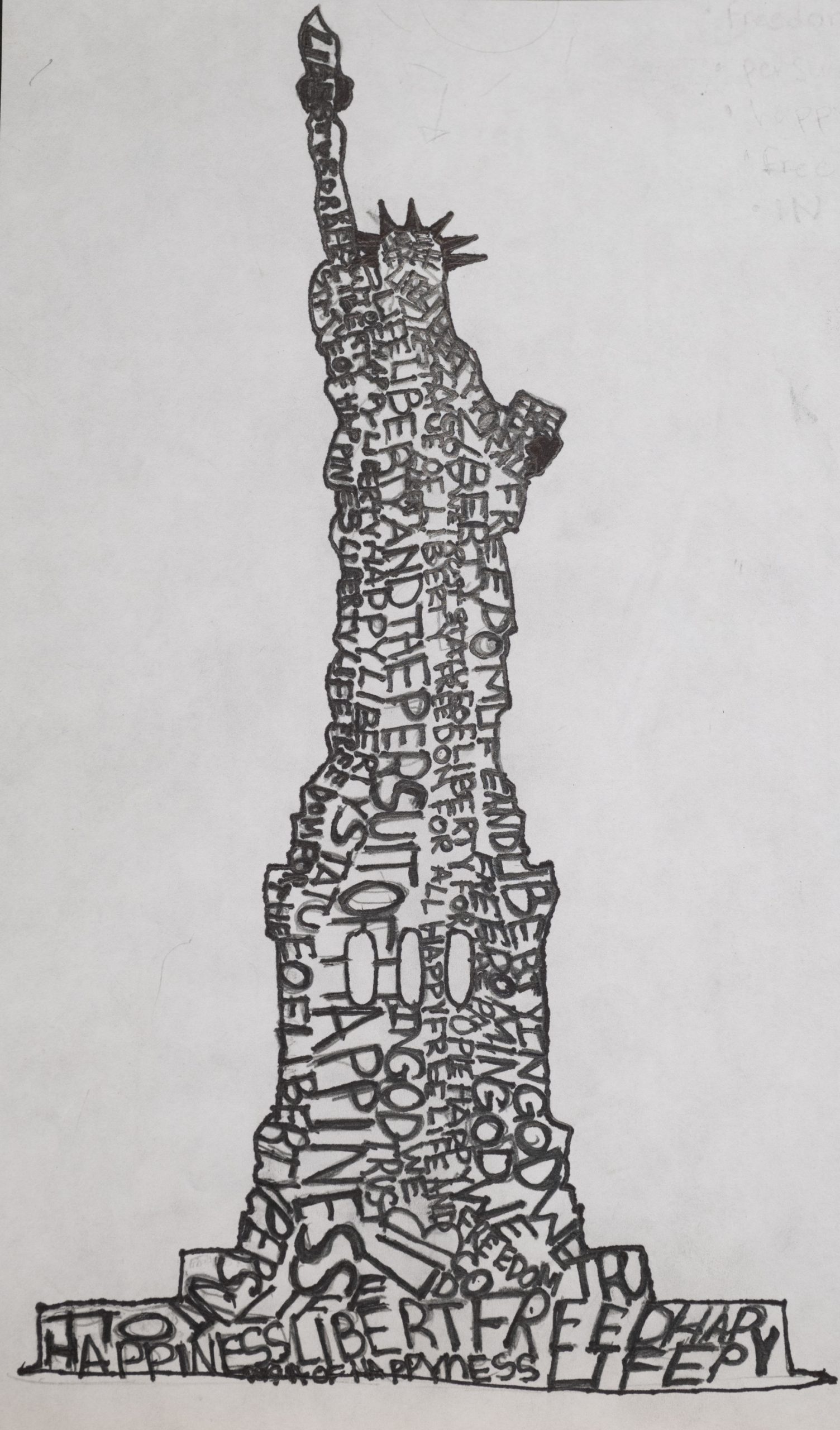
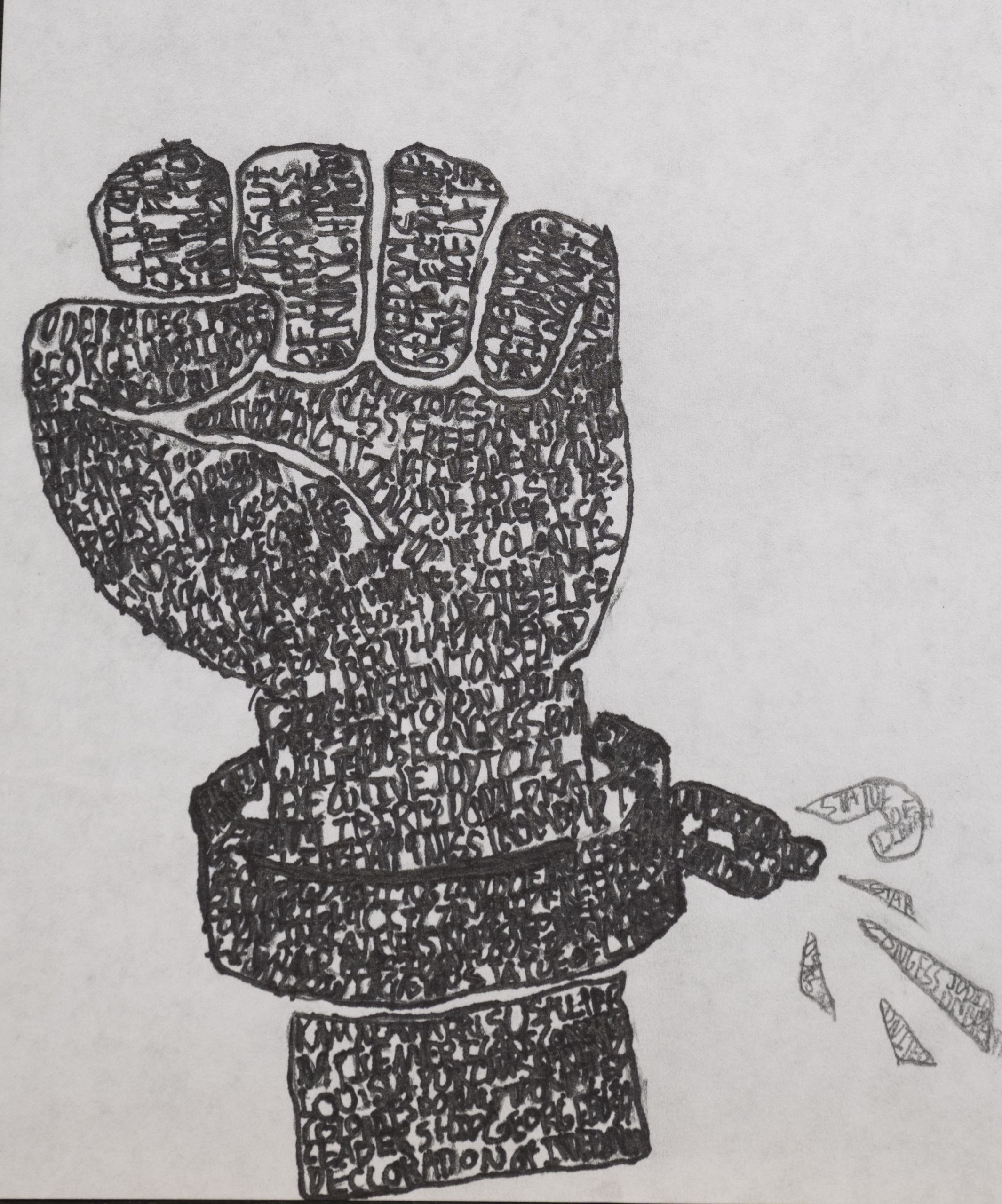
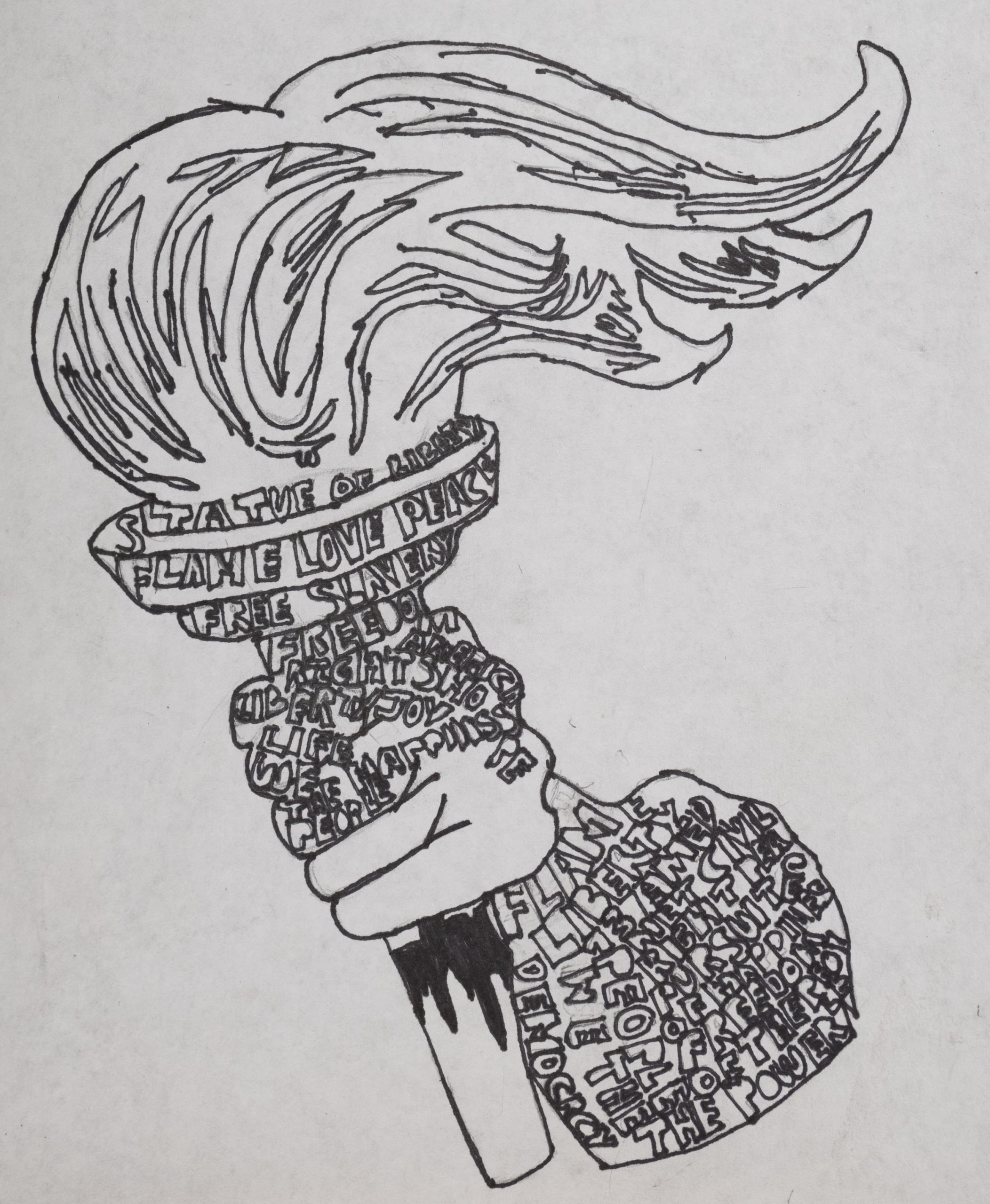
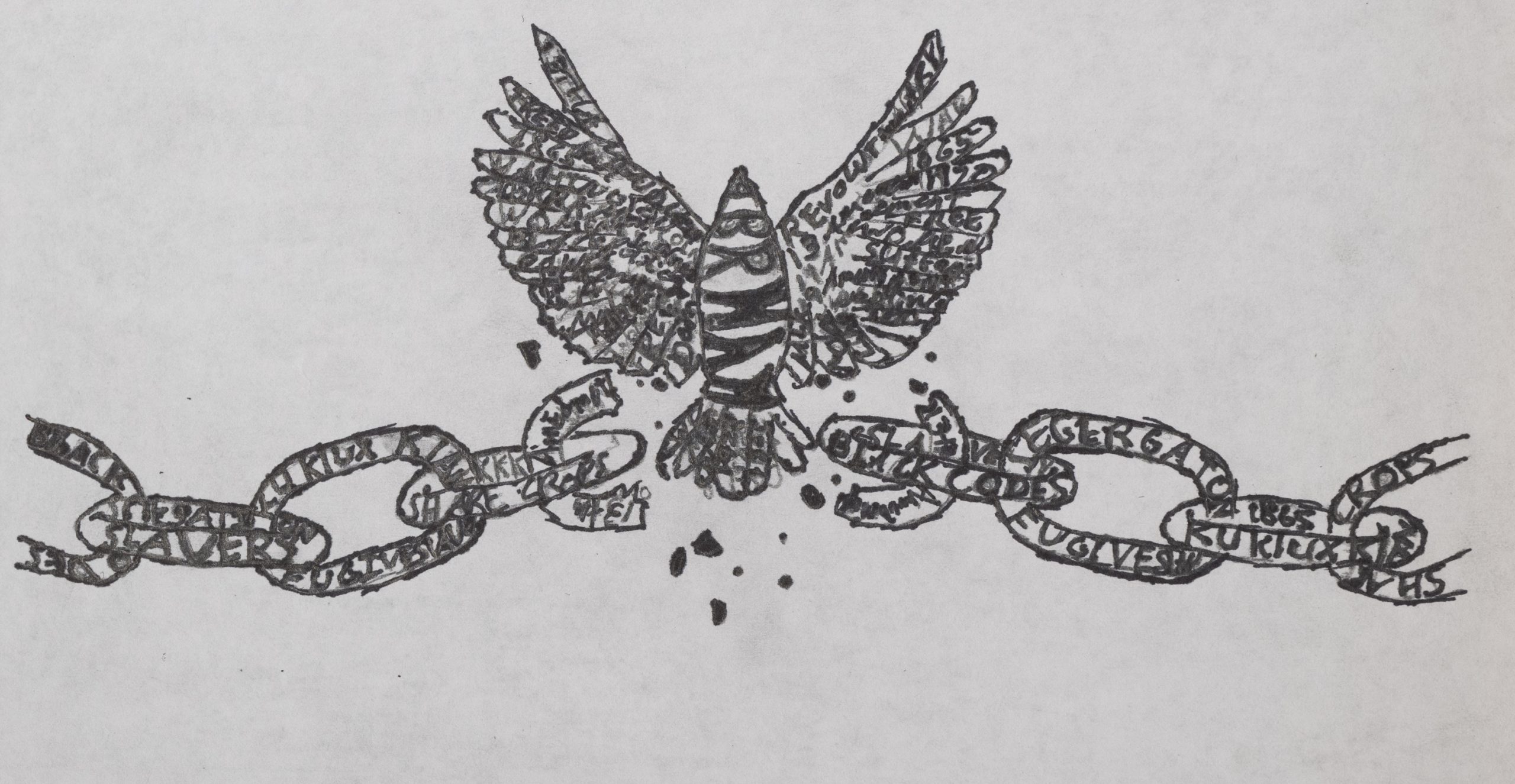
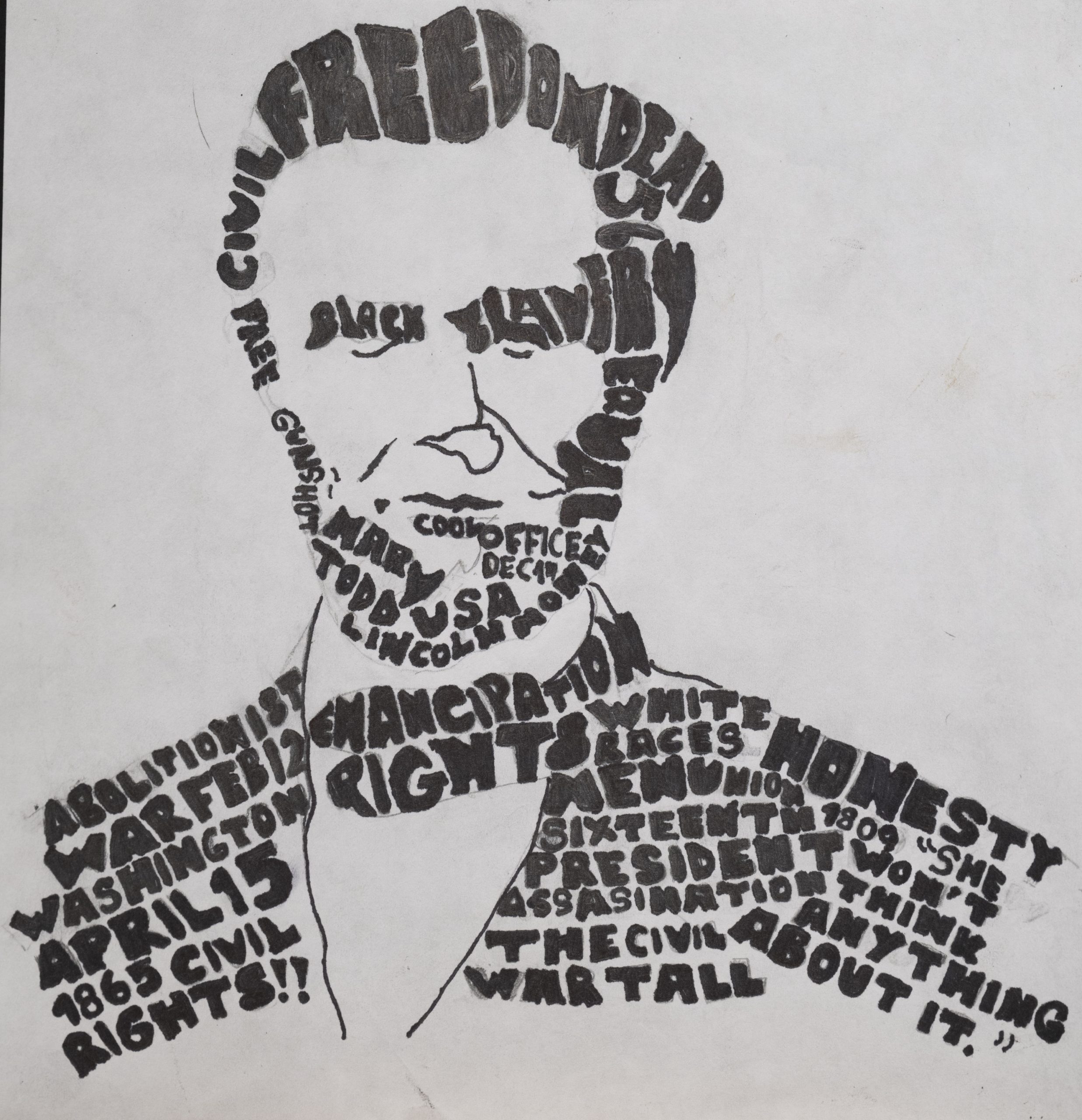
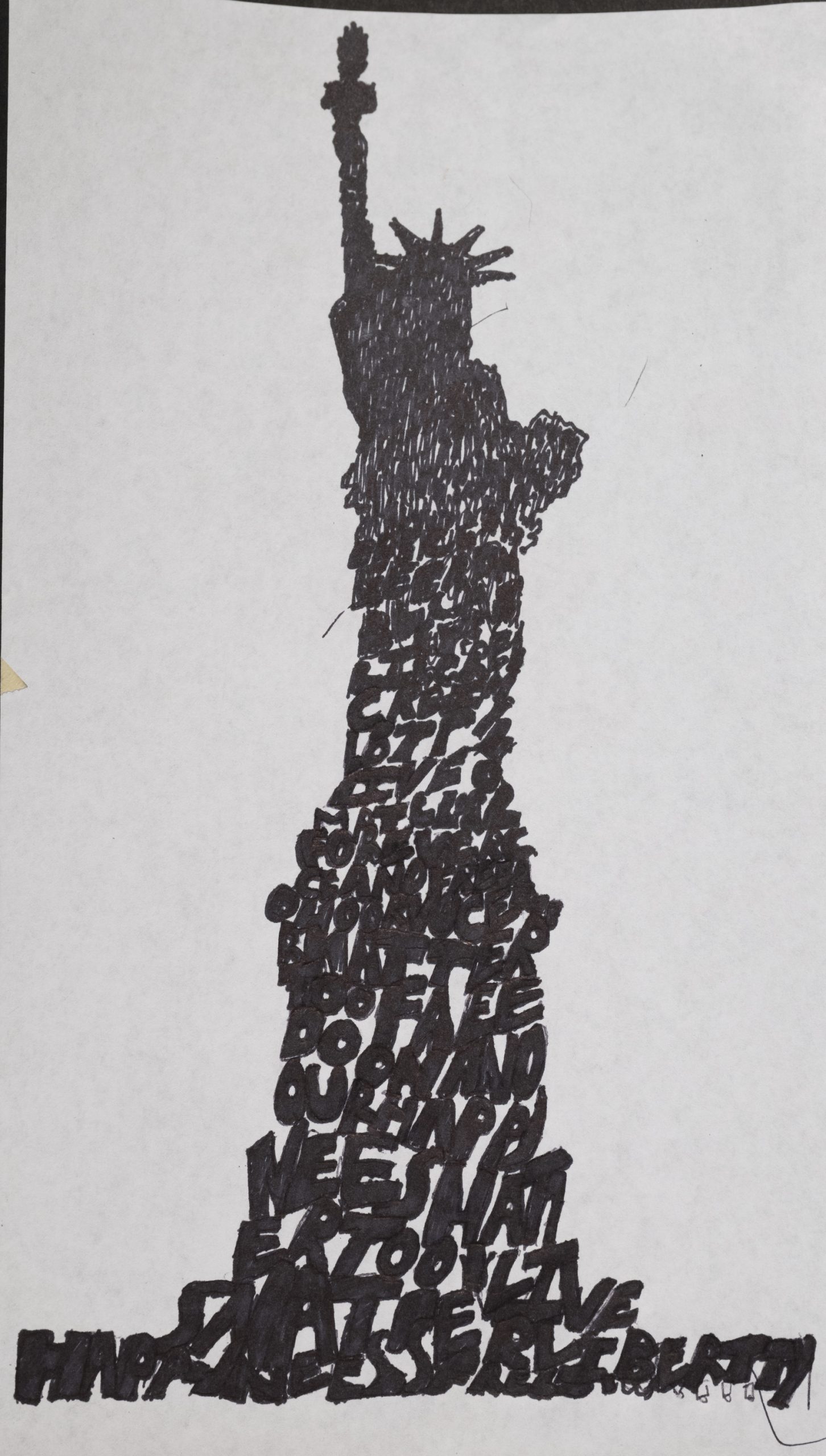
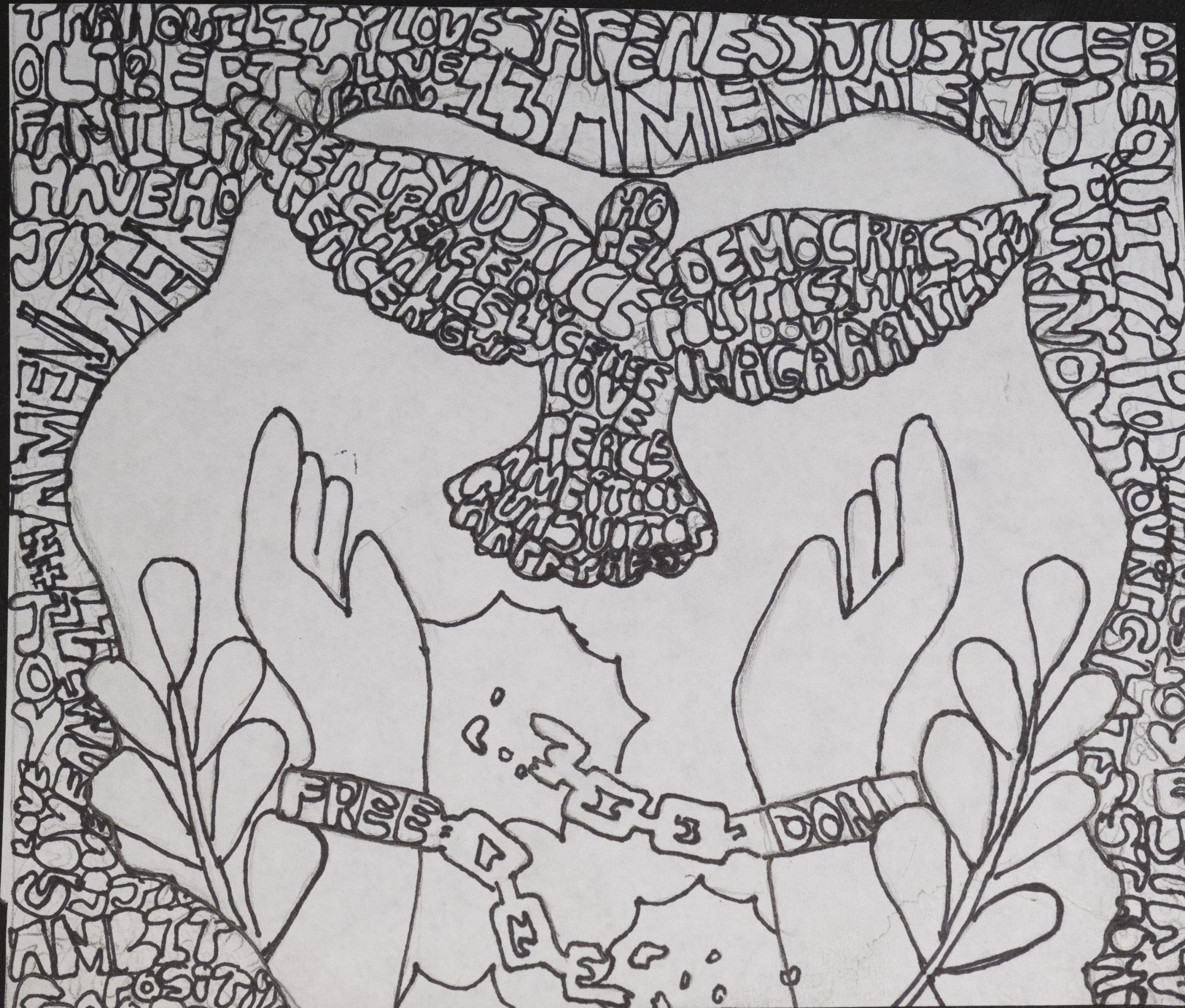
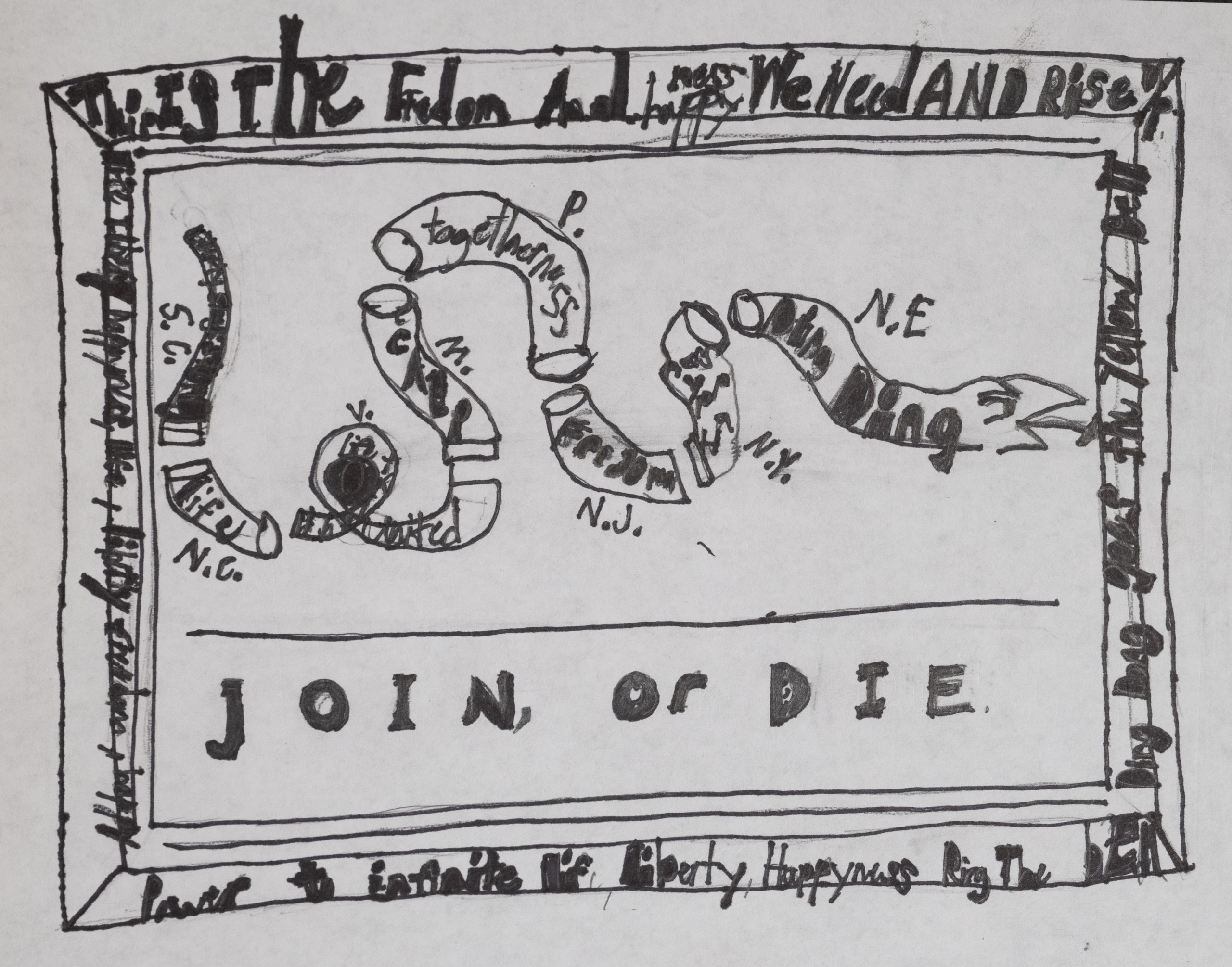
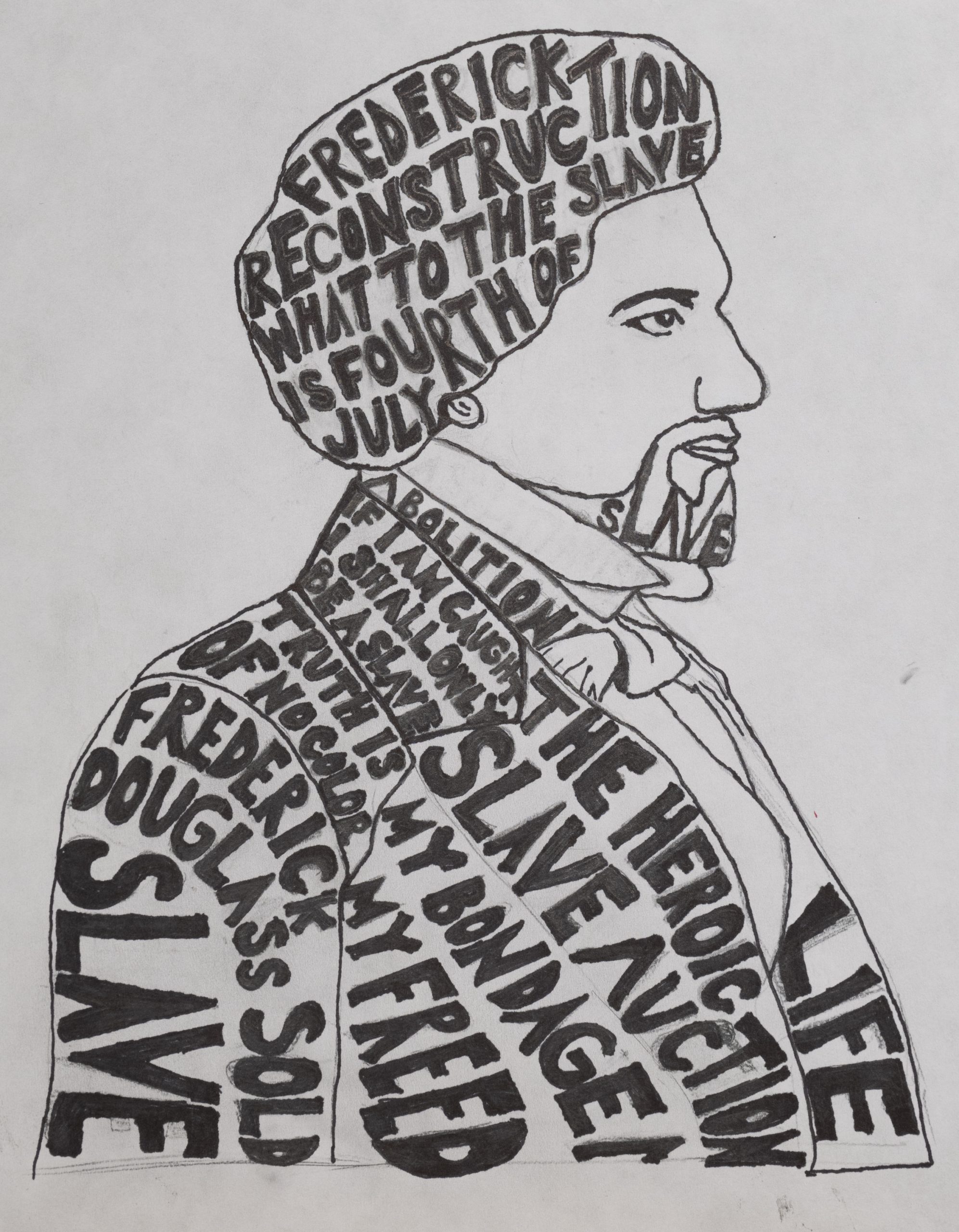
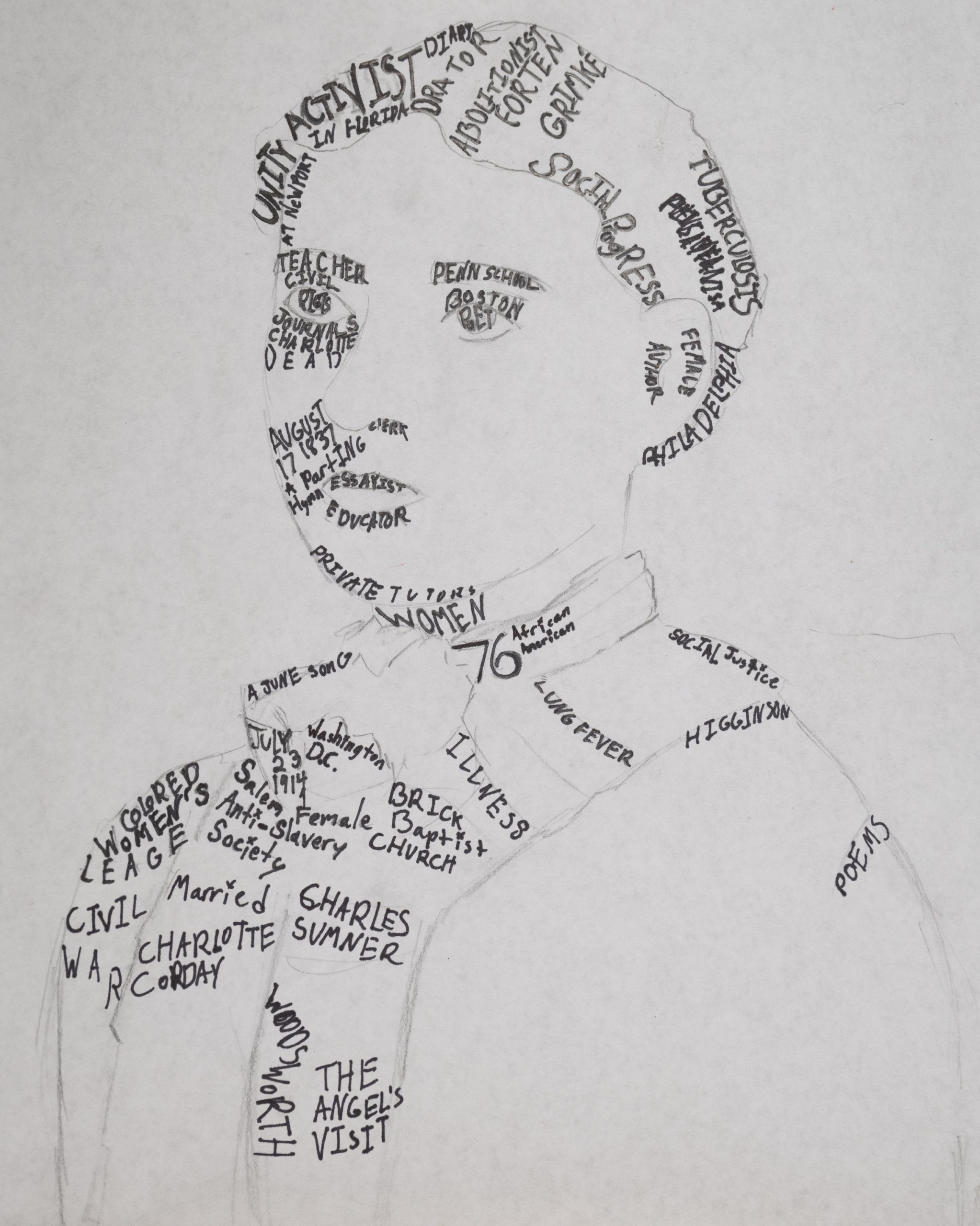
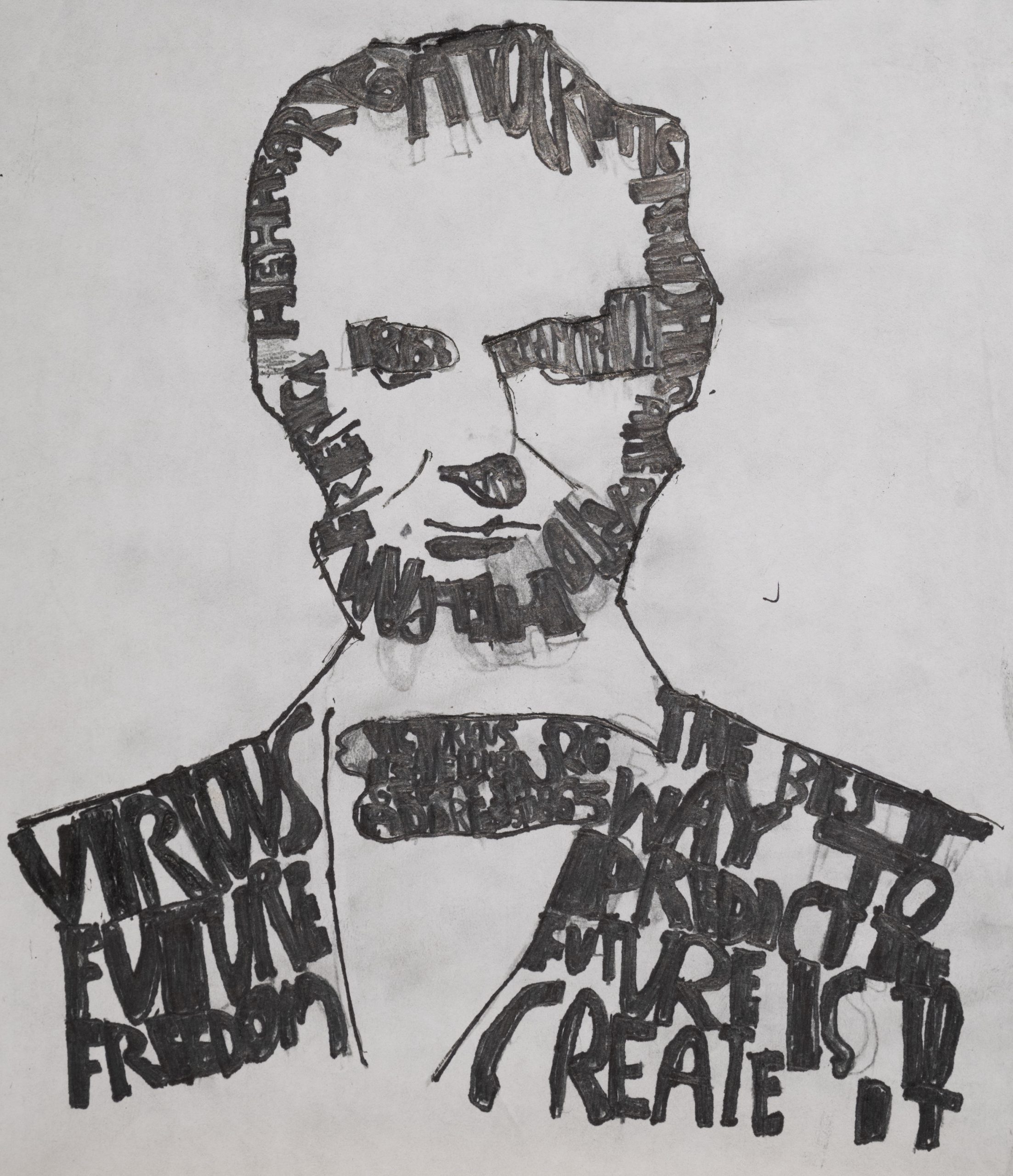
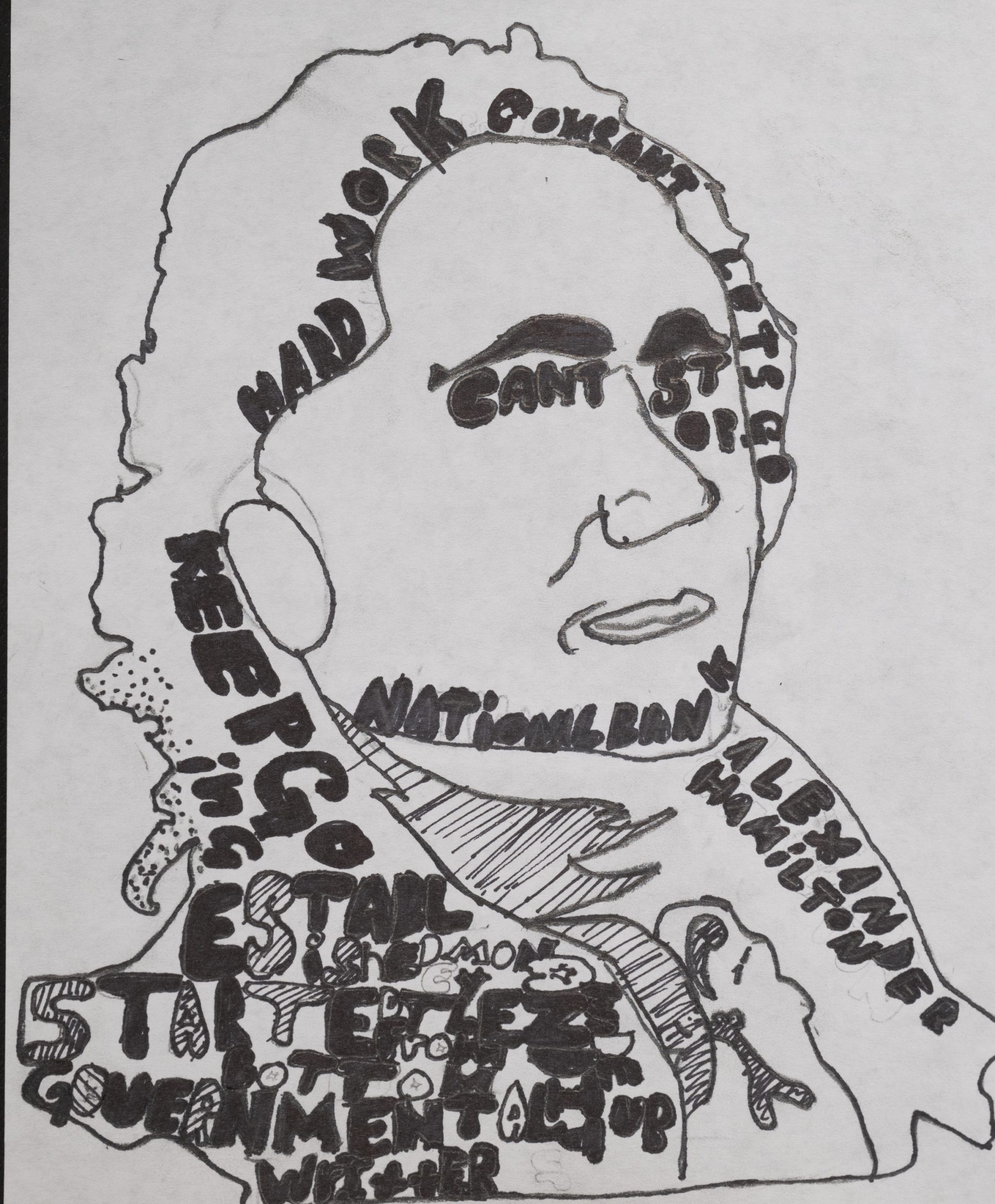
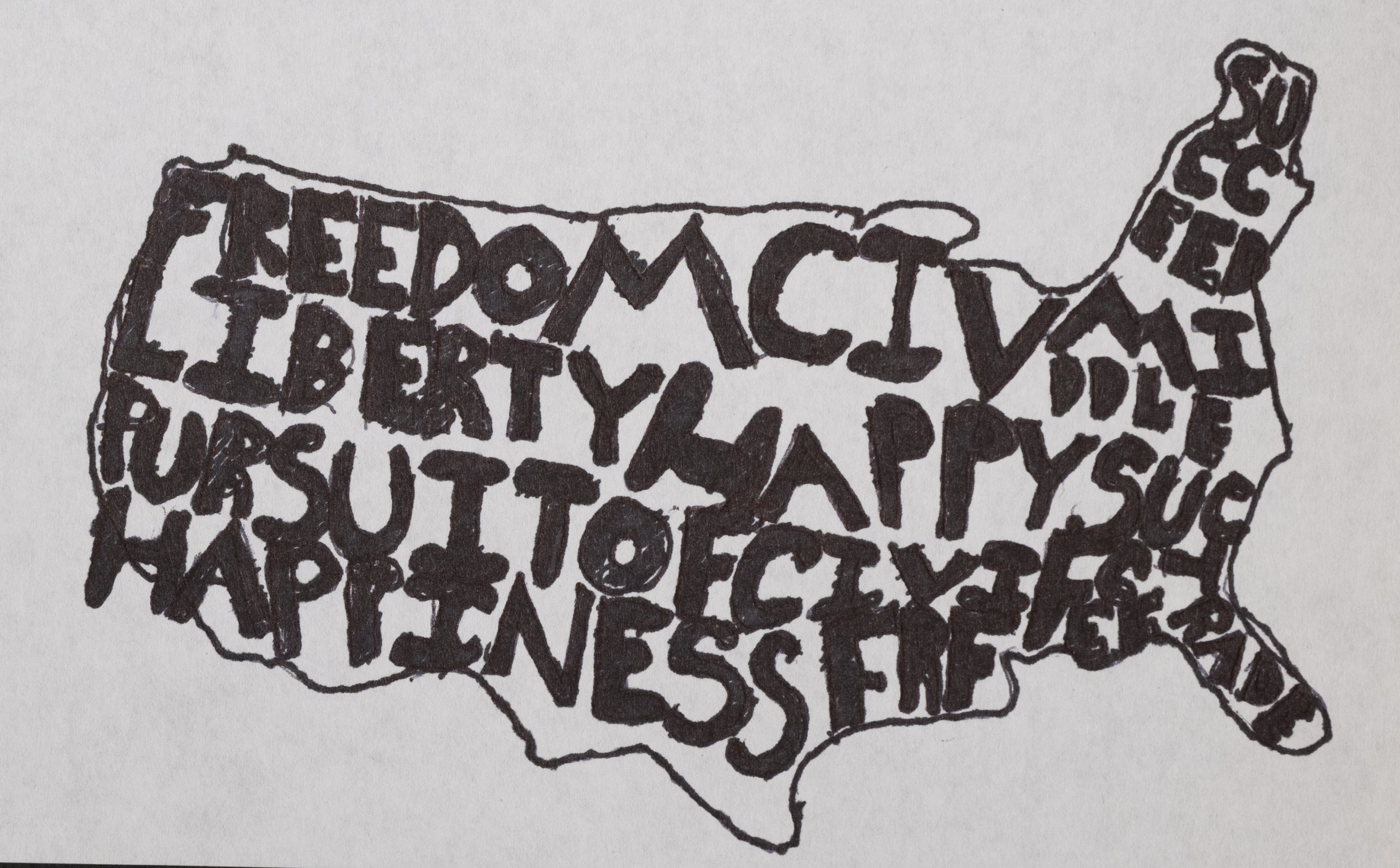
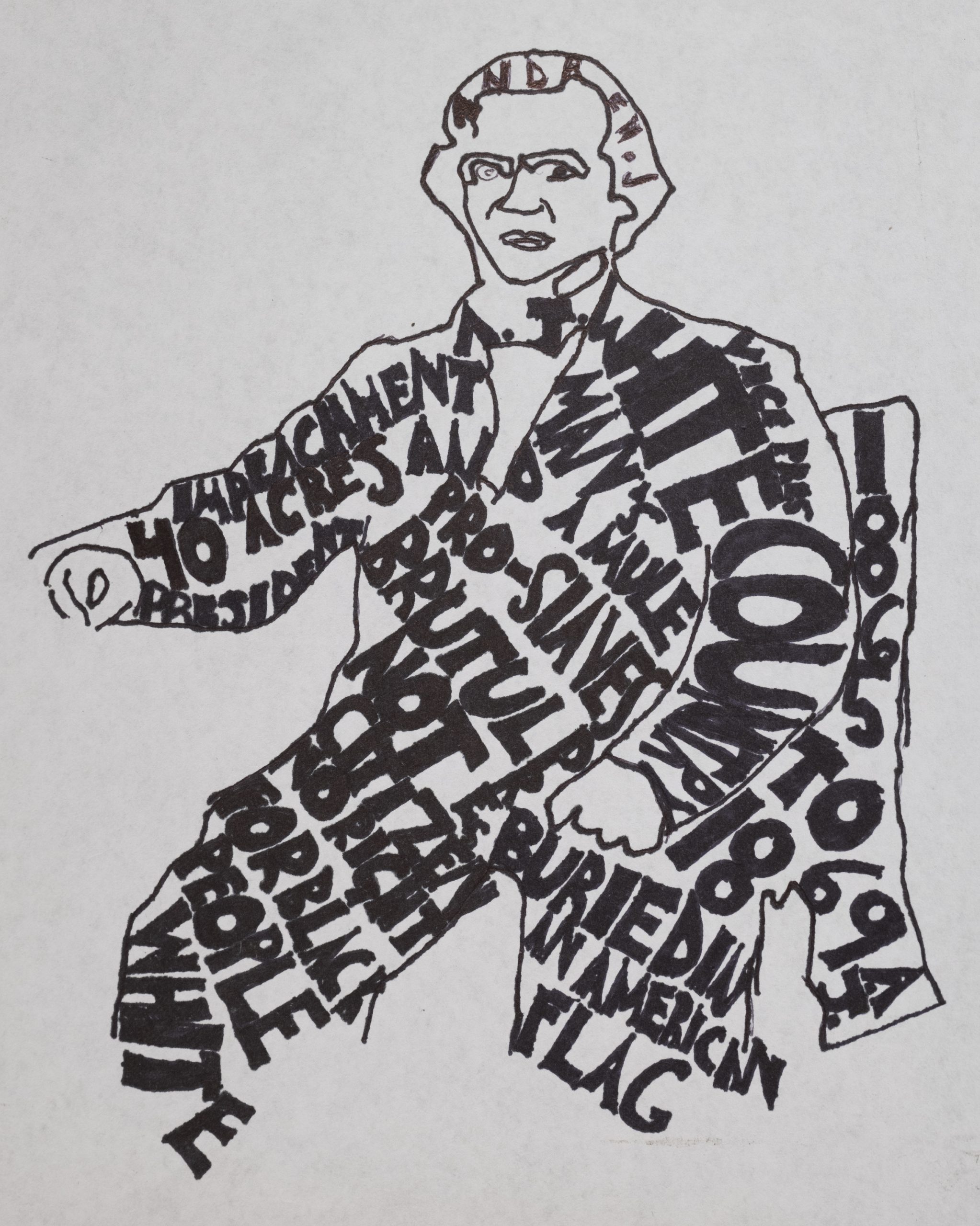
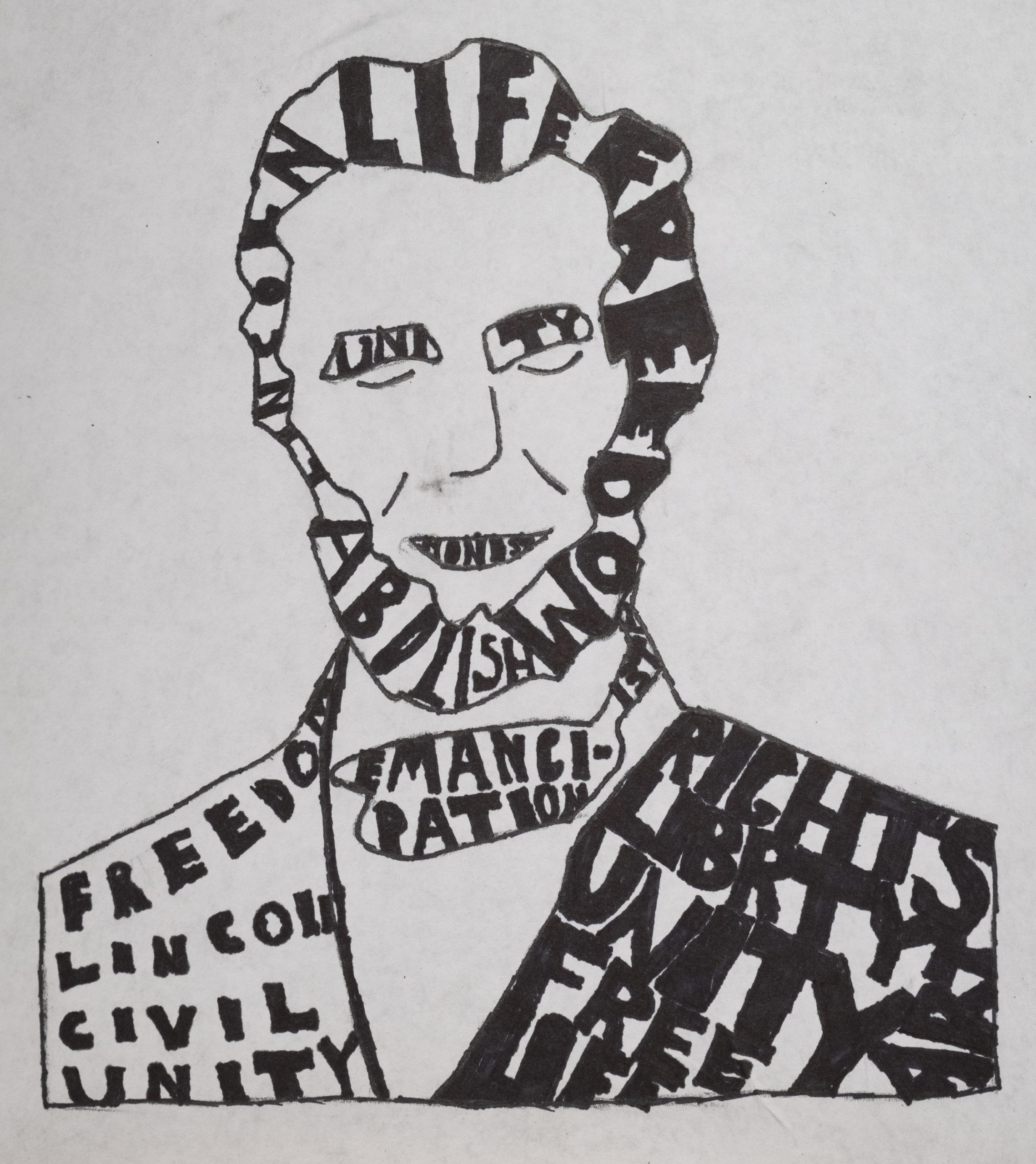
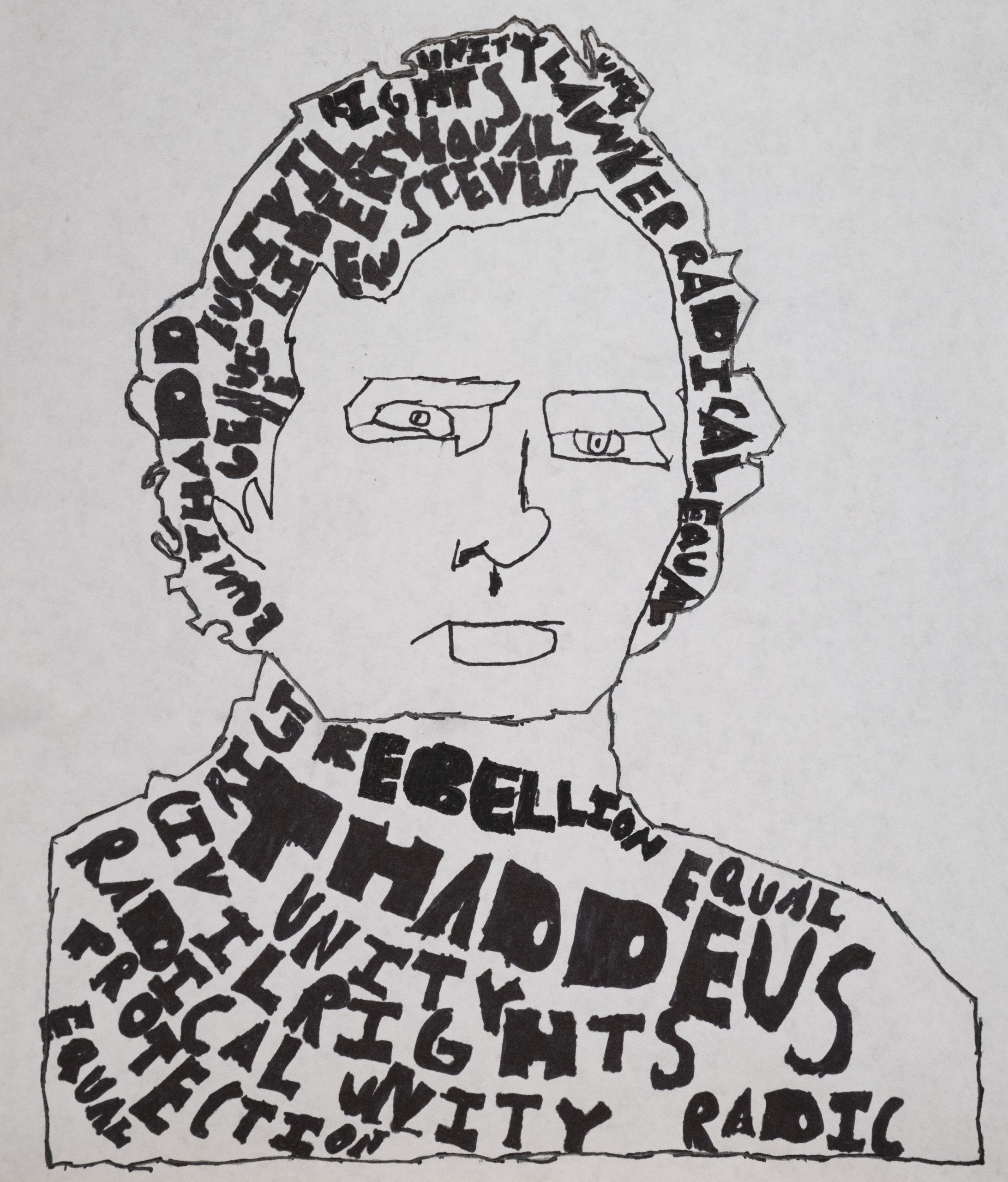
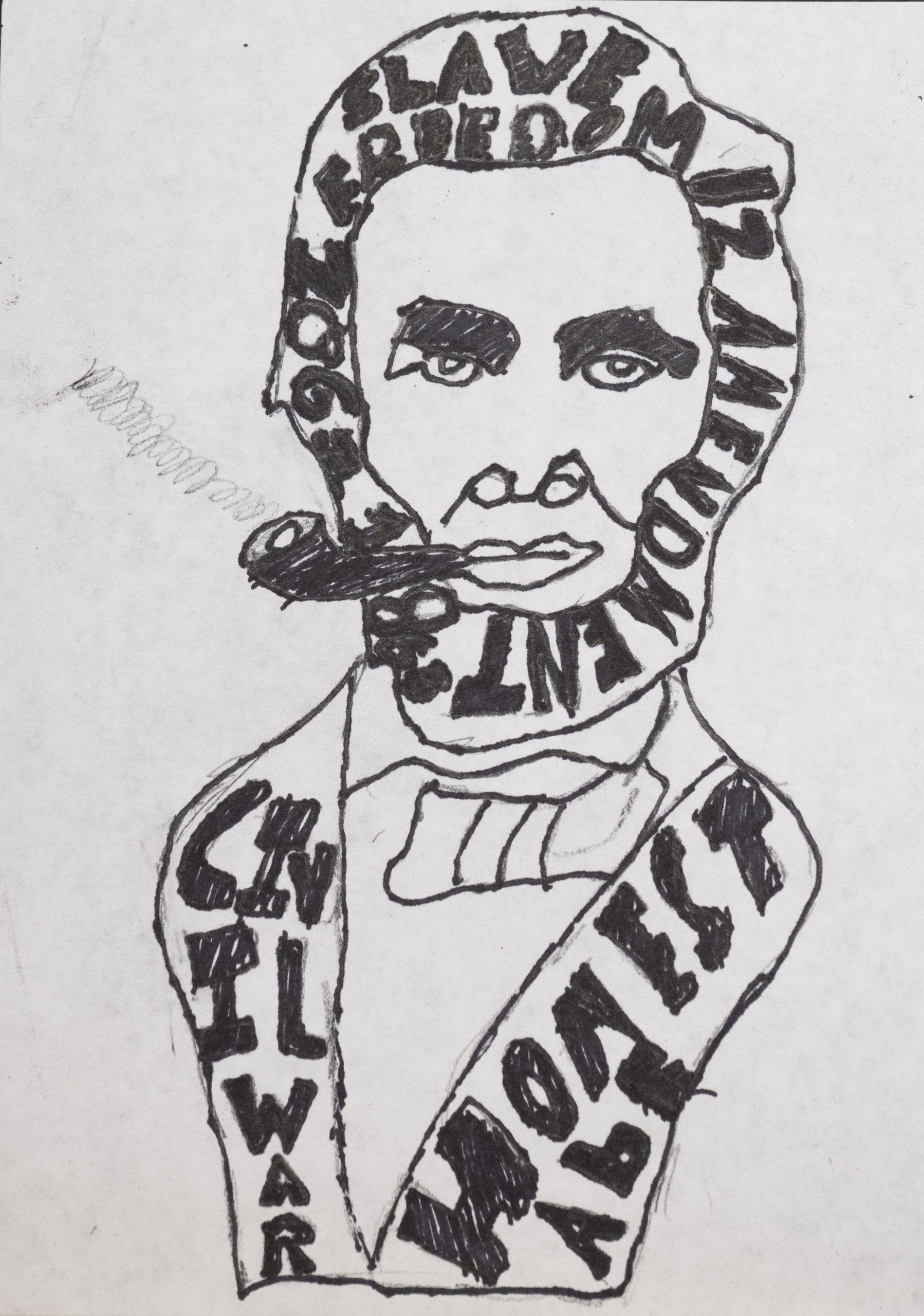
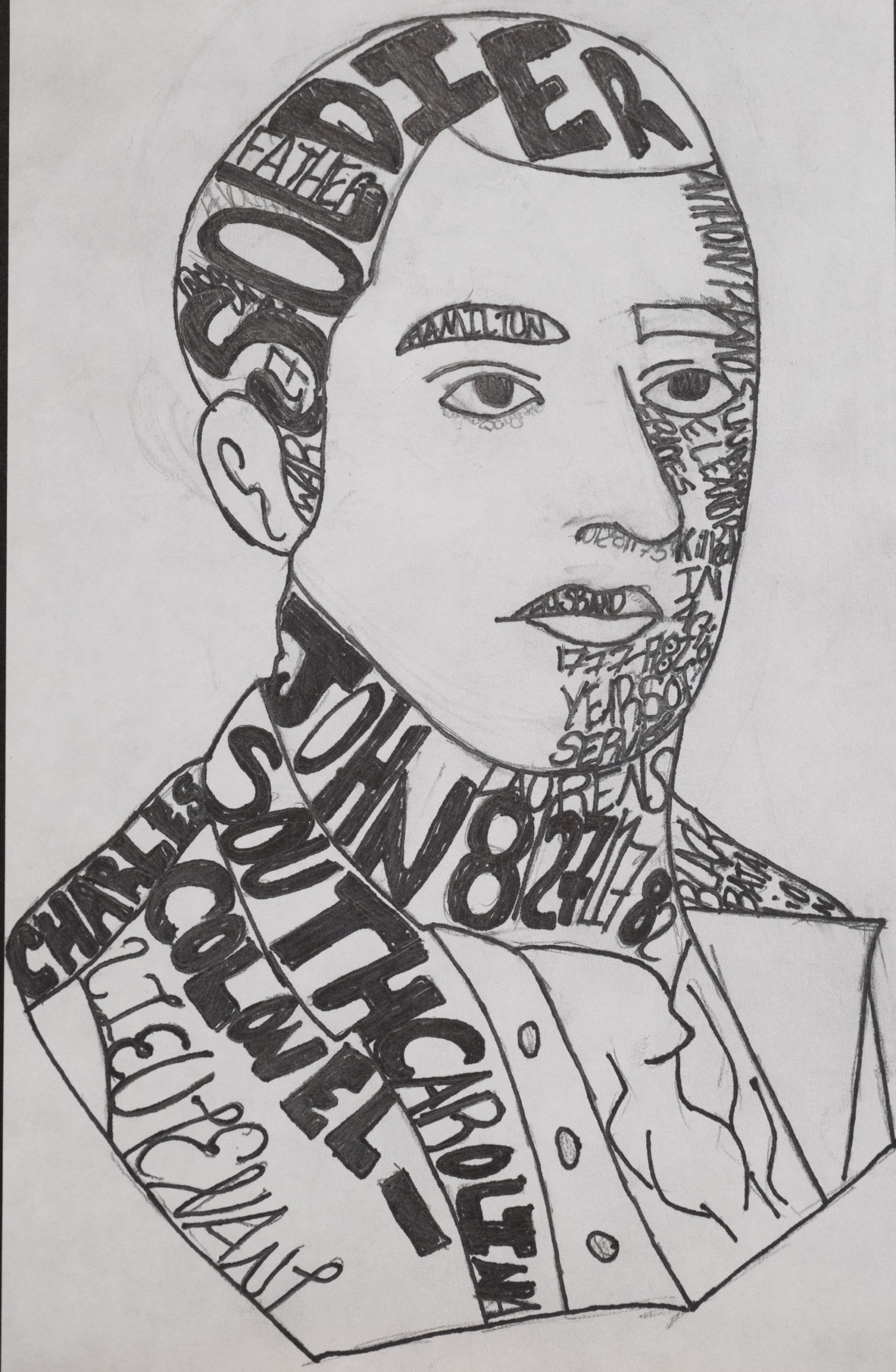
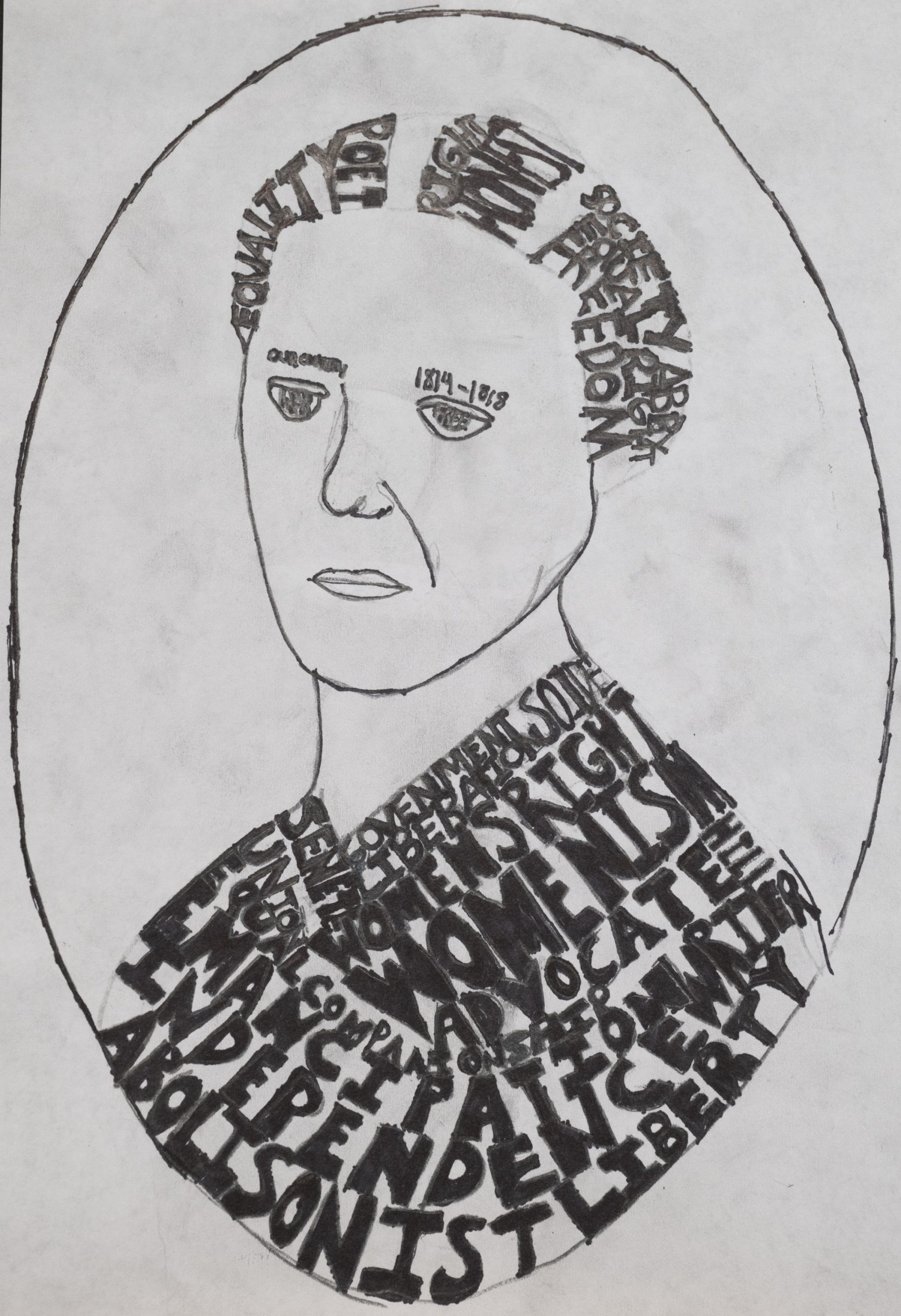
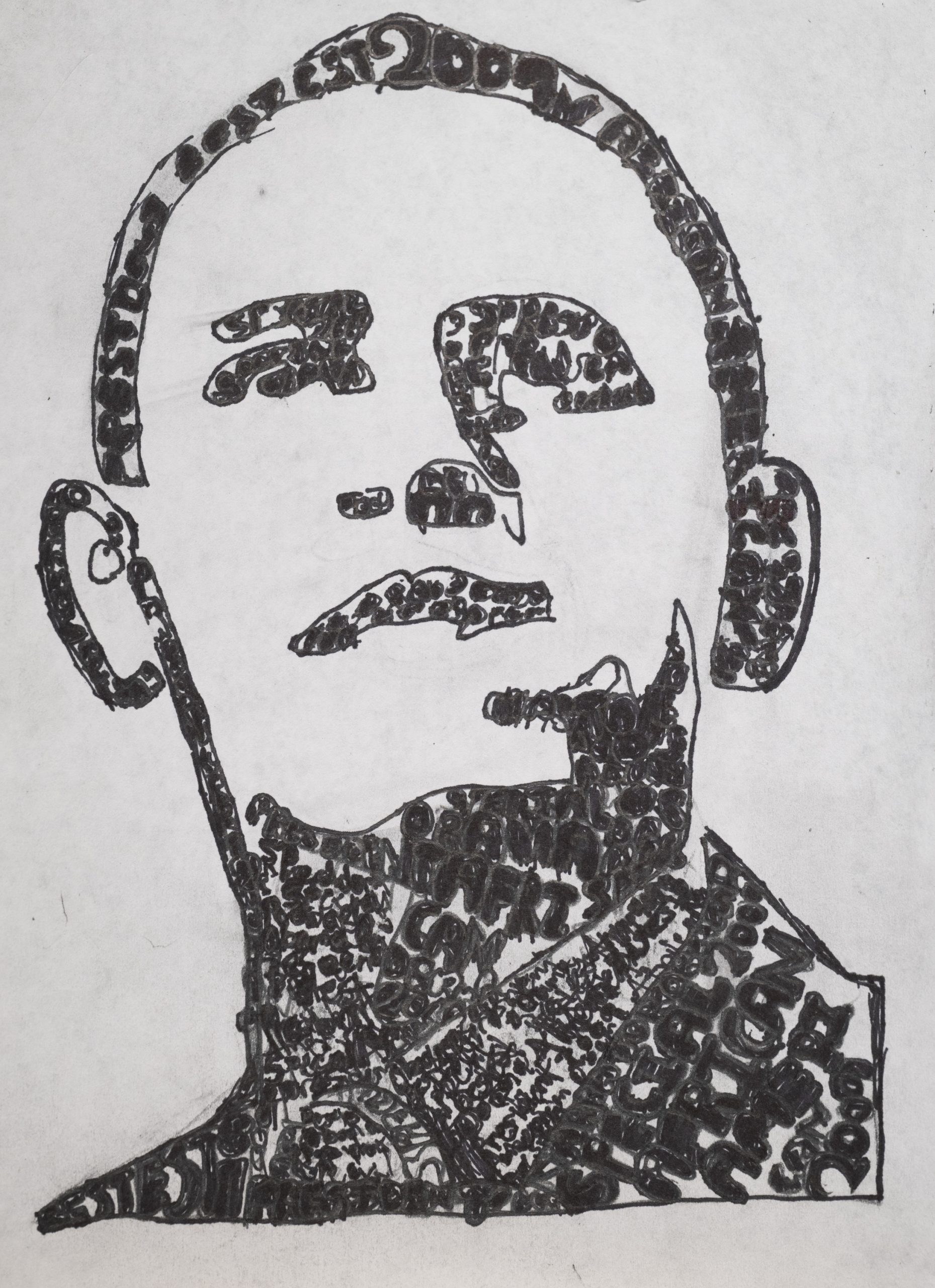
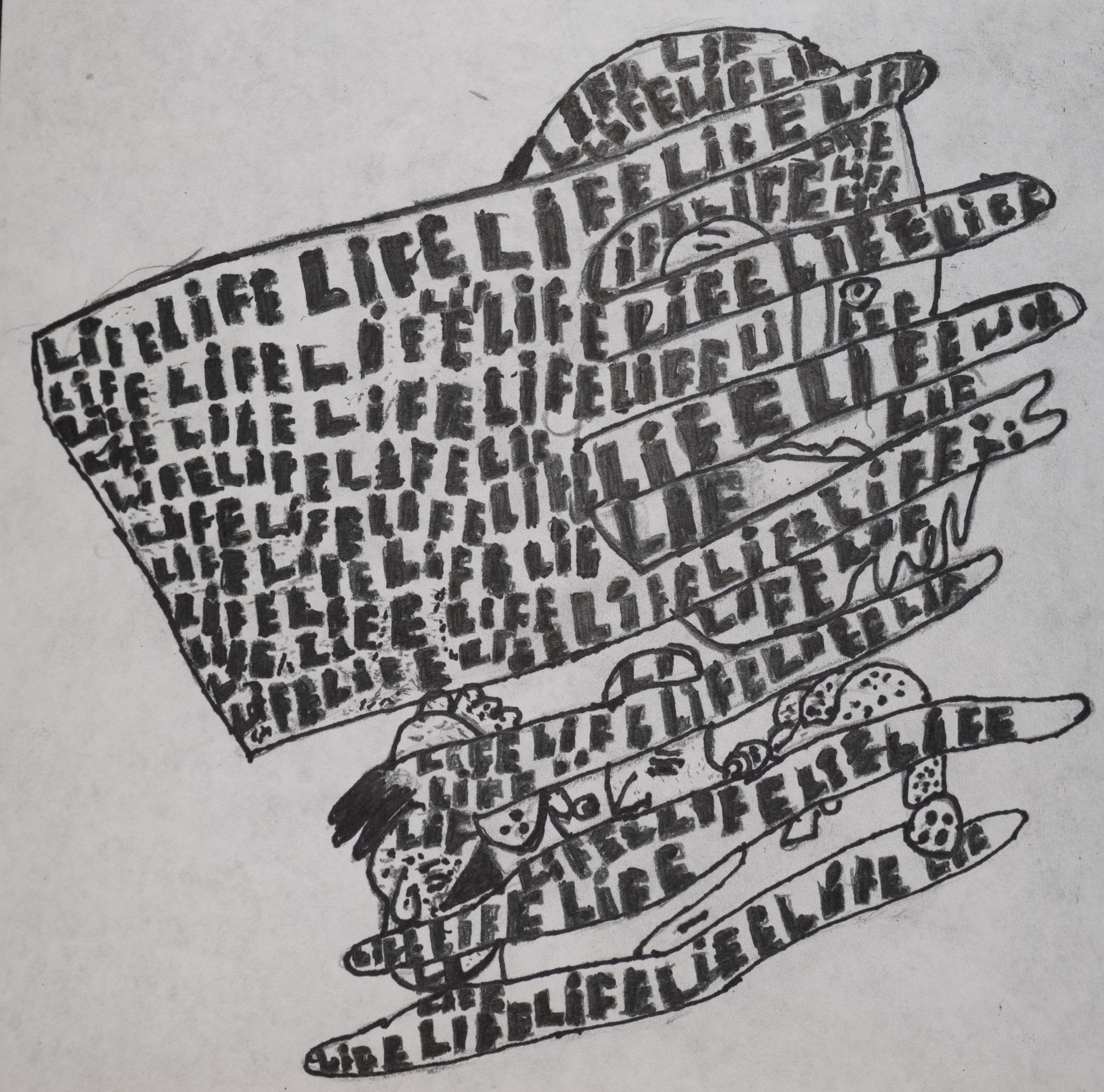
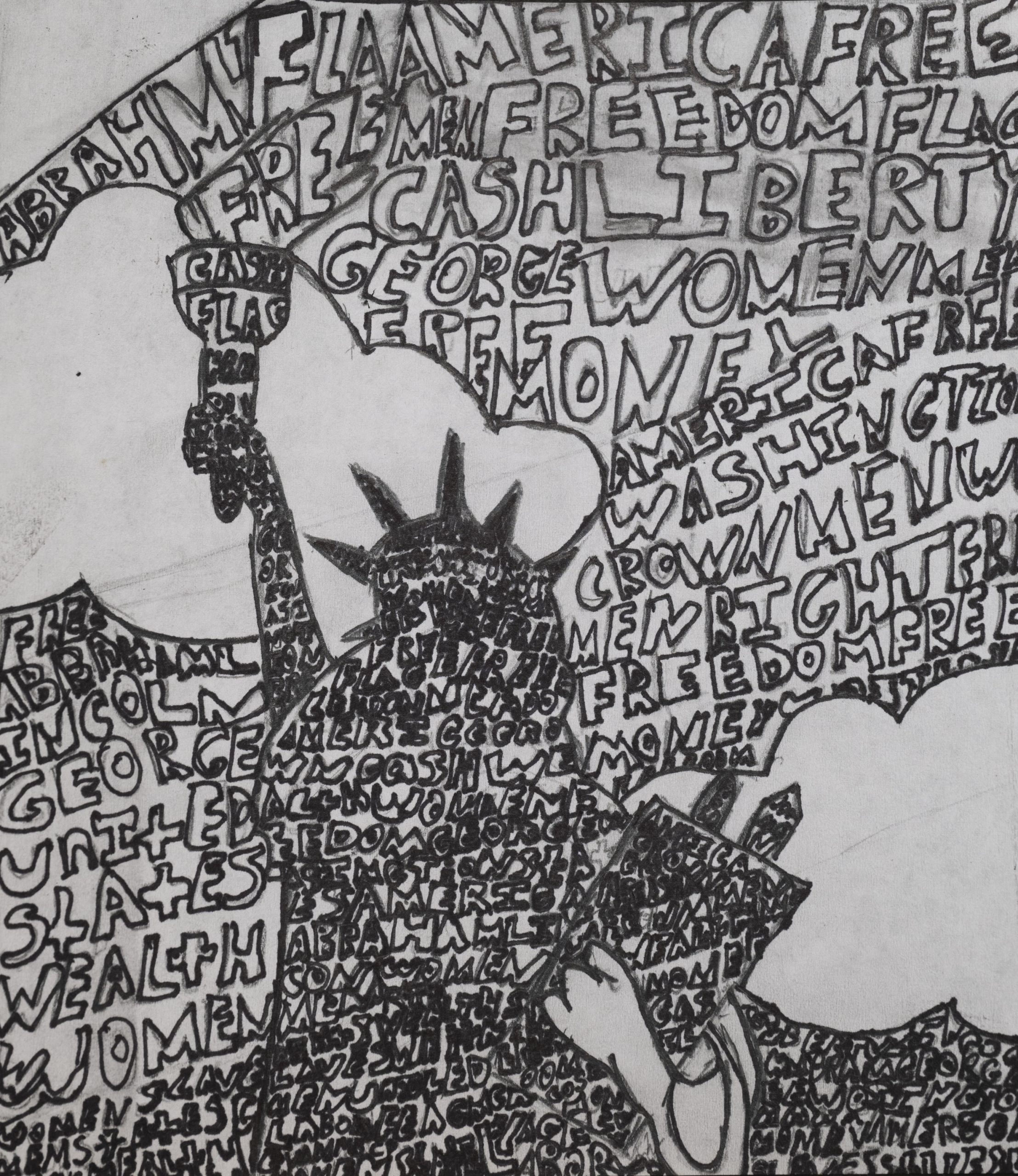
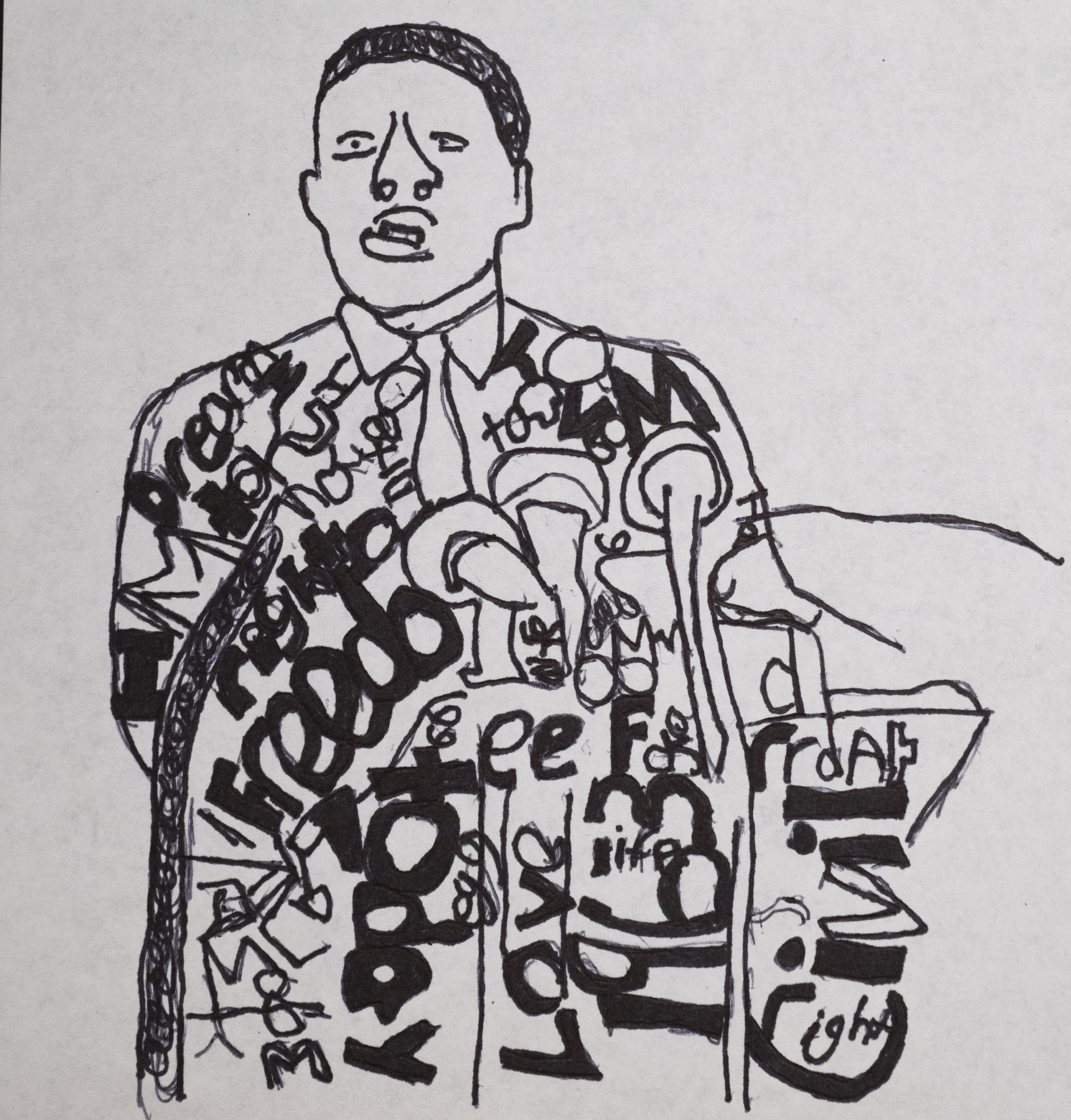
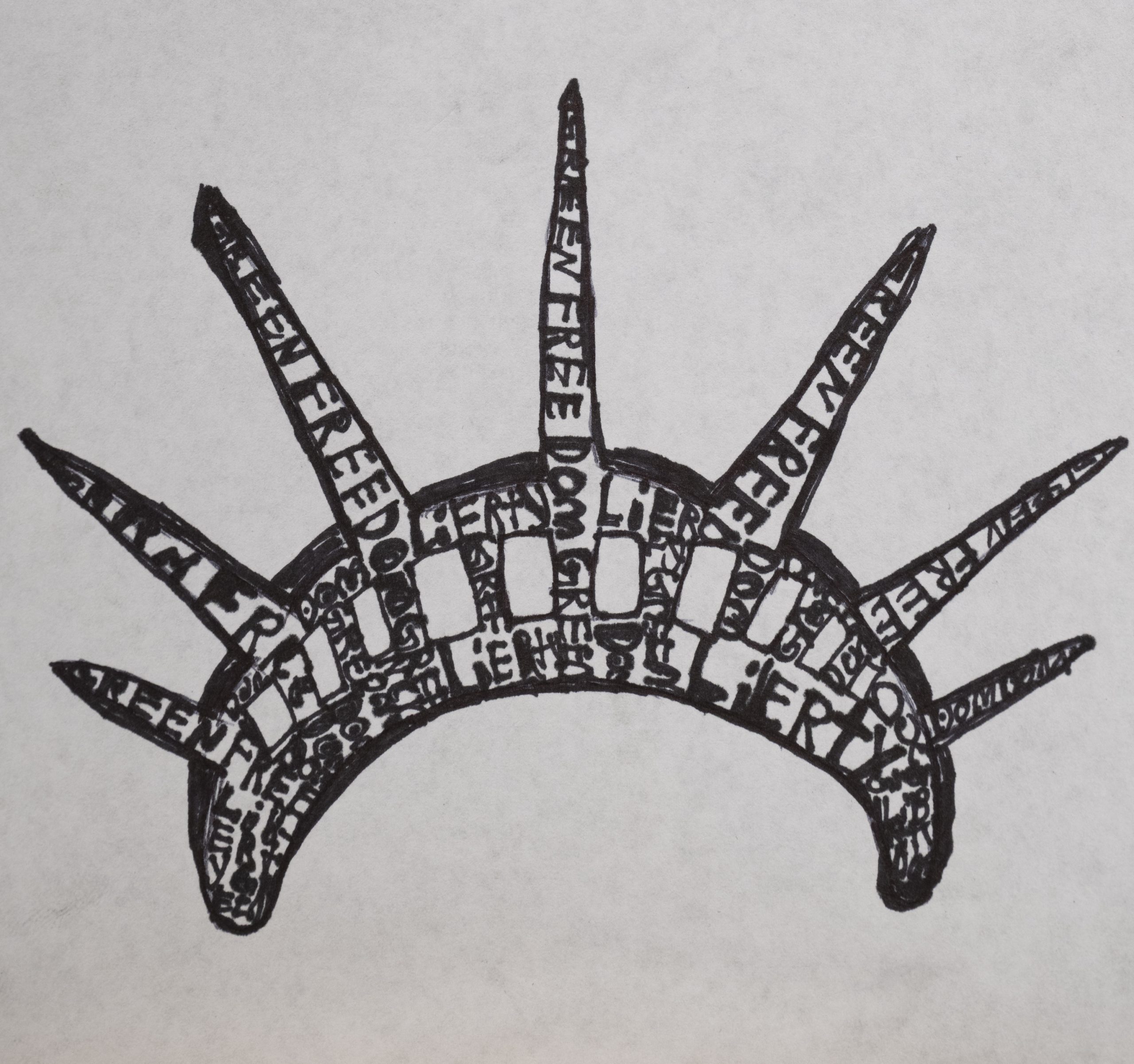
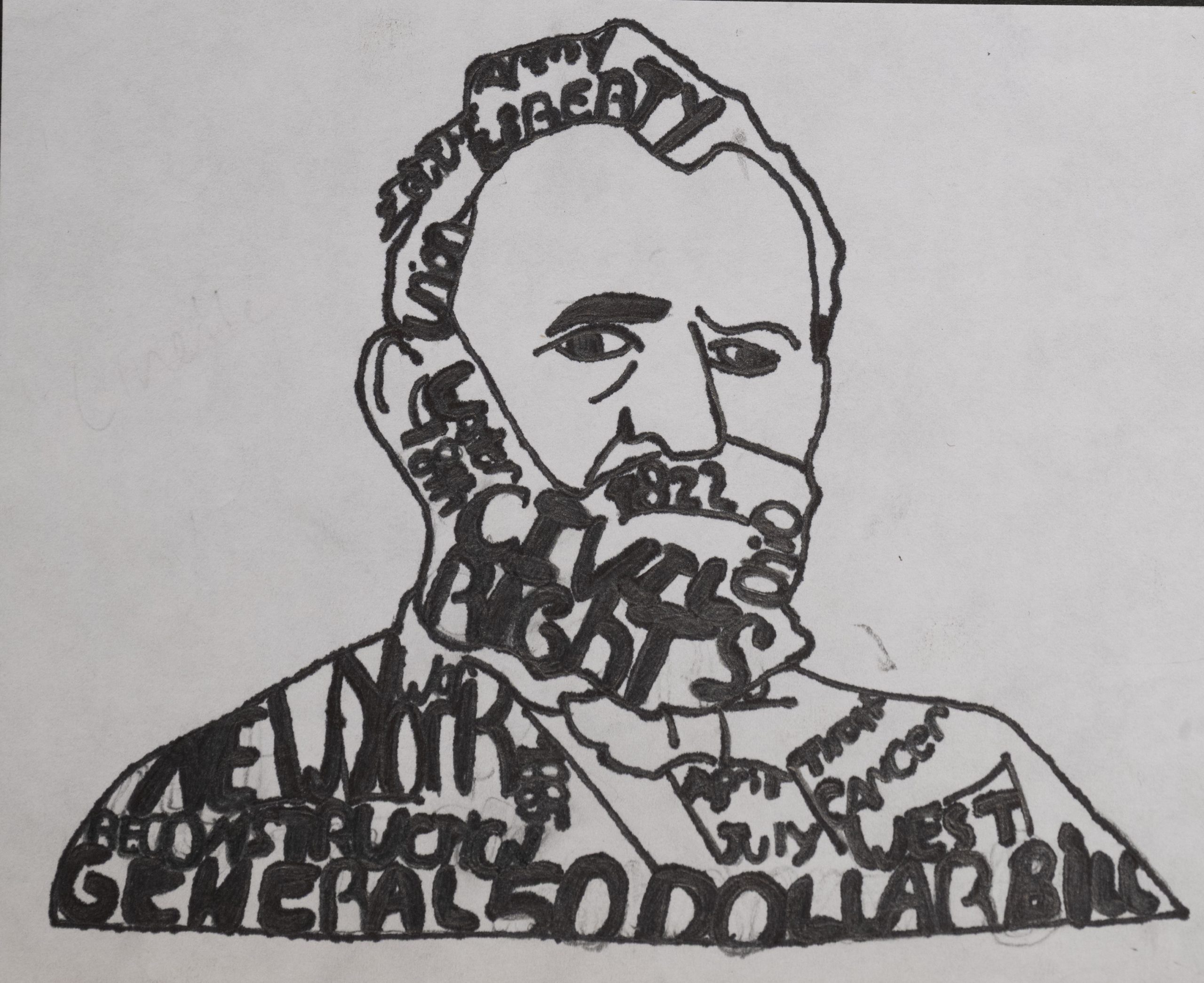
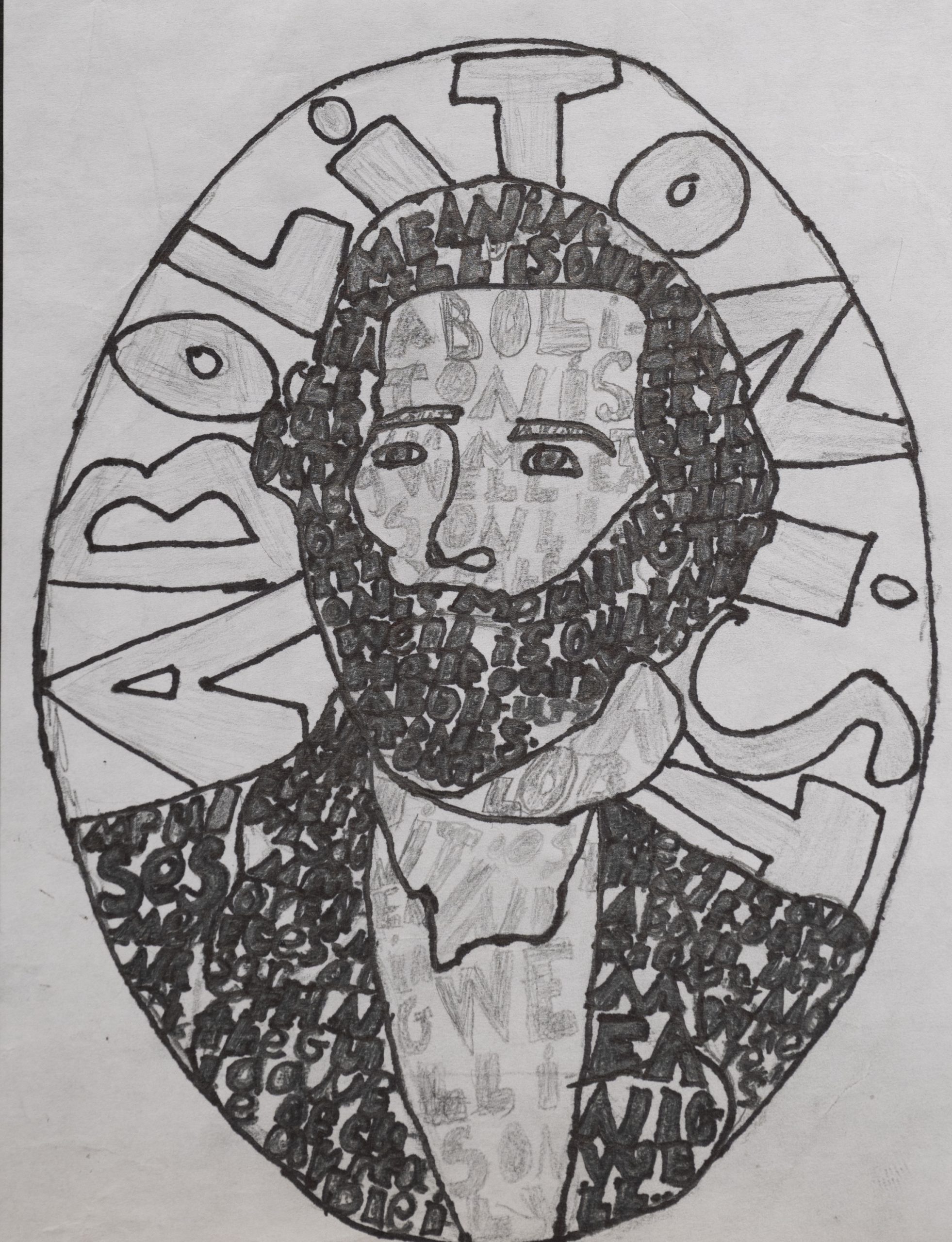
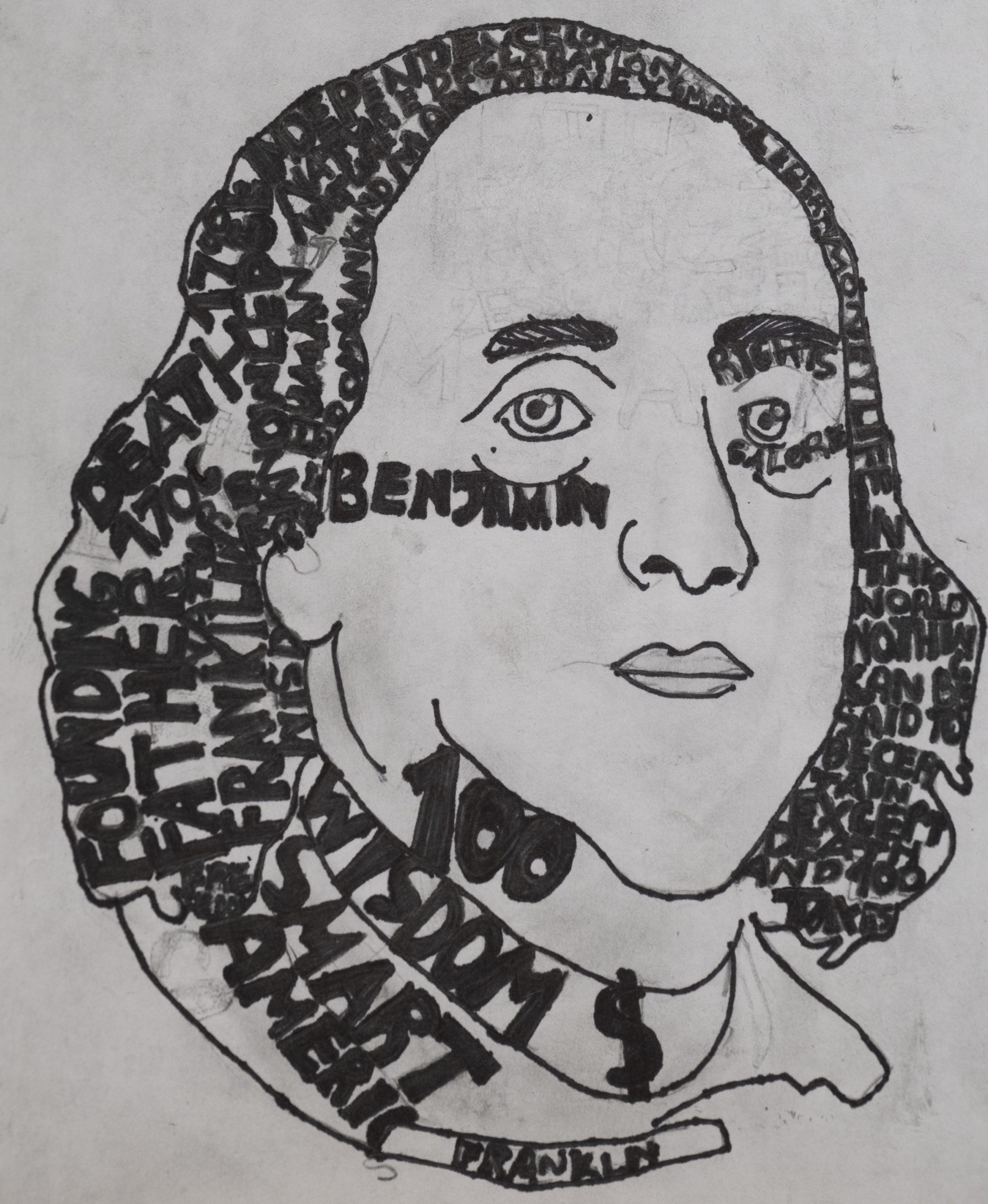
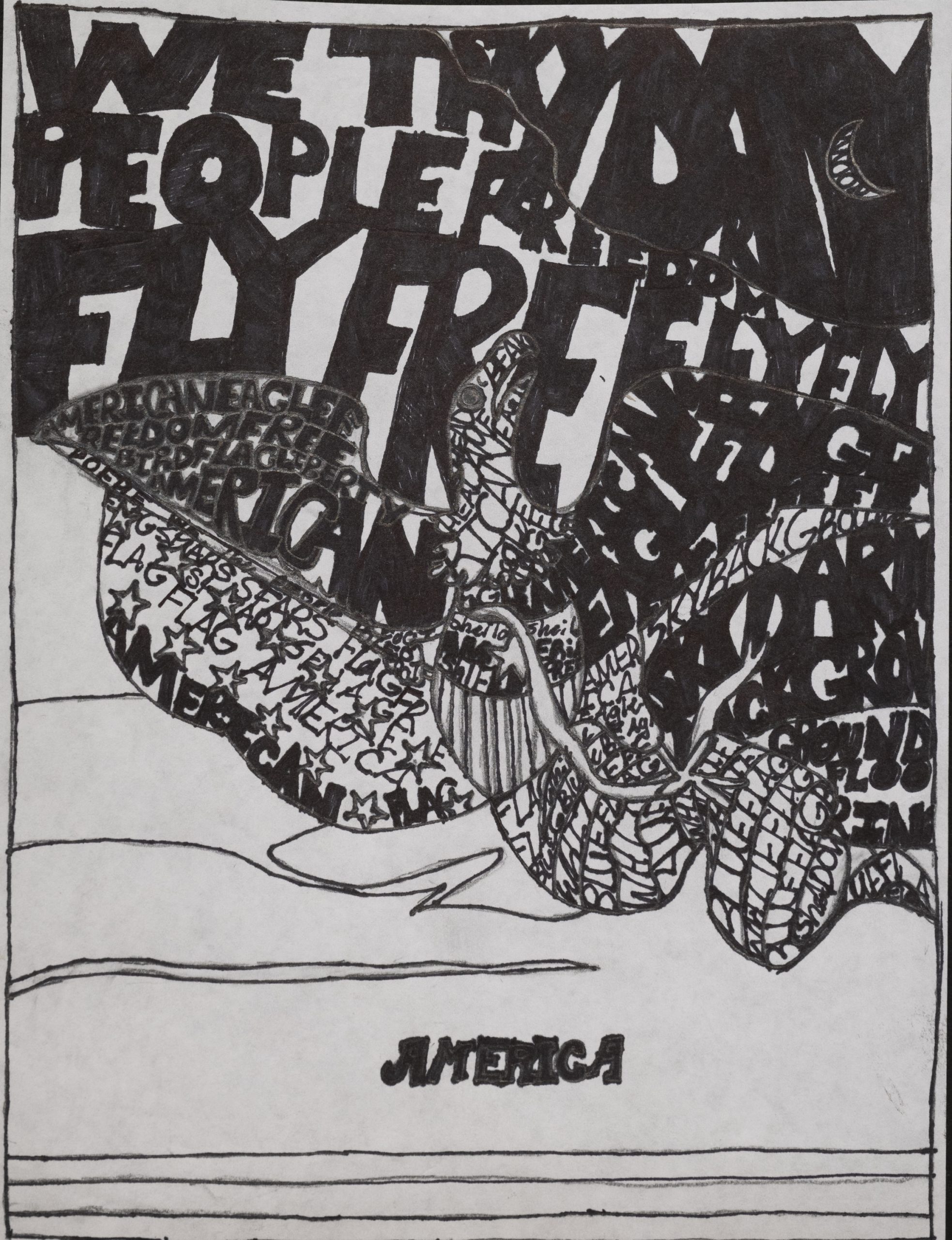
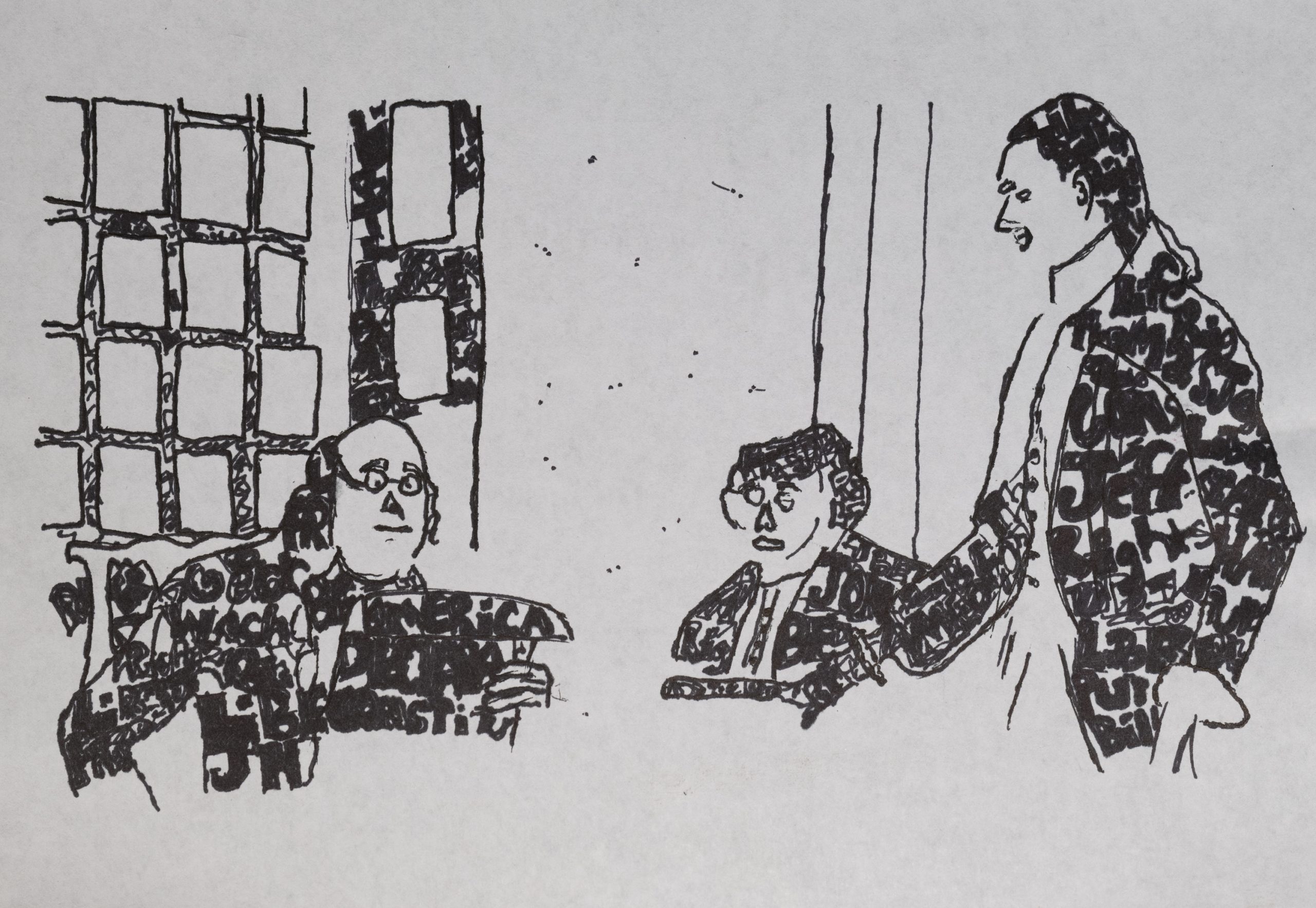
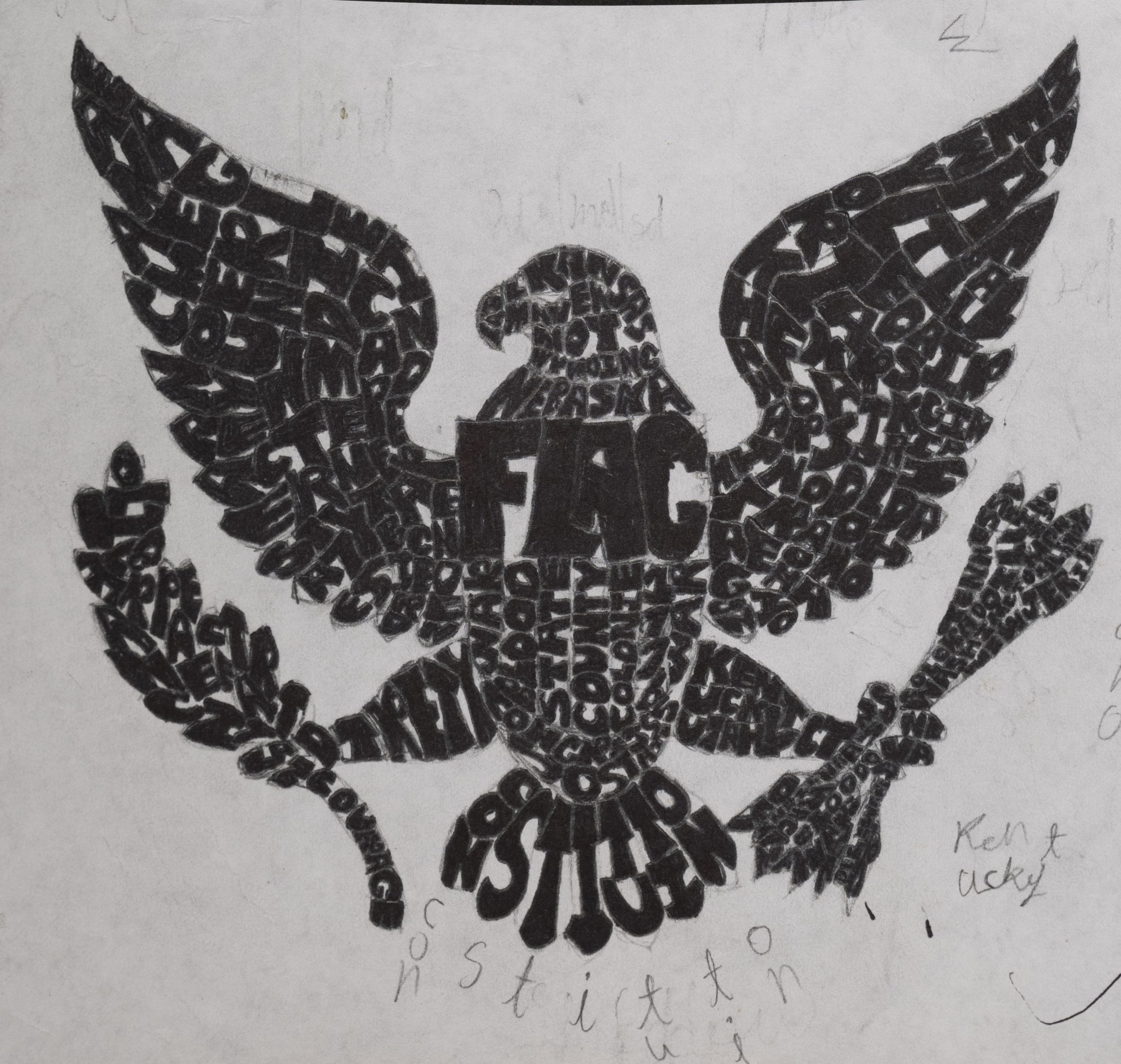
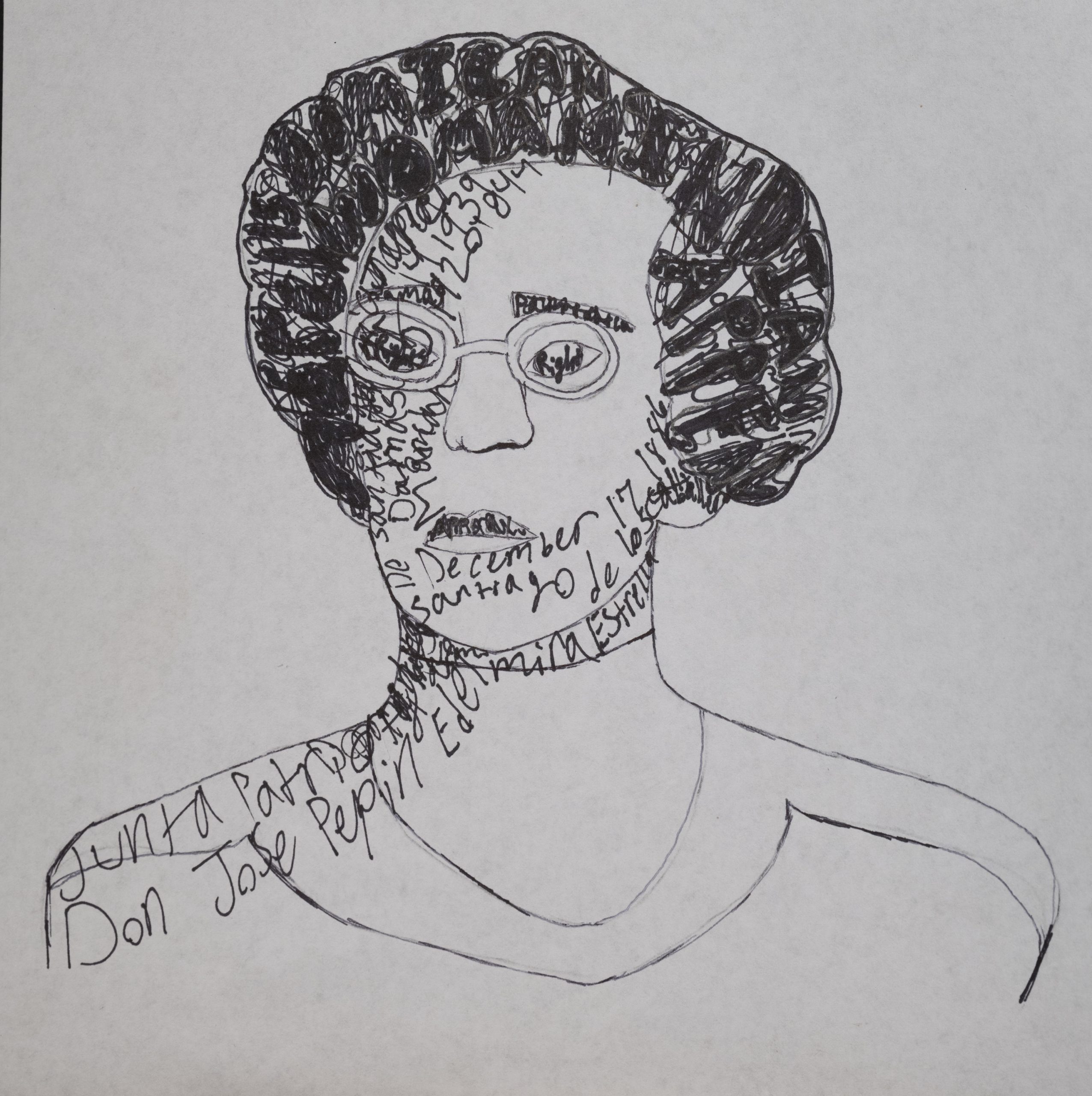
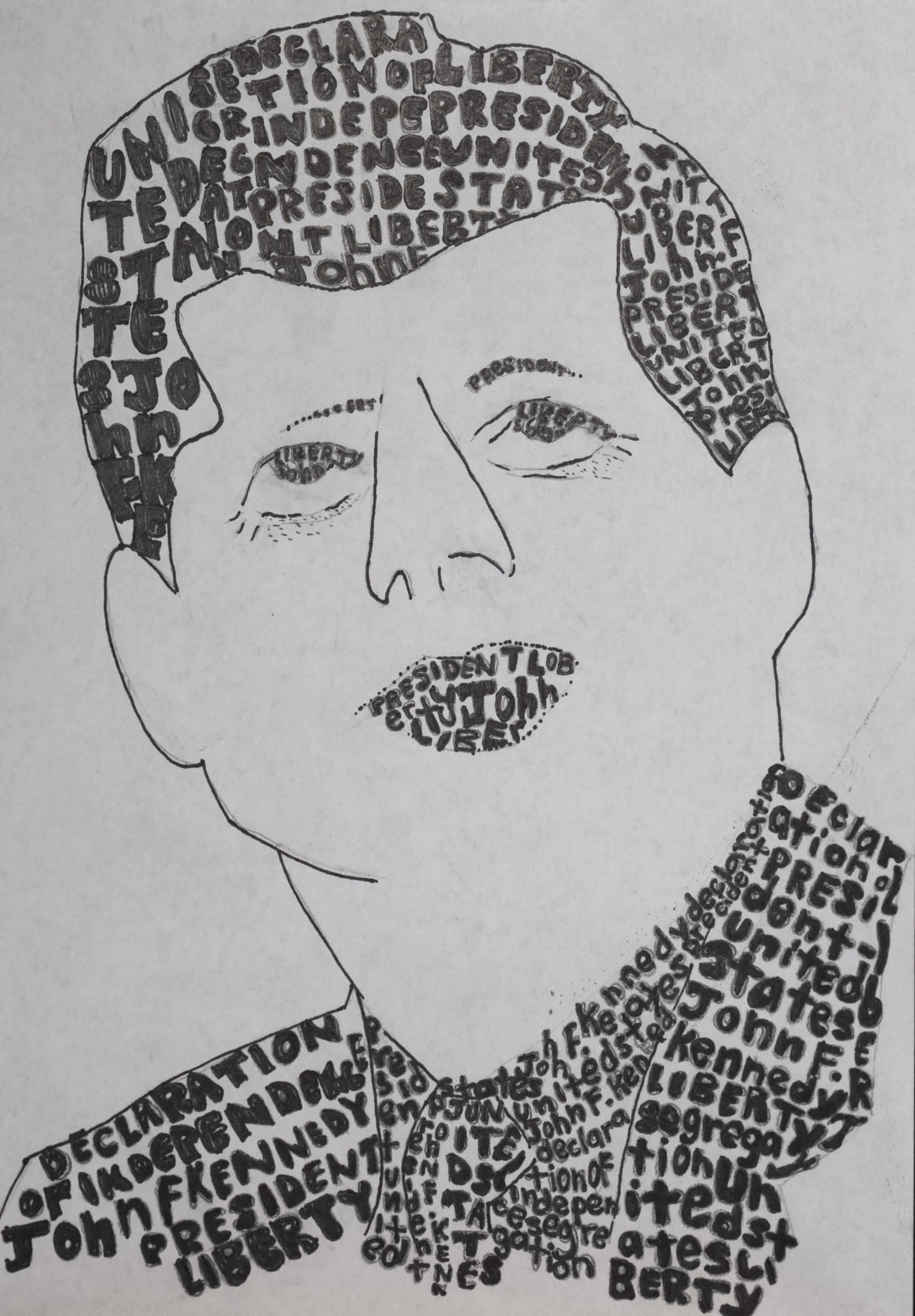
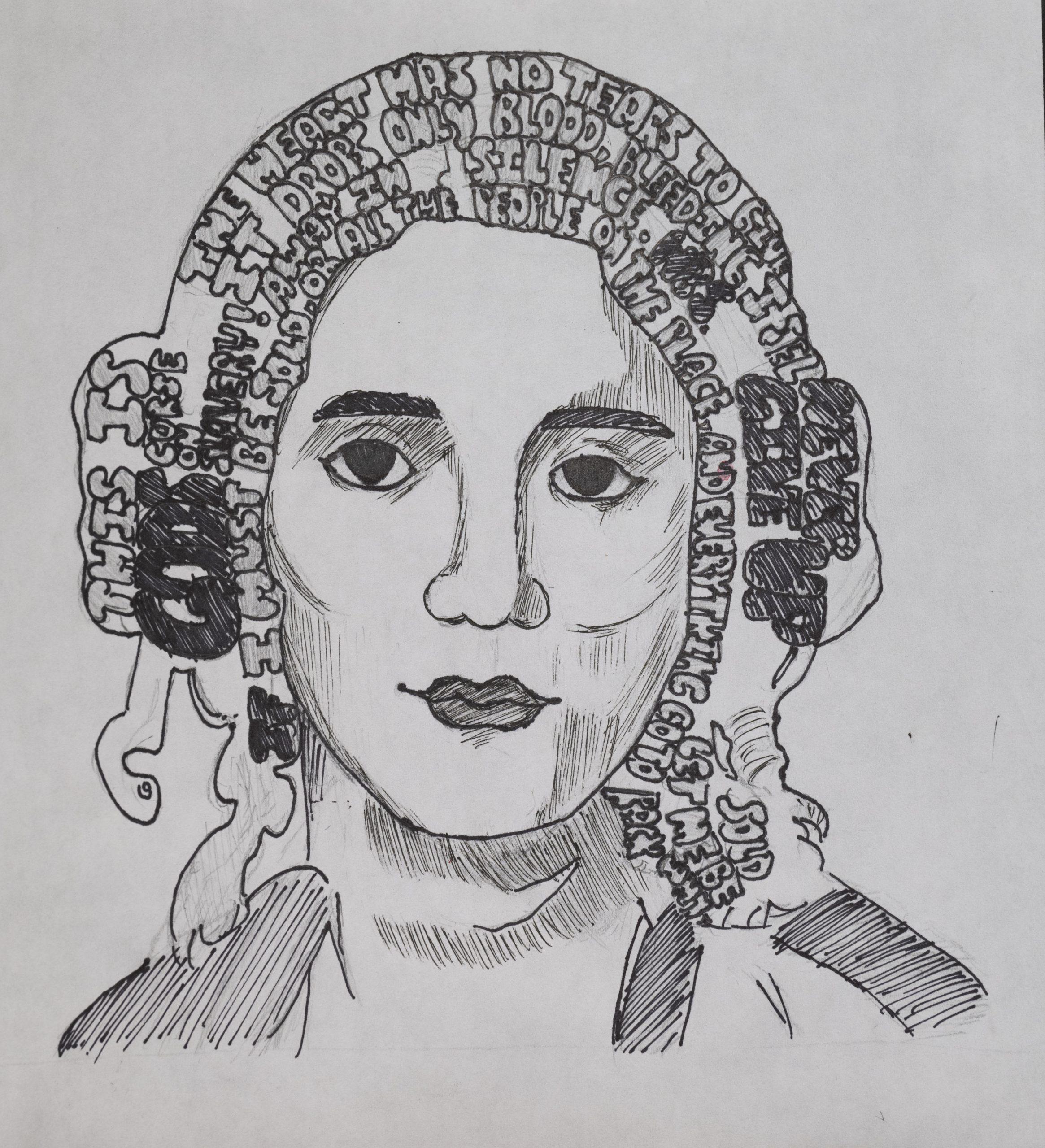
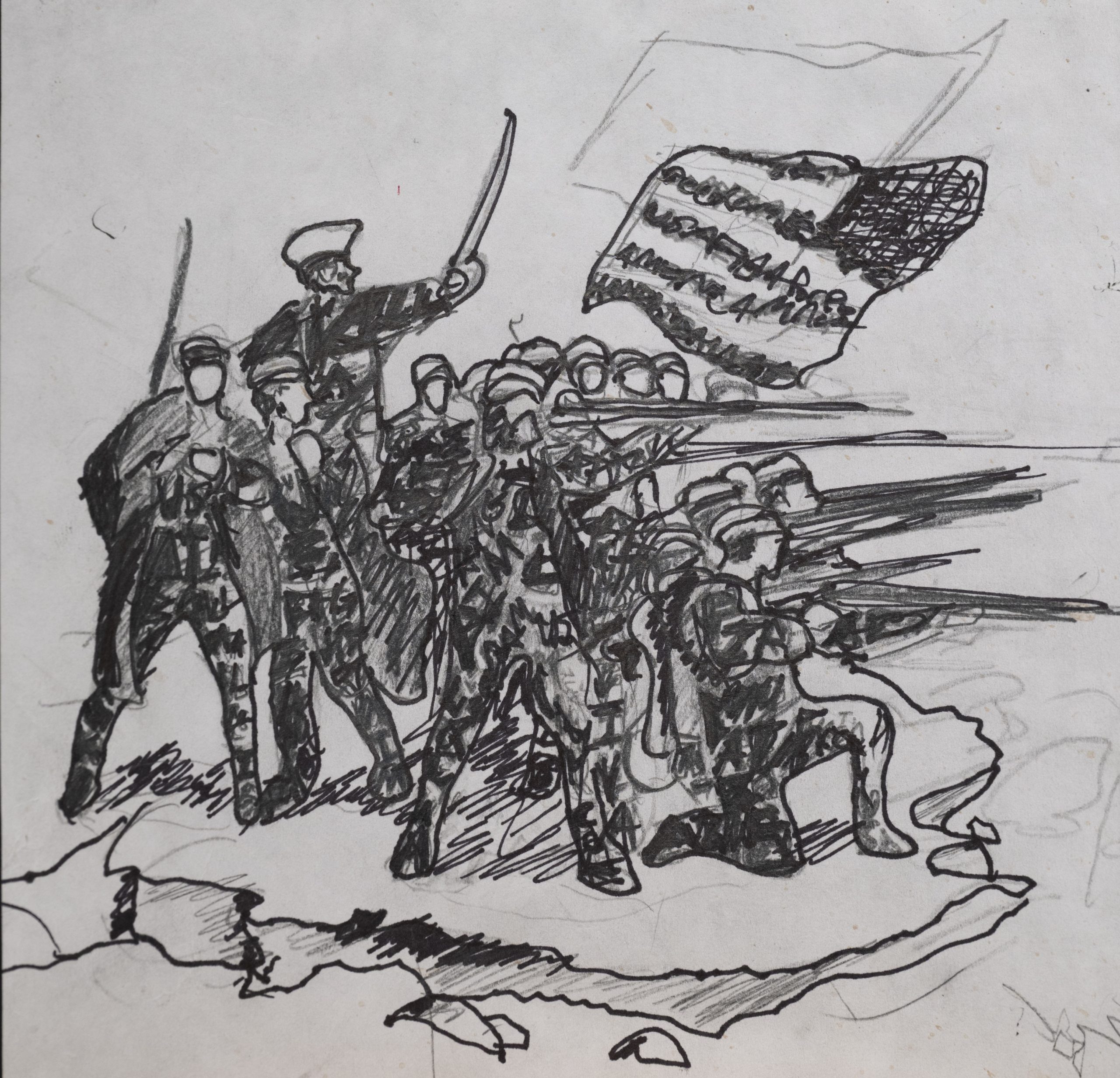
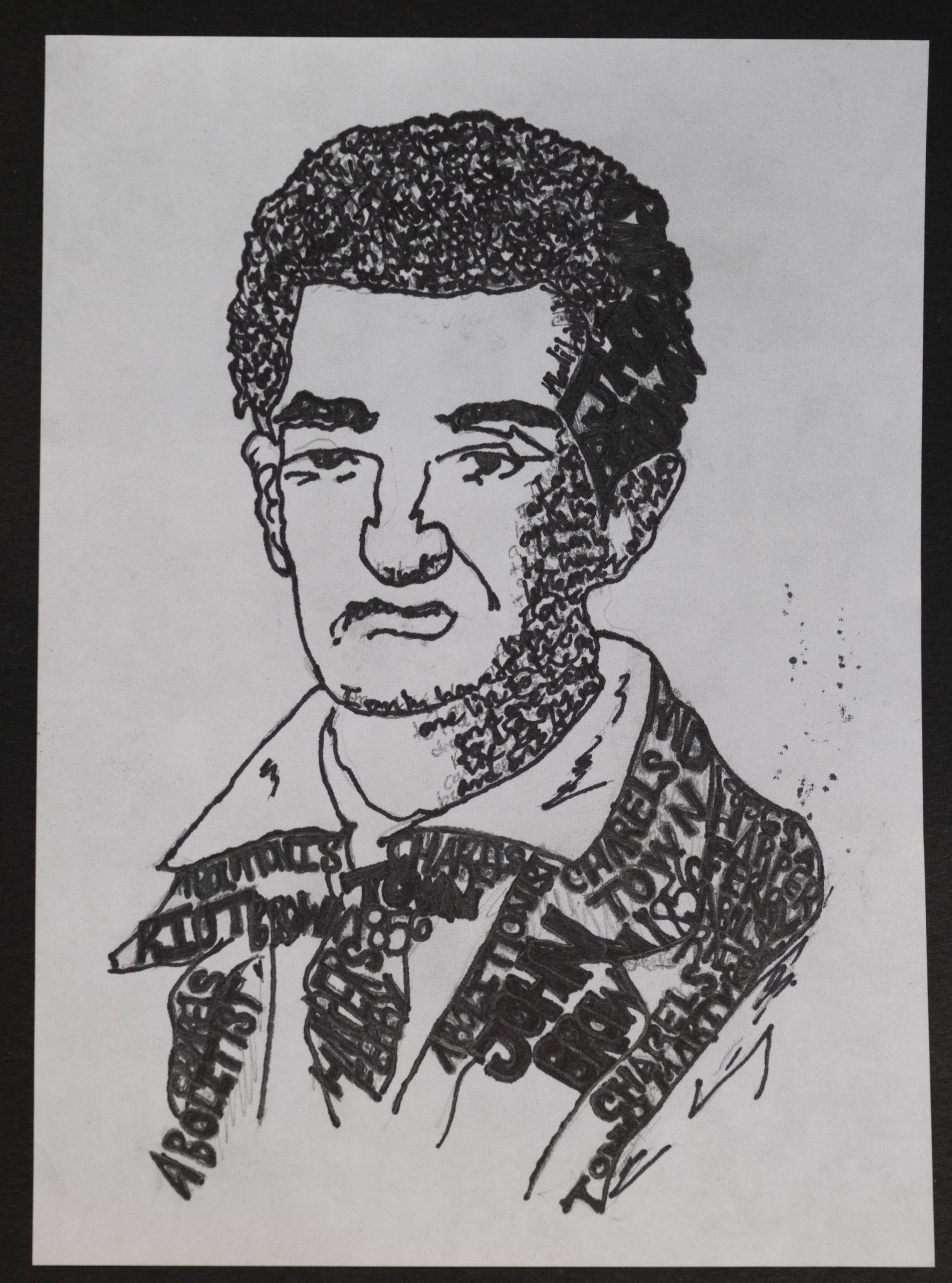
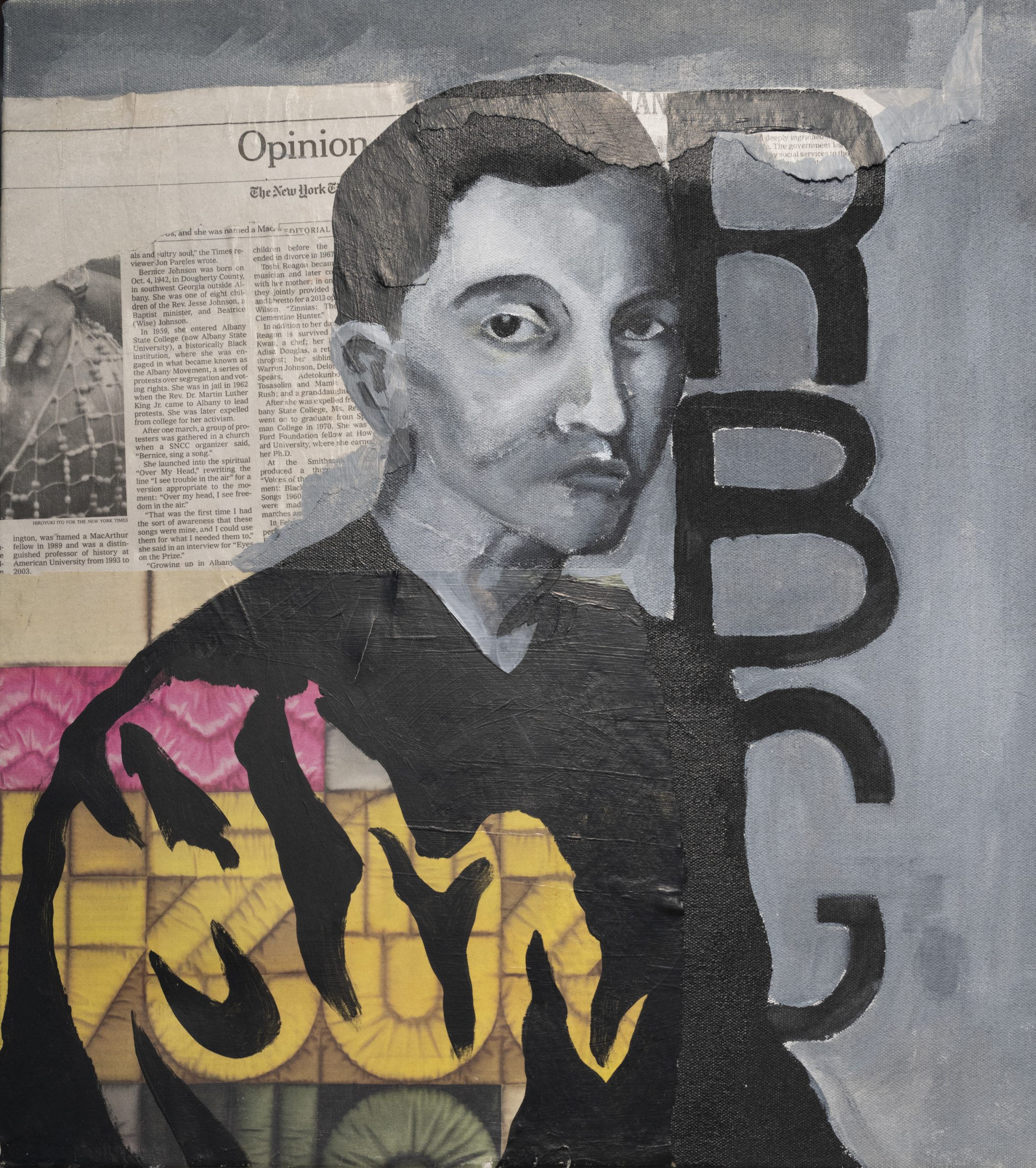
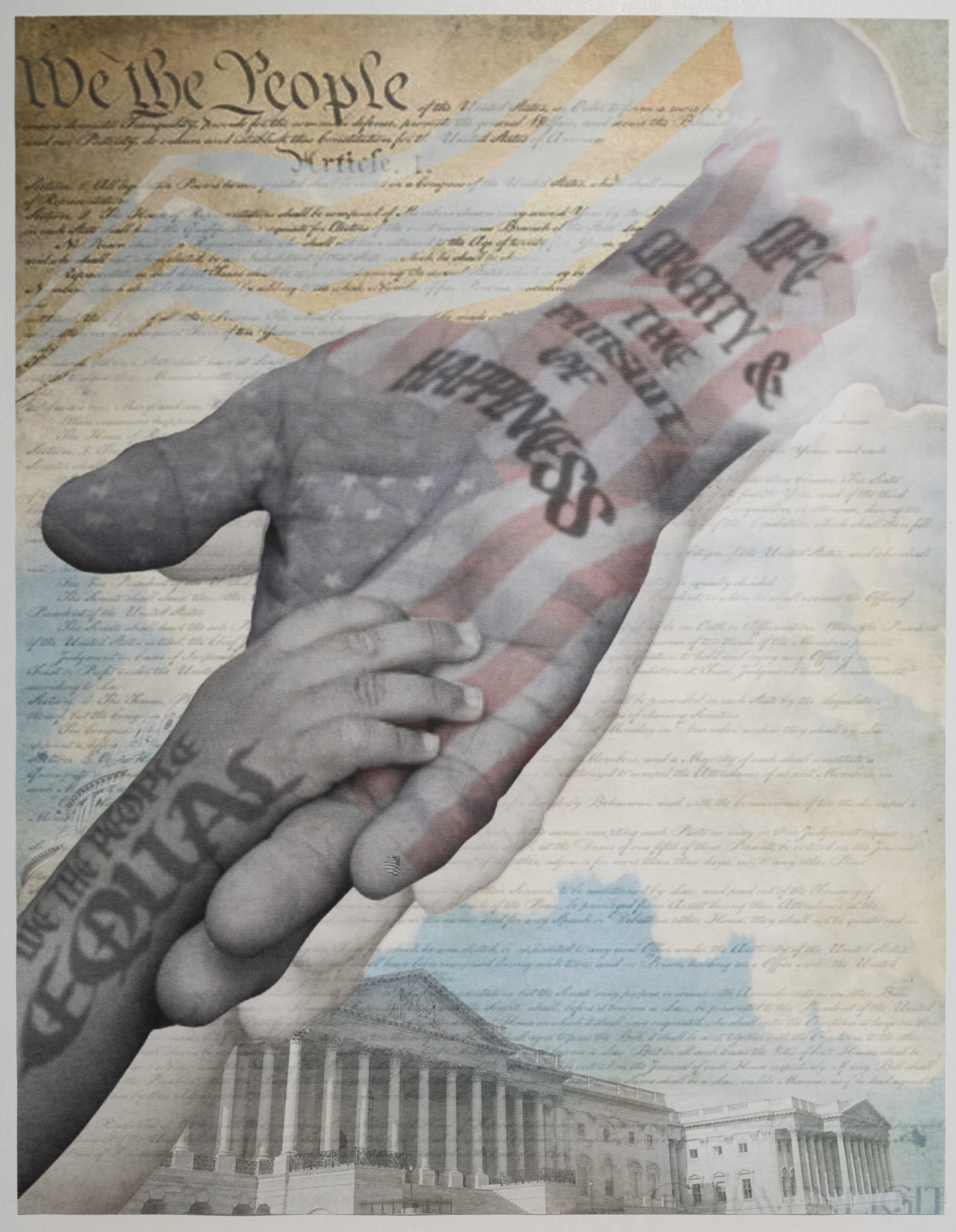
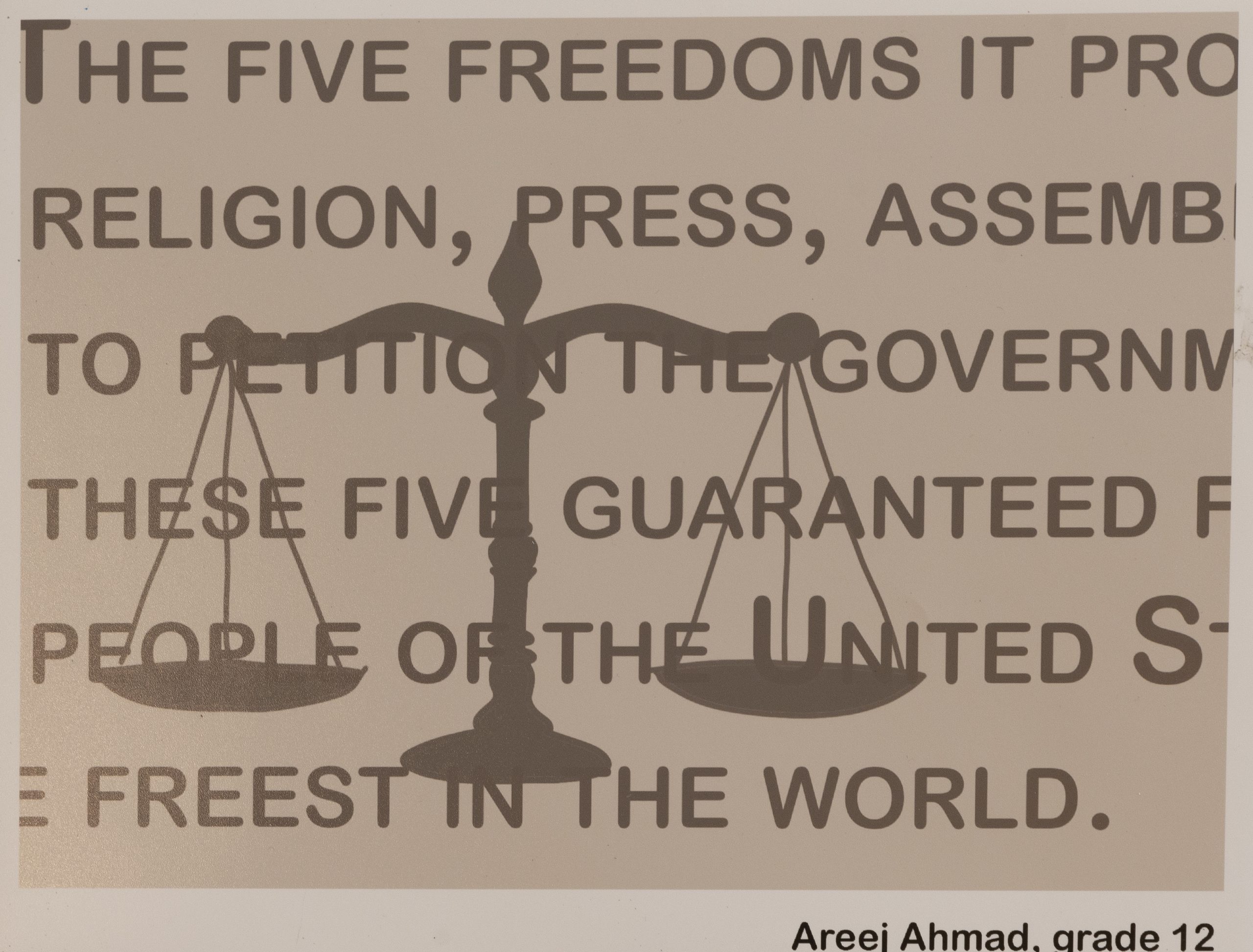
1.Project Title: CIVIL RIGHTS TYPOGRAPHY
Students were asked to illustrate a famous section of the Declaration of Independence by focusing on one of the three main attributes discussed within, Life, Liberty, or the Pursuit of Happiness. Using the art technique of typography, students chose either a symbol or a civil rights leader, developed a vocabulary about that person or symbol, and created a two-dimensional work.
Teacher: Gloria Adams
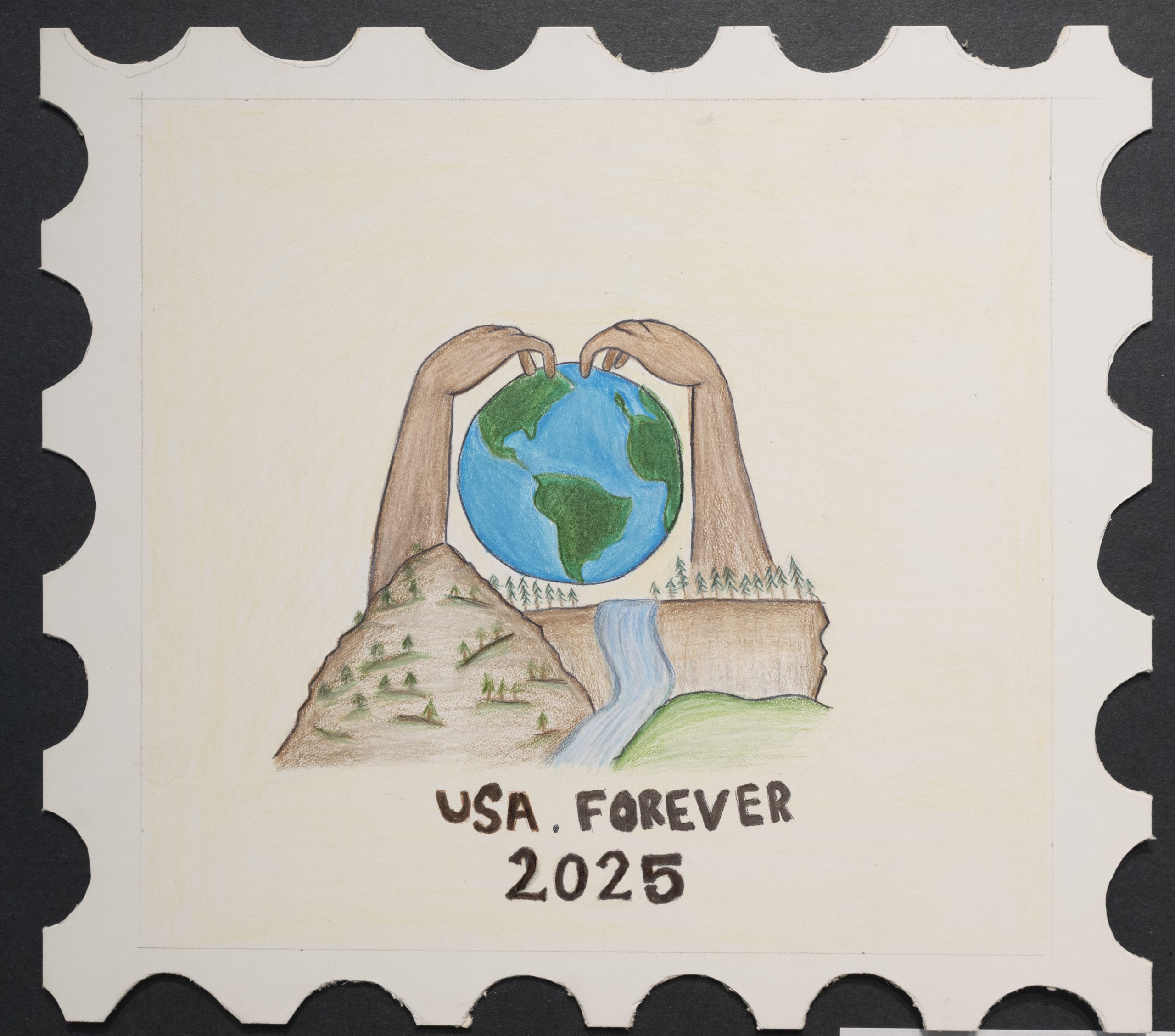
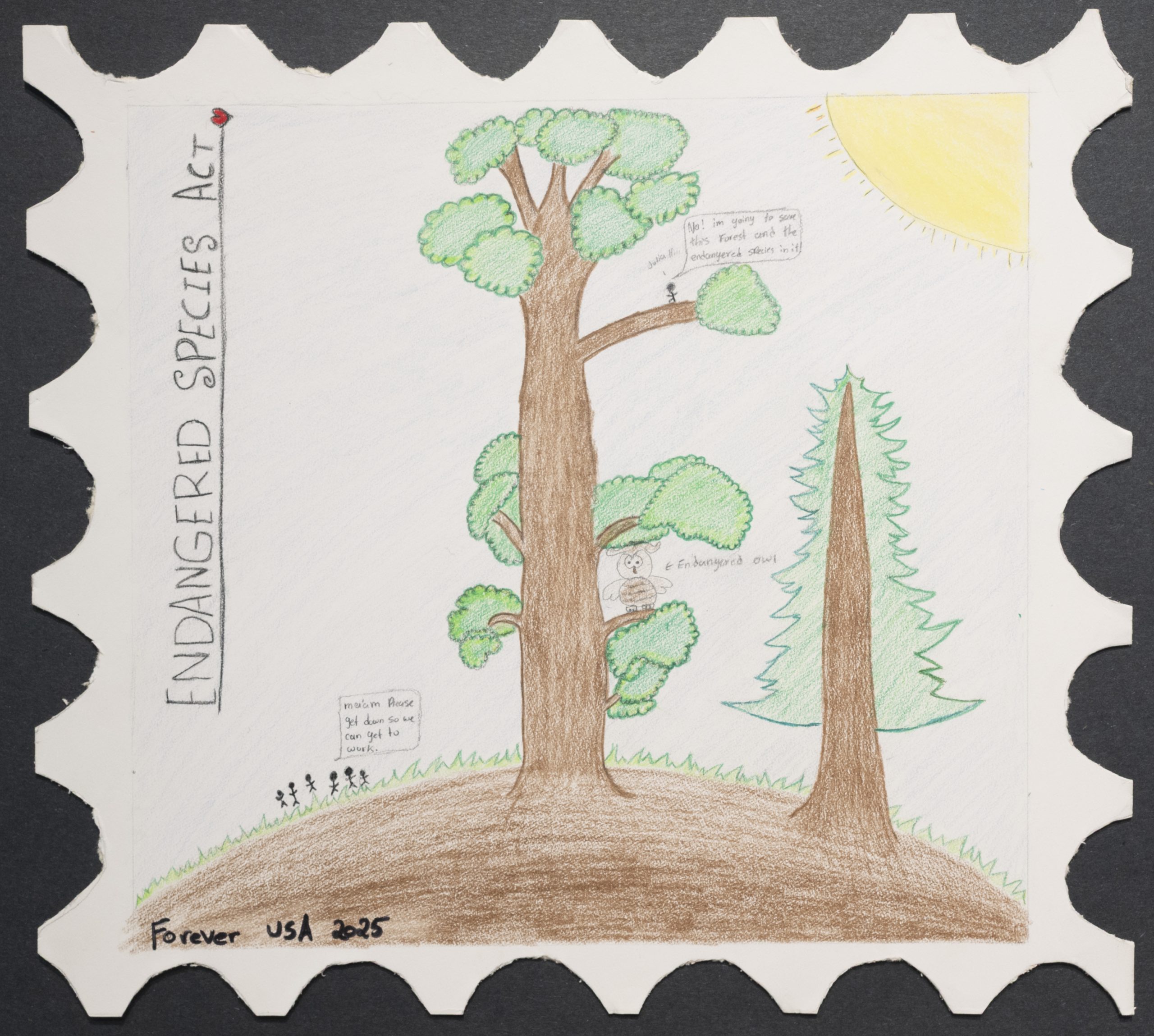
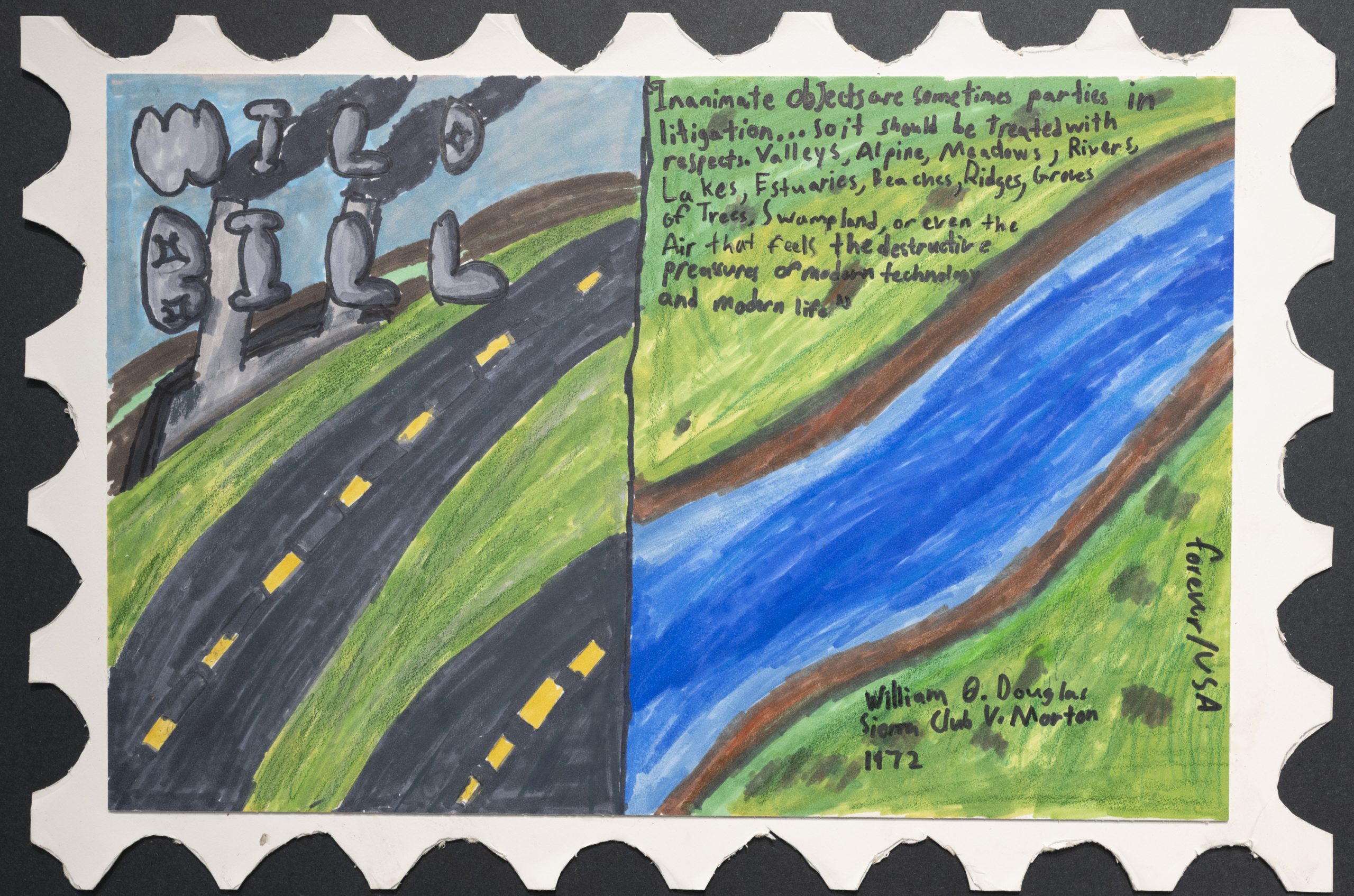
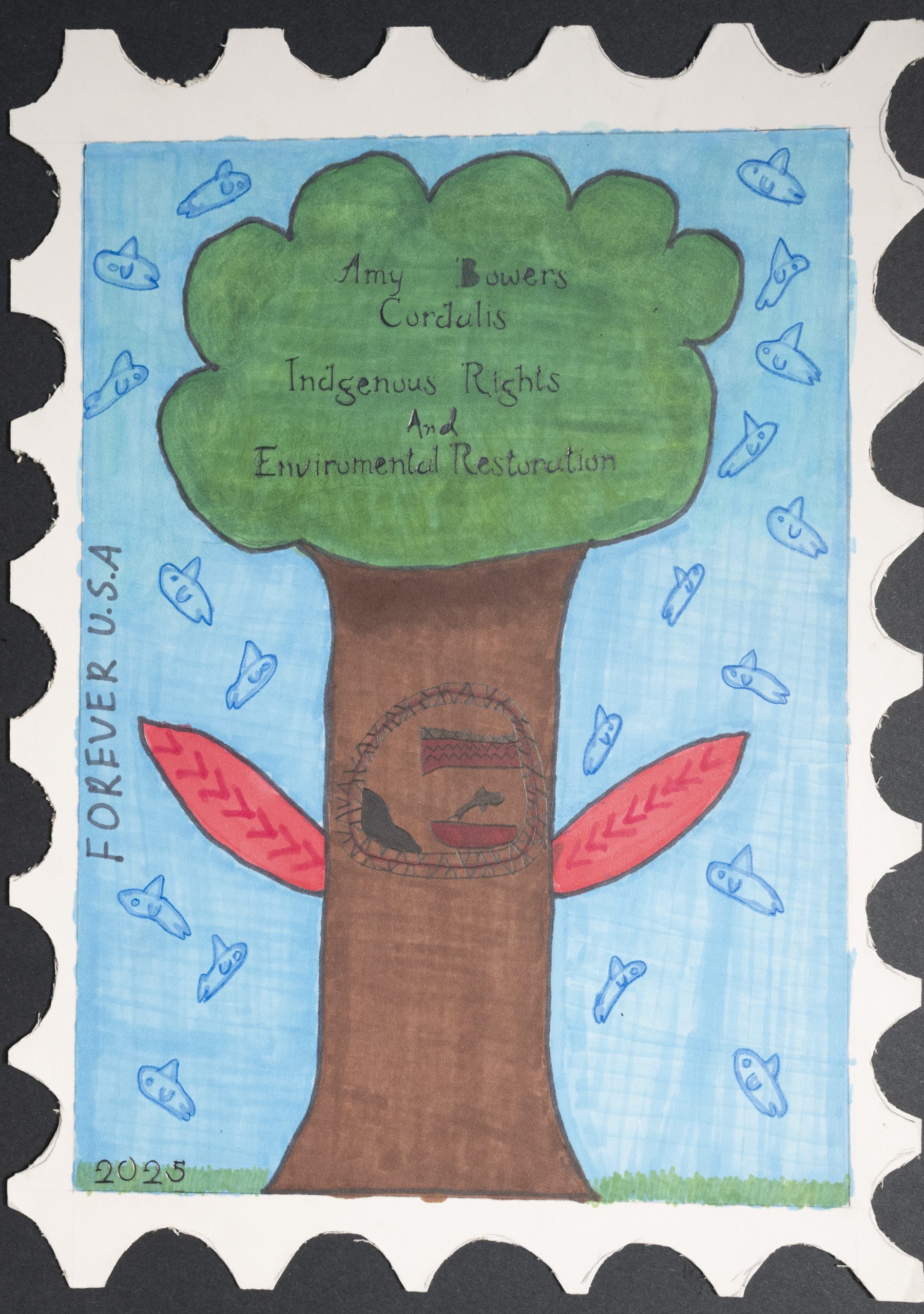
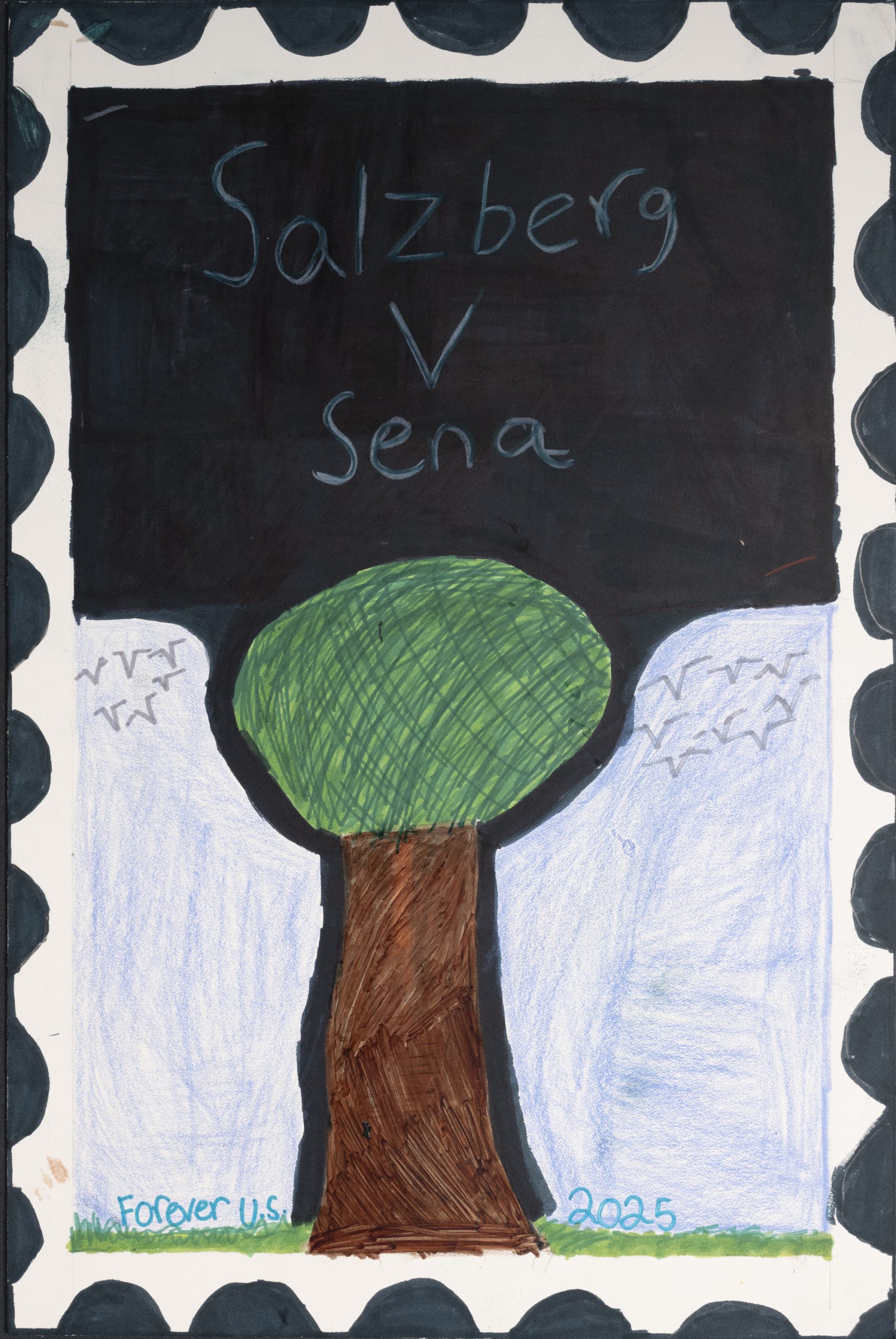
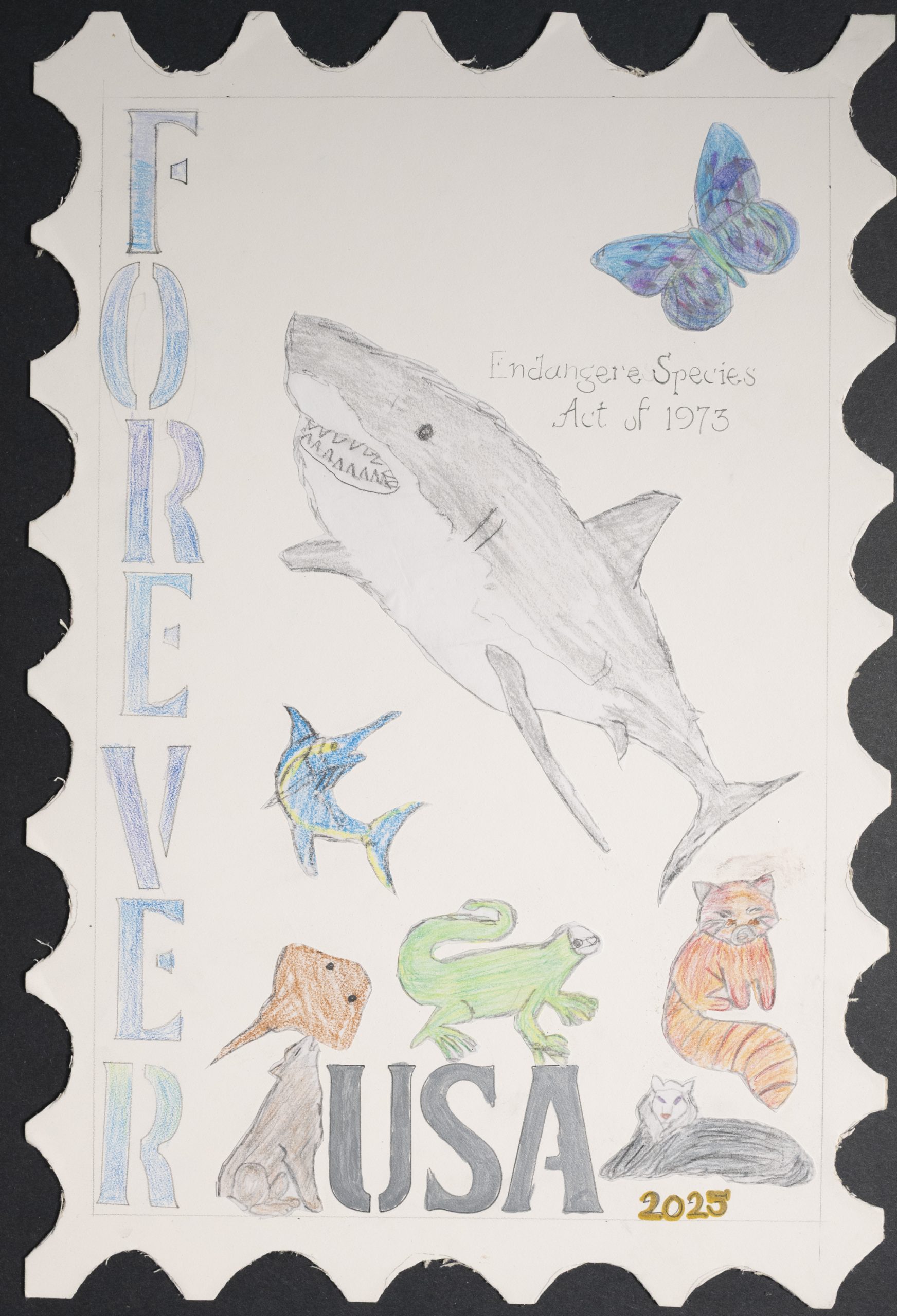
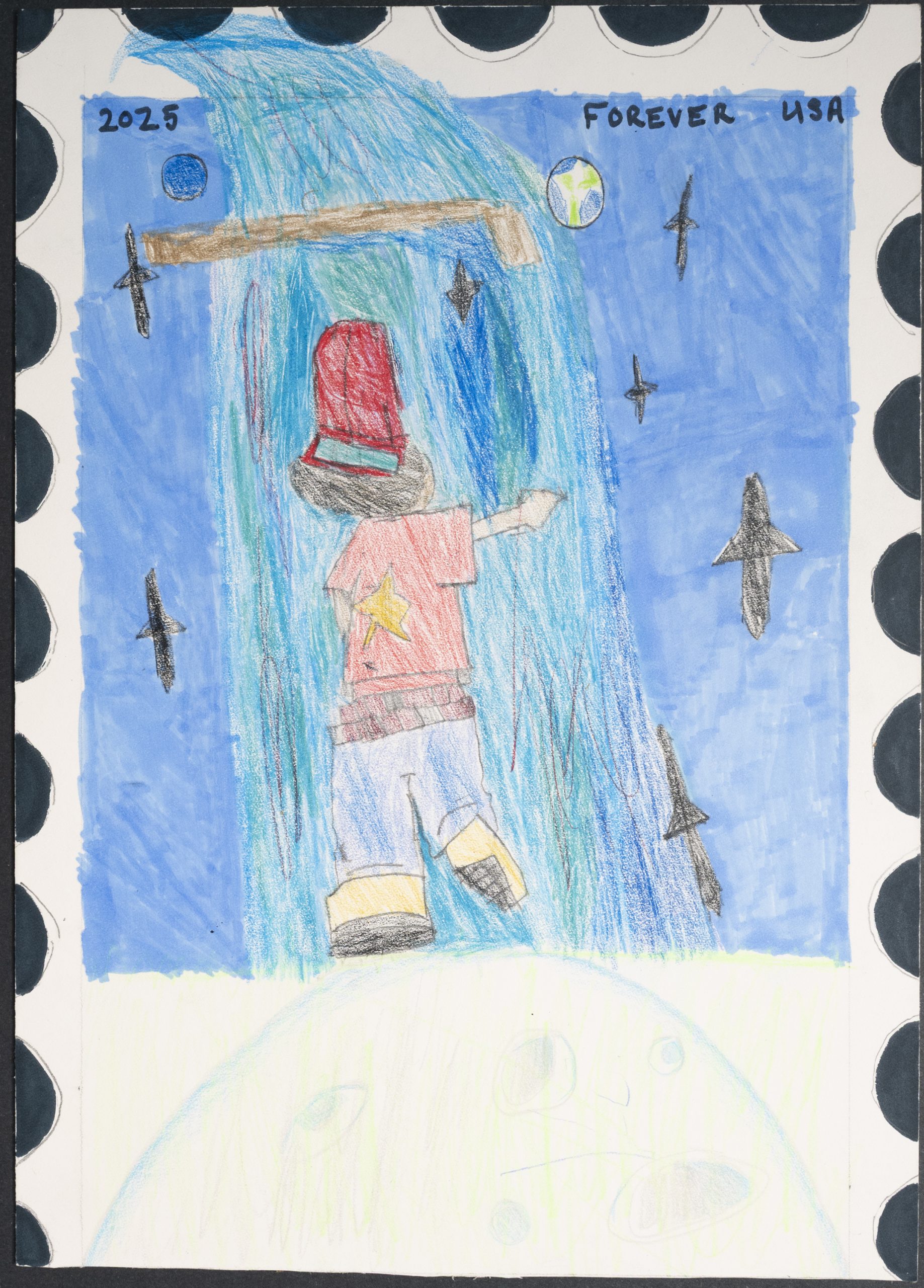
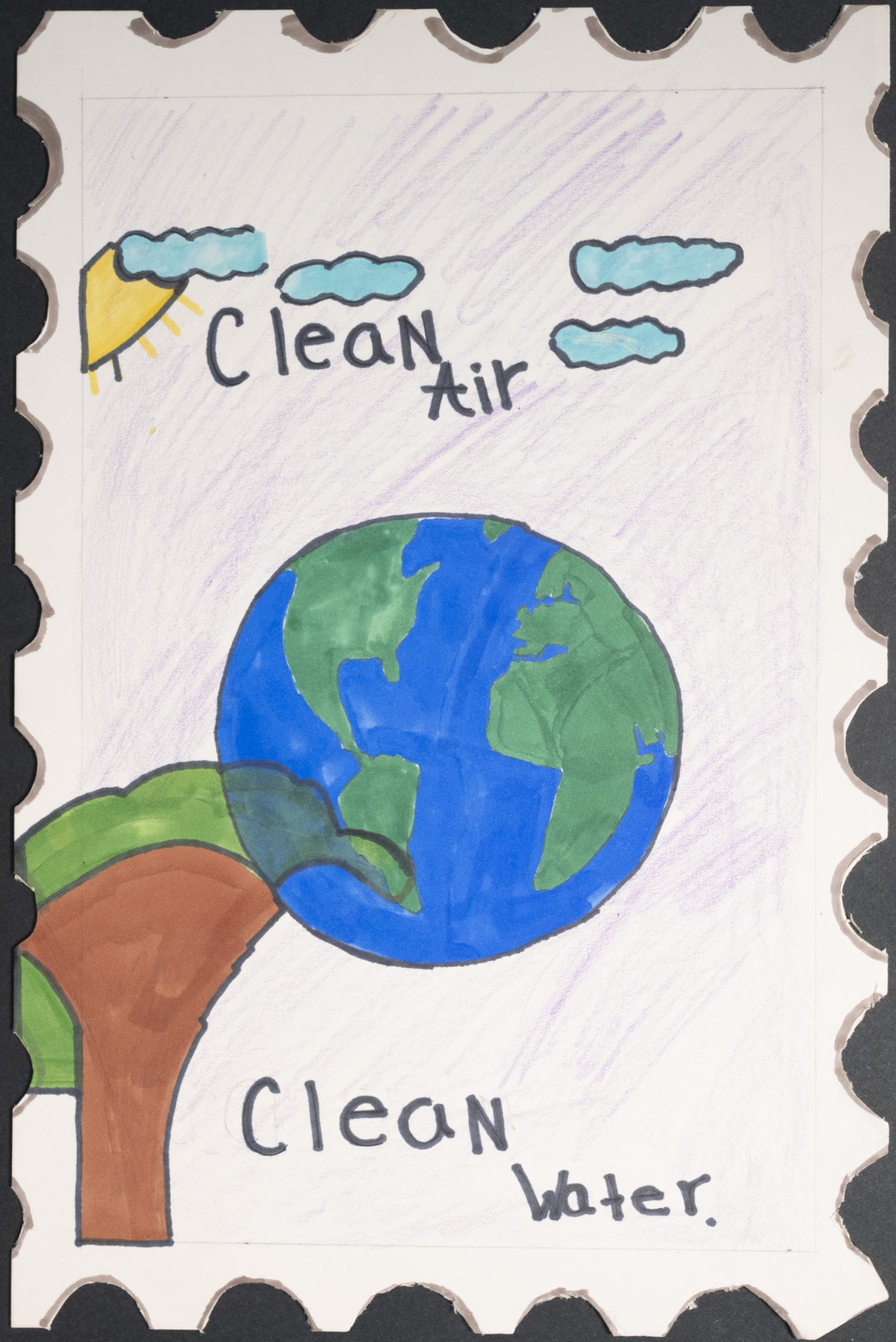
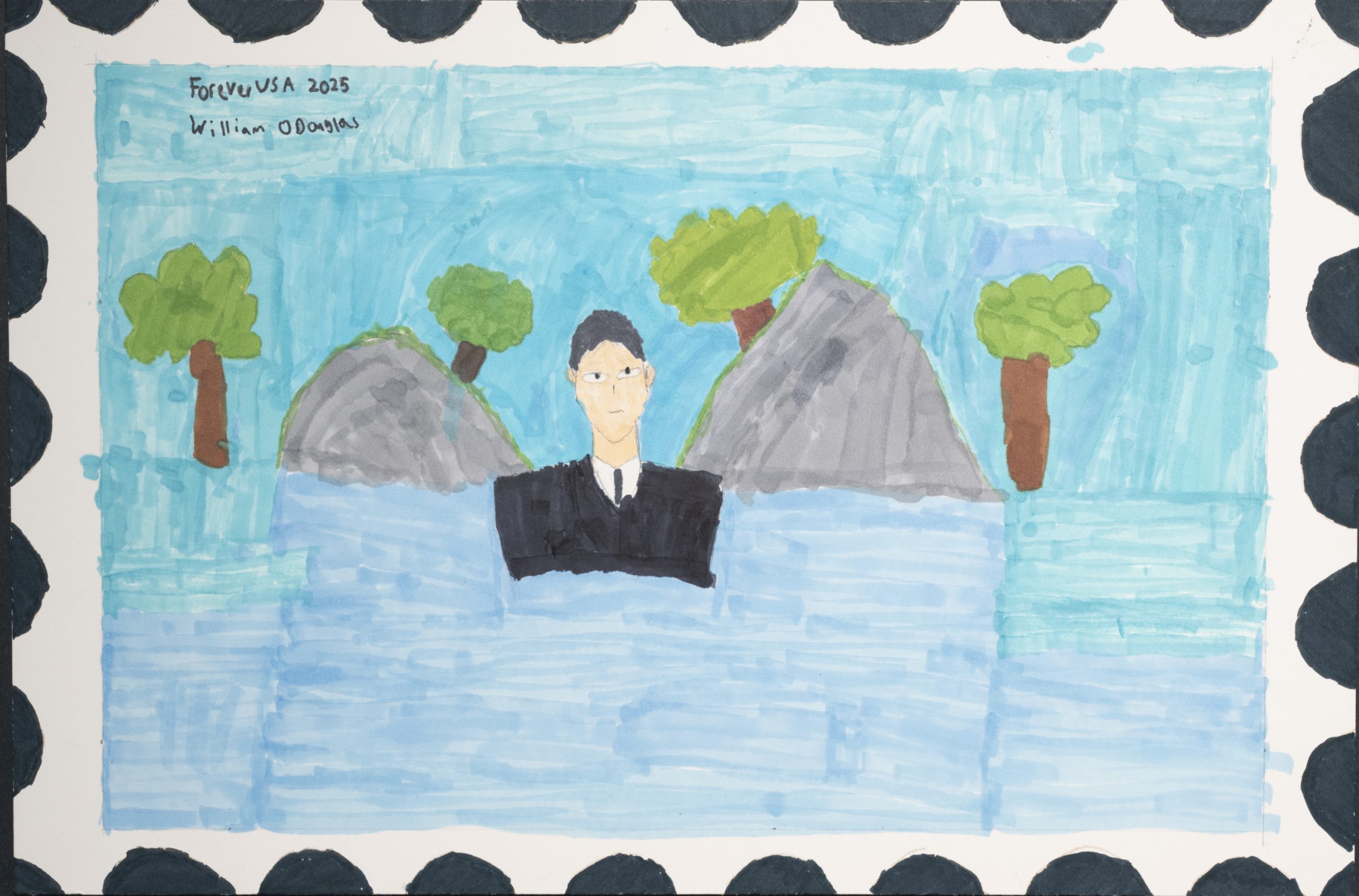
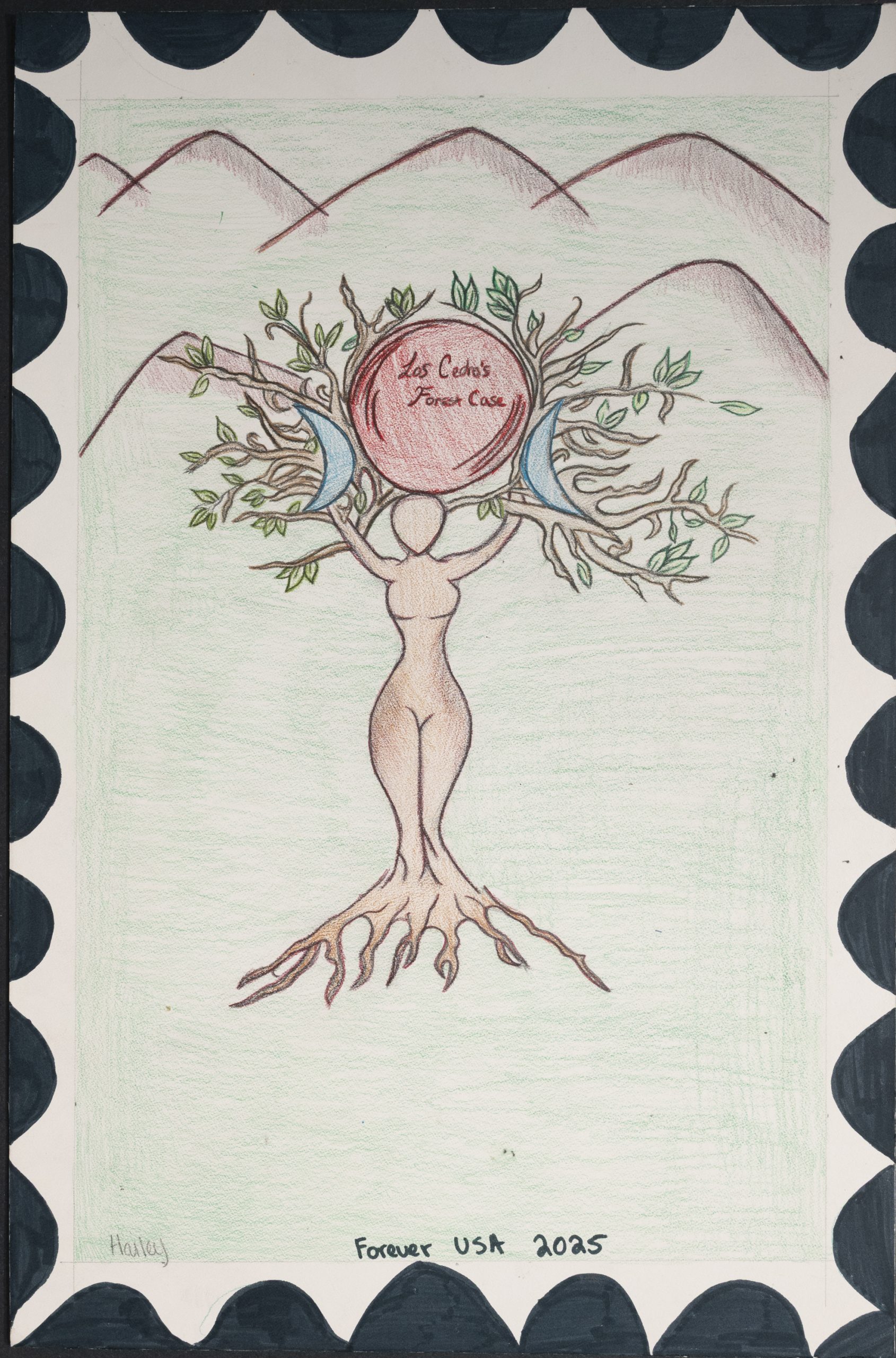
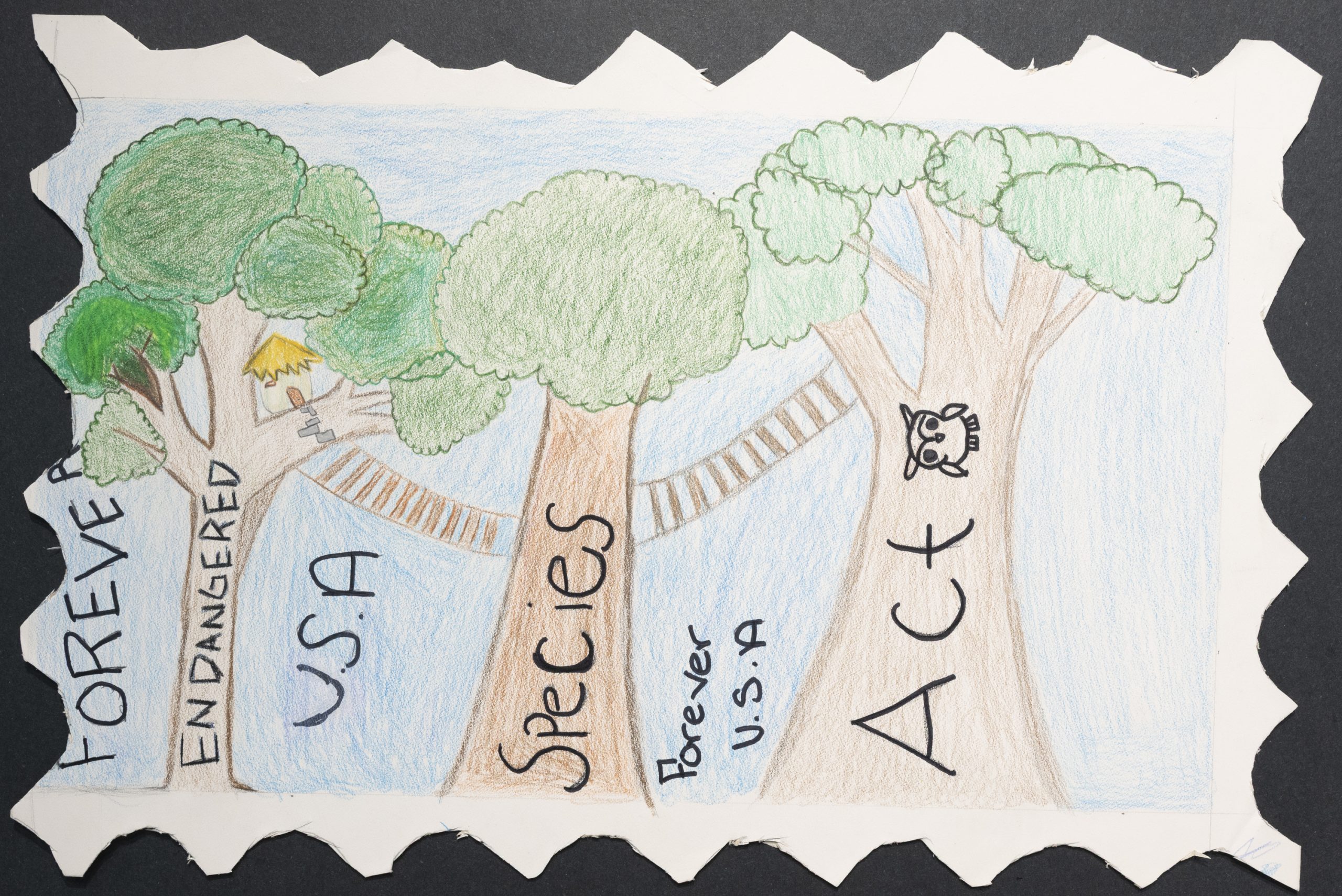
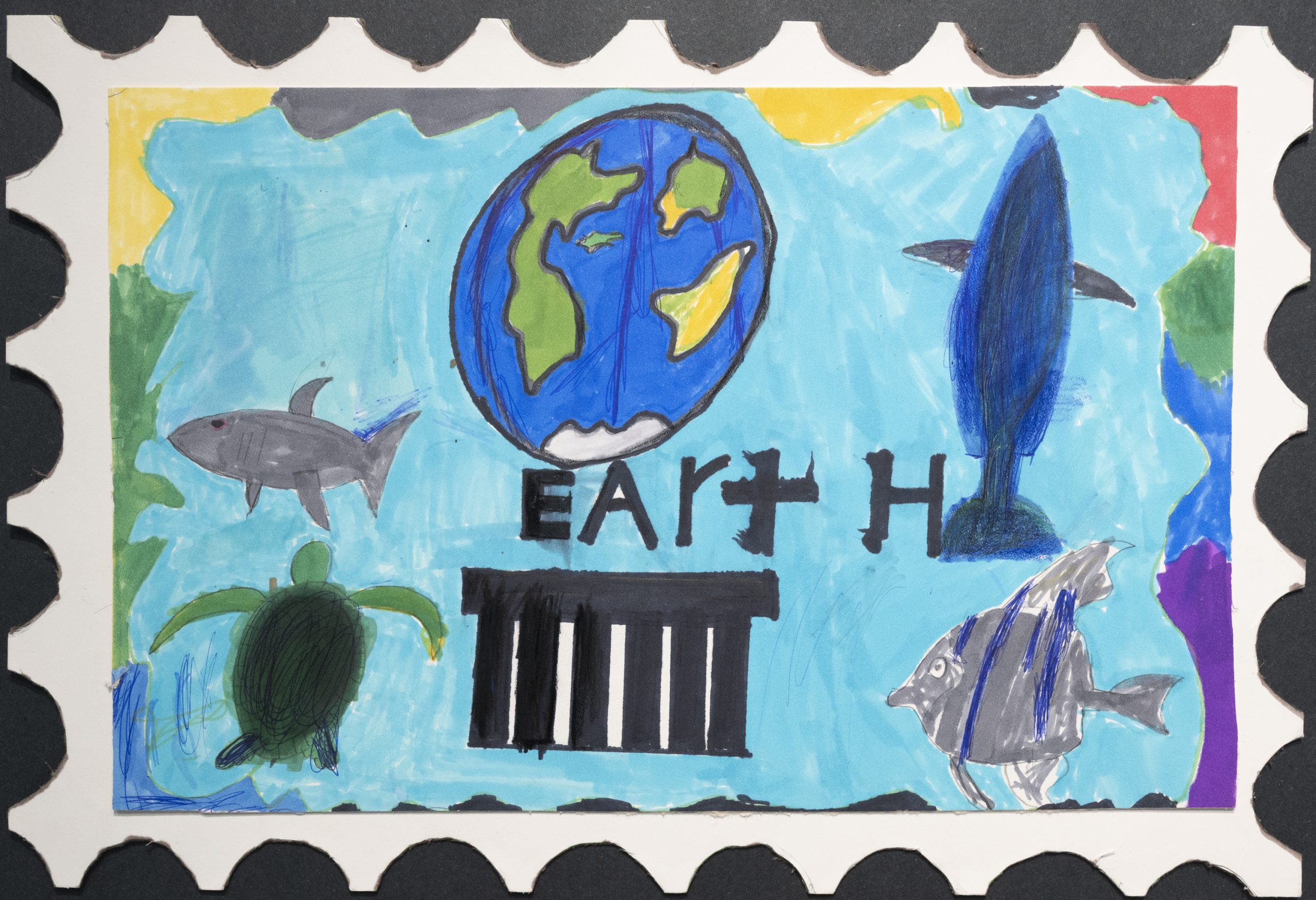
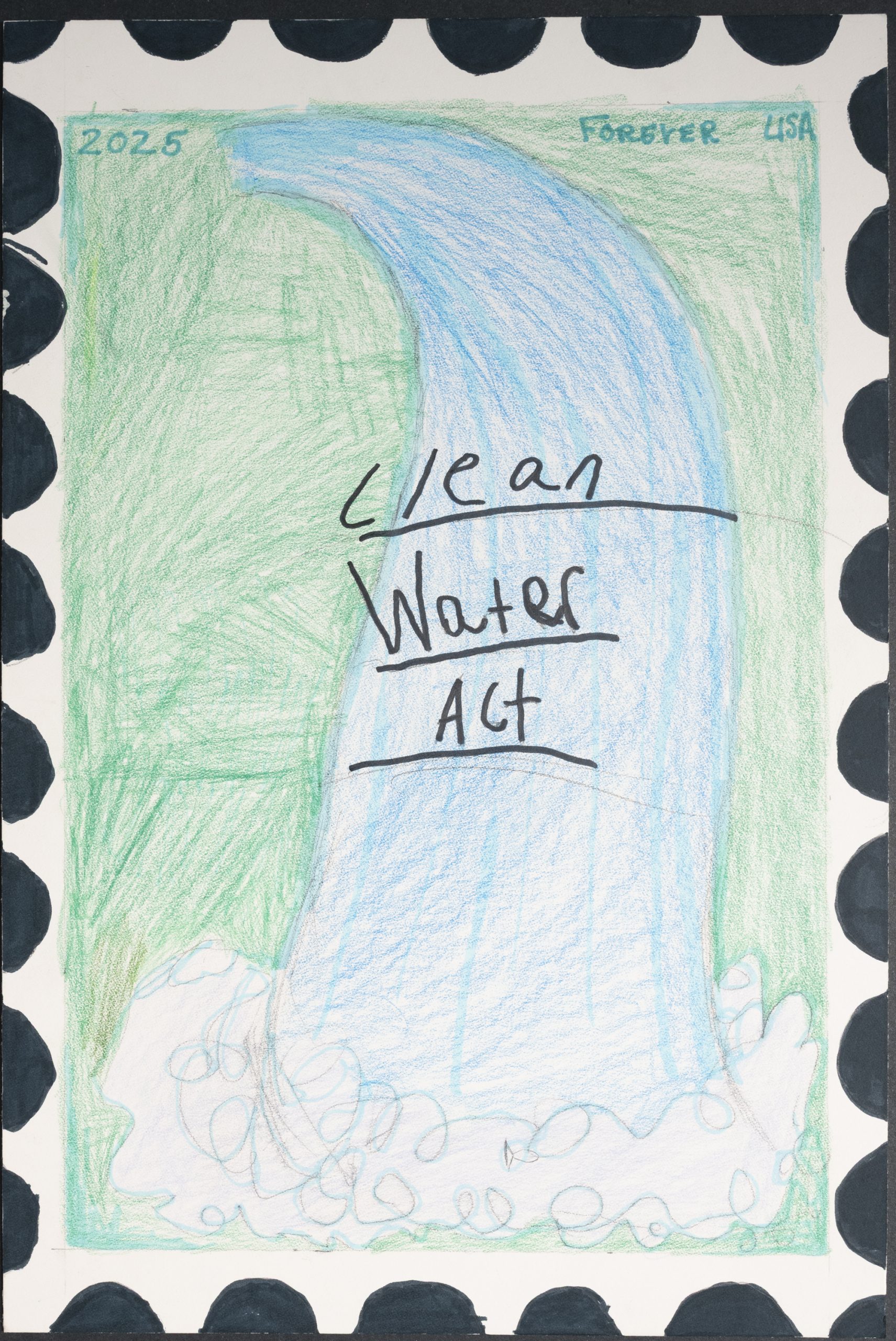
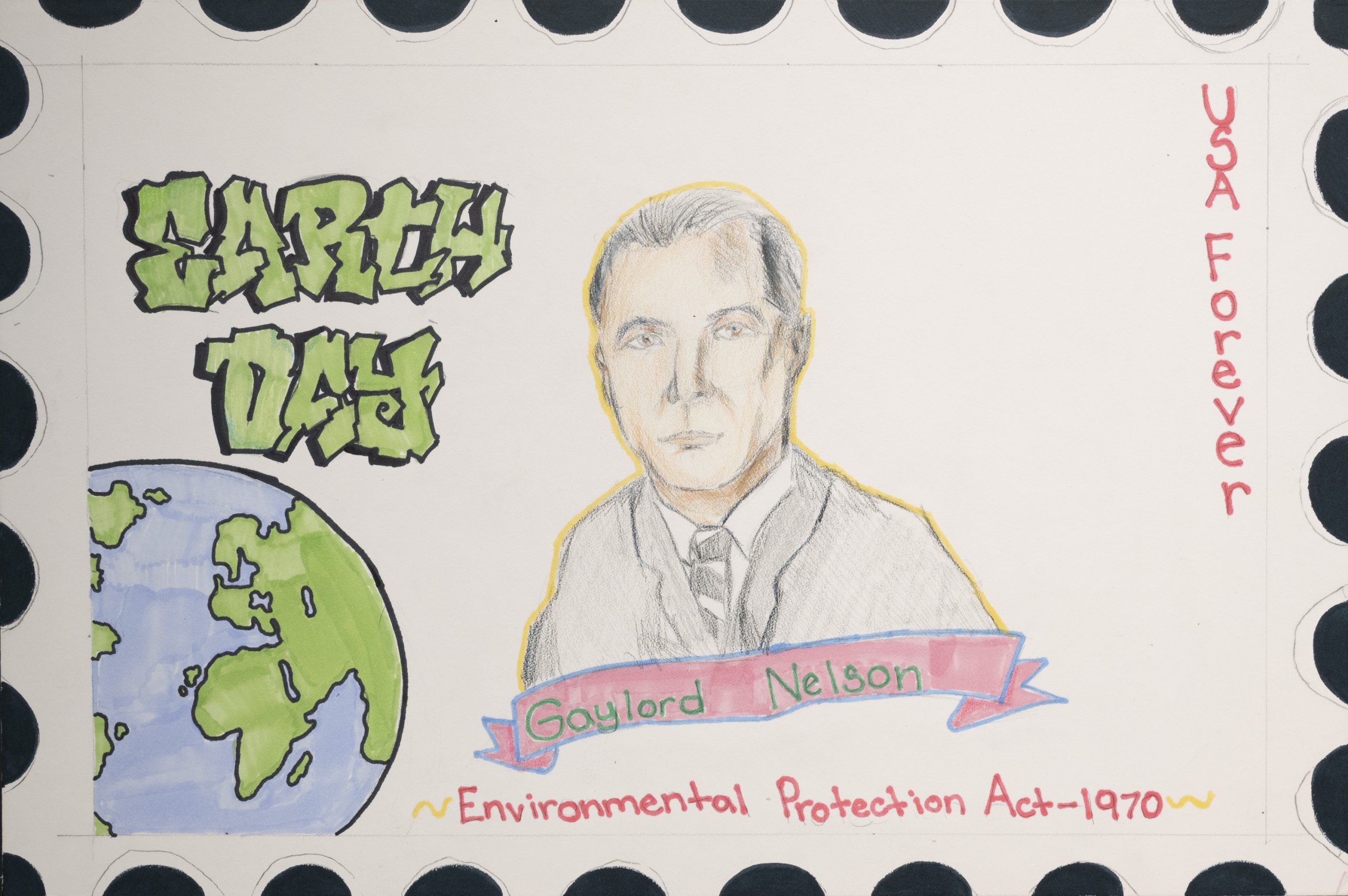
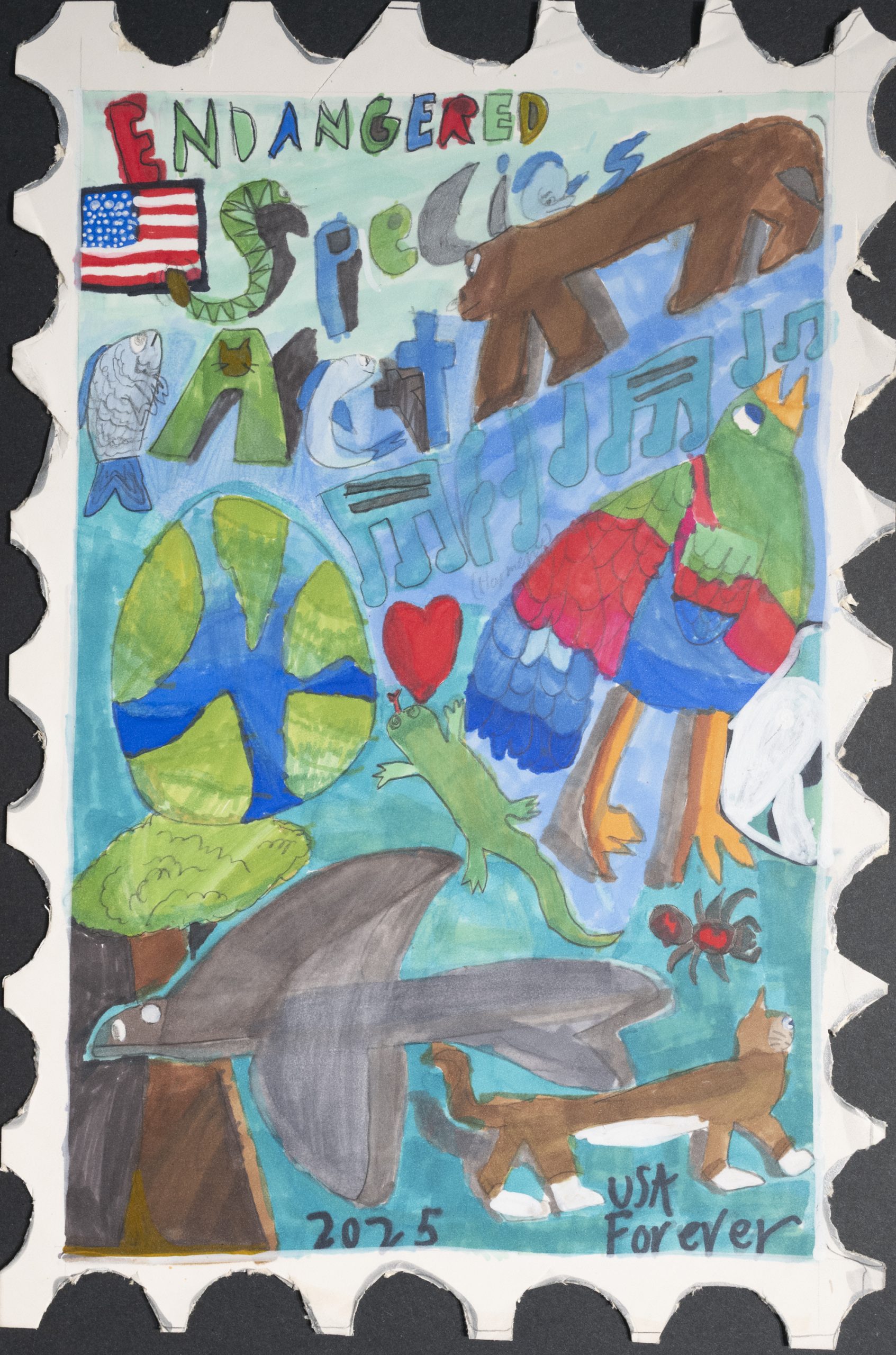
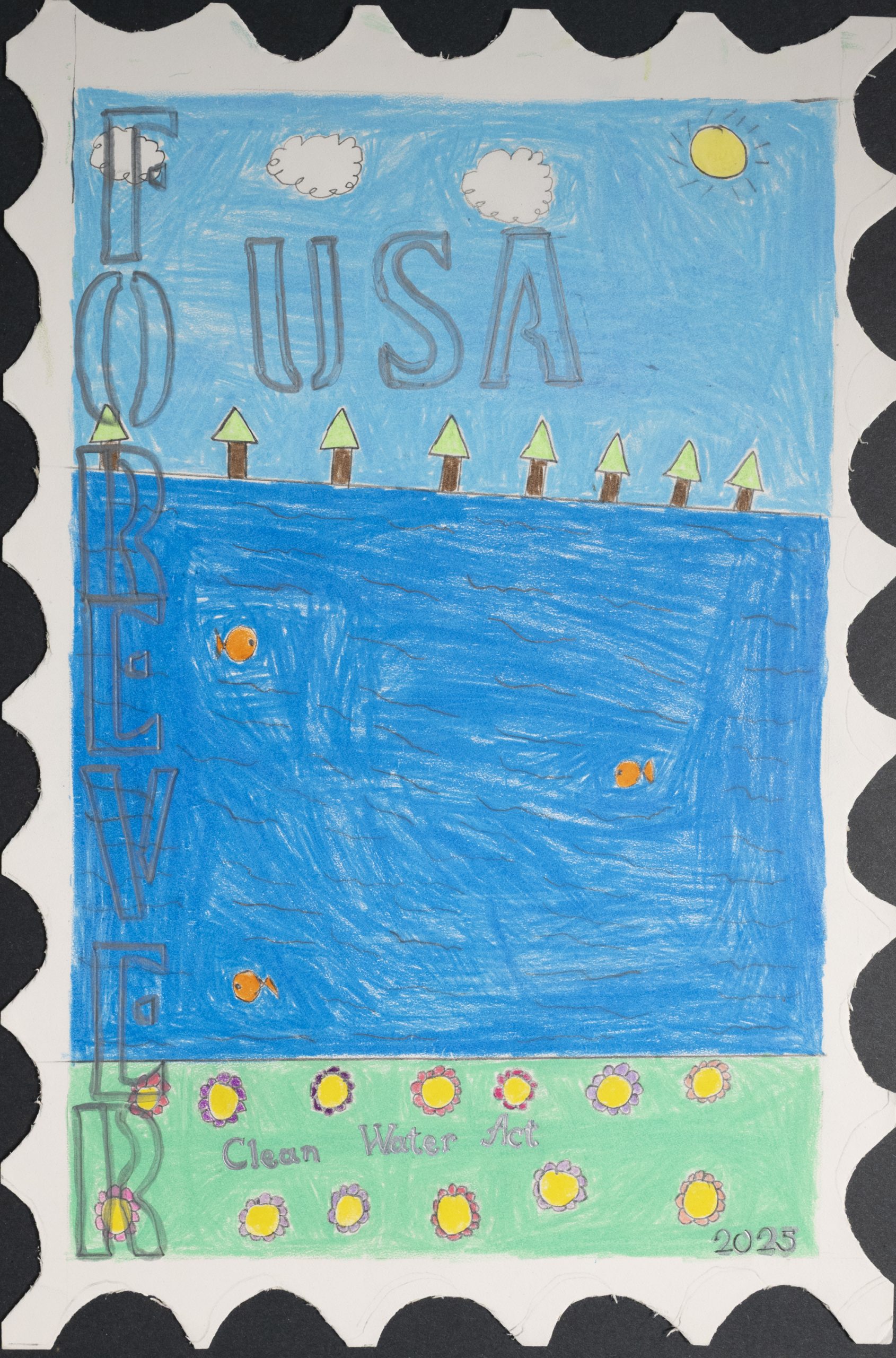
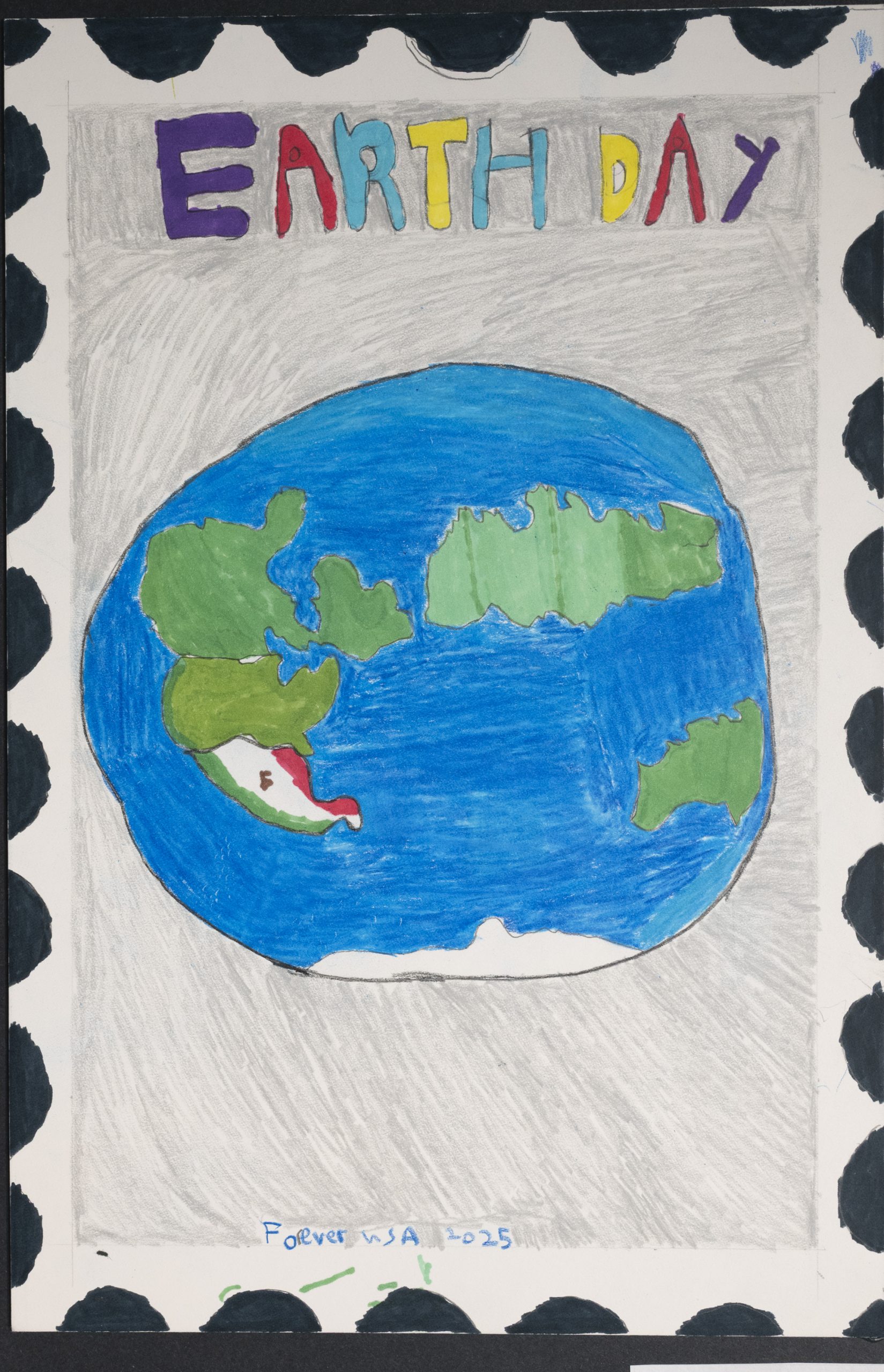
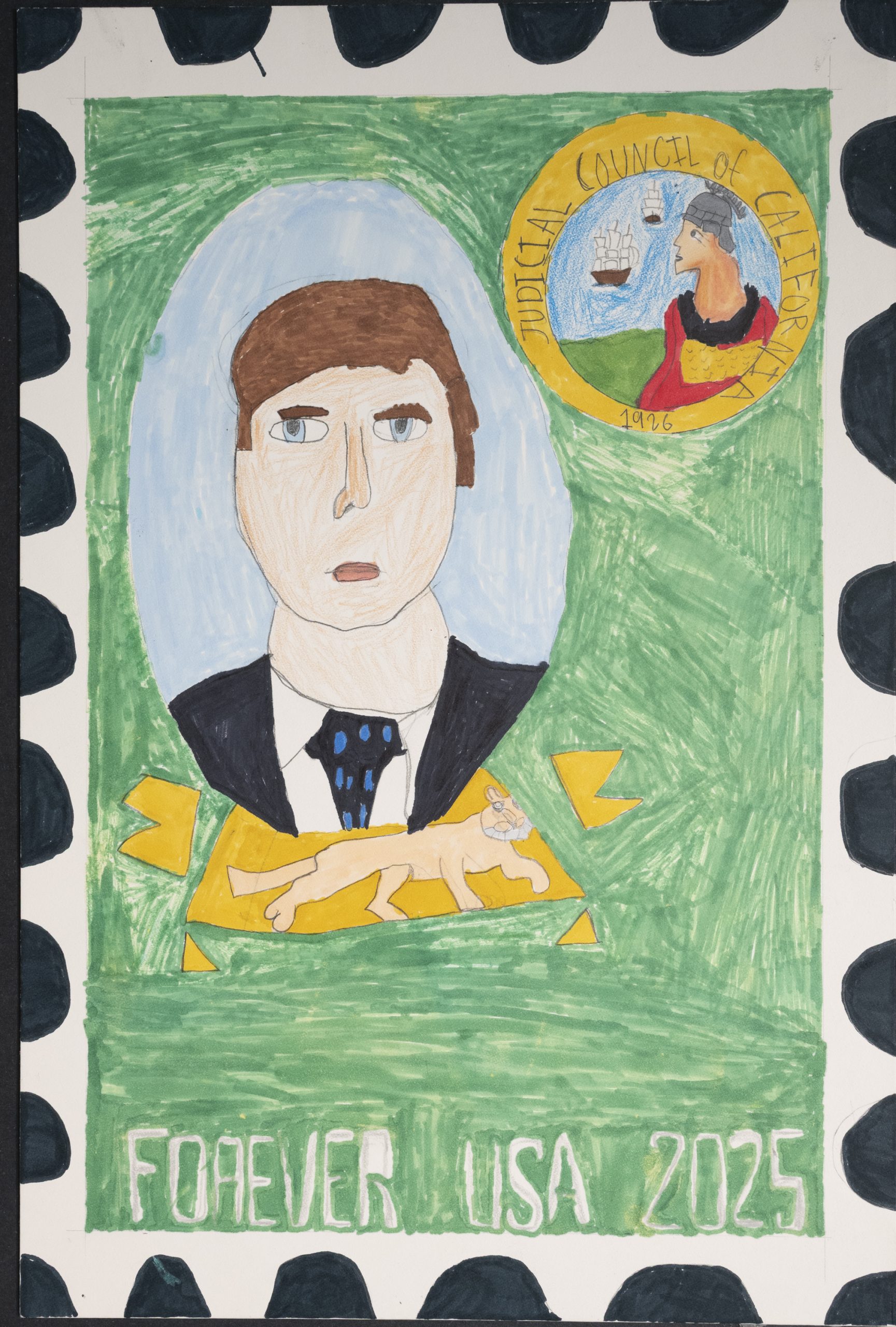
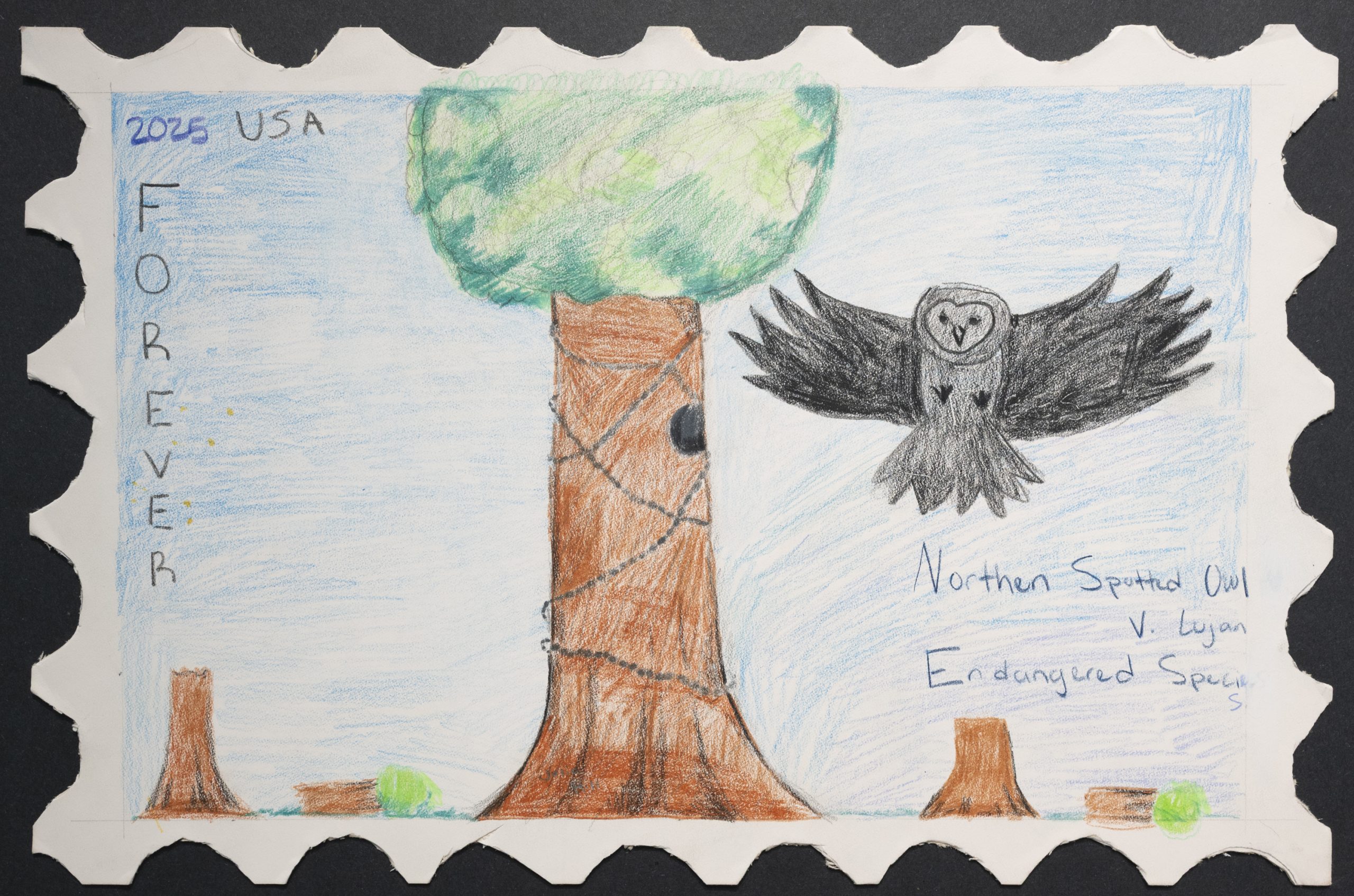
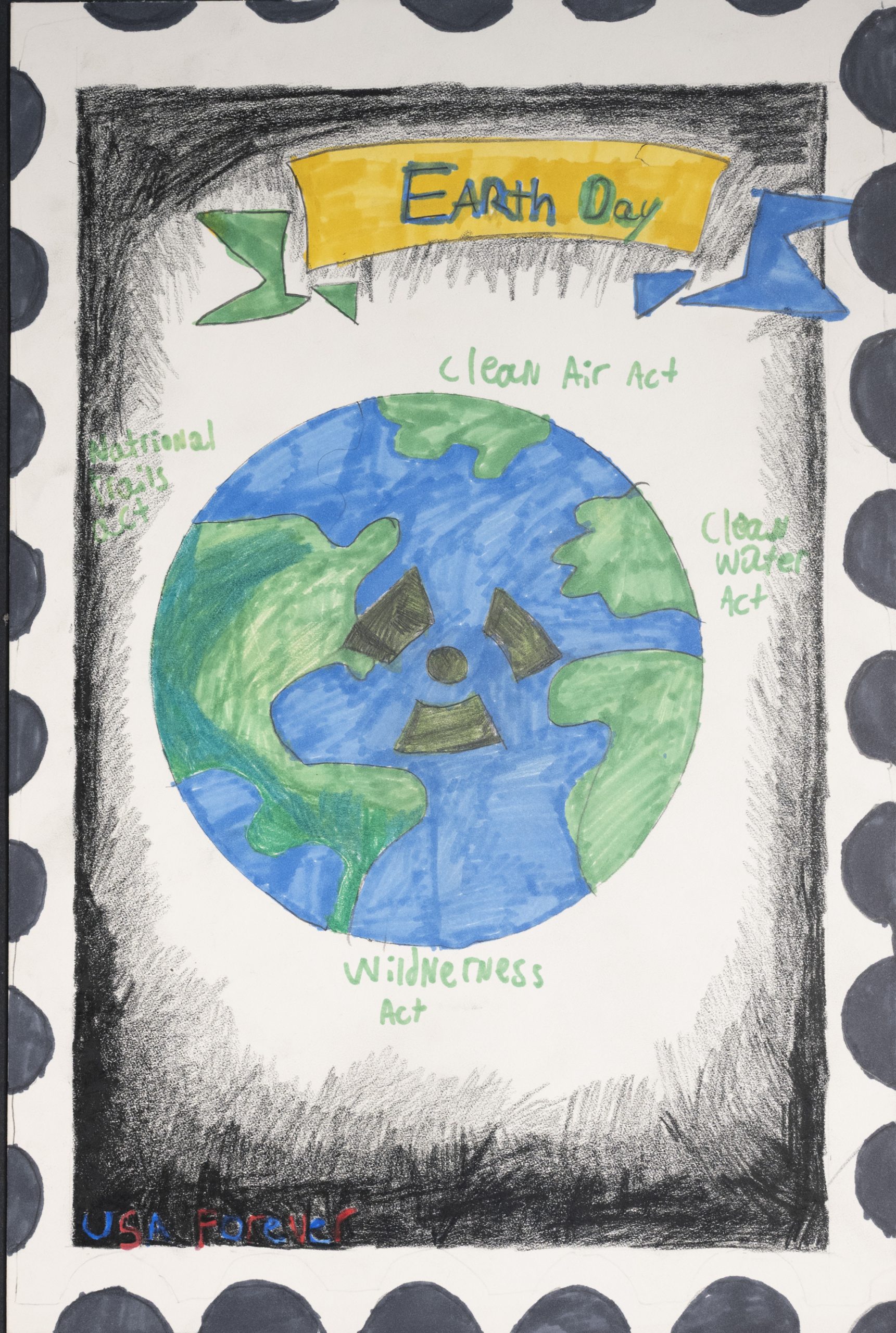
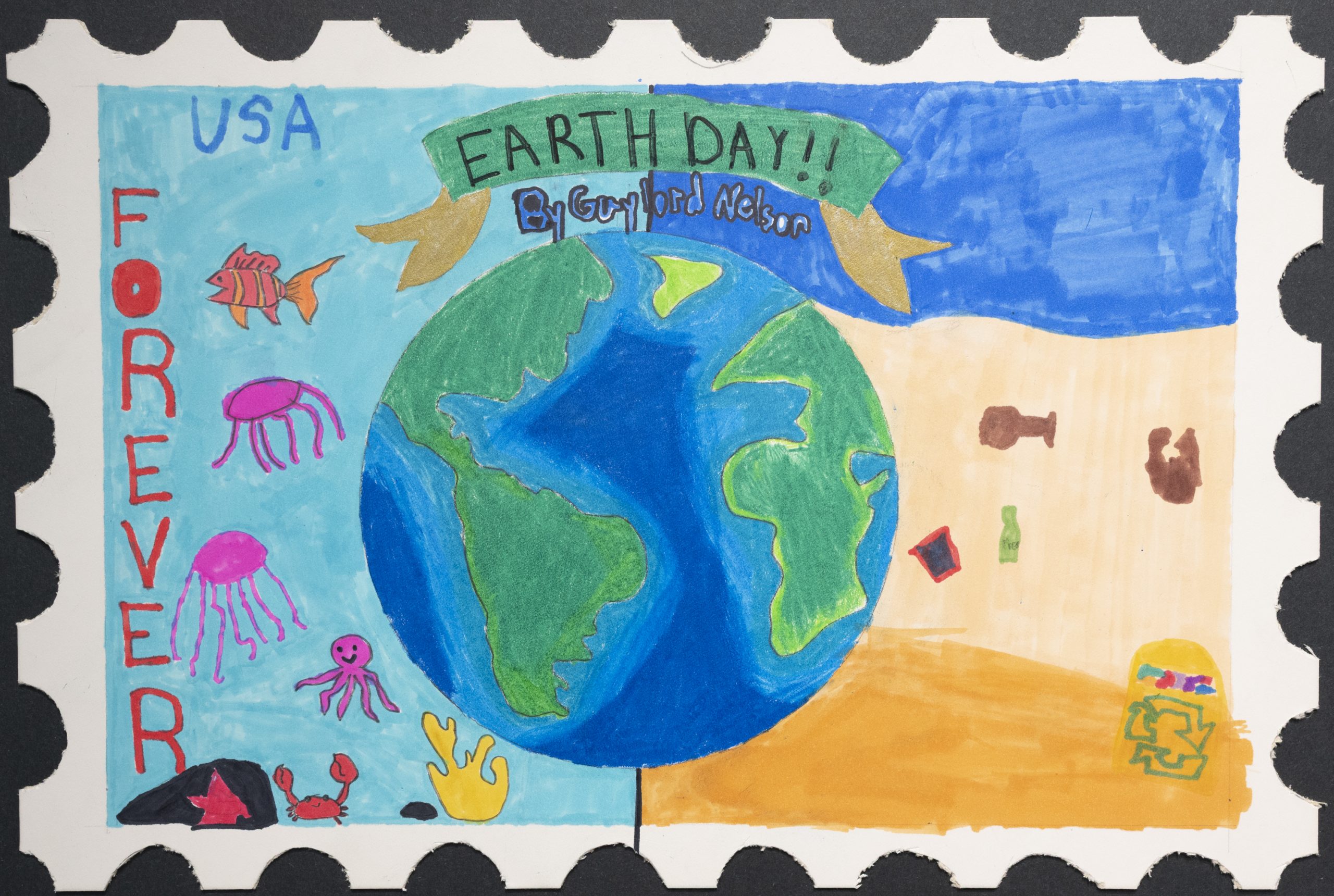
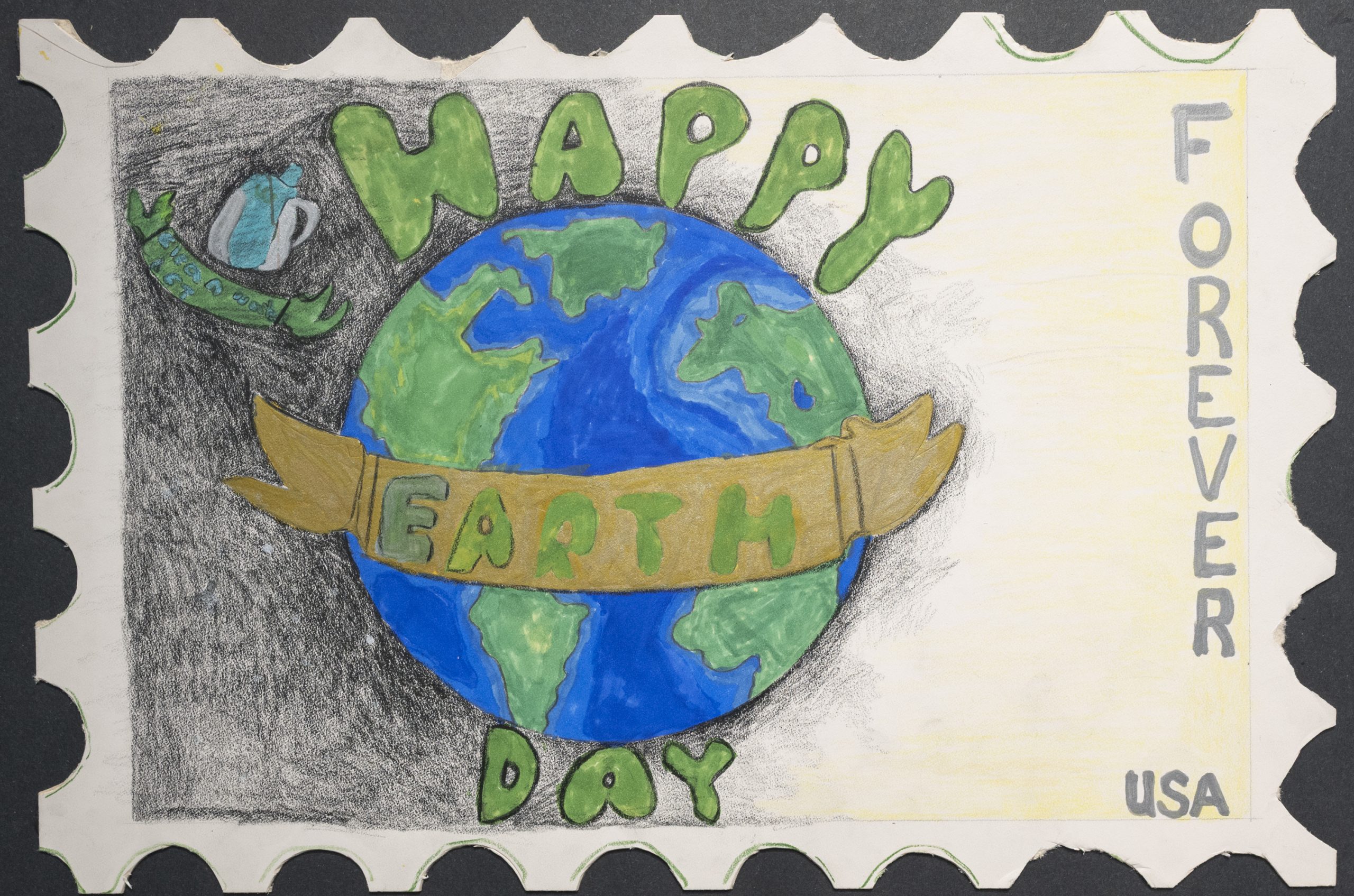
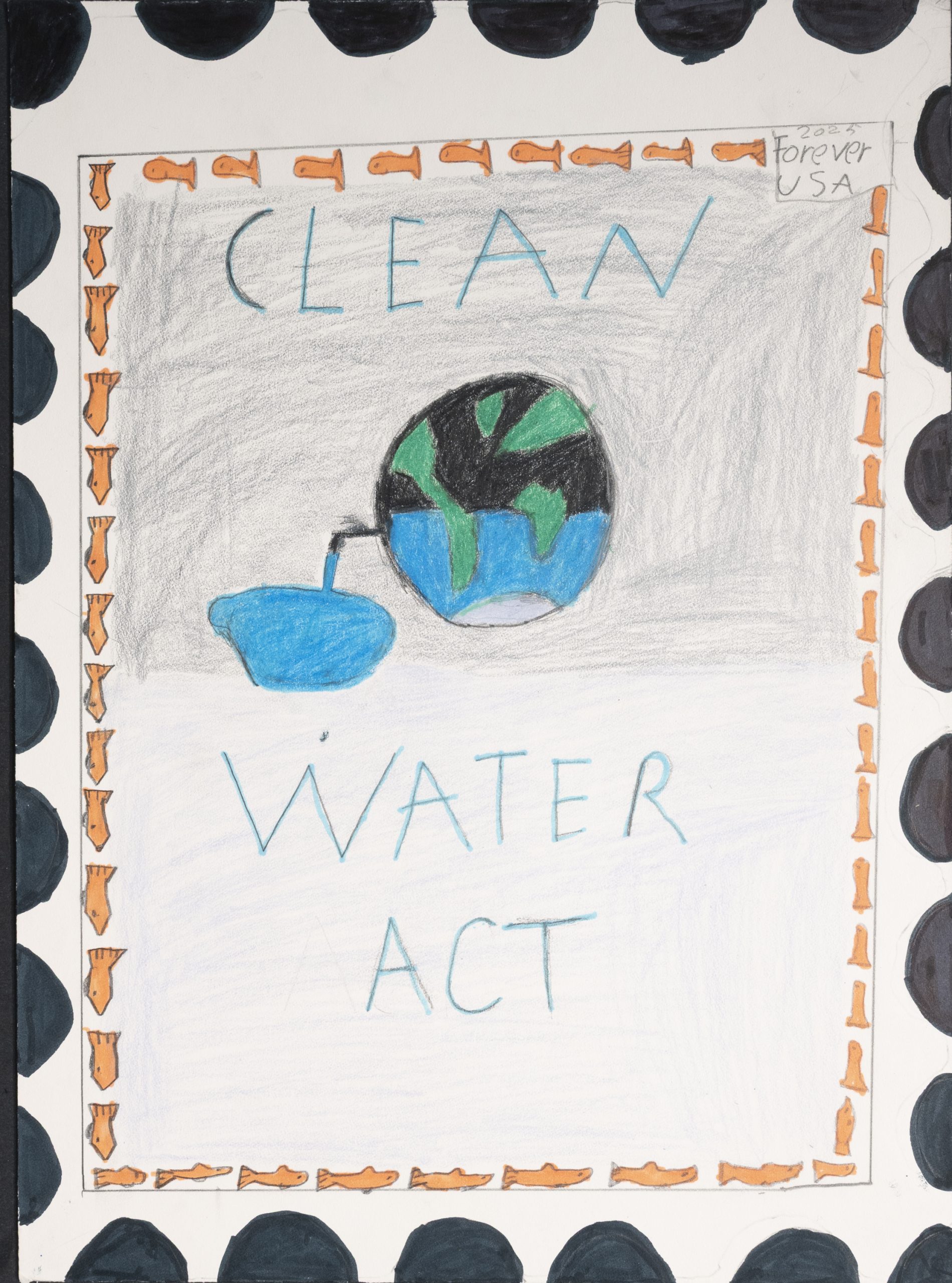
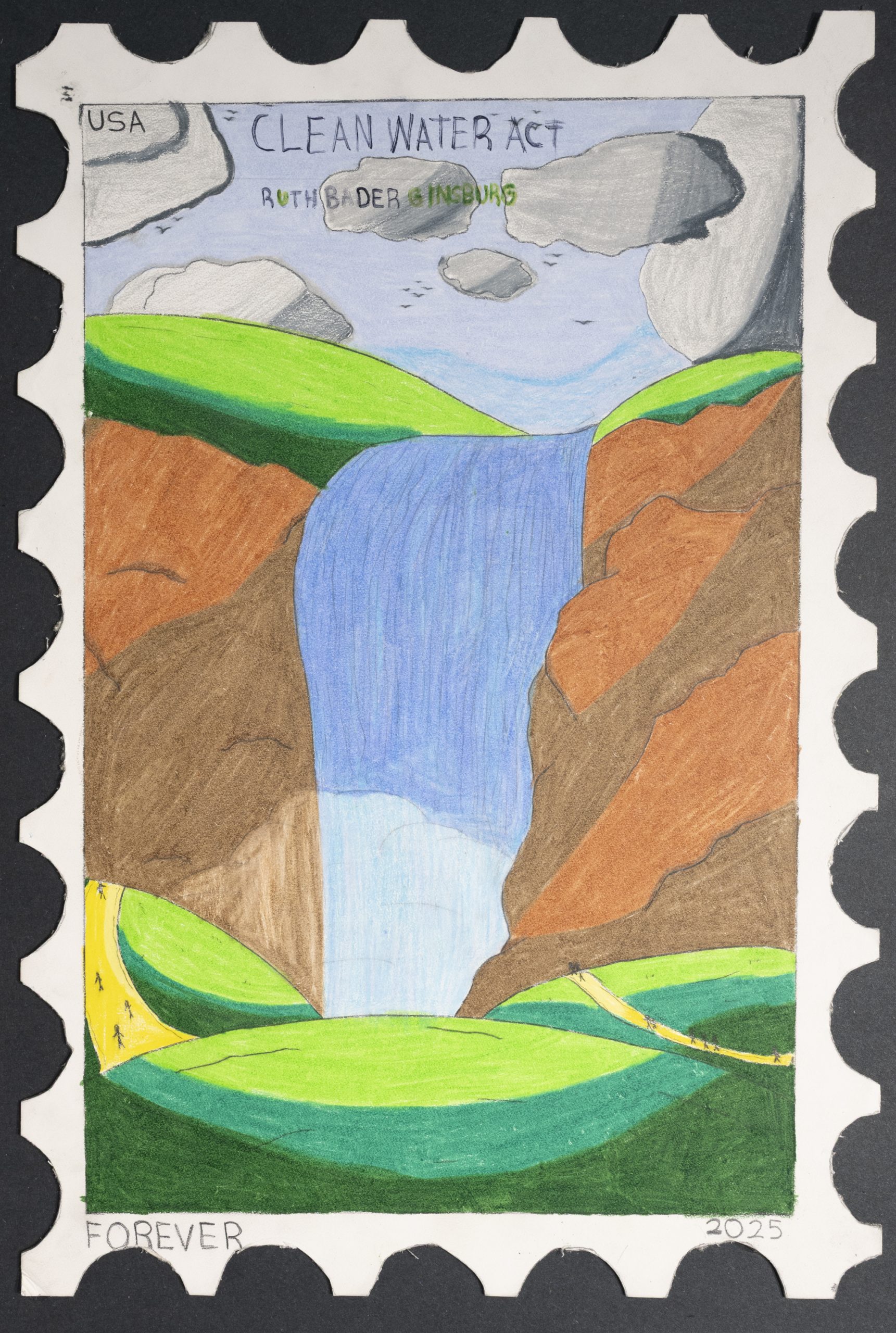
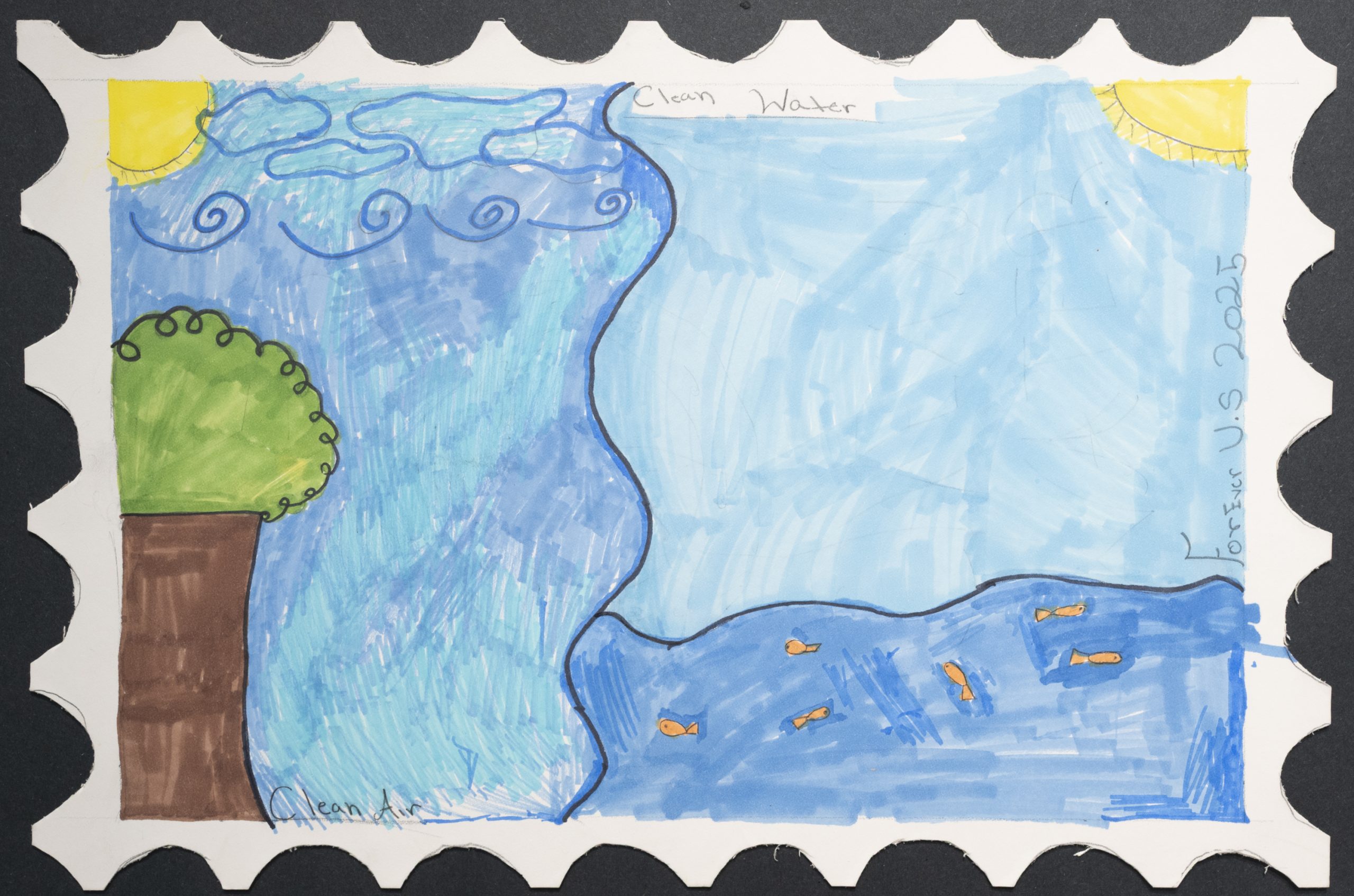
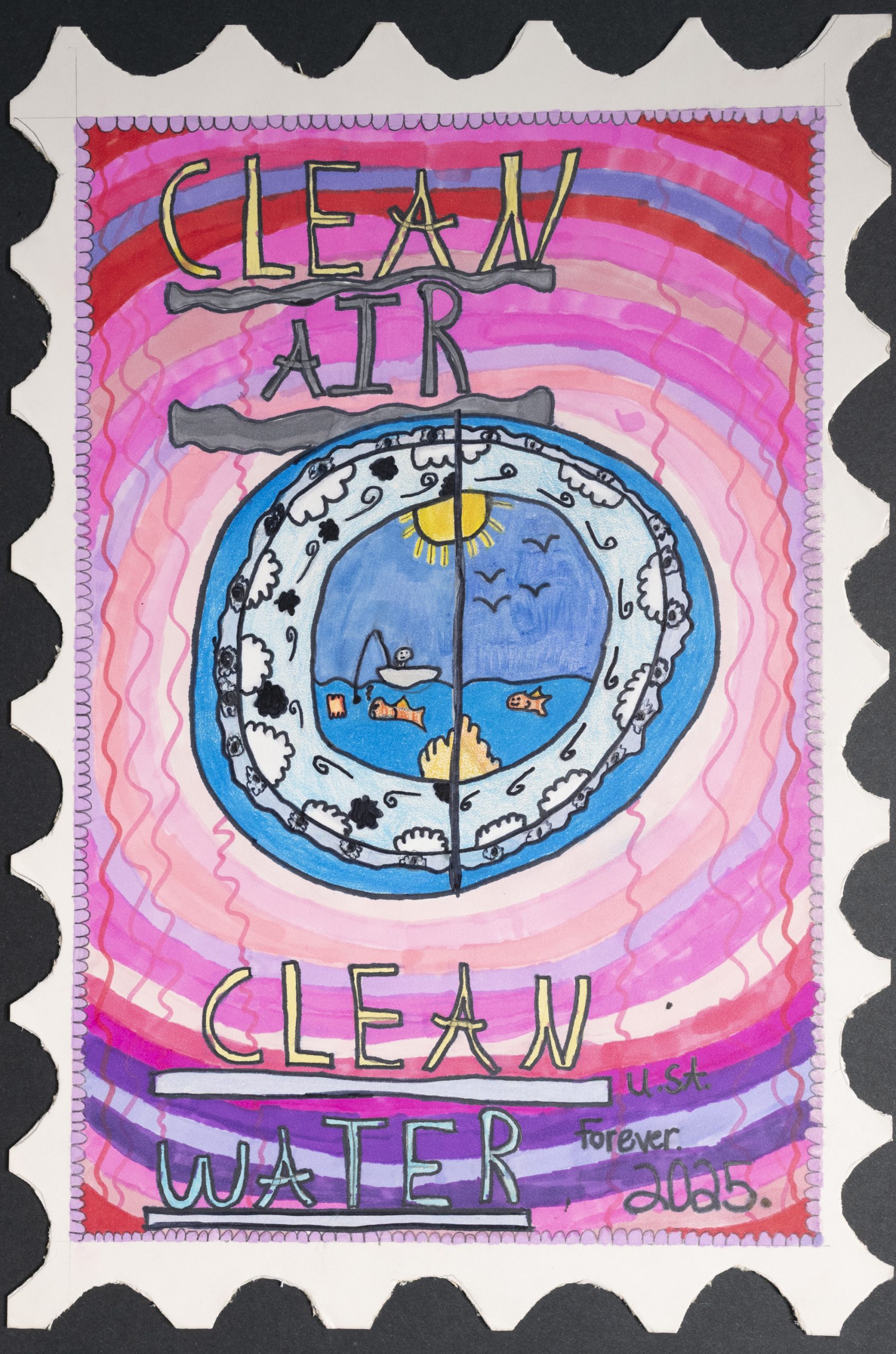
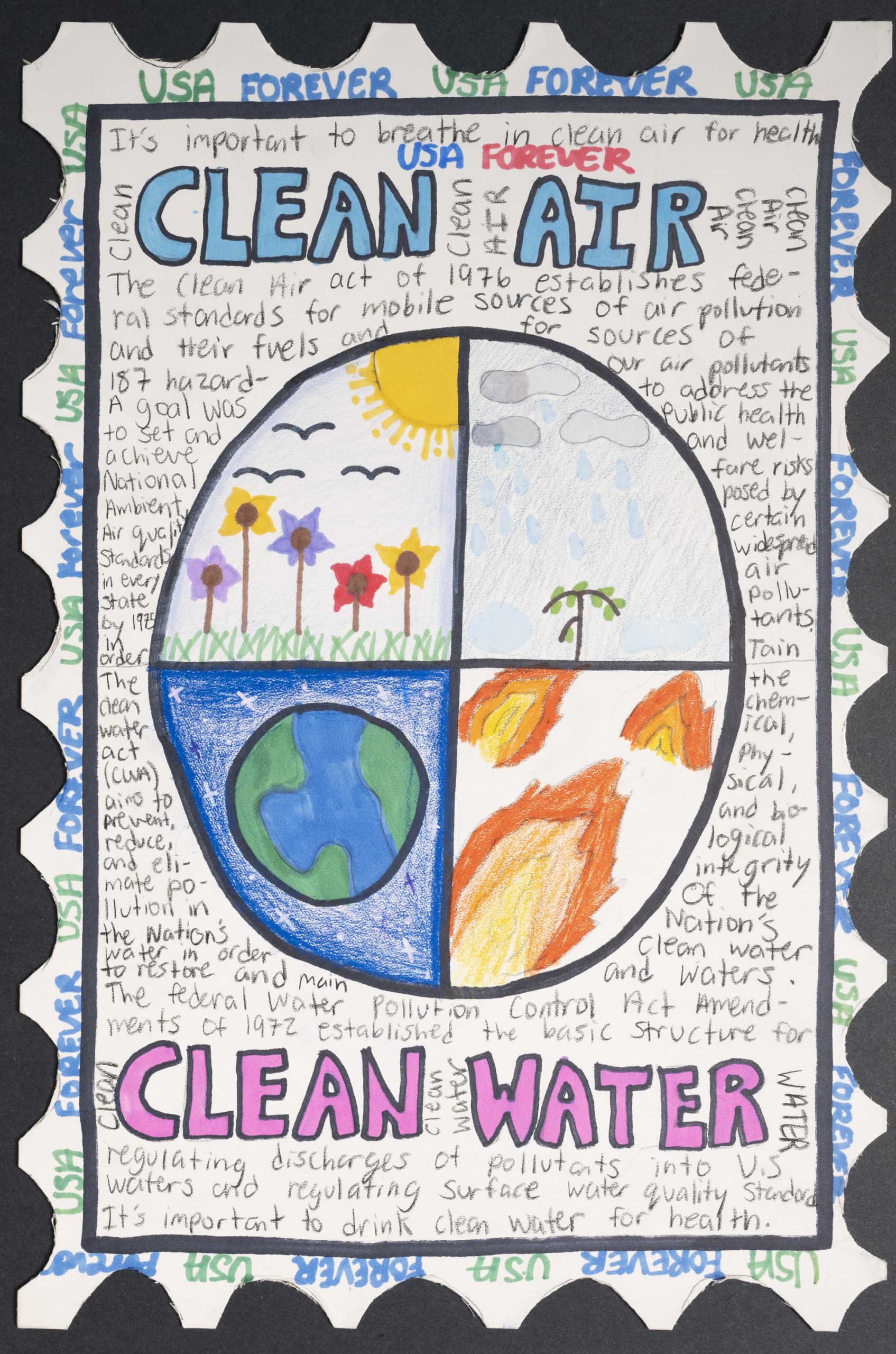
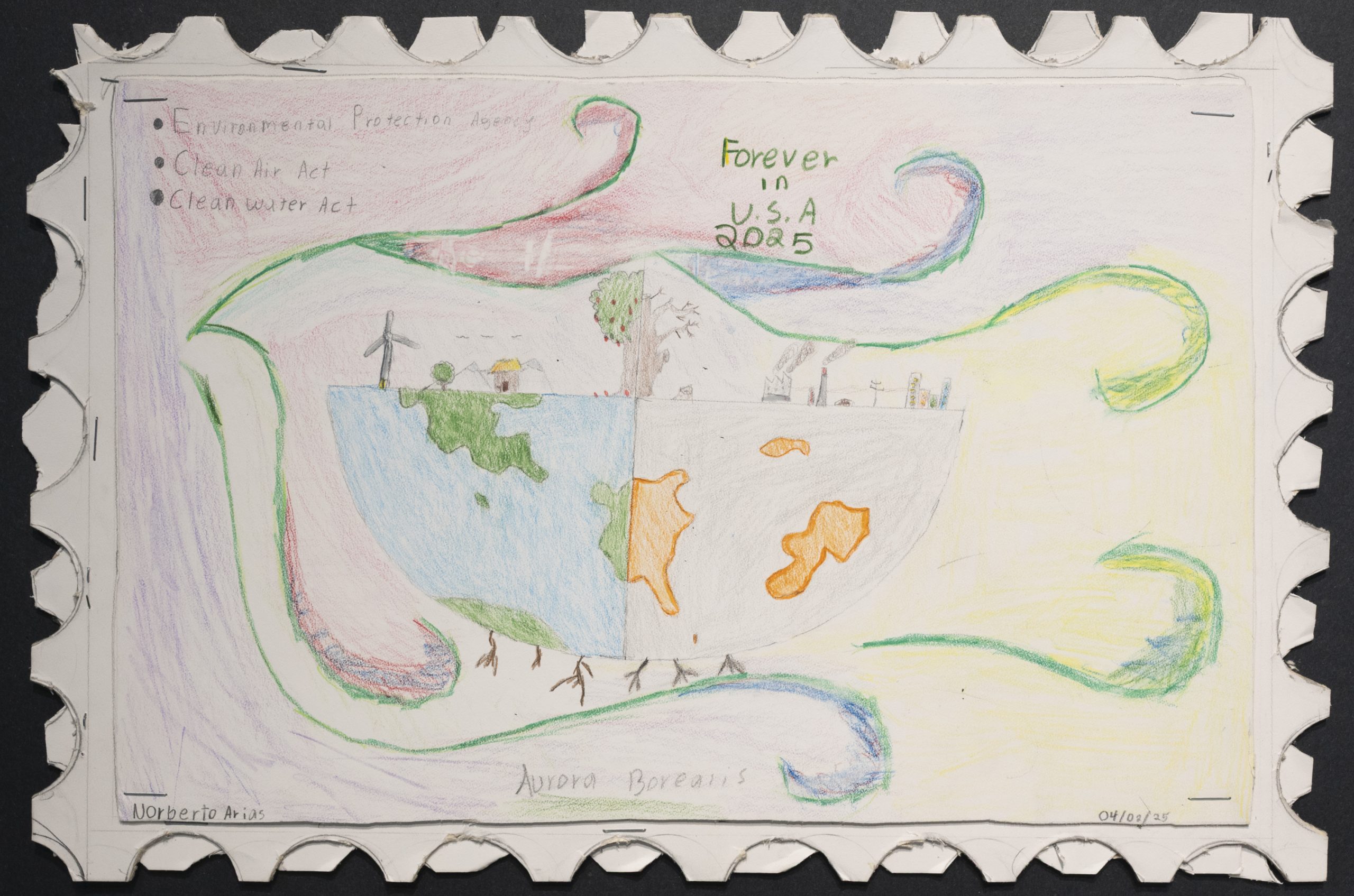
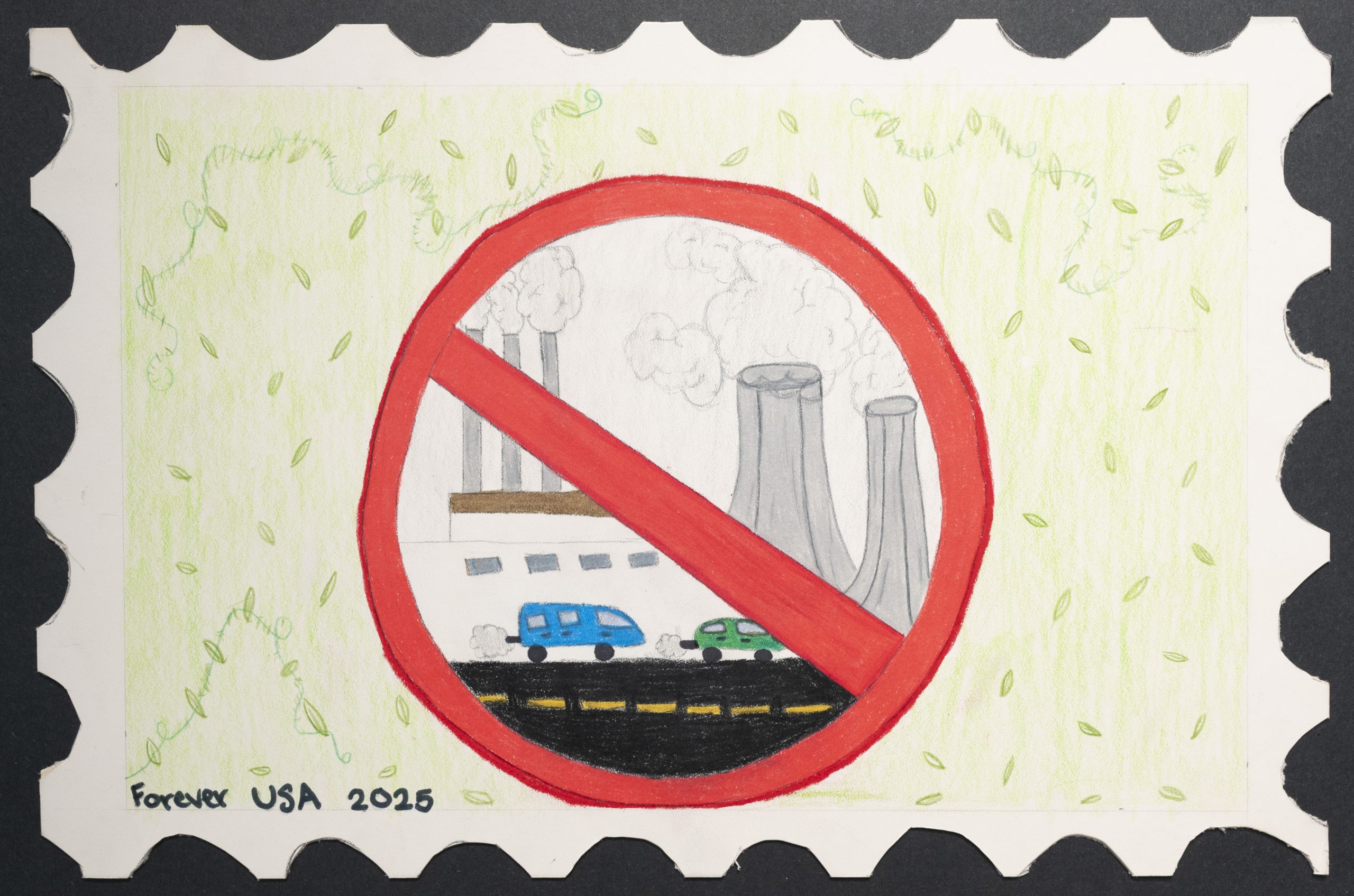
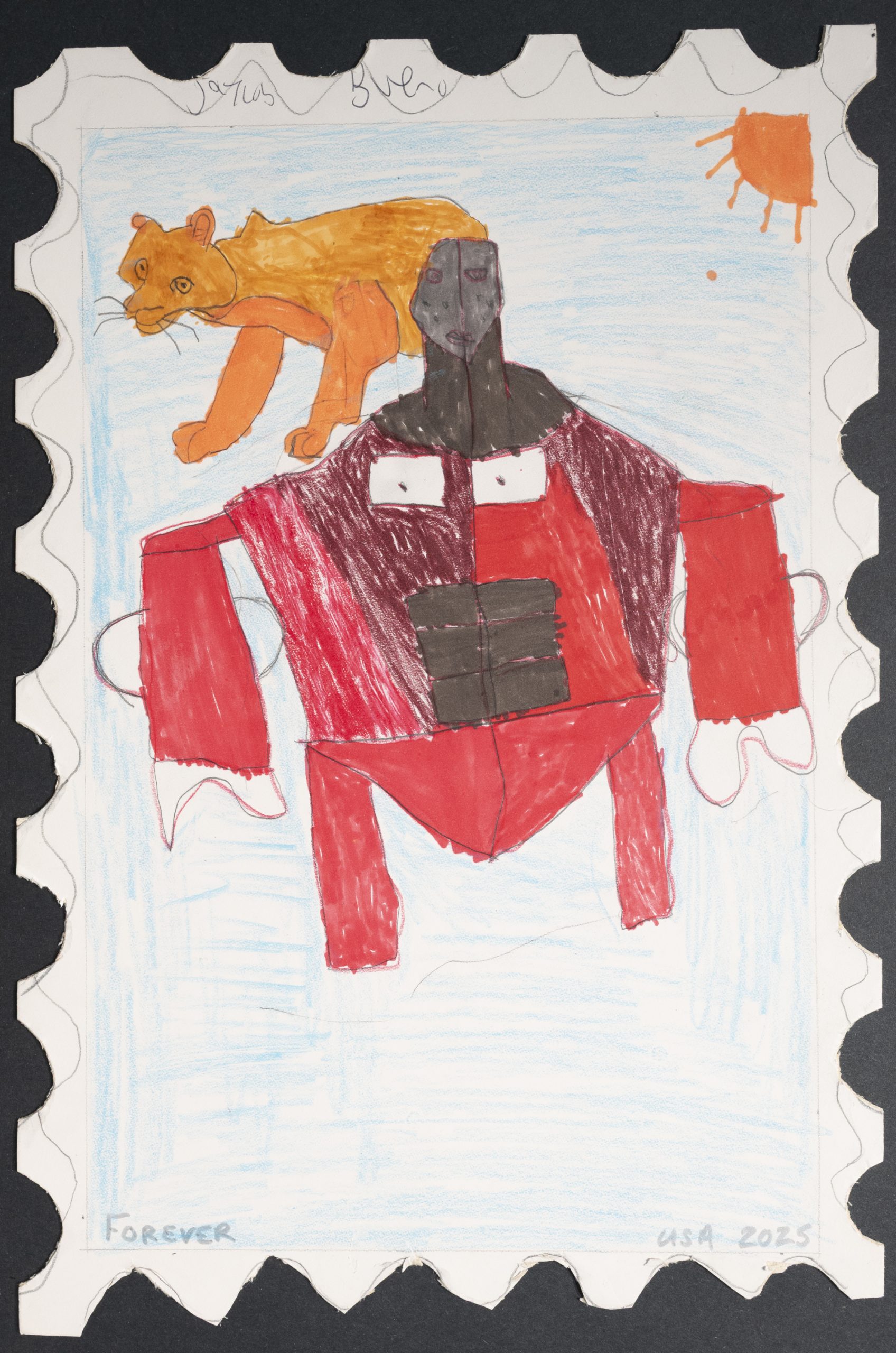
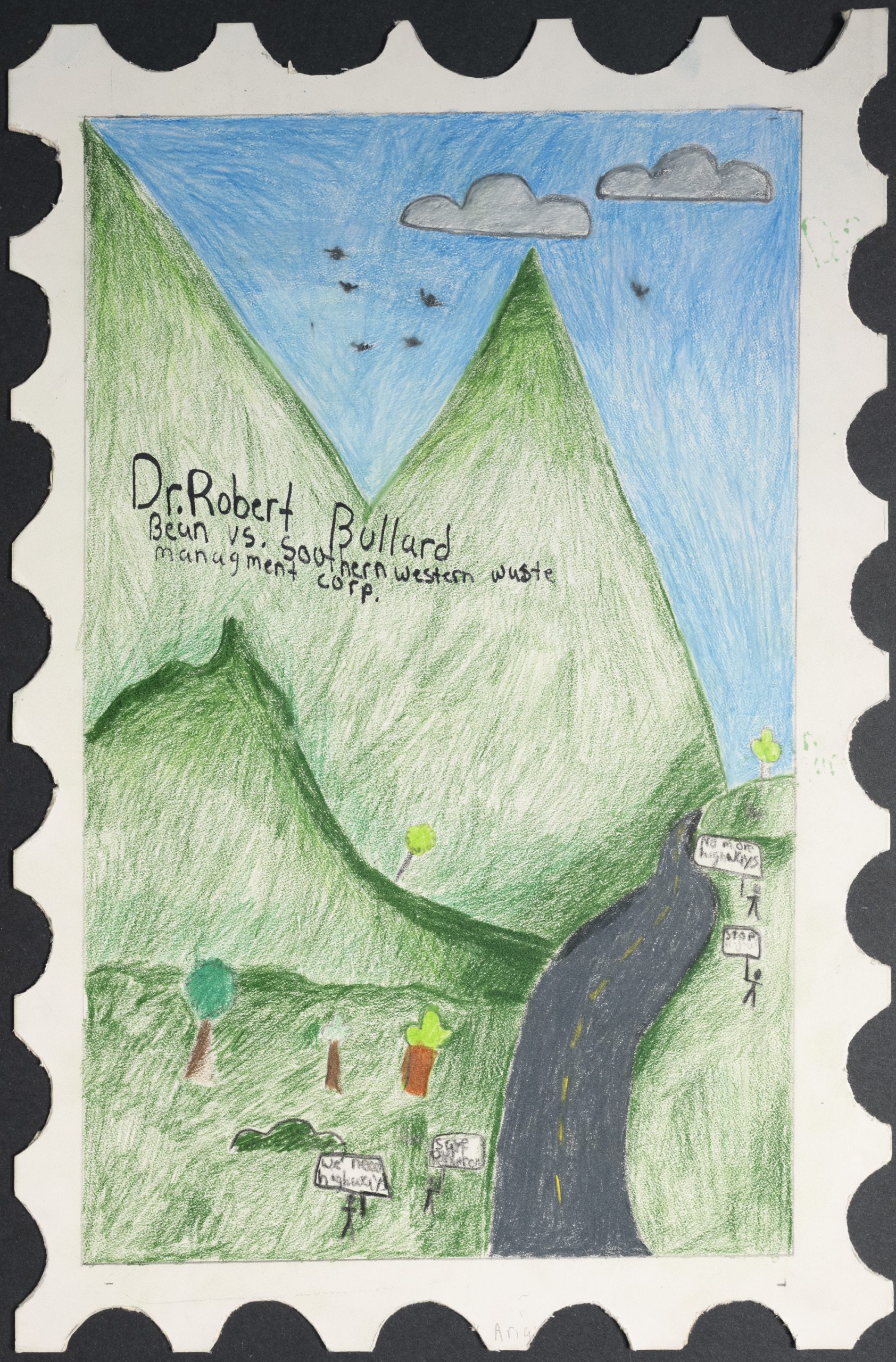
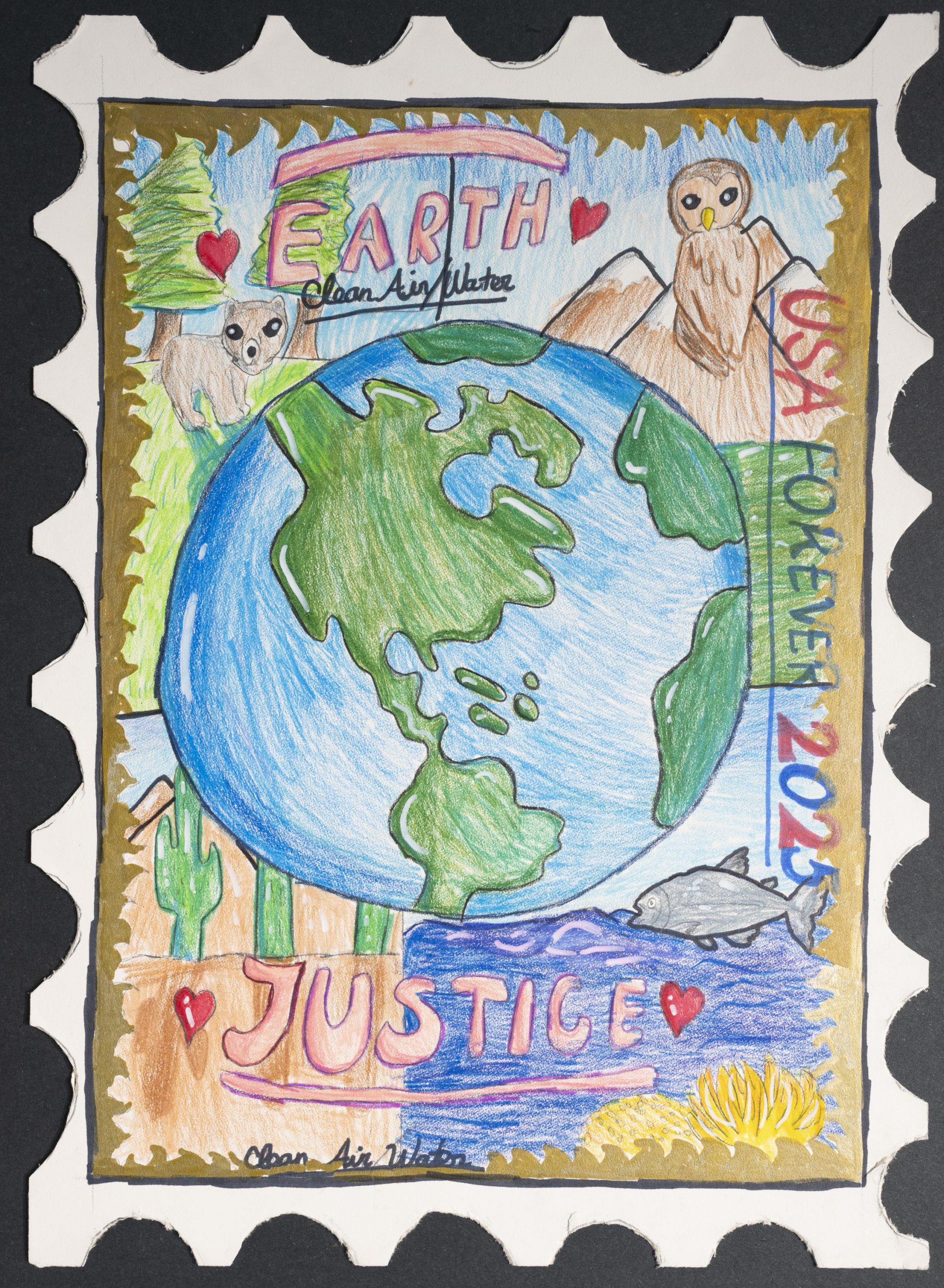
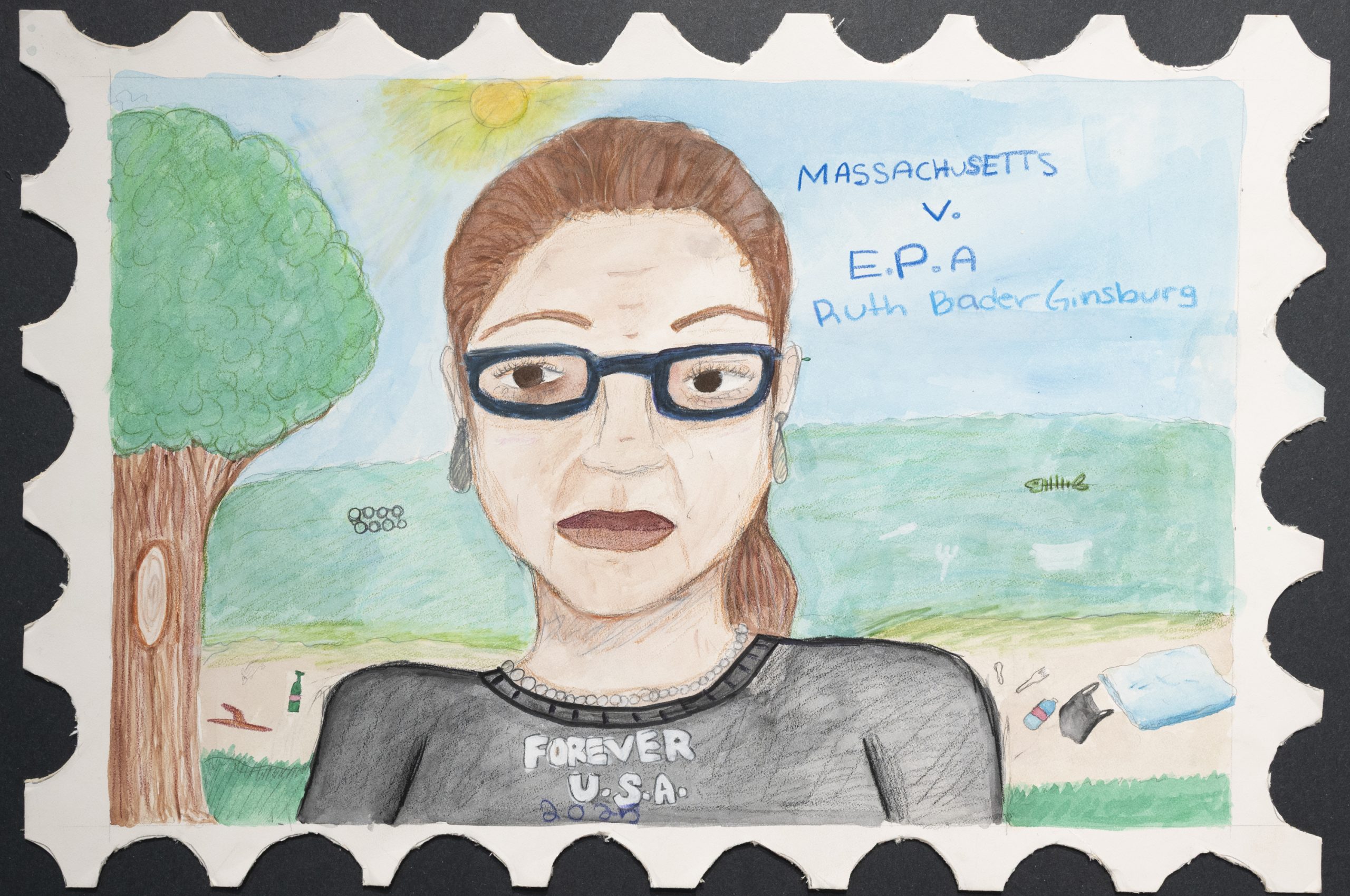
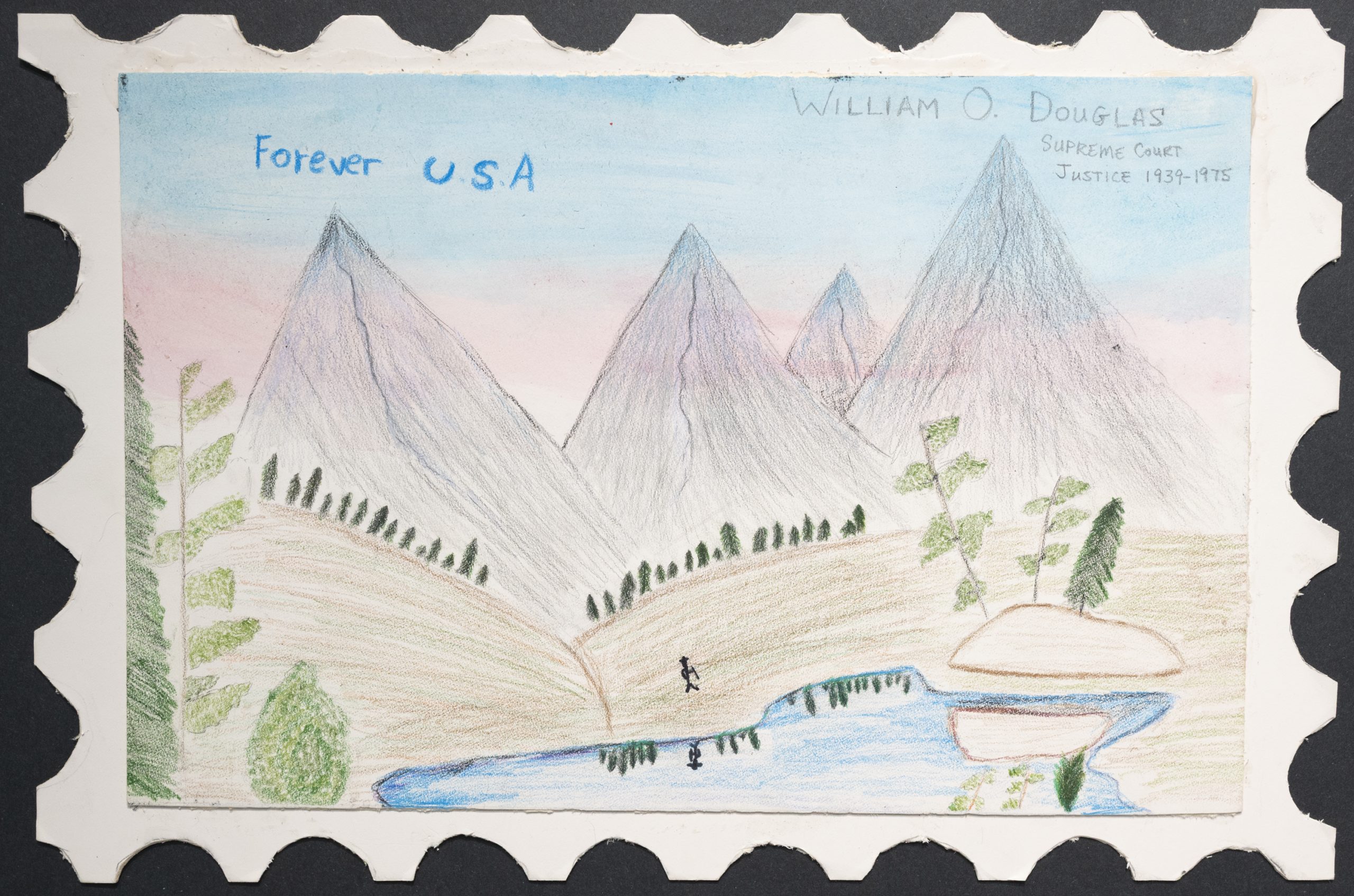
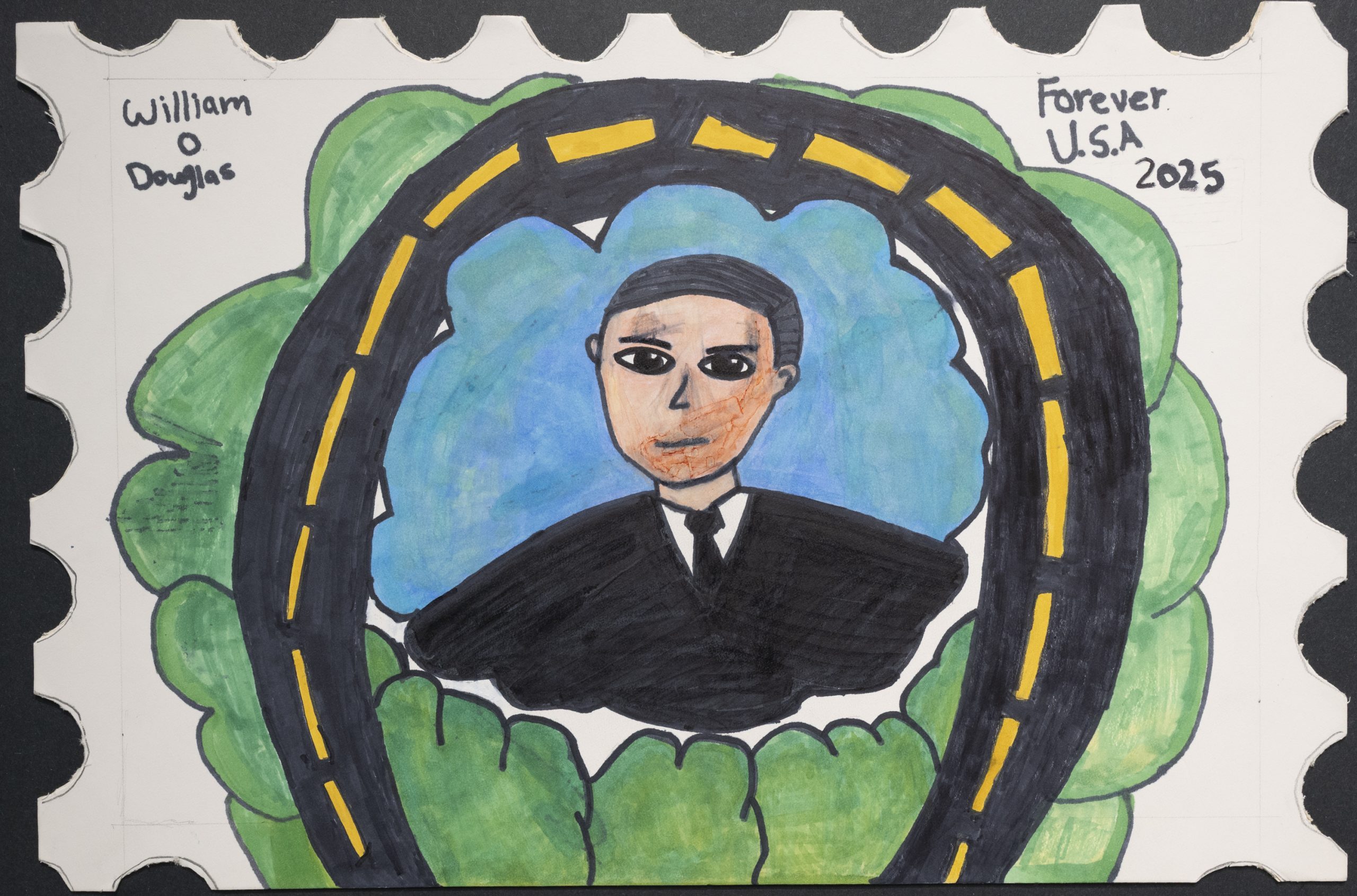
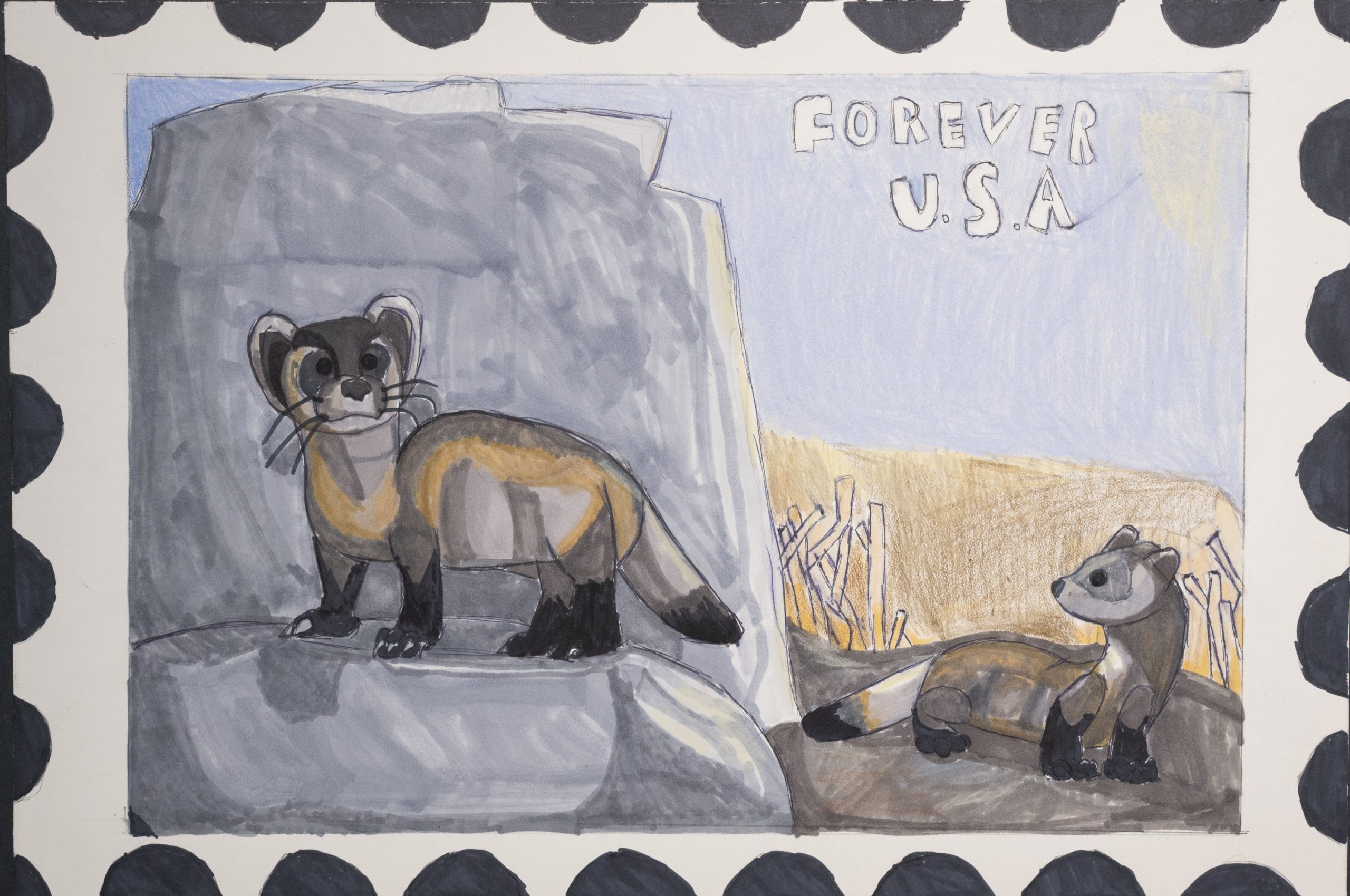
2.Project Title: STAMPS OF AMERICA, THE JUDICIARY AND THE ENVIRONMENT
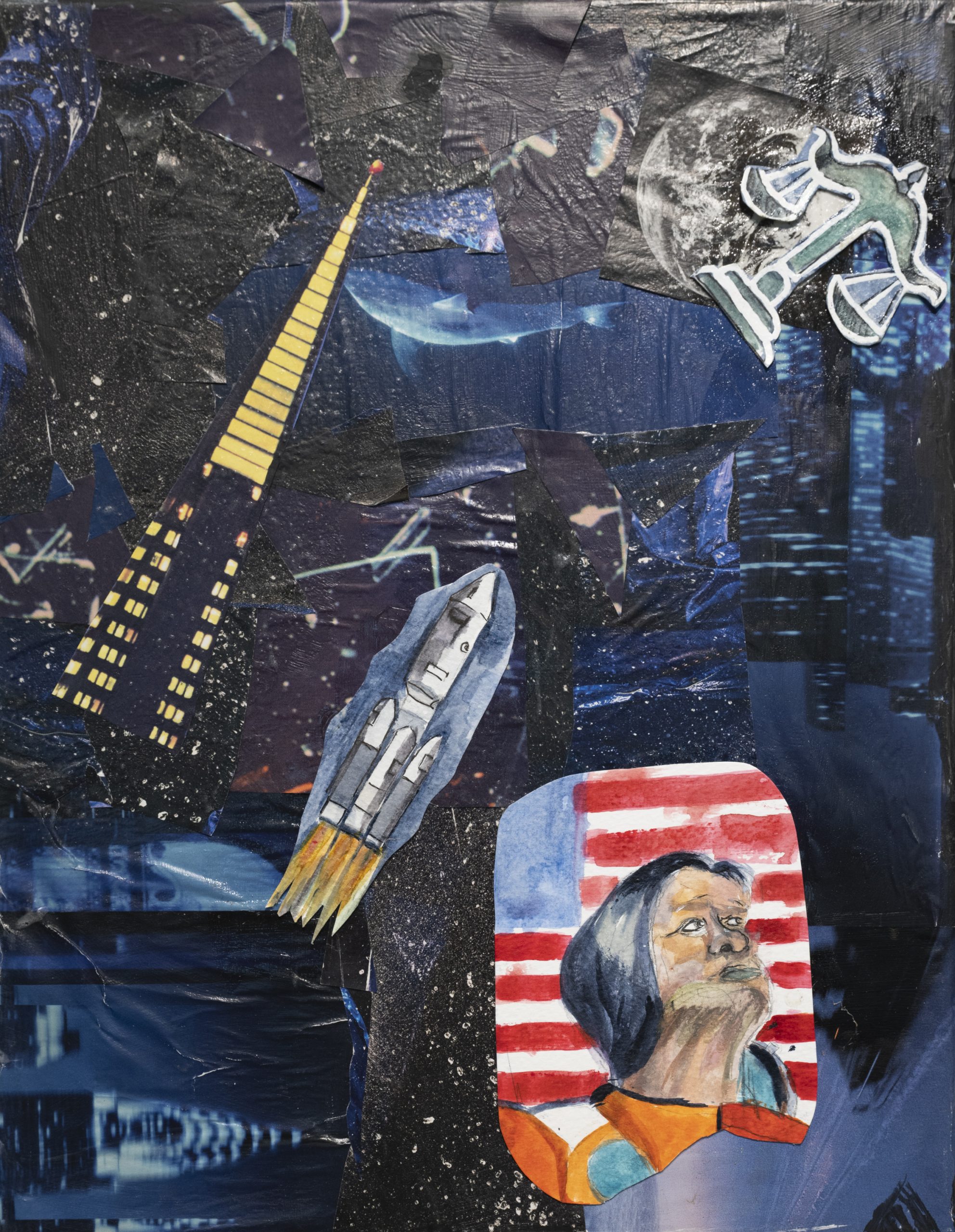
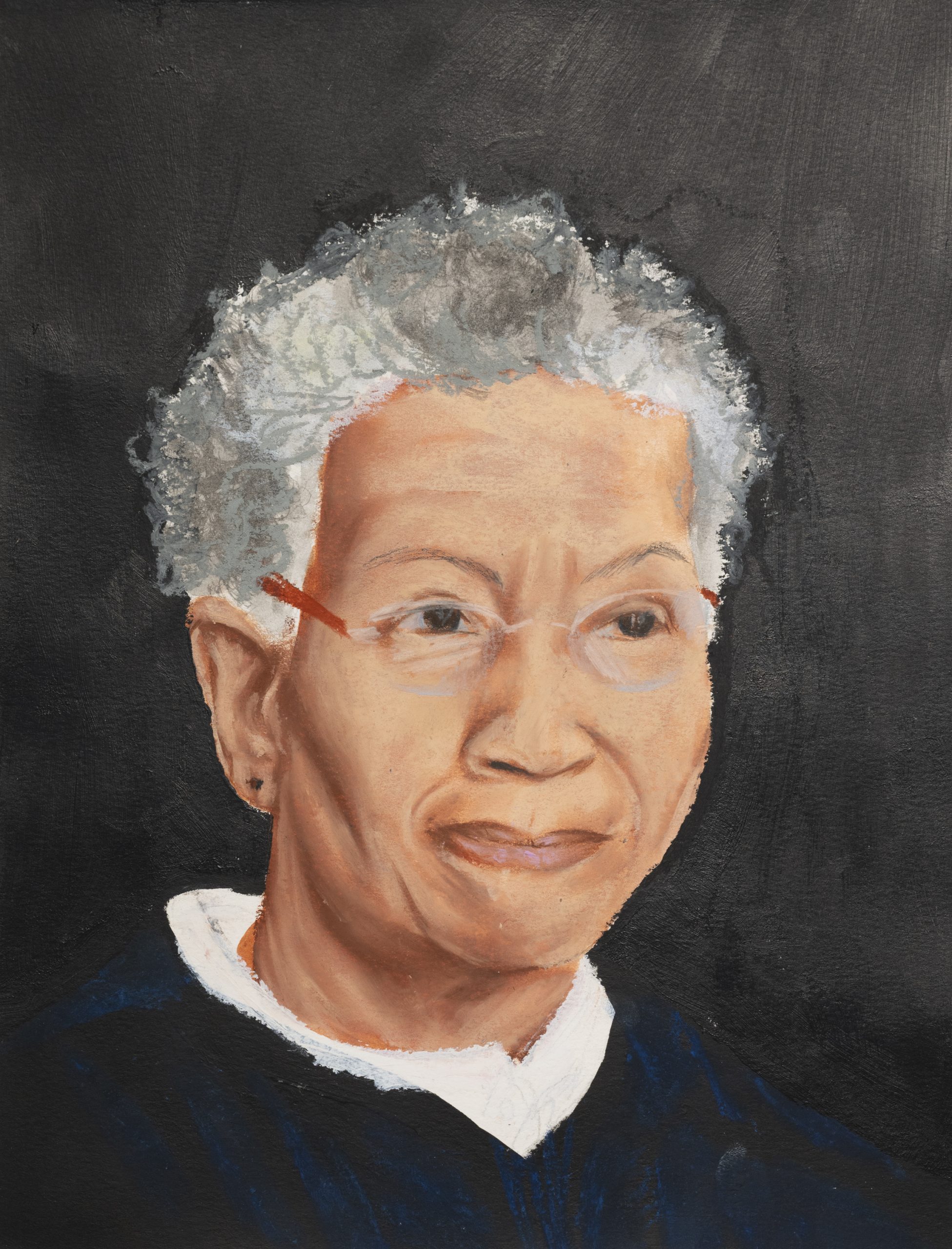
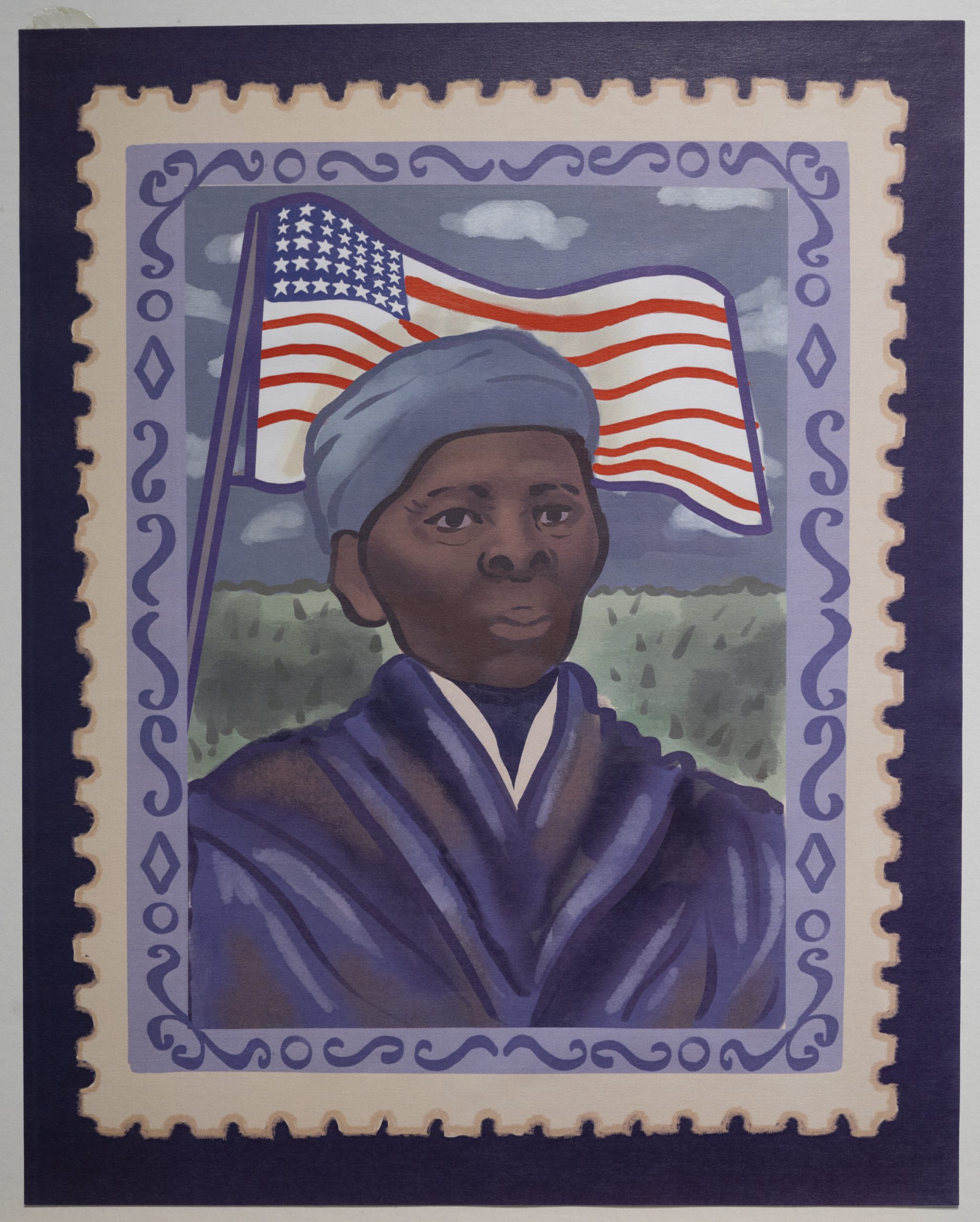
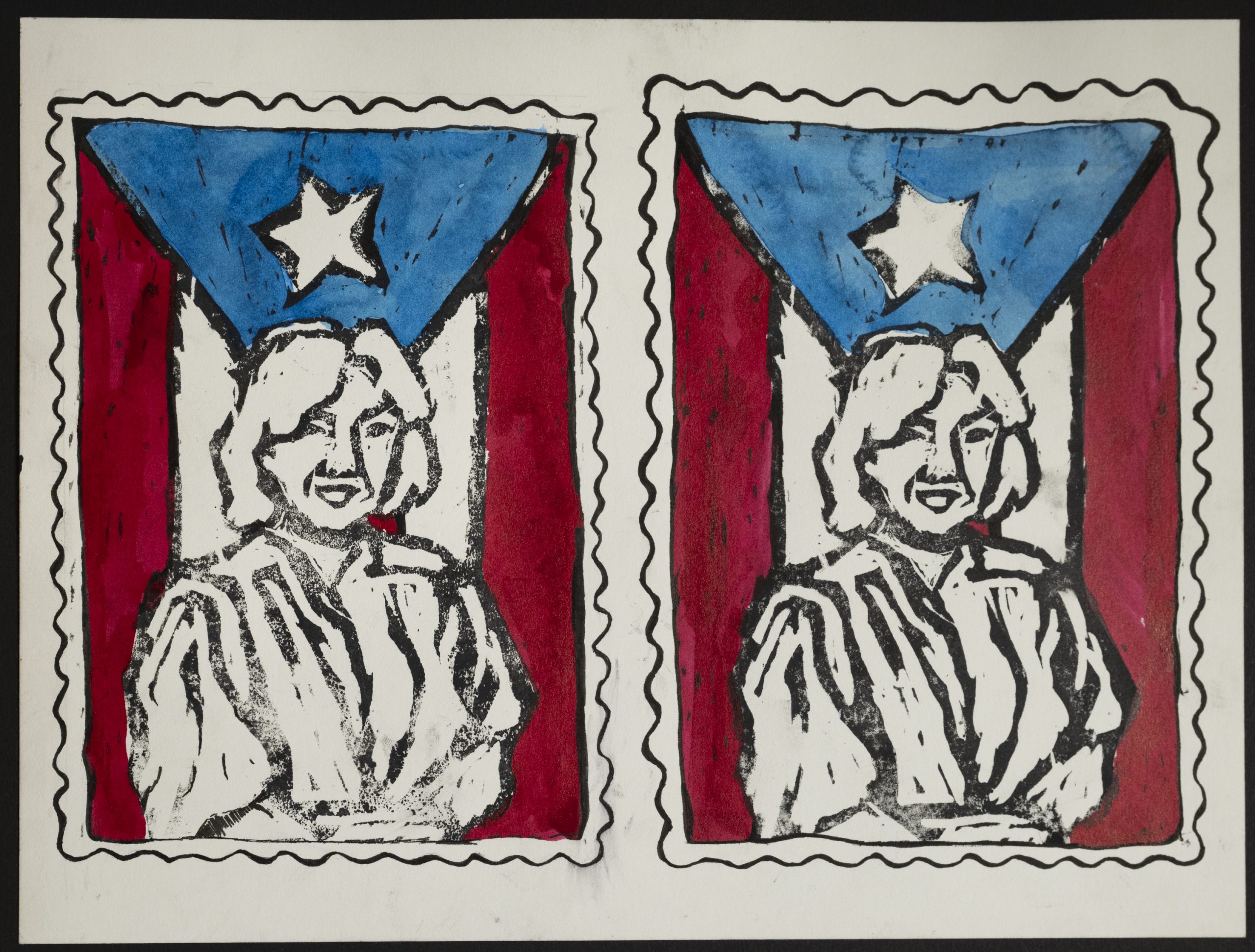
Students chose a justice, prominent attorney, court ruling or legislation that has significantly impacted the environment in the United States. These include Justice William O. Douglas, Justice William Newsom, Justice Ruth Bader Ginsburg, and Attorney Amy Bowers Cordalis. Legislation included the NEPA, Clean Air Act, Clean Water Act, and Endangered Species Act. Students studied the topic that they chose, US stamp designs and basic graphic design, and they each created a stamp that celebrates the significance of the justice, attorney, case or act that it illustrates.
Principal: Gideon Frankel
Teacher: Laura Blau
Project Title: INDIVIDUALLY SELECTED PROMPTS
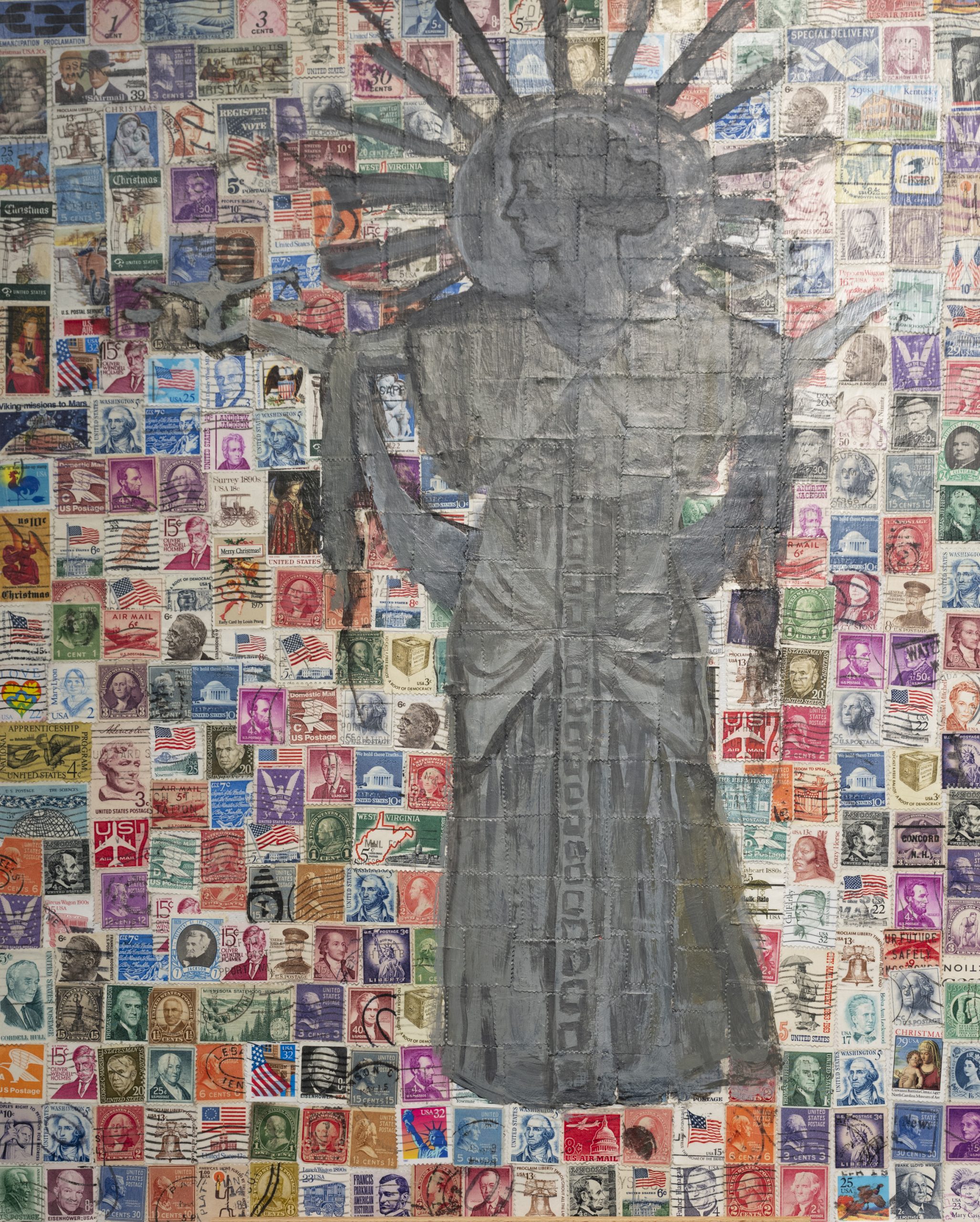
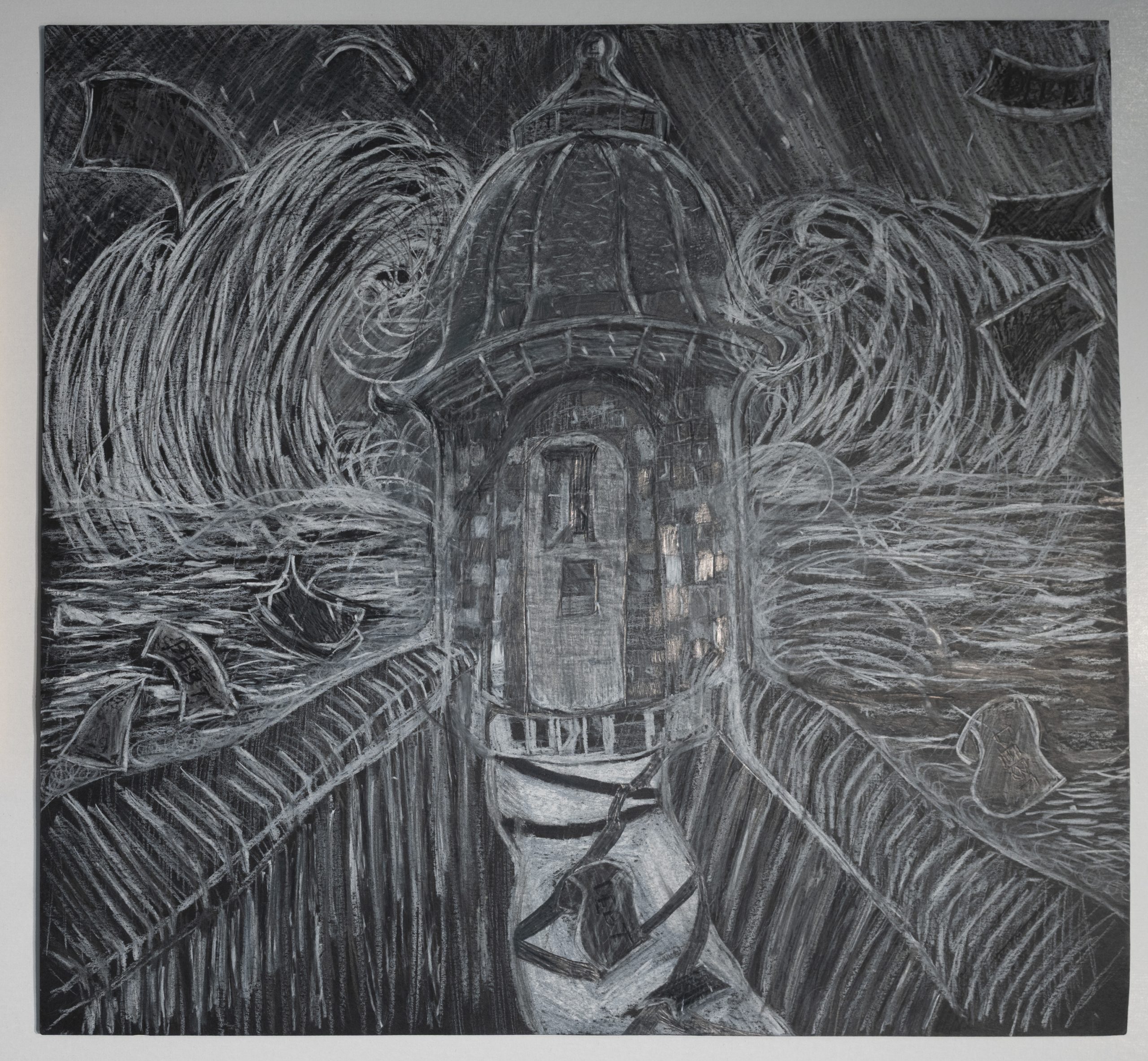
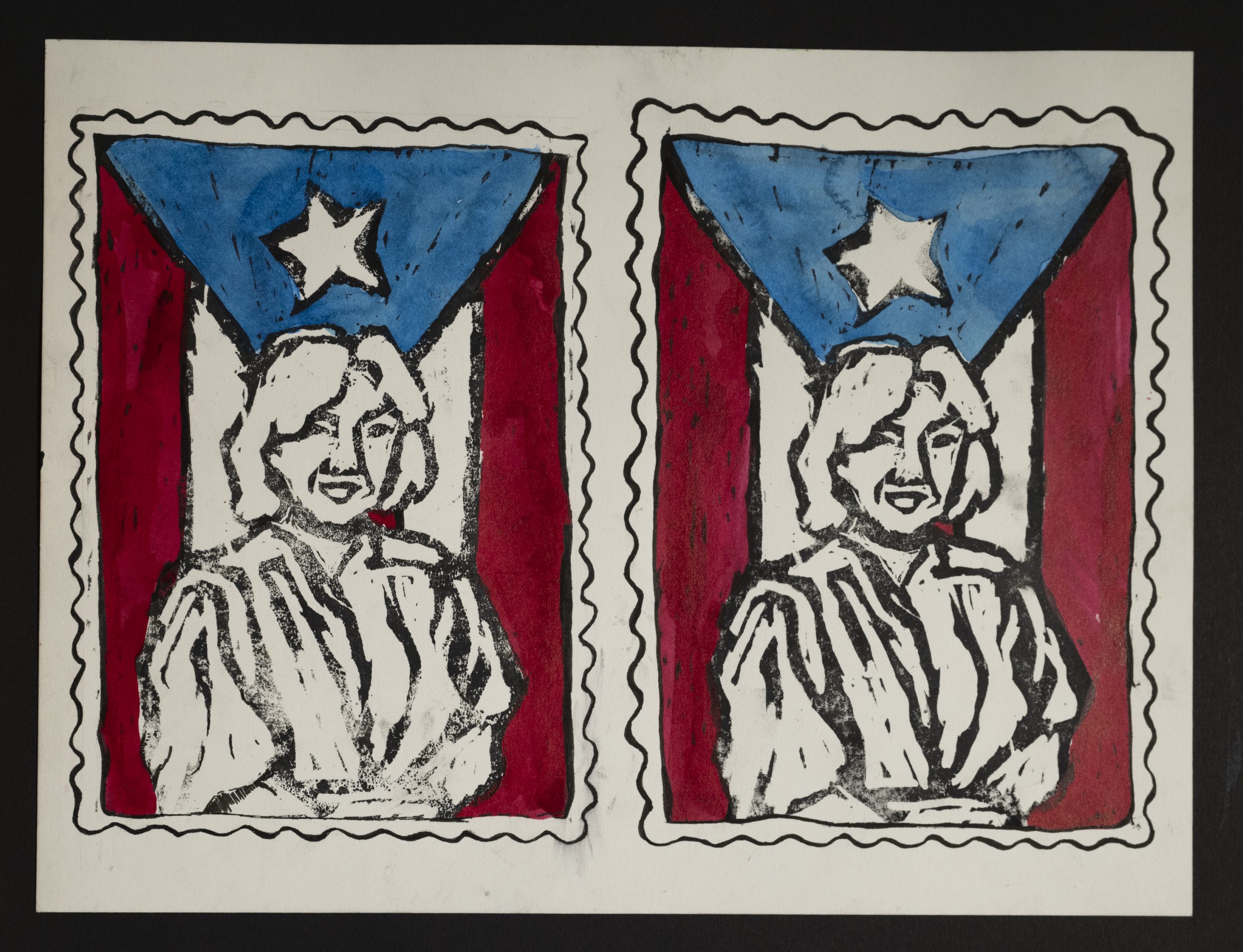
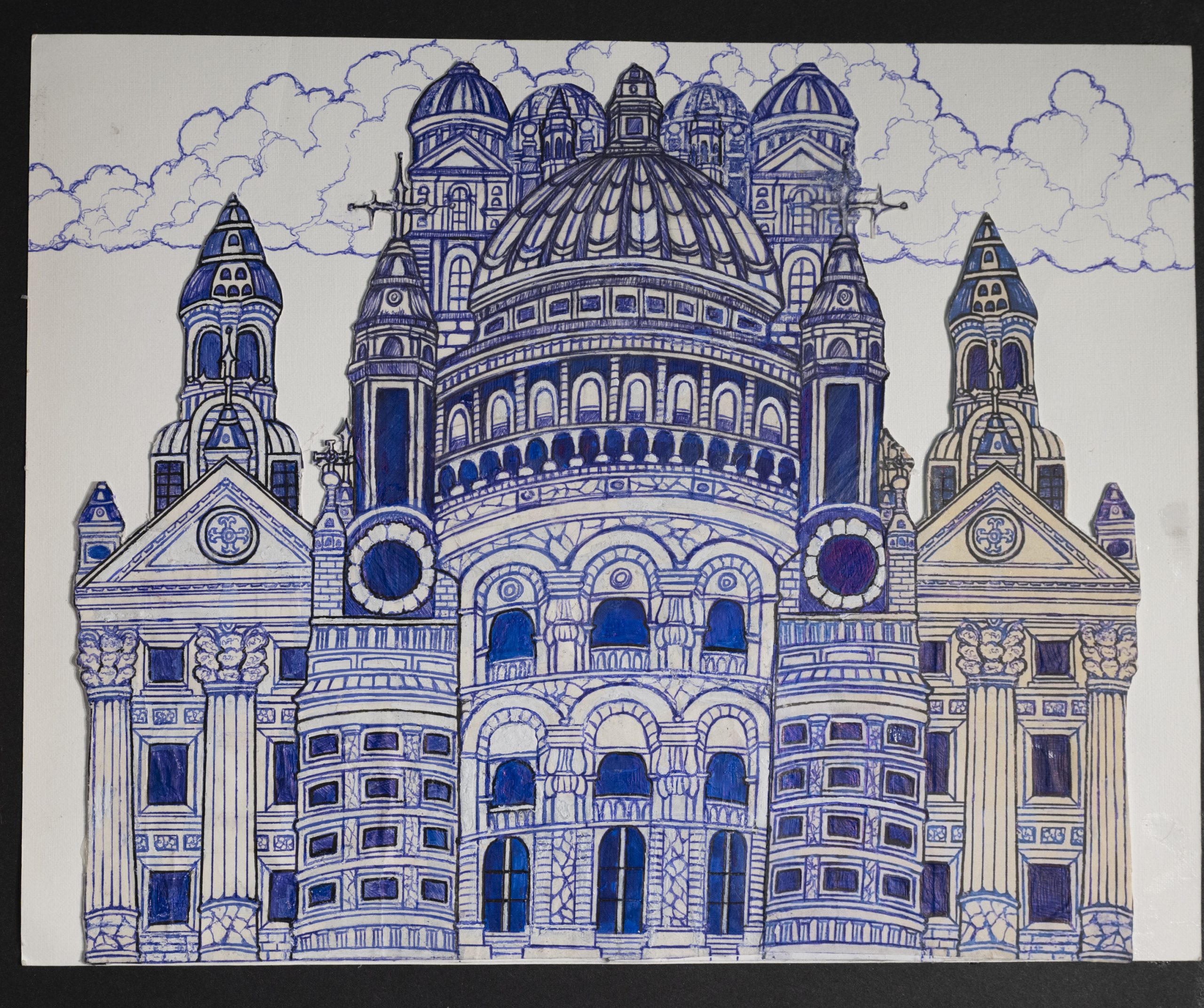
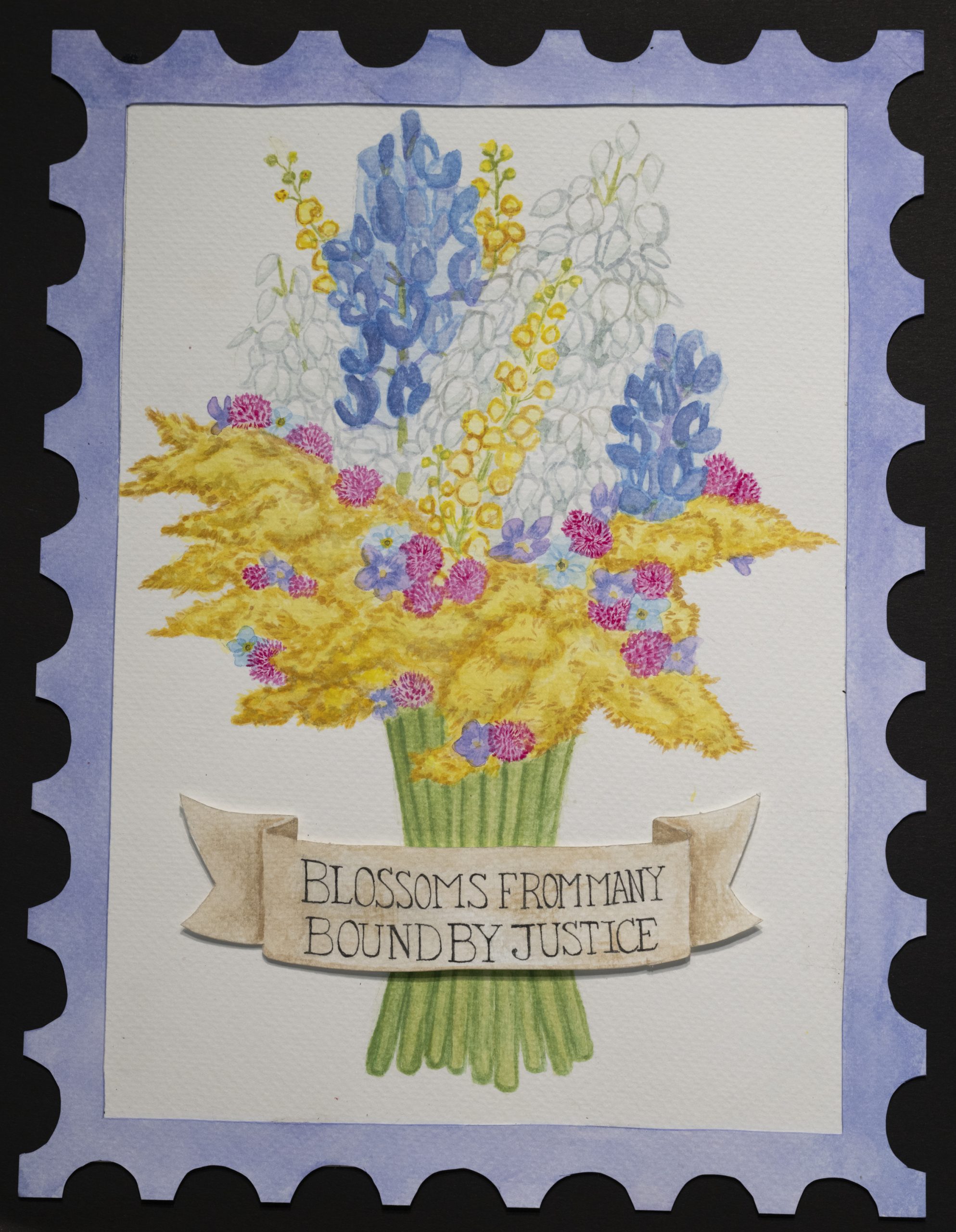
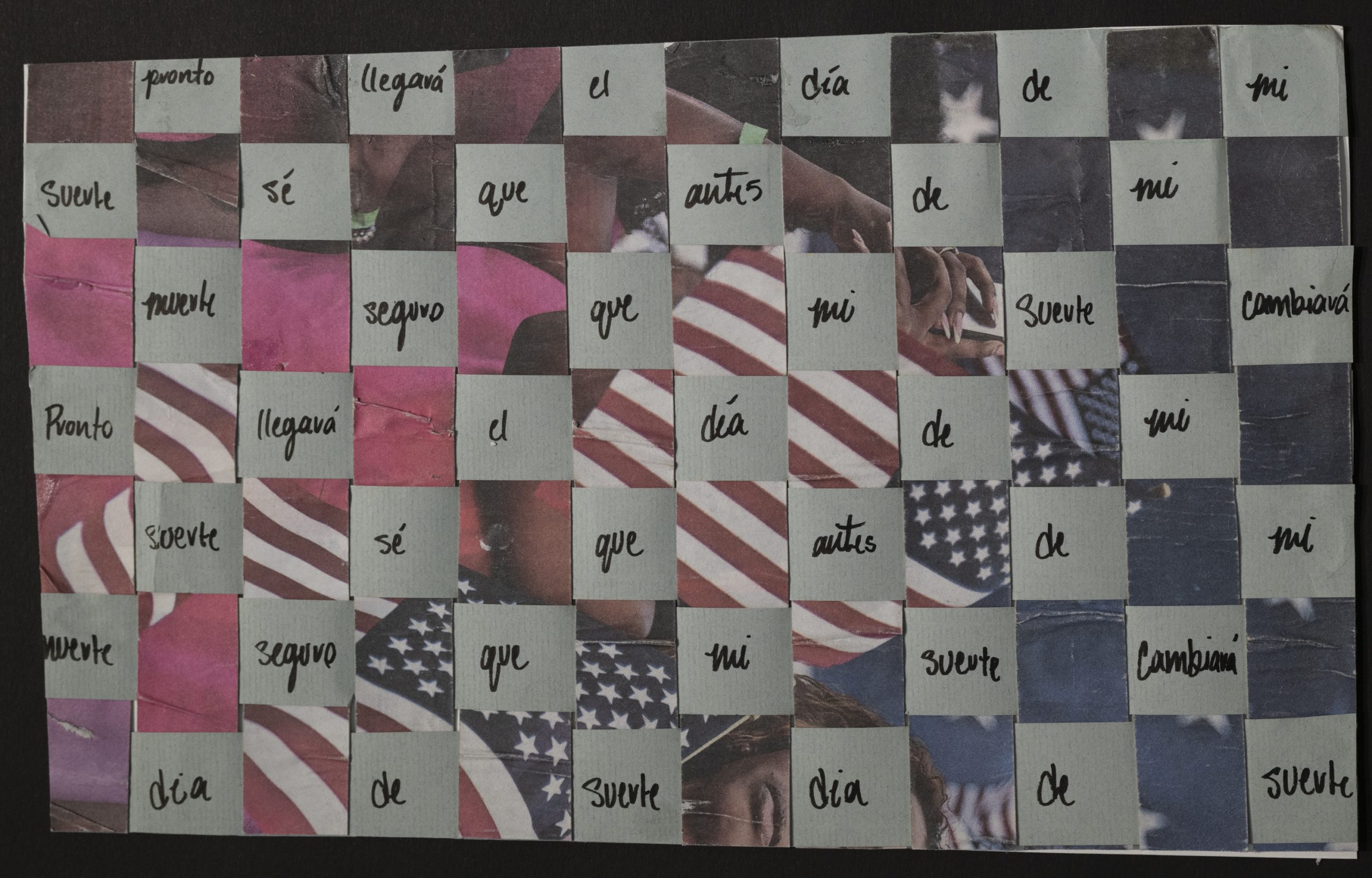
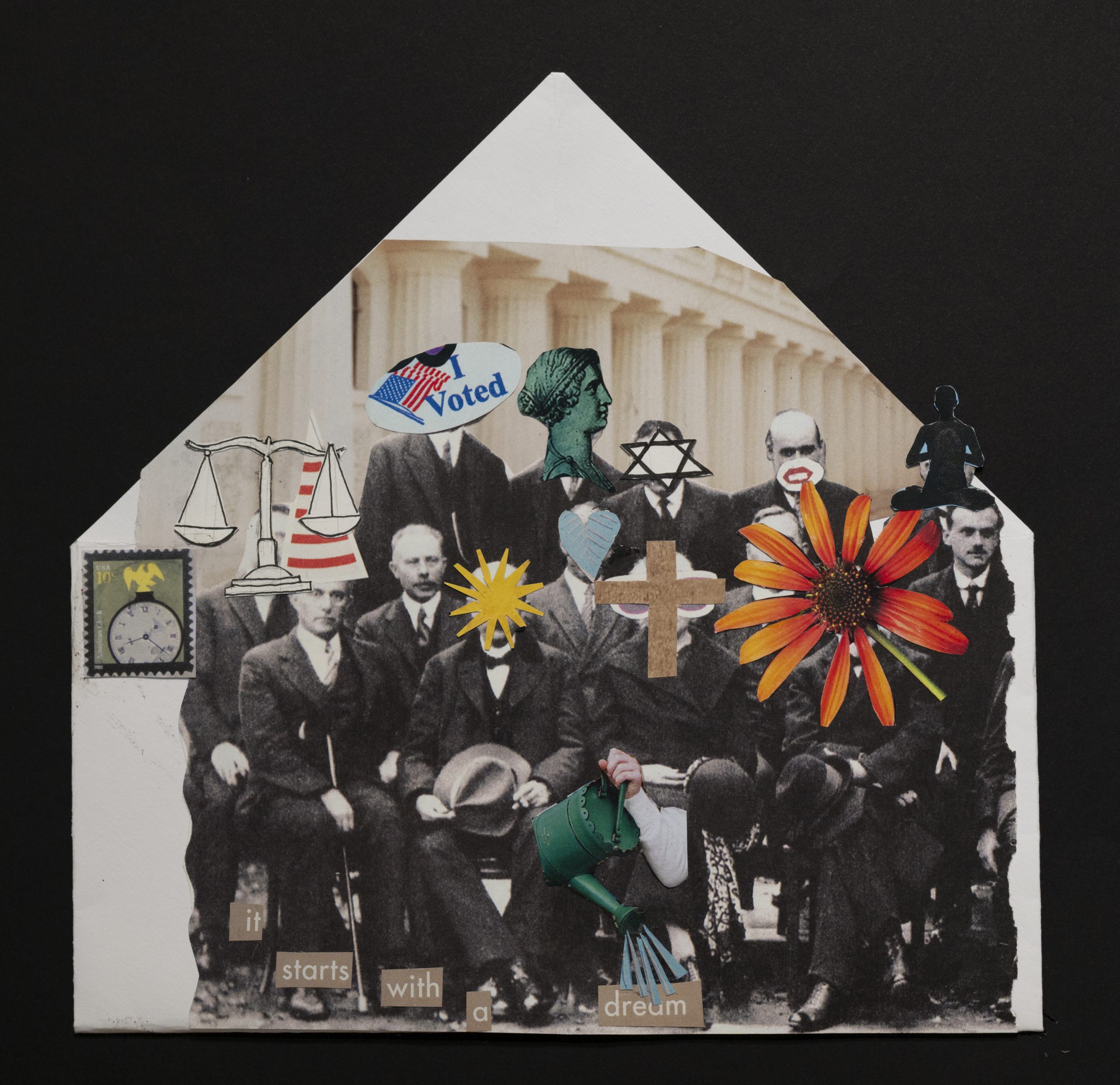
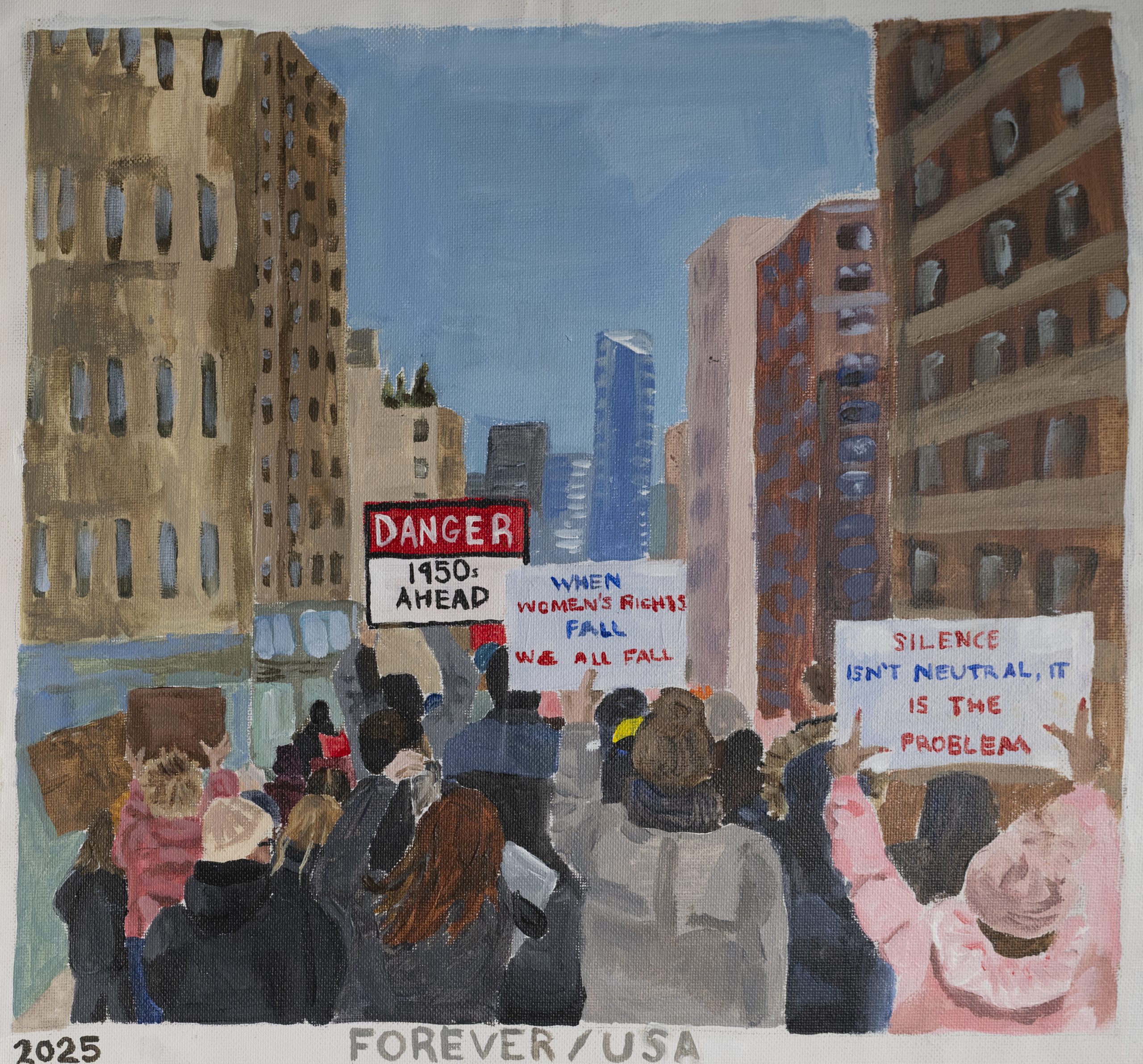
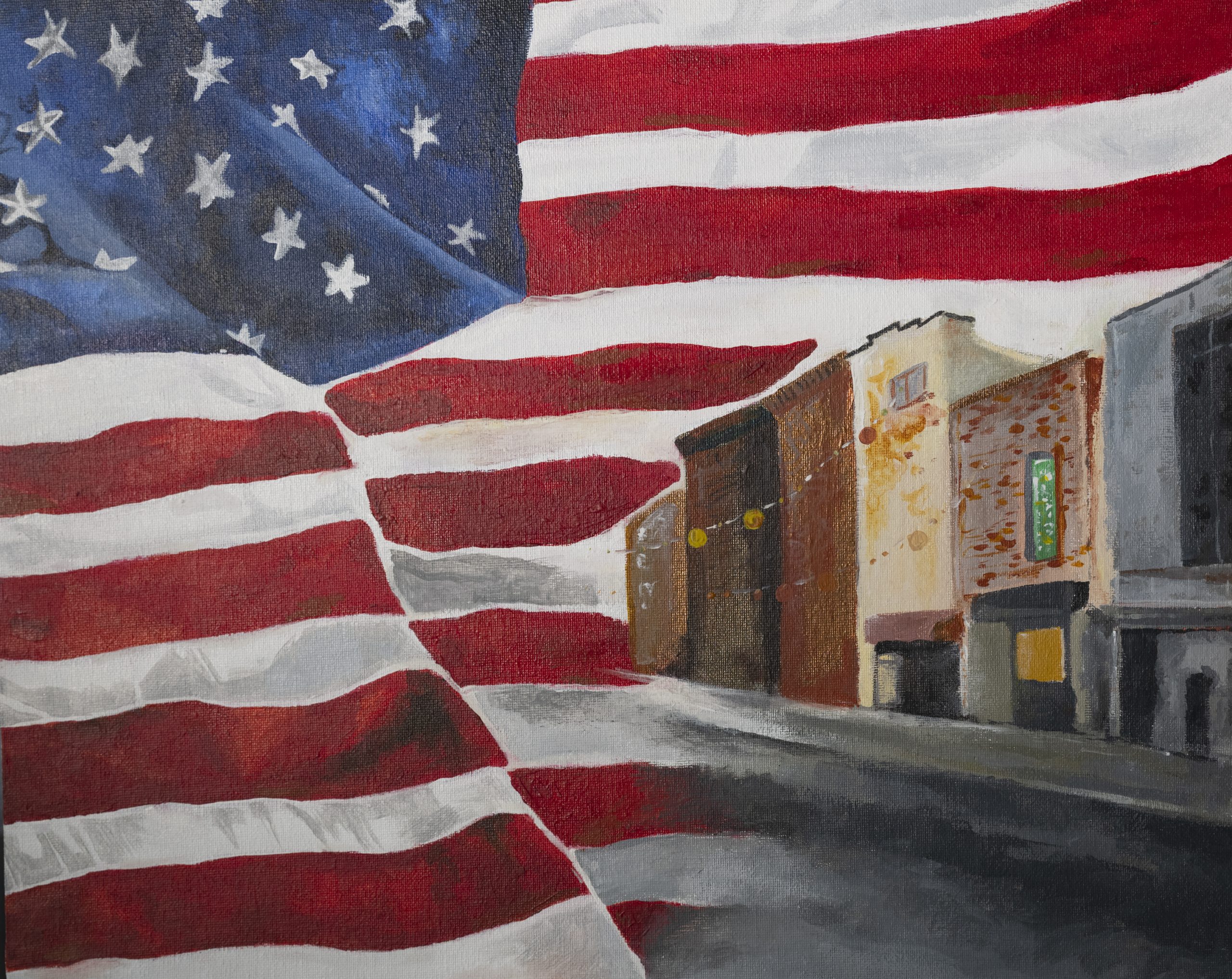
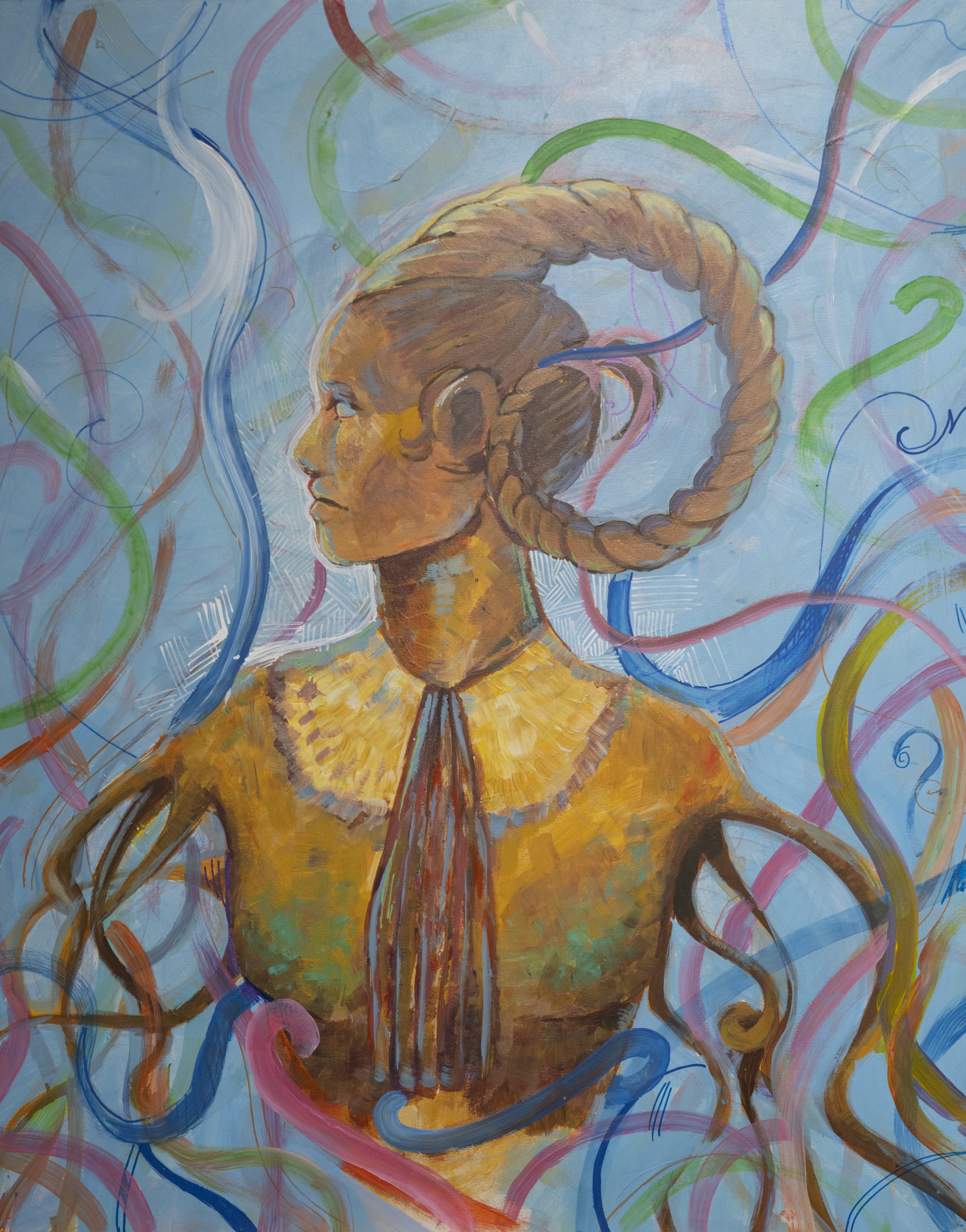
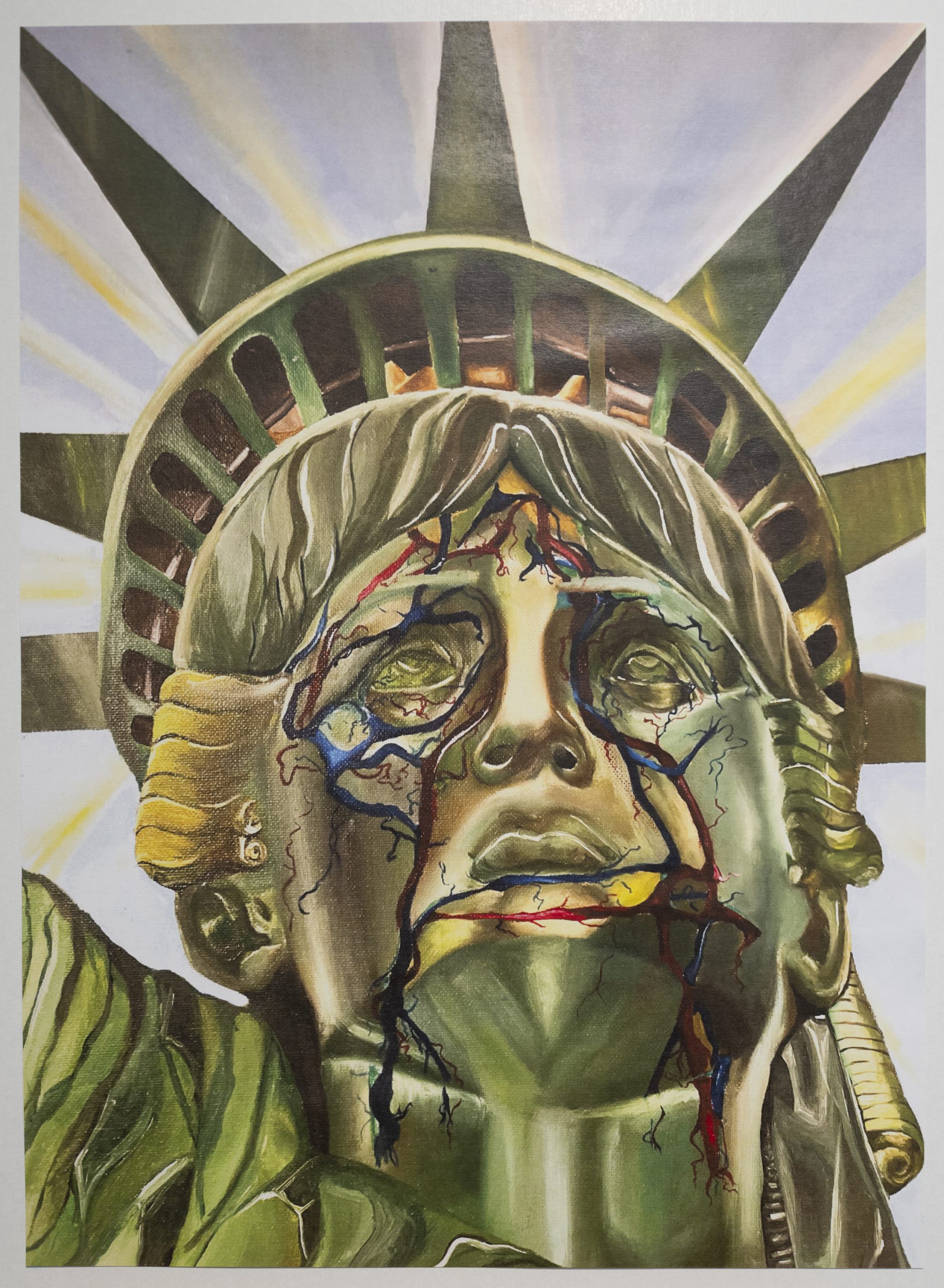
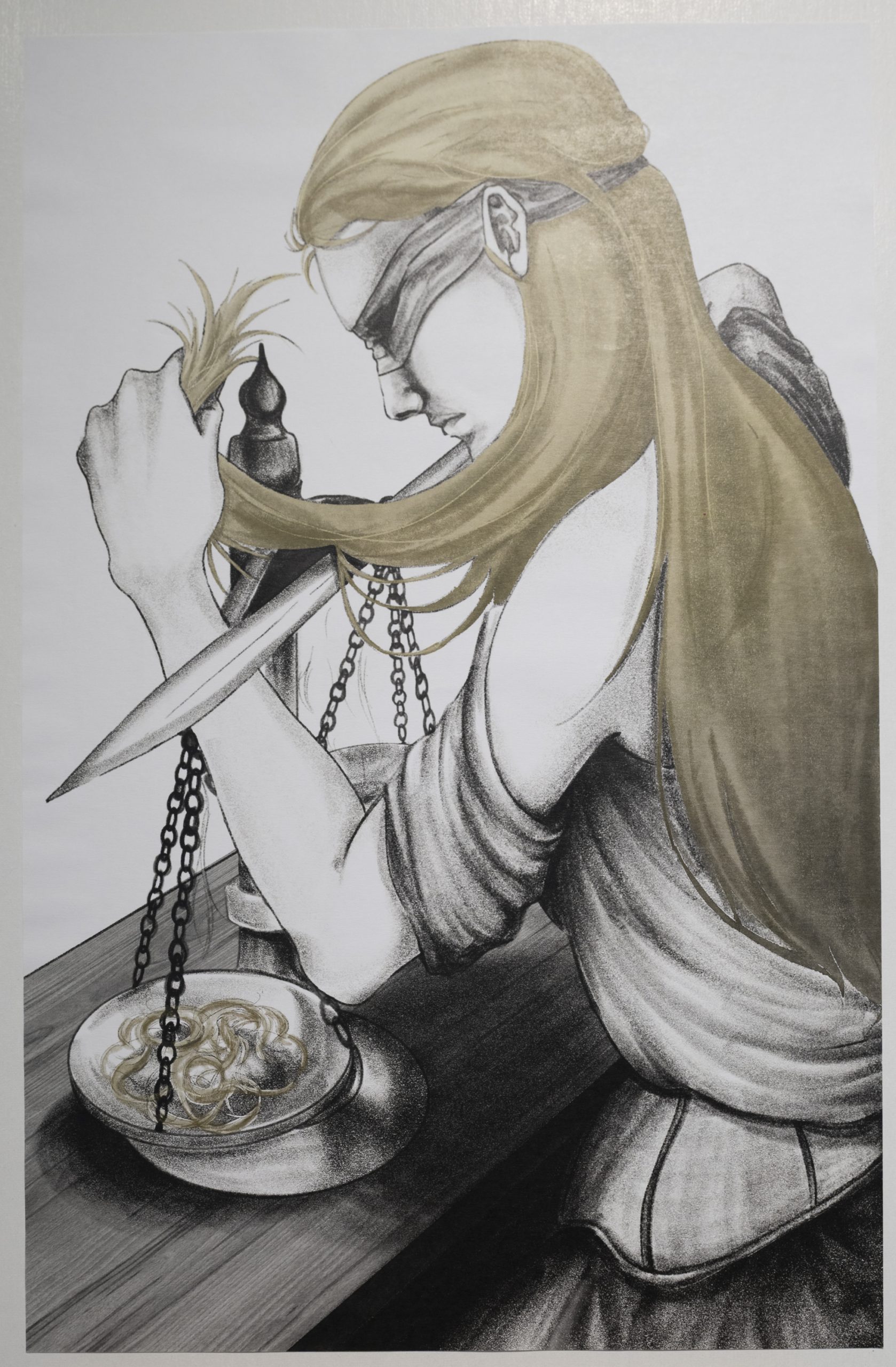
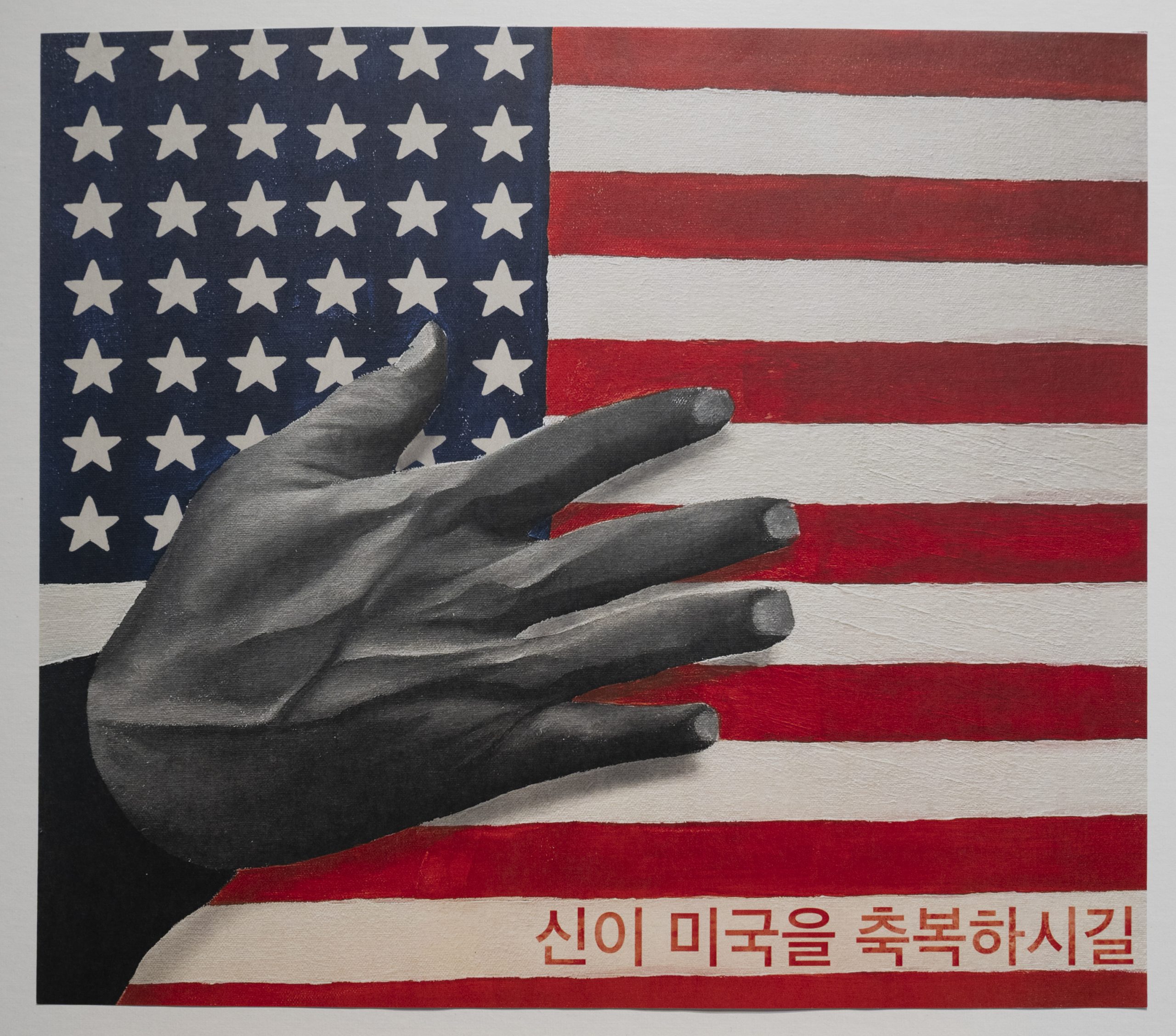
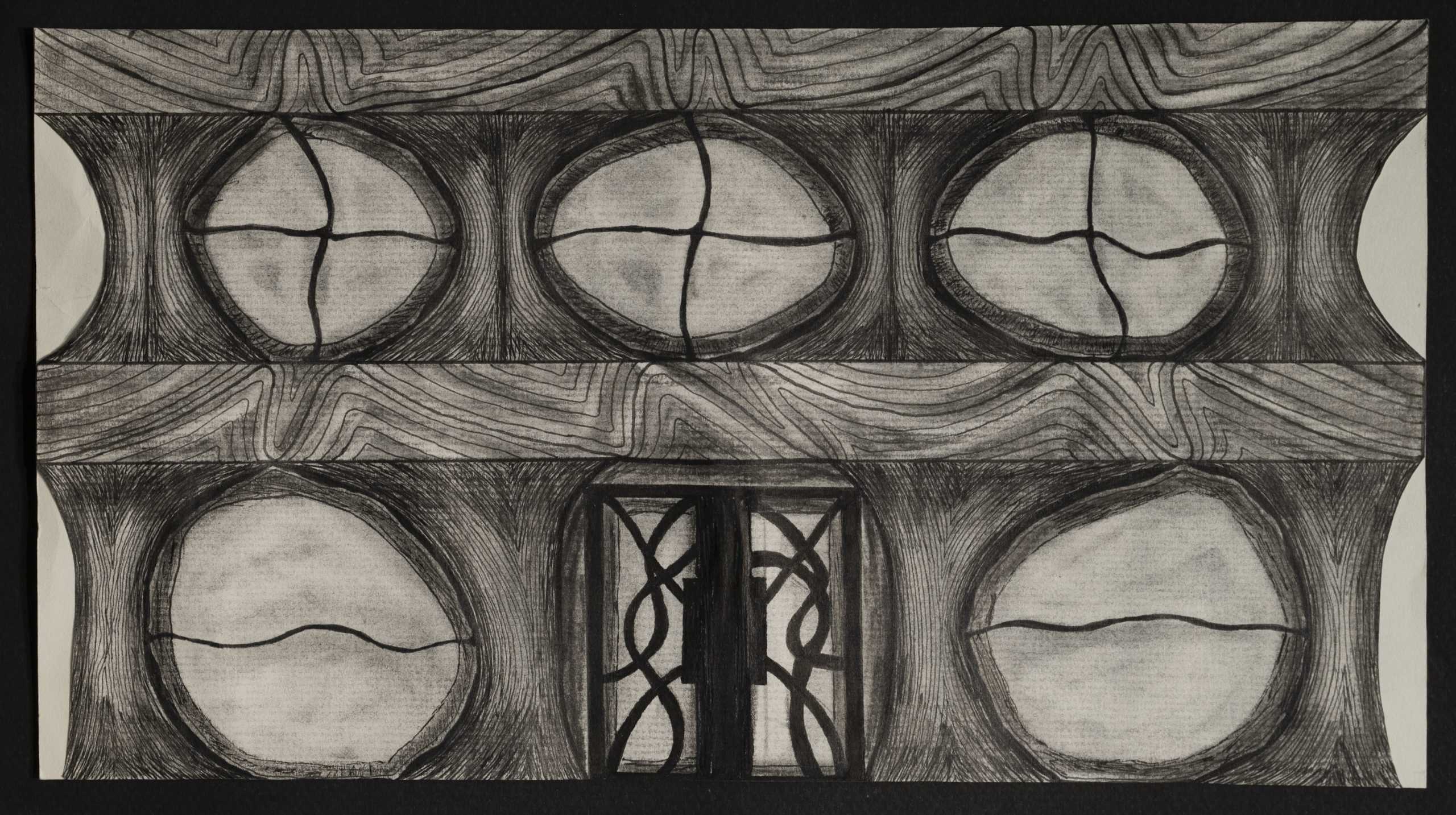
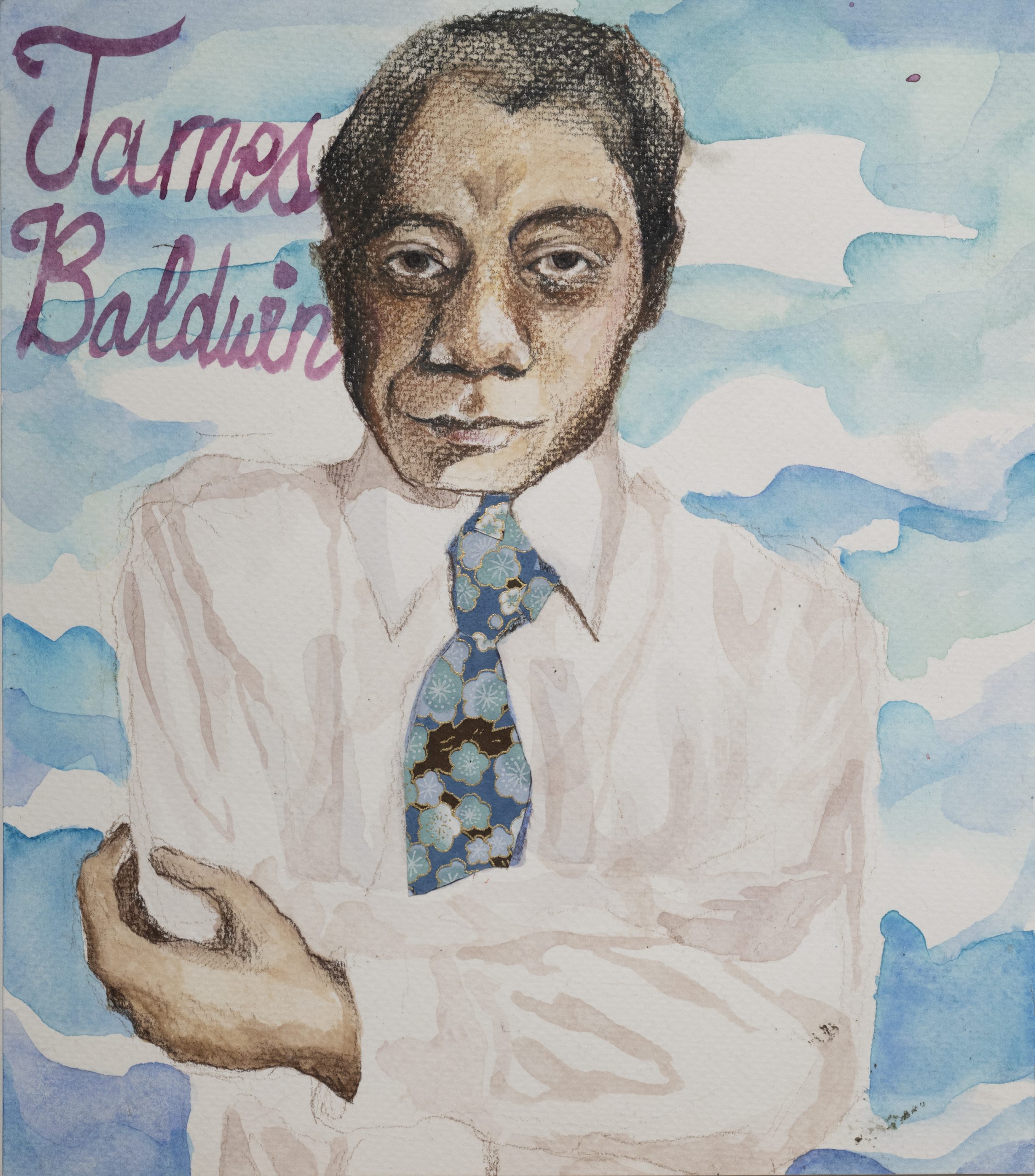
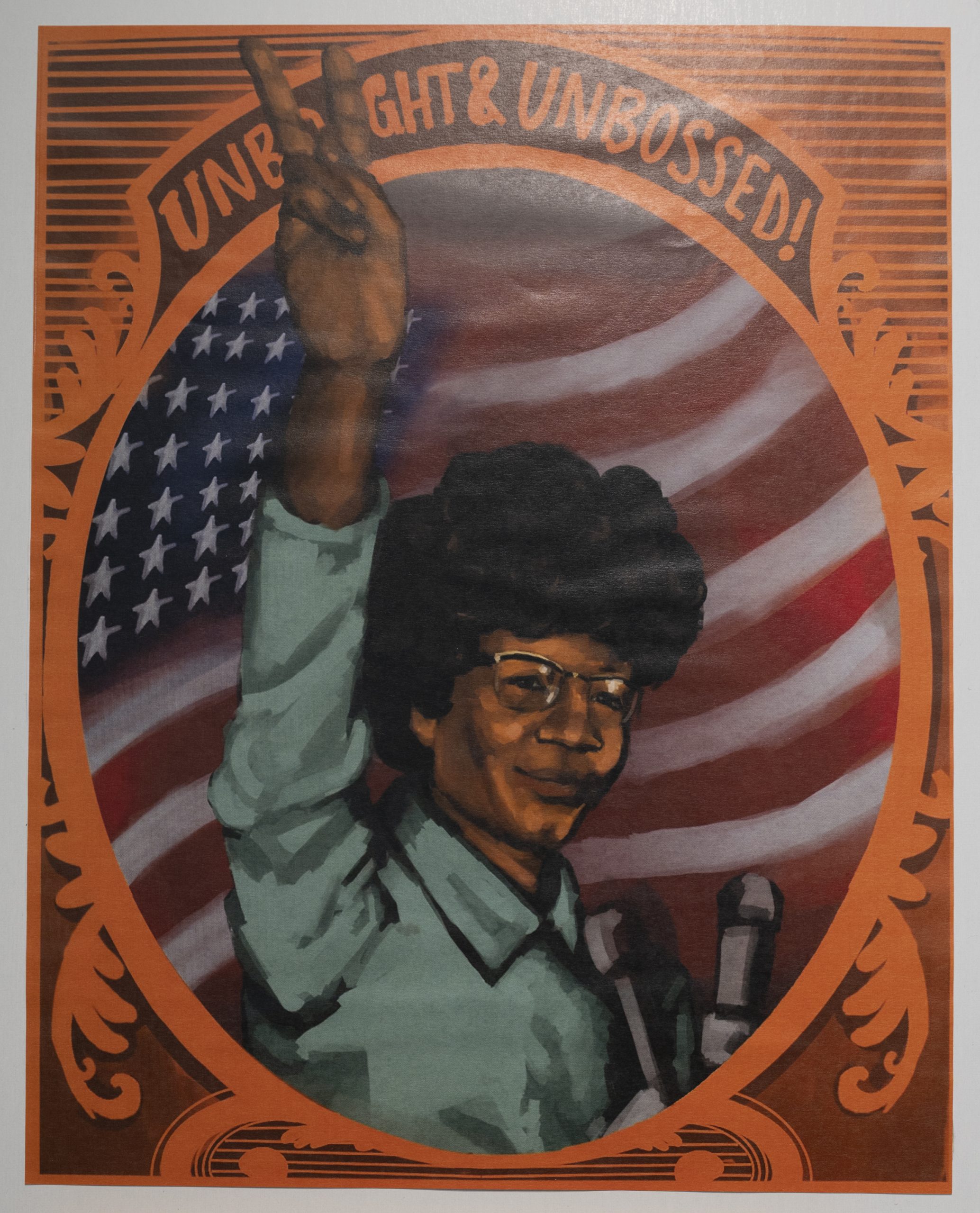
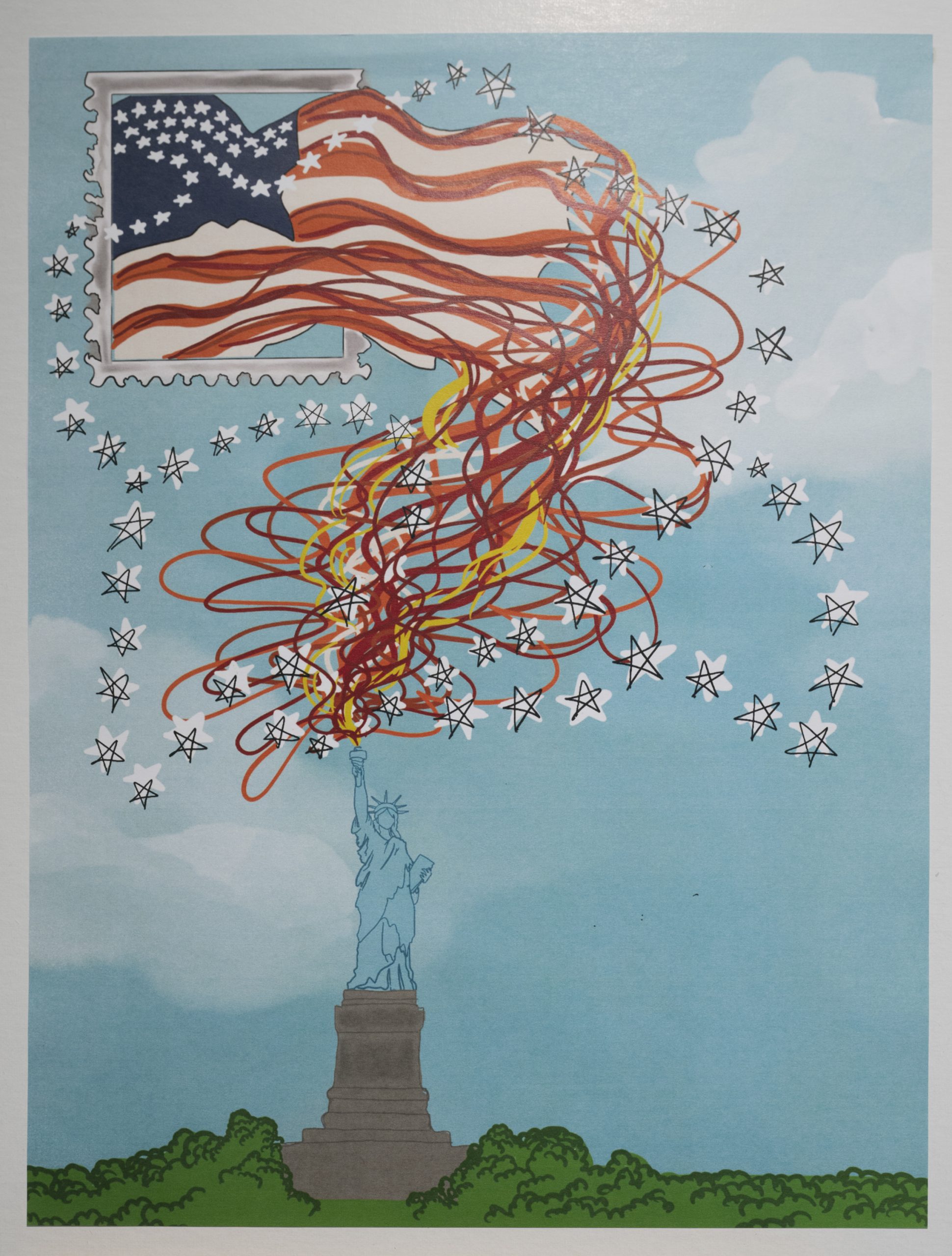
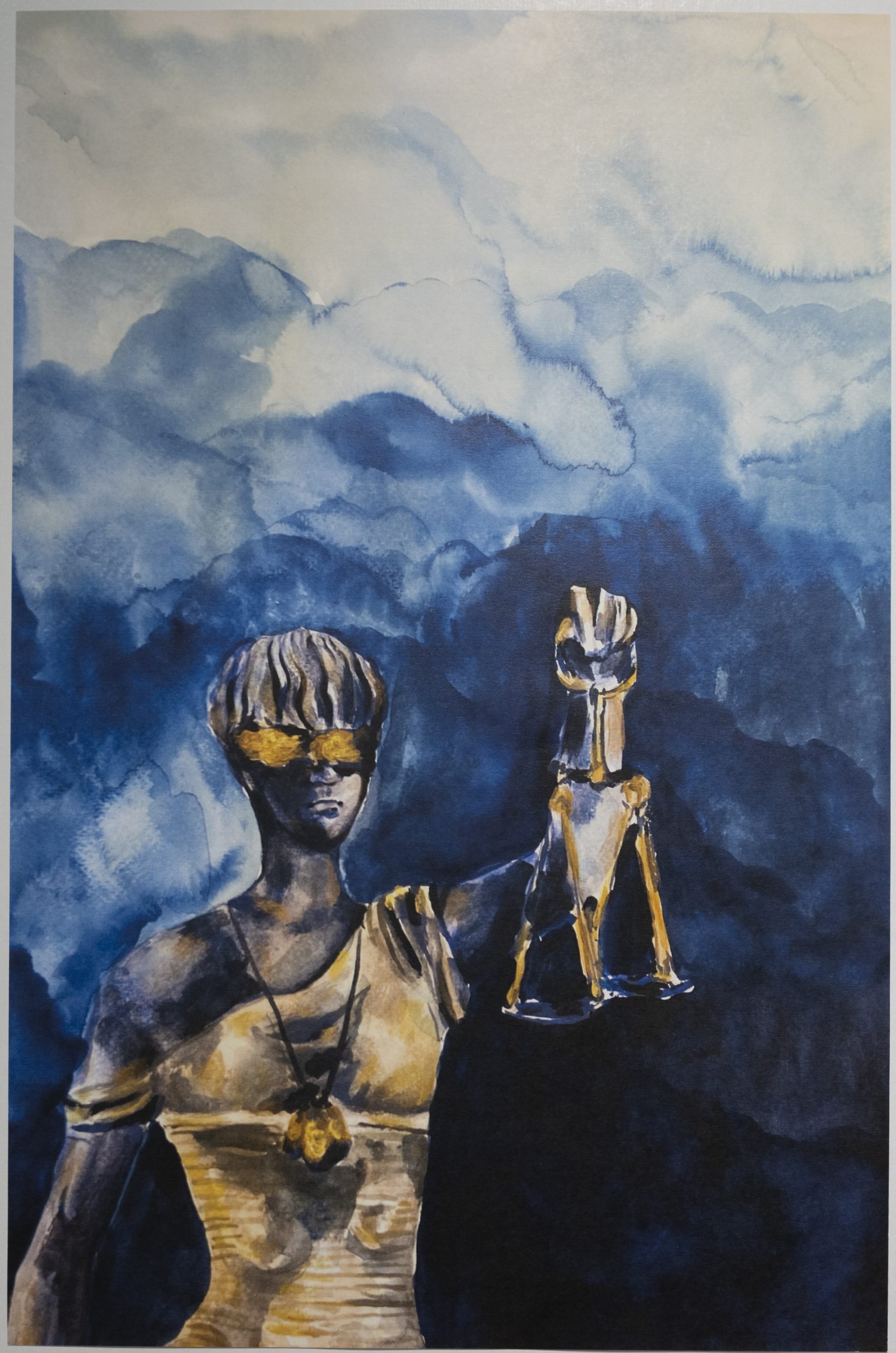
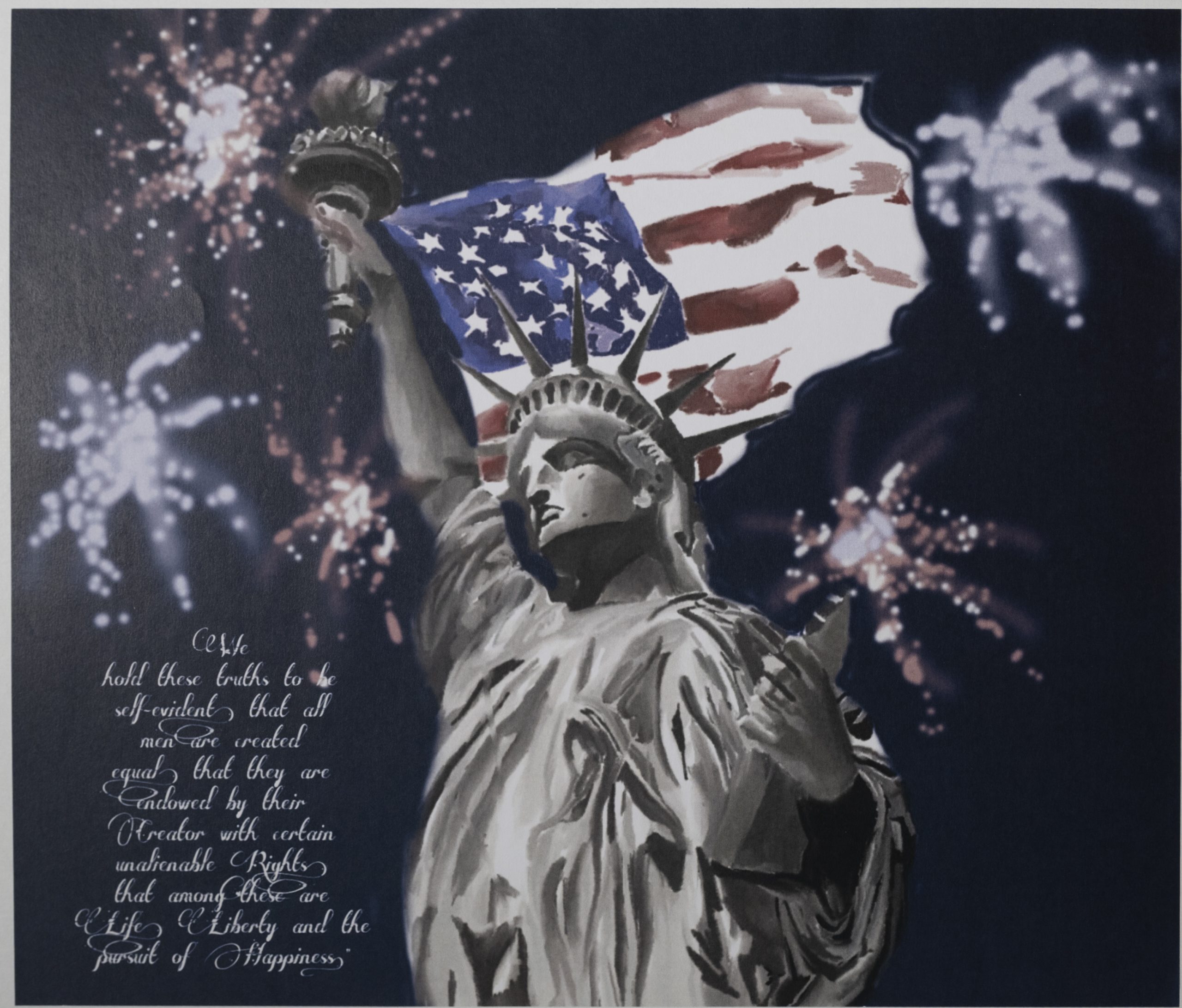
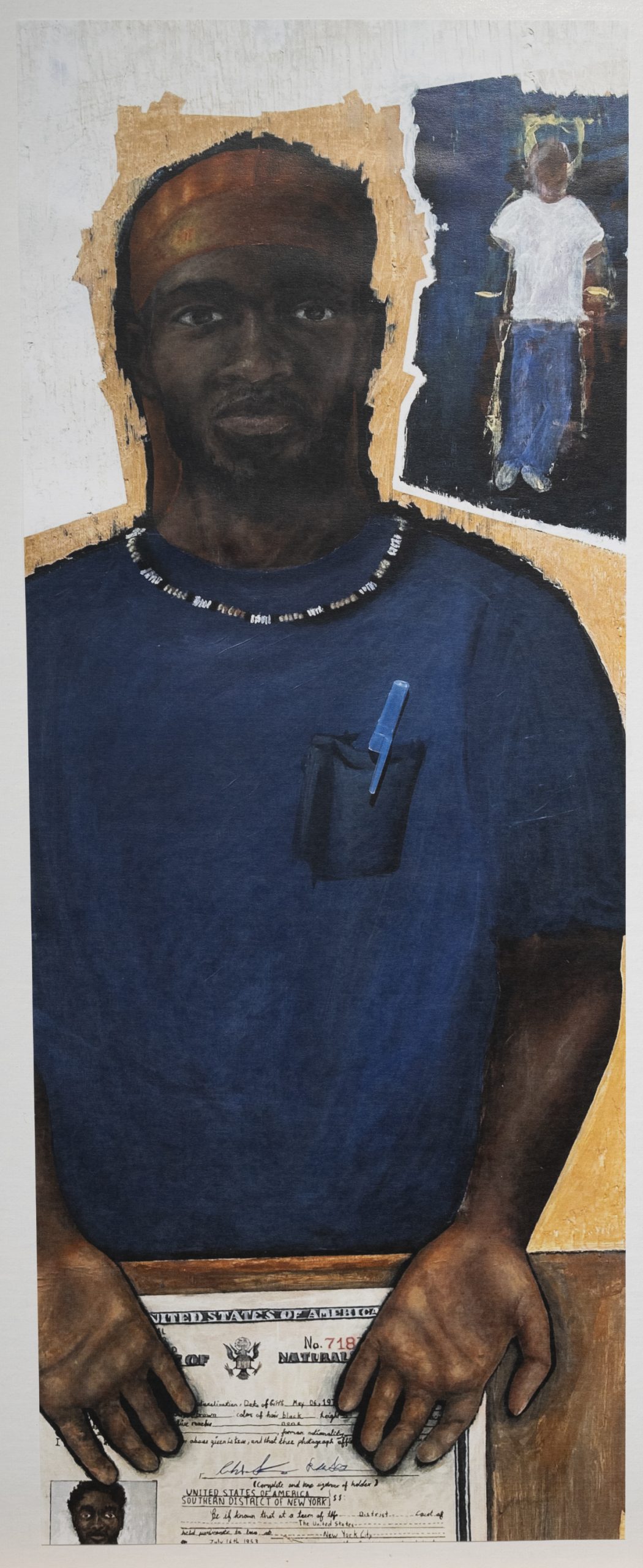
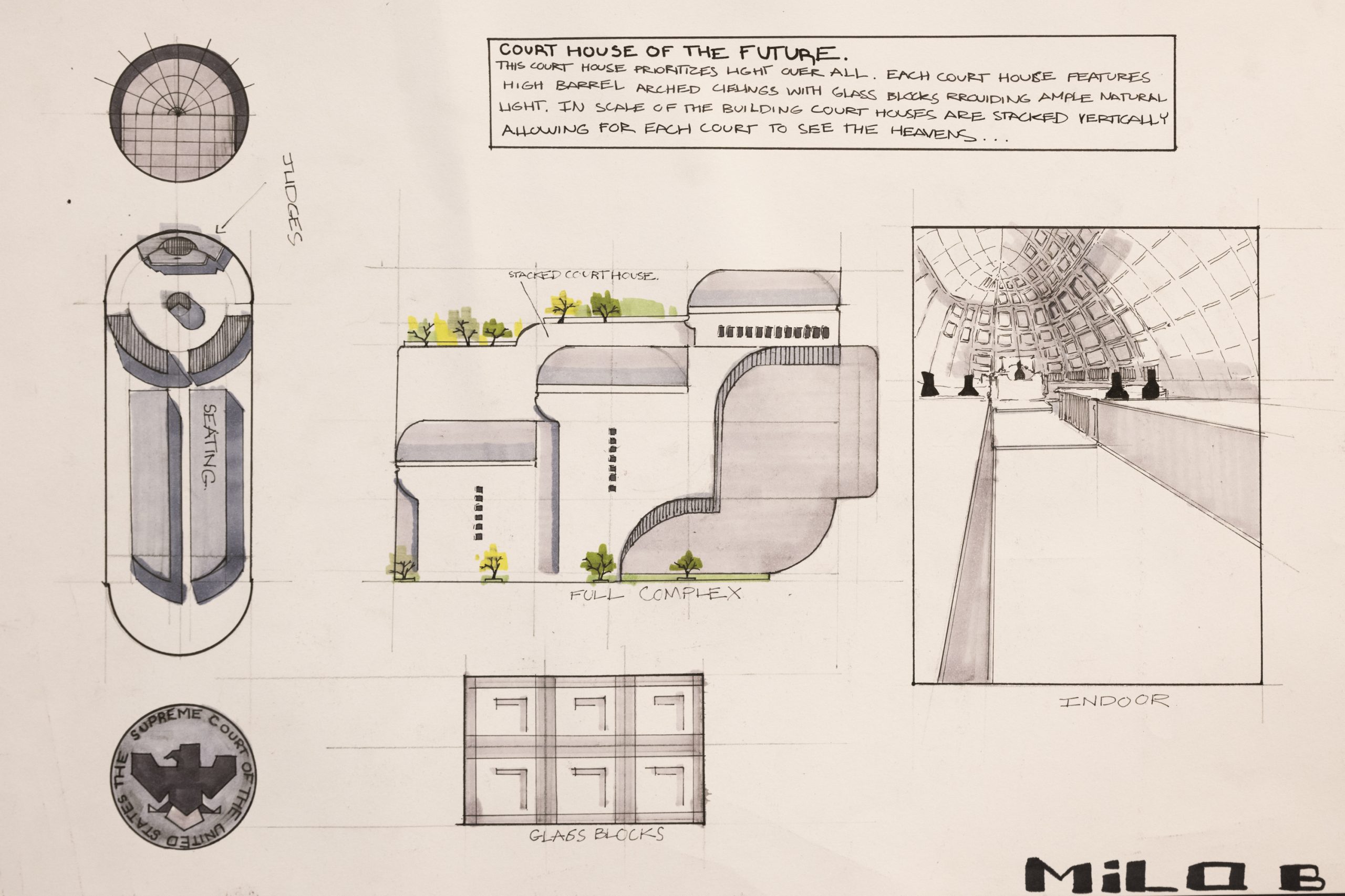
Students had the option to choose their own prompt from the four possibilities proposed by the Court civics subcommittee. Many students chose to focus on telling a story of a nation through stamps. Some explored visual design related to the naturalization process and were inspired by personal and family stories of gaining citizenship. Some students visually depicted text from the Declaration of lndependence. Some who are interested in design or architecture chose to explore the courtroom of the future. One student focused on art law cases.
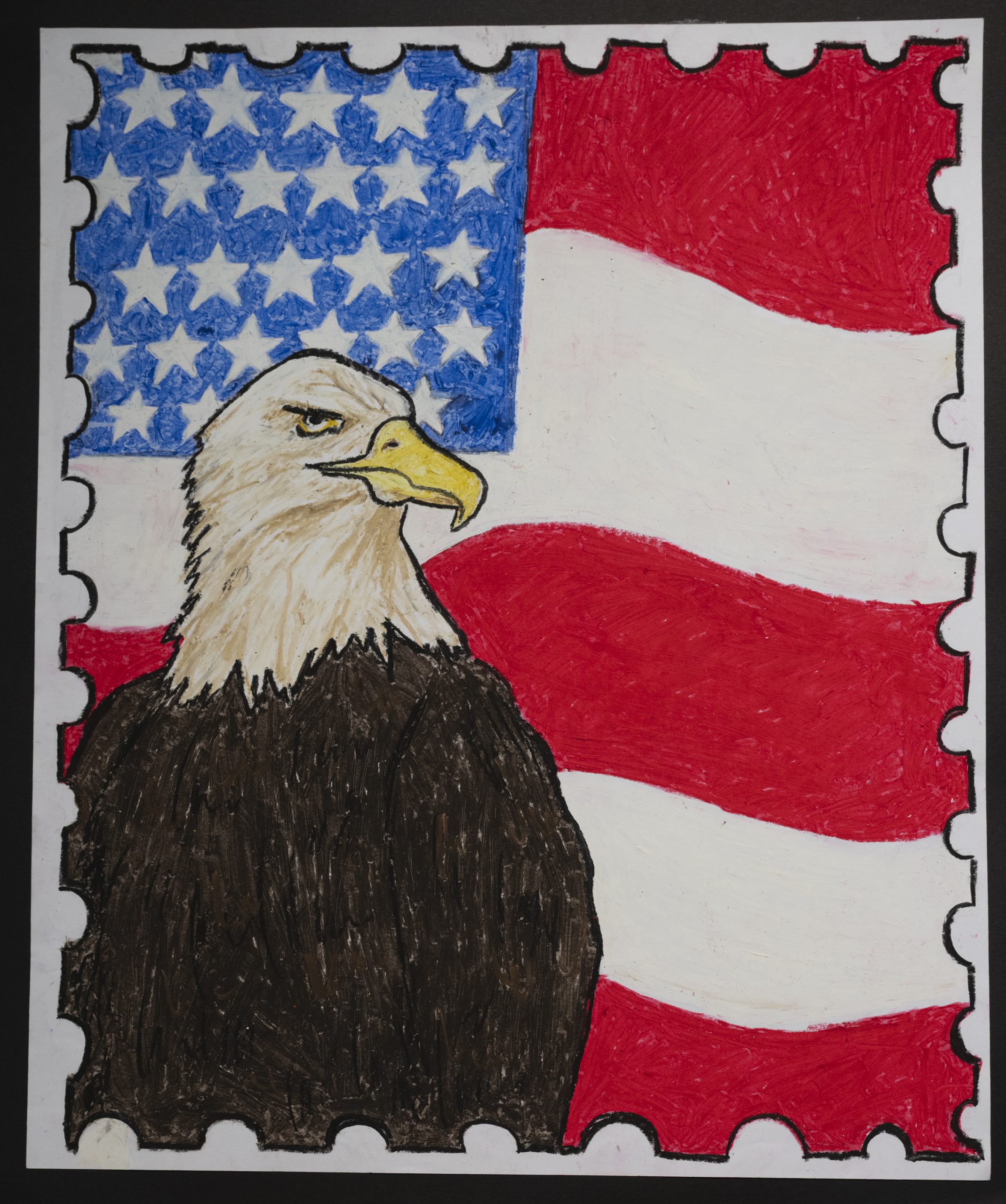
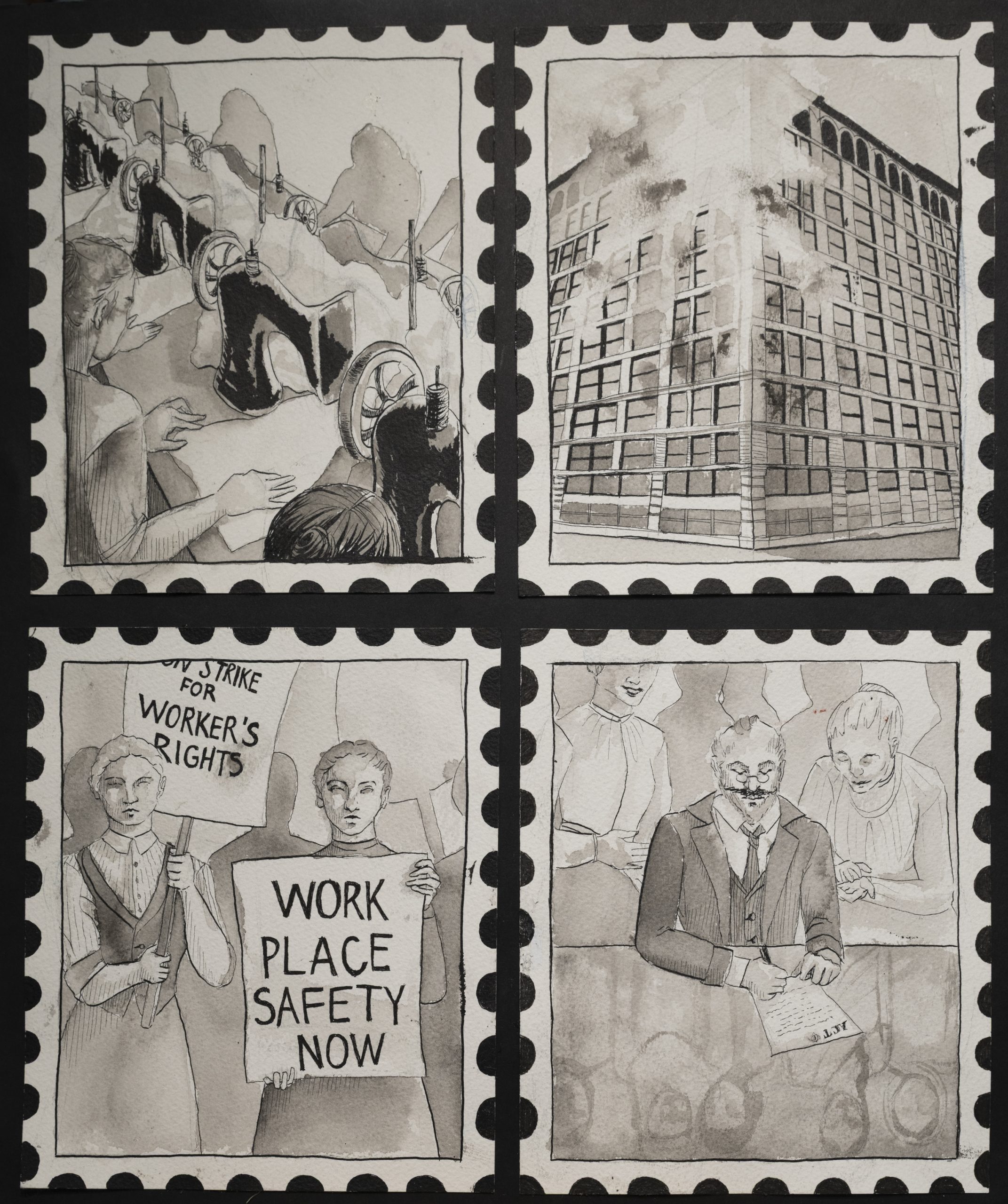
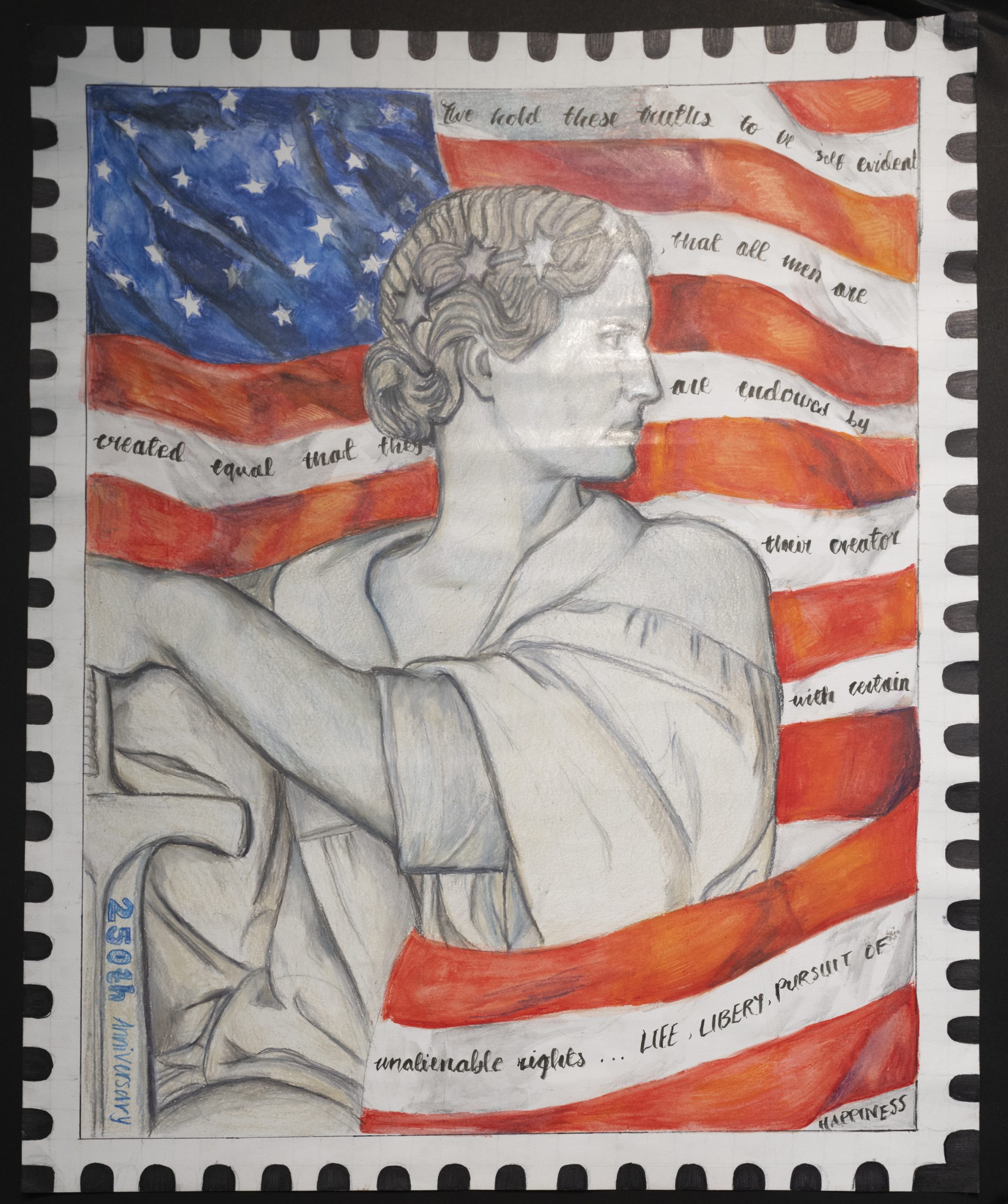
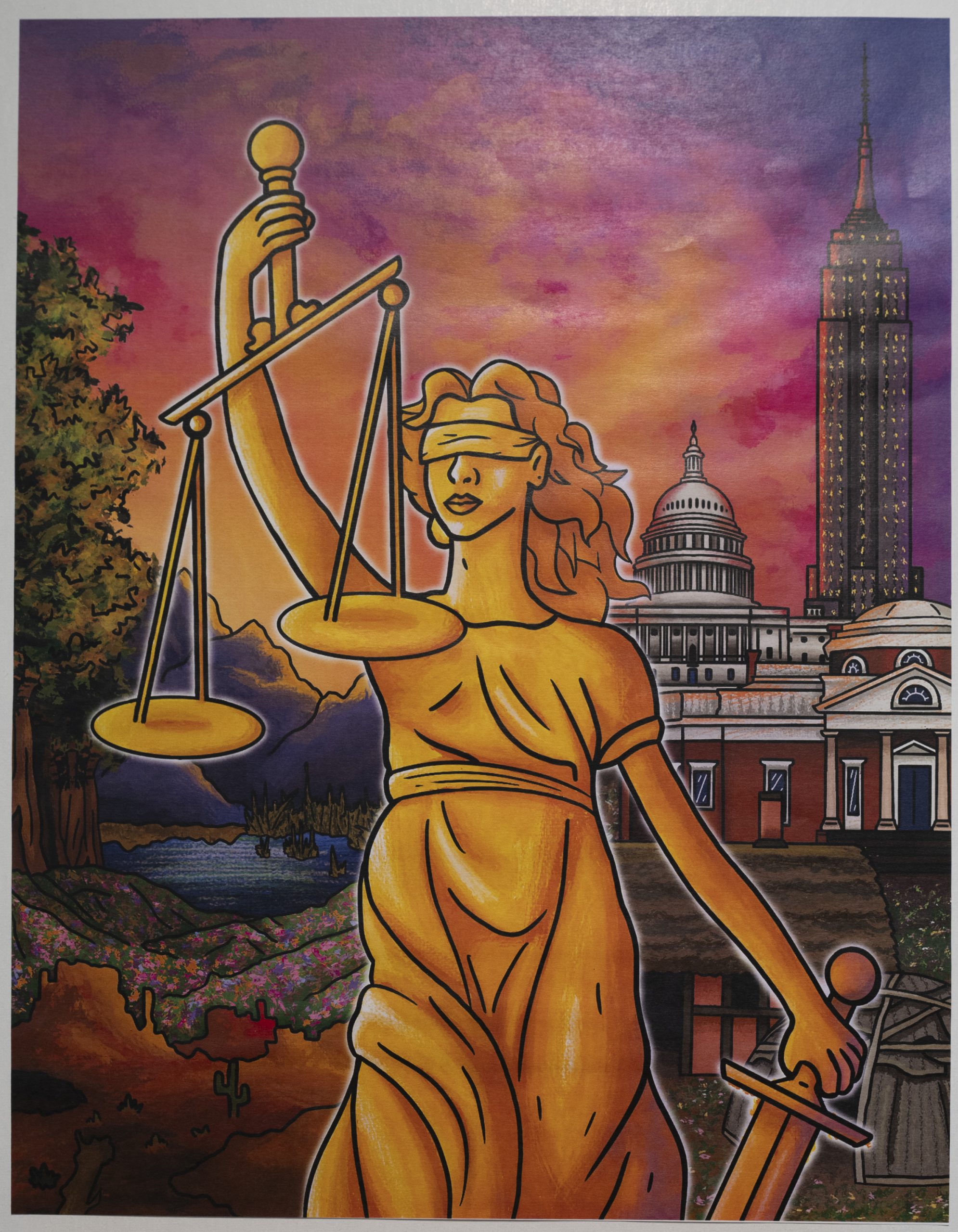
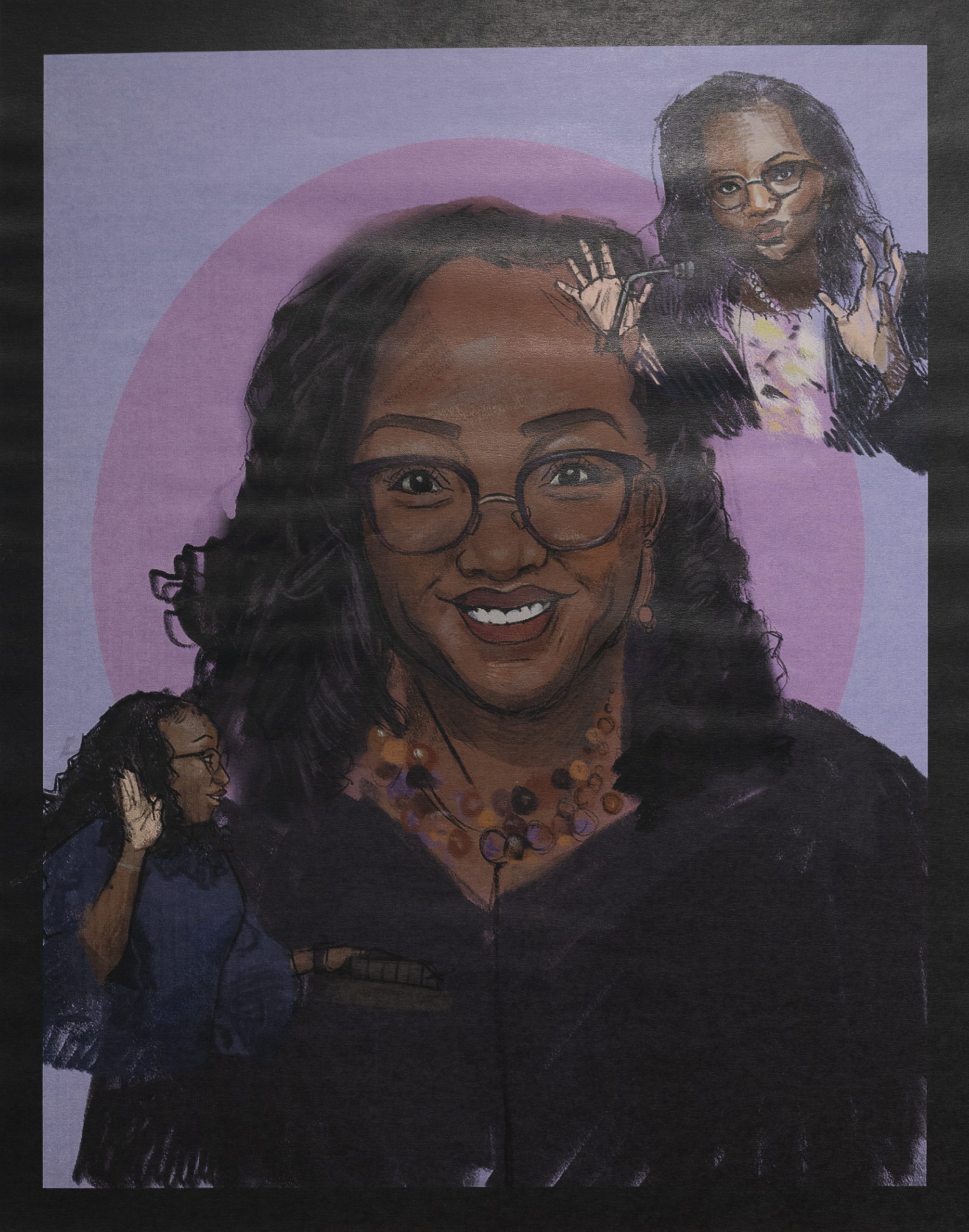
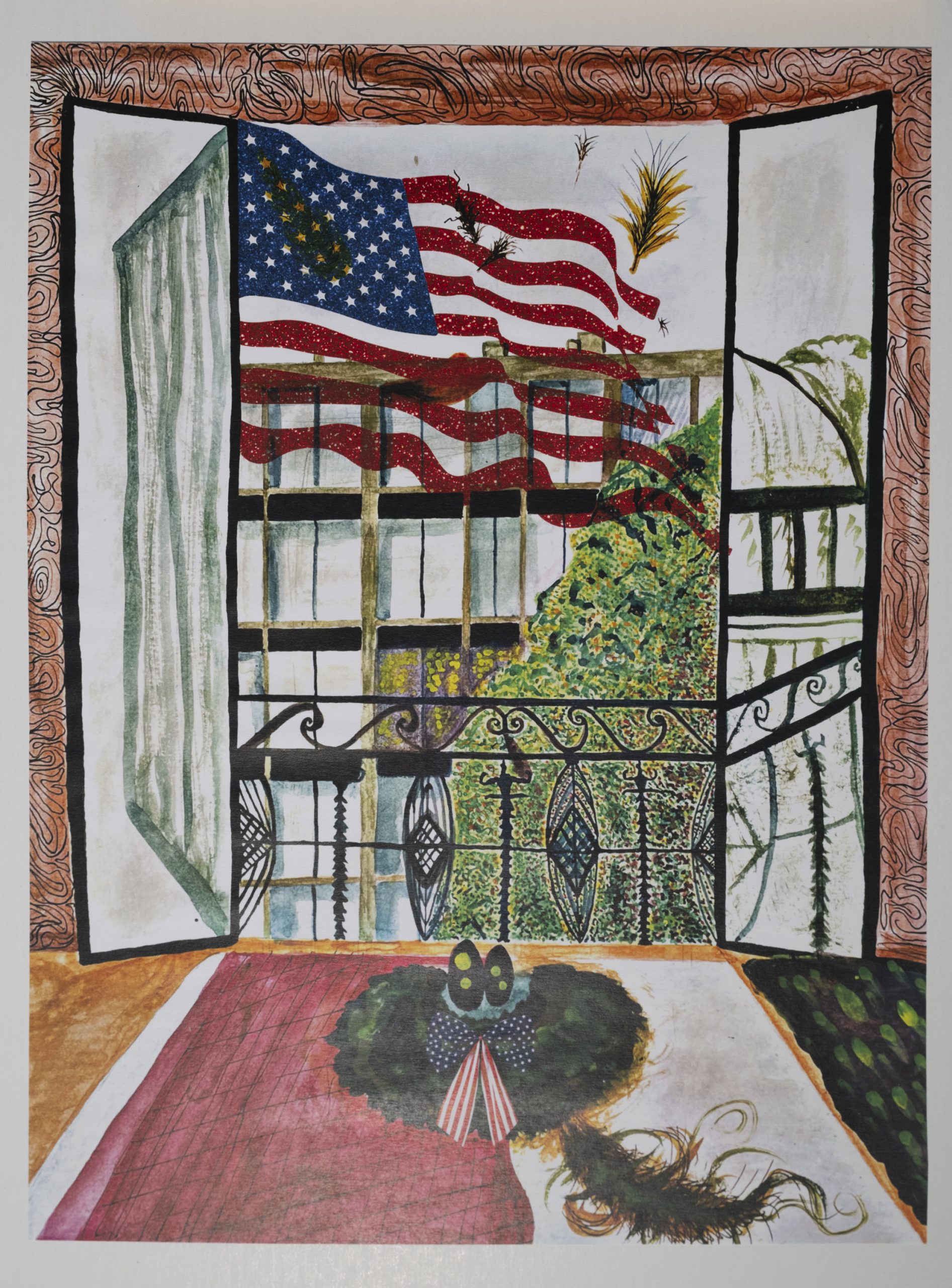
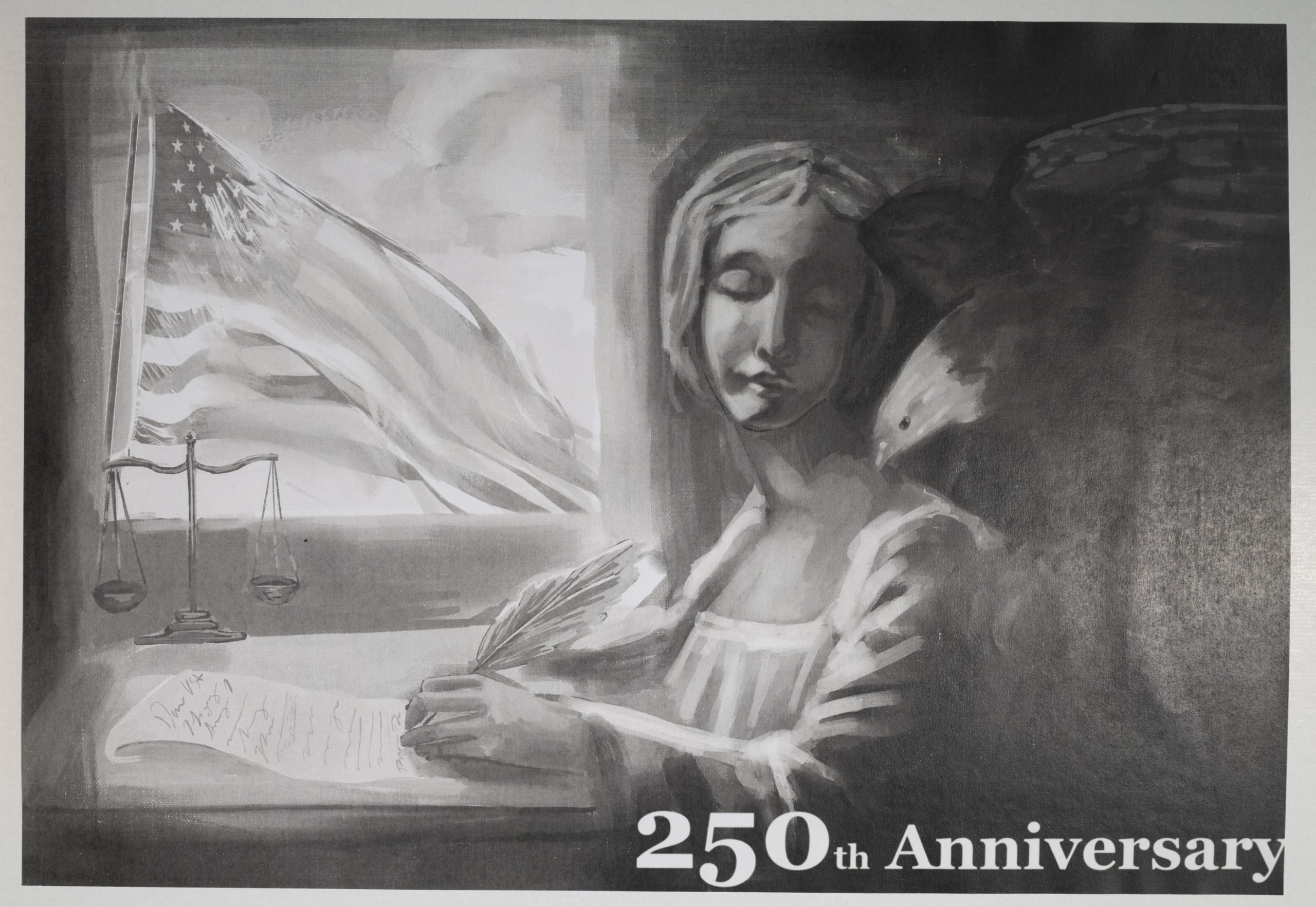
Principal: Maximillian Re-Sugiura
Teacher: Matt Lassen
1.Project Title: AI COURT CASES TOLD WITHIN 3D ILLUSTRATIONS
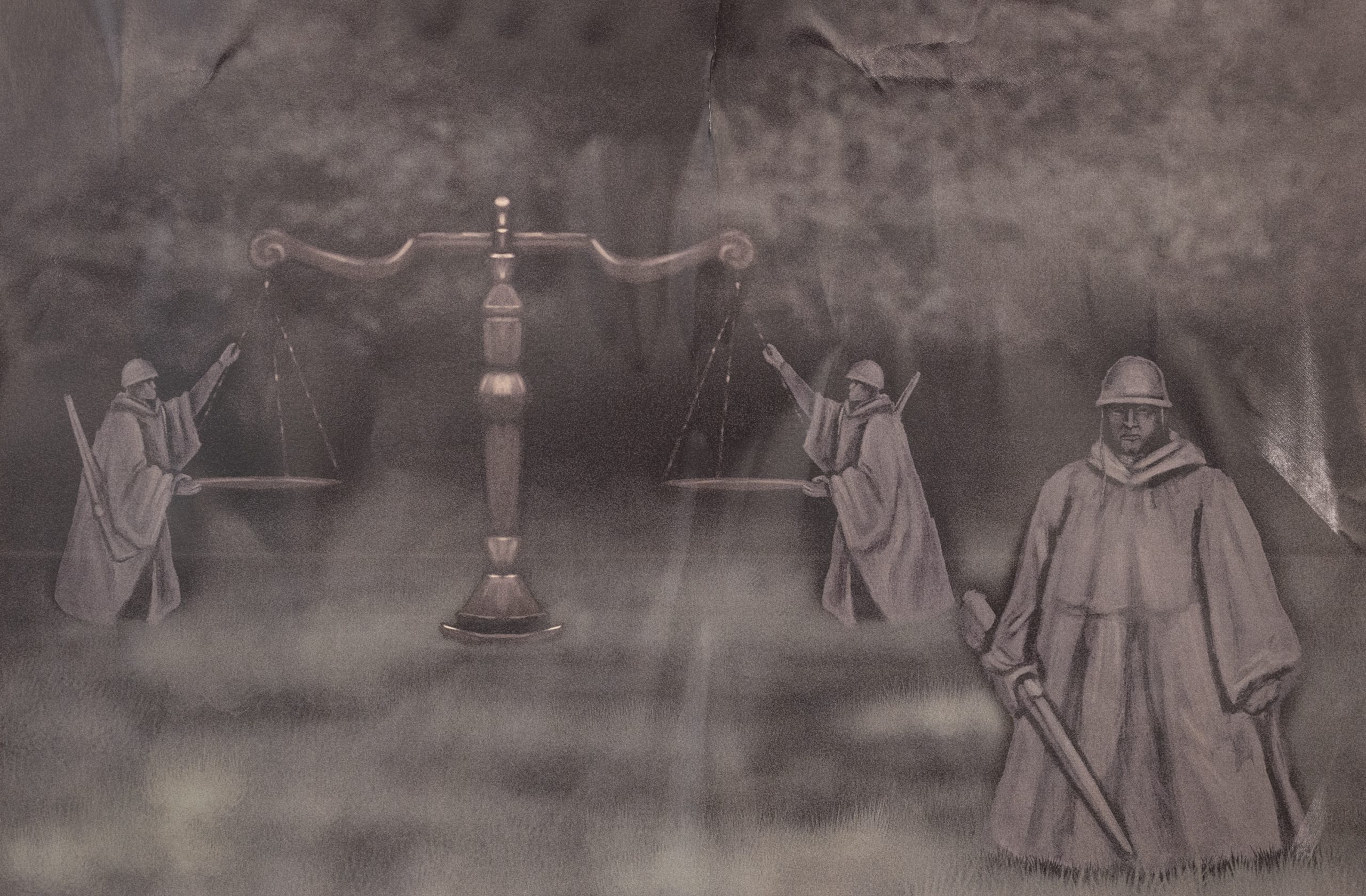
Our cartoonists worked collaboratively in small groups to research their chosen court case and break down the major parts of each case. They summarized and brainstormed single image cartoon illustrations for each major event of the case. Each student worked within their own process for thumbnailing, sketching and inking before switching to an array of digital software to color their pieces. They separated foreground, middle ground and background planes while coloring to eventually print each piece out individually, mount it on foamcore and dye cut everything out with an exacto knife. They used spacers to separate their planes to create a 3D effect within their cartoon illustrations. Their work is meant to be read in a specific order to tell the whole story of each case.
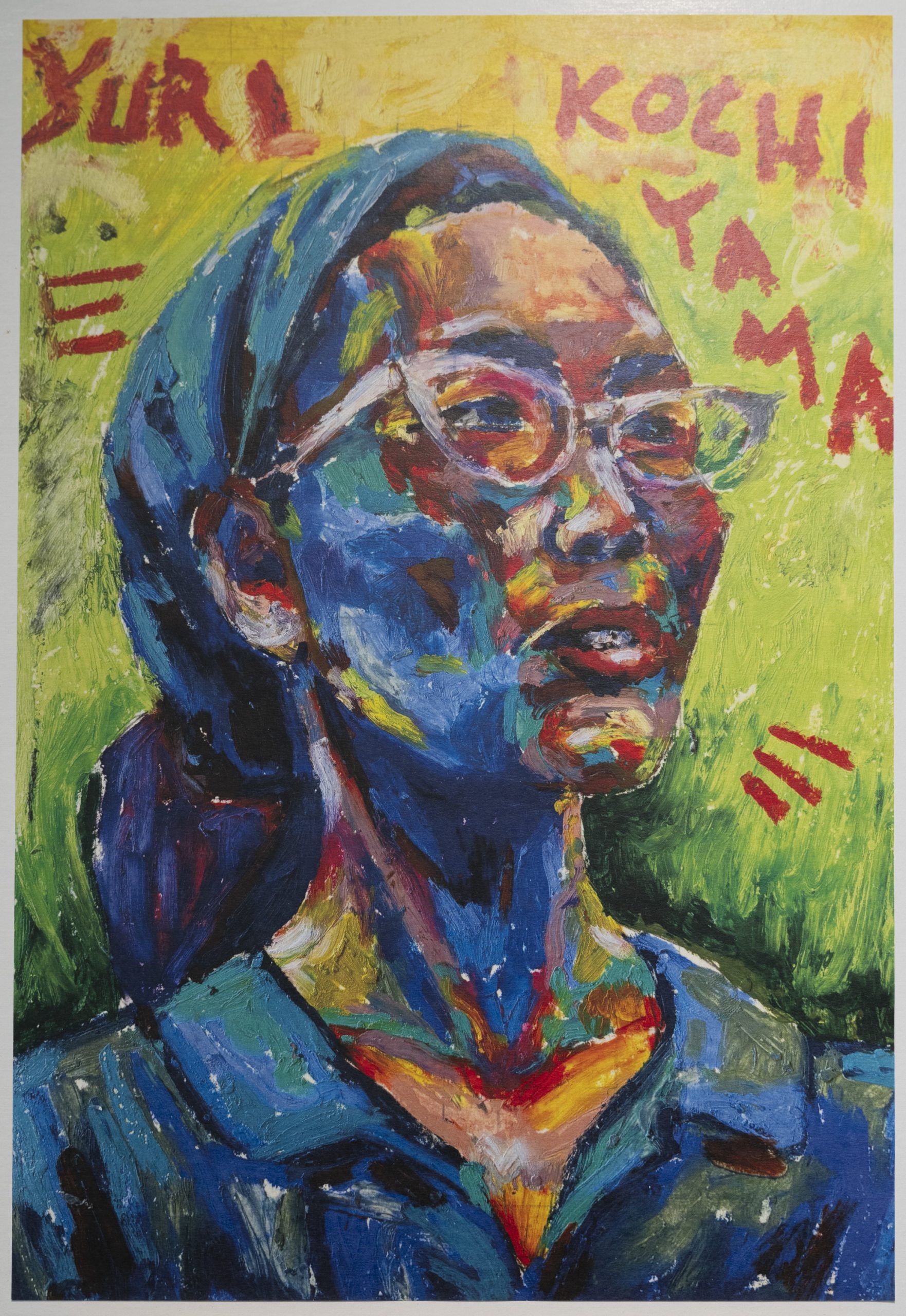
2.Project Title: TELLING THE STORY OF A NATION IN STAMPS WITH 3D CARTOON ILLUSTRATIONS
Our cartoonists worked collaboratively in a small group to research and brainstormed different famous figures in judicial history that they felt should be commemorated upon a stamp. After their research they worked to tell the story of each person’s life and career in a single cartoon illustration. They worked in an array of different processes and materials to create their inked pieces while utilizing different digital softwares to render in color. They utilized spatial depth by separating each plane, individually mounting and cutting out each piece on foamcore with an exacto knife. They used spacers to create depth and interest for
their stamps. Their work can be viewed as a small group or individually.
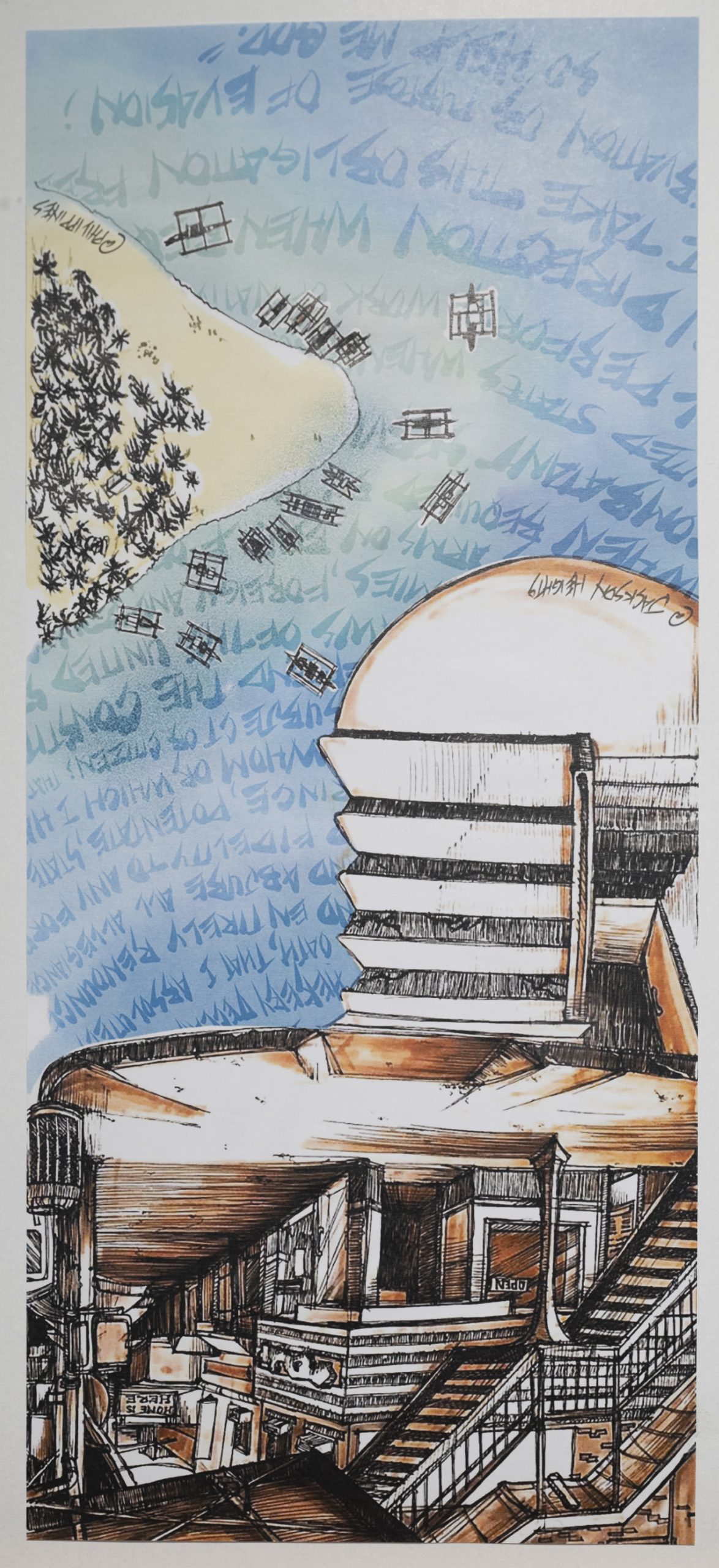
3.Project Title: IDEALS OF THE DECLARATION OF INDEPENDENCE IN 3D ILLUSTRATIONS
Our cartoonists worked collaboratively in a small group to develop ideas of how to illustrate the three ideals of the Declaration of Independence – life, liberty and the pursuit of happiness. They each took an ideal and used their own life and culture to illustrate these ideals in modern society. For instance, “life” is communicated in the vibrant energy and community they experience every day in Washington Heights. They worked in an array of different processes and materials to create their inked pieces while utilizing different digital software to render in color. They utilized spatial depth by separating each plane to
individually mount and cut out each plane onto foamcore with an exacto knife. They used spacers to create depth and interest for their individual artwork. Their work can be viewed as a small group or individually.


Principal: Pedro Cubero
Teacher: Bethany Trust
1.Project Title: LIBERTY’S PROMISE
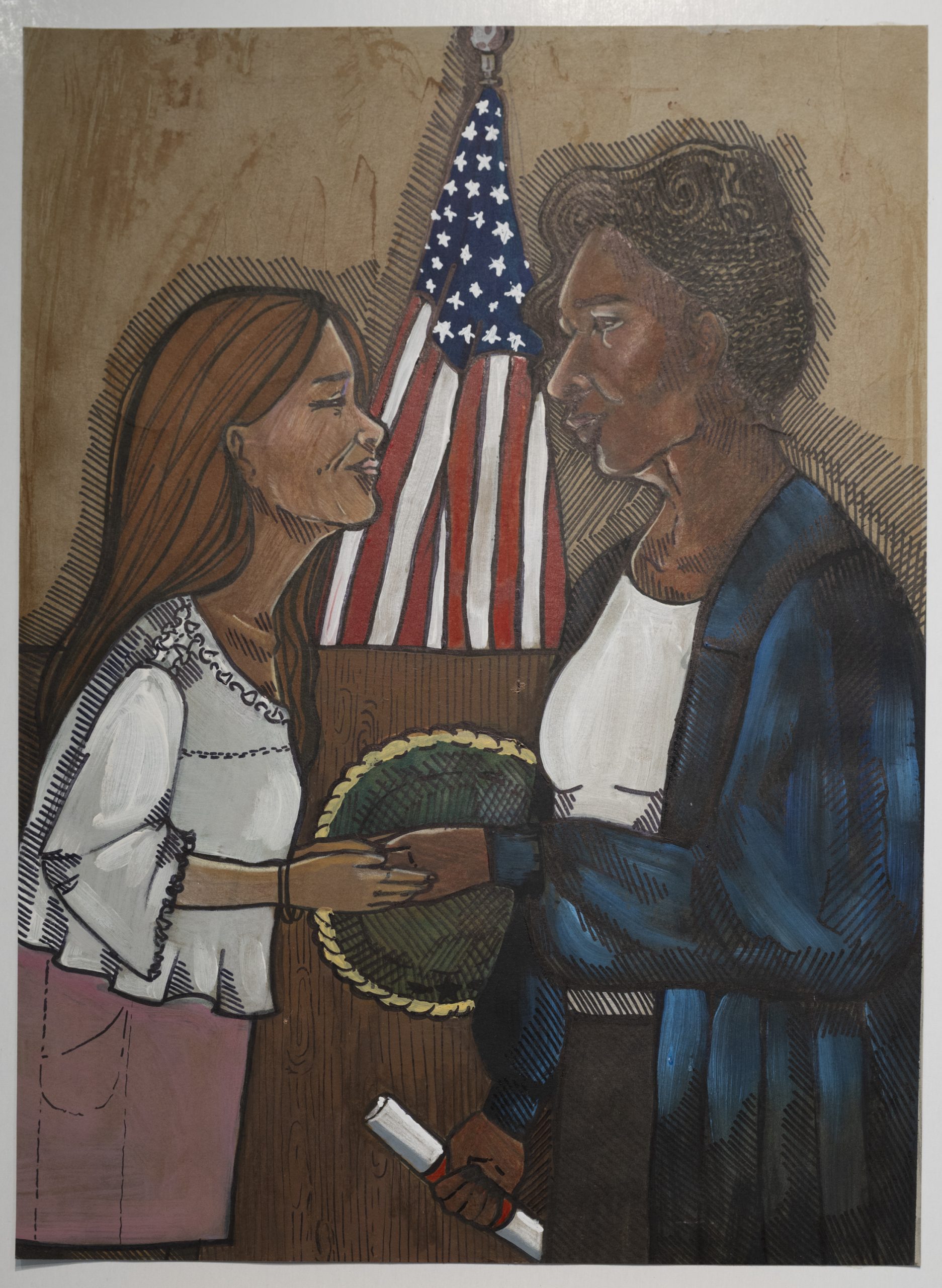
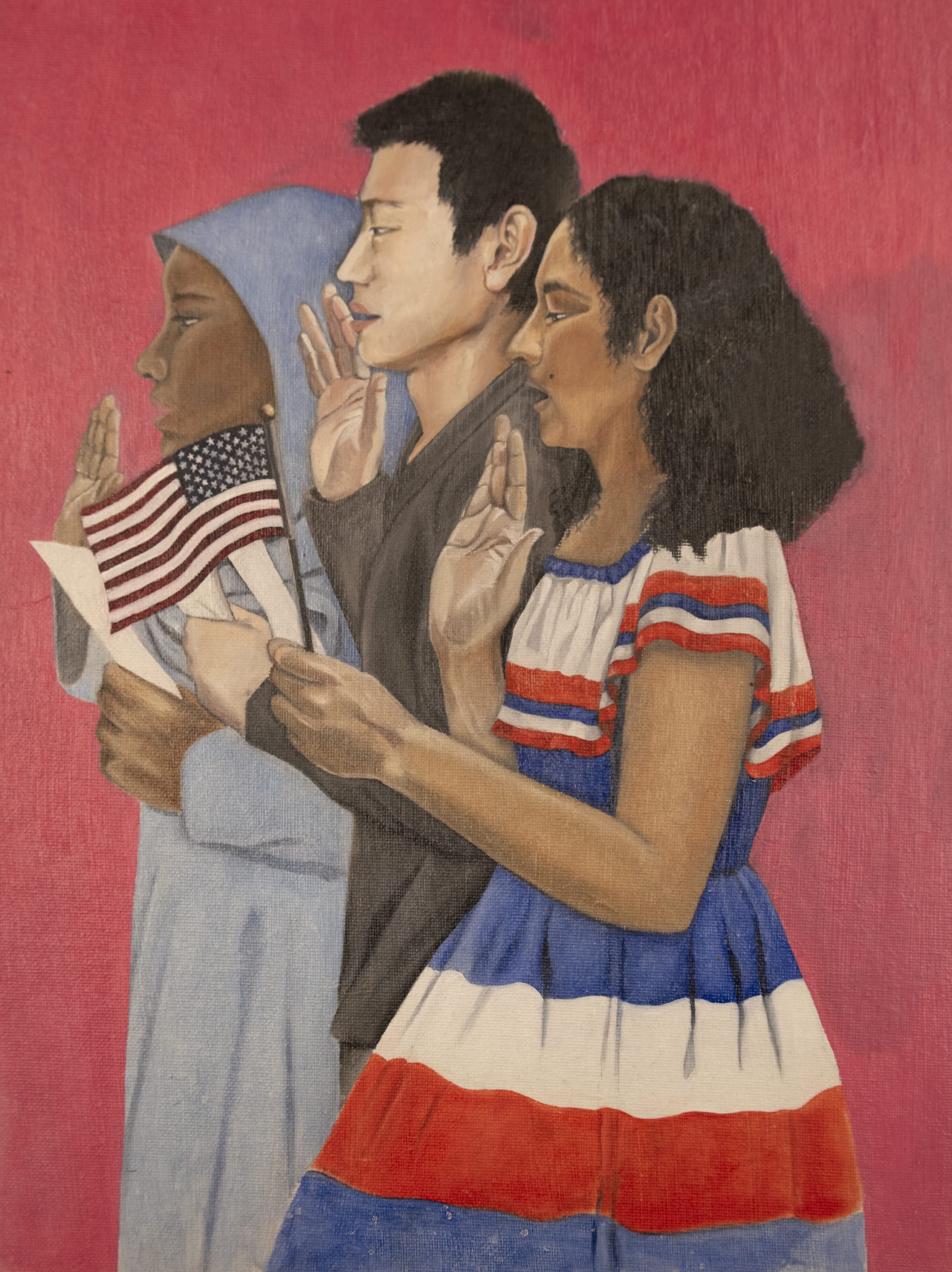
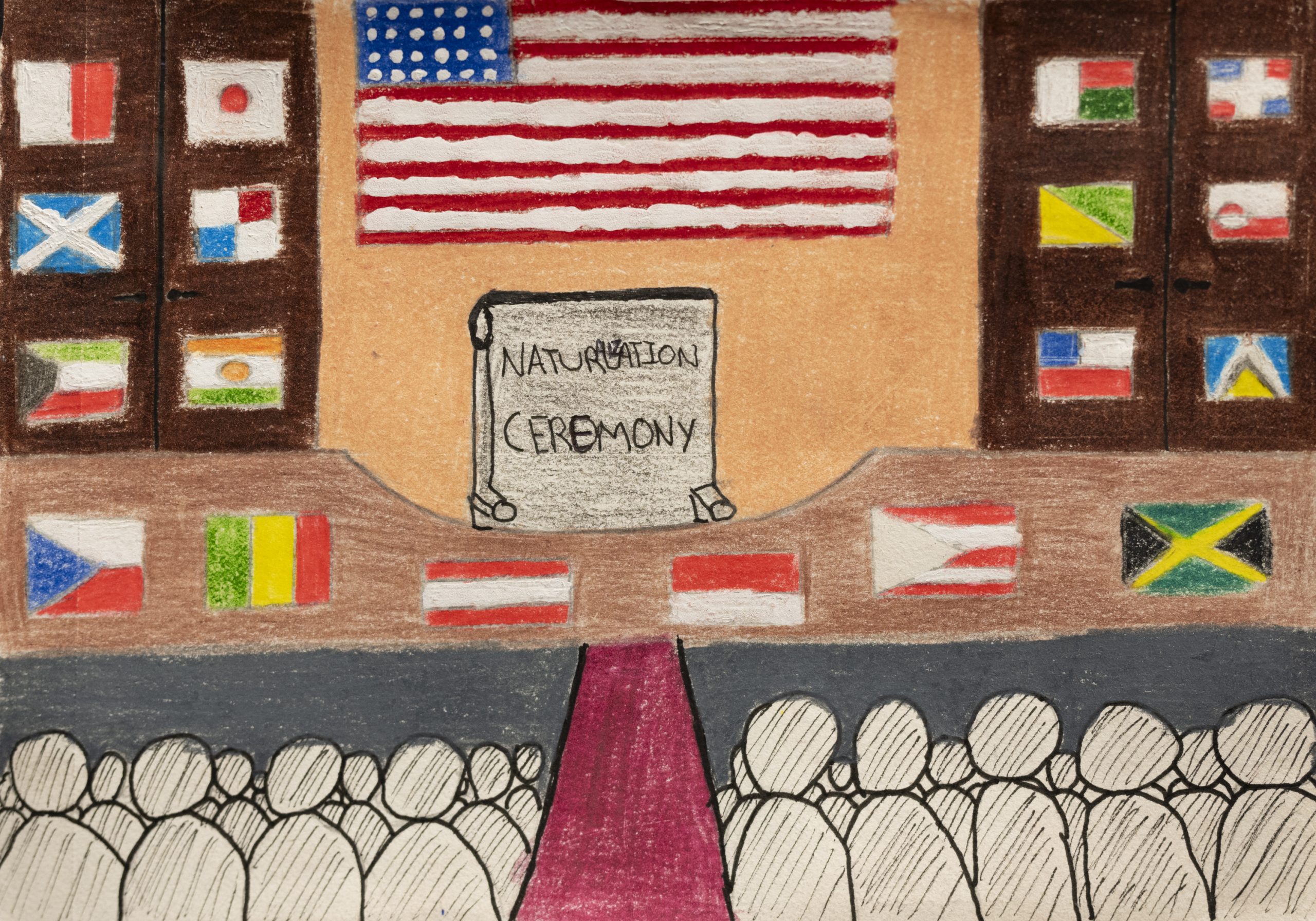
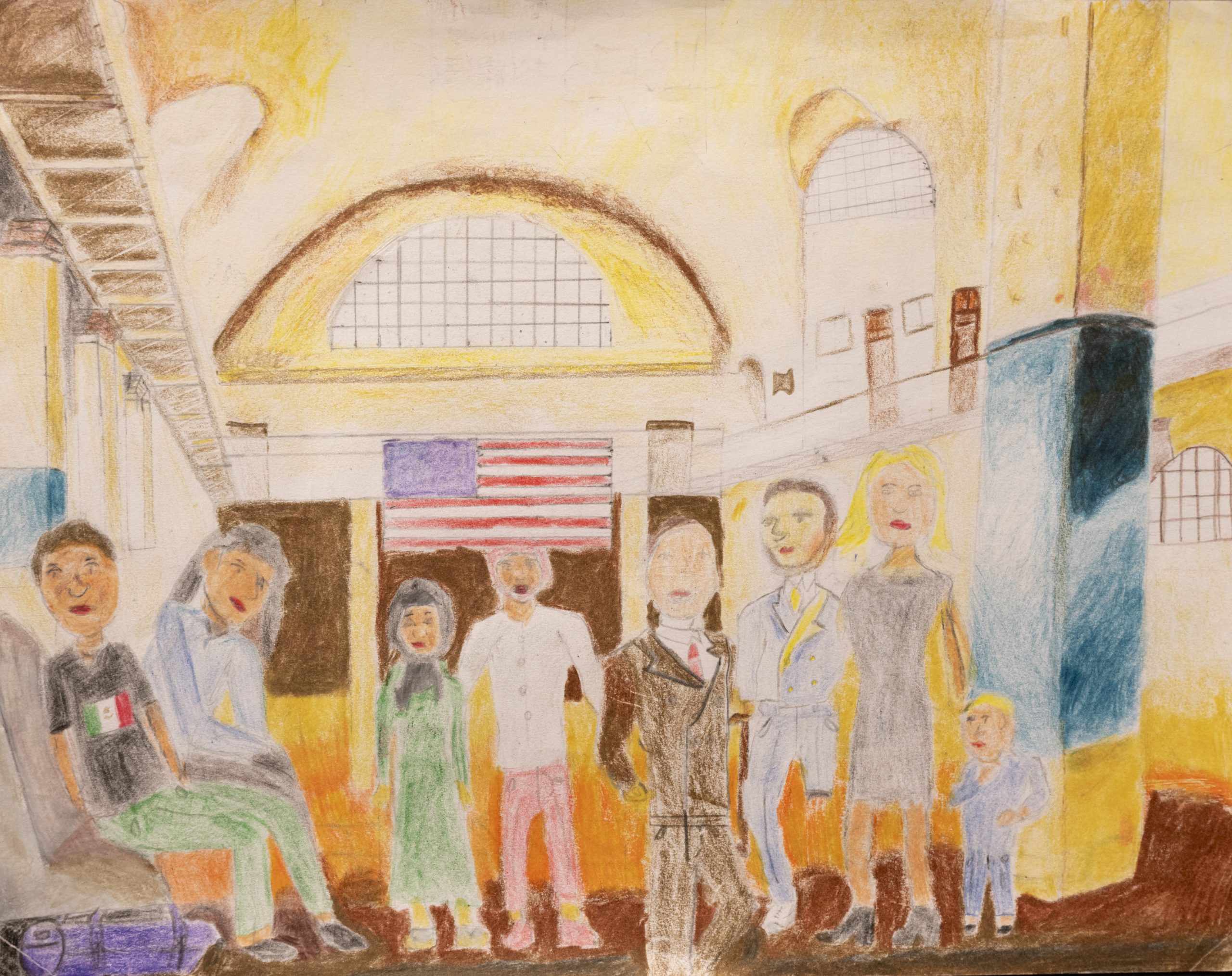
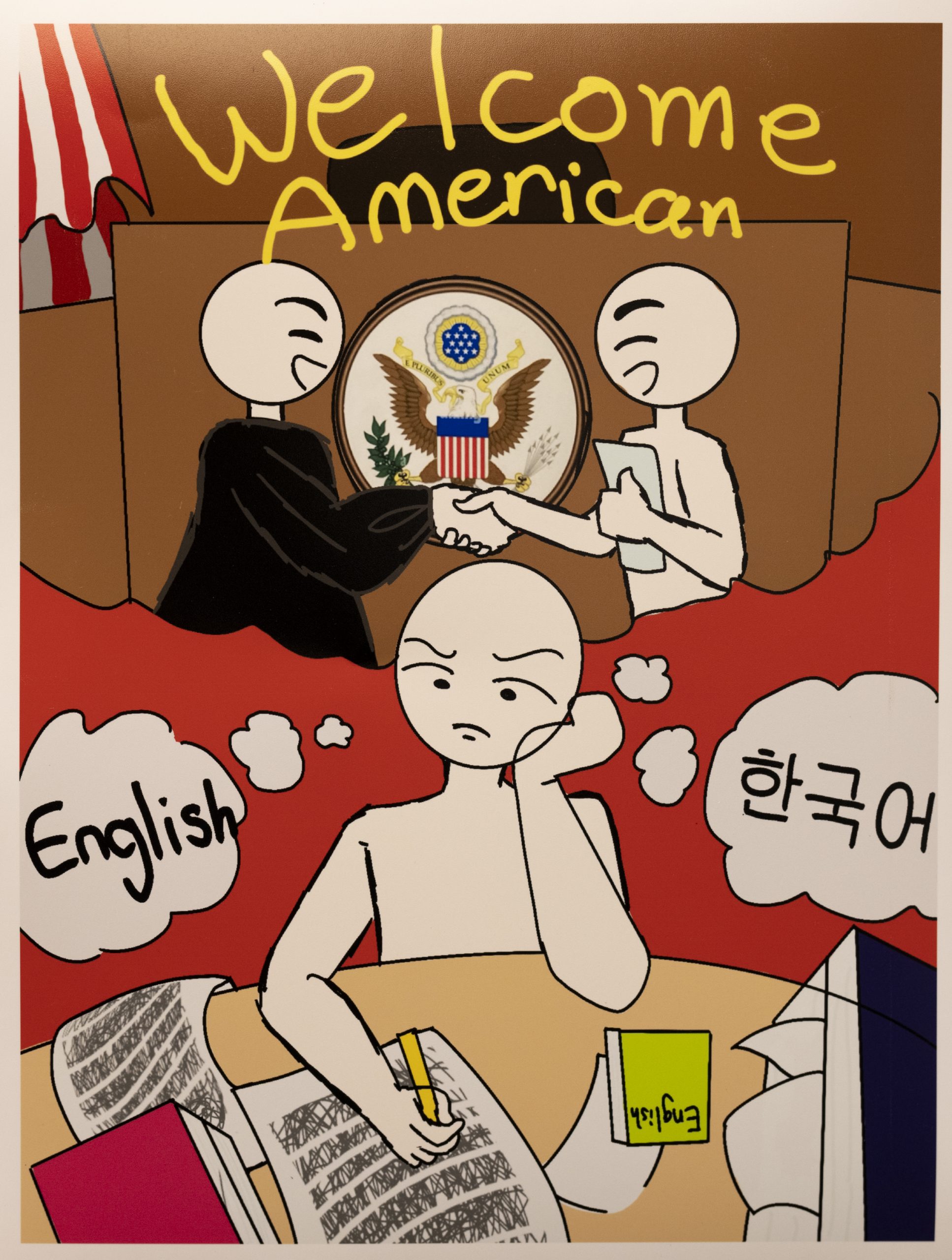
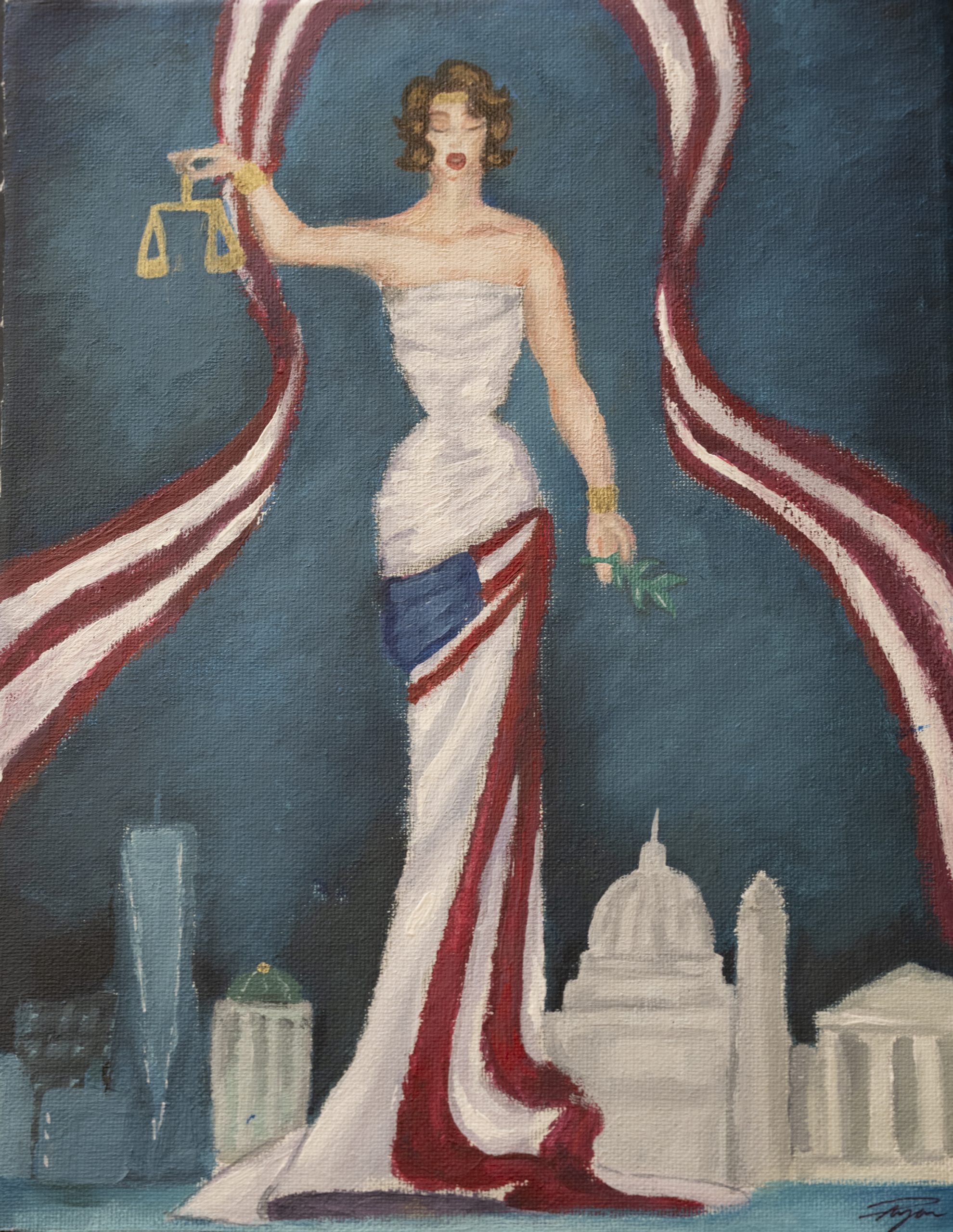
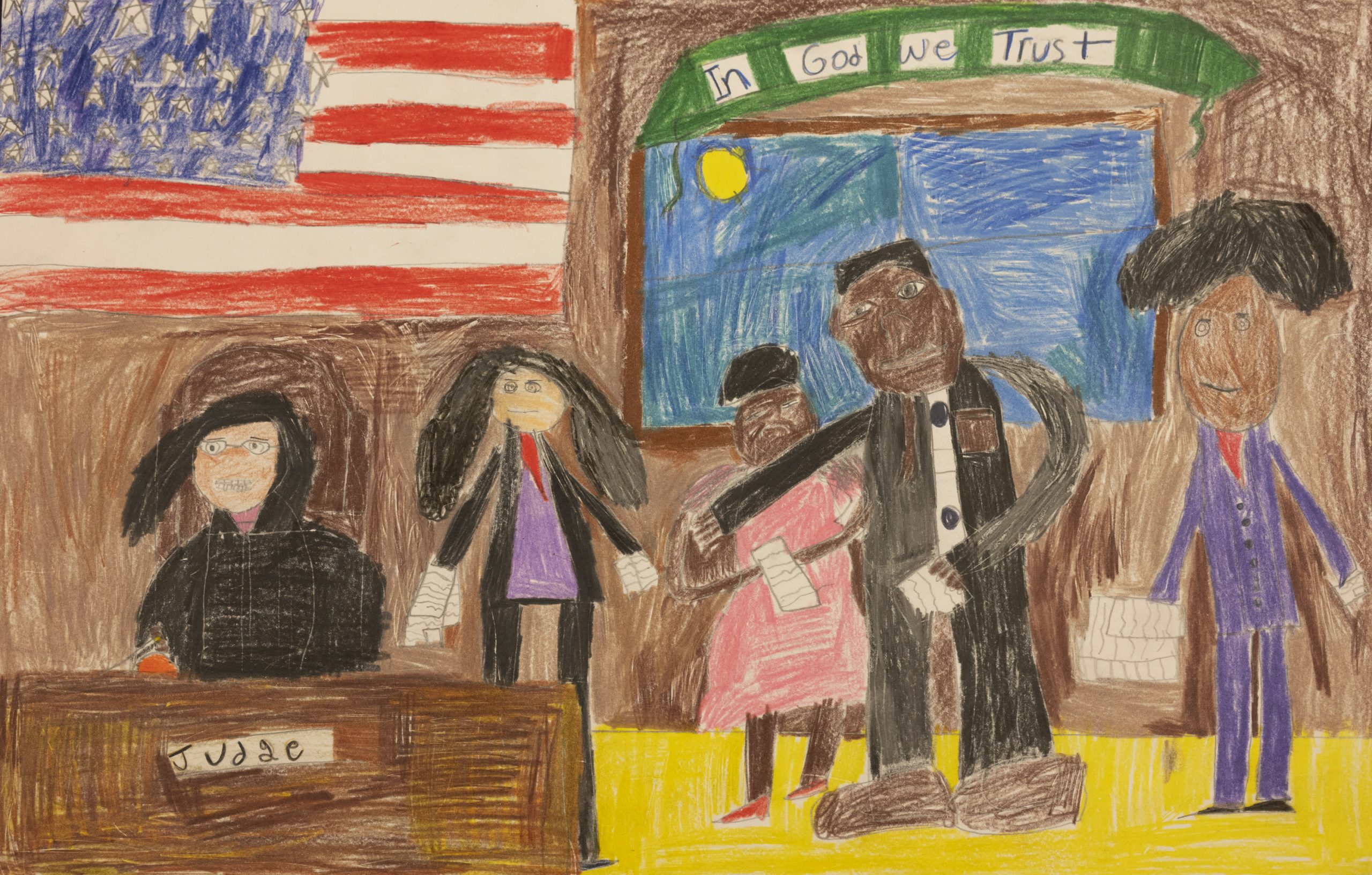
My drawing was inspired by a visit to the courthouse during a naturalization ceremony. The act of witnessing people leave their homelands in search of opportunity and pledge their allegiance as we welcomed them was a moving experience. lt was heartwarming to see the judge promise our new citizens safety, equality and a new bright future ahead of them. I enjoyed learning and using Prismacolor colored pencils to create this drawing. I carefully chose specific colors to blend together to create this vivid, optimistic image.
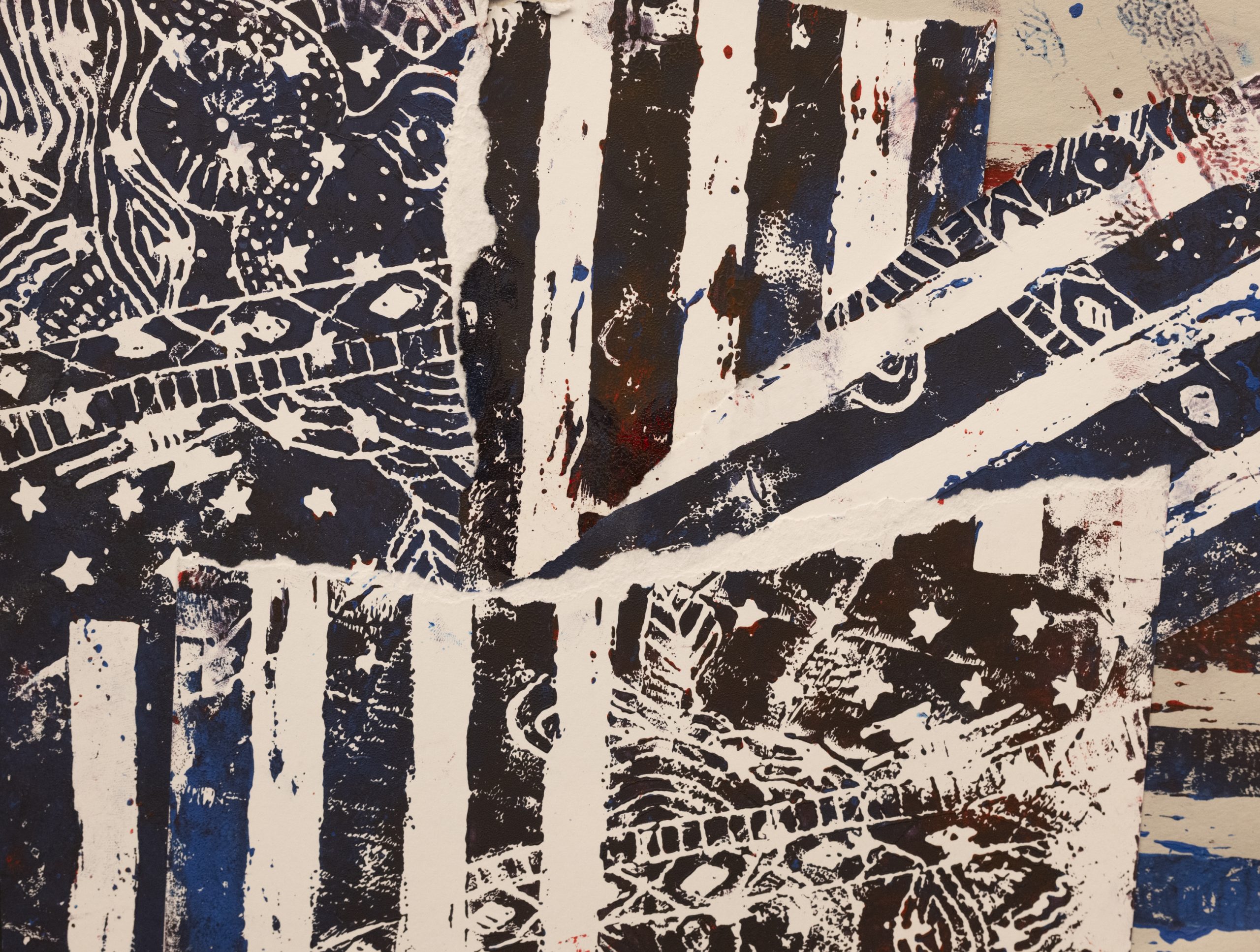
2.Project Title: THE AMERICAN STAMP
I found some old stamps in my grandfather’s basement. My teacher helped me figure out how to use these stamps in the design of the American flag. We took photos of the stamps. I cut them out, organized them by color, and then overlapped and glued in the different sections of the flag.
3.Project Title: THE REAL PERSPECTIVE
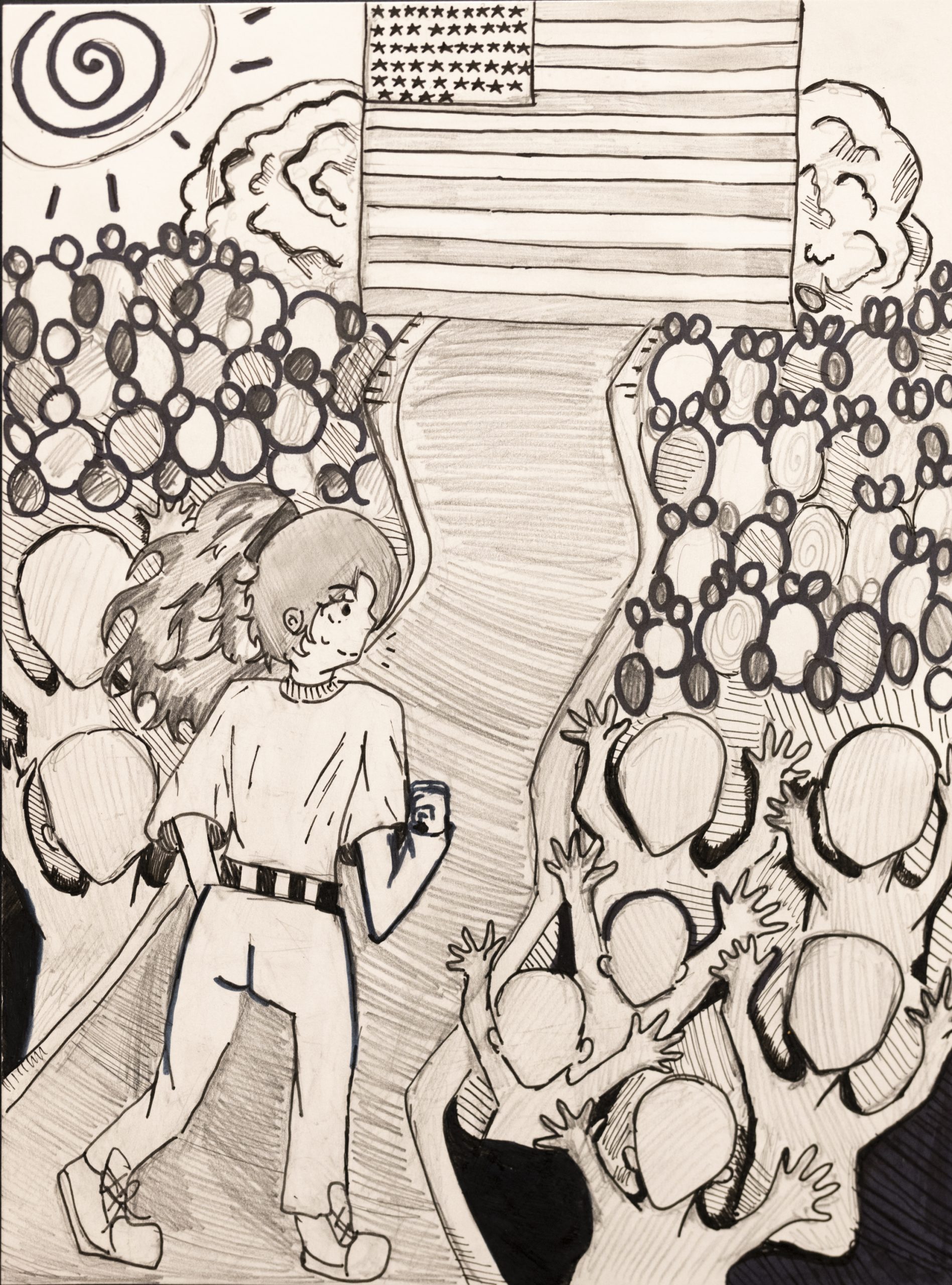
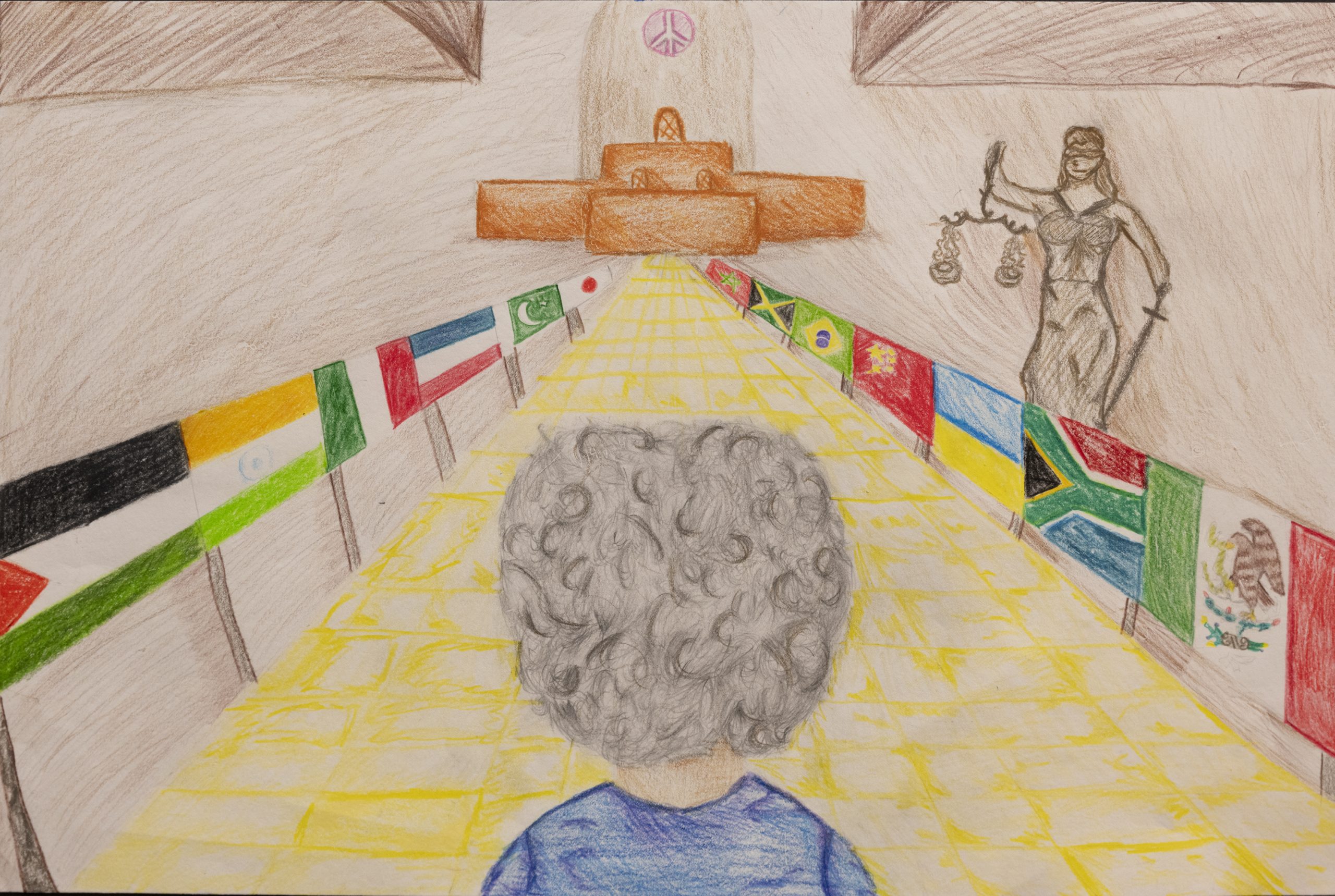
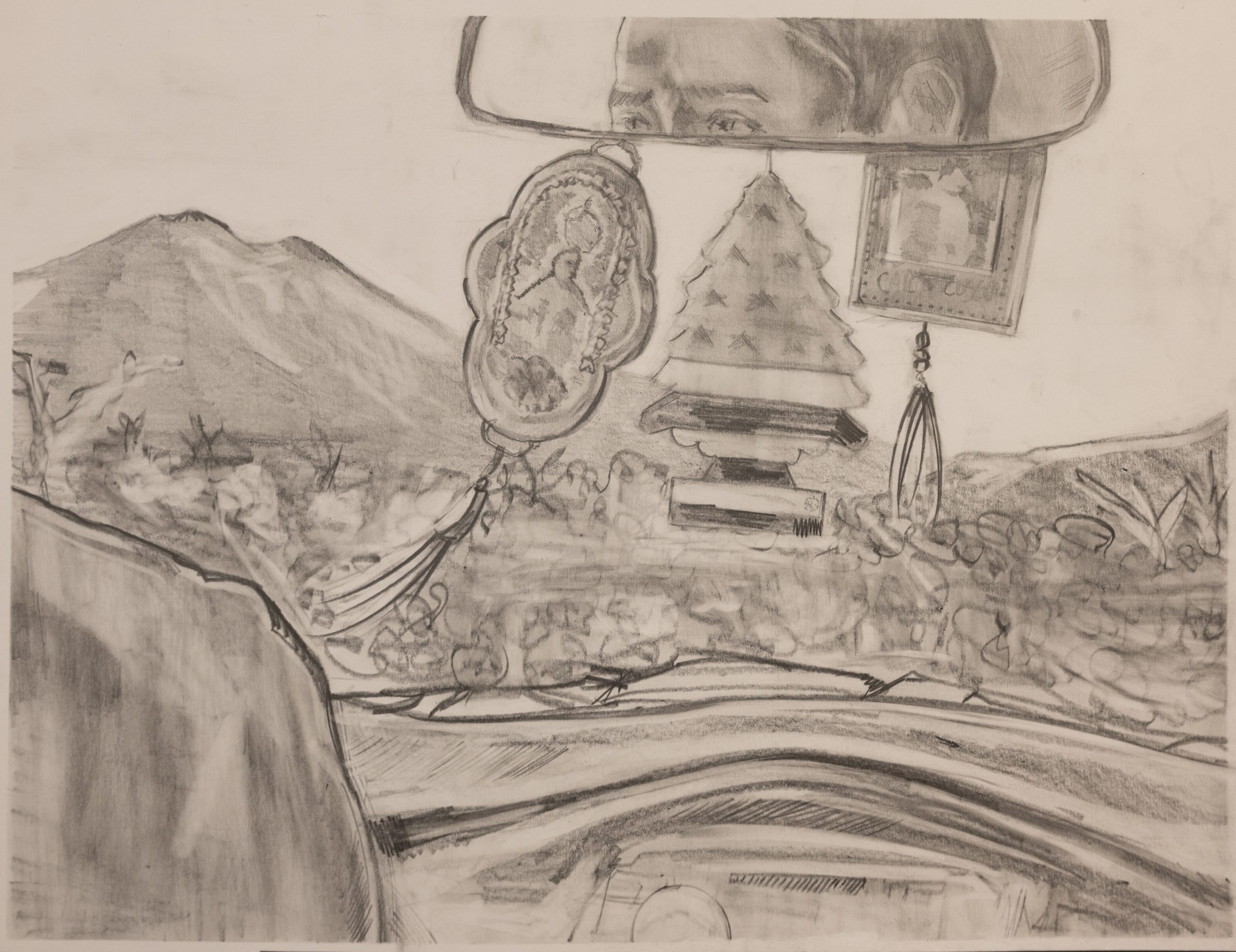
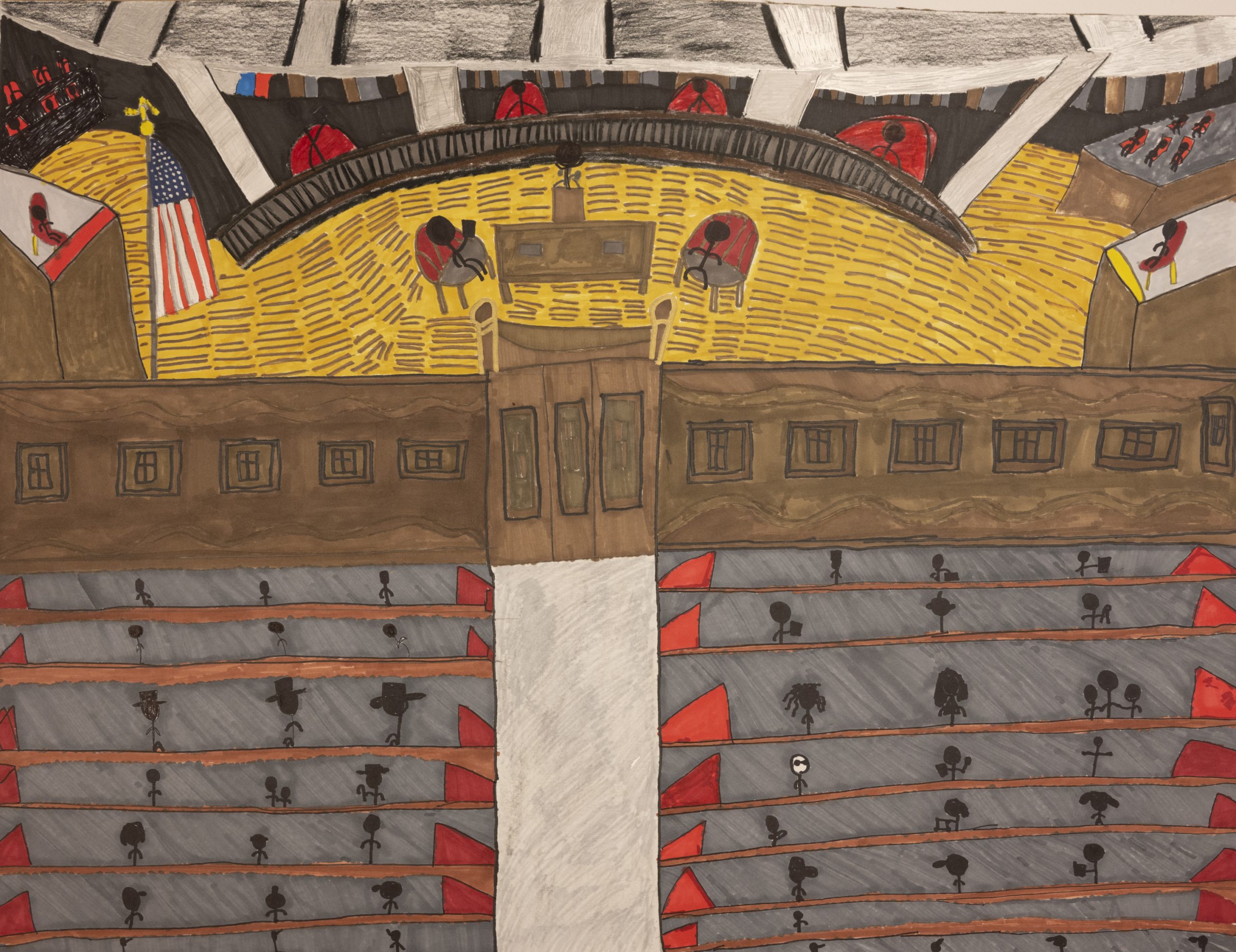
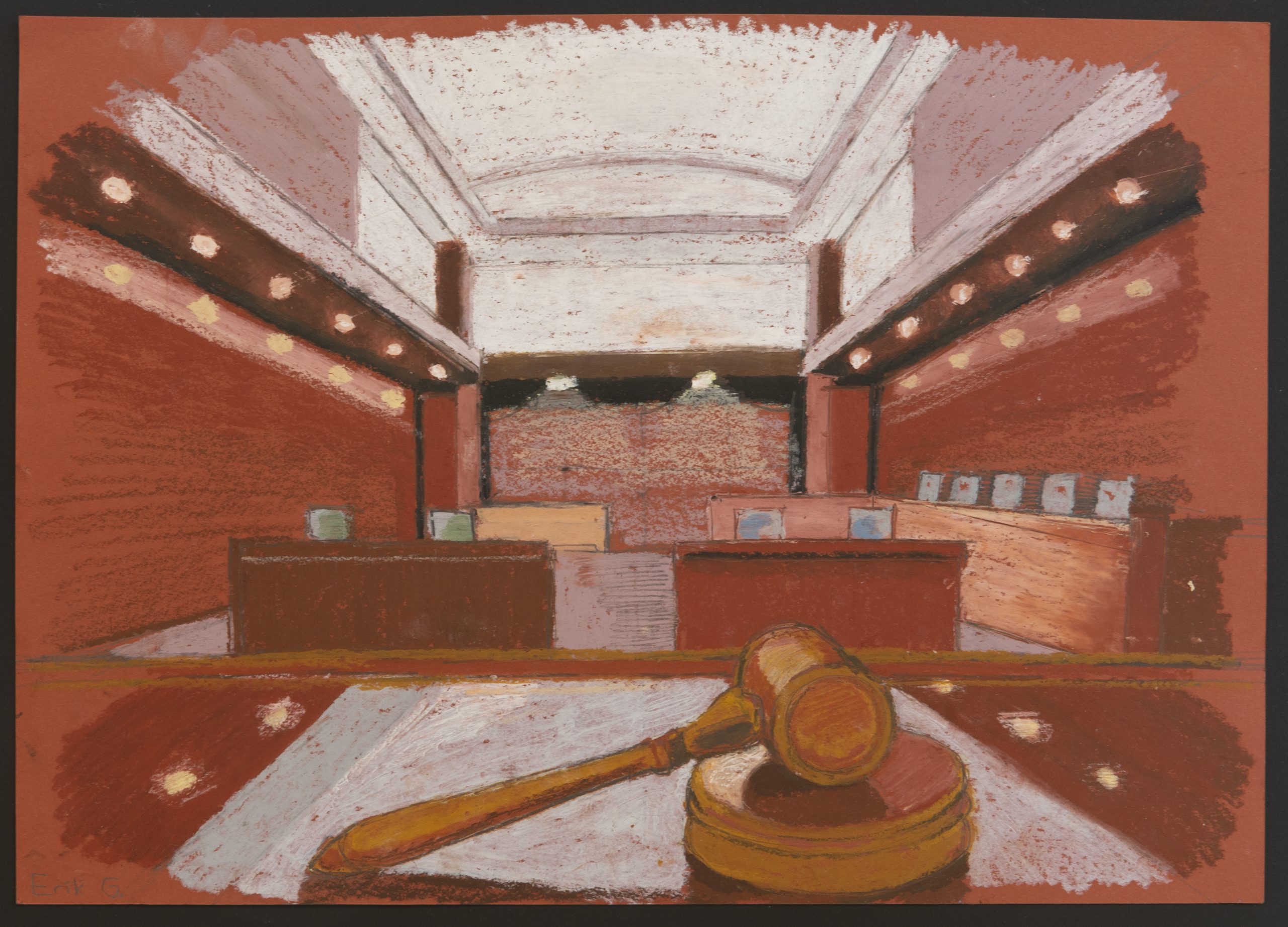
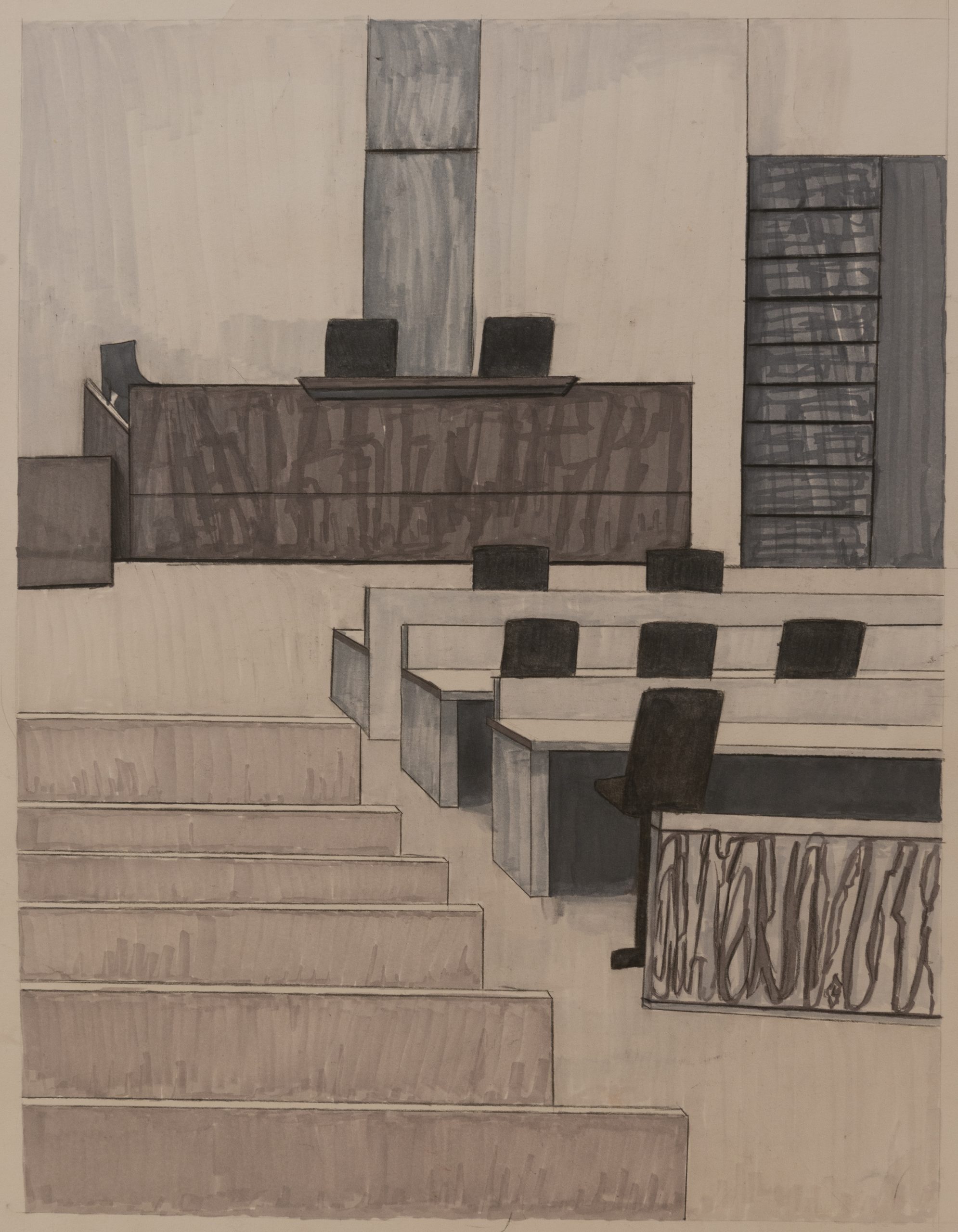
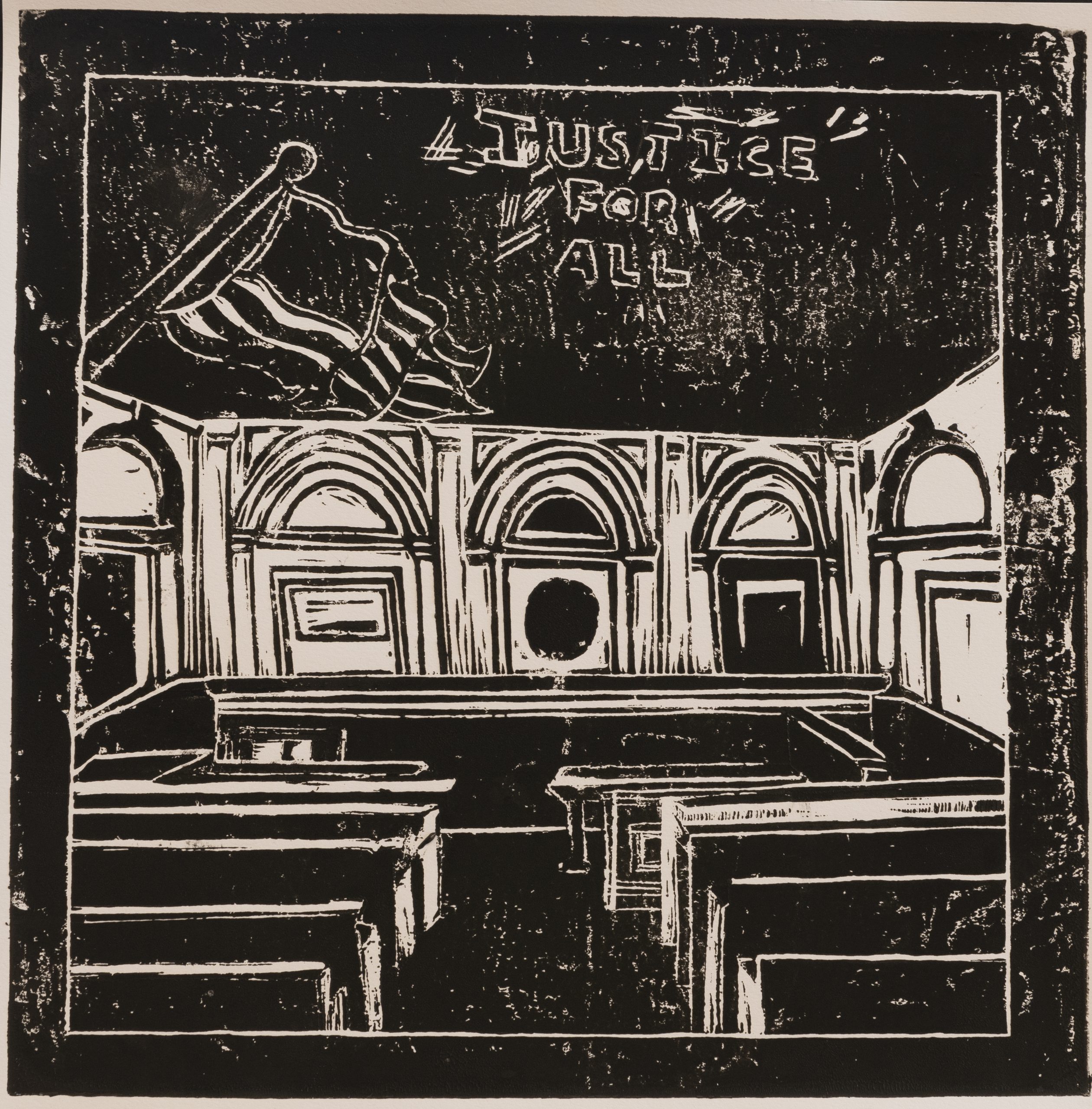
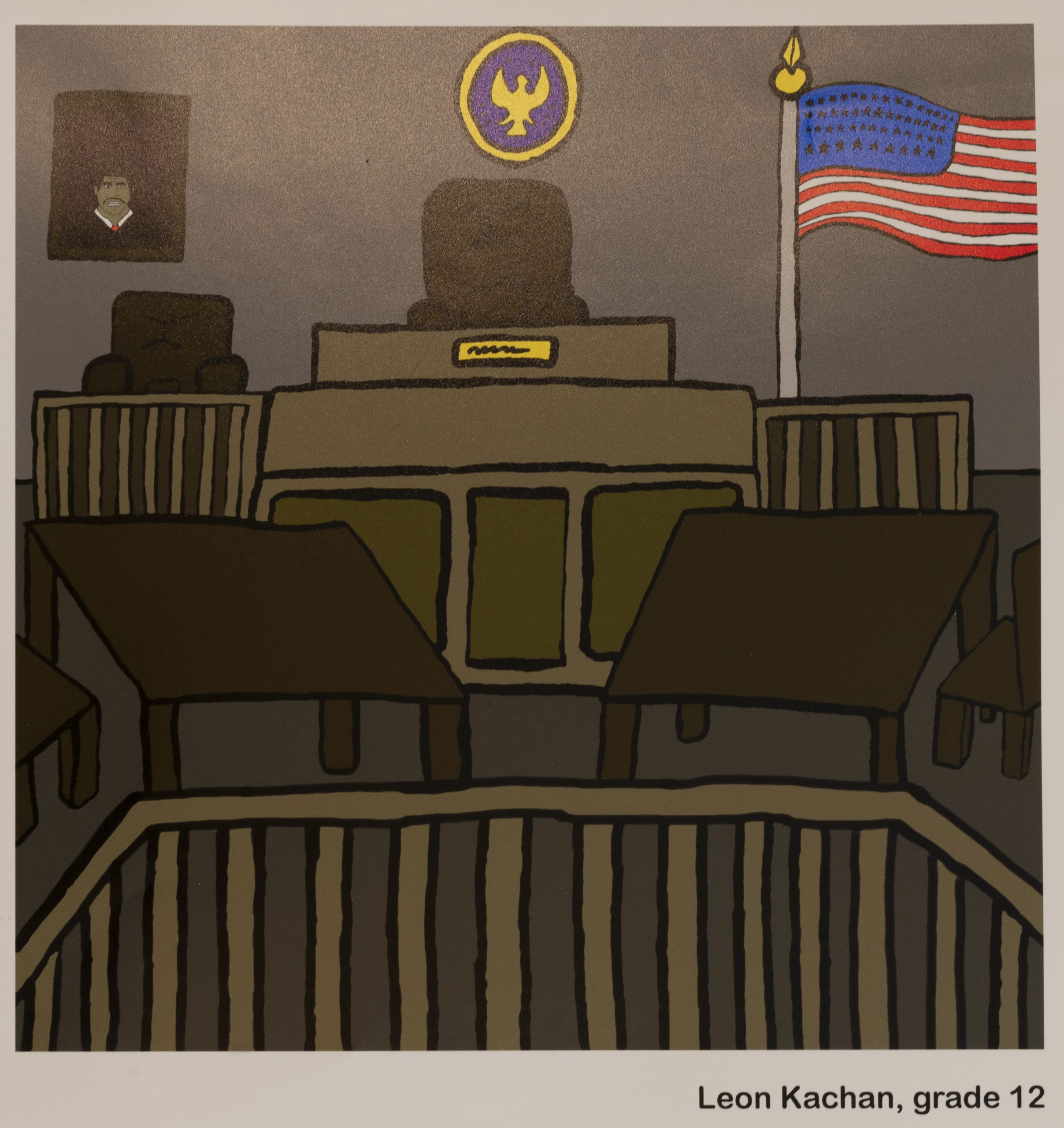
I was inspired by our trip to the courthouse to witness the naturalization ceremony. When I started the project, I used a reference image that I found online, but then I customized the drawing to reflect the real courtroom I was in. I wanted to use the point of view of the audience in the courtroom because we never really see how the audience is affected or reacts. They are the unprepared and human element in the courtroom.
4.Project Title: LAW IN THE 4TH DIMENSION
A surreal collage mixing classical architecture with modern city life. A grand building with columns and checkered floors opens into a library, while luxury cars and bold patterns add a contemporary twist. The distorted perspective gives it a dreamlike feel.
5.Project Title: GEOGRAPHICAL COURTHOUSE
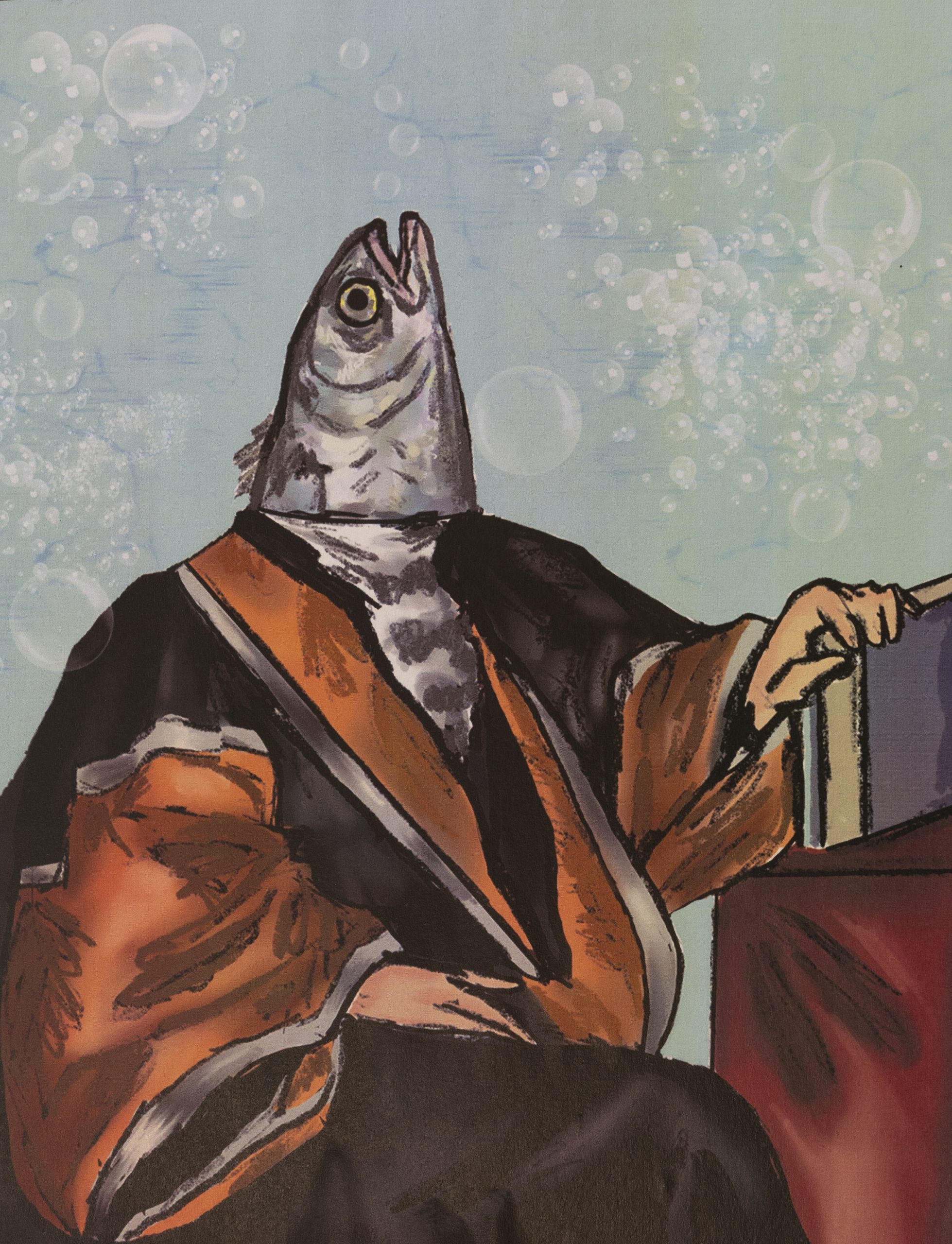
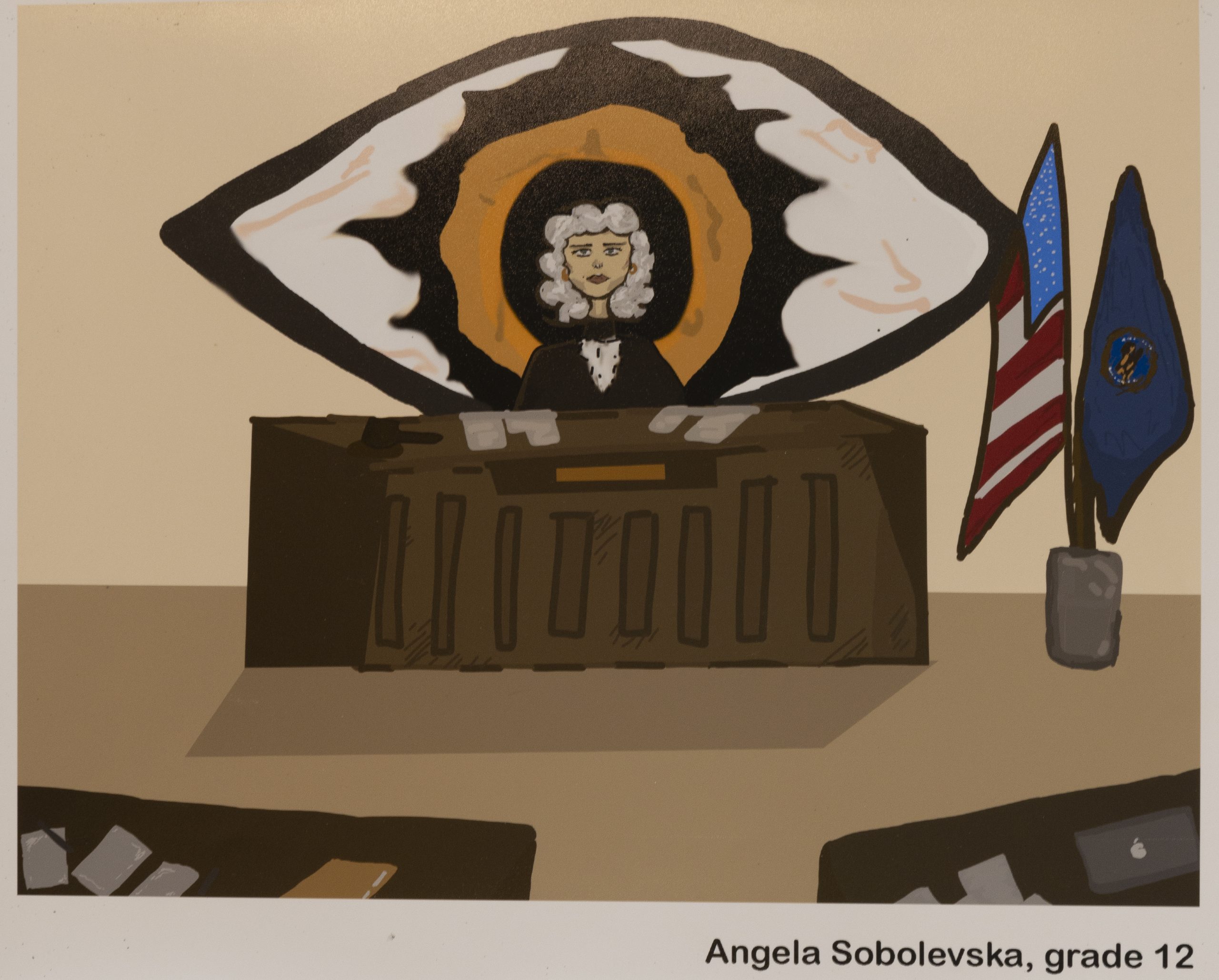
I found a picture online of an animal in a judge’s place in a courtroom. From there I added other natural elements to the courtroom space. I like nature, and I think it should be part of every interior space, including courthouses.


Principal: Peter McHugh
Teacher: Adam Gordon
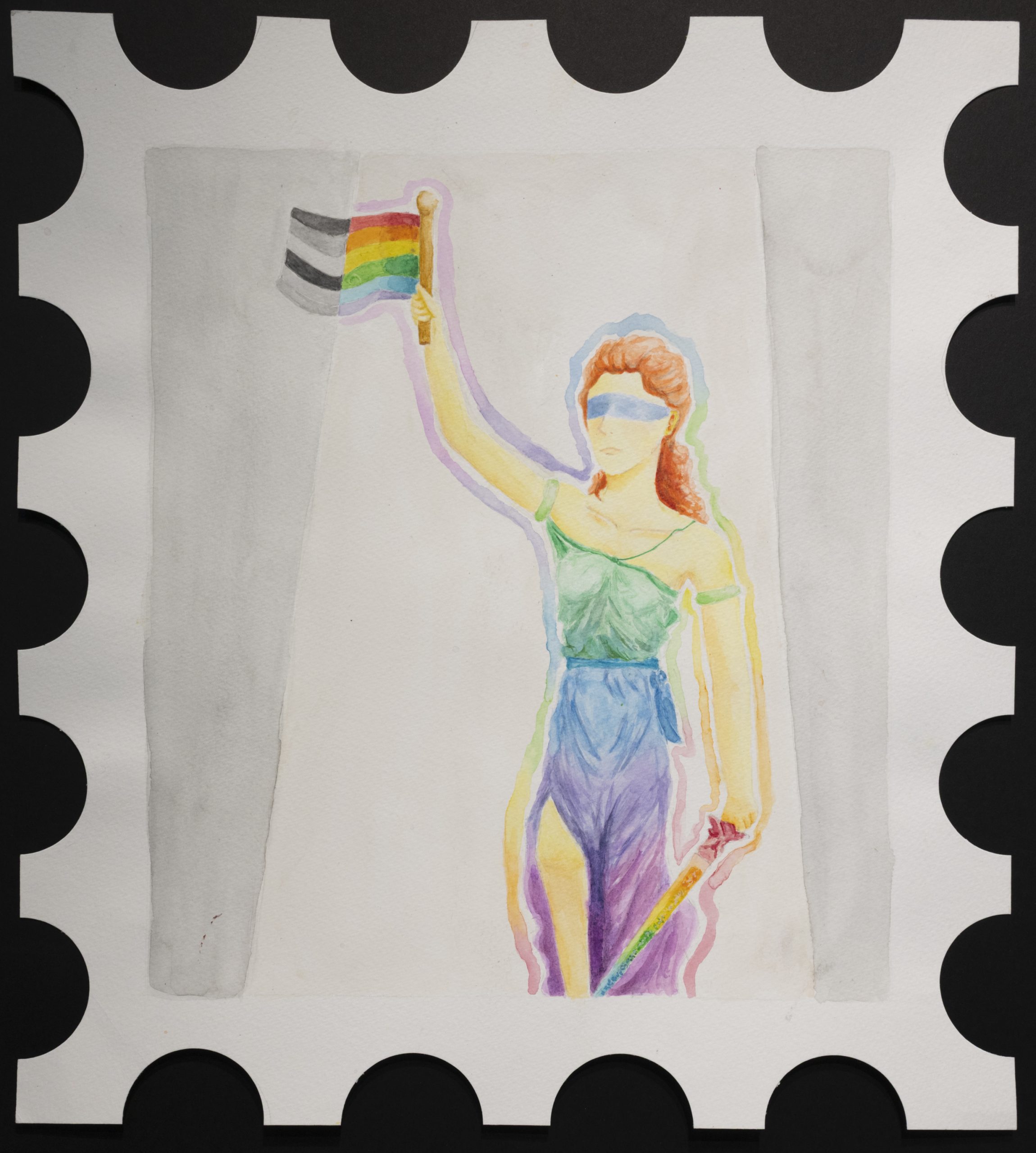
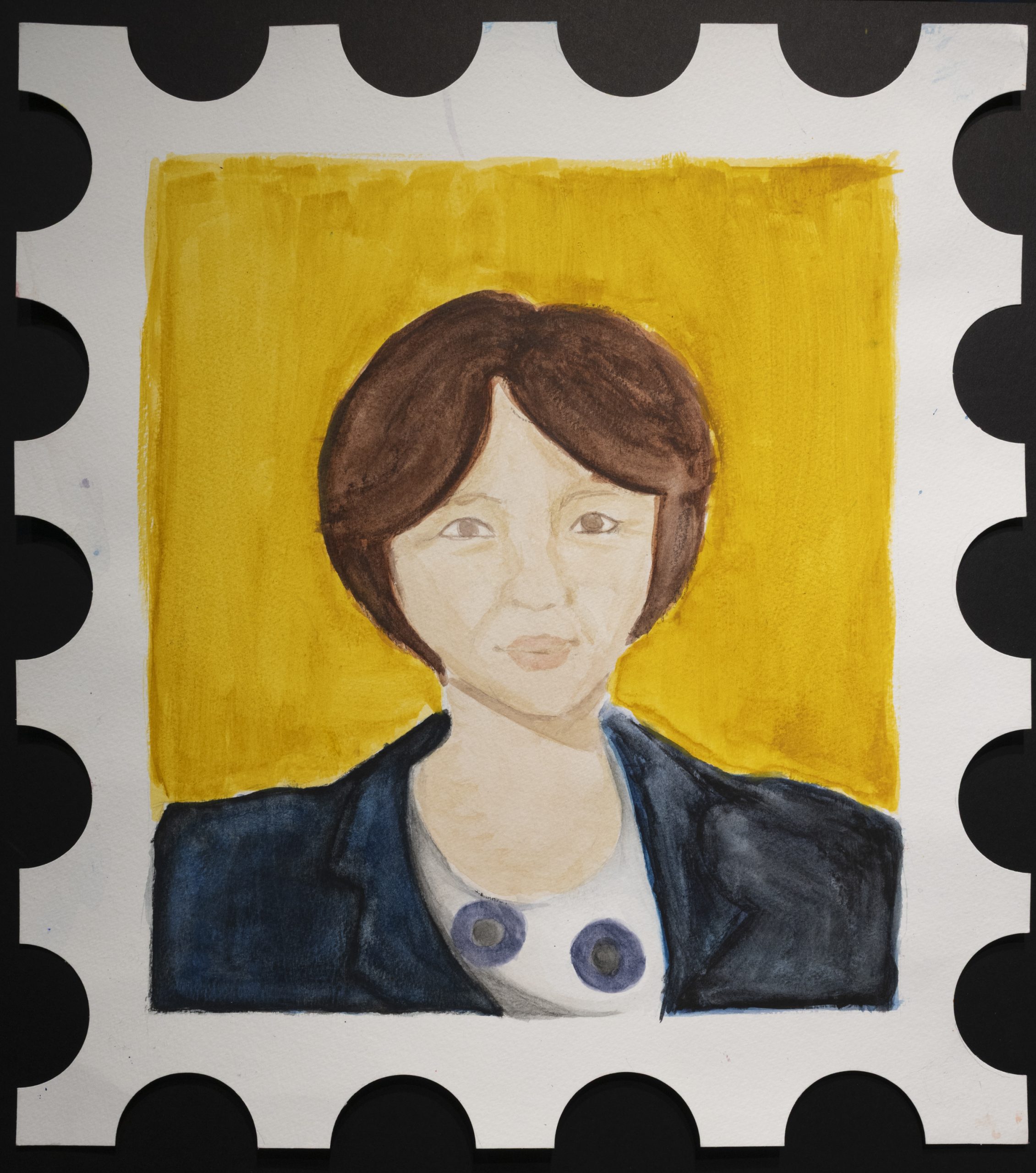
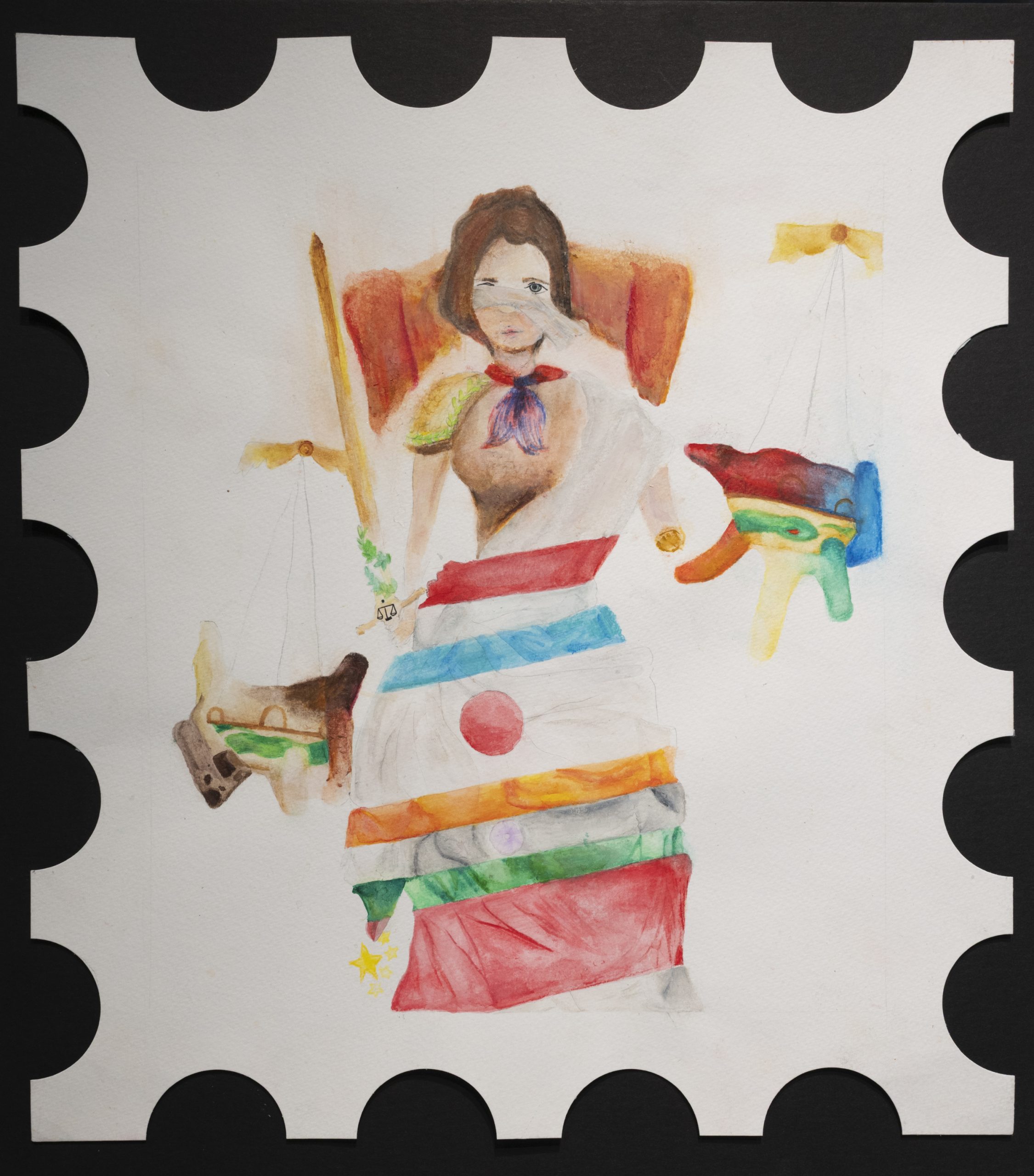
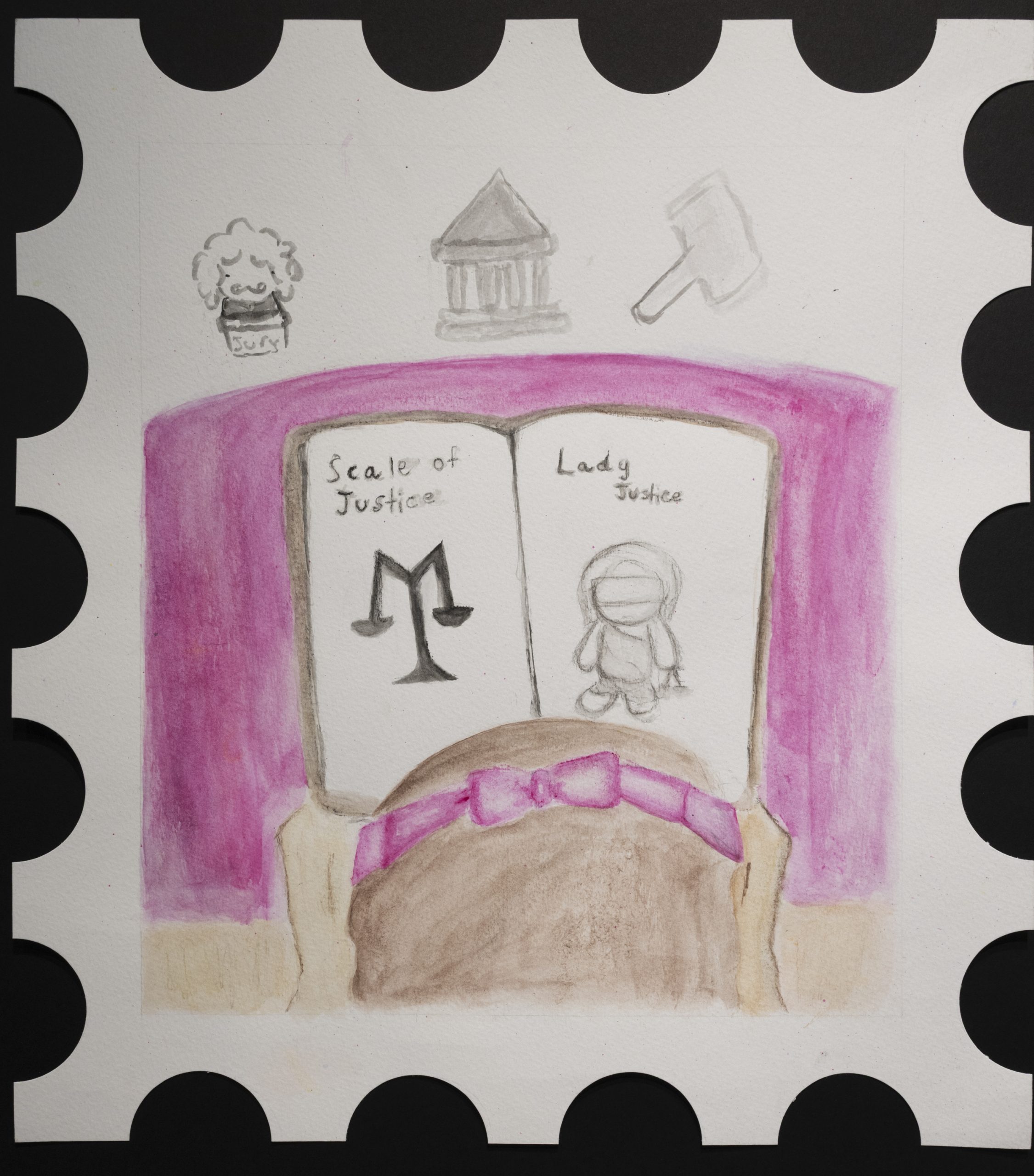
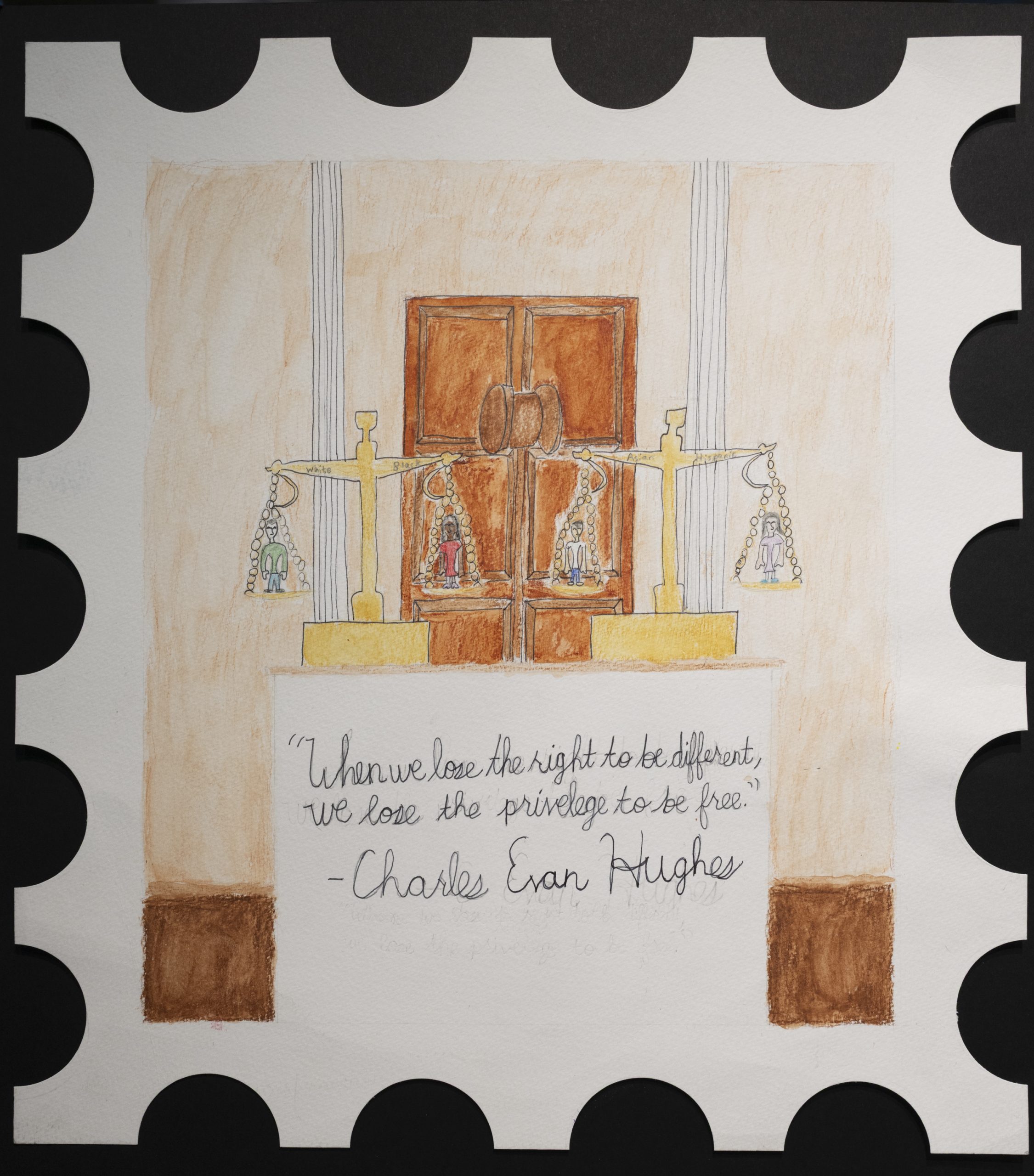
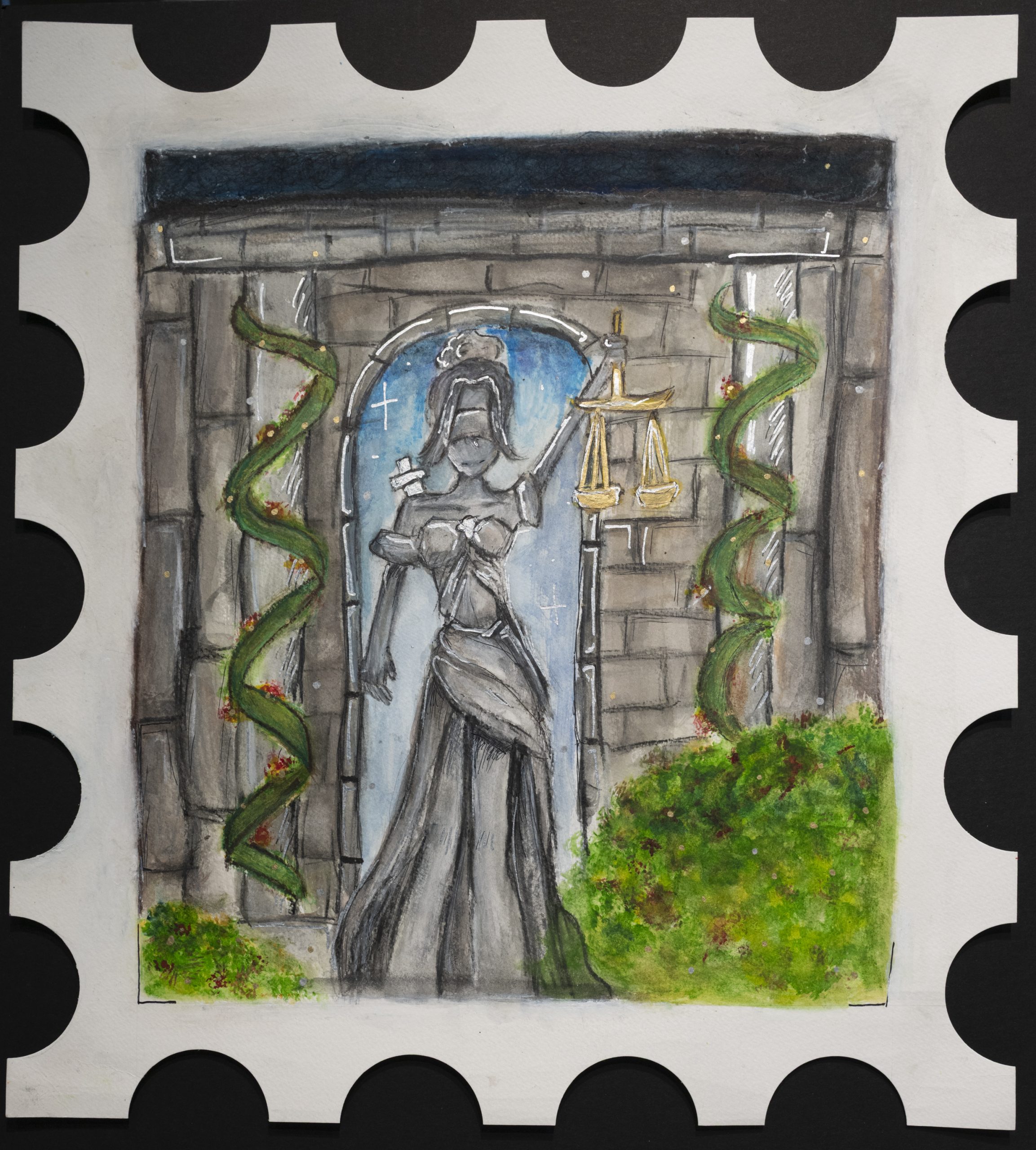
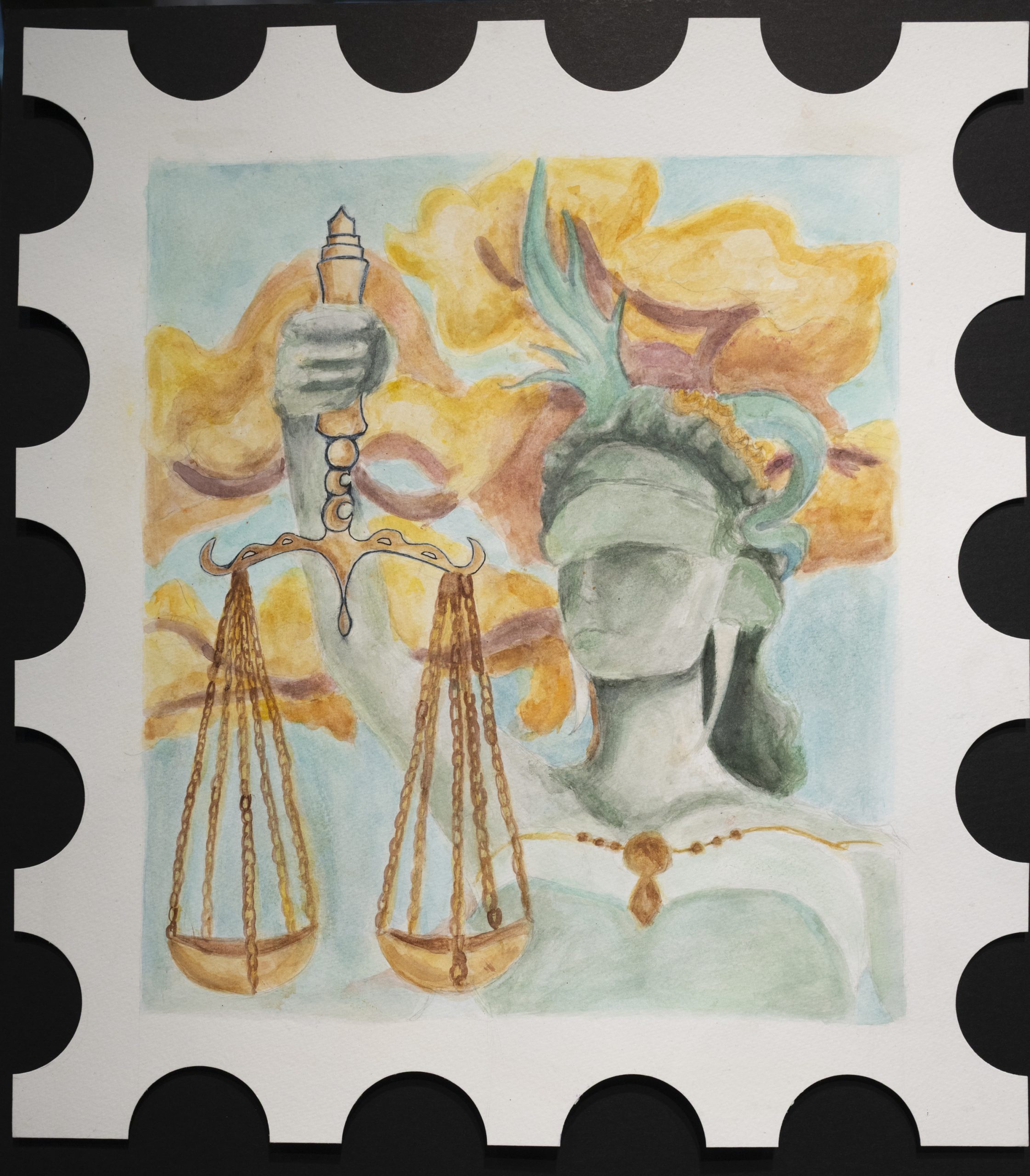
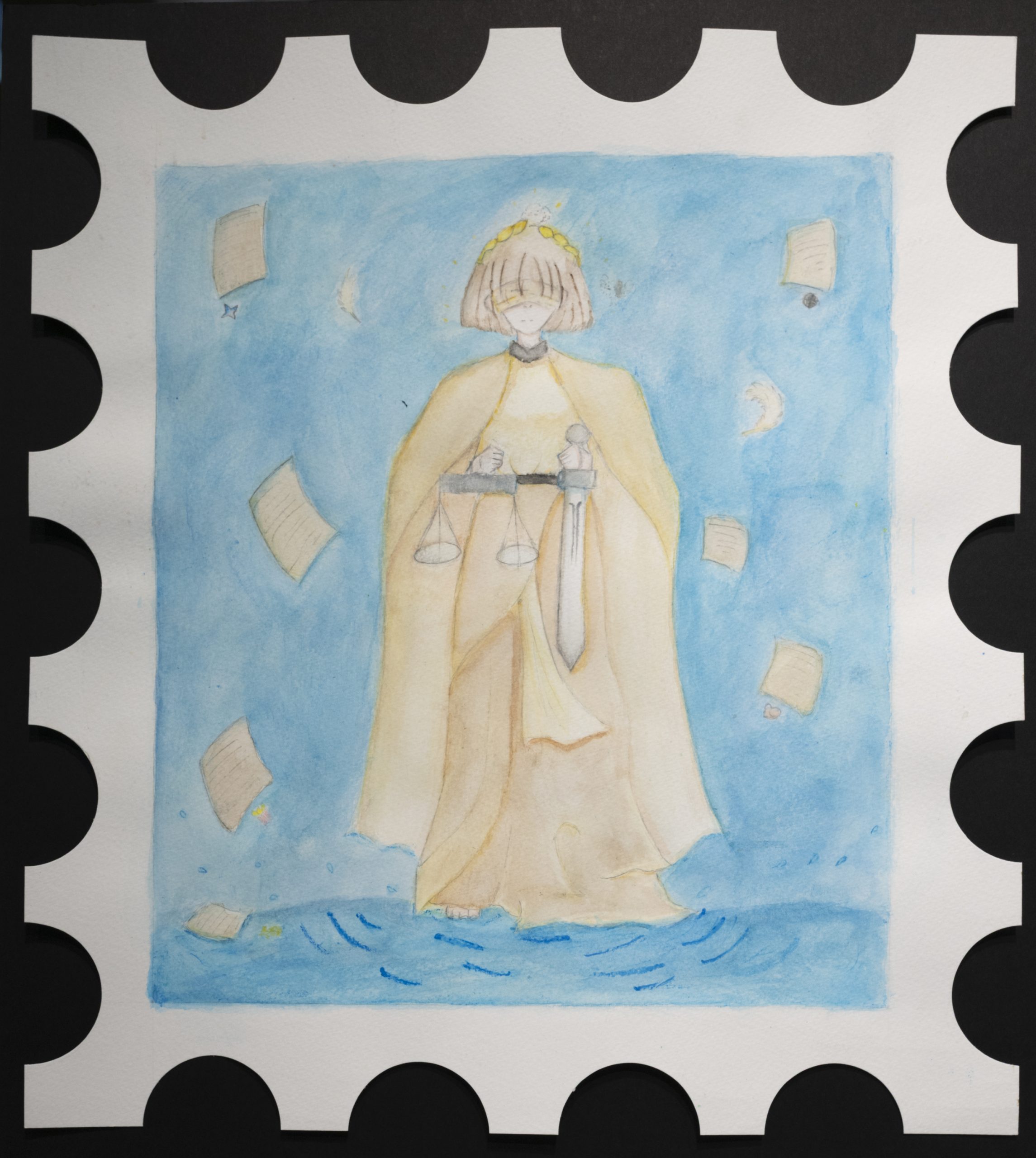
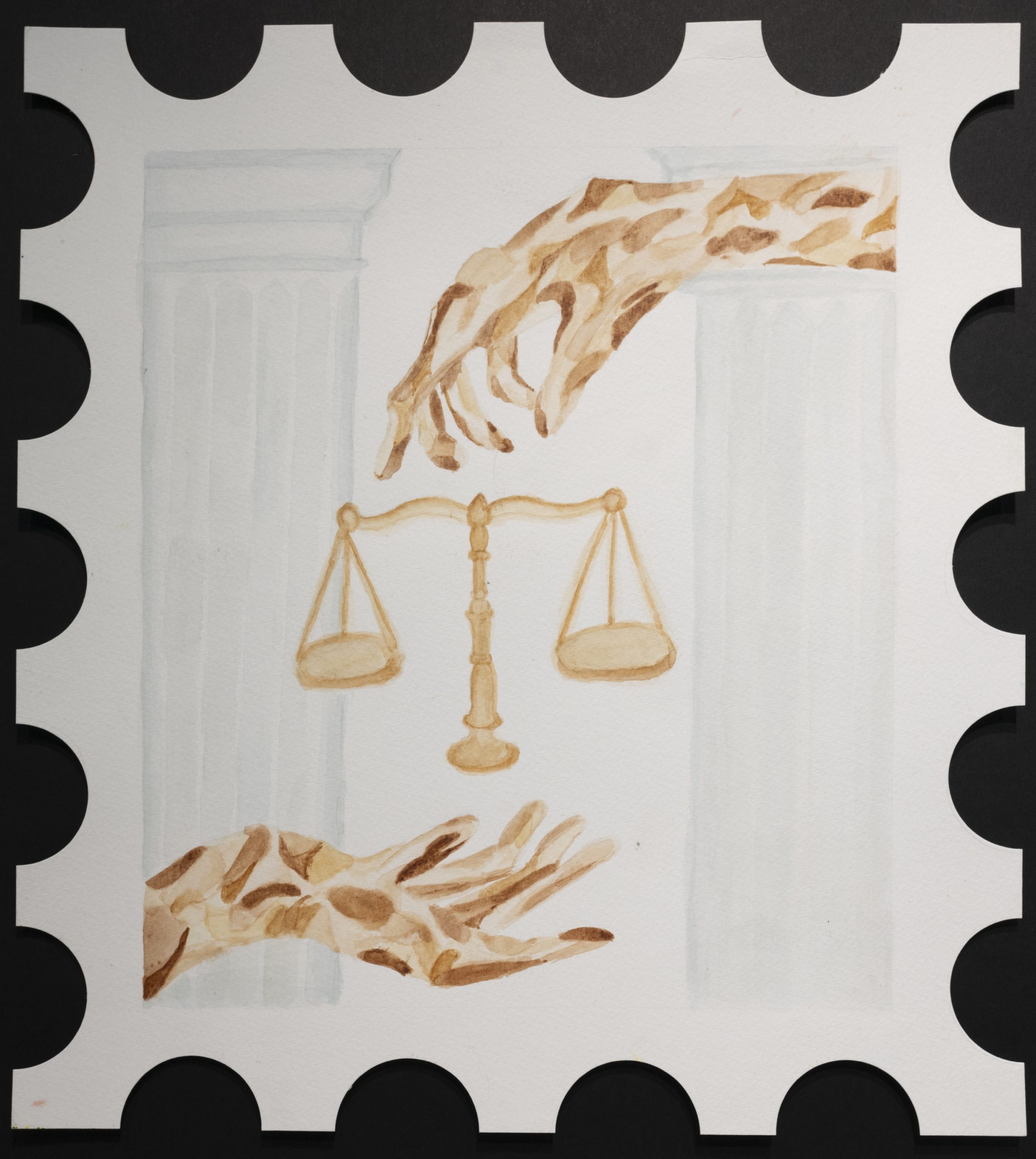
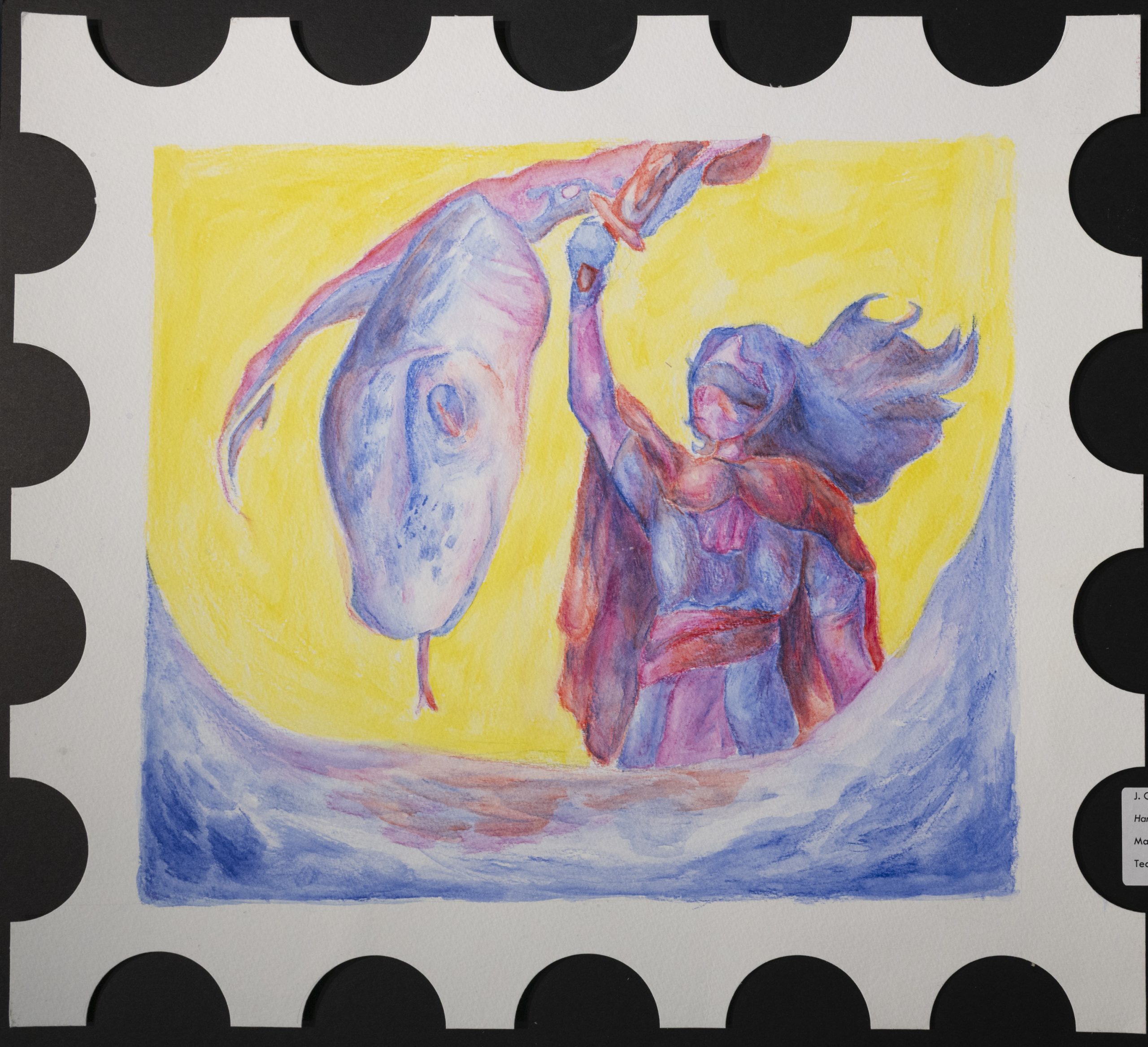
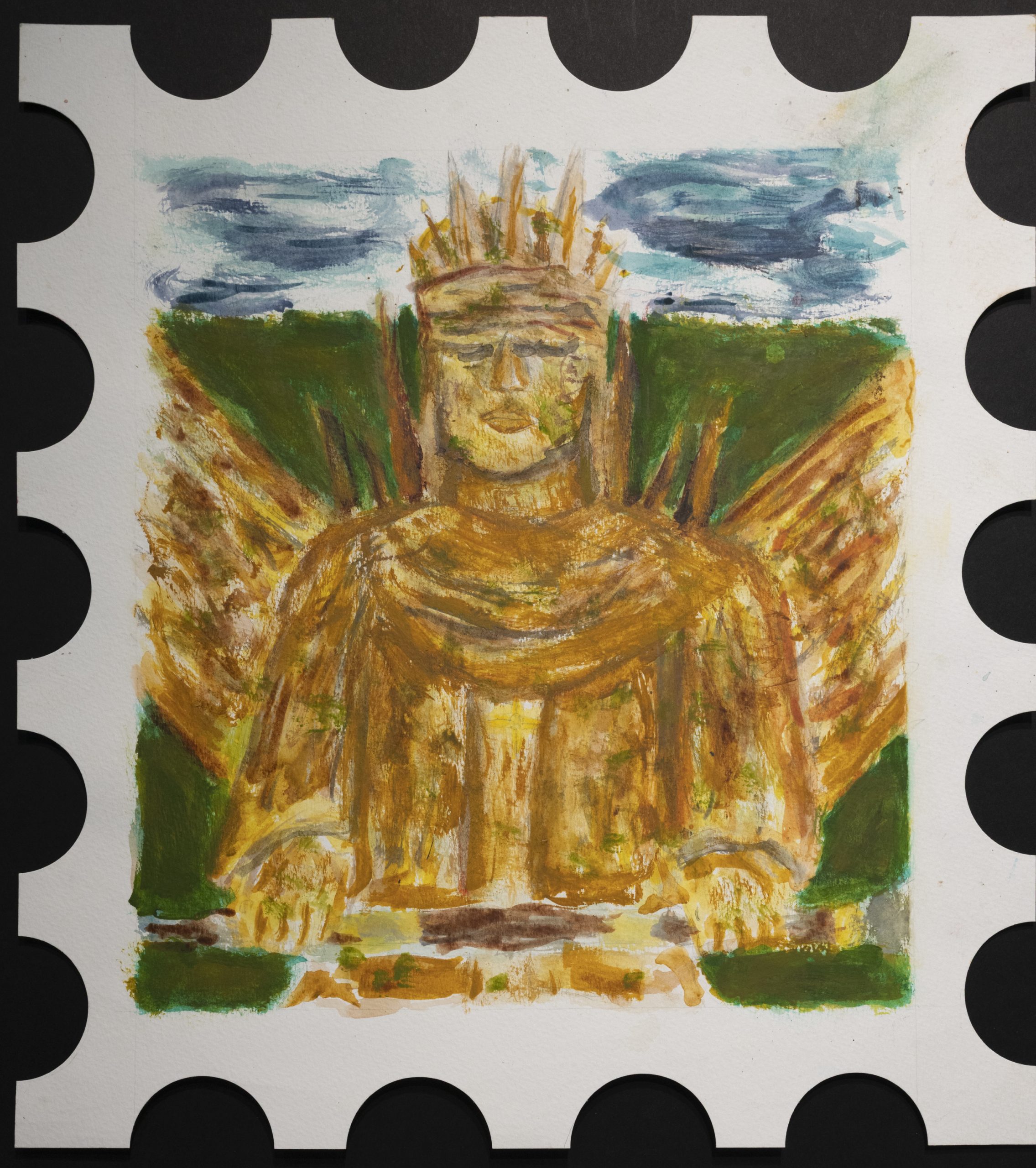
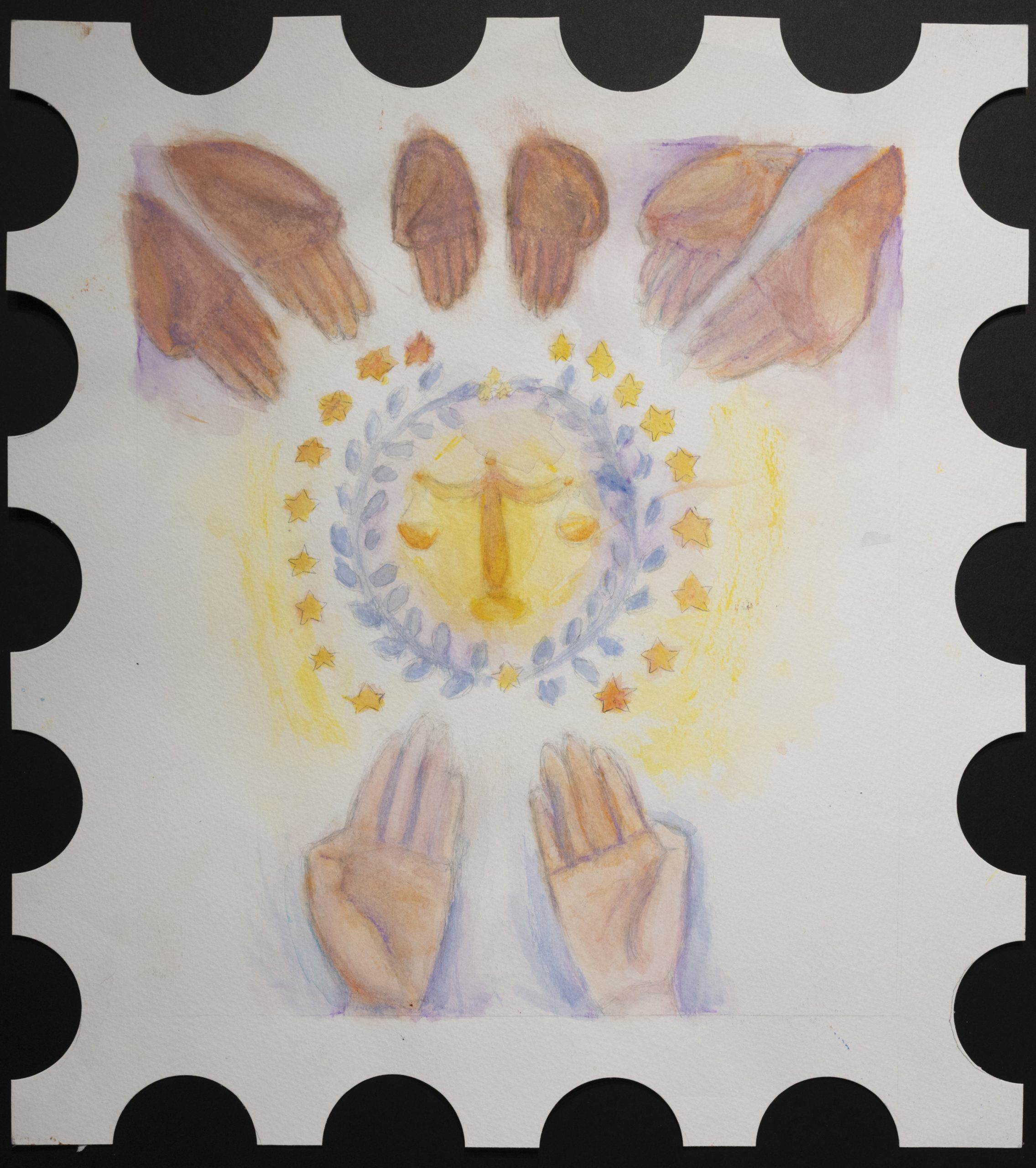
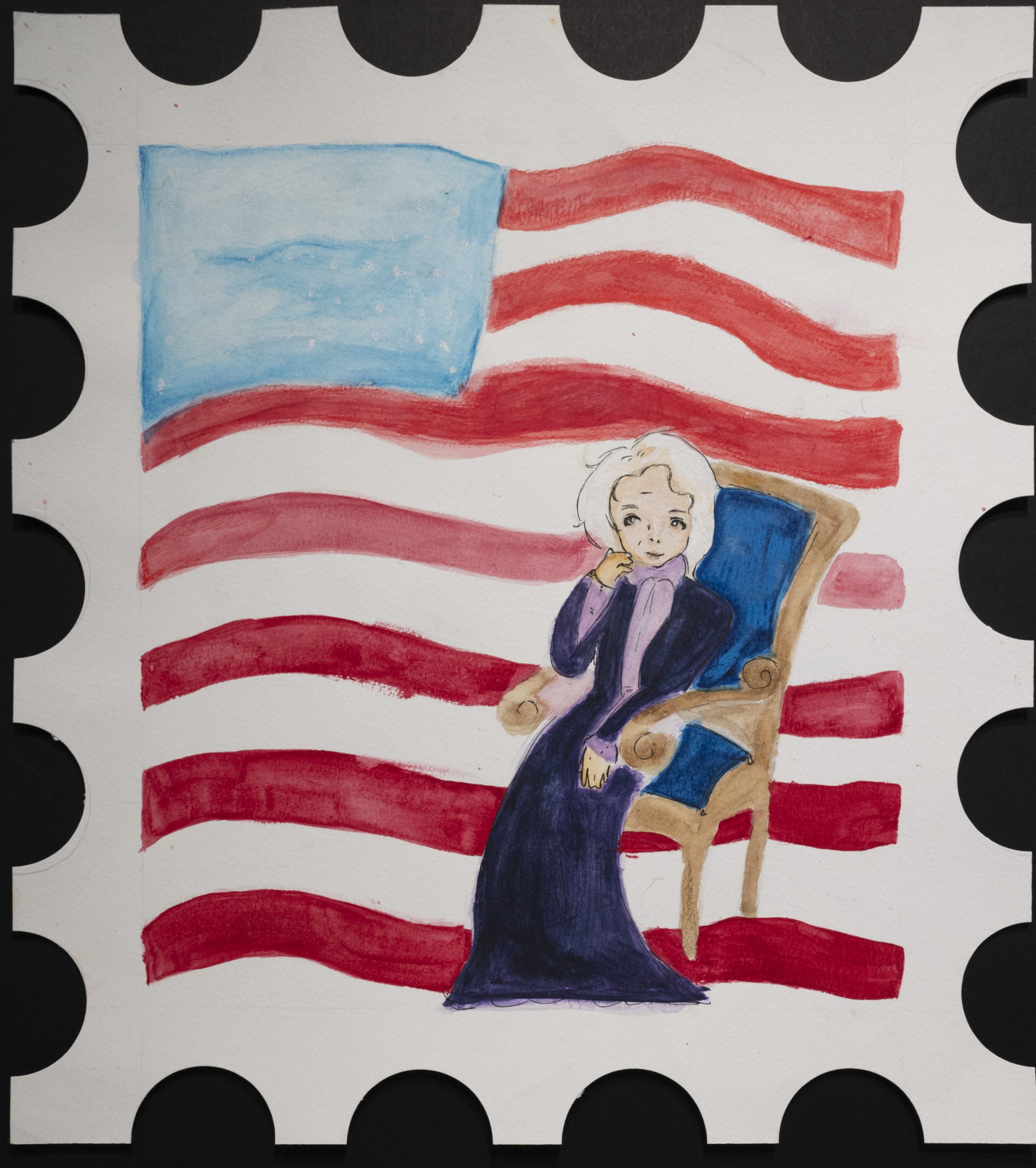
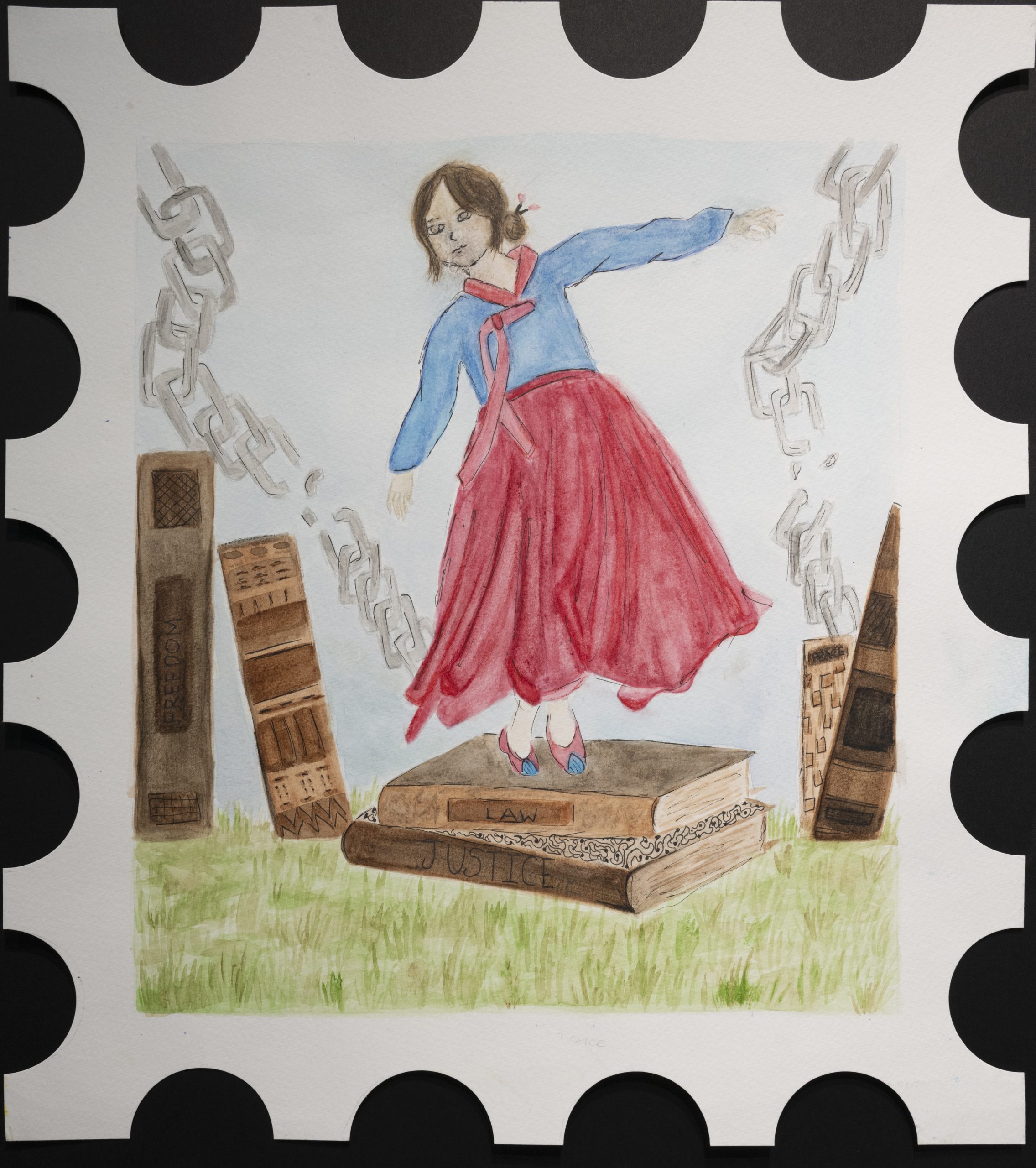
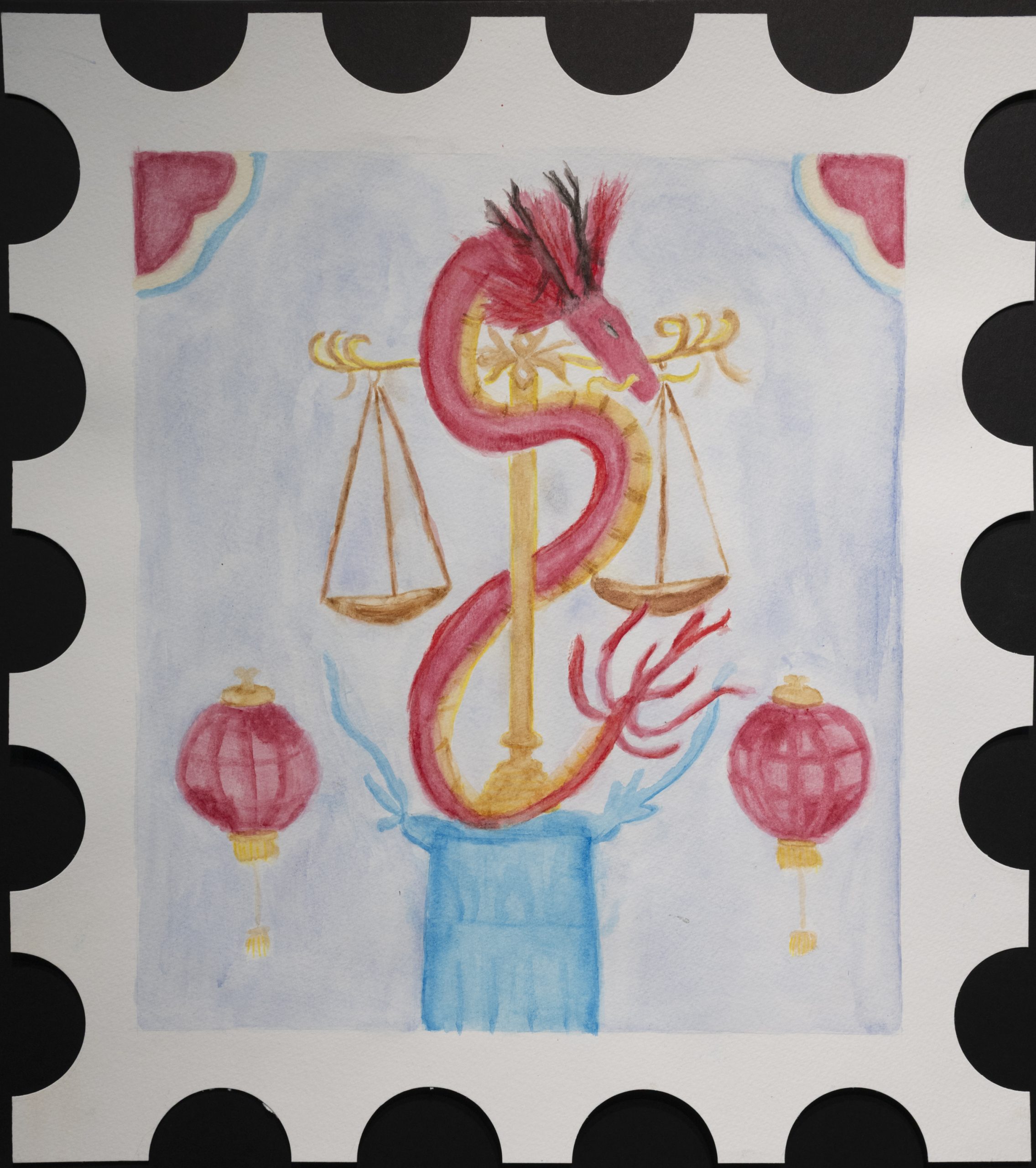
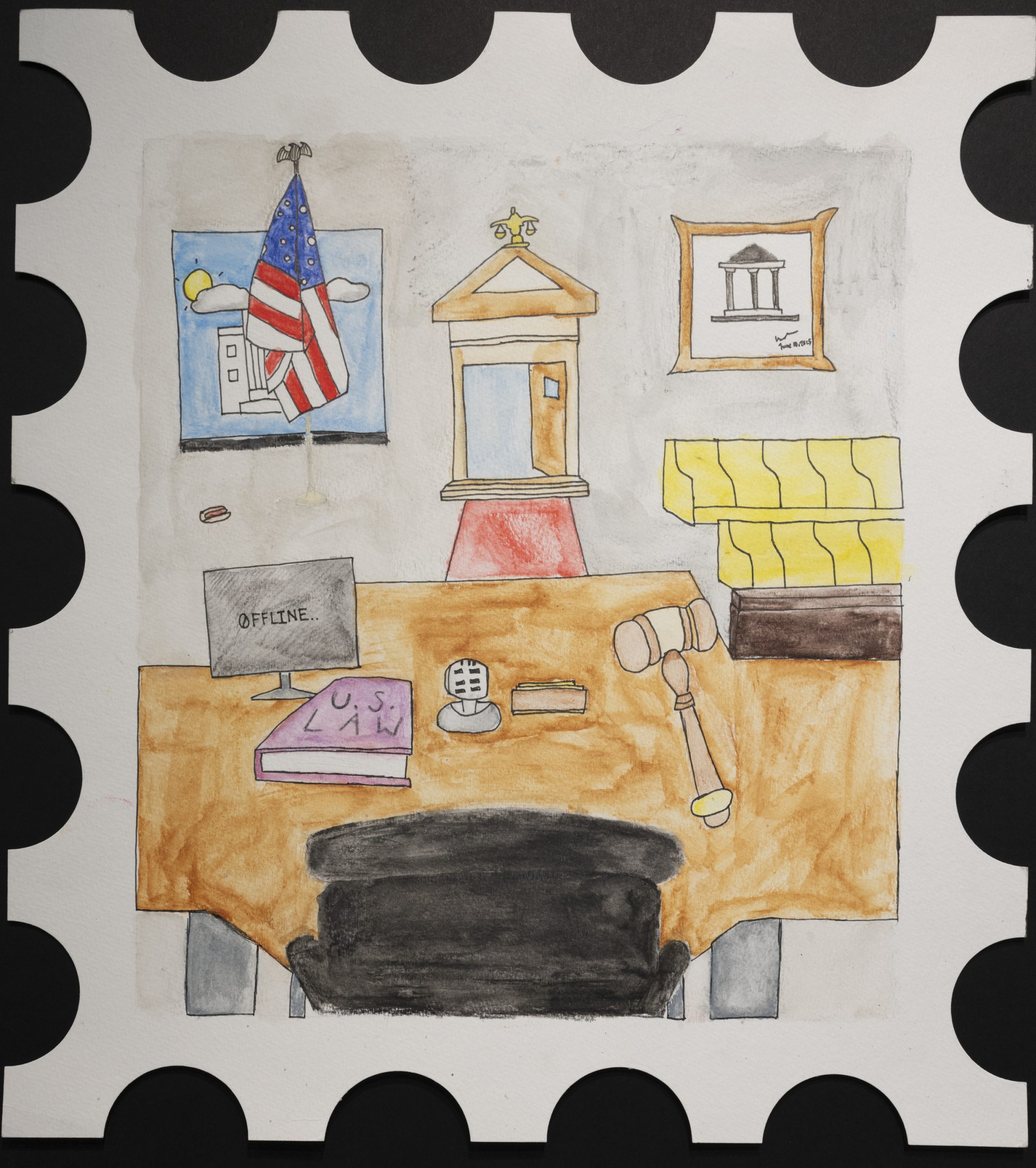
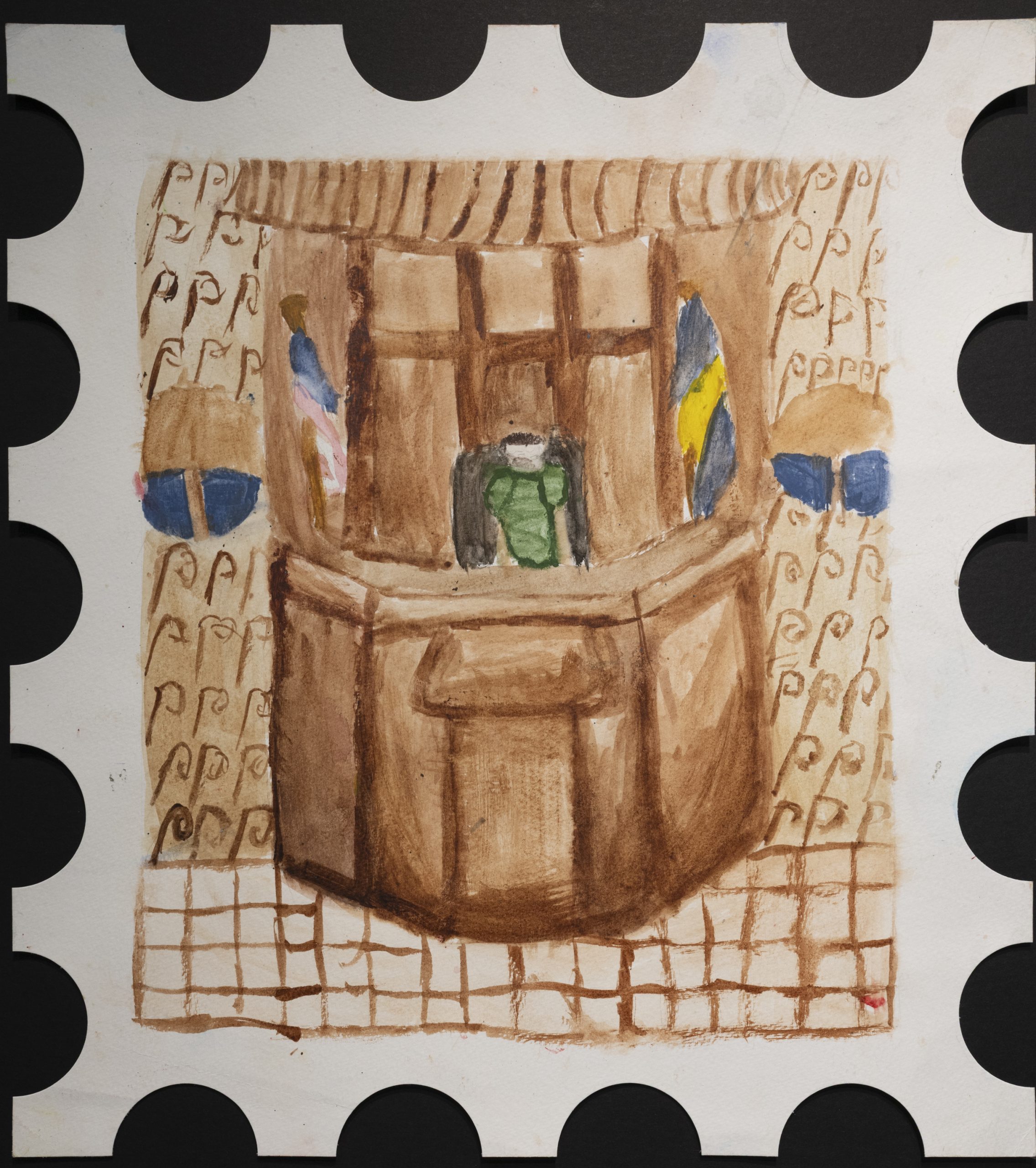
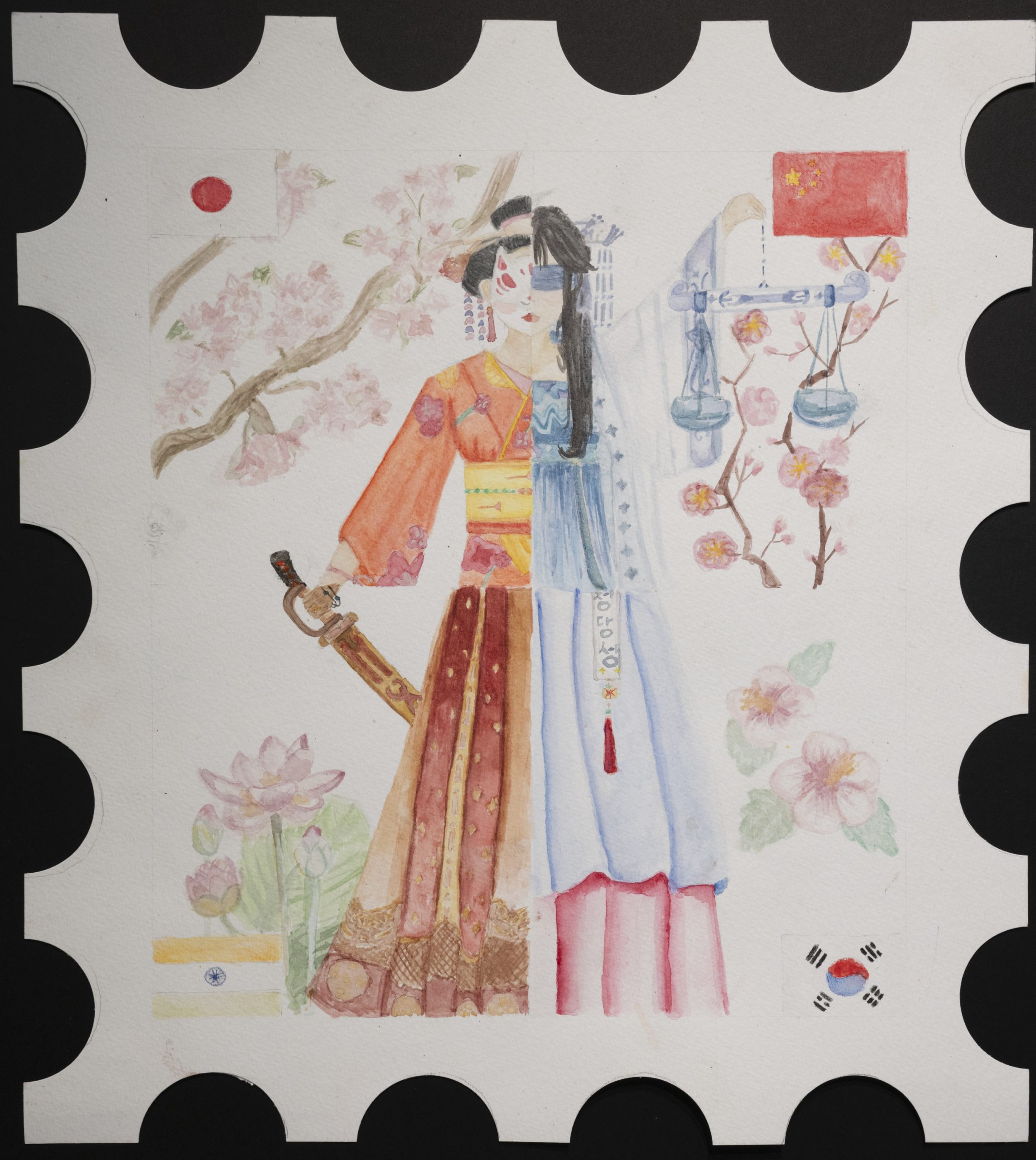
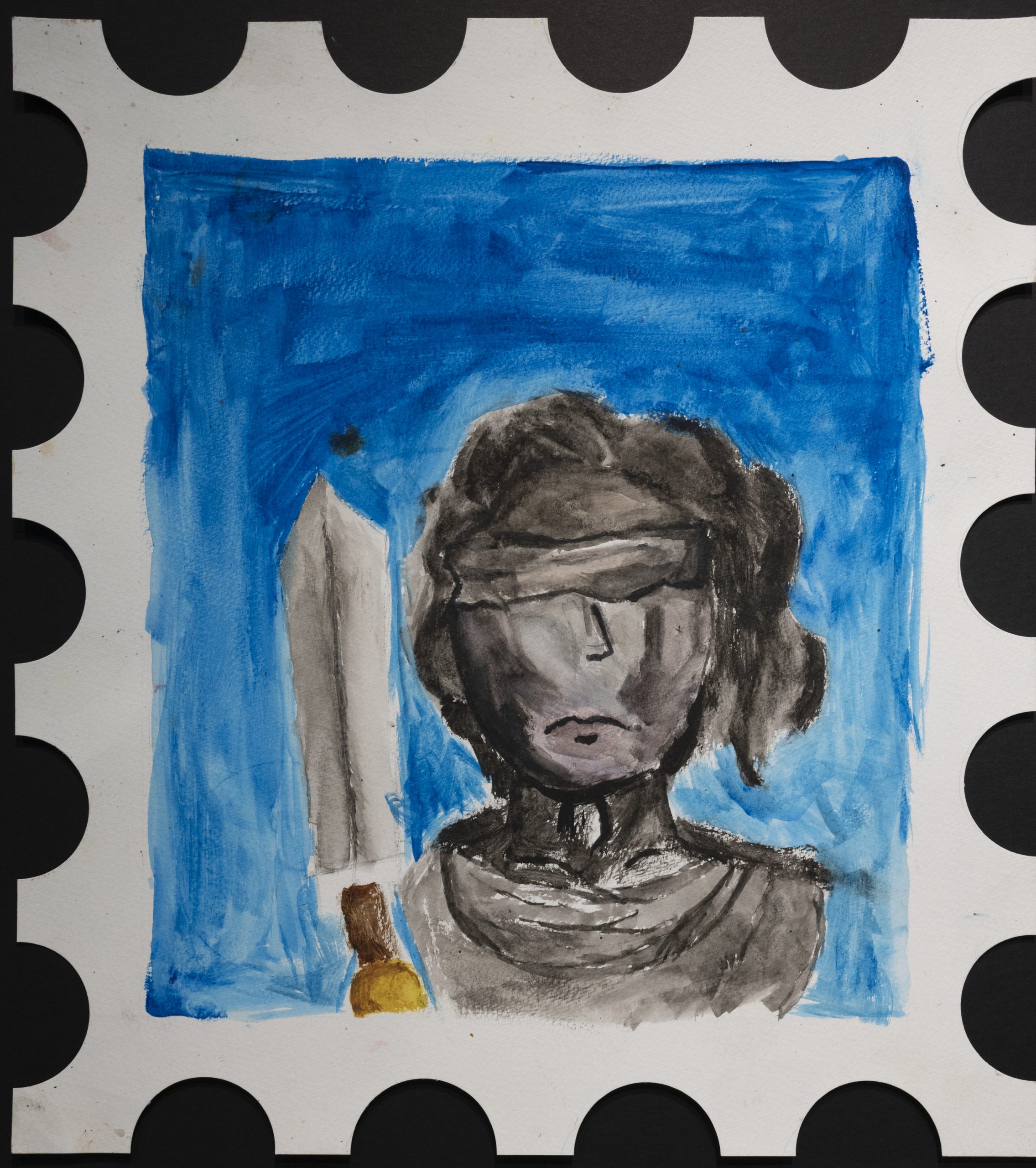
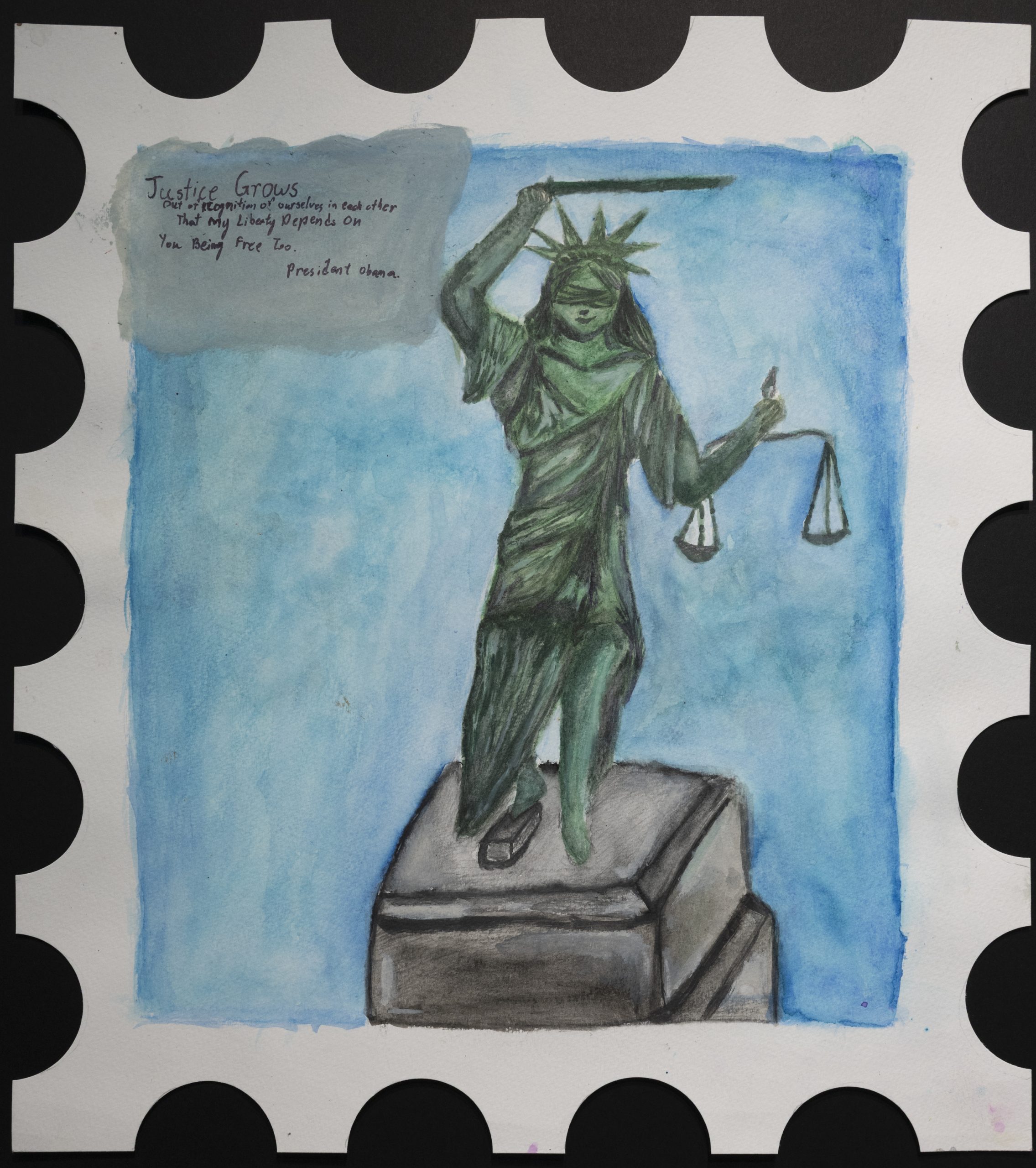
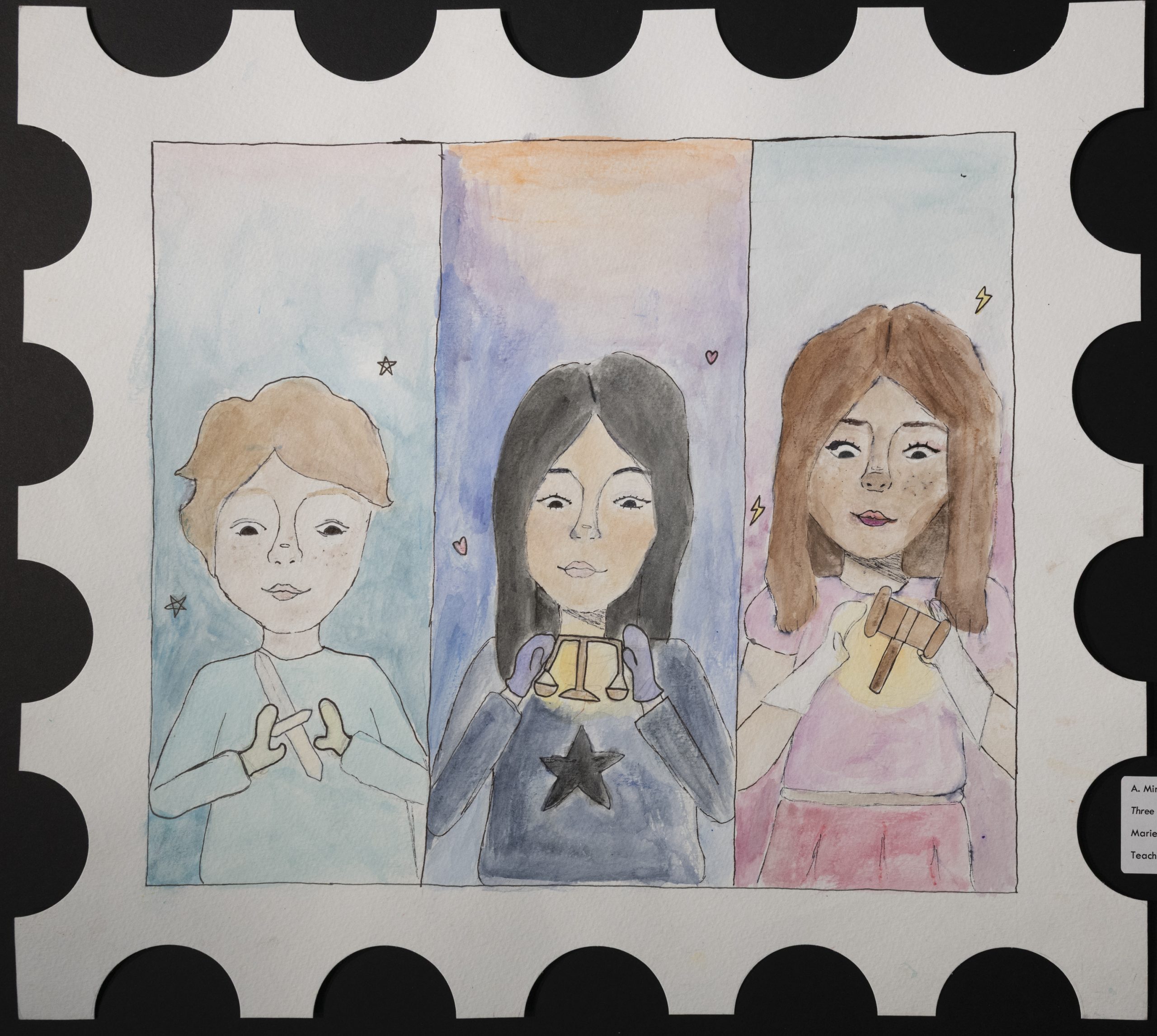
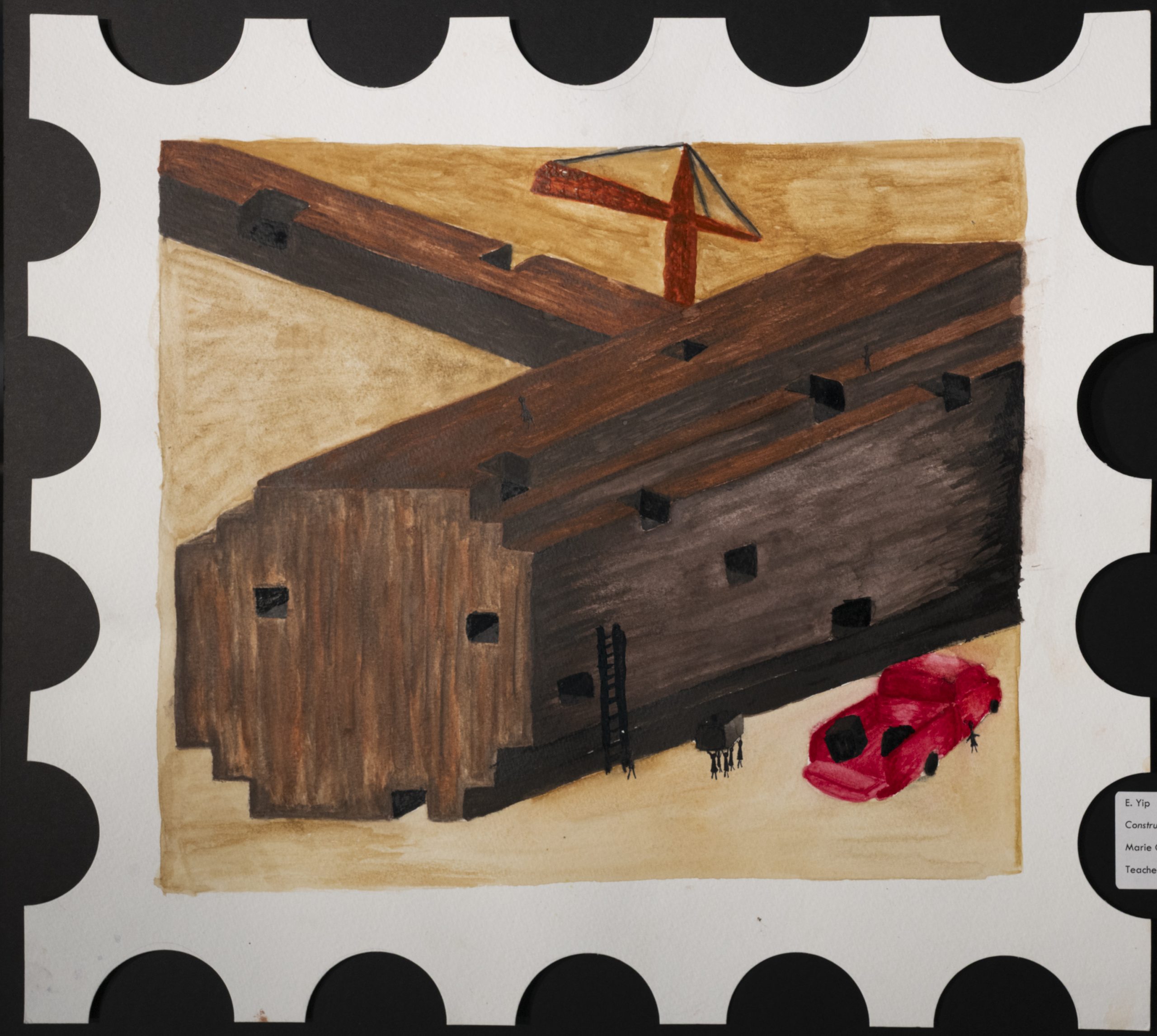
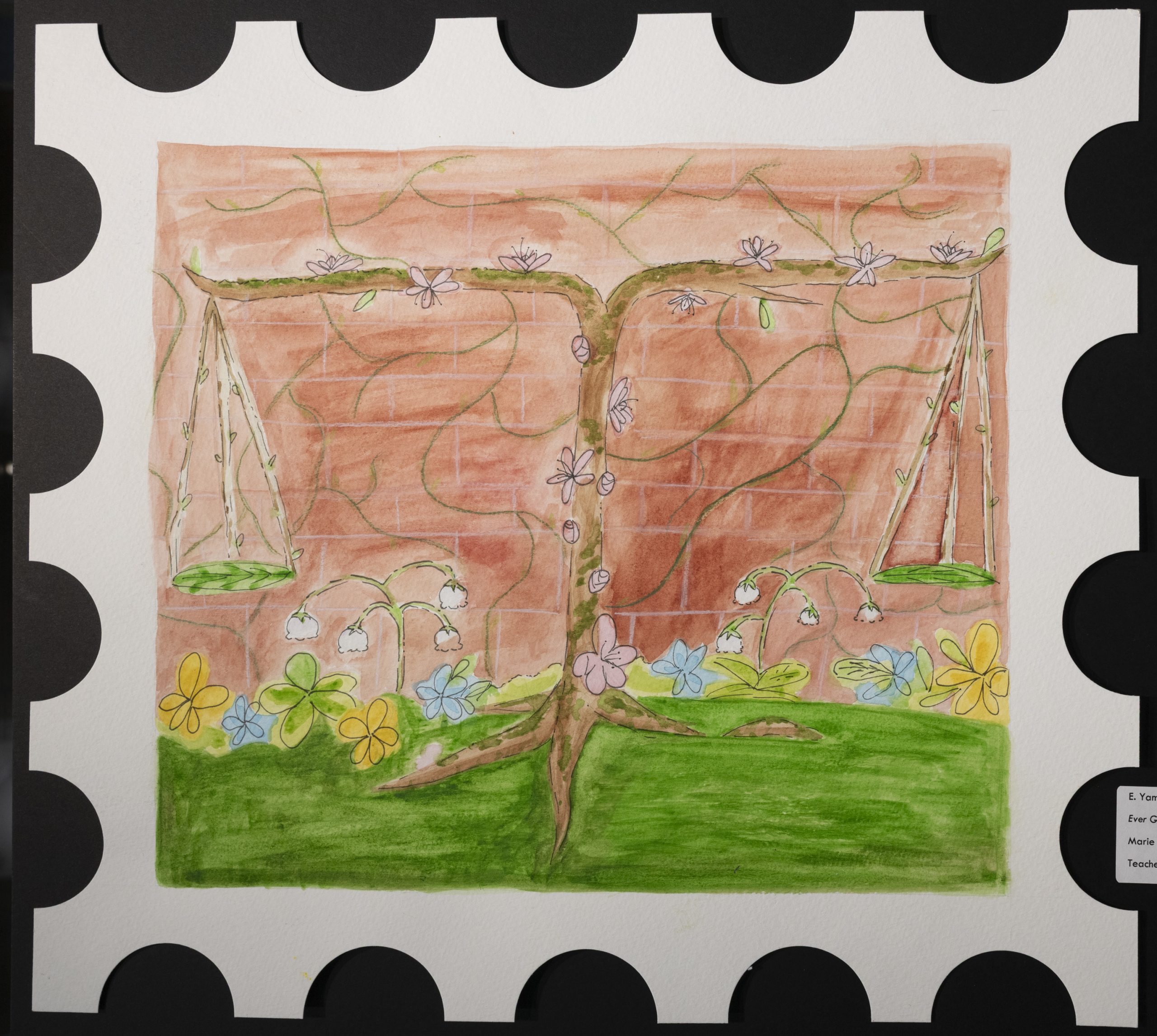
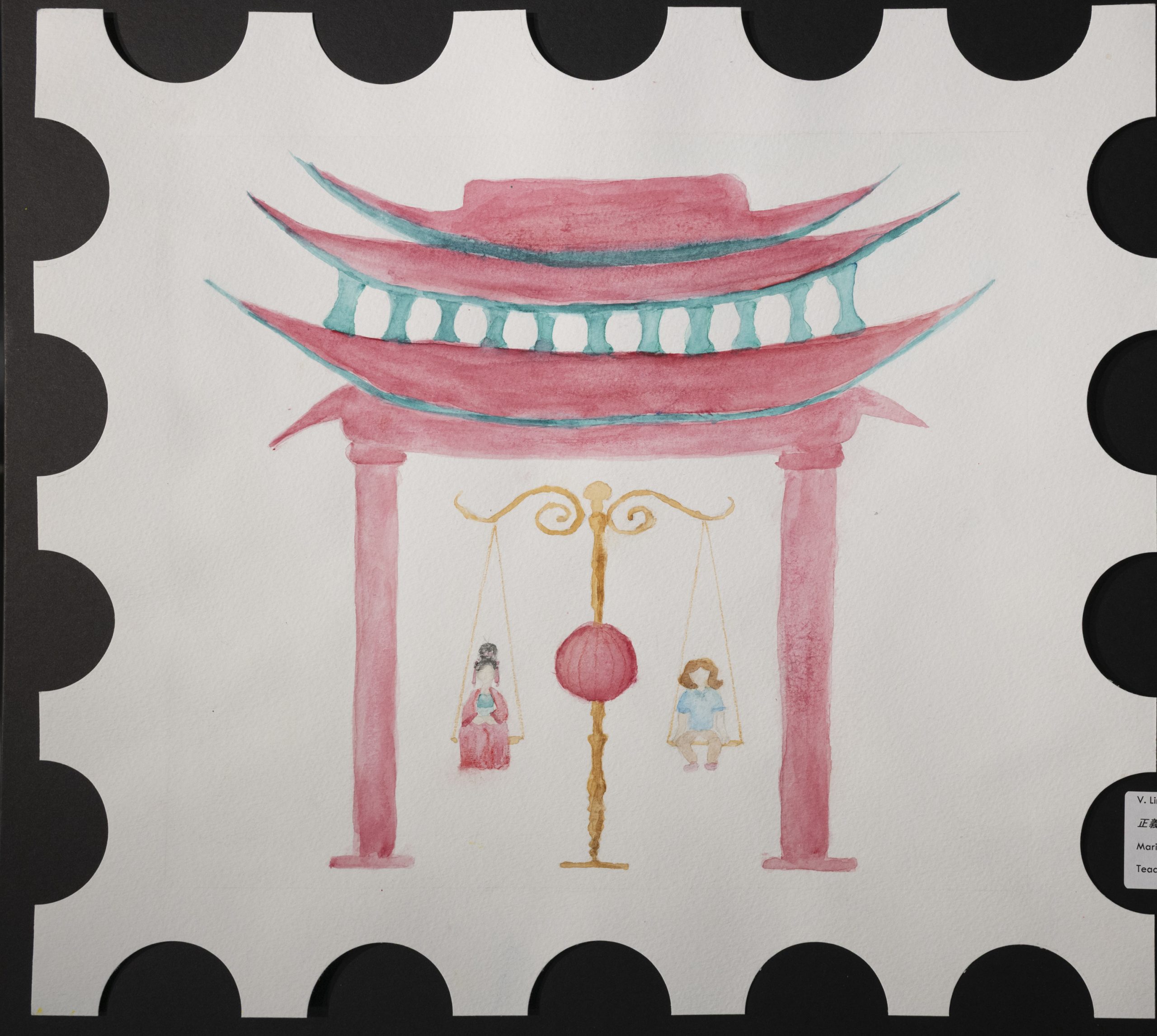
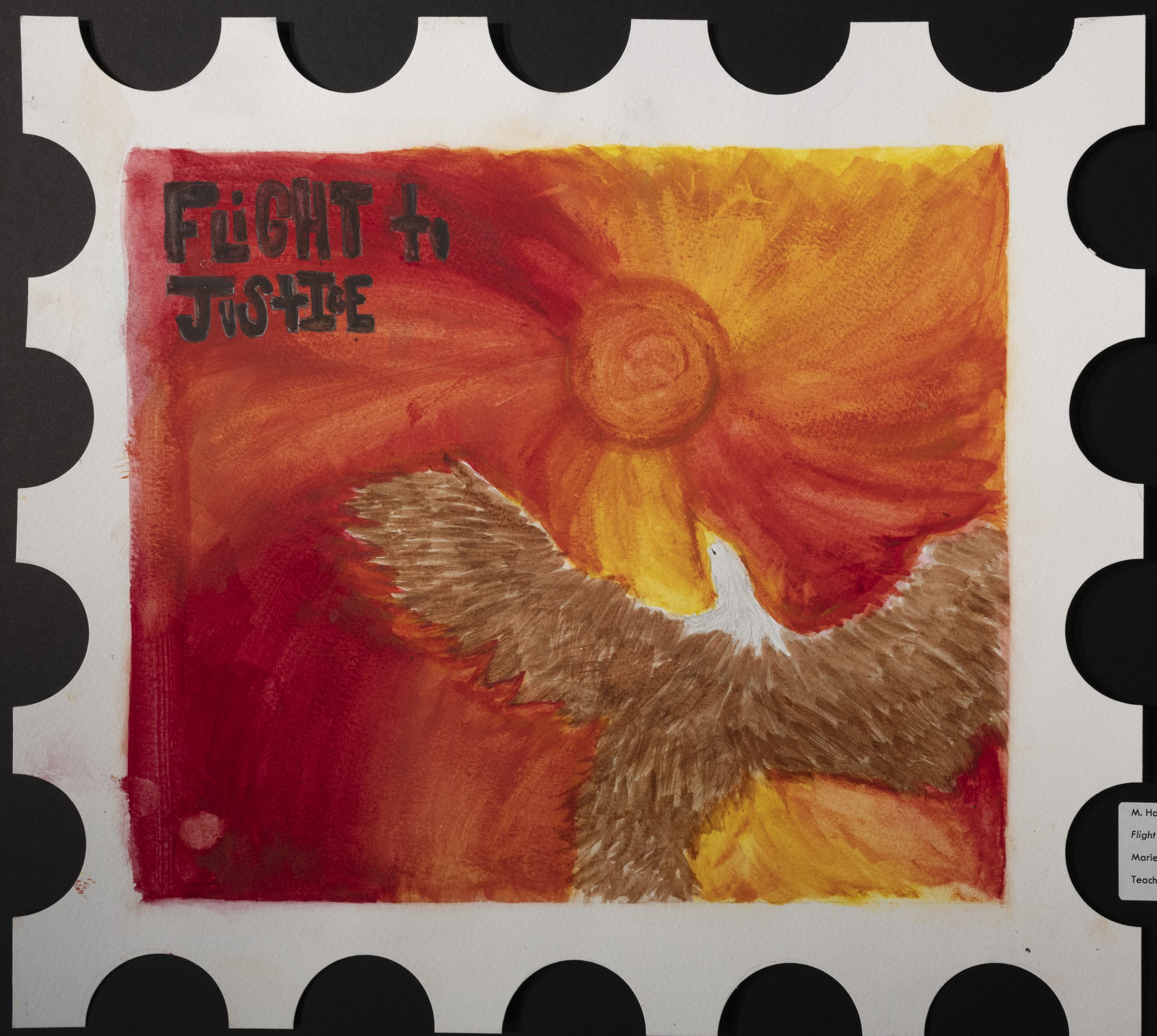
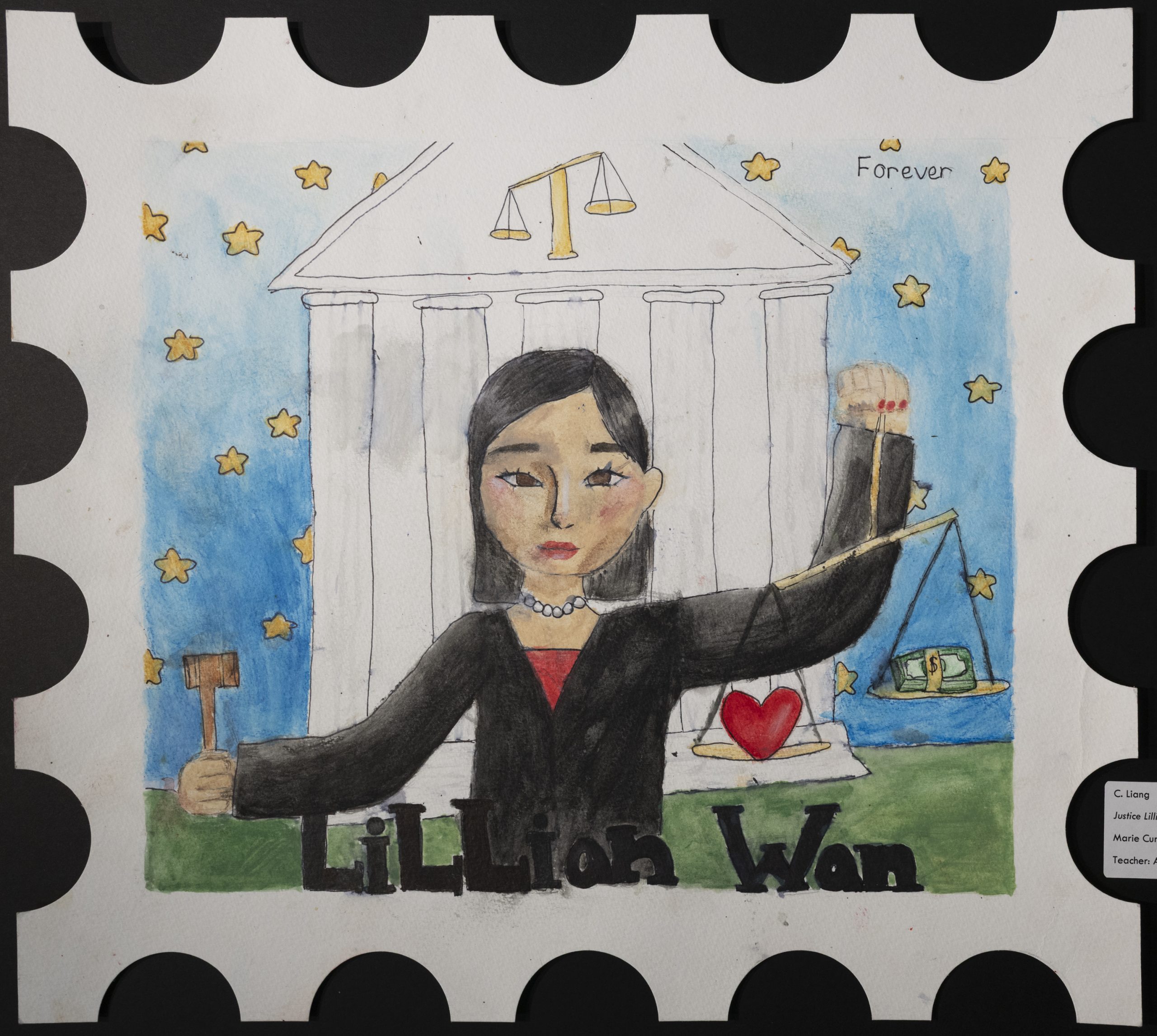
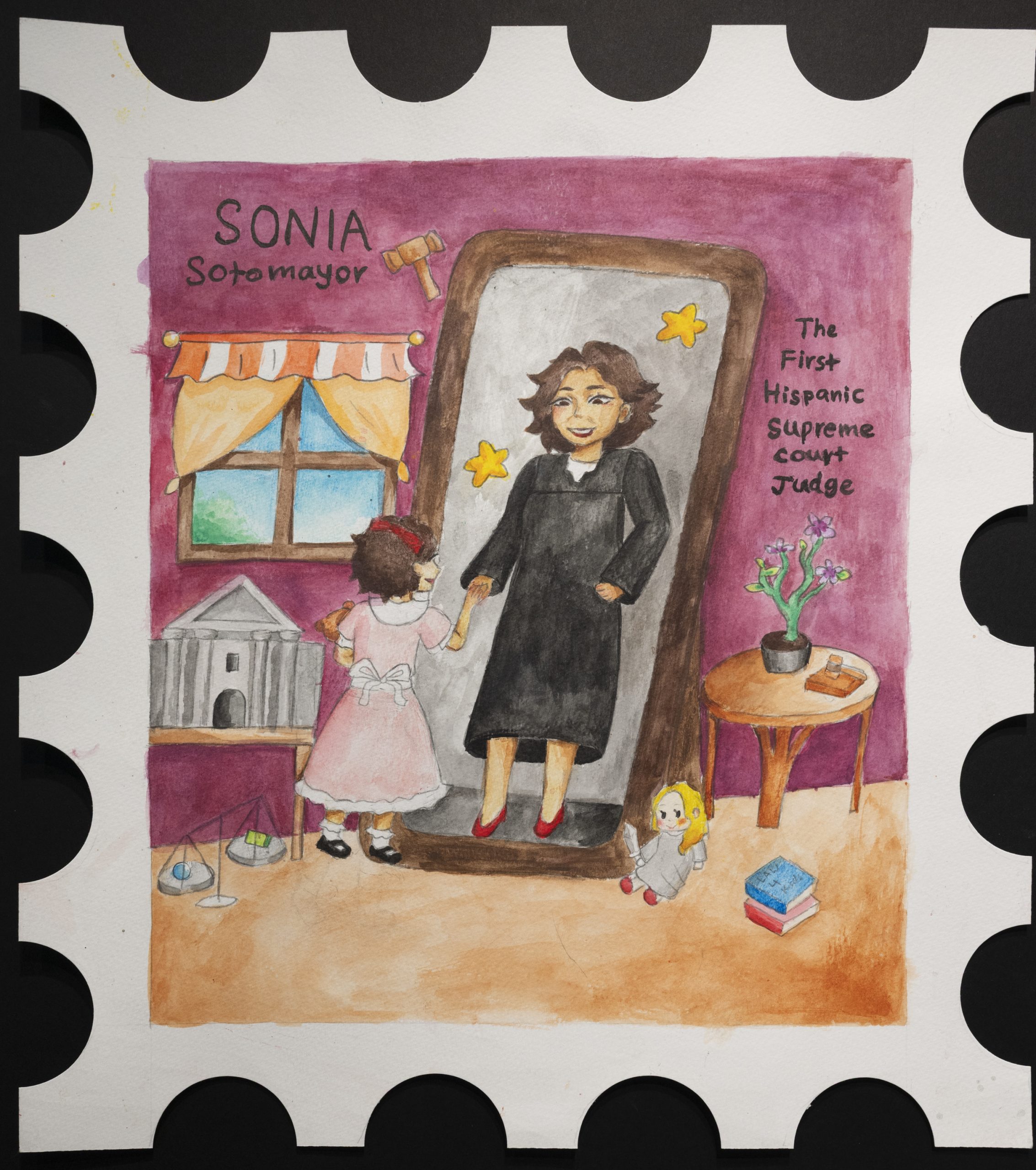
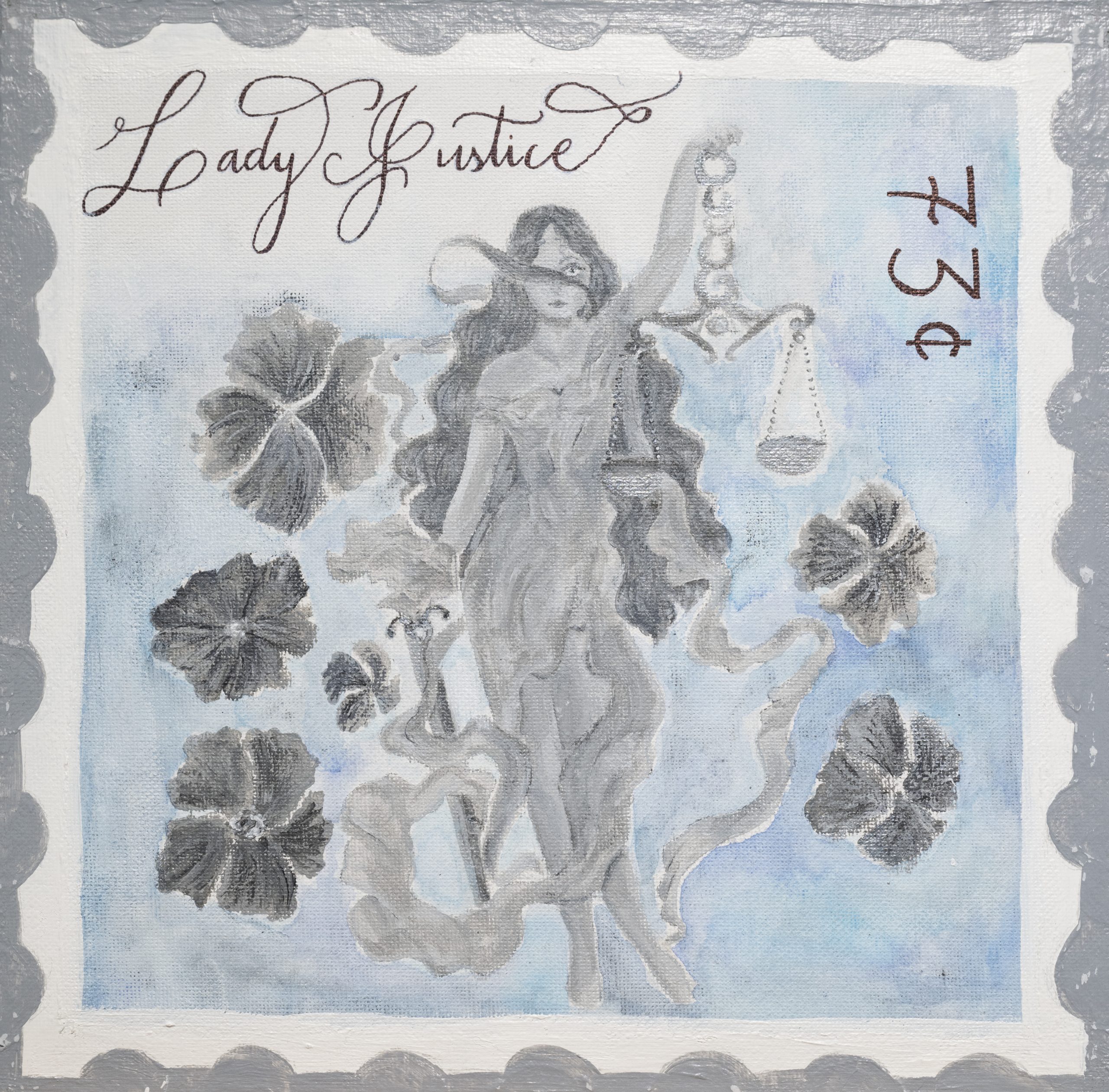
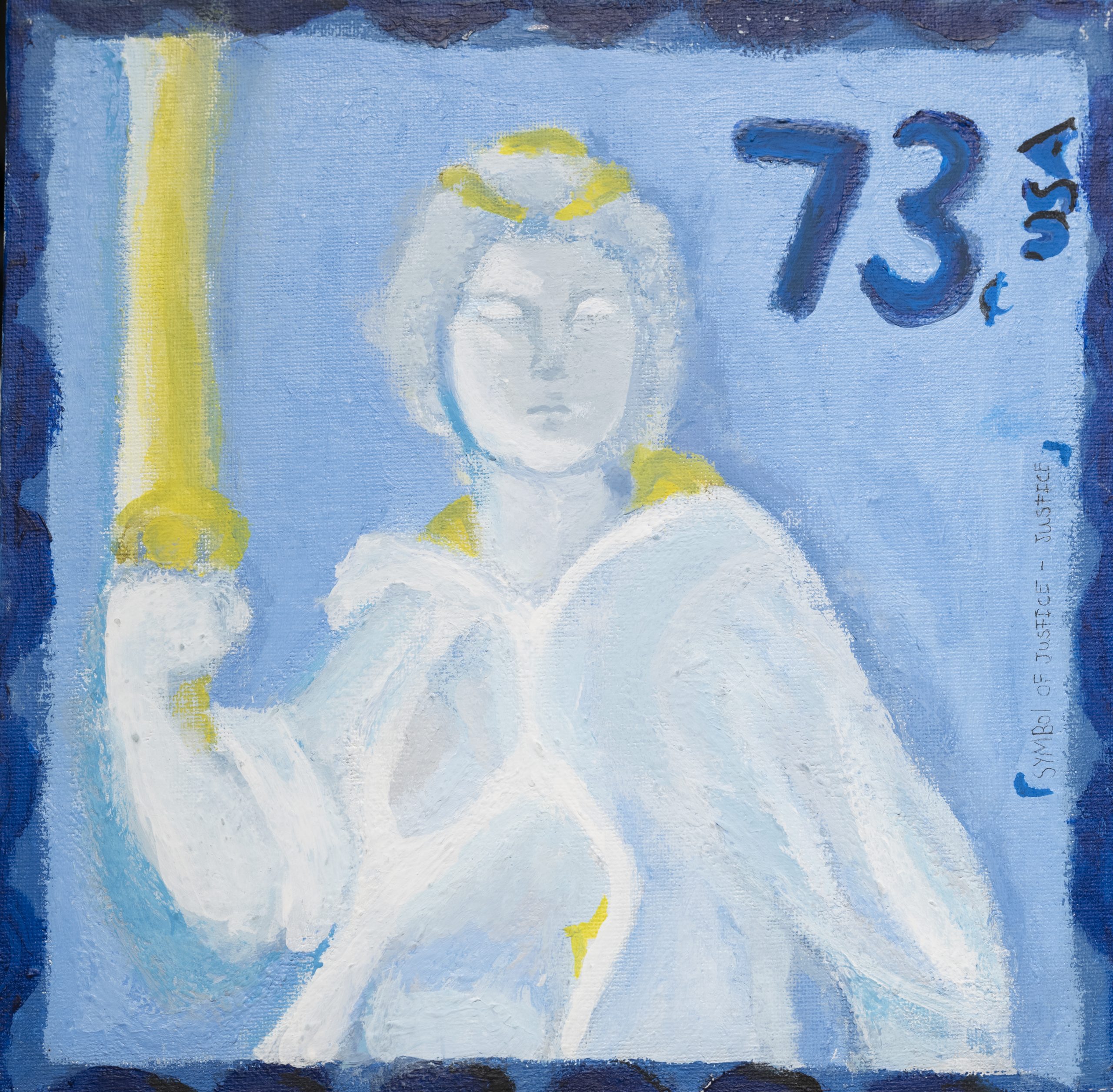
Project Title: ILLUMINATING JUSTICE: COMMEMORATIVE STAMPS FOR A NEW ERA
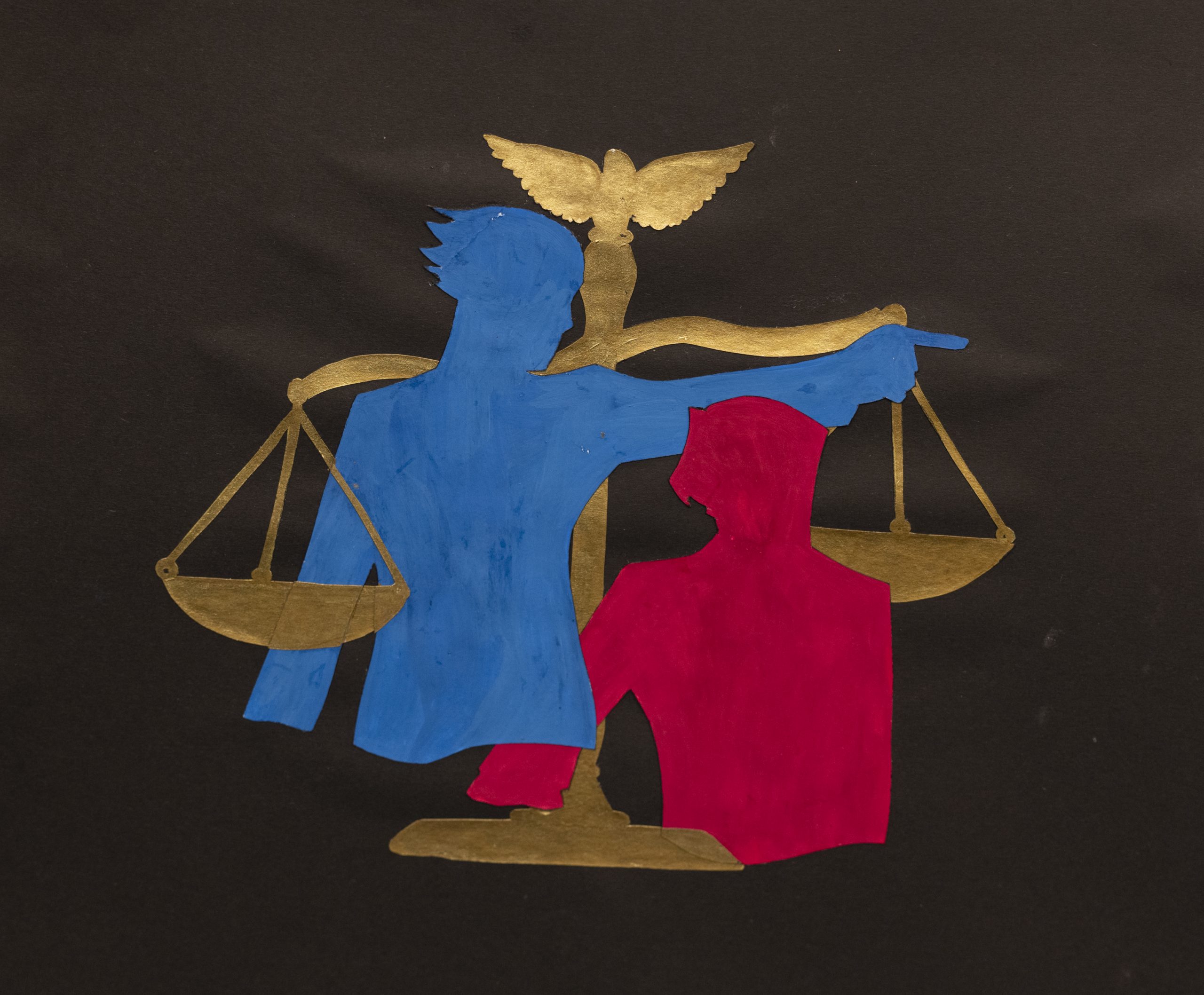
Students explored the concept of justice by designing commemorative stamps, primarily using watercolors. The majority reinterpreted existing symbols, offering their unique perspectives. Others innovated with entirely new emblems, while some chose to honor influential judicial figures through their watercolor designs.
Principal: Selin Alicanoglu
Teacher: Ashling McGlone
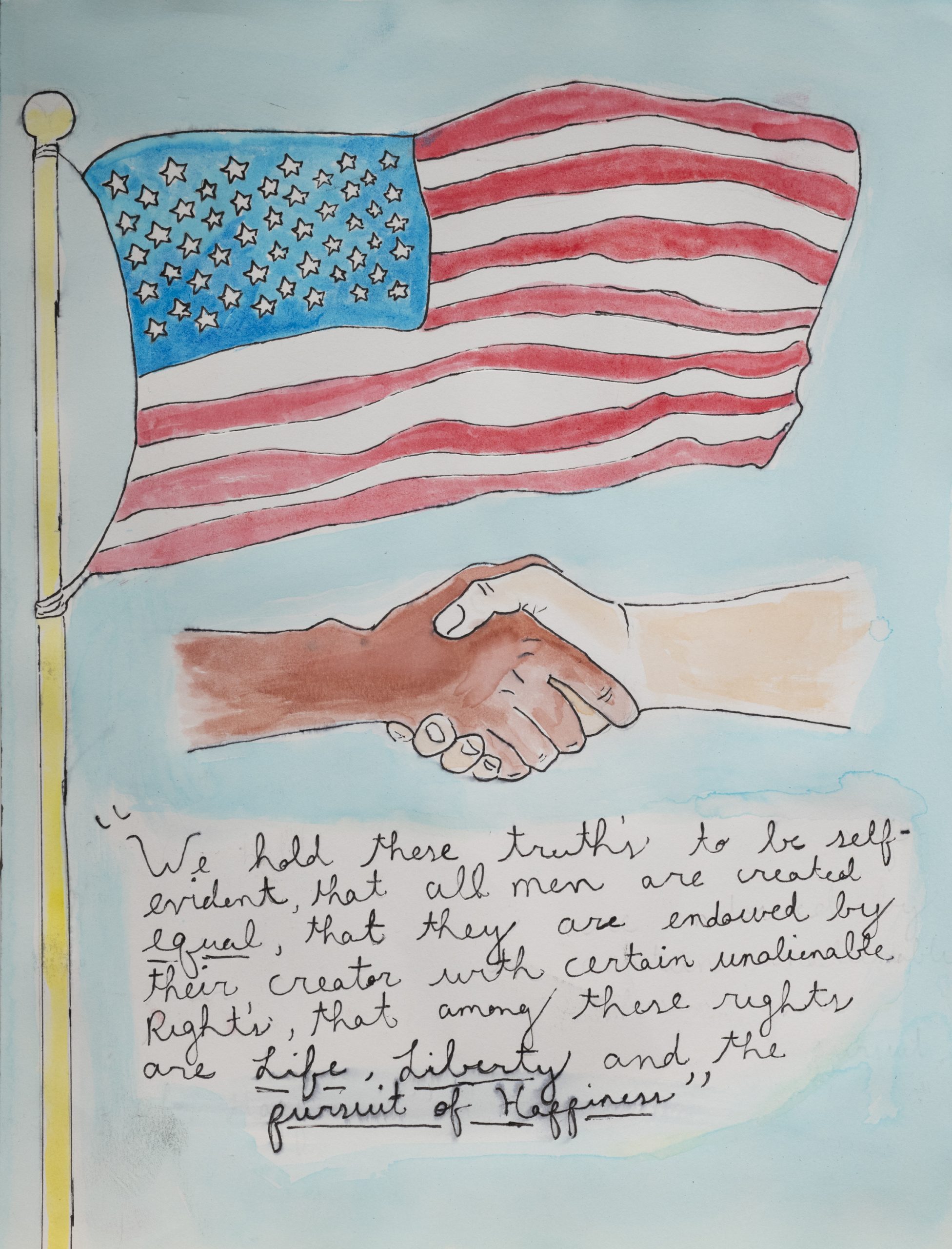
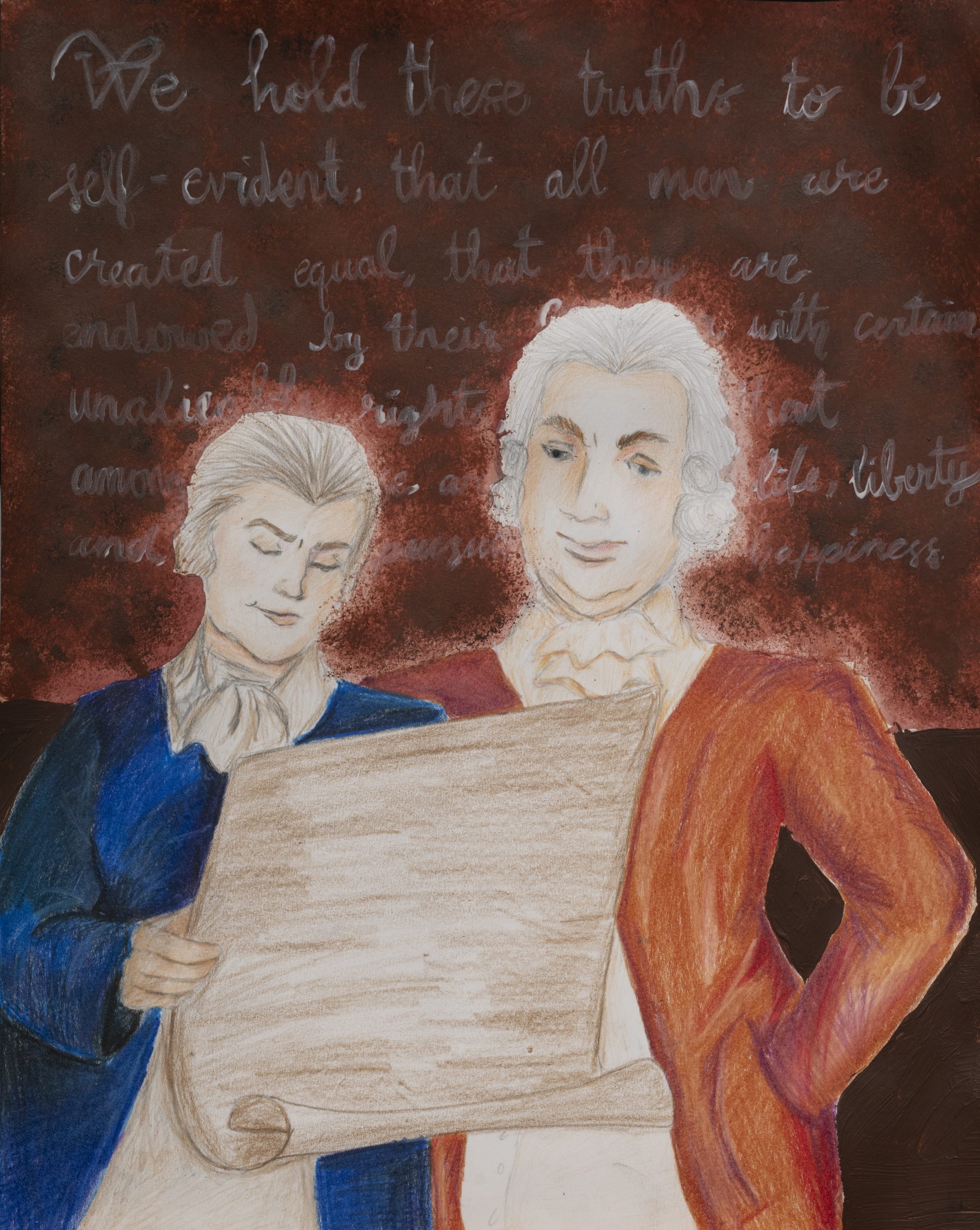
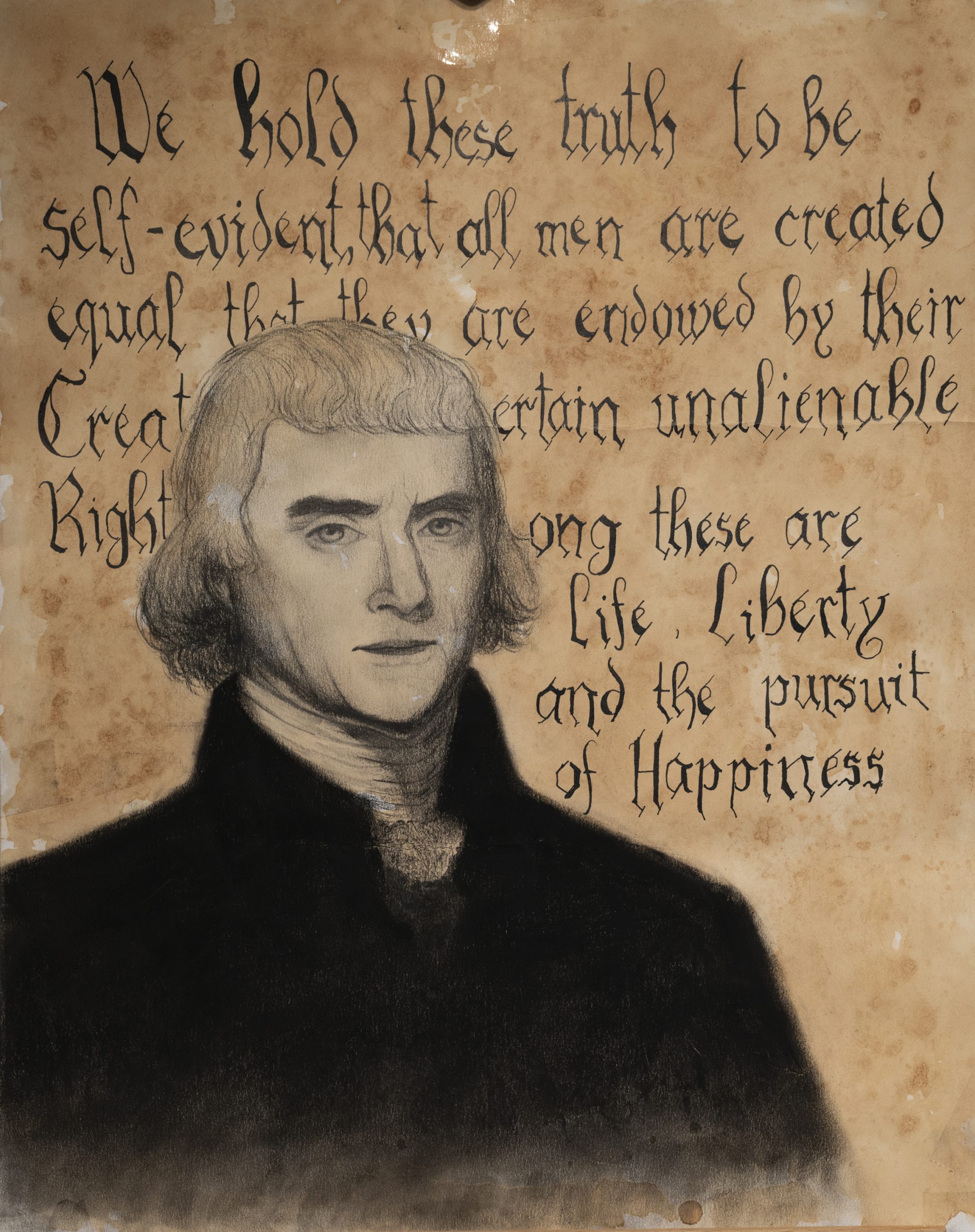
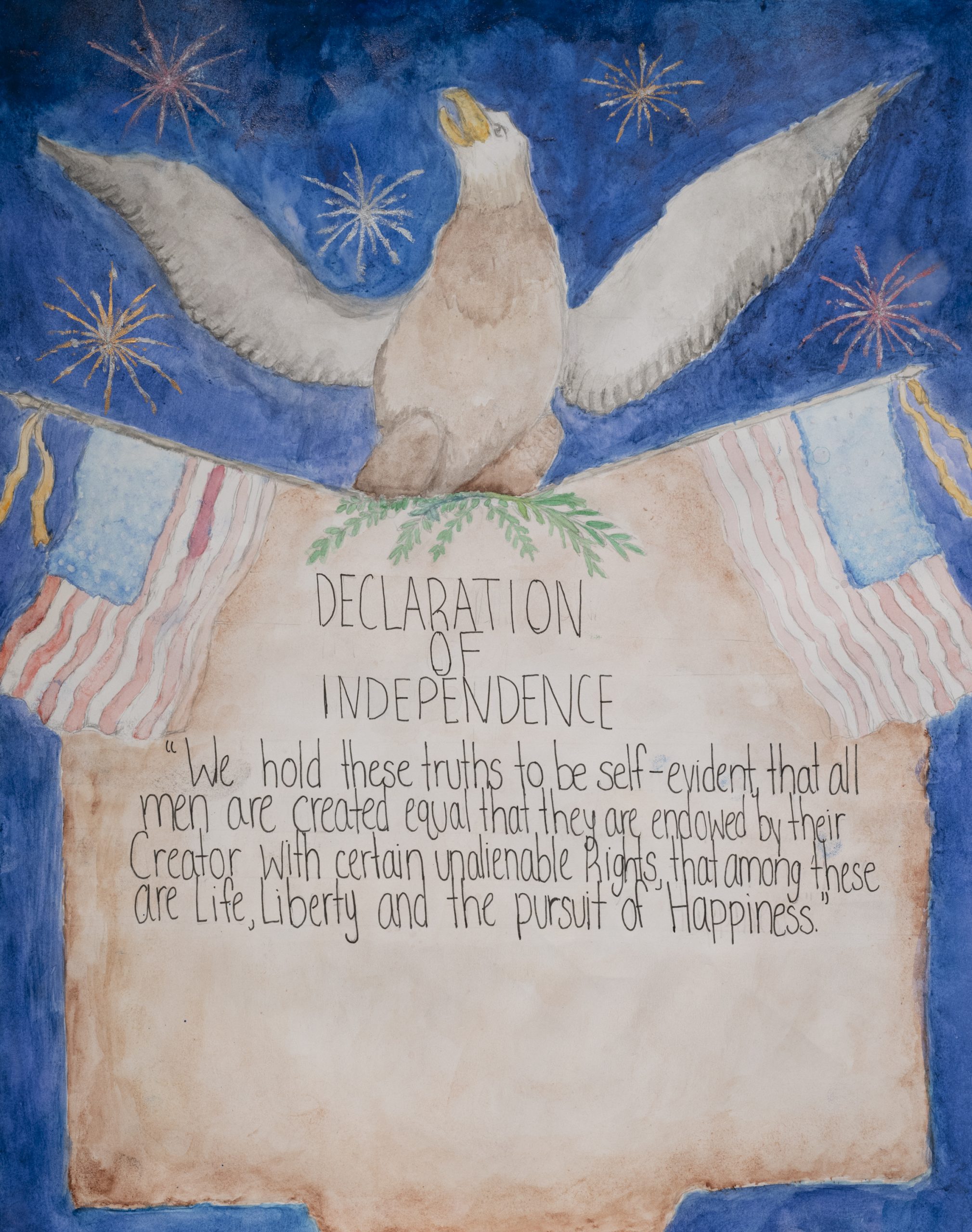
1.Project Title: DECLARATION OF INDEPENDENCE
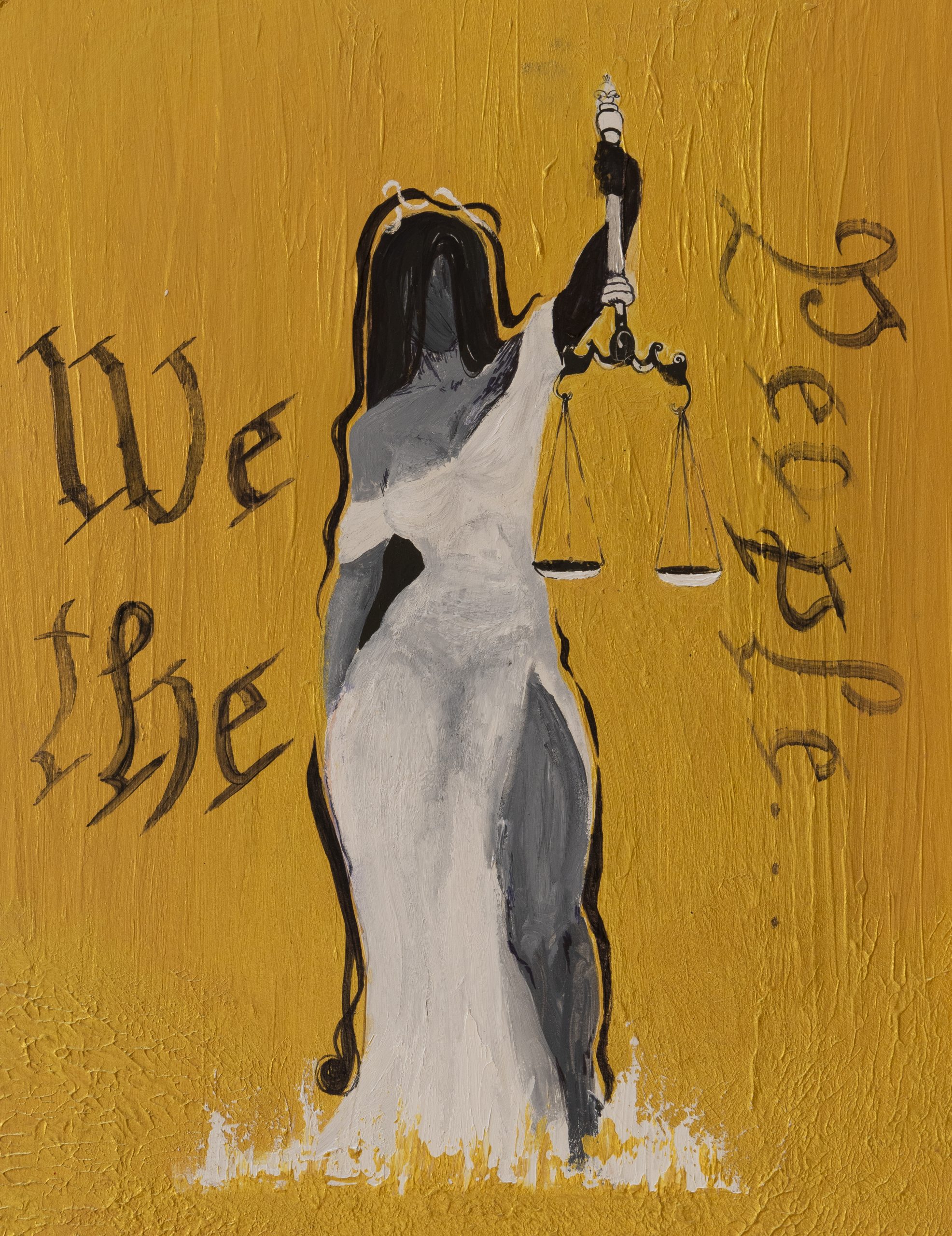
Students focused on a particular line from the Declaration of Independence and used imagery to help represent the spirit of the line. Students also worked on their penmanship and calligraphy skills to emphasize the line in their work.
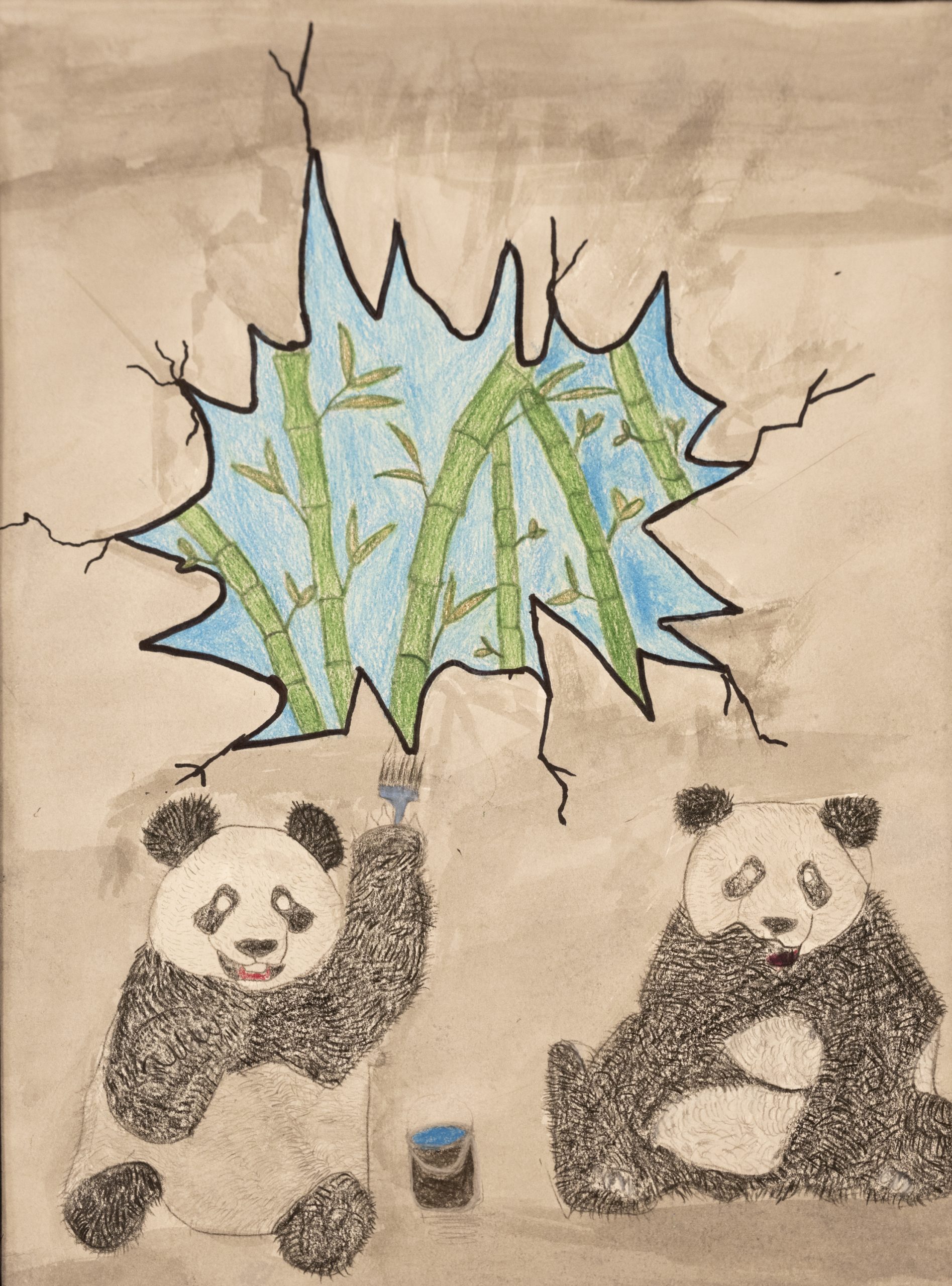
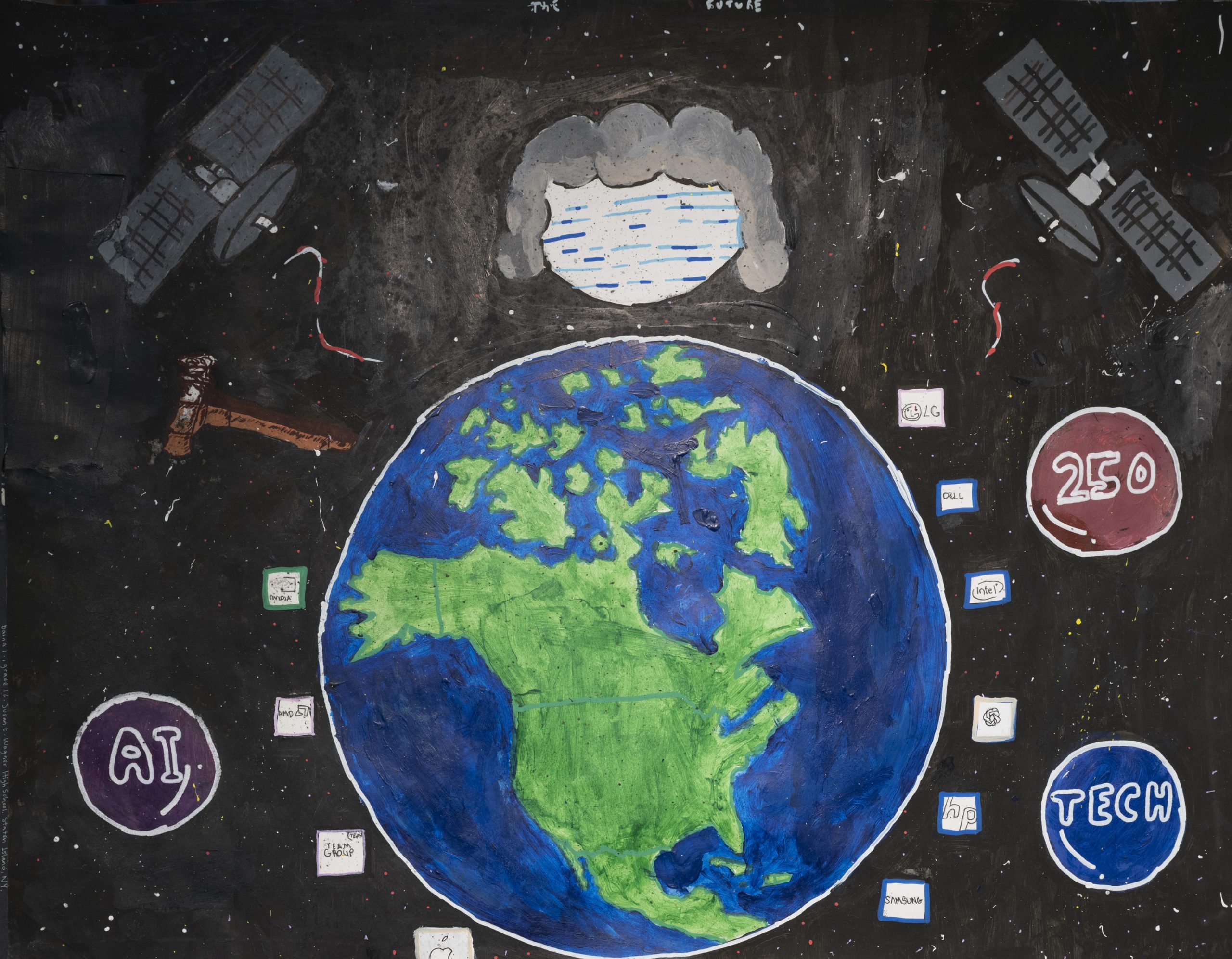
2.Project Title: ART LAW
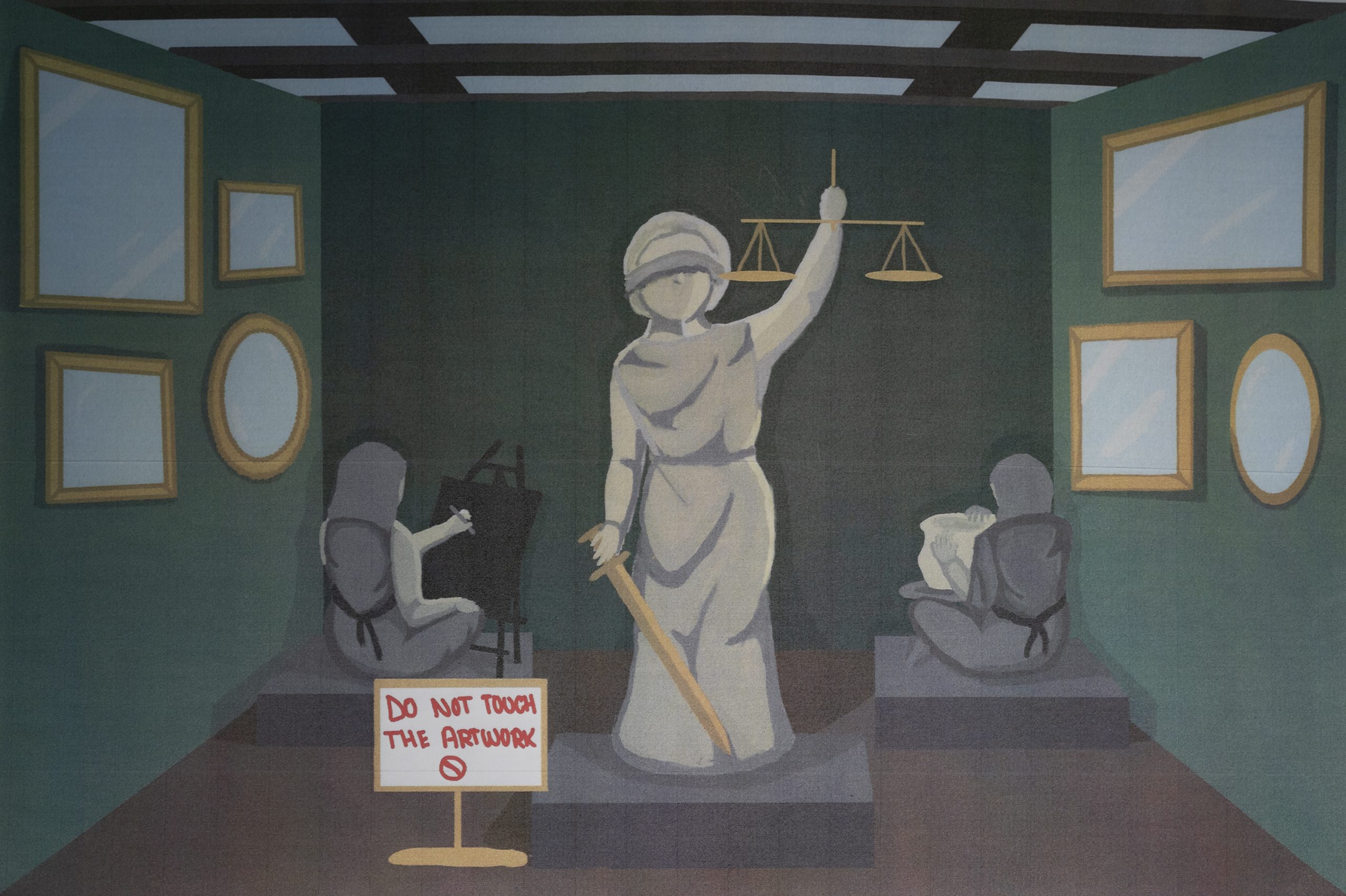
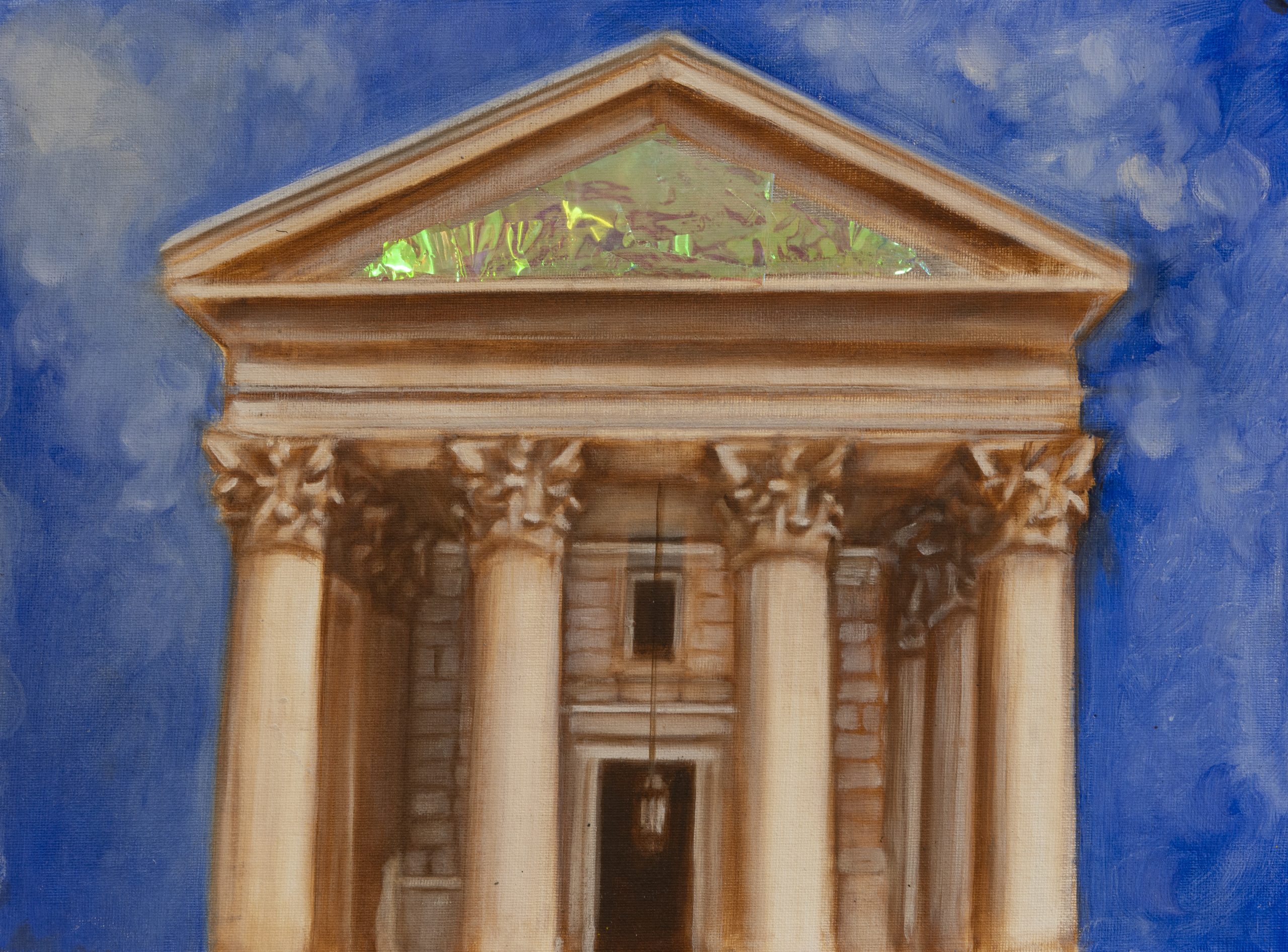
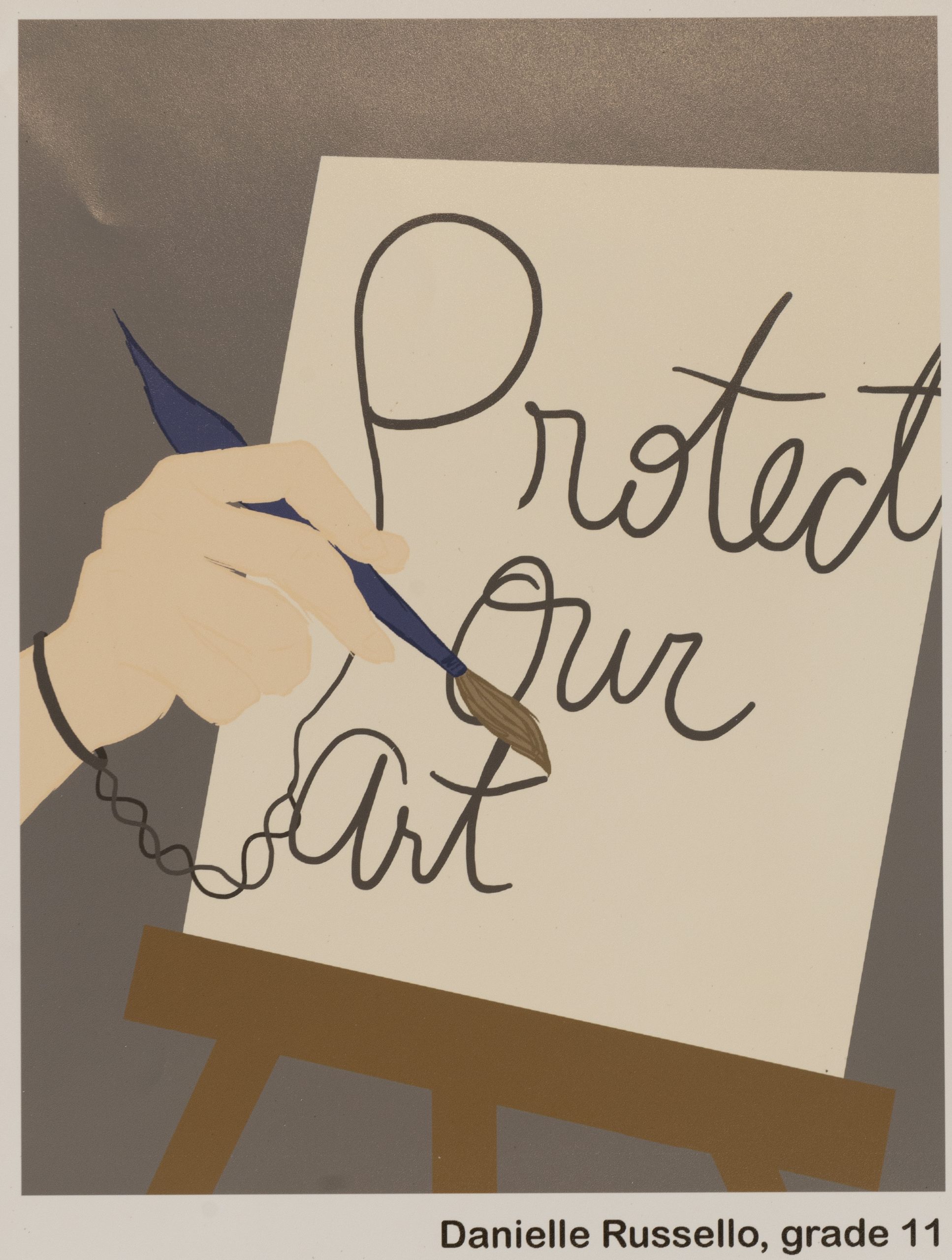
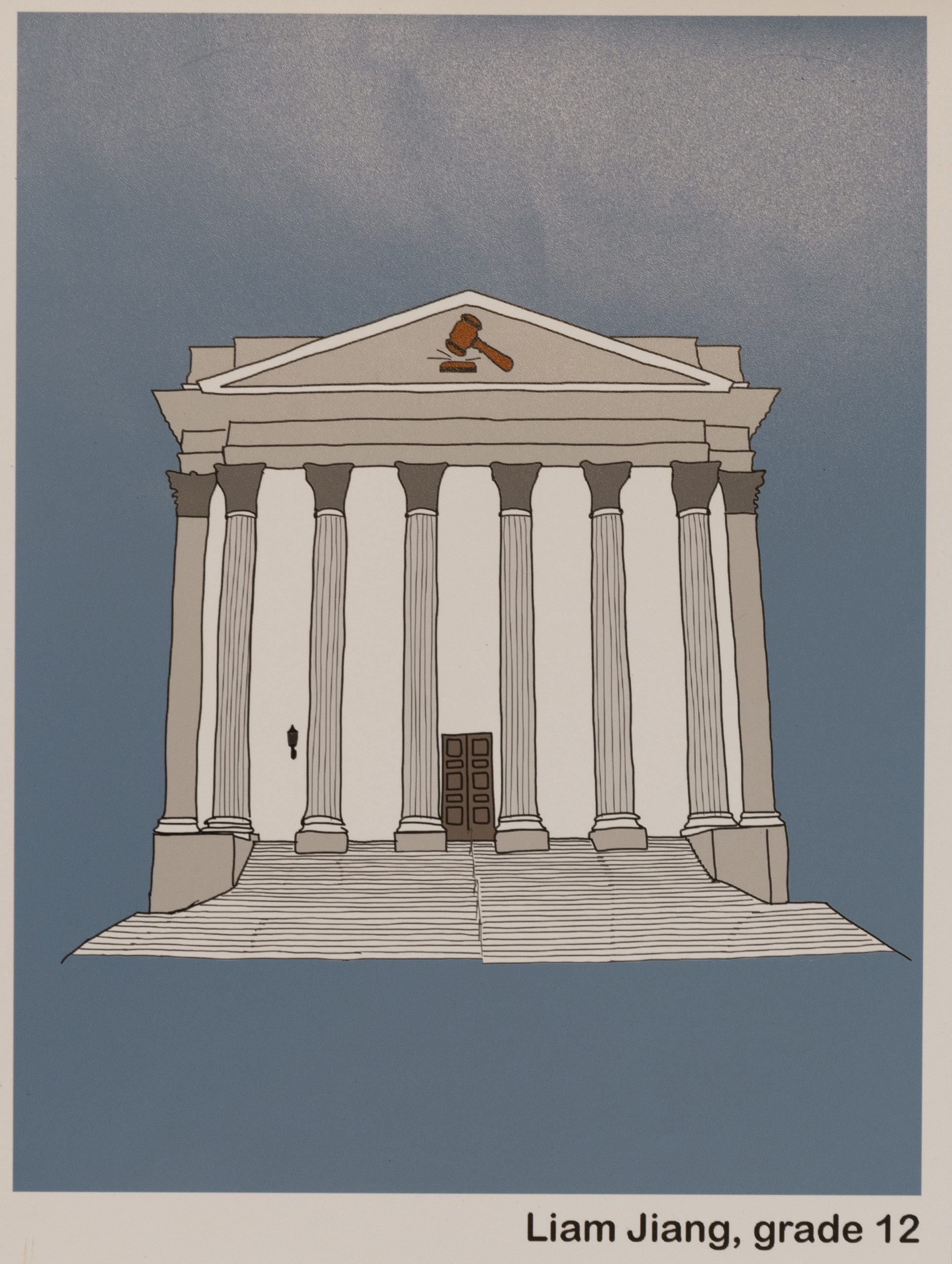
This artwork is meant to represent how the law protects the artist. The glass represents how AI is covering or masking the true artist. The gavel is breaking the glass so that the artist is able to be free to create.
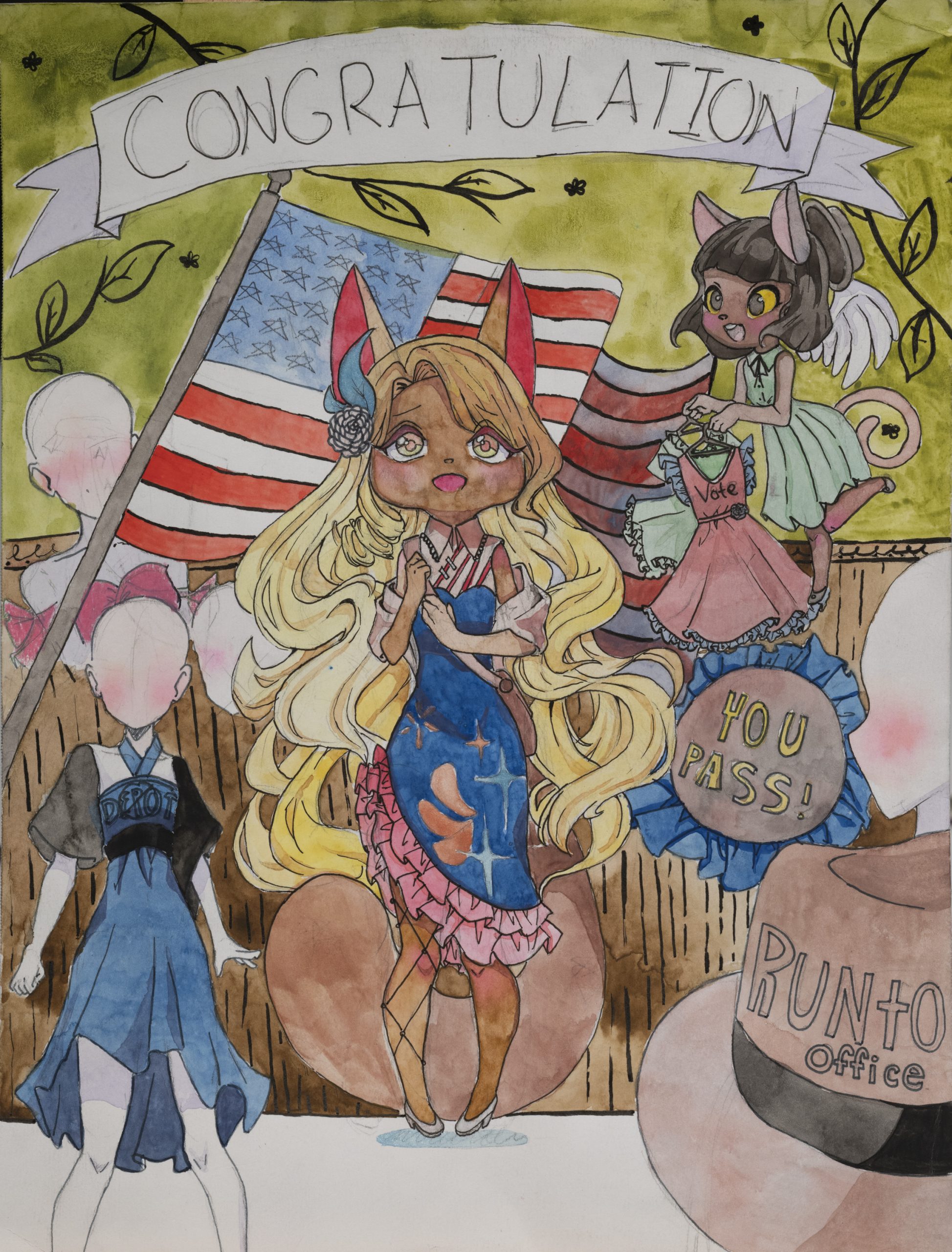
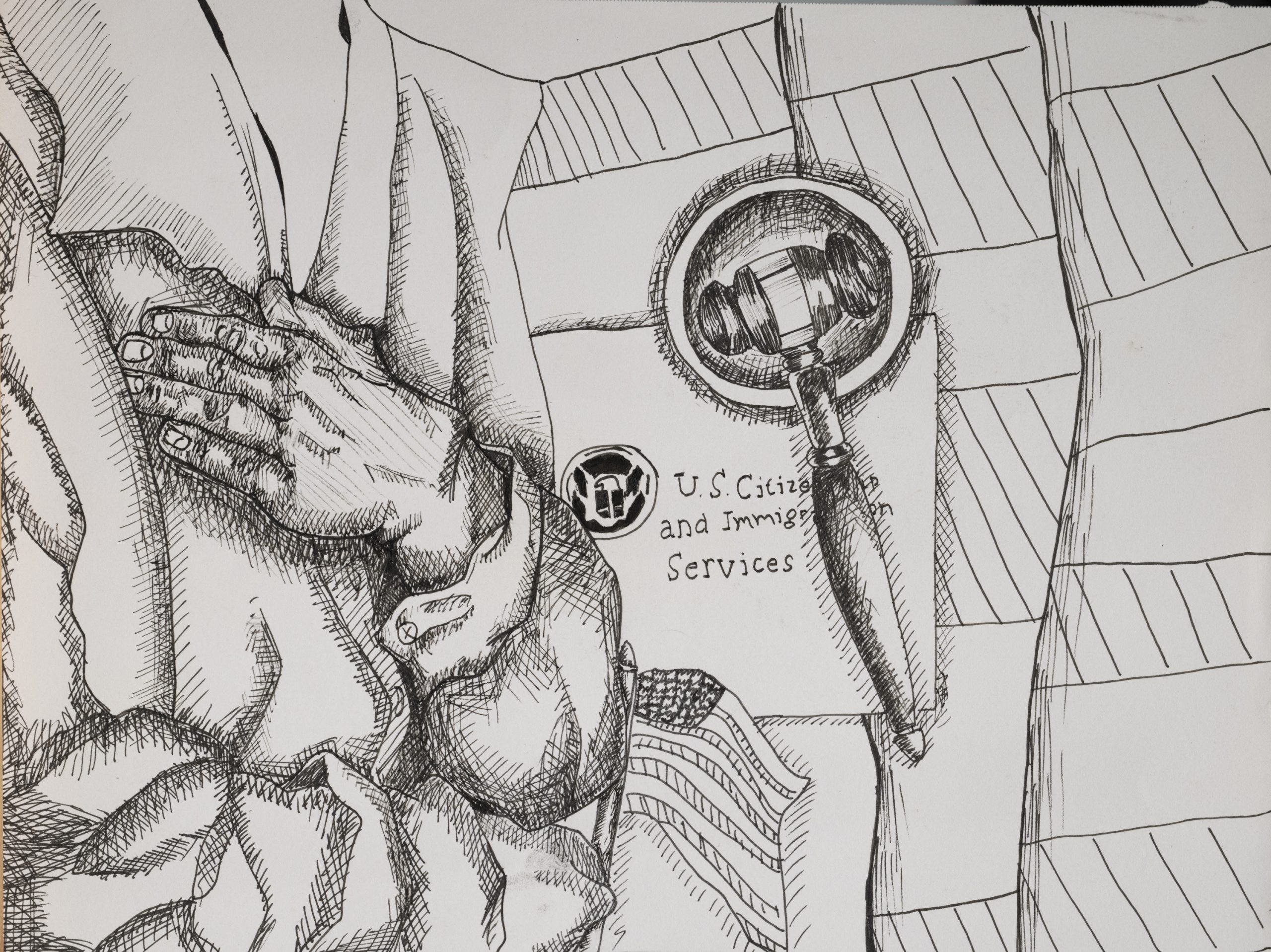
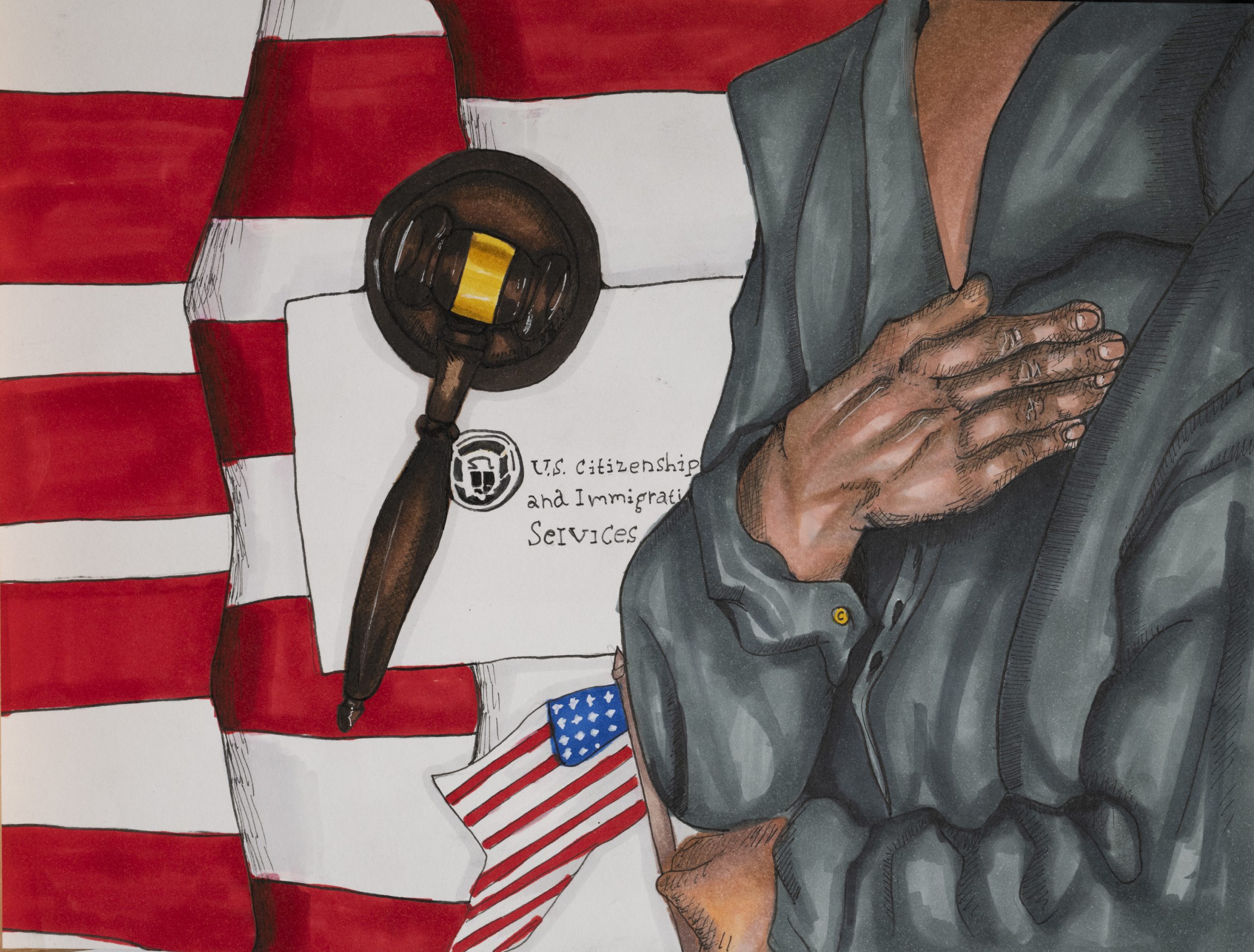
3.Project Title: COURTROOM MURAL
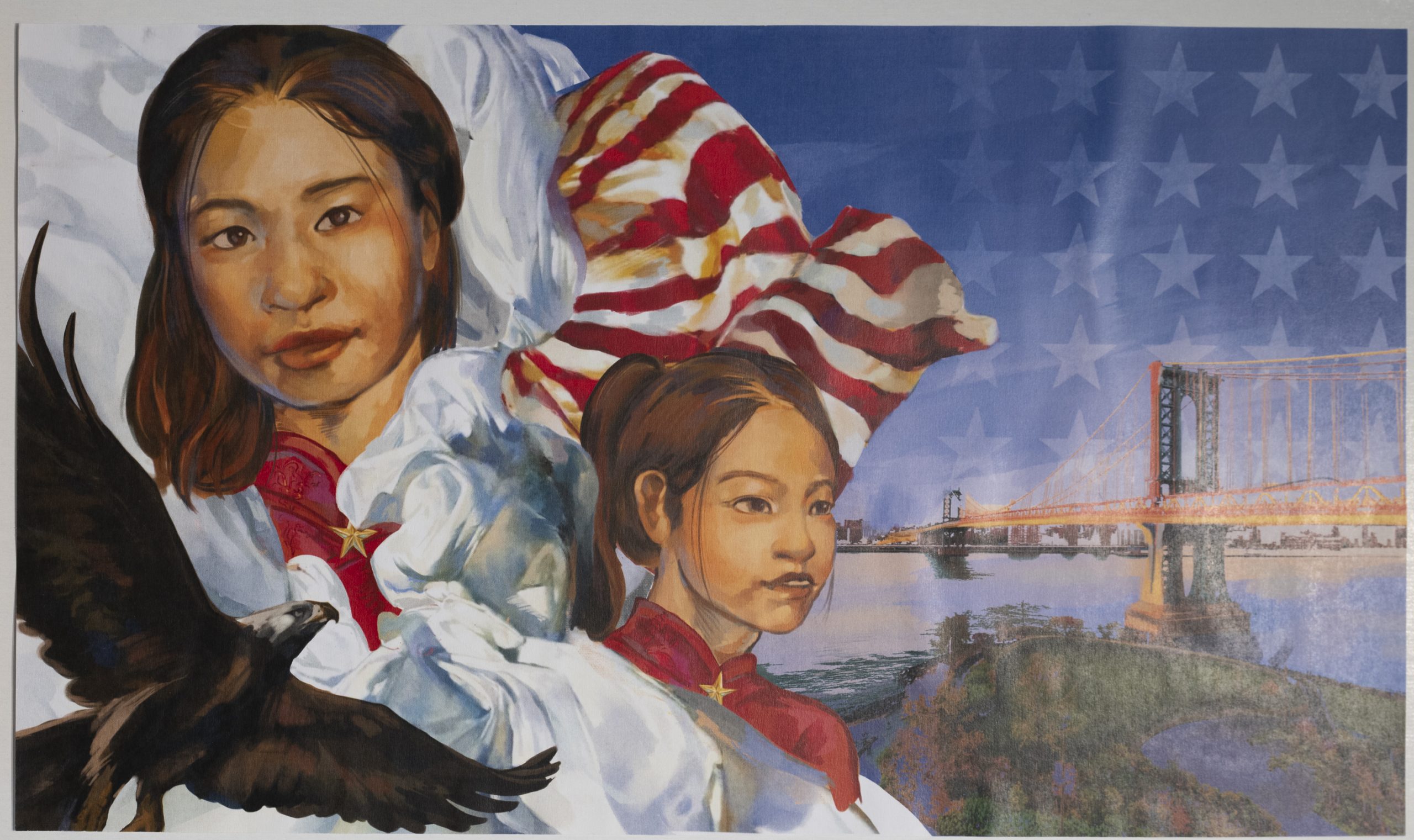
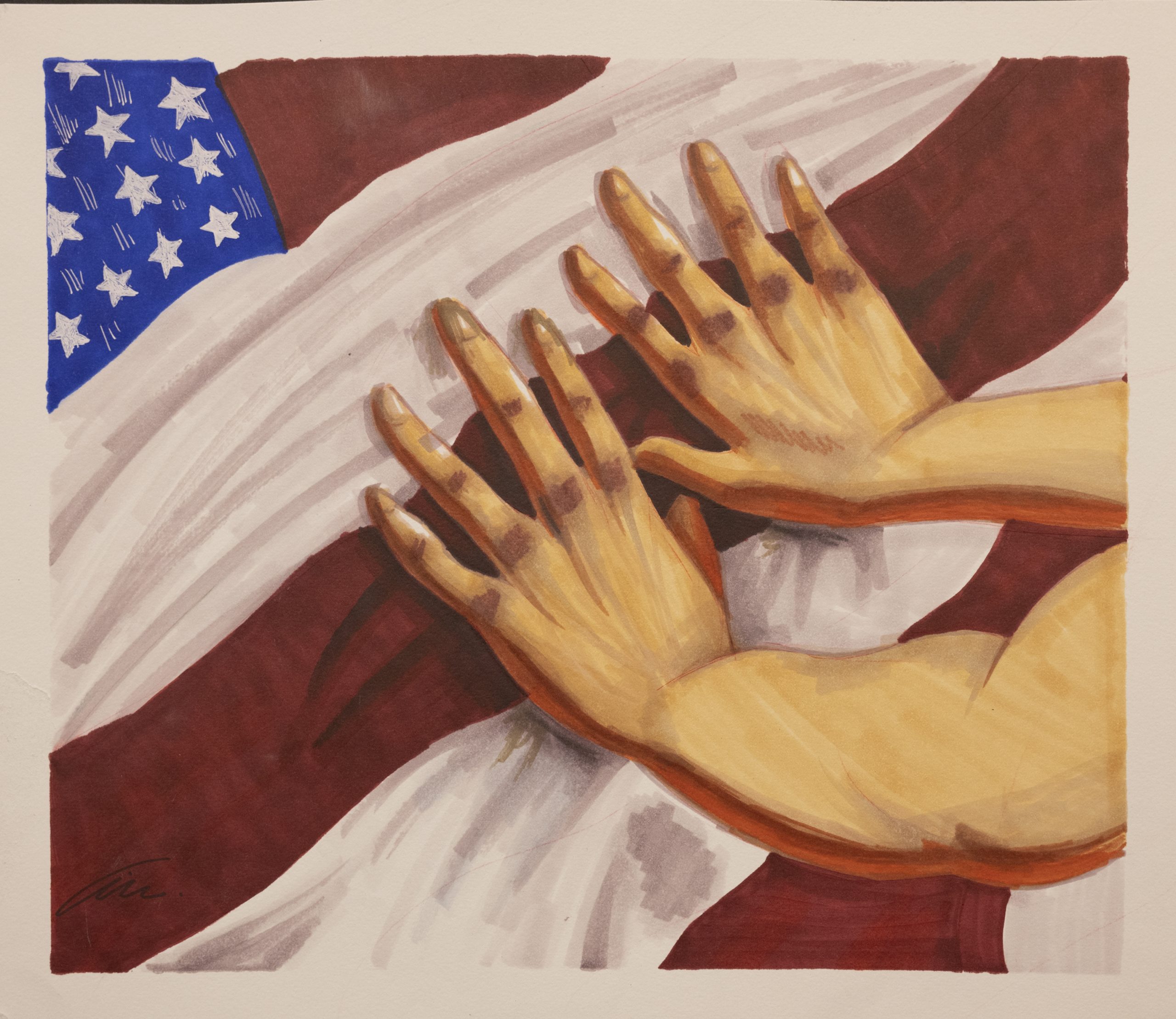
Students created their own interpretations of the naturalization ceremony. Many focused on the symbolism behind the process, such as the placement of the hands during the ceremony or the documentation. Others focused on the emotion tied to naturalization and how more opportunities are available.
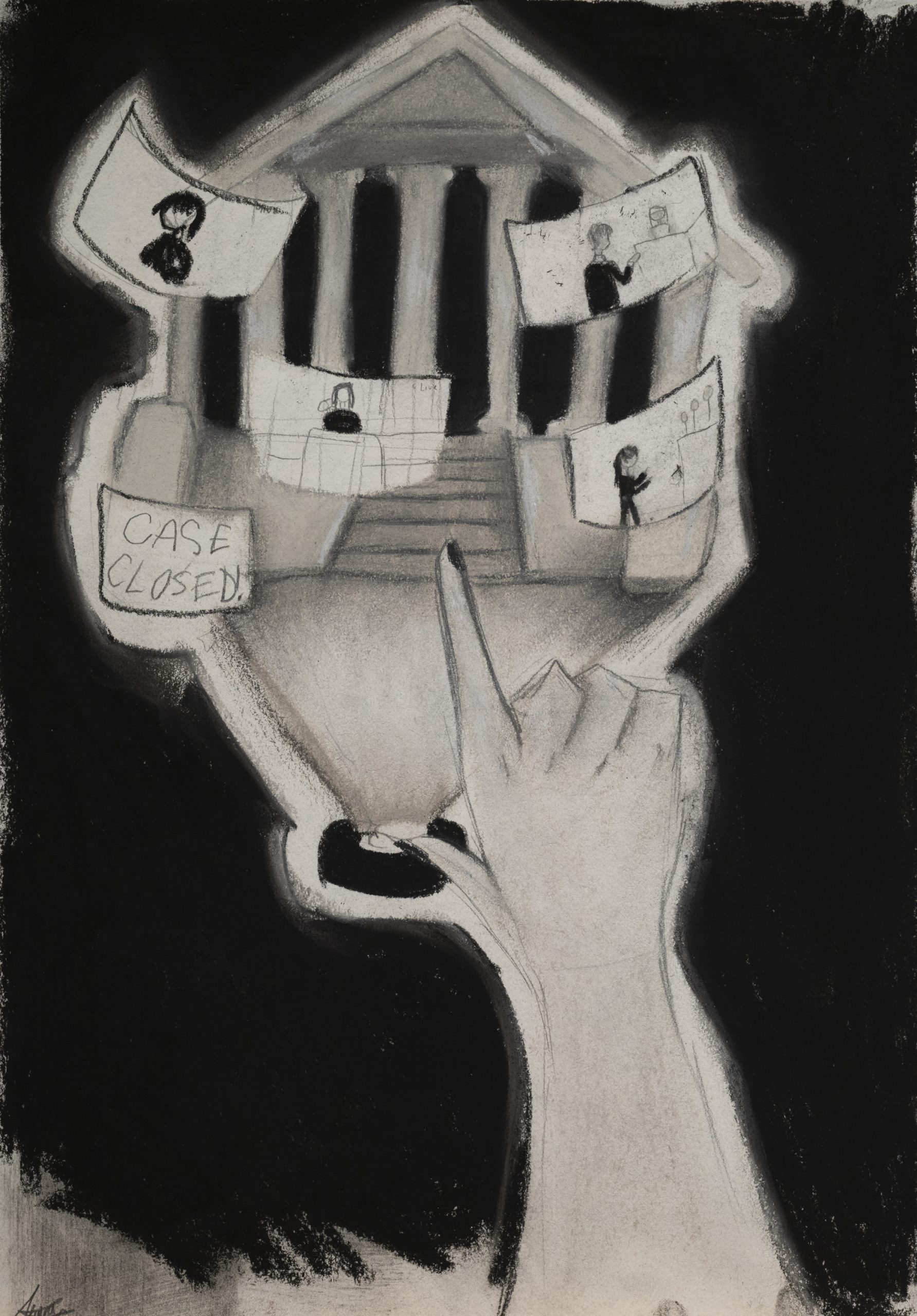
4.Project Title: 250 YEARS IN THE FUTURE: COURTHOUSE DESIGN
The idea behind this project was how the courthouse of the future might no longer be a physical building. Instead it could be a virtual reality experience. In this art piece we see the courthouse through a virtual reality helmet and a few different scenes that represent different scenes from a case(s).
Principal: Herman Guy
Teacher: Hannah Arroto Rivera
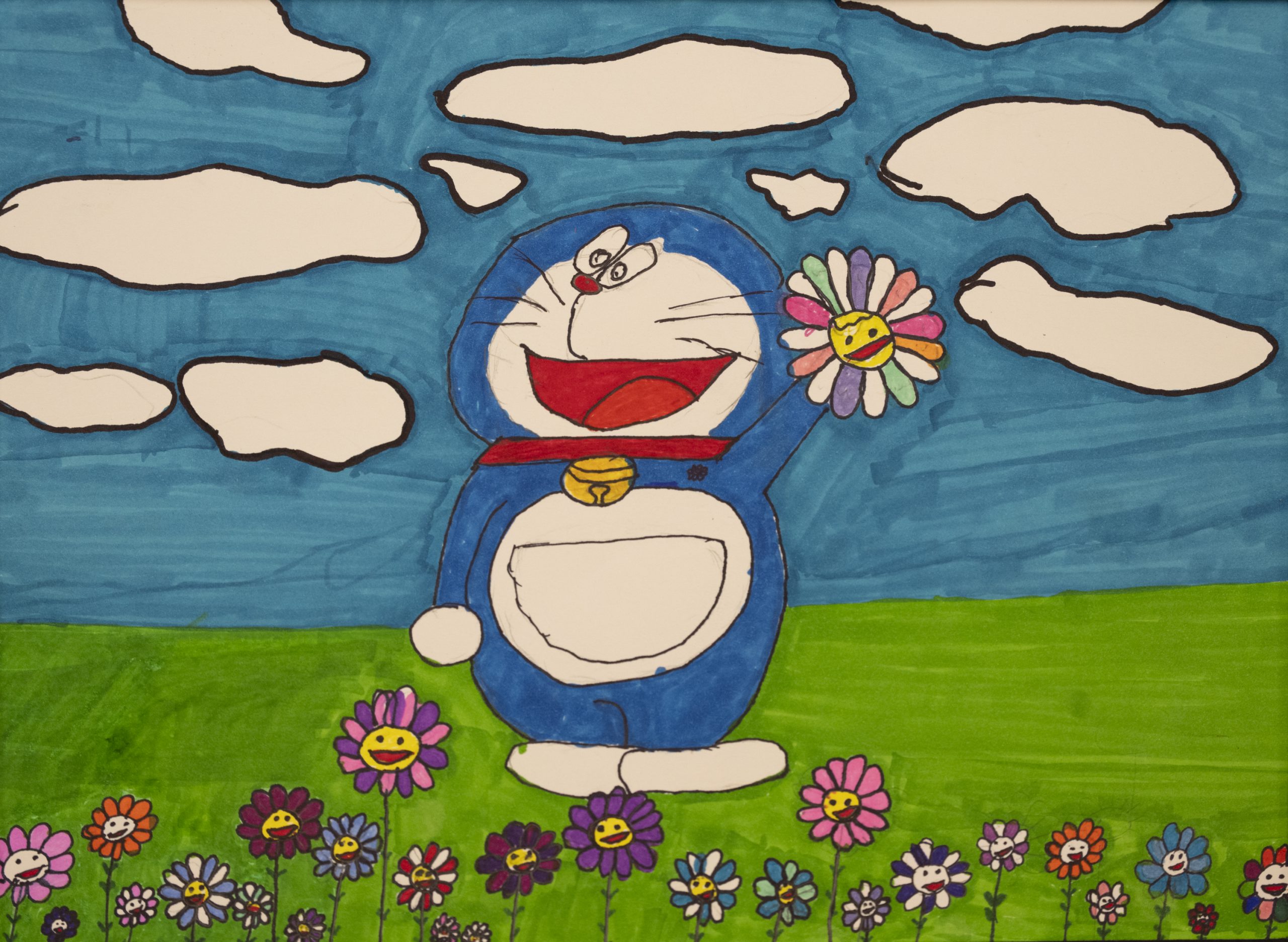
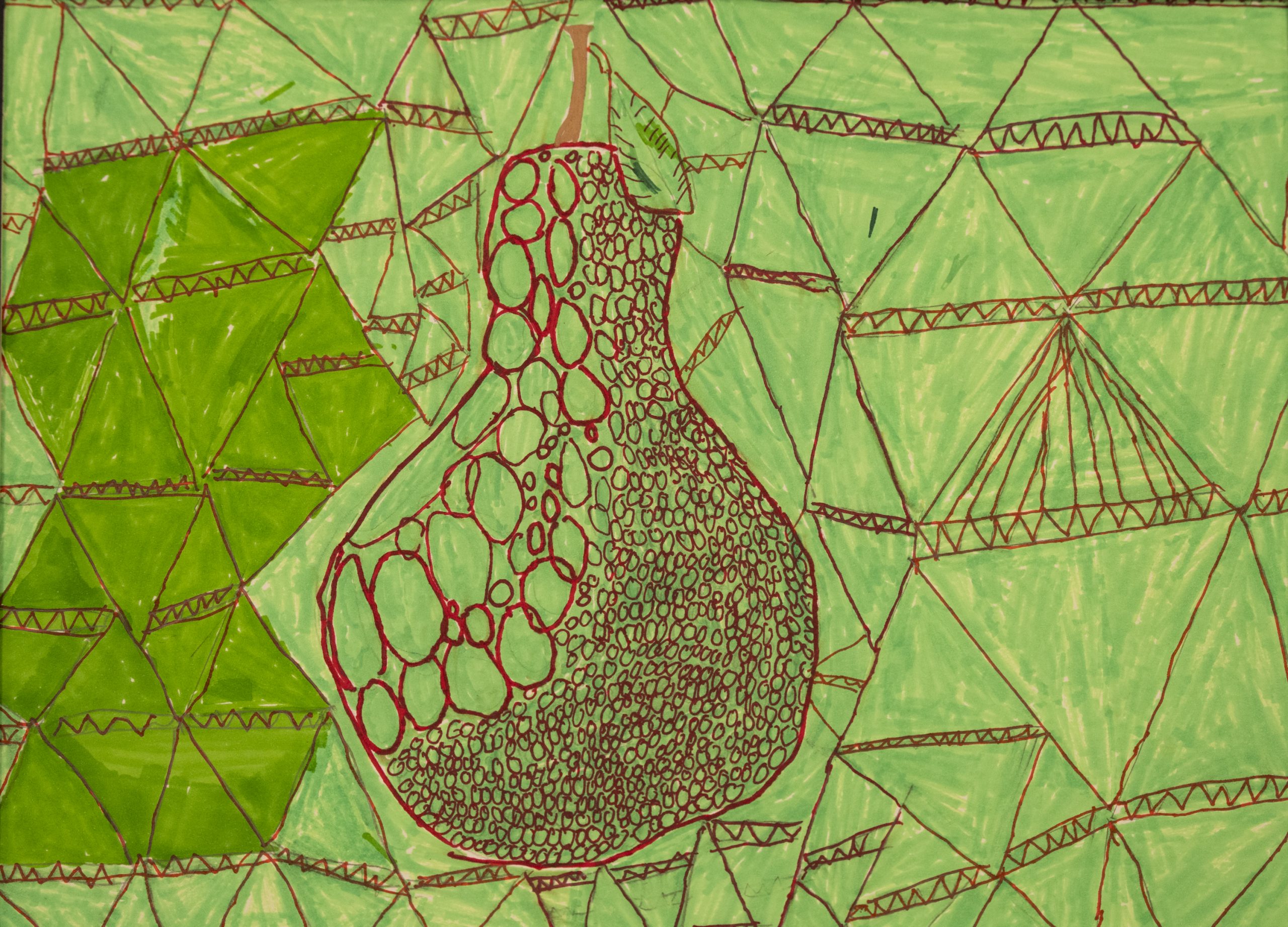
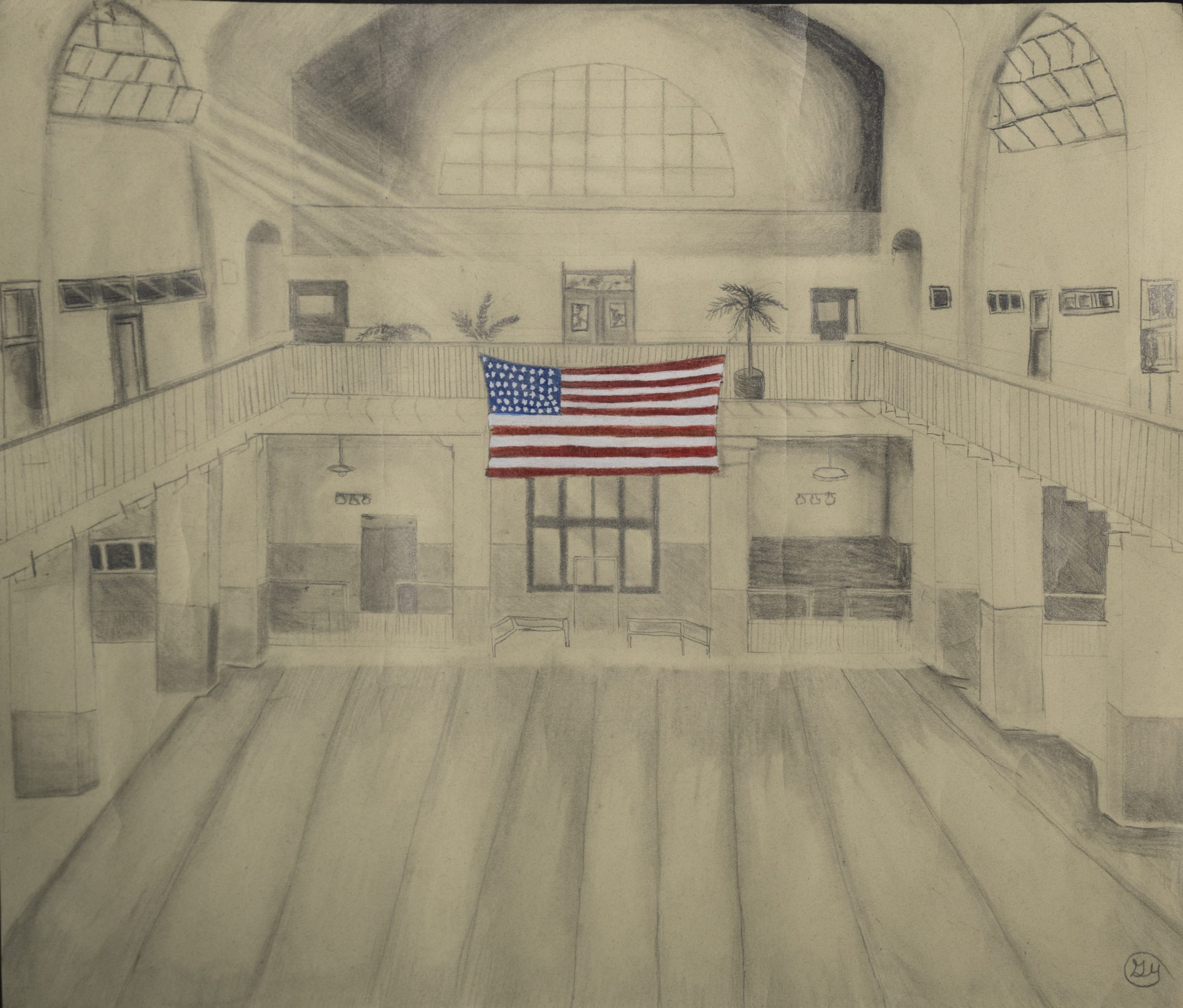
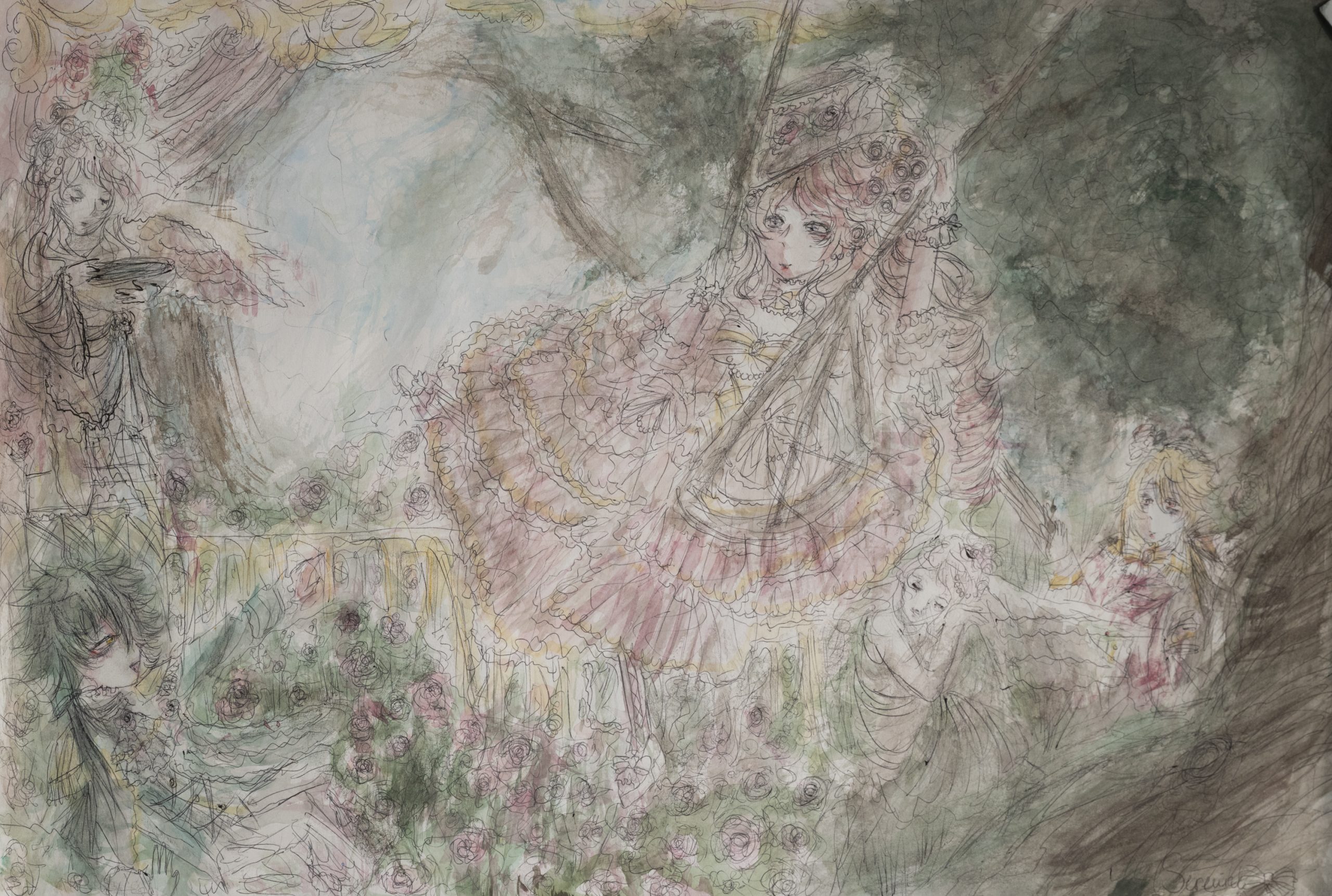
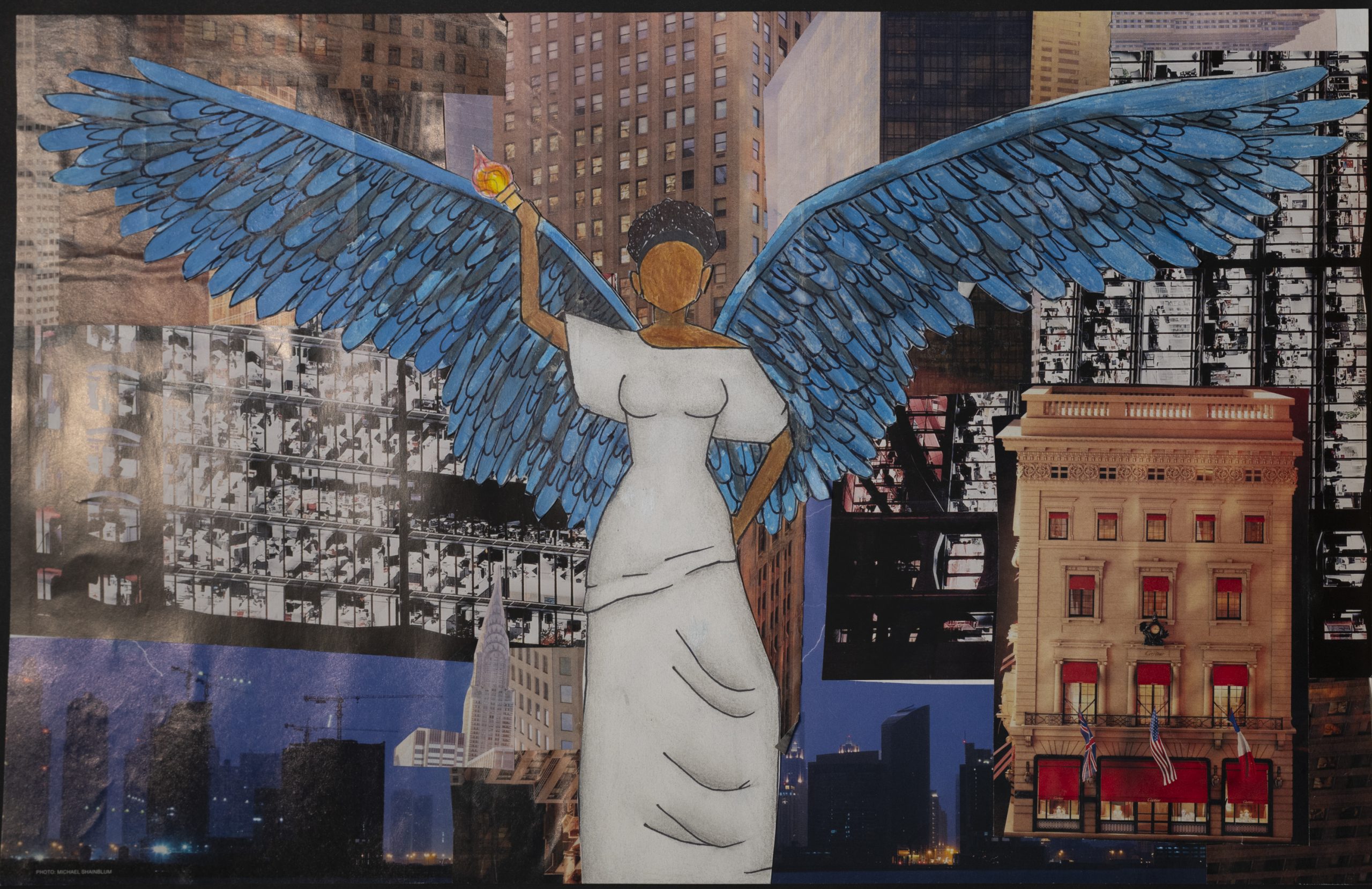
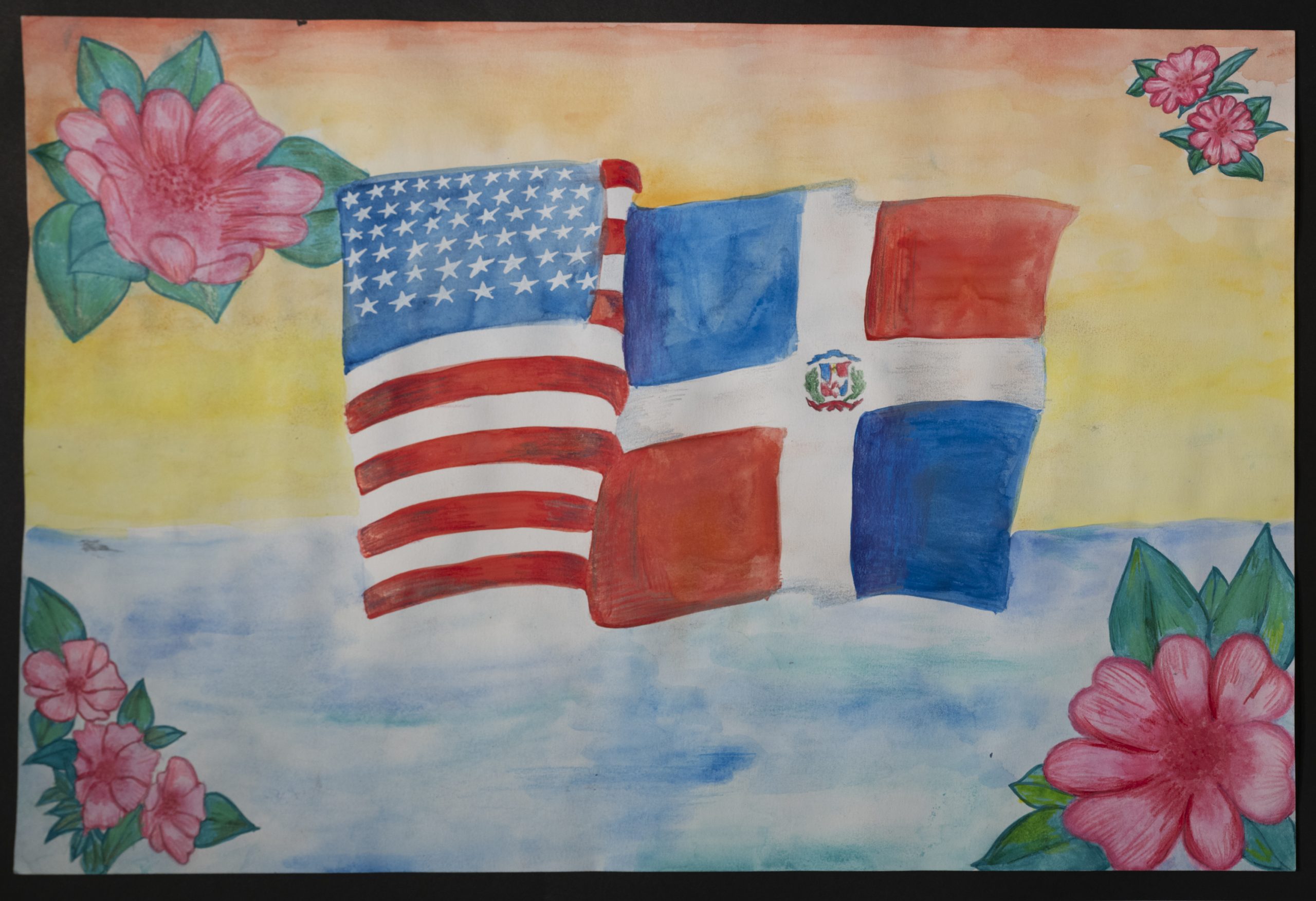
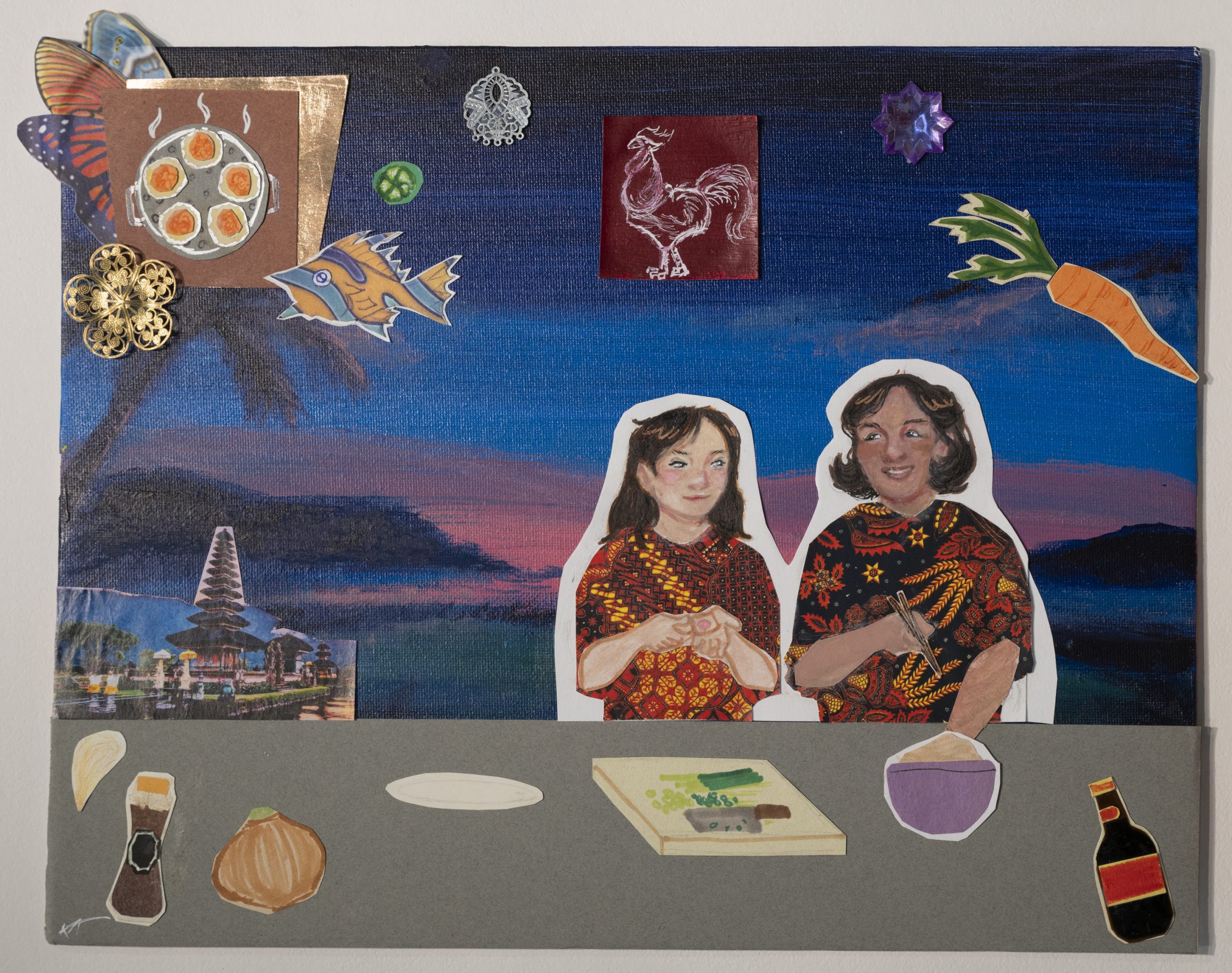
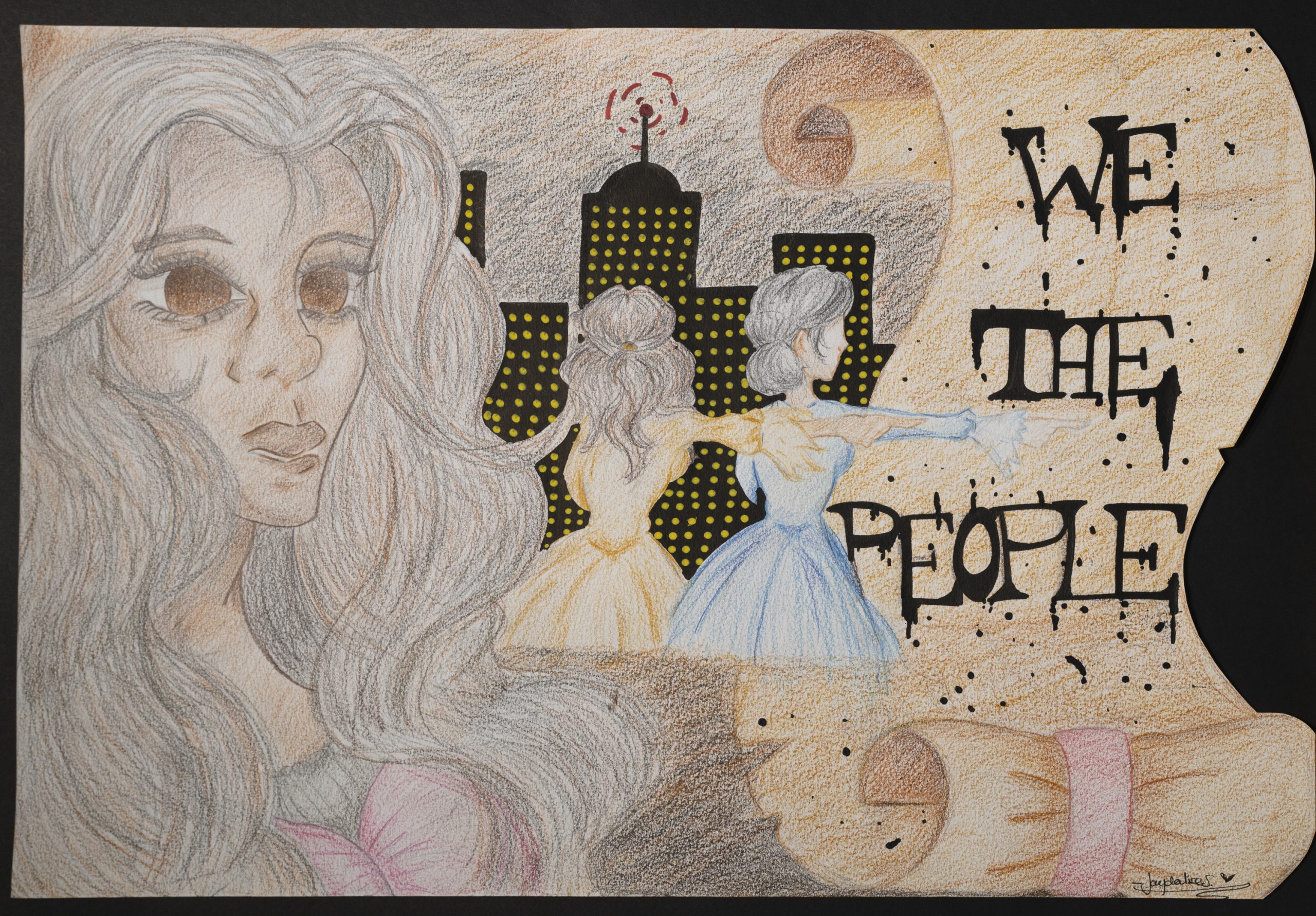
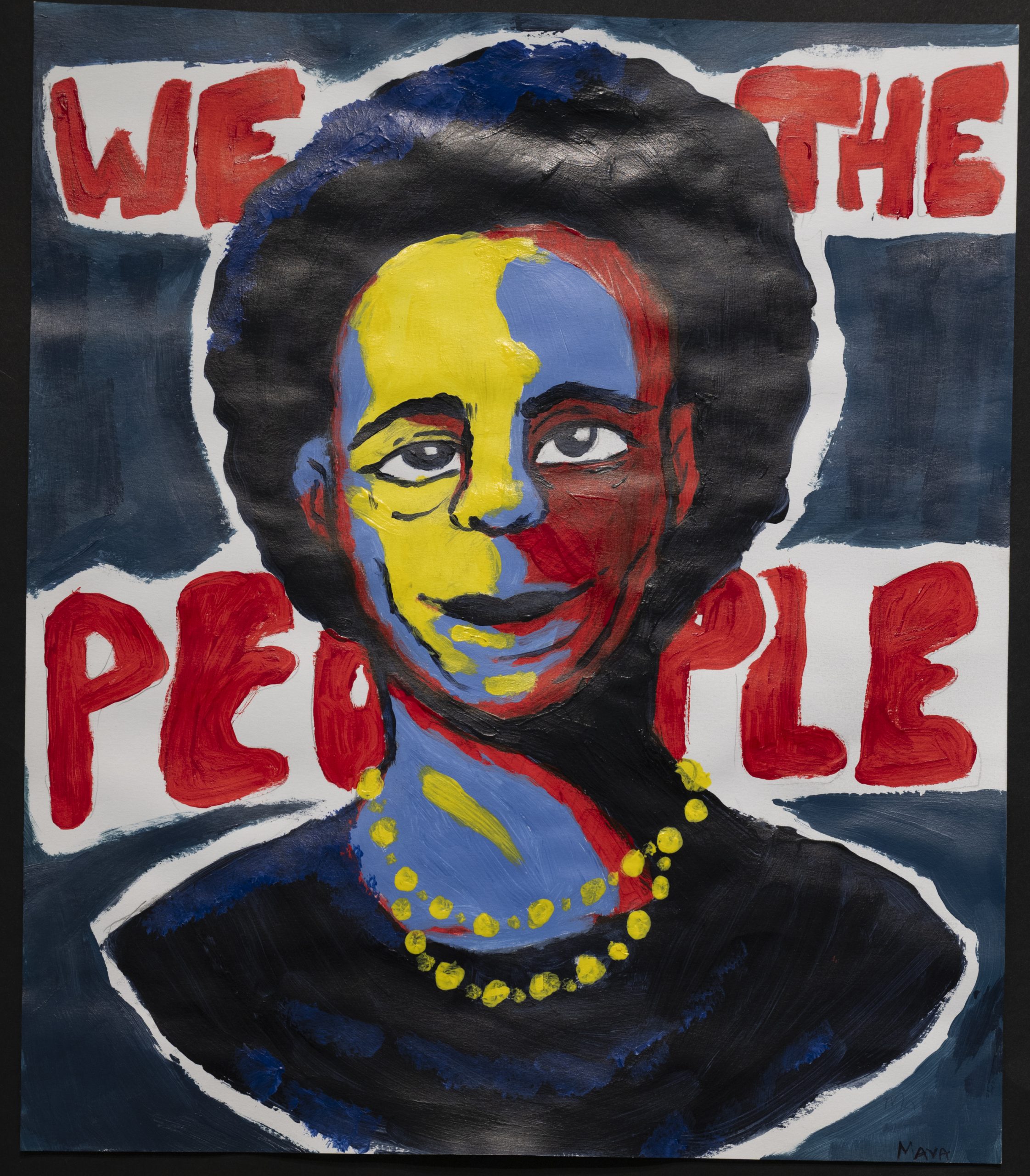
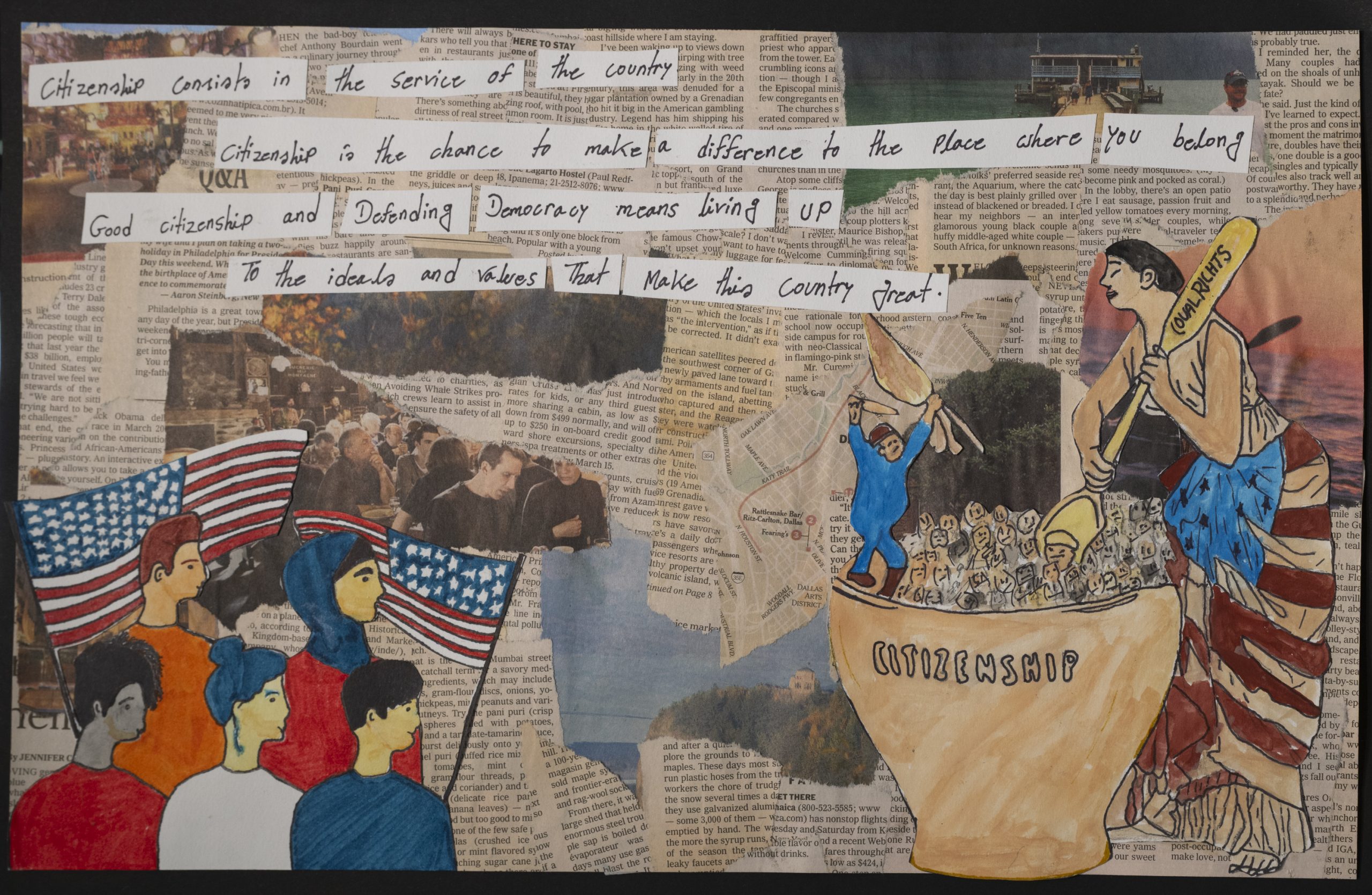
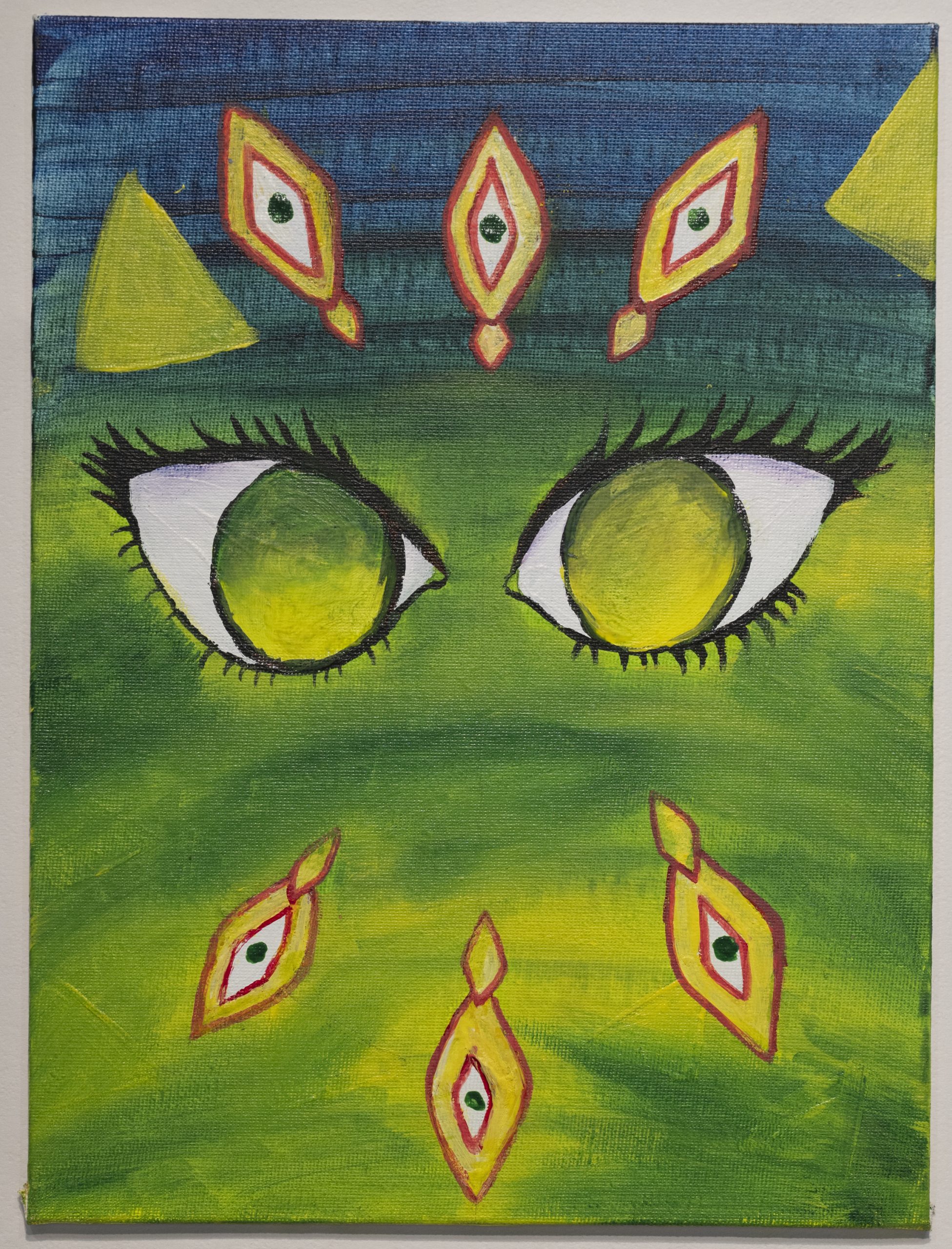
Project Title: OUR CULTURES, IDENTITIES, AND LIBERTY
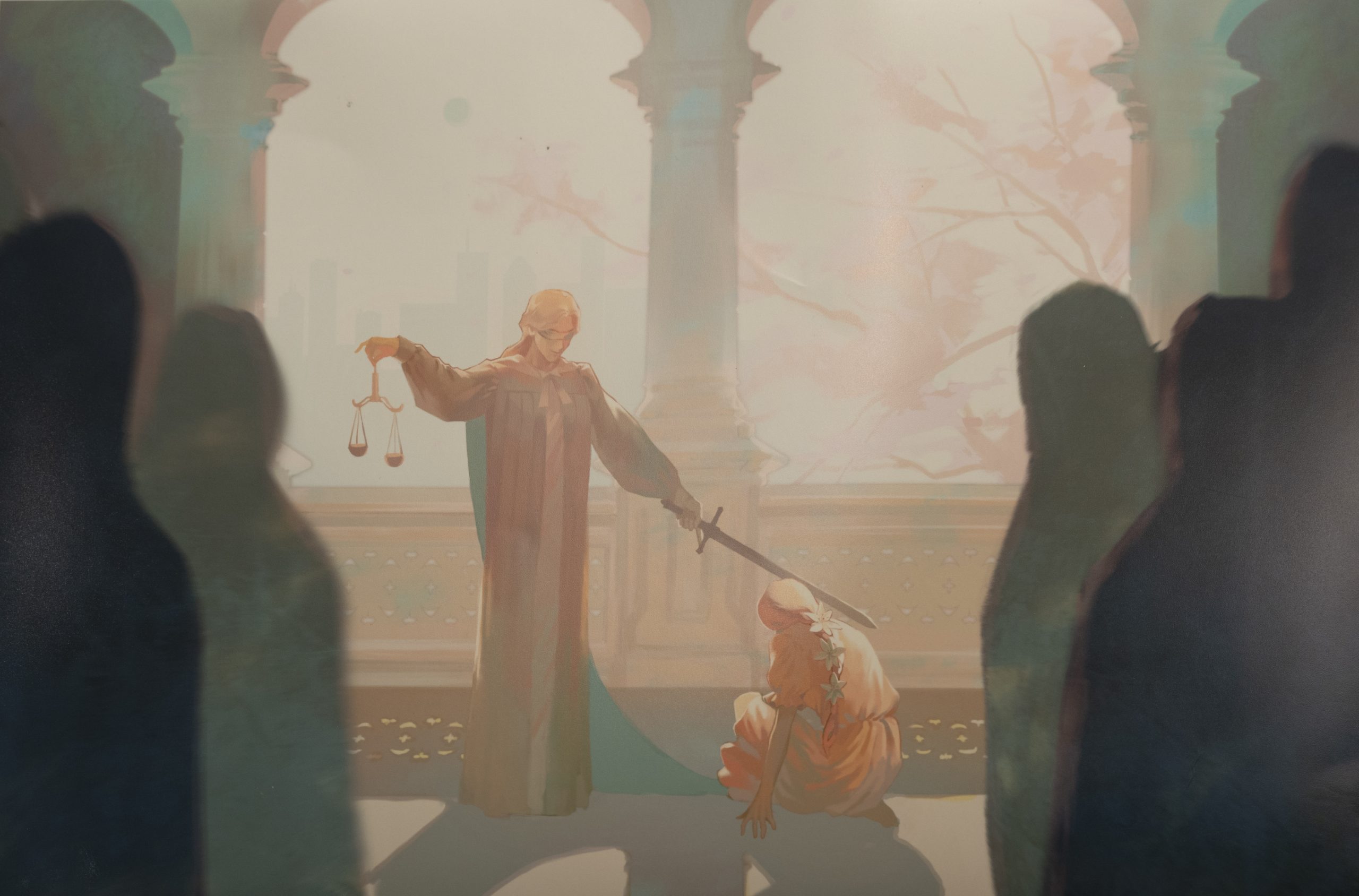
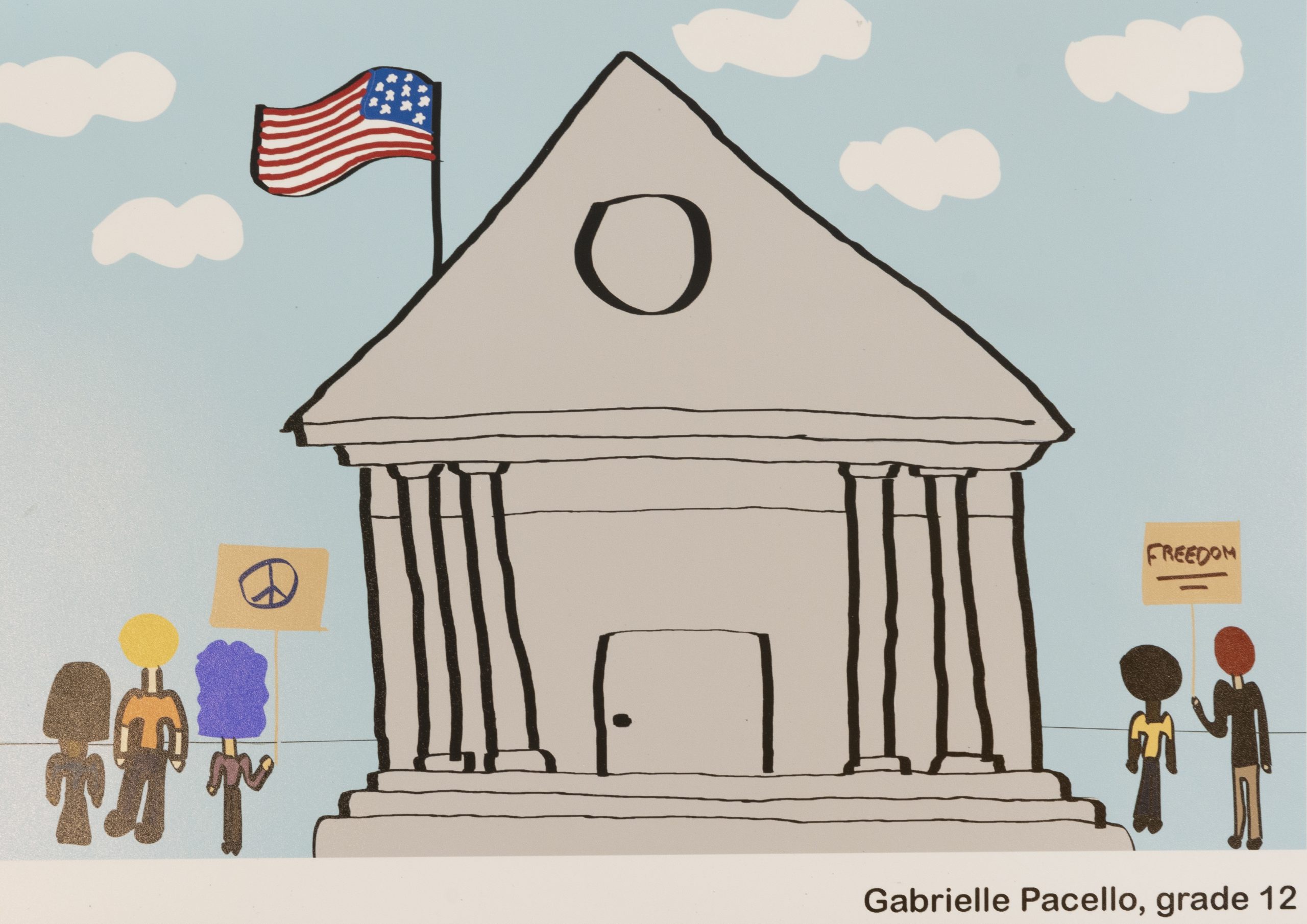
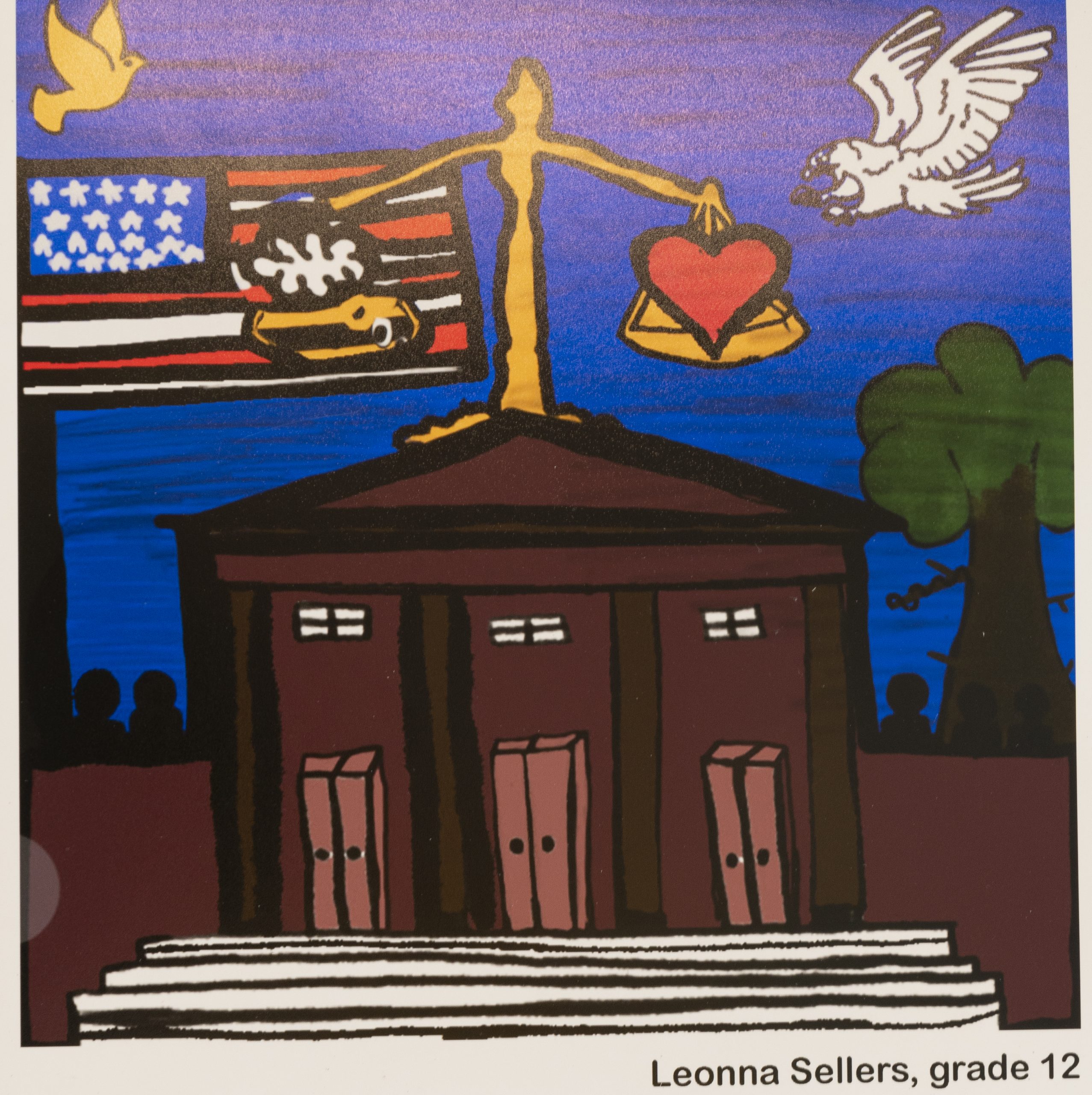
Students were challenged to represent their personalities, emotions, and cultures to create a mural design that could be seen in a courtroom, designs about their chosen judge and a visual representation of the Declaration of Independence. Students first looked towards the artists who collaborated together to create the murals at the Milwaukee County Courthouse as their main source of inspiration. Students also took inspiration from the bright vivid colors of Nayfa Naji expressing her Arabic culture and equality in her mural as well as LUNA exploring Lady Justice through butterflies and nature to increase Latinx artist representation. Each artist took a unique approach to playing around with imagery, symbolism, and art materials as a collaborative effort to celebrate their individuality living here in NYC. A wide variety of mediums were available for students to use- pencils, pens, markers, colored pencils, pastels, watercolor paint, acrylic paint markers and magazine collage. From creating sketches to looking at reference photos, each student created drawings, paintings and collages surrounding our topics of freedom, peace, and our individual cultures living here in the Bronx.
Principal: Asia Burnett
Teacher: Erica Yonks
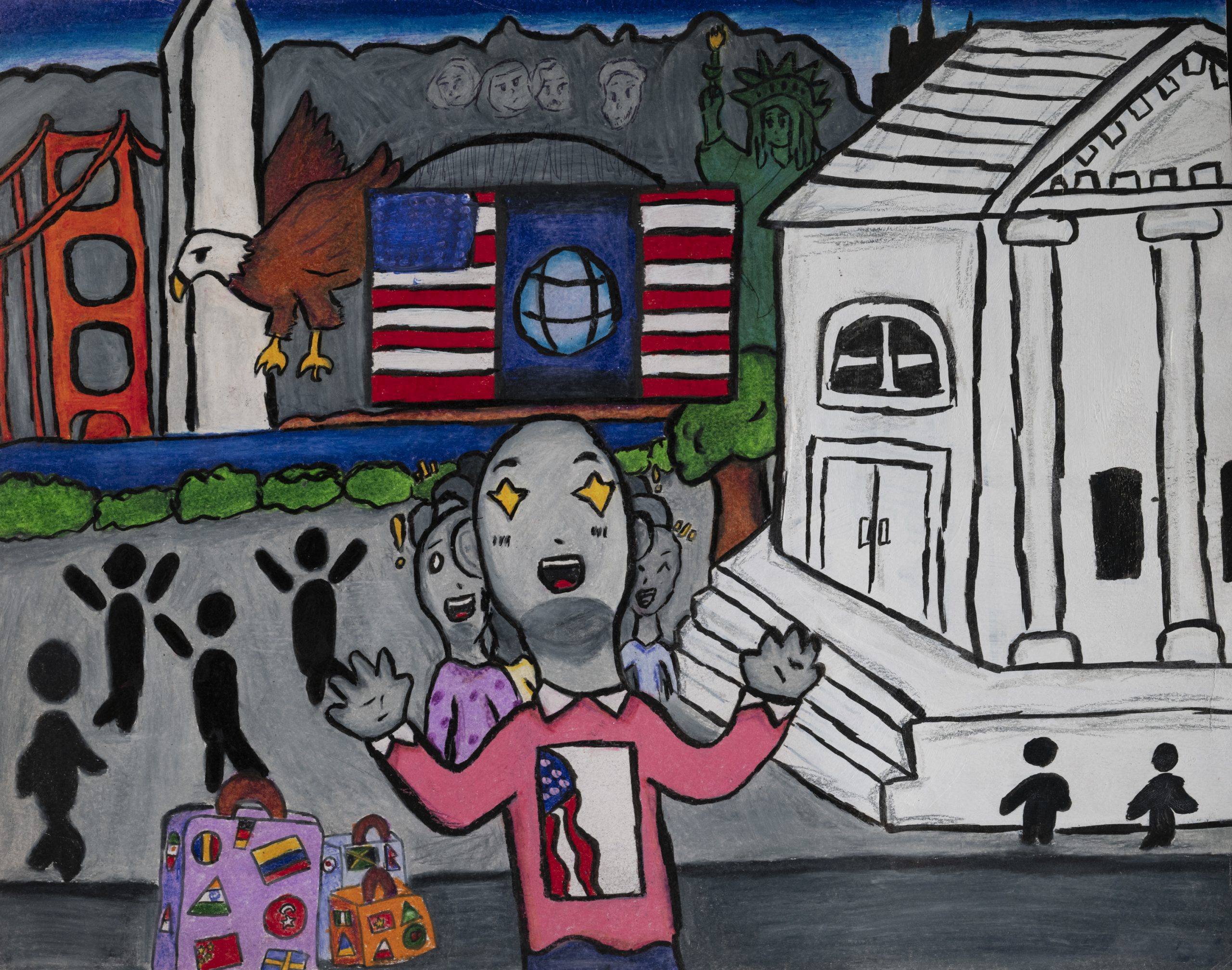
1.Project Title: WE ARE AMERICA
Artists collaborated in a large tapestry to represent young people in America, especially New York City today. No artist had complete control, as all worked in different parts of the the art piece.
2.Project Title: DECLARATION OF INDEPENDENCE
Artist researched the Declaration of Independence and thought of all the people that are protected. Artist combined pens, stencils, and paint to complete artwork.
3.Project Title: THE FUTURISTIC COURTHOUSE & JUSTICE STAMP
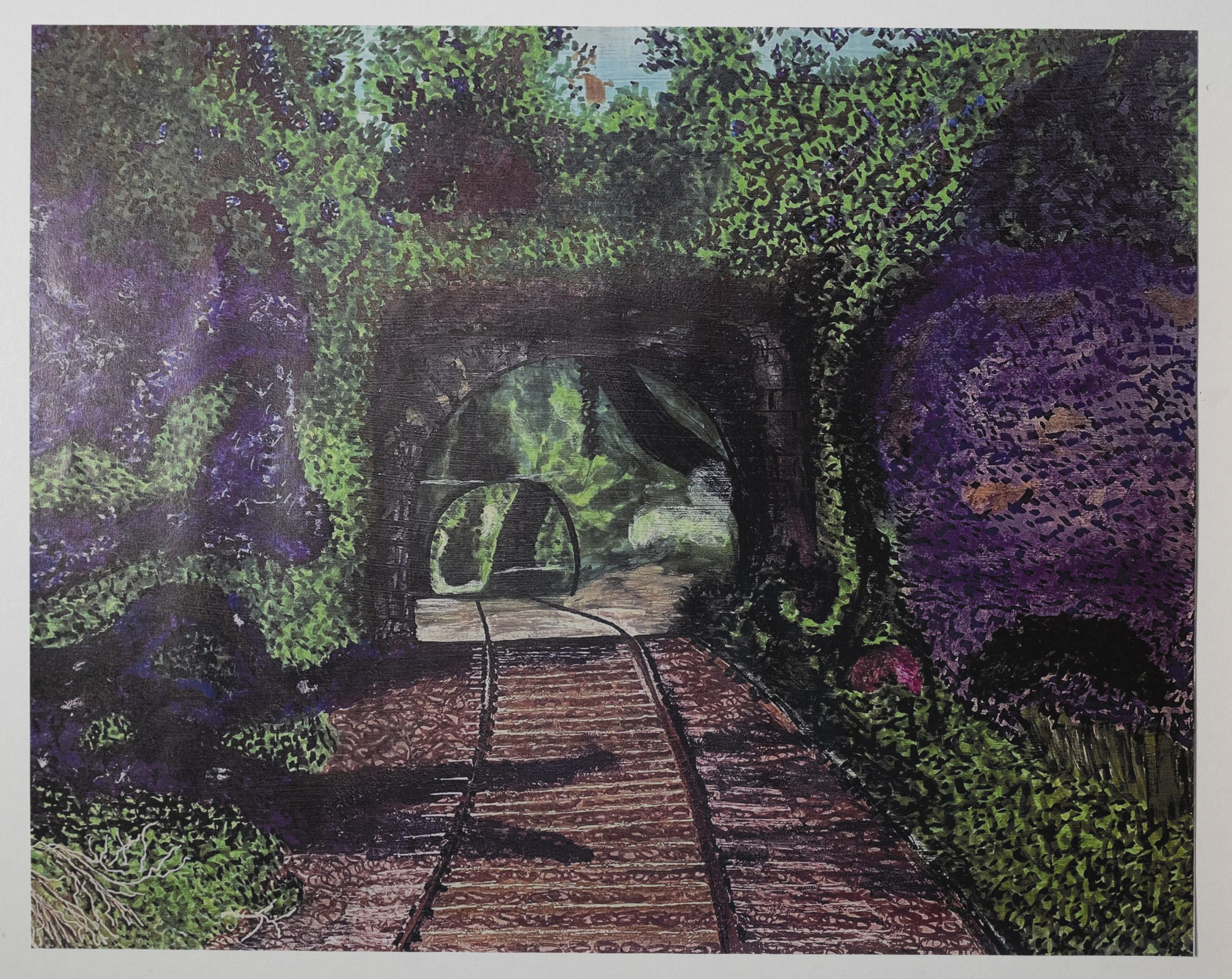
Artist imagined what a futuristic courthouse world would have. He enjoyed the idea of lots of flowers and a beautiful pathway that leads to the justice process.
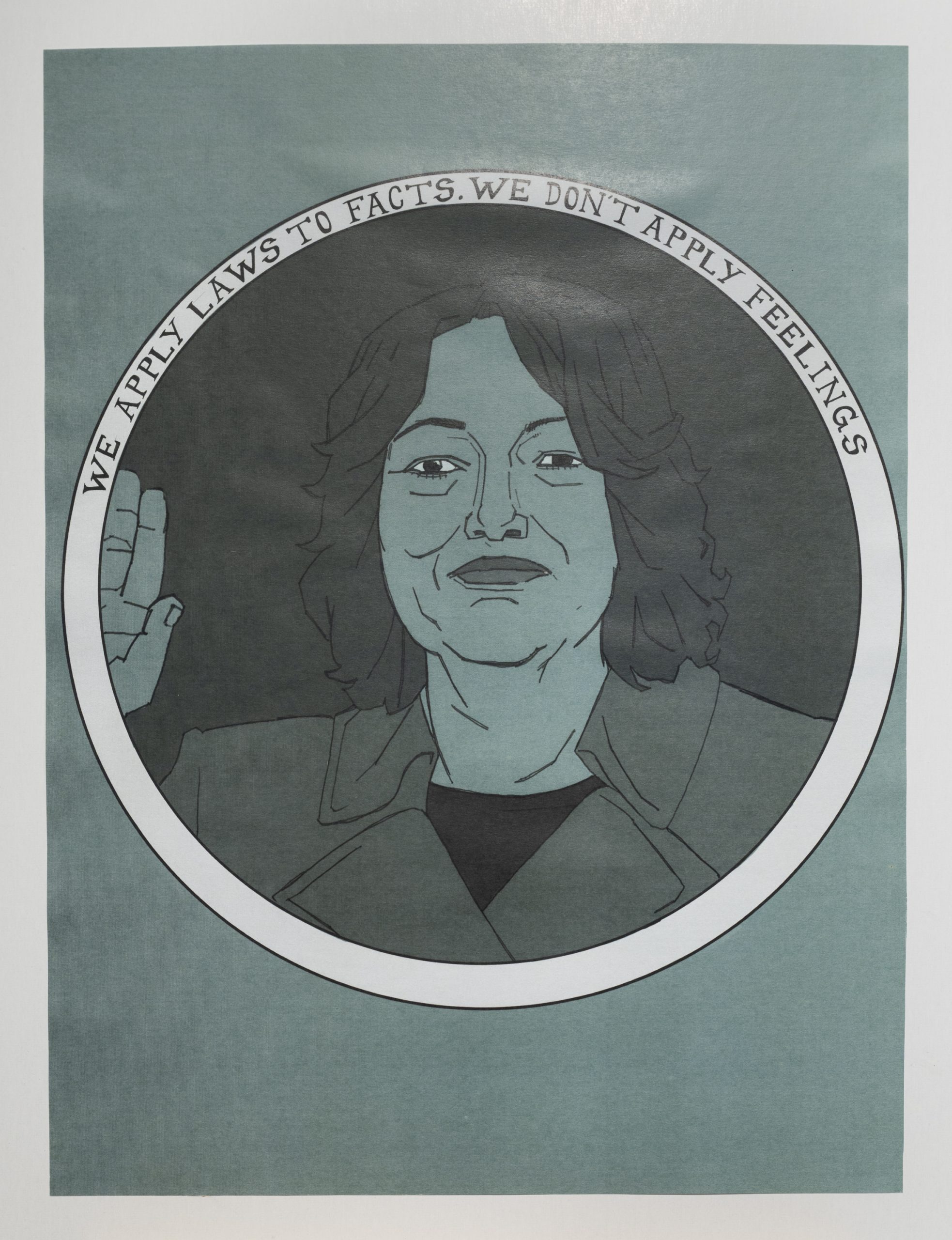
4.Project Title: THE REPRESENTATION WE NEED THE MOST
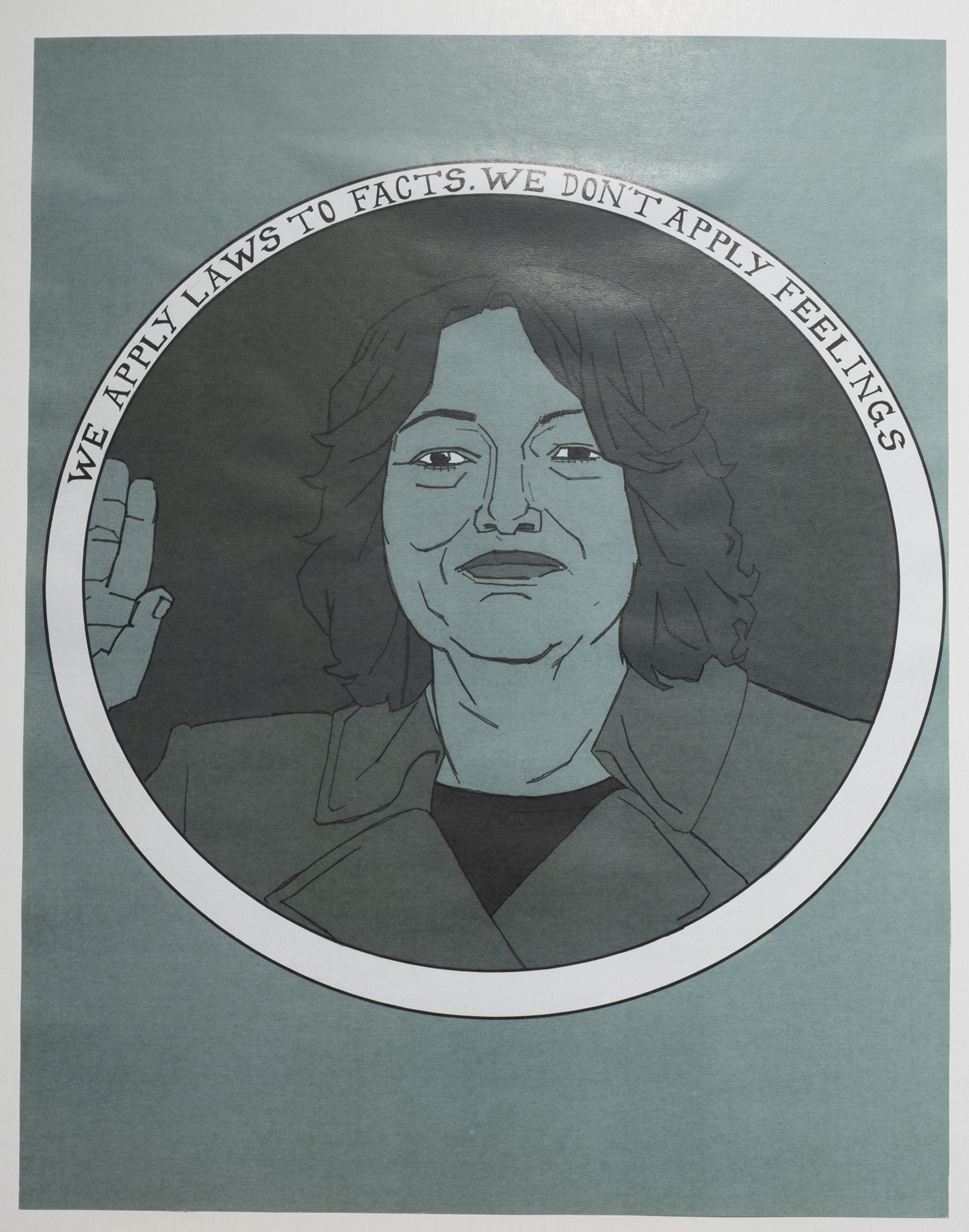
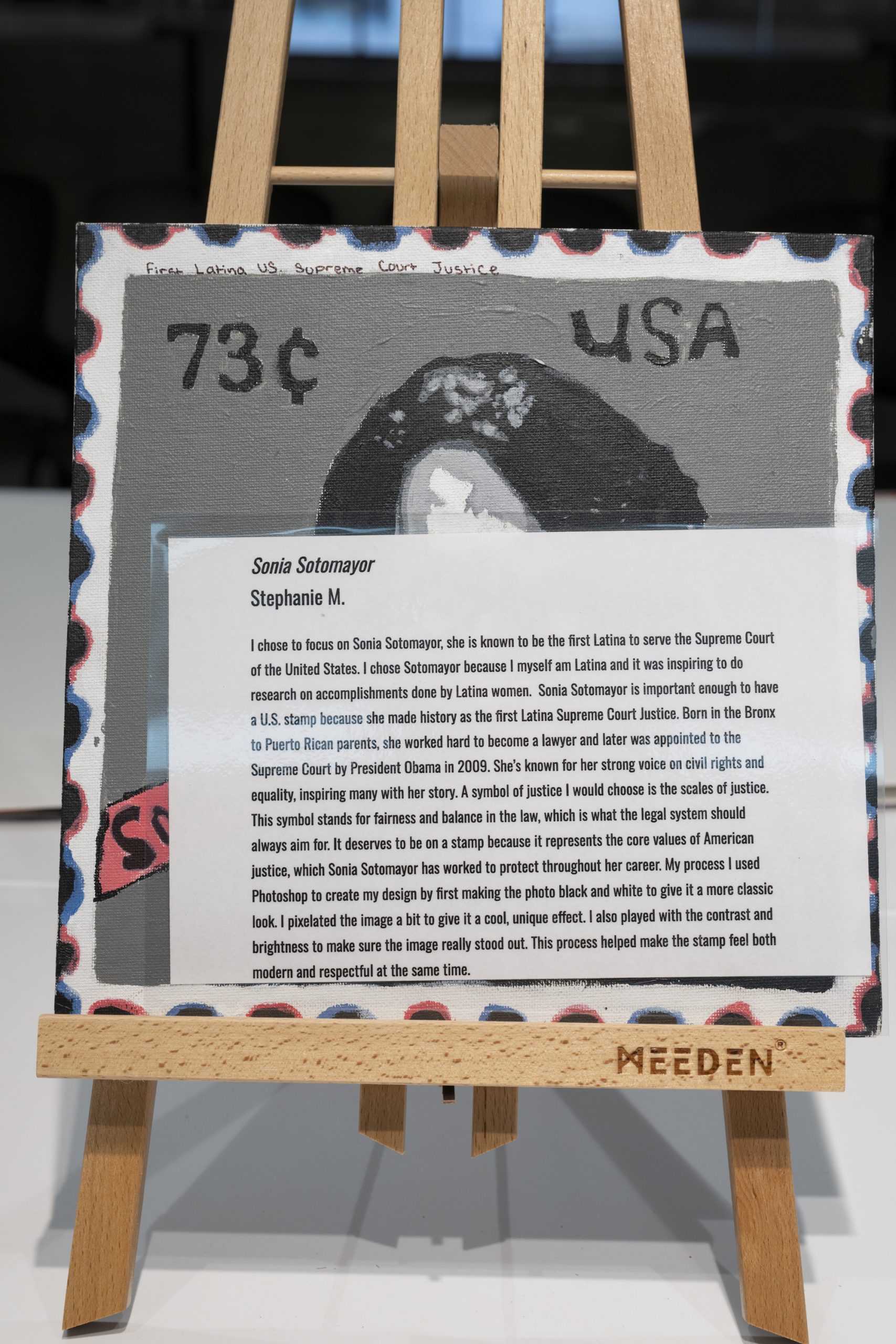
Choosing the justice she relates to most, artist used watercolor, pens, the Cricut machine, and her respect for Sonia Sotomayor to create this piece.
5.Project Title: BALANCE OF LAW
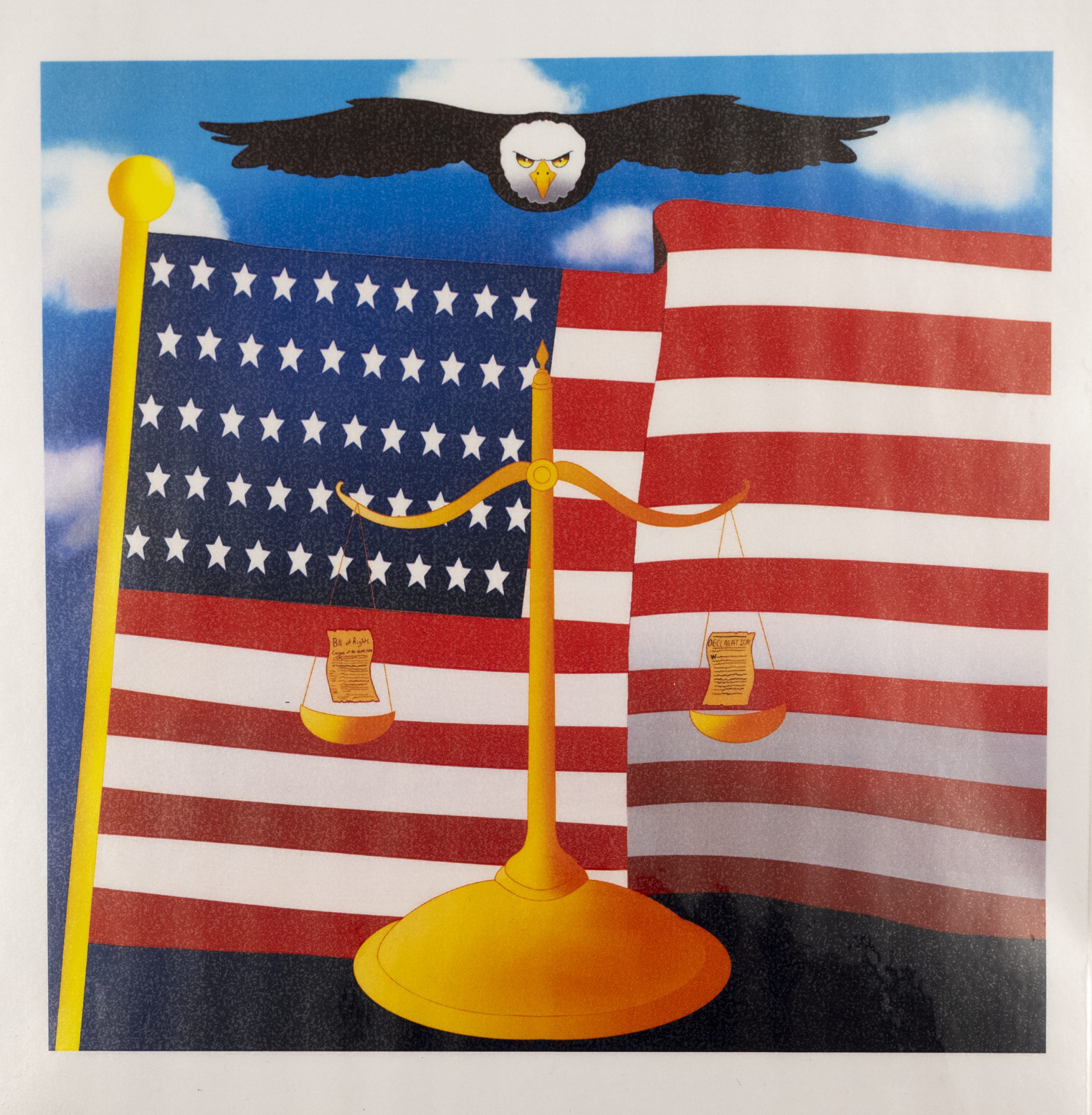
The artist used her favorite materials, watercolors, to create this artwork. She is idolizing the Declaration of Independence and putting it on a pedestal of books to represent the ideals behind the great document.
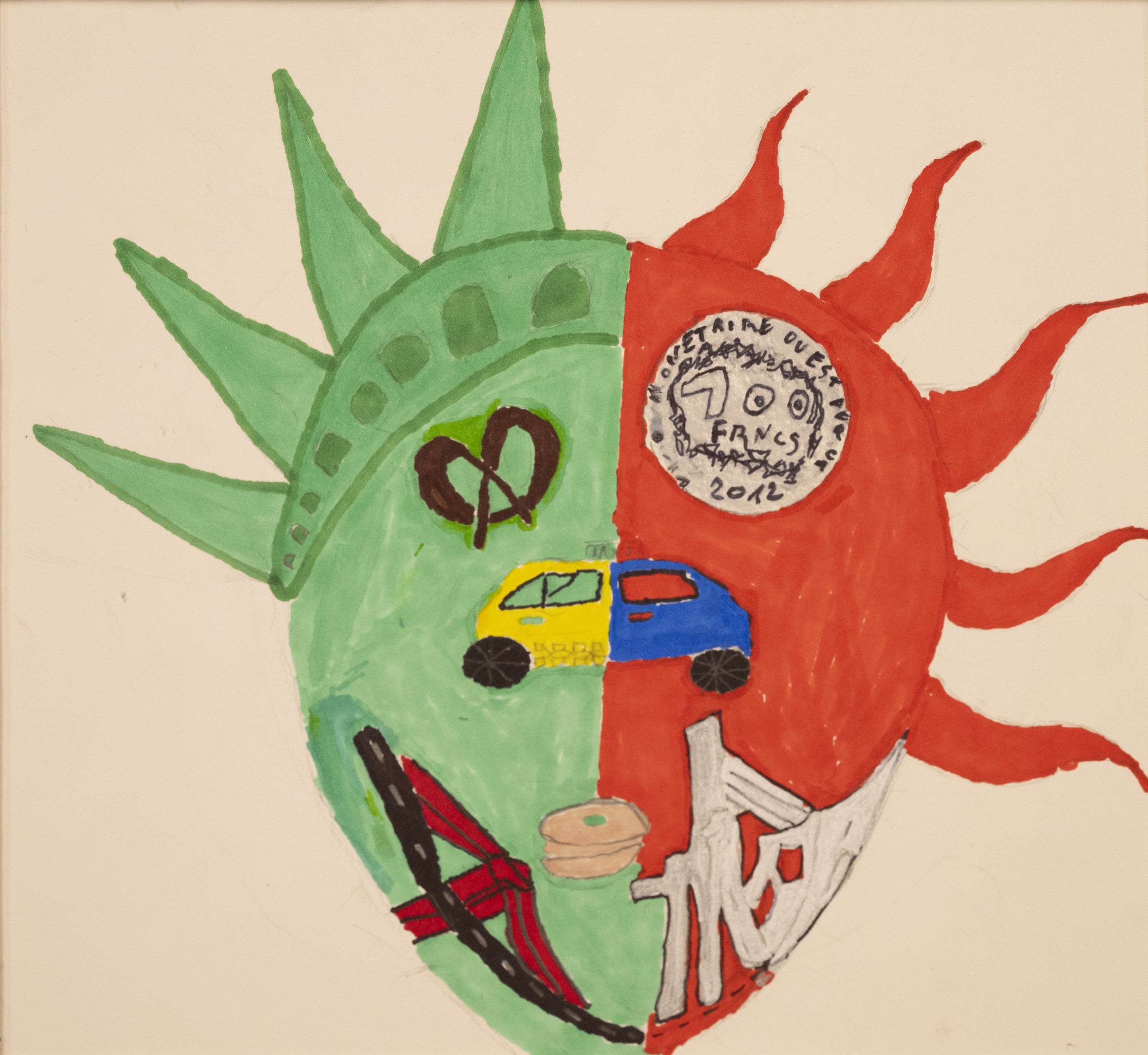
6.Project Title: STATUE OF LIBERTY
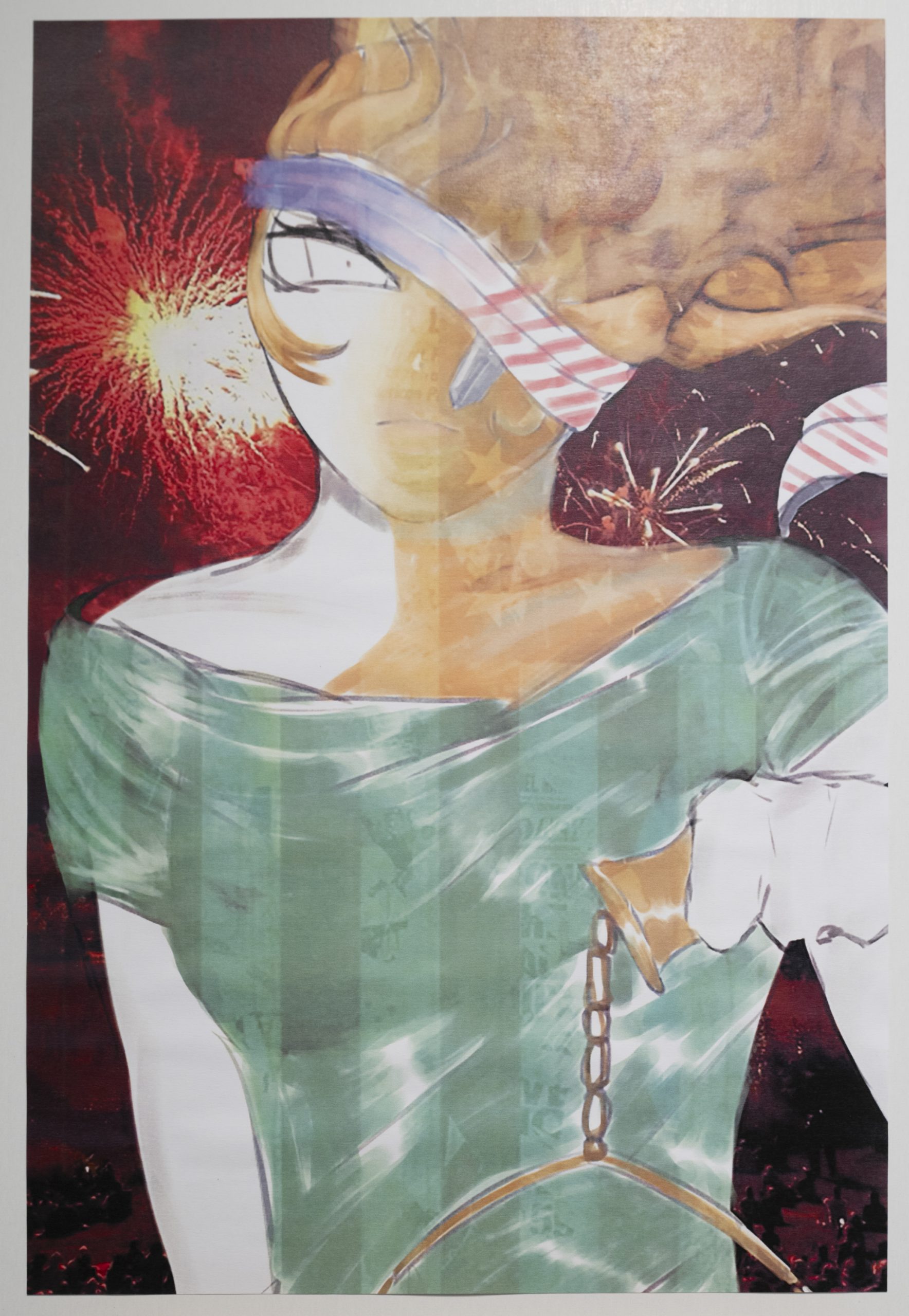
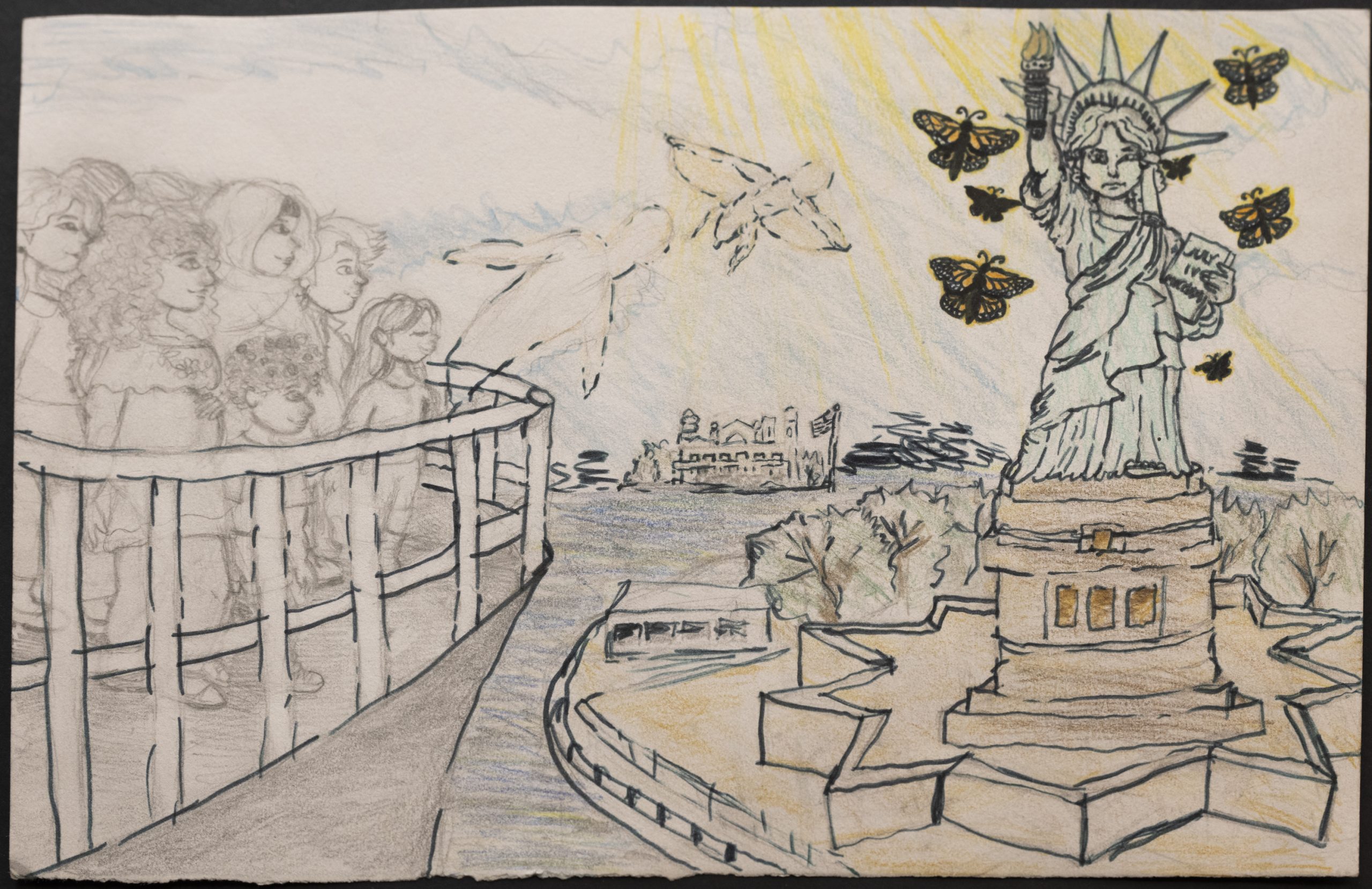
The artists represent the strength of the people that the Statue of Liberty represents. He is symbolizing how difficult it is to uphold the meaning of the statue.
7.Project Title: WE ARE ALL AMERICAN
The artist drew himself on a postage stamp to express the demographic of the American people.
8.Project Title: FREEDOM
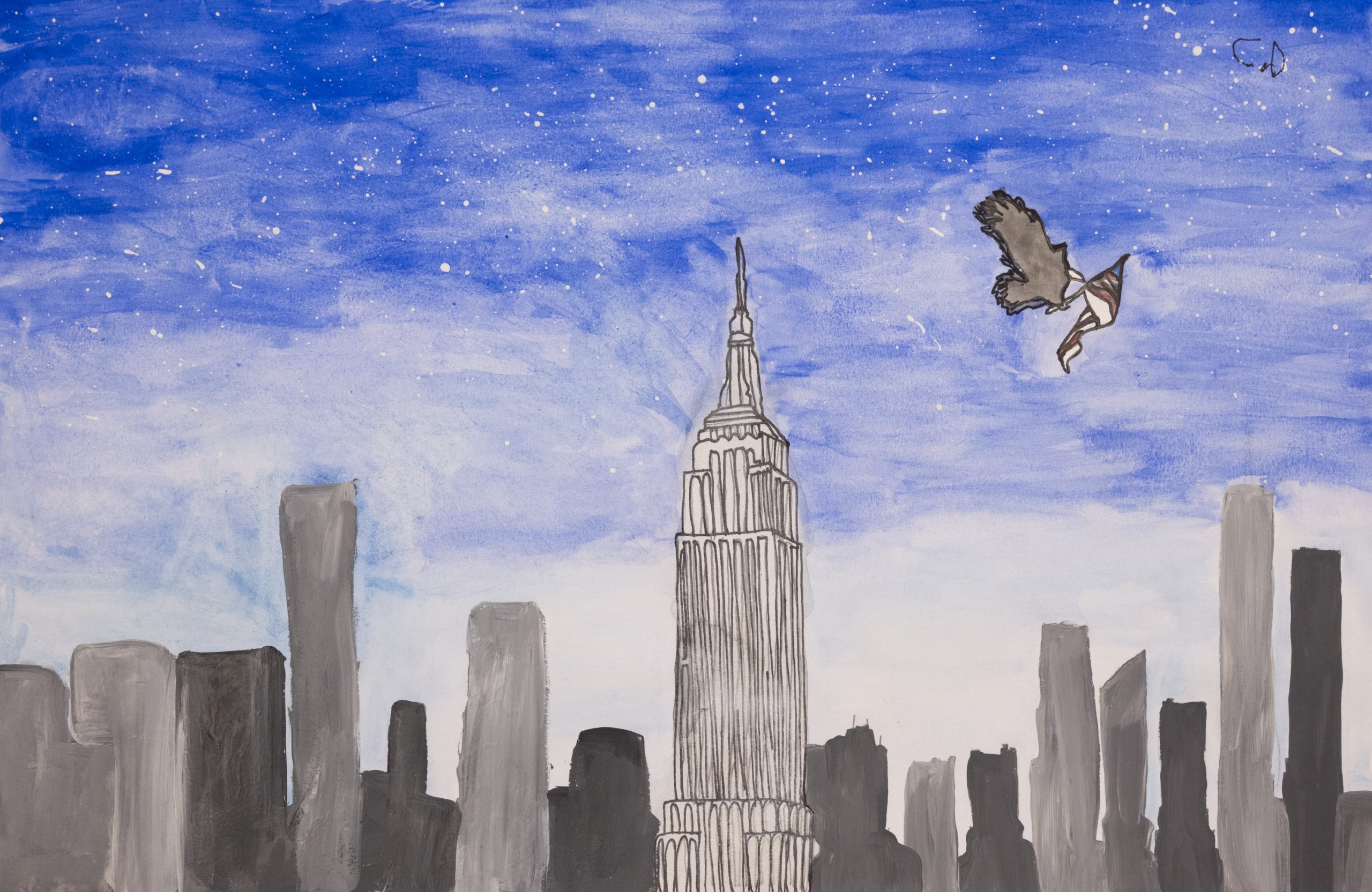
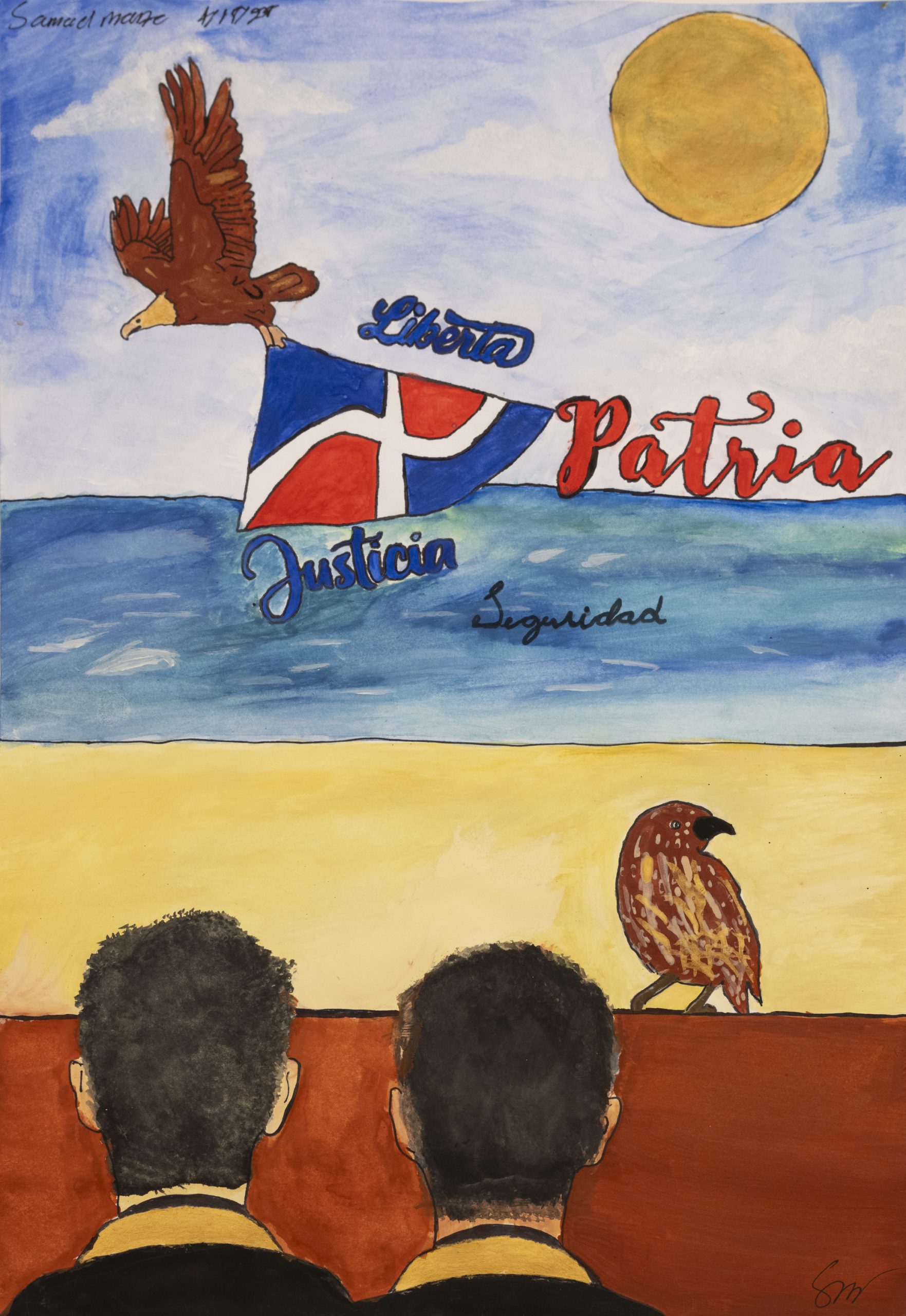
The American Bald Eagle is our national bird. Birds take flight and can symbolize freedom we have the rights to.
9.Project Title: UNITED BY DIFFERENCES
This tapestry represents all the different people that are united by our great country.
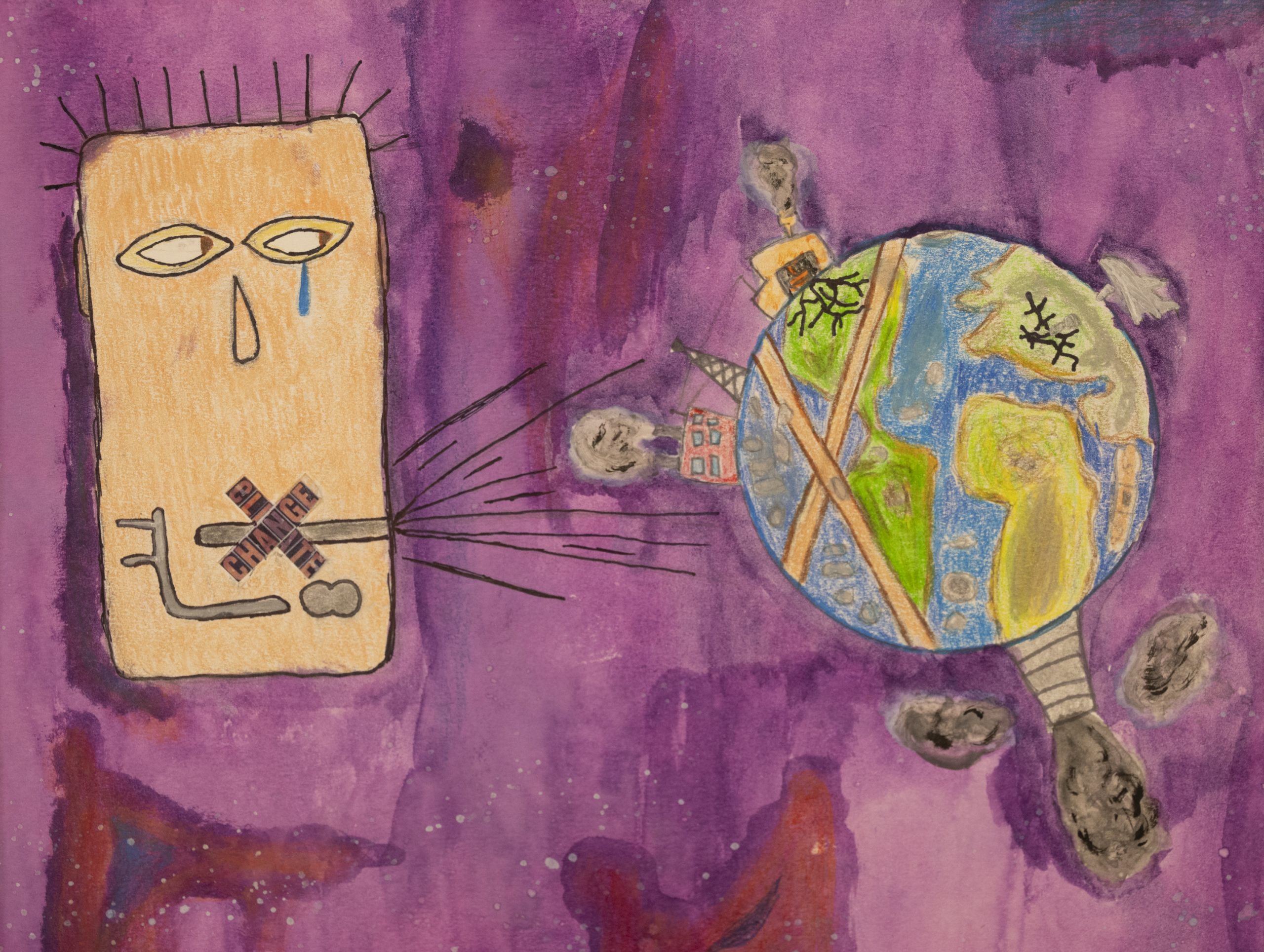
10.Project Title: JUSTICE
Artist drew her ideas around the freedom of climate change and the dangers of global warming.


Principal: David A. Cugini
Teacher: Michael Young
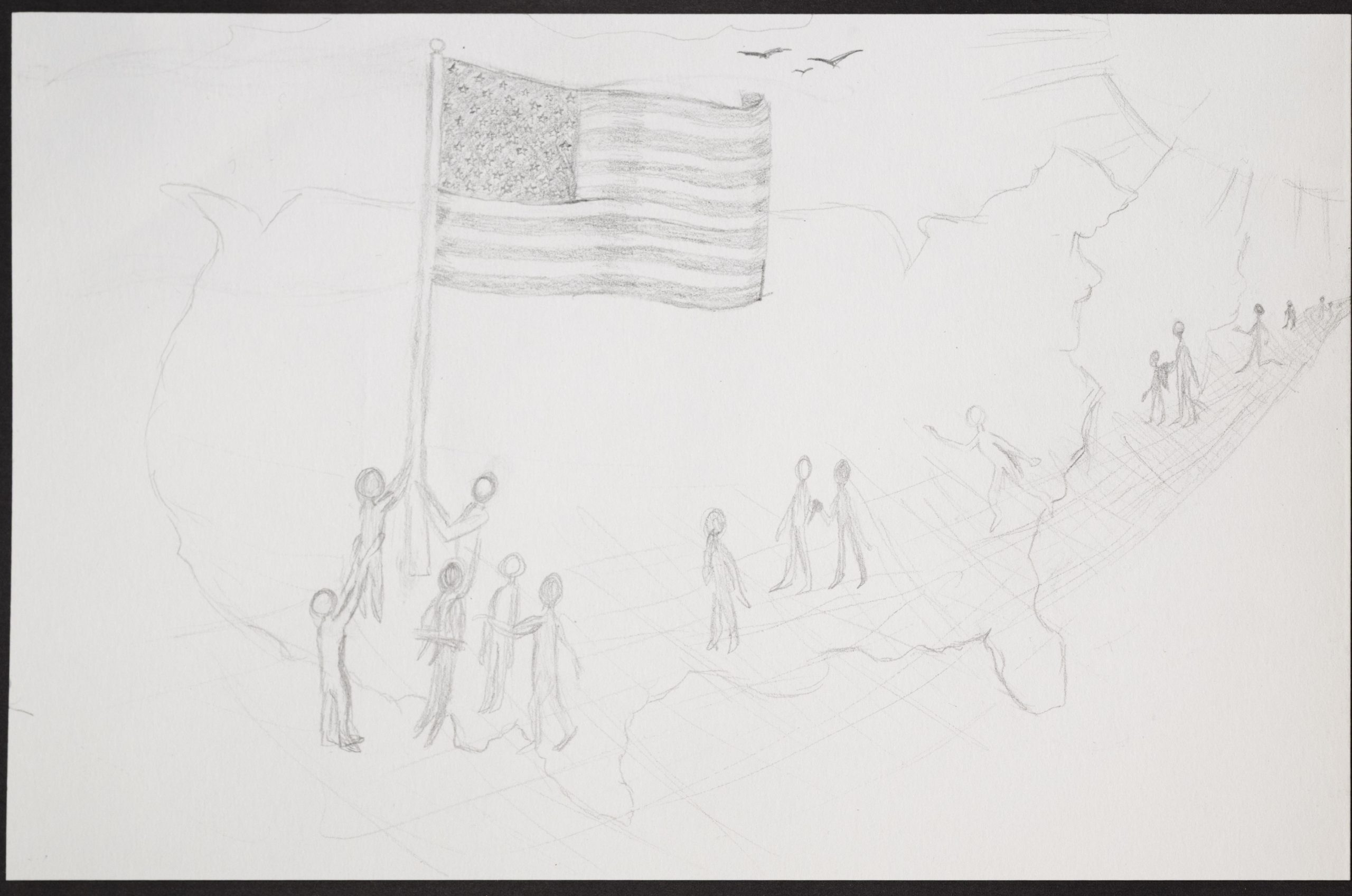
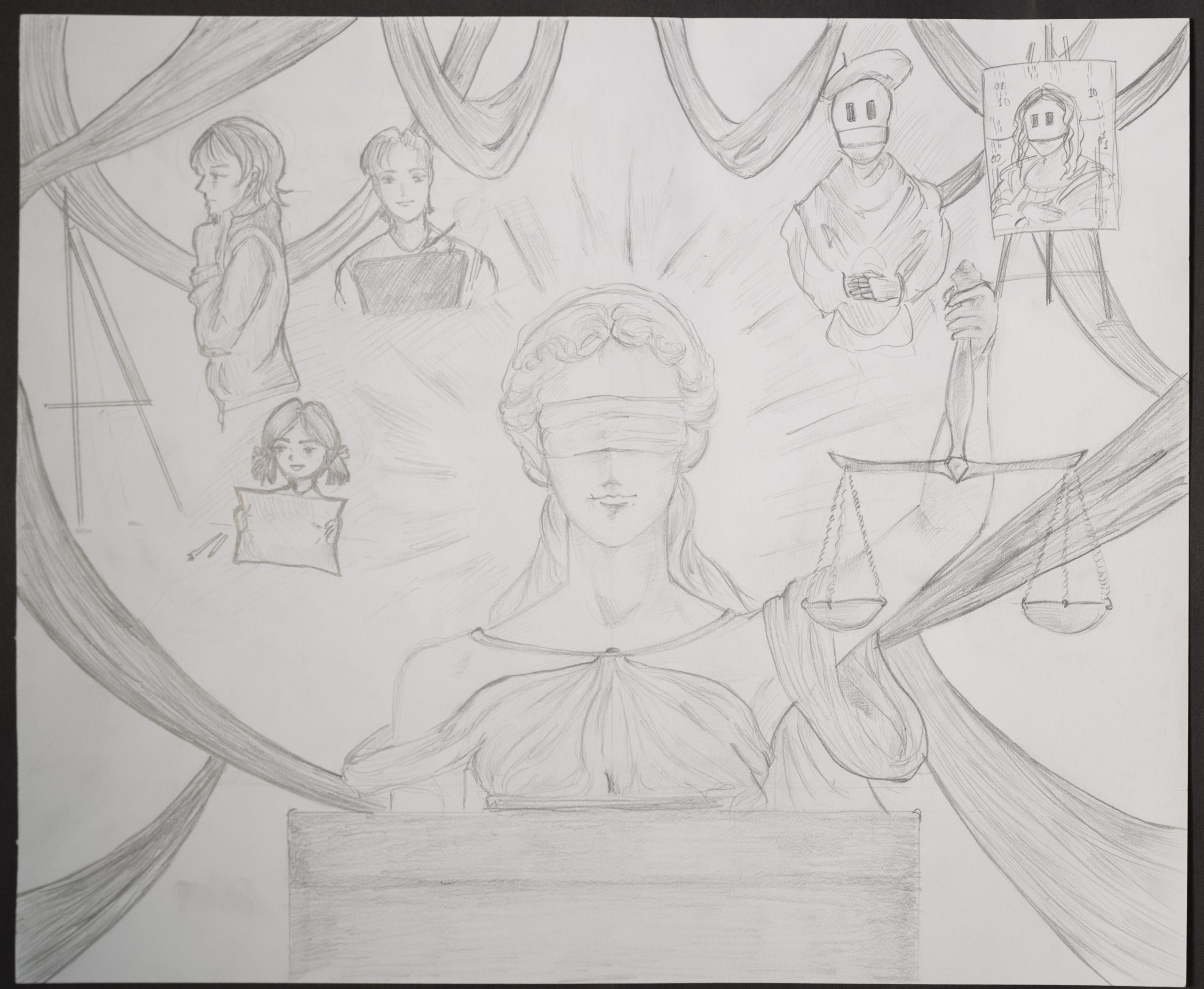
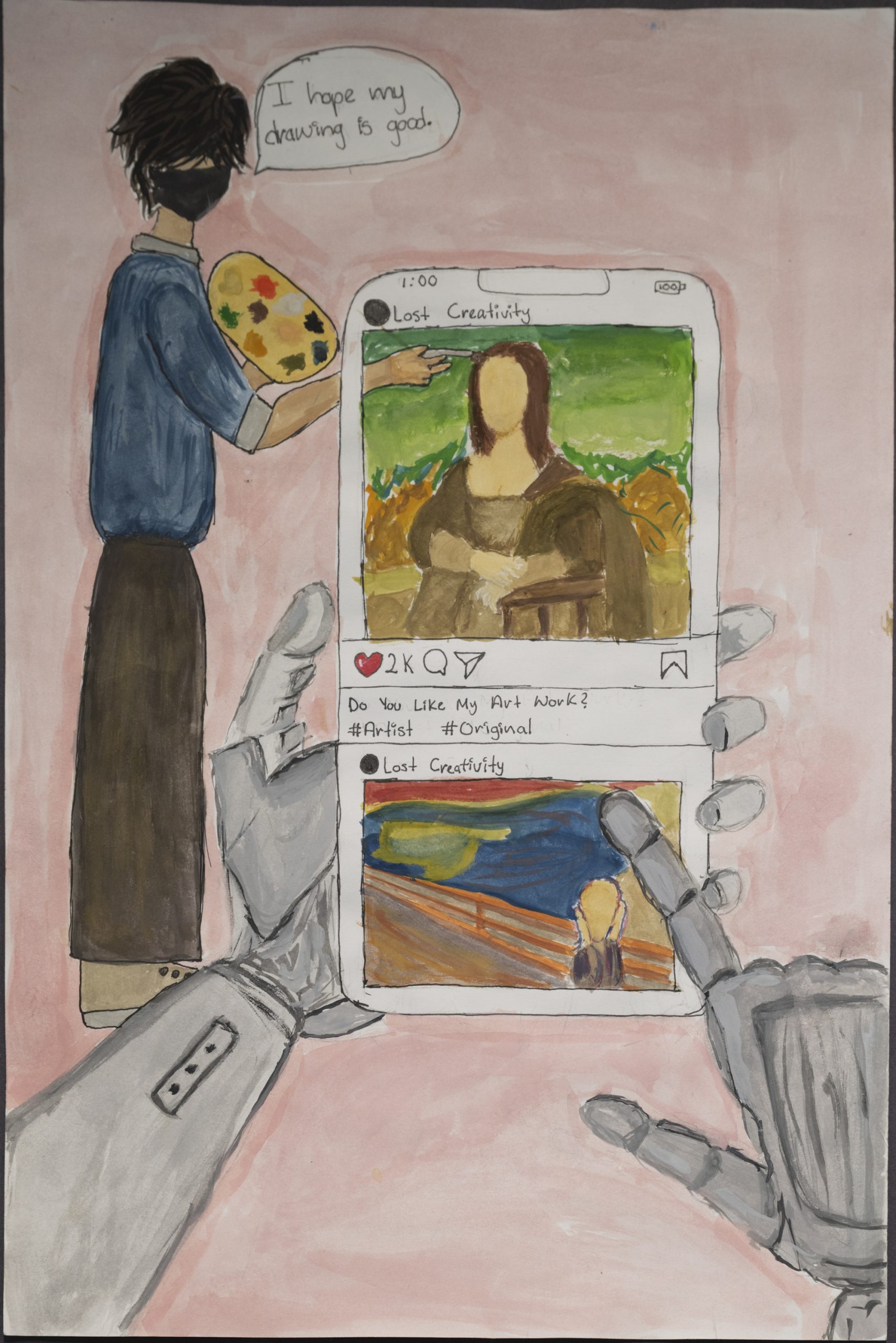
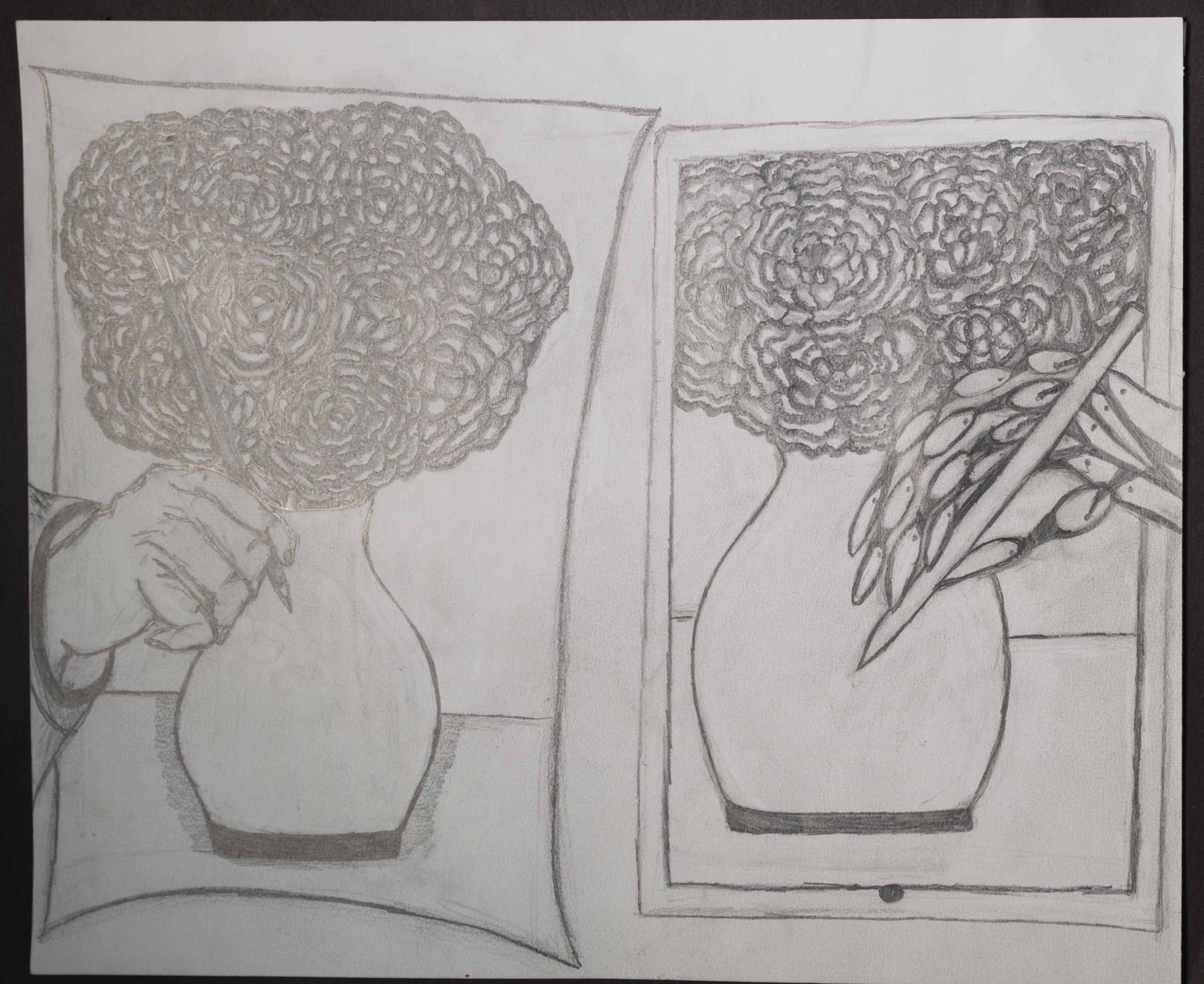
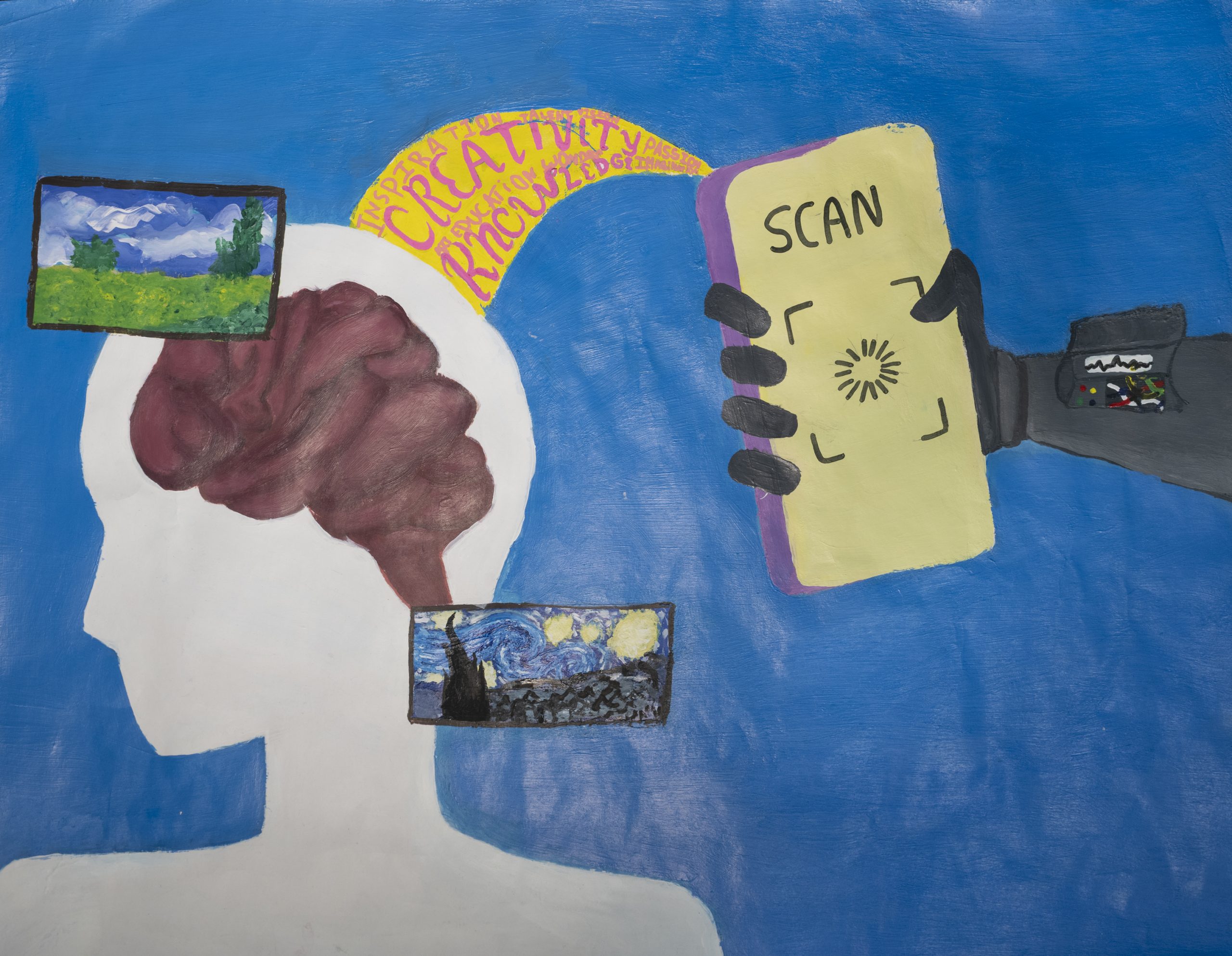
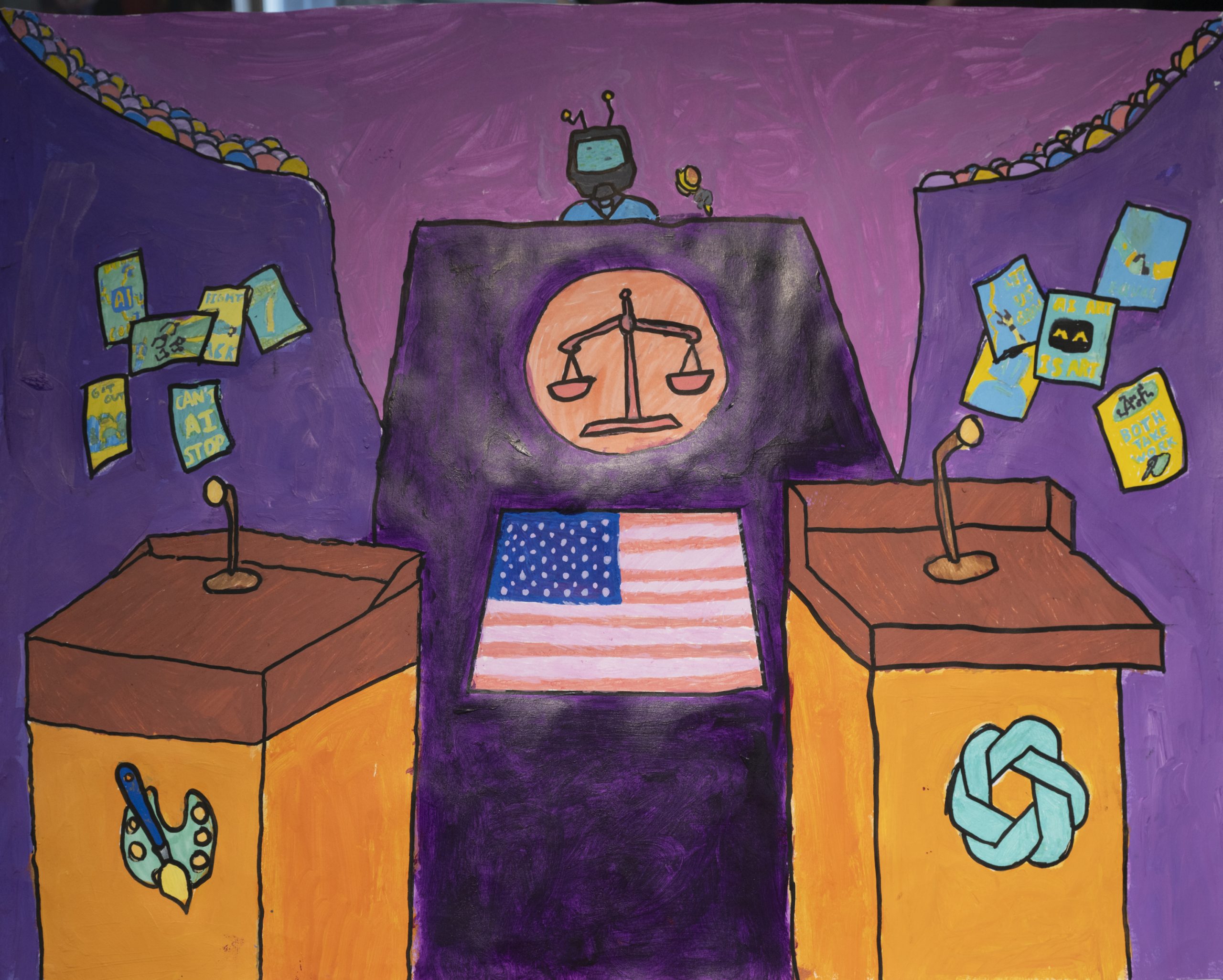
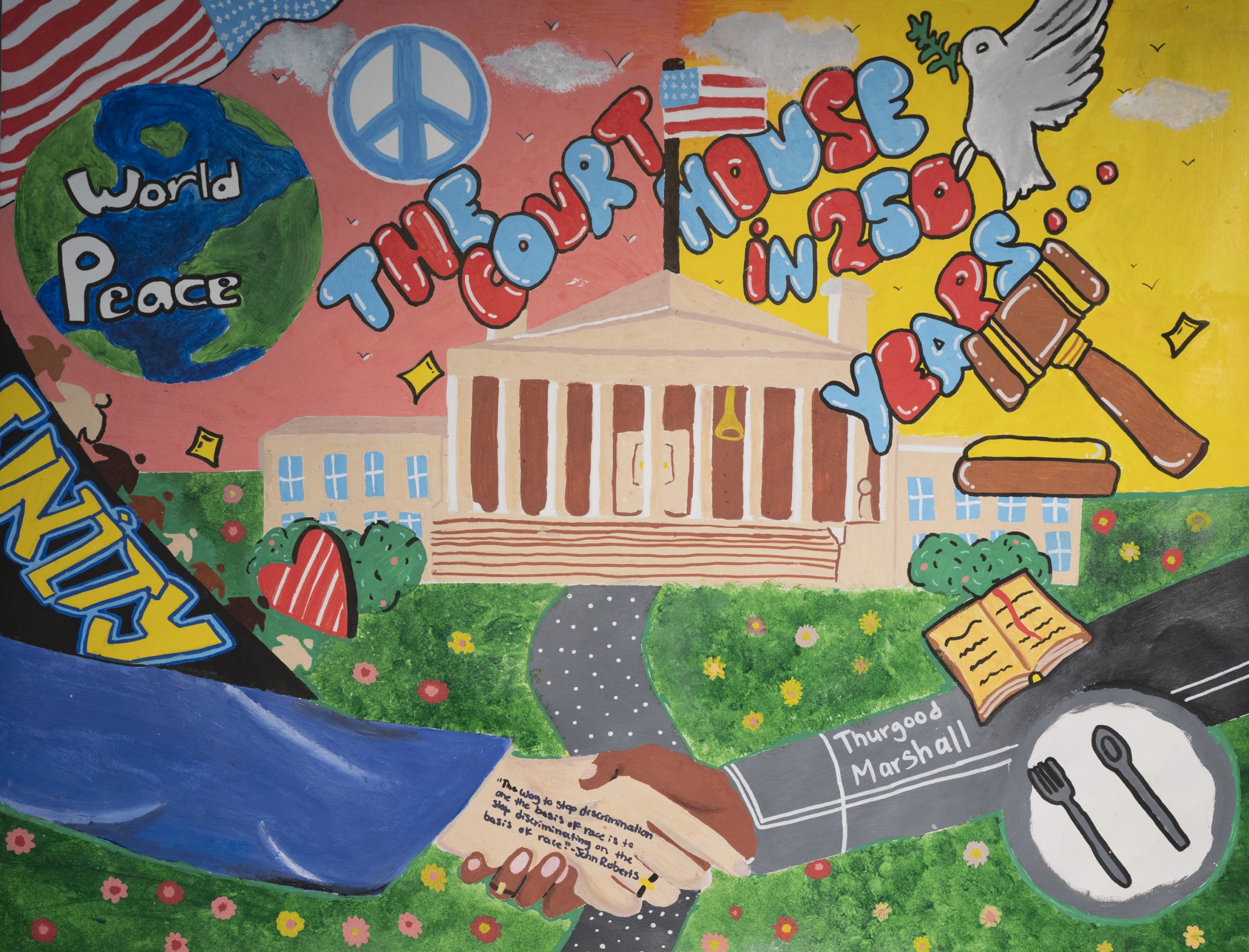
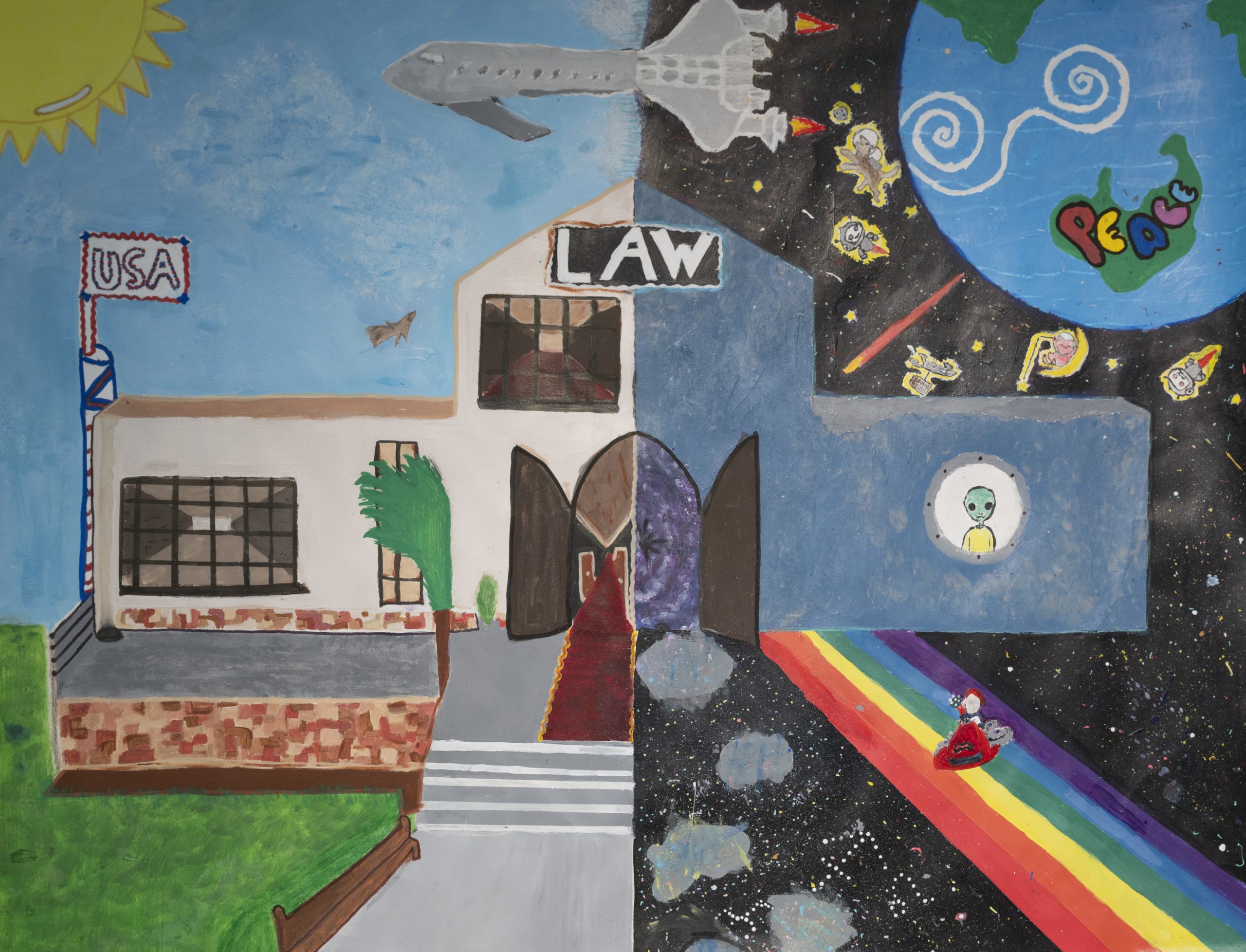
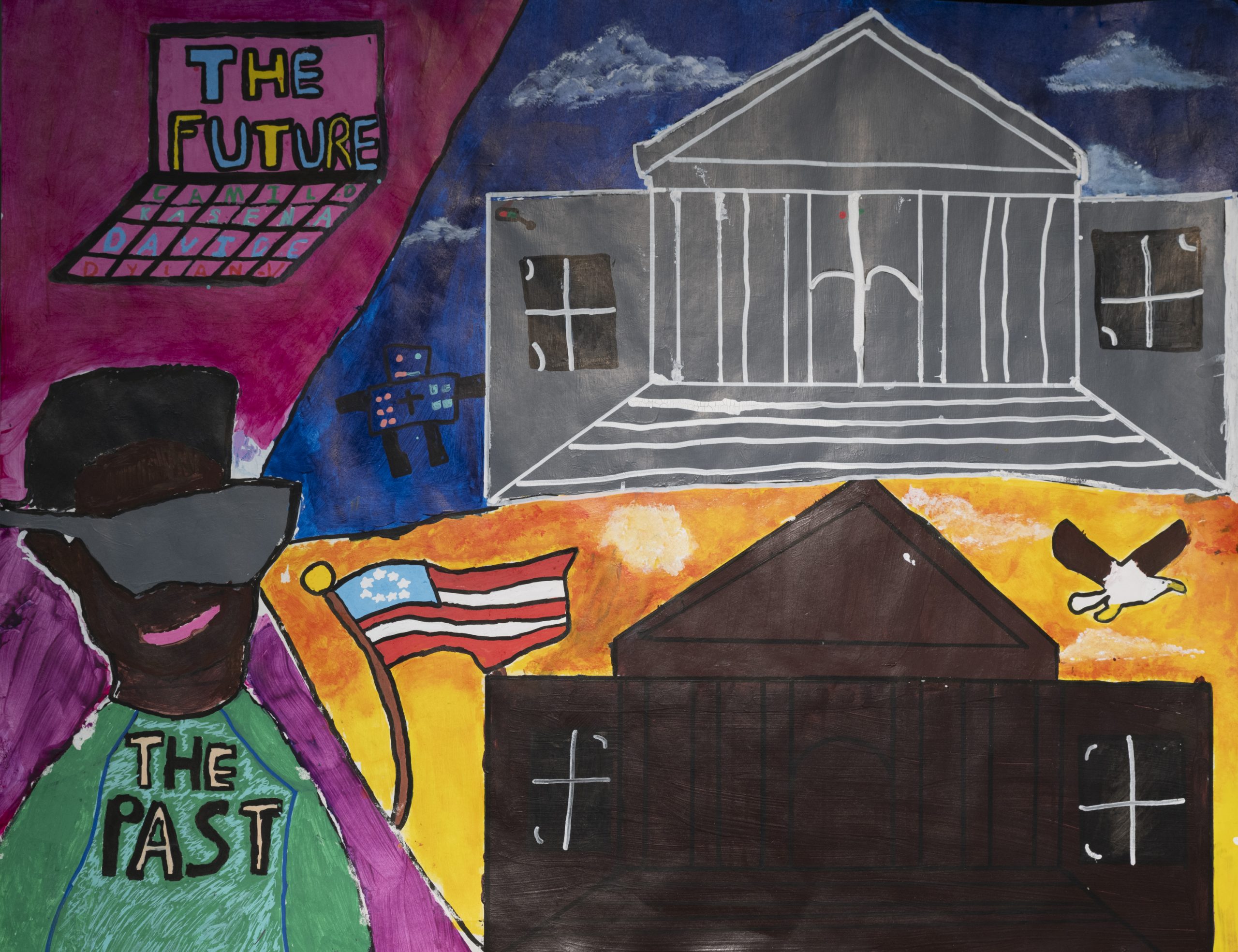
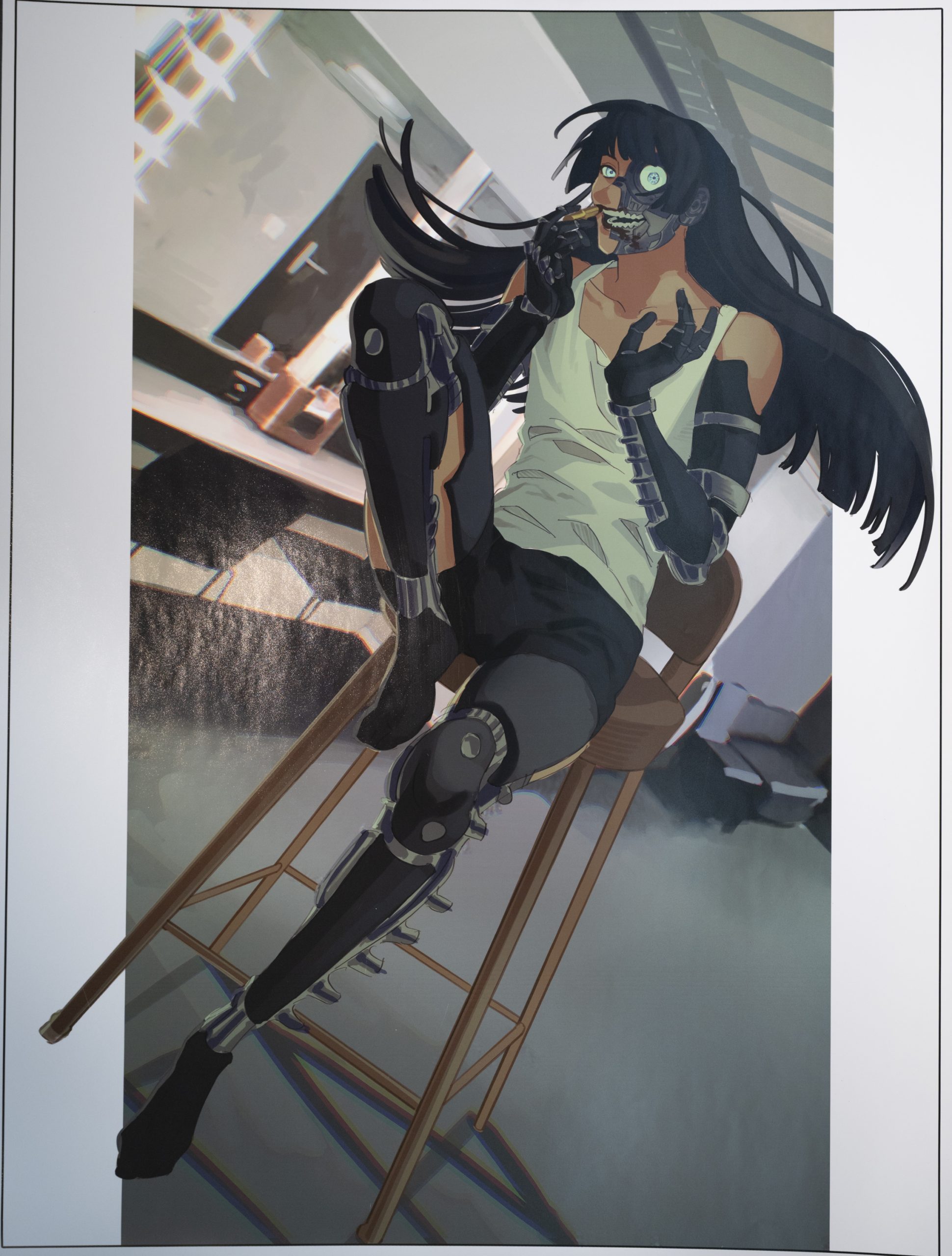
Project Title: THE AESTHETICS OF JUSTICE: AI, ART, AND THE COURTHOUSE OF TOMORROW
This project explores the evolving relationship between justice and creativity through two visionary lenses: The Courthouse in 250 Years and Art Law: Al in Art. From futuristic courtrooms shaped by technology and ethics to legal challenges posed by artificial intelligence in art, this exhibit invites you to reflect on how law adapts, protects, and inspires across centuries and media.
Principal: Brian Condoh
Teacher: Melissa Nakos
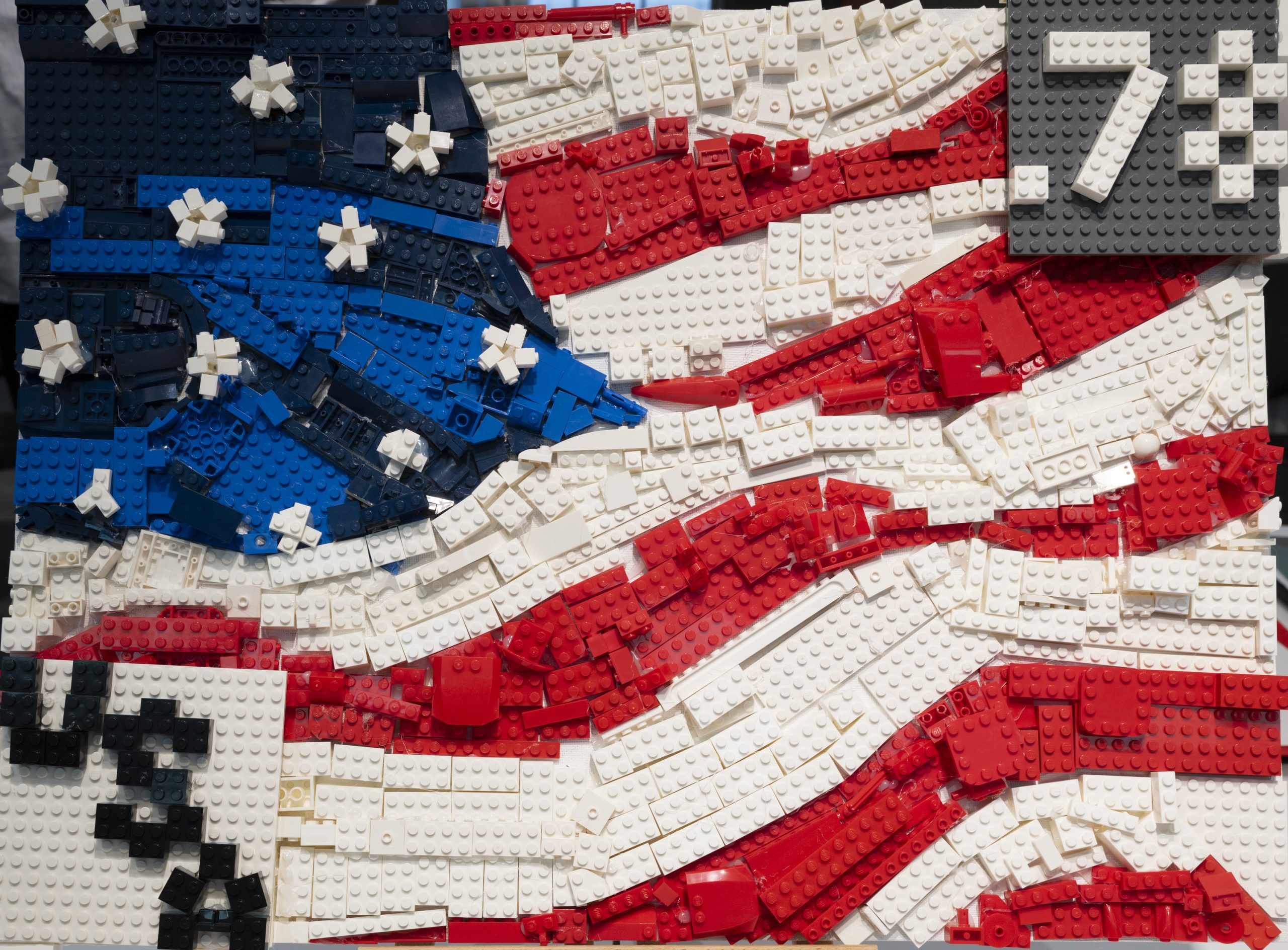
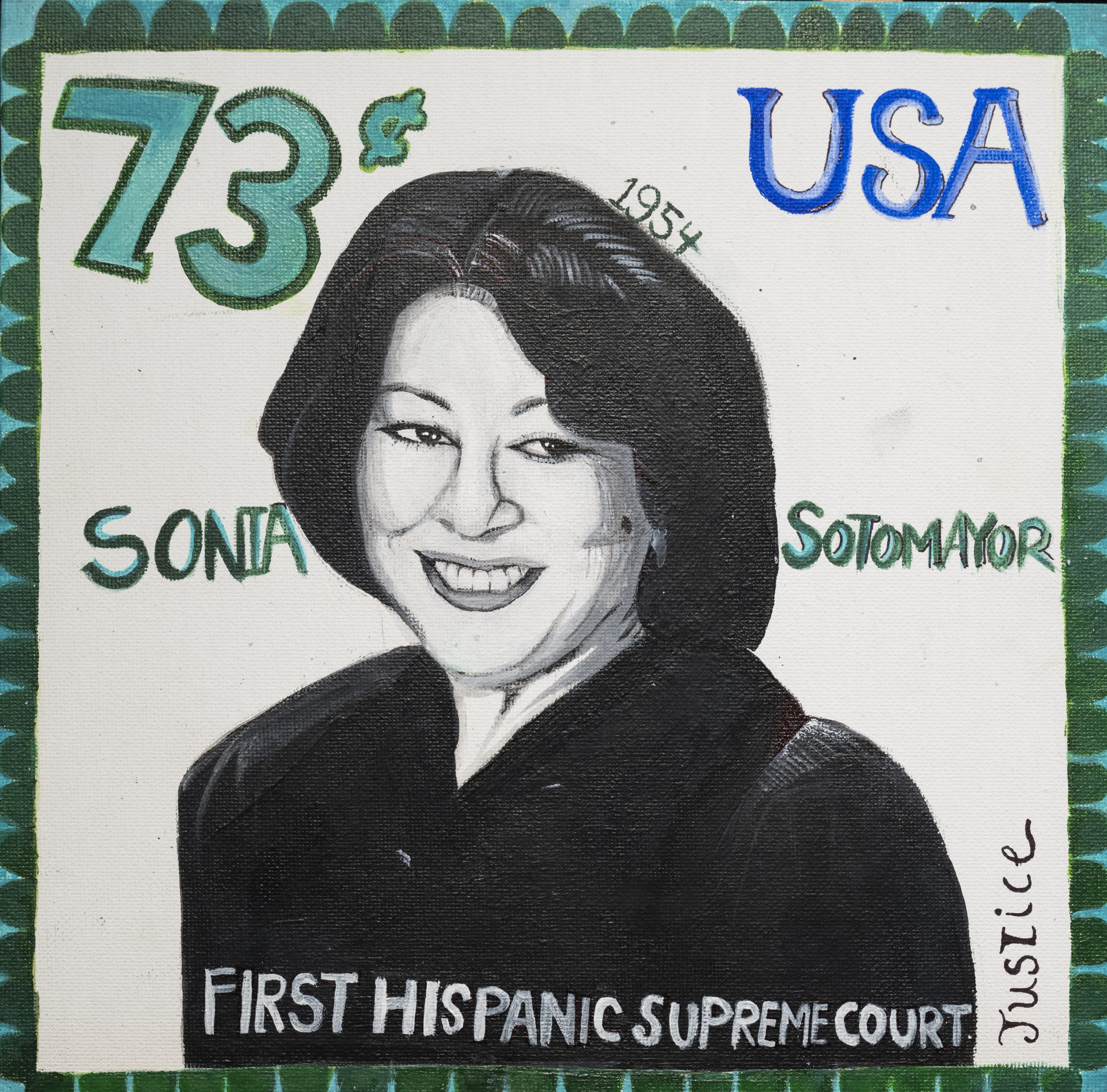
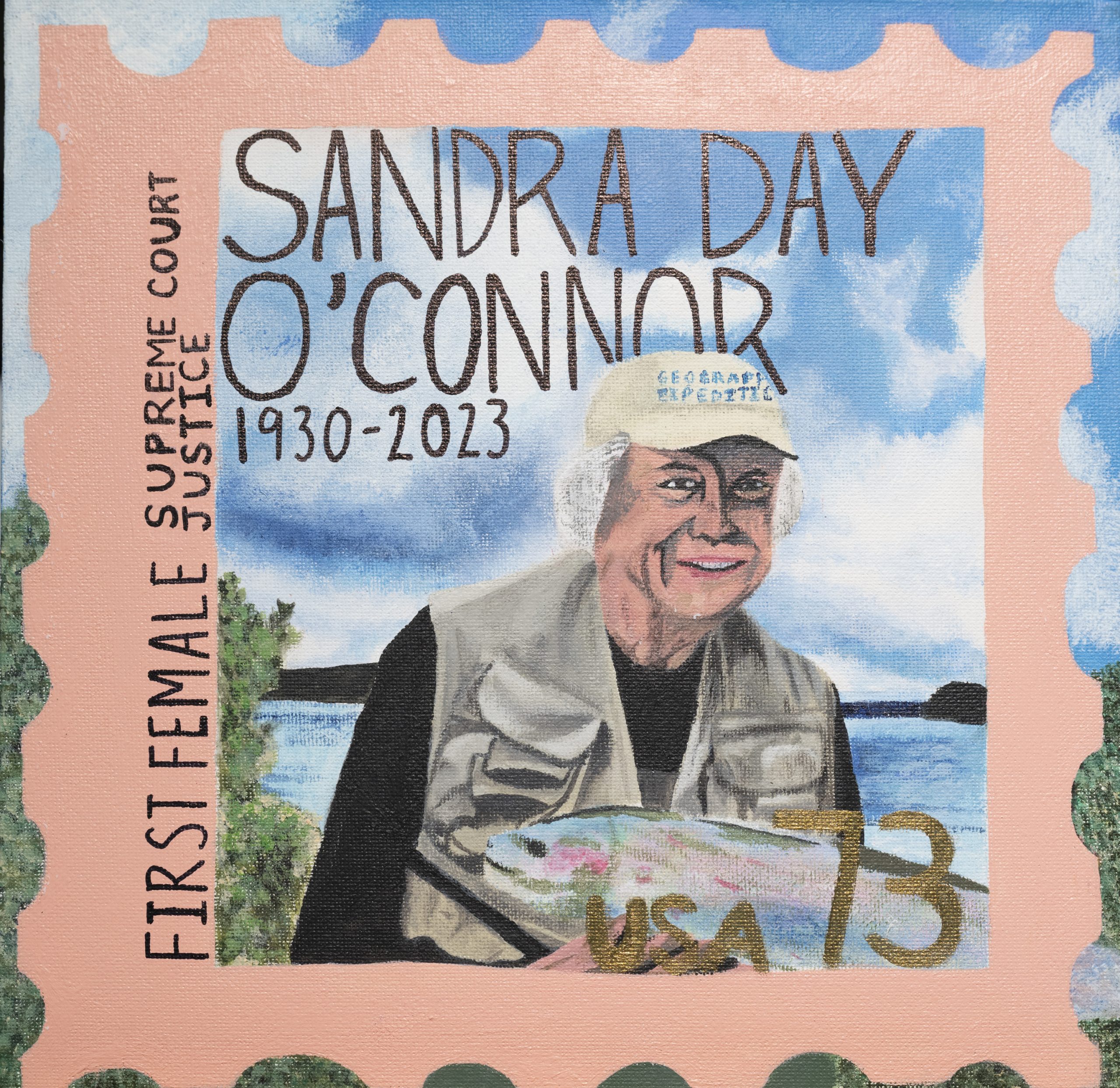
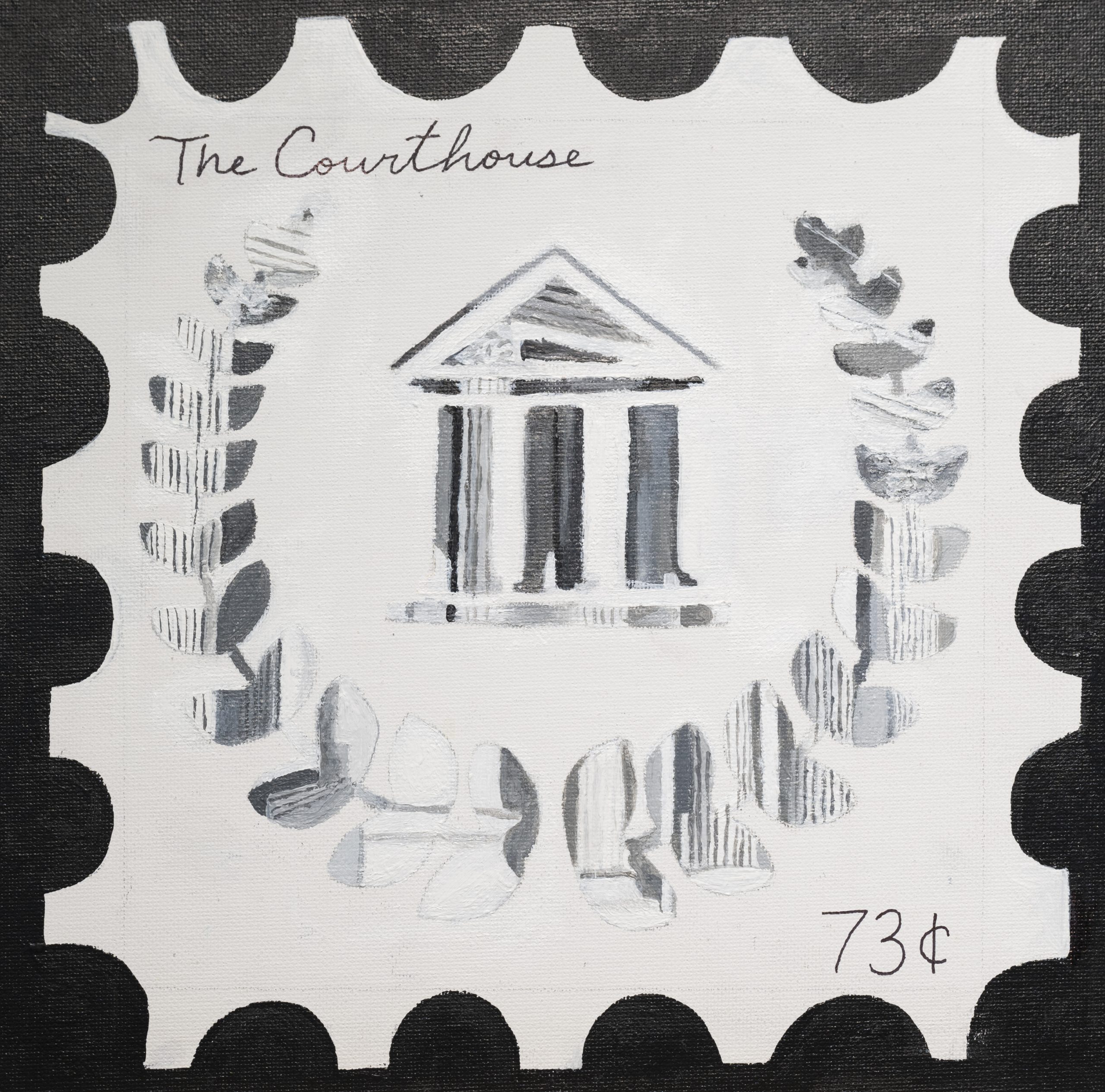
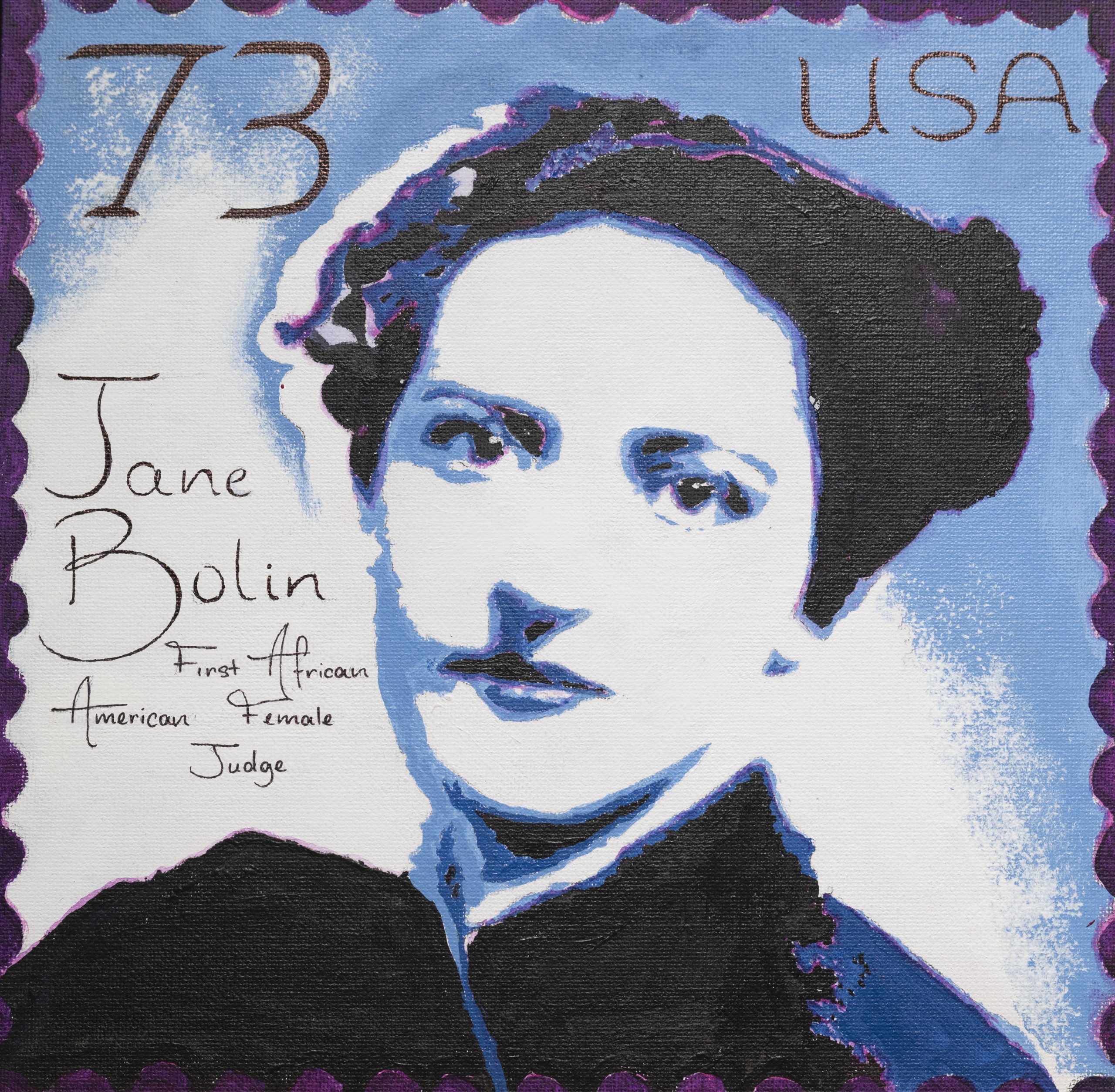
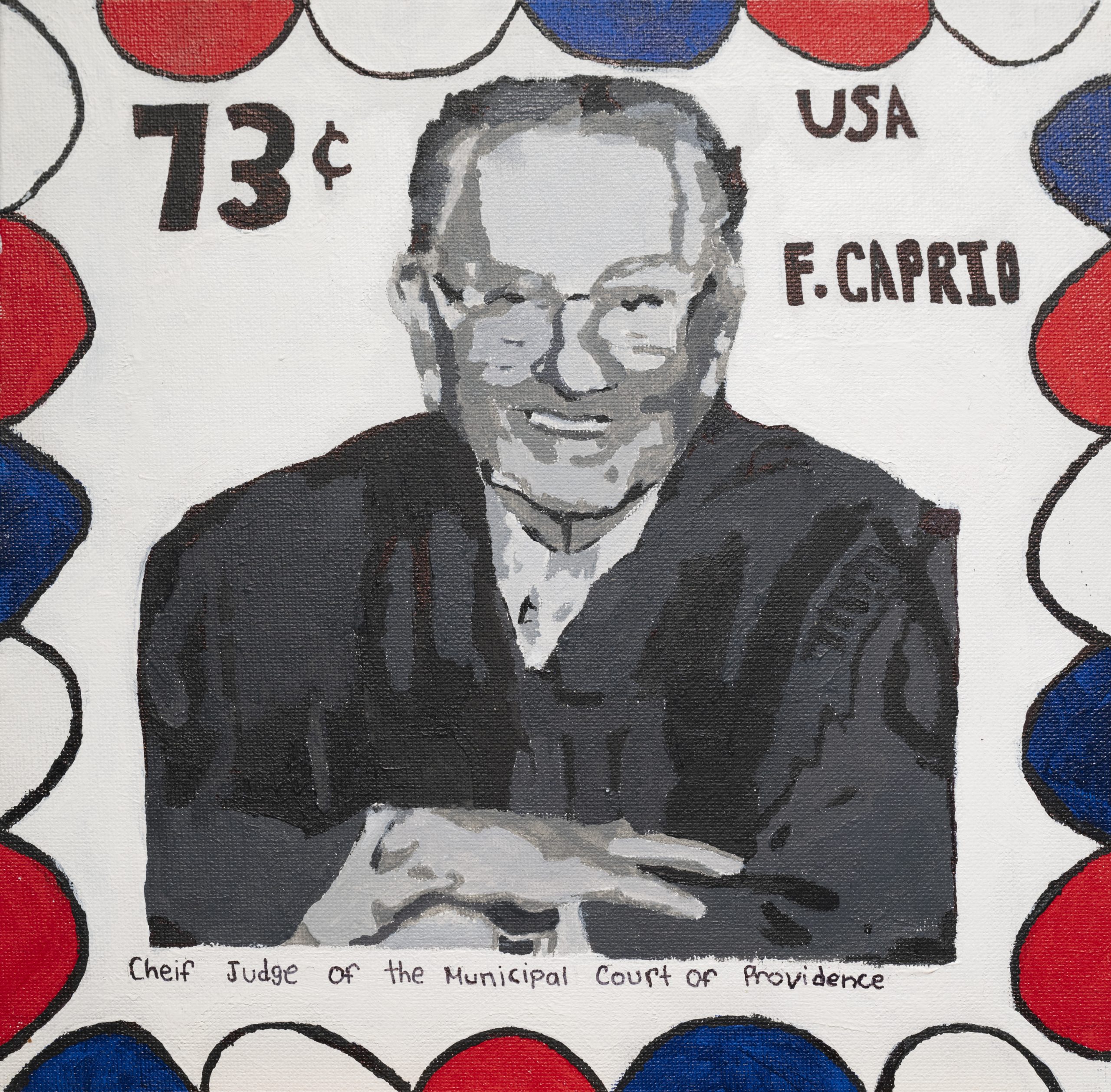
Project Title: TELLING A STORY OF A NATION THROUGH STAMPS
Students created an assemblage American flag as a tribute to the American Flag Forever stamp. The process of assemblage involves using found objects glued or placed on to a surface. The found objects were red, white and blue Legos.
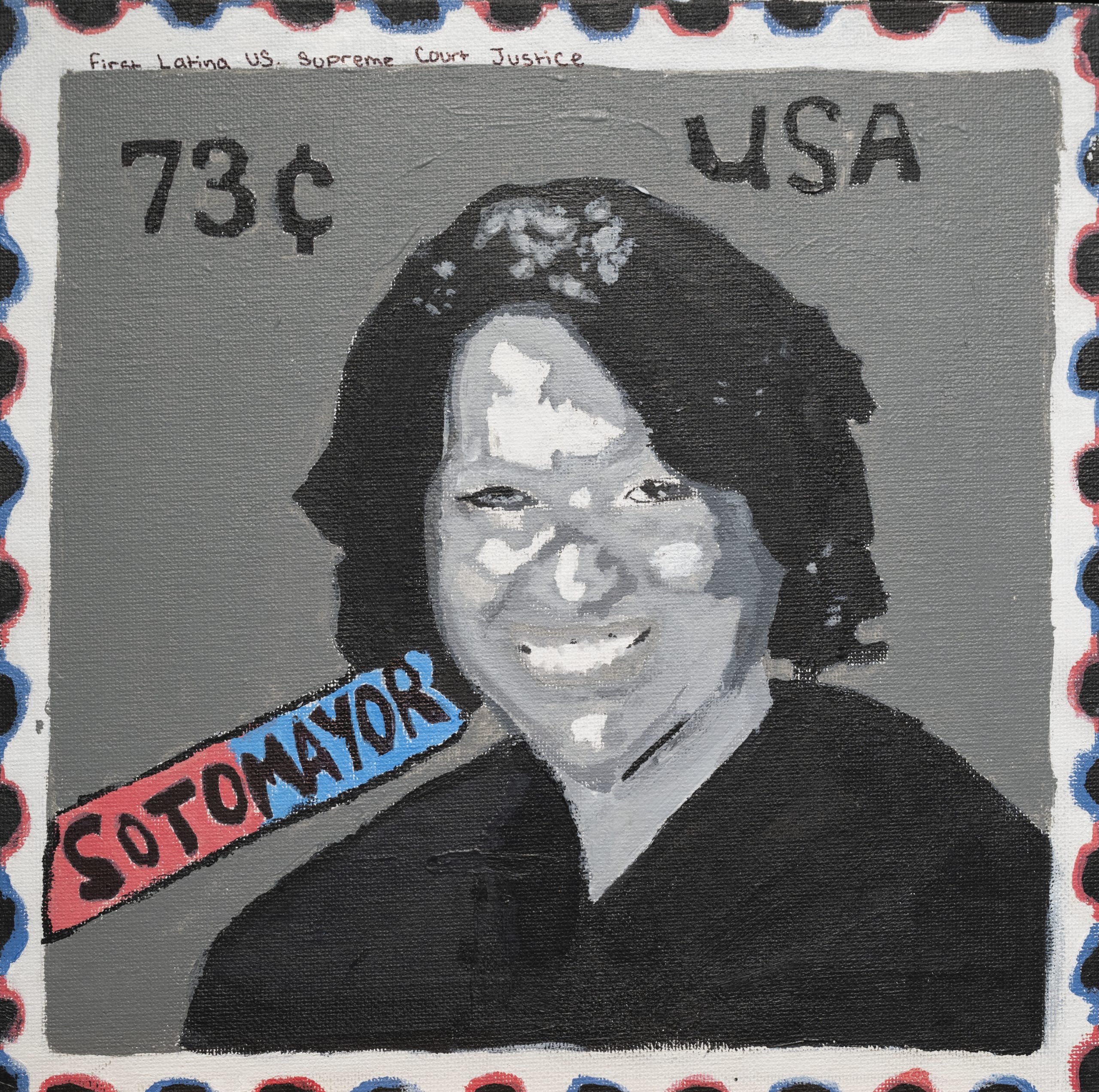
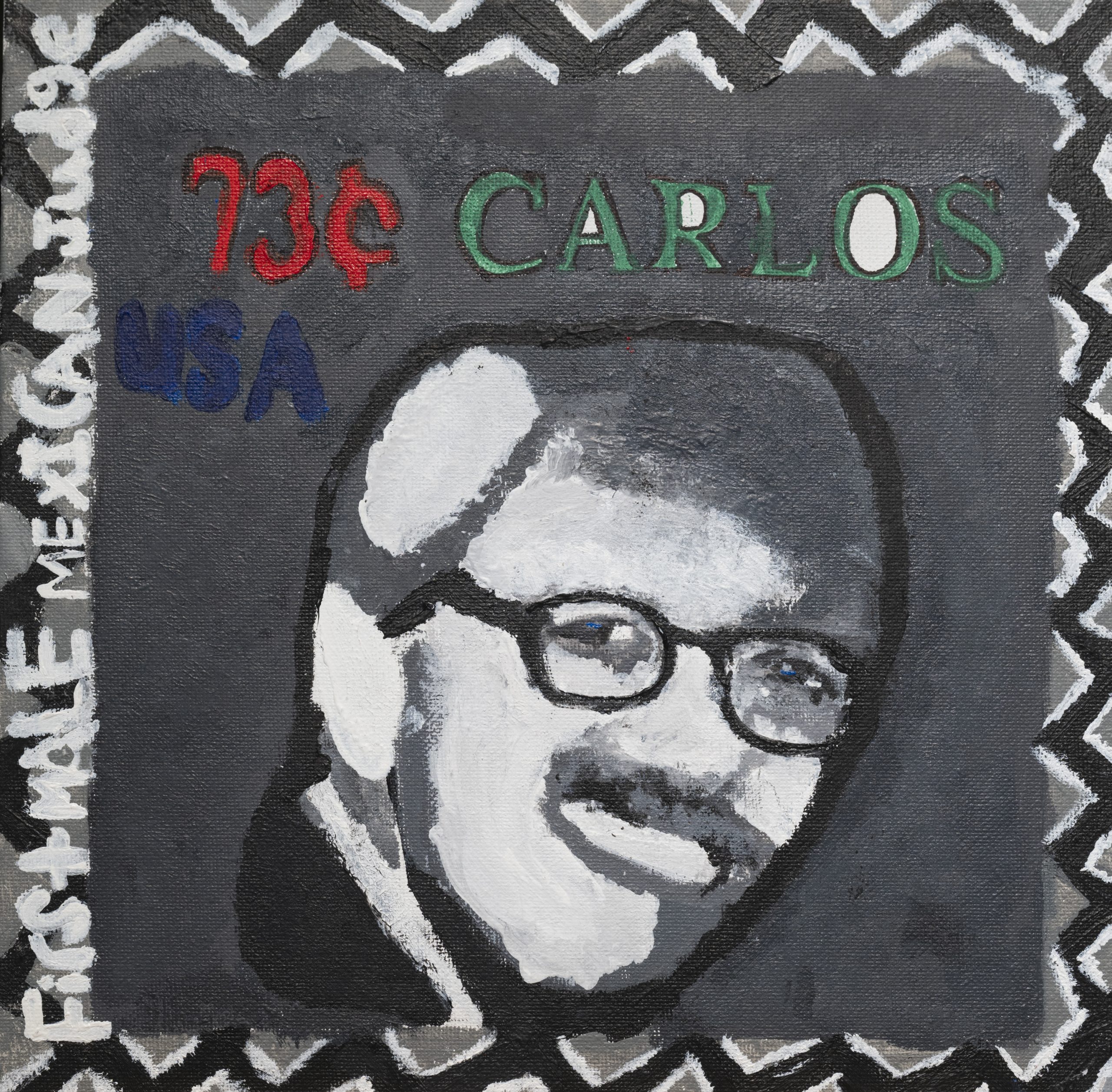
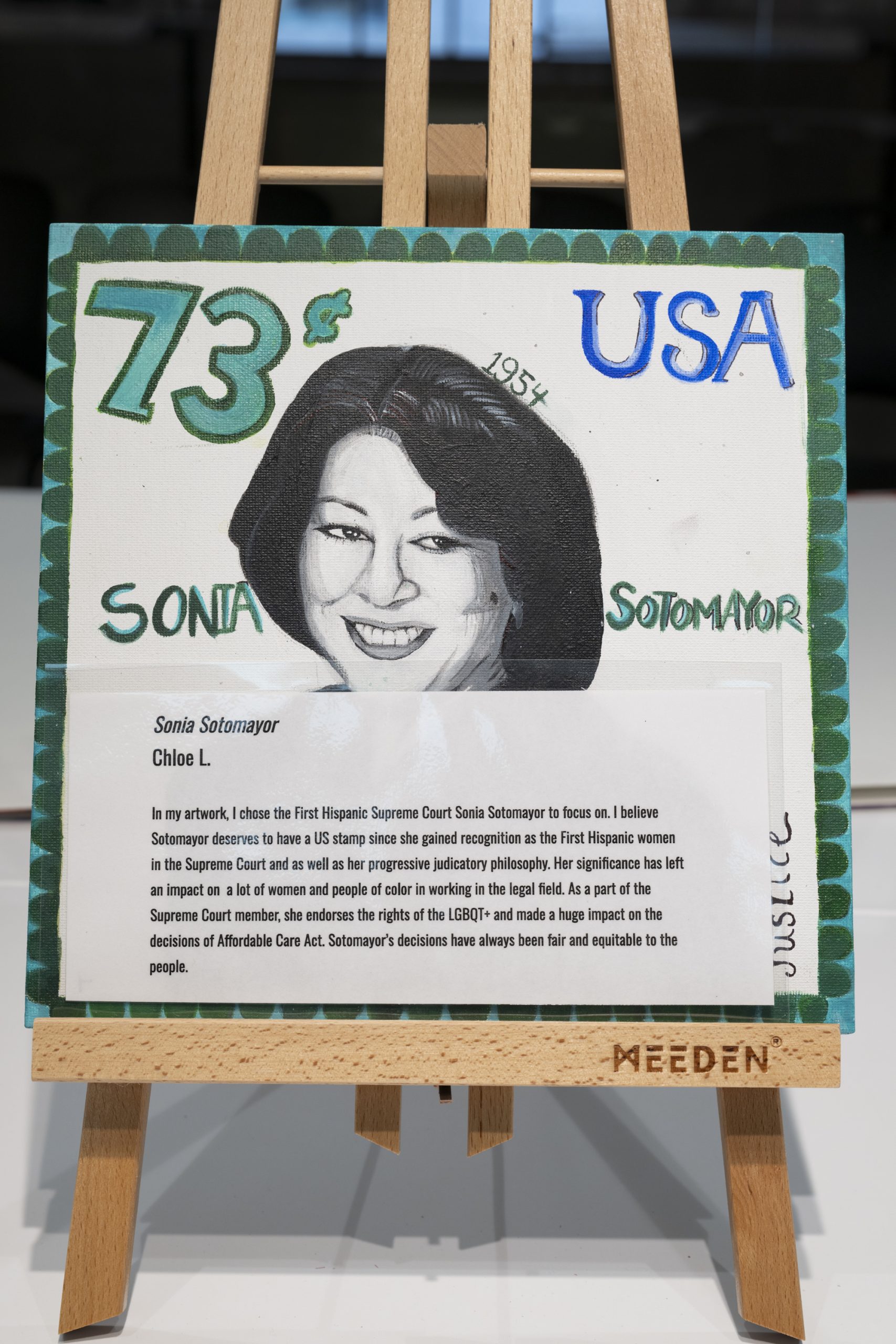
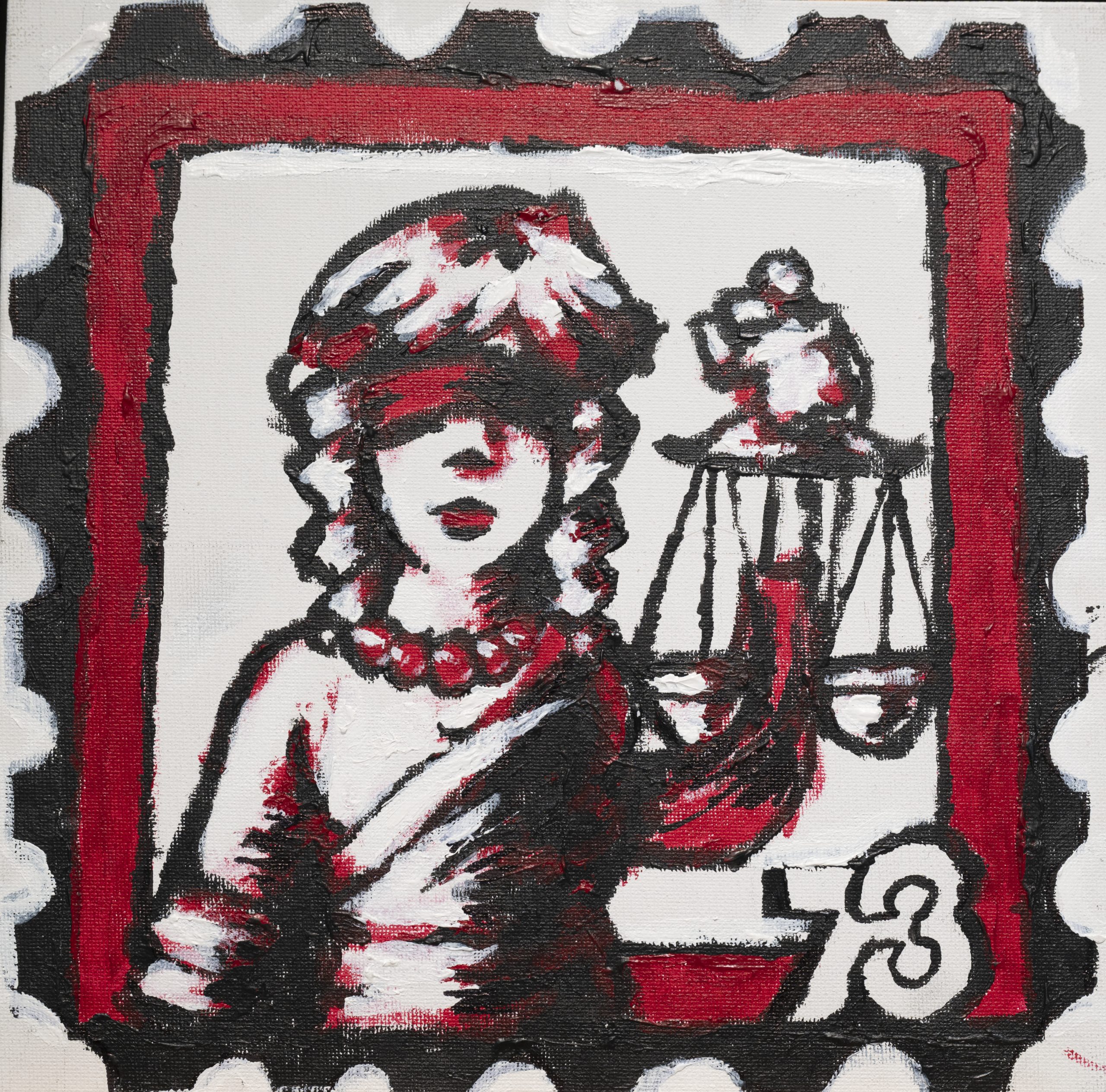
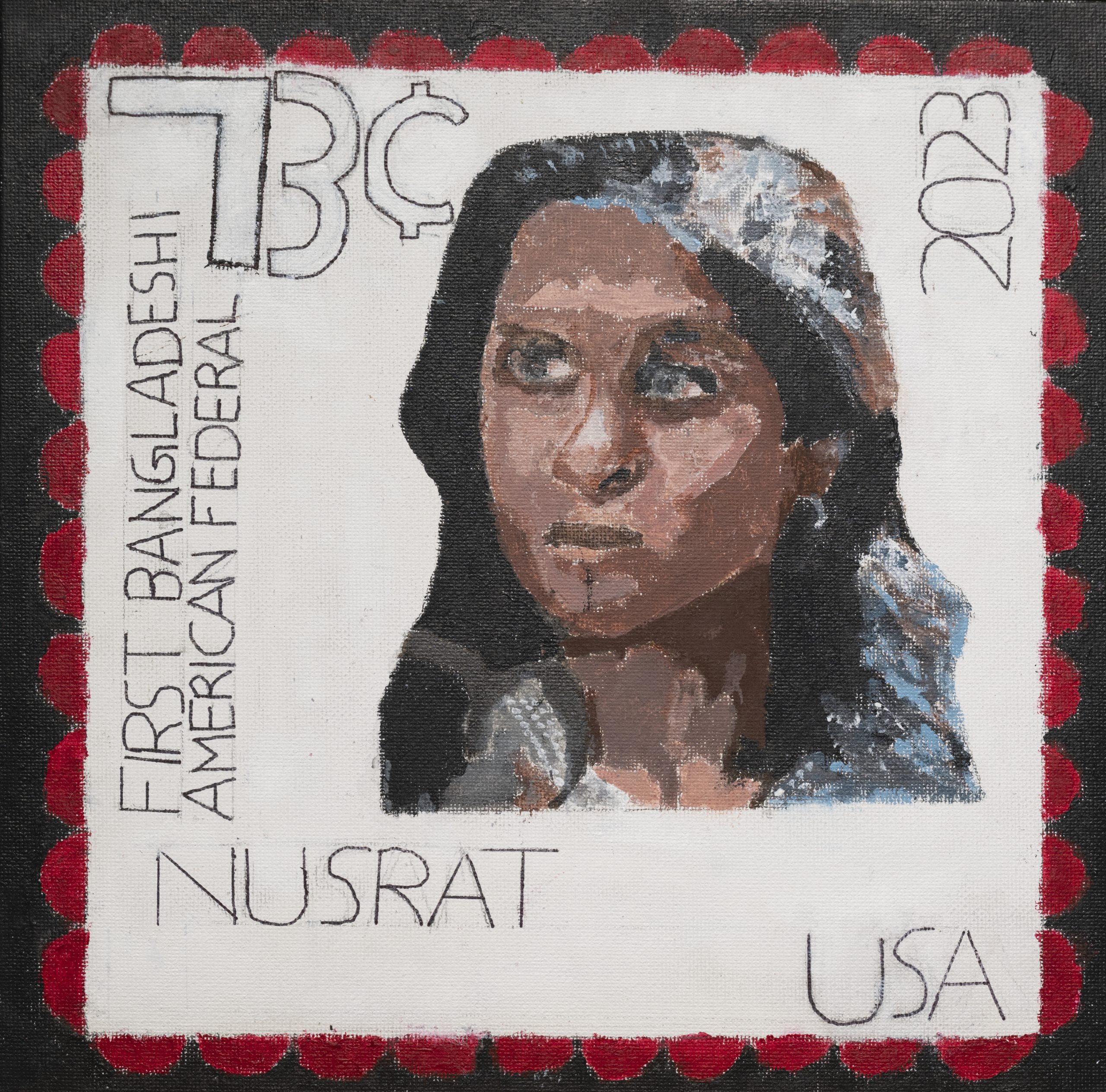
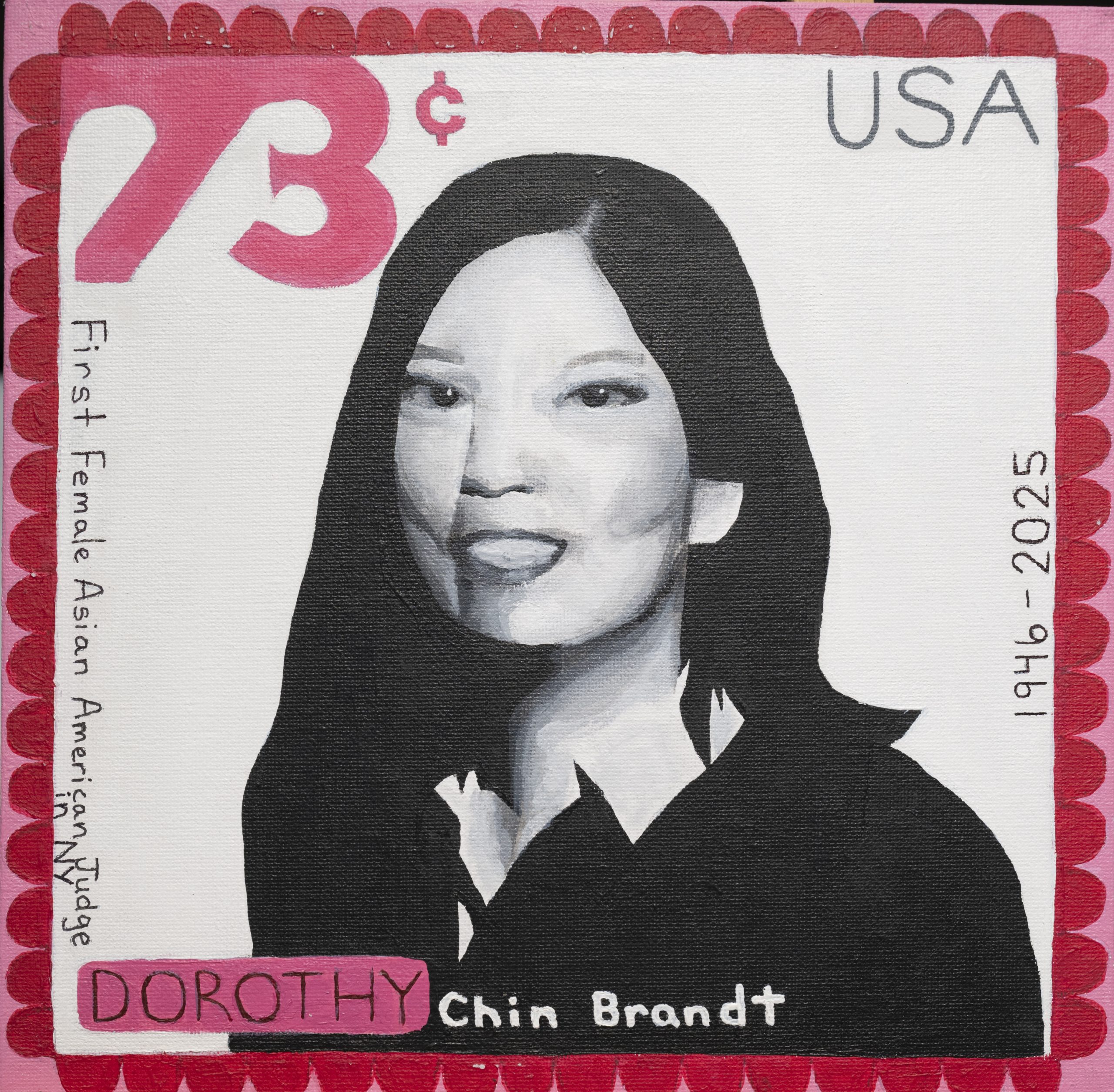
Project Title: TELLING A STORY OF A NATION THROUGH STAMPS
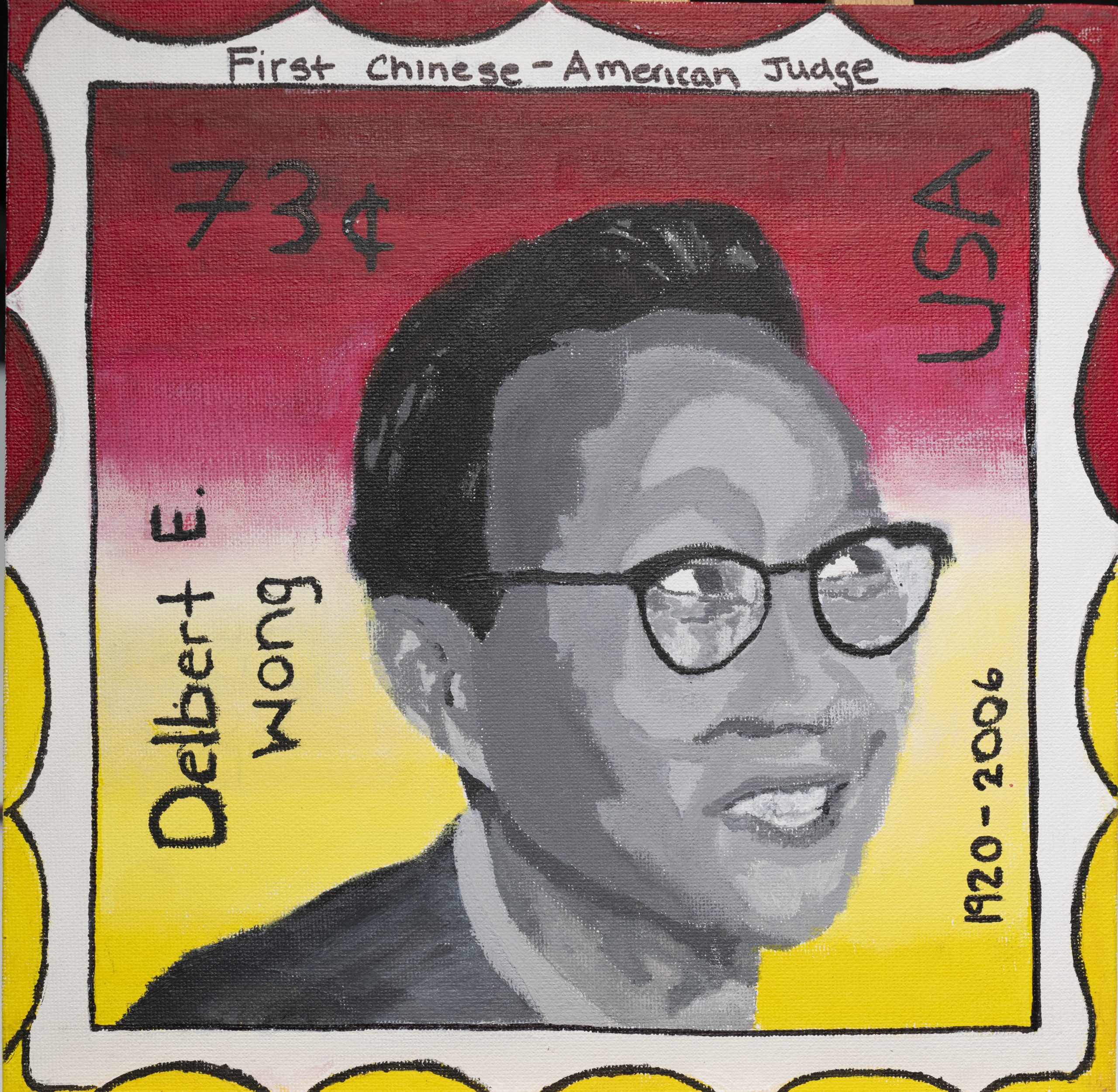
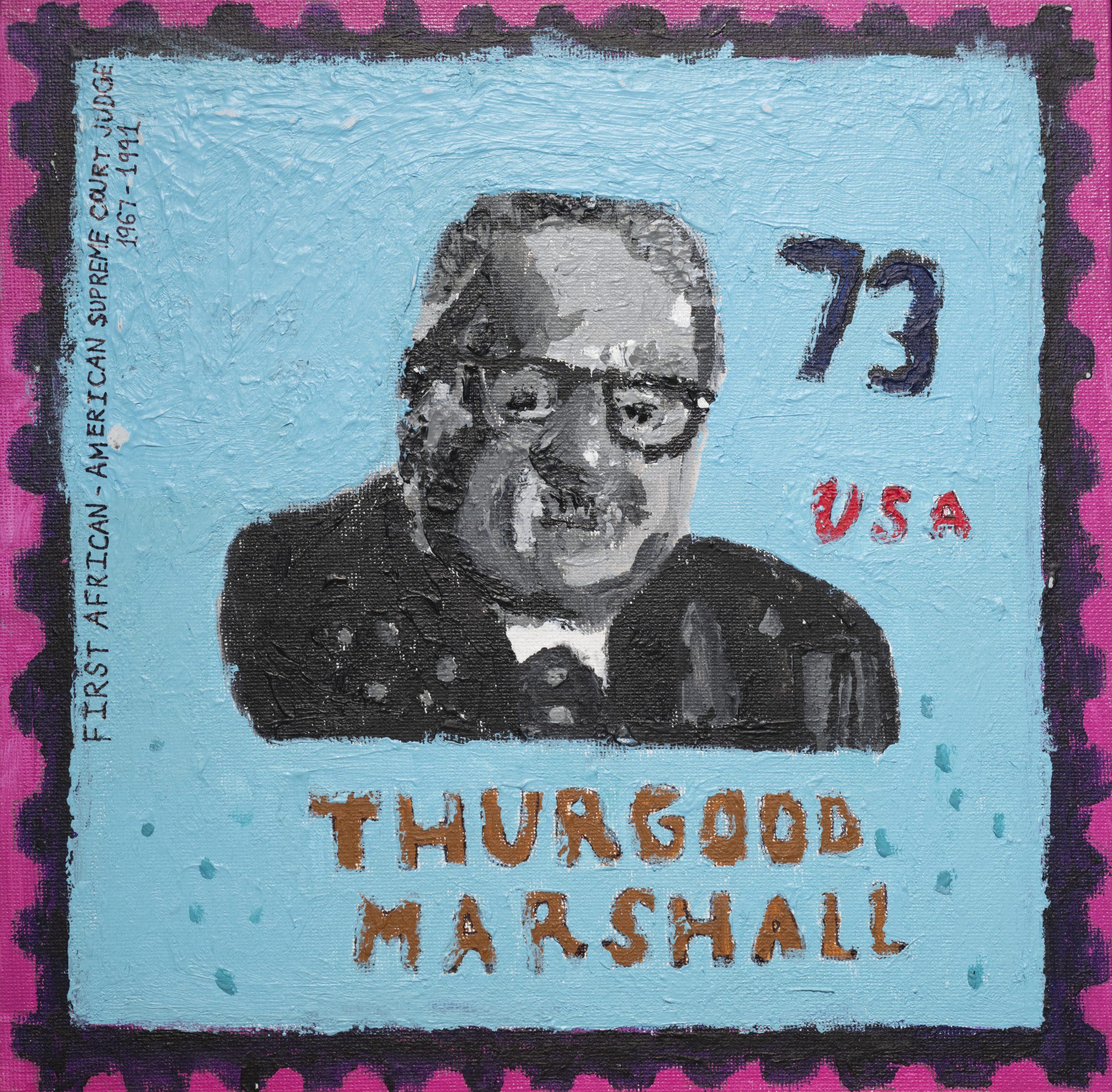
We studied the art of the stamp through a series produced by the Smithsonian. Students chose to create stamps of United States judges or symbols of justice that are significant to our judiciary system. They researched their judges and symbols extensively. They chose specific images and edited them in Adobe Photoshop and or Illustrator. Using these edited images, they painted realistic, posterized or abstractly for their composition.
Principal: Carlyn St. Aubain
Teacher: Devin Hatcher
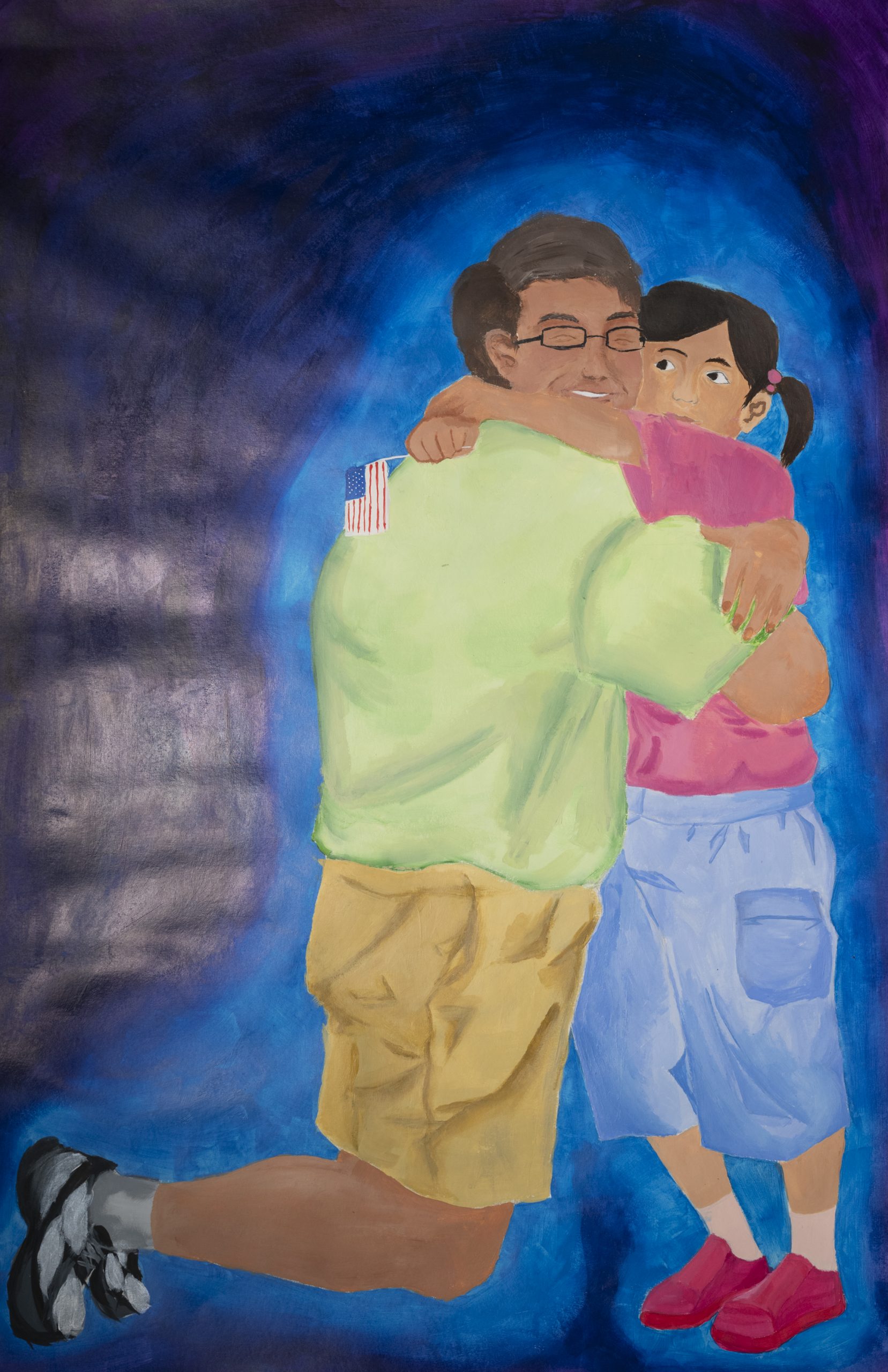
Project Title: UNITED
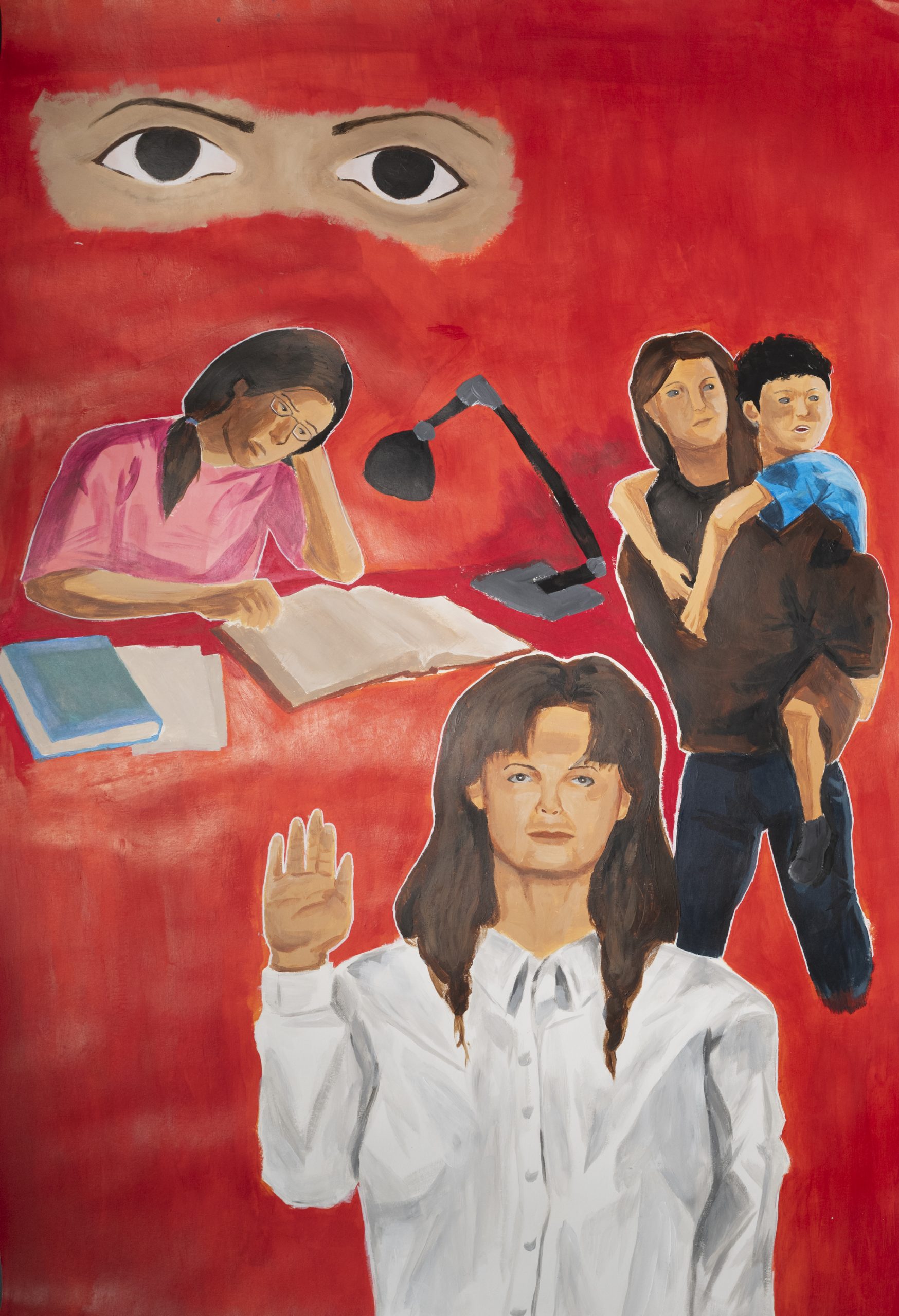
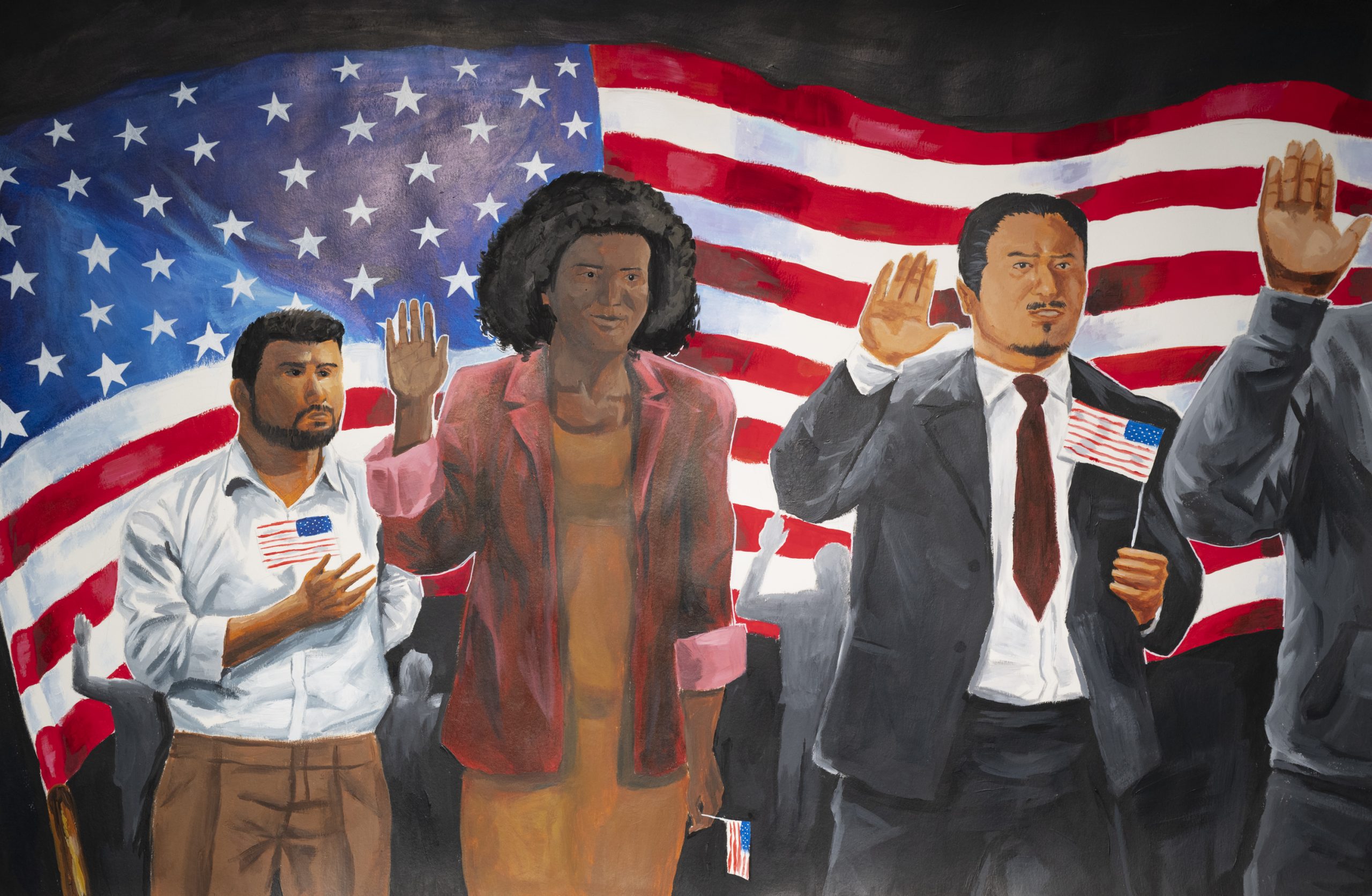
Students reflected on the process of naturalization ceremonies. Camila sketched out the mural to represent how that pathway to citizenship experience may have looked like. Students then united and collaborated to illustrate the murals using specific colors they thought would represent each portion of the mural accordingly.
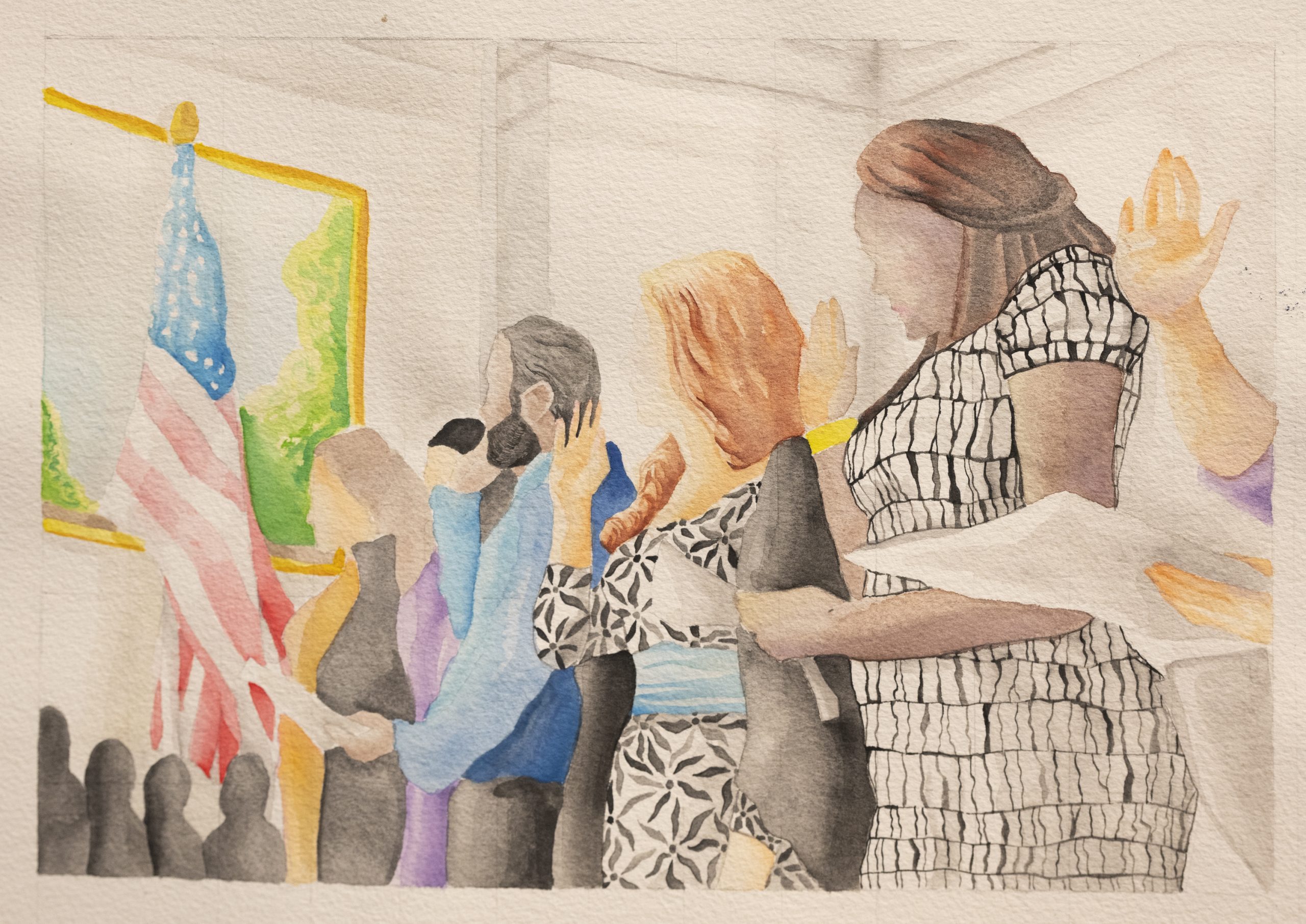
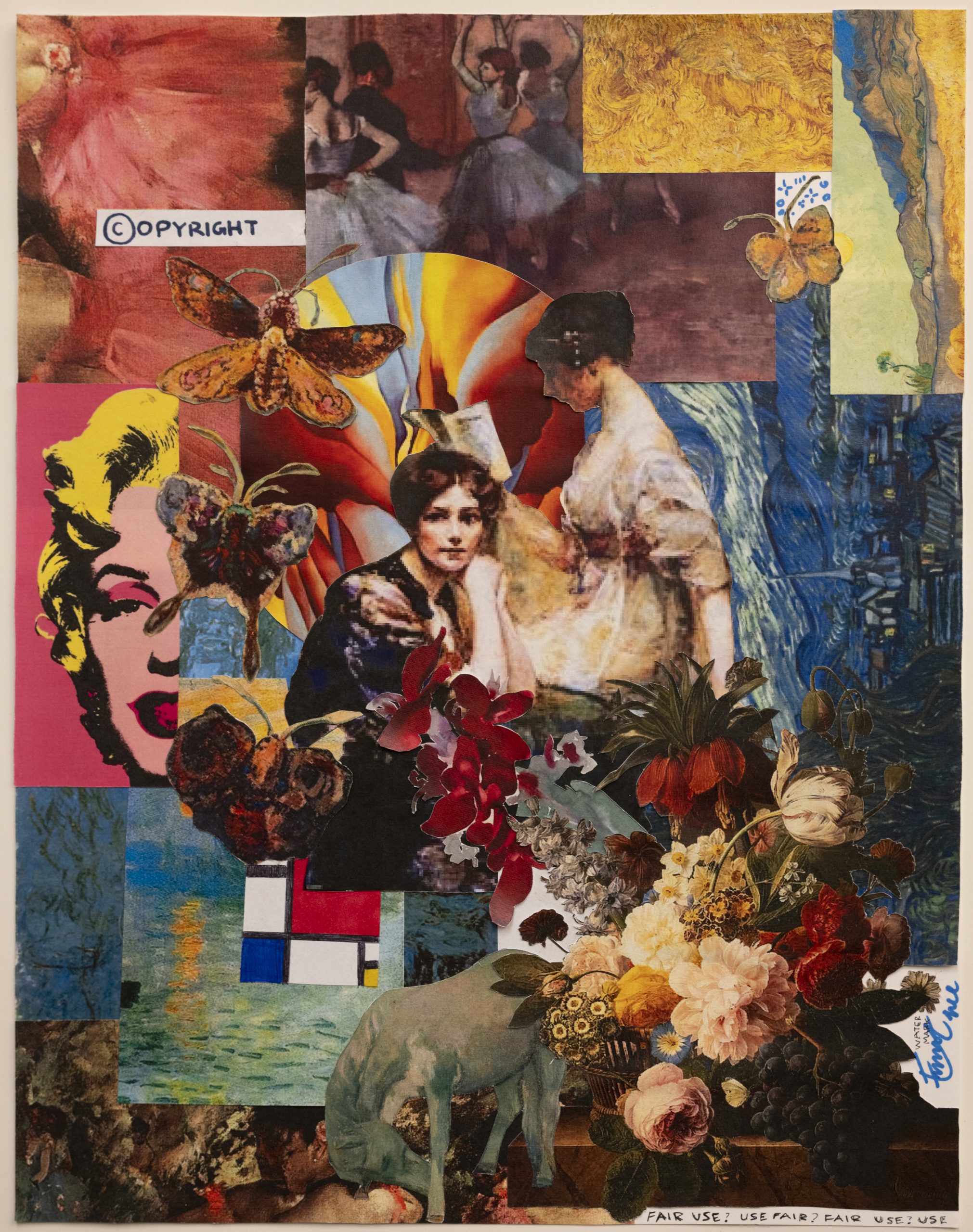
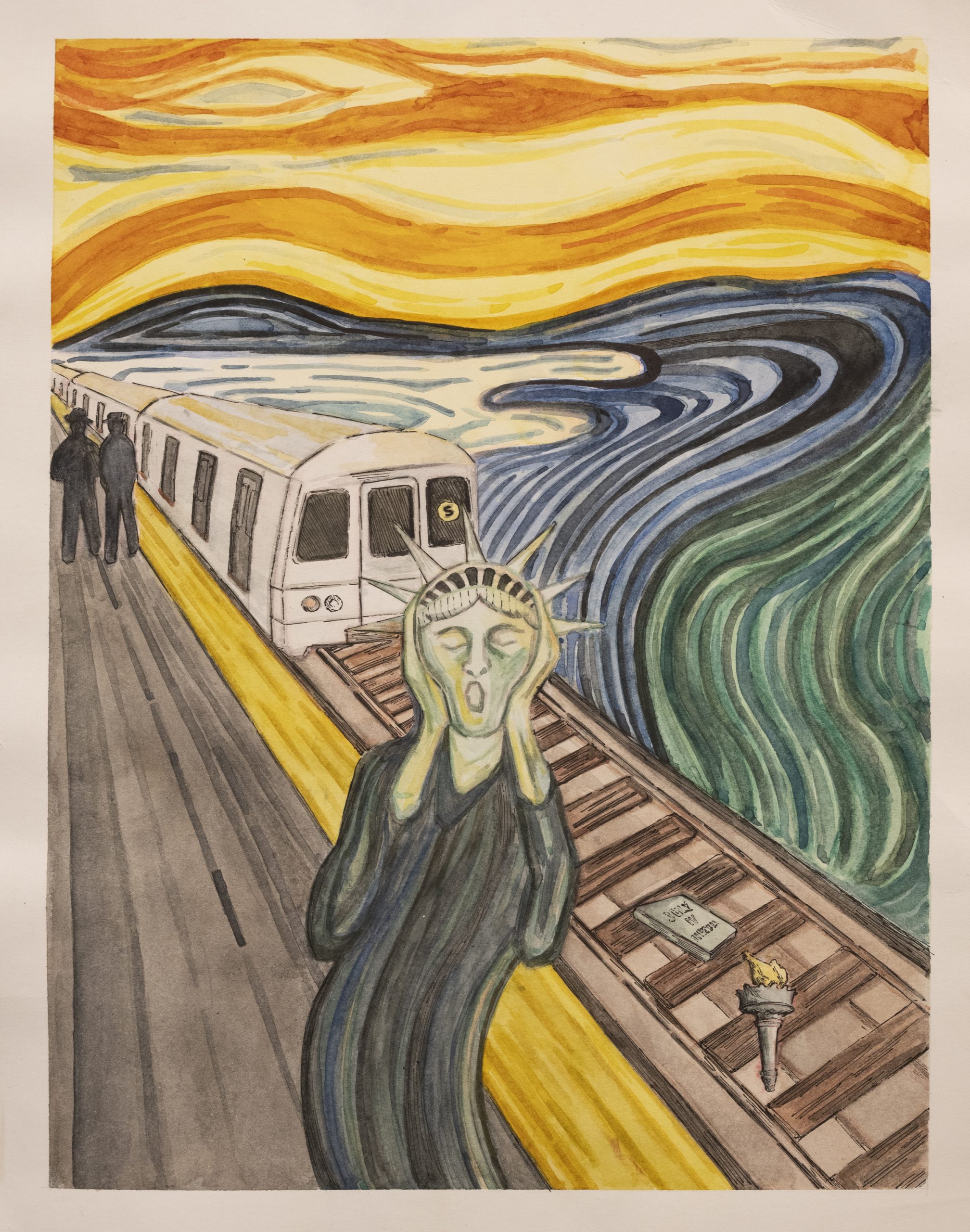
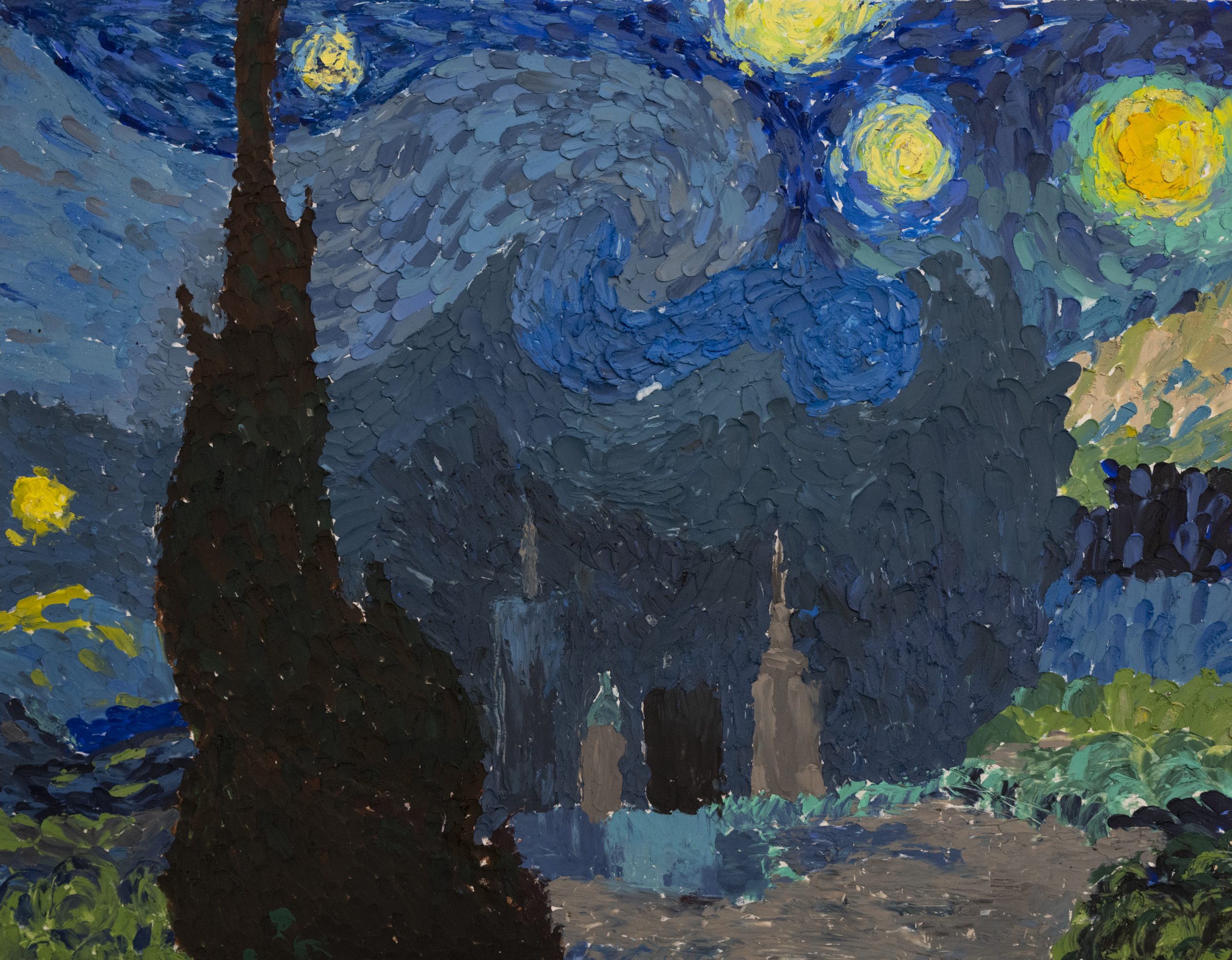
2024 THURGOOD MARSHALL U.S. COURTHOUSE
Teacher: Rachel Levine
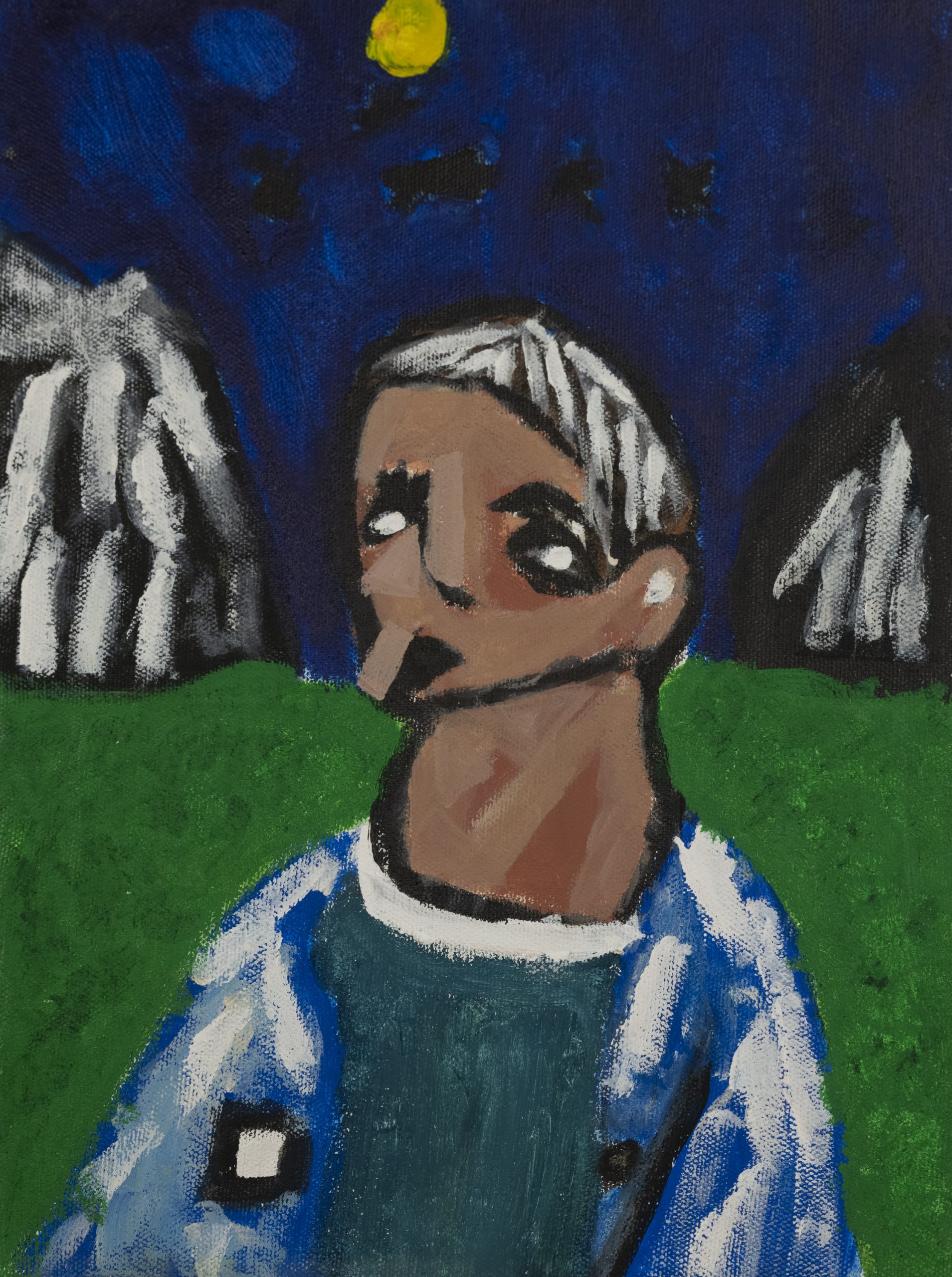
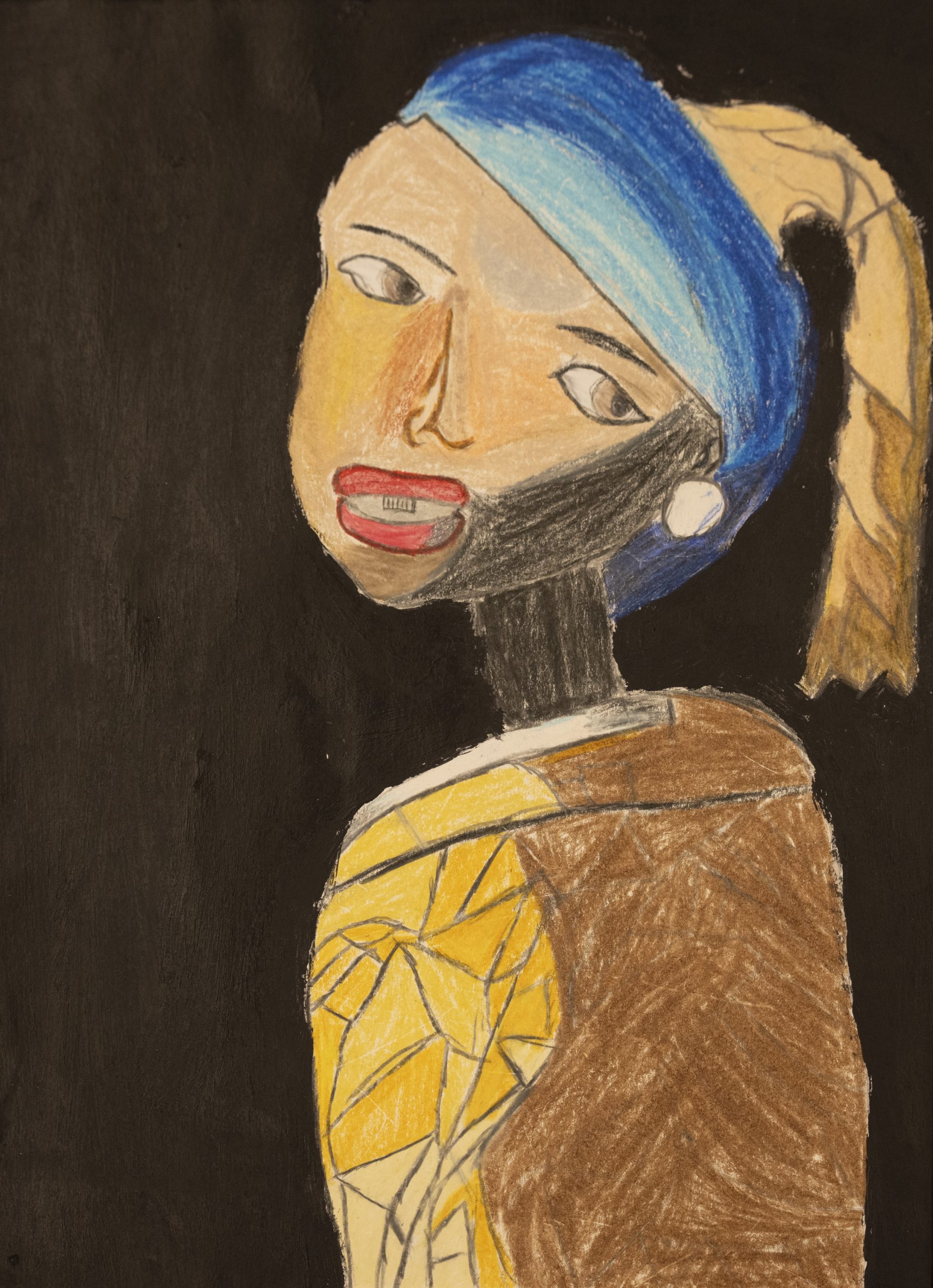
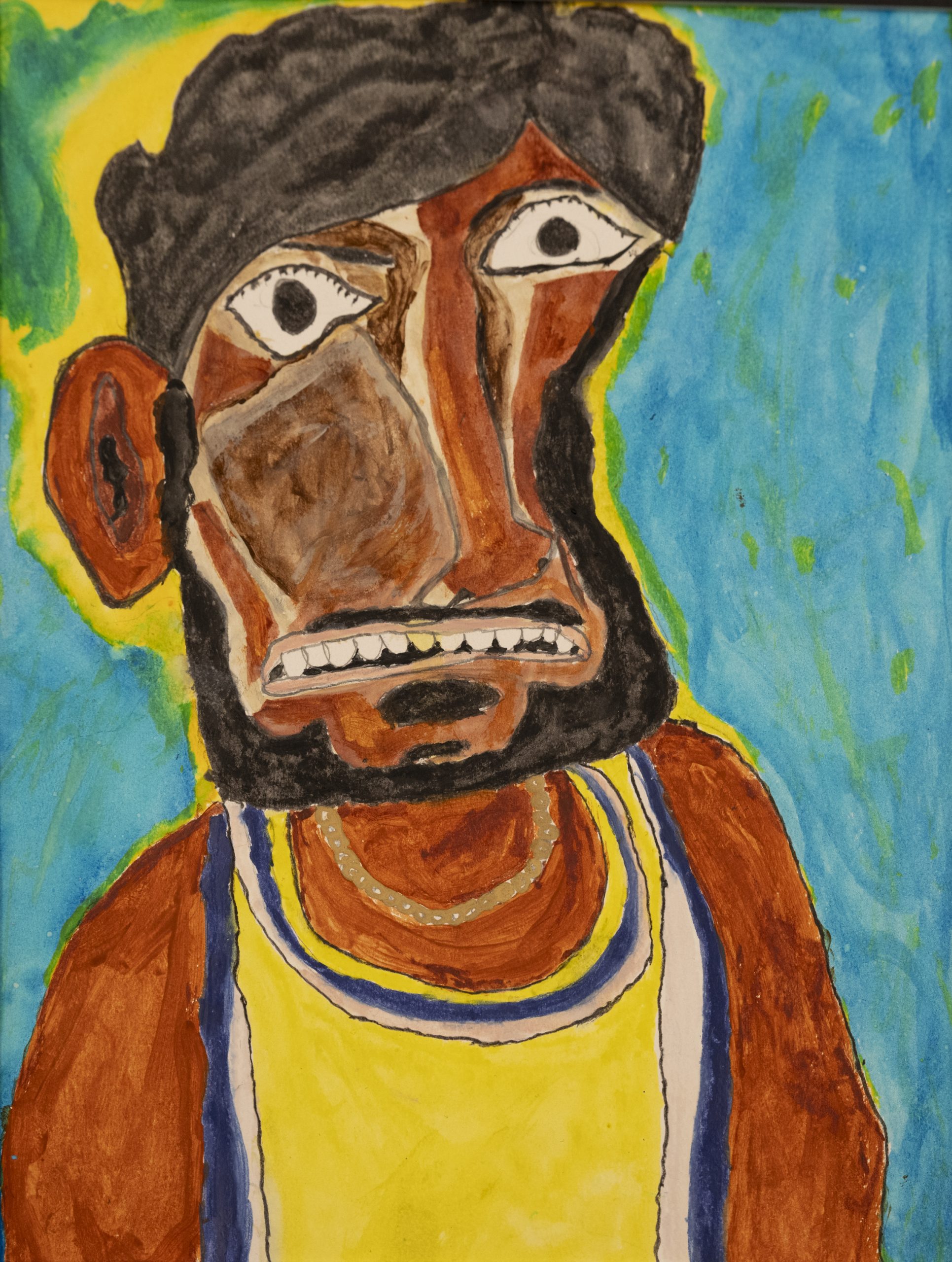
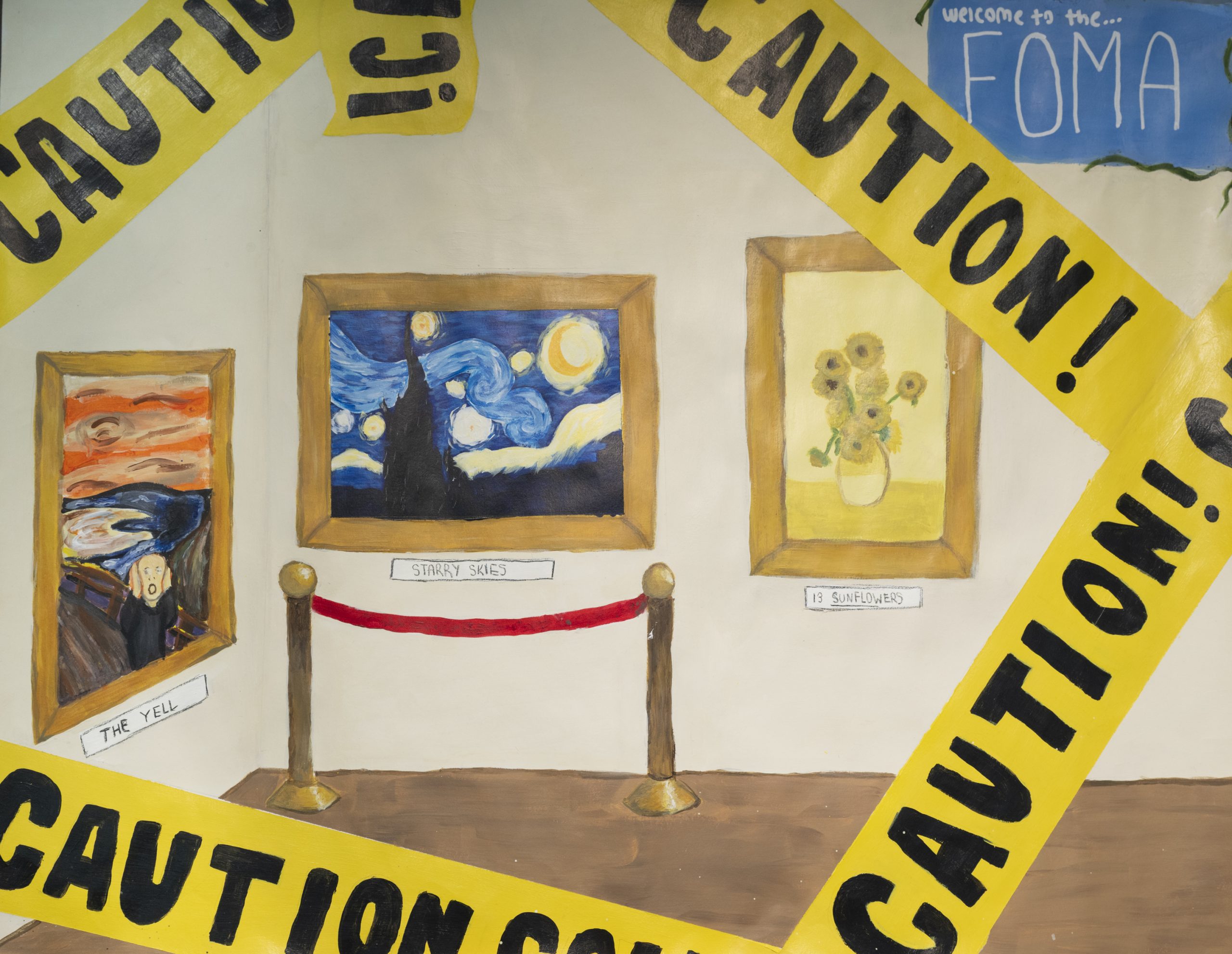
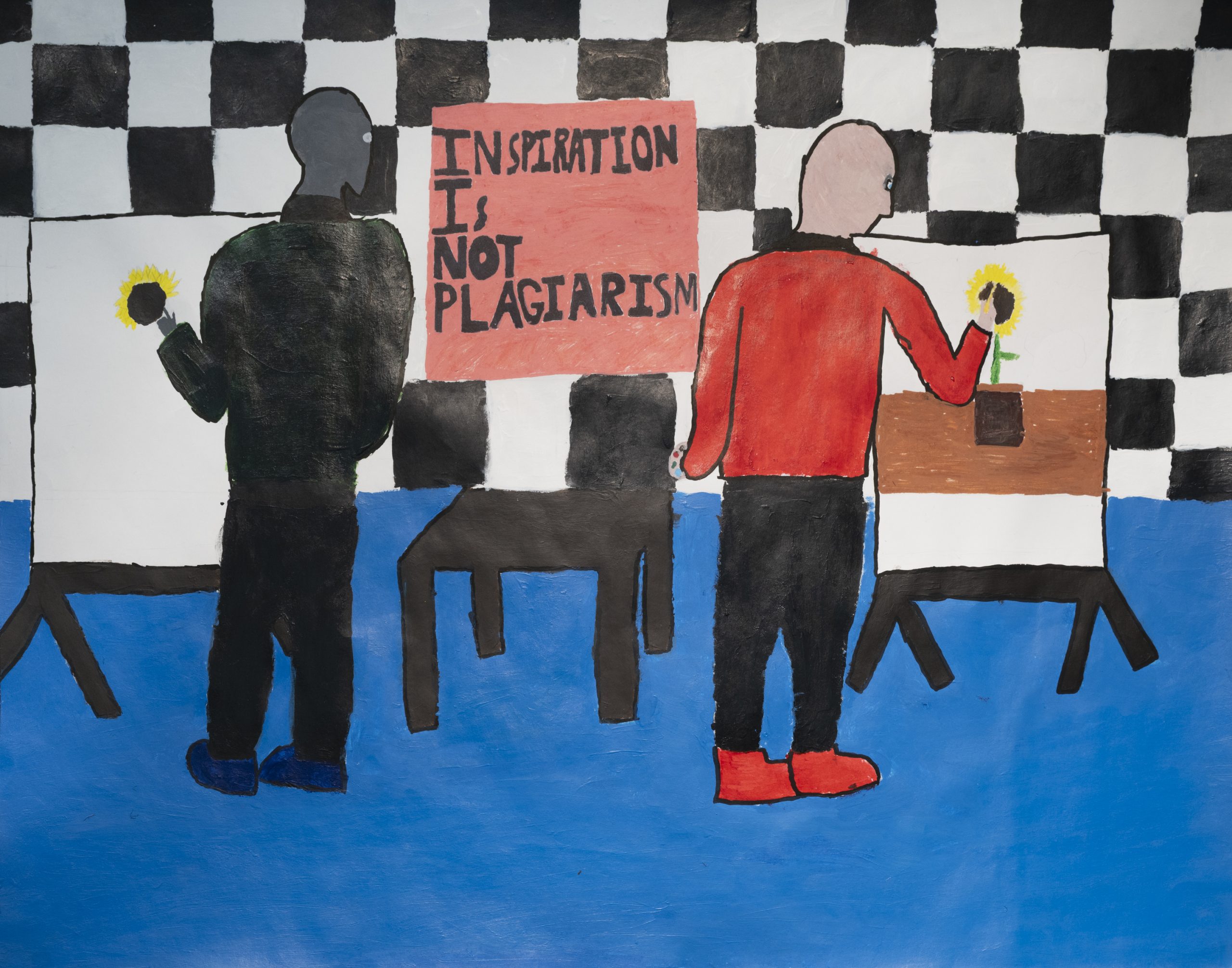
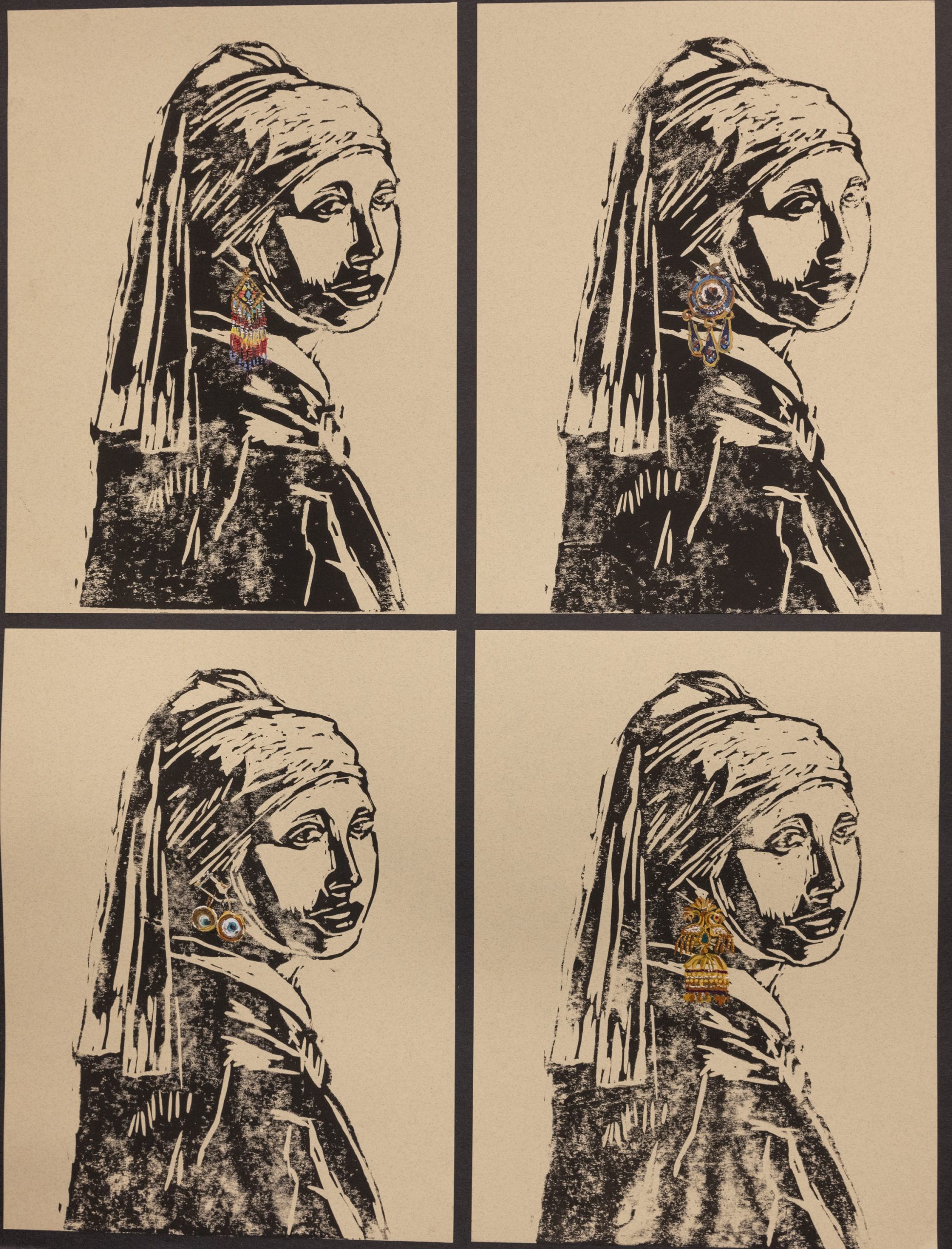
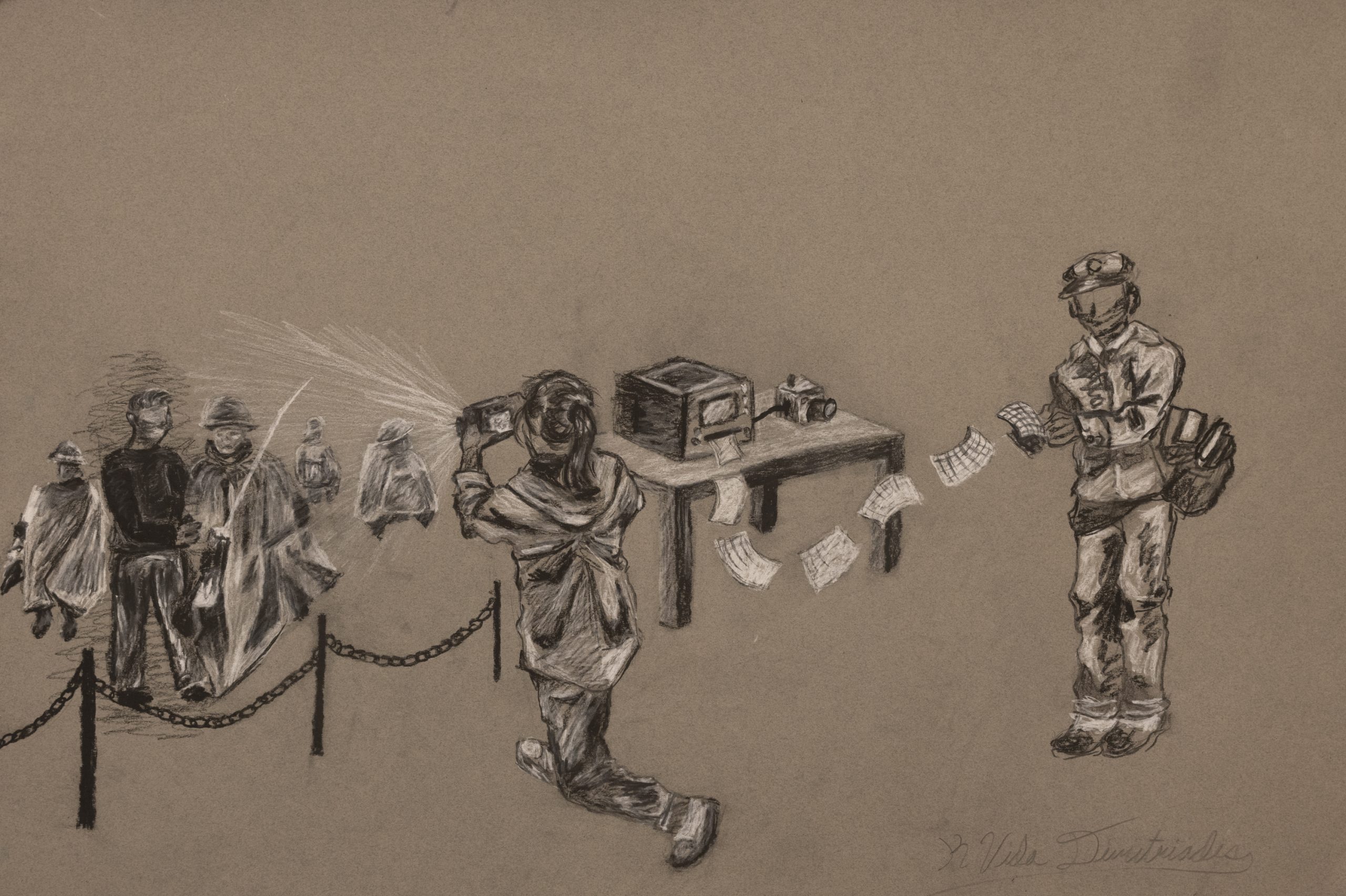
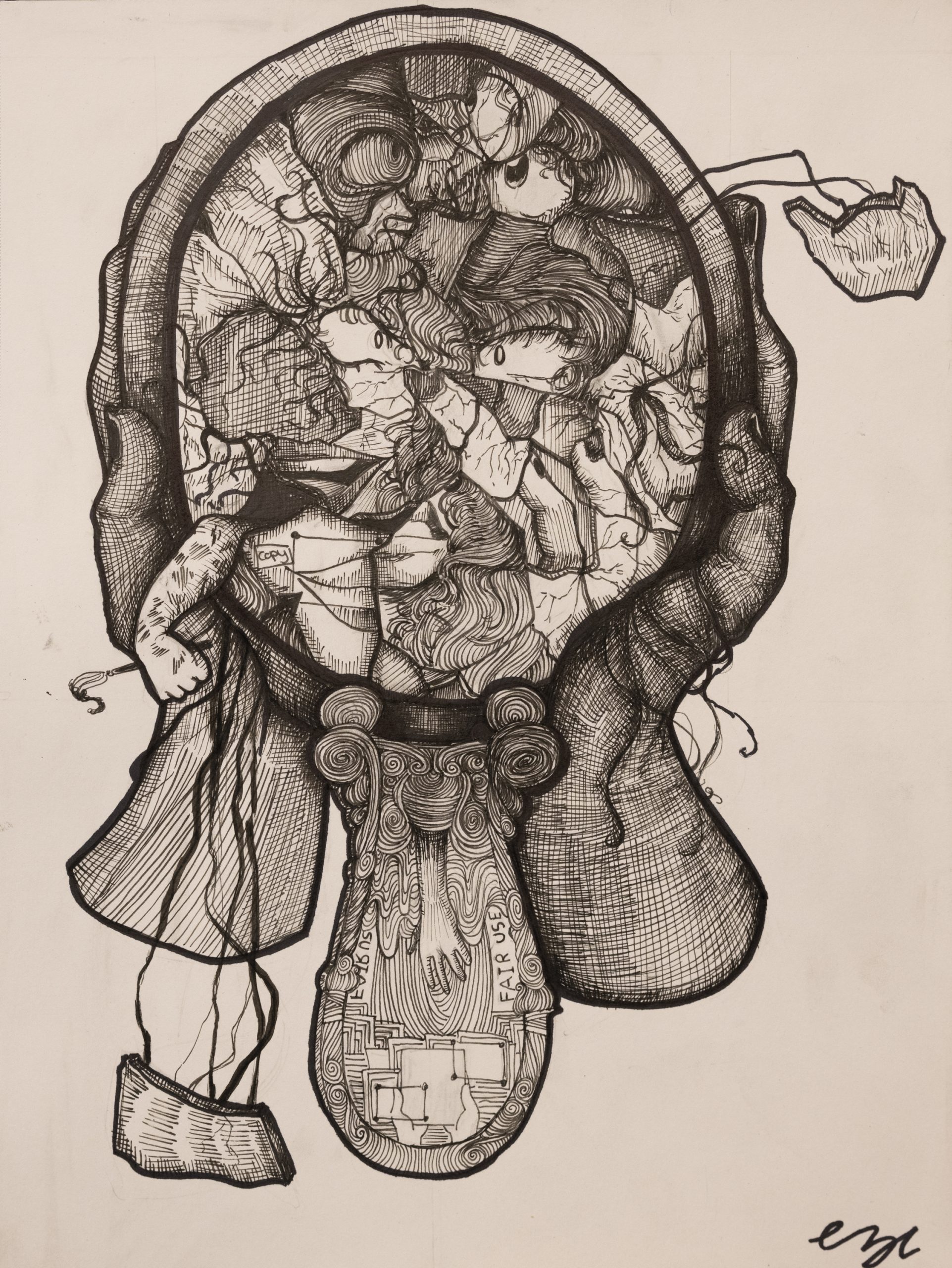
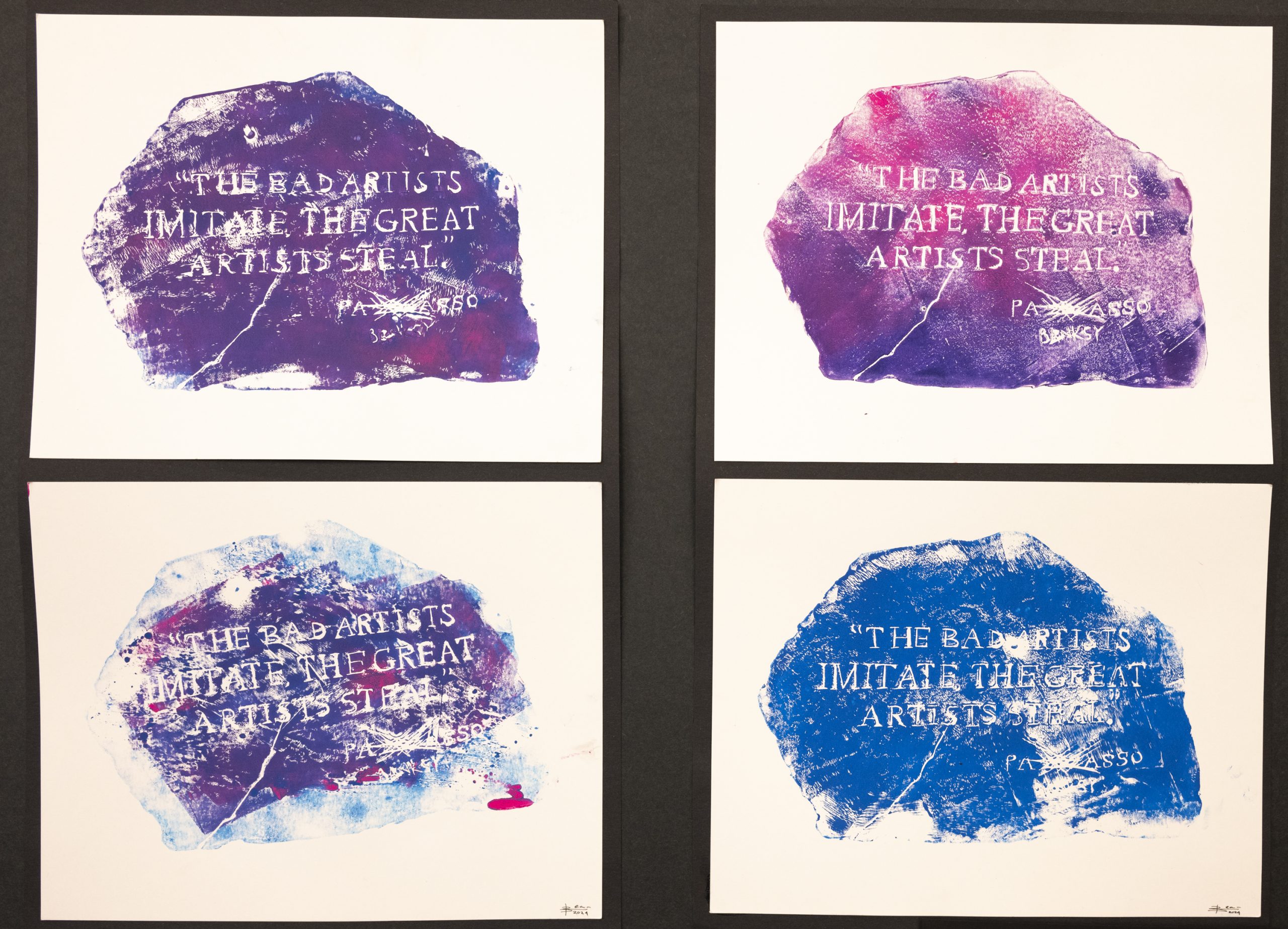
Project Title: PLAGIARISM VERSUS INSPIRATION: LEGALLY PUSHING THE BOUNDARIES OF CREATIVITY
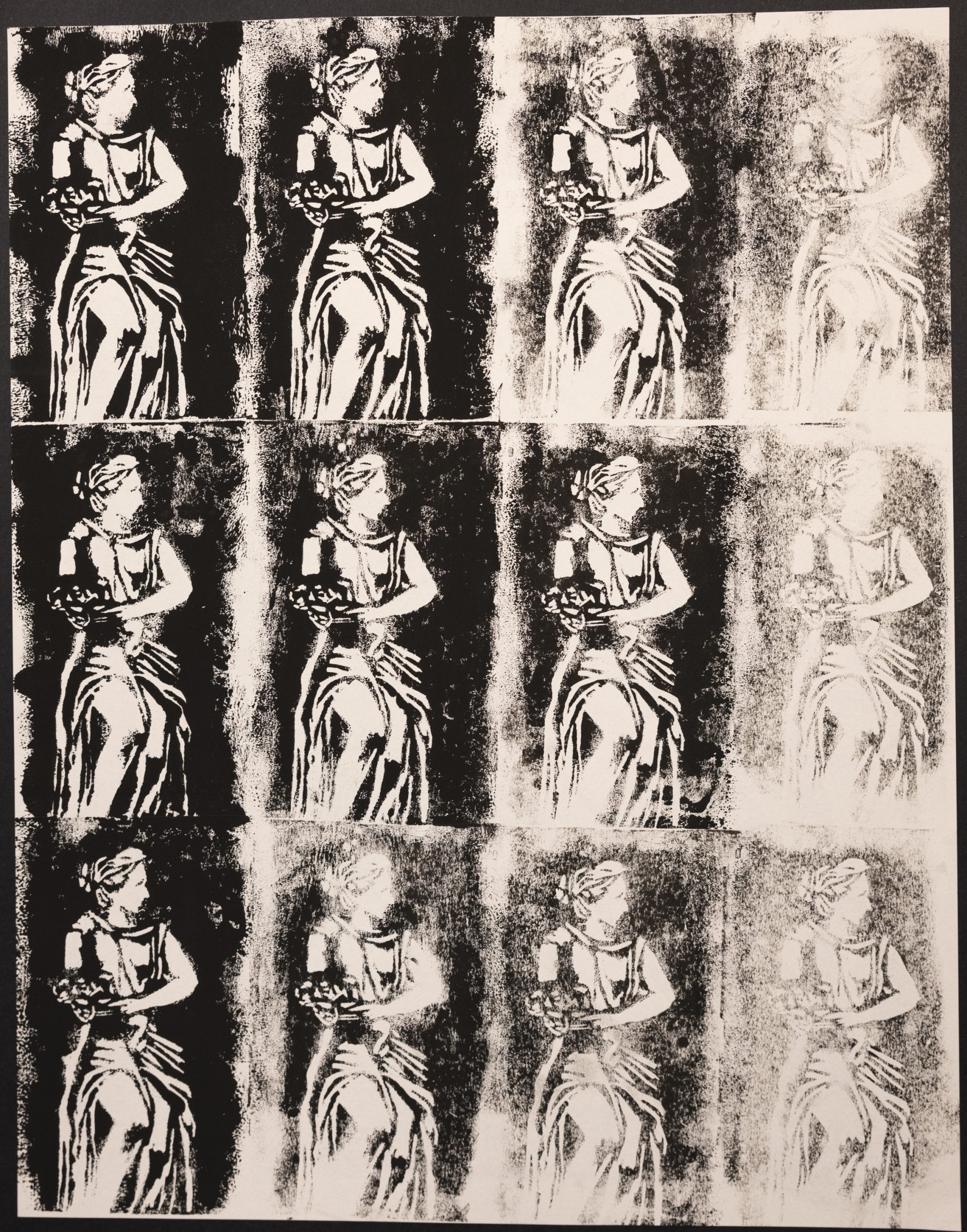
Students learned about three court cases and acted as the jury and judge to determine whether the client in the case they were learning about was guilty or not guilty of plagiarism as per the “fair use” in copyright law guidelines. The students were introduced to different ways artists throughout history inspired each other’s work and influenced each other’s creative process. The students then chose a piece by an artist who inspired them and created their own works which would be considered a “fair use” alteration of the work inspired by their chosen artist and piece.
Teacher: Laura Ricca
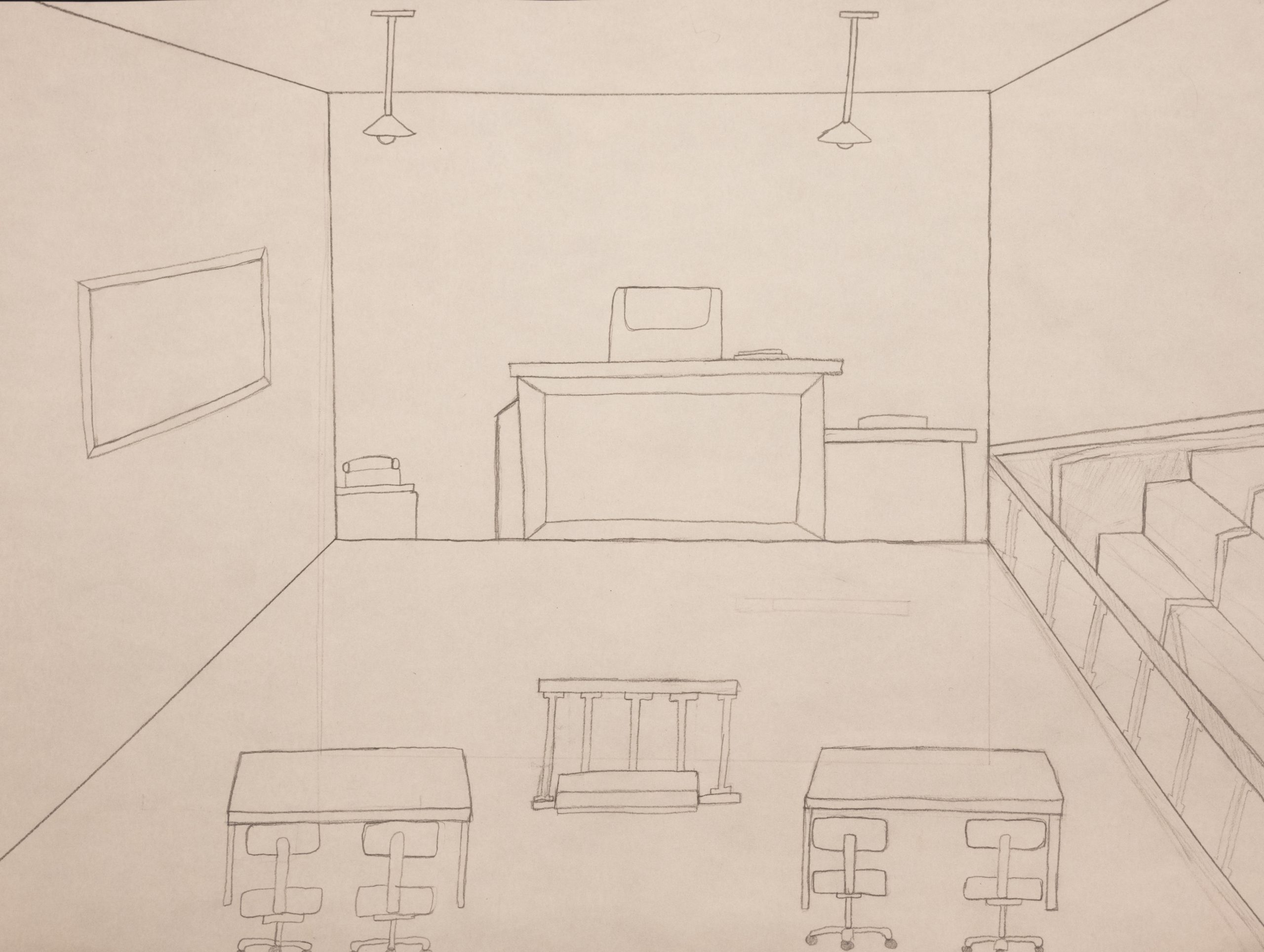
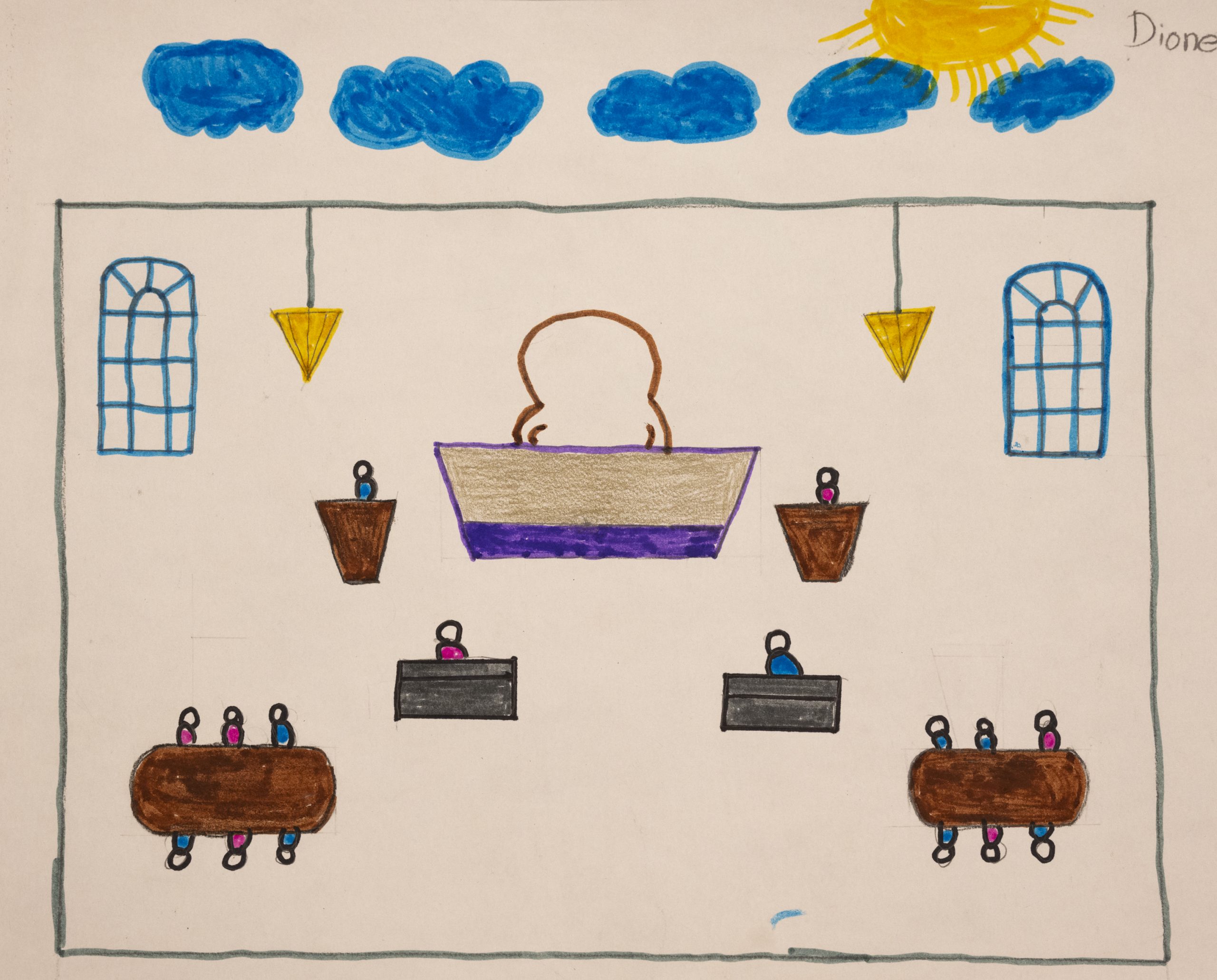
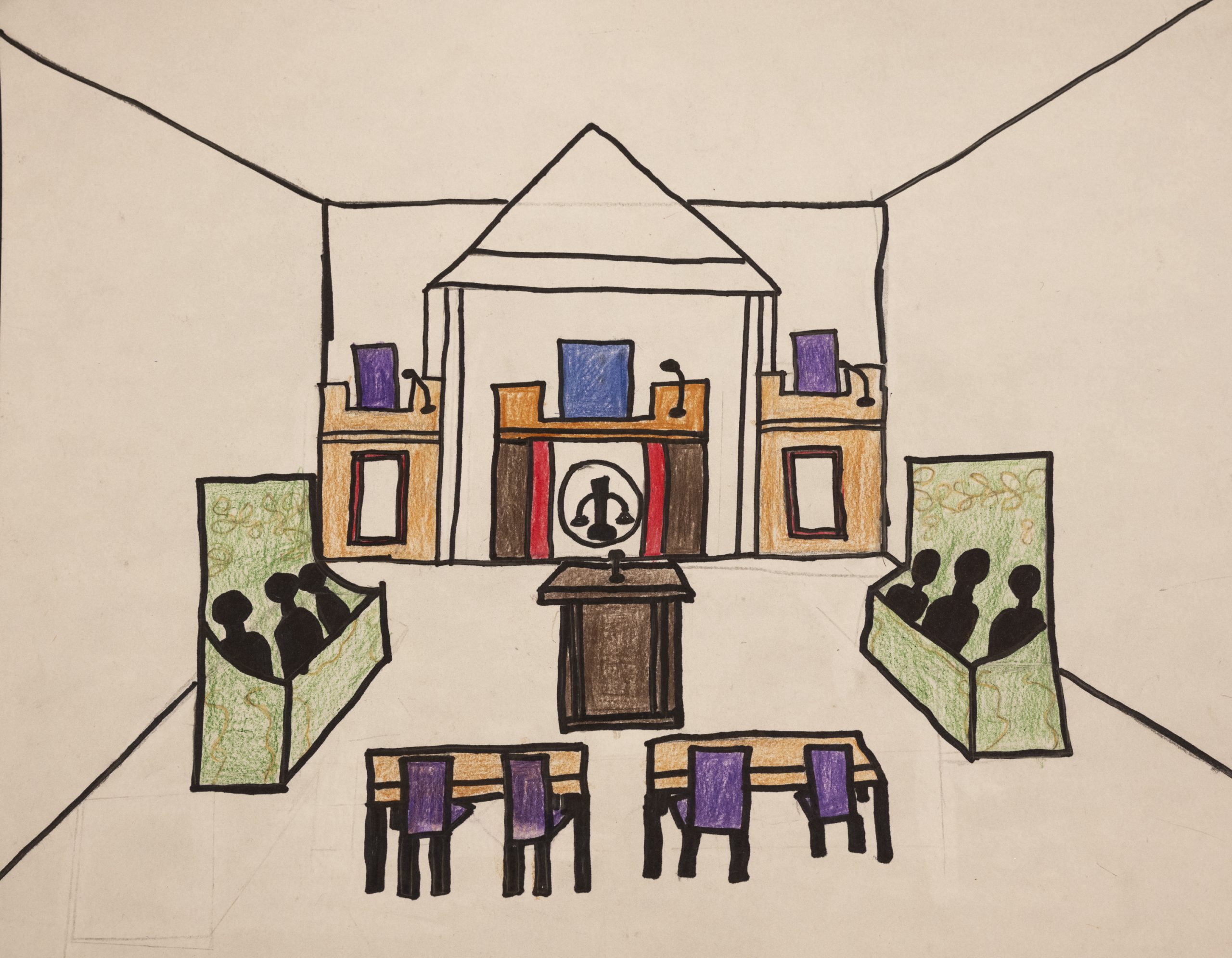
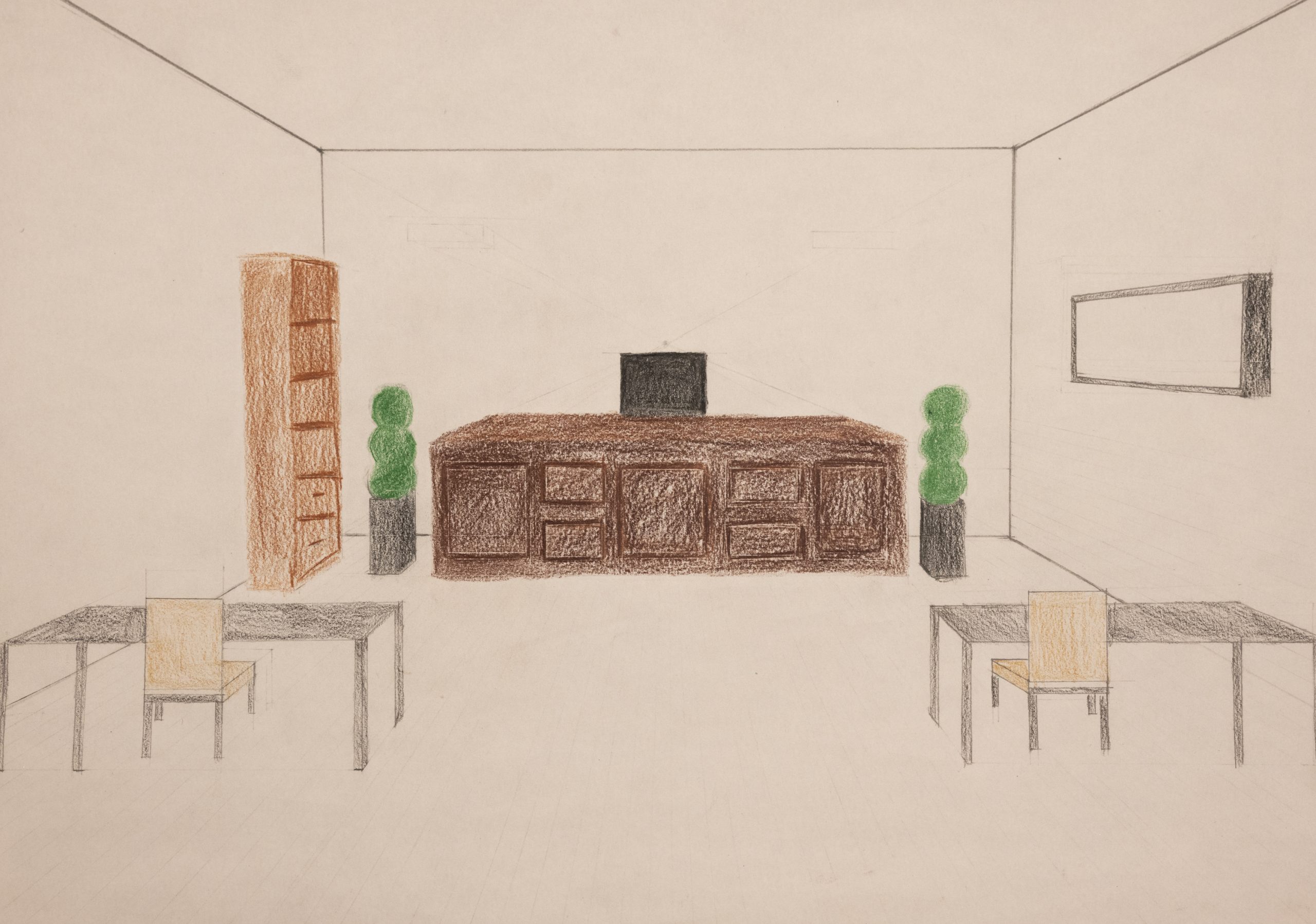
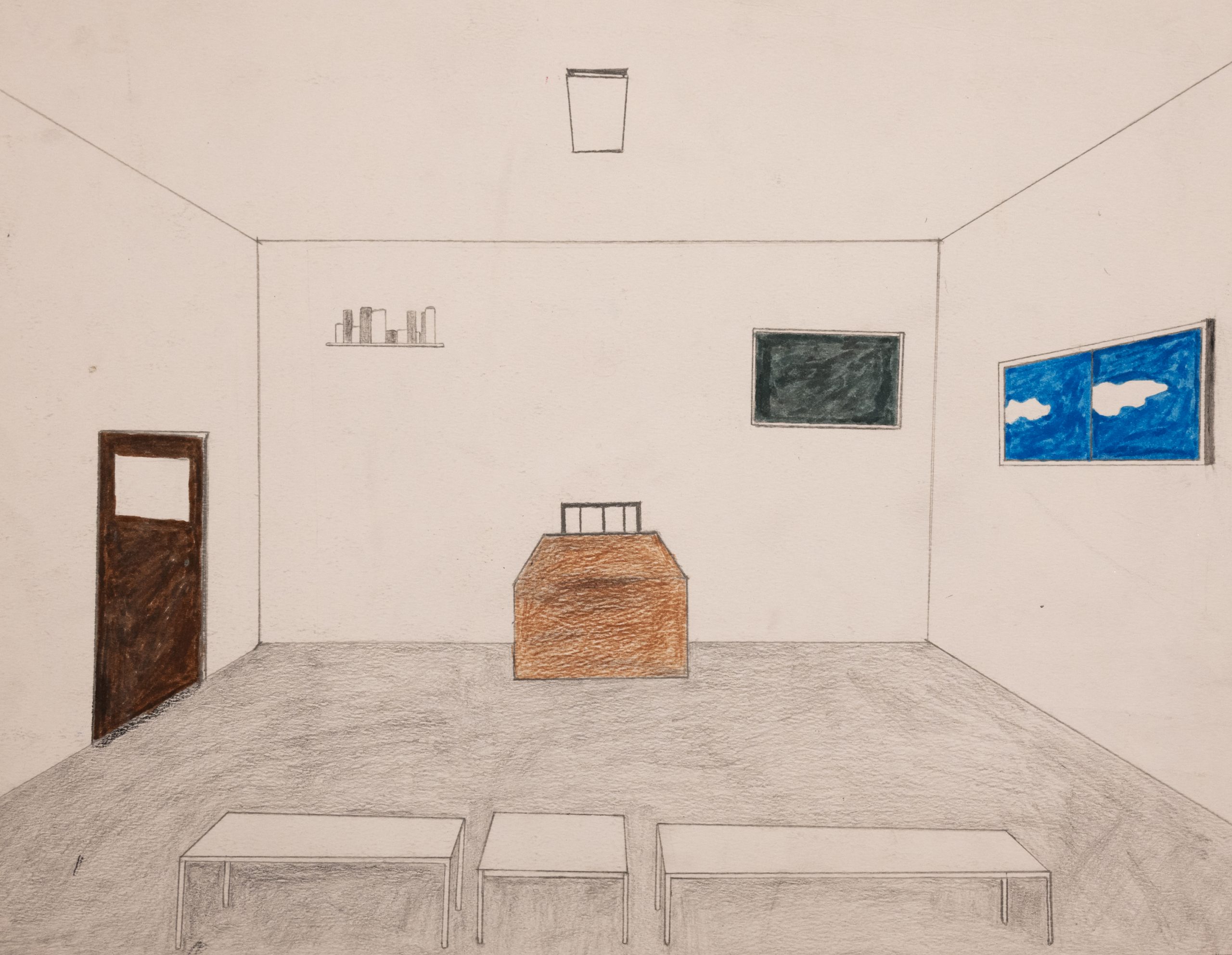
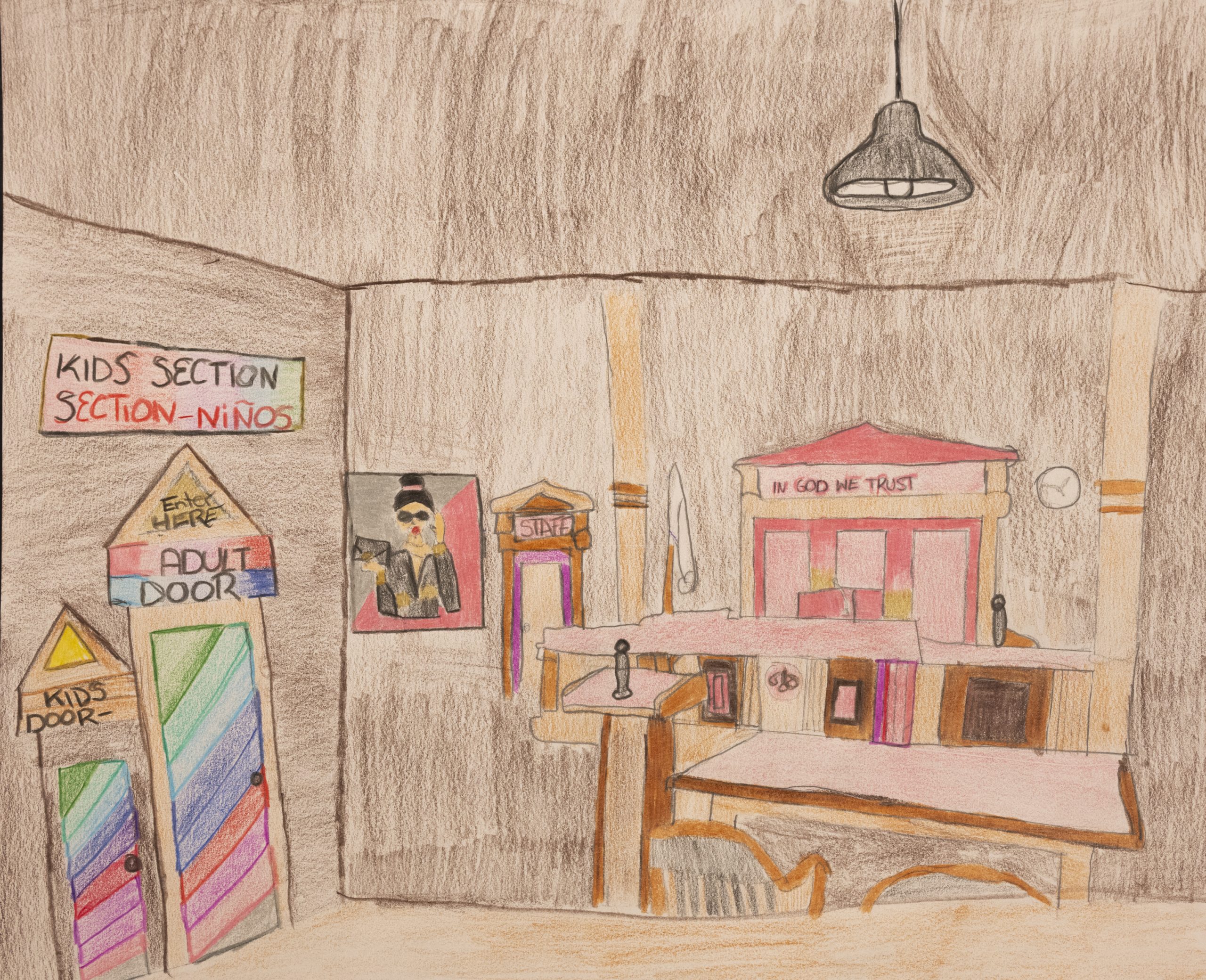
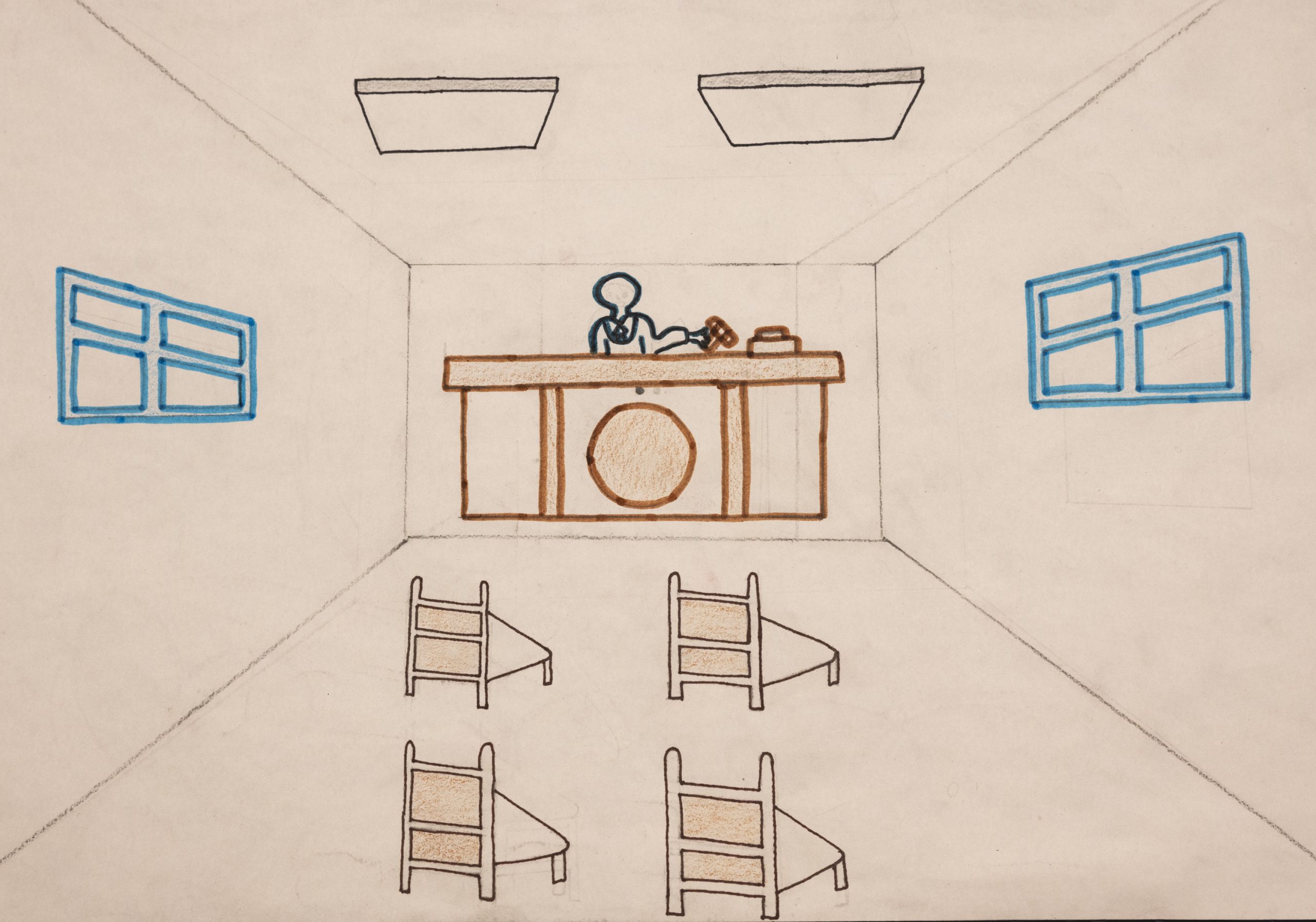
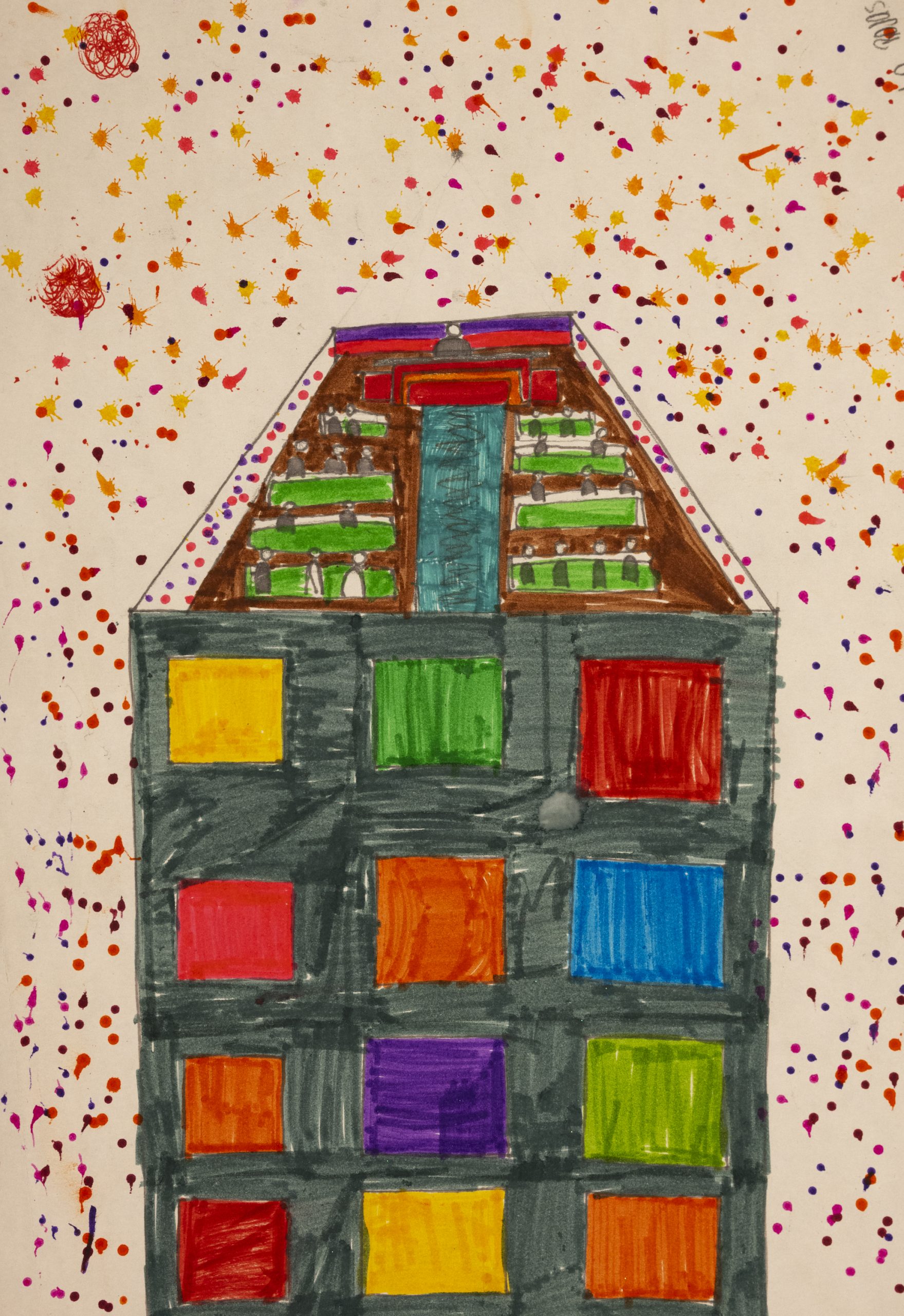
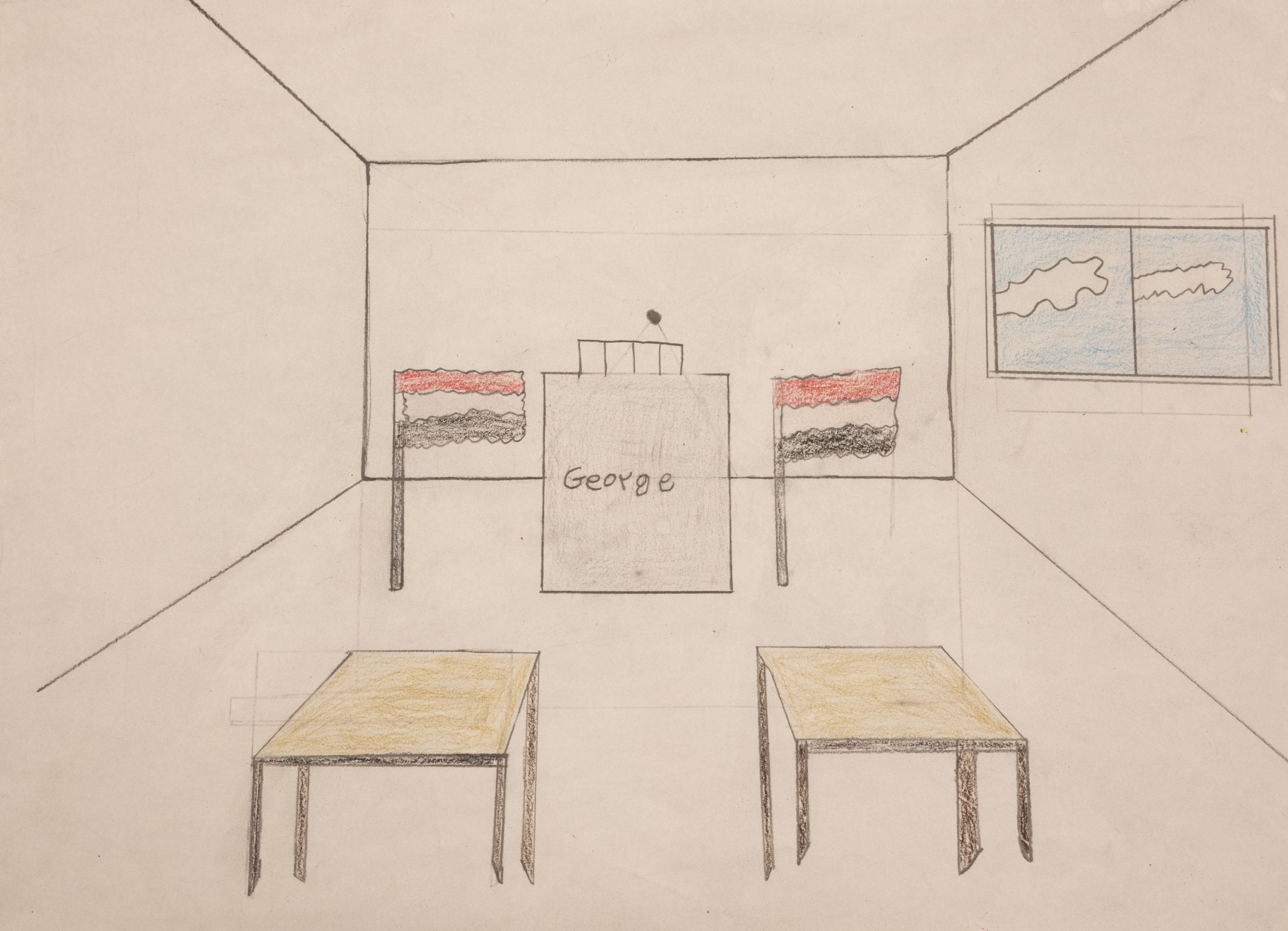
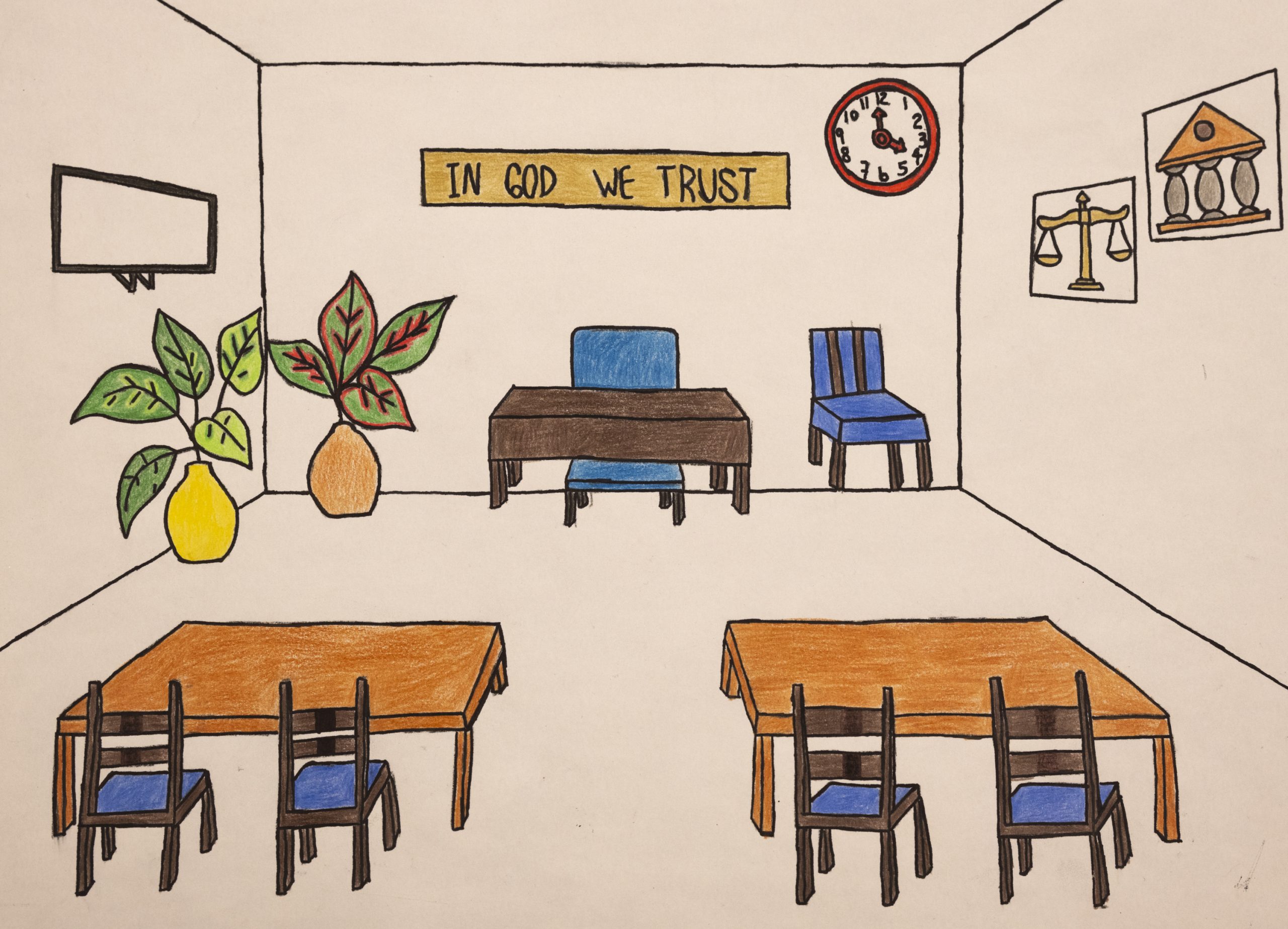
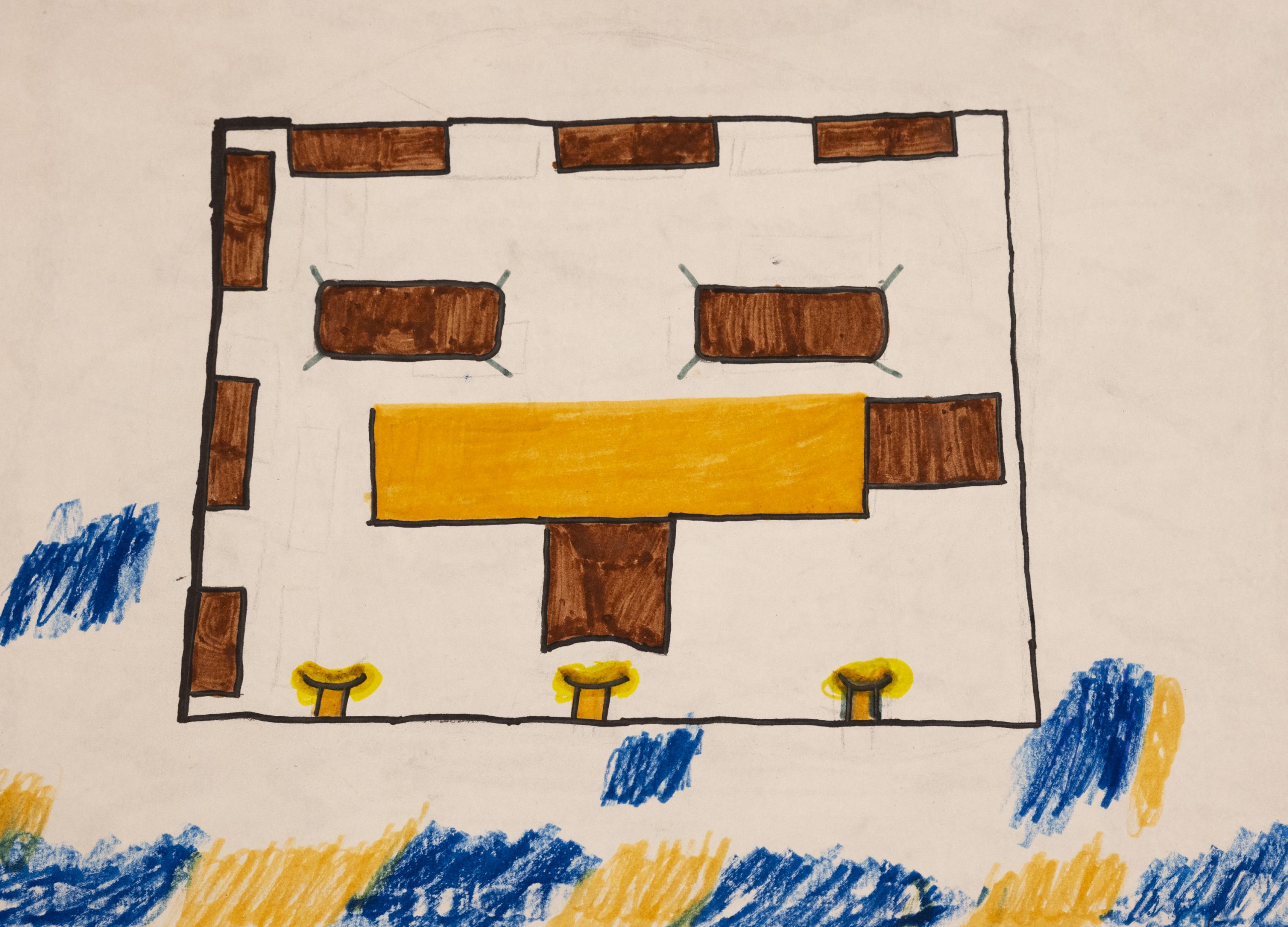
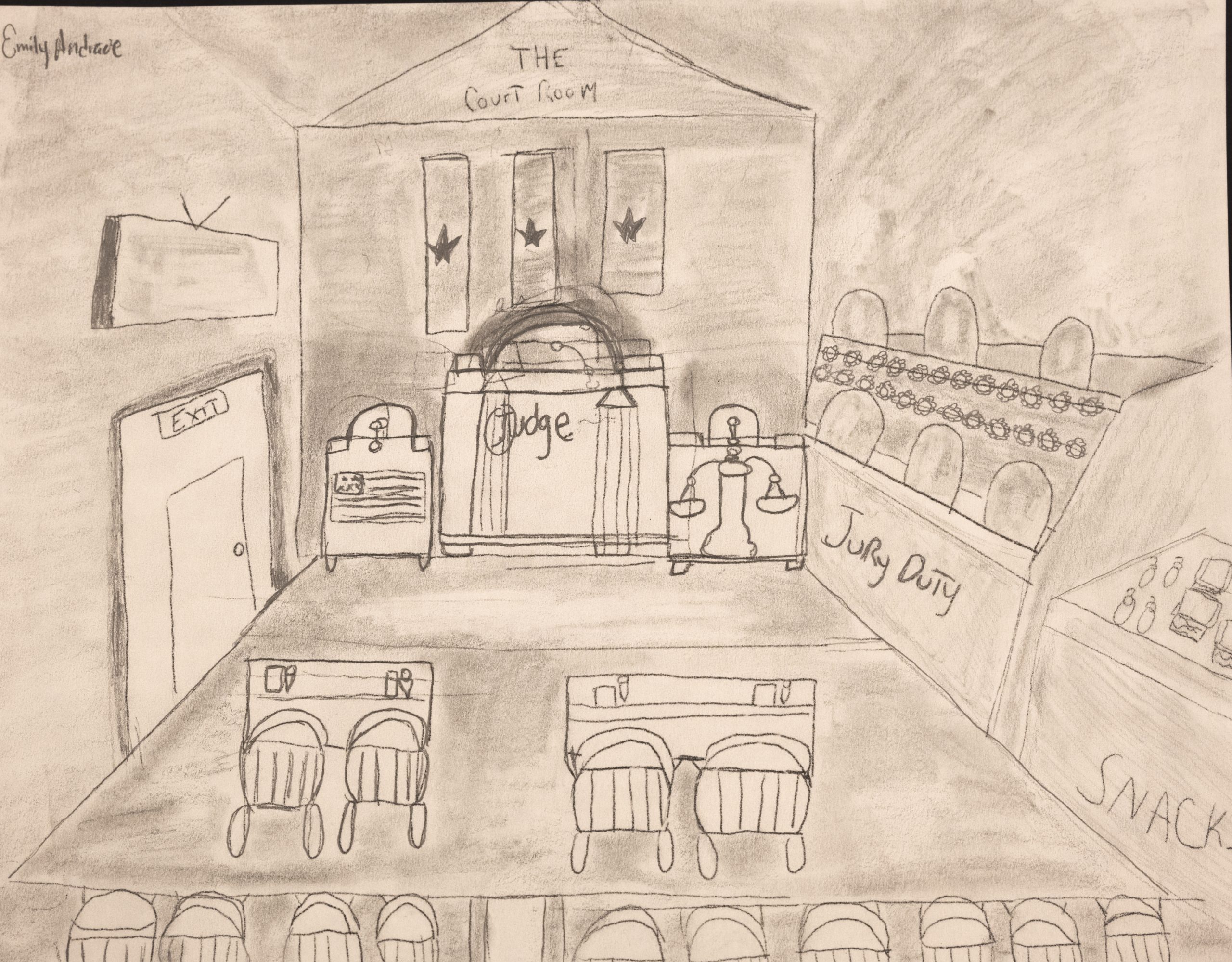
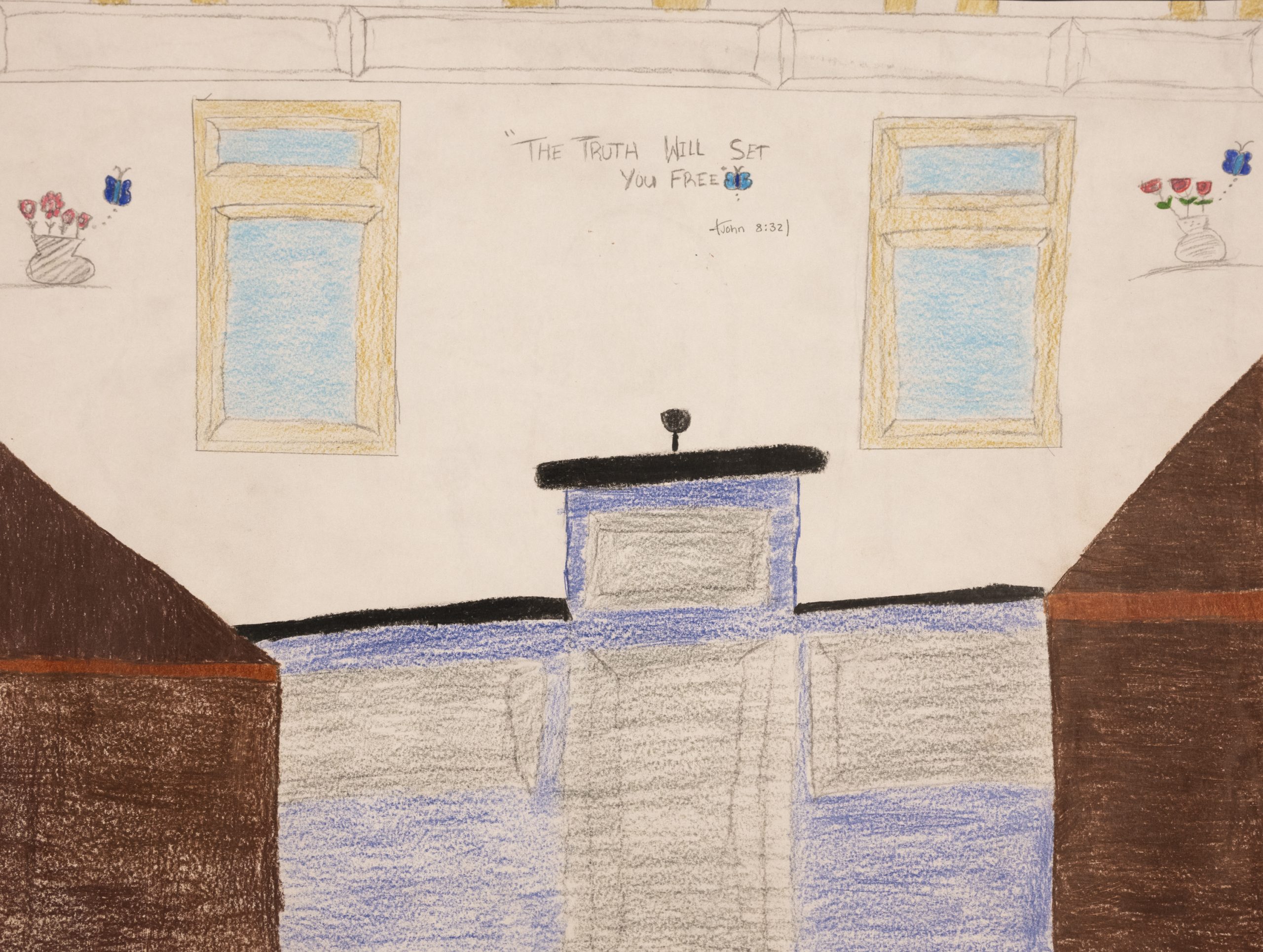
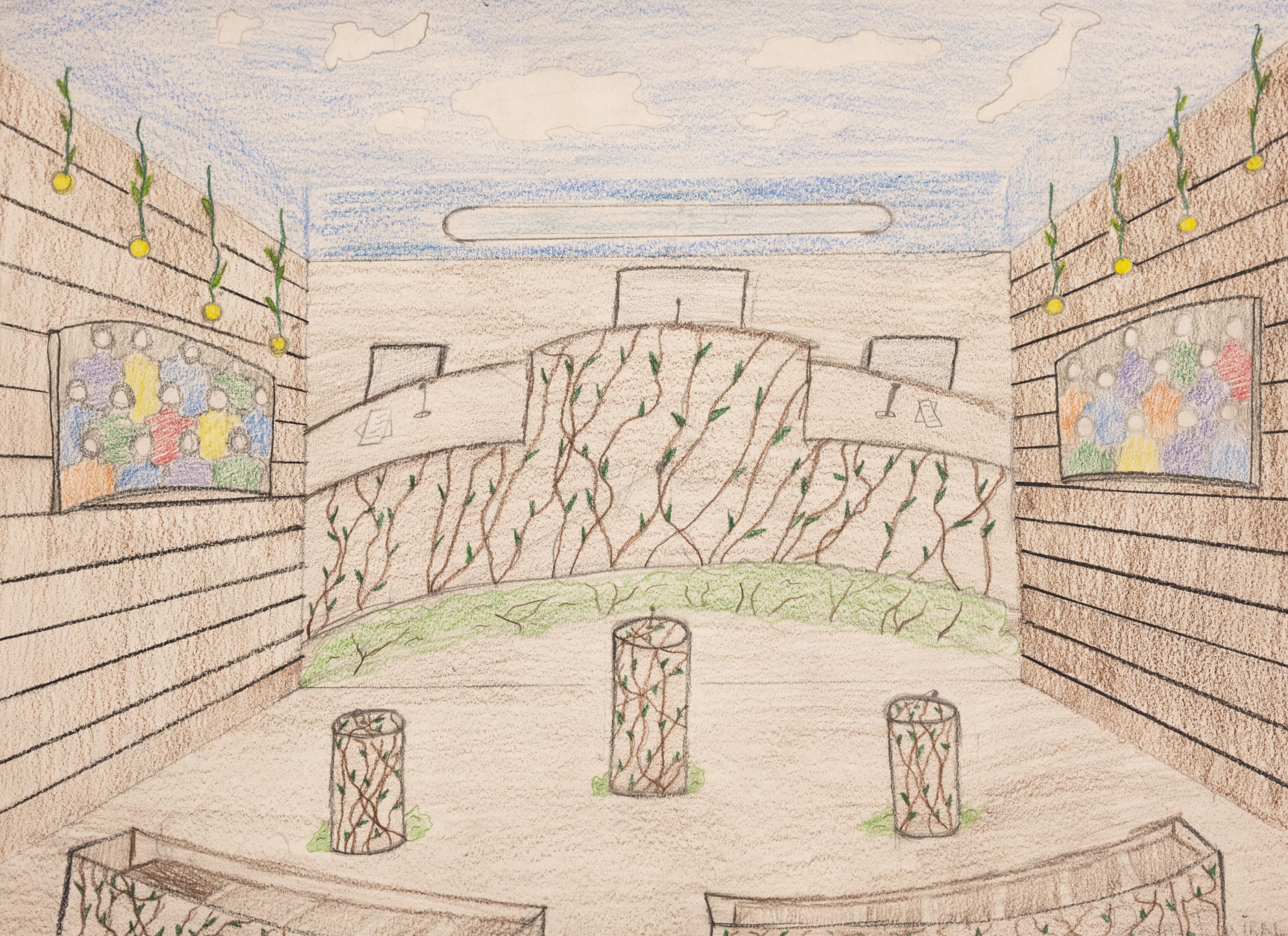
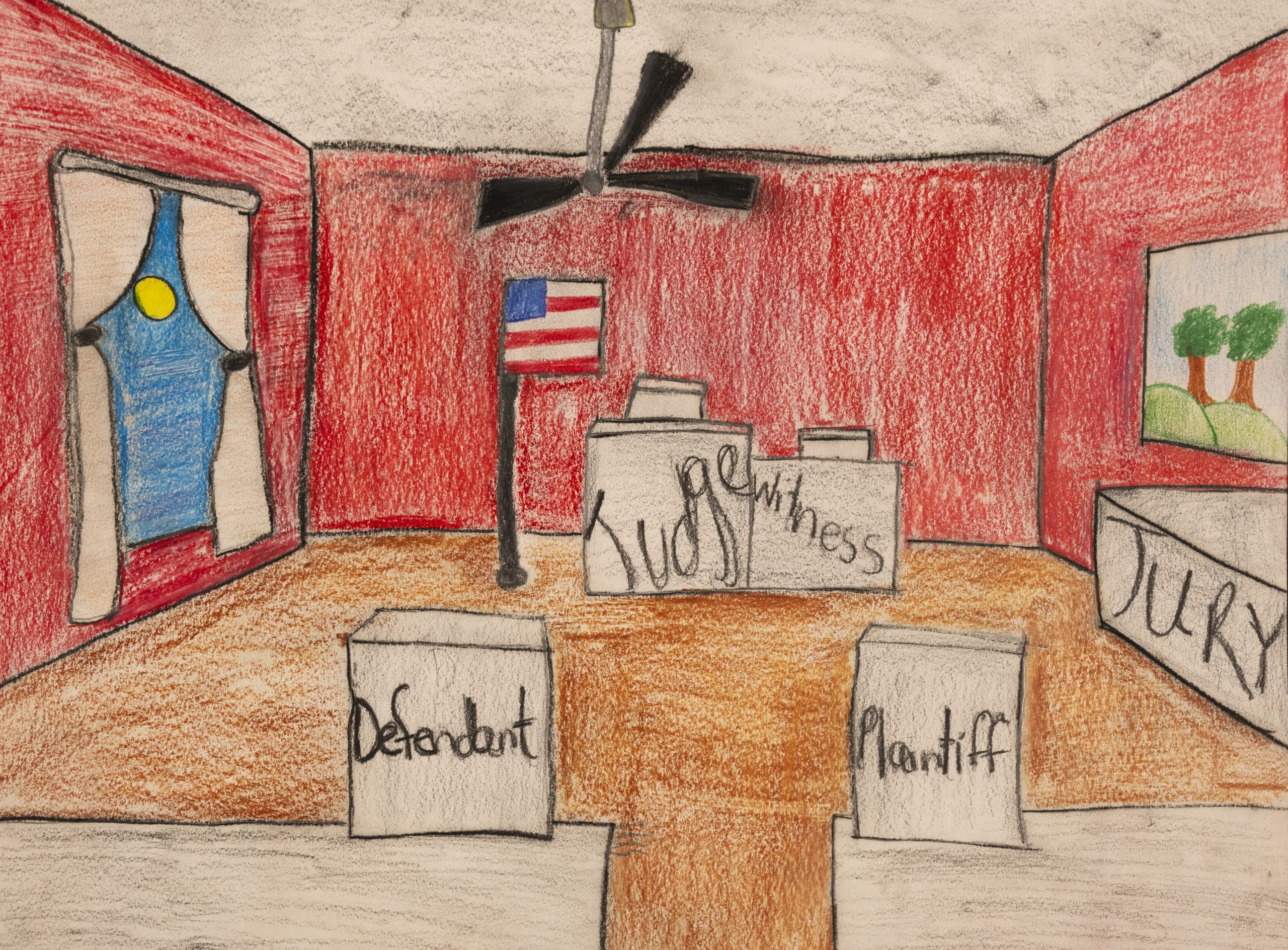
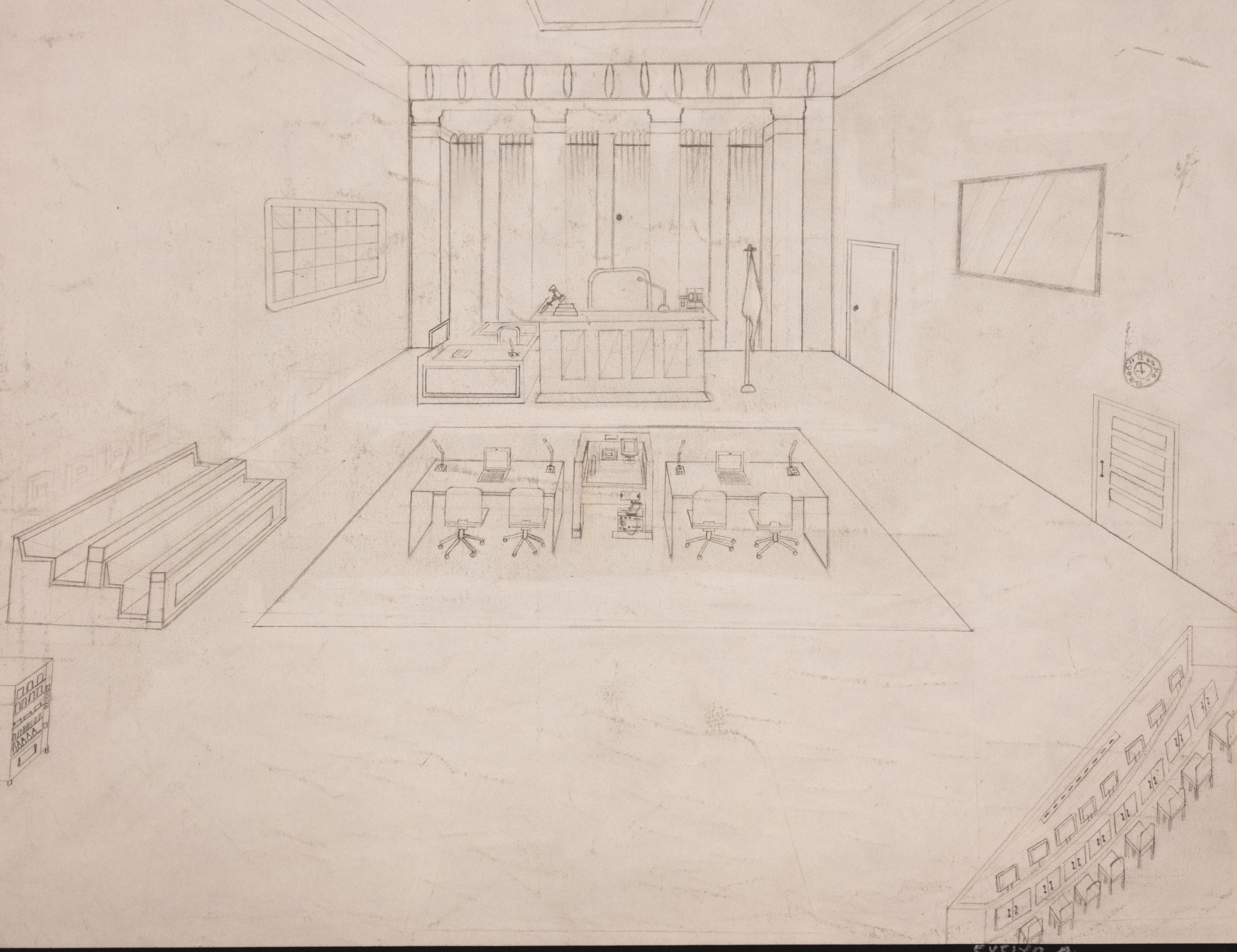
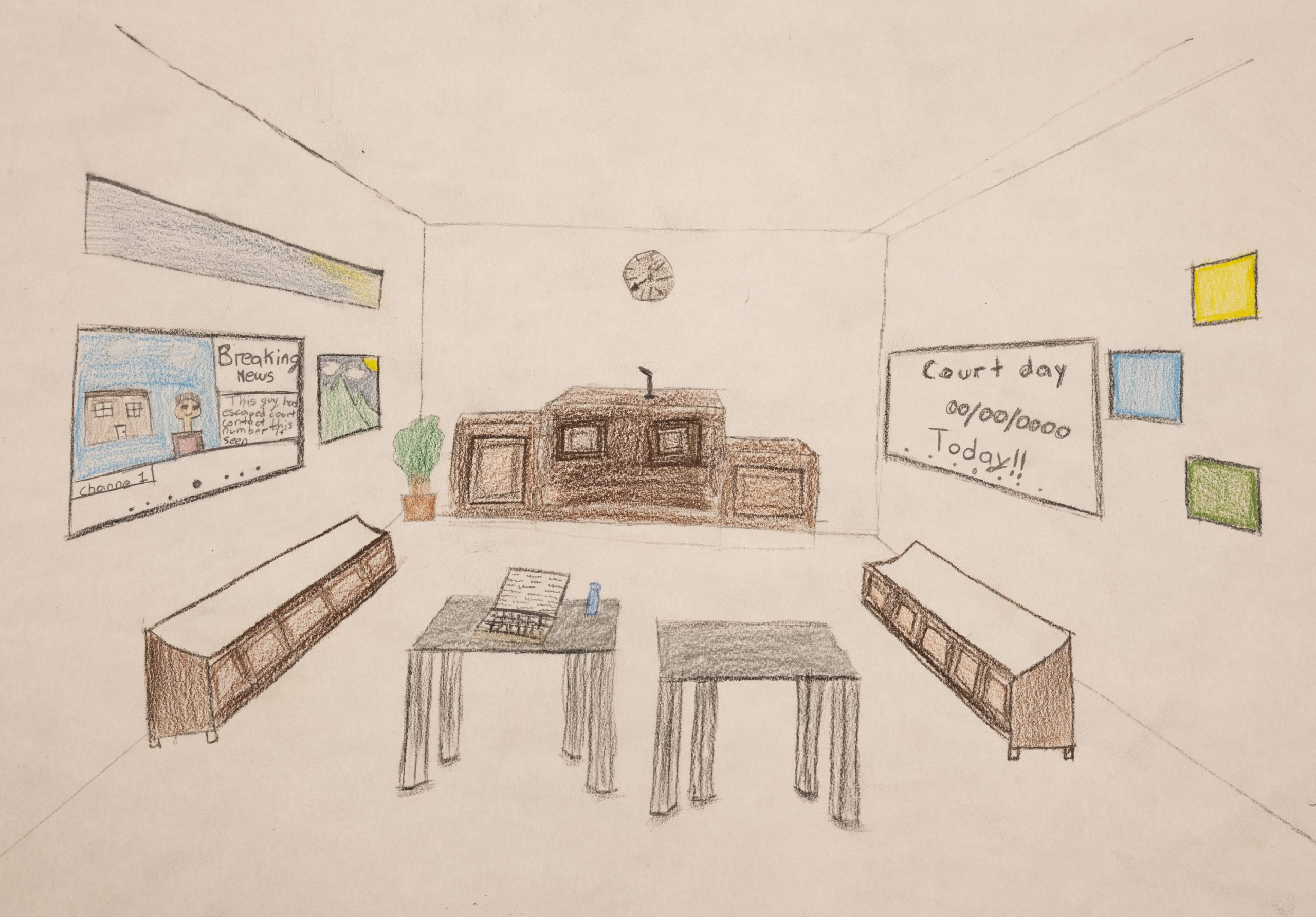
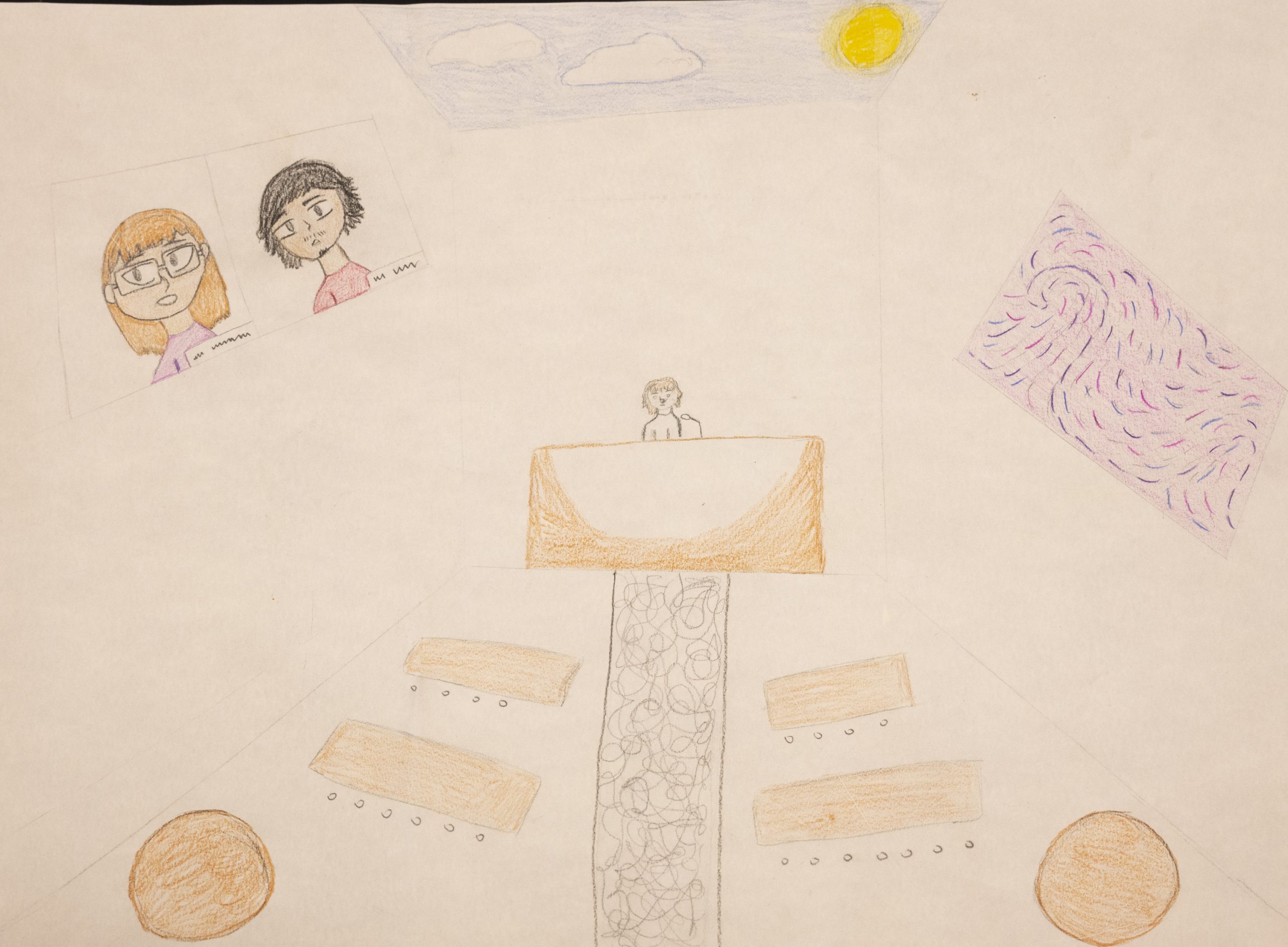
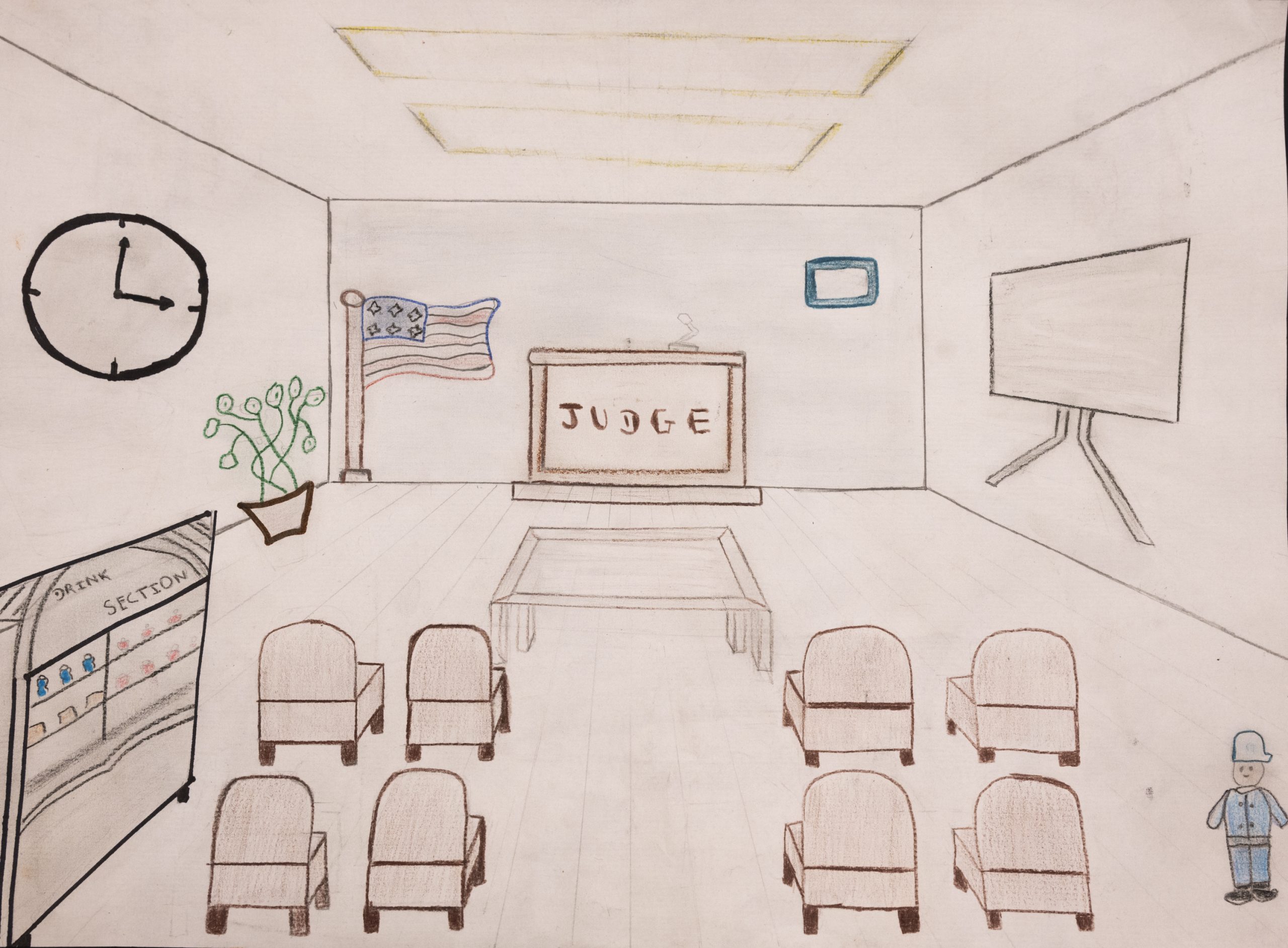
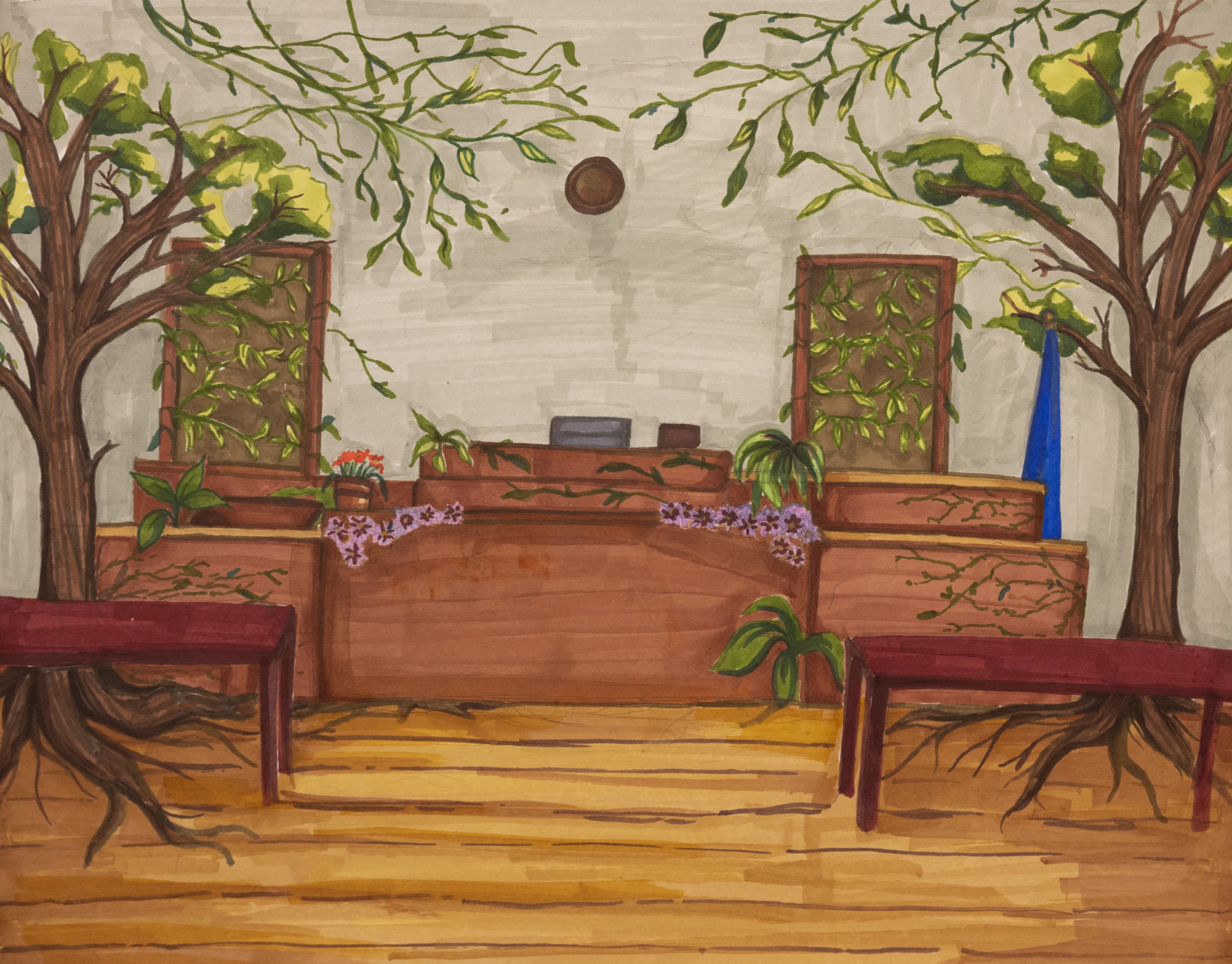
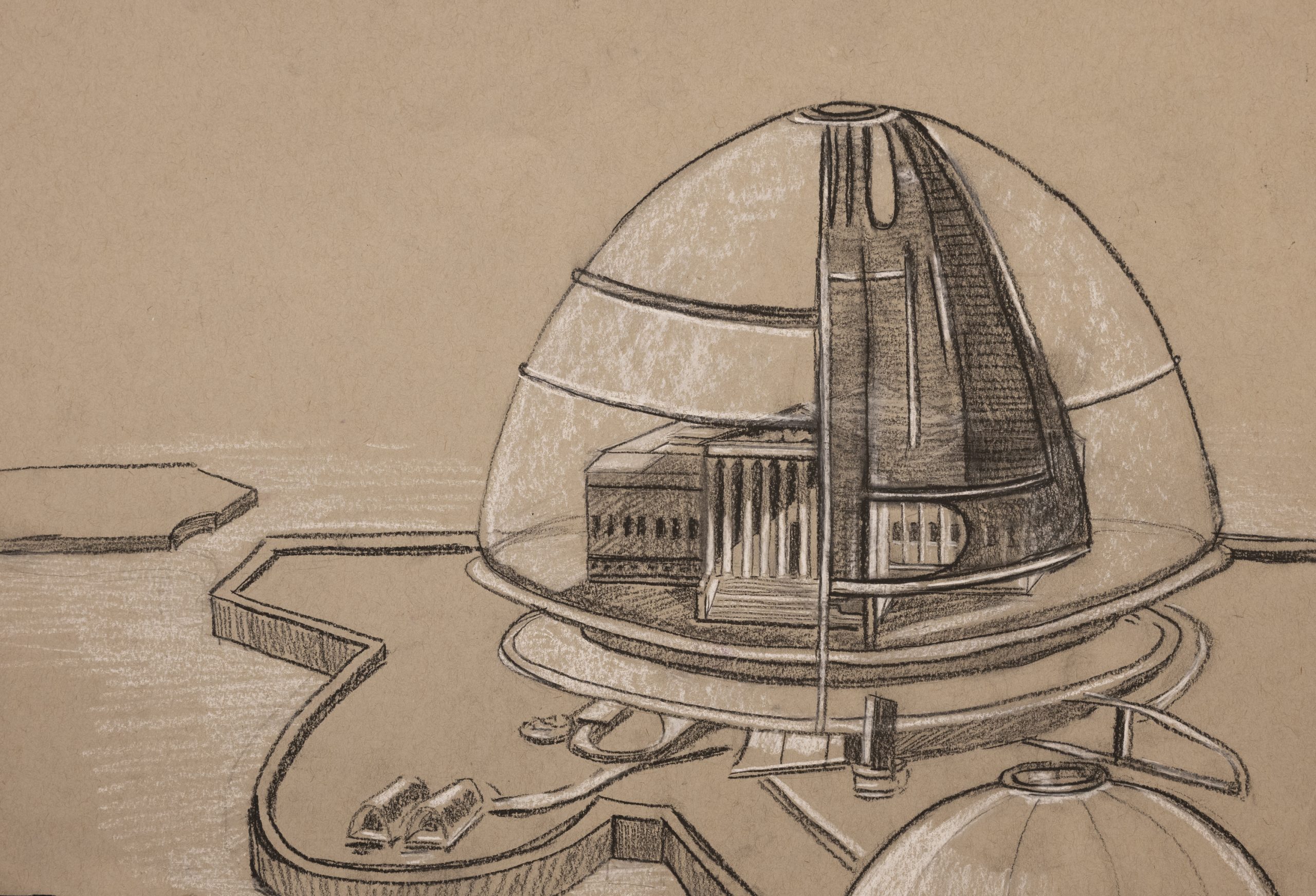
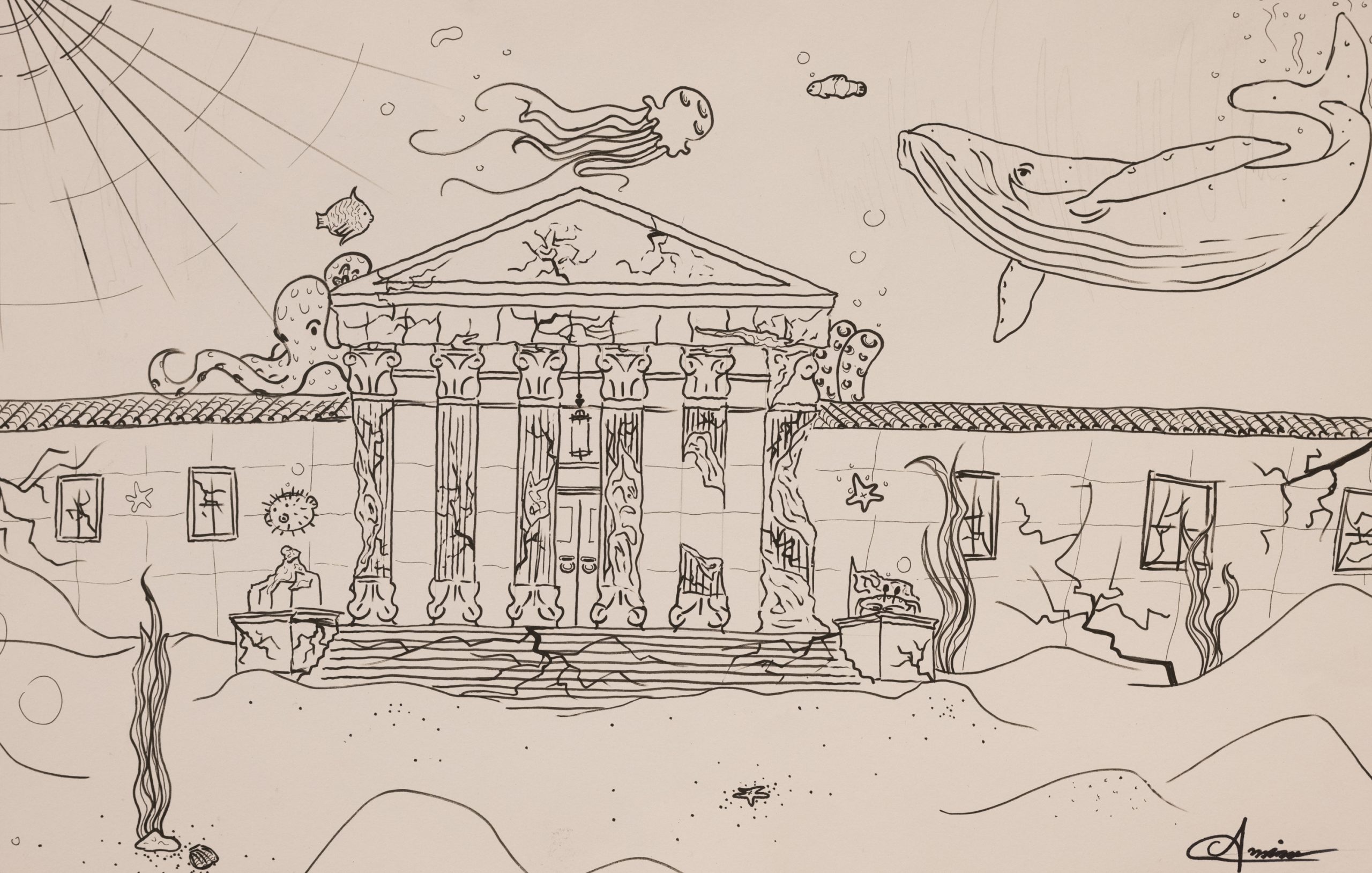
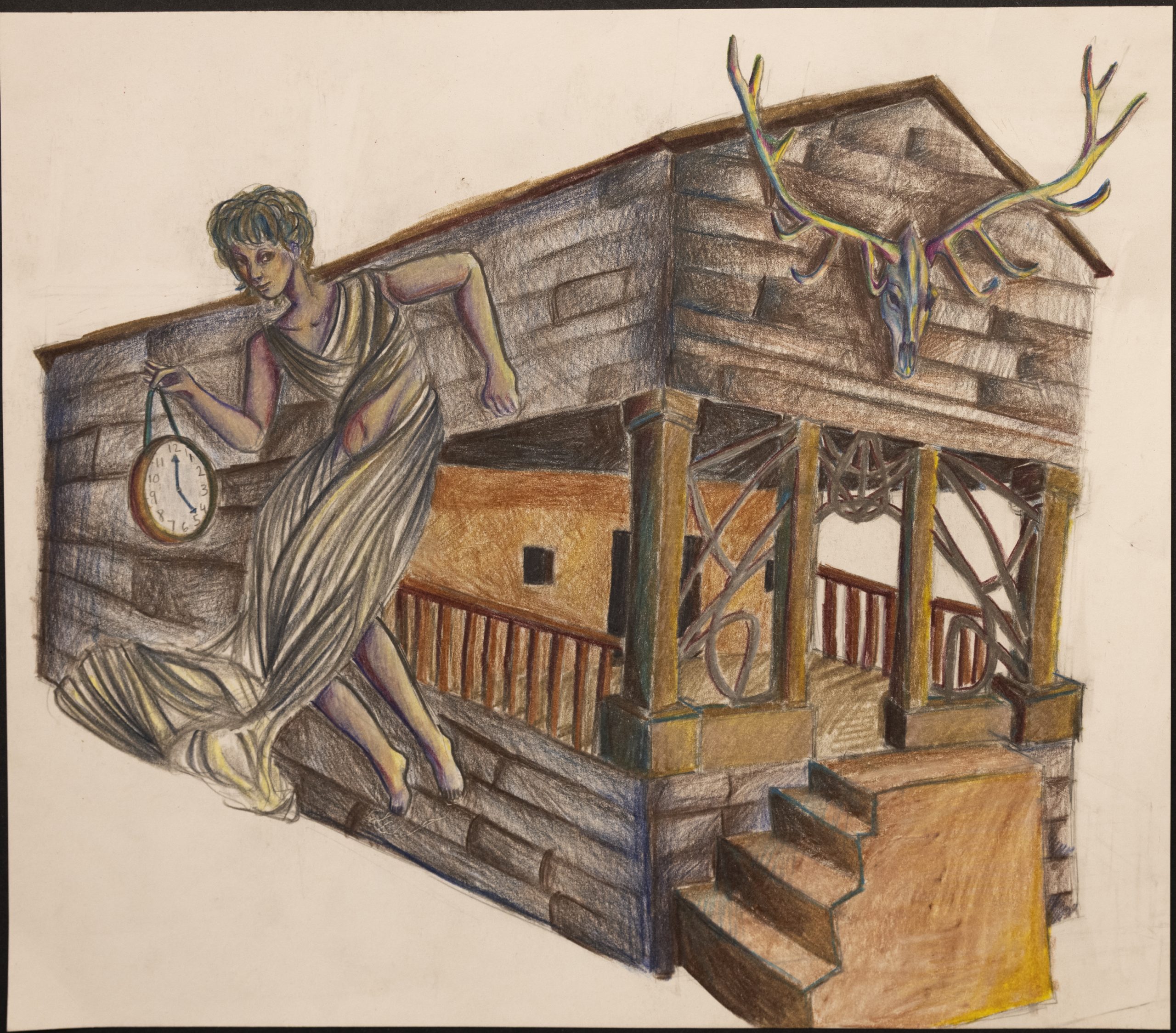
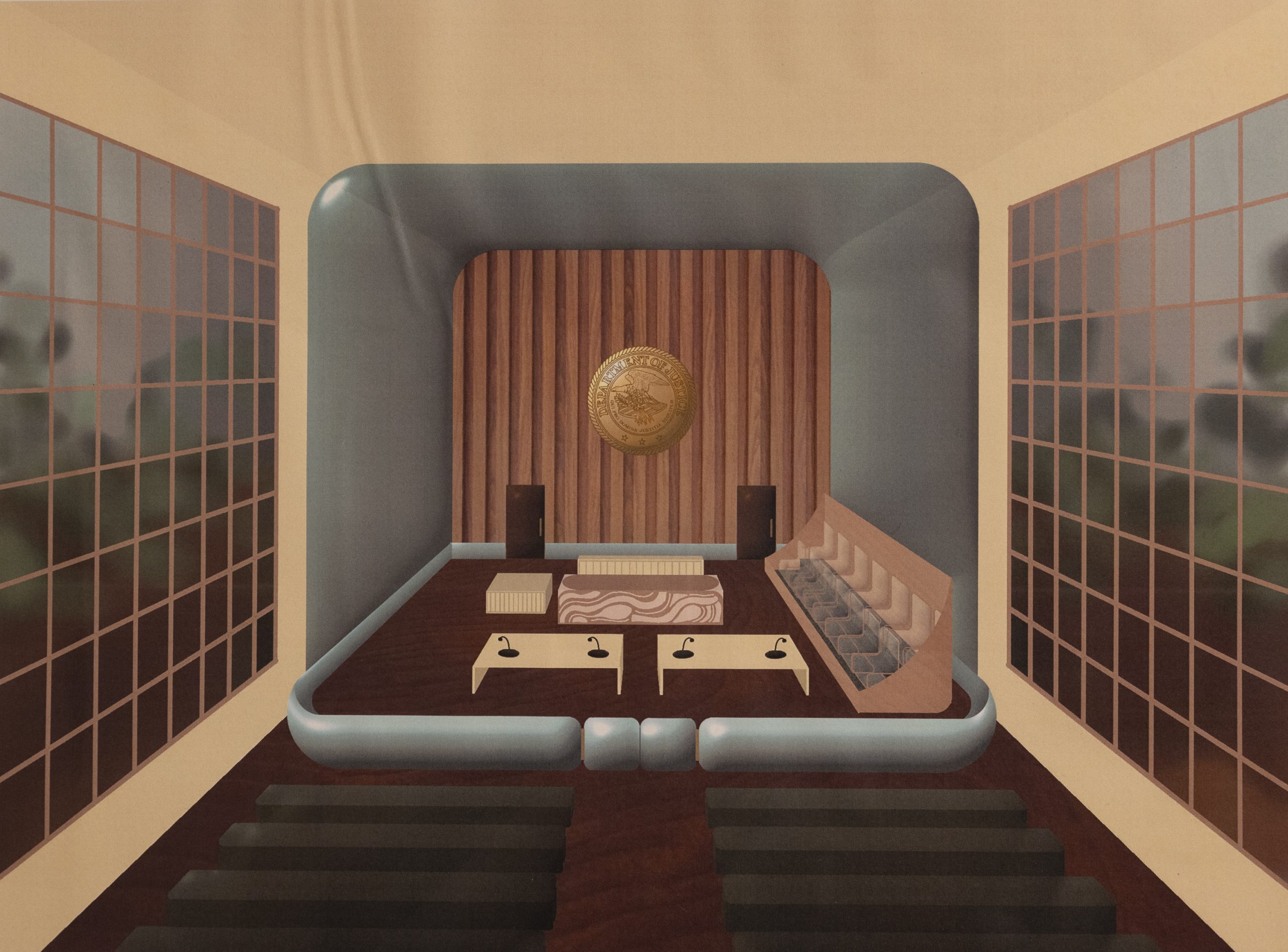
Project Title: COURTROOMS OF THE FUTURE
For this project students designed a courtroom that would represent the feel and the mood that they would like to see happen in a courtroom. The students wanted to emphasize peace, tranquility, harmony and a safe feeling in their courtroom. They did this by incorporating their culture, home and what they feel the future would want to feel when entering a courtroom.
Principal: Burnedette Drysdale
Teacher: Chris Curti
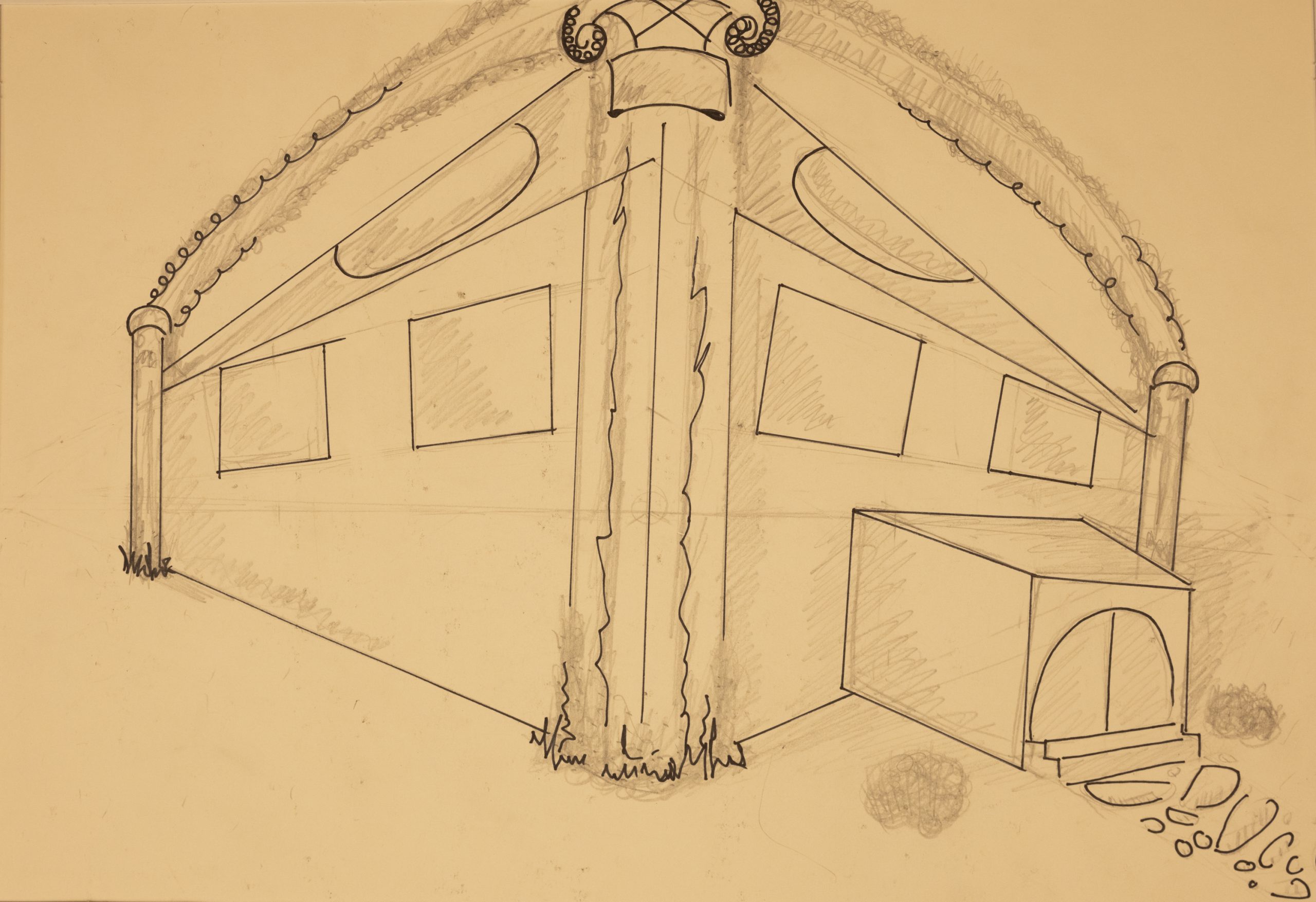
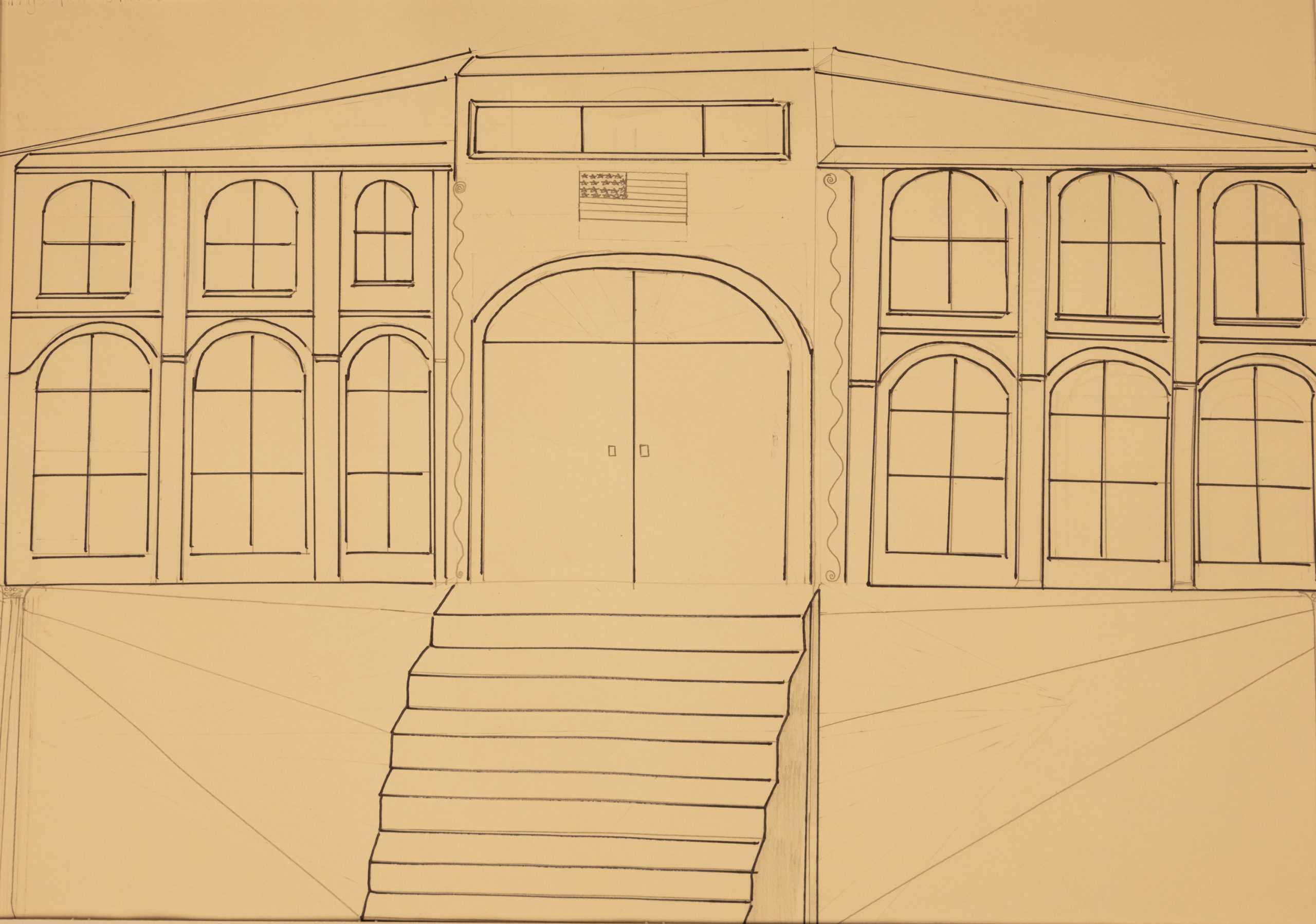
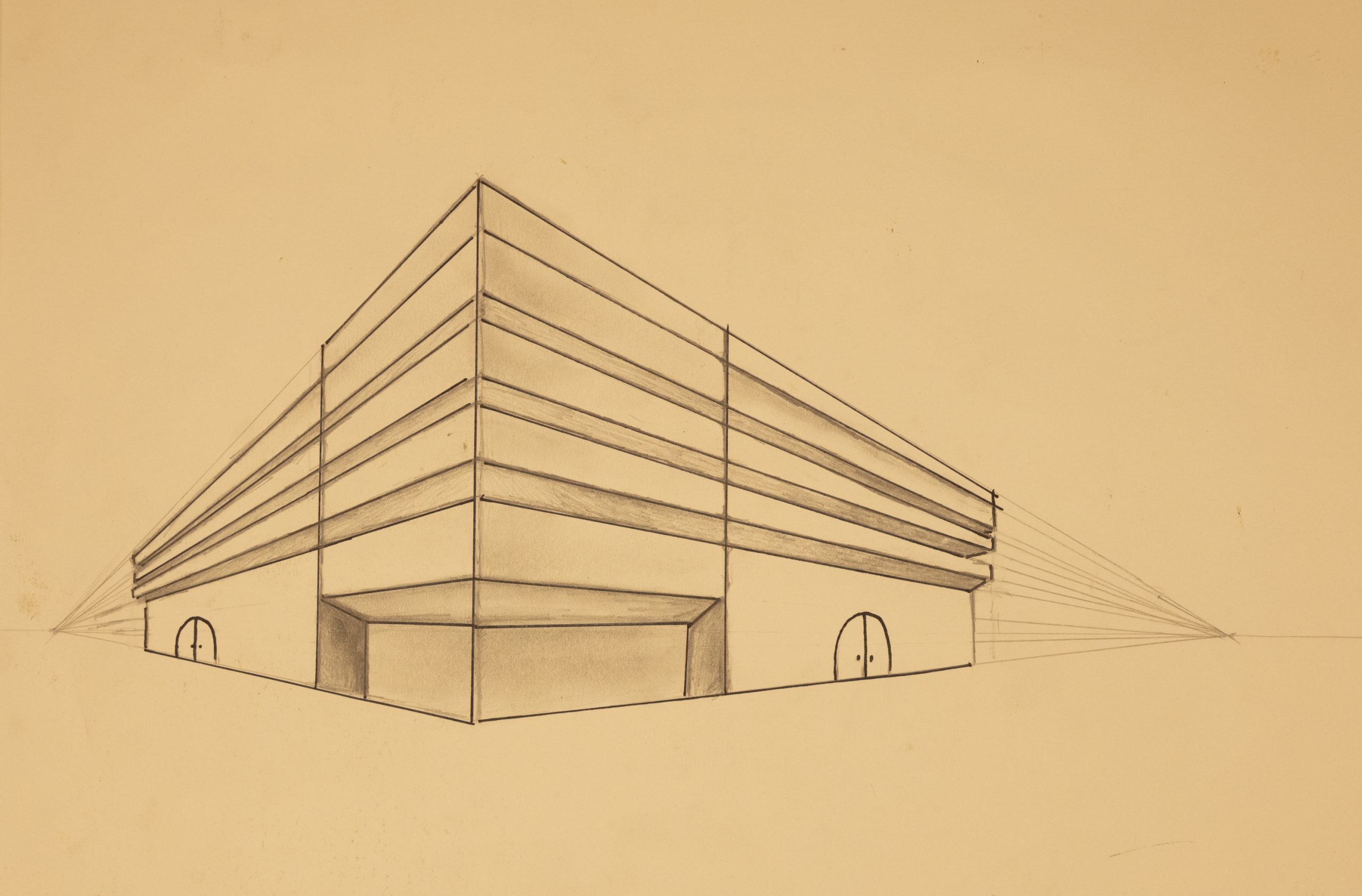
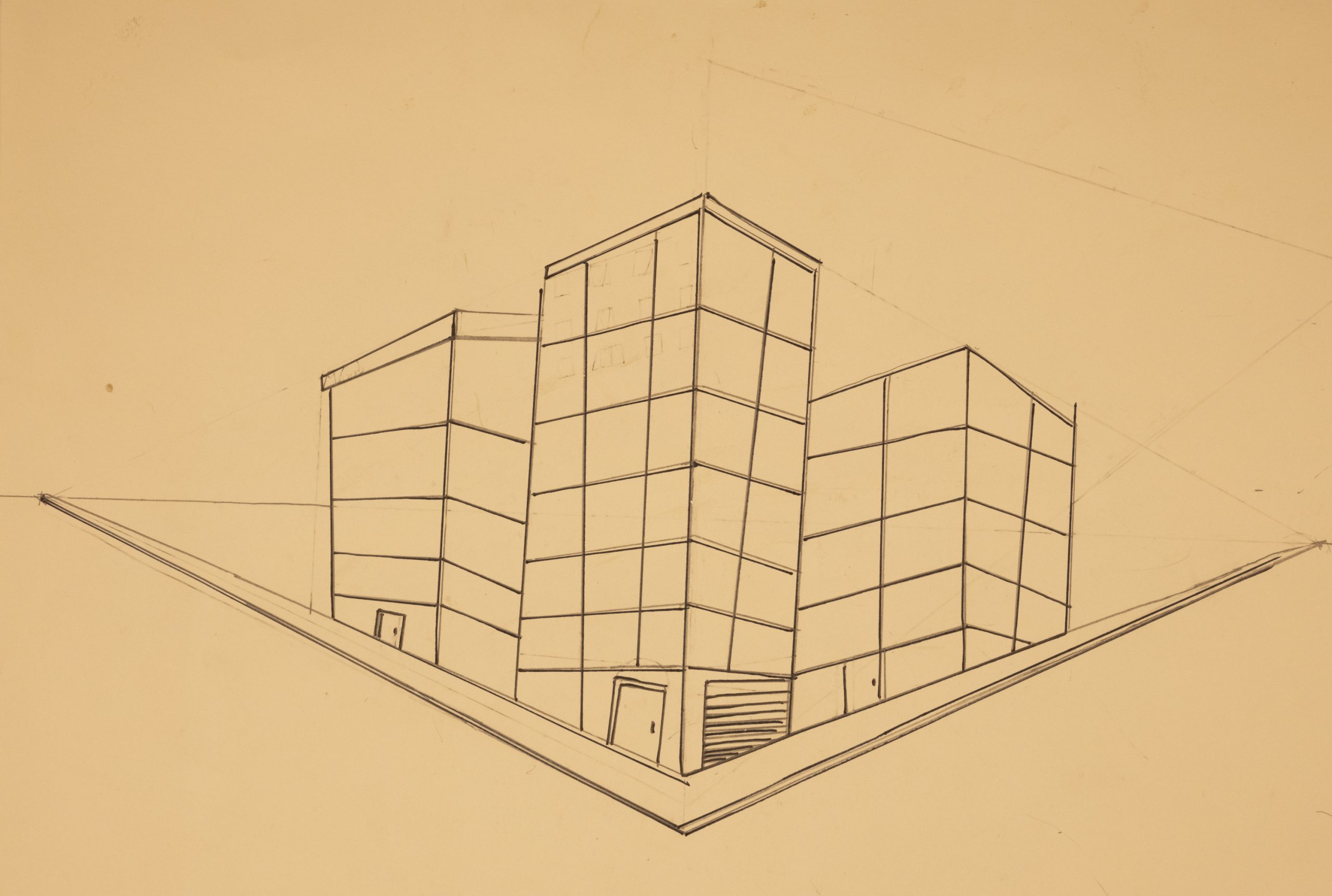
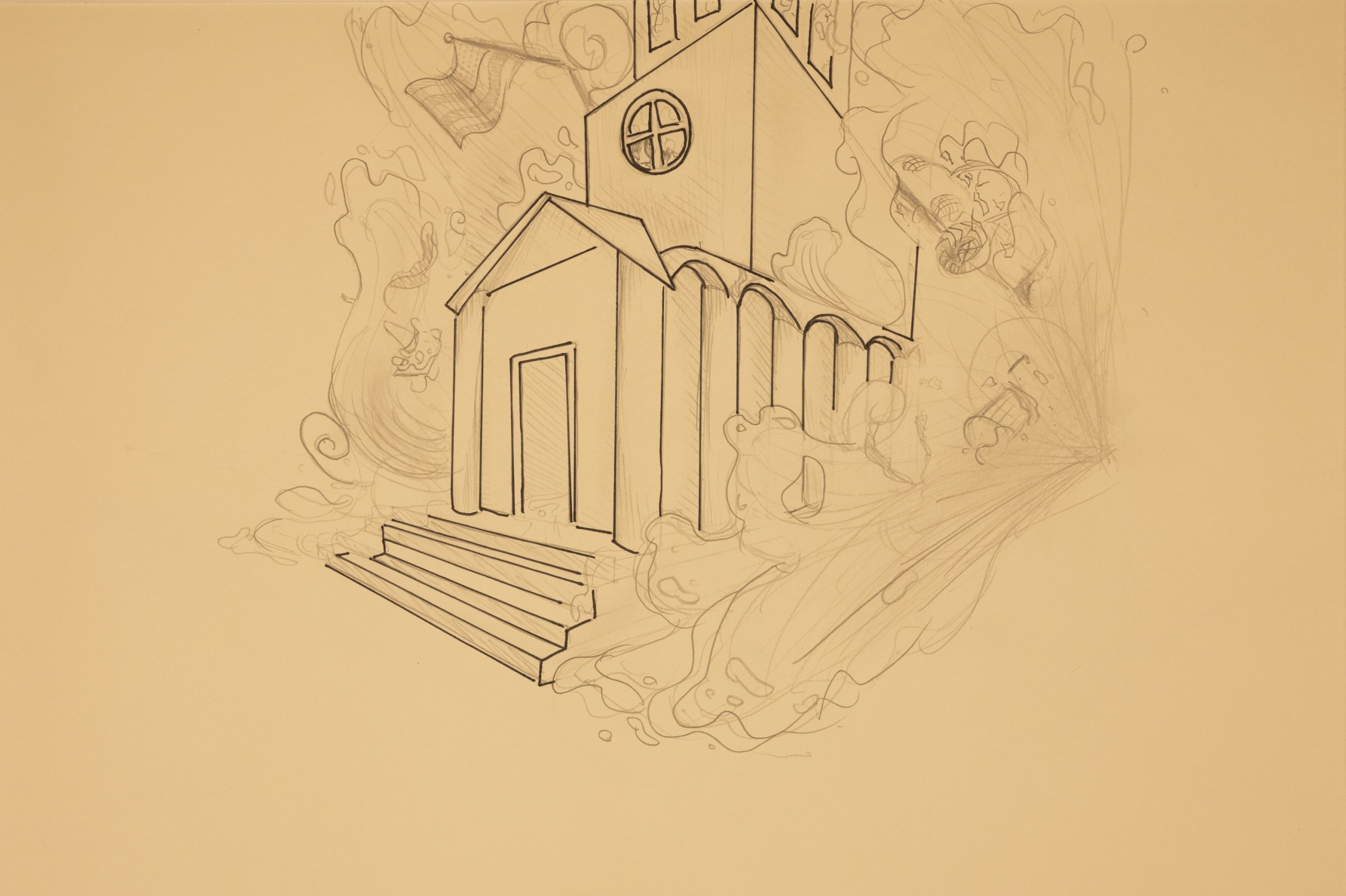
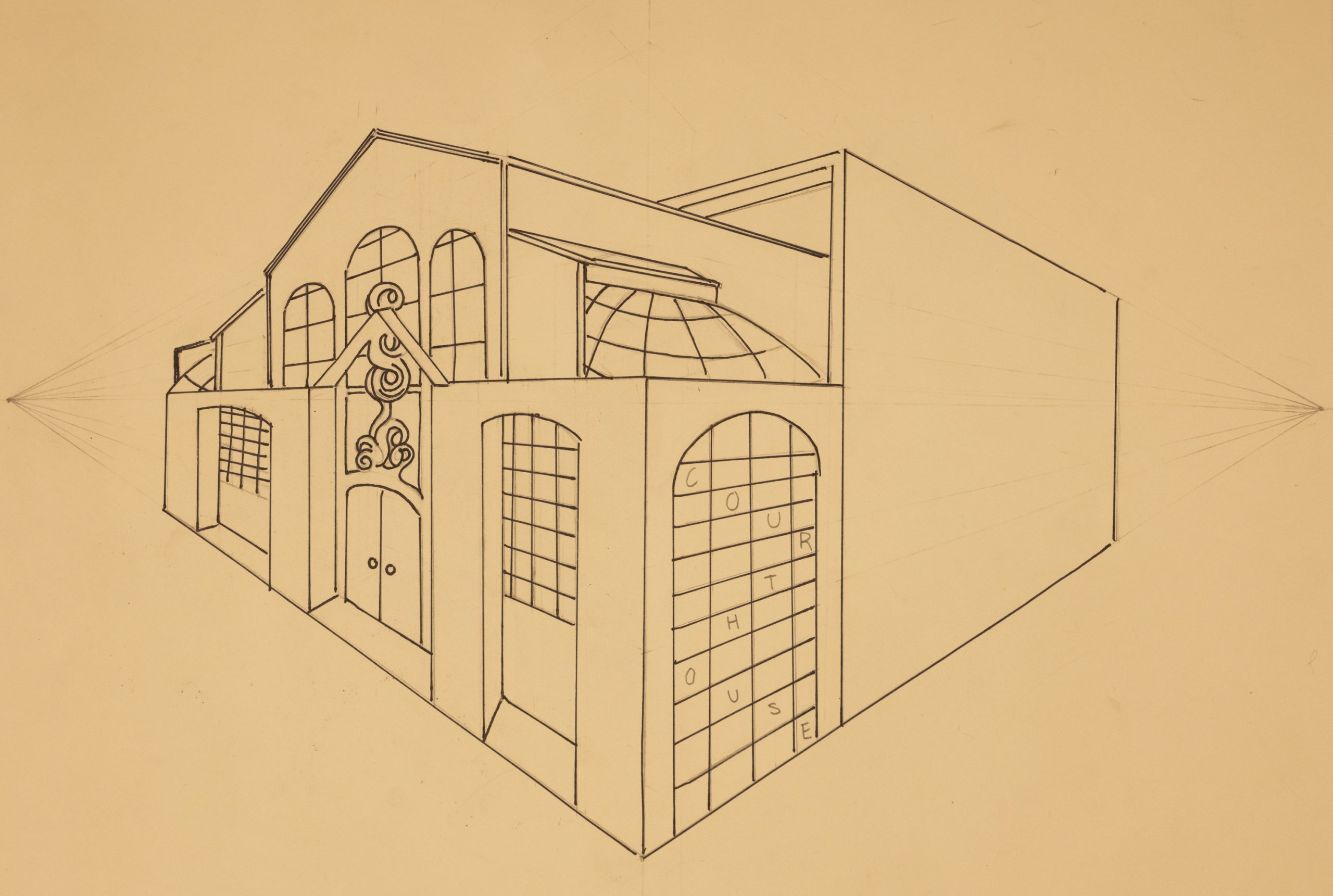
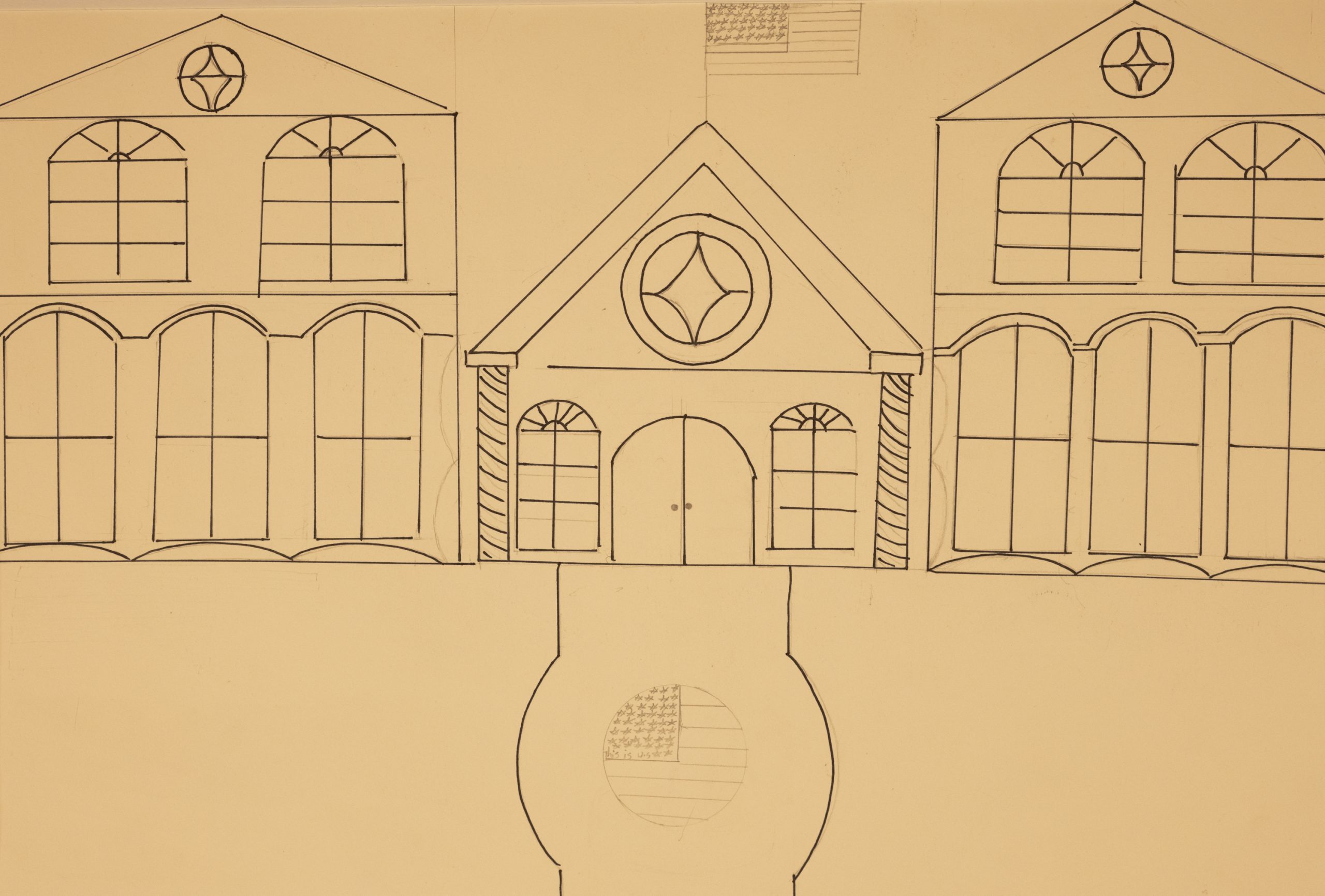
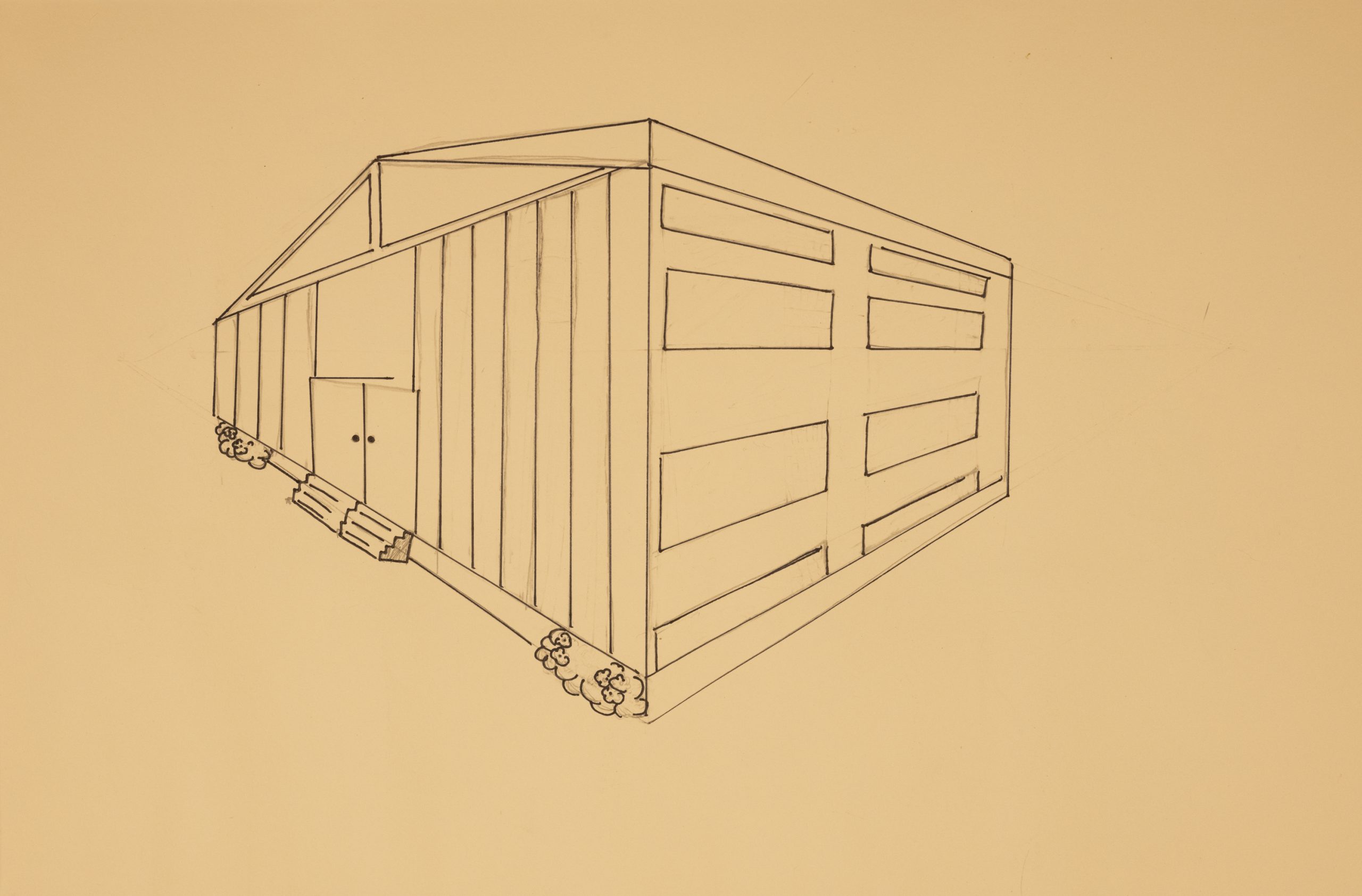
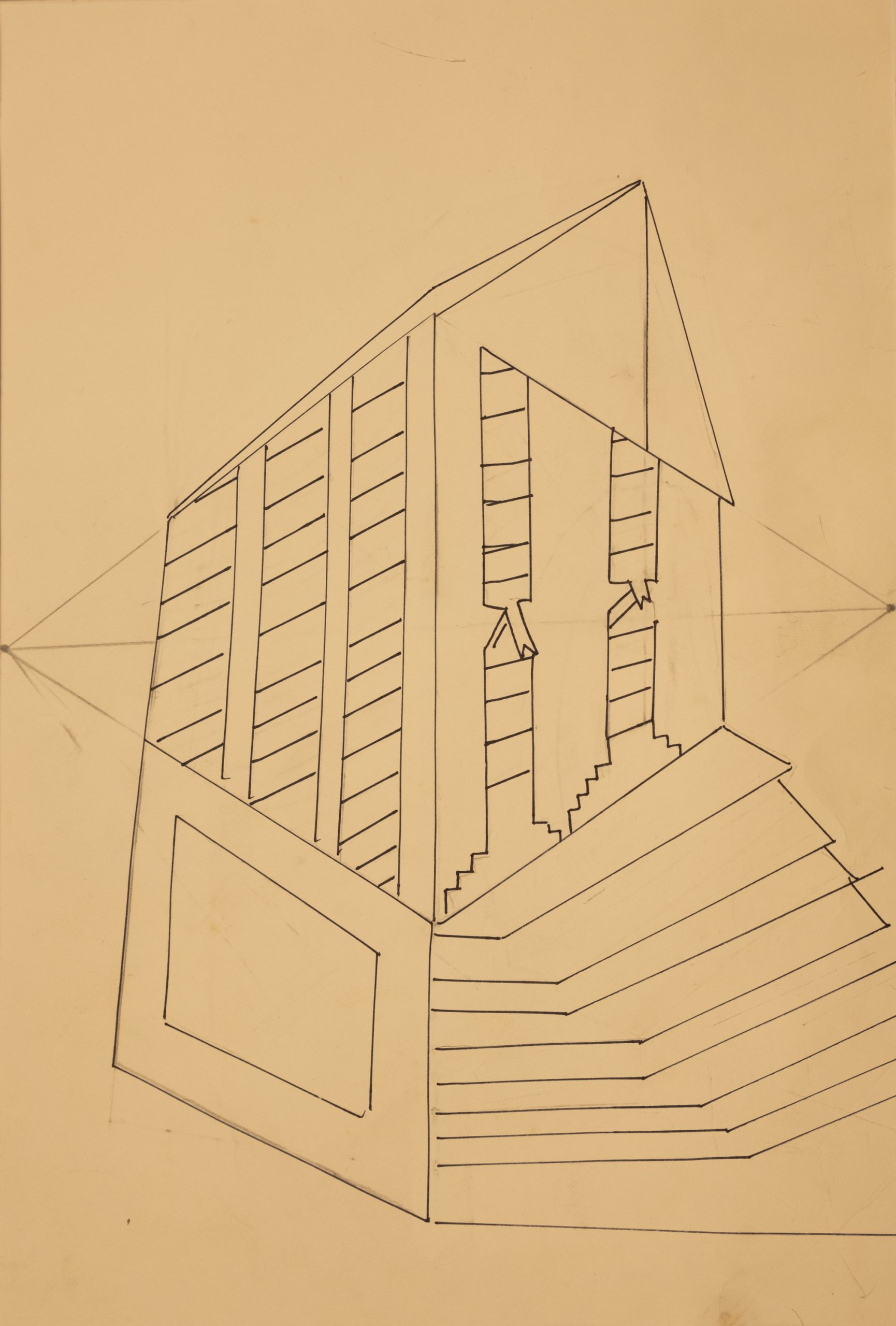
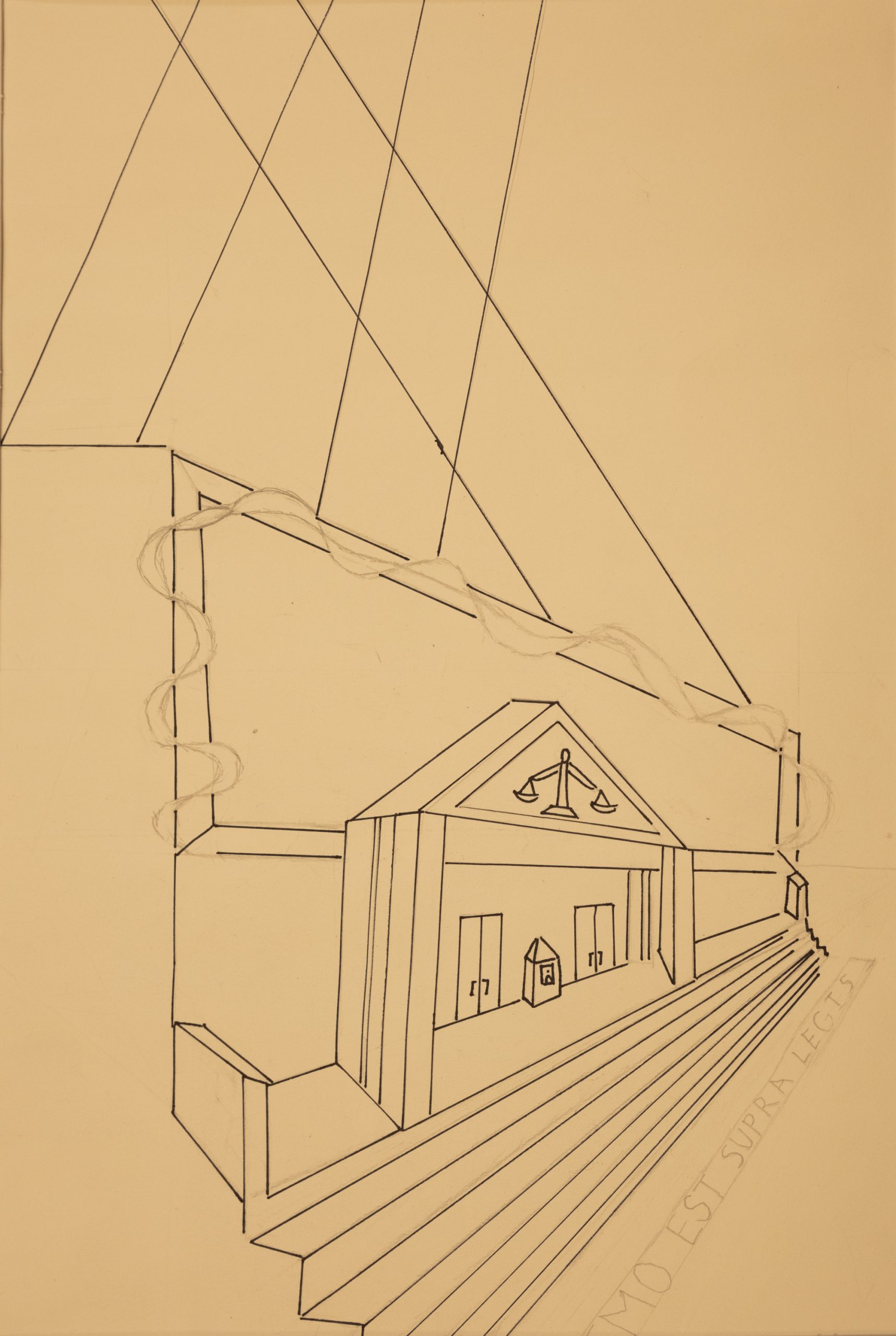
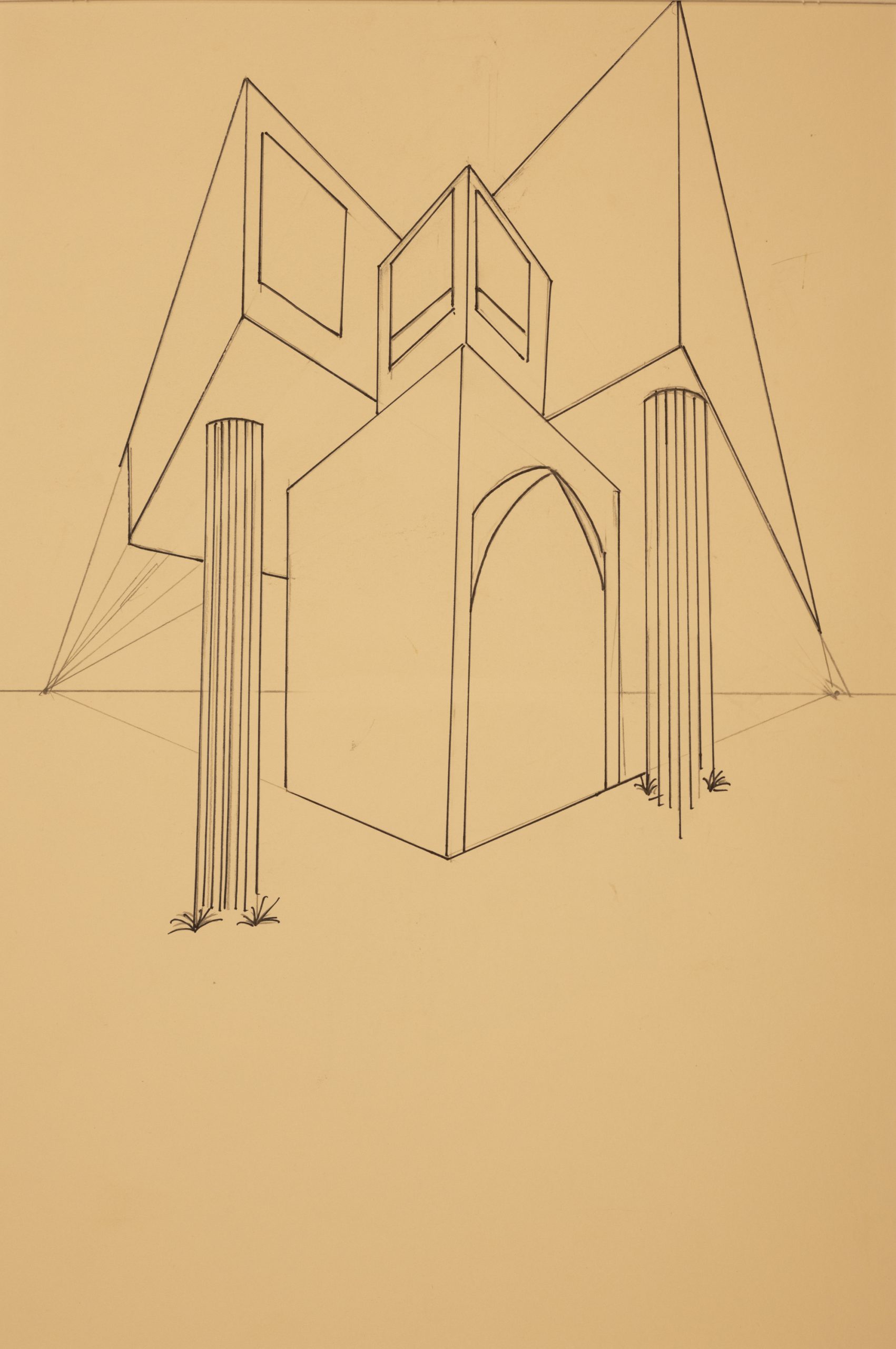
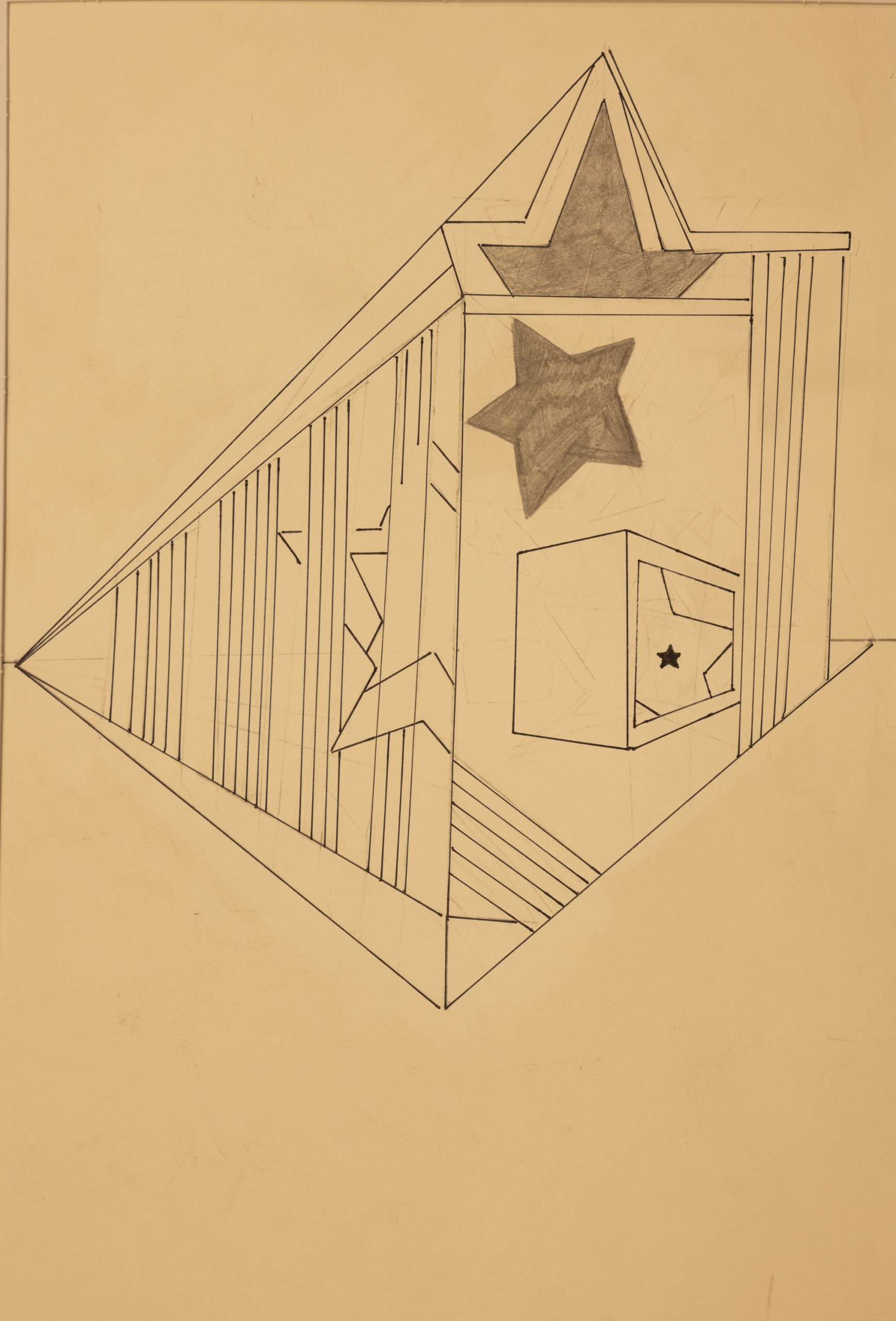
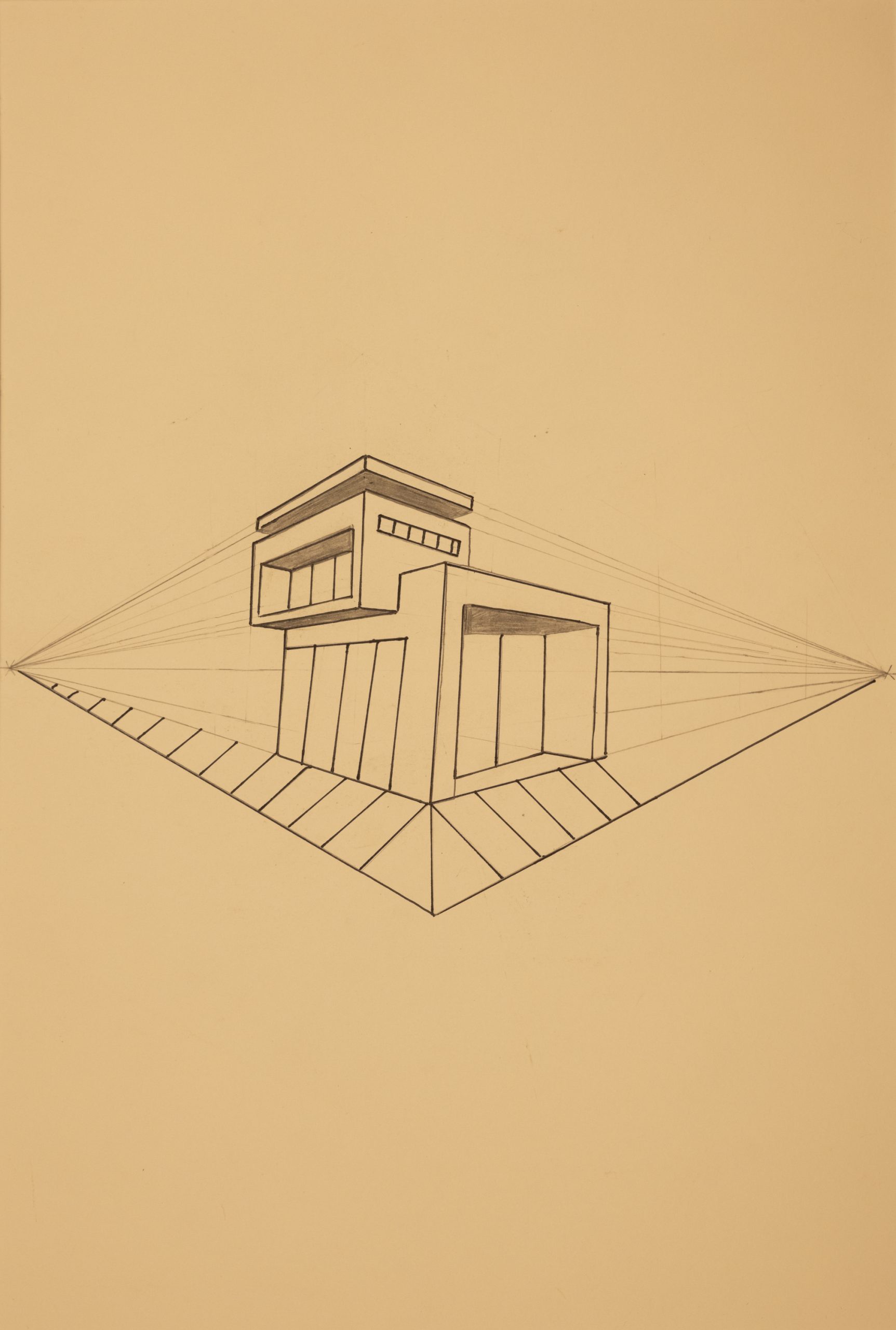
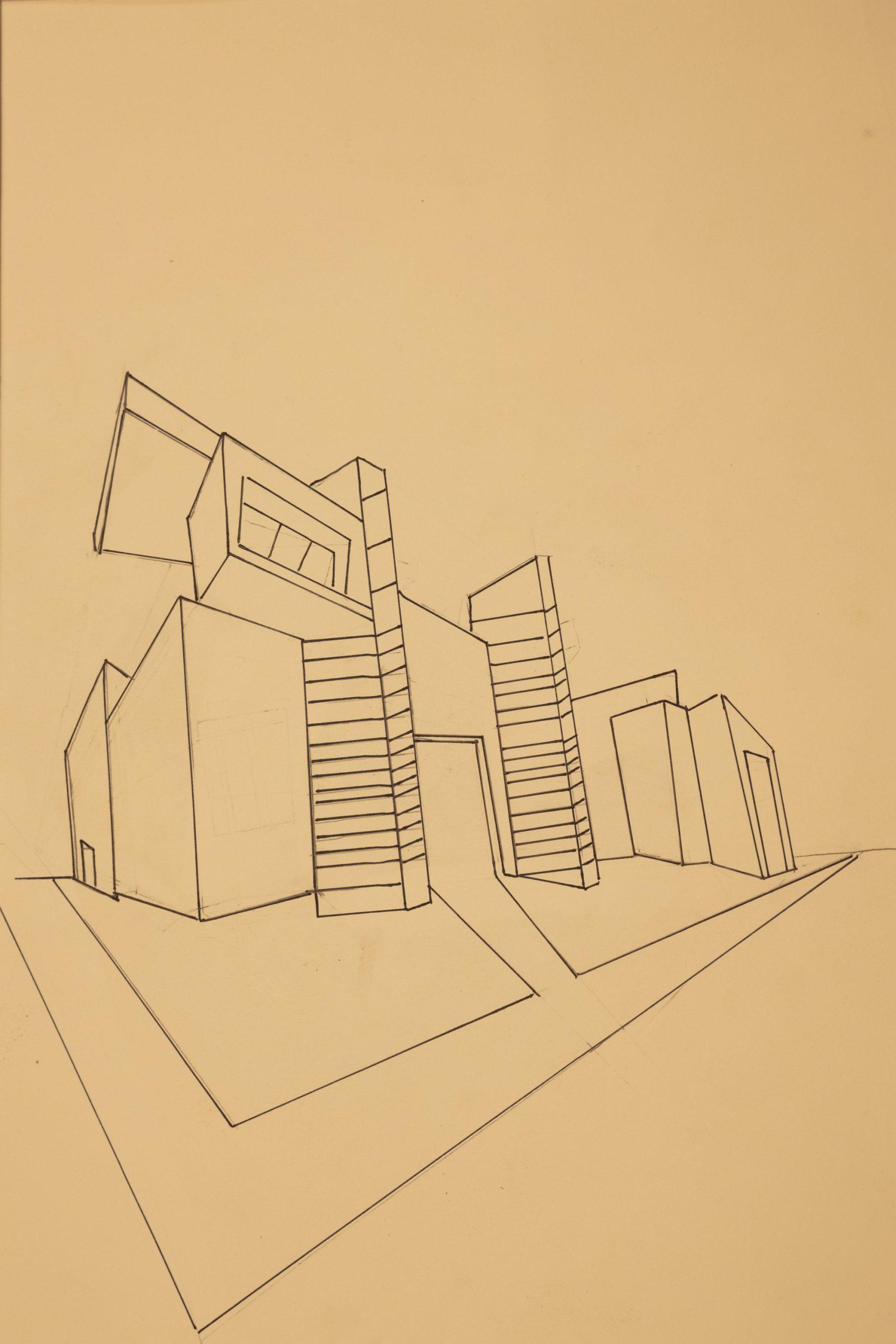
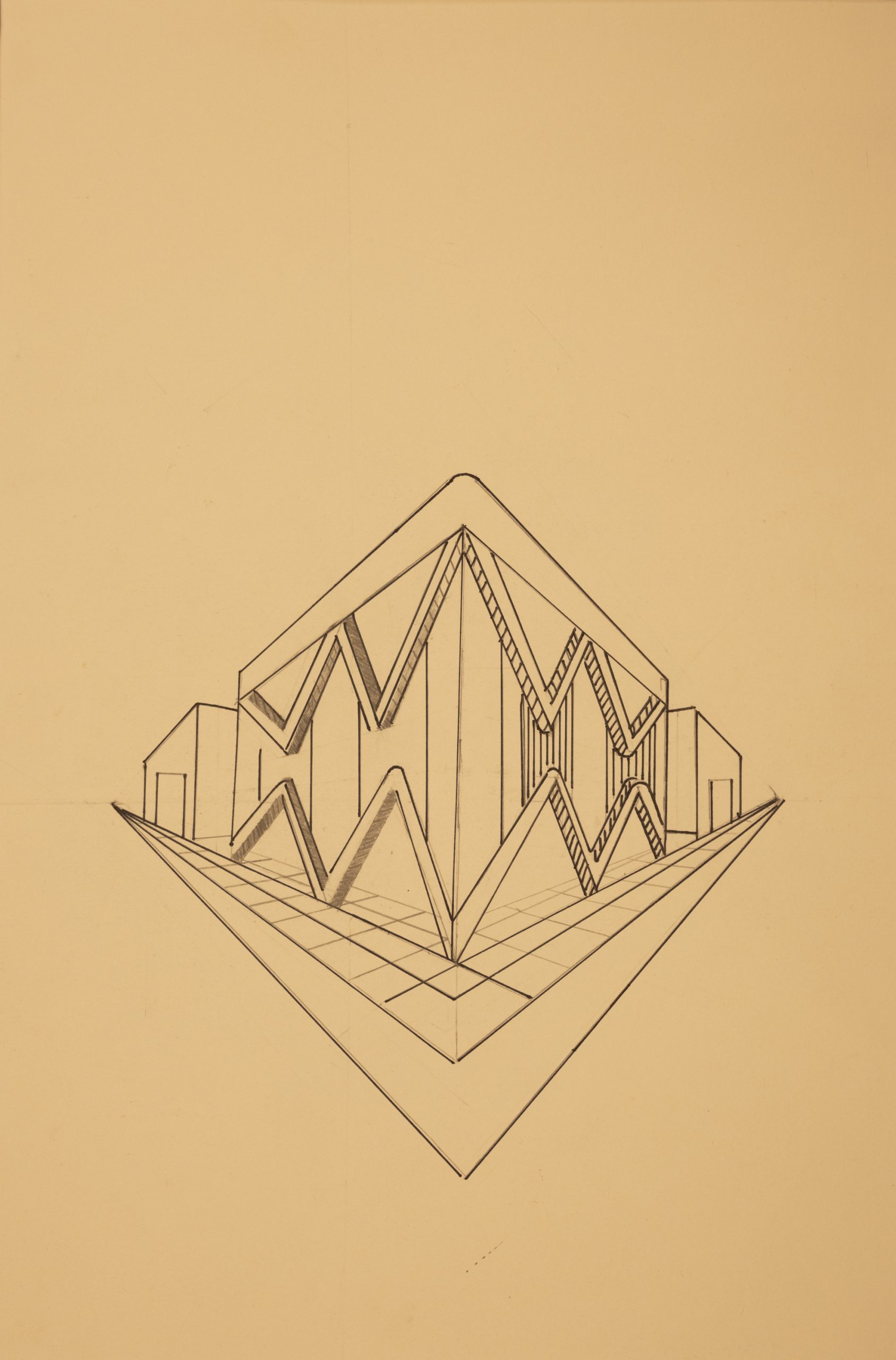
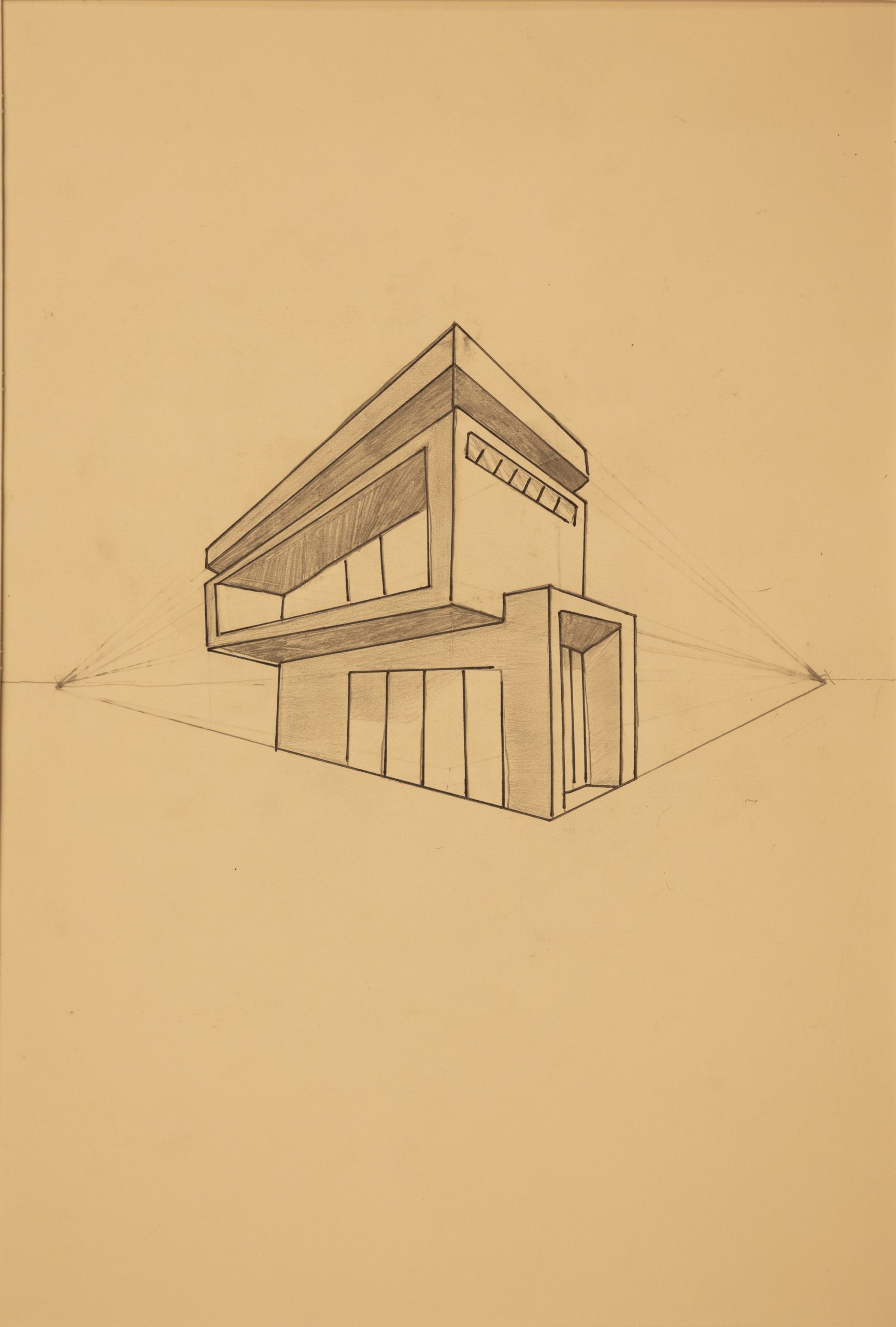
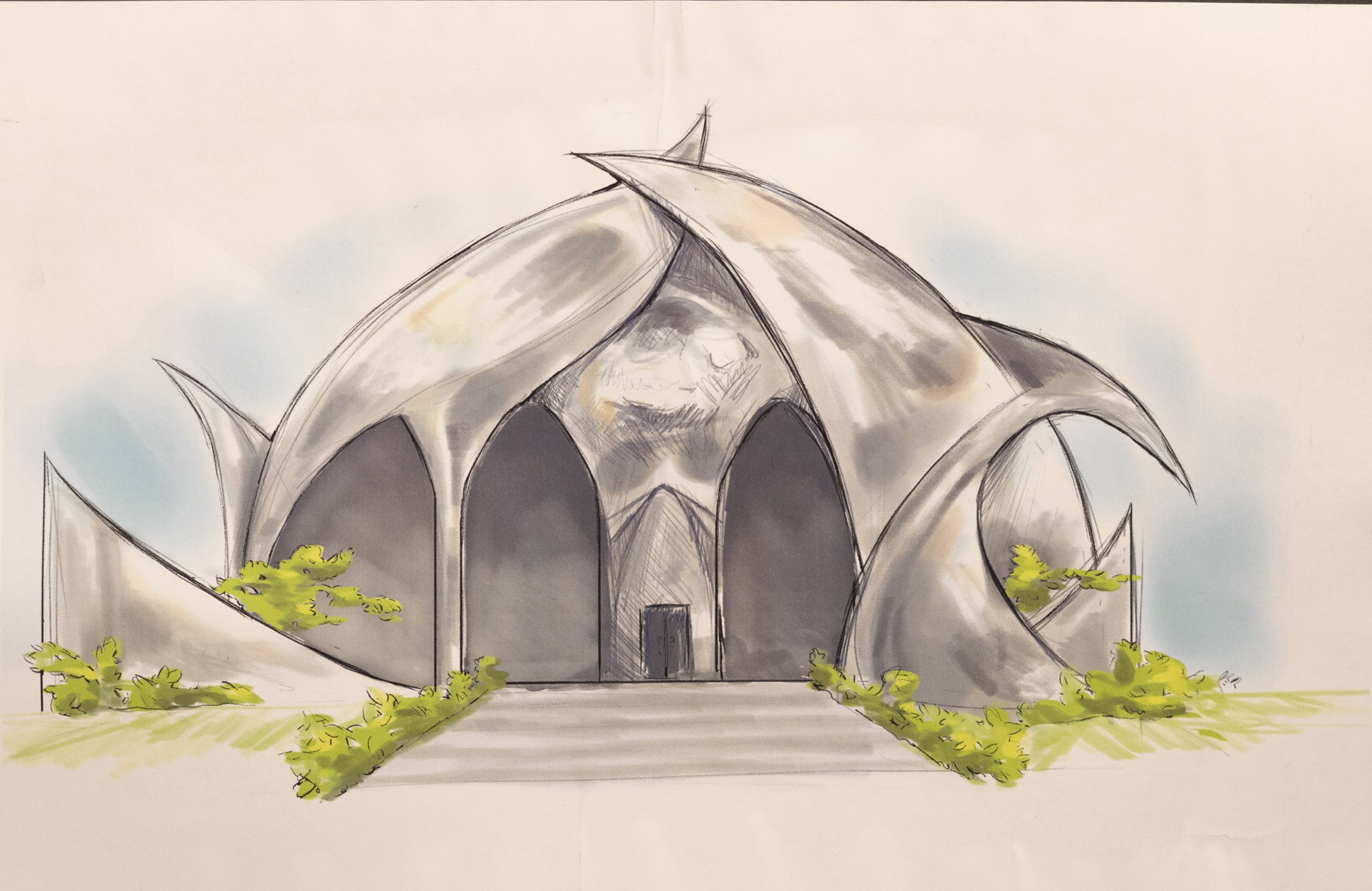
Project Title: TWO-POINT PERSPECTIVE COURTHOUSES OF THE FUTURE
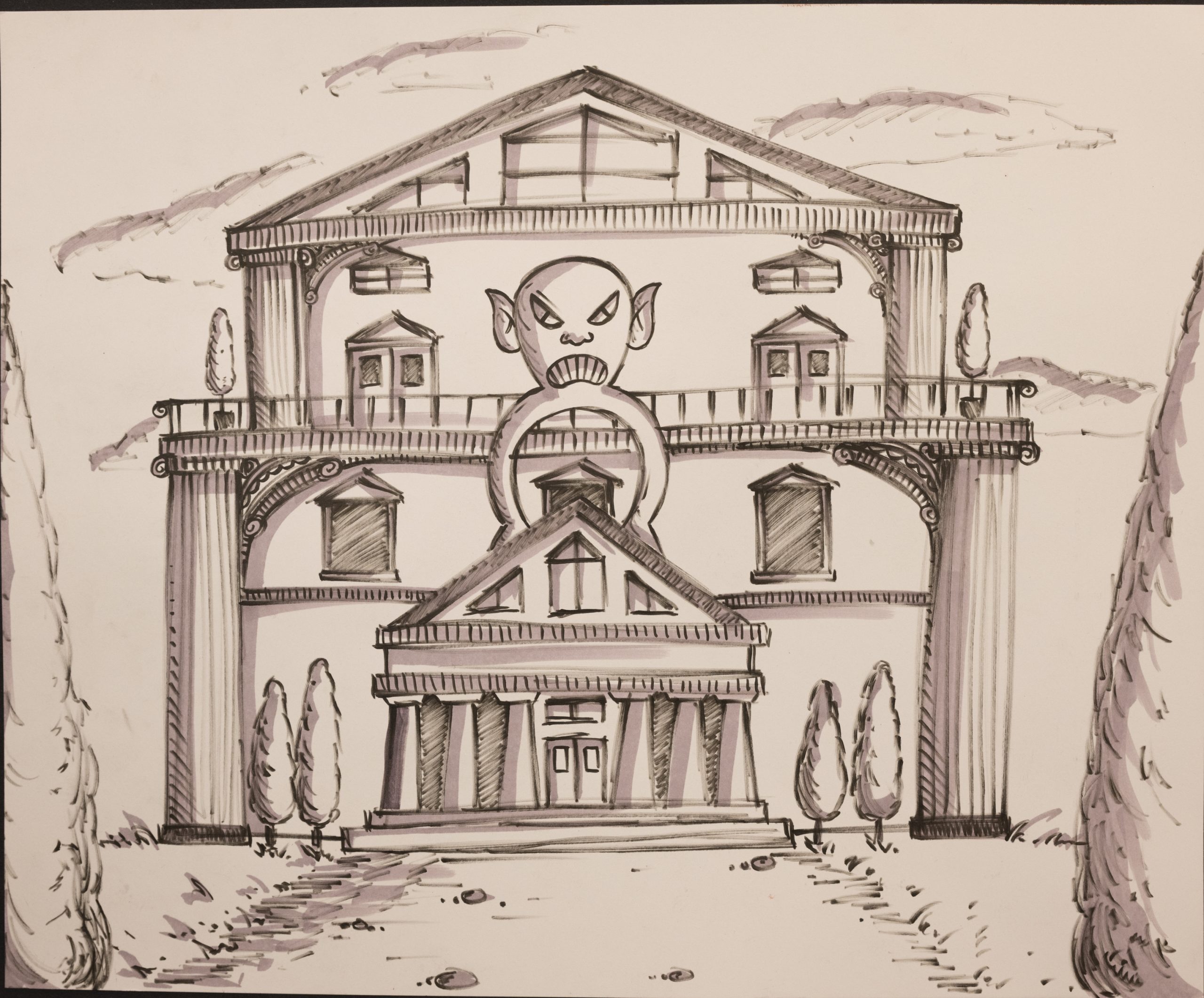
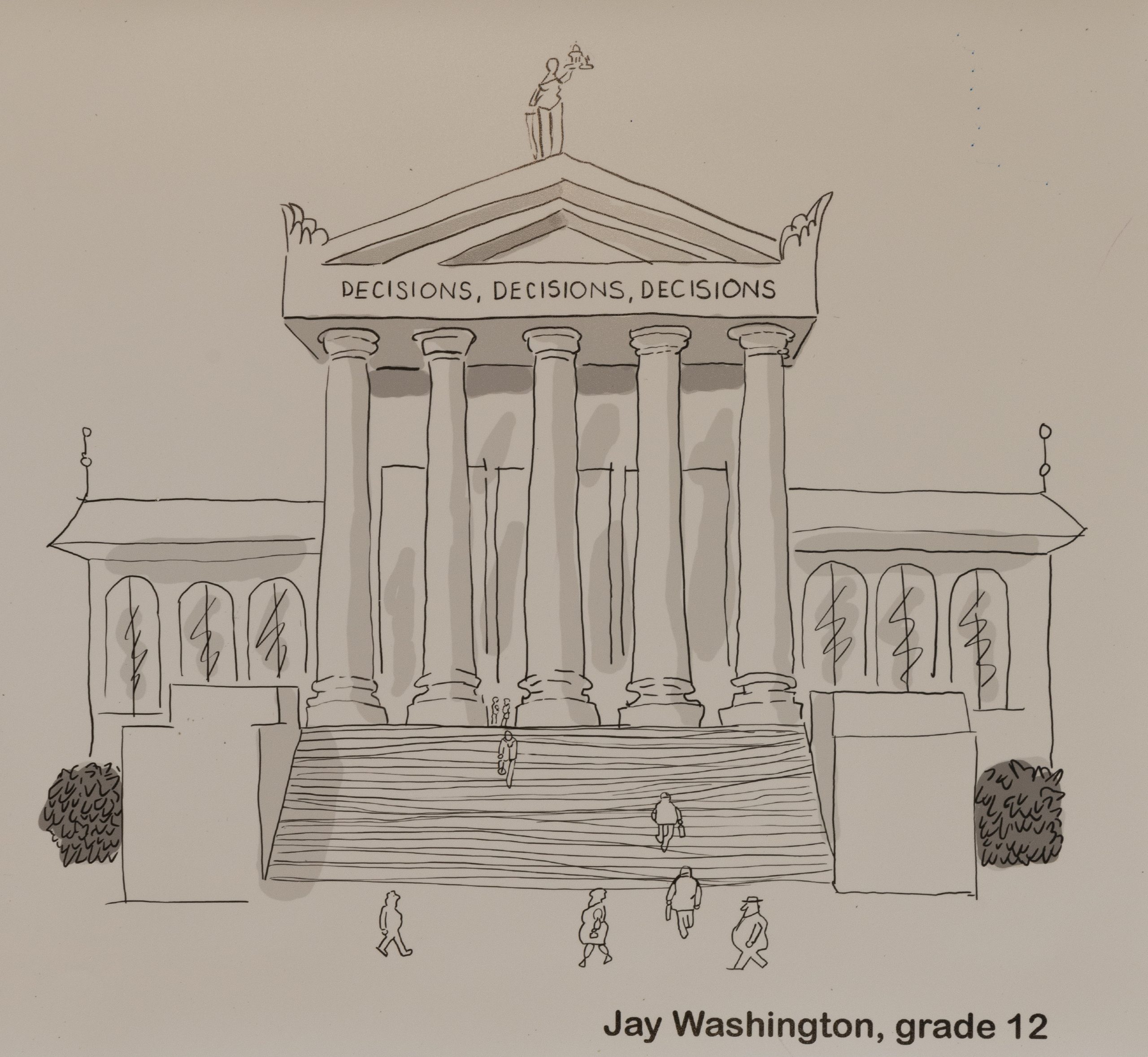
Using two-point perspective, students have designed various images focusing on the facade of a courthouse of the future.
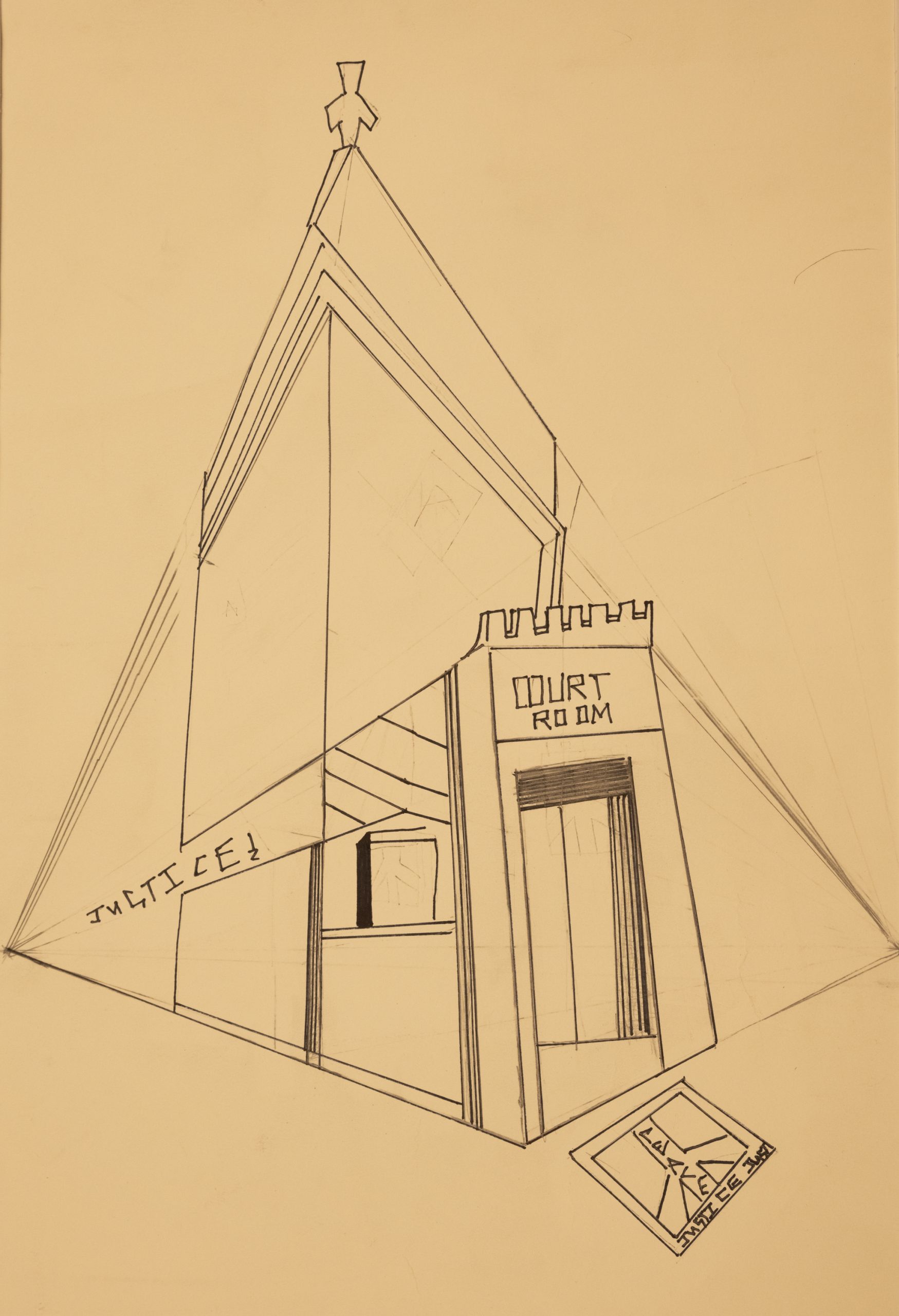
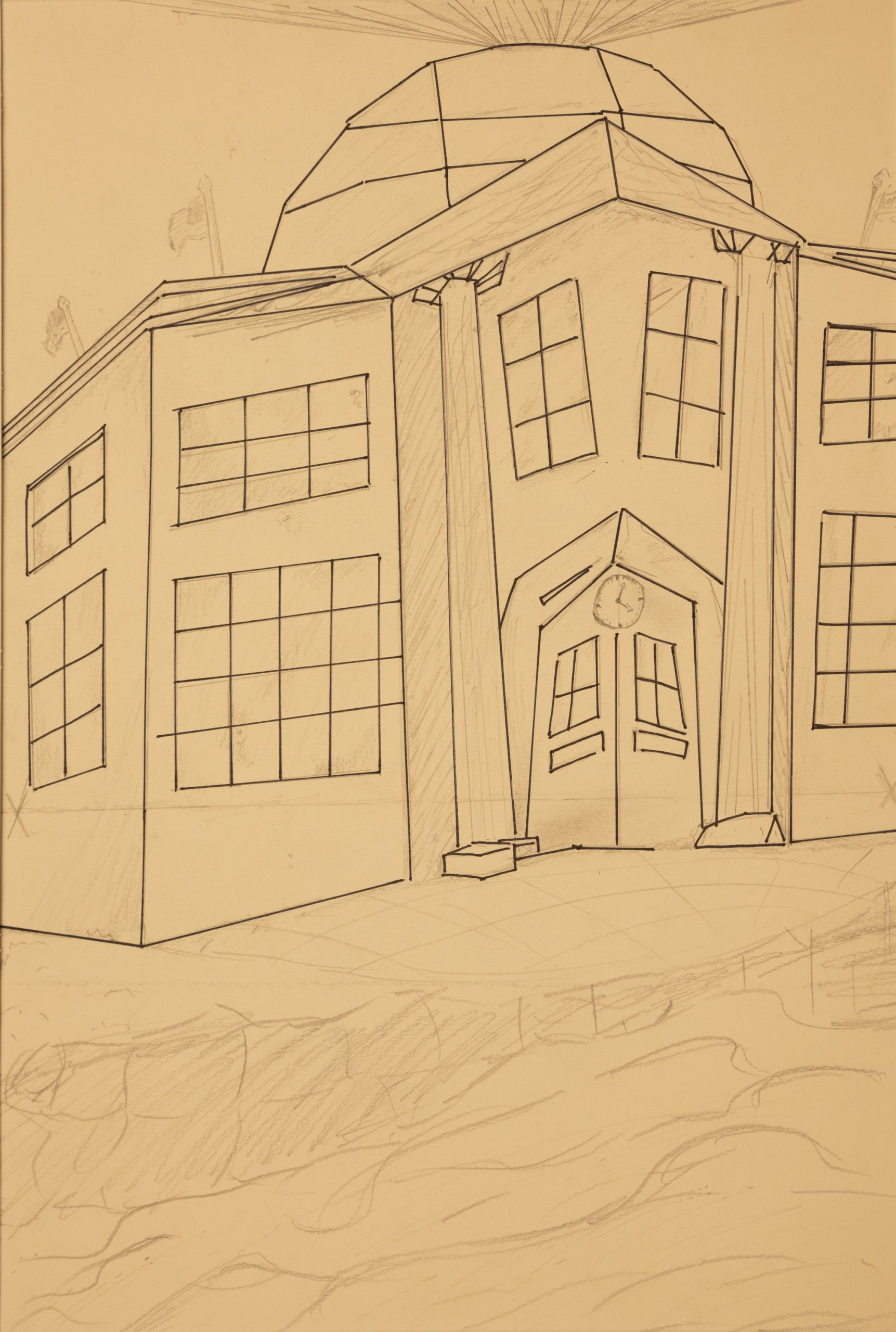
Principal: Burnedette Drysdale
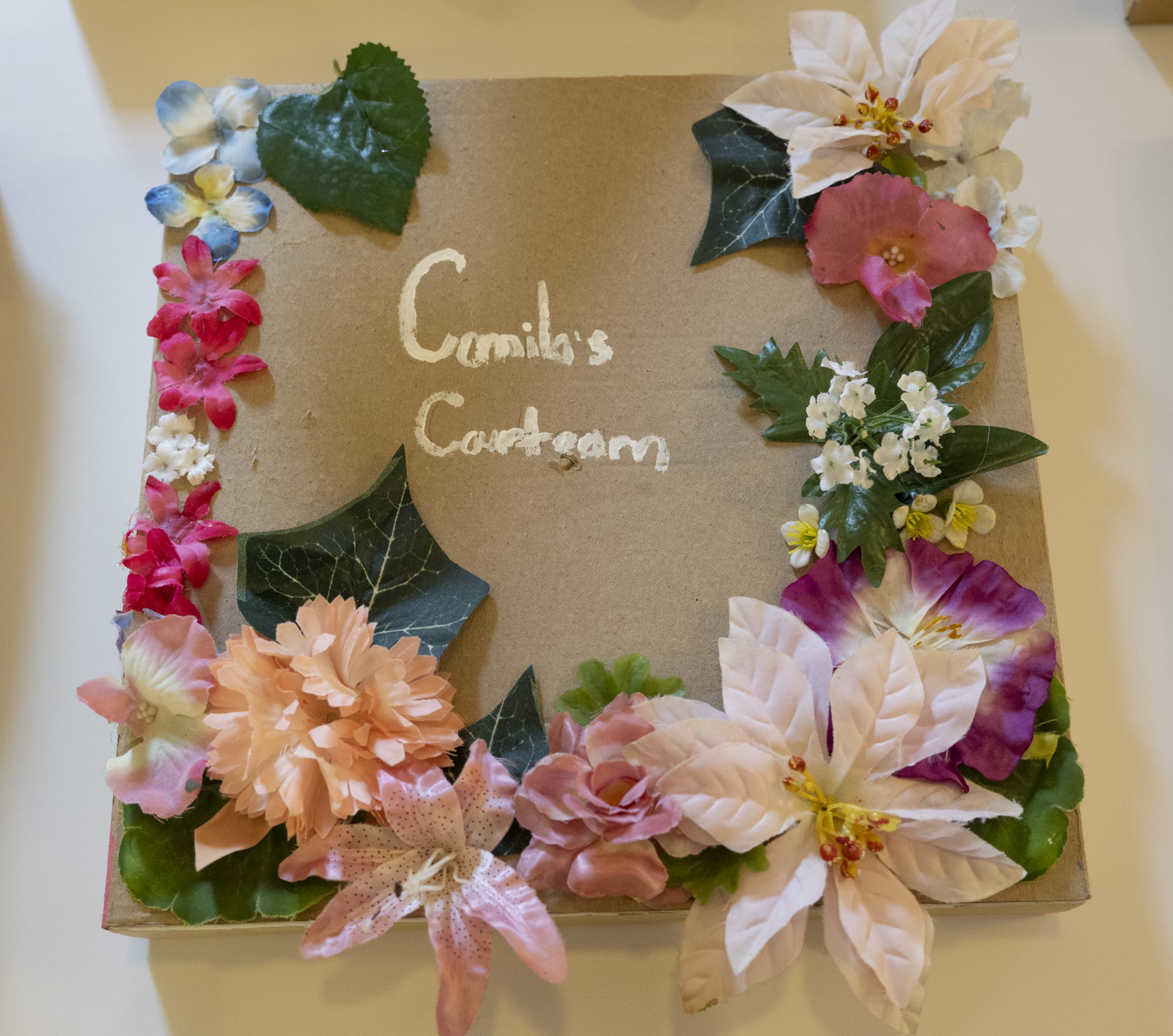
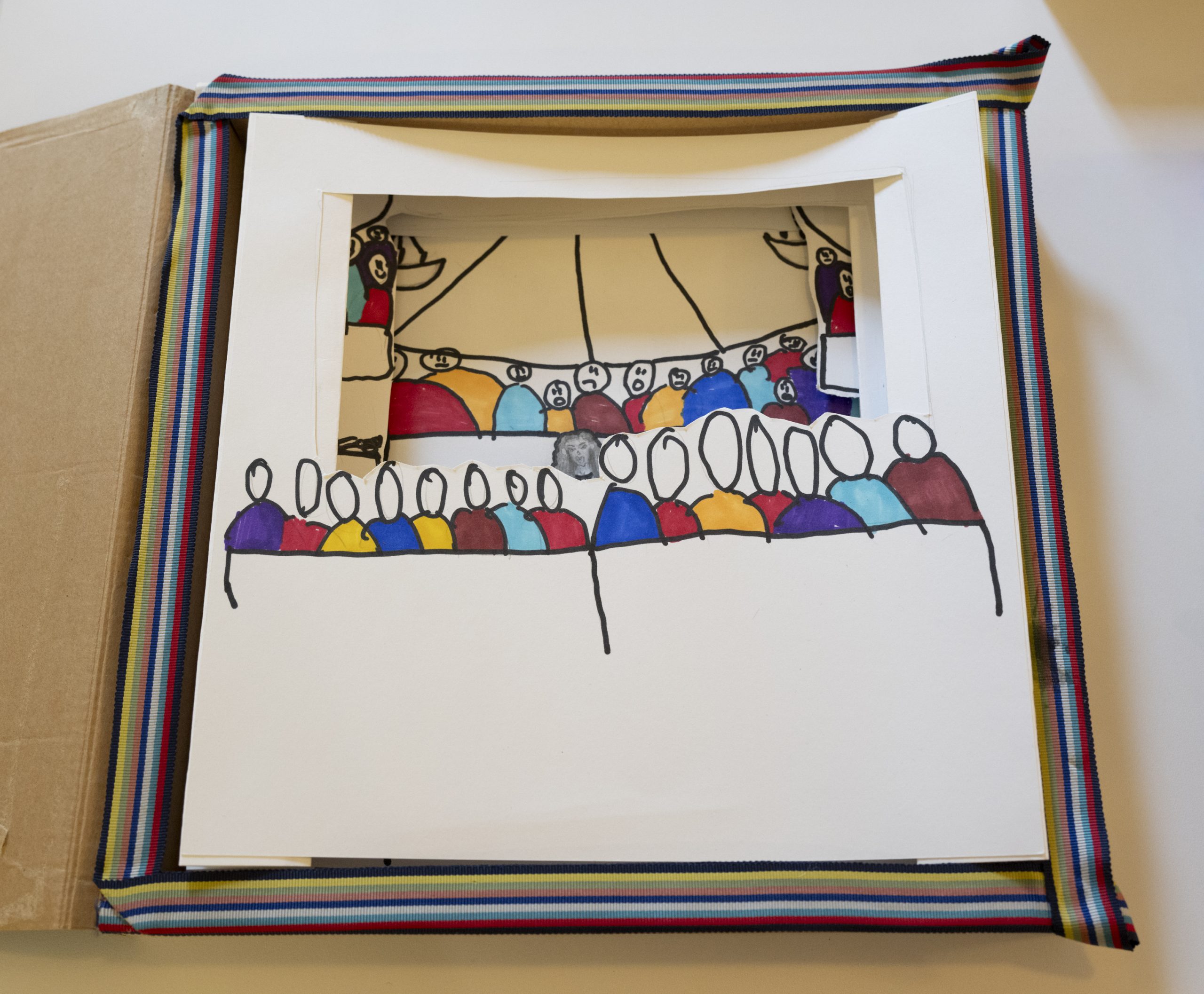
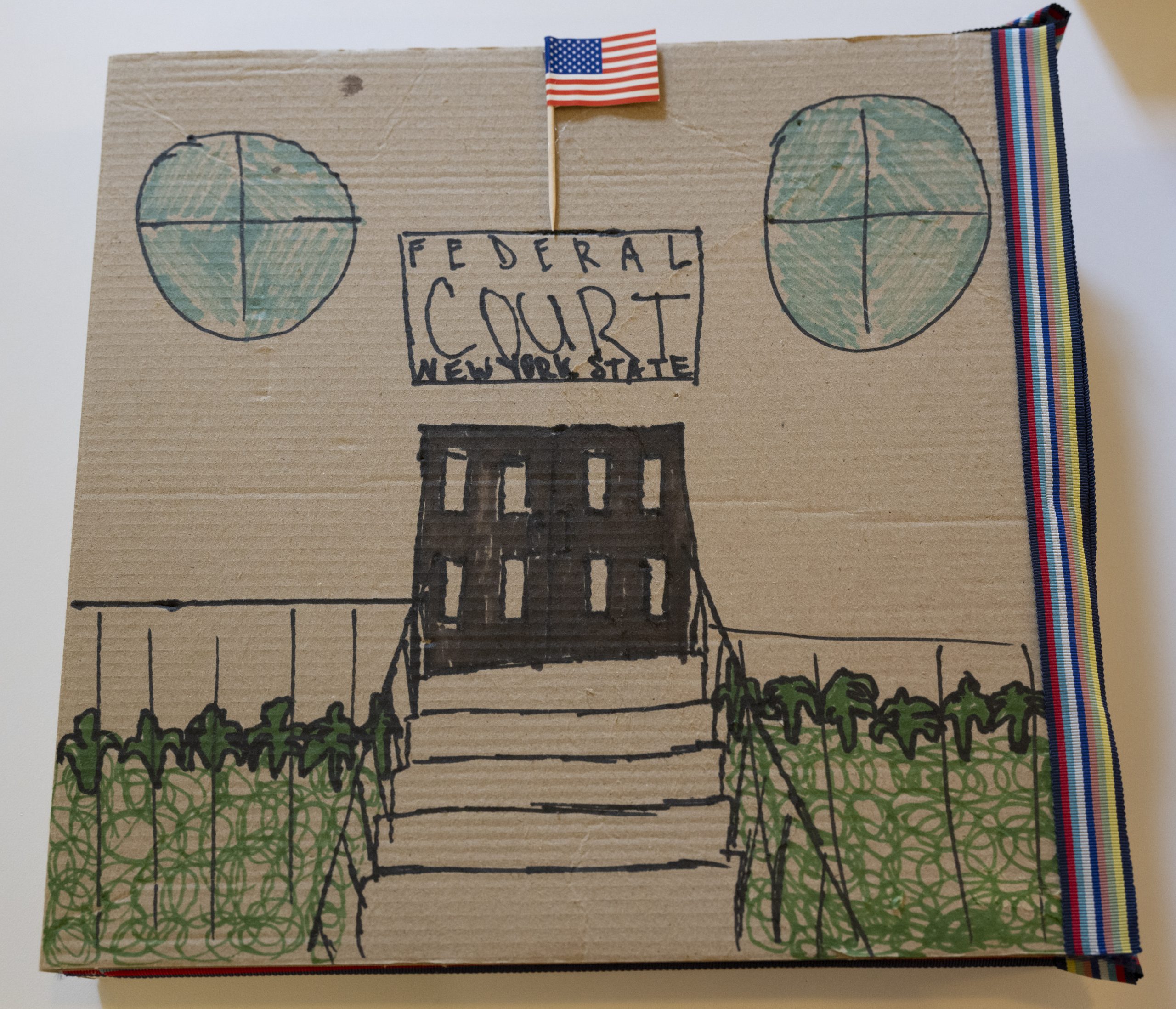
Teacher: Gloria Adams
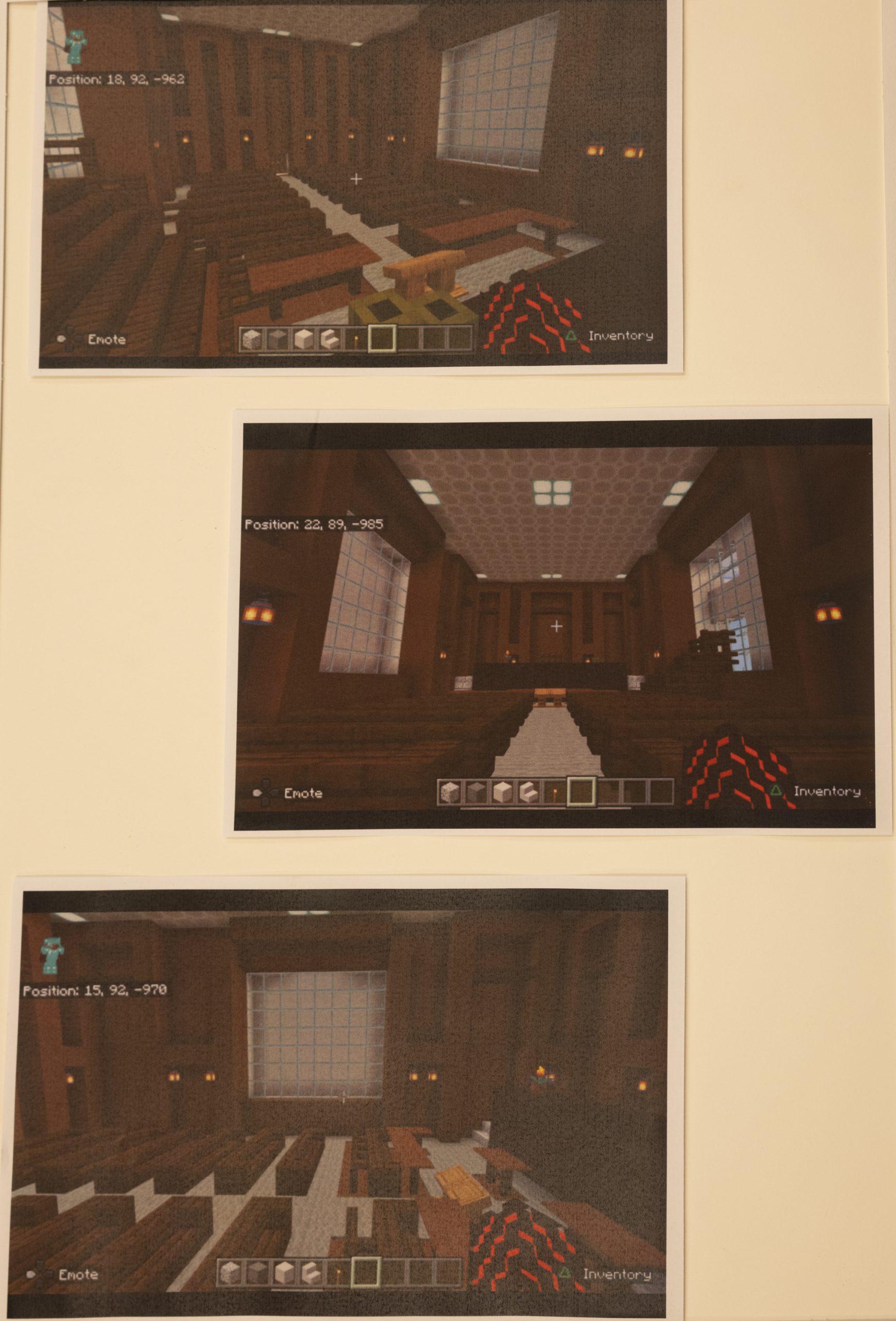
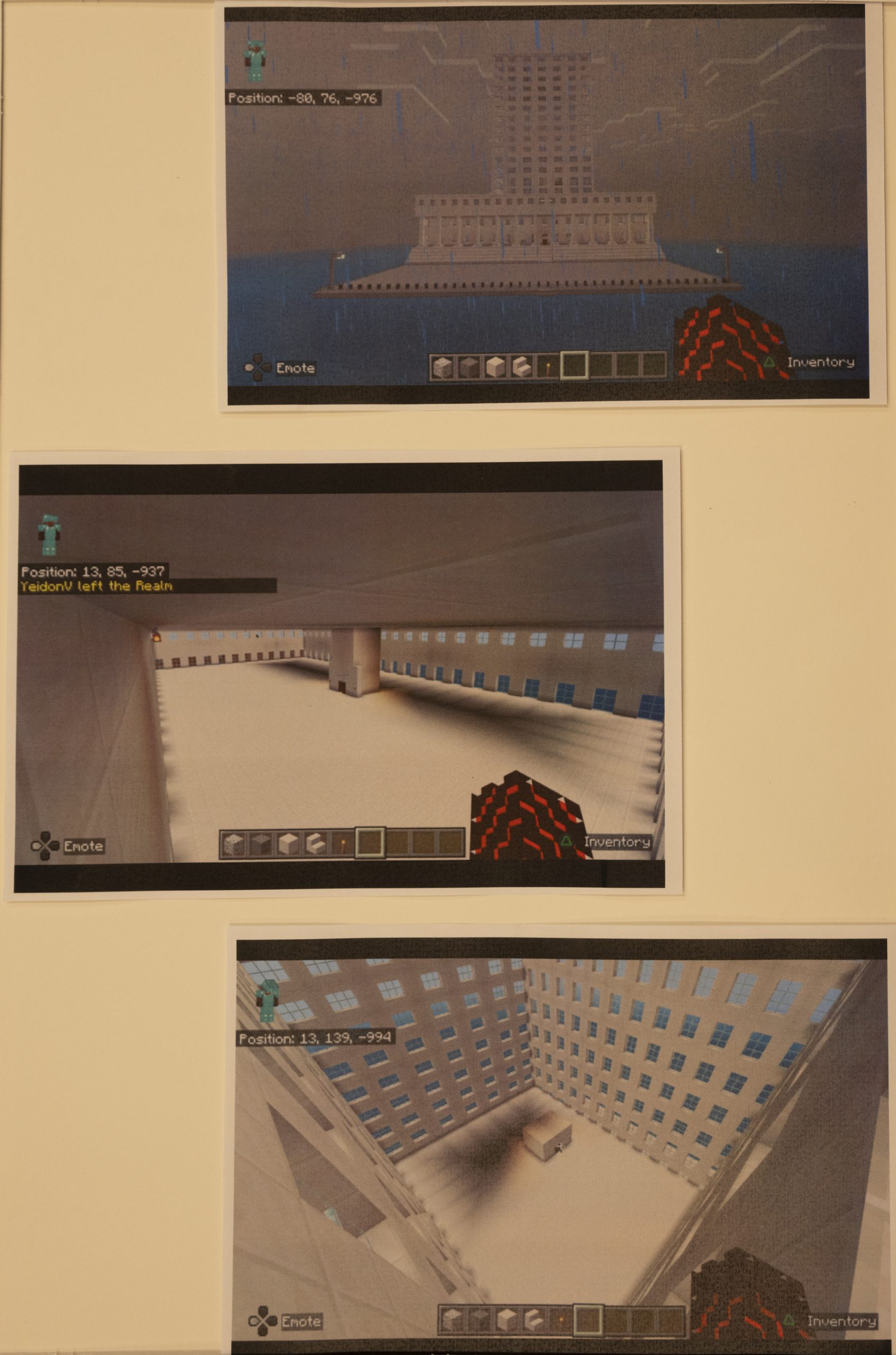
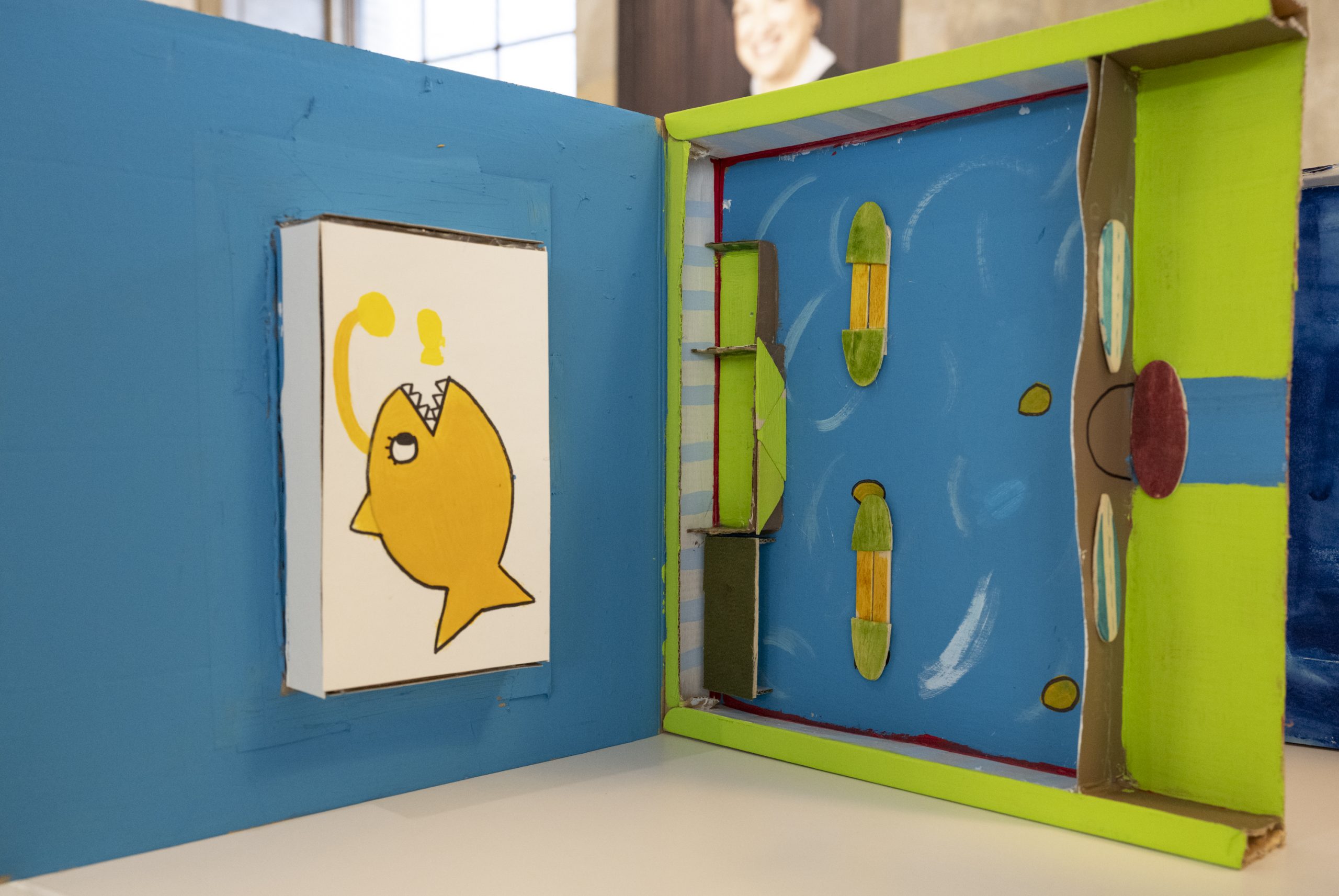
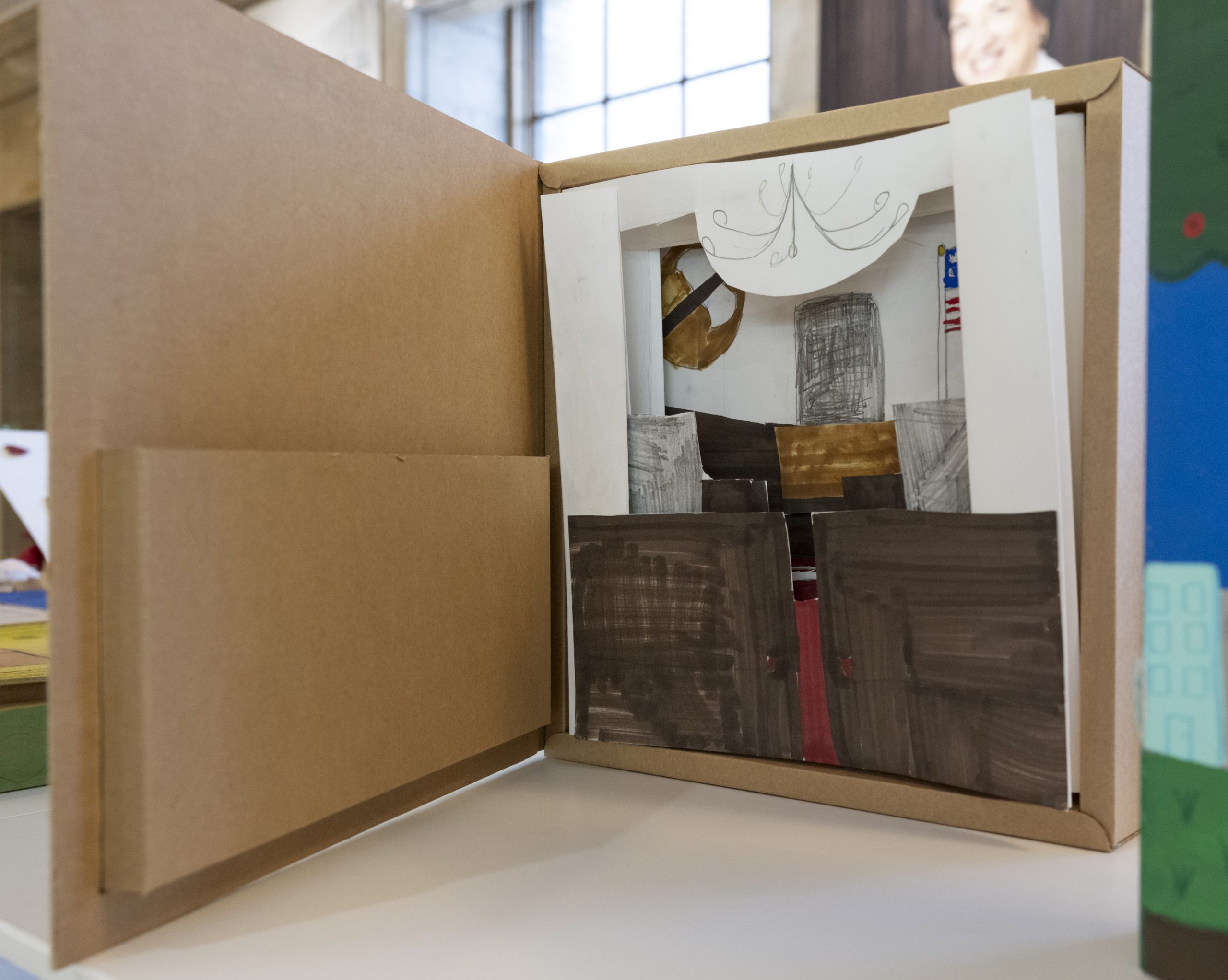
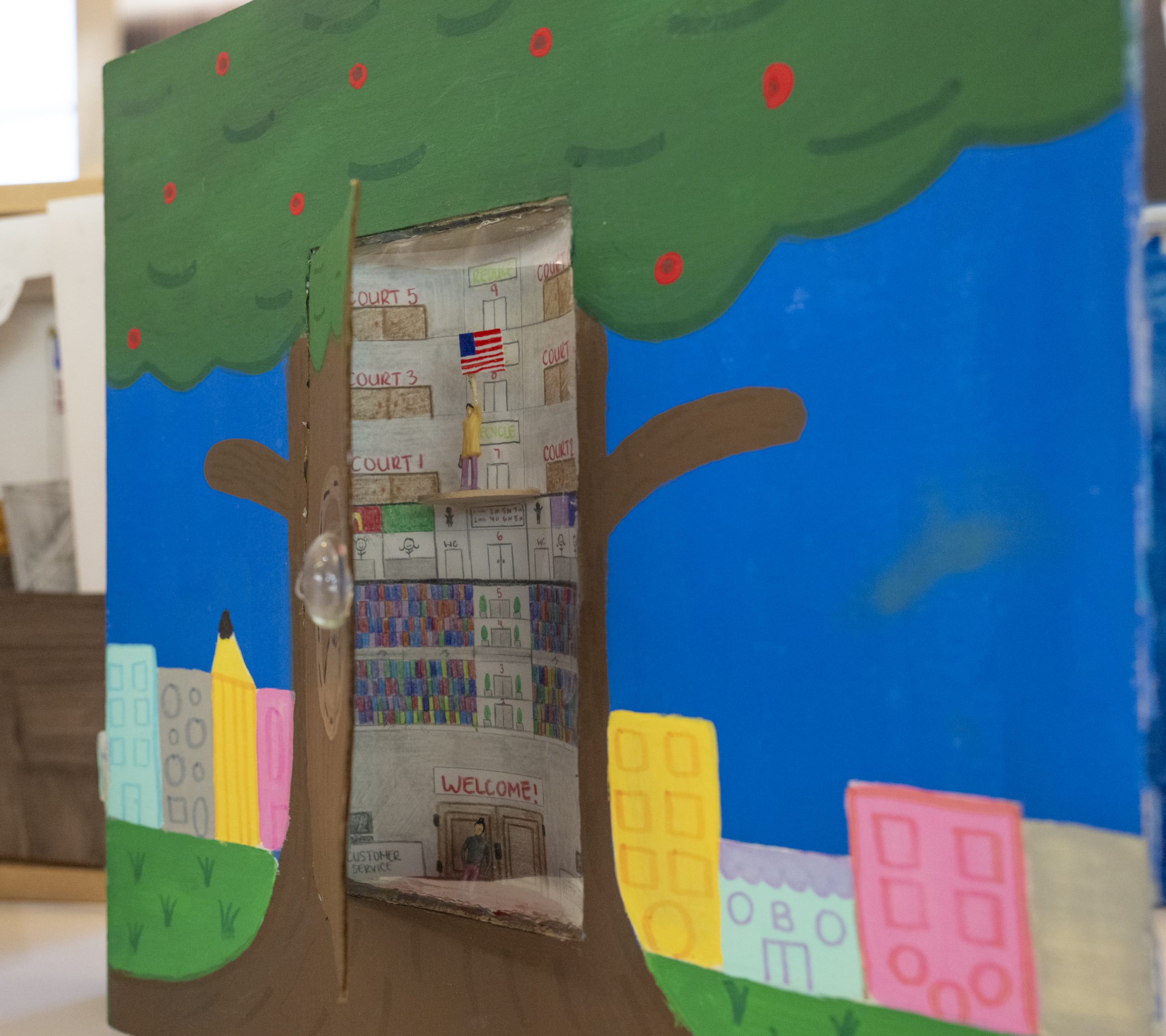
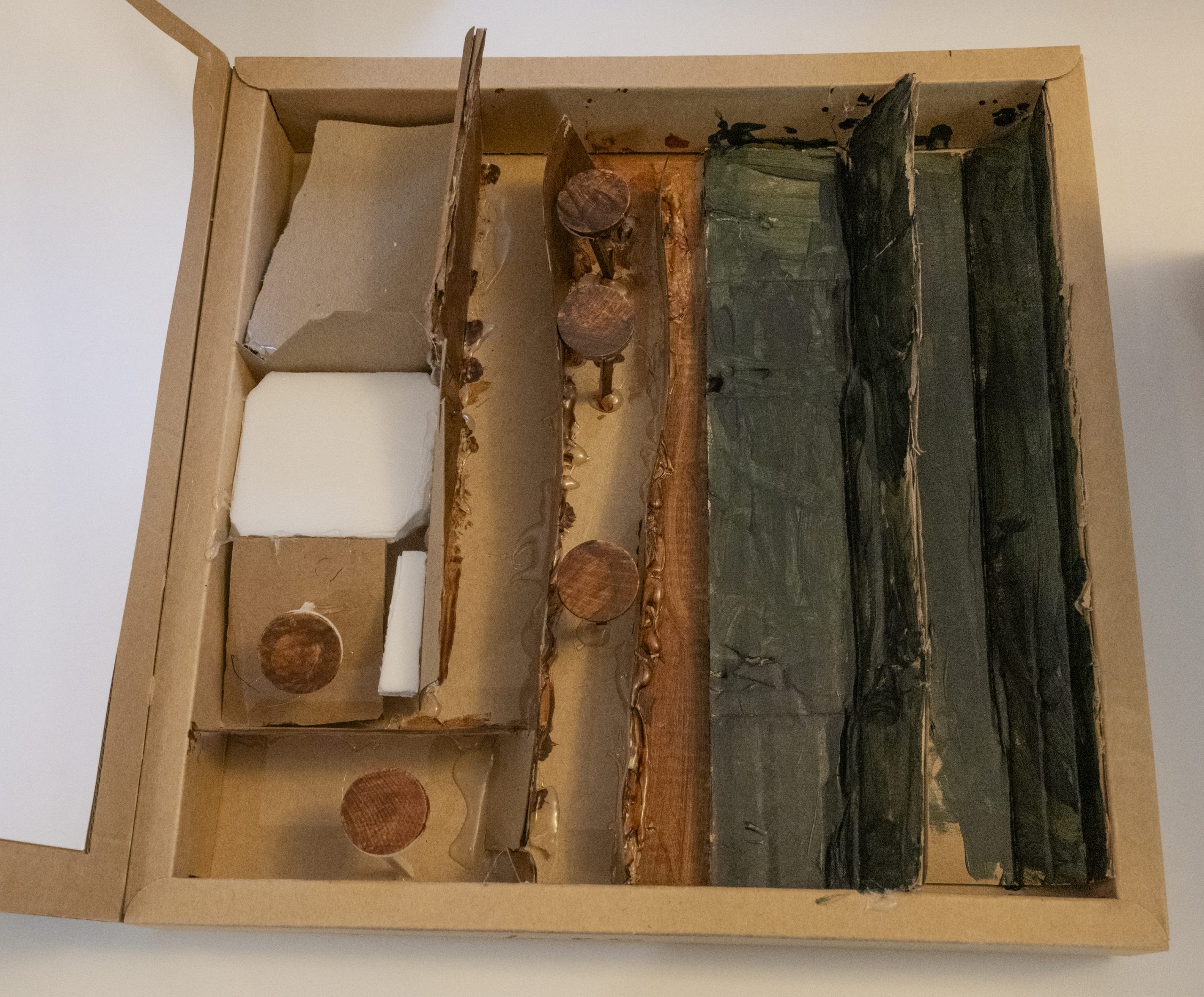
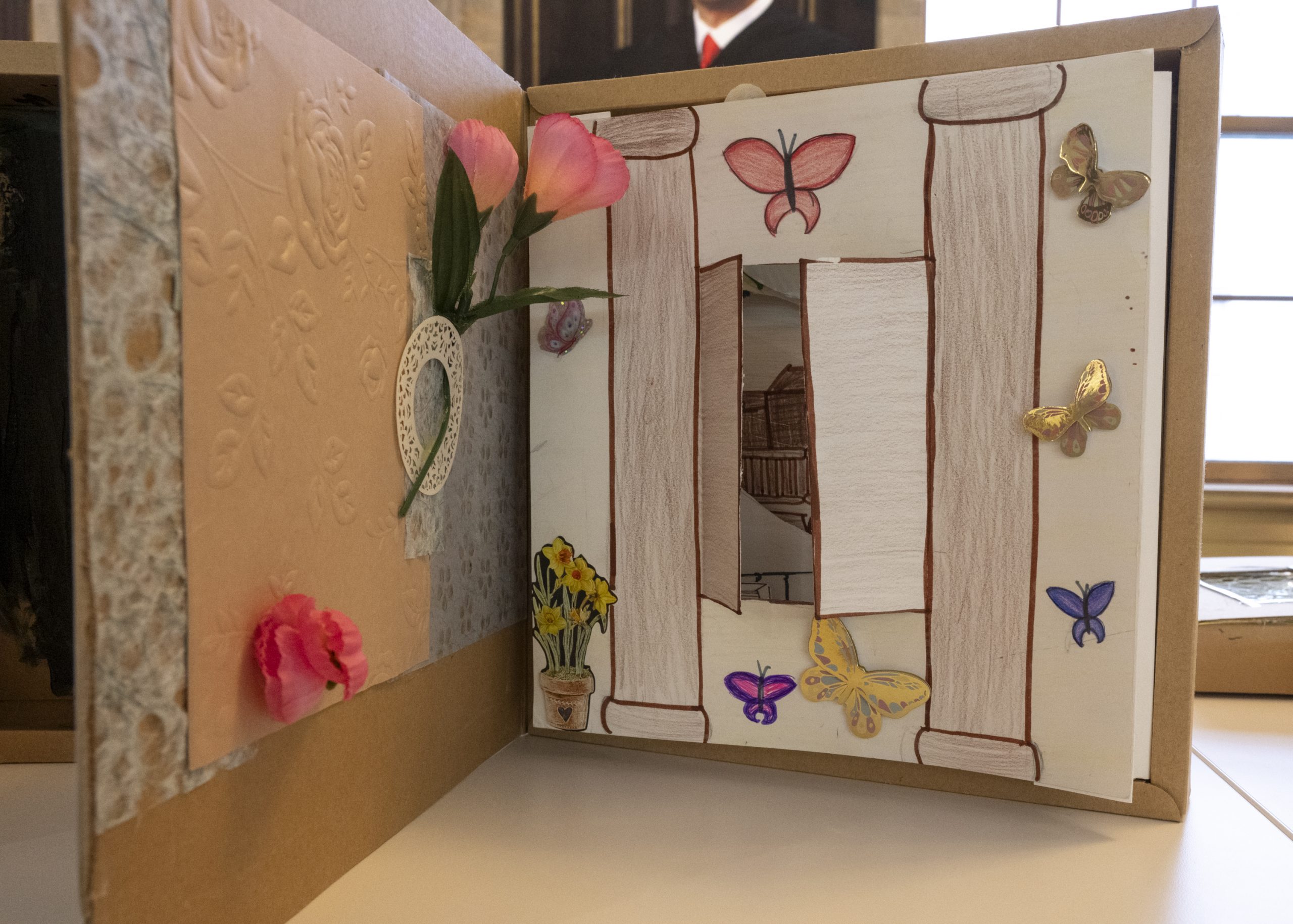
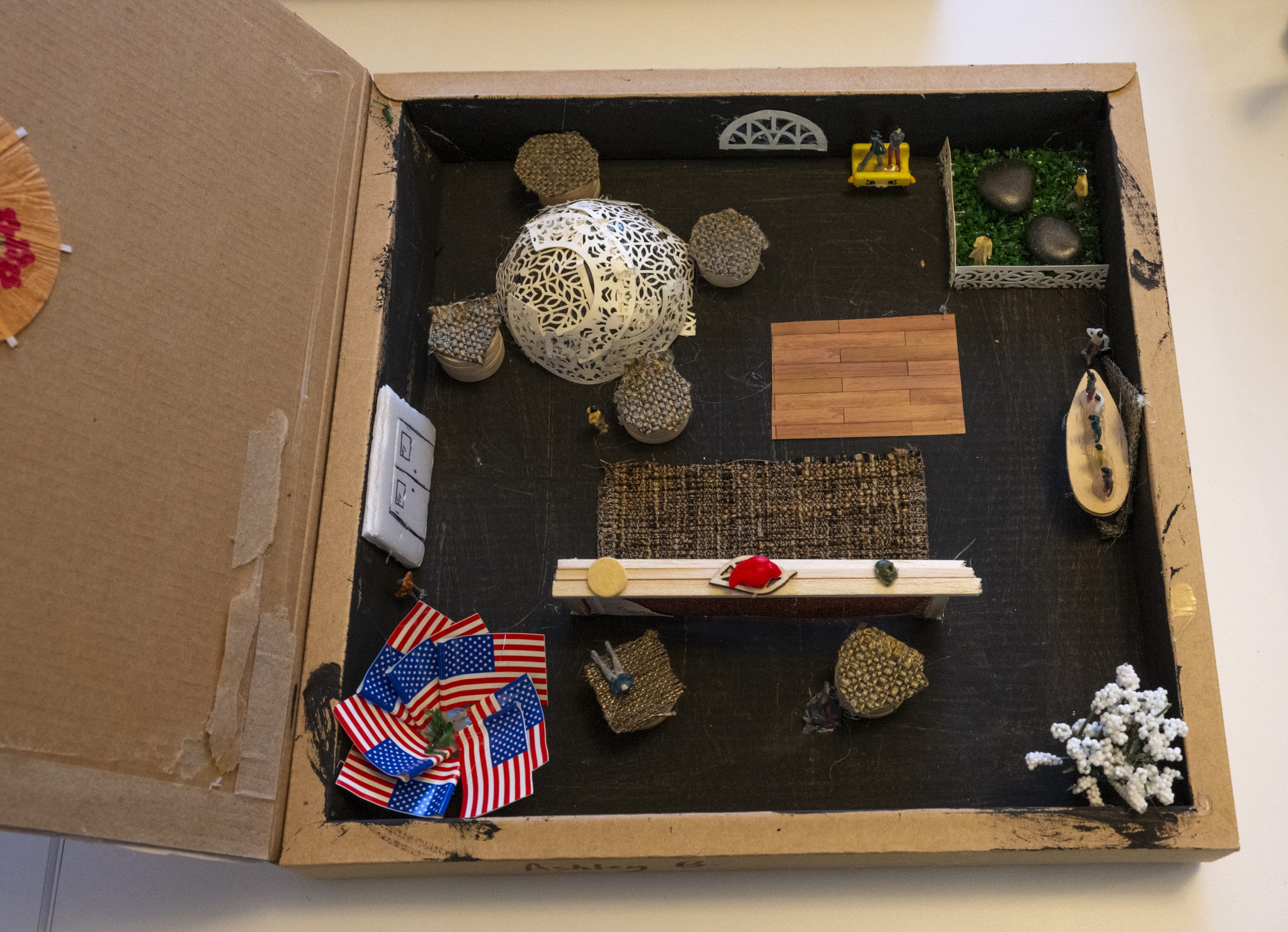
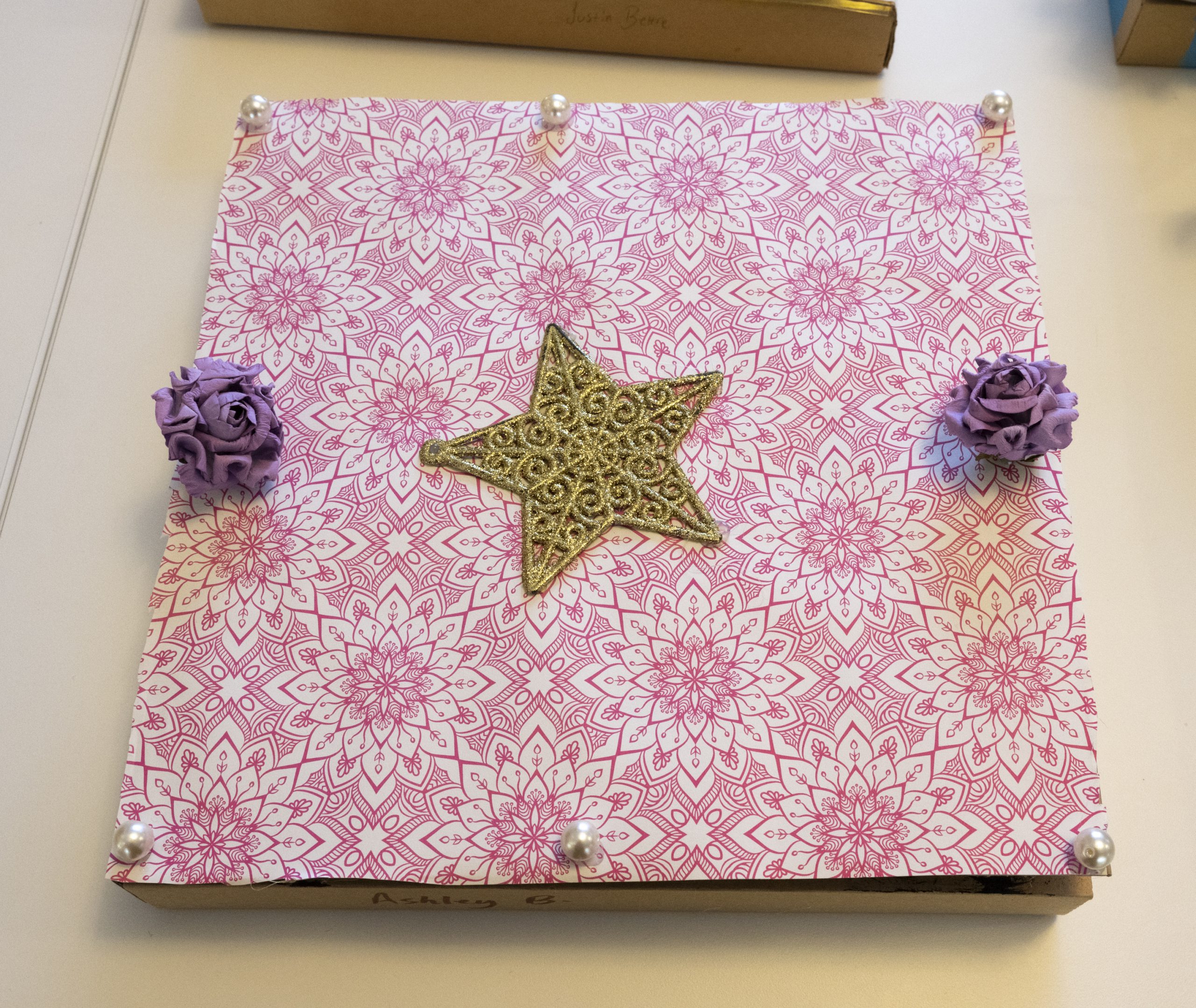
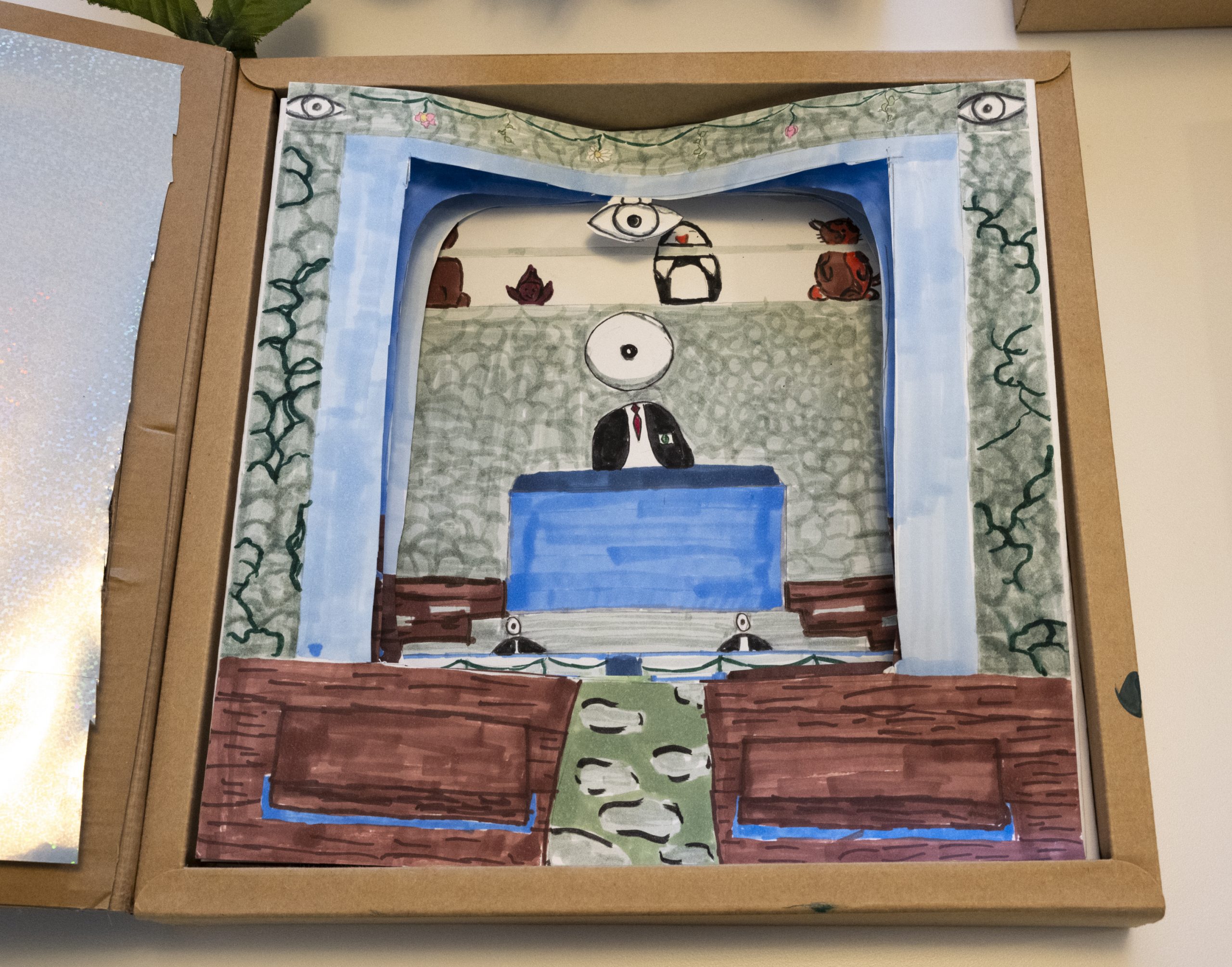
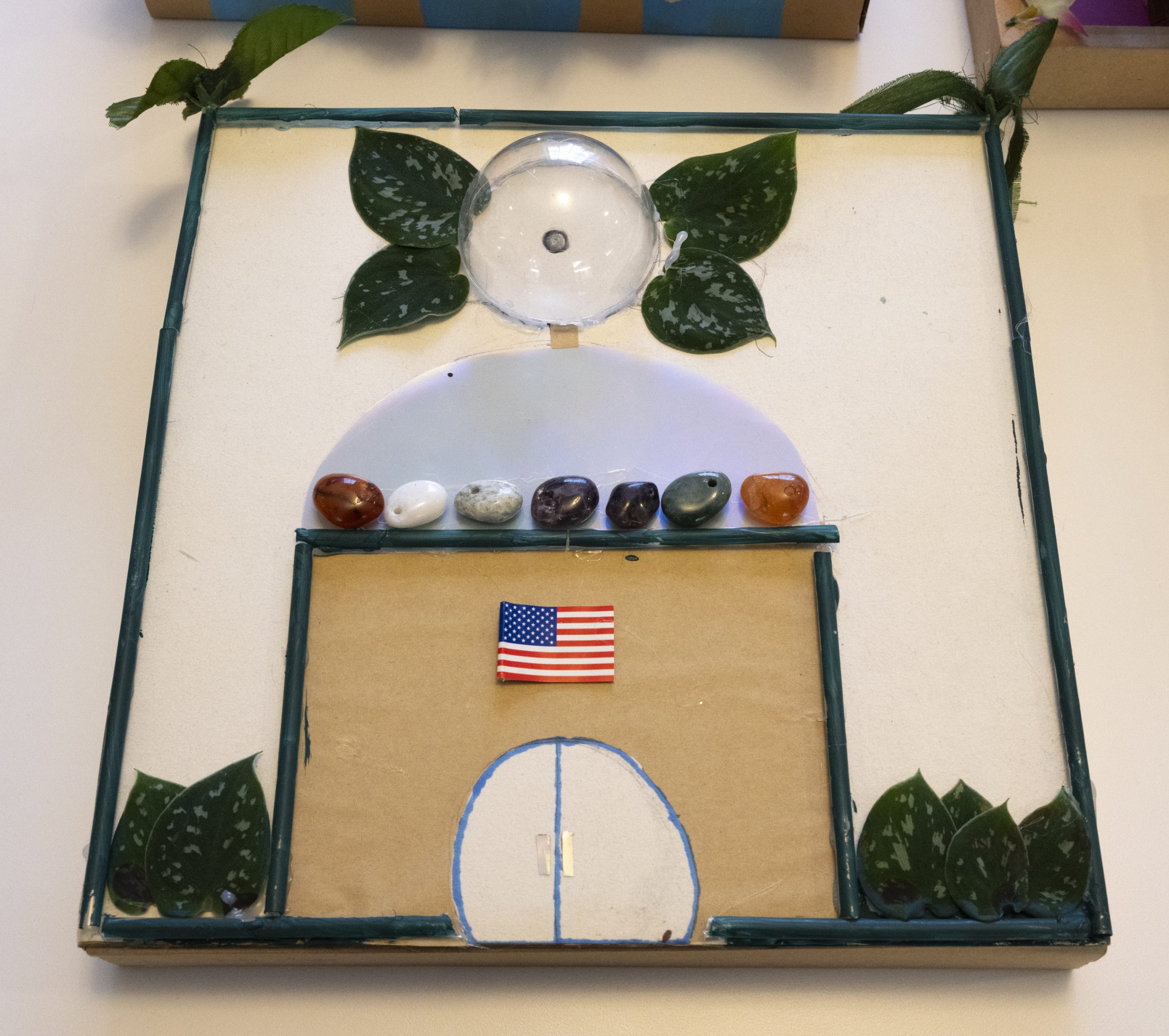
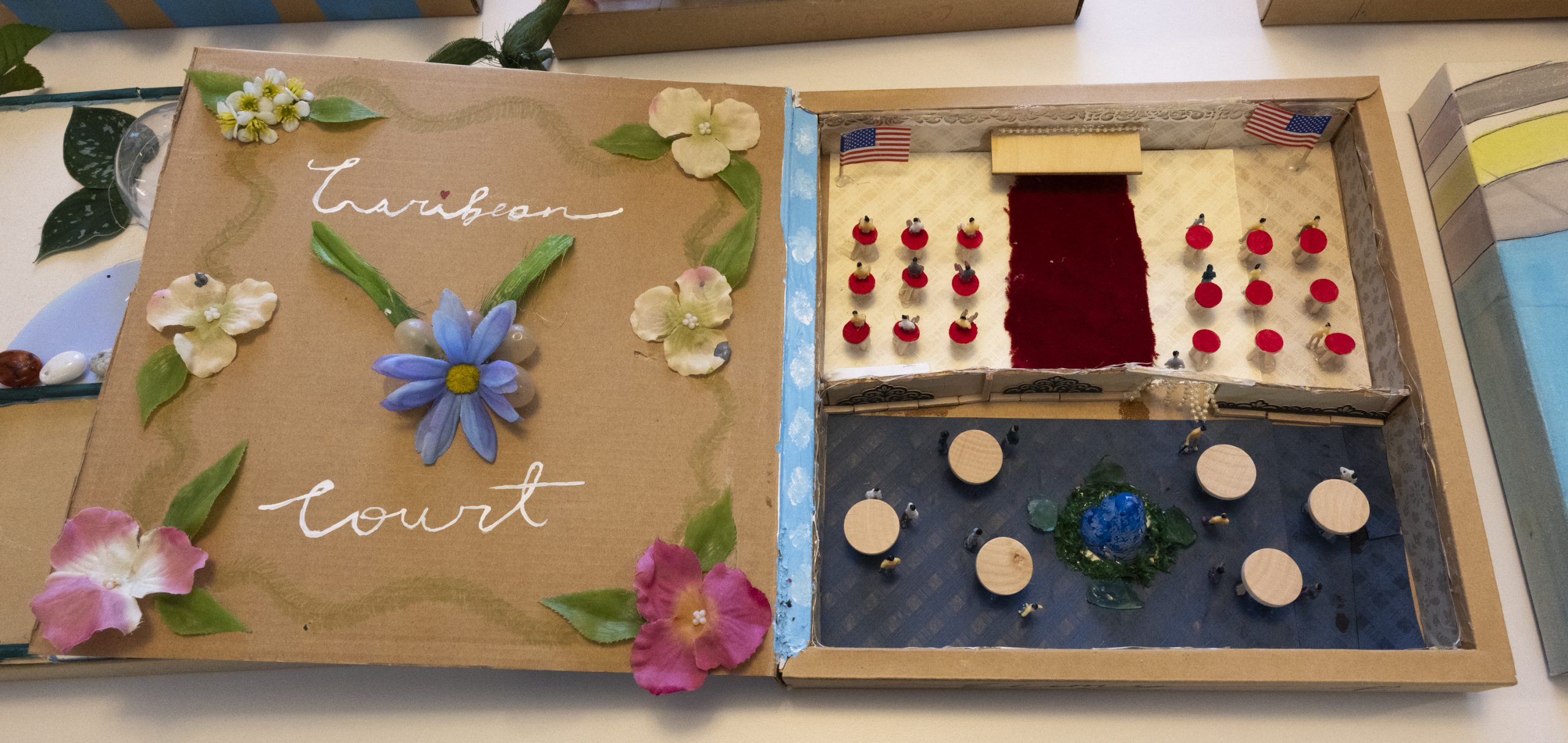
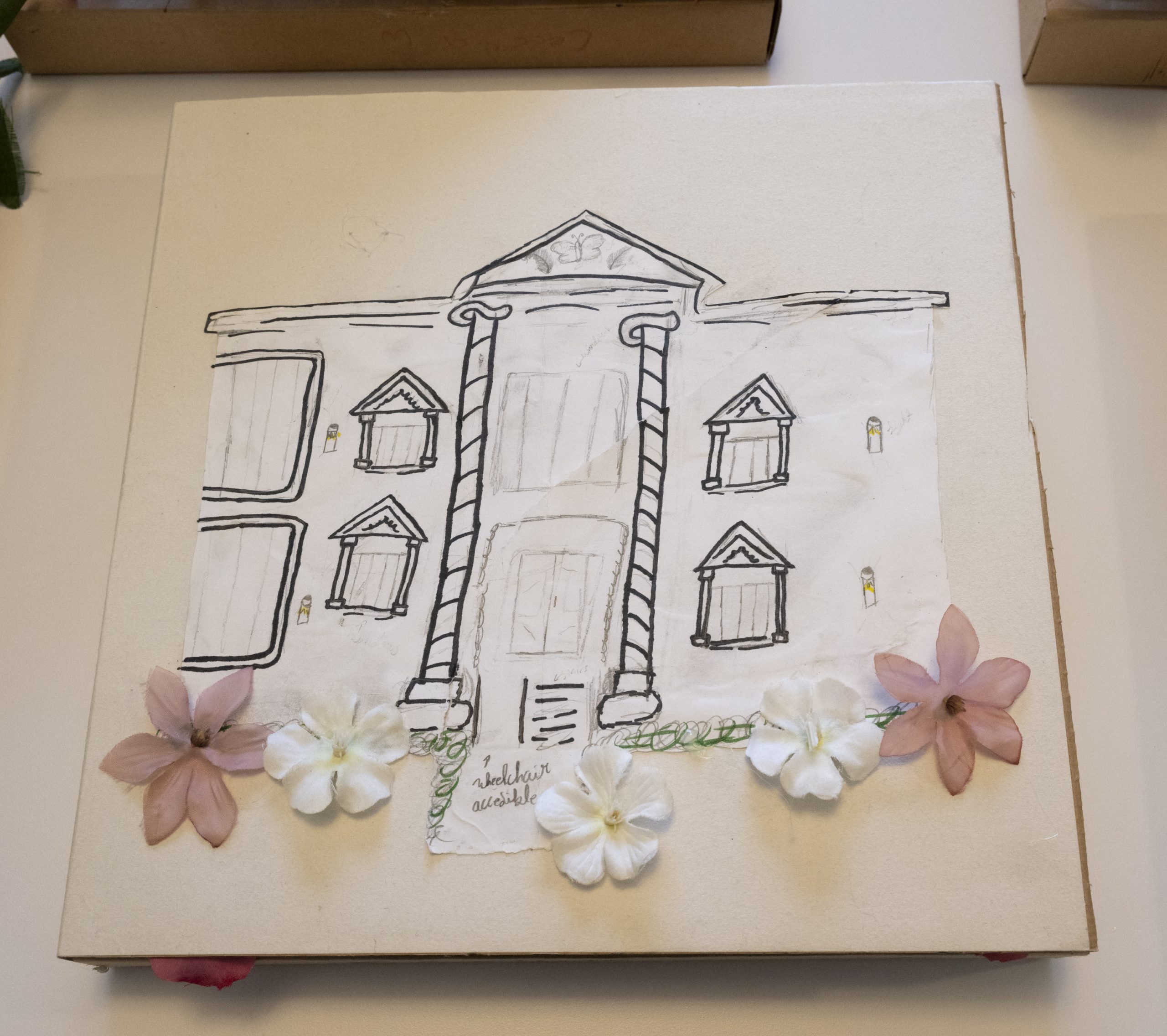
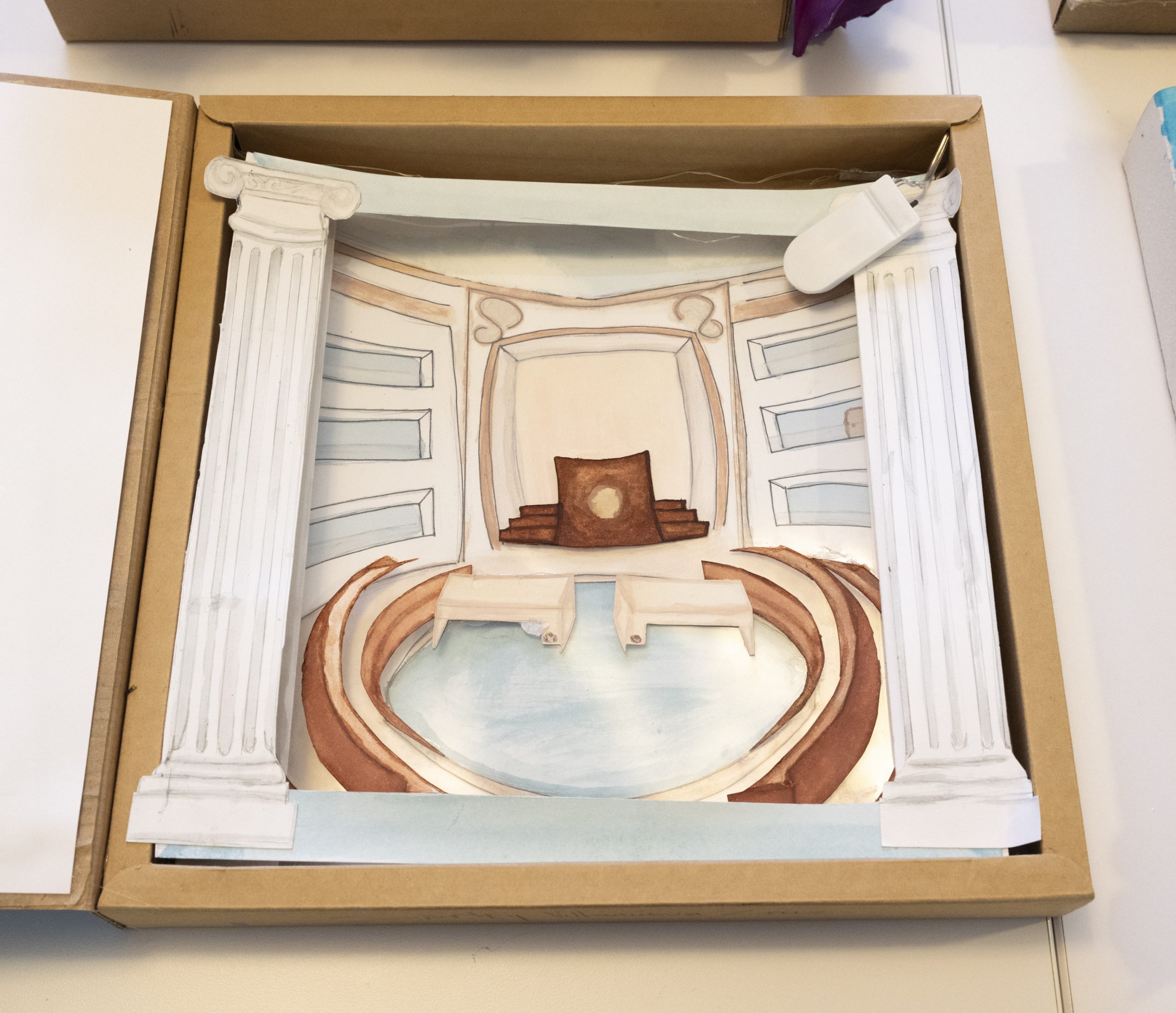
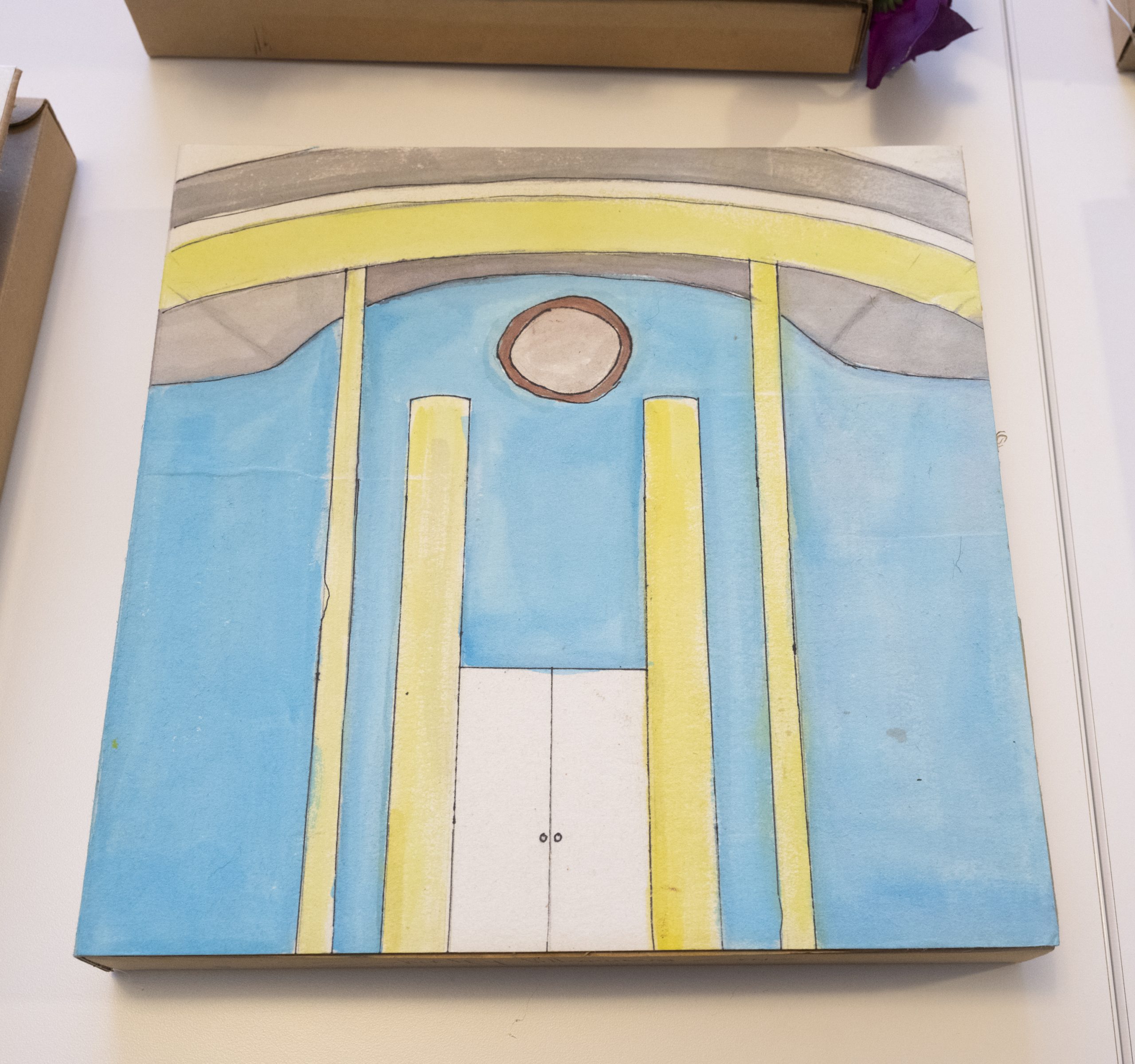
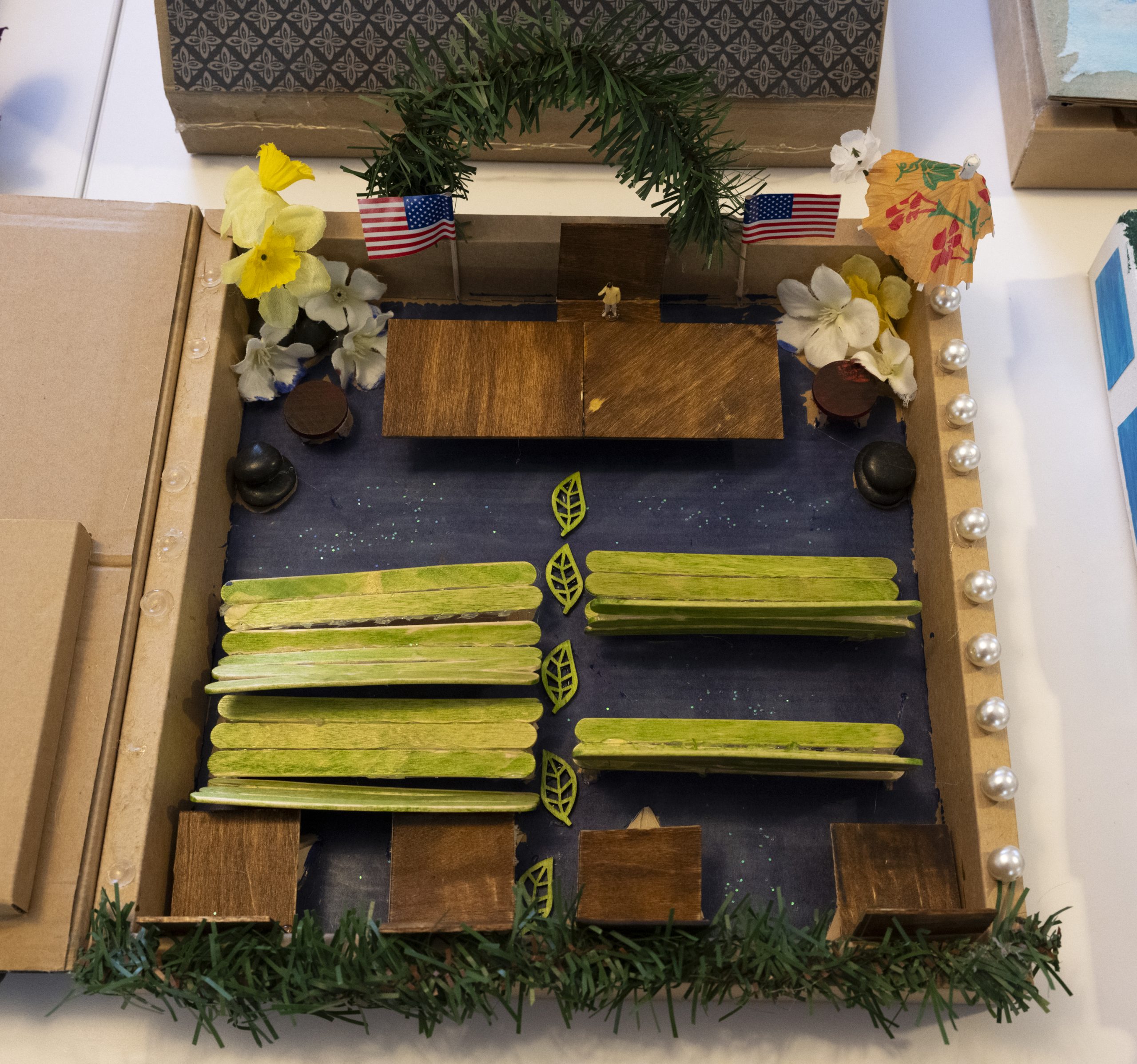
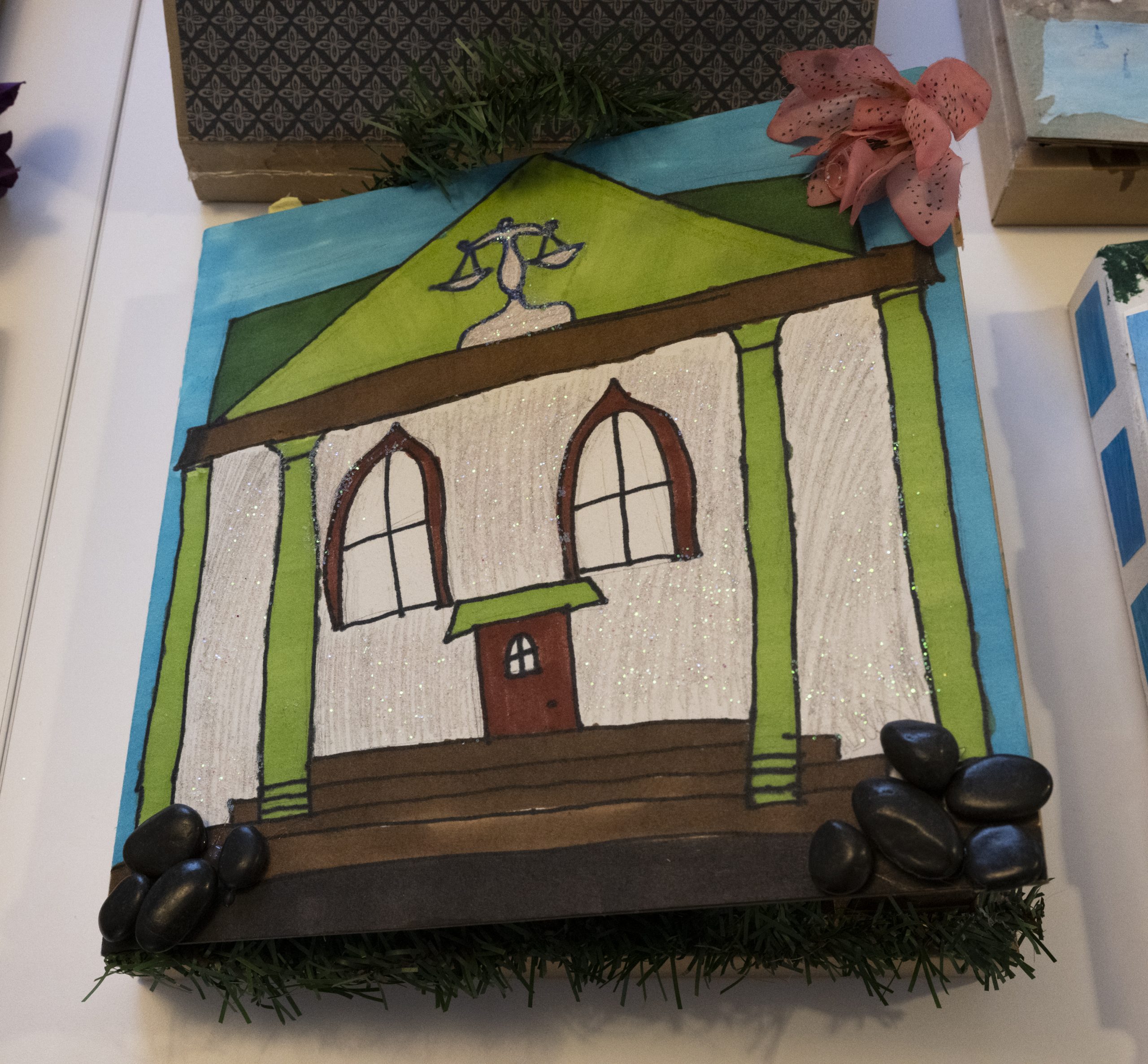
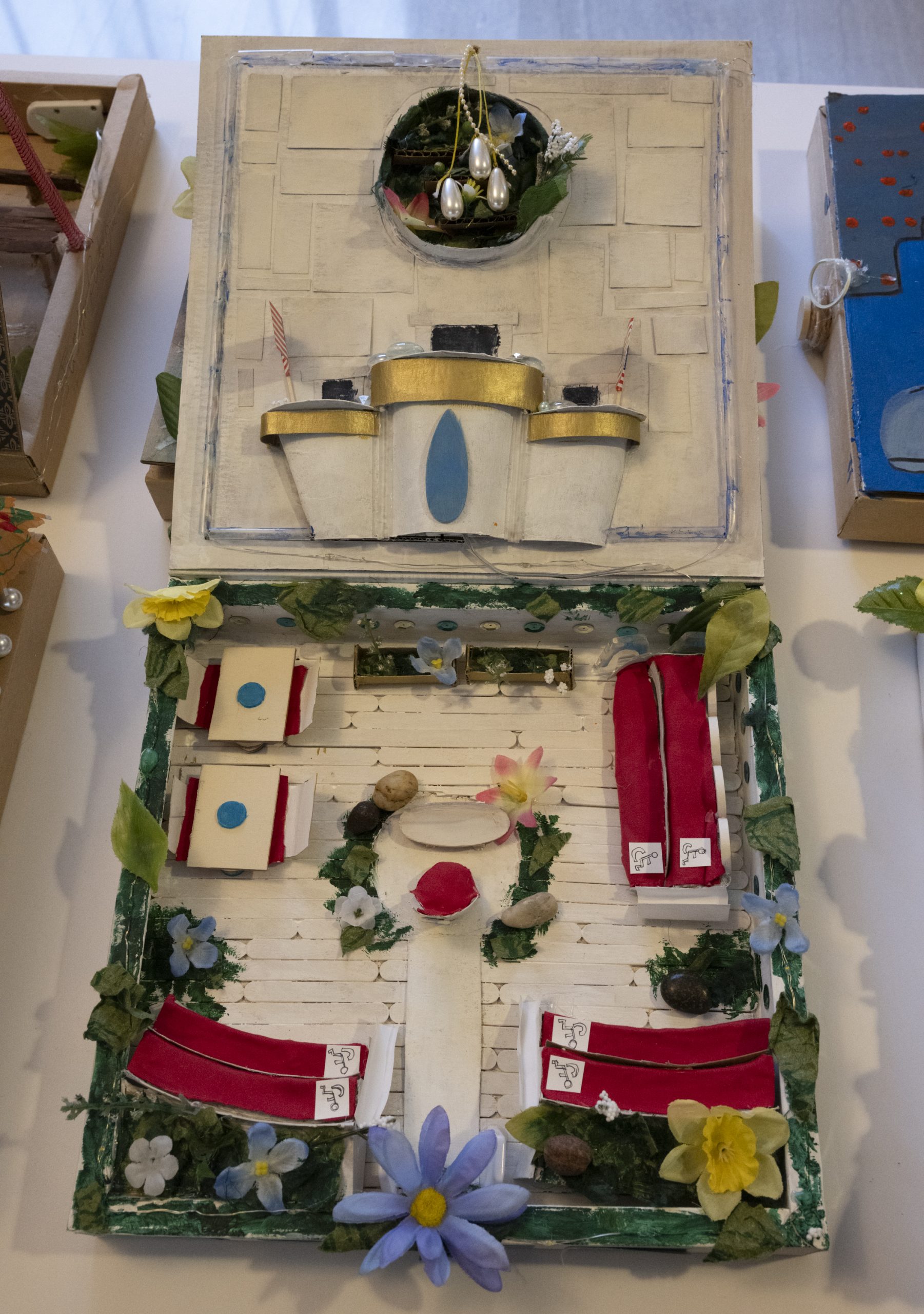
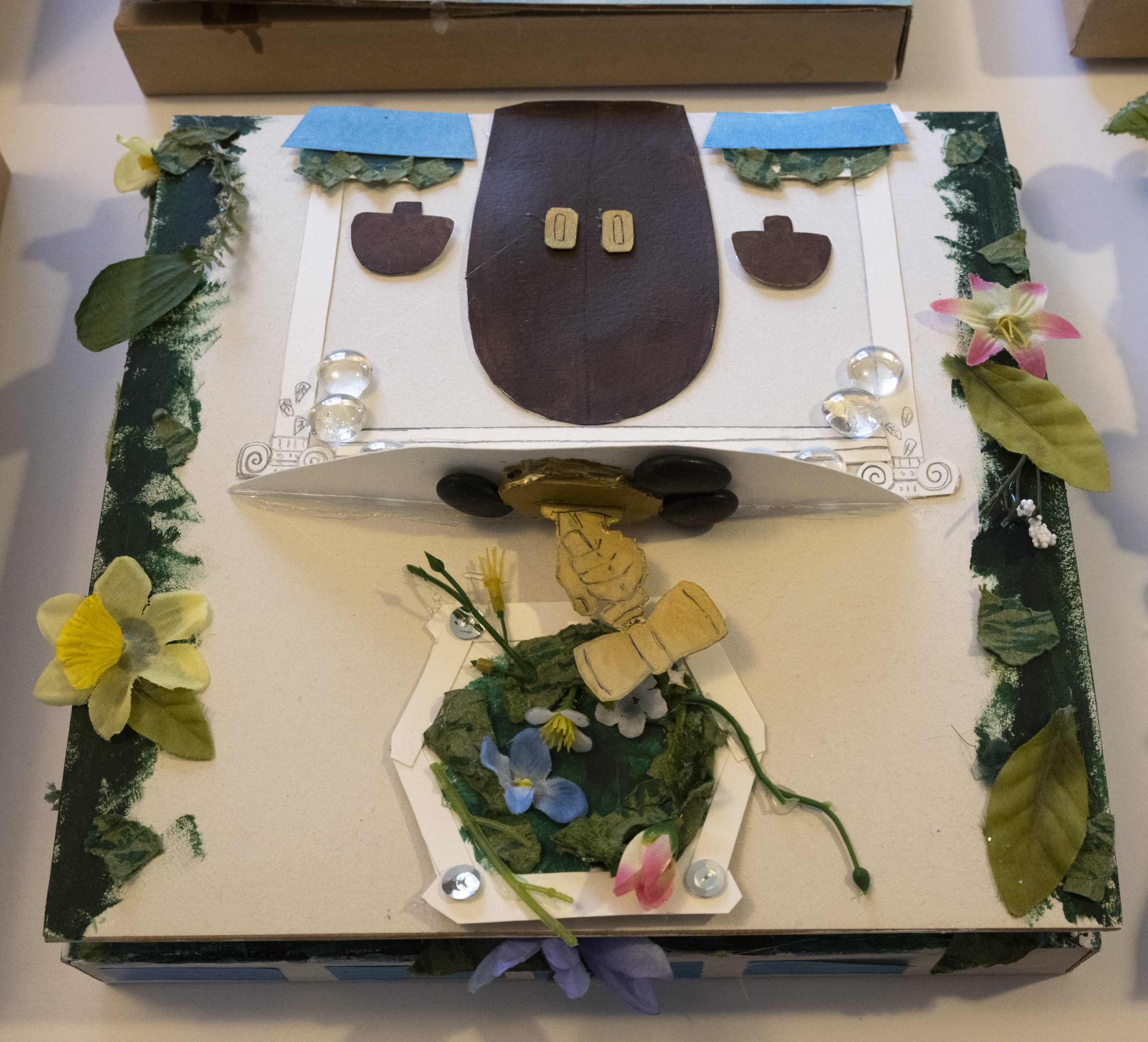
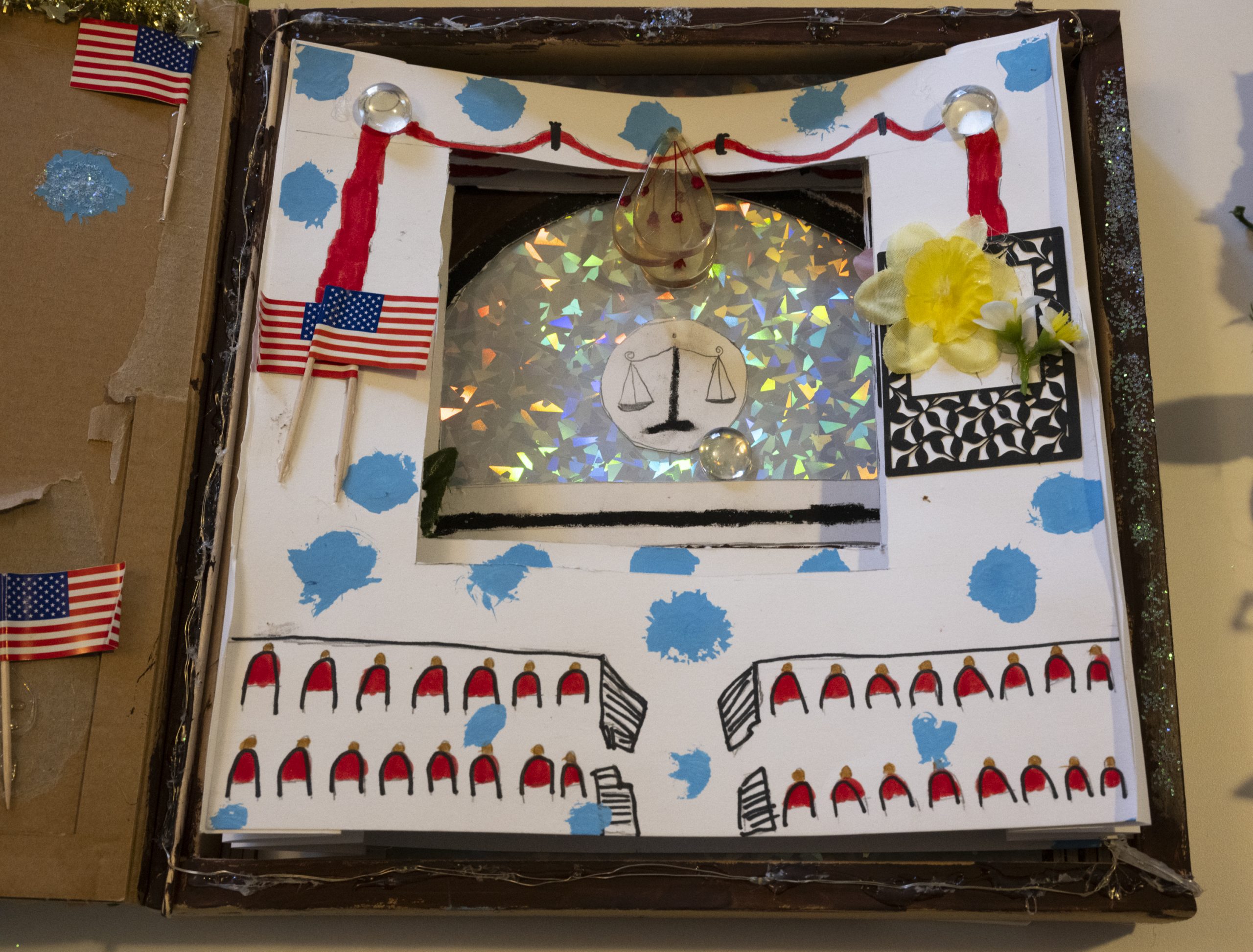
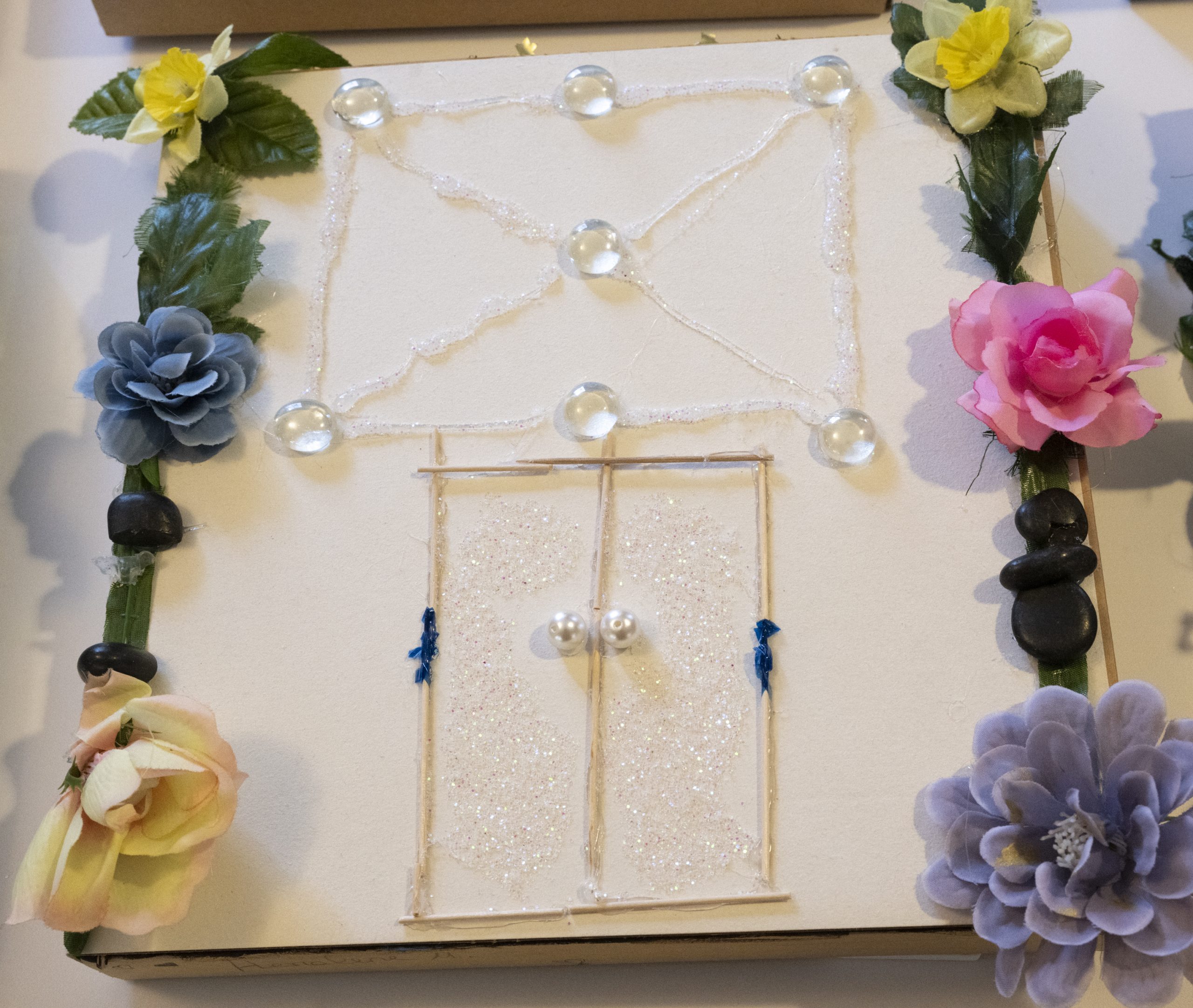
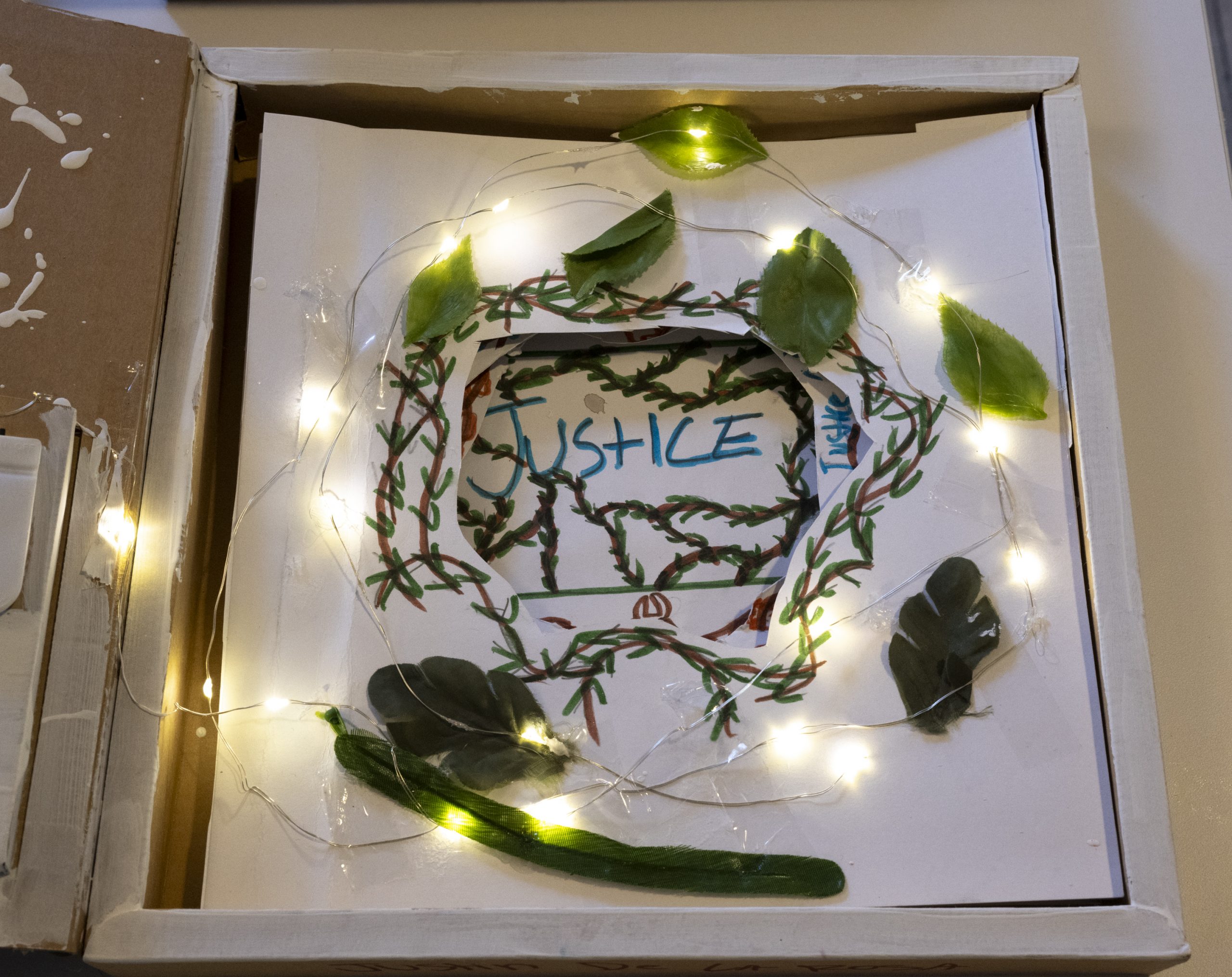
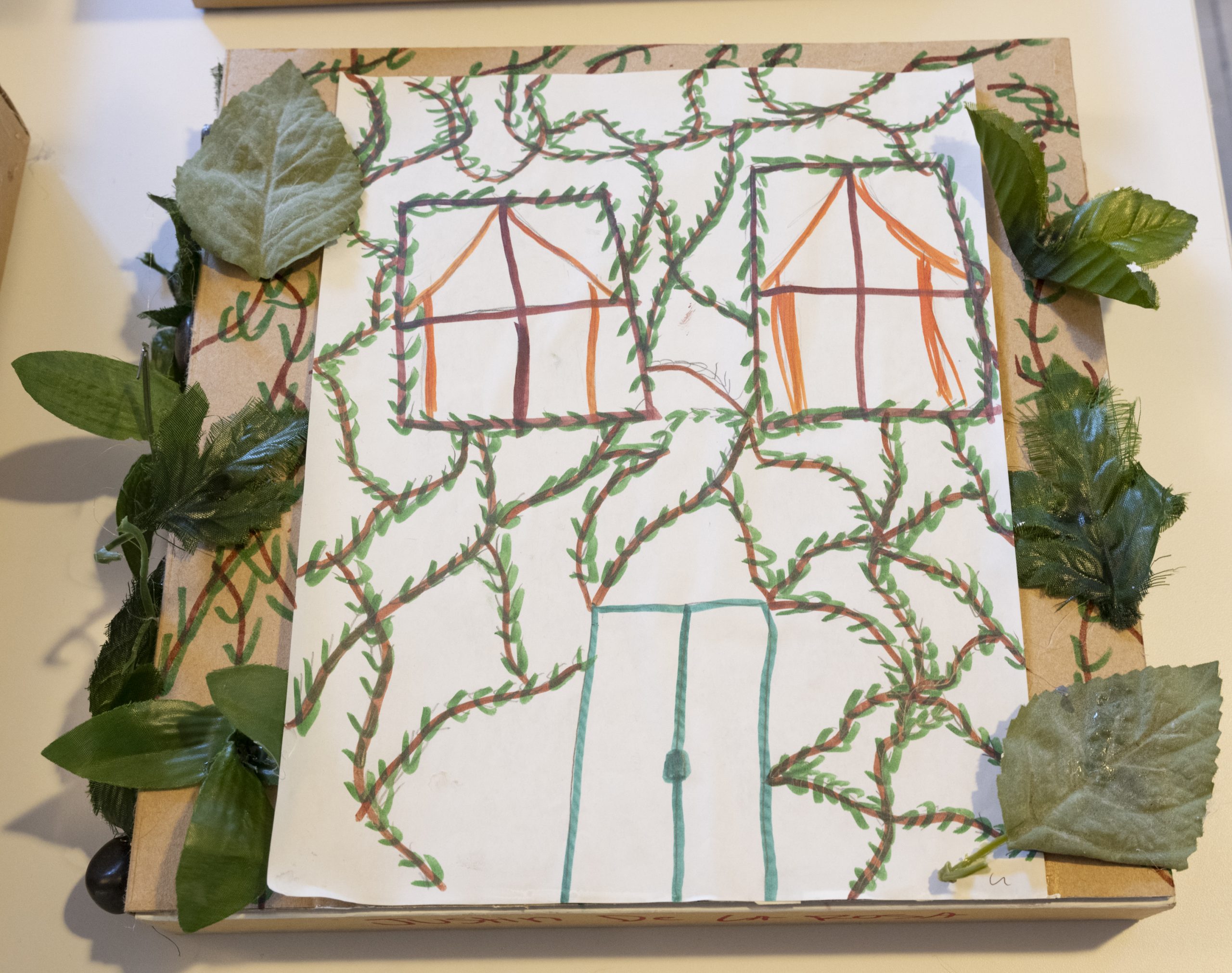
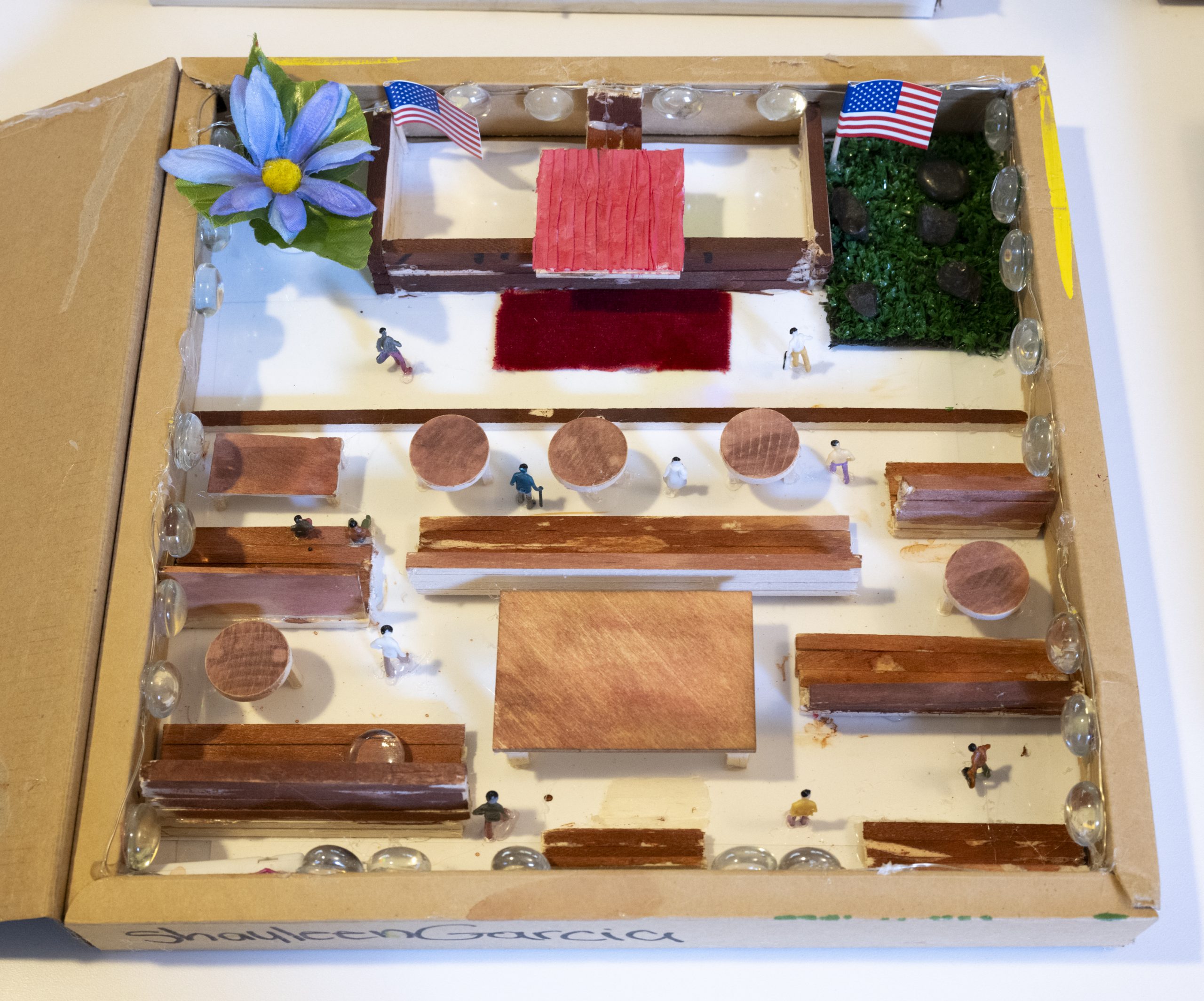
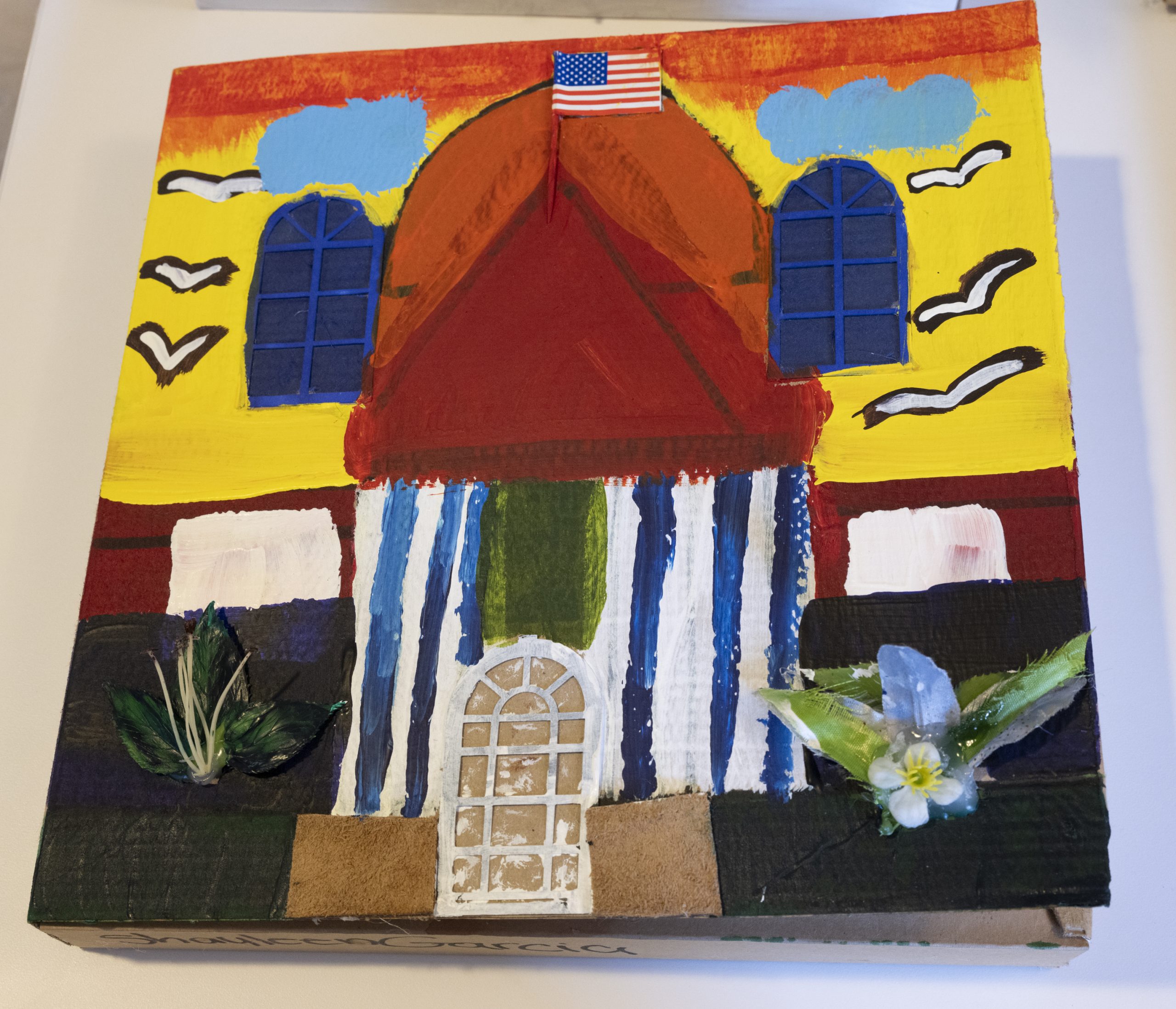
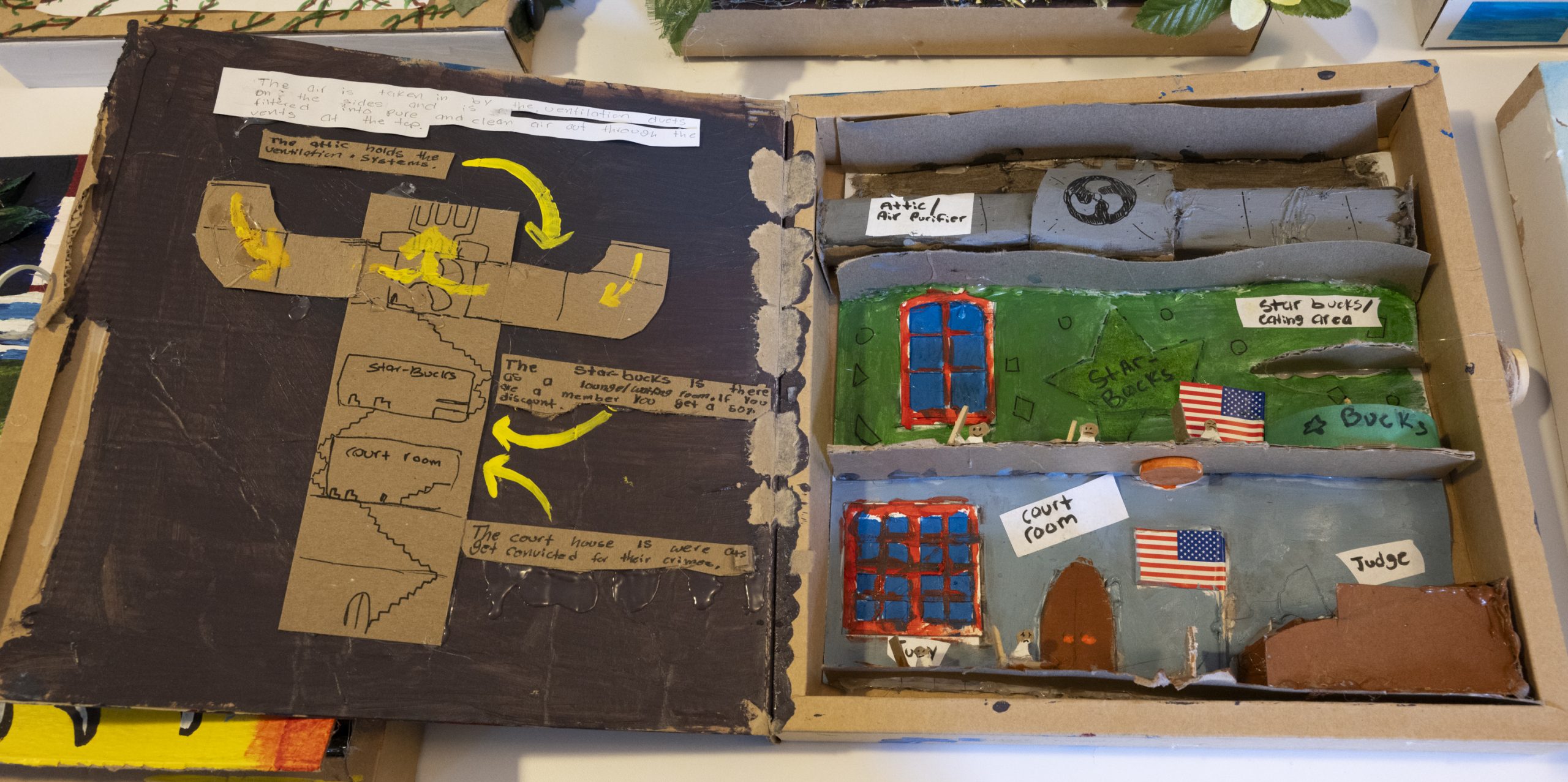
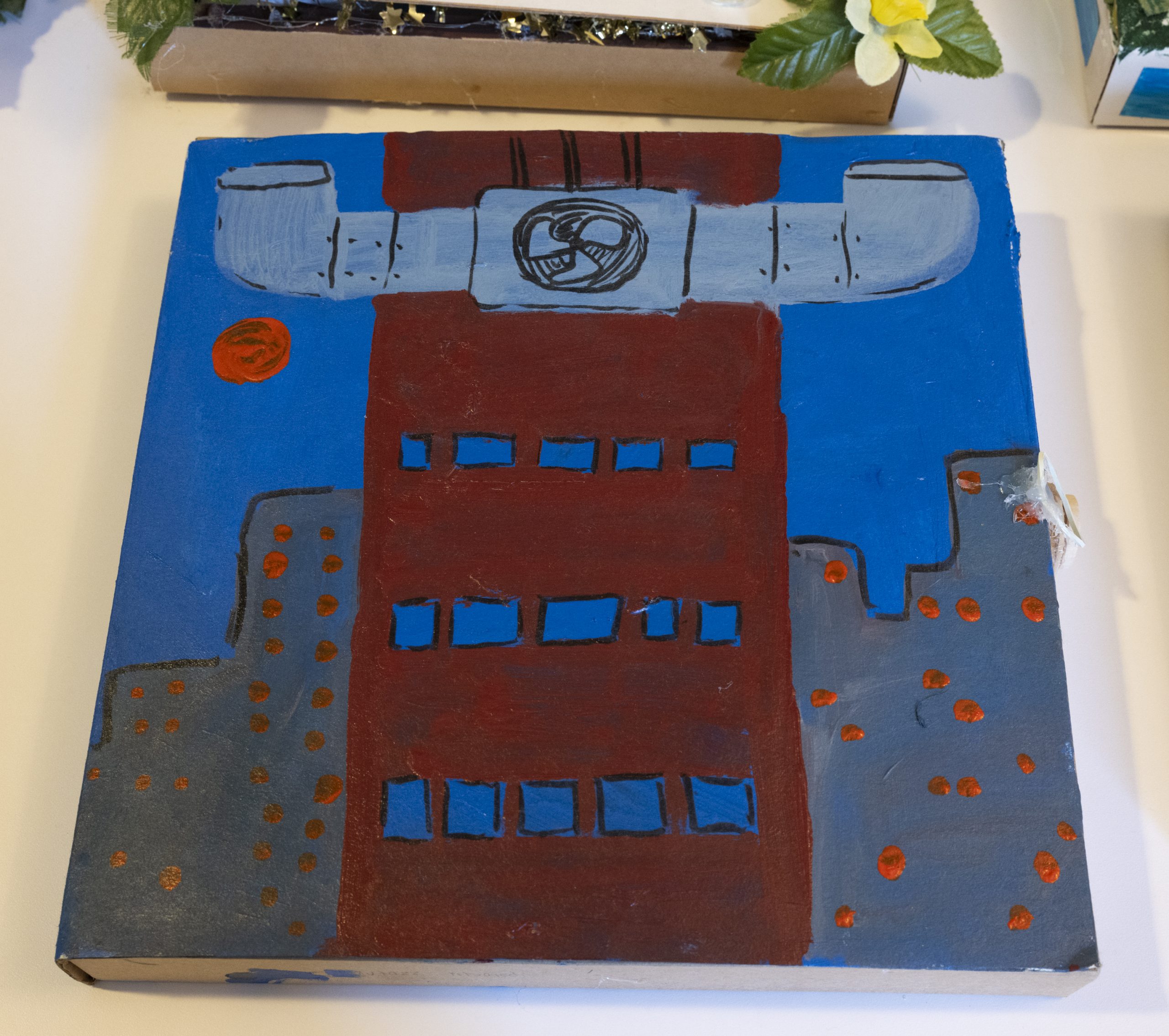
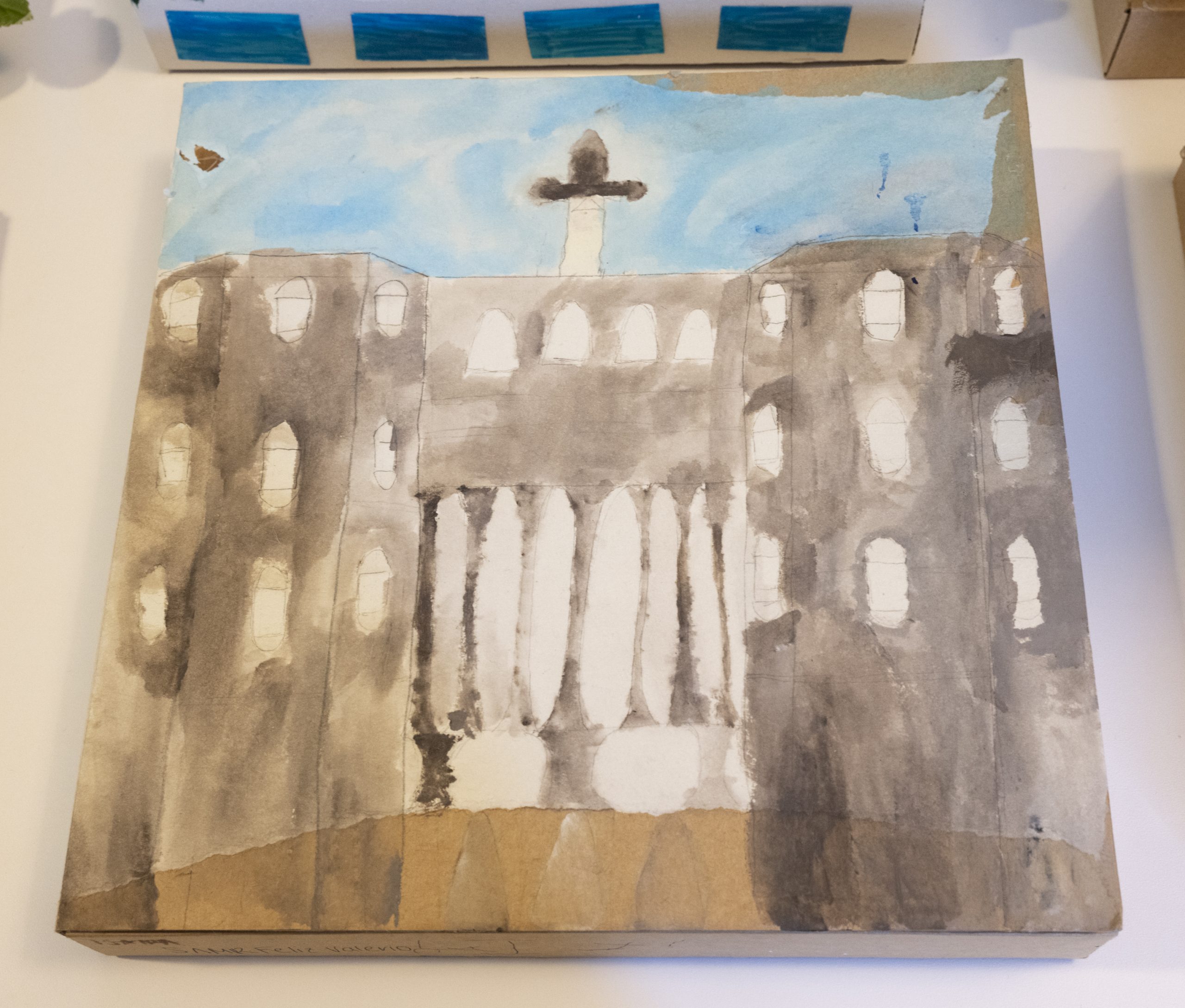
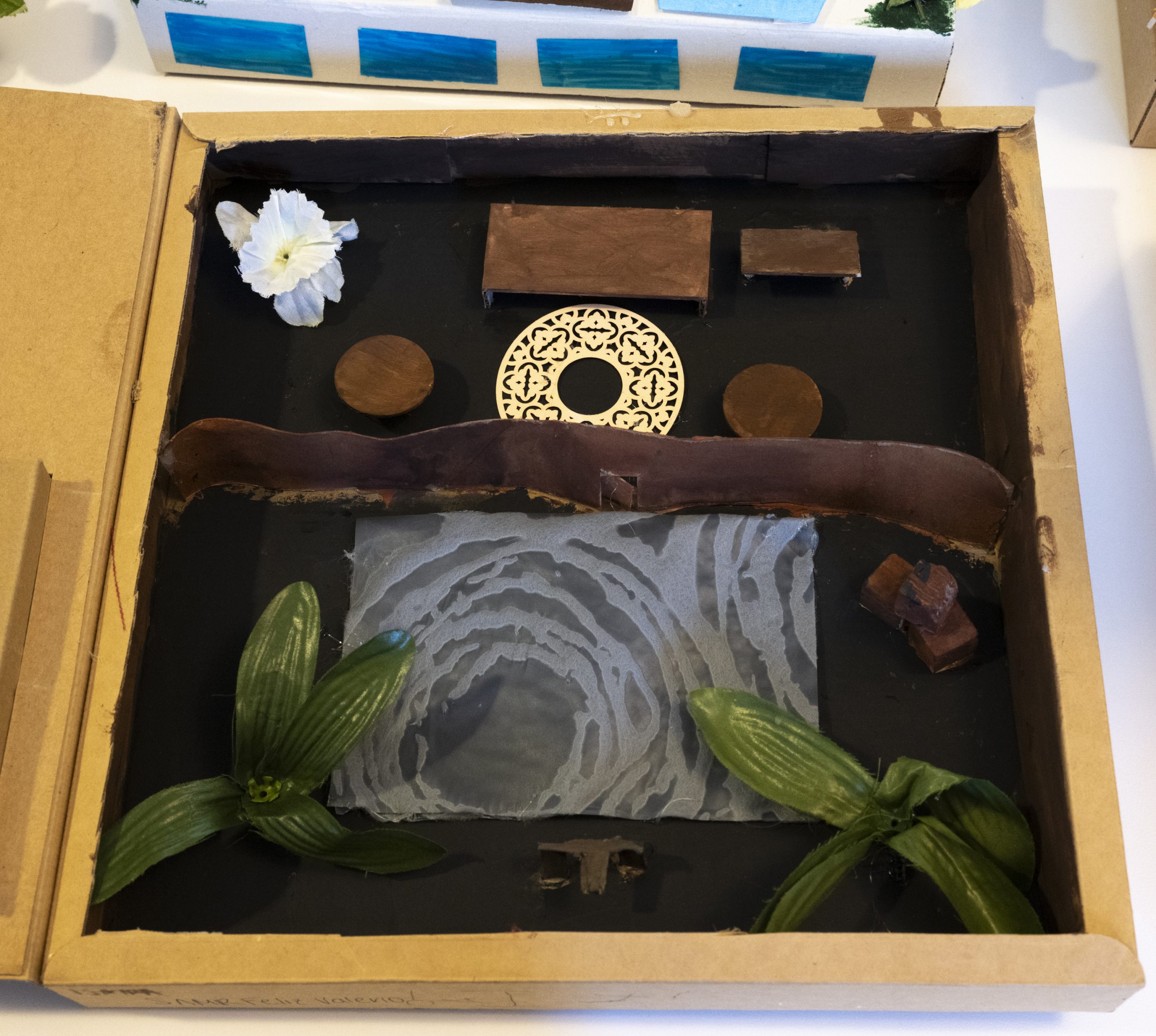
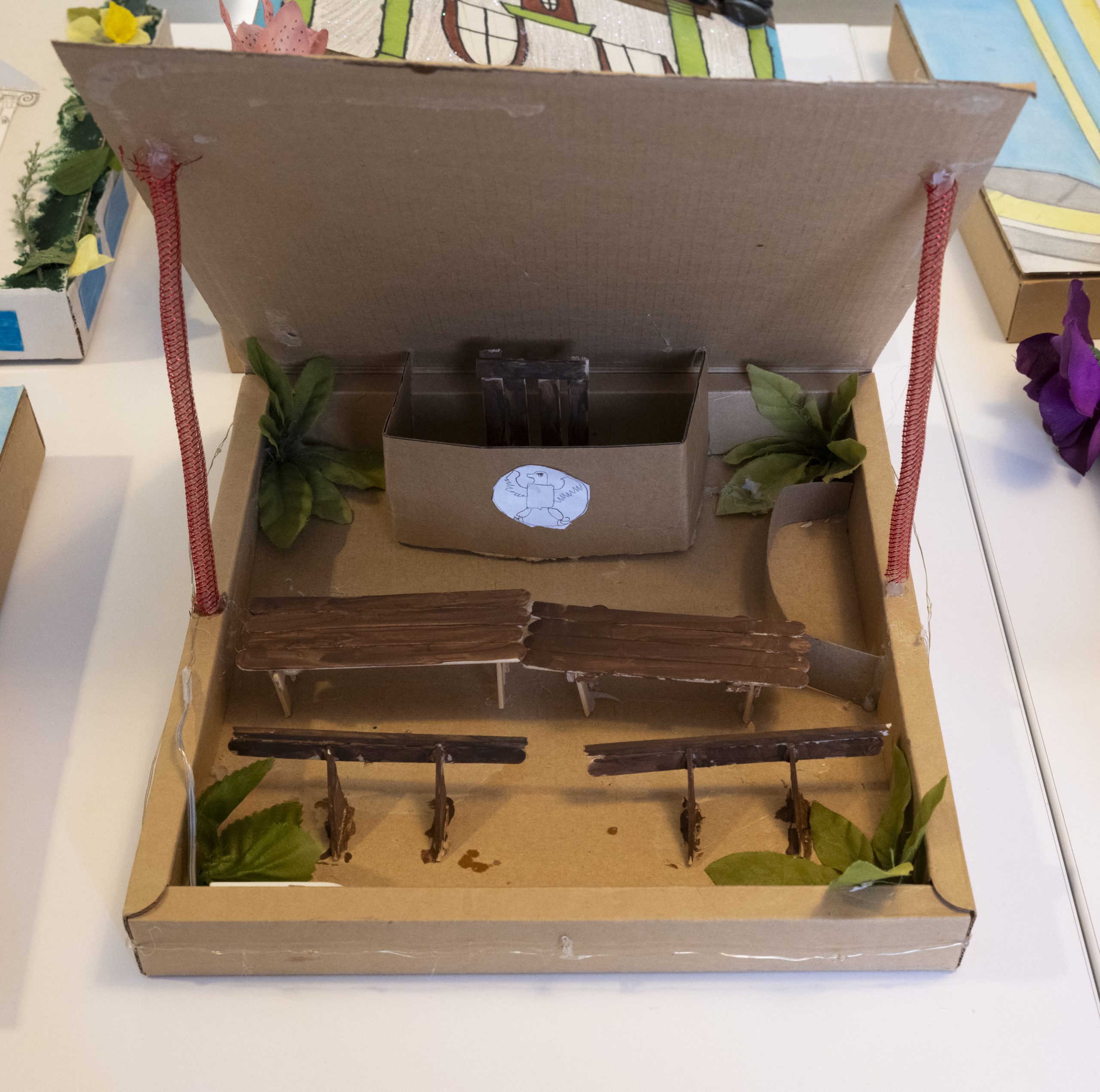
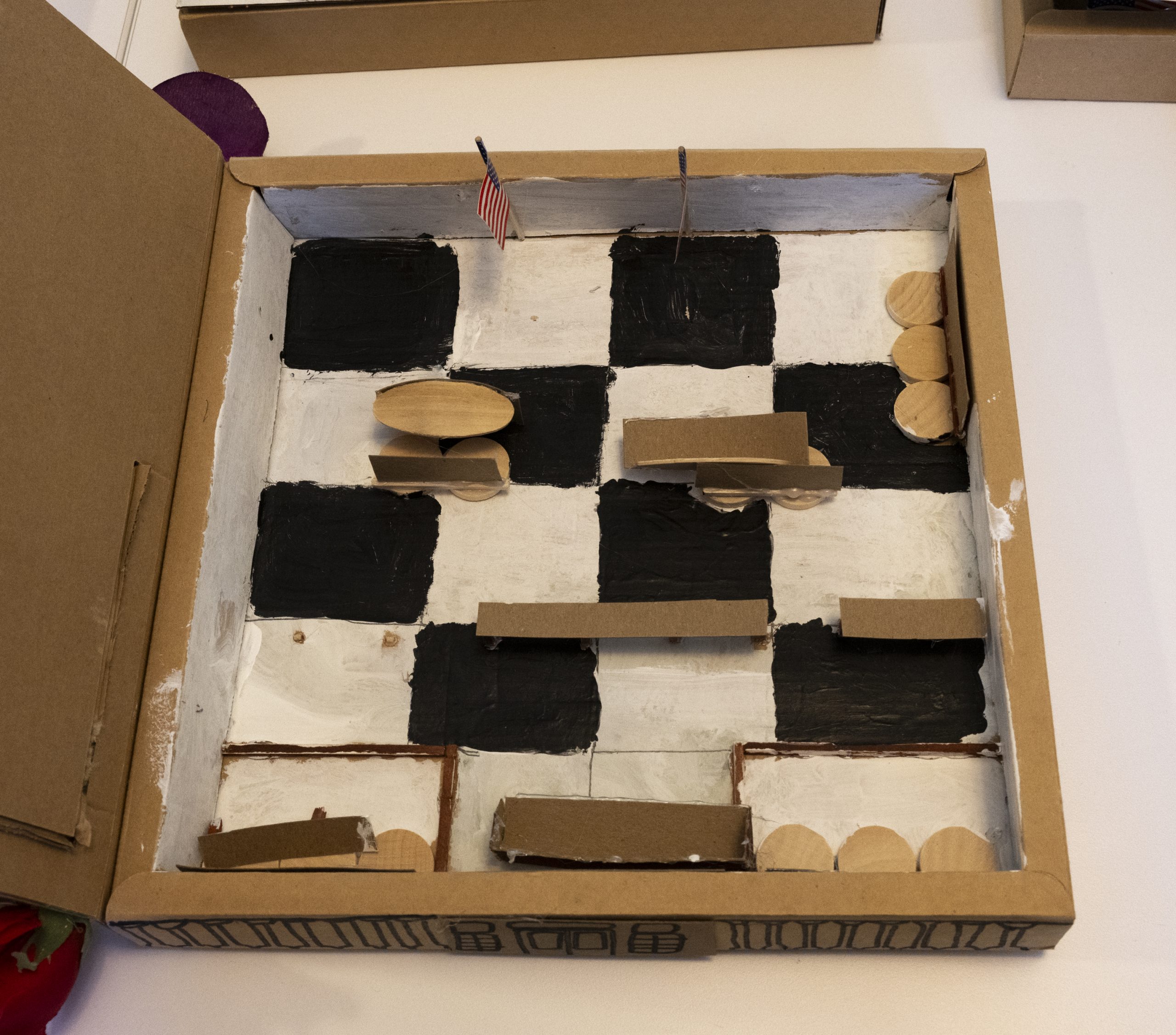
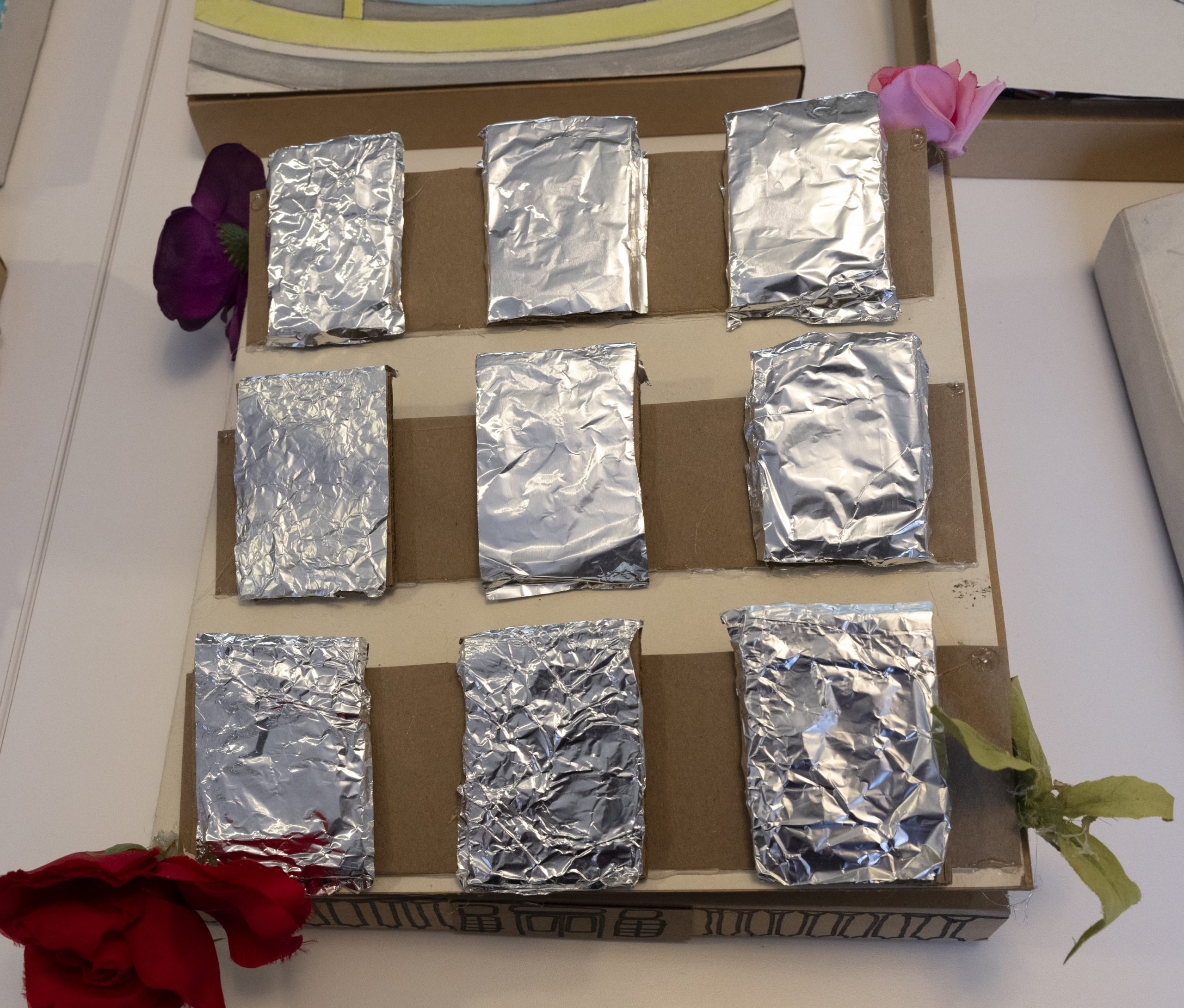
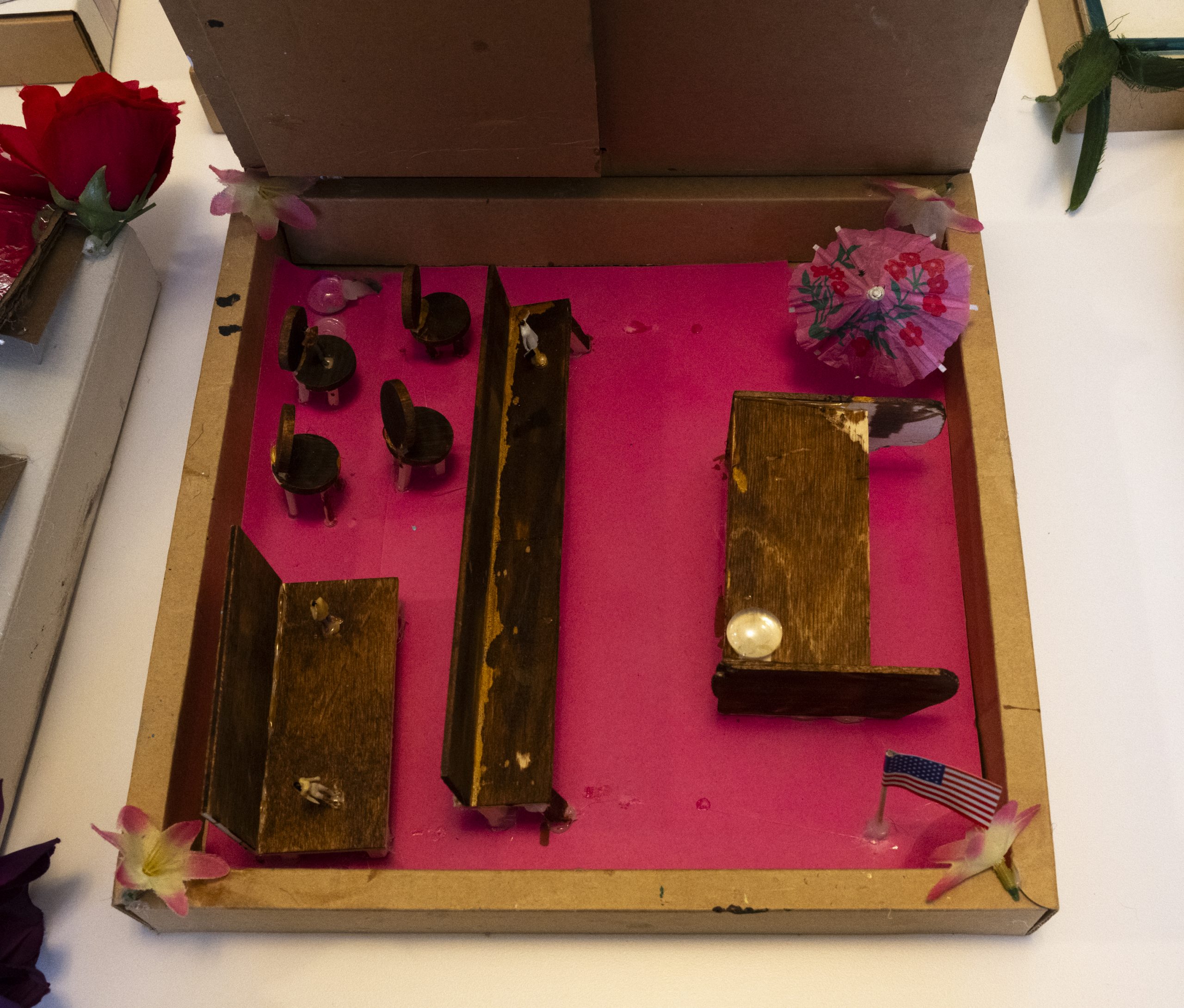
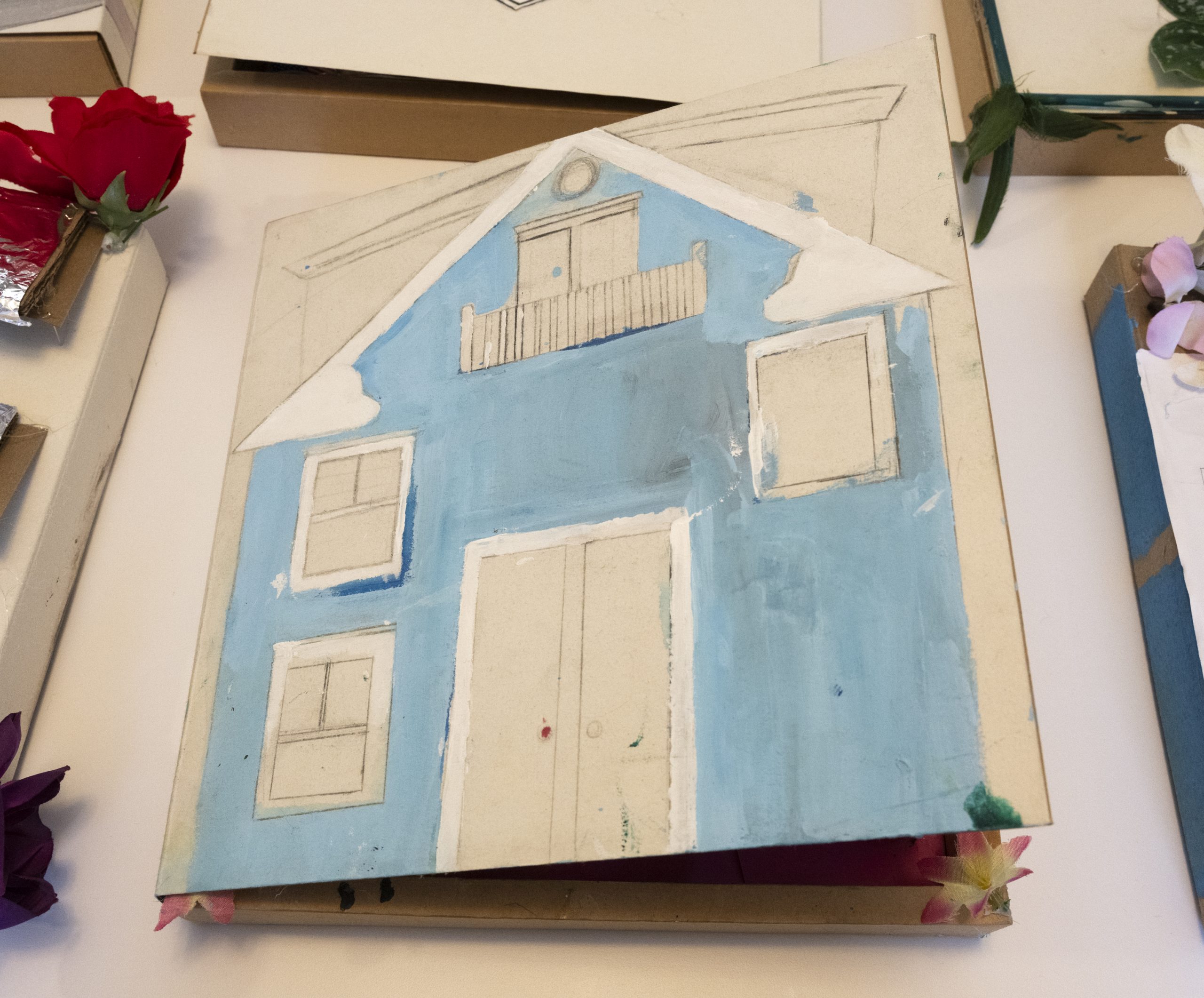
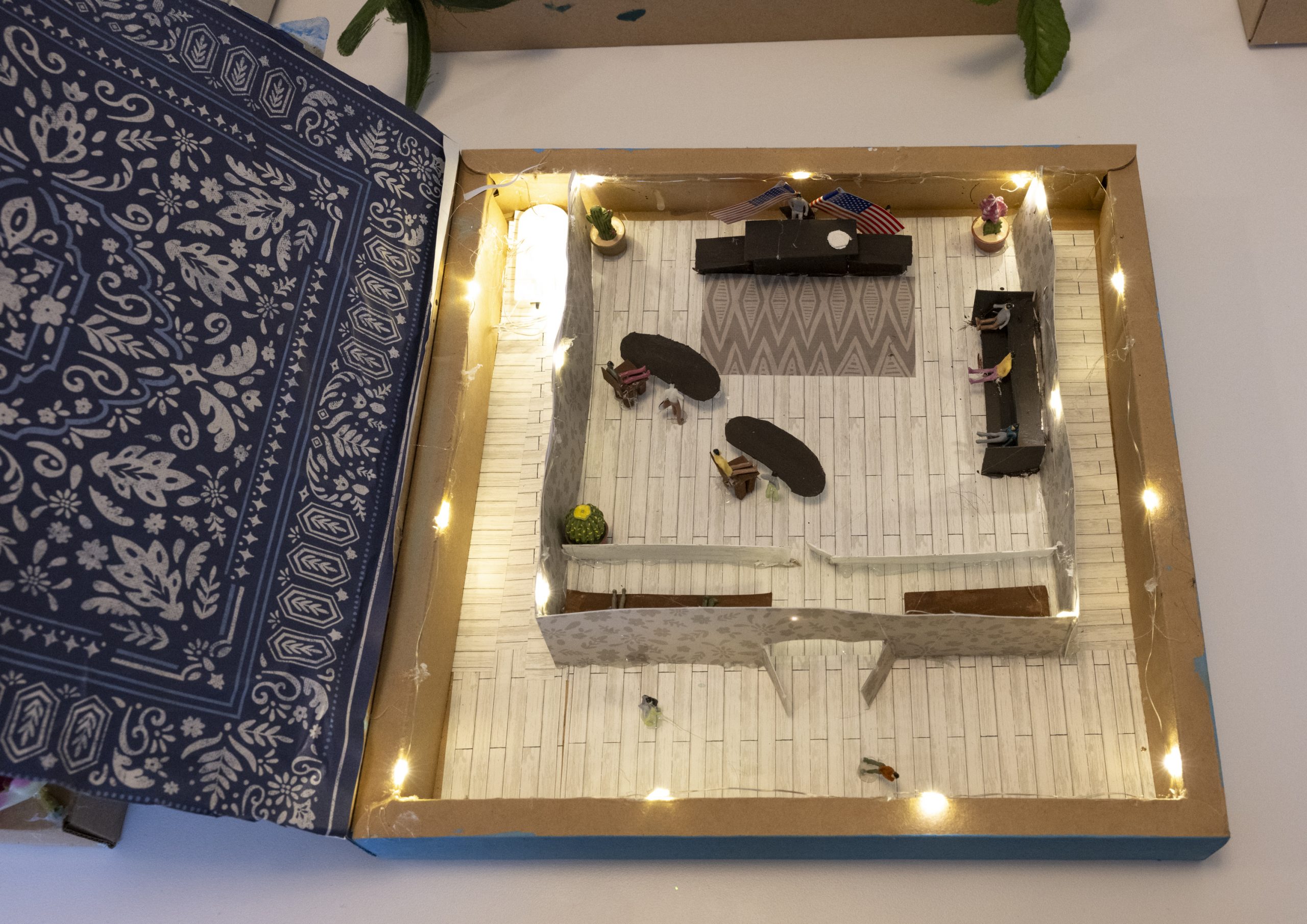
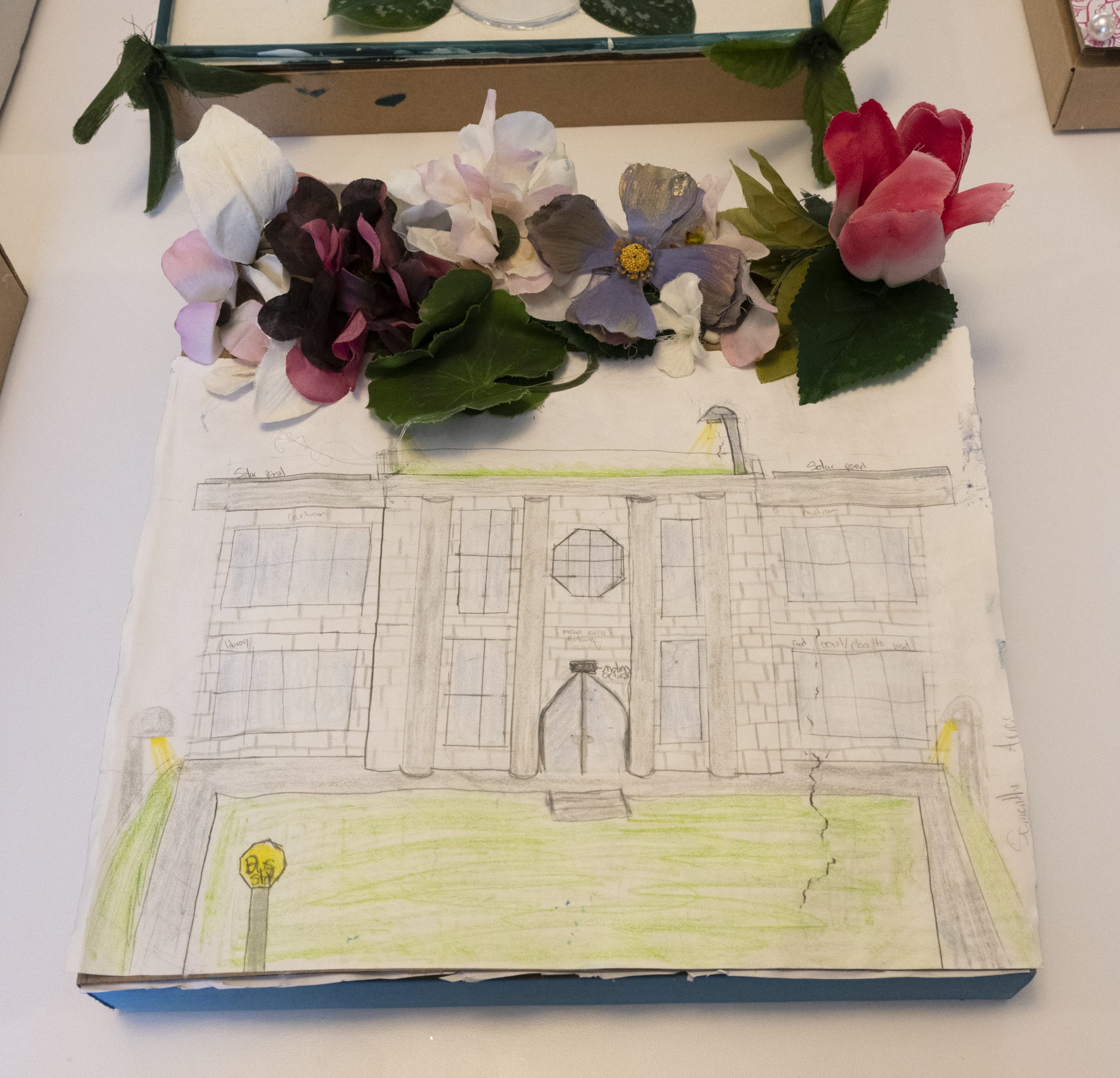
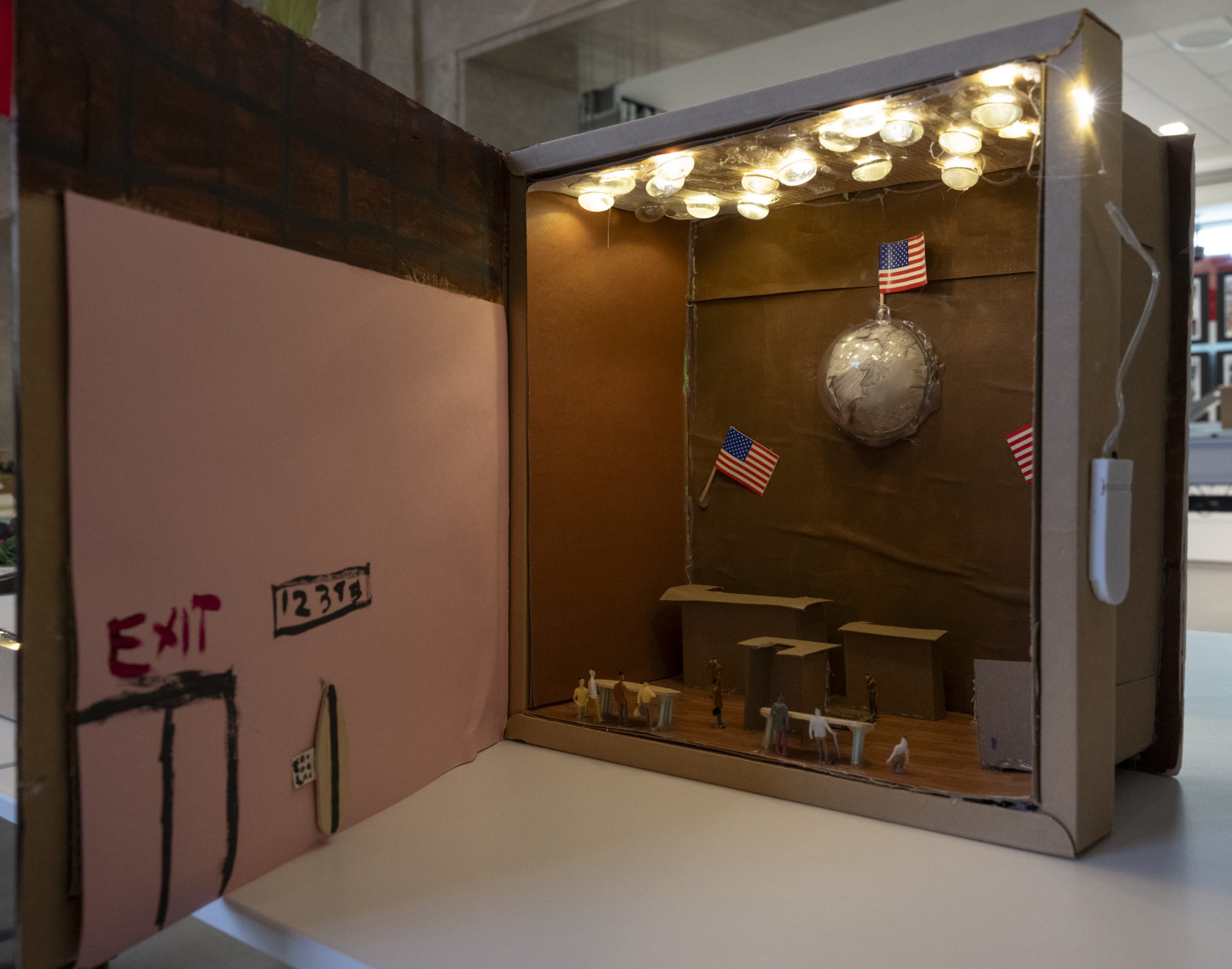
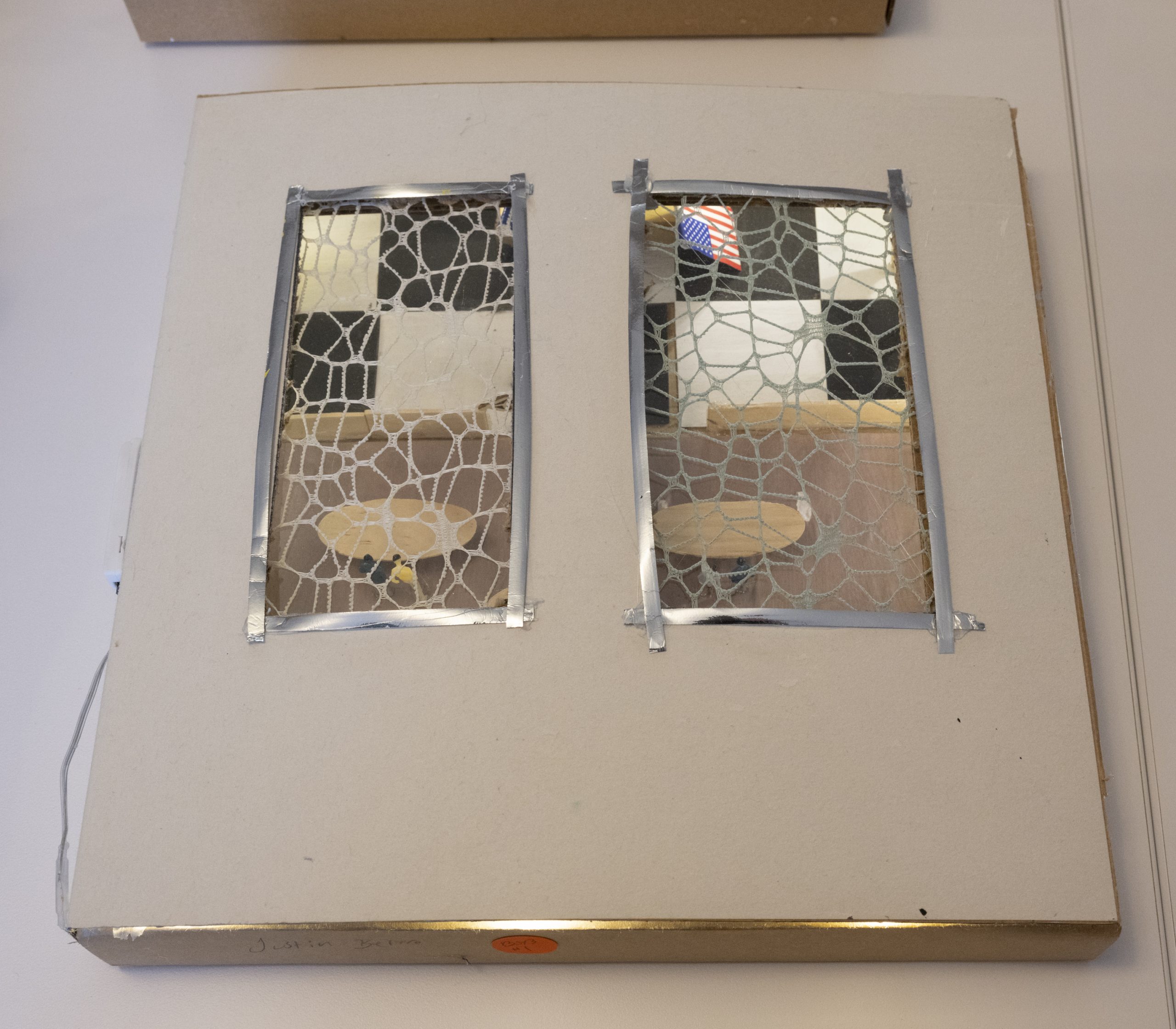
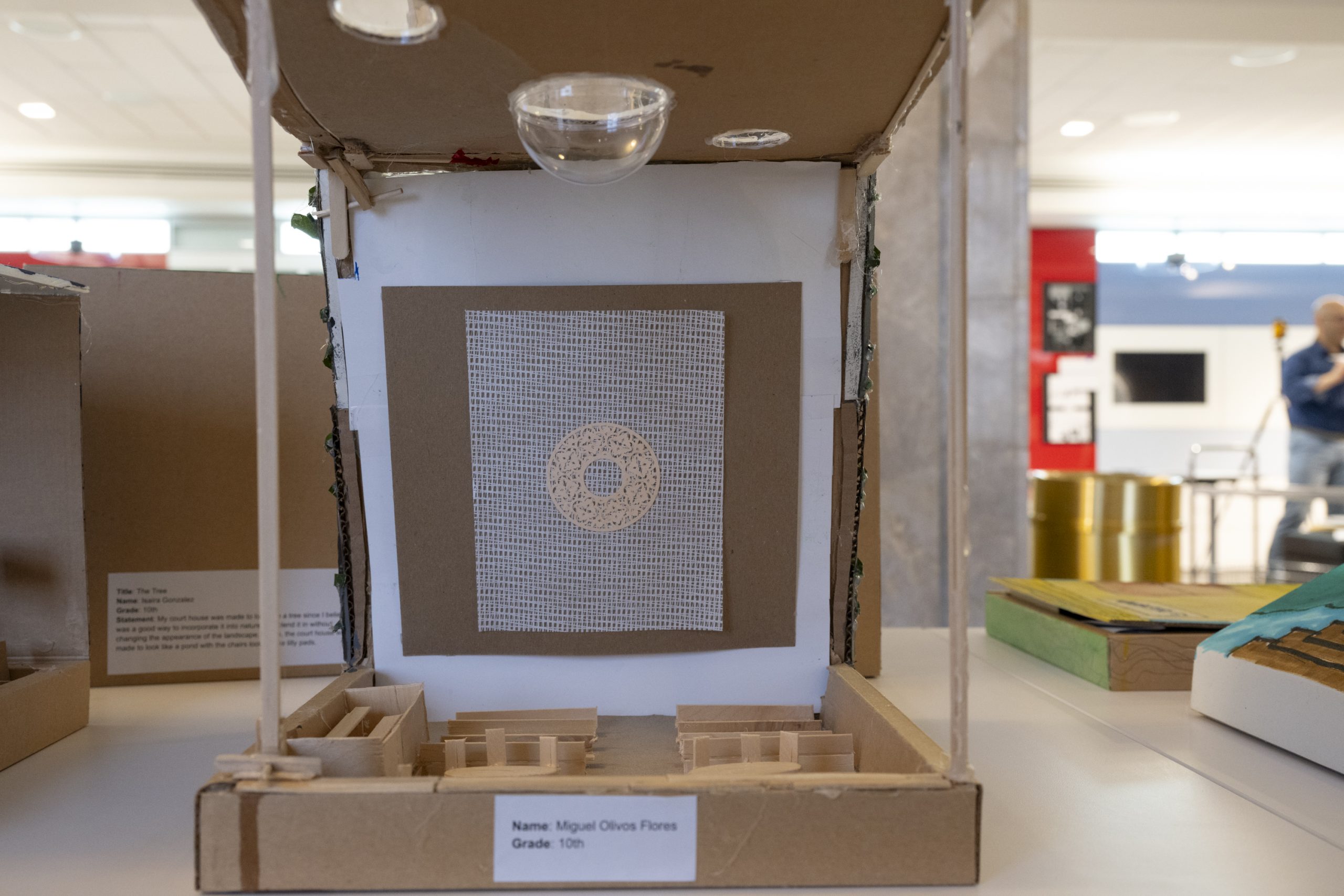
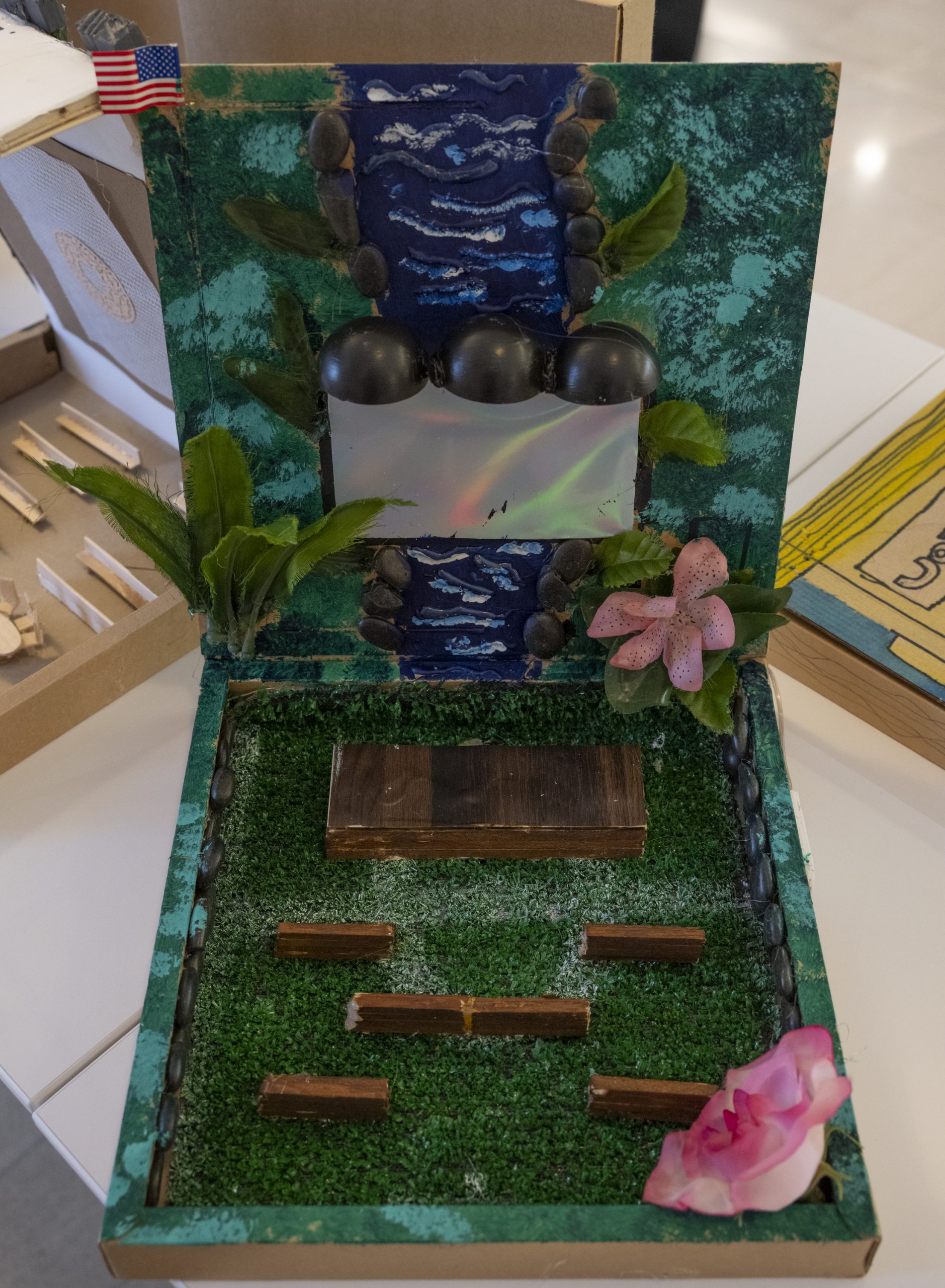
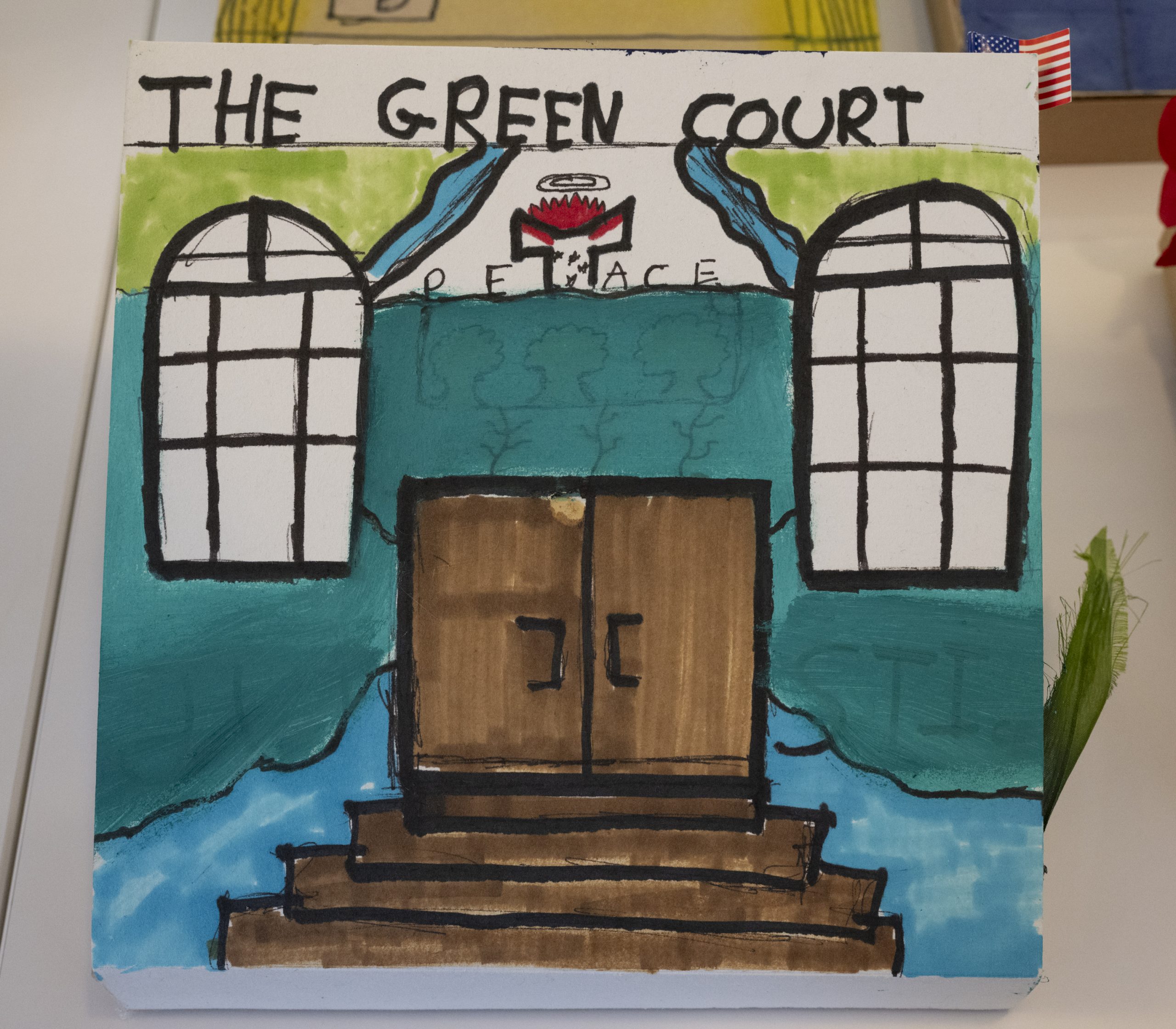
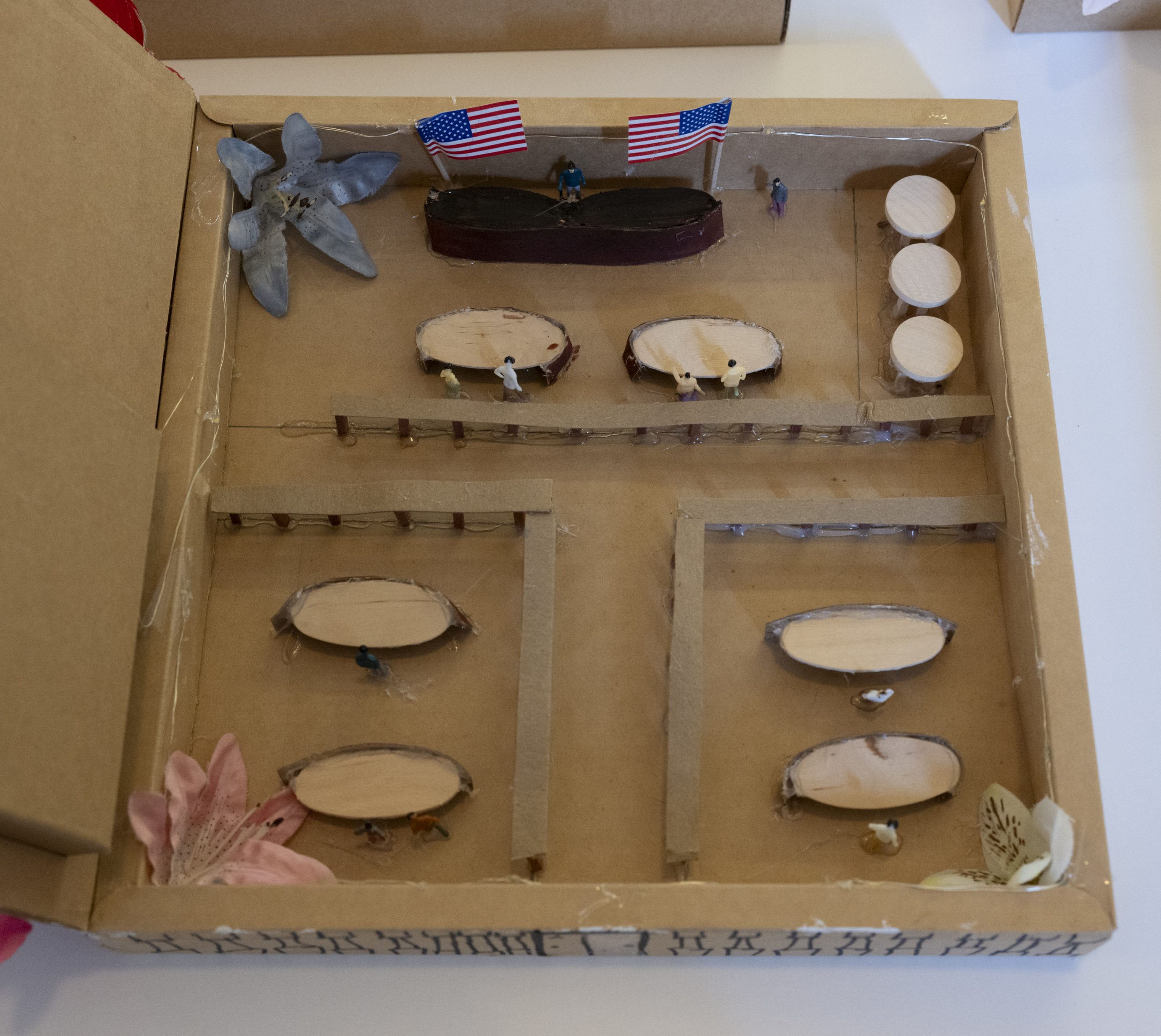
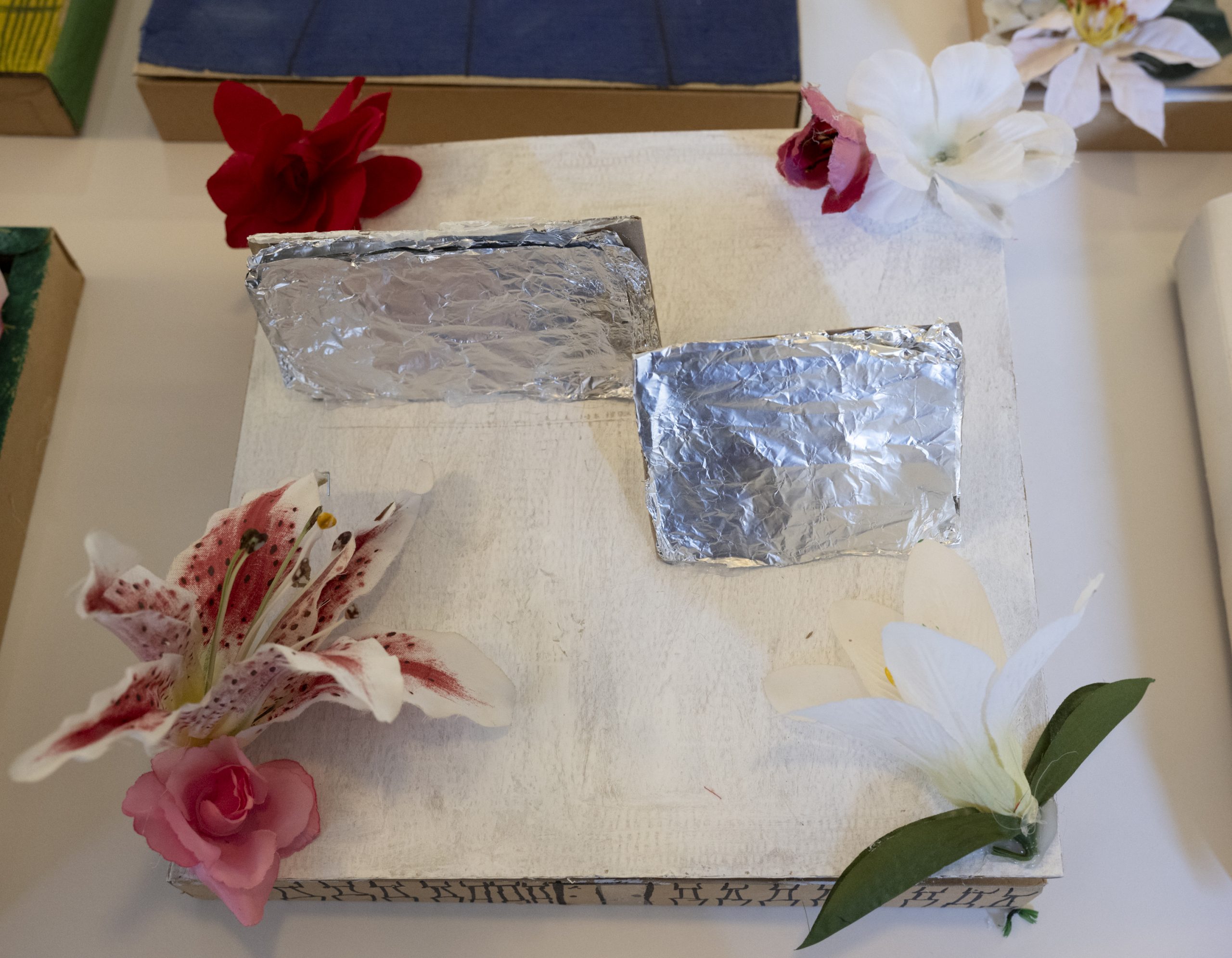
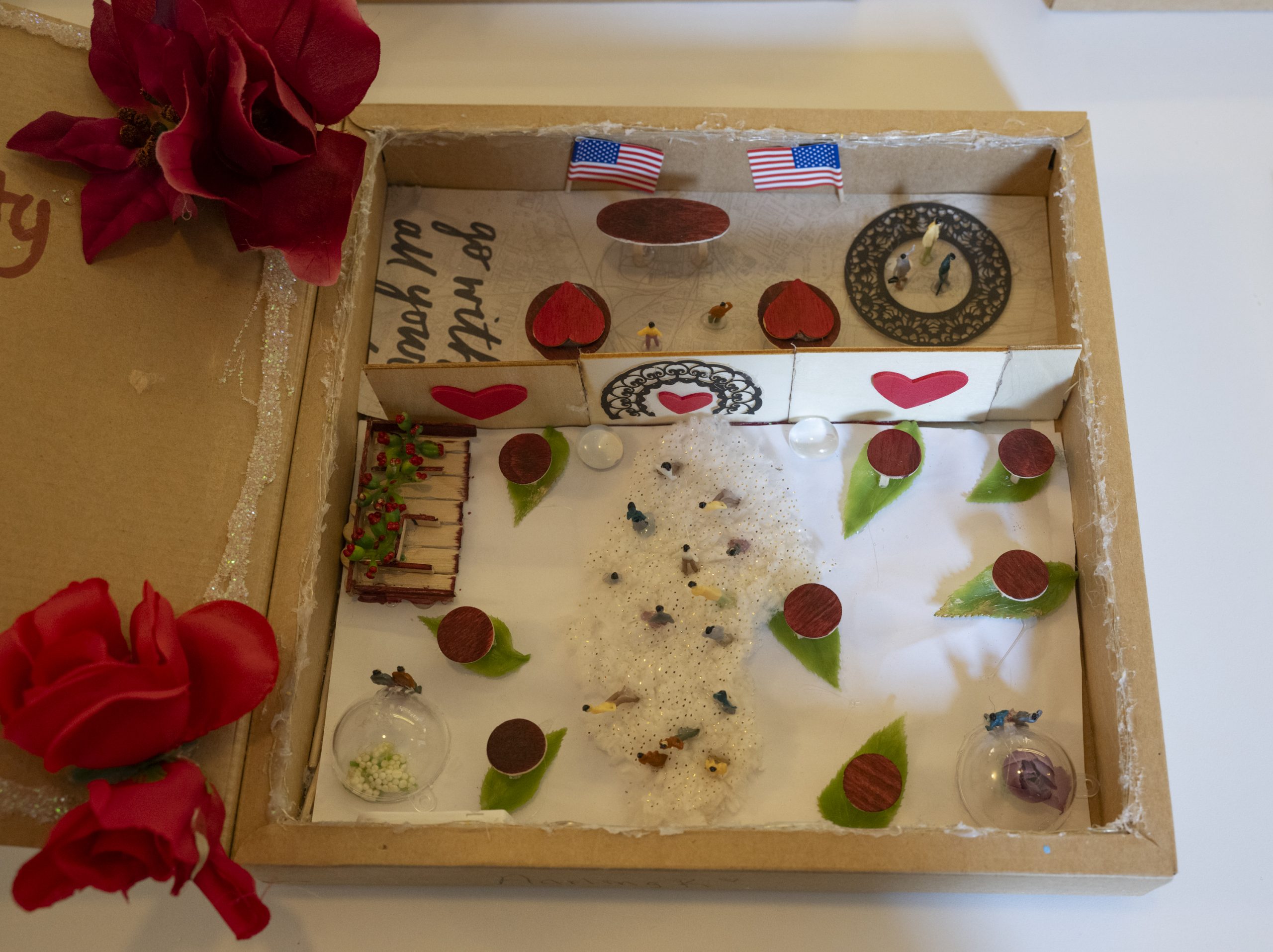
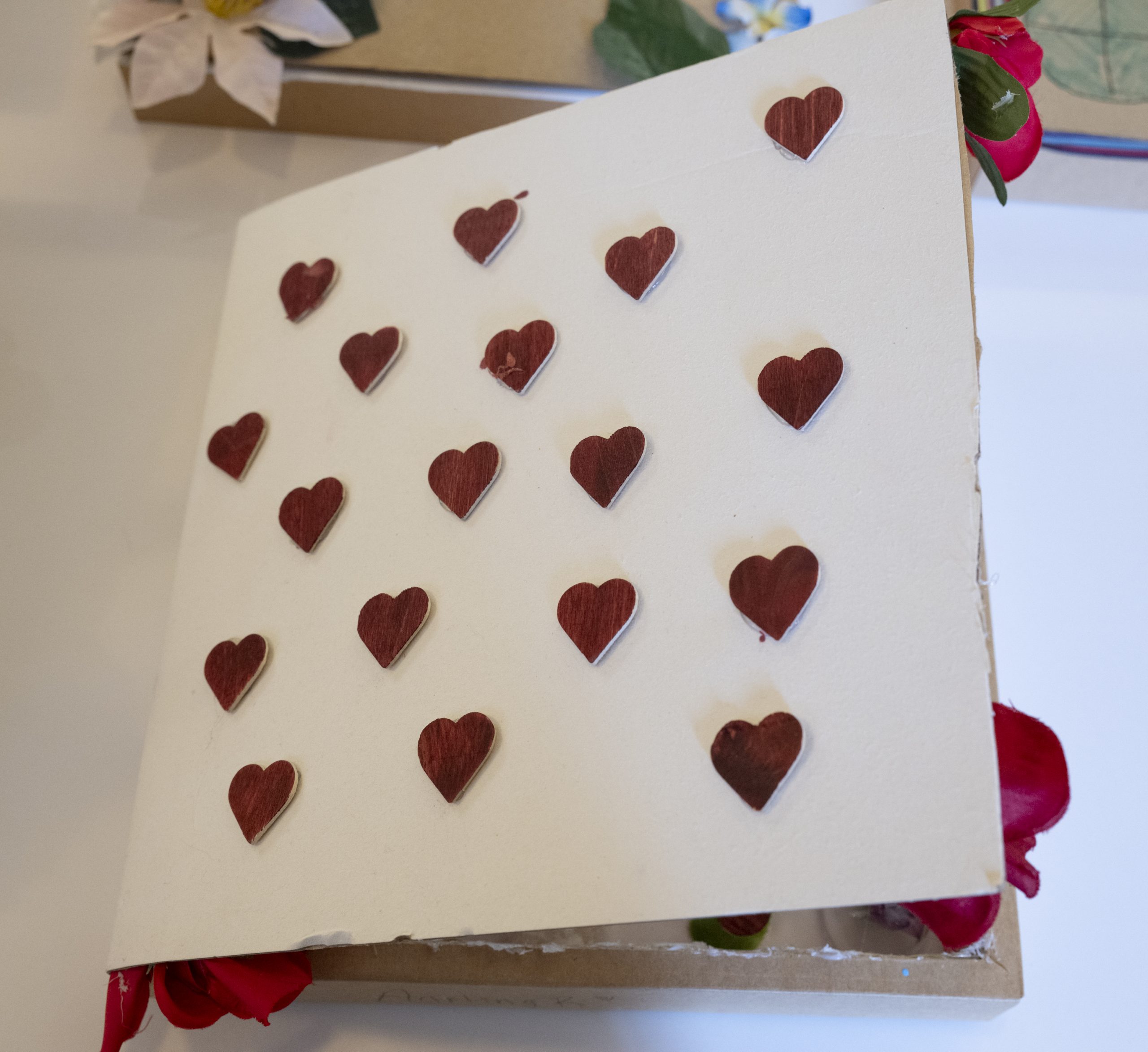
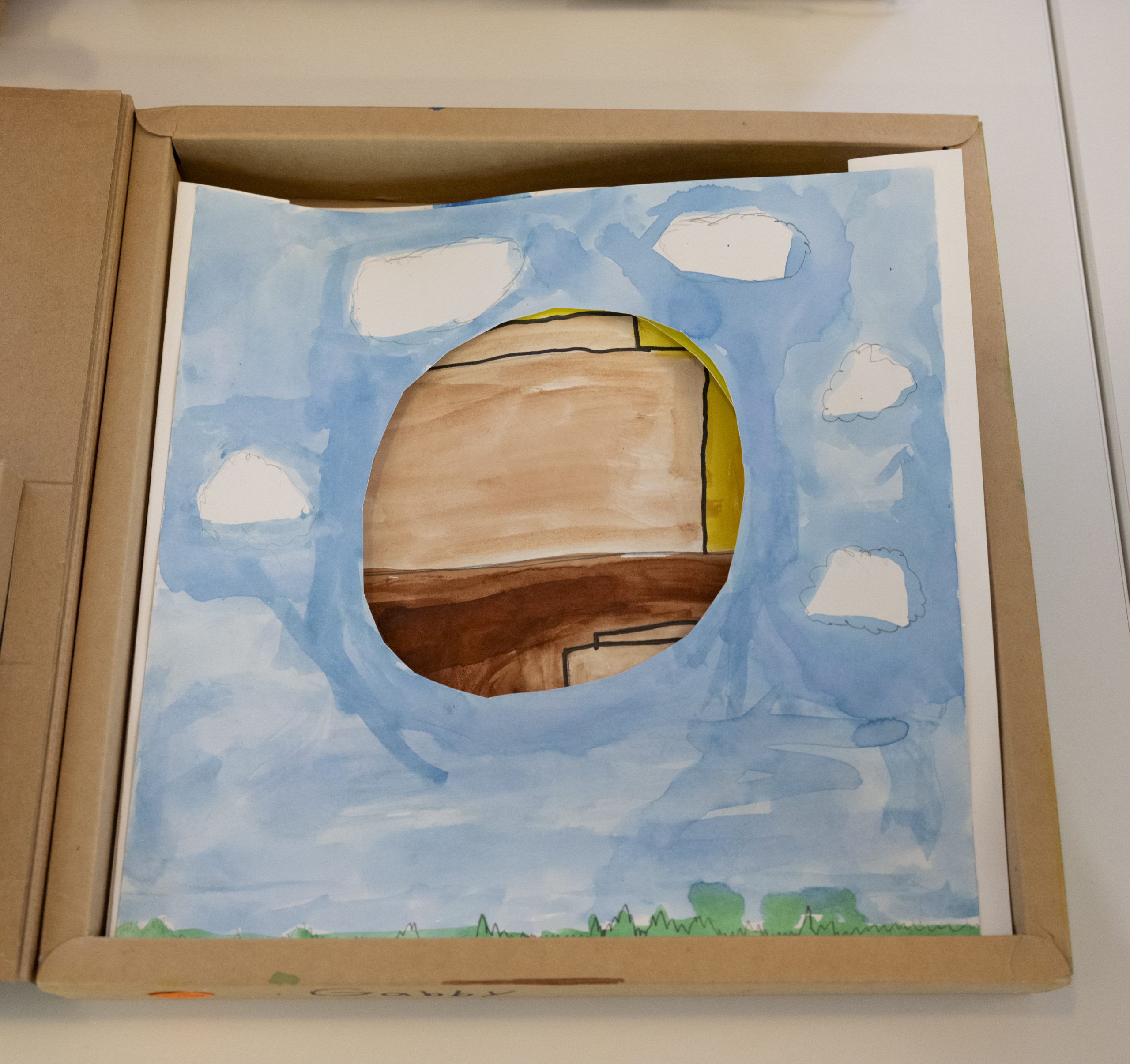
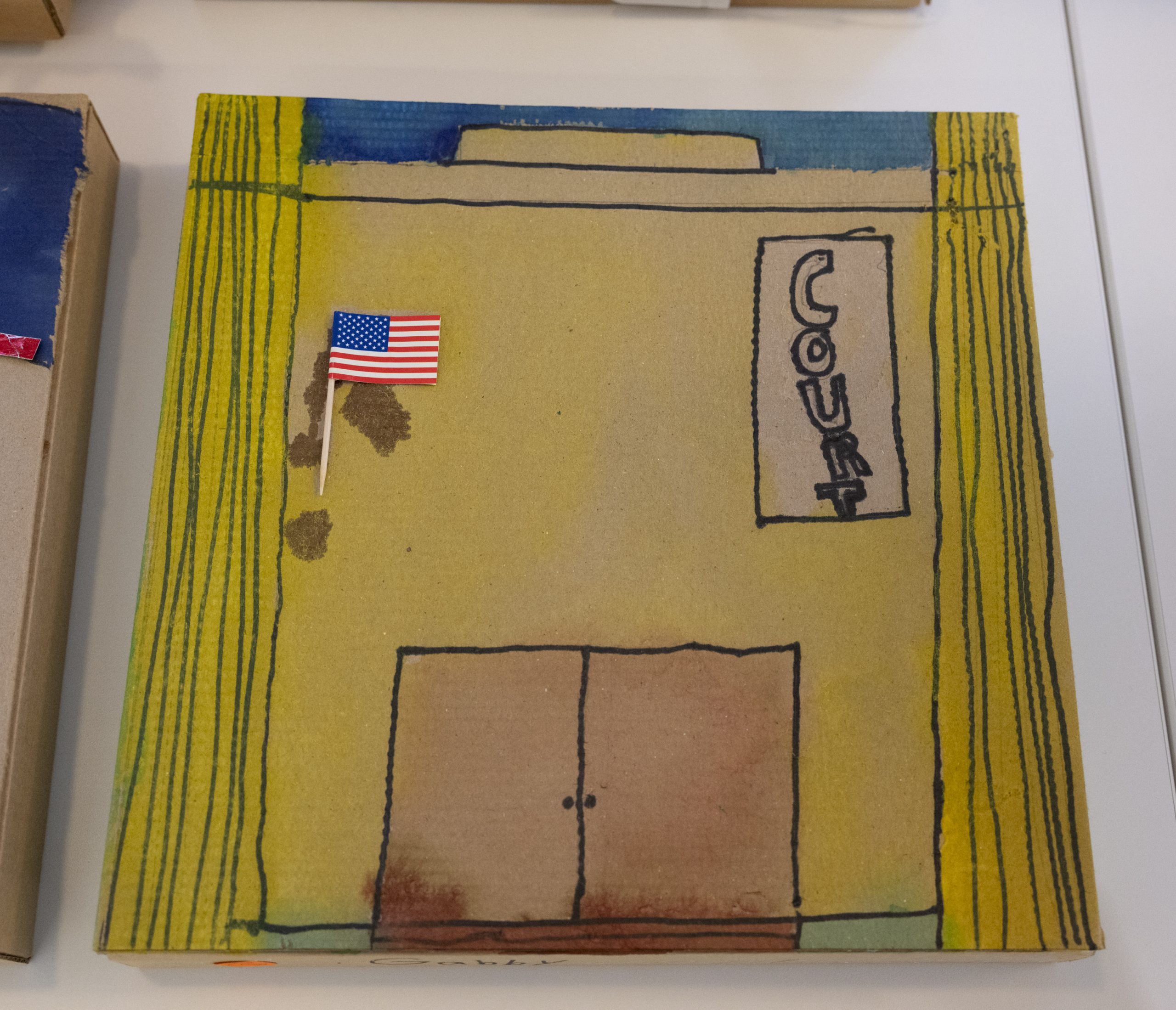
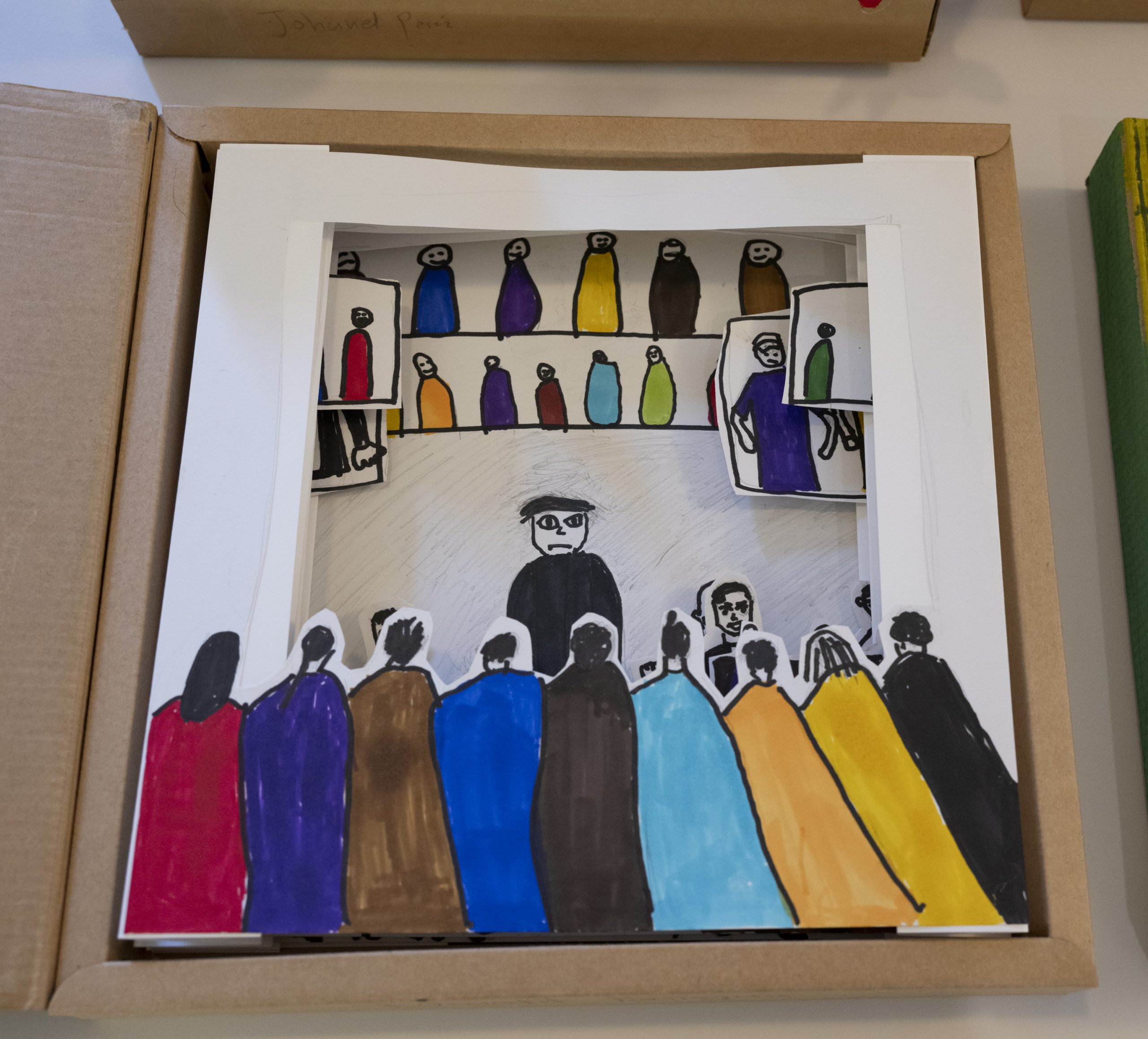
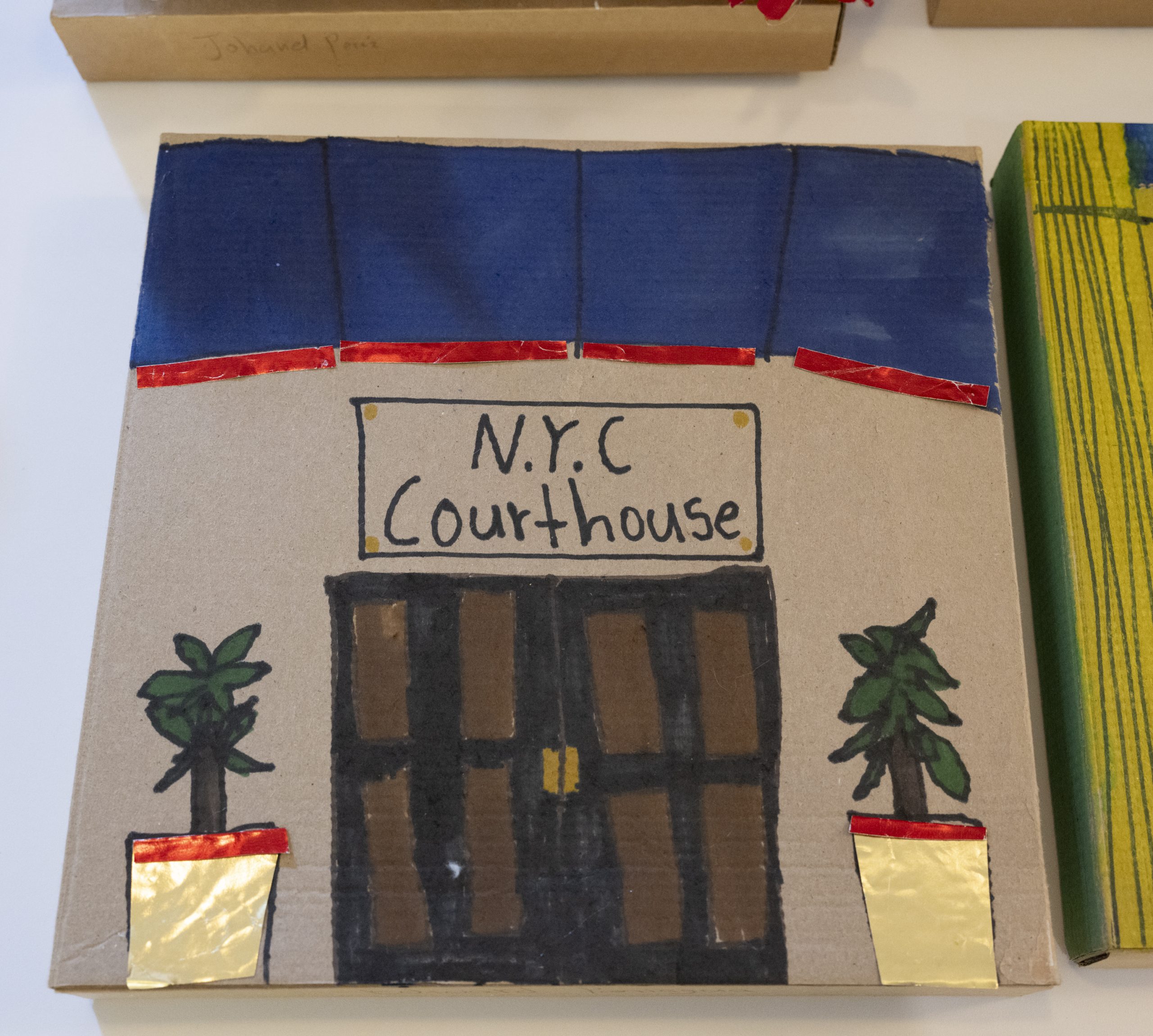
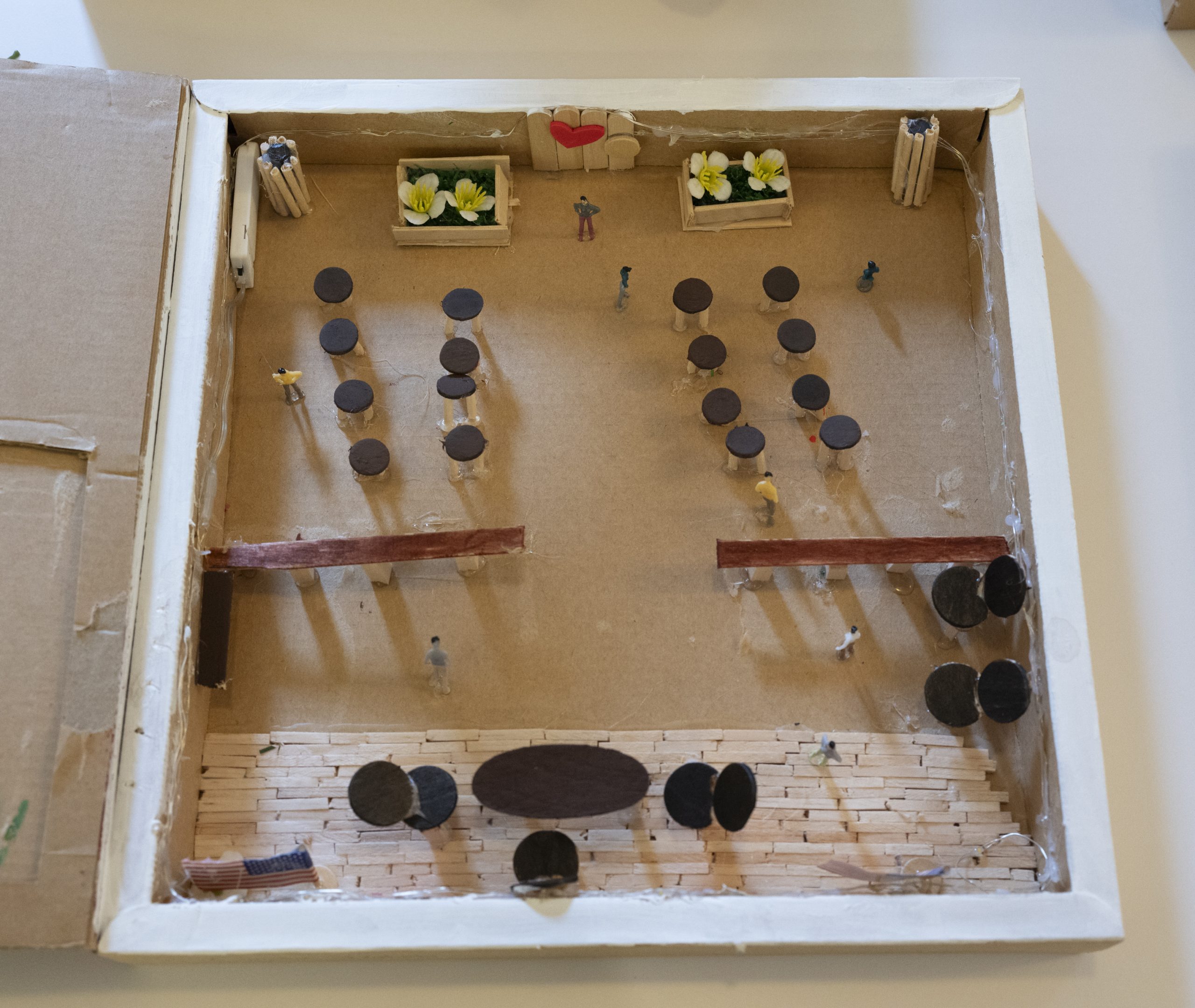
Project Title: GREEN COURTHOUSES OF THE FUTURE
Inspired by futuristic and historic architecture and with a resolve to create green infrastructure, CCMA students created models of sustainable courthouses of the future.
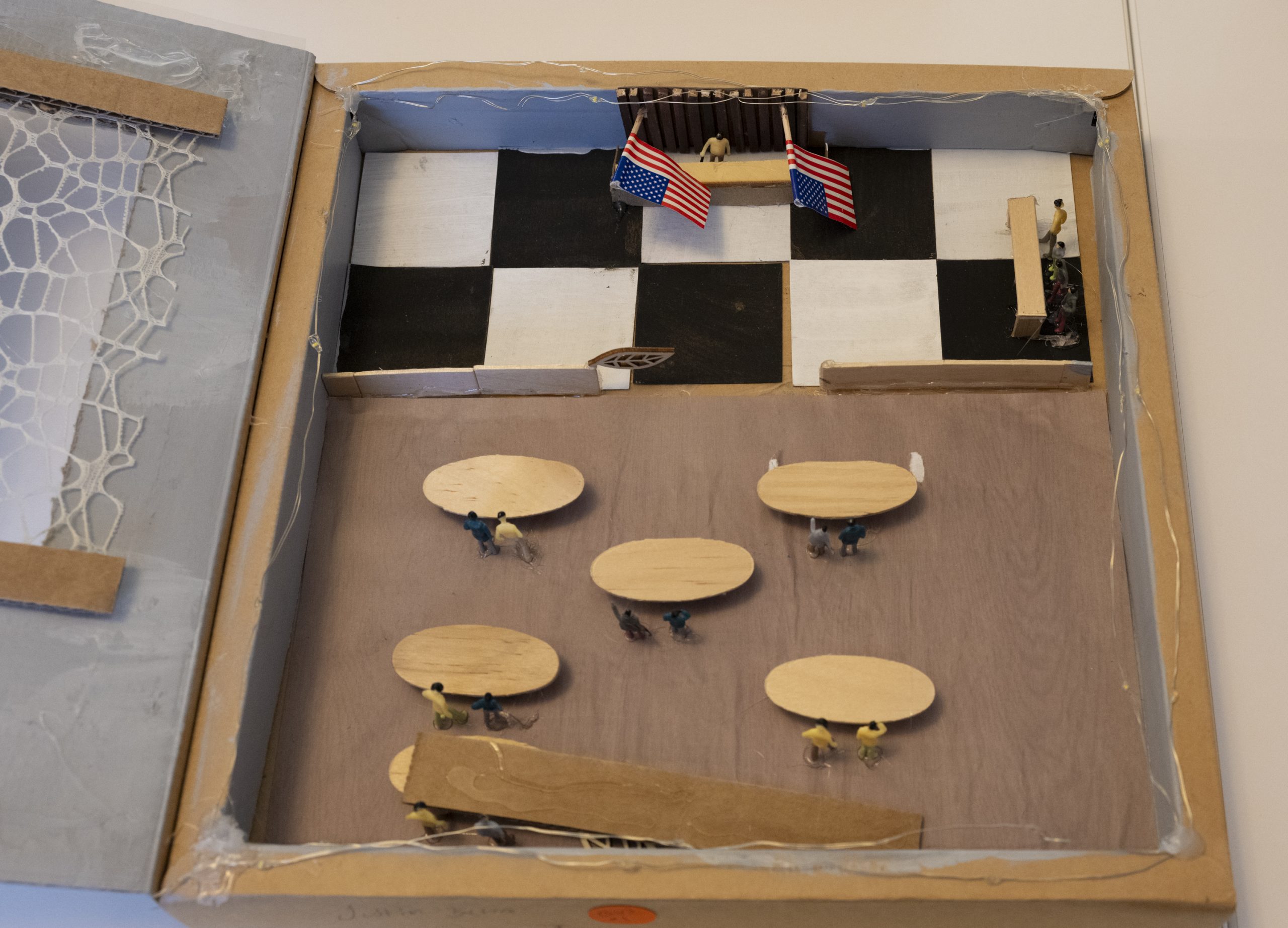
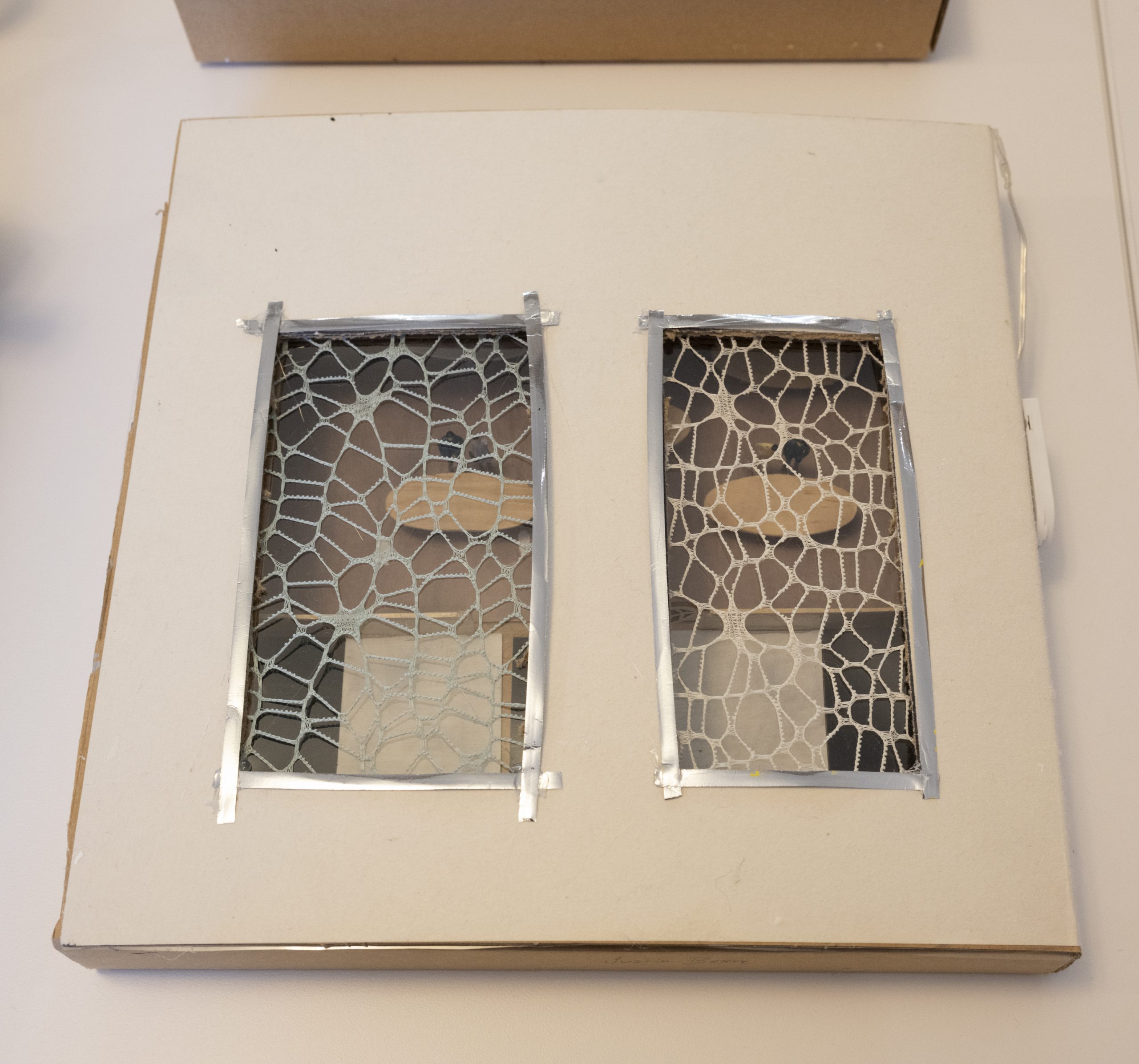
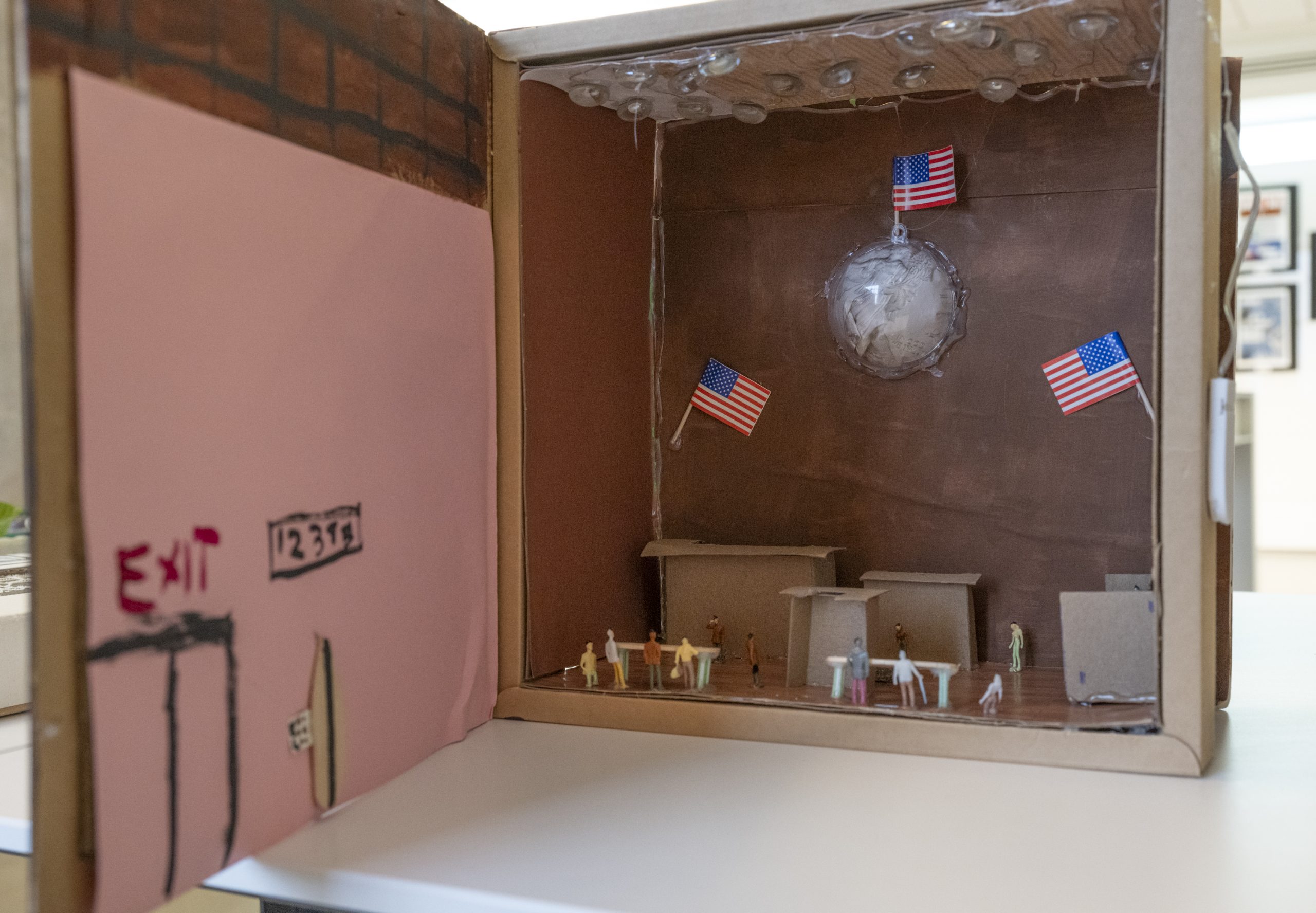
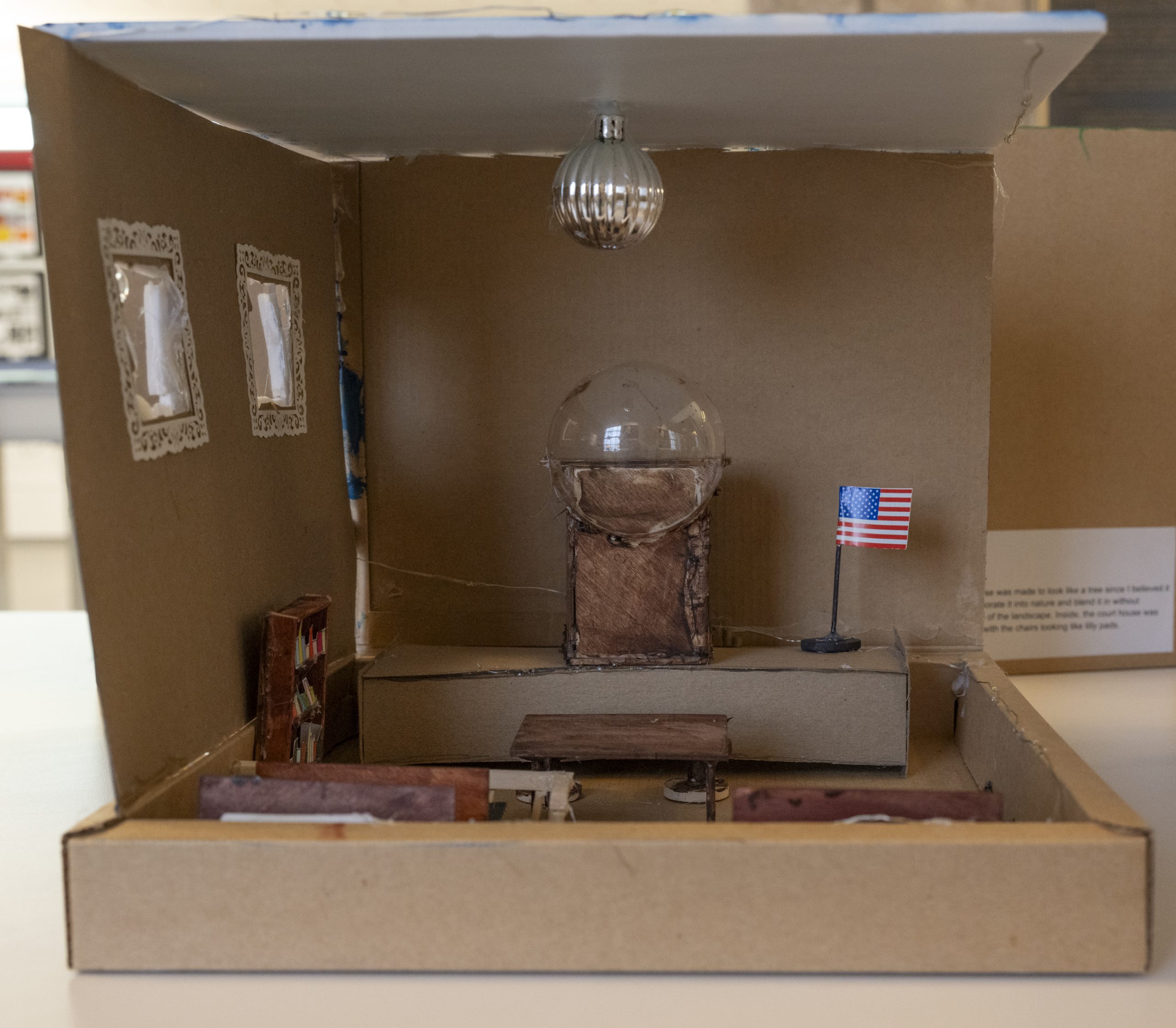
Teacher: Laura Blau
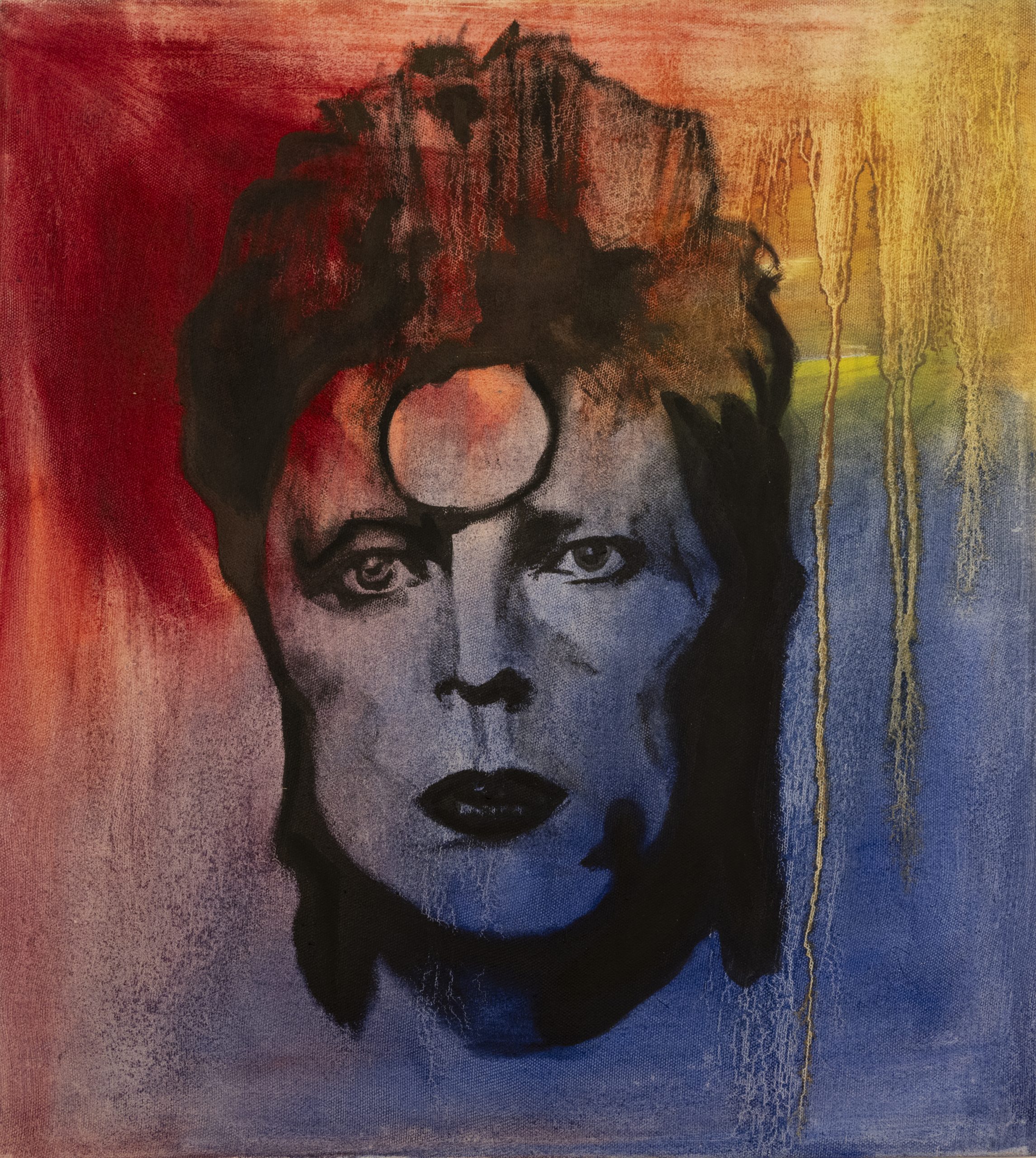
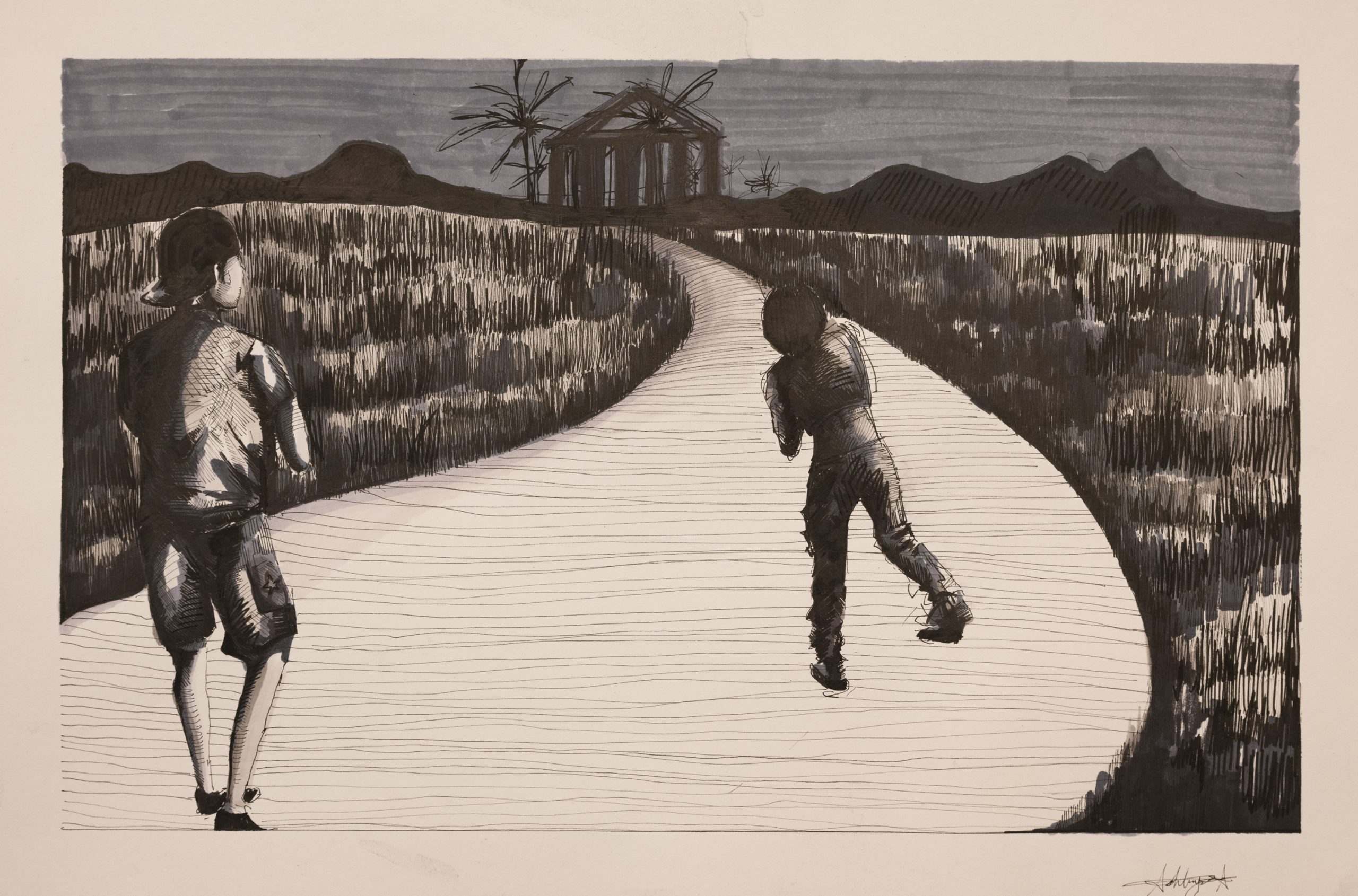
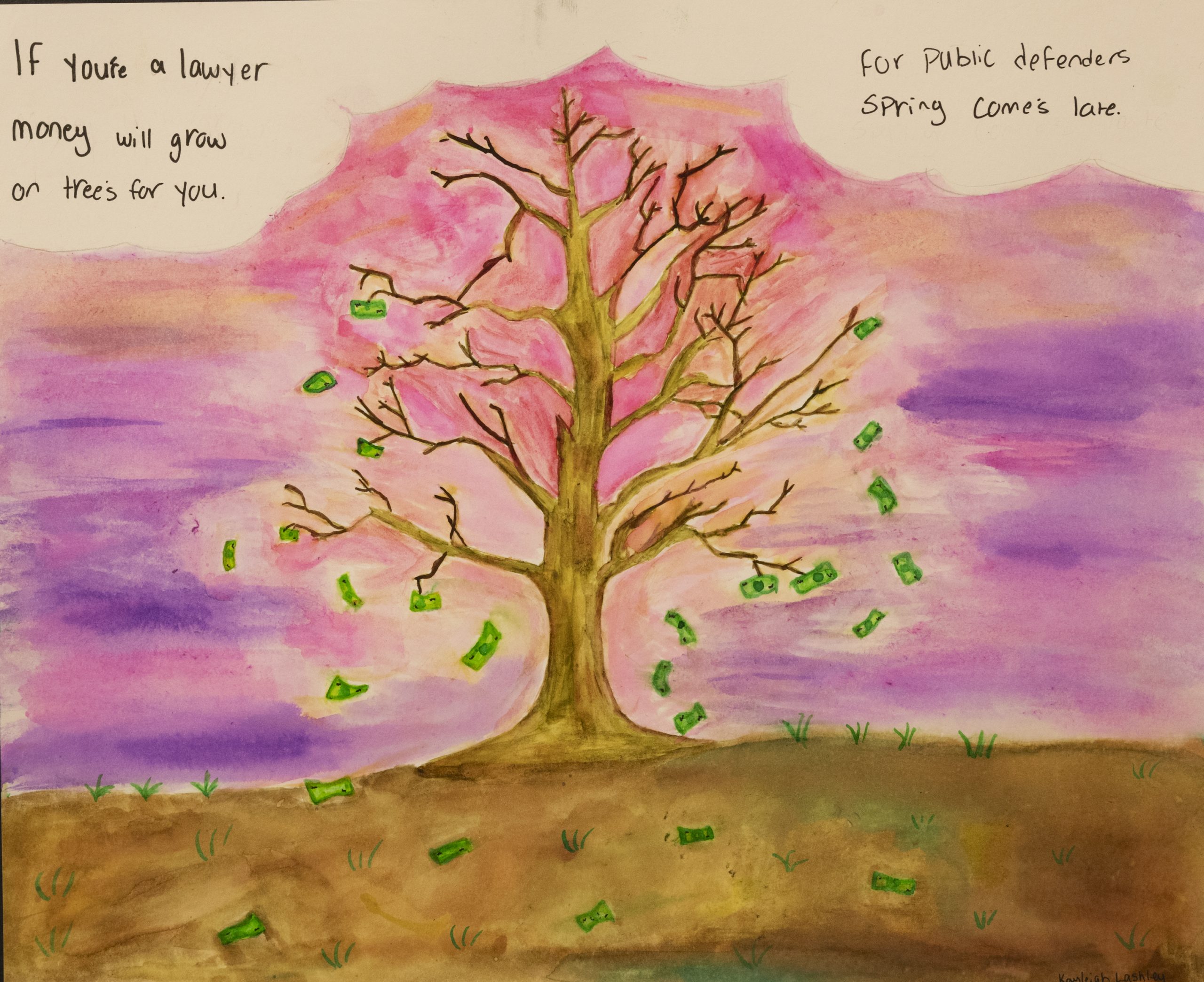
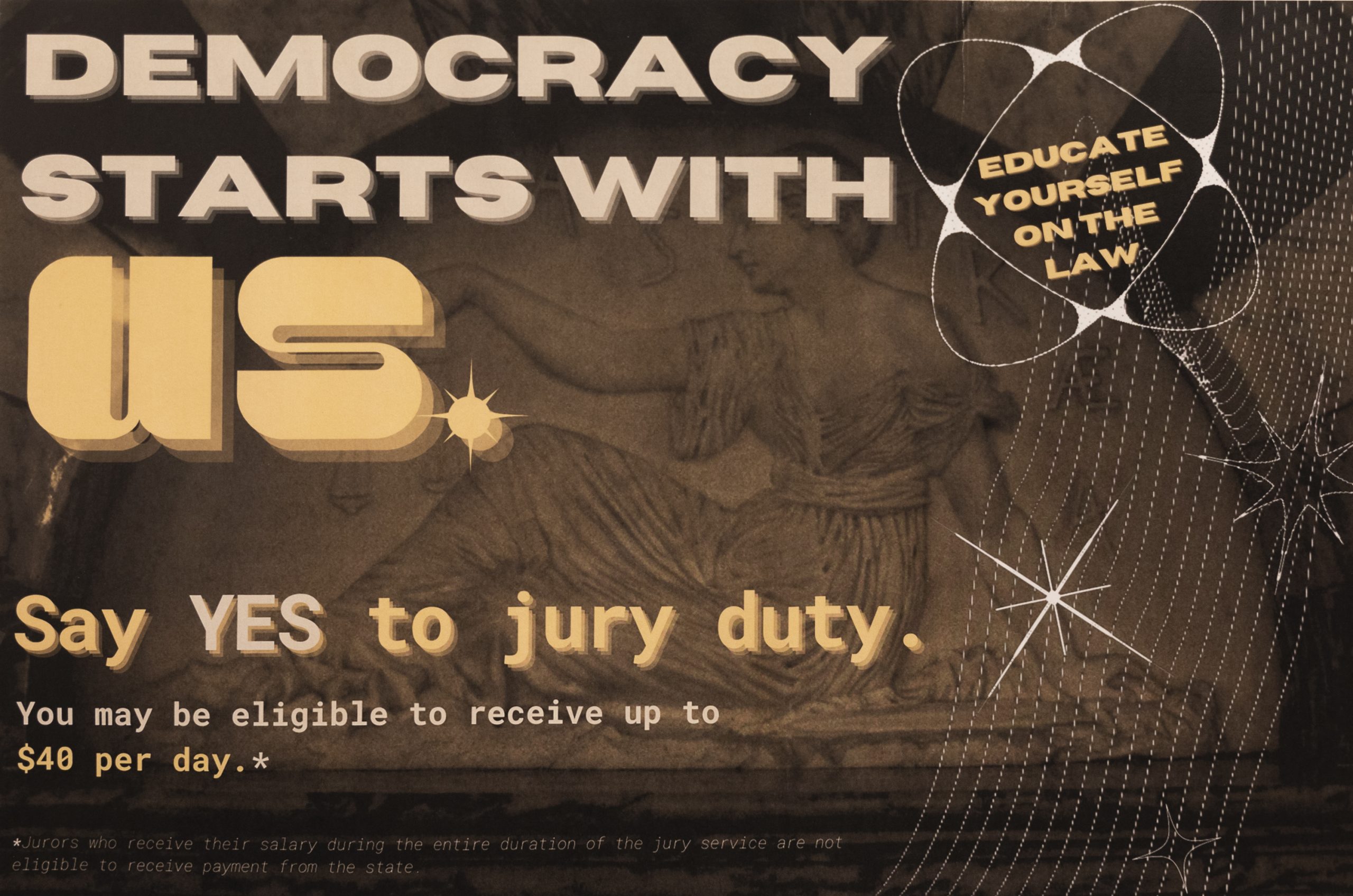
Project Title: INDIVIDUALLY SELECTED PROMPTS
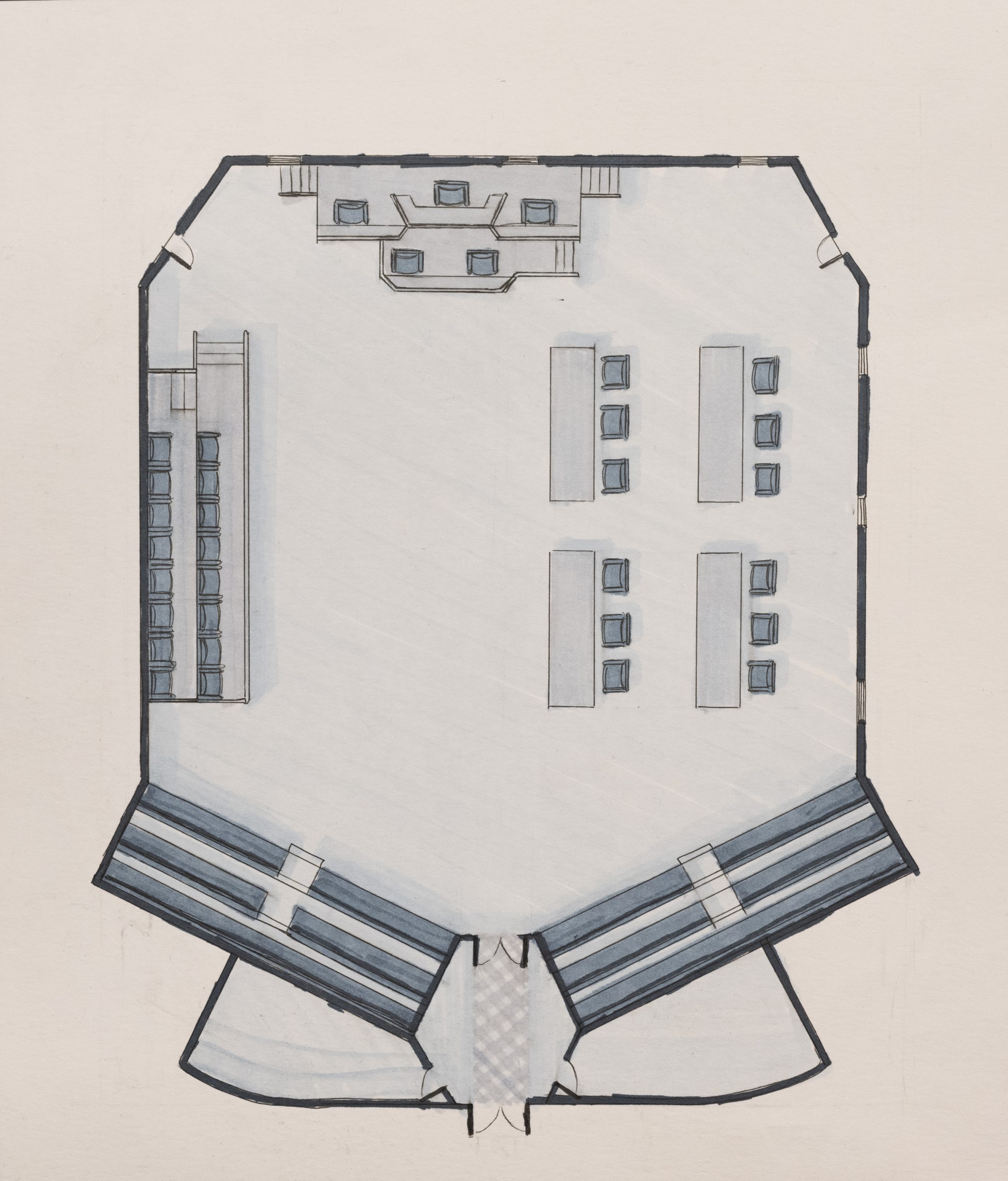
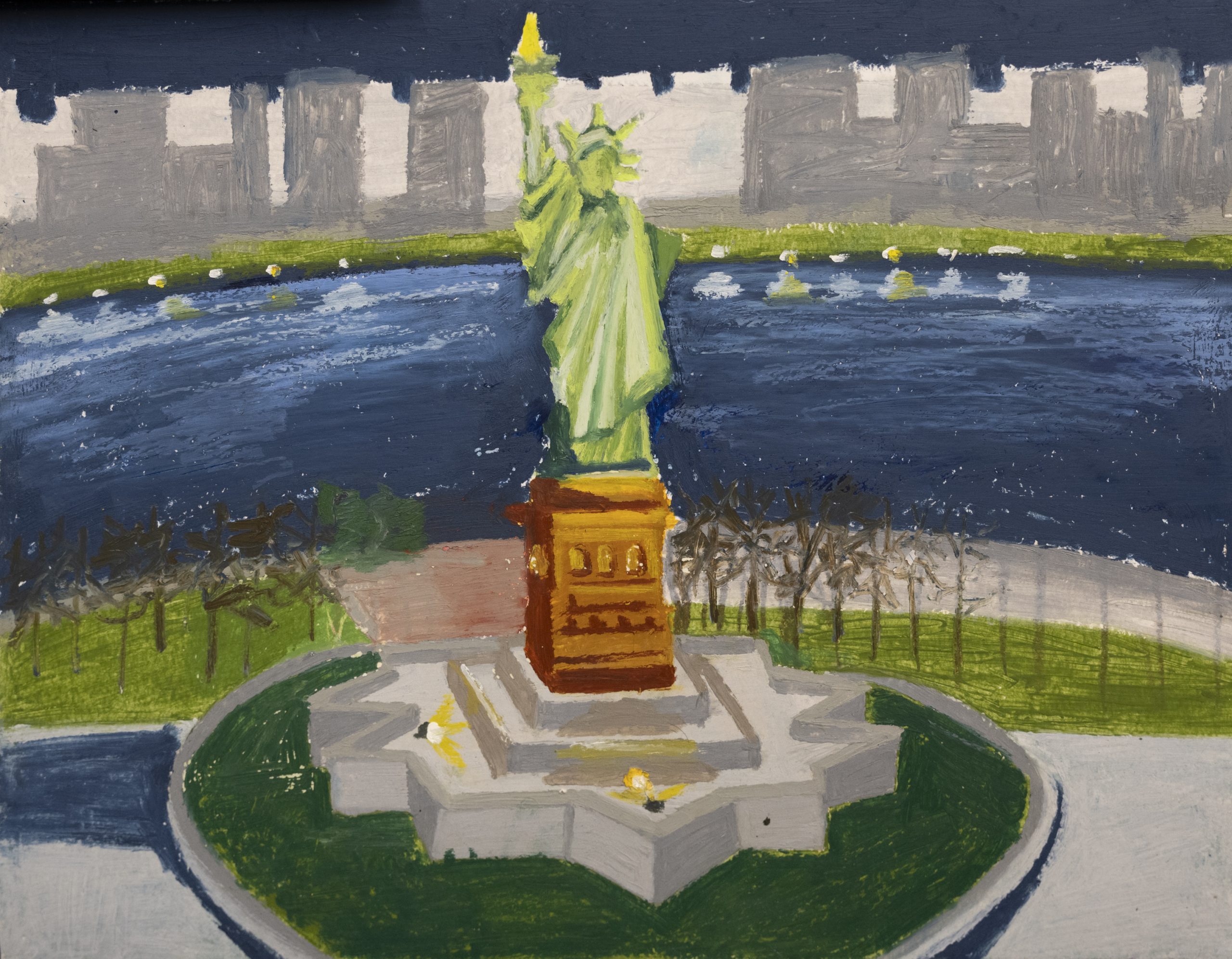
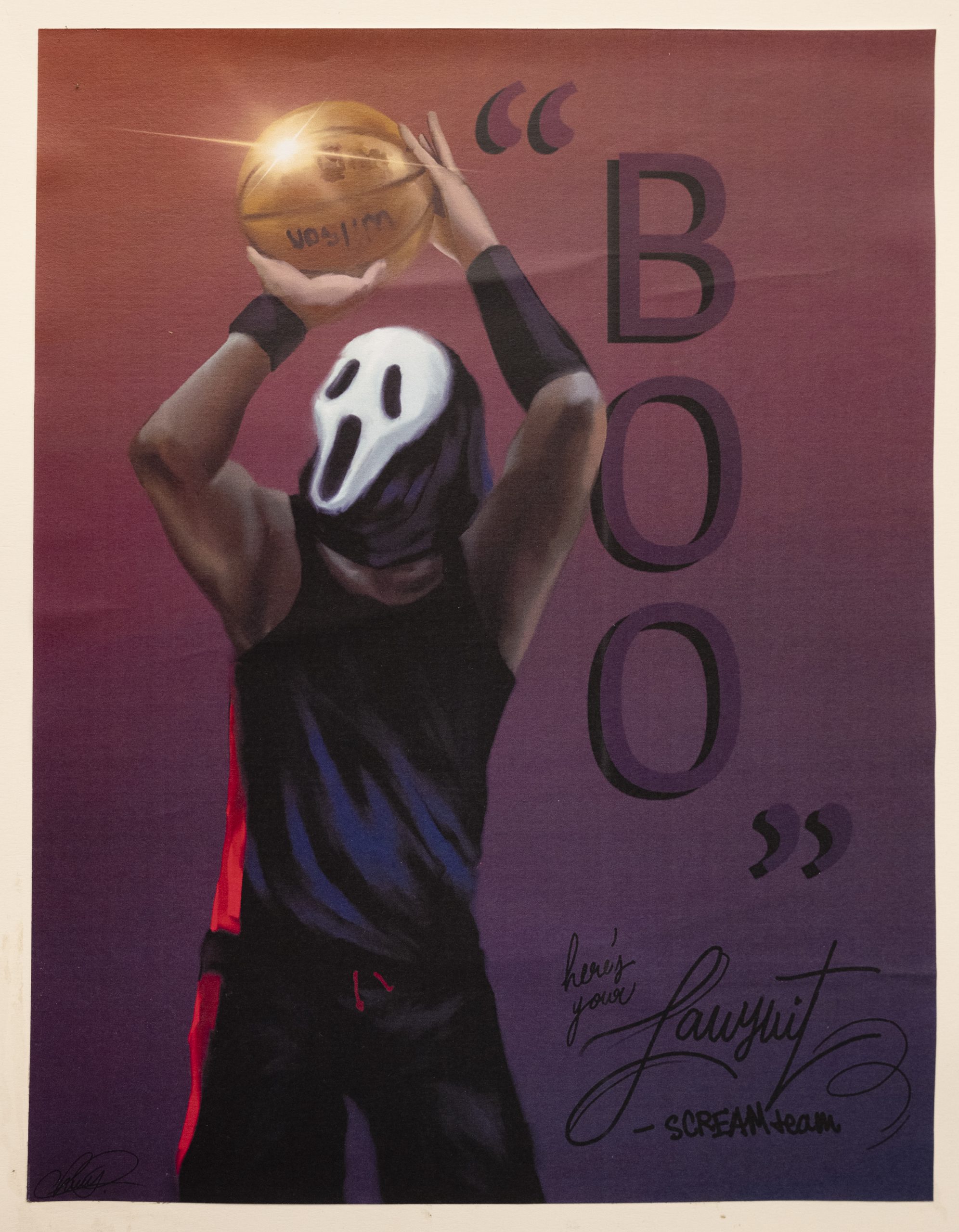
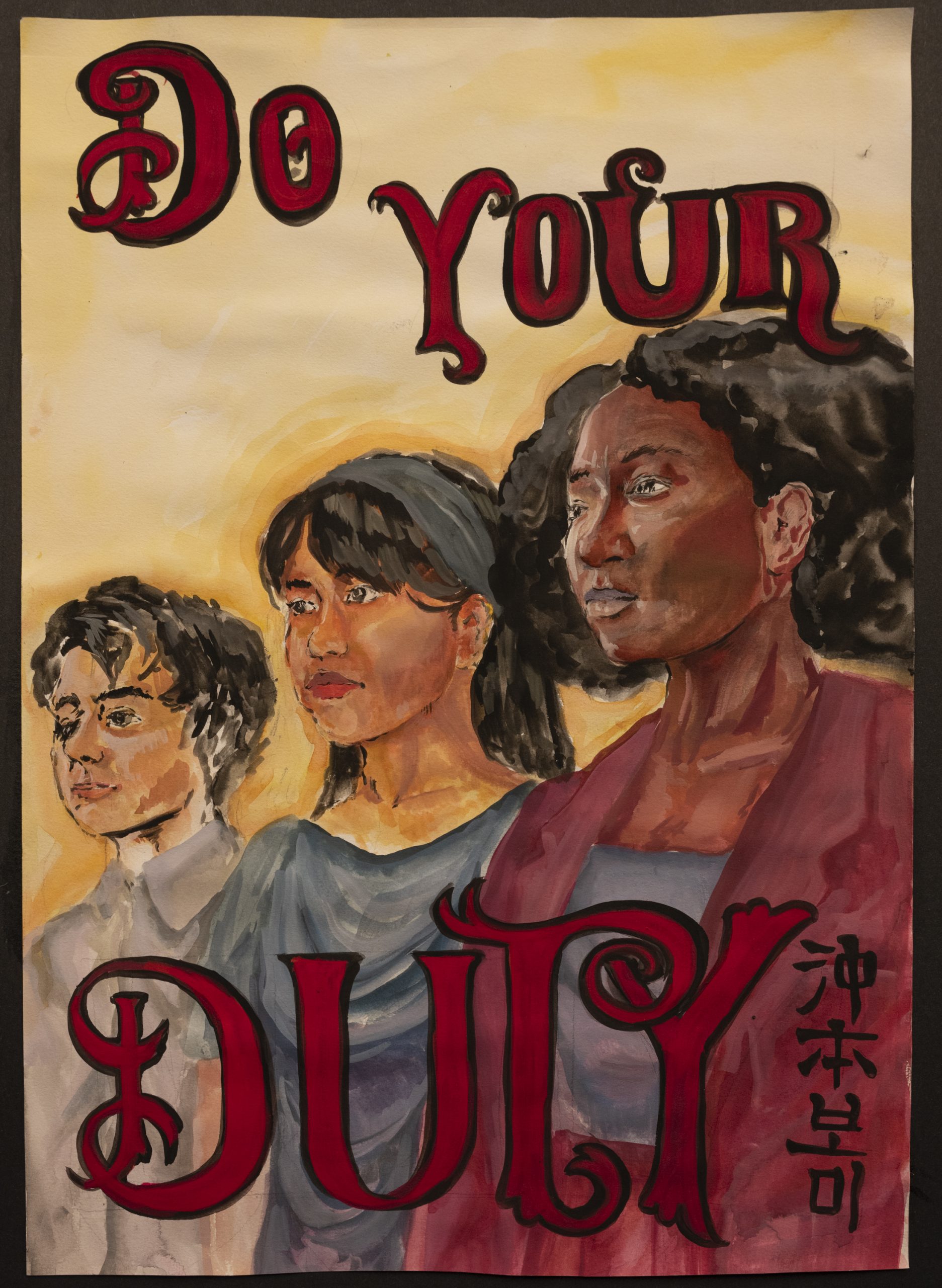
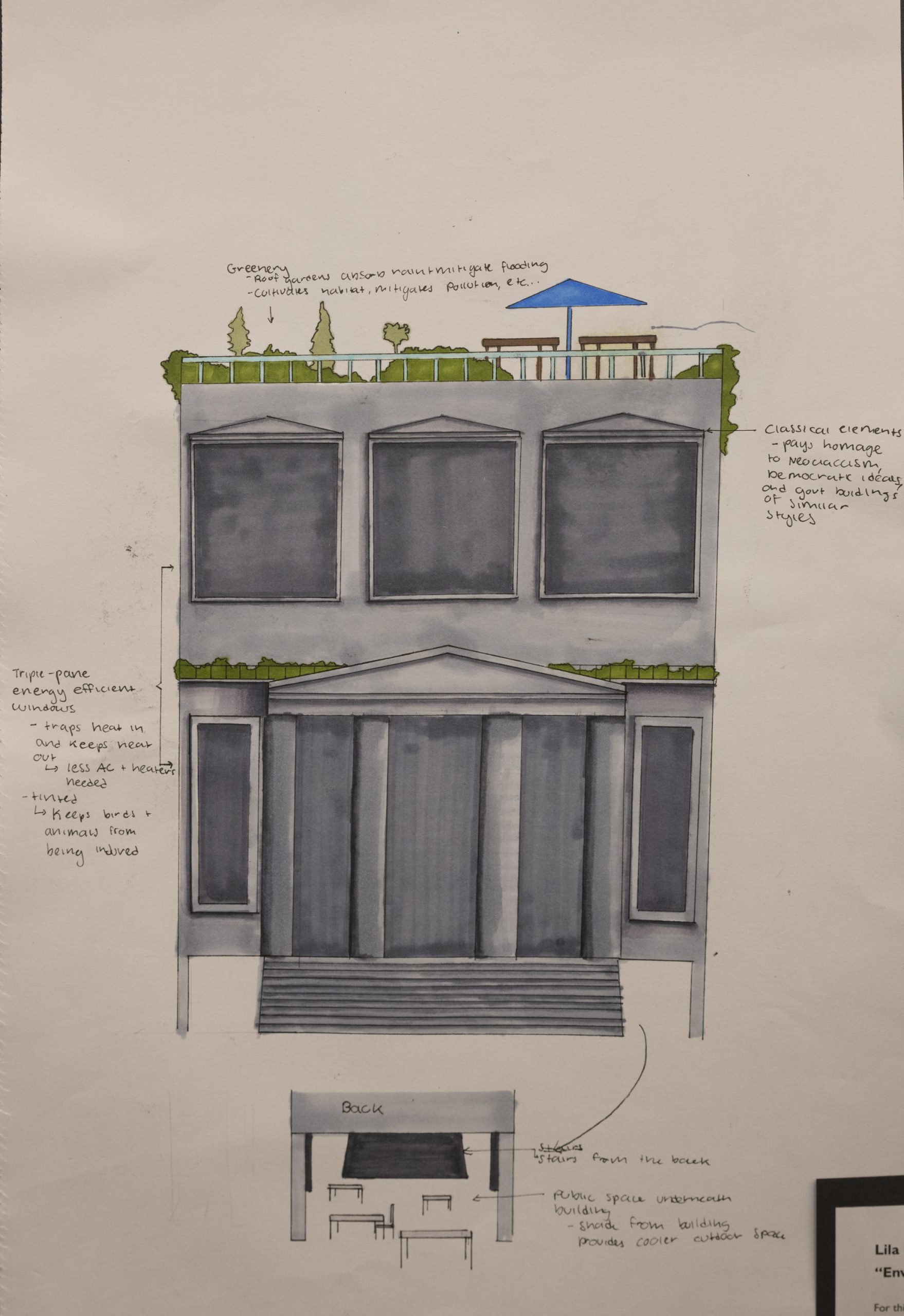
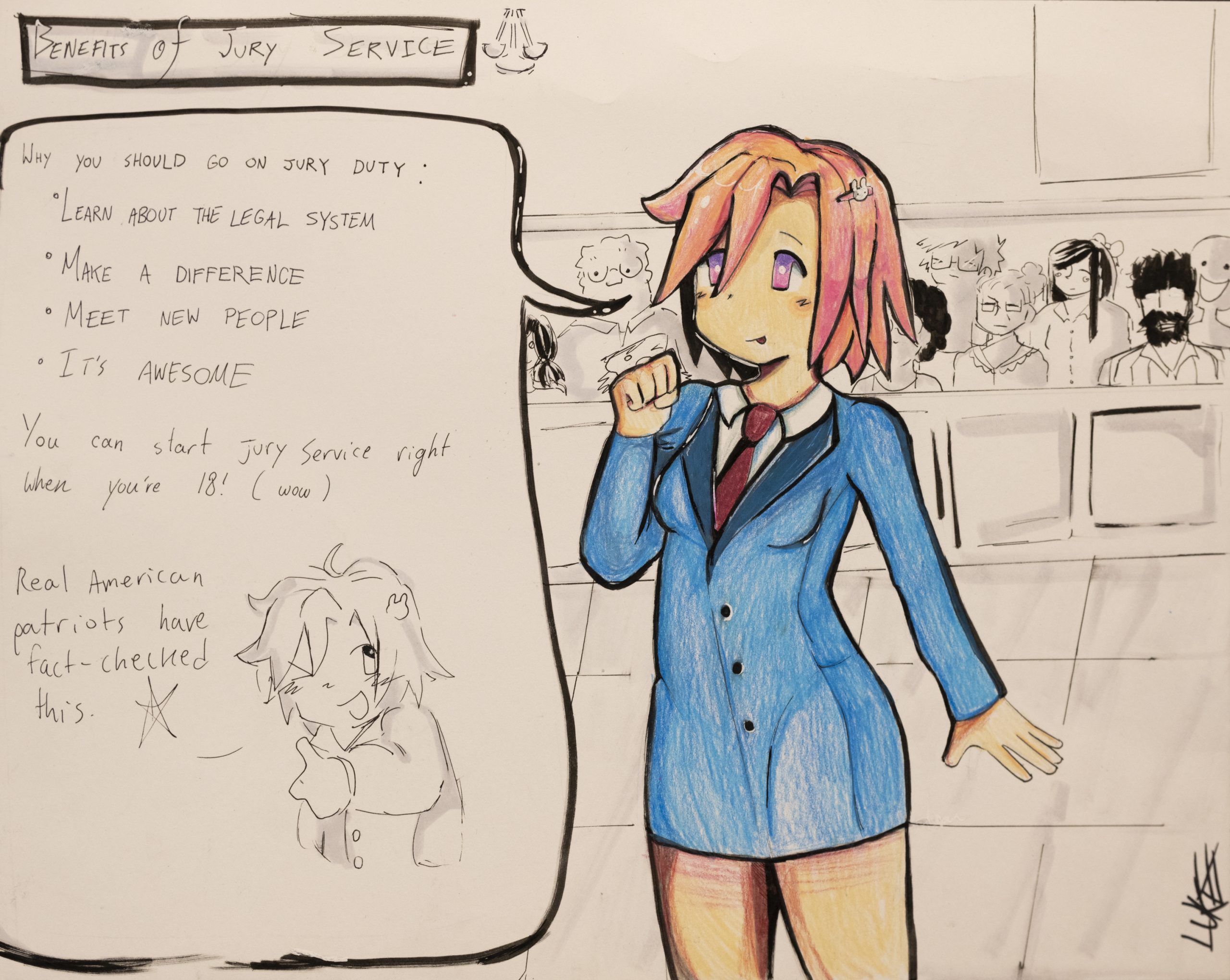
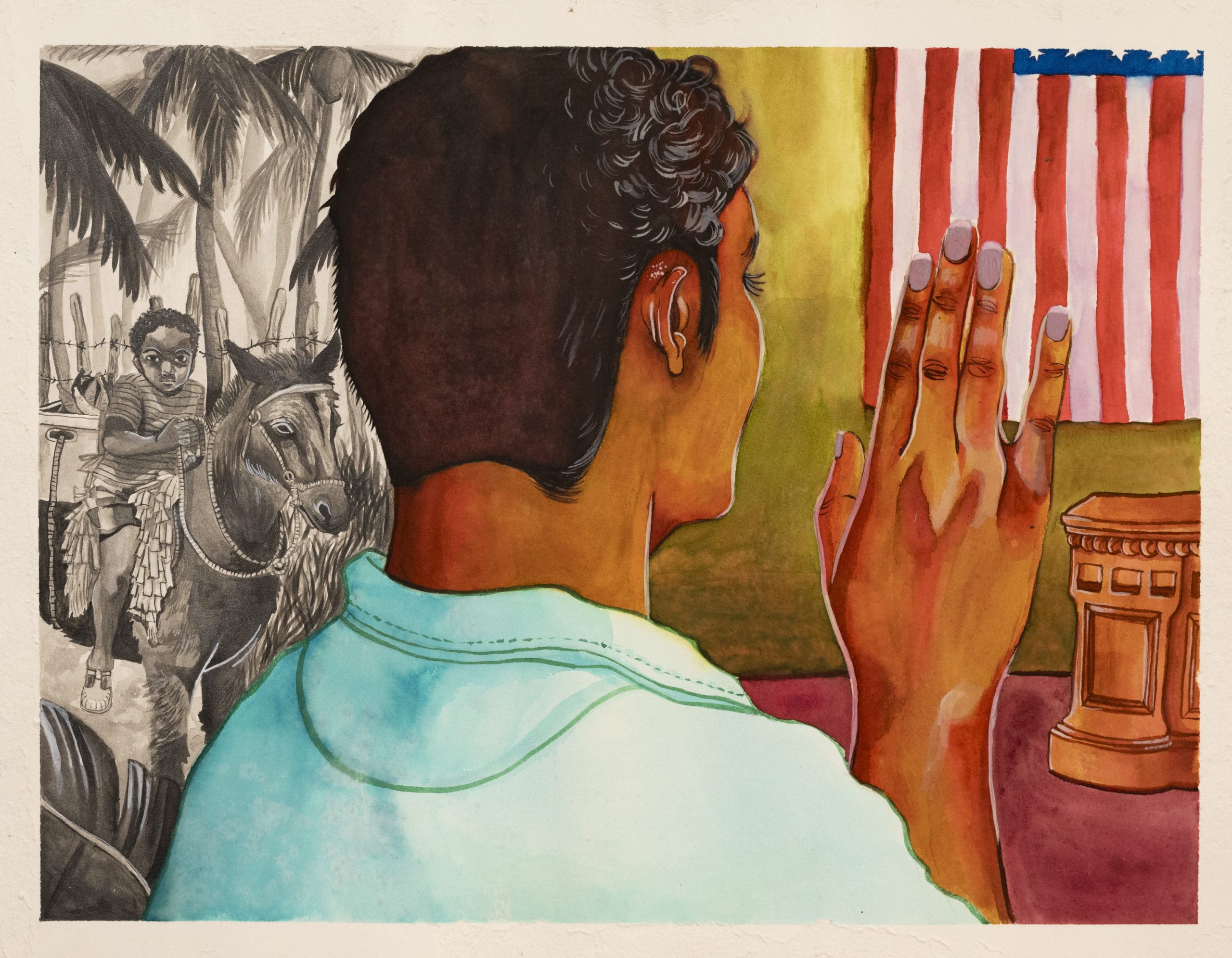
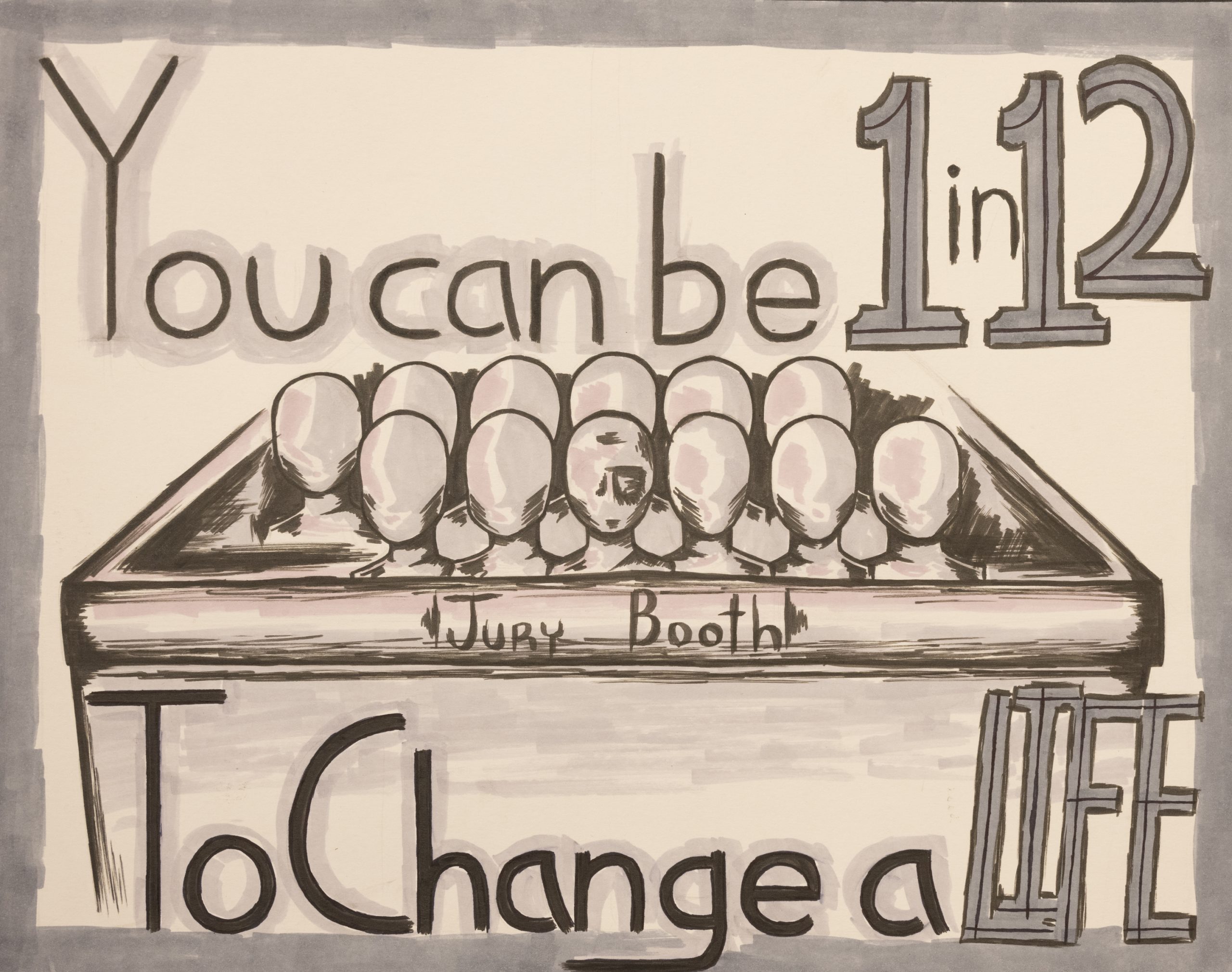
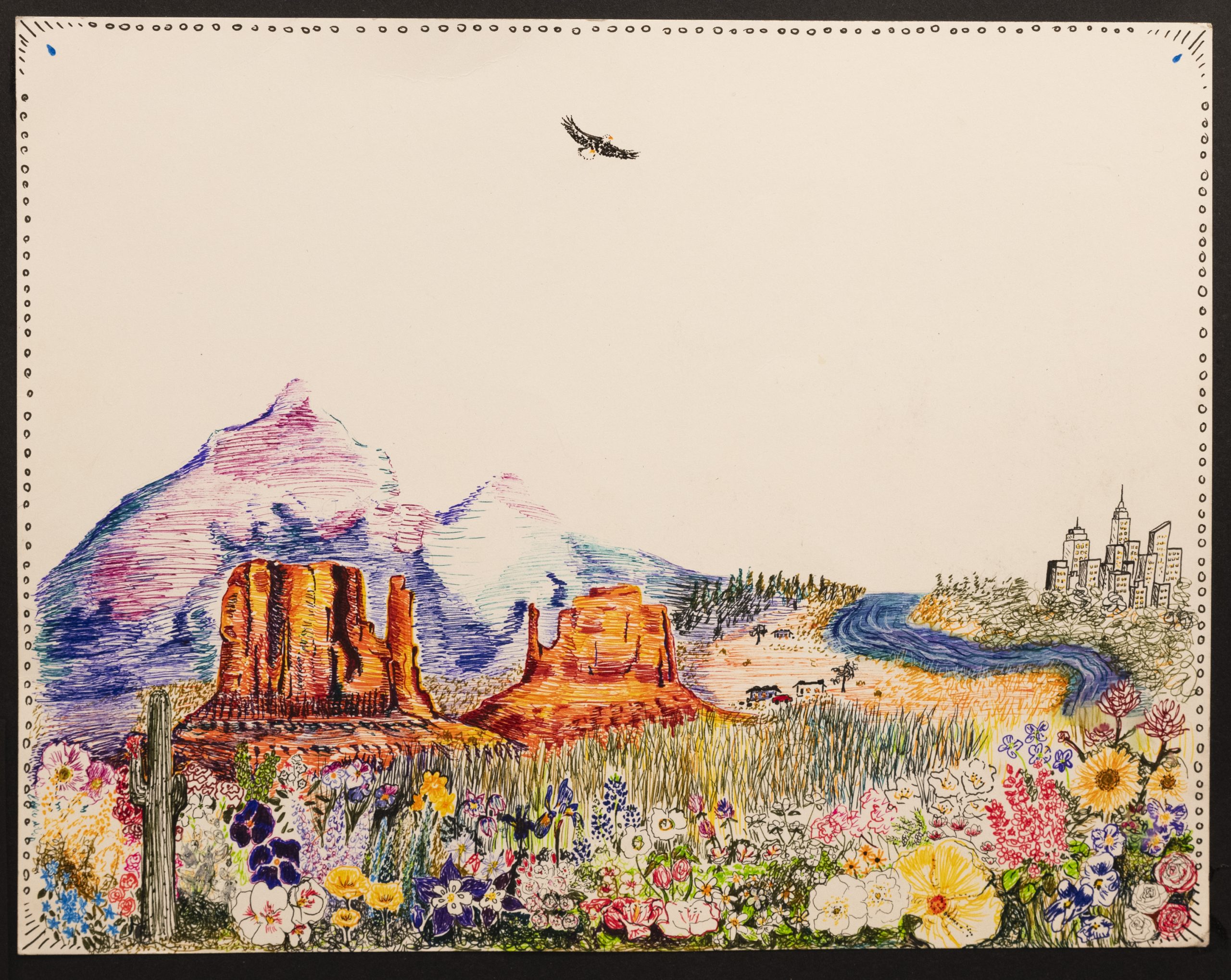
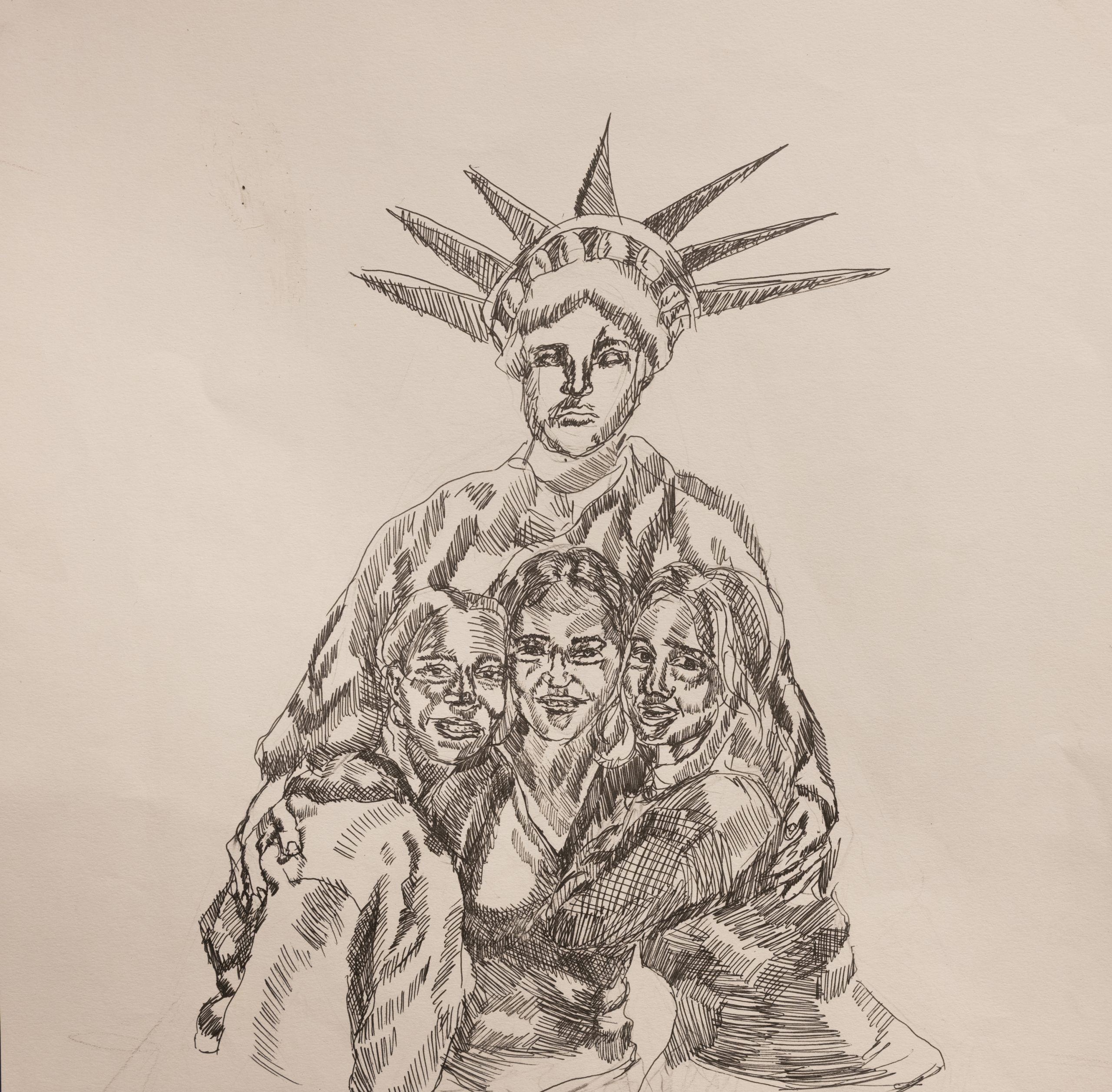
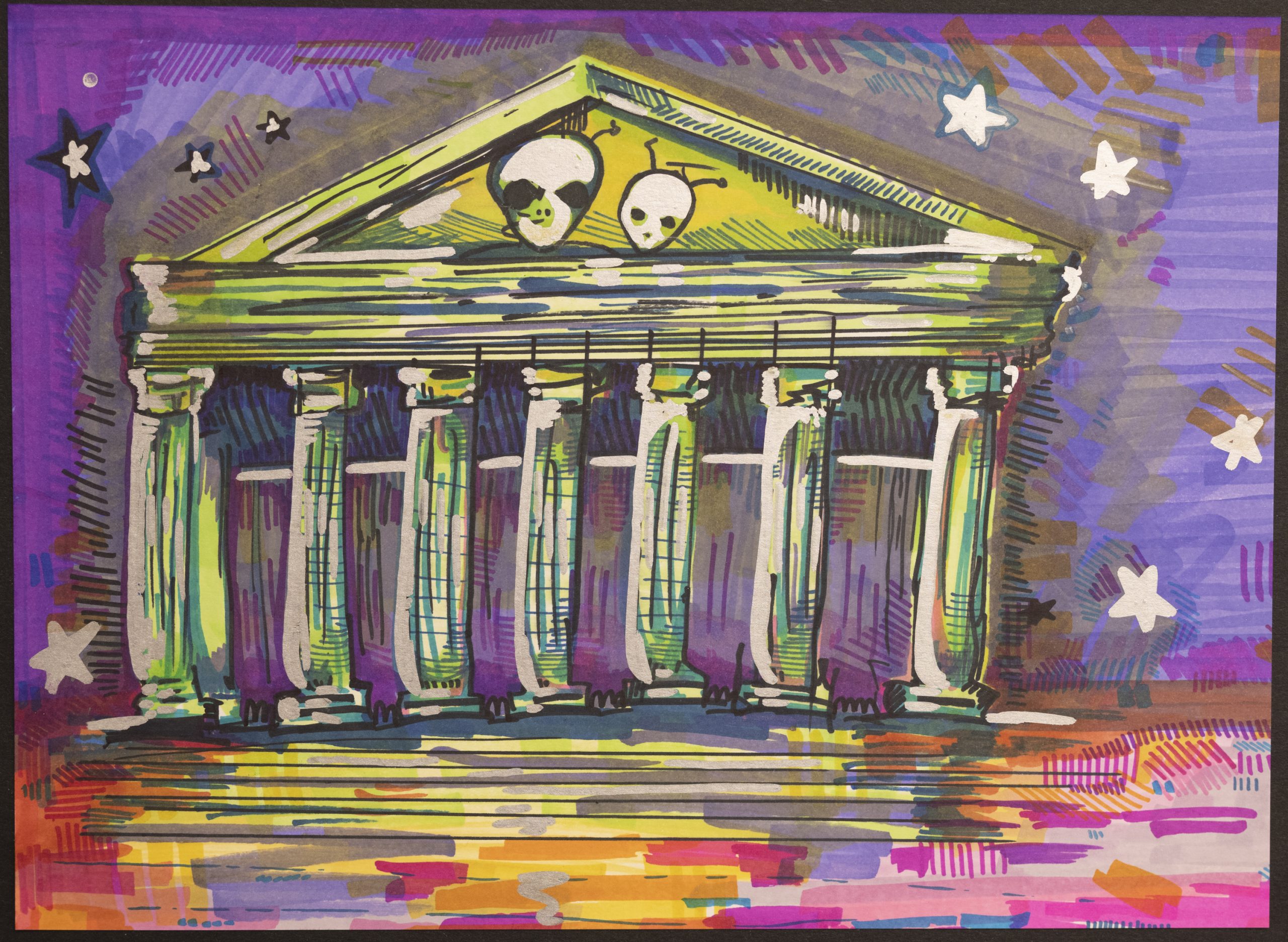
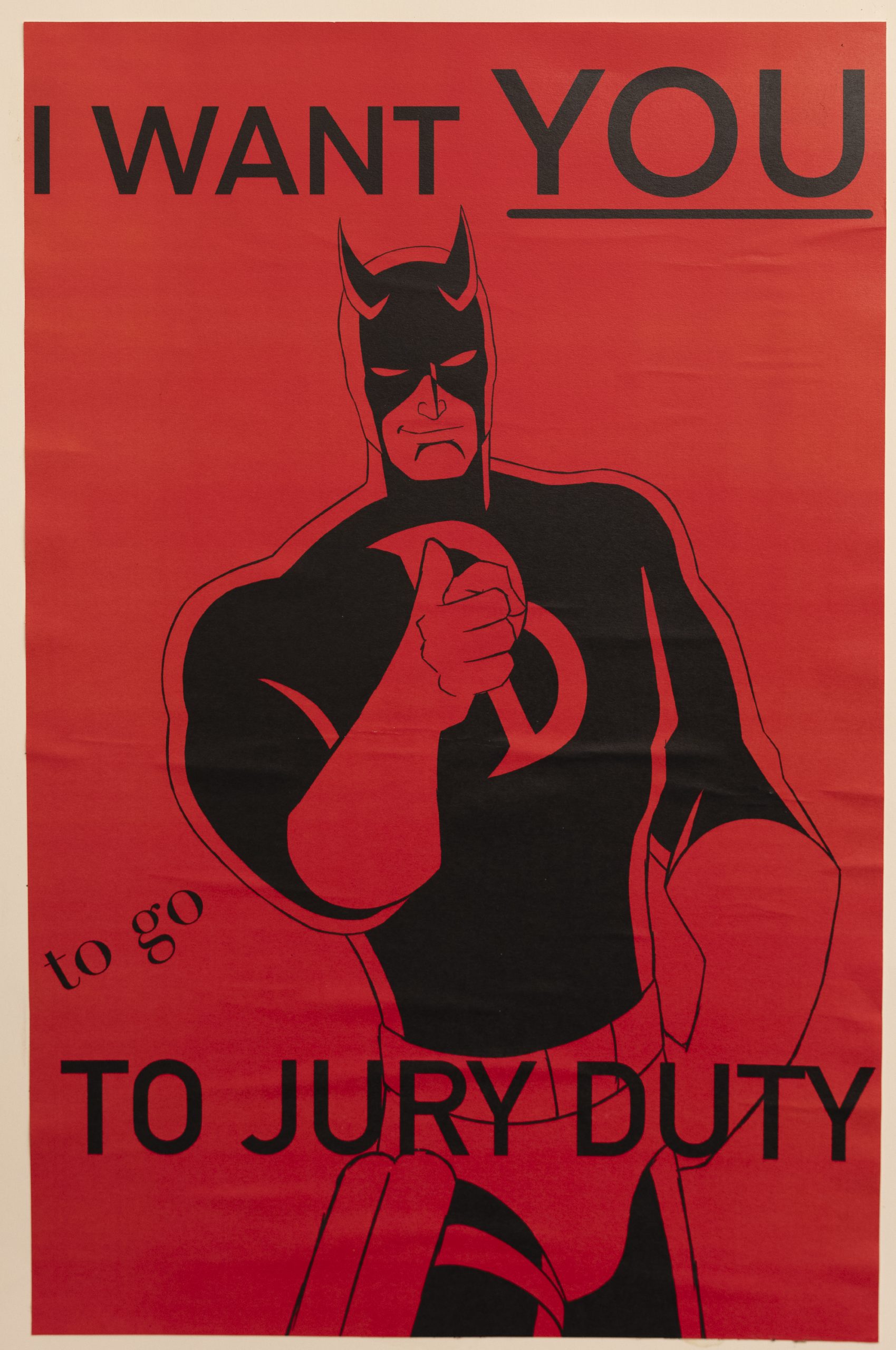
Students at FSSA had the option to choose their own prompt from the four possibilities. Some chose to focus on “Fair Use” cases while some explored the naturalization process and were inspired by personal and family stories of gaining citizenship. Some who are interested in design or architecture chose to explore the Courtroom of the Future. Some students sign for the Jury Duty ad prompt.
Principal: Maximillian Re-Sugiura
Teachers: Madhulika Singh and Gerald Rabel
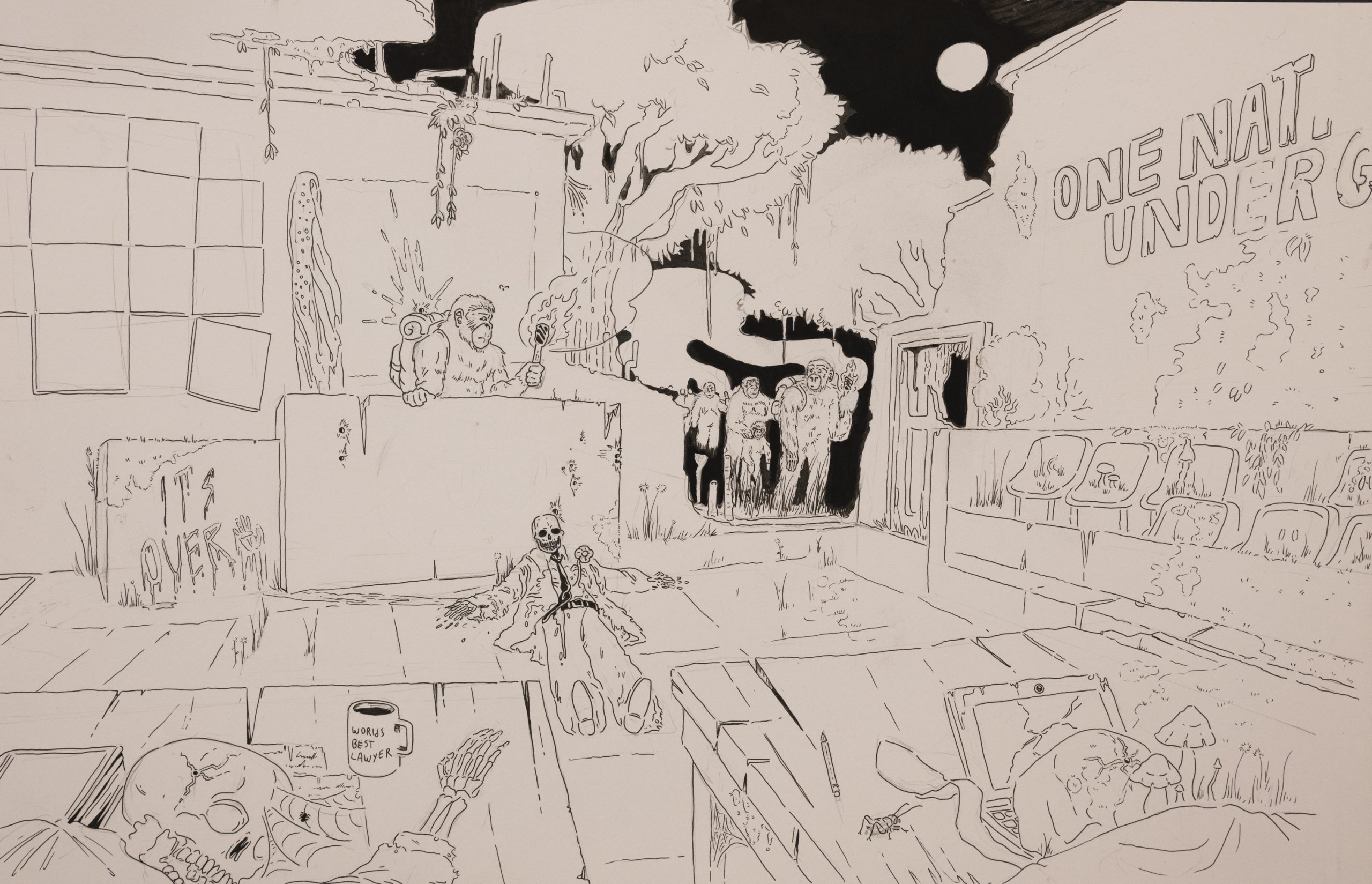
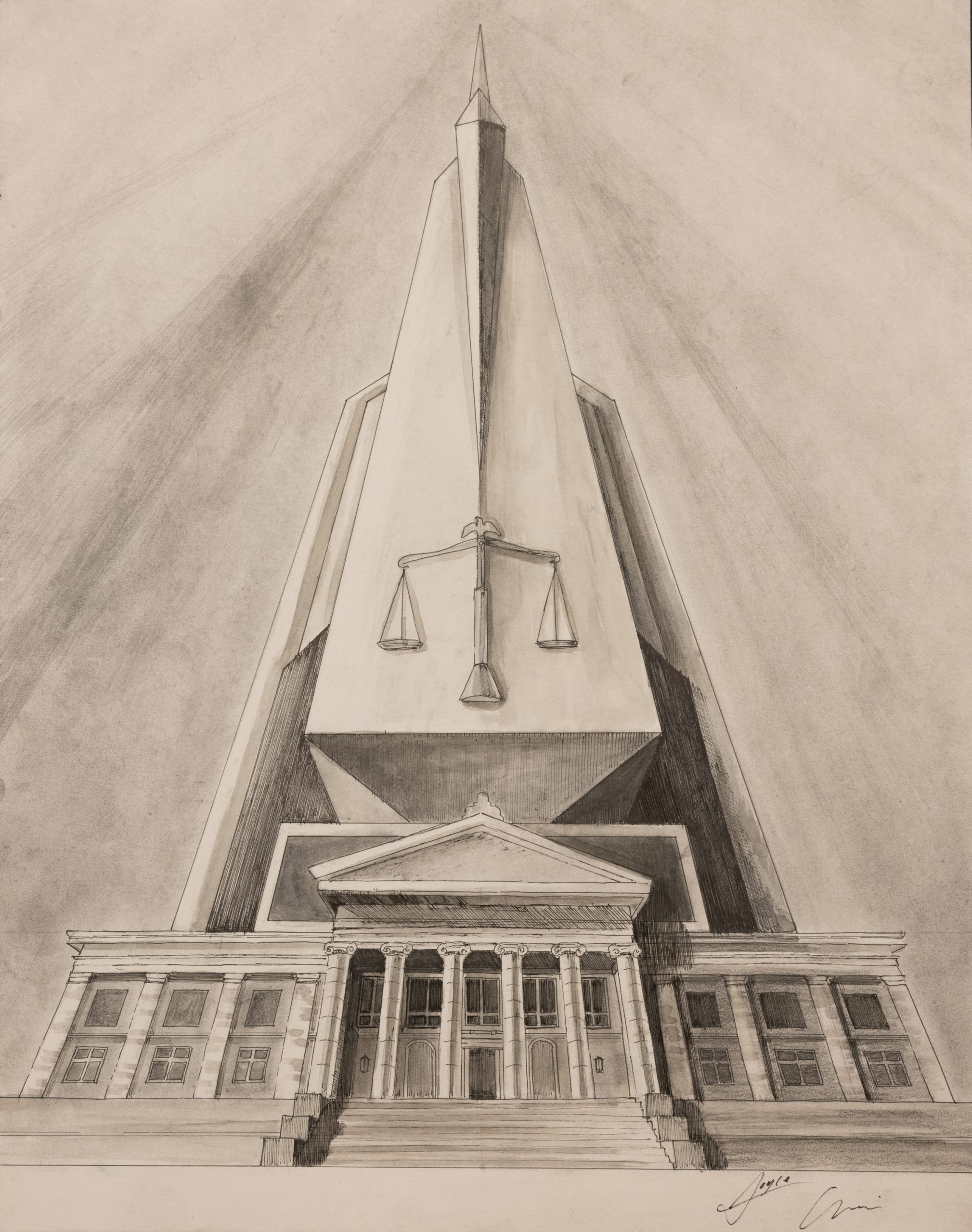
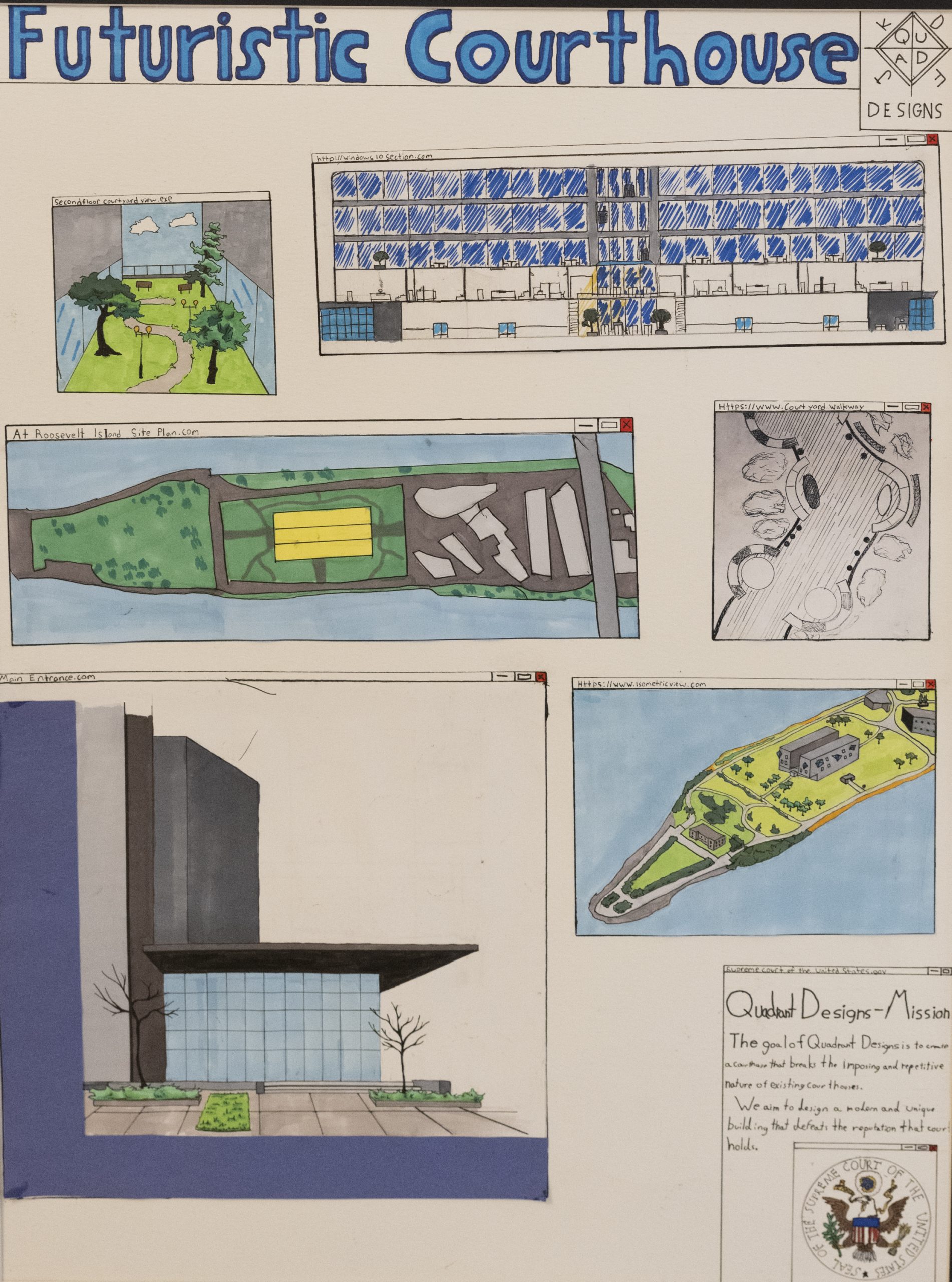
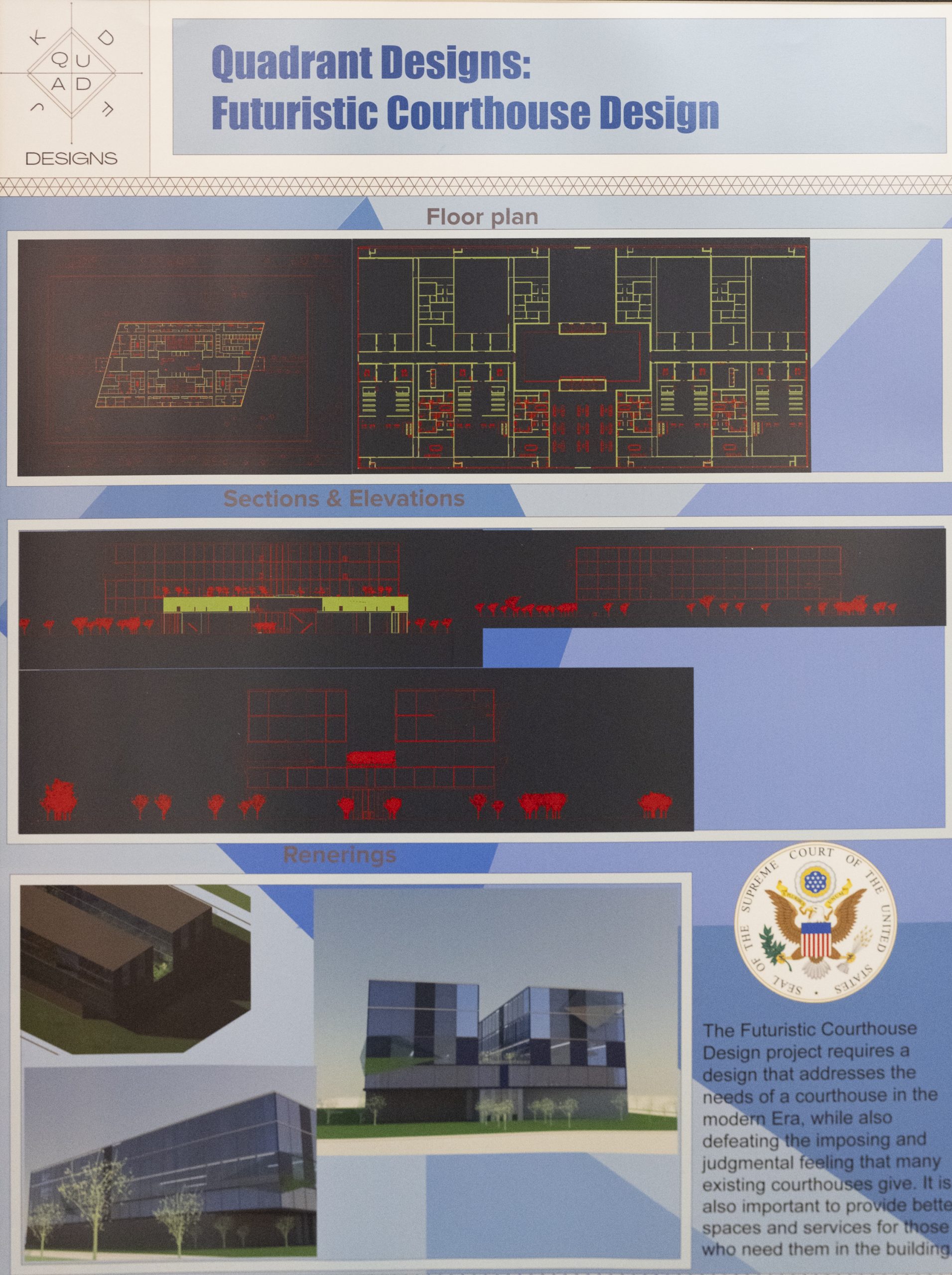
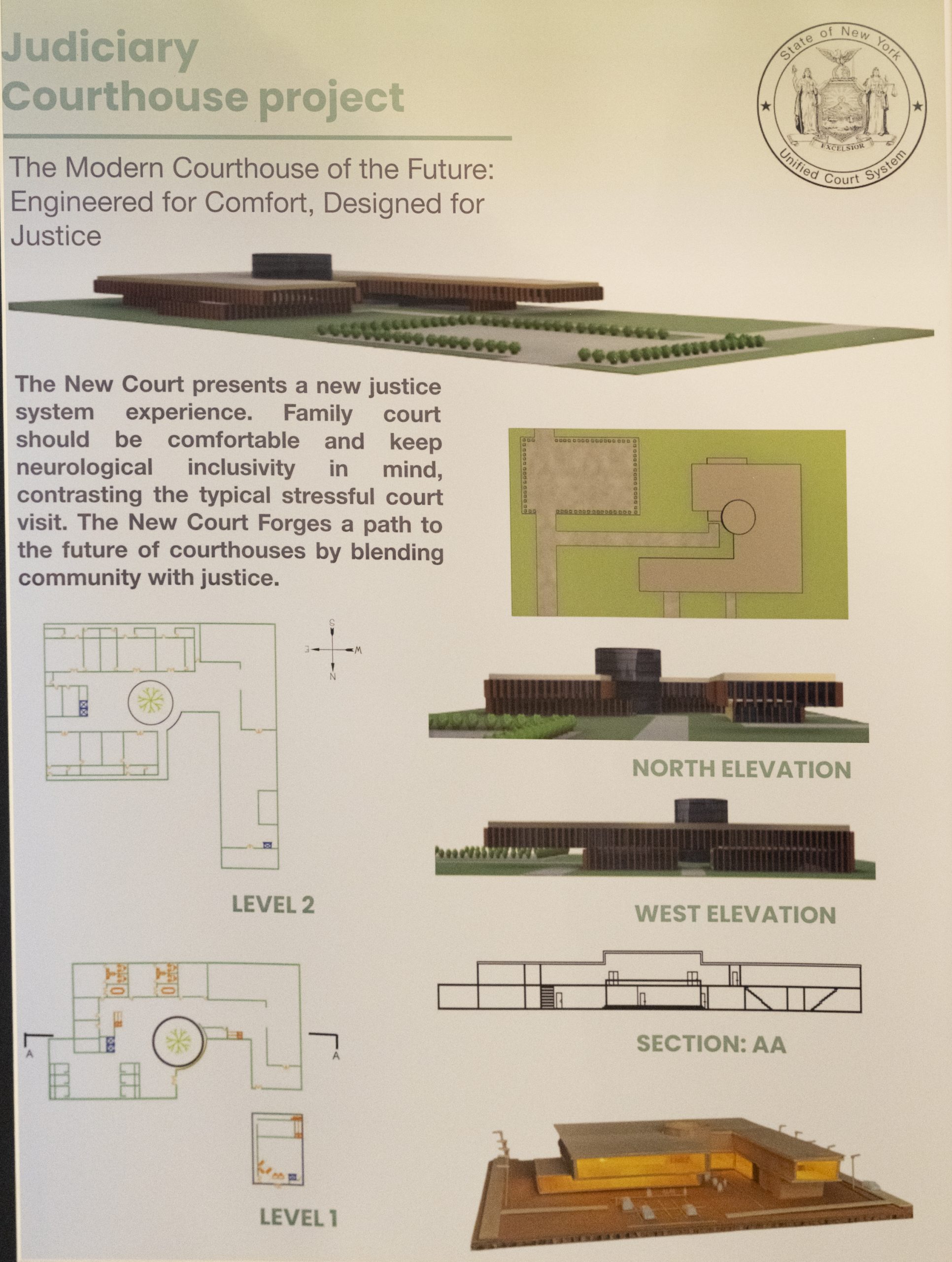
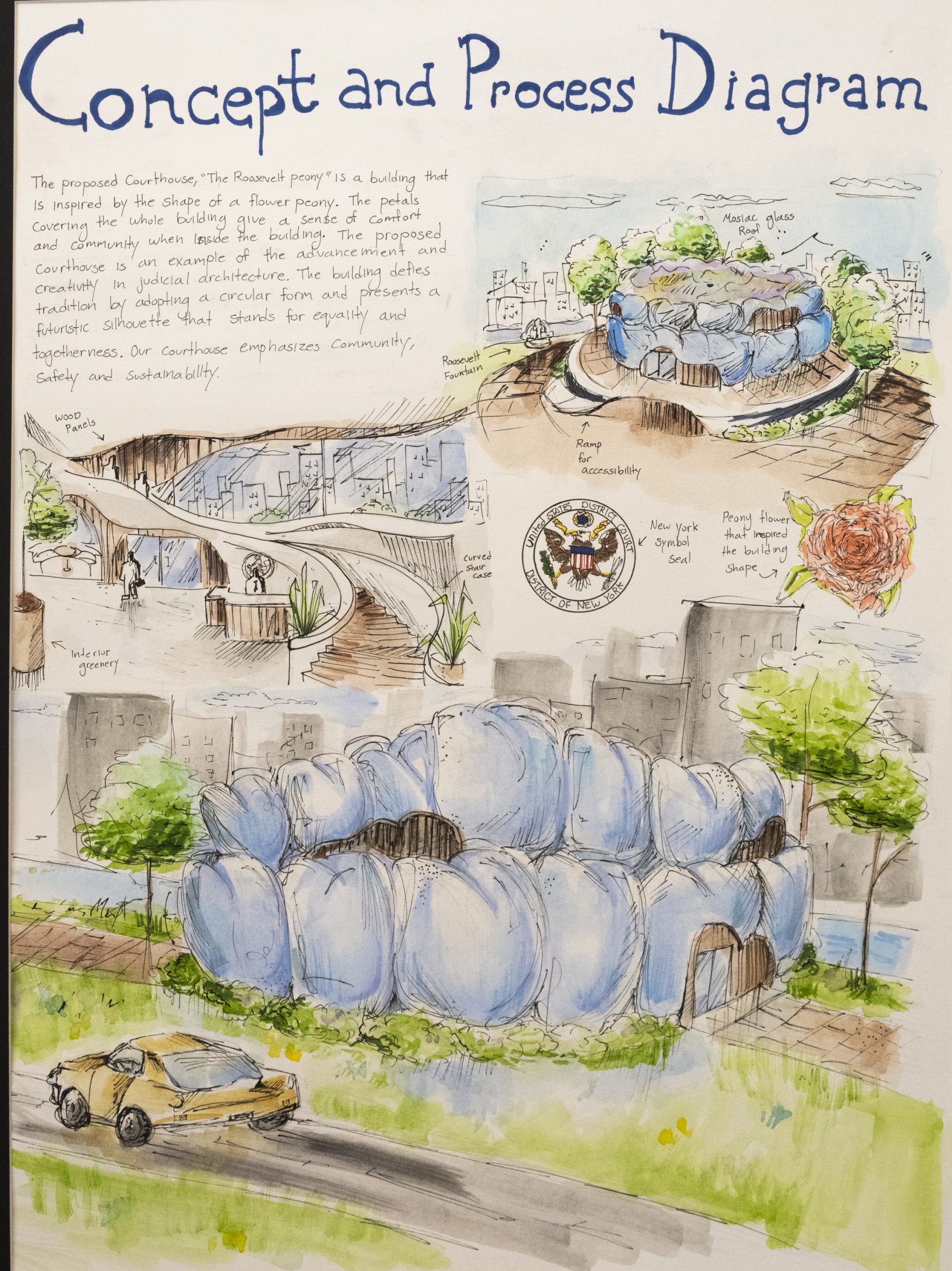
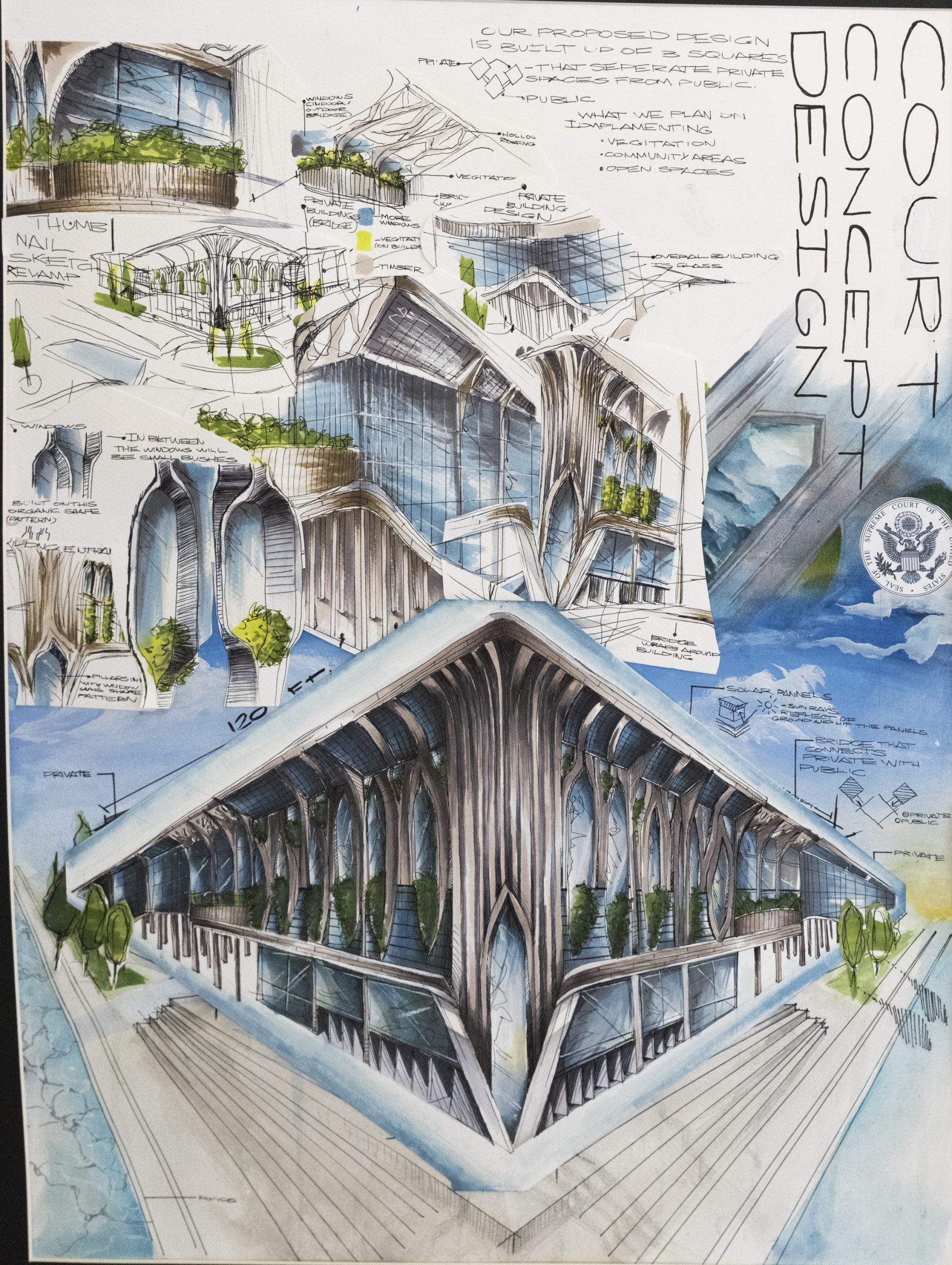
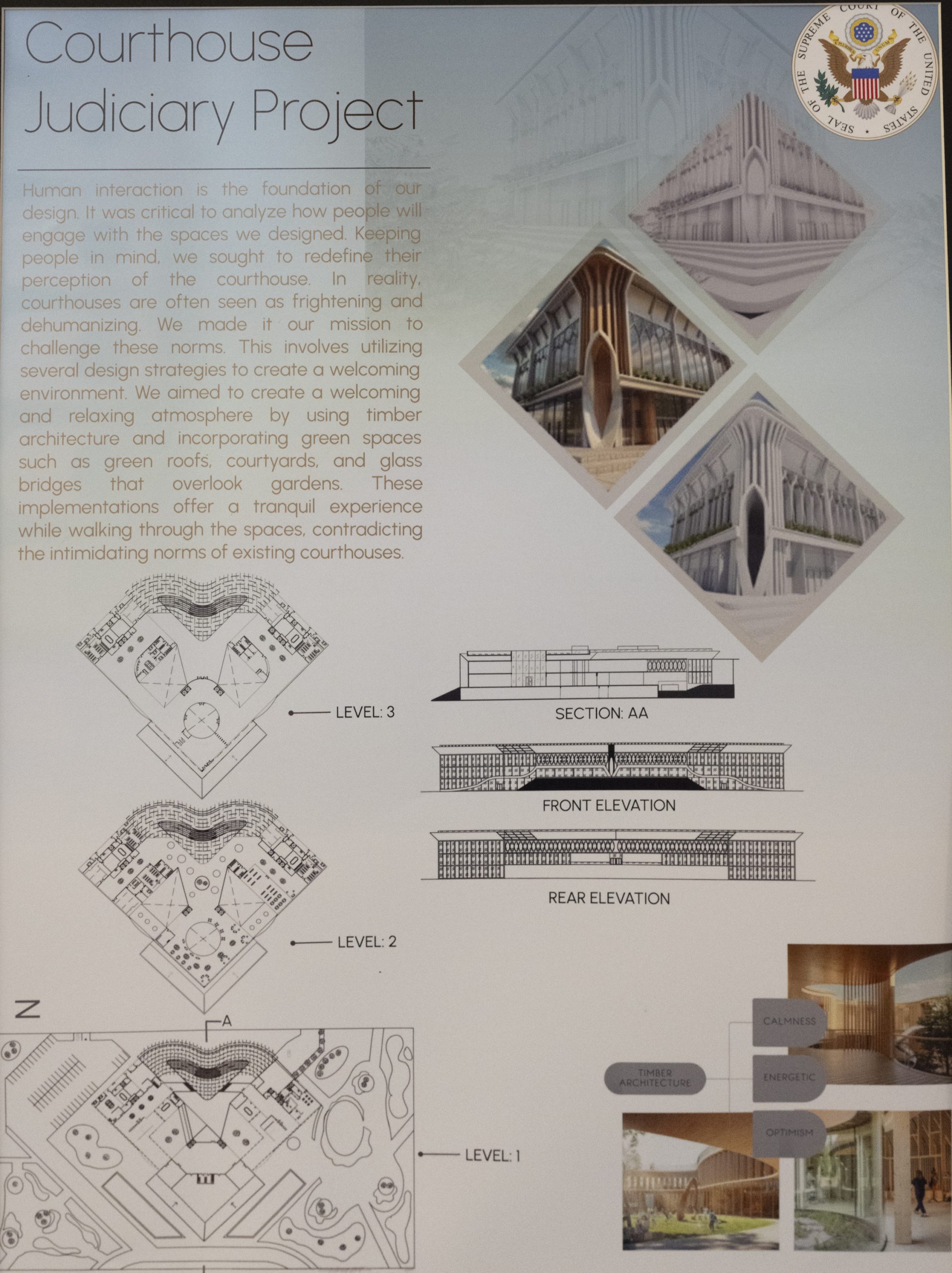
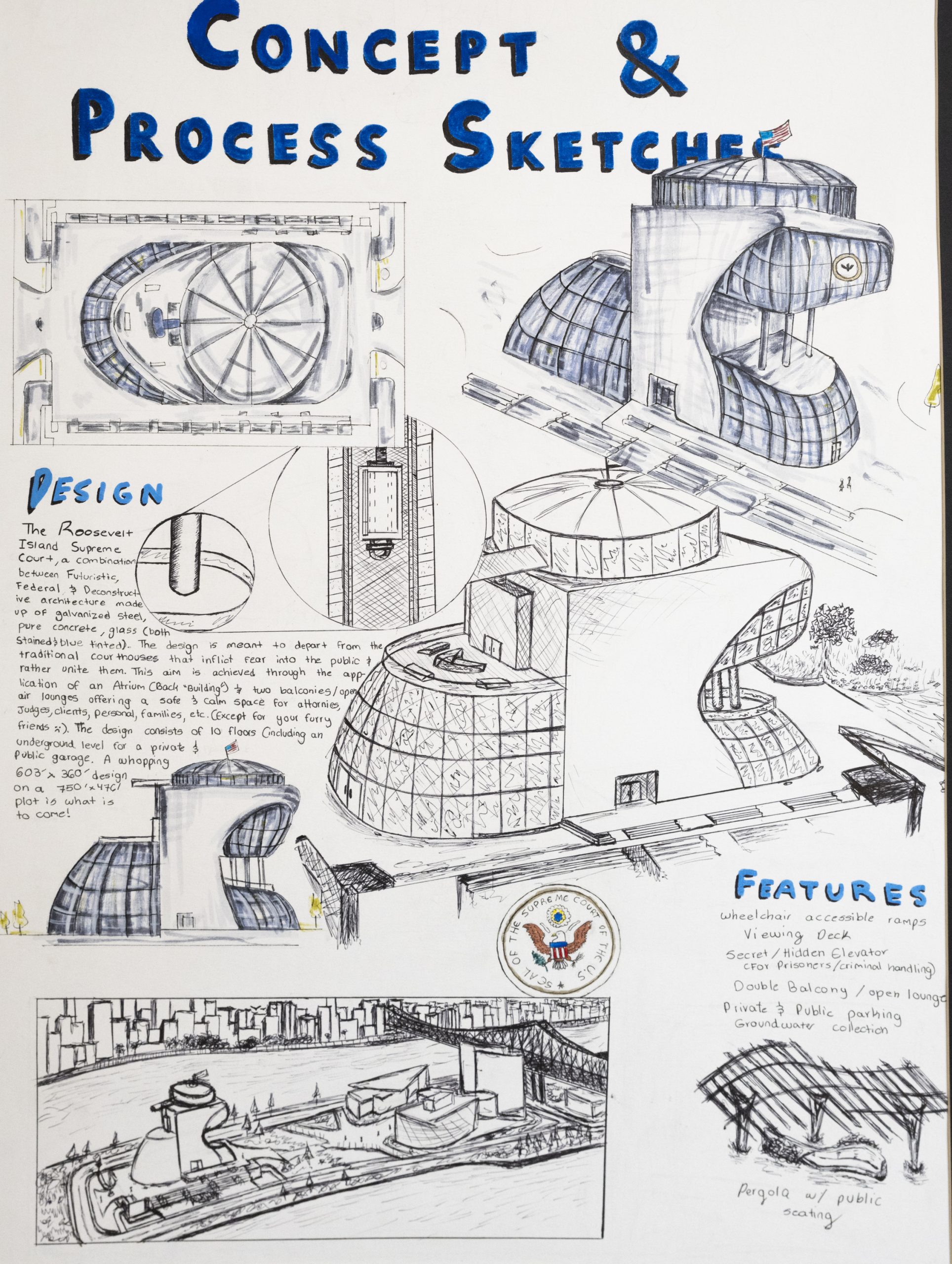
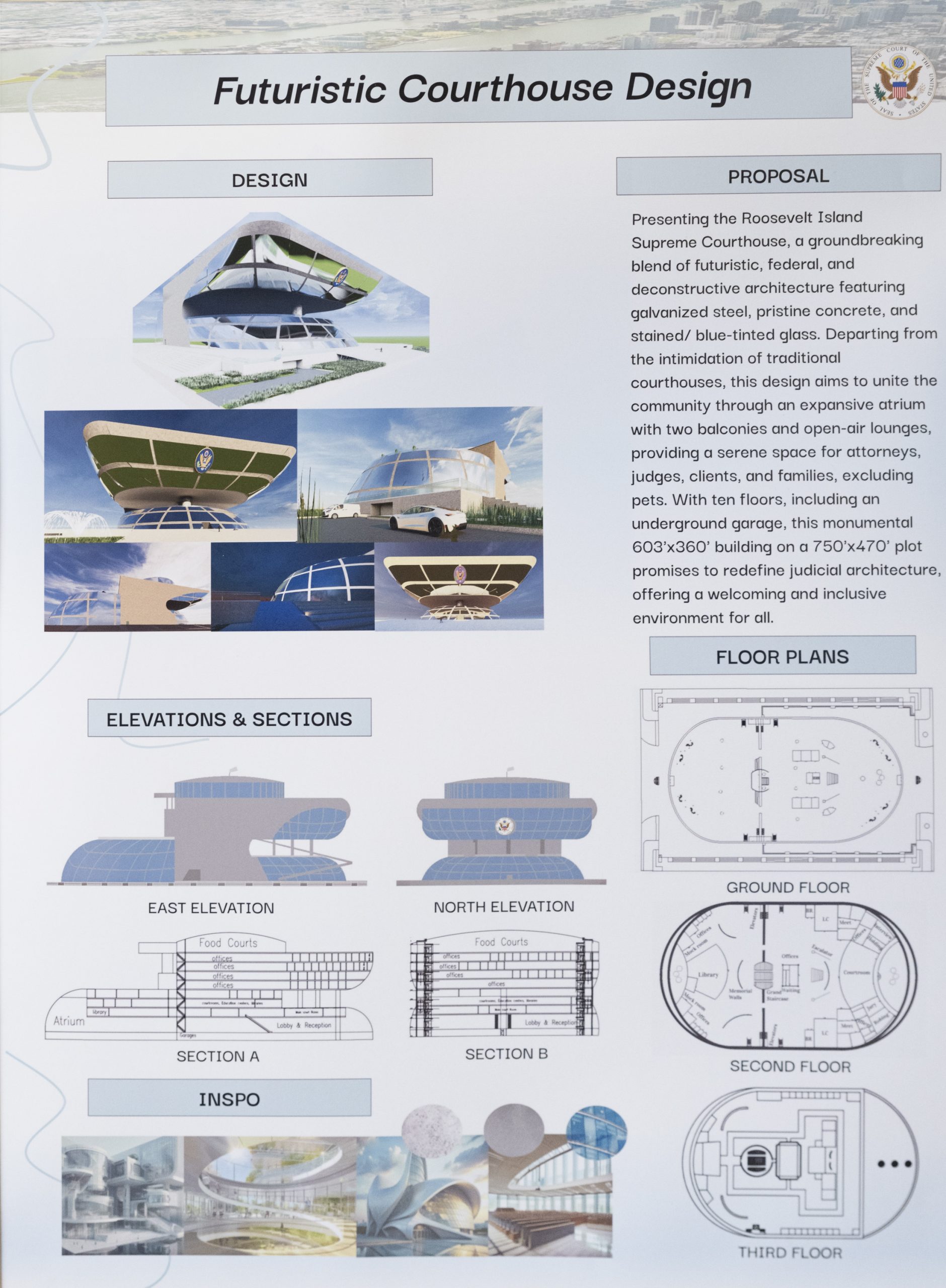
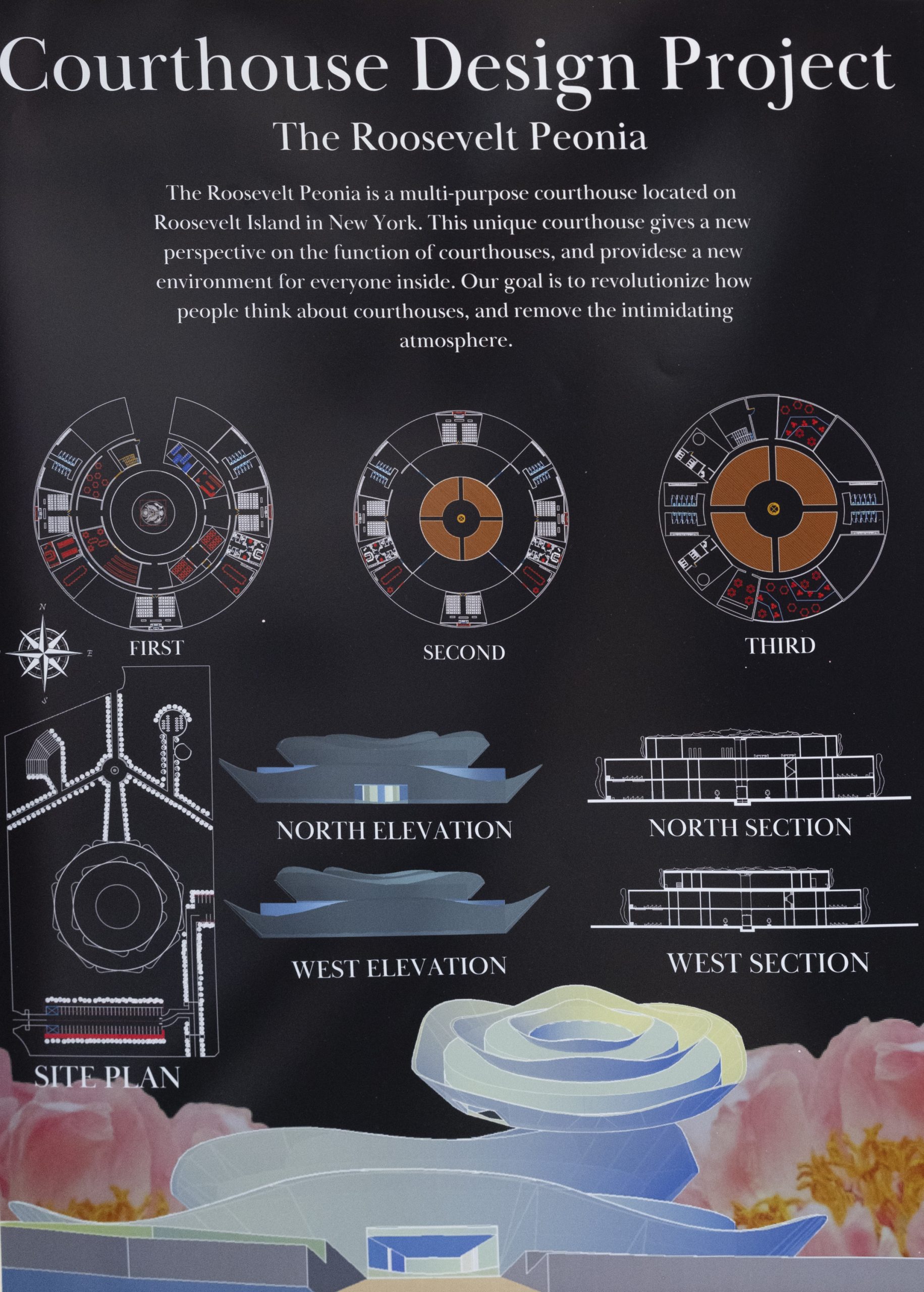
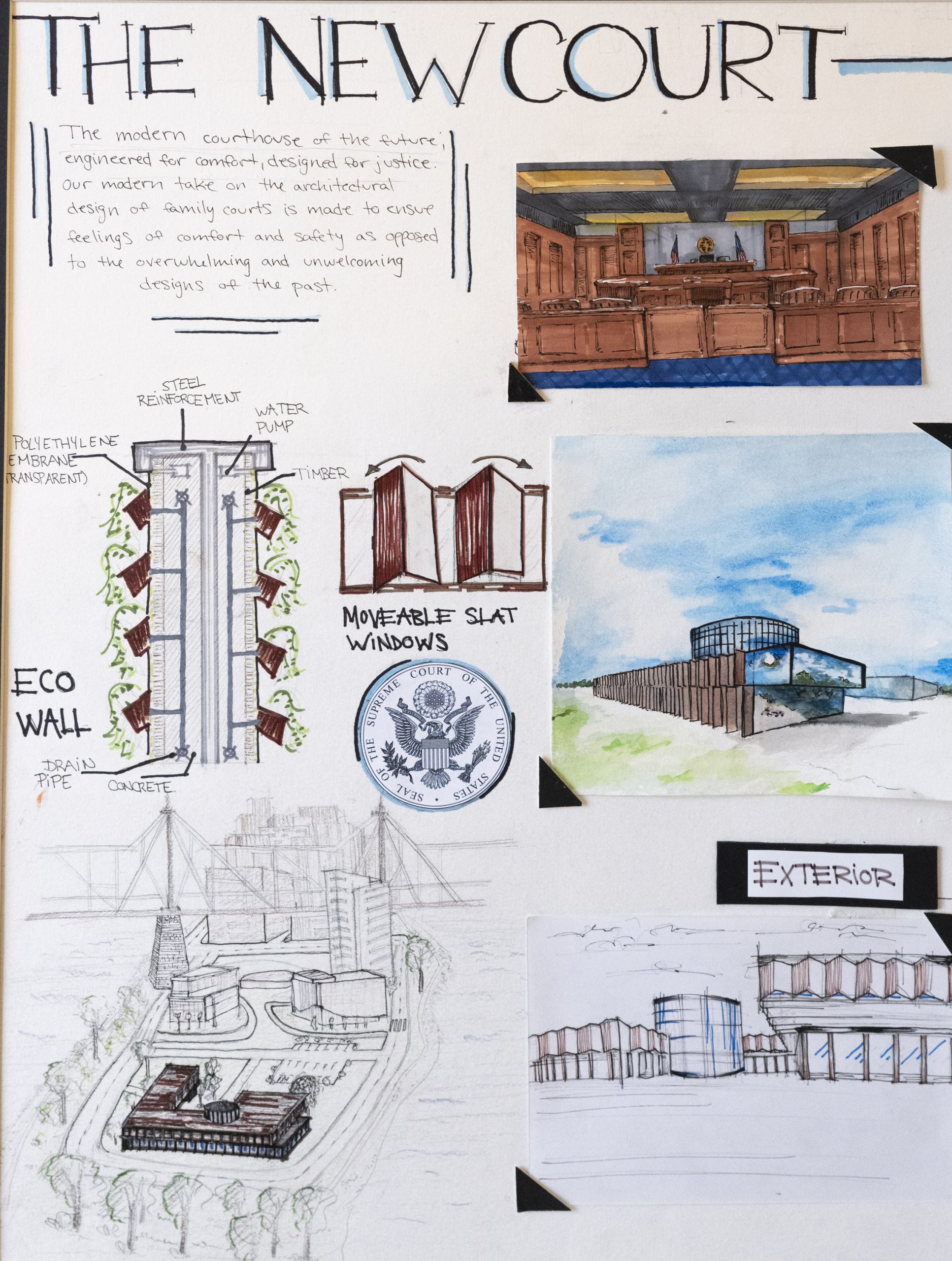
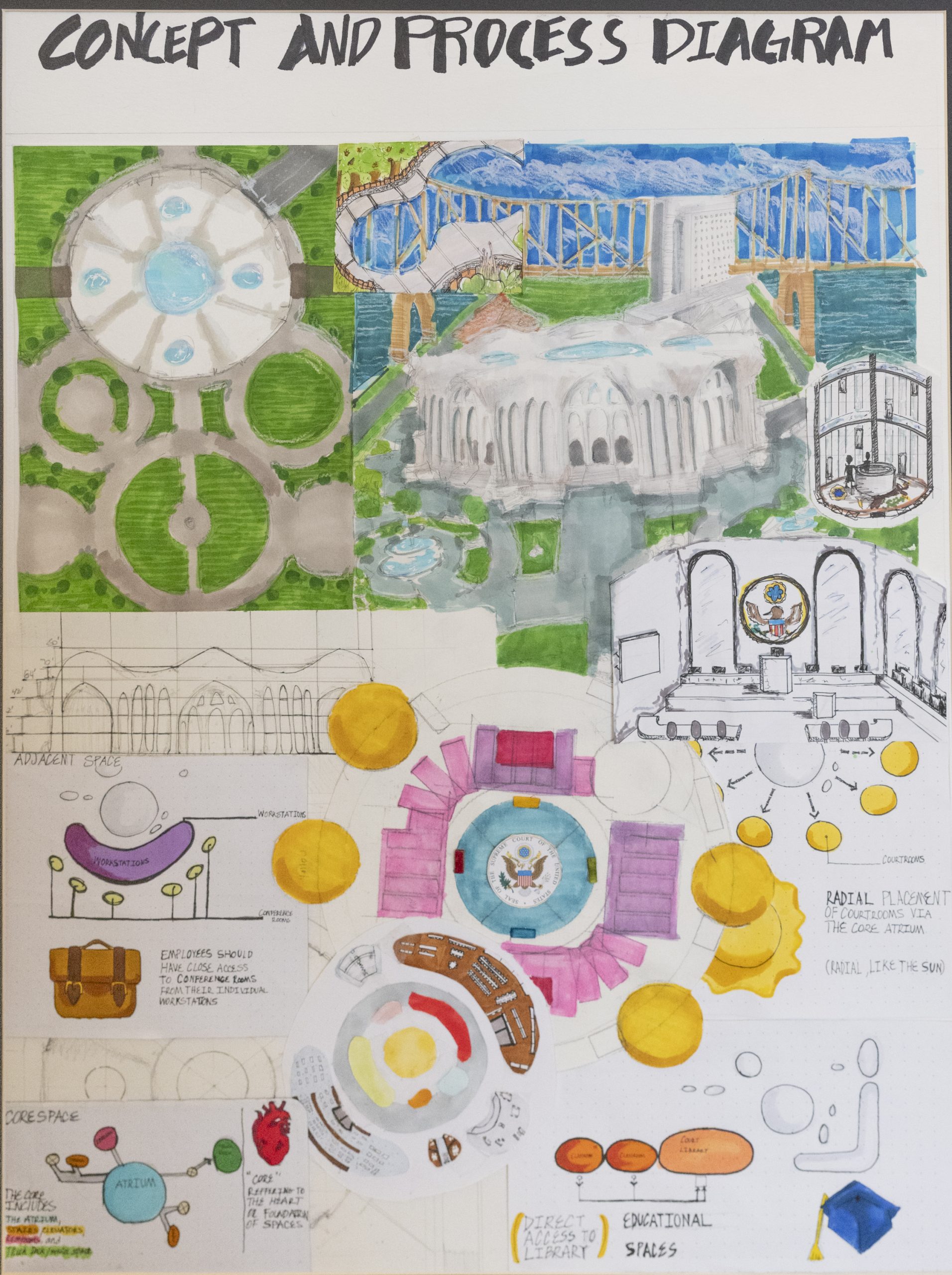
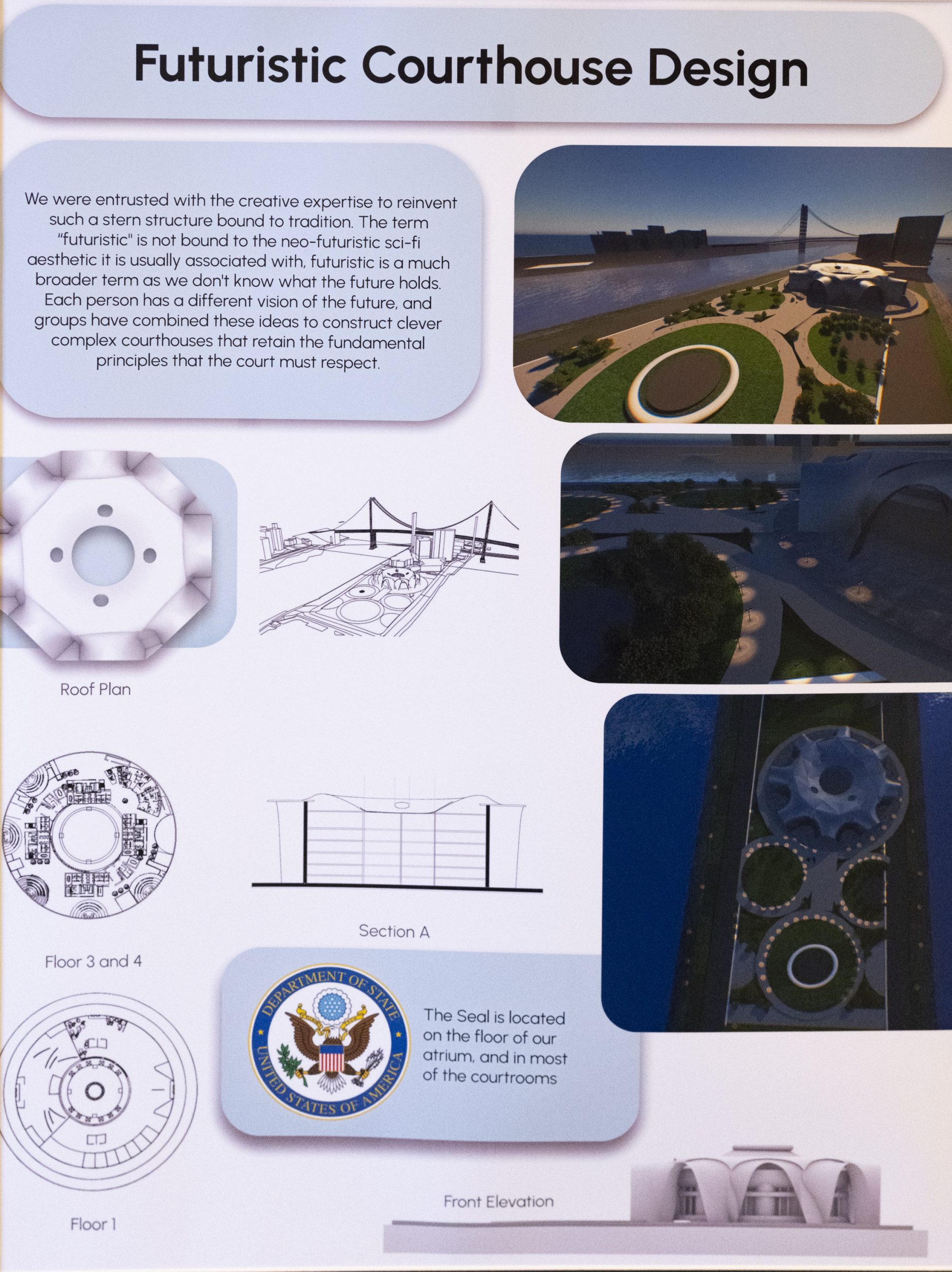
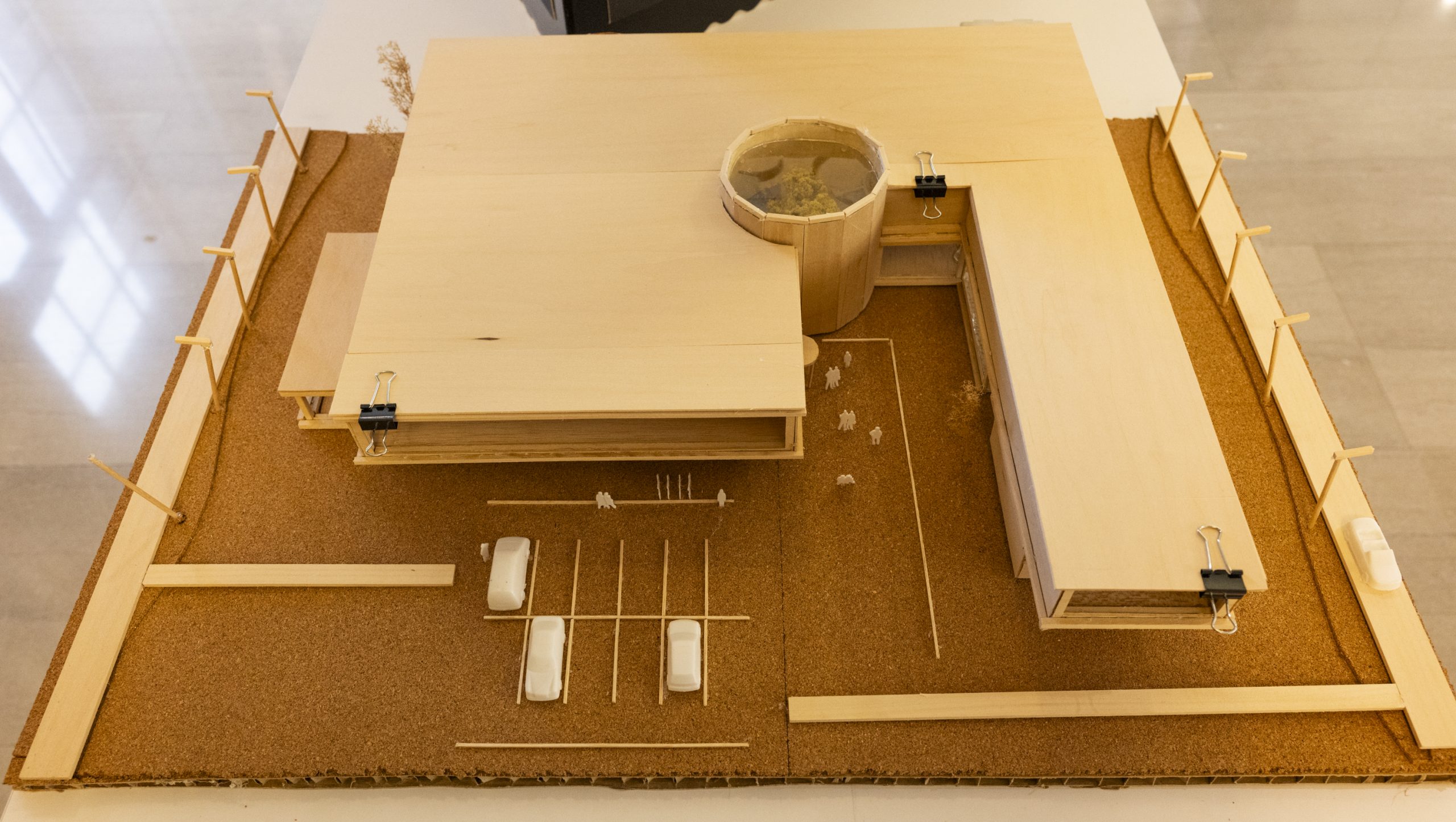
Project Title: FUTURISTIC COURTHOUSE DESIGN
With this project, six groups of 4 were tasked to create a courthouse that broke away from common belief. The students were entrusted with the creative expertise to reinvent such a stern structure bound to tradition. The term “futuristic” is not bound to the neo-futuristic sci-fi aesthetic it is usually associated with, futuristic is a much broader term as we don’t know what the future holds. Each person has a different vision of the future, and groups have combined these ideas to construct clever complex courthouses that retain the fundamental principles that the court must respect. Students showcased their hand drawn concepts and process diagrams along with their technical skills in AutoCad and model making to illustrate their final design.
Principal: Maximillian Re-Sugiura
Teachers: Matt Lassen
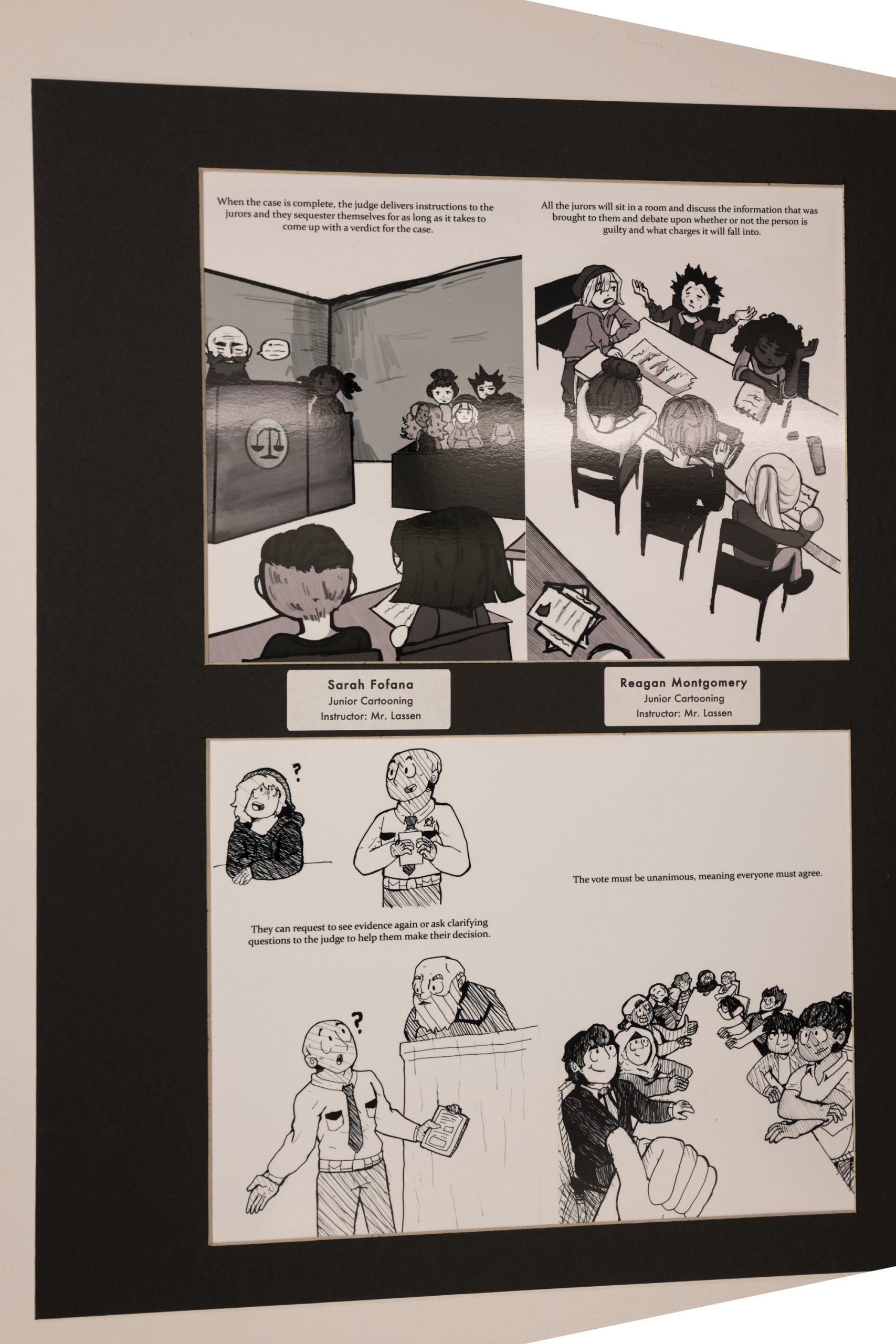
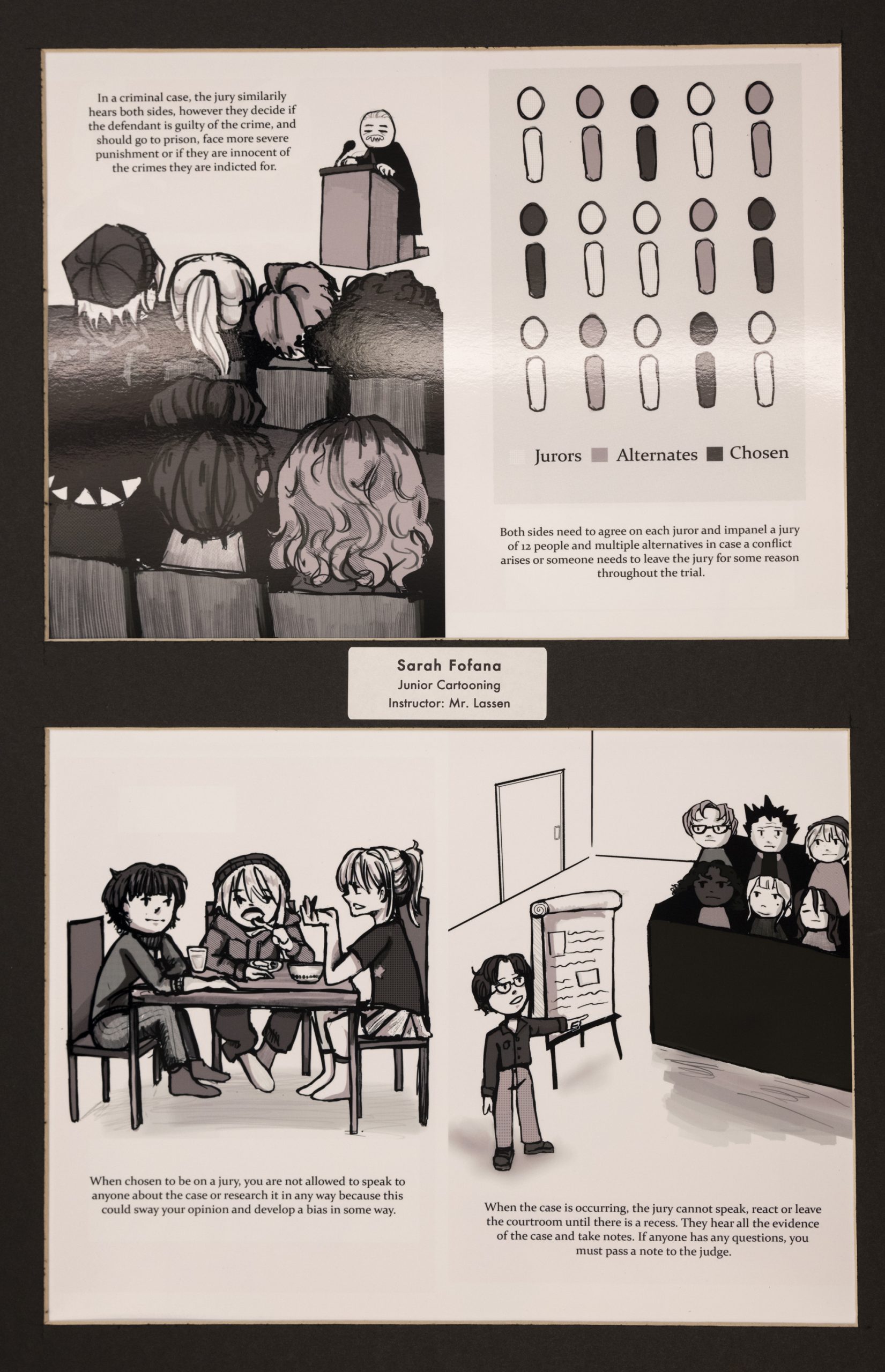
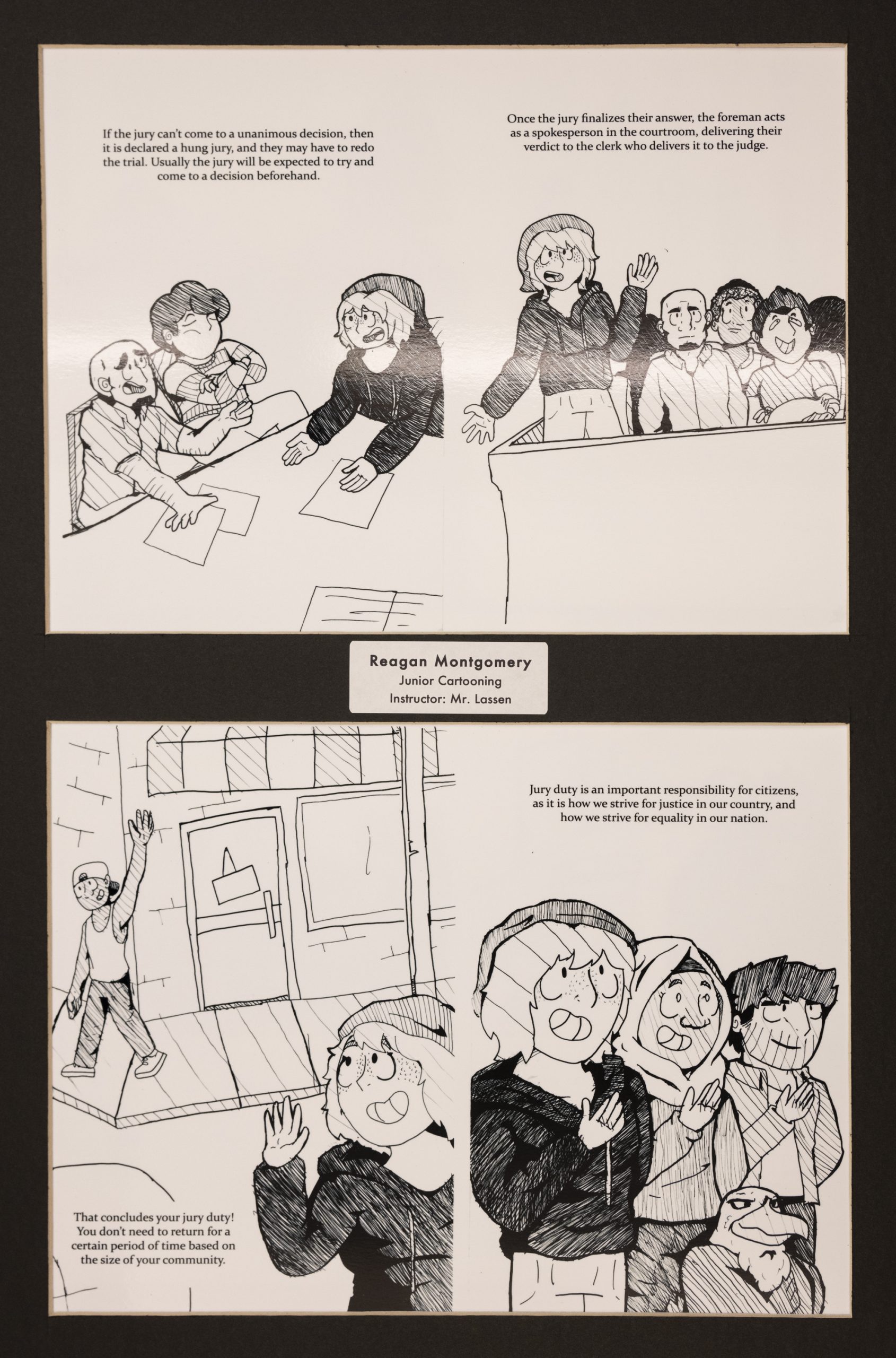
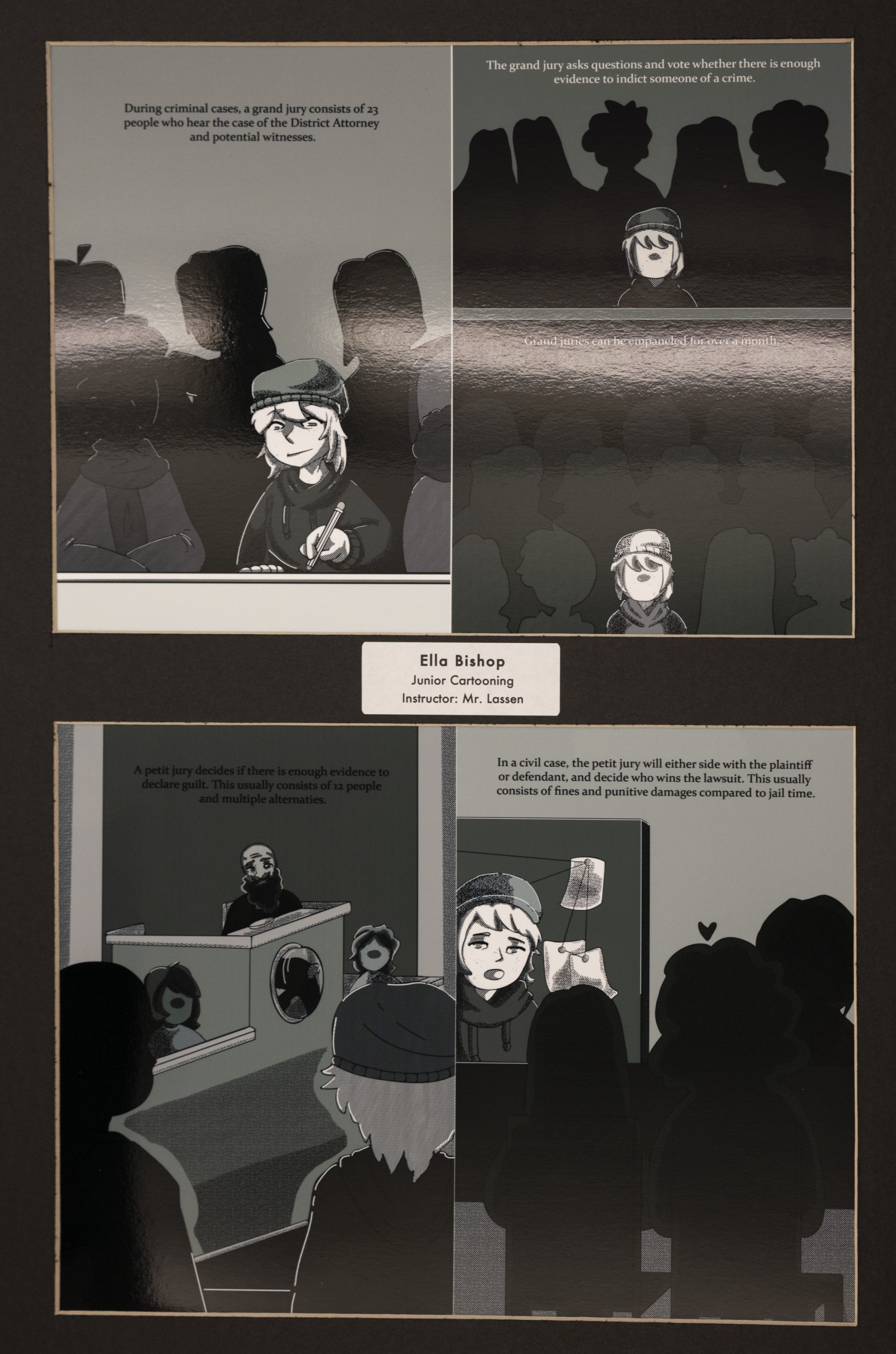
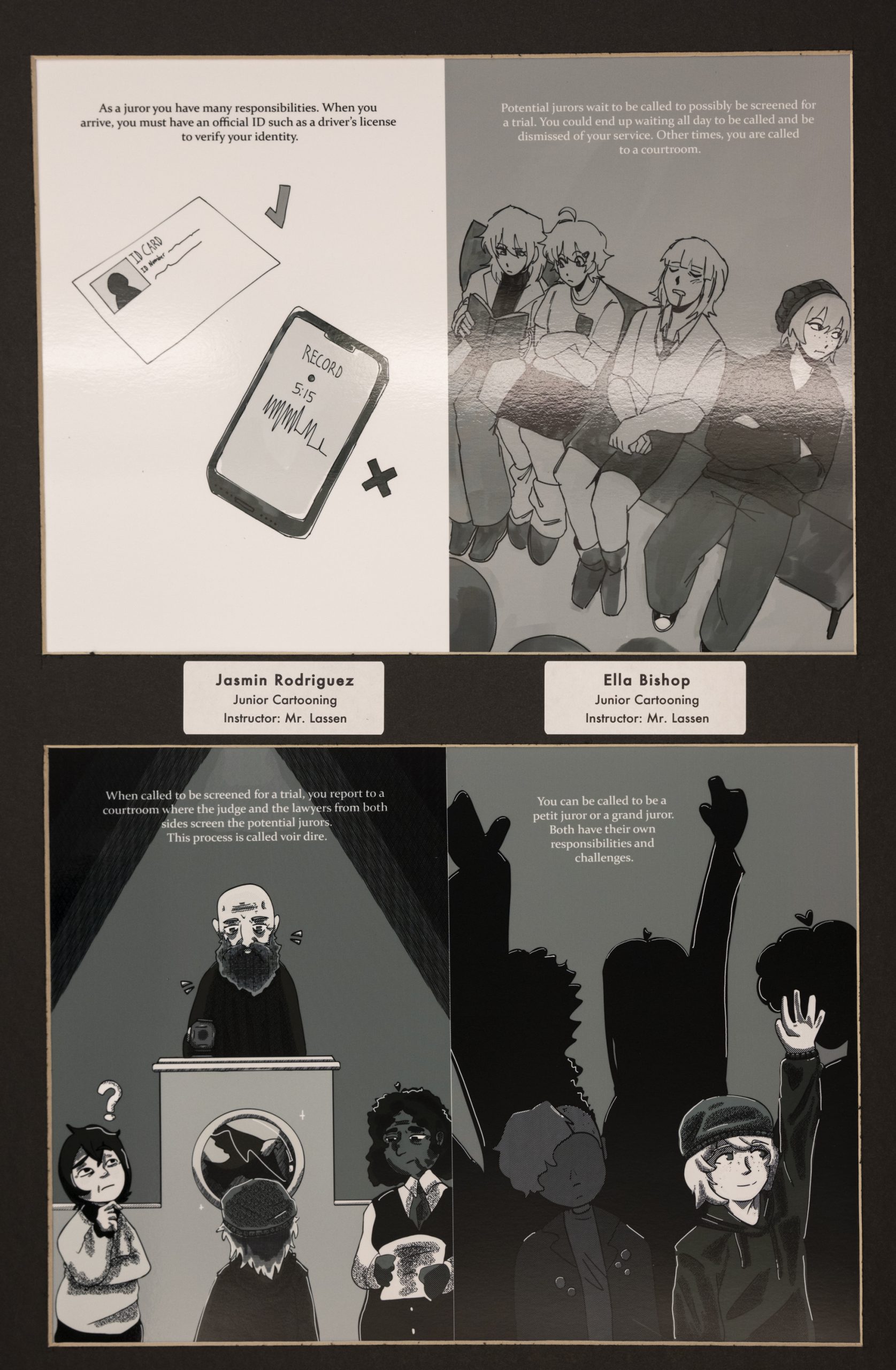
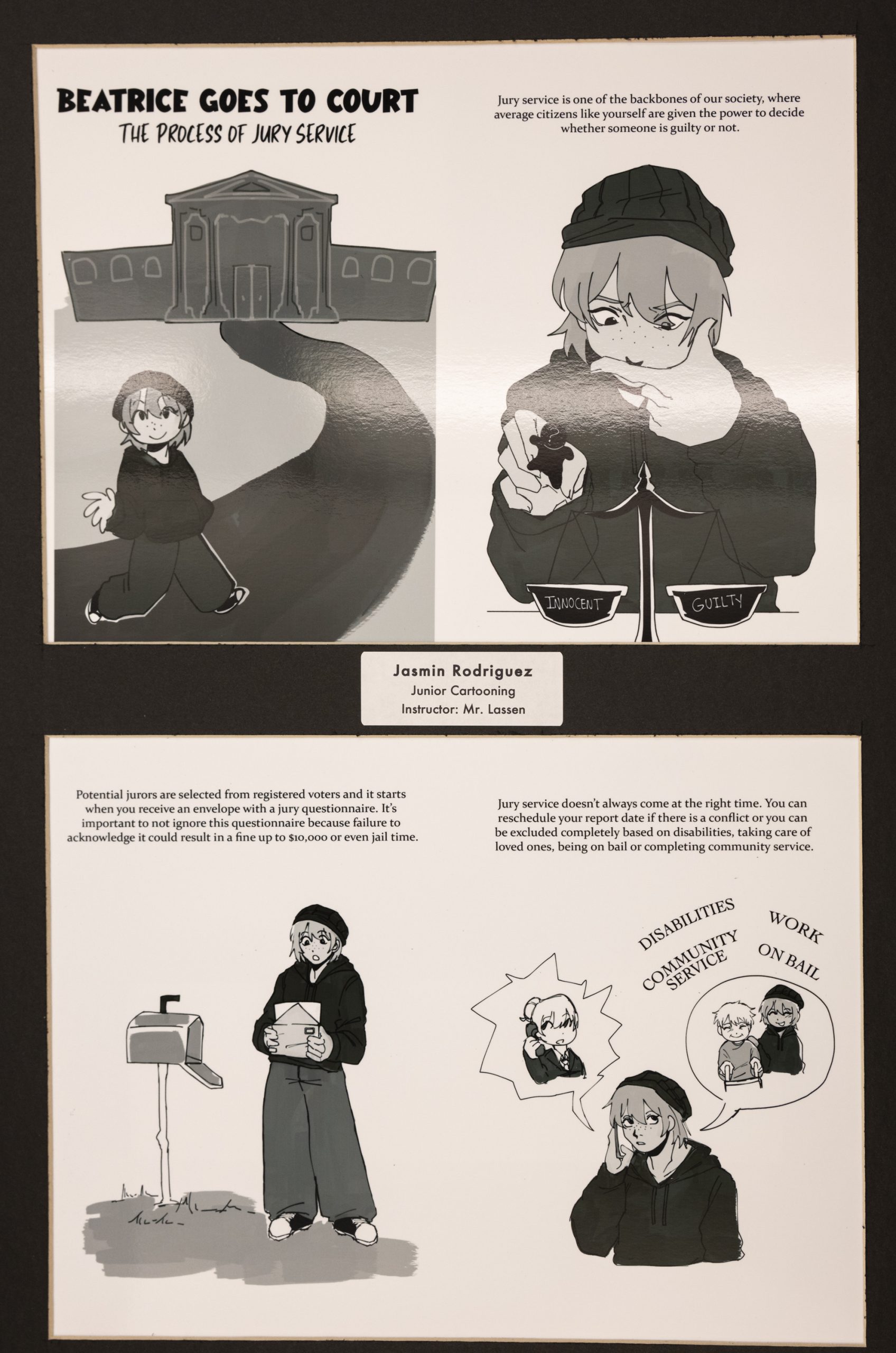
Project Title: BEATRICE GOES TO COURT: THE PURPOSE OF JURY SERVICE ZINE
Students worked in a group to make a collective black and white zine to show the steps and benefits of jury service. They researched and wrote their narratives while creating full page and spot illustrations to accompany their text. Their work is completed traditionally and digitally using pen and ink and screen tones. The zine was laid out in Adobe Photoshop and printed in the High School of Art and Design copy room. Each zine is folded and bound painstakingly by the group.
Principal: Maximillian Re-Sugiura
Teachers: Matt Lassen
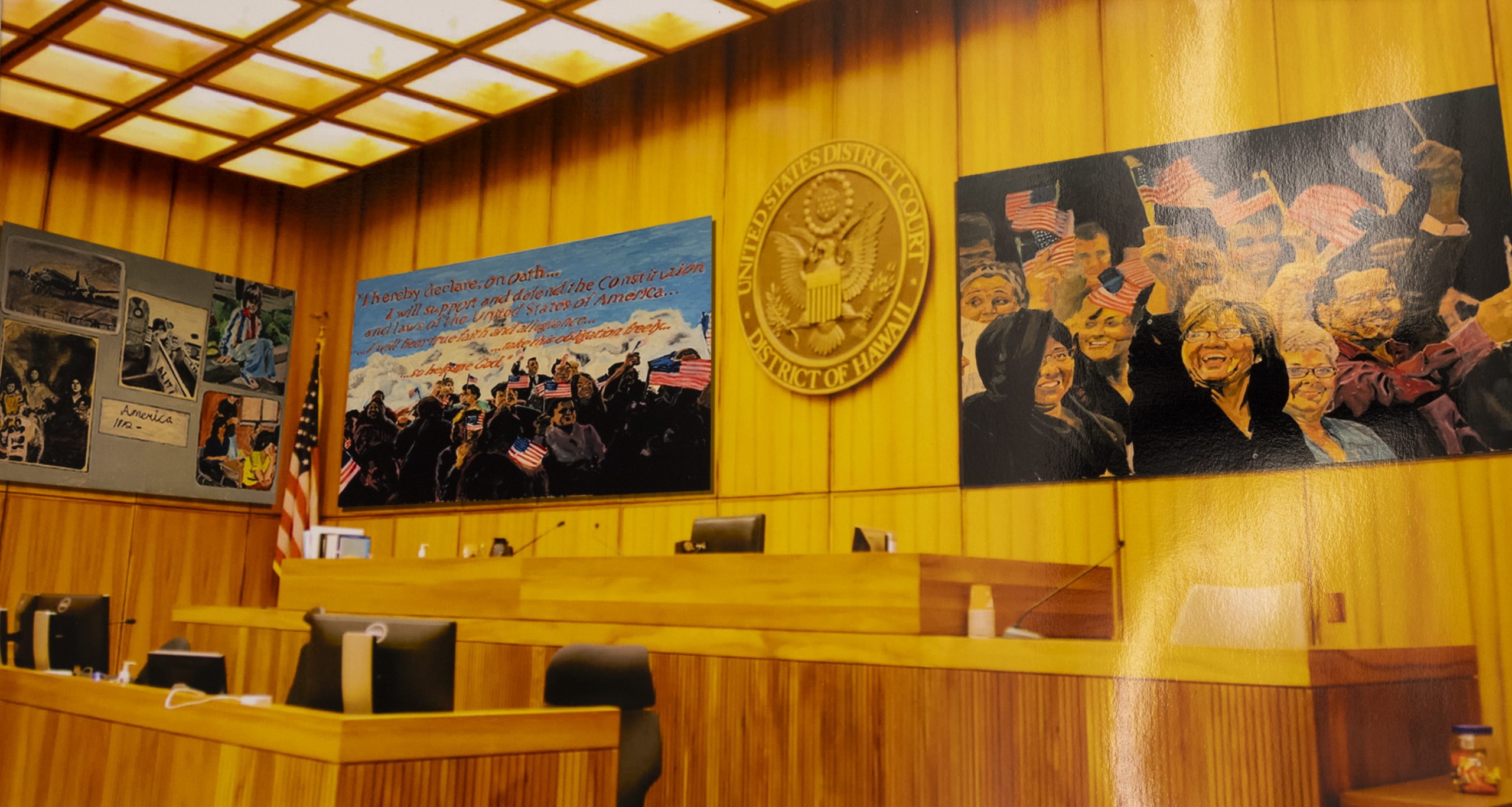
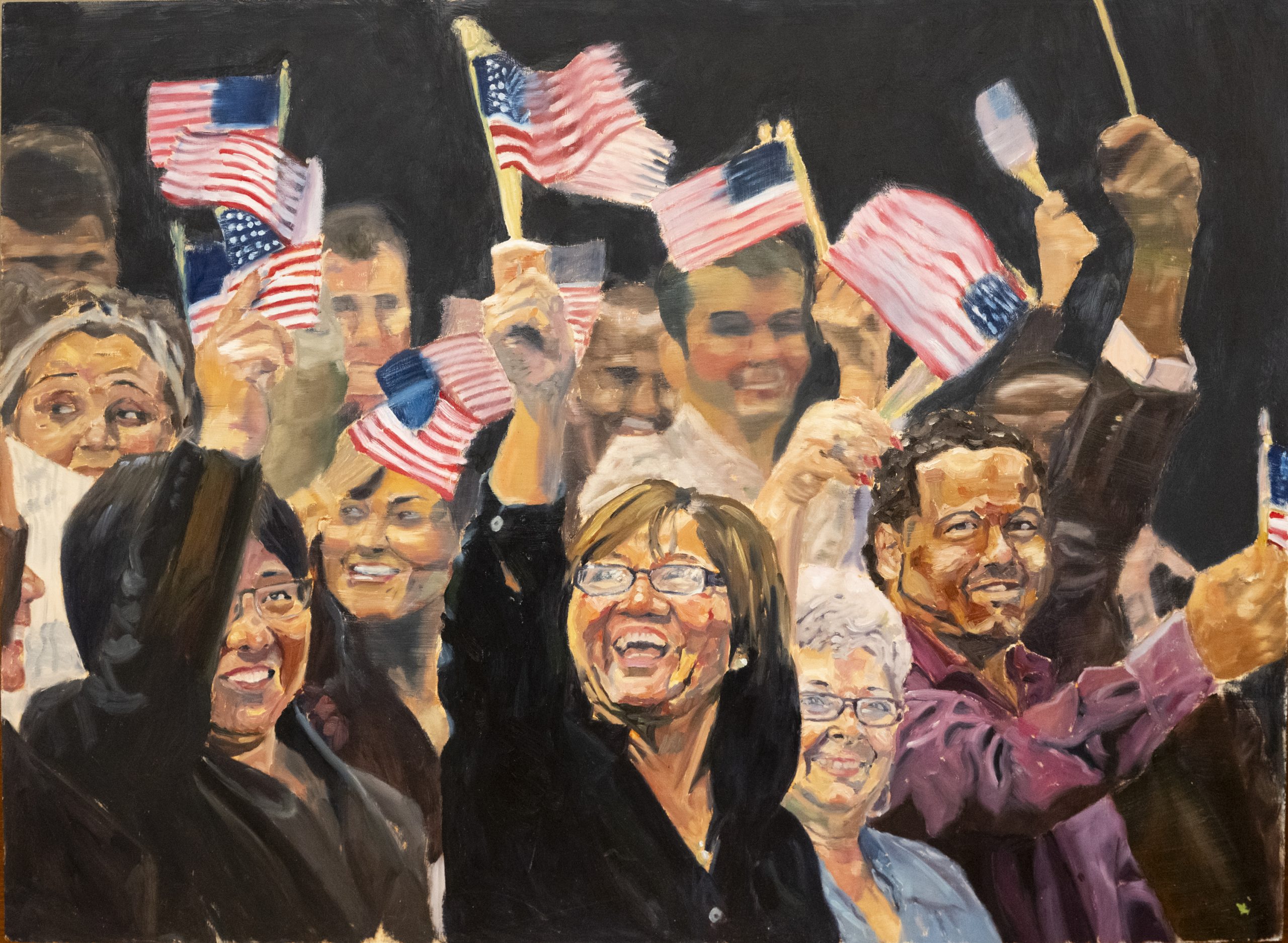
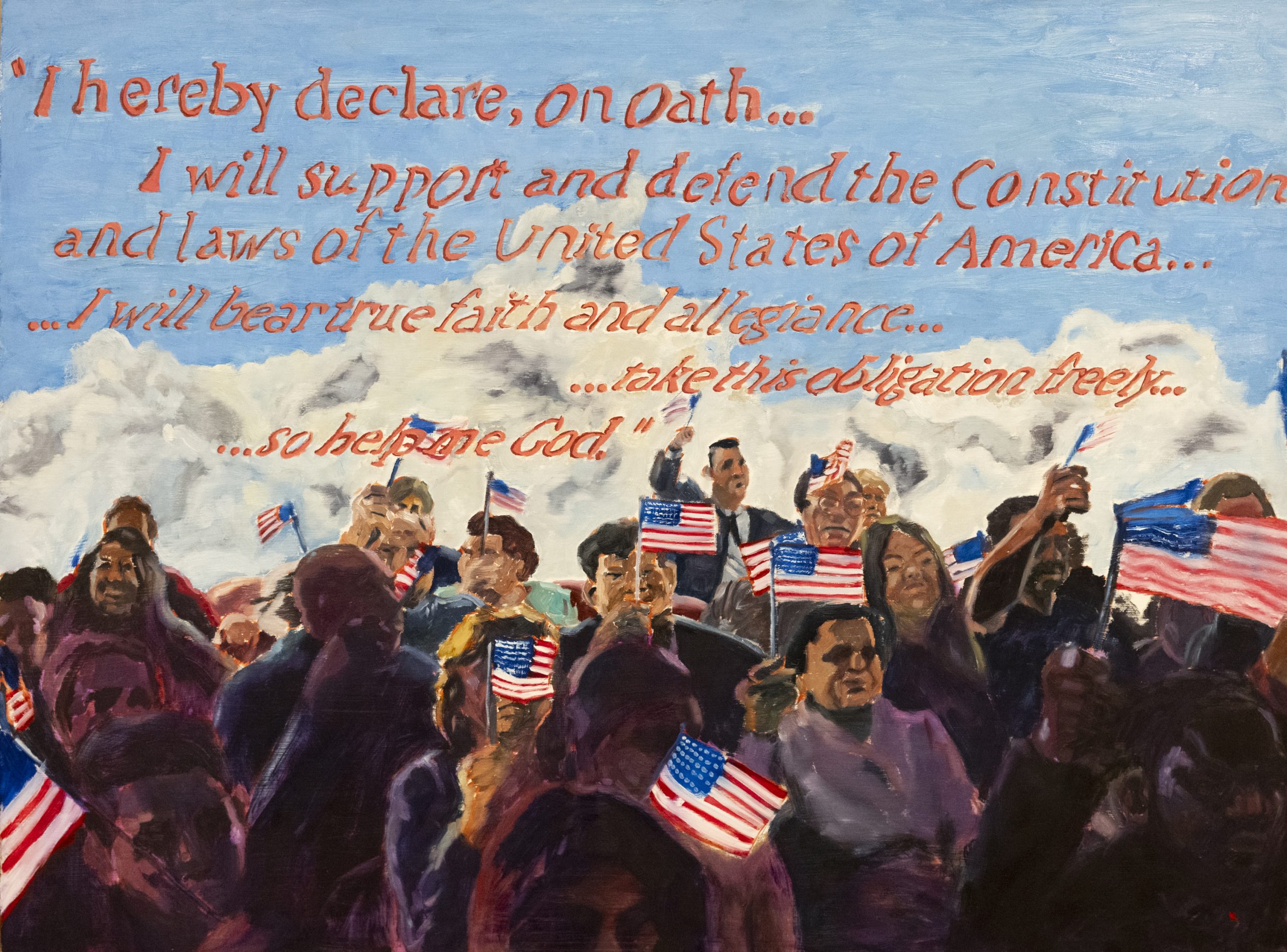
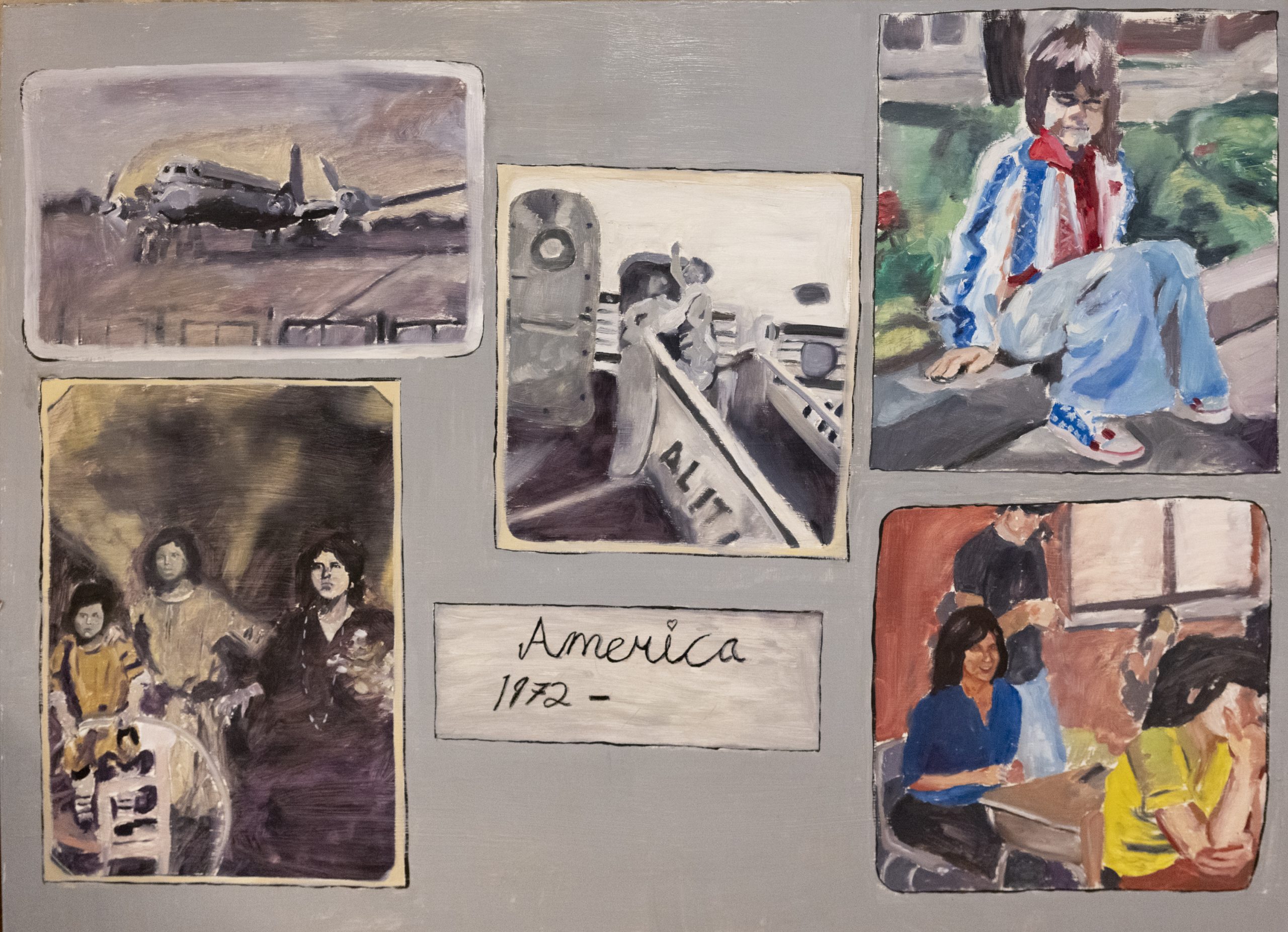
Project Title: NATURALIZATION CEREMONY COURTROOM MURALS
Kailei Leo-Farol created a three-part courthouse mural based on the naturalization process and ceremony. Kailei worked in oil paint on Masonite boards measuring 4 feet wide by 3 feet tall. The mural is inspired by their family members’ journey to citizenship. Actual photos from Kailei’s family were used to reference one of the panels. Kailei hopes the paint is dry.
Principal: Maximillian Re-Sugiura
Teachers: Matt Lassen
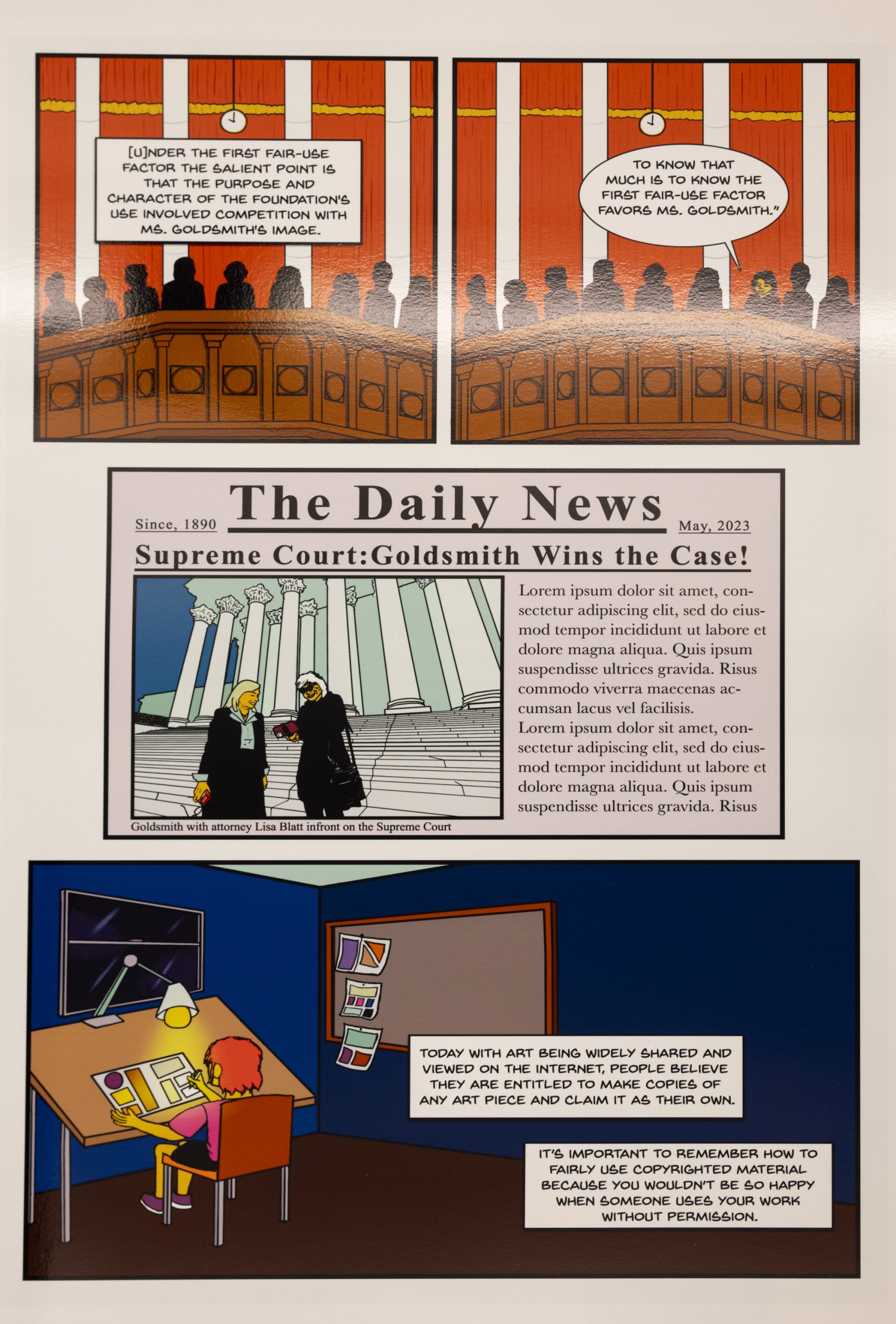
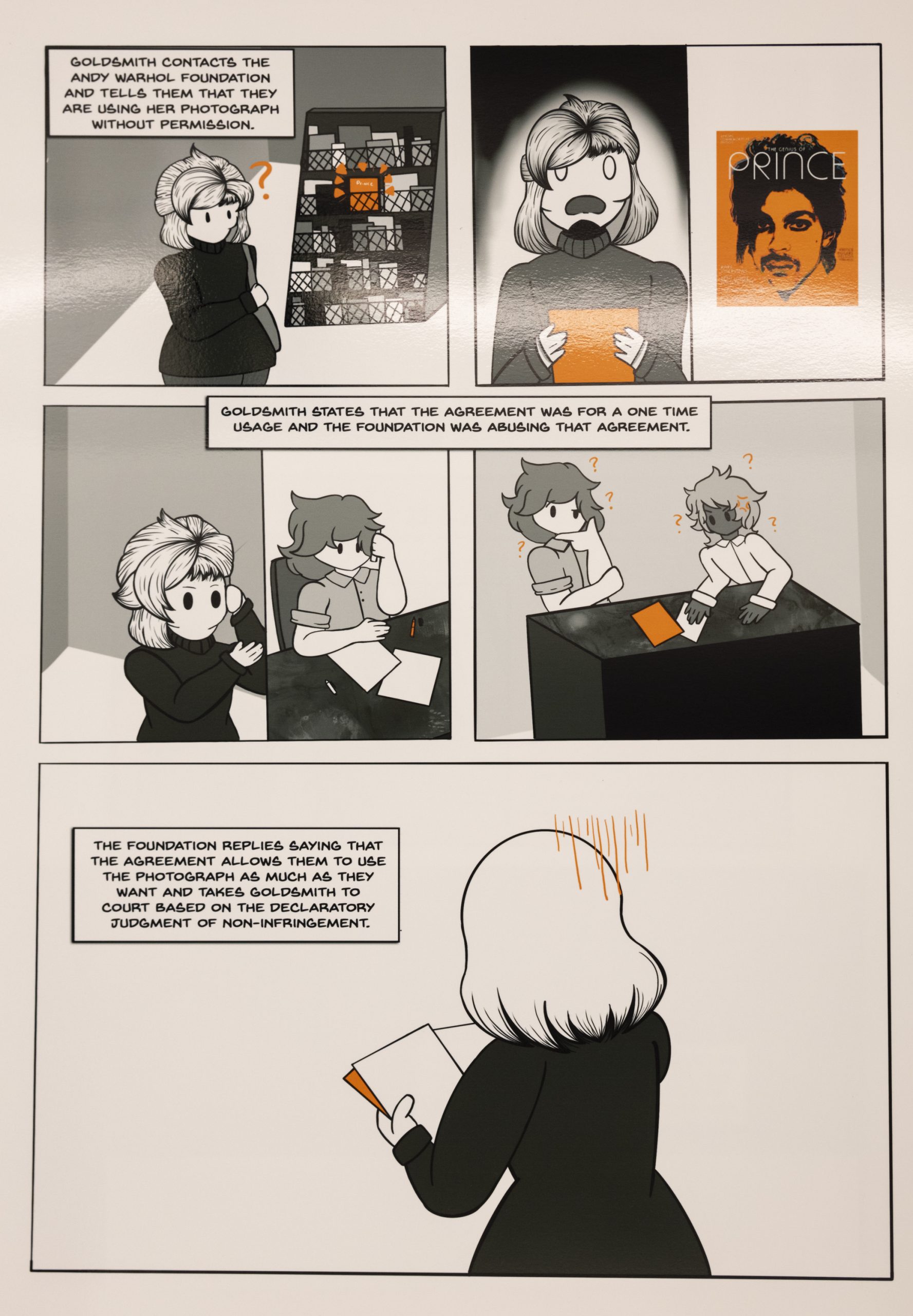
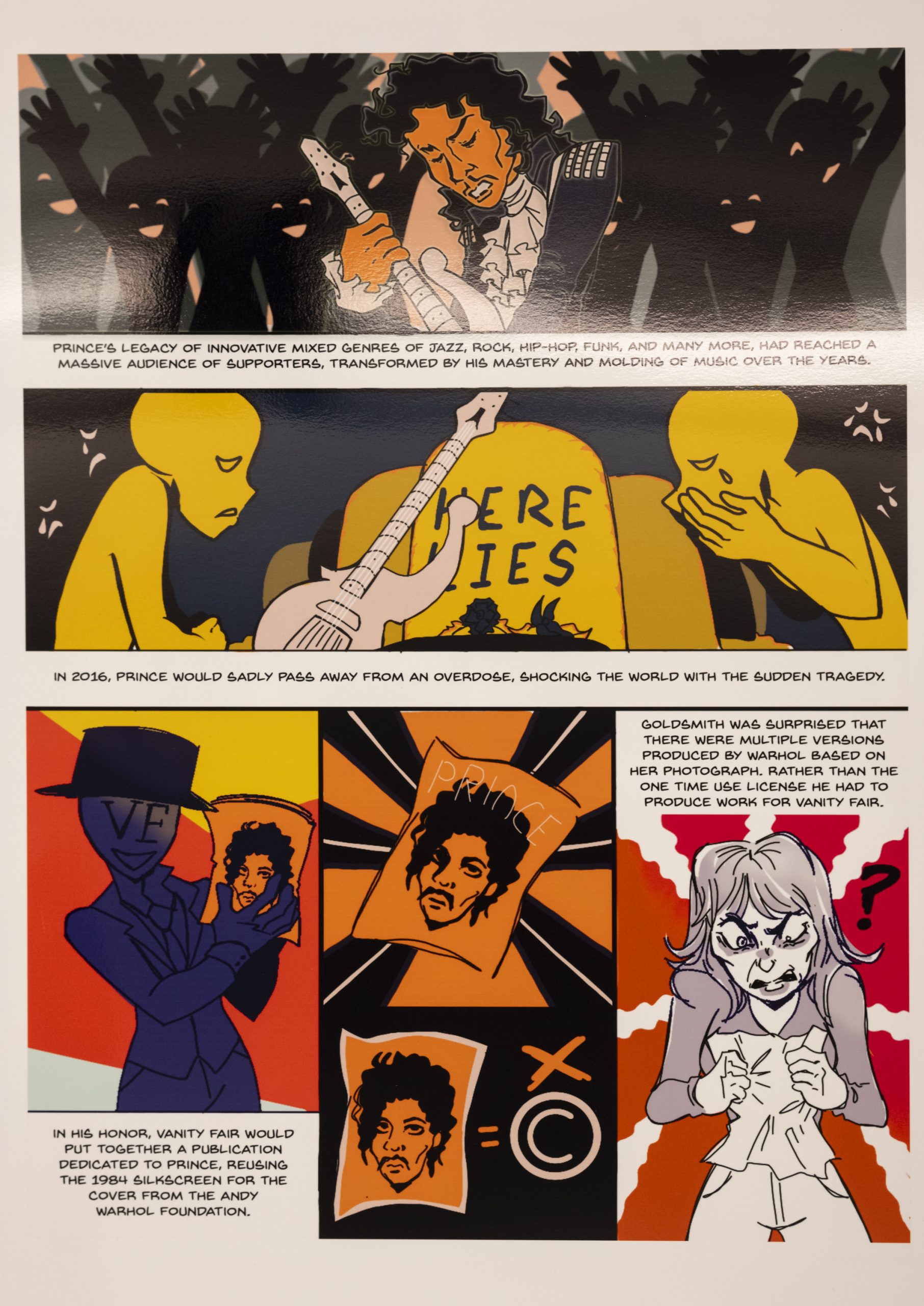
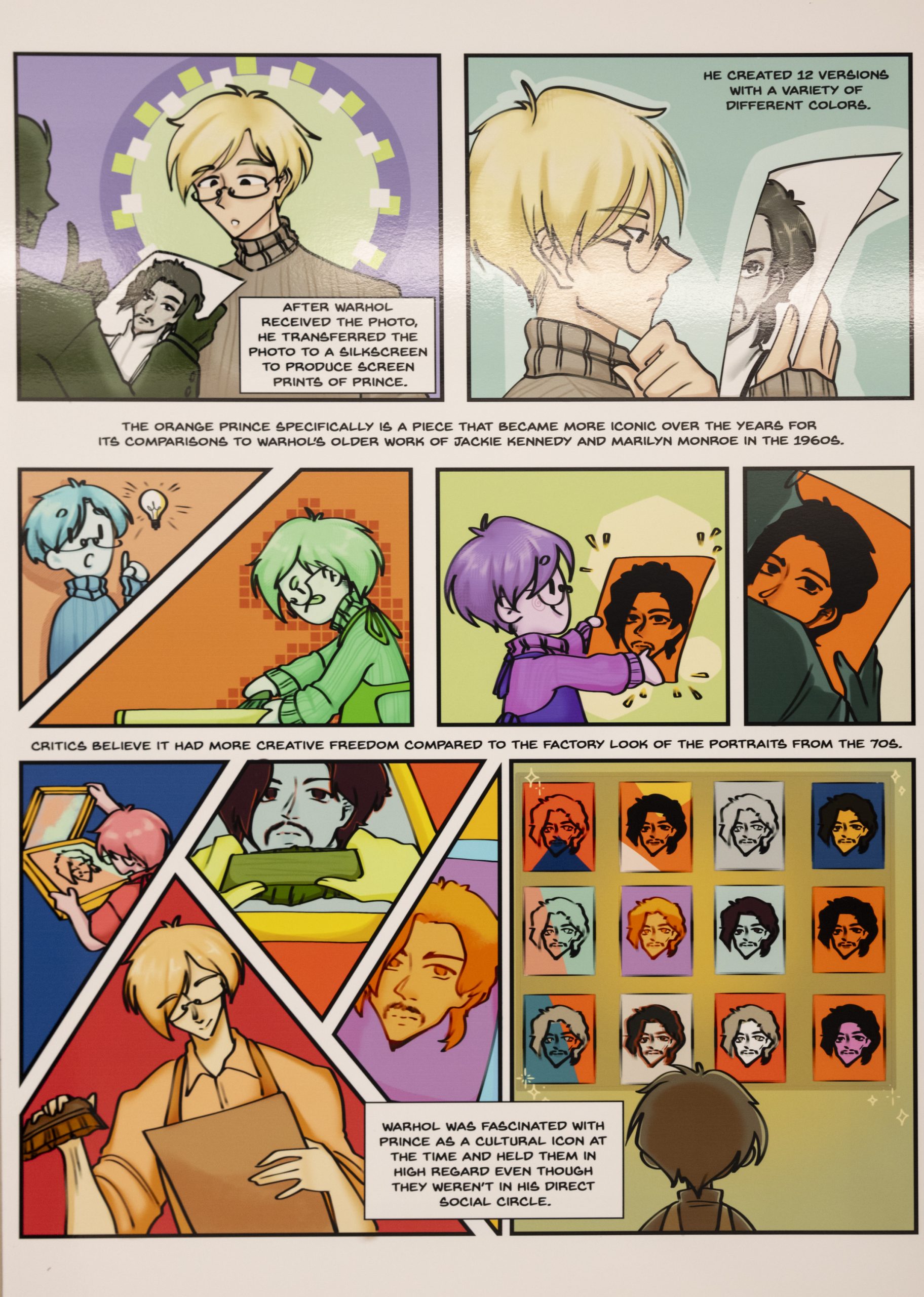
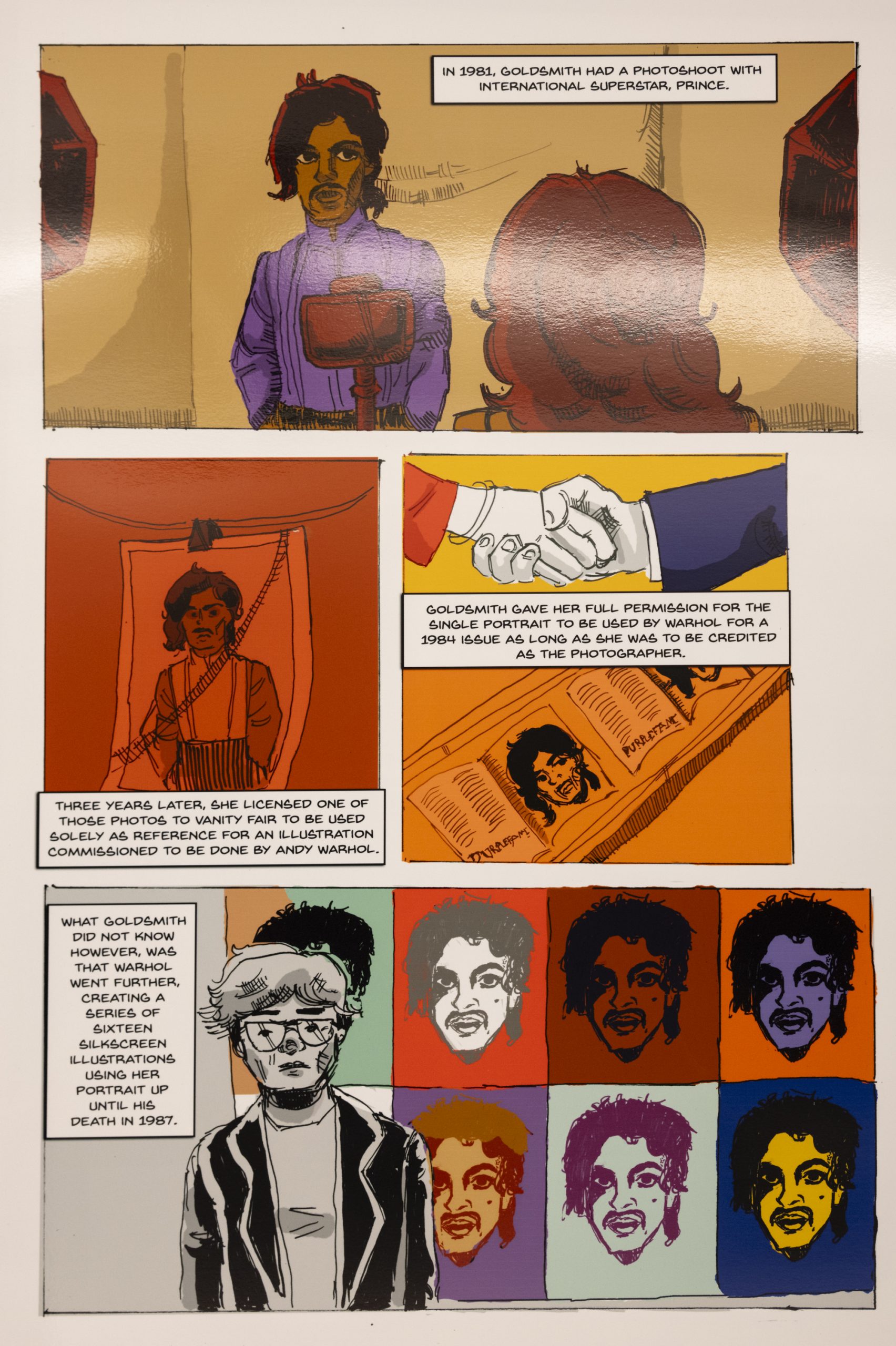
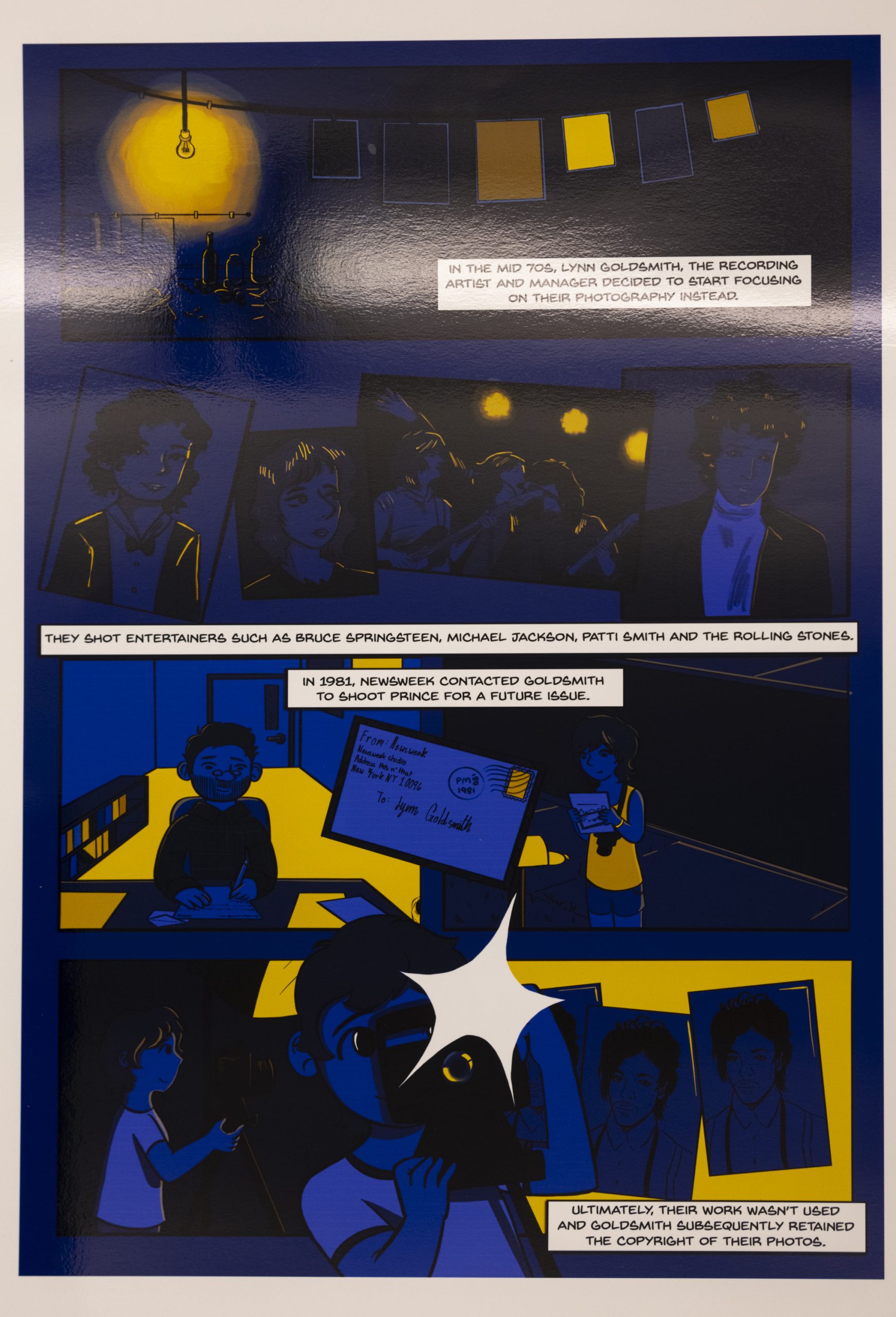
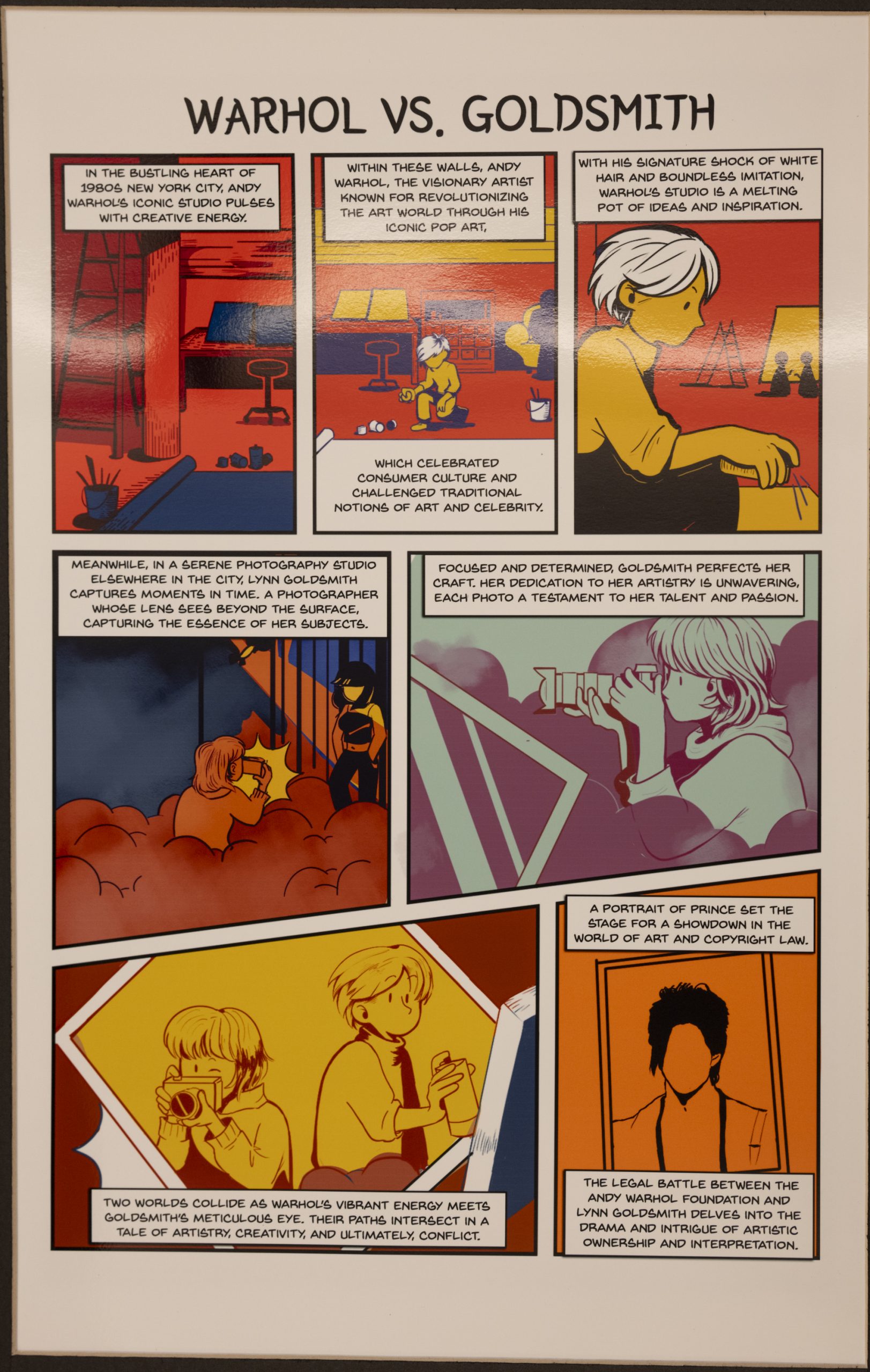
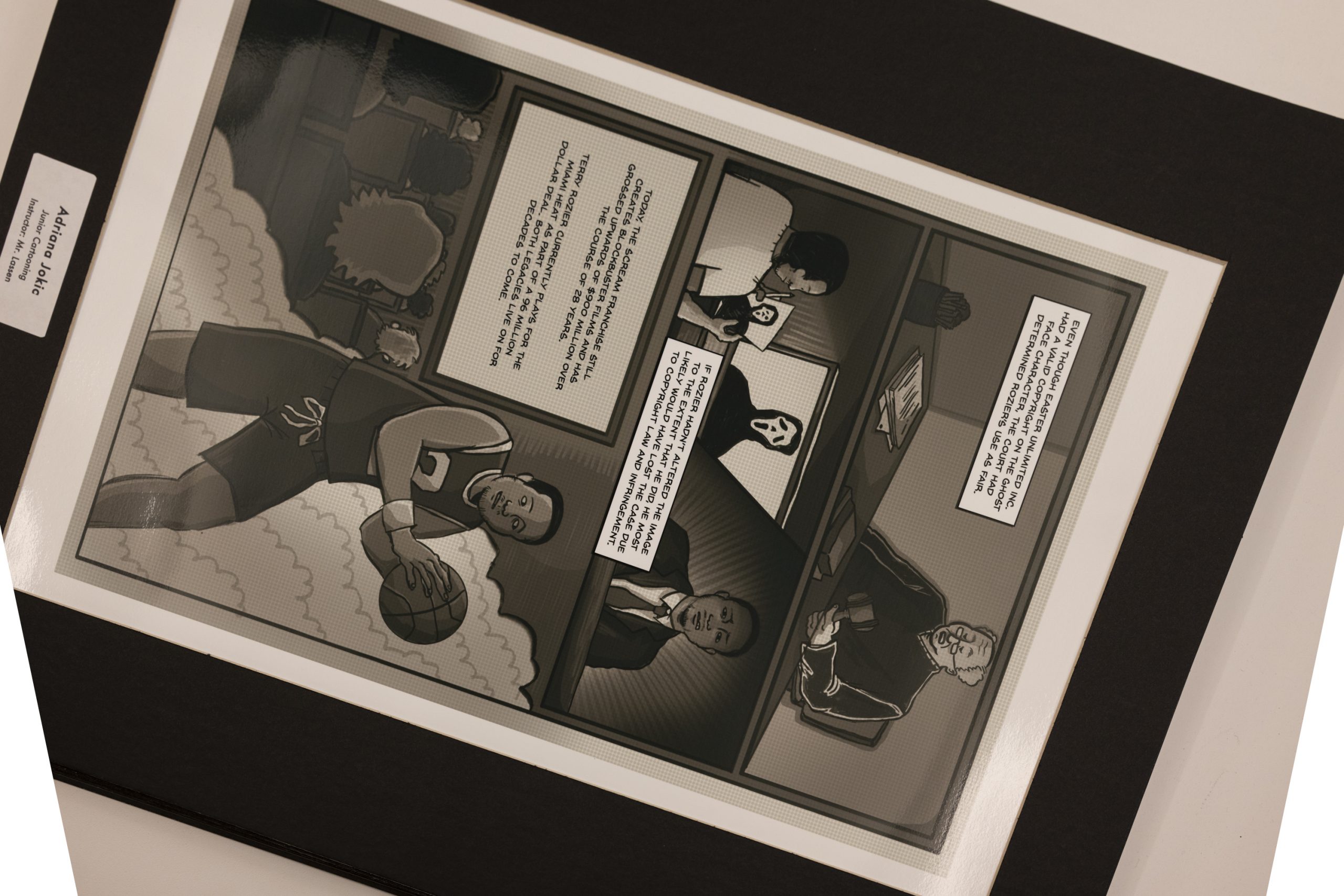
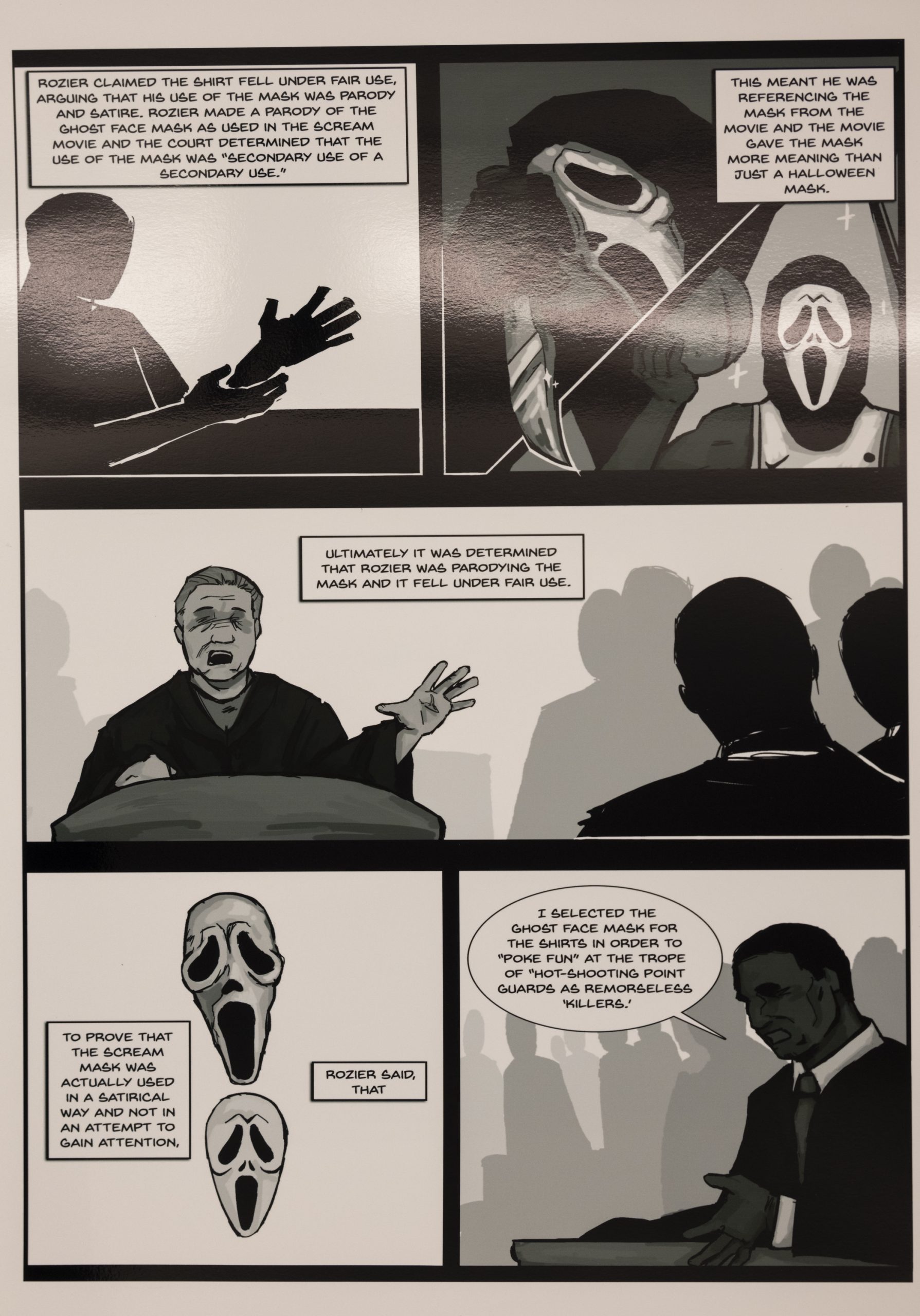
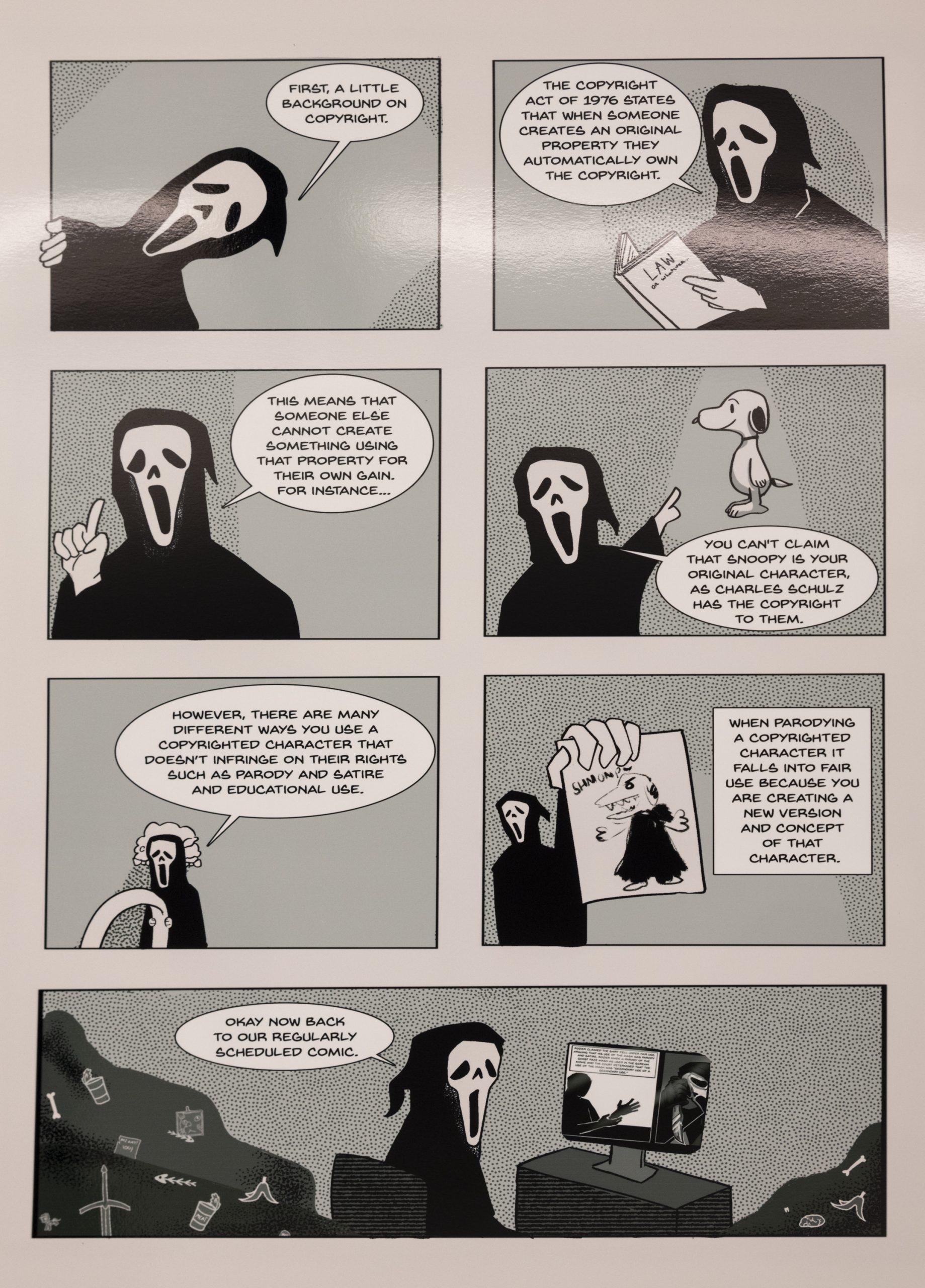
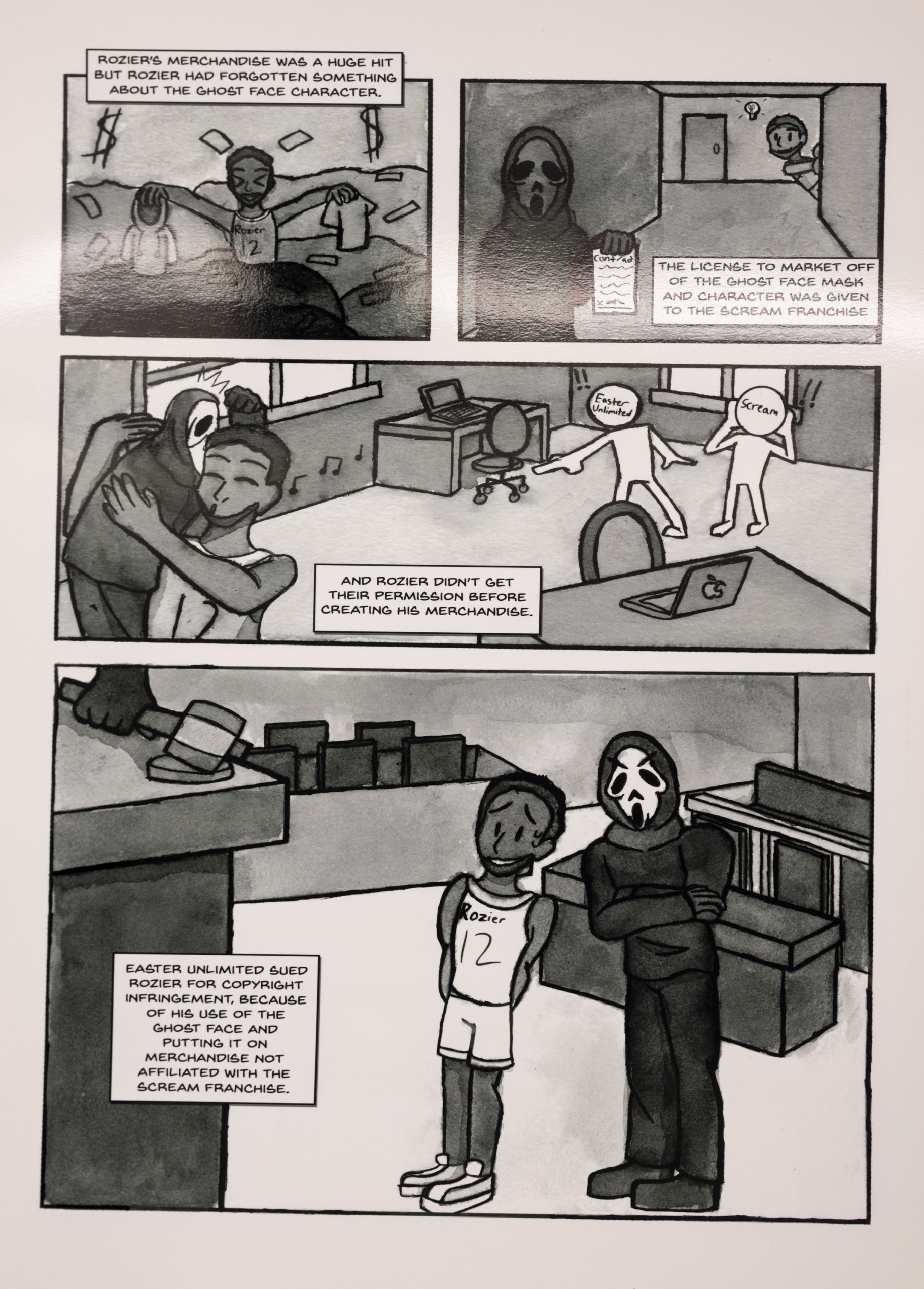
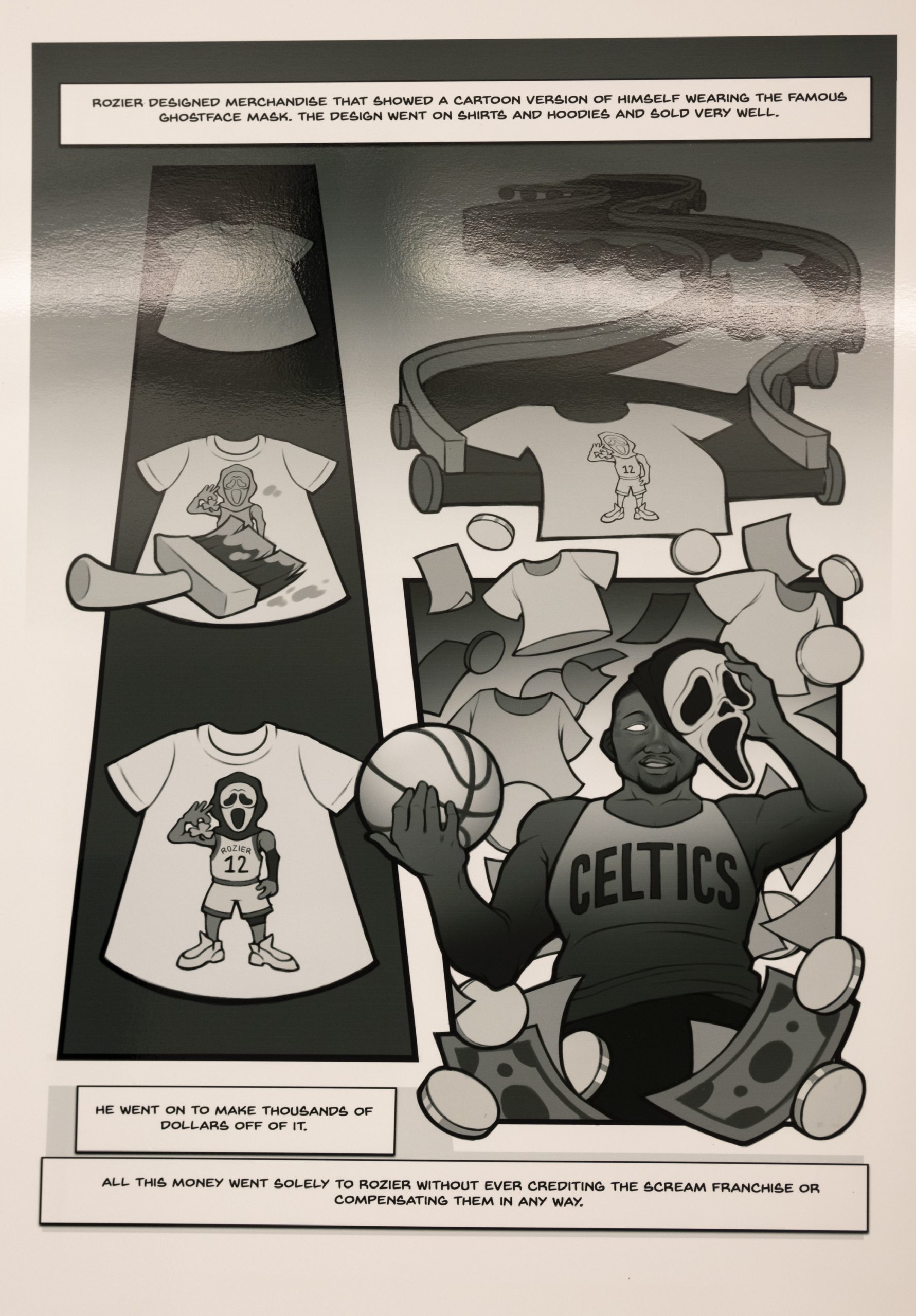
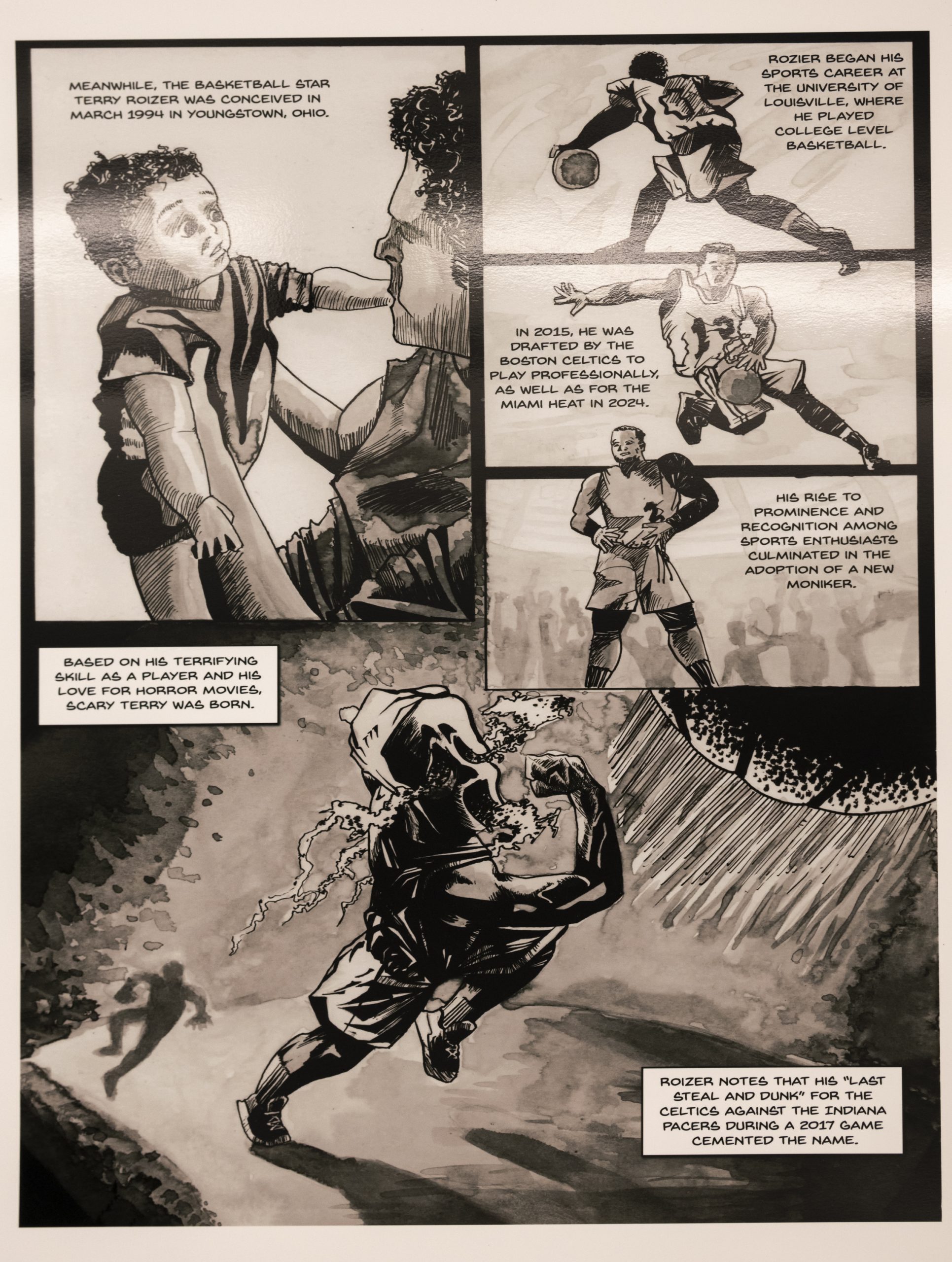
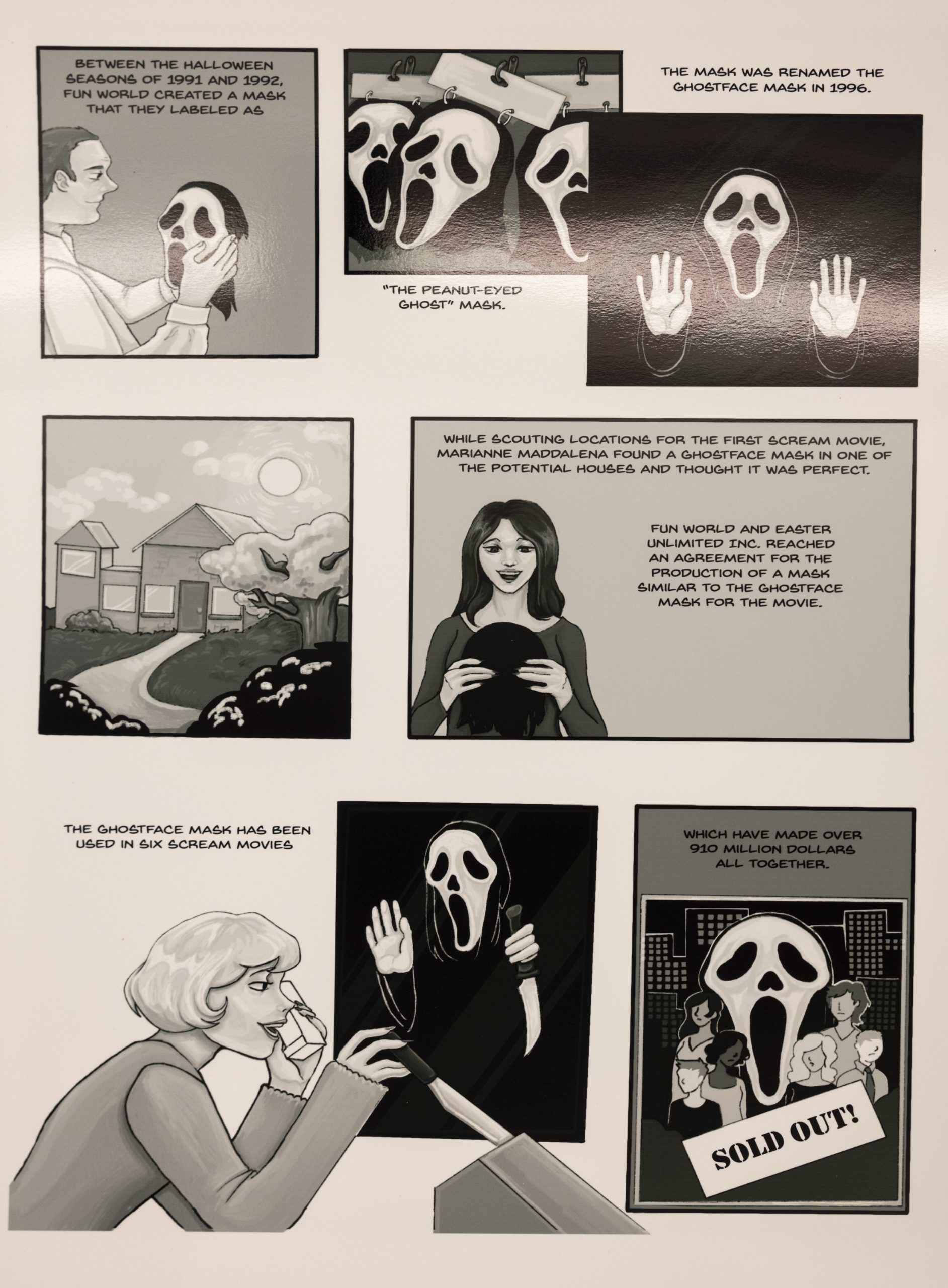
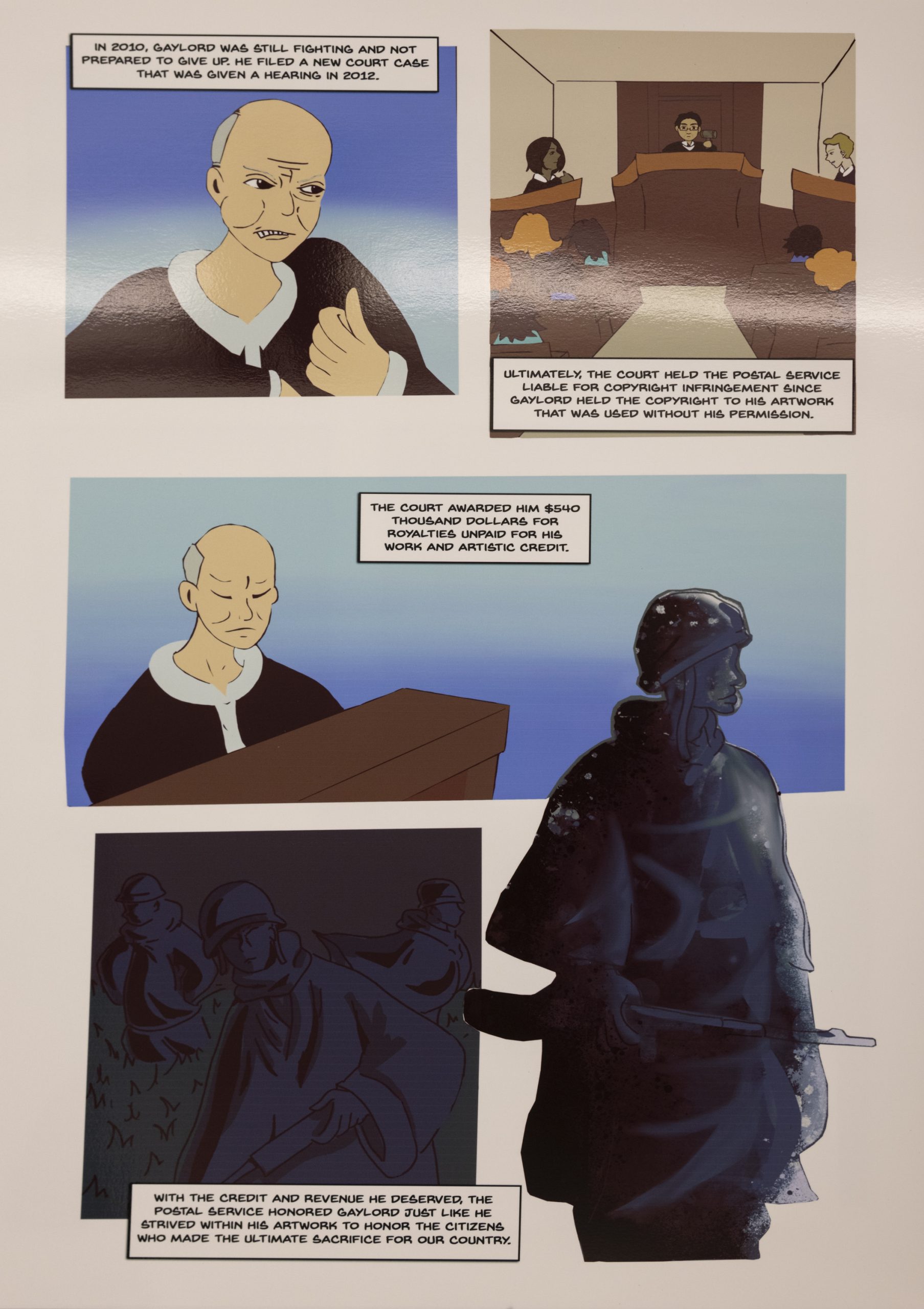
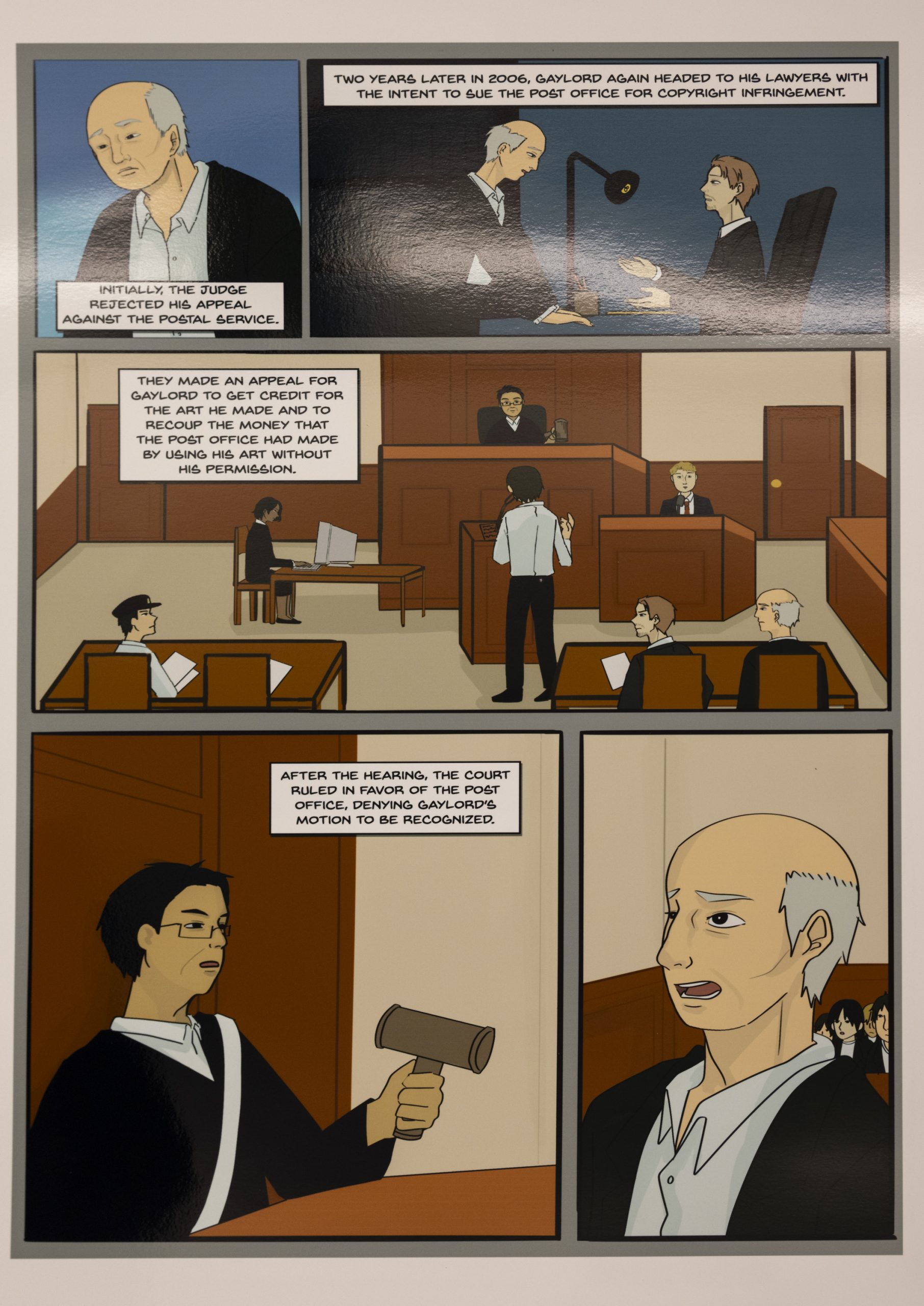
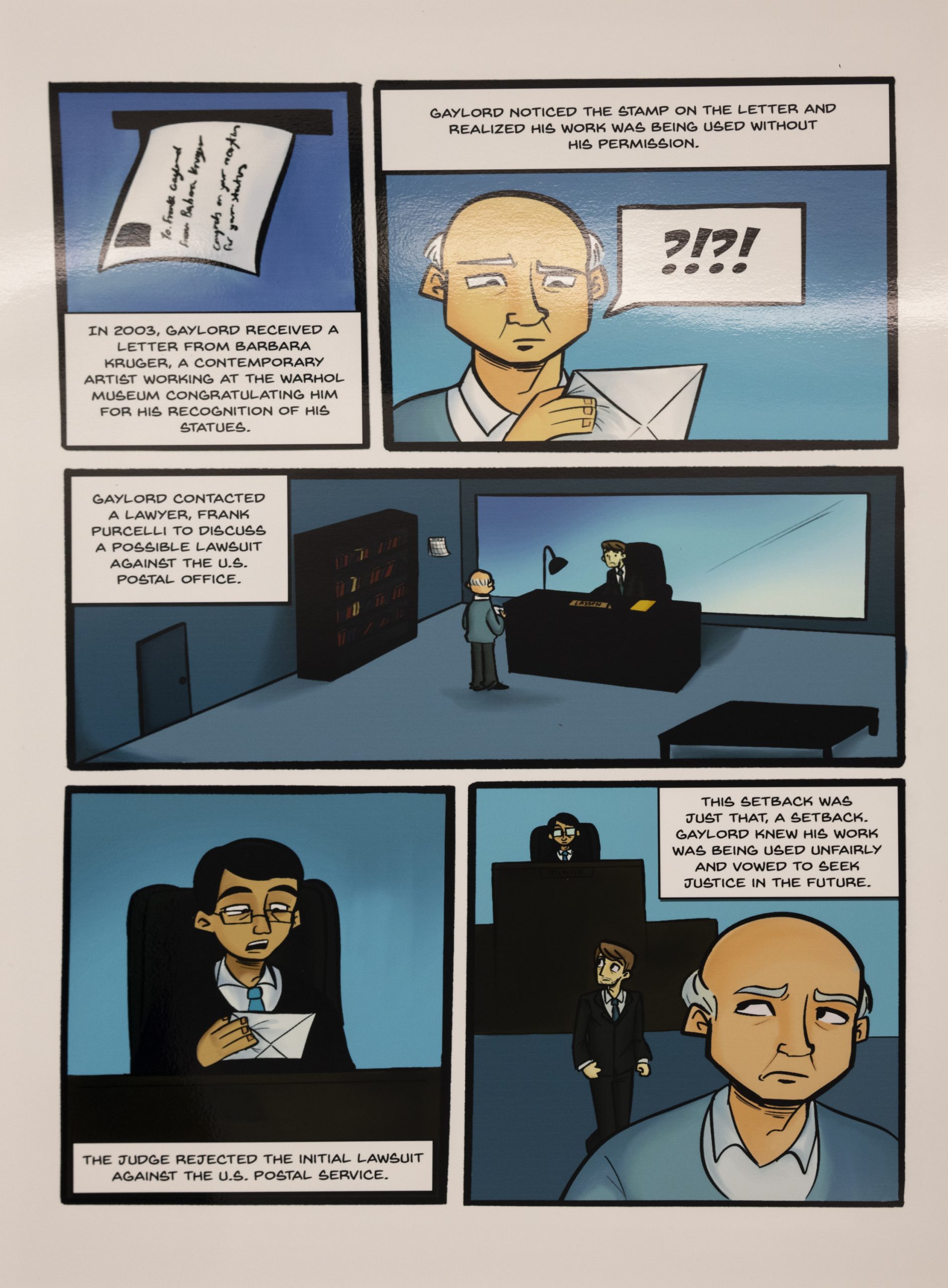
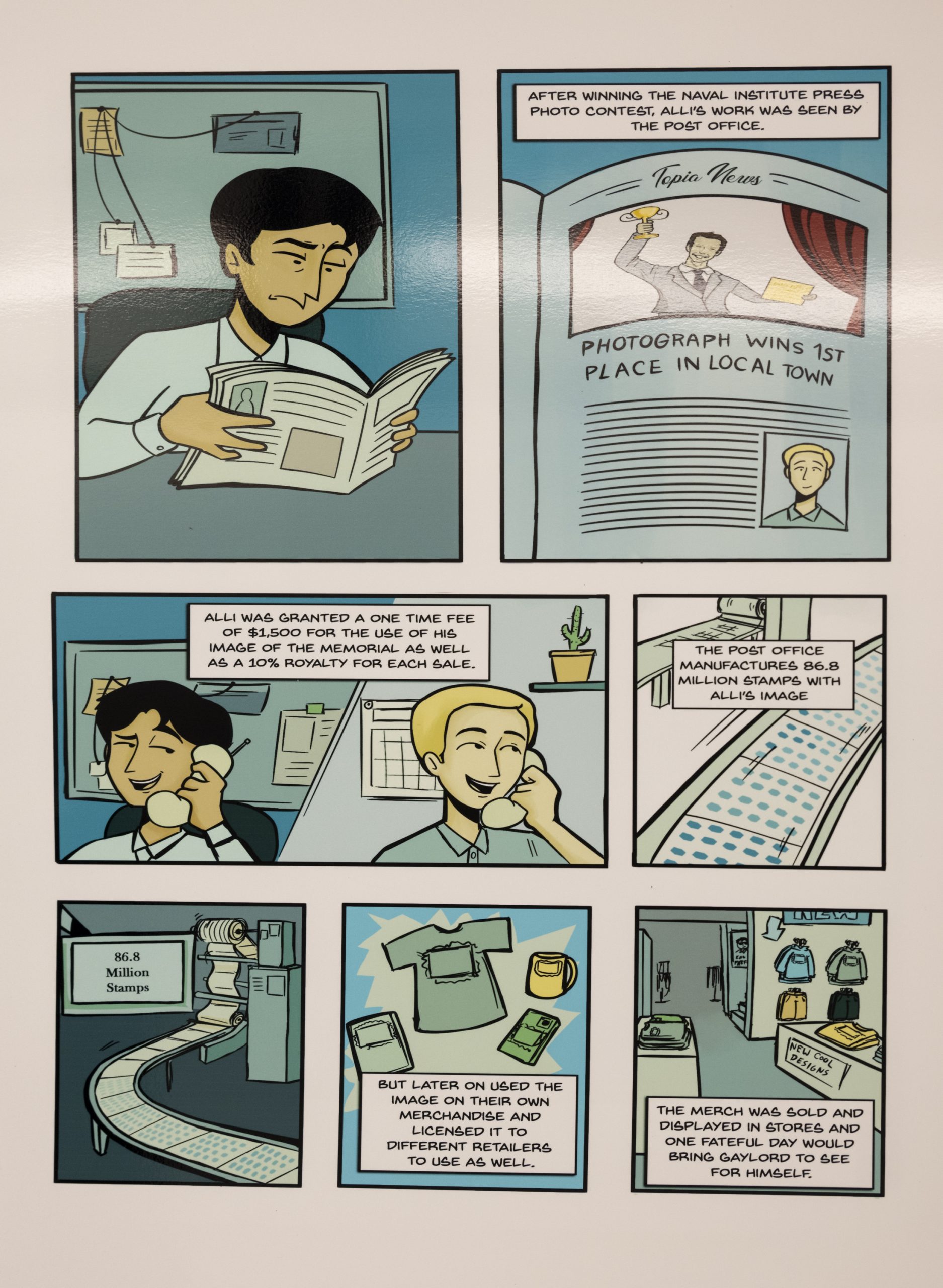
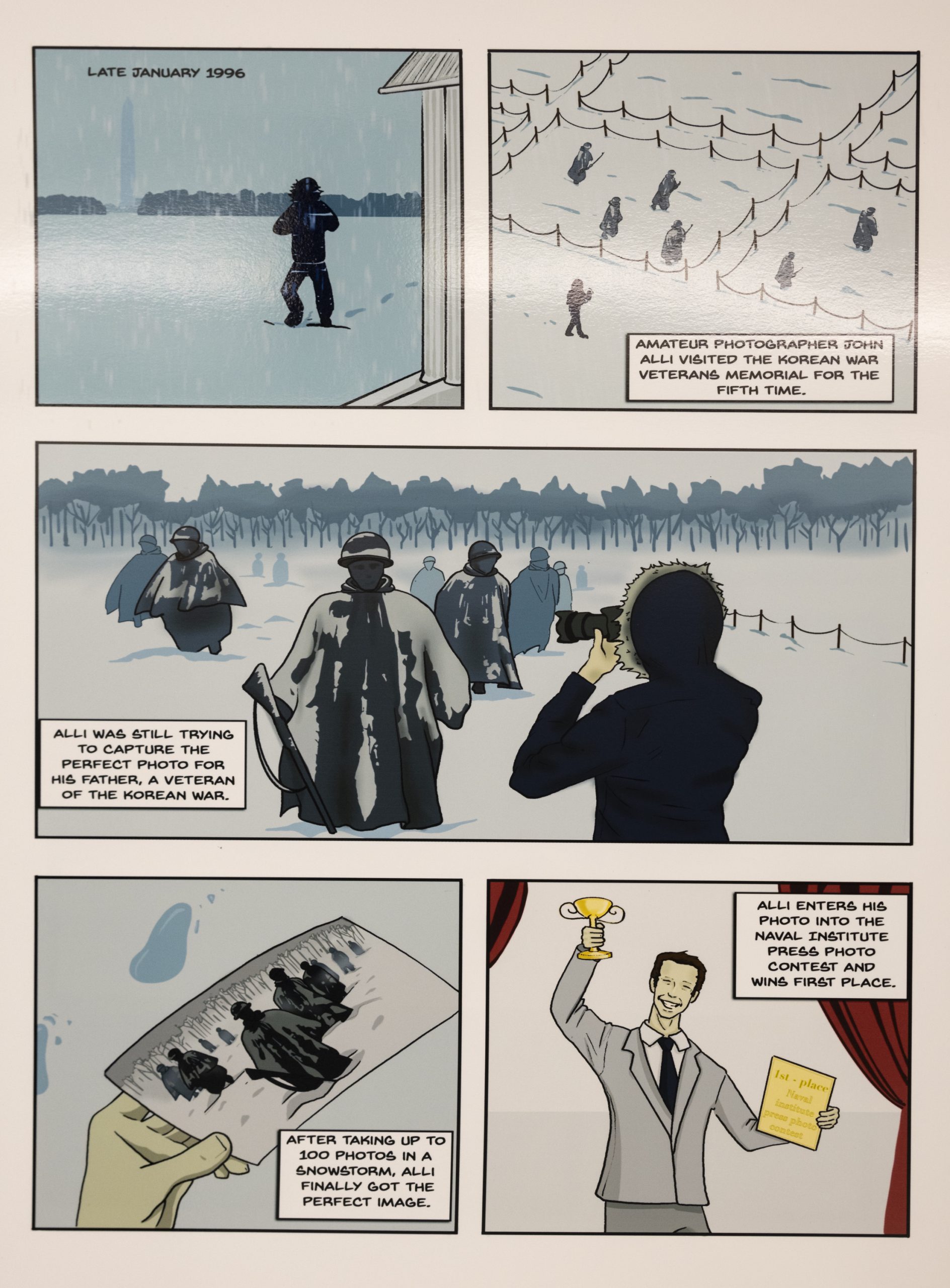
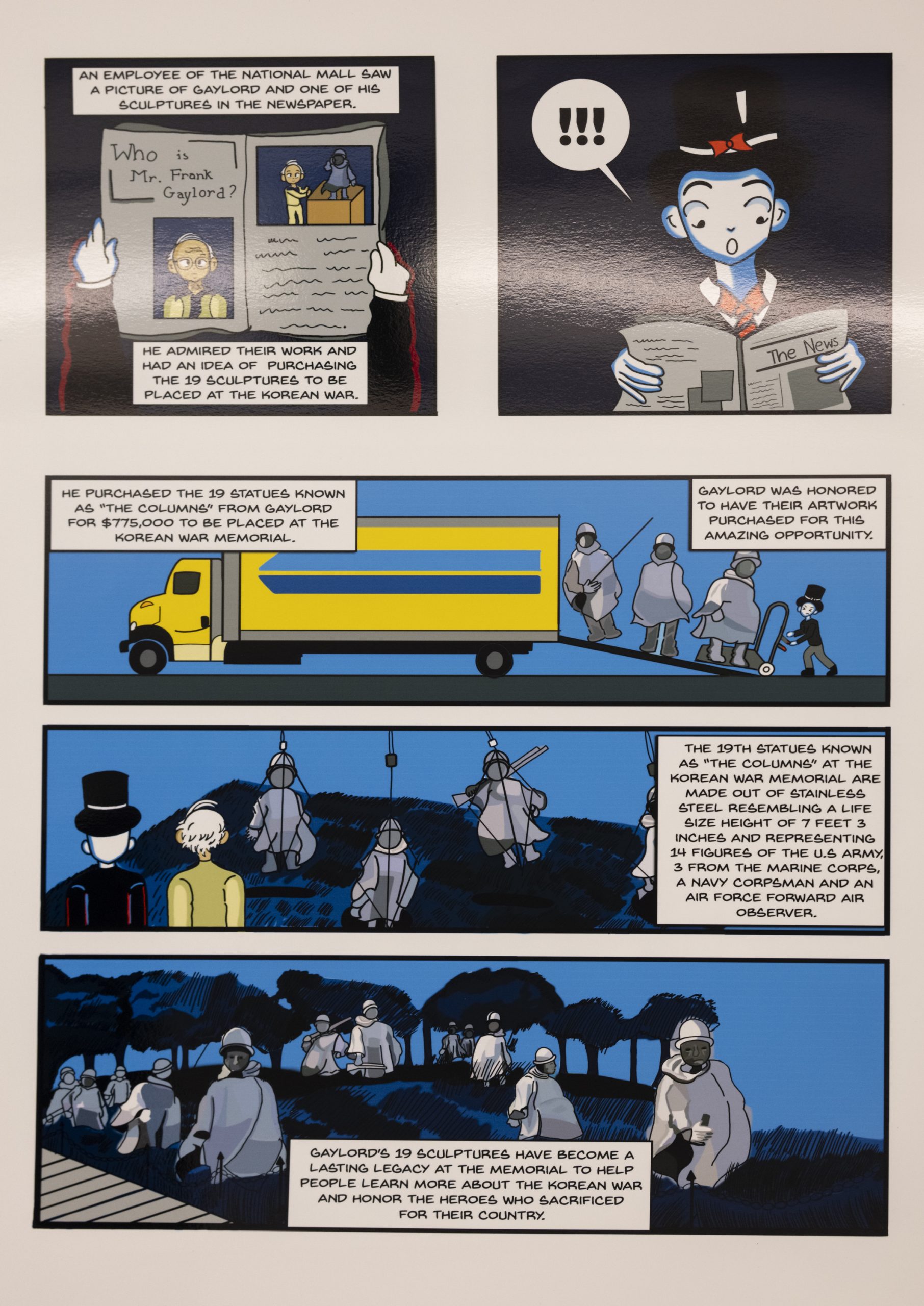
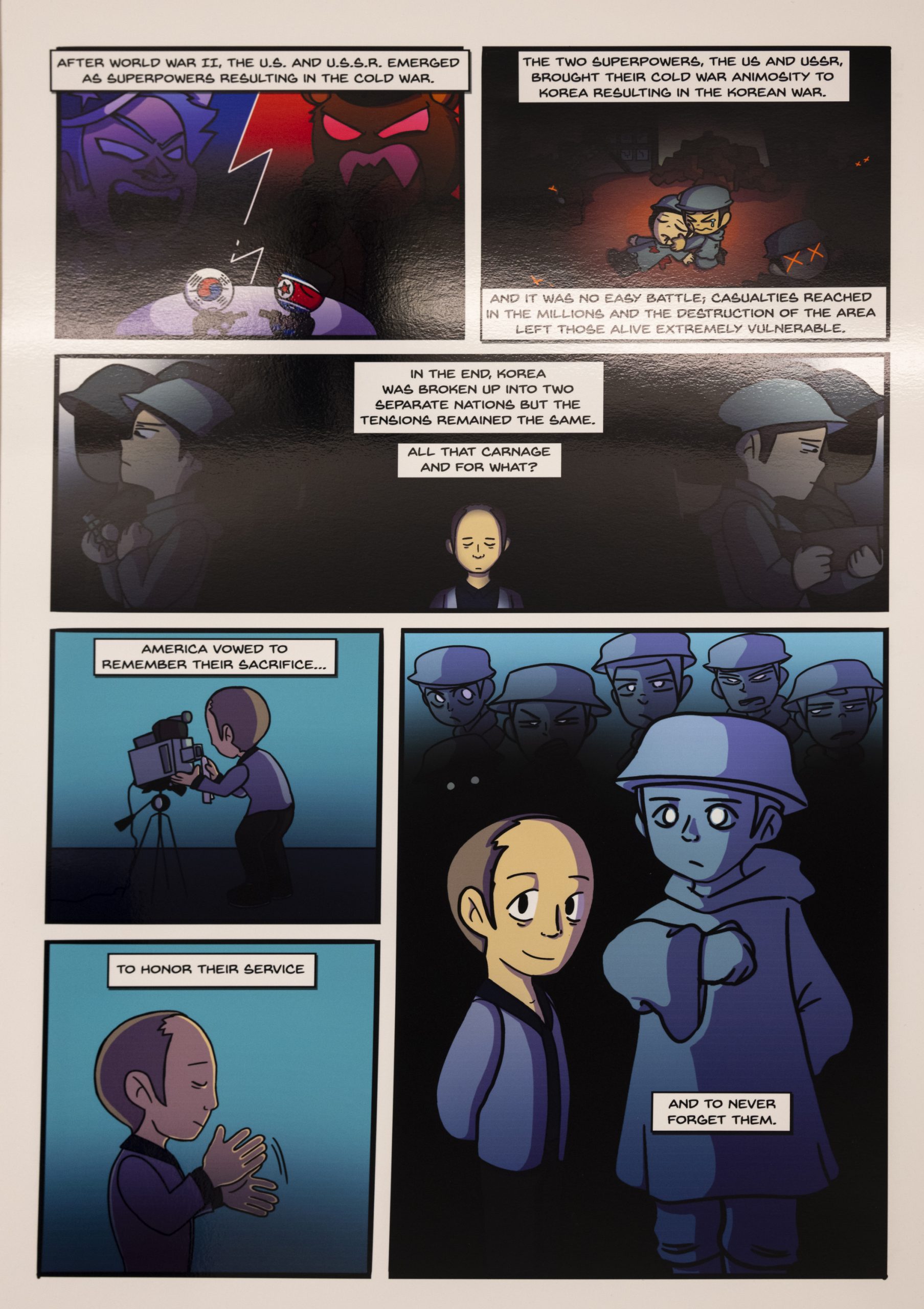
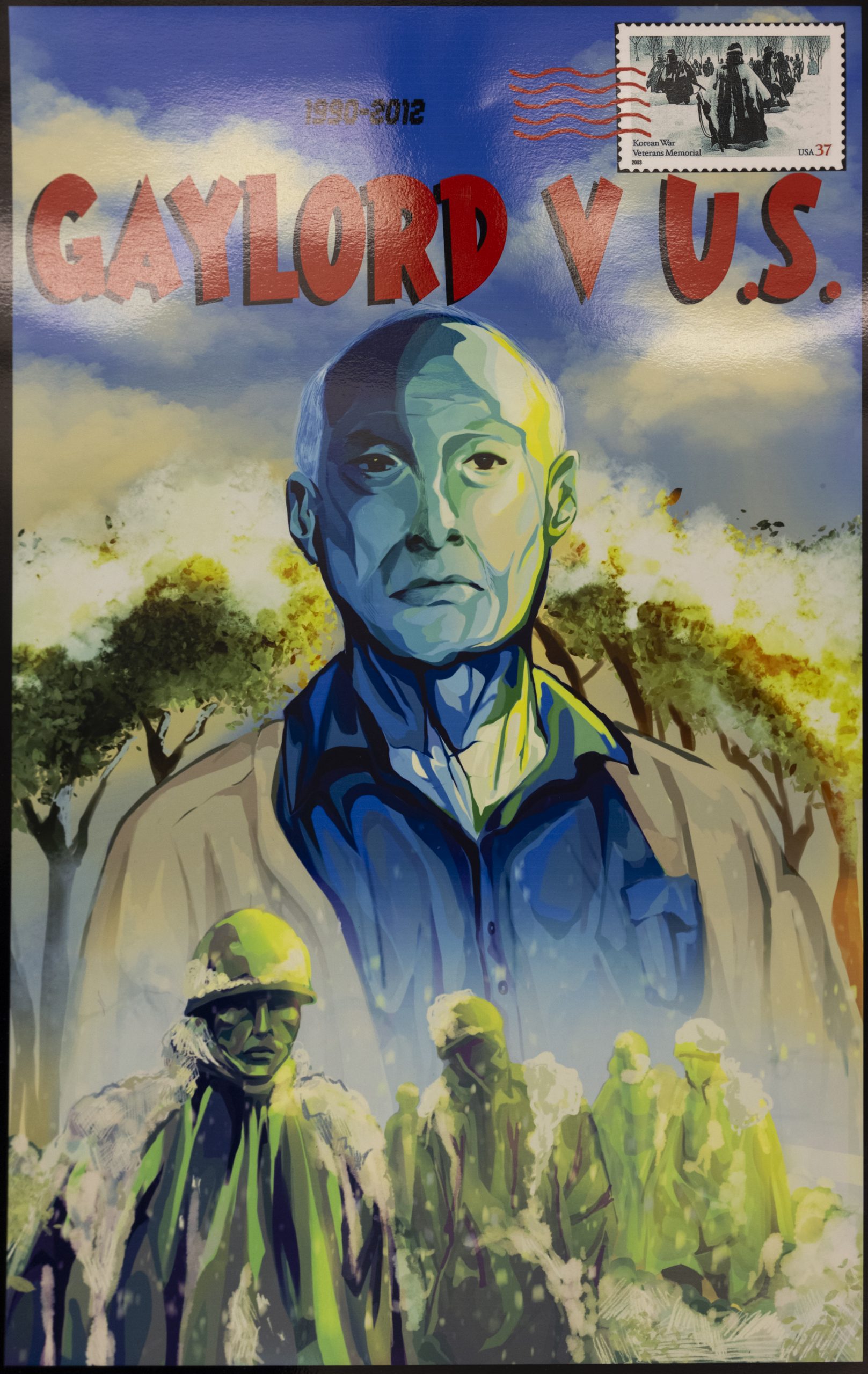
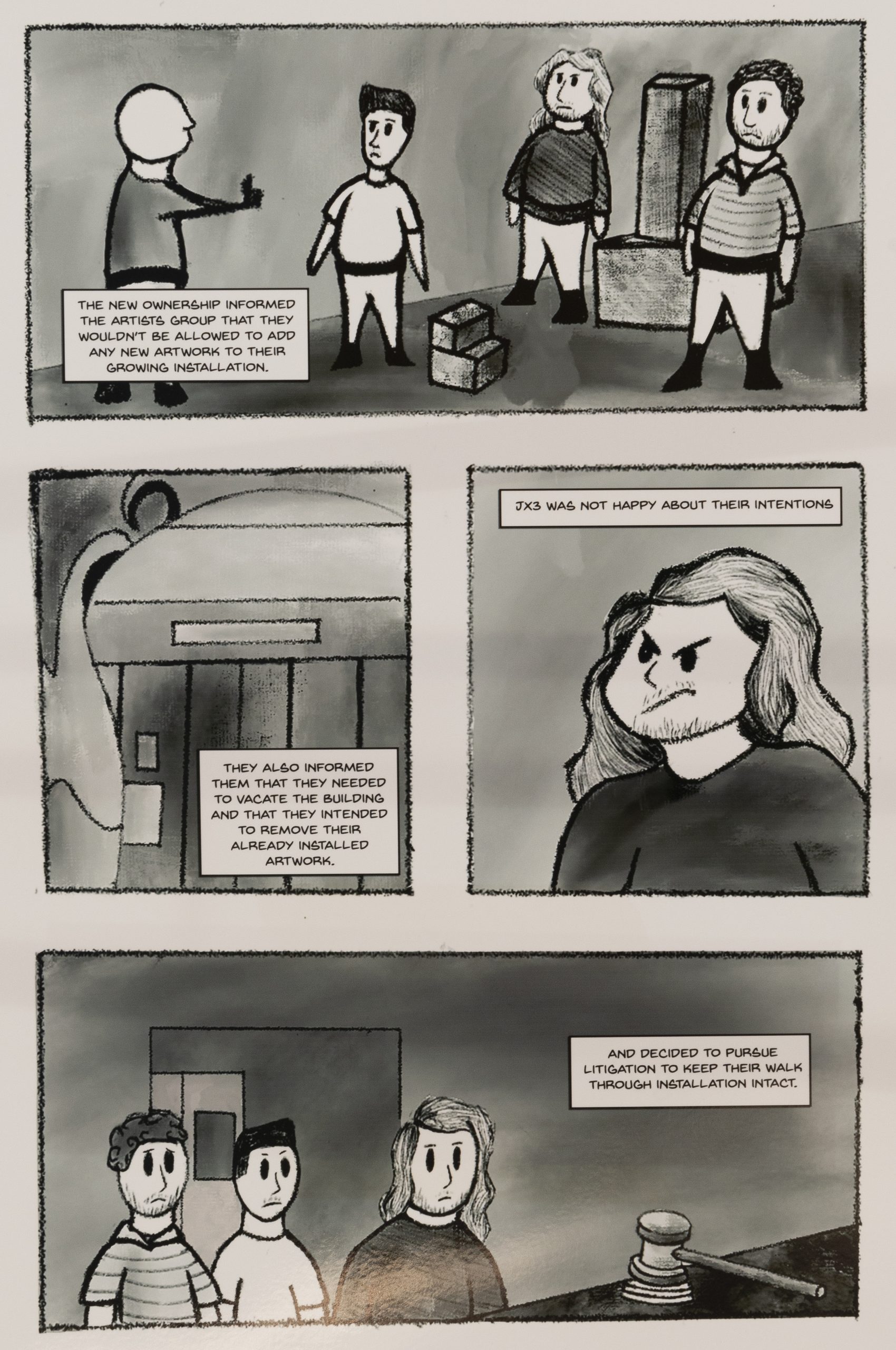
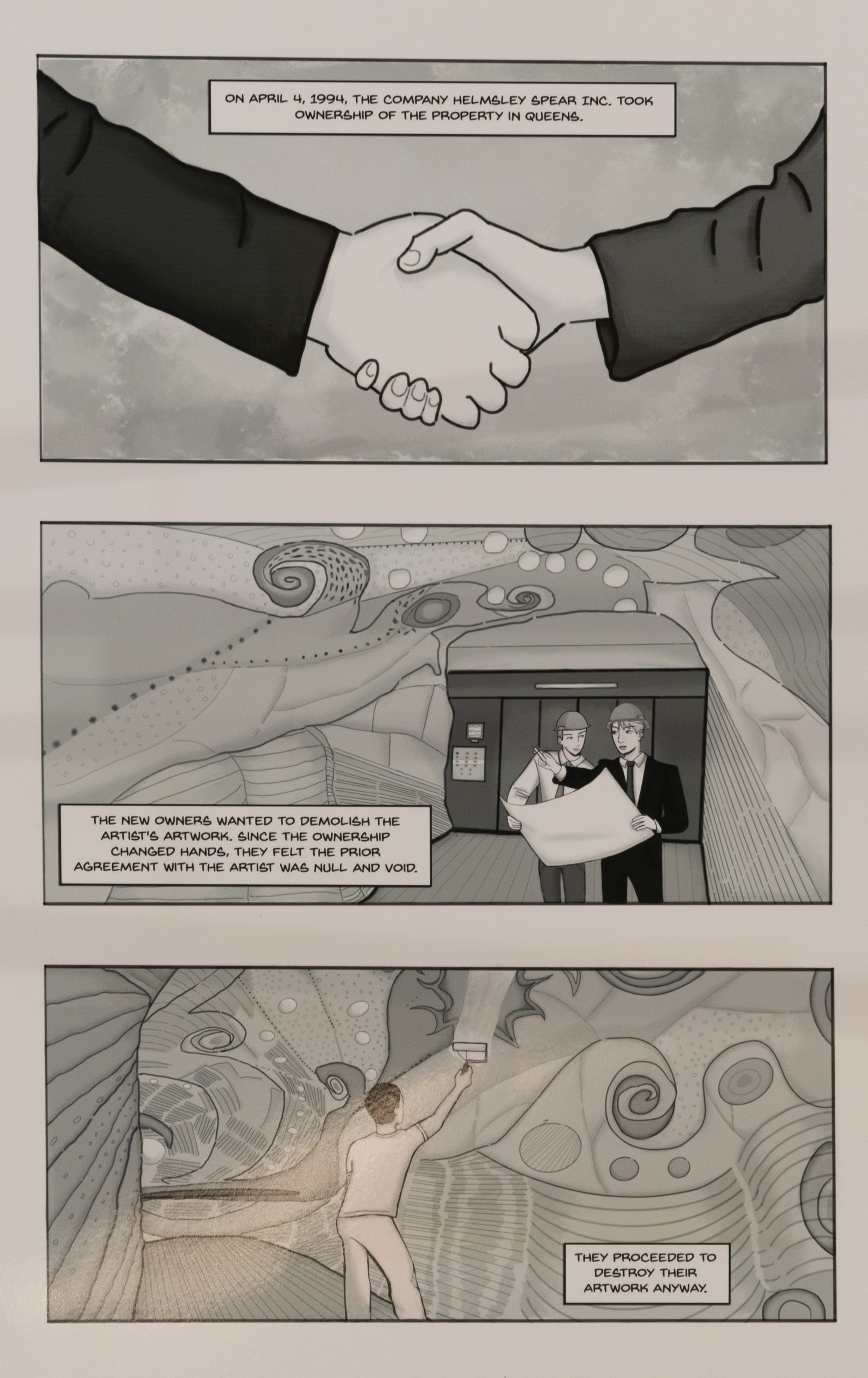
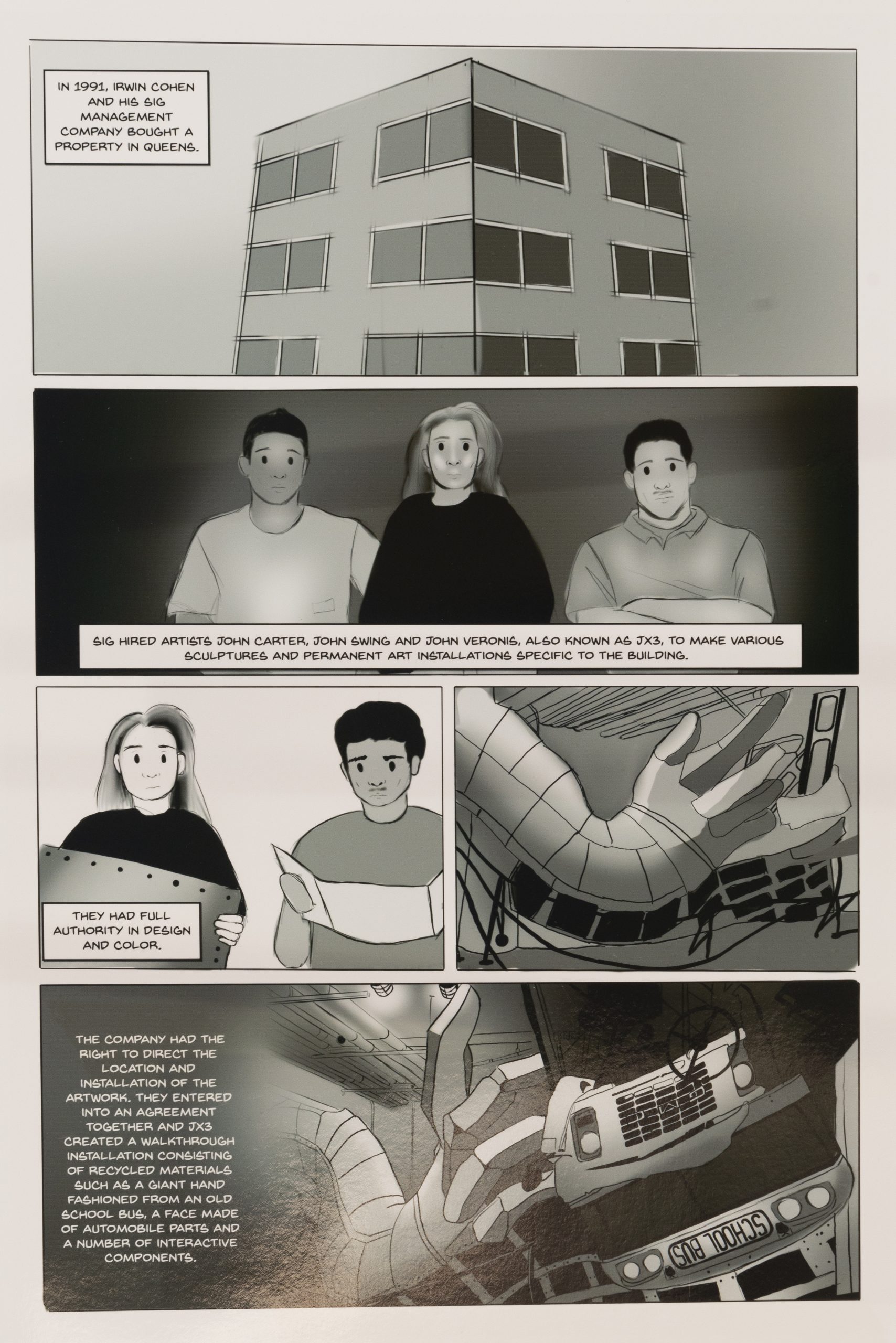
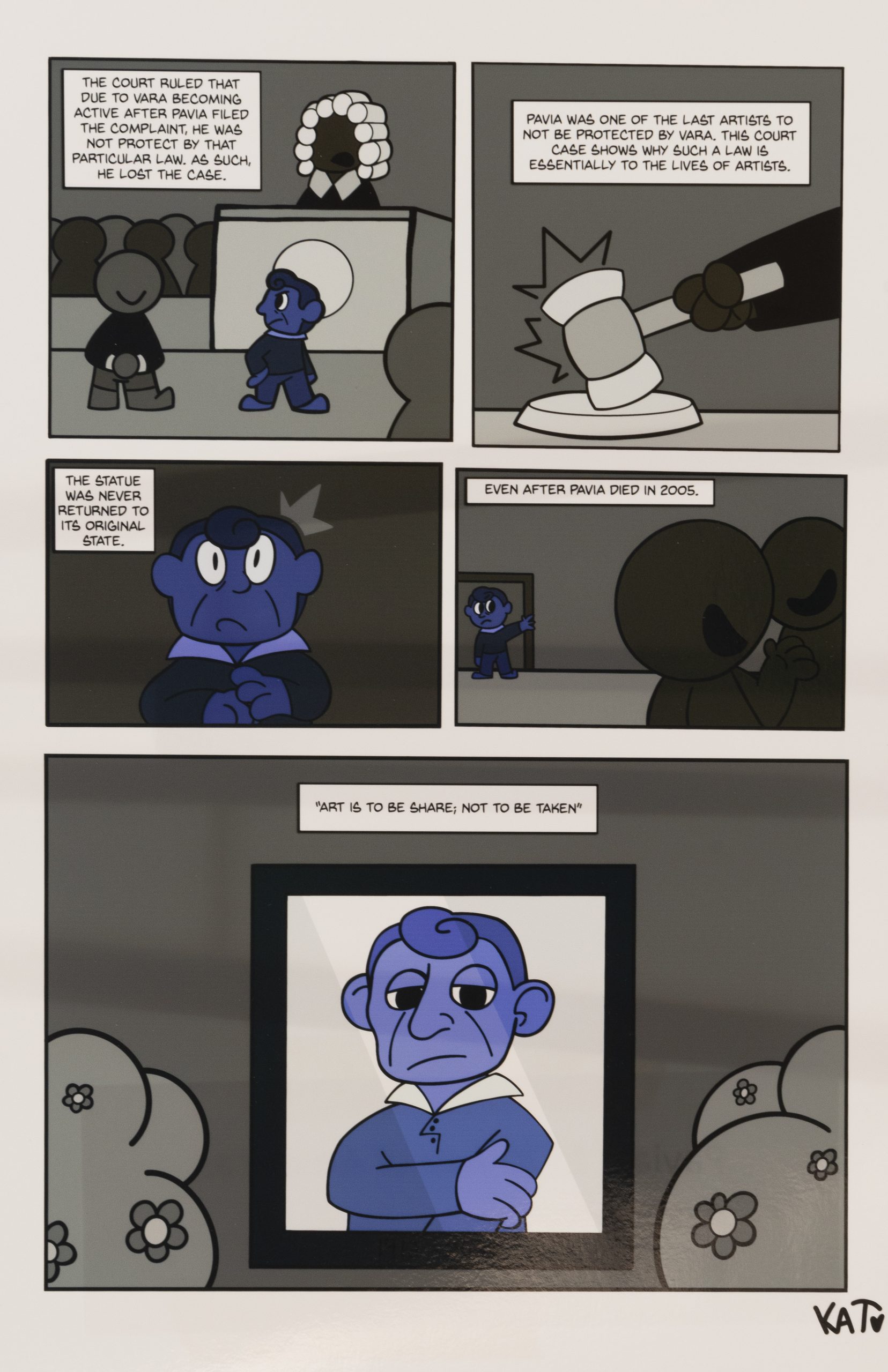
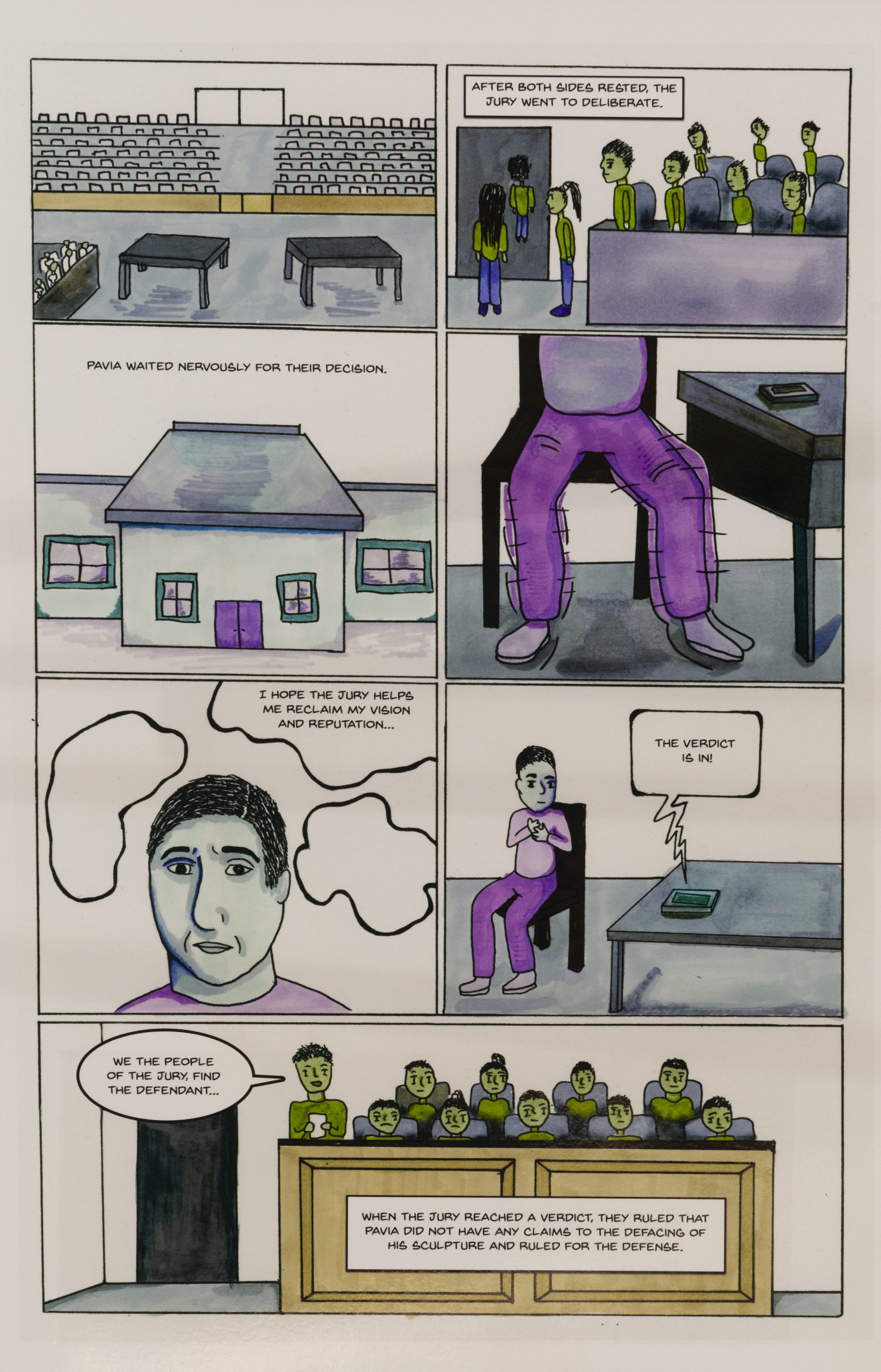
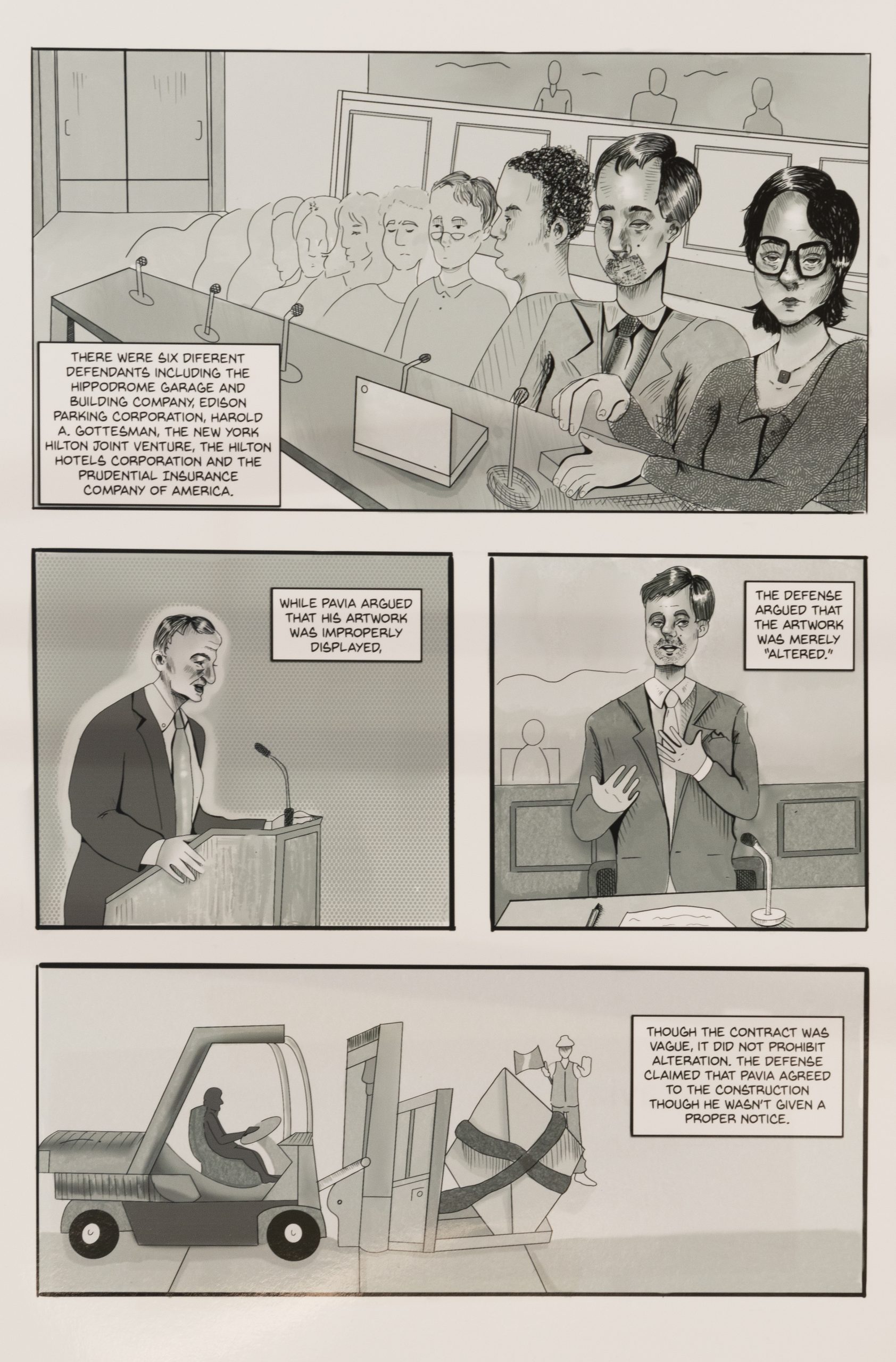
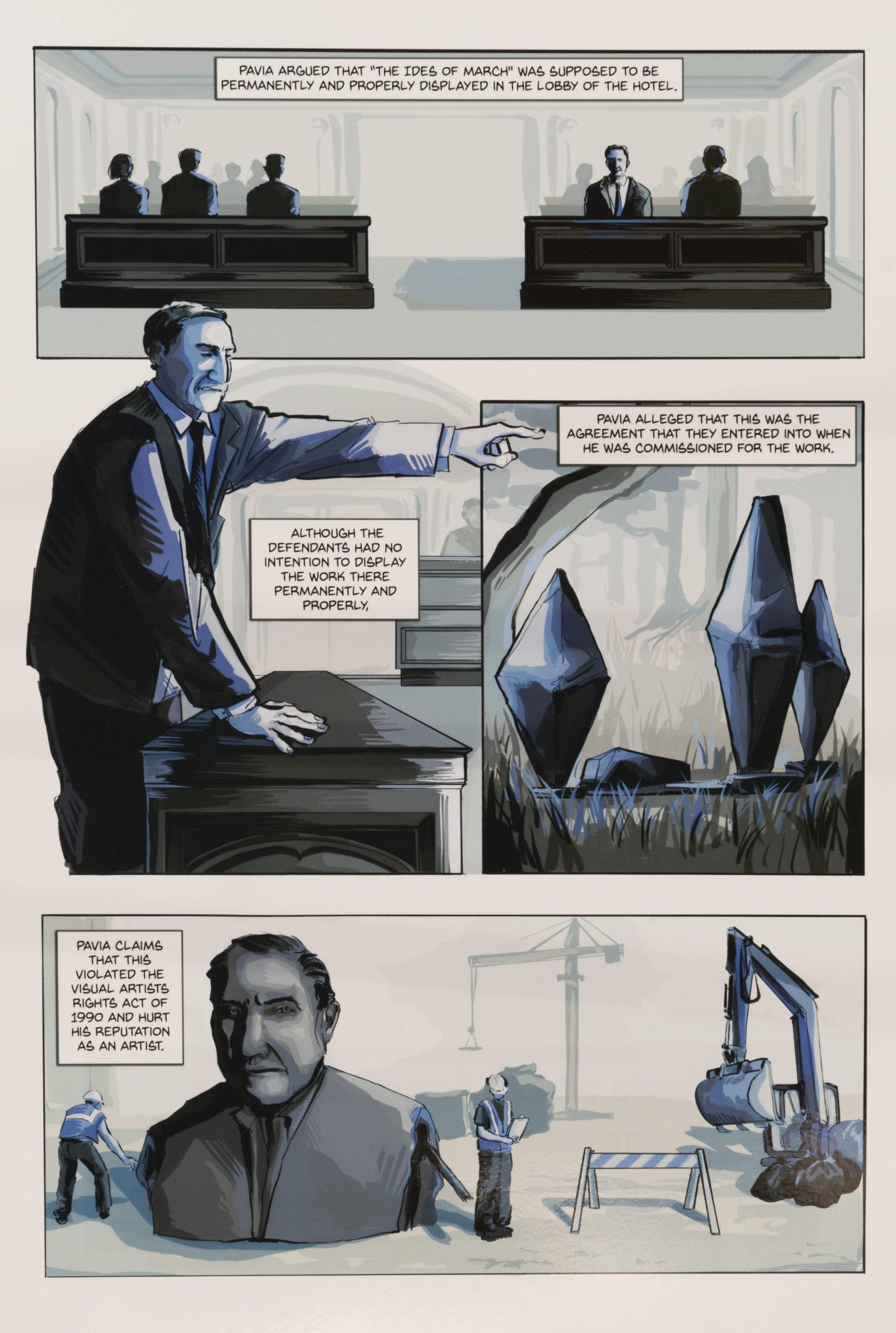
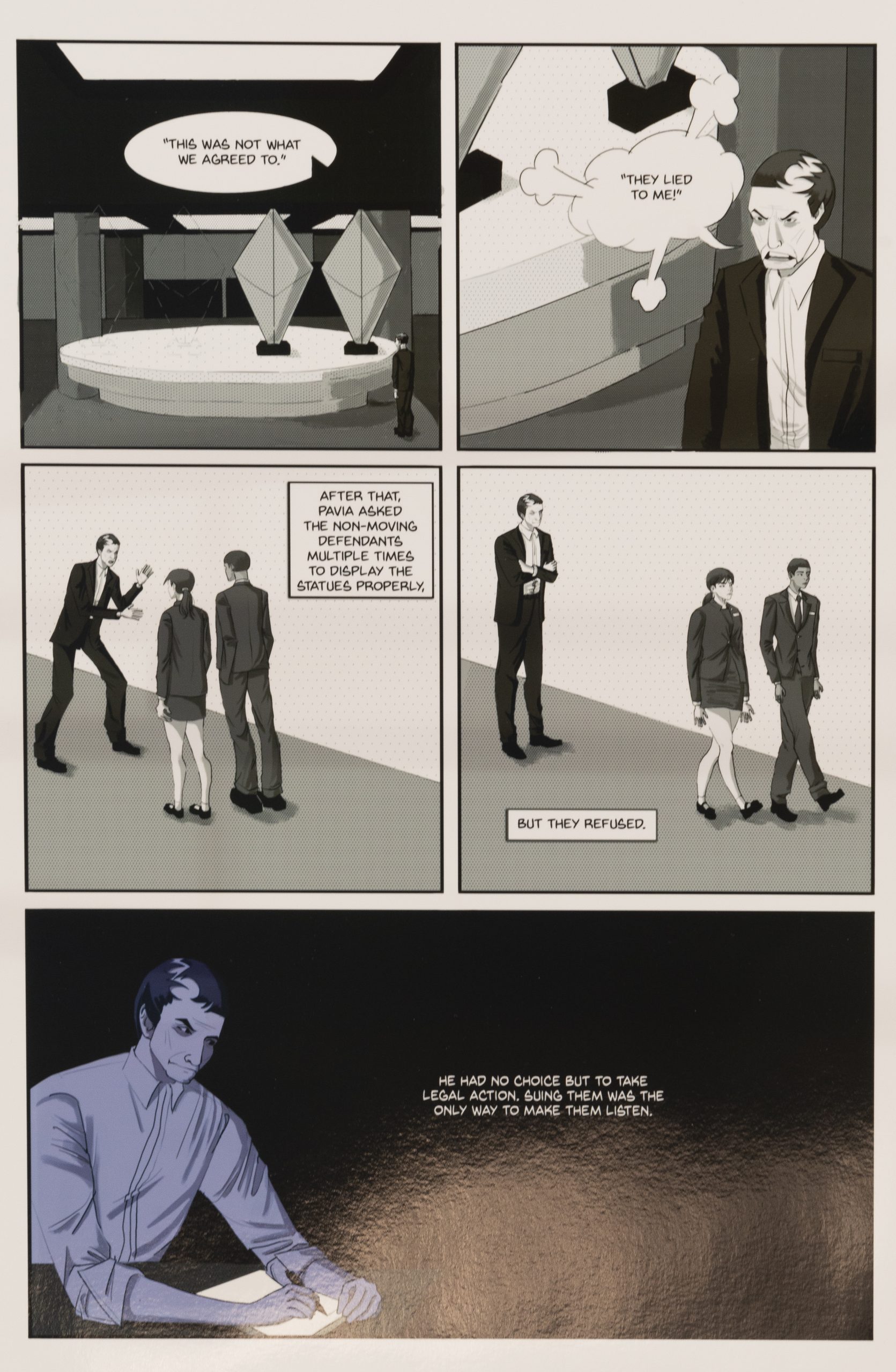
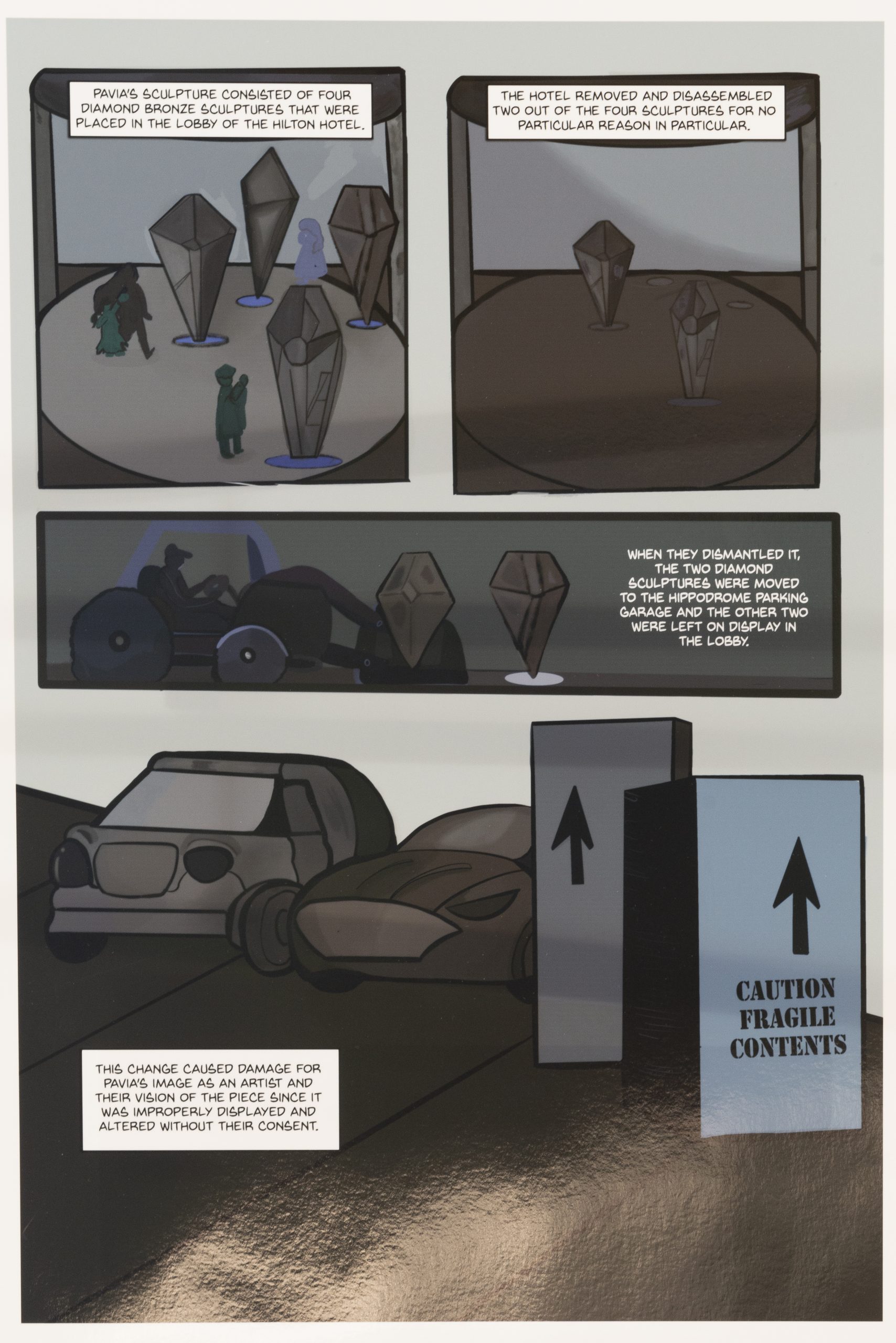
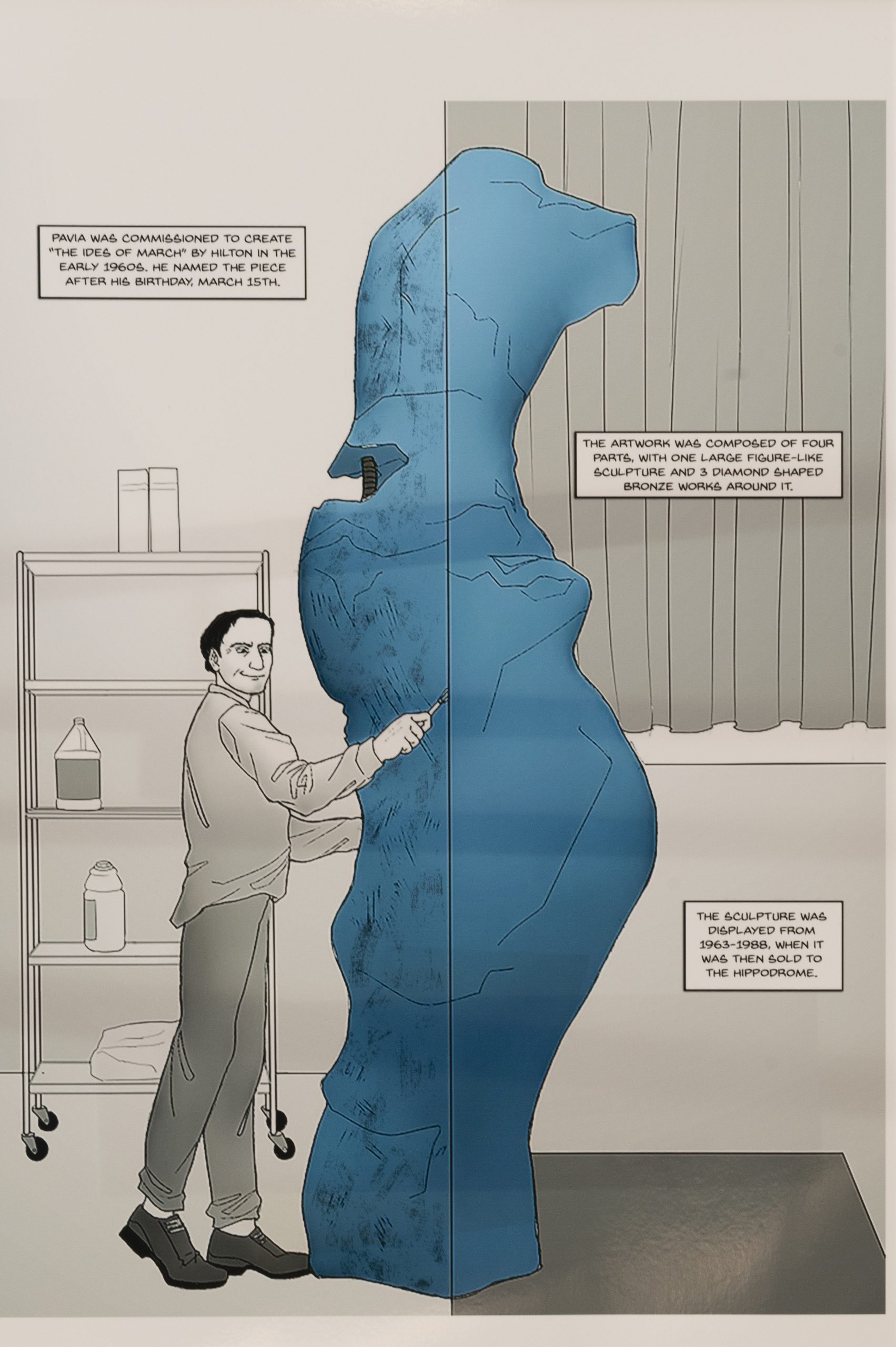
Project Title: FAIR USE CASES COMIC PAGES
Students reviewed each fair use case and worked in groups to research their case. They broke the case into parts and wrote narratives for their individual comics based on their research. Each group worked on a unified color or rendering scheme based on unique aspects of their case. Everyone worked to tell their narrative visually and sequentially through their own comic page. Everyone’s comic page came together to tell the whole story of the case. Students worked traditionally in pen and ink, ink wash and digitally with grey tones and fully rendered in color. Each comic is printed and lettered in Adobe Photoshop.
Teachers: Adam Gordon
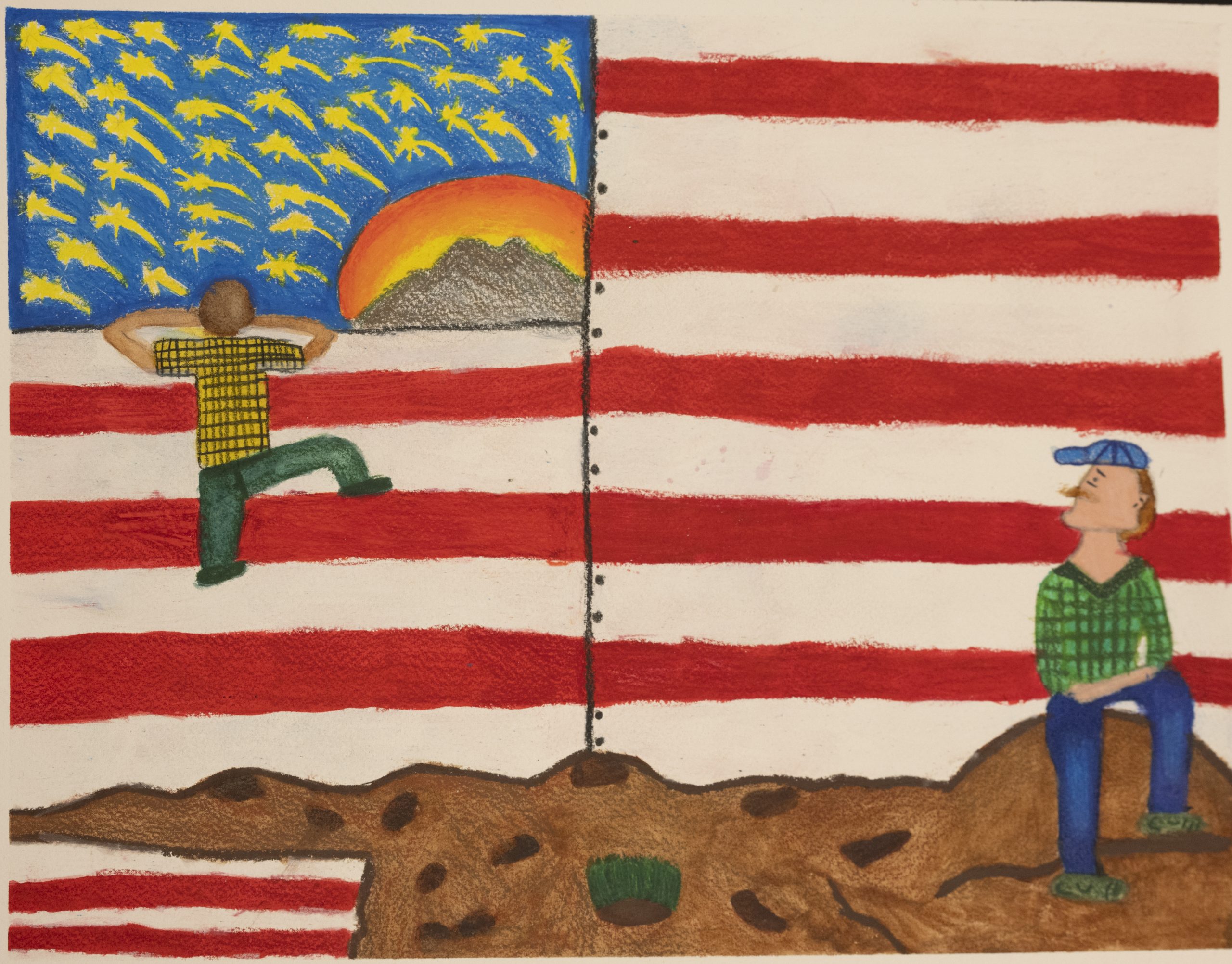
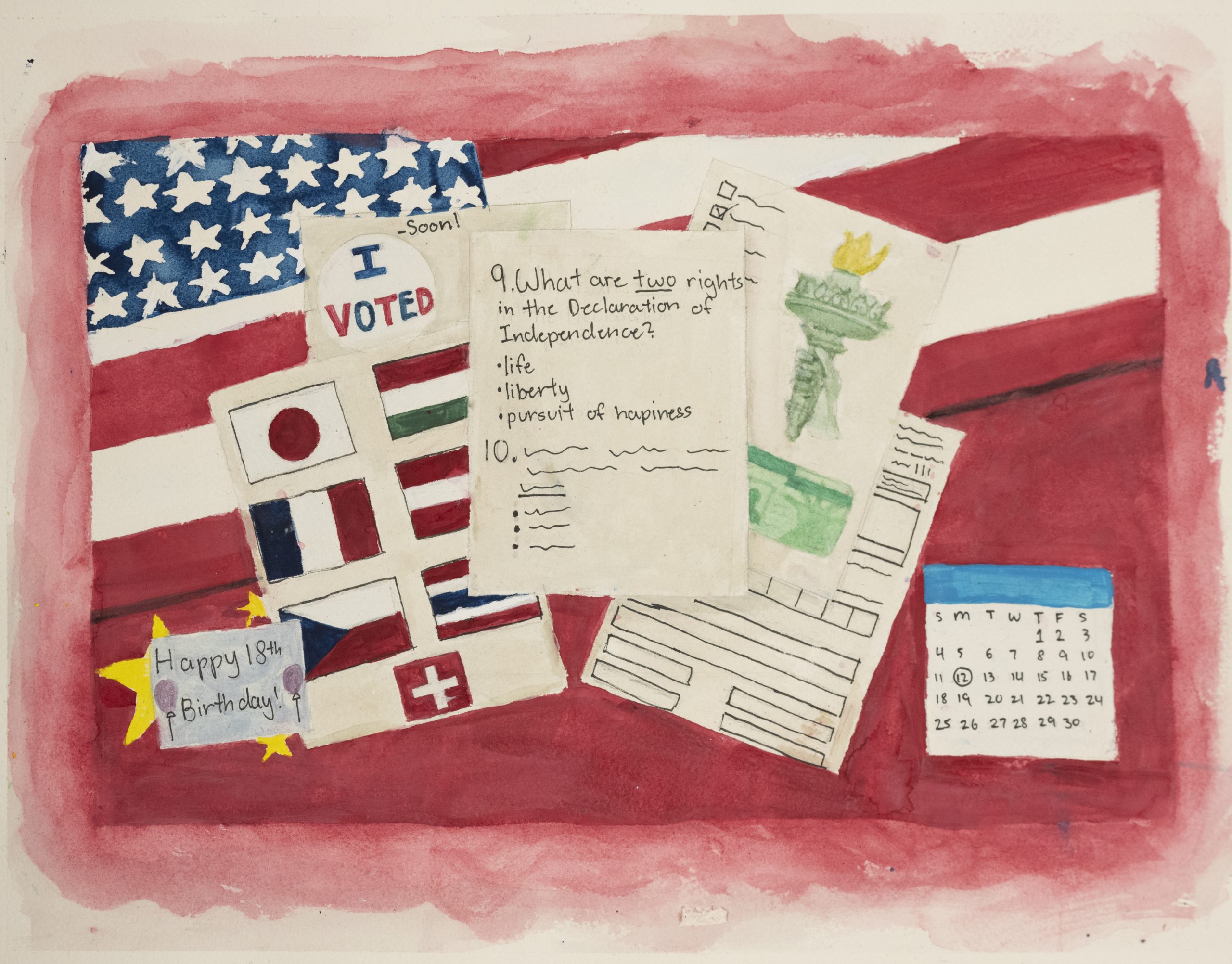
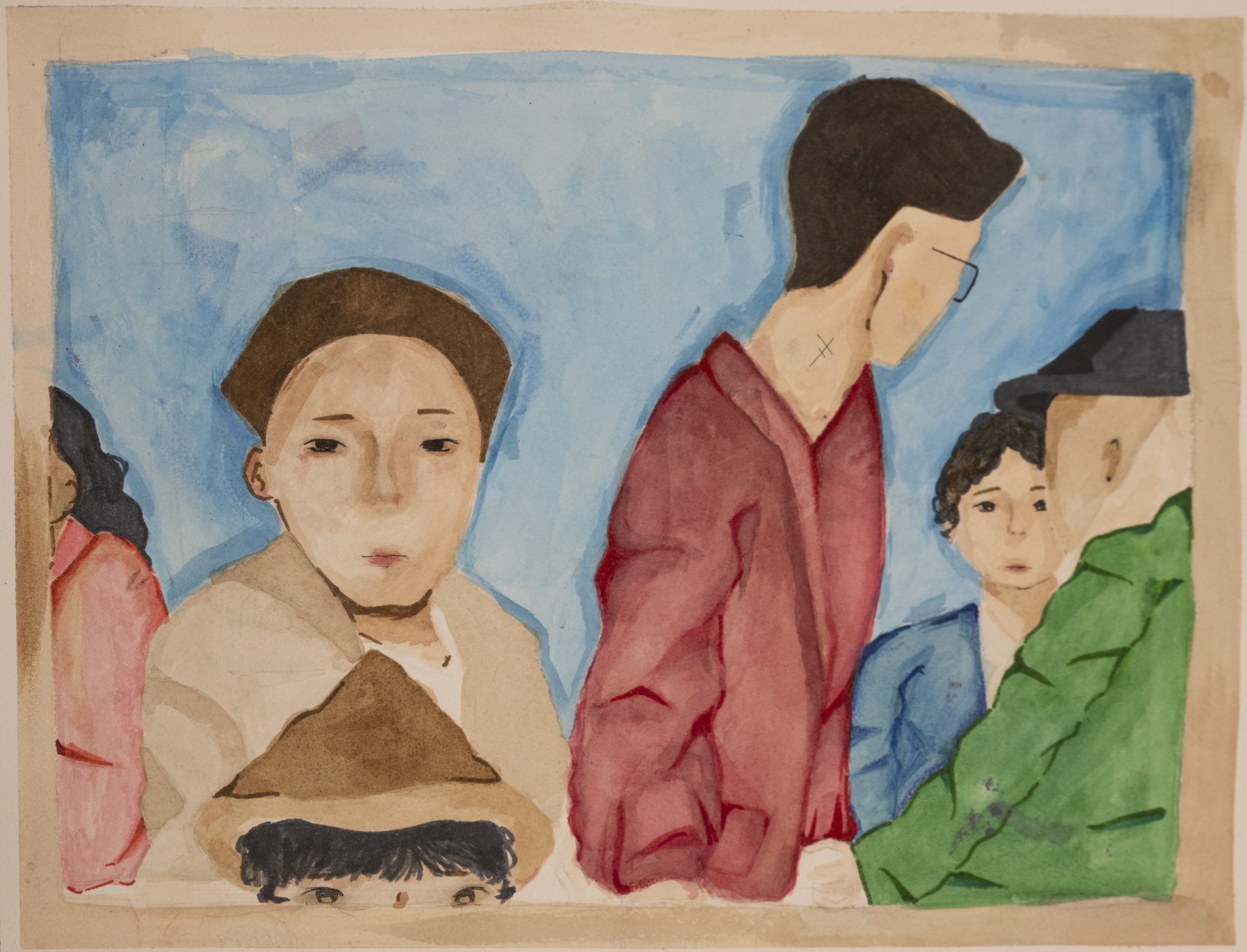
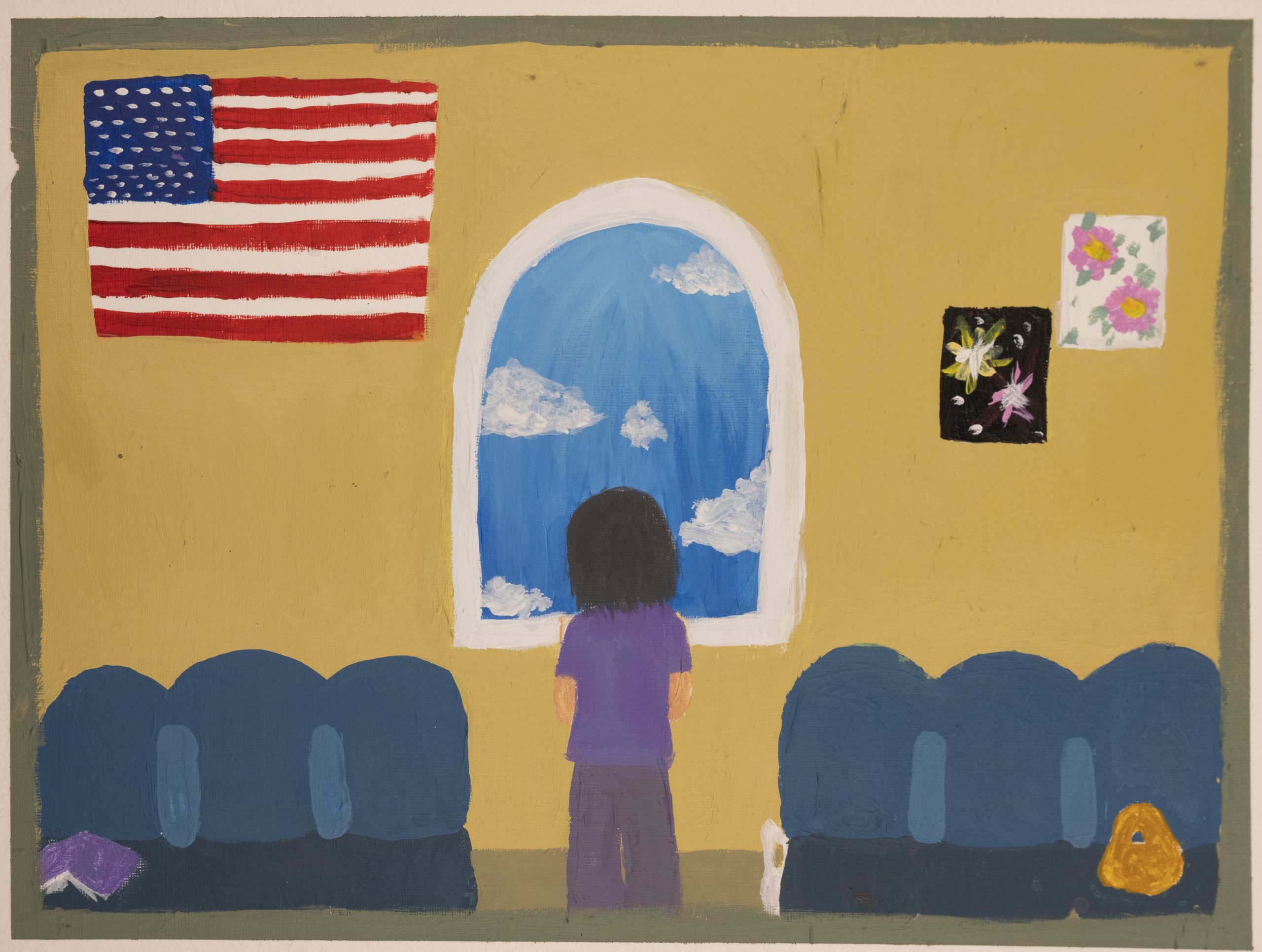
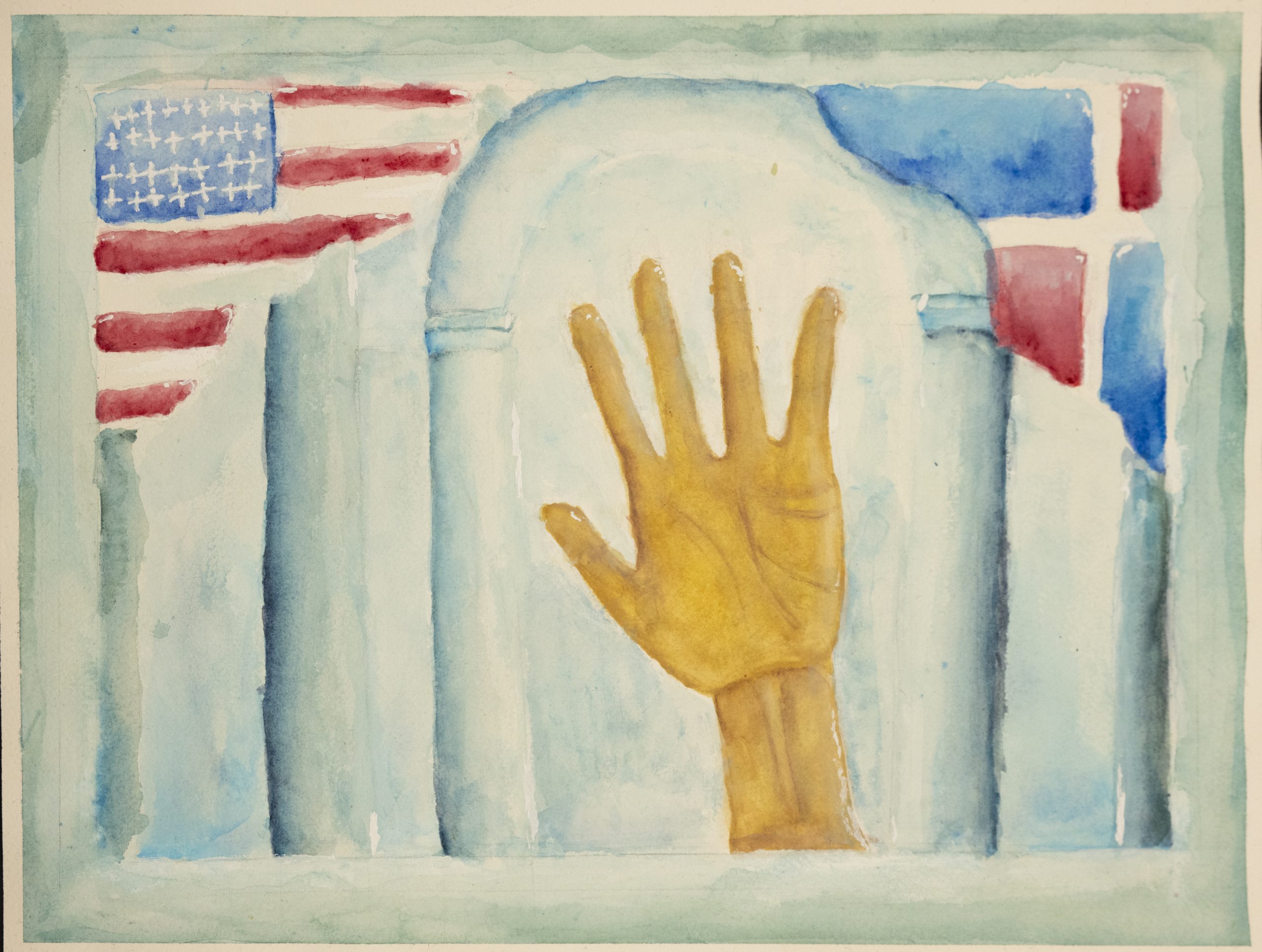
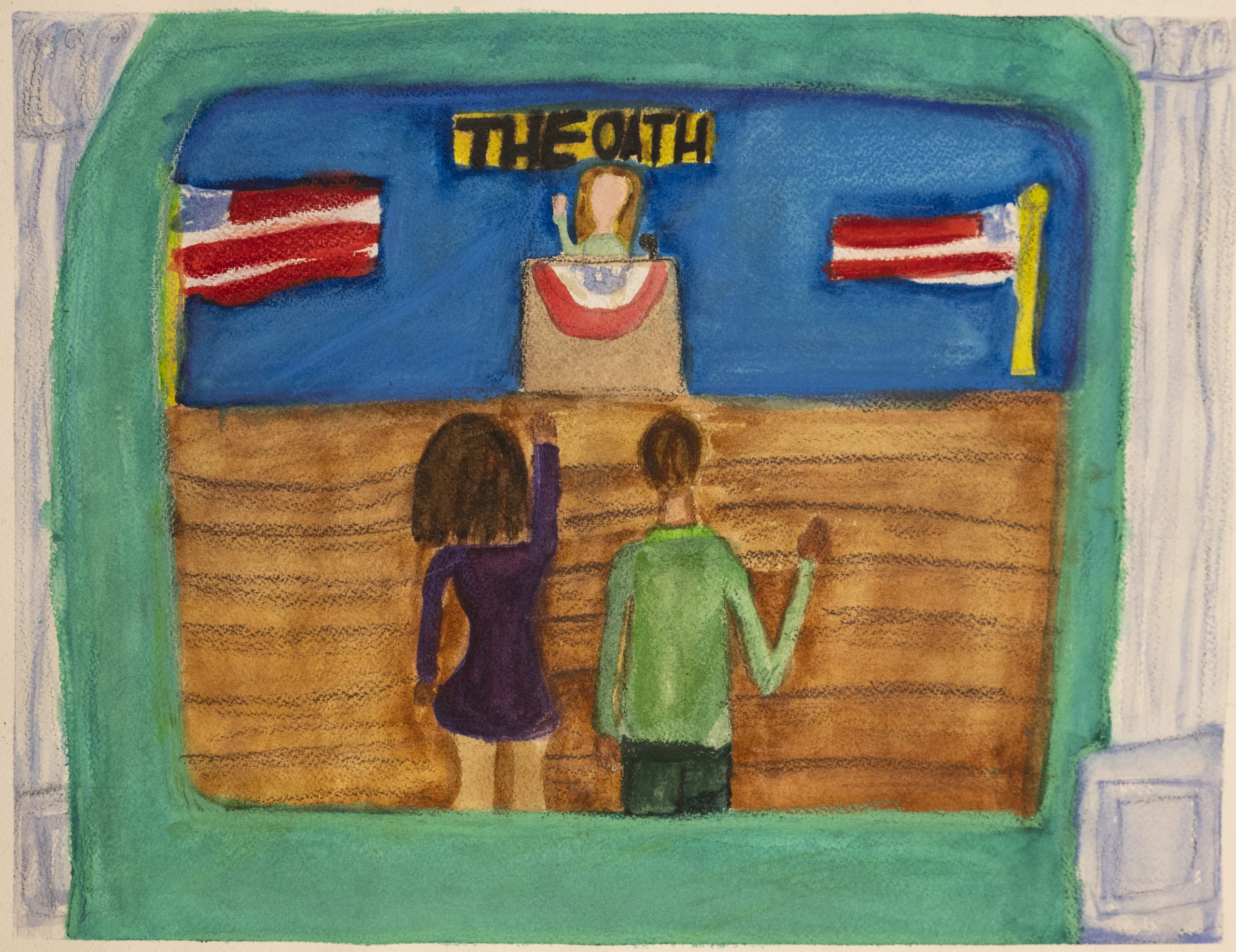
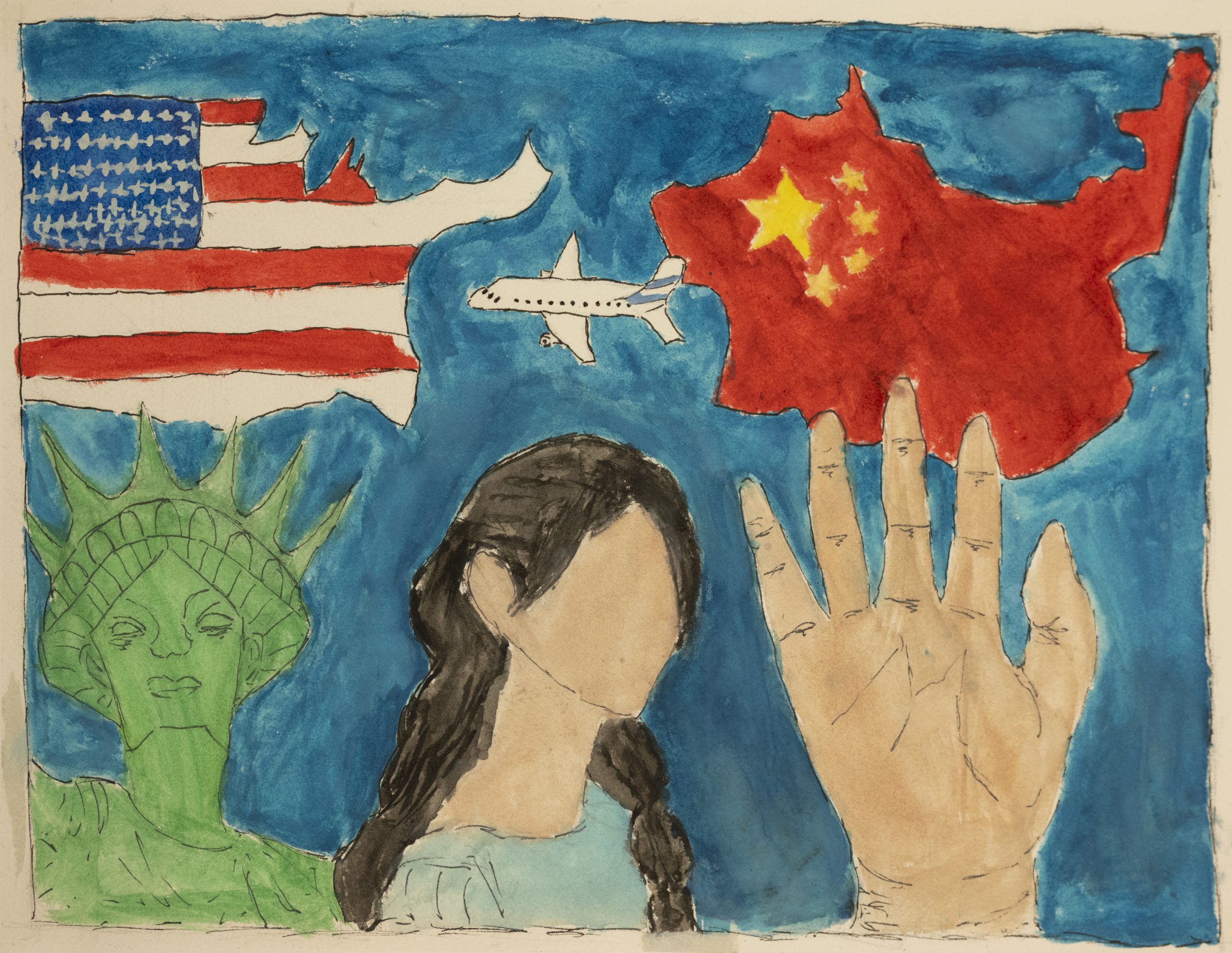
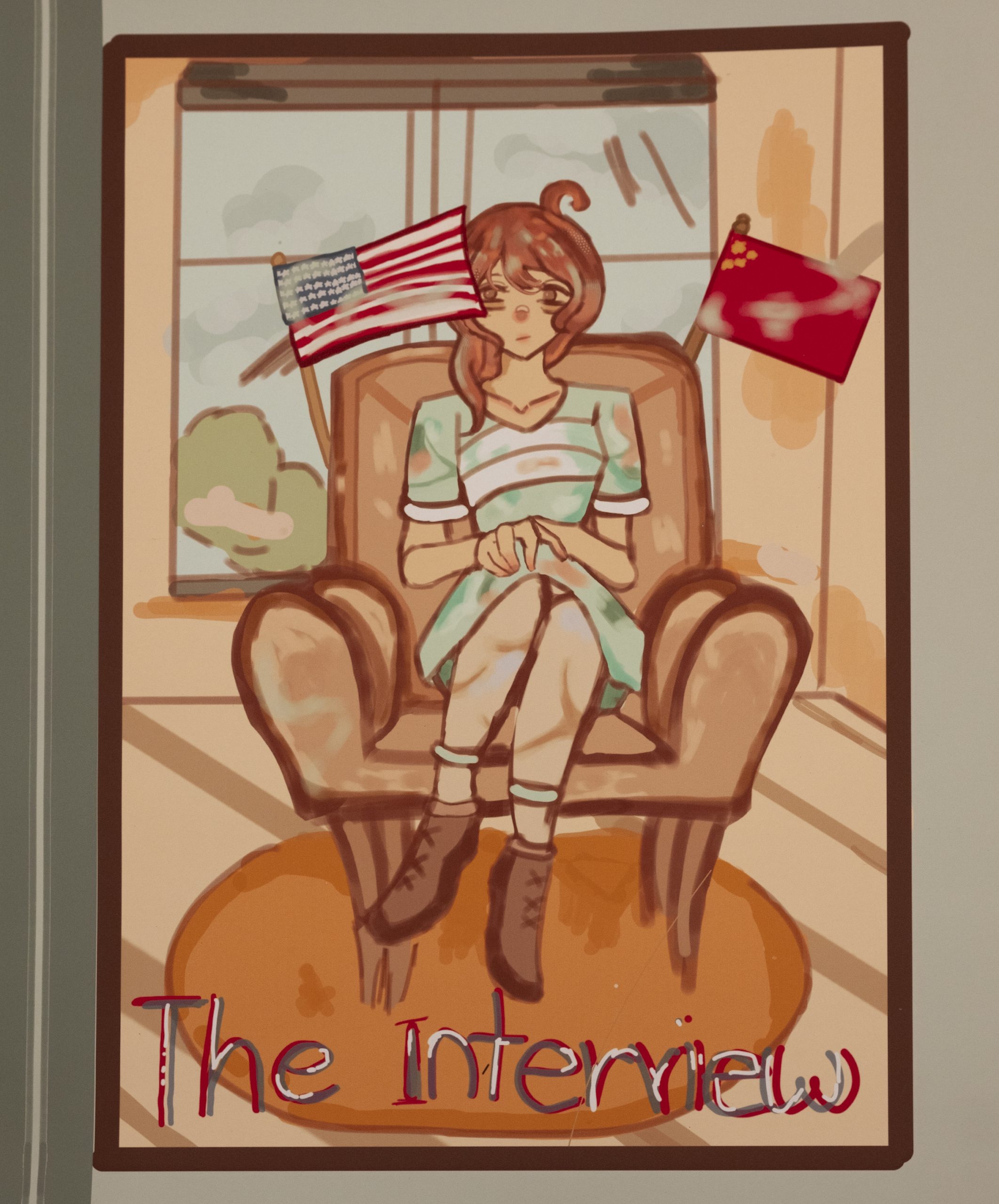
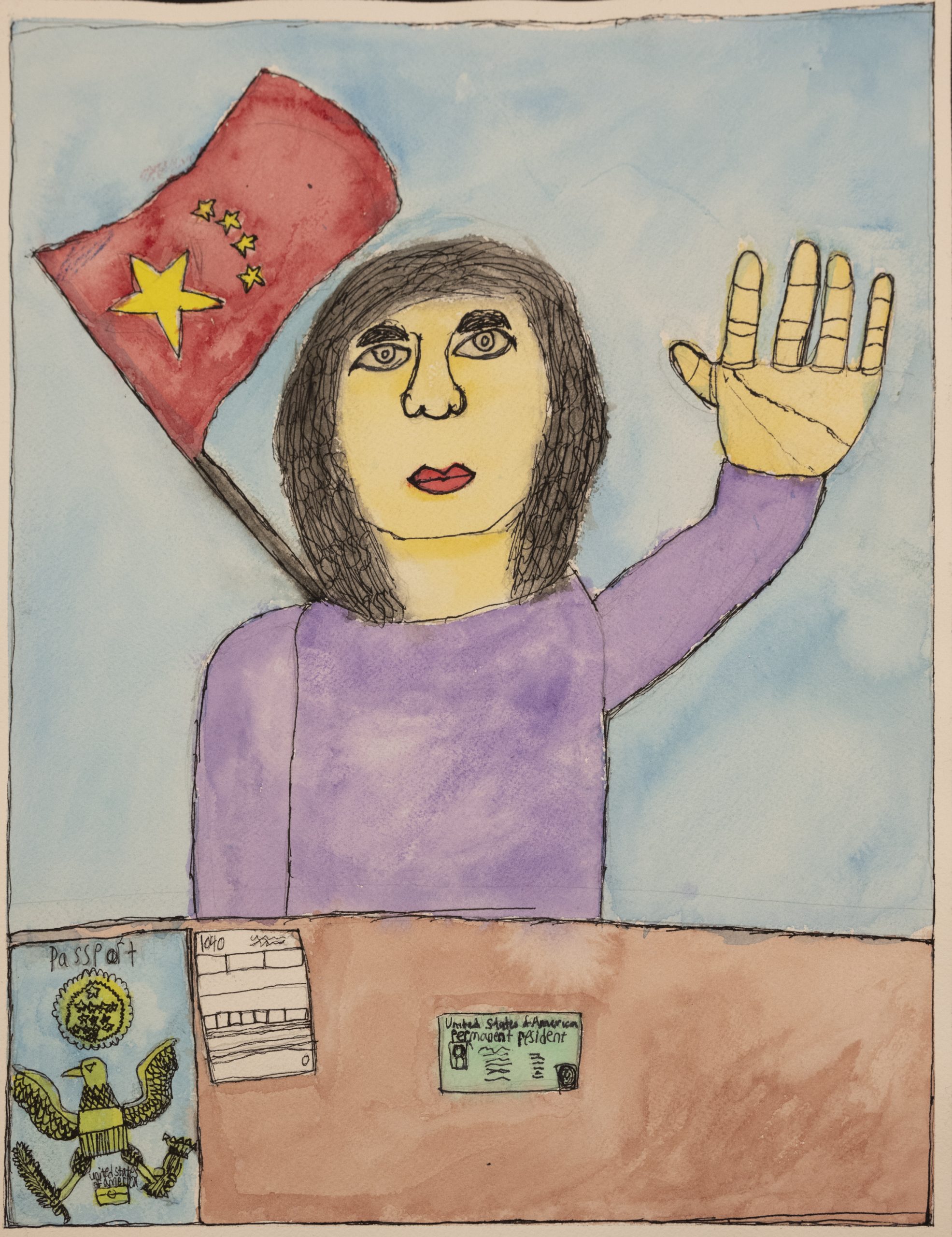
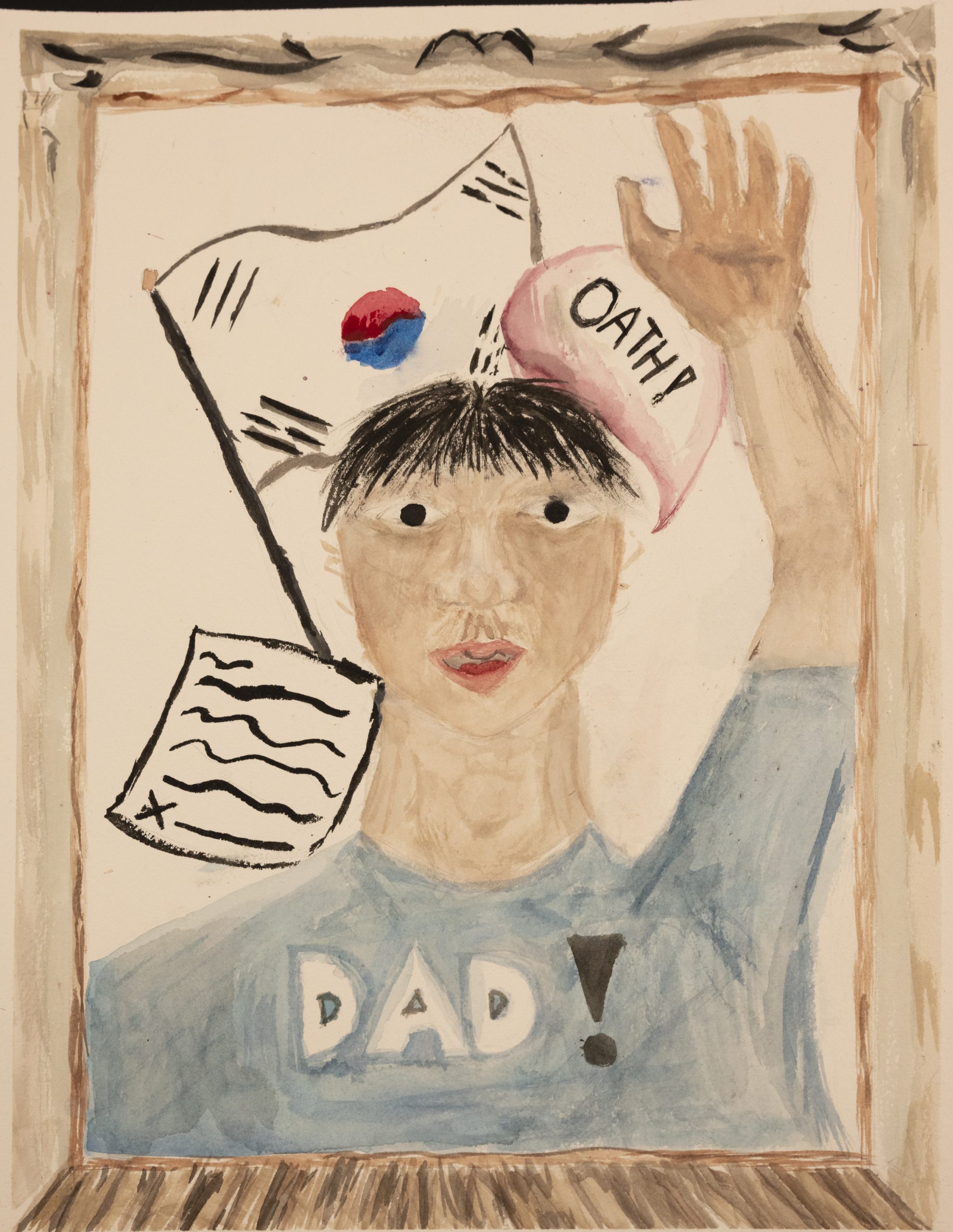
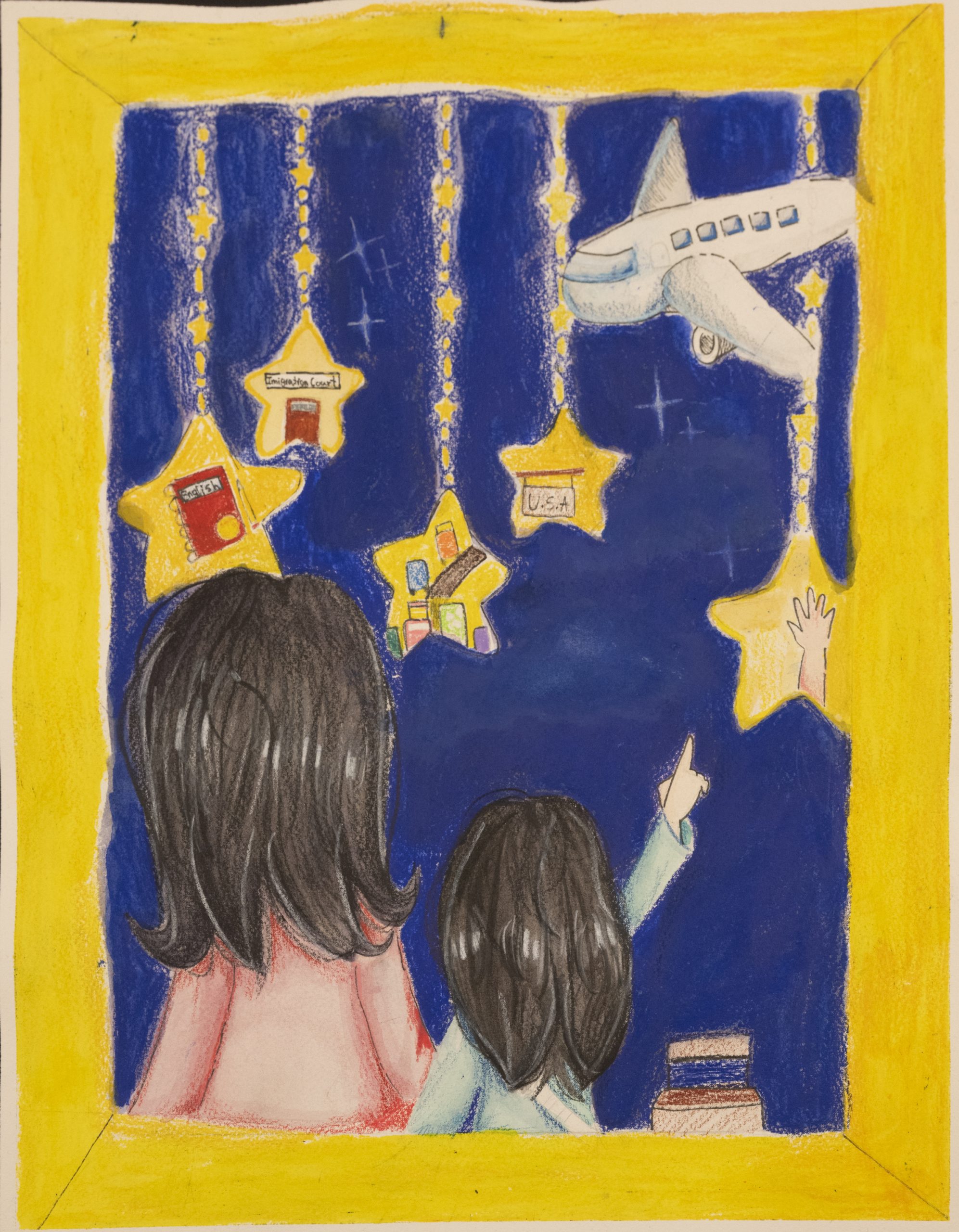
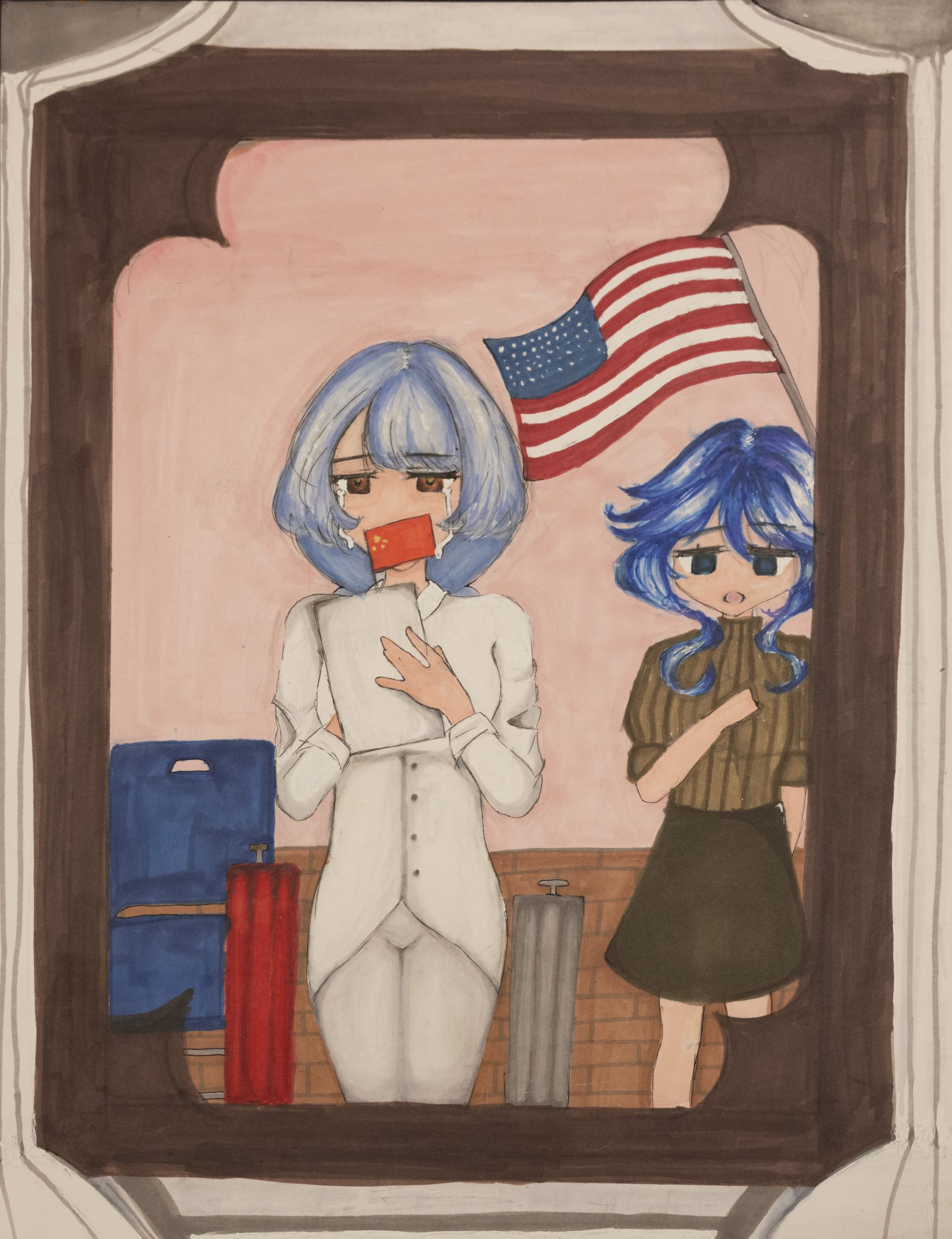
Project Title: PATHWAYS
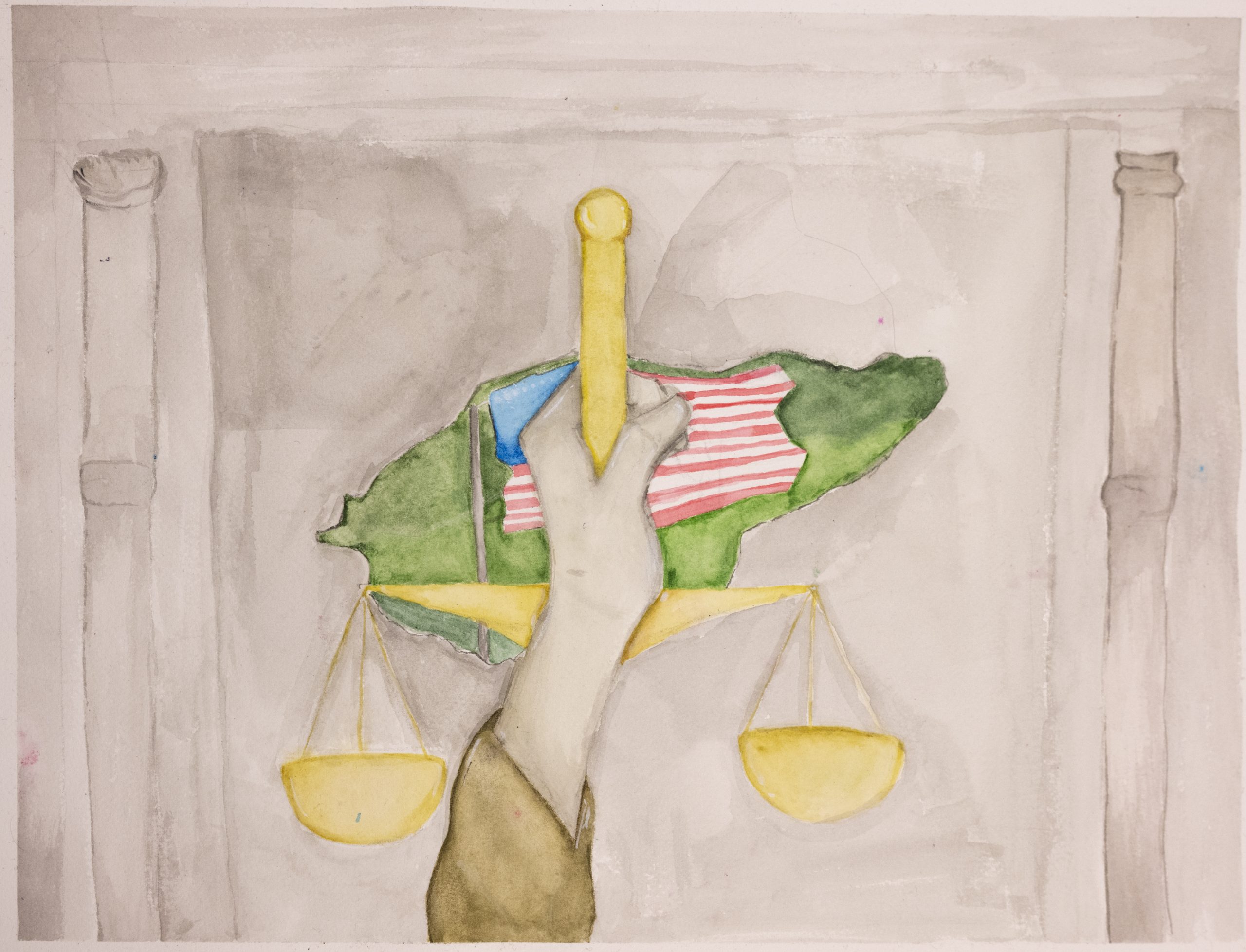
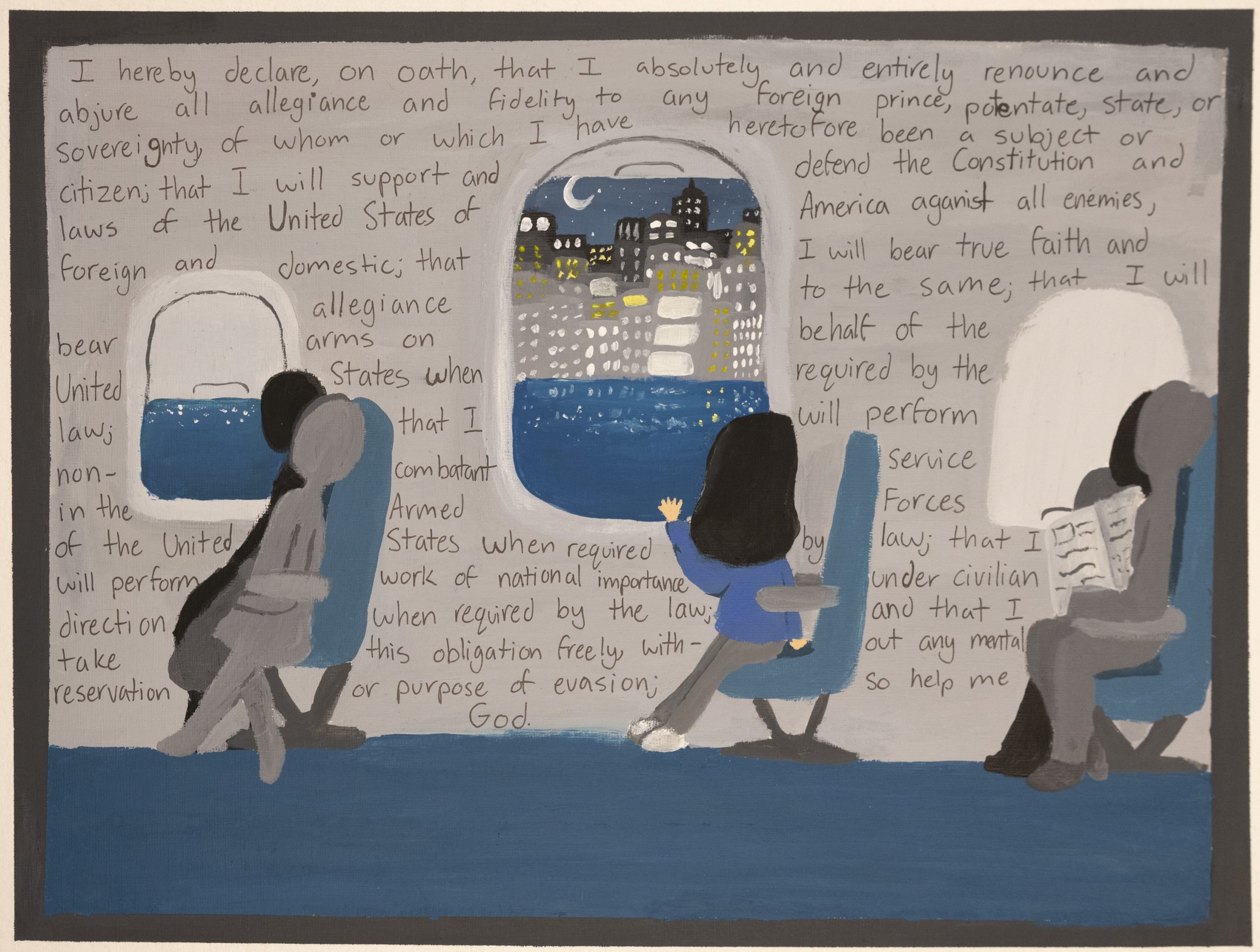
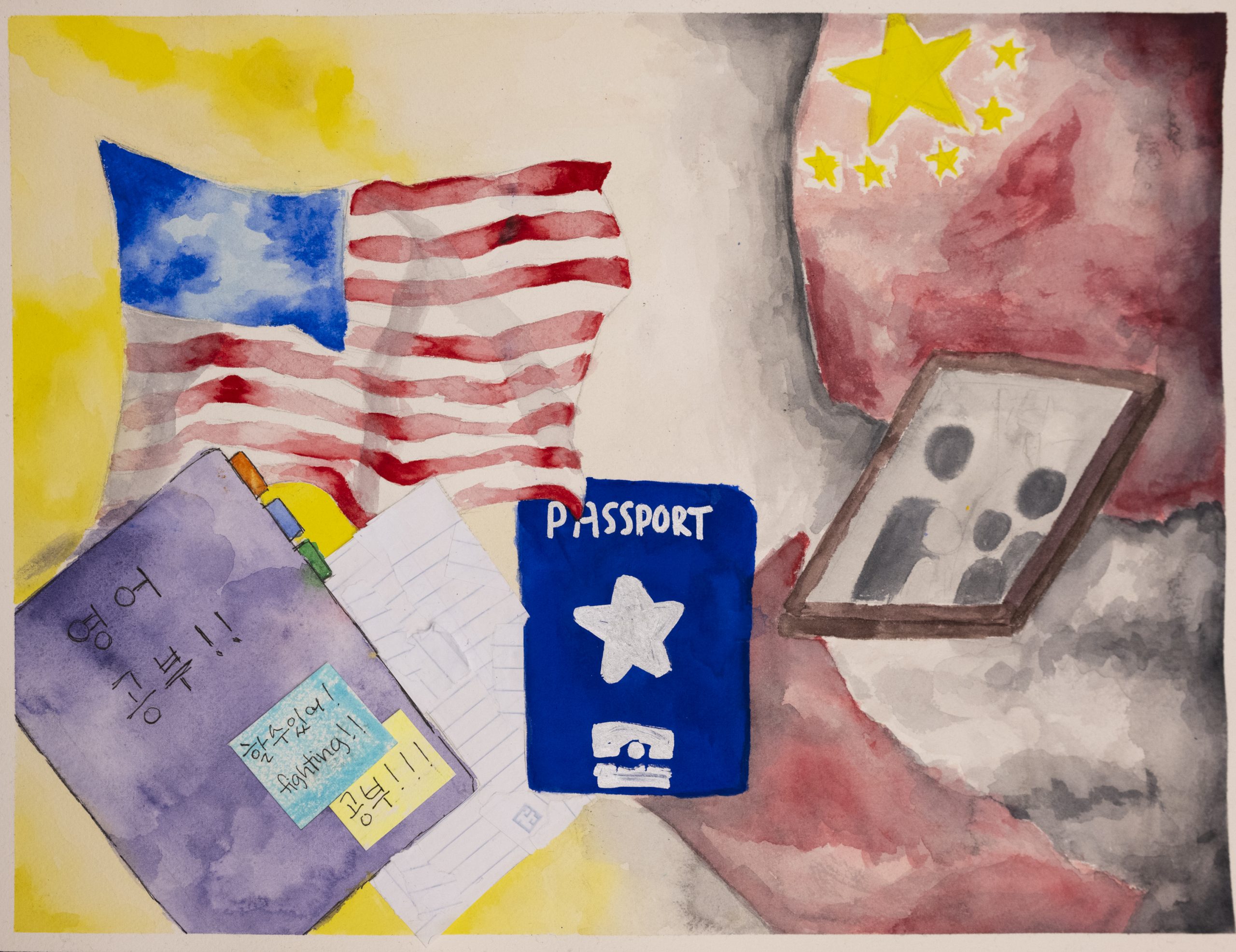
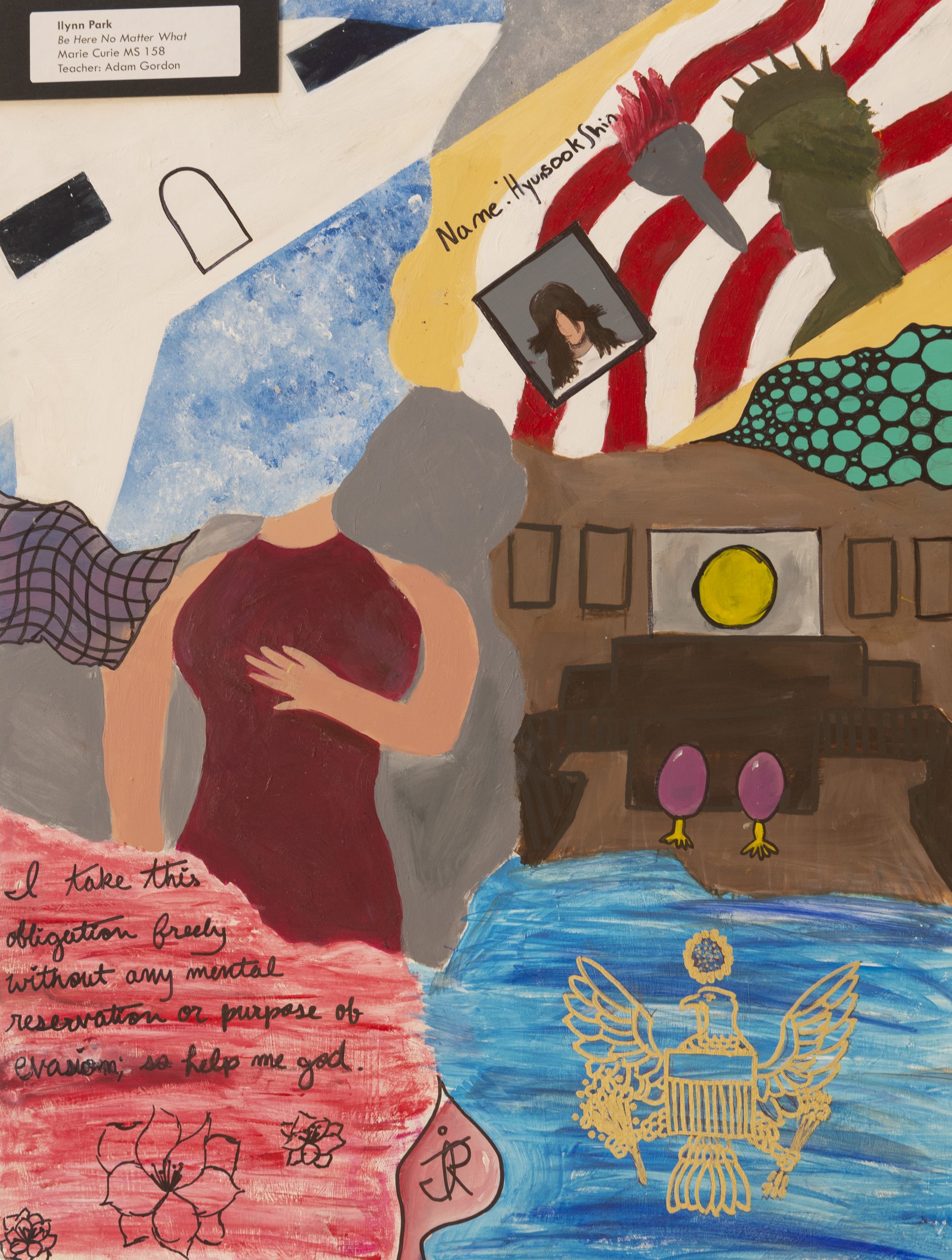
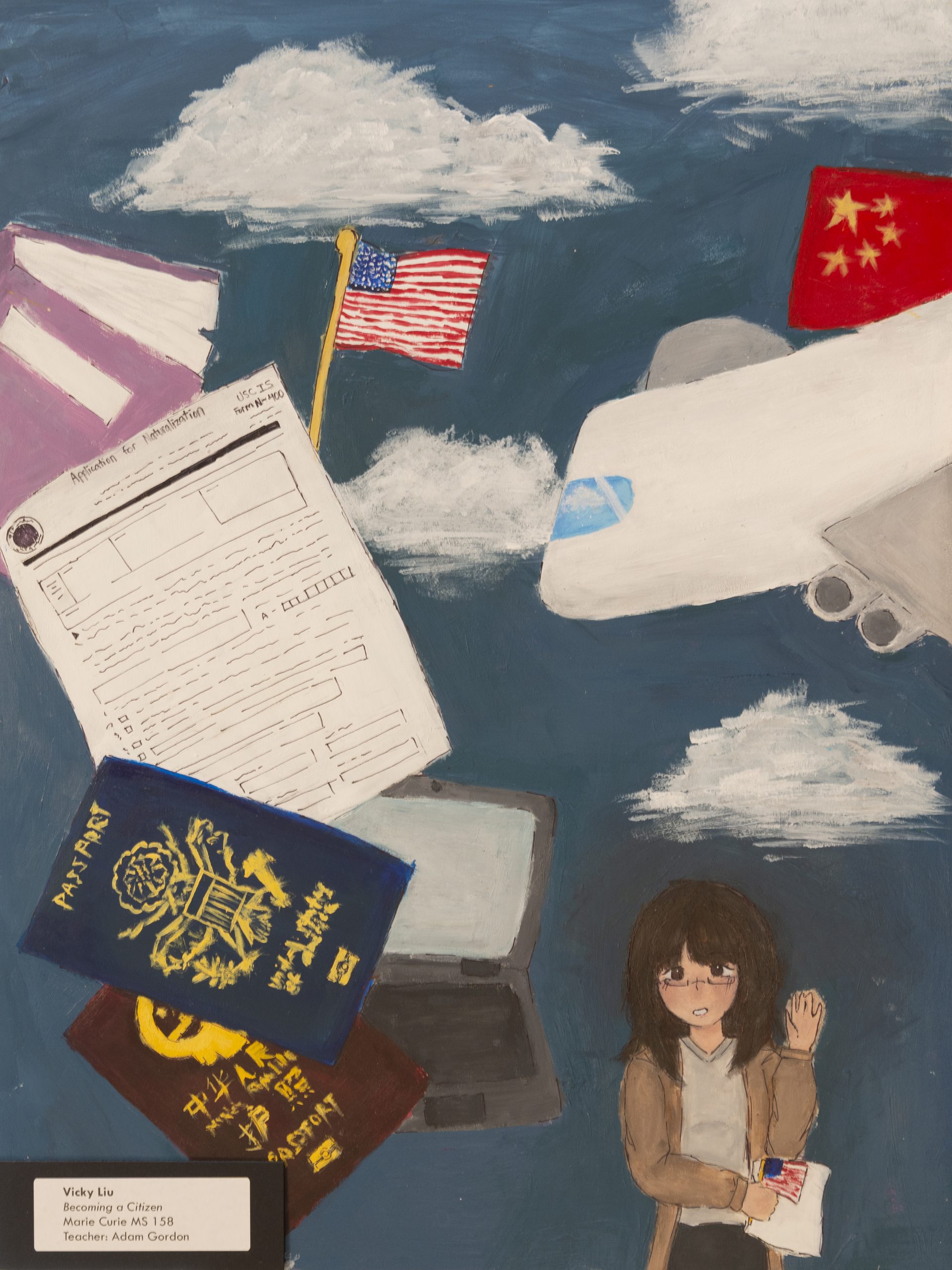
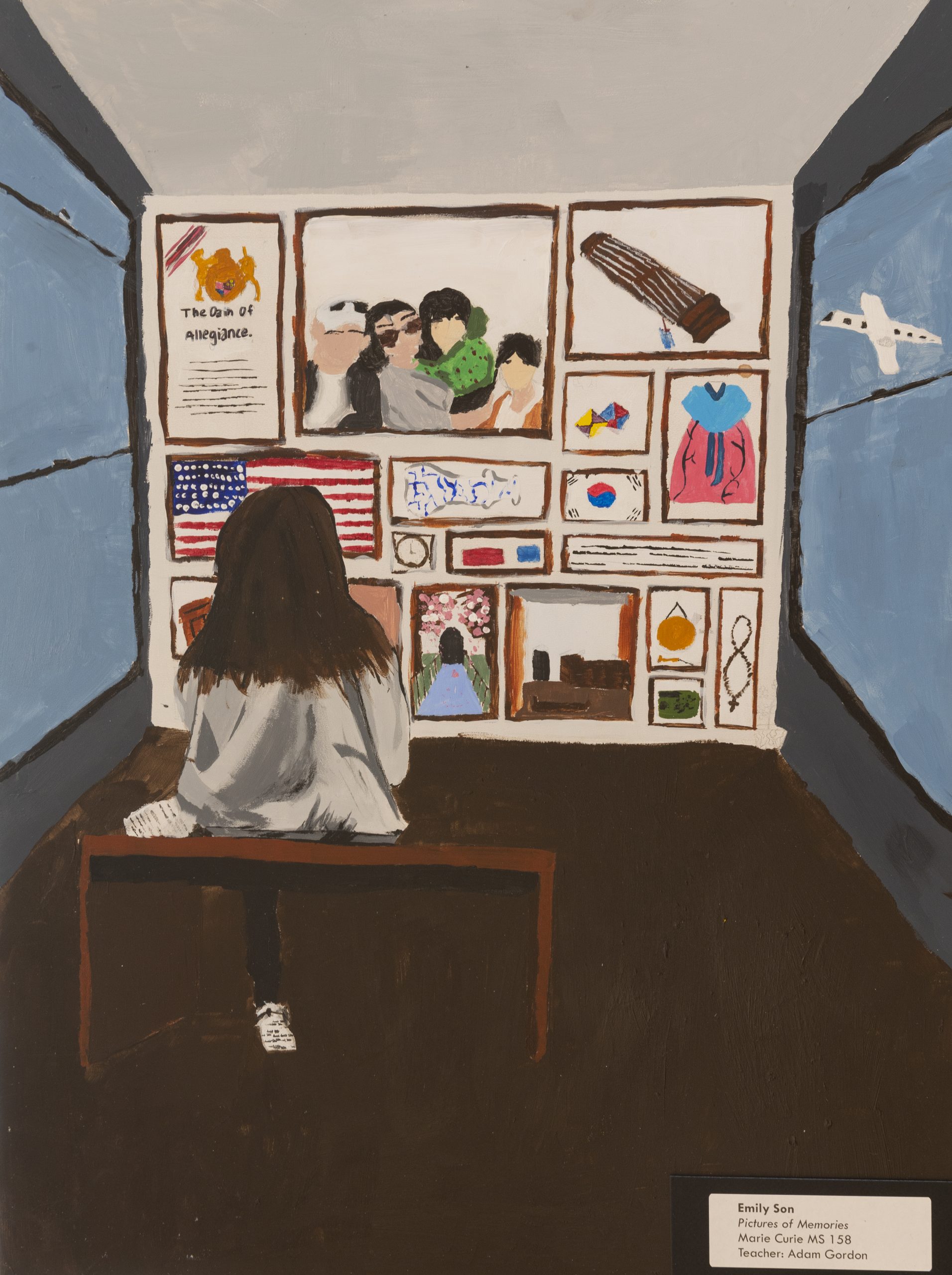
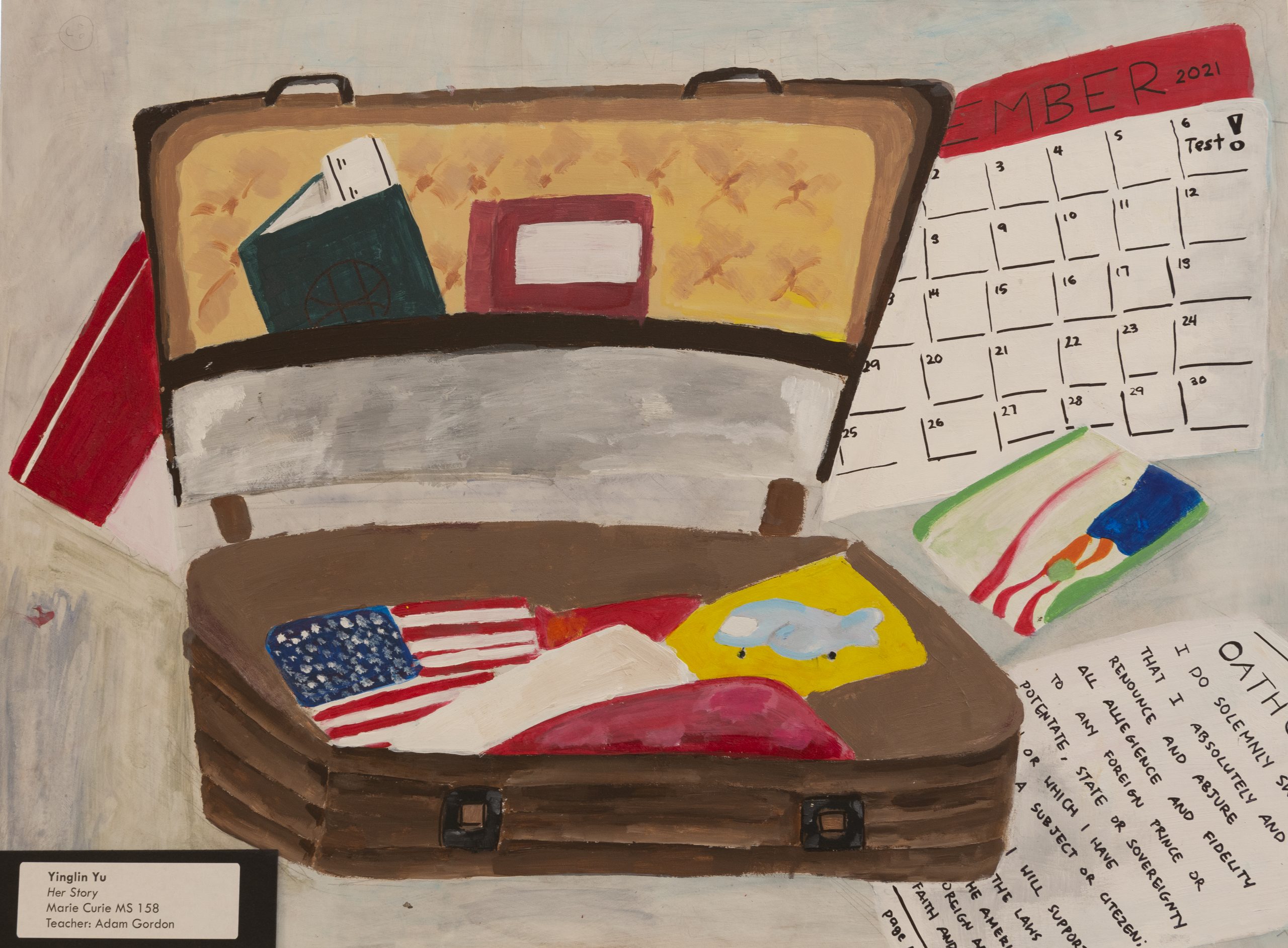
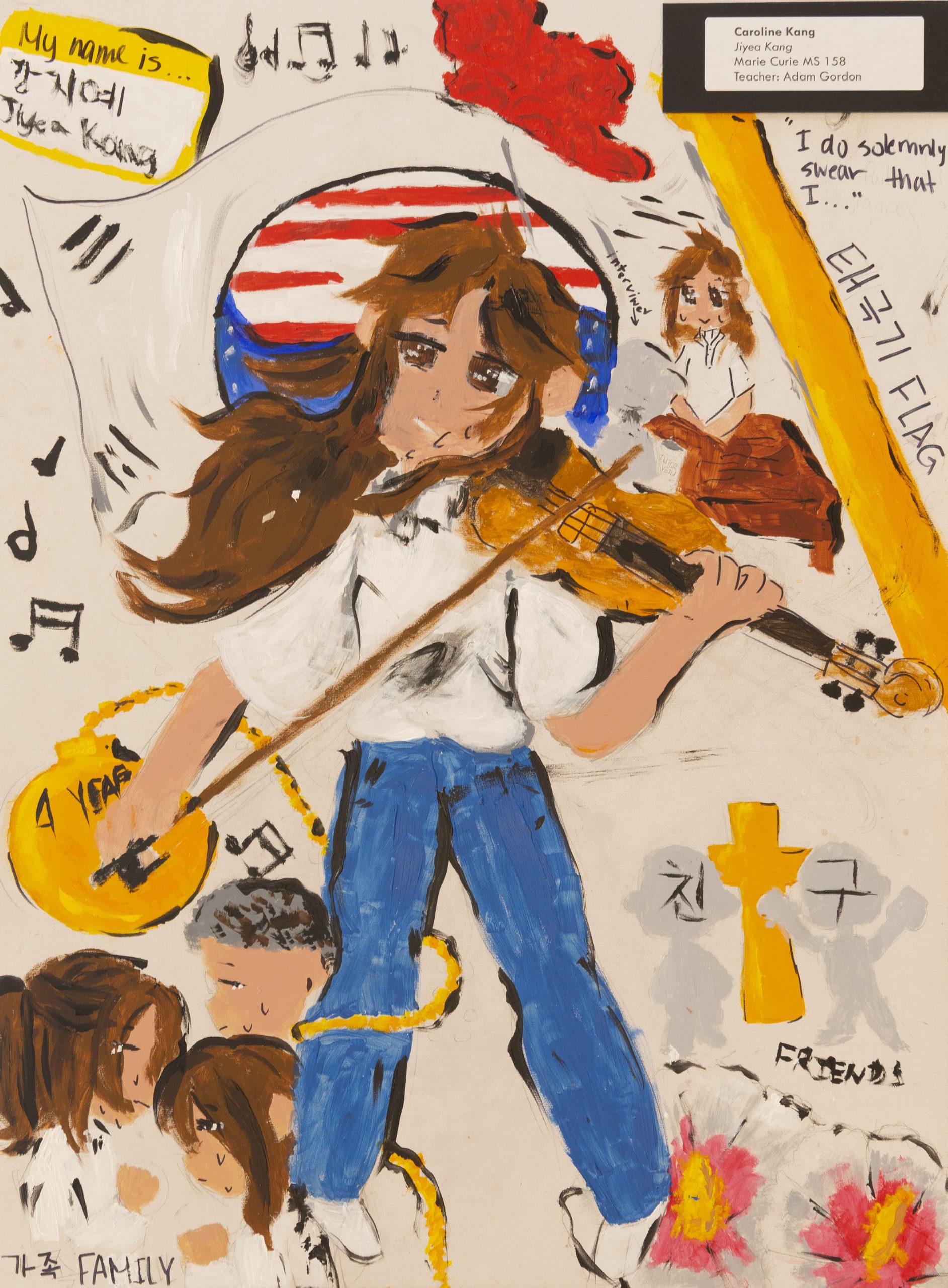
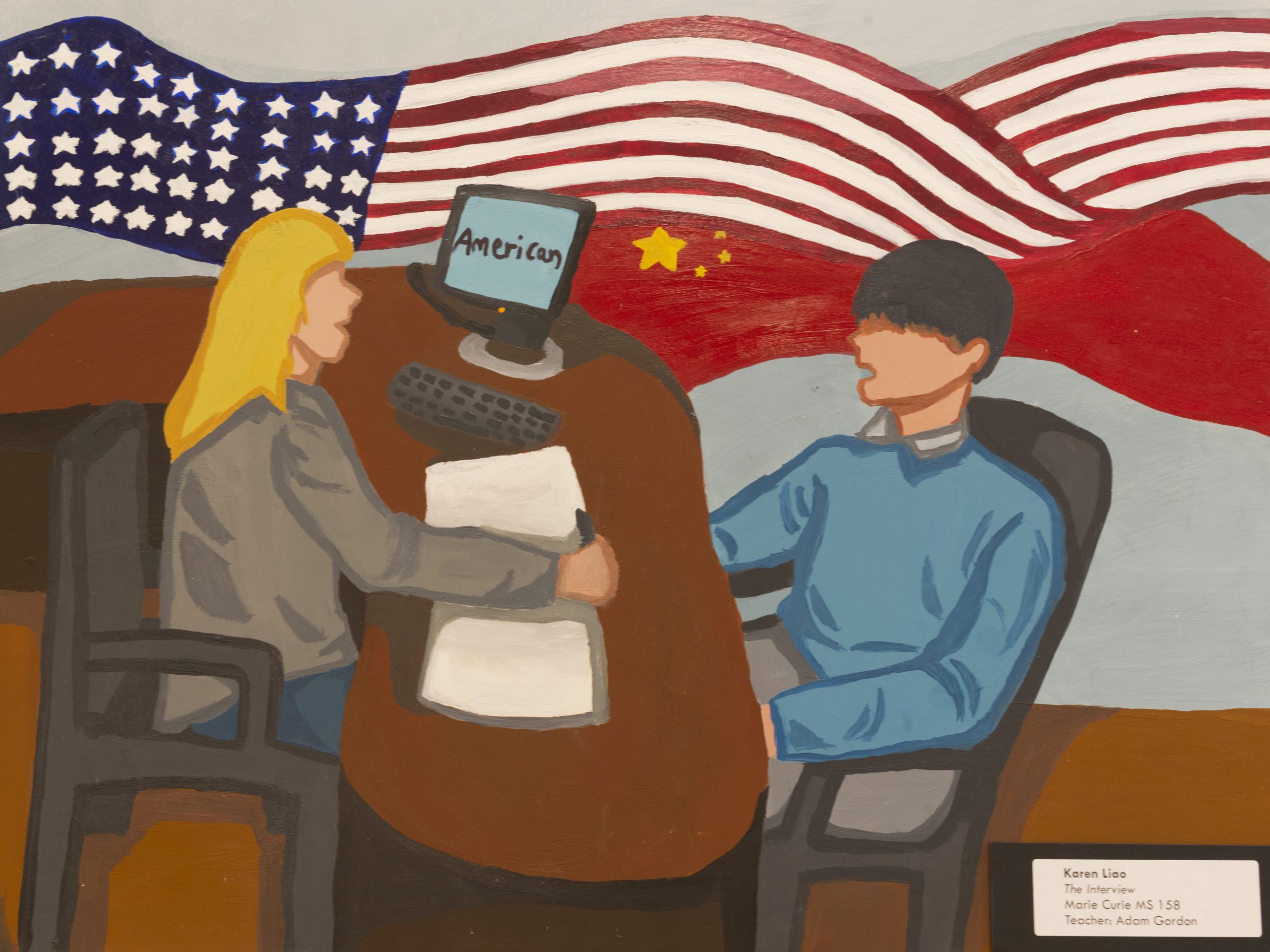
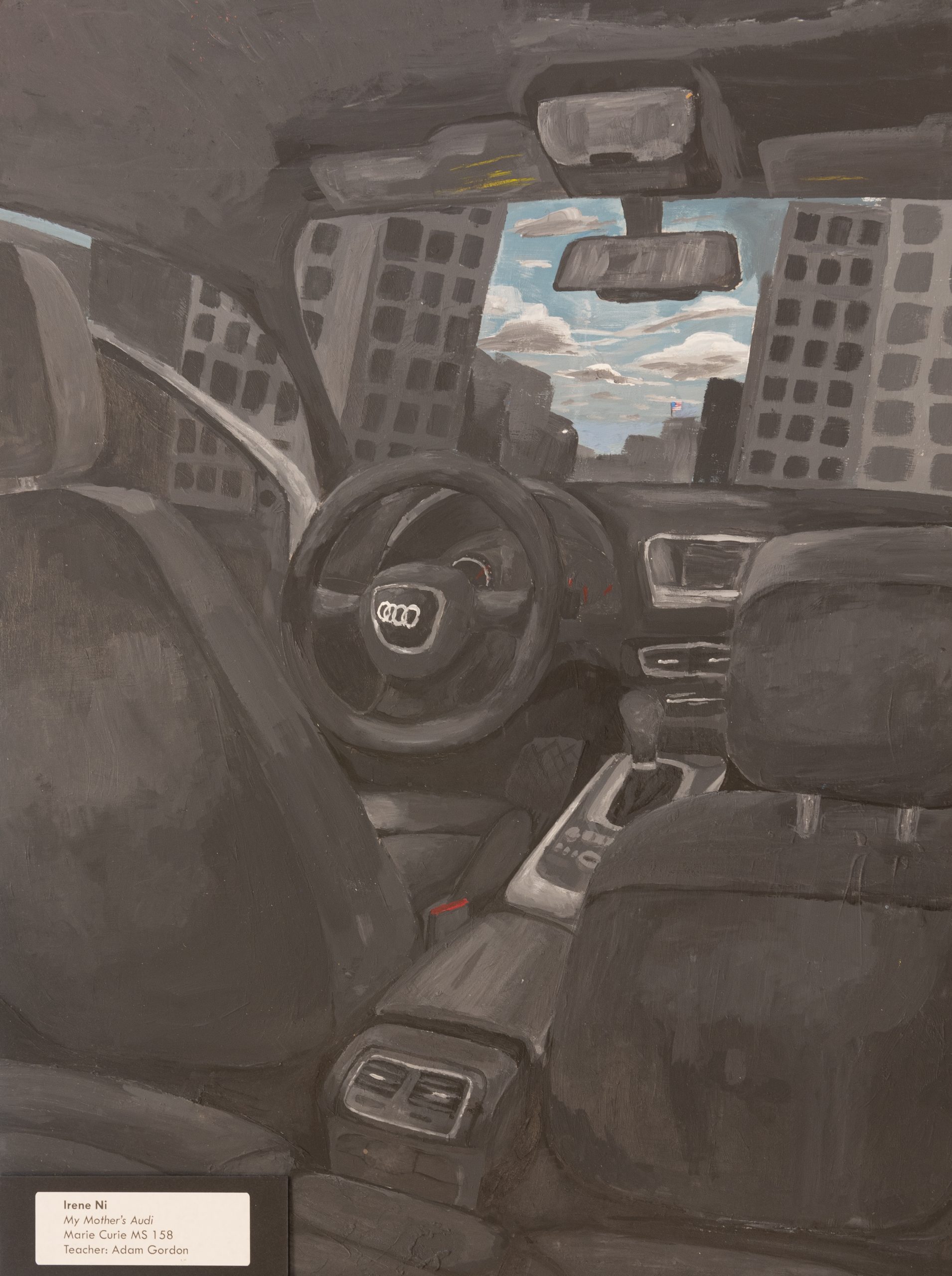
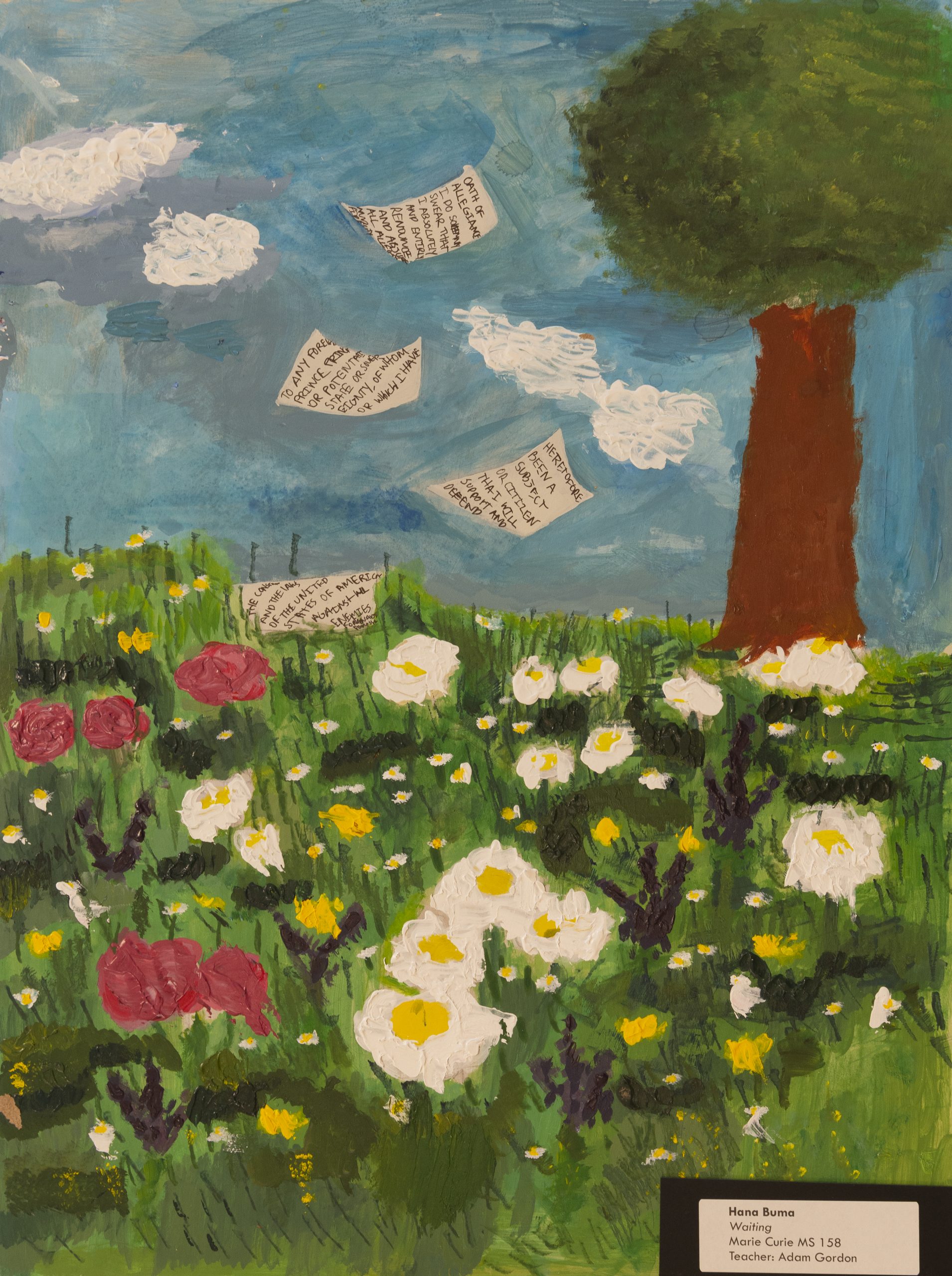
Students created mural designs about the naturalization process for a courthouse. Through personal interviews with people who have gone through the naturalization process, students learned about the different steps of becoming a citizen of the United States. The murals reflect both the different parts of naturalization as well as individual stories from the people students interviewed.
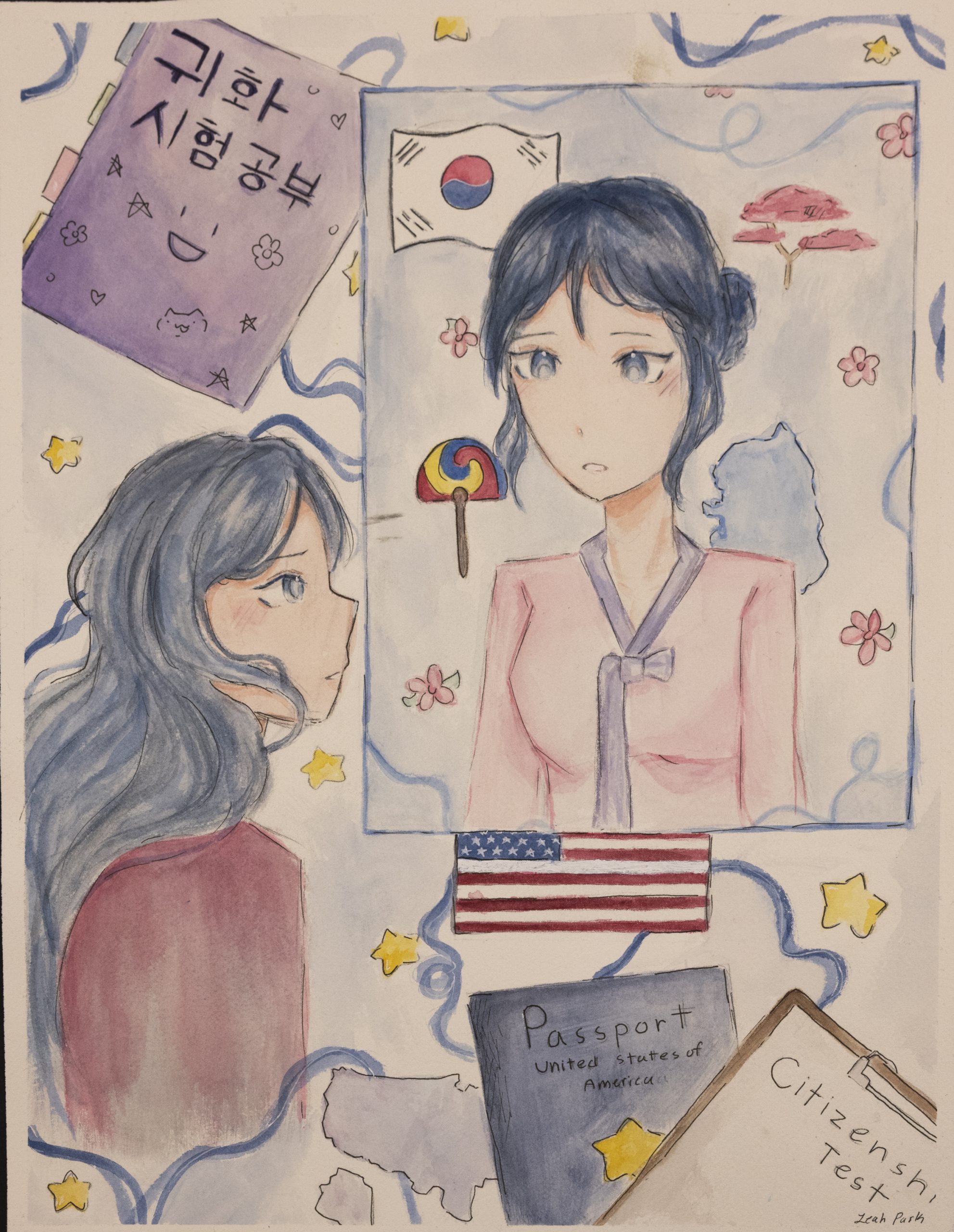
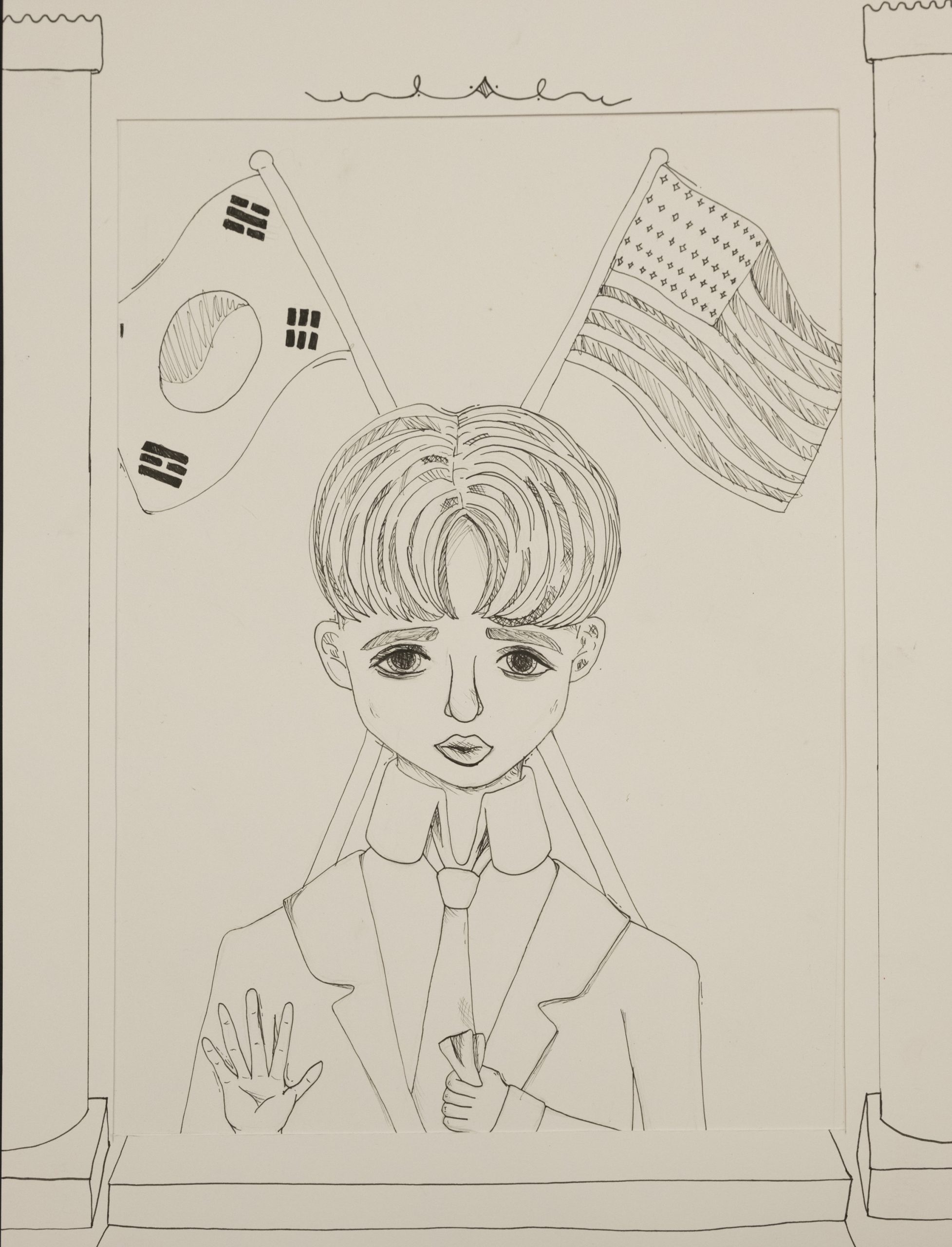
Teachers: Hannah Arroyo Rivera
Project Title: MURALS ABOUT US
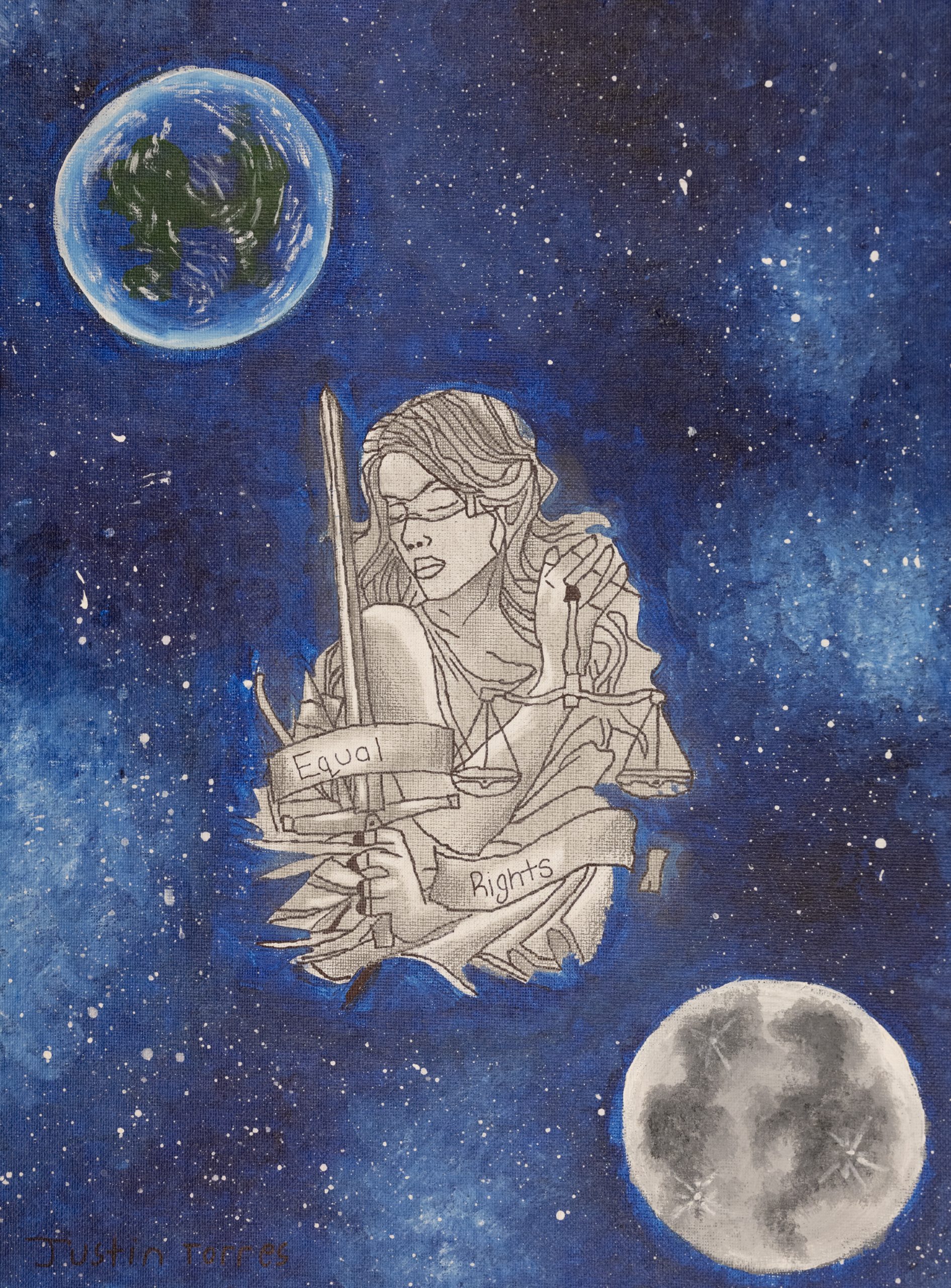
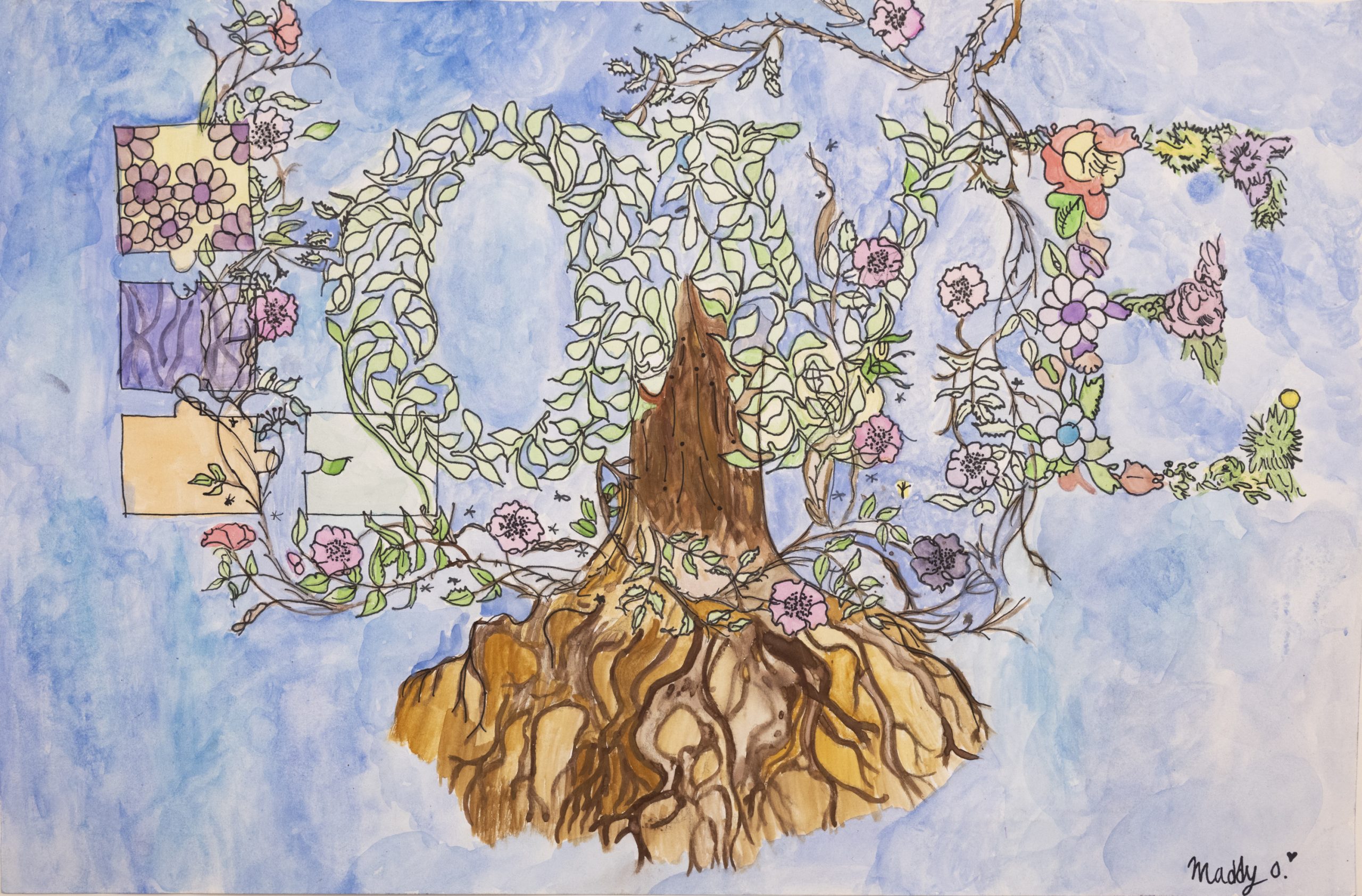
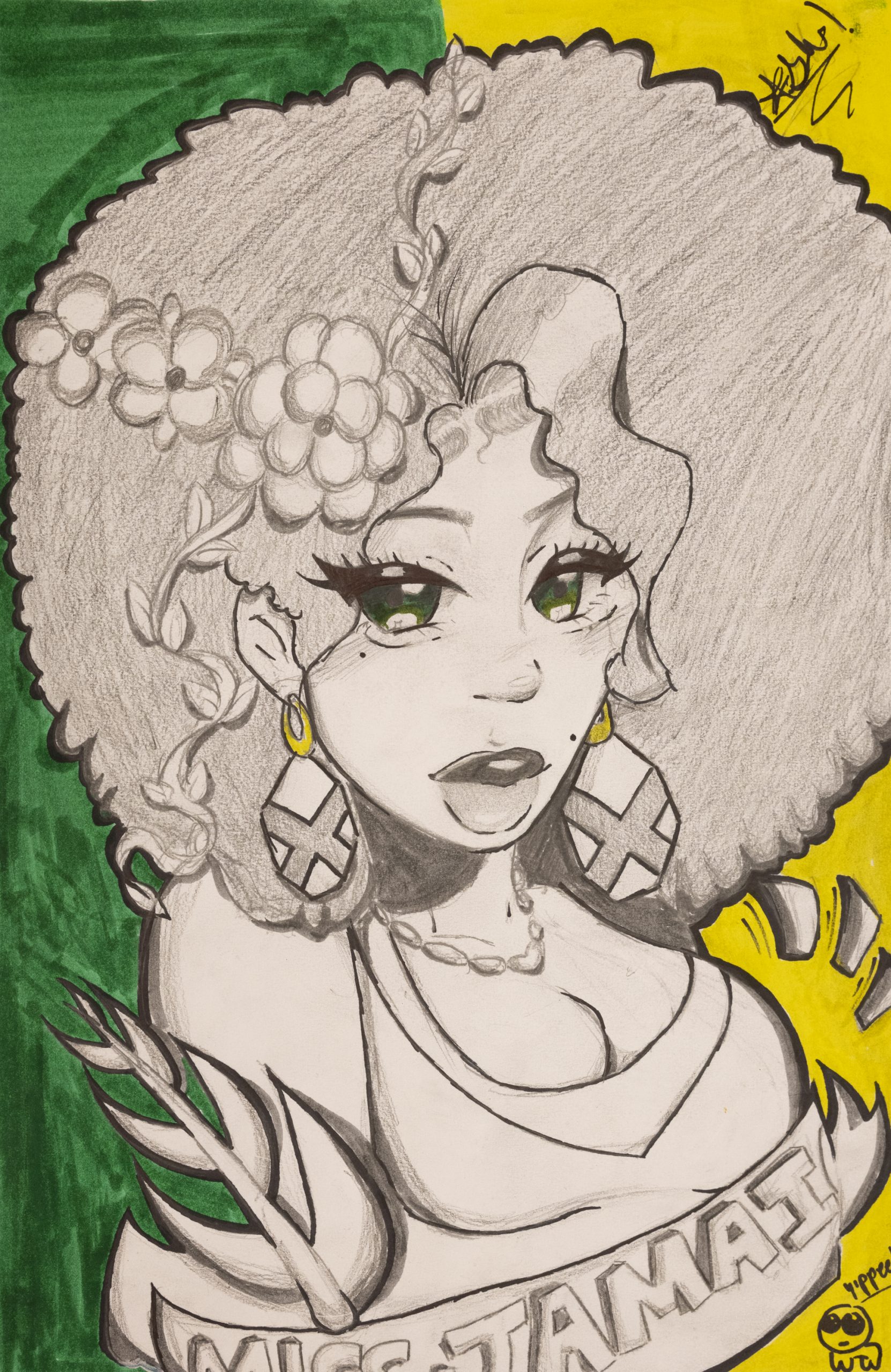
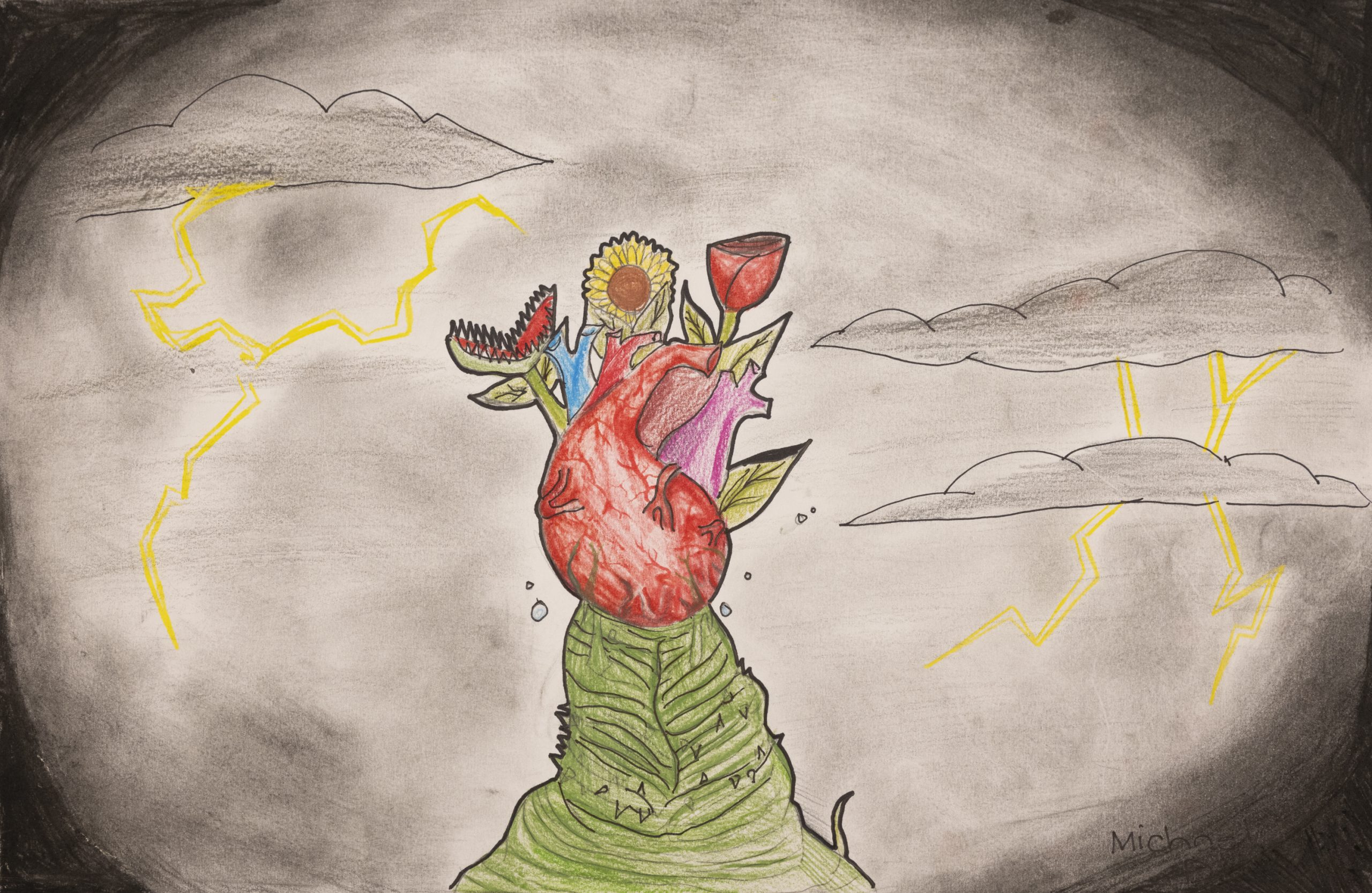
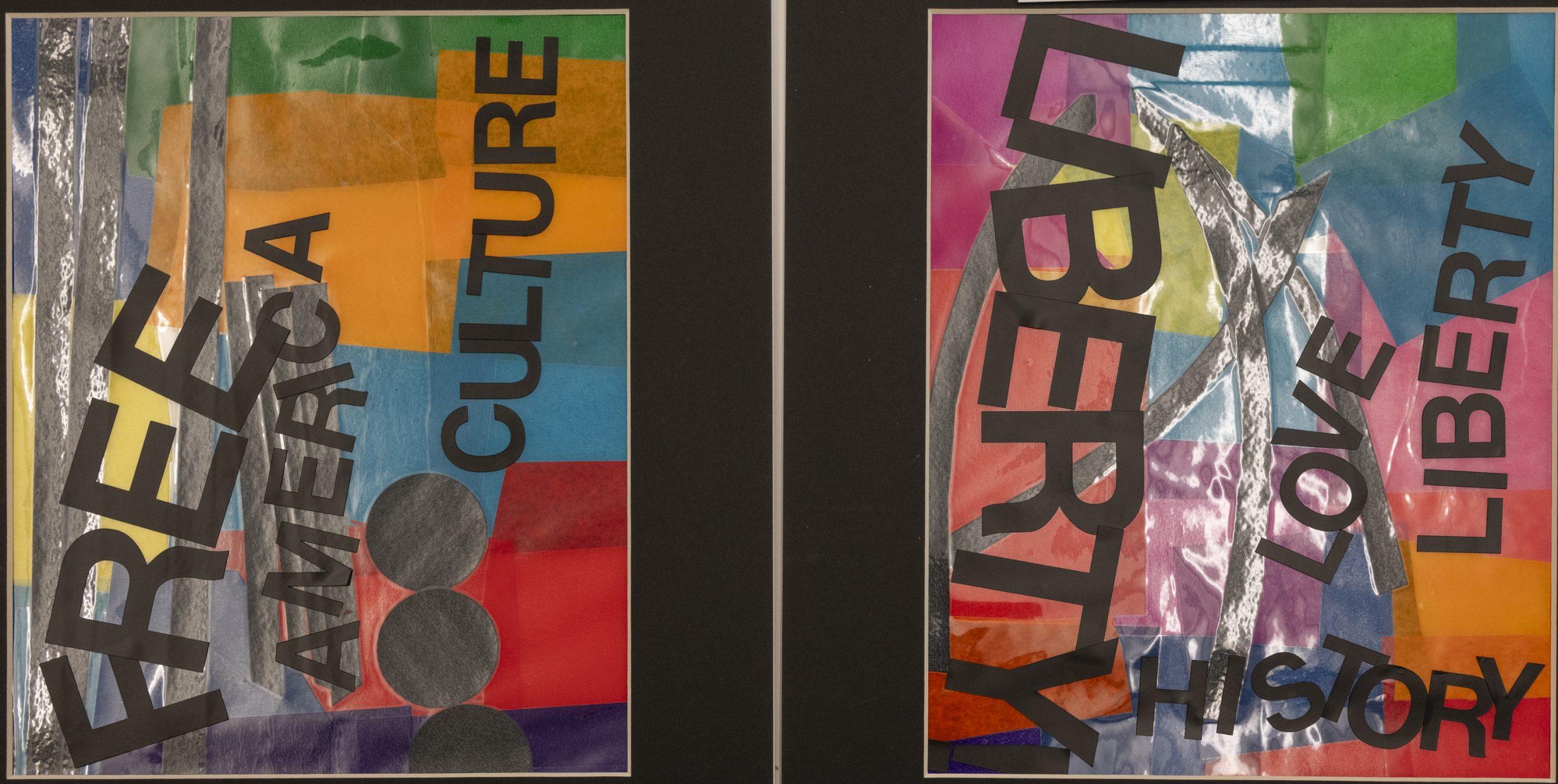
Students were challenged to represent their personalities, emotions, and cultures to create a mural design that could be seen in a courtroom. Students first looked towards the collaborative artists who created the murals at the Milwaukee County Courthouse as their main source of inspiration. Students took inspiration from the bright vivid colors from Nayfa Naji’s mural expressing her Arabic culture and equality as well as LUNA exploring Lady Justice through butterflies and nature to increase Latinx artist representation. Other students were driven to create art with the theme of inner peace and beauty inspired by Black Paint Studios and others wanted to showcase taking care of our Earth when viewing the mural of Scott Hill. Each student took a unique approach to playing around with imagery, symbolism, and art materials as a collaborative effort to celebrate their individuality. A wide variety of mediums were available for students to use- pencils, pens, markers, colored pencils, pastels, watercolor paint, acrylic paint markers and collage. From creating sketches to looking at reference photos, each student created drawings, paintings and collages surrounding our topics: freedom, love, peace, and our individual cultures living here in the Bronx.
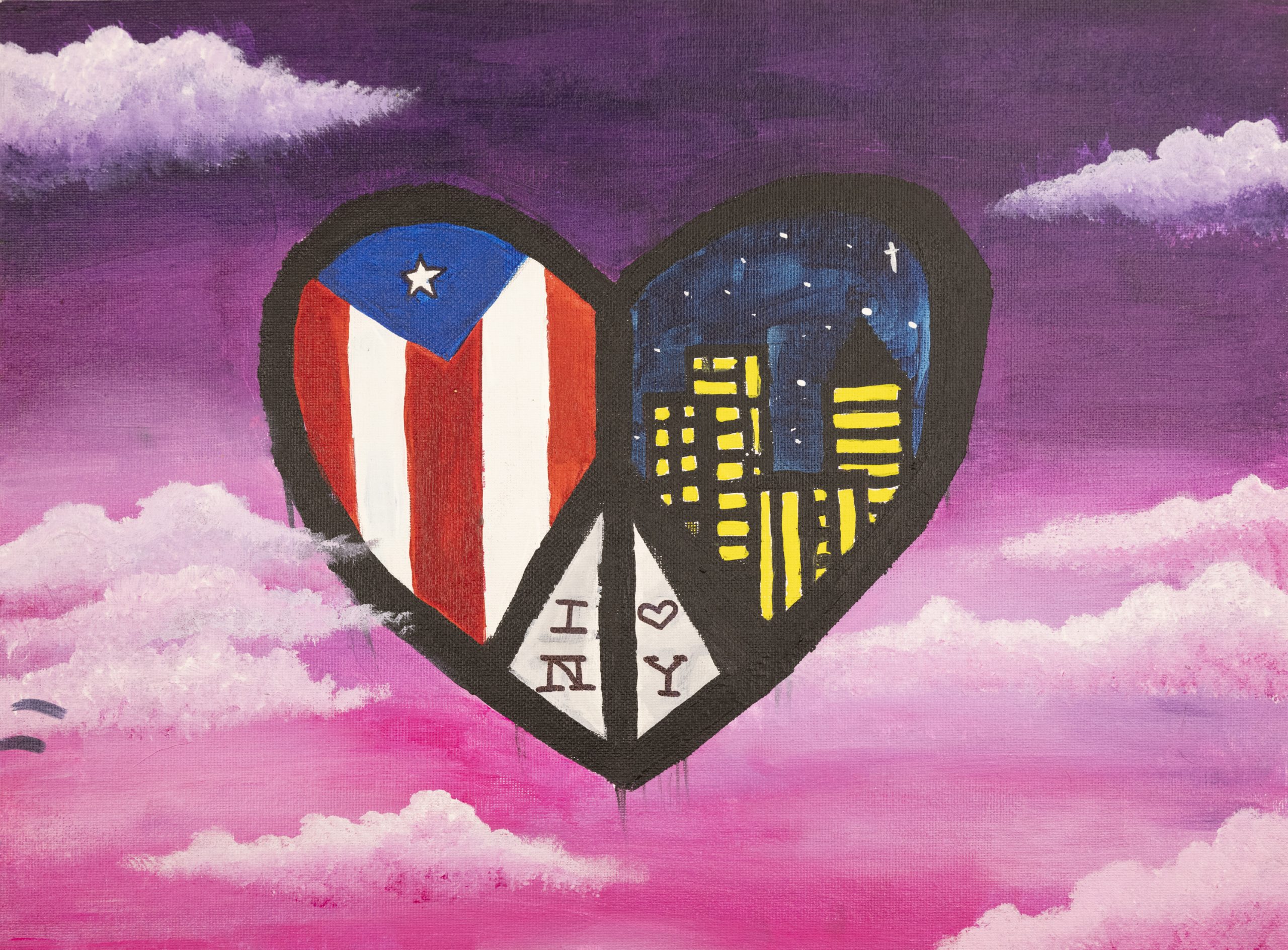
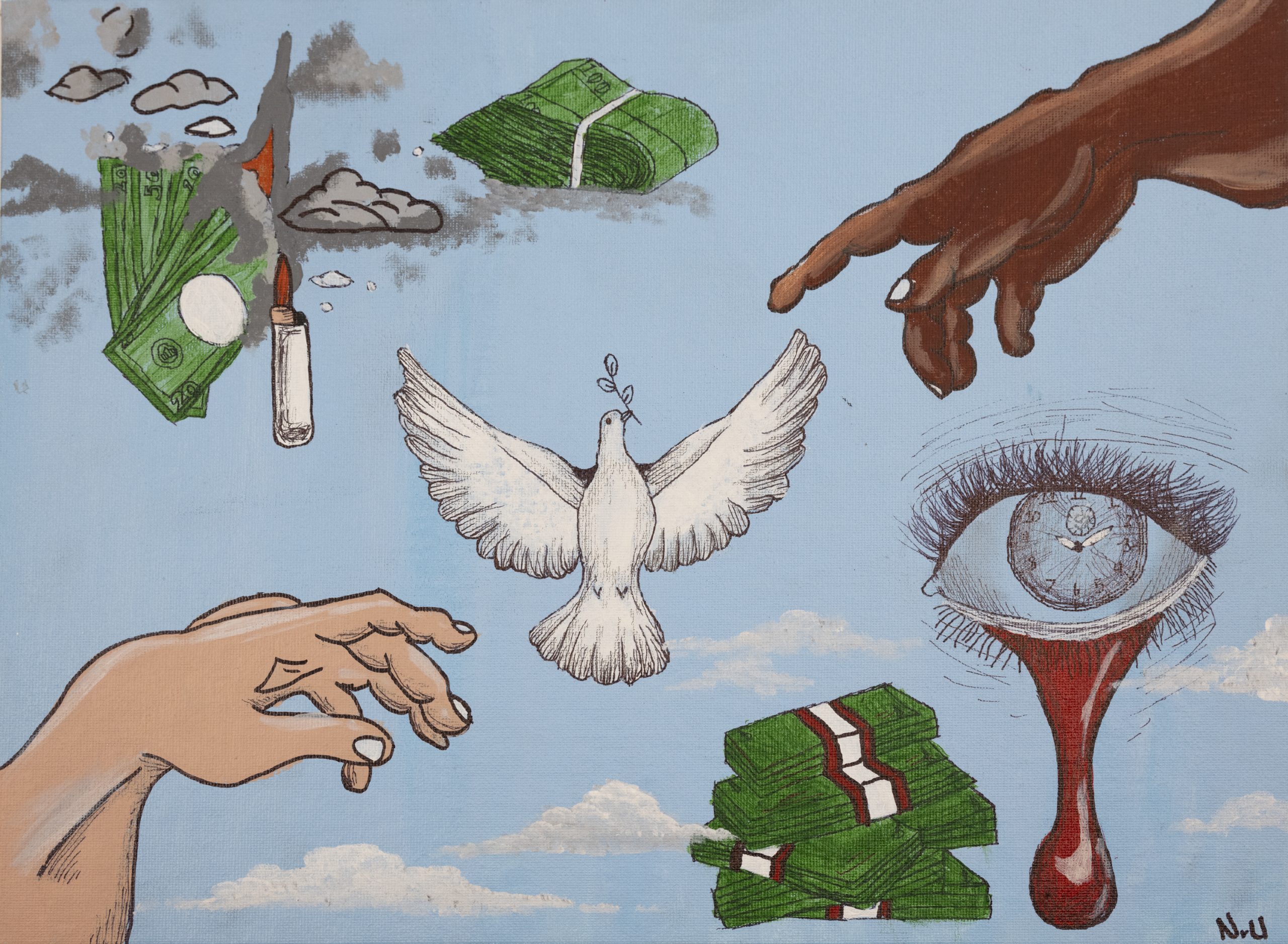
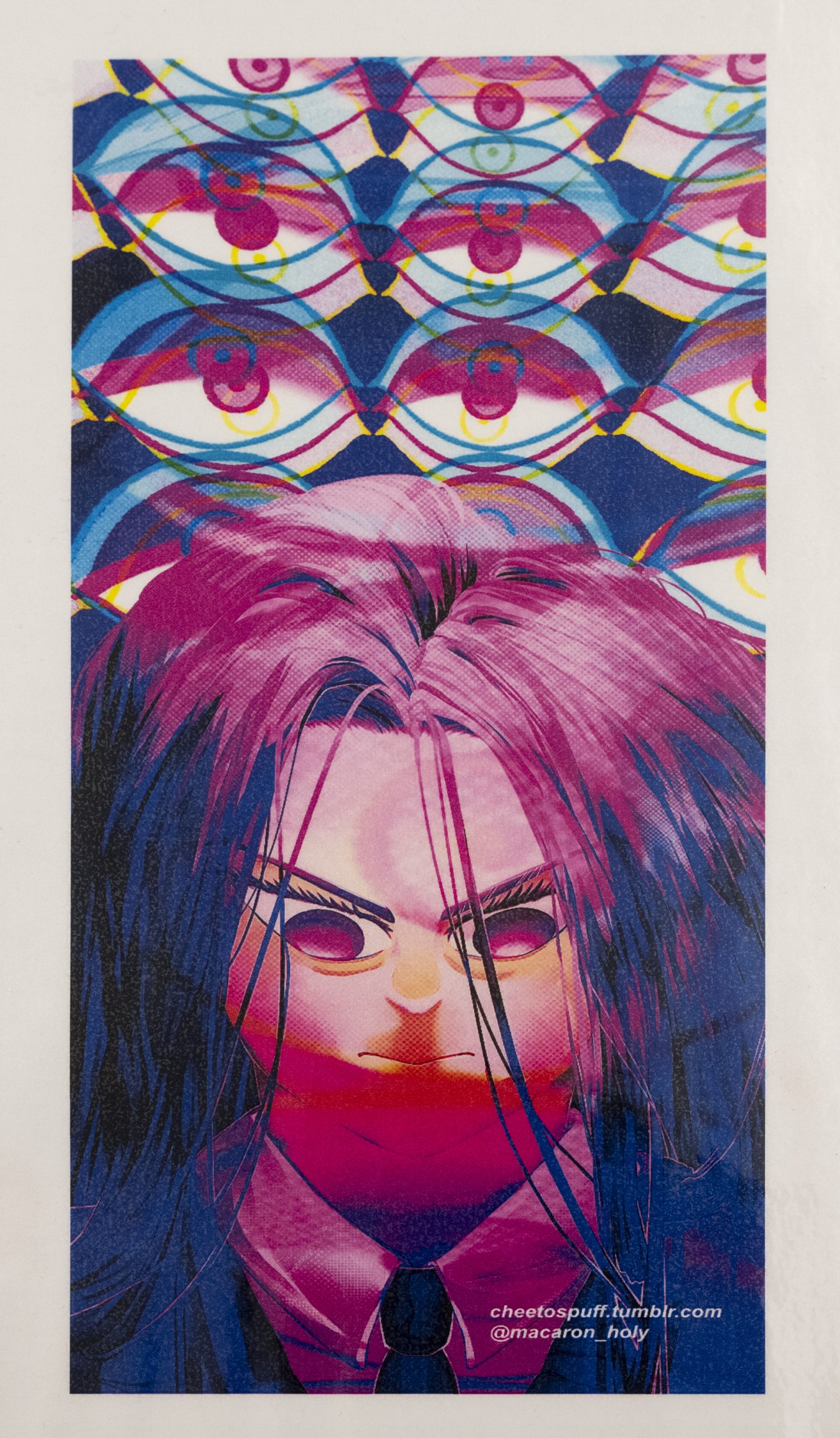
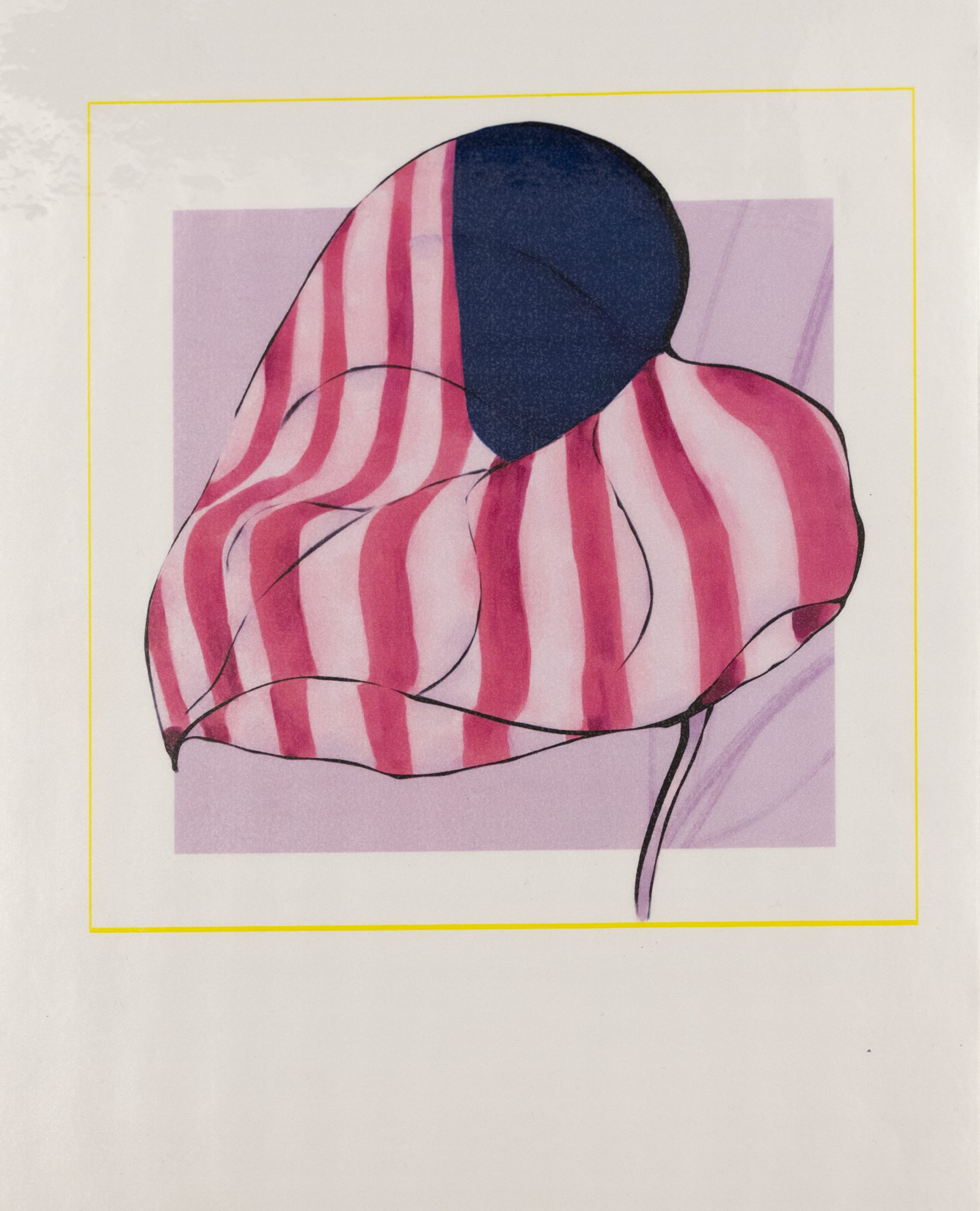
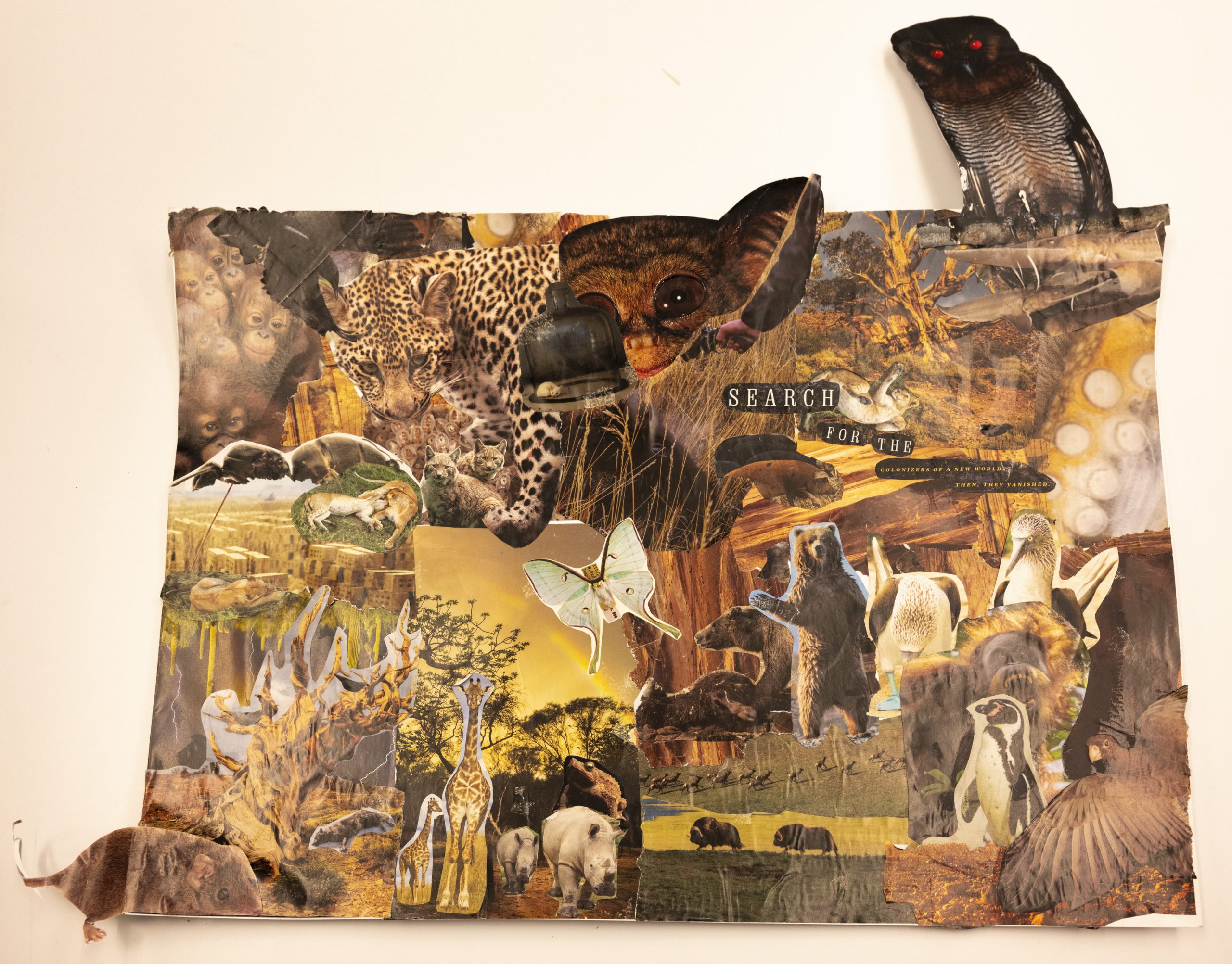
Teachers: Amie Robinson, Sarah McDowell, and Katherine Marte
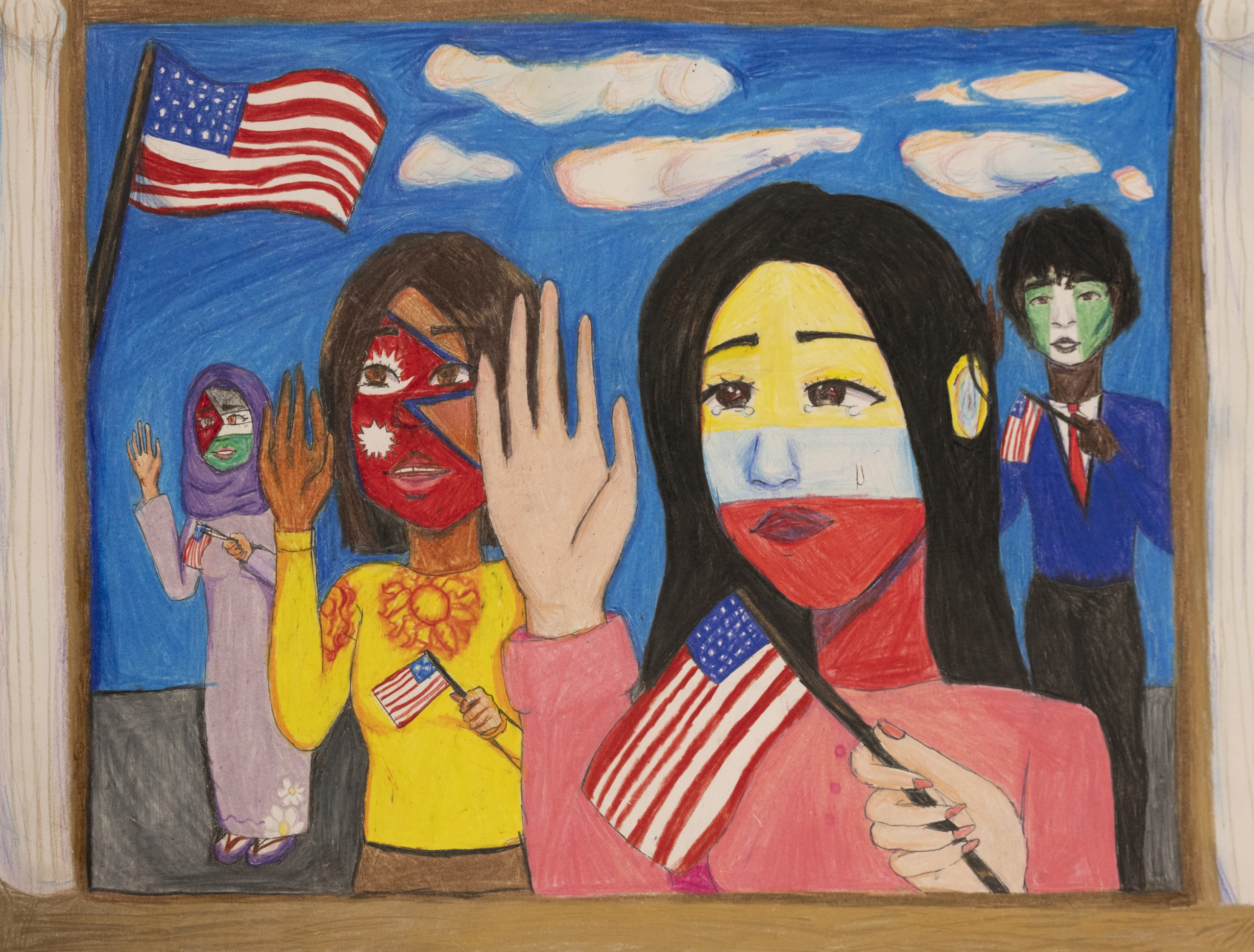
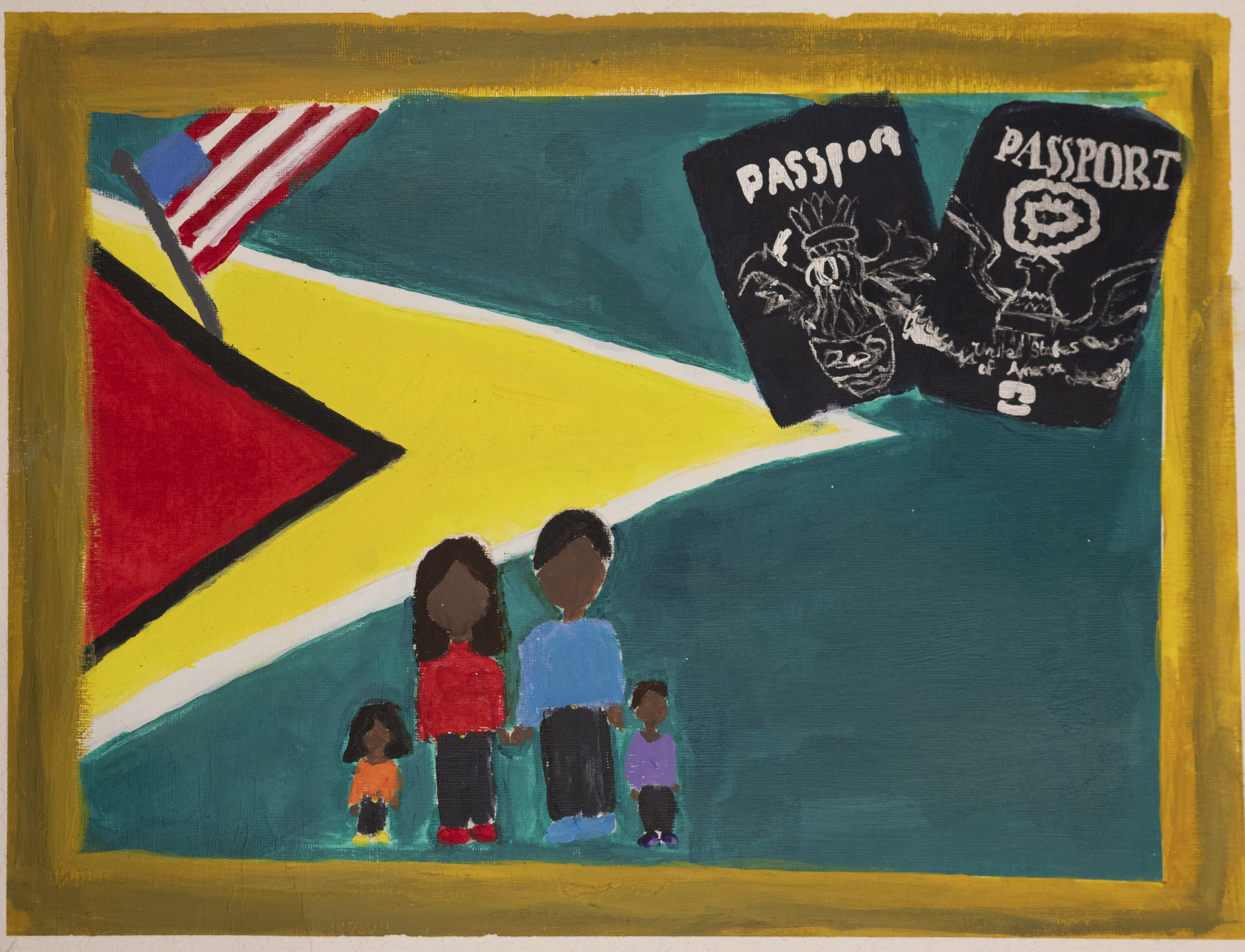
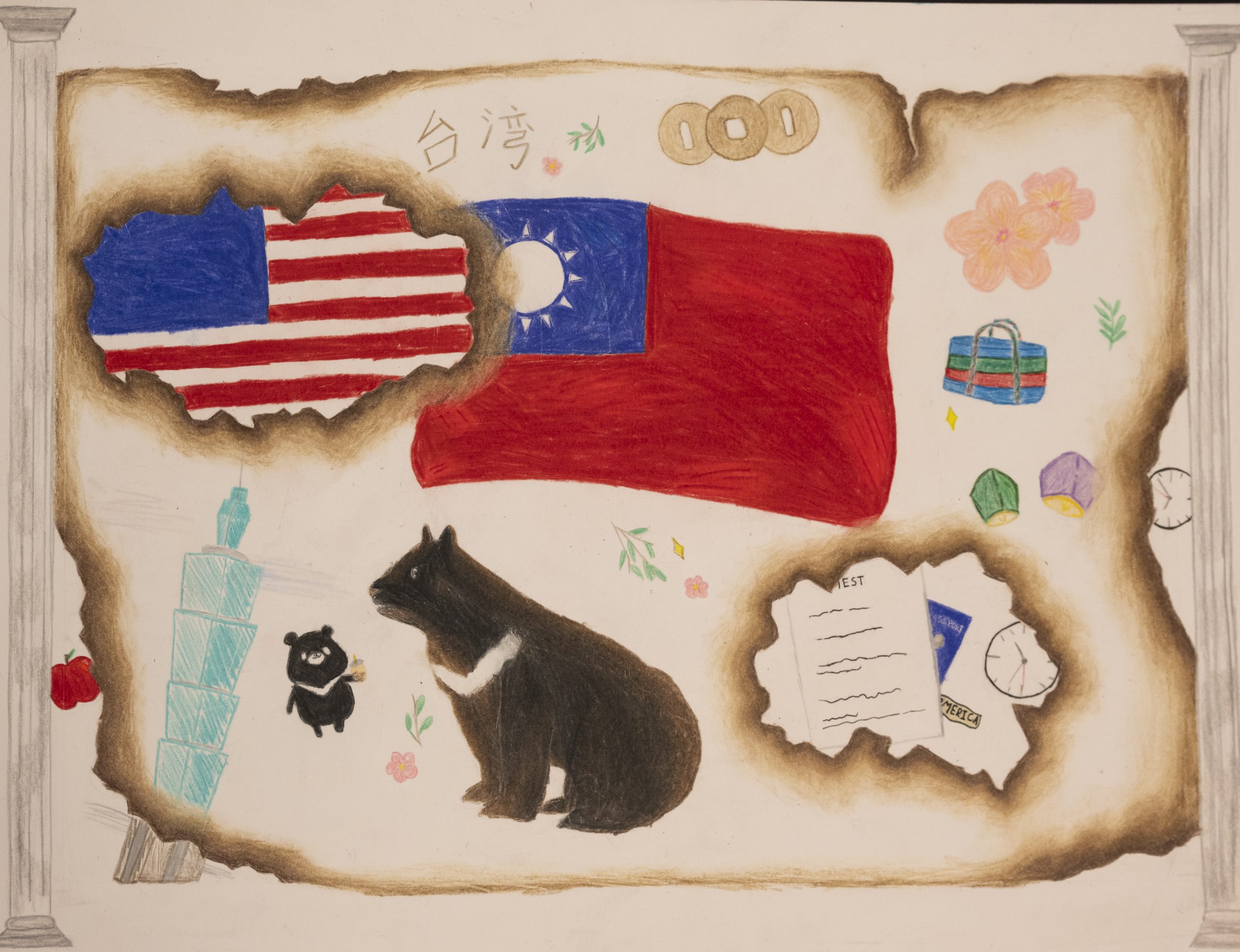
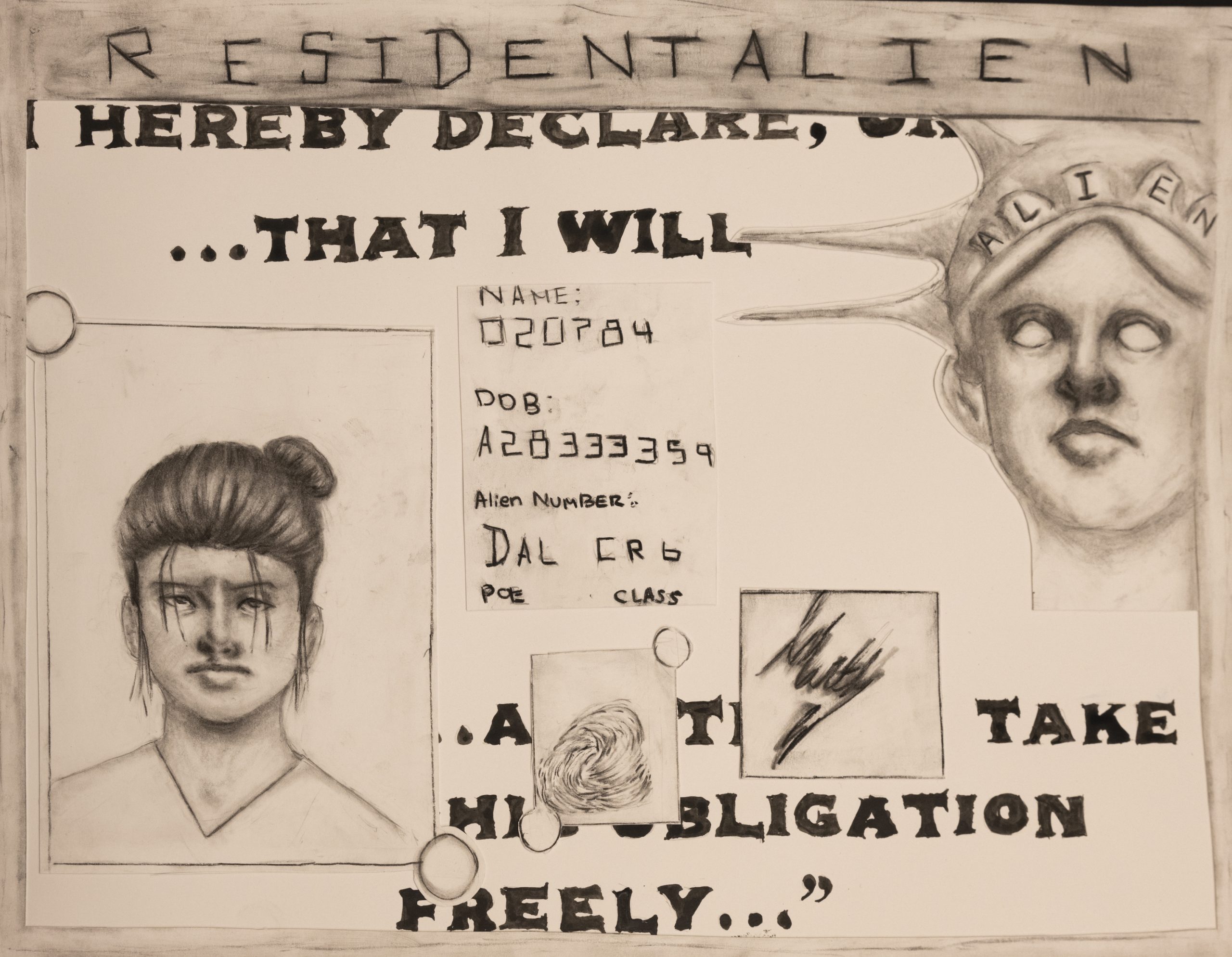
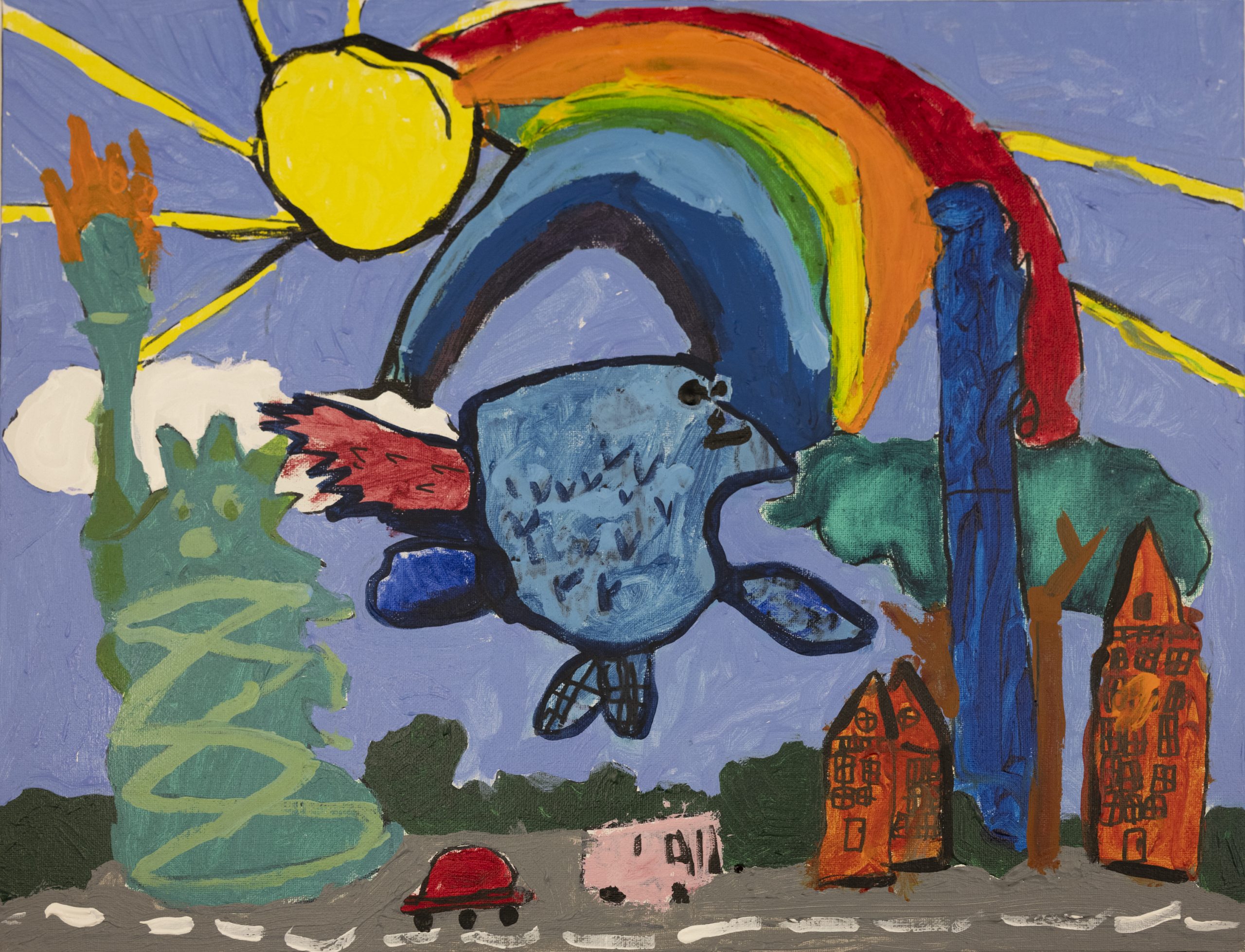
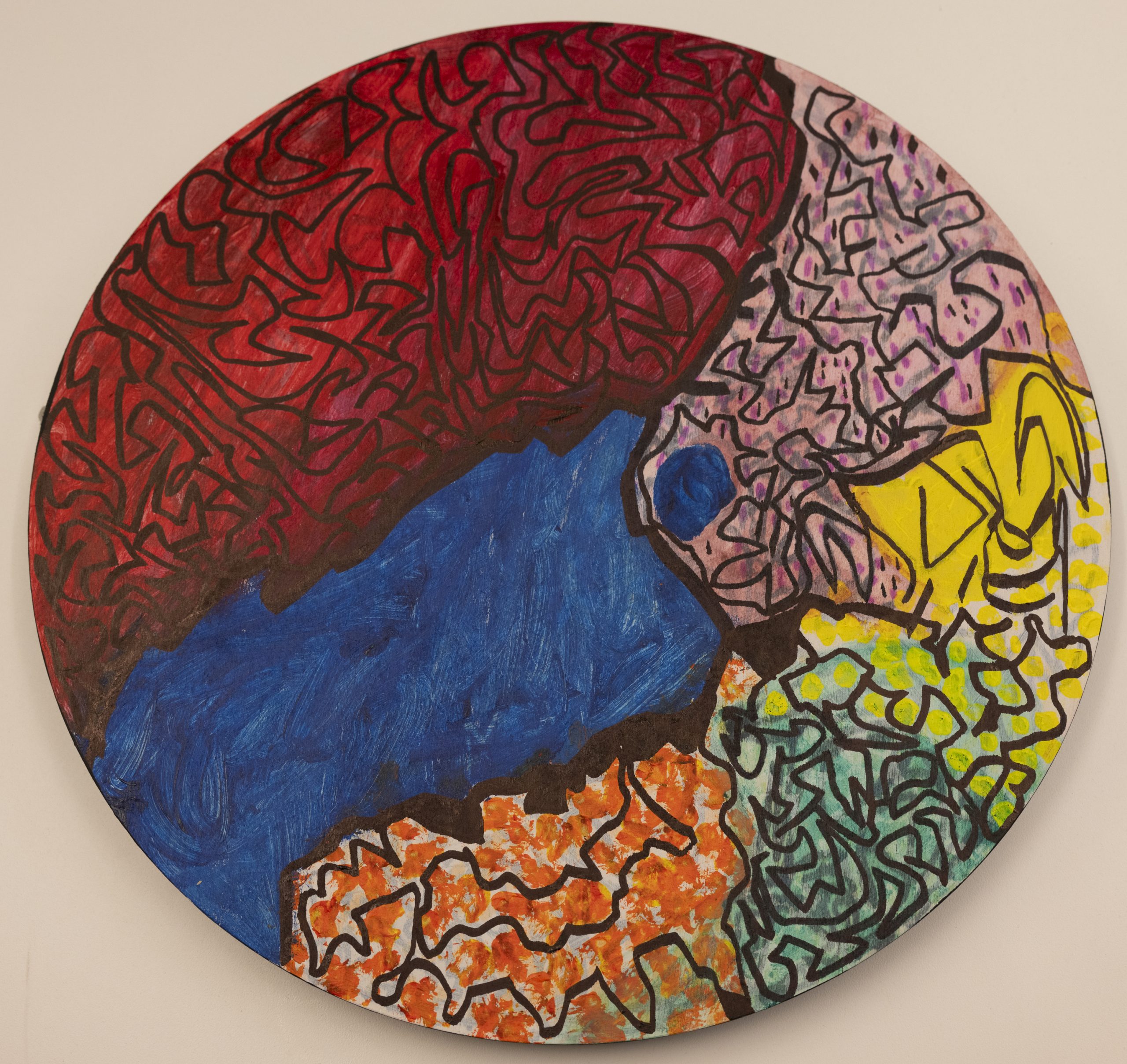
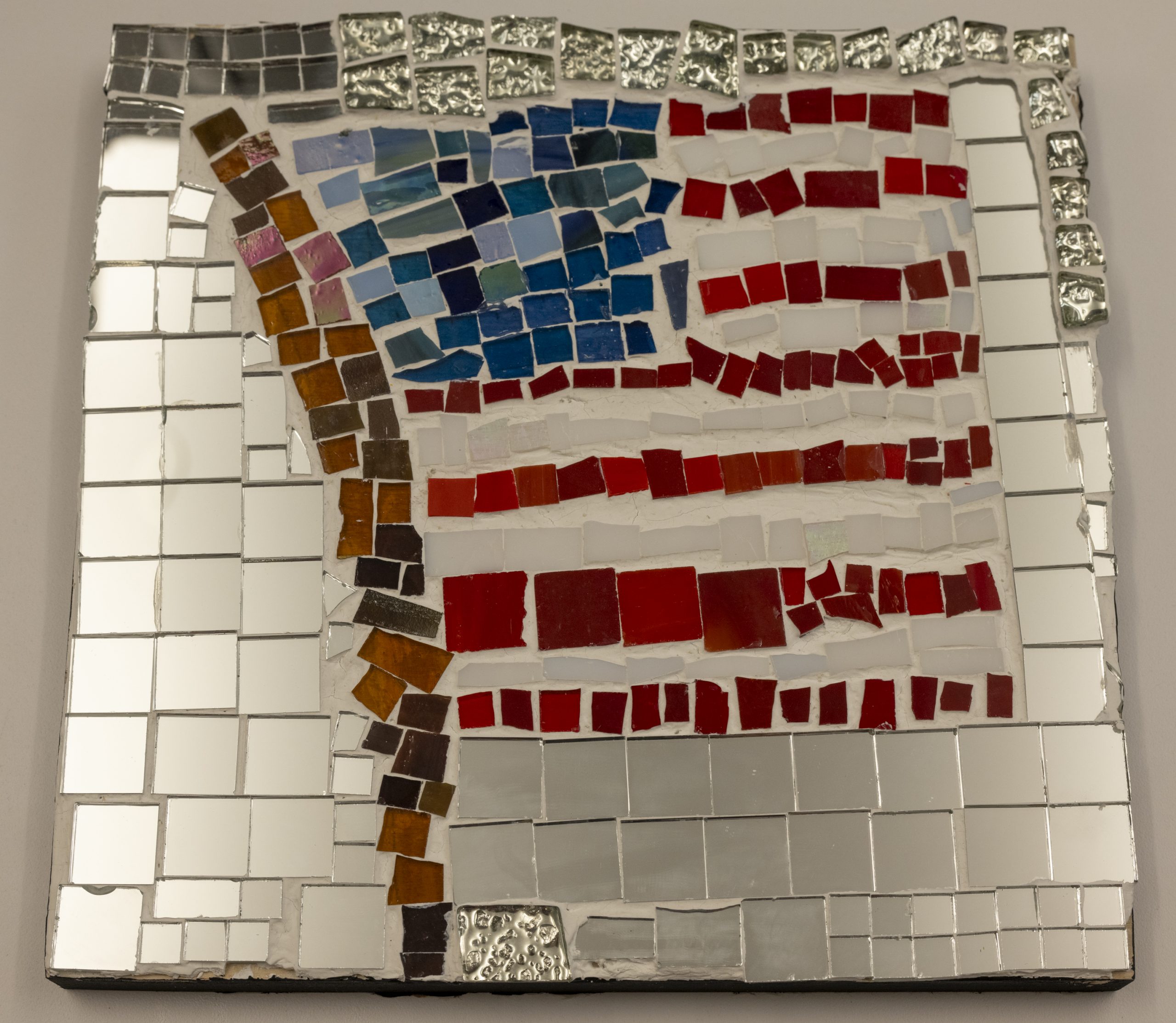
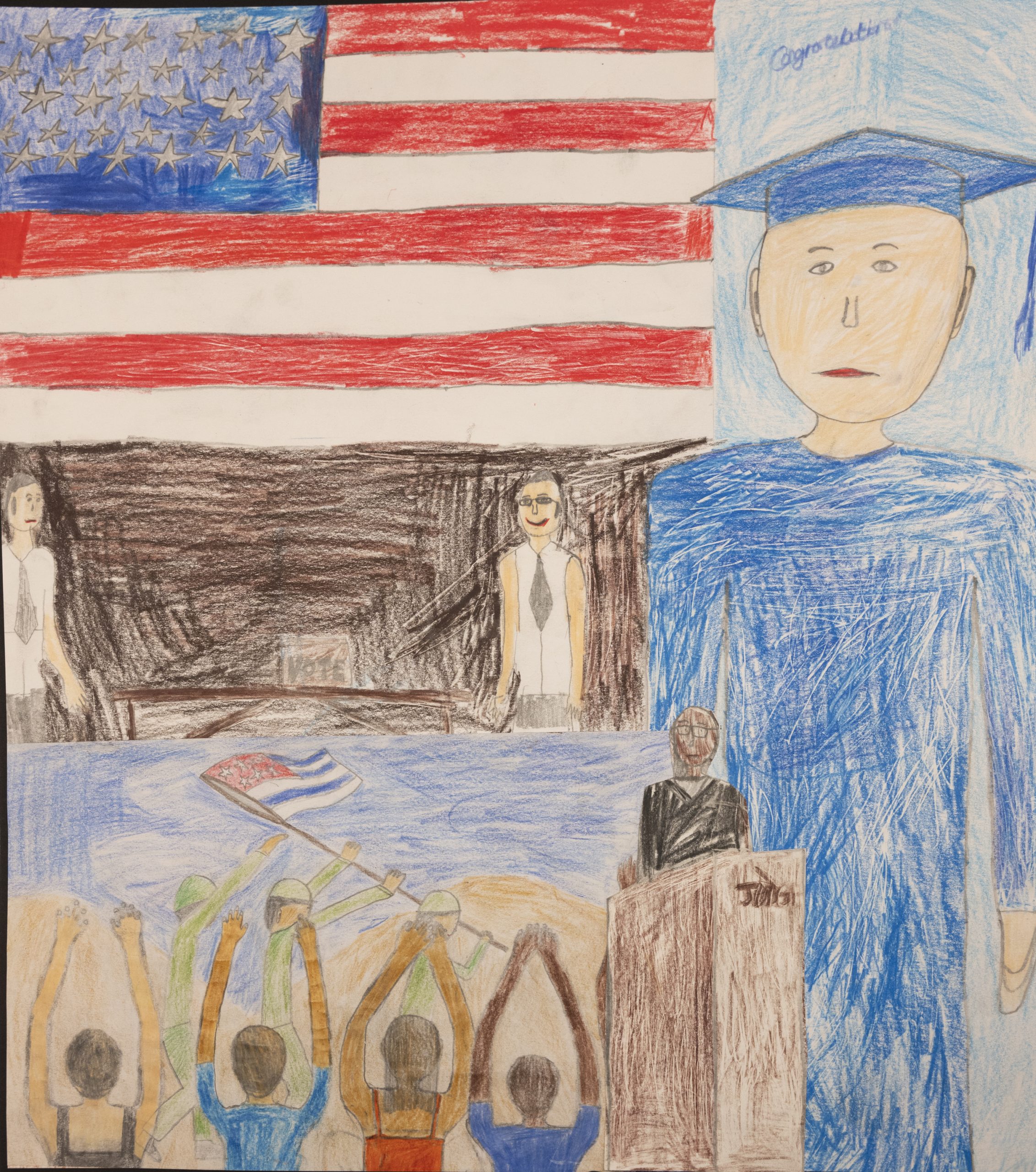
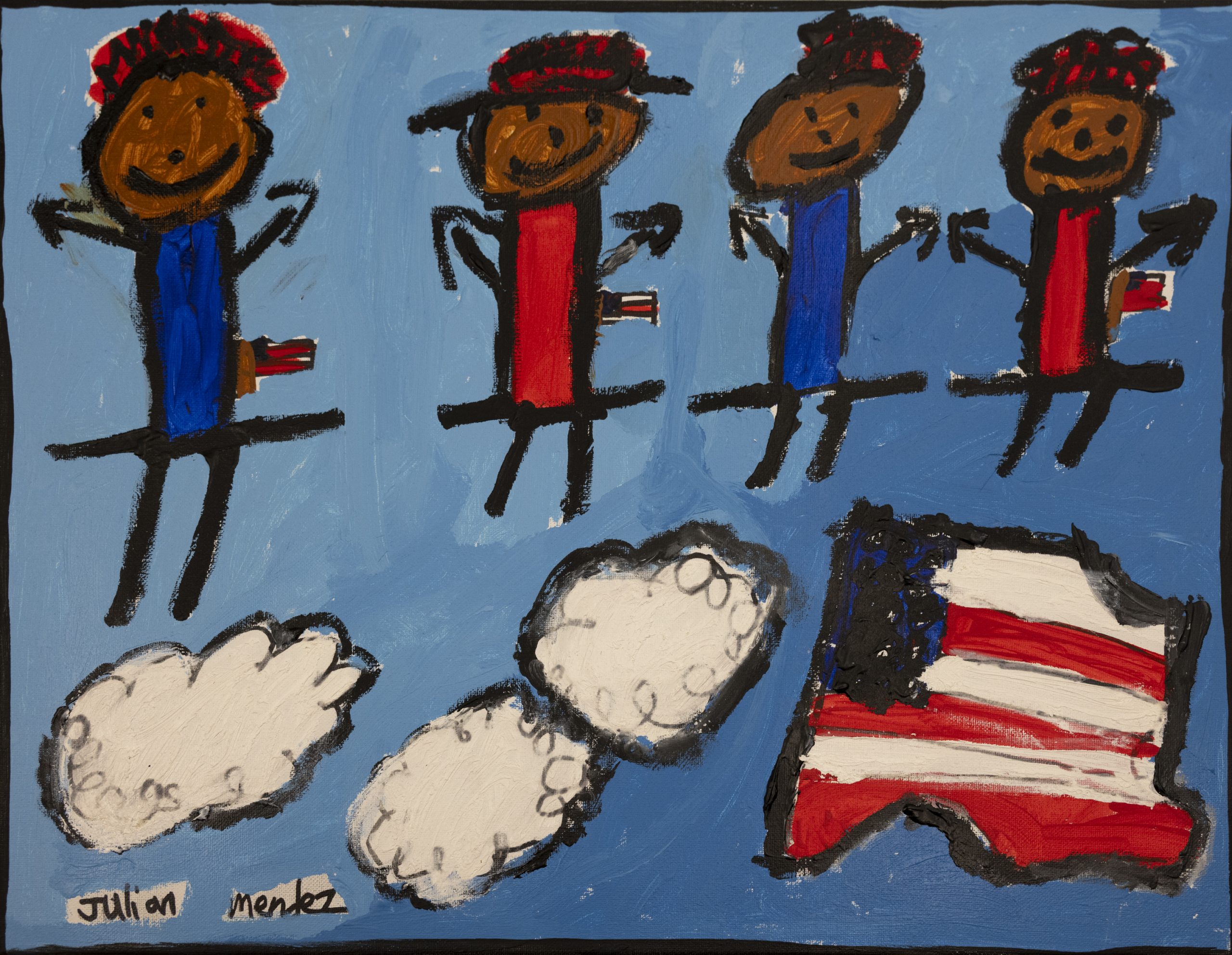
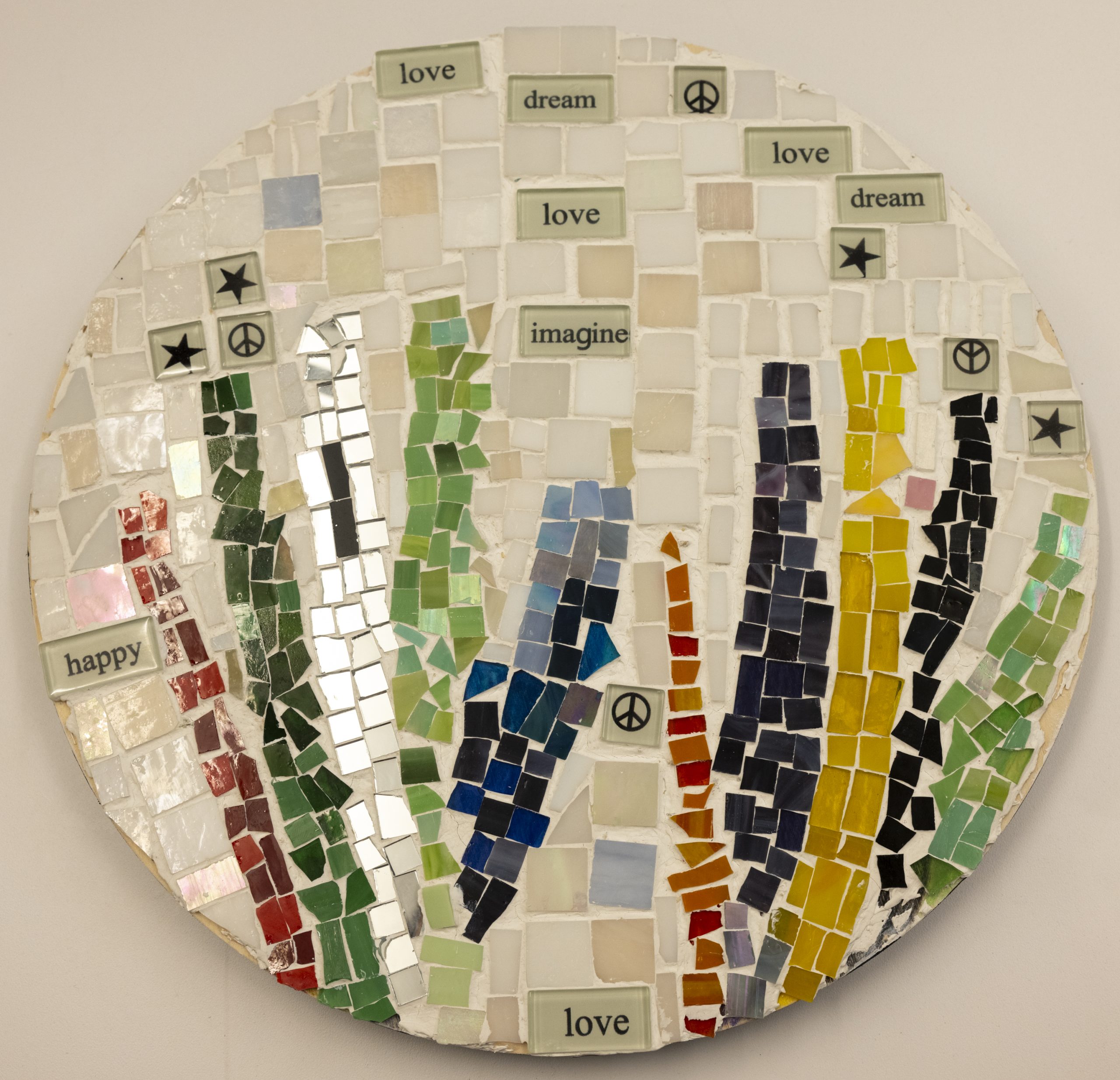
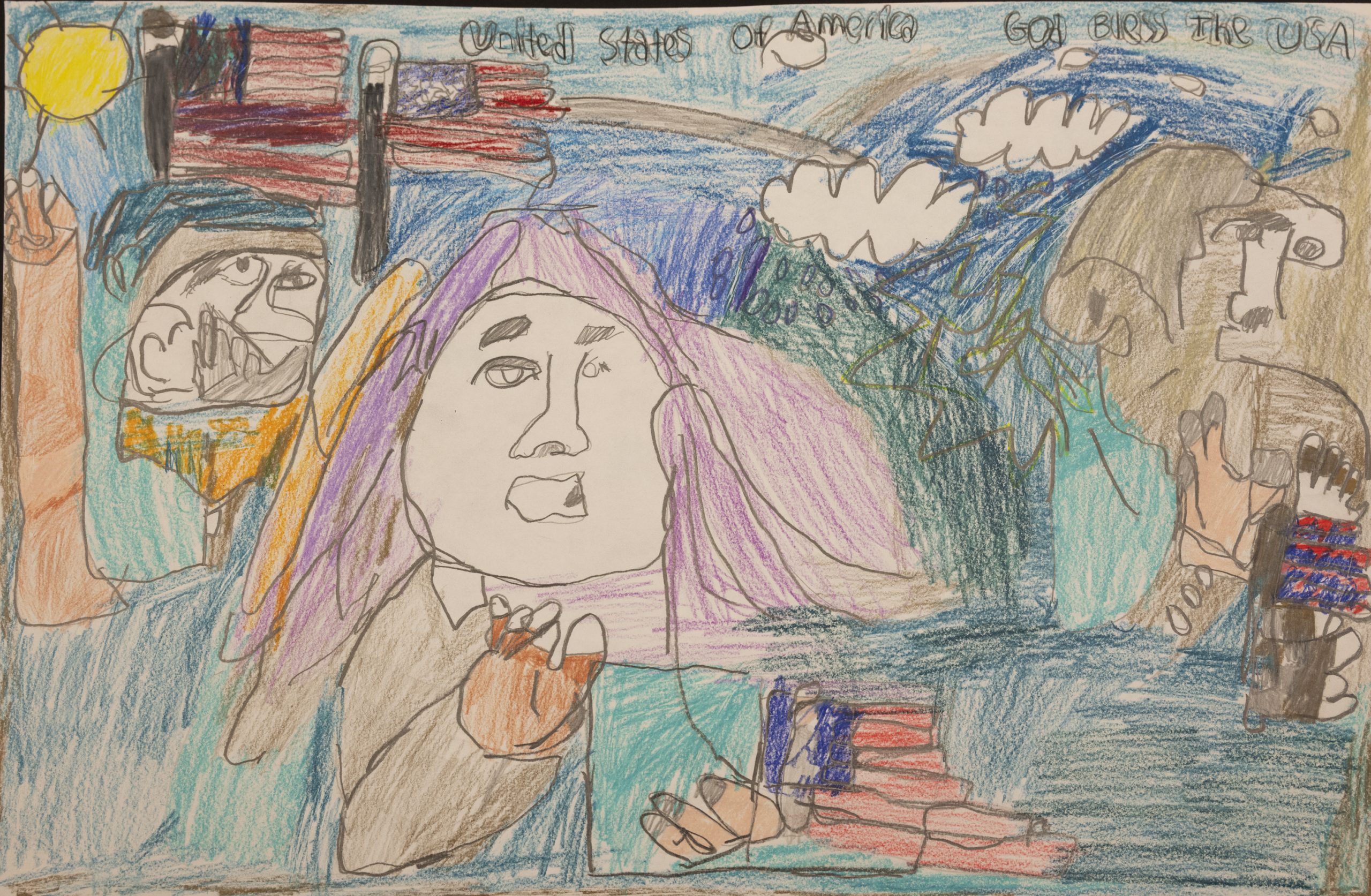
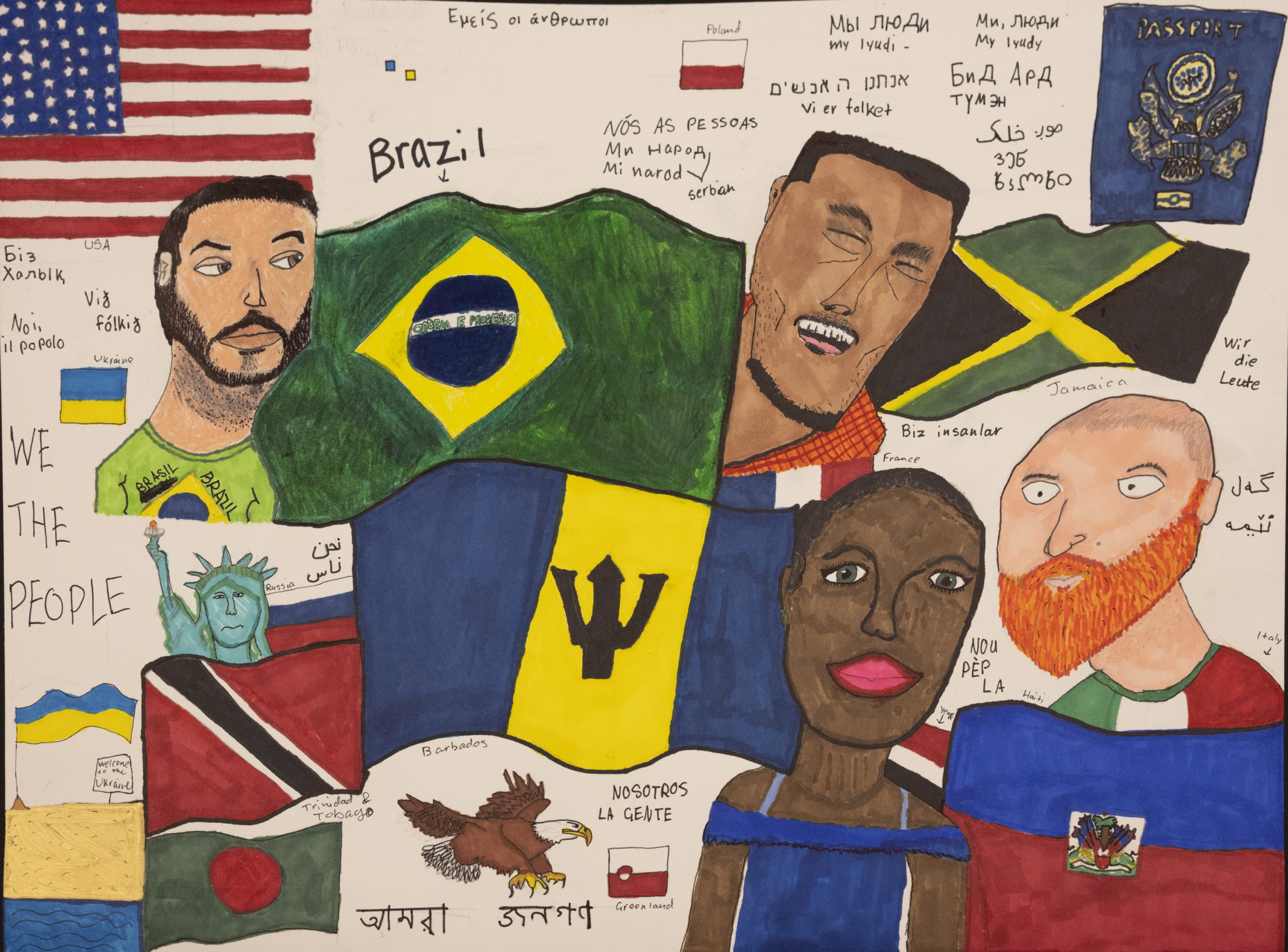
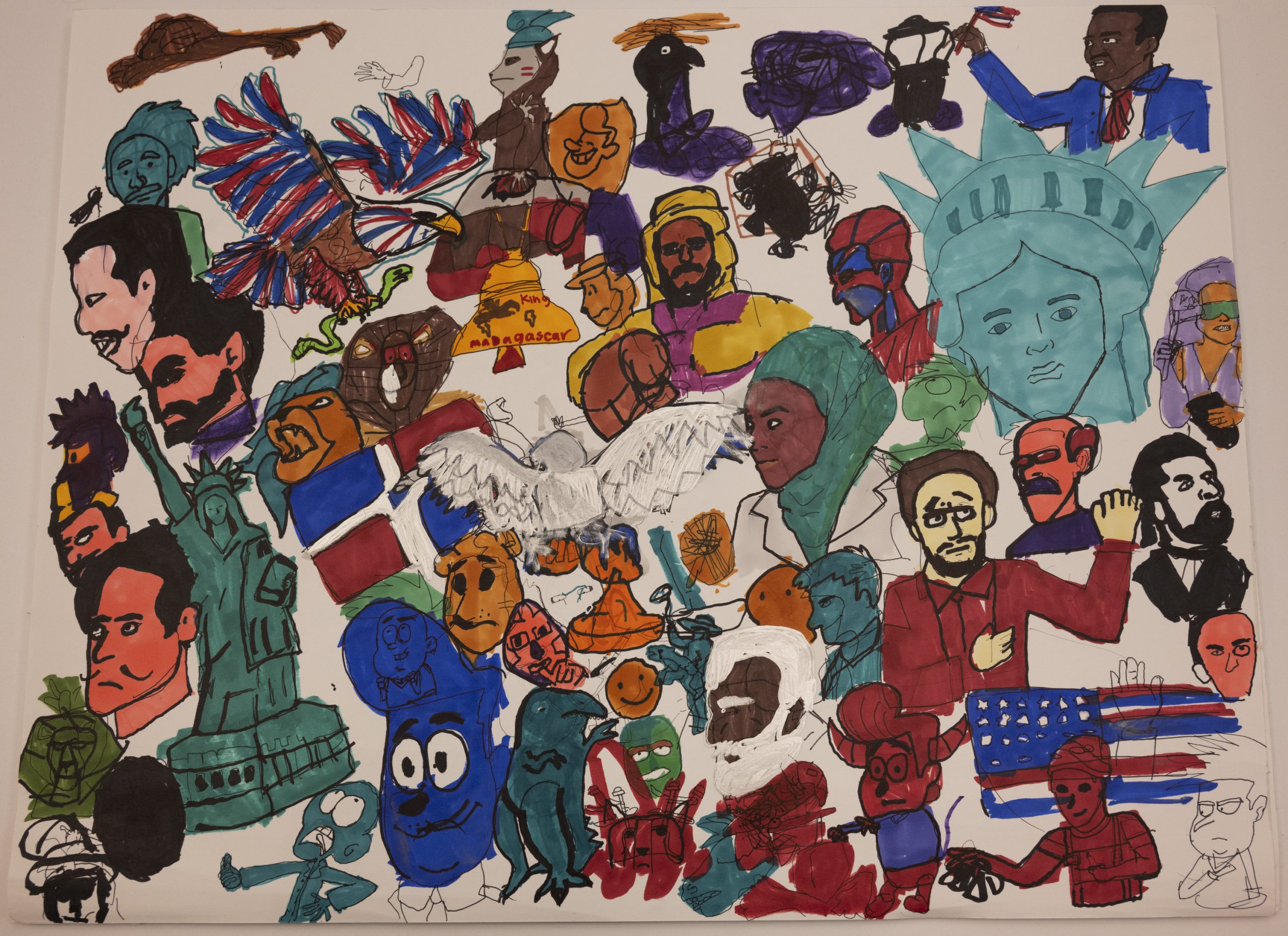
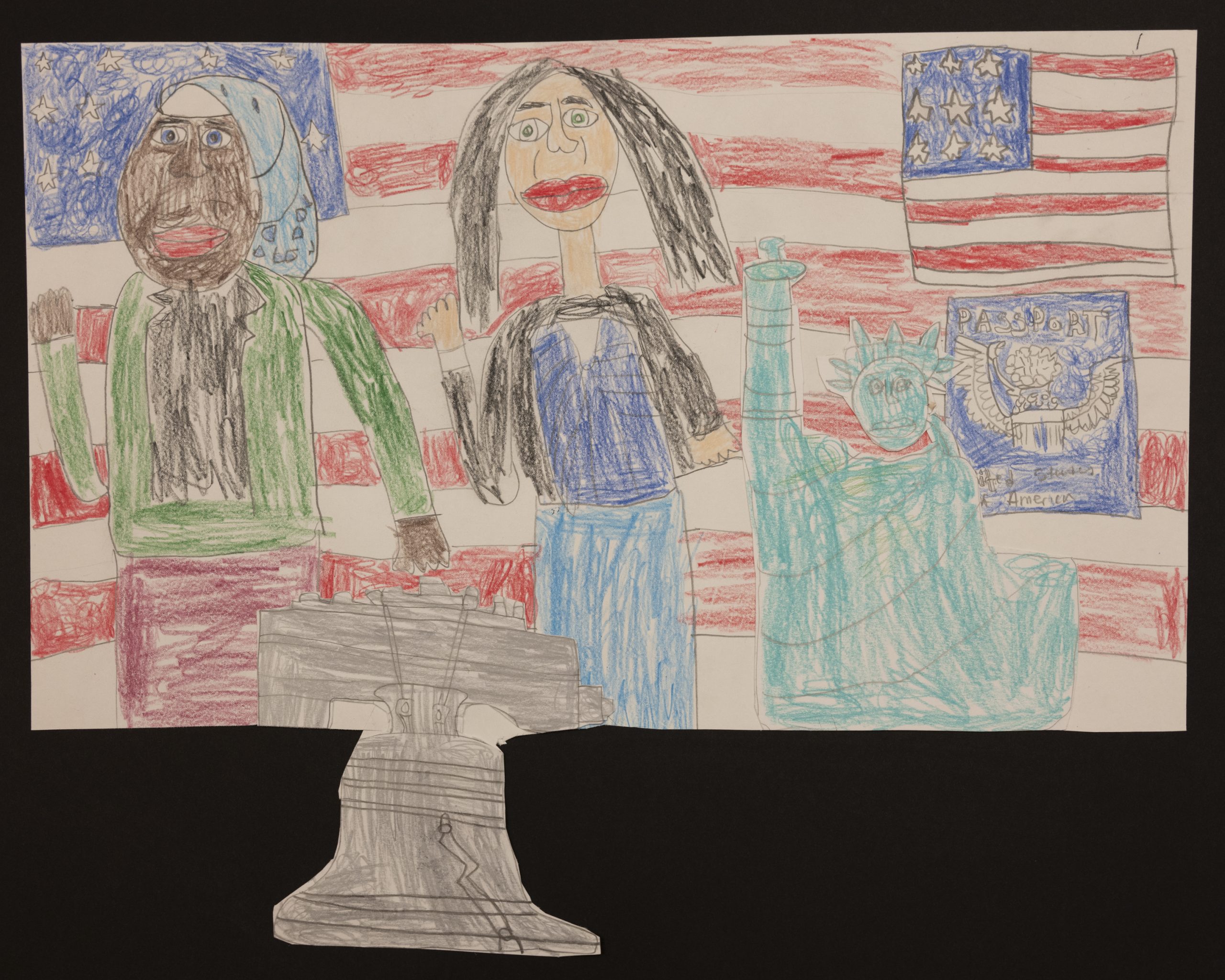
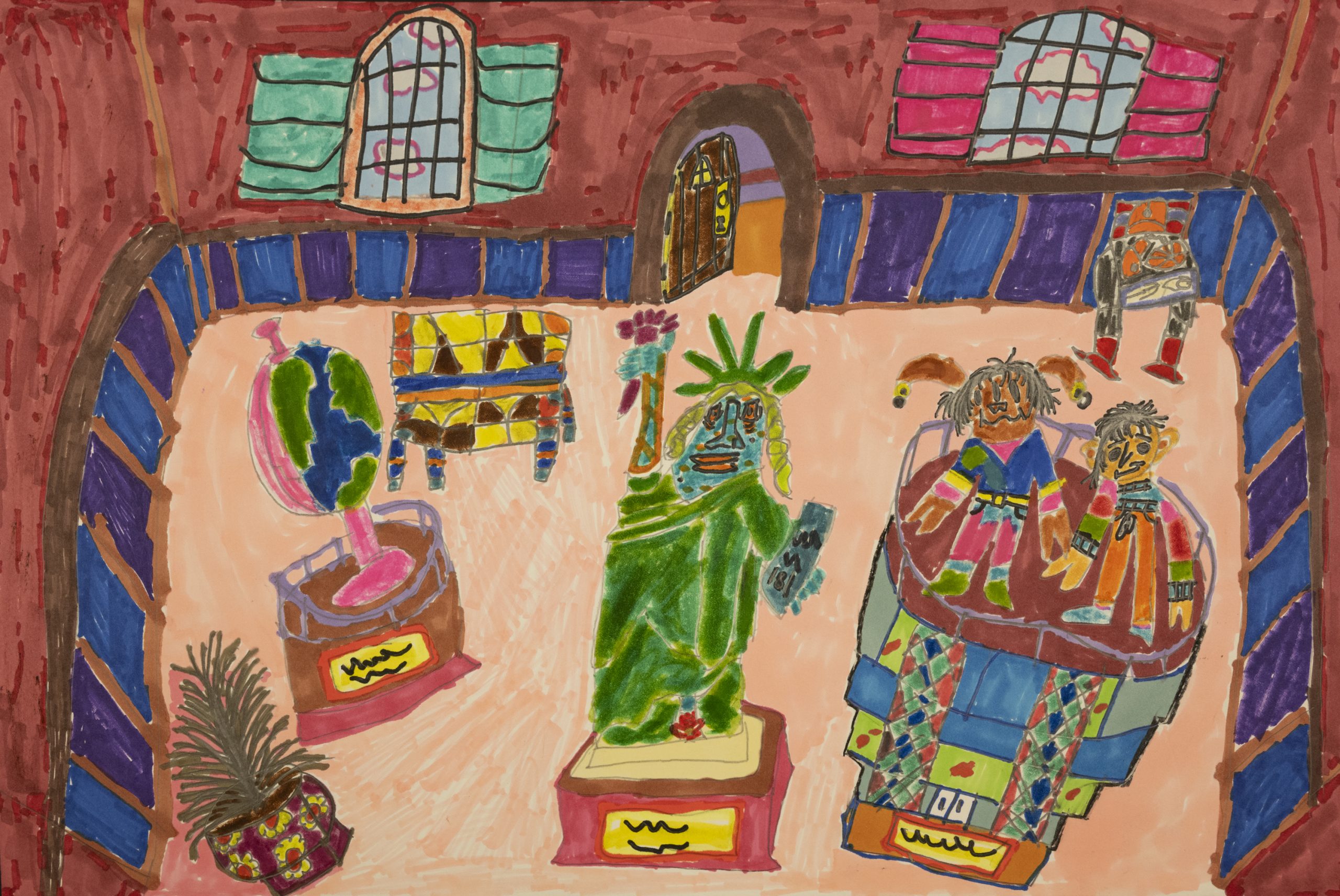
Project Title: WELCOME TO AMERICA!
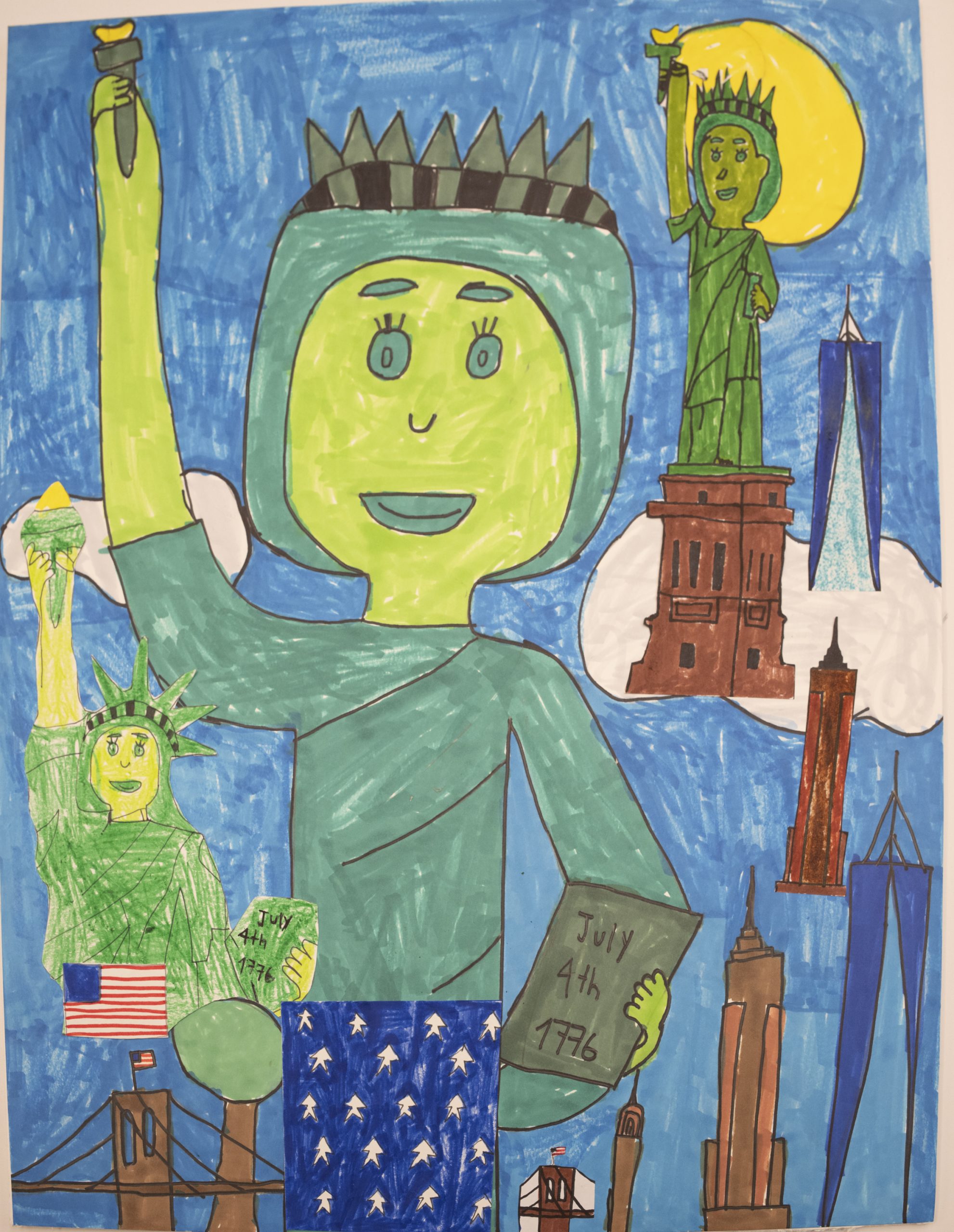
Welcome to America! was inspired by the students’ experience attending a naturalization ceremony. Artists designed public works of art, both murals and mosaic floor designs, to make new citizens and their families feel welcomed at the courthouse. The designs are also informed by each artist’s own unique family story and heritage.
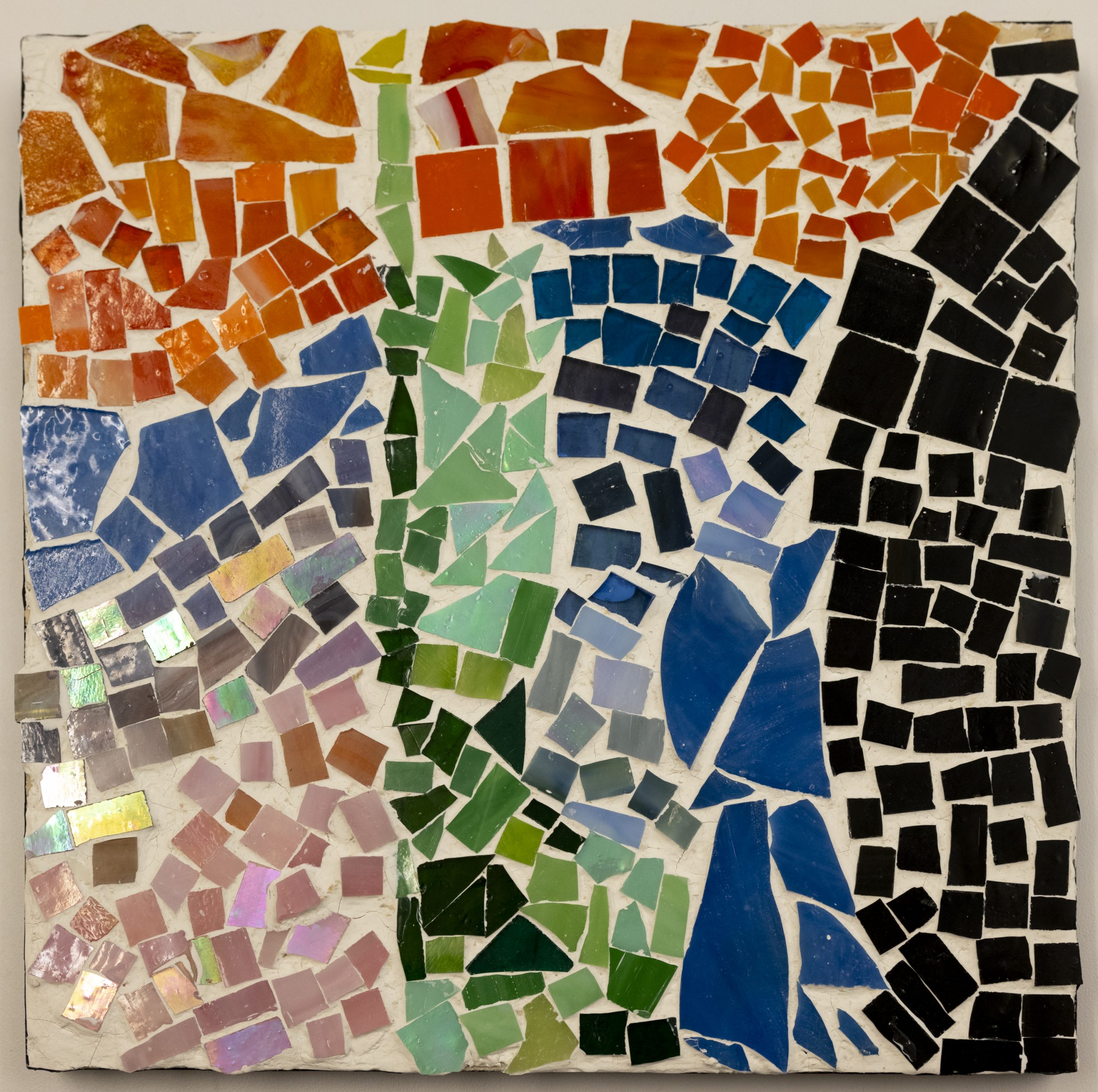
Teachers: Michael Young
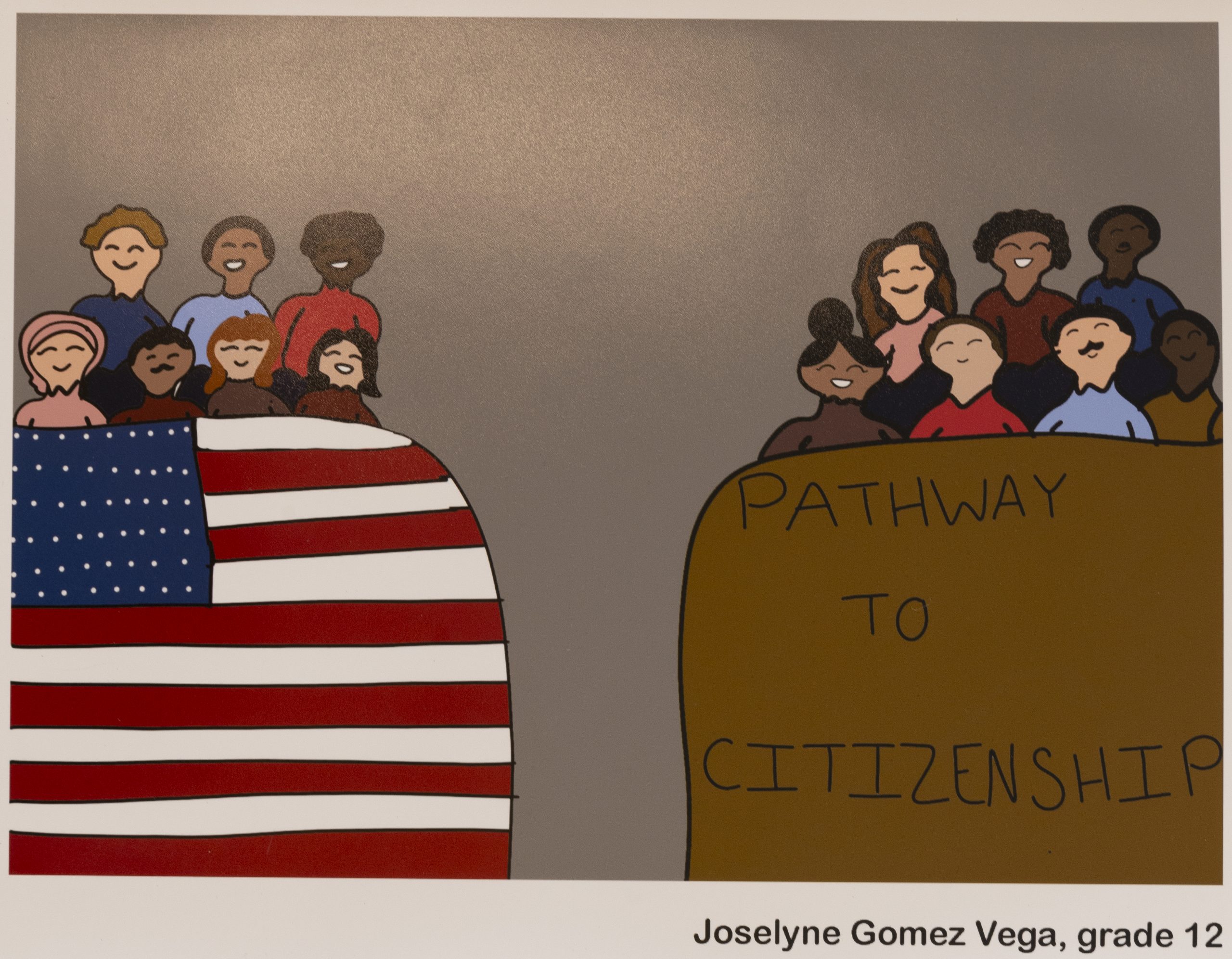
Project Title: PATHWAY TO CITIZENSHIP
This year, our students decided to create courthouse murals featuring the pathway to citizenship. We attended a naturalization ceremony at the Moynihan Courthouse in April, where we witnessed 163 people from 51 countries receive their United States citizenship. Afterwards, we spoke to the judge who presided over the ceremony about his life experiences and career. Students drew upon their independent research and this field trip to help inspire their original artwork.
Teacher: Melissa Nakos
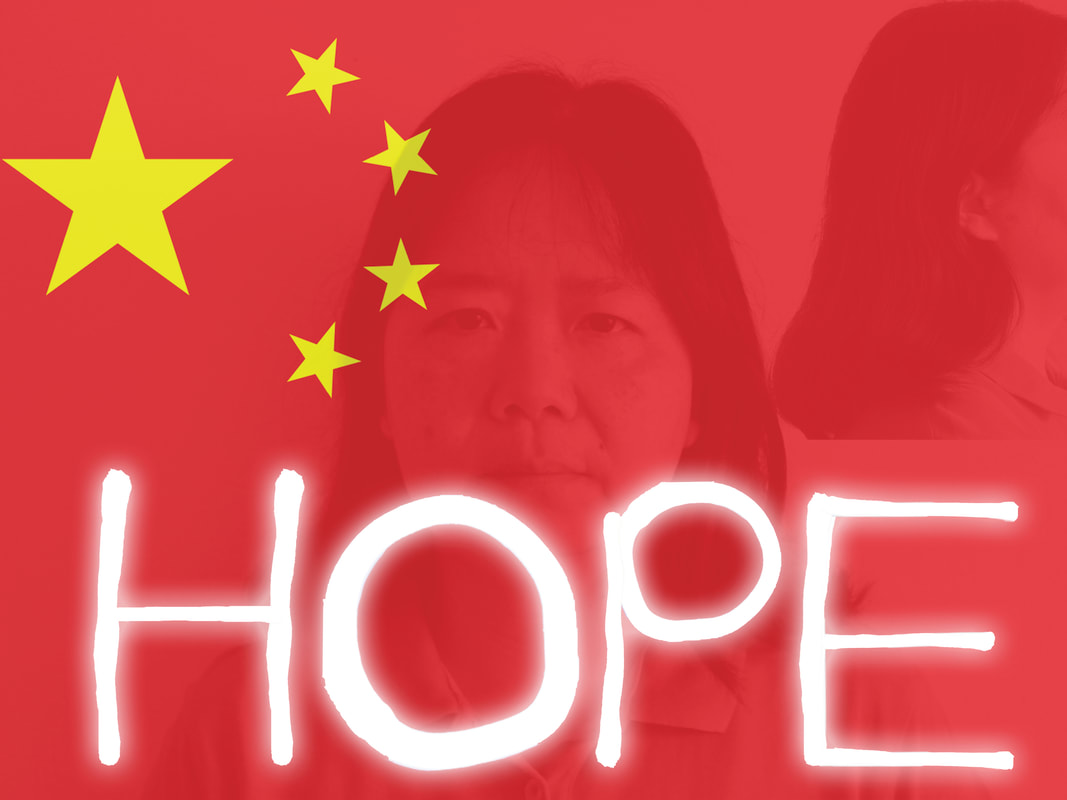
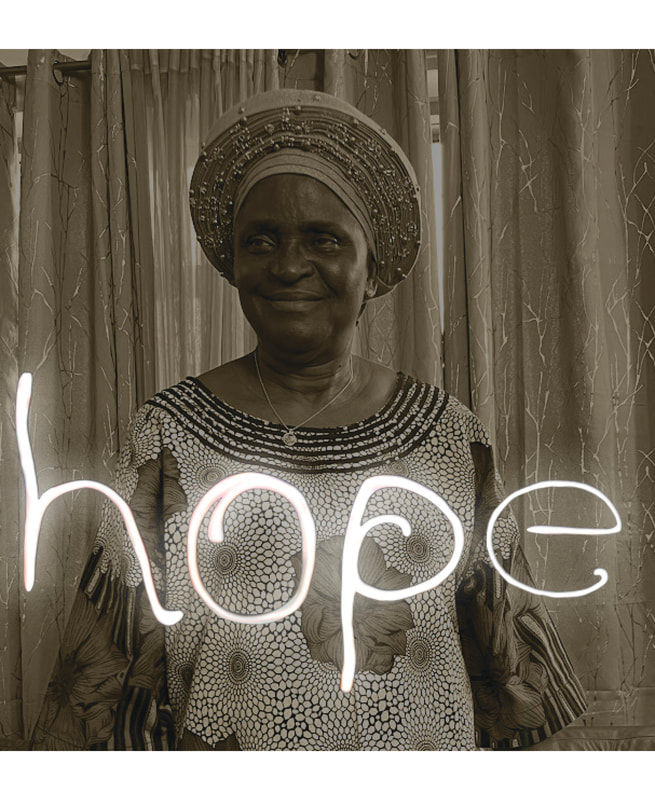
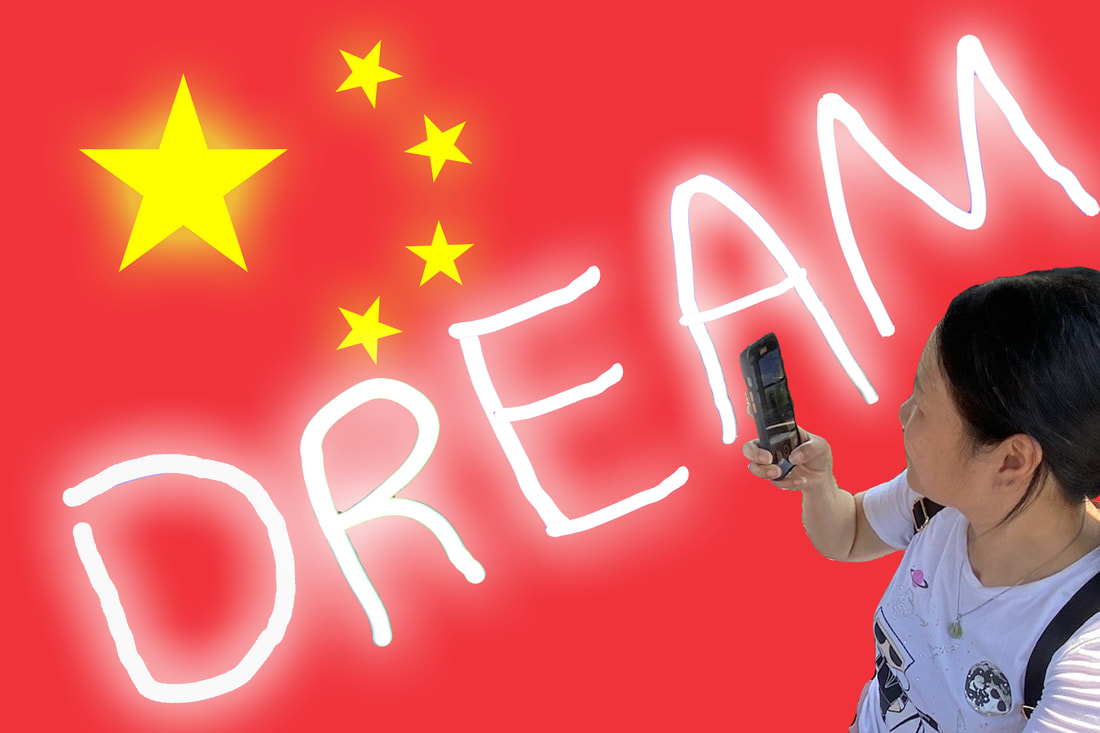
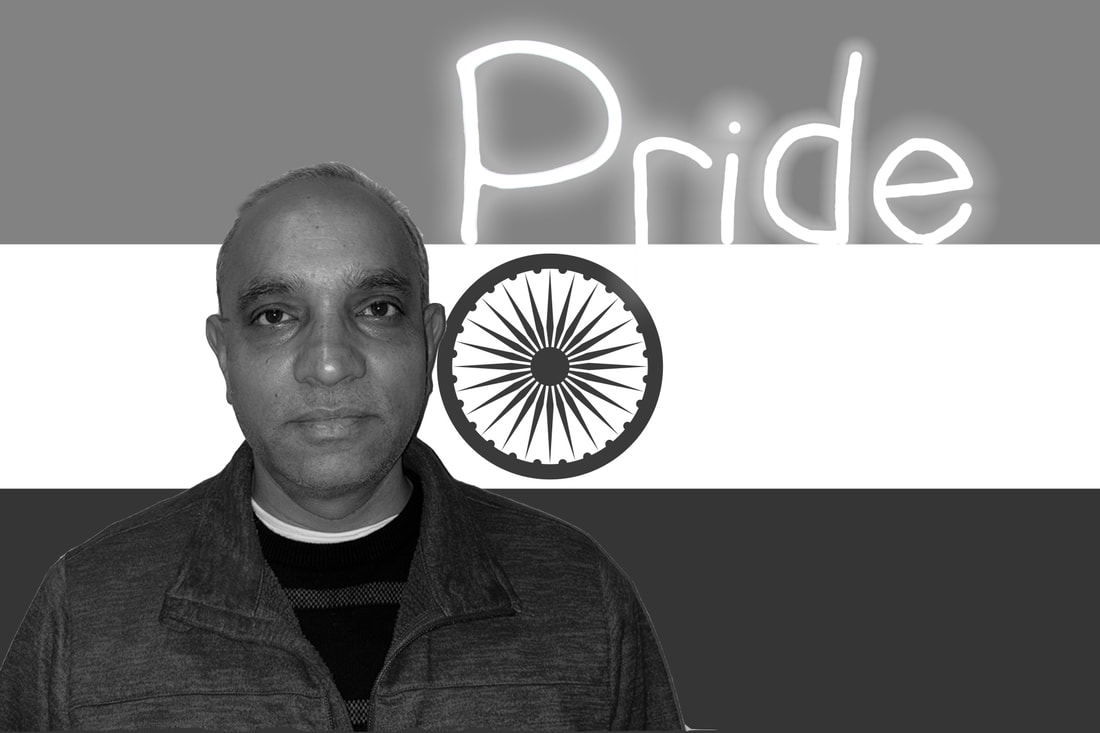
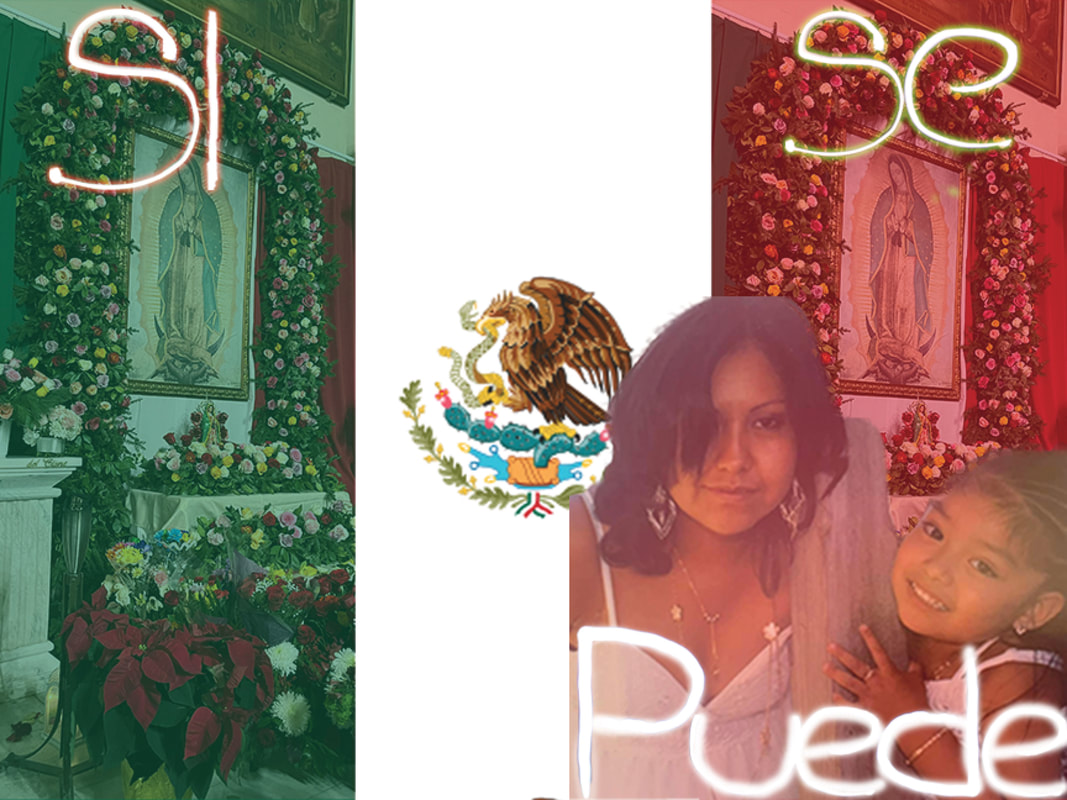
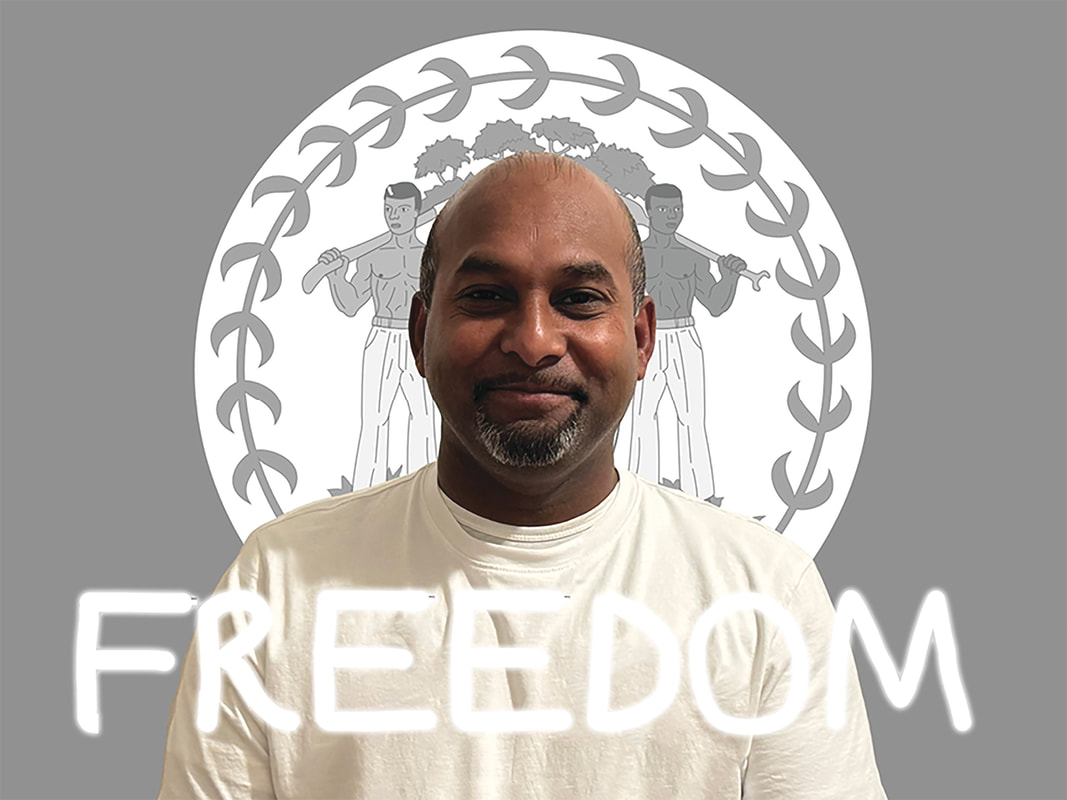
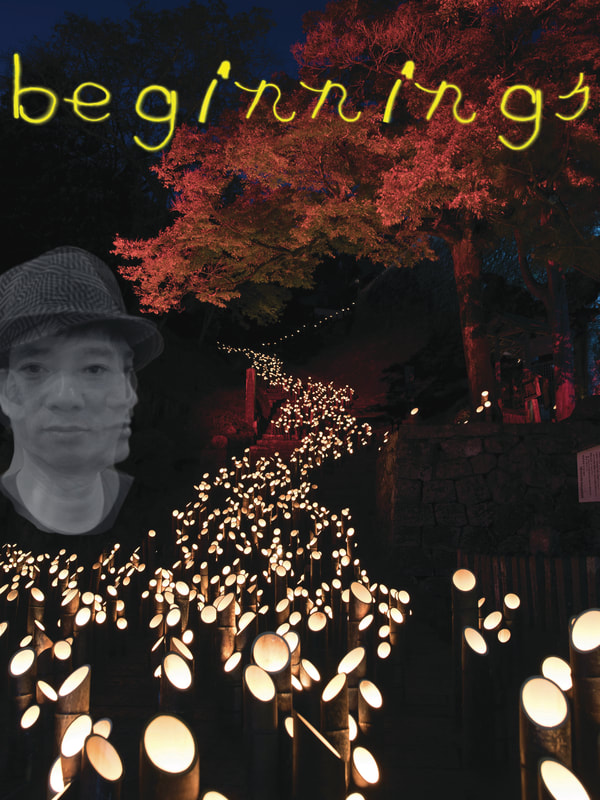
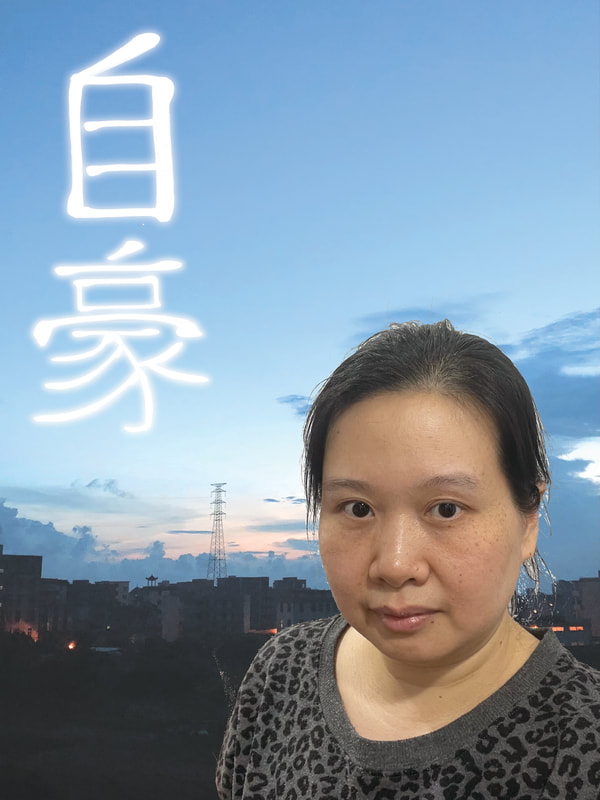
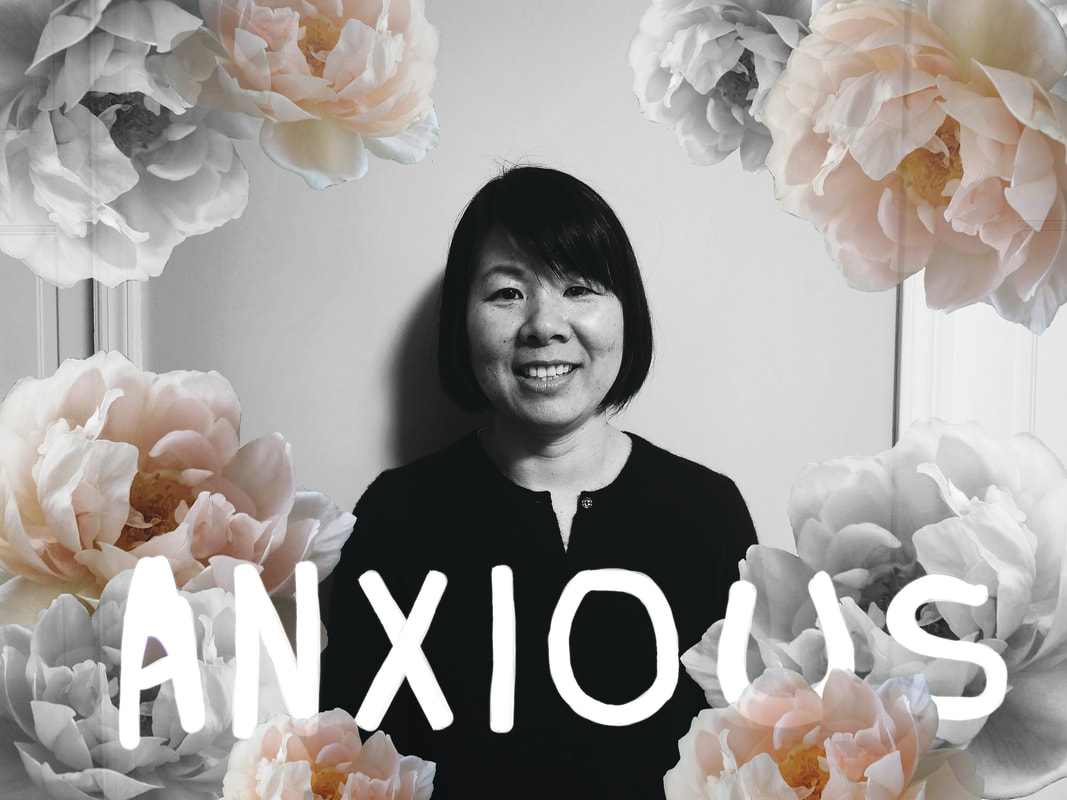
Project Title: UP CLOSE AND PERSONAL, OUR STORIES OF NATURALIZATION
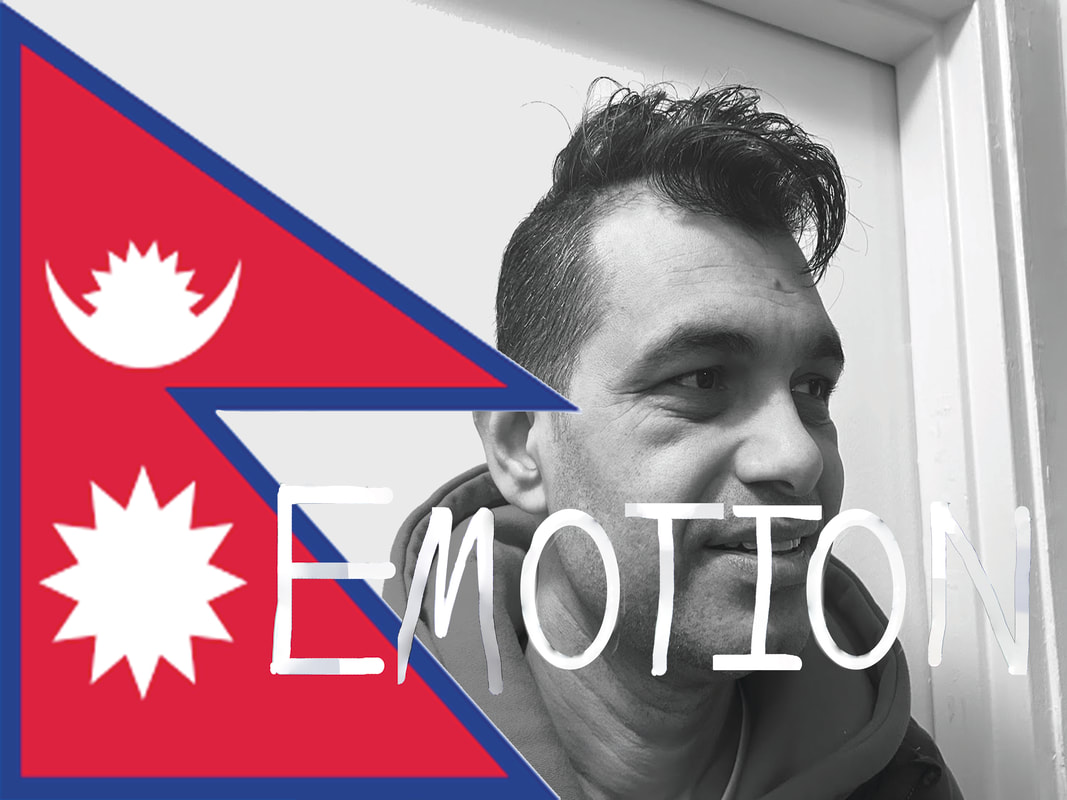
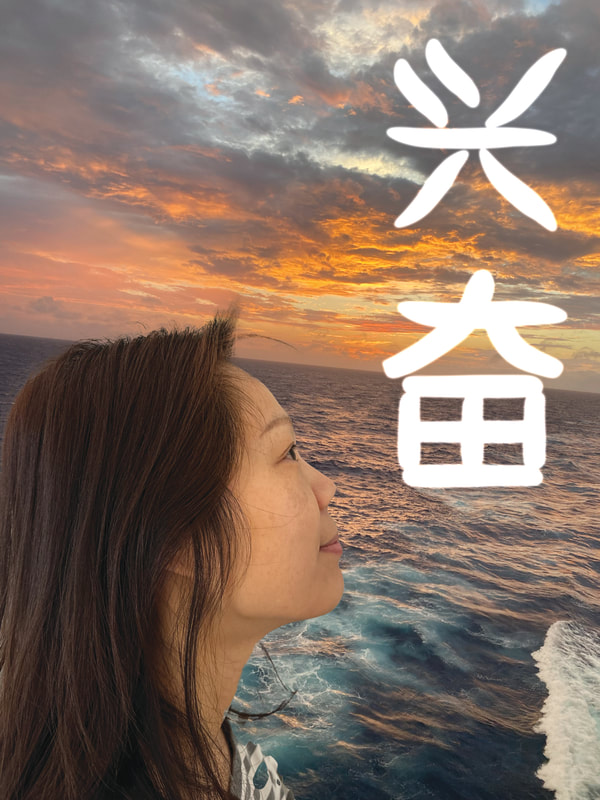
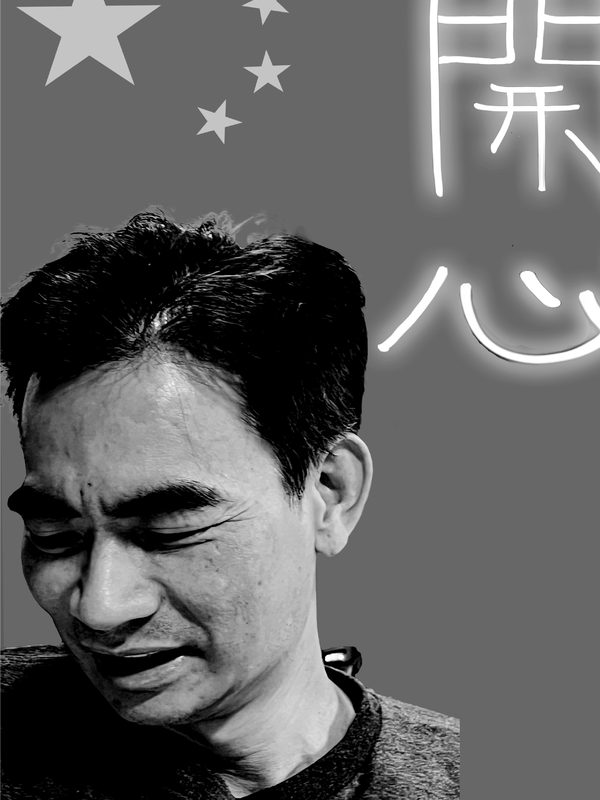
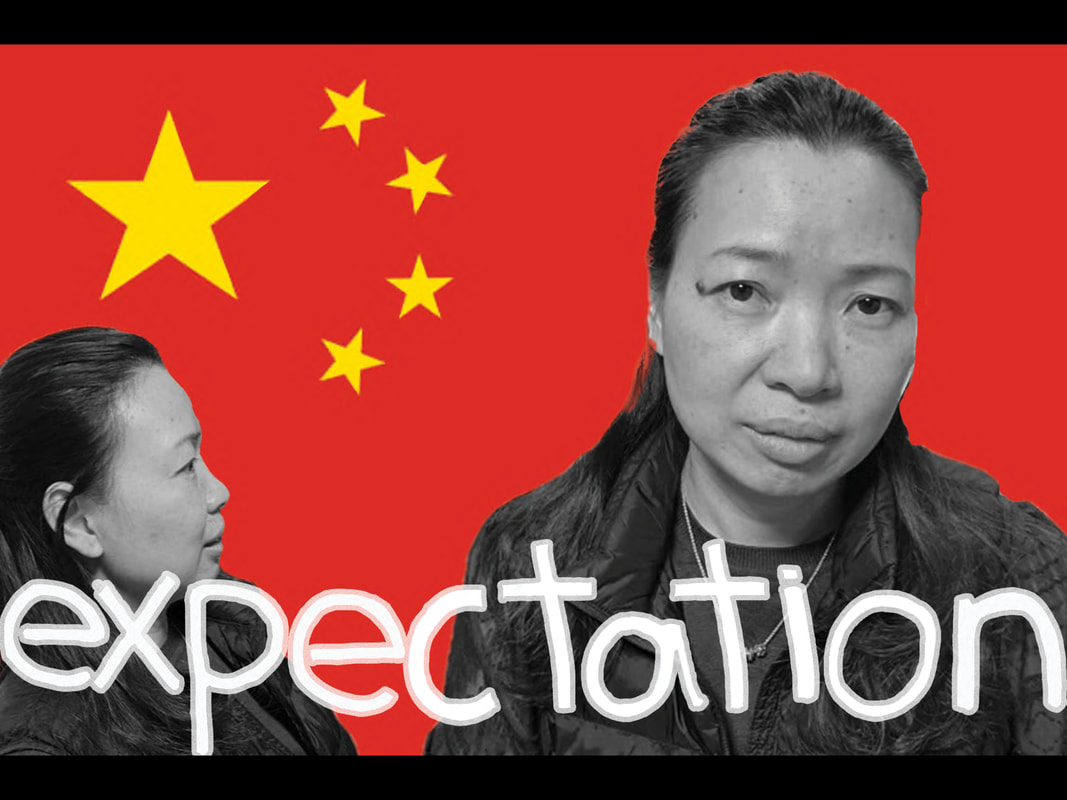
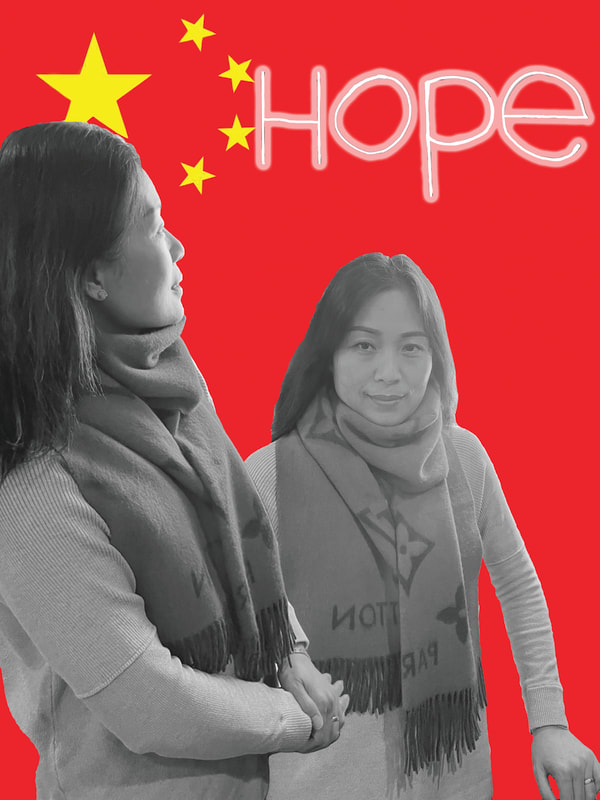
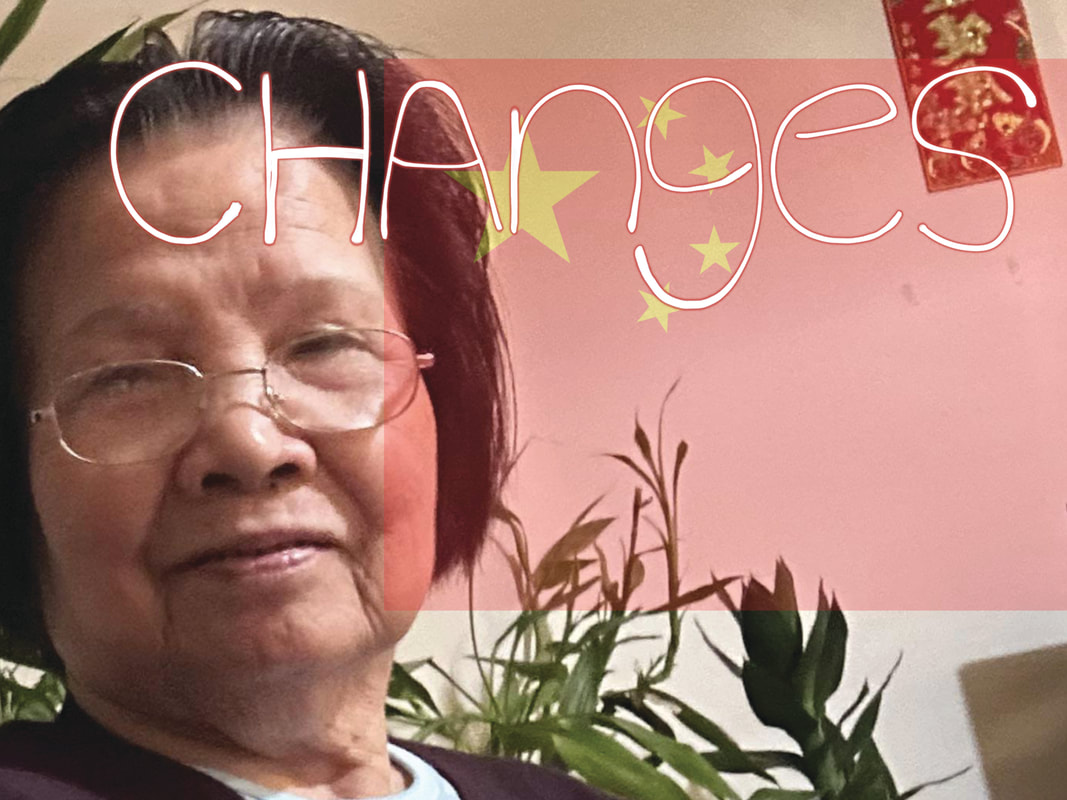
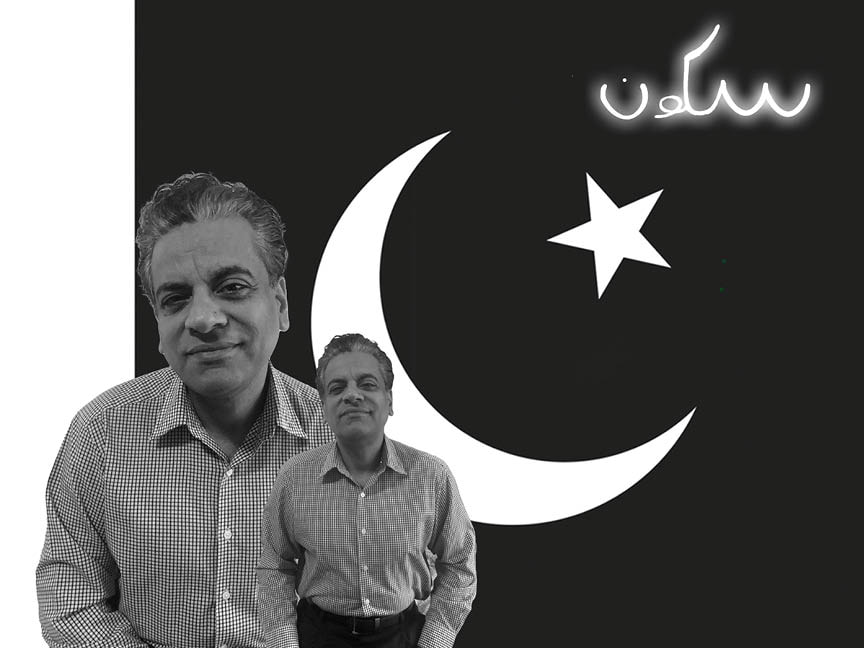
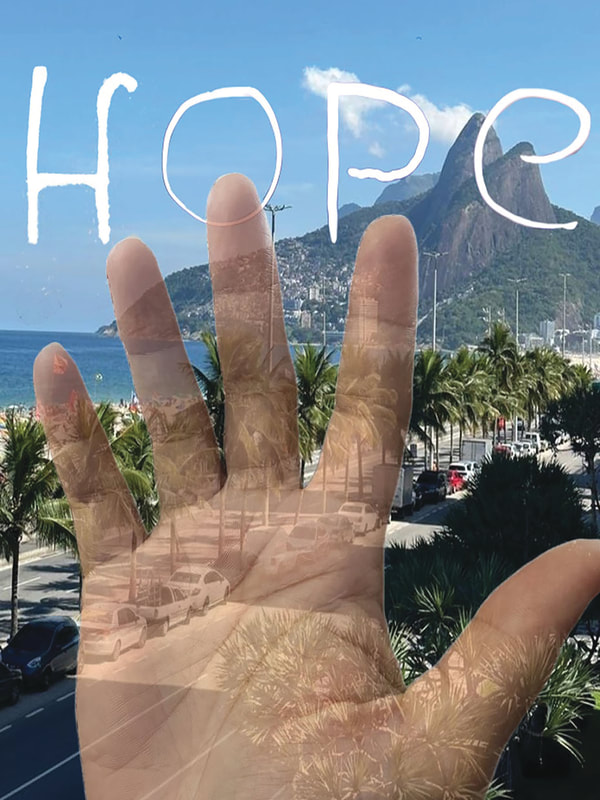
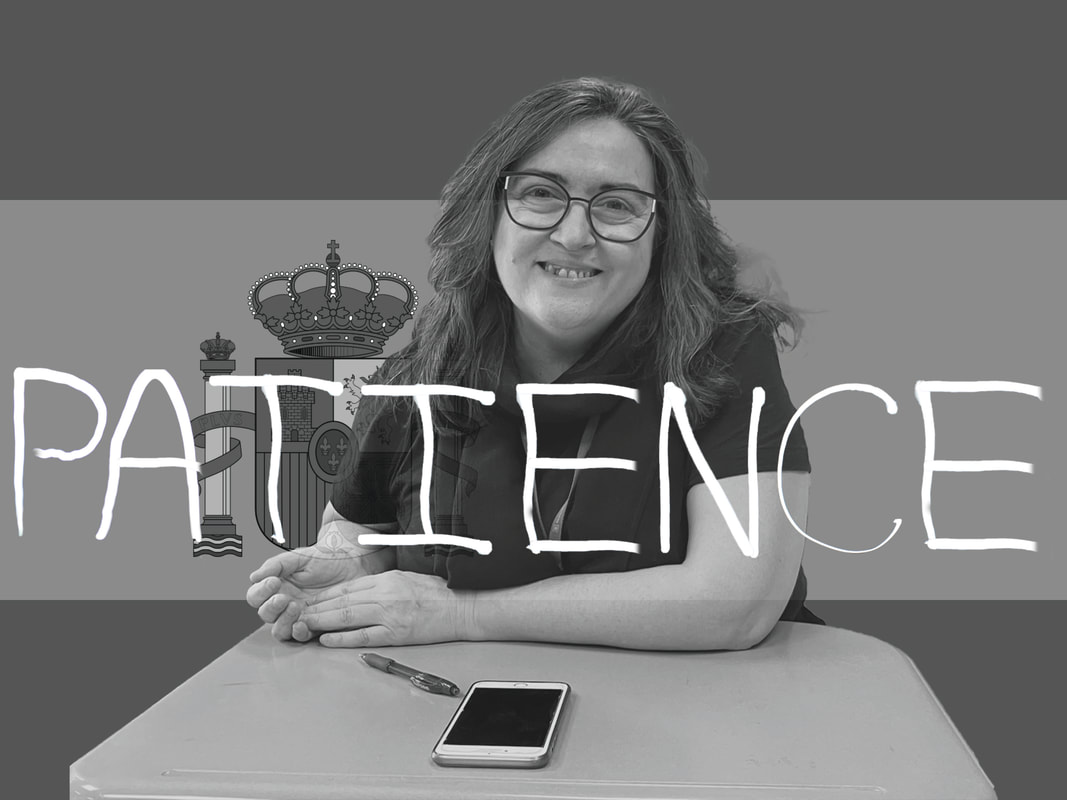
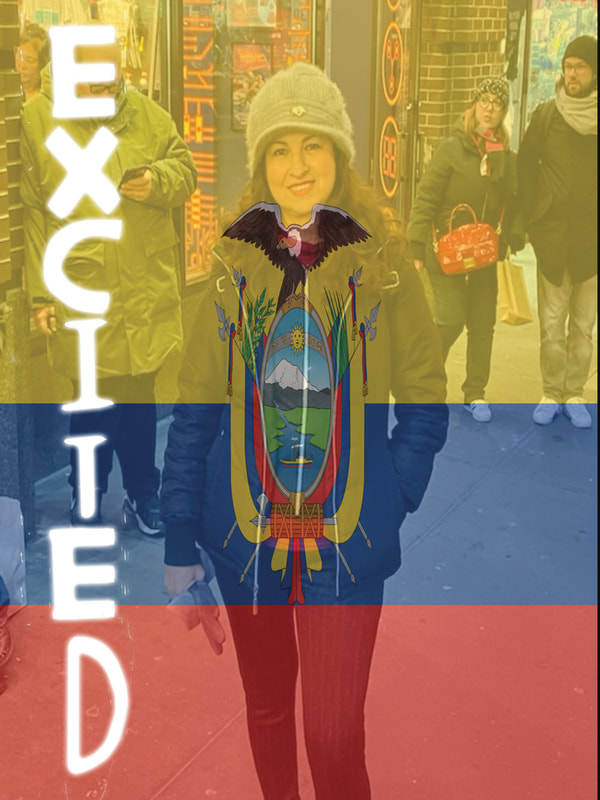
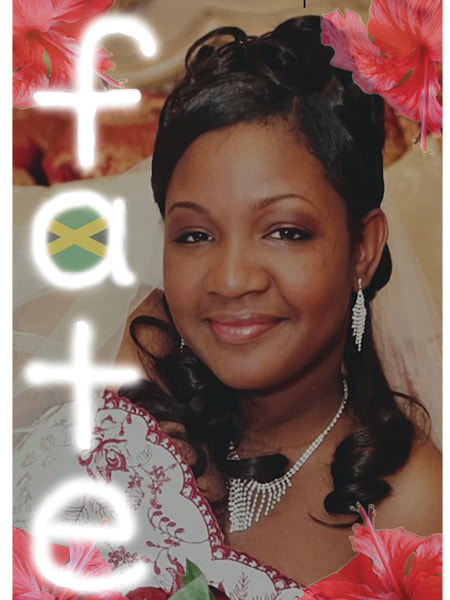
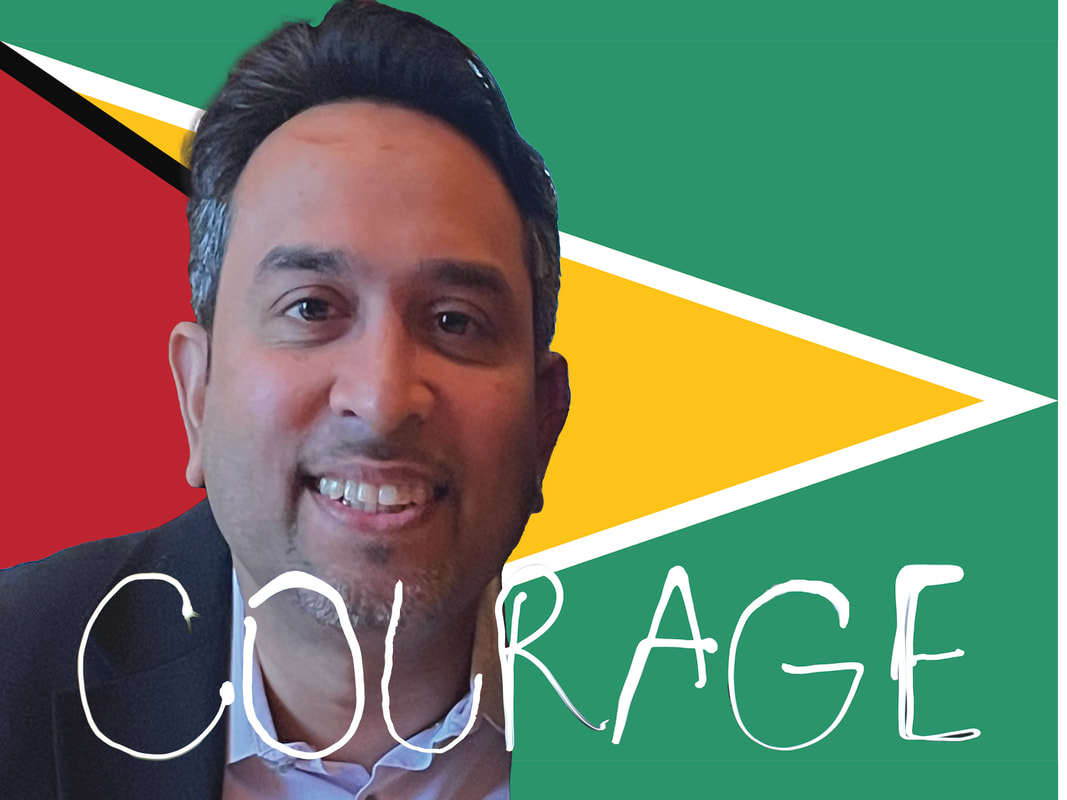
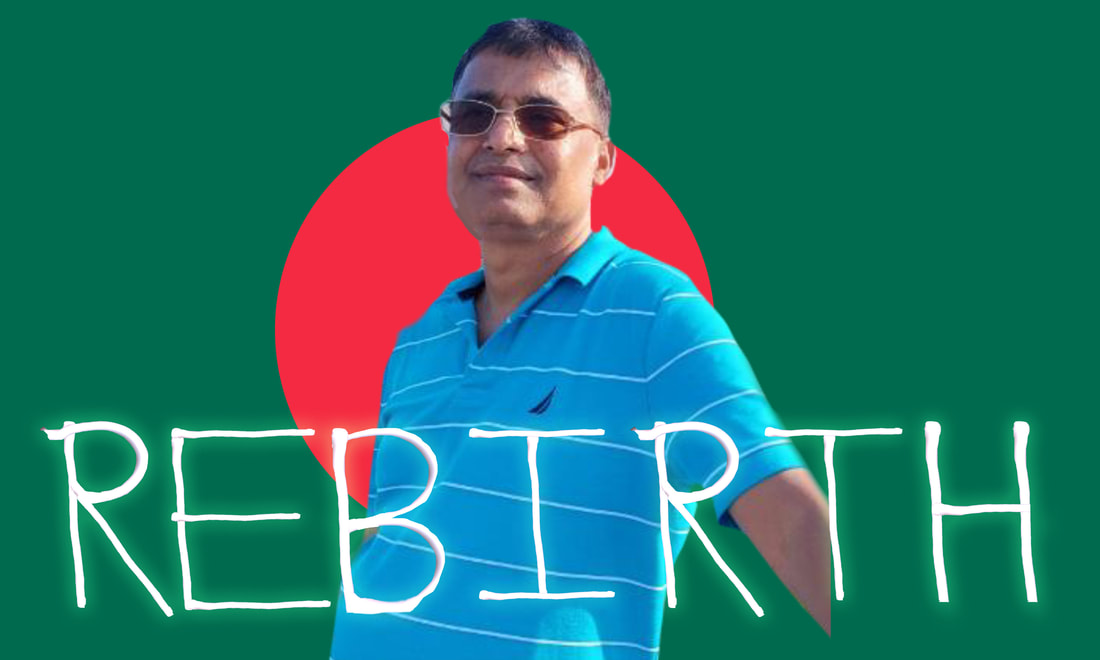
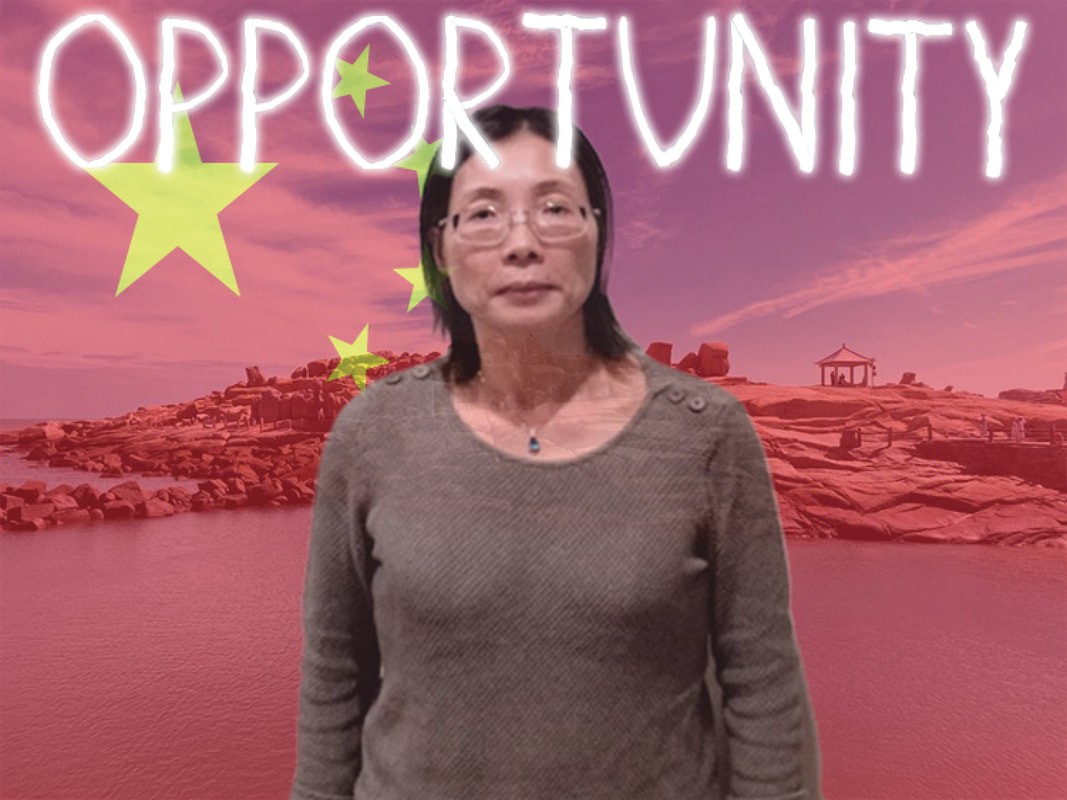
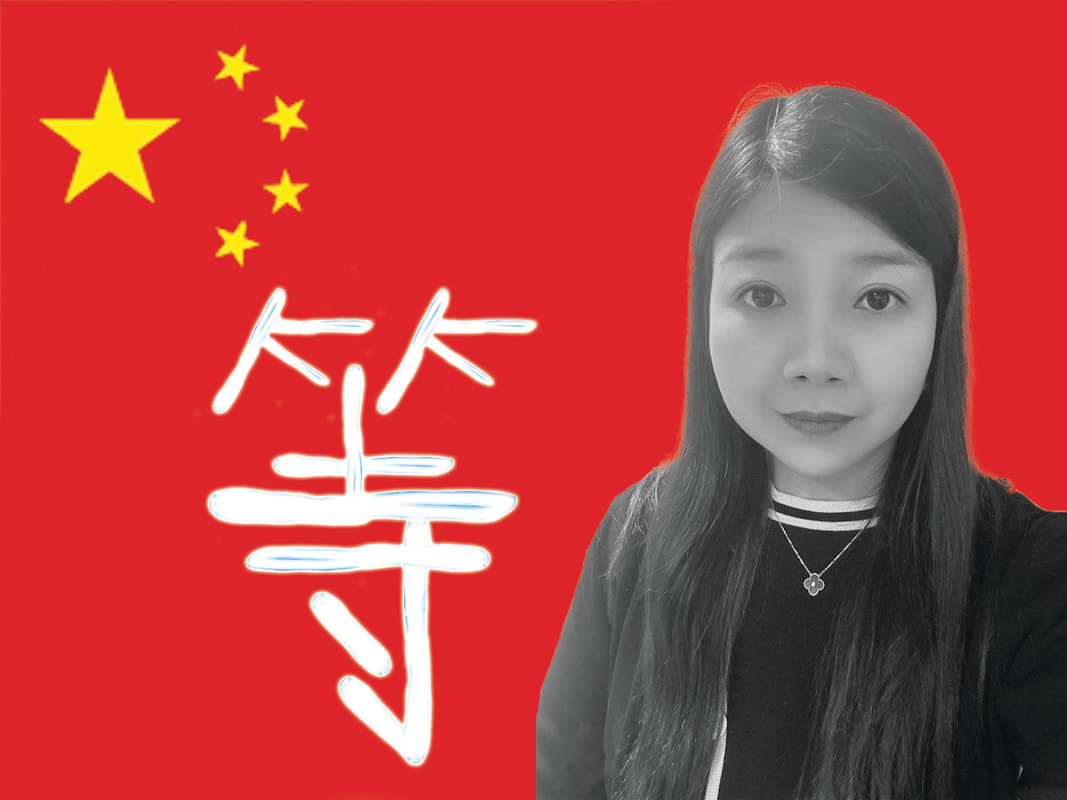
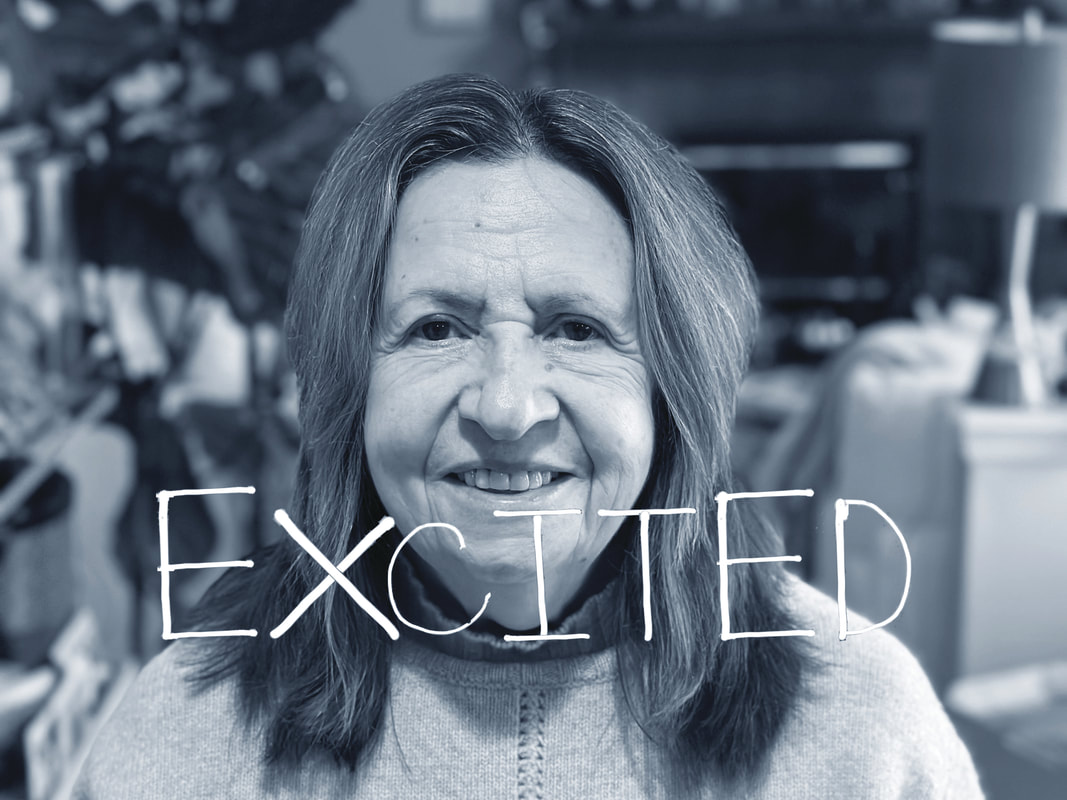
Students attended a naturalization ceremony in March 2024. Challenged with the idea of creating a composition that embodied this ceremony, they interviewed people close to them that have gone through or were currently going through the process. The focus was to find a word that represented their experience. Using a light source, students experimented light painting these words with long shutter speeds on digital cameras. With their skills in Adobe Photoshop, they digitally created compositions that layered photographs, light painted words and other imagery. Overall, the students collectively felt that the naturalization process was not just about obtaining American citizenship but was also about the emotions and the experiences that came with the process.
2023 THEODORE ROOSEVELT U.S. COURTHOUSE (BROOKLYN)
Teacher: Rachel Levine
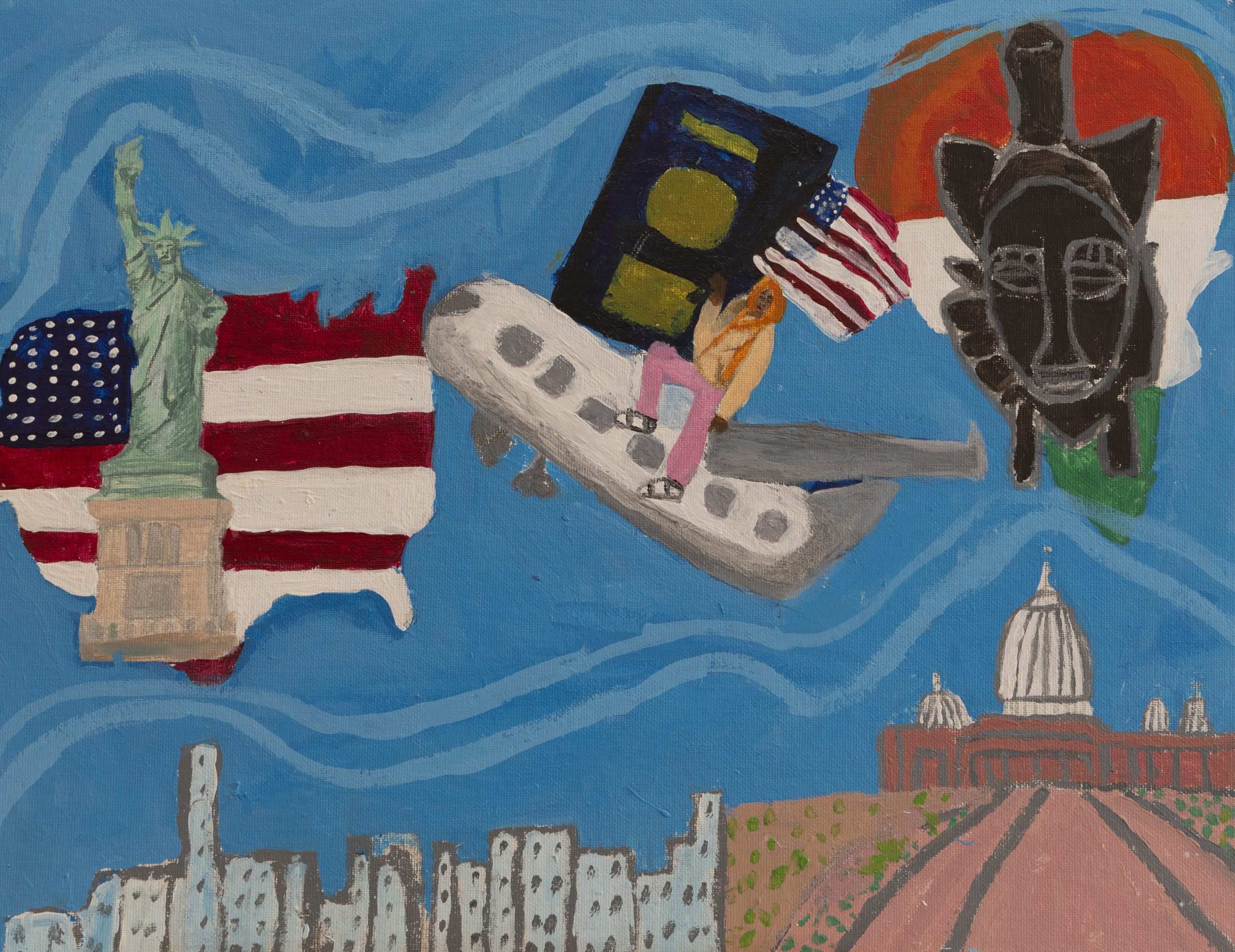
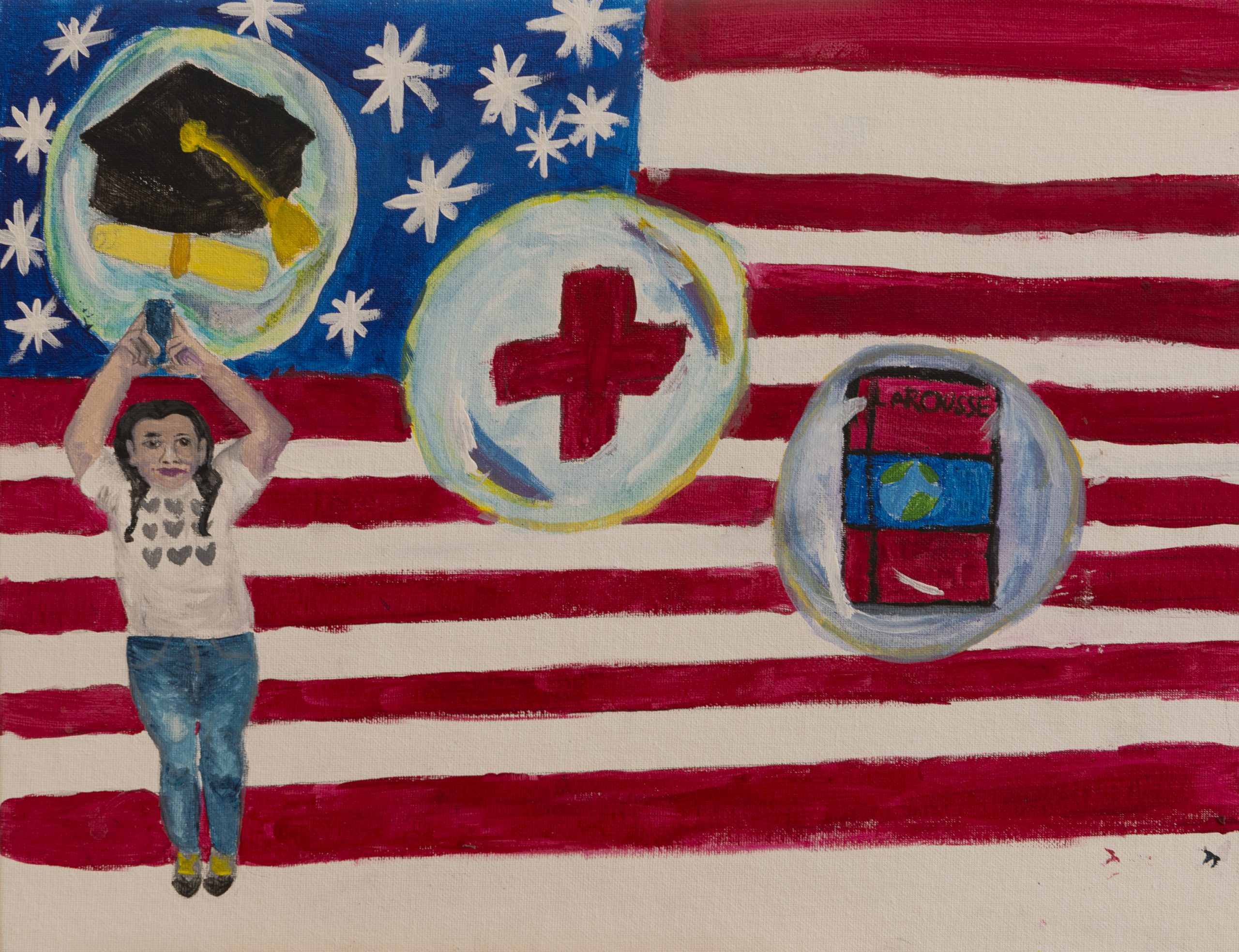
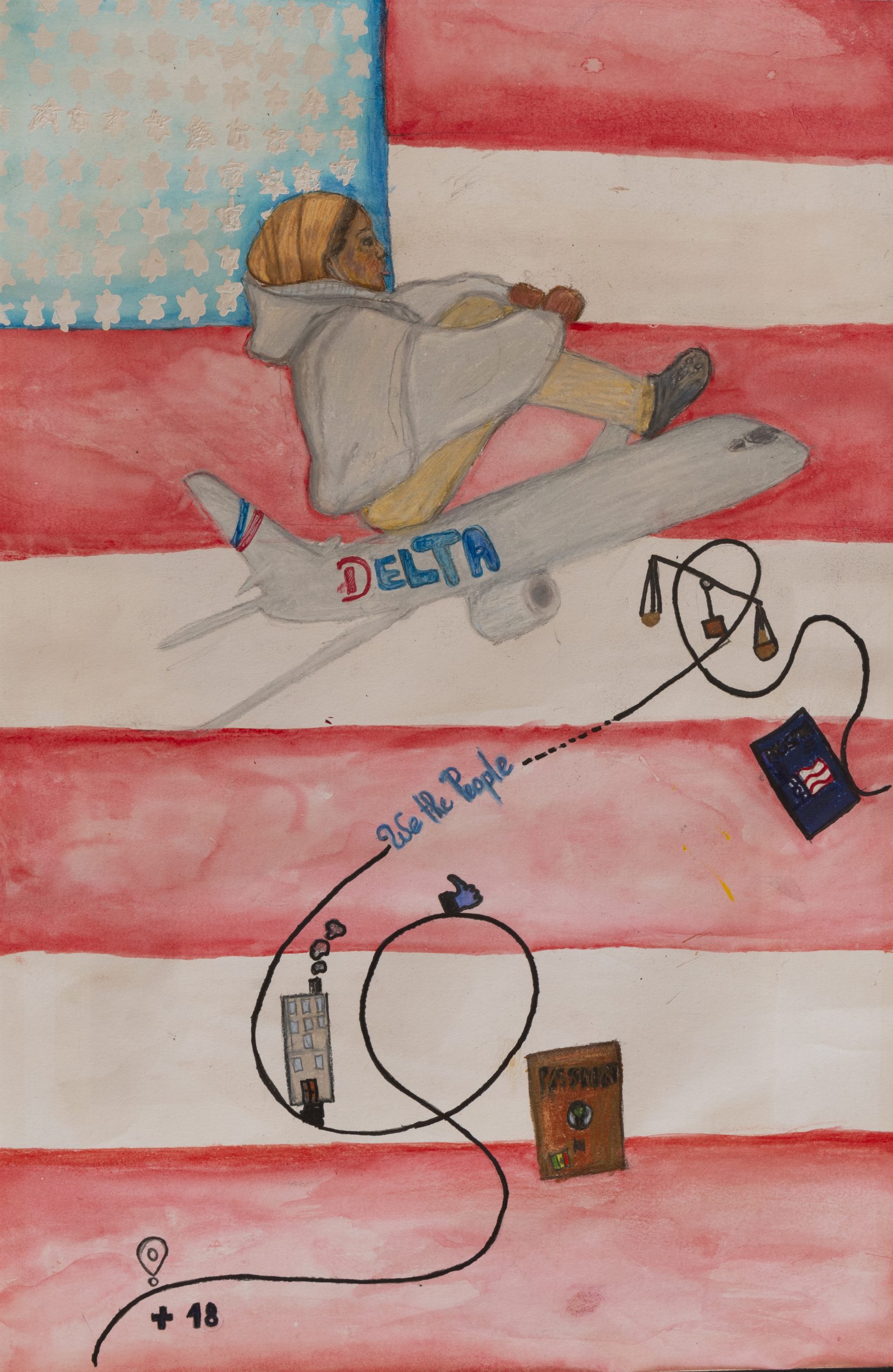
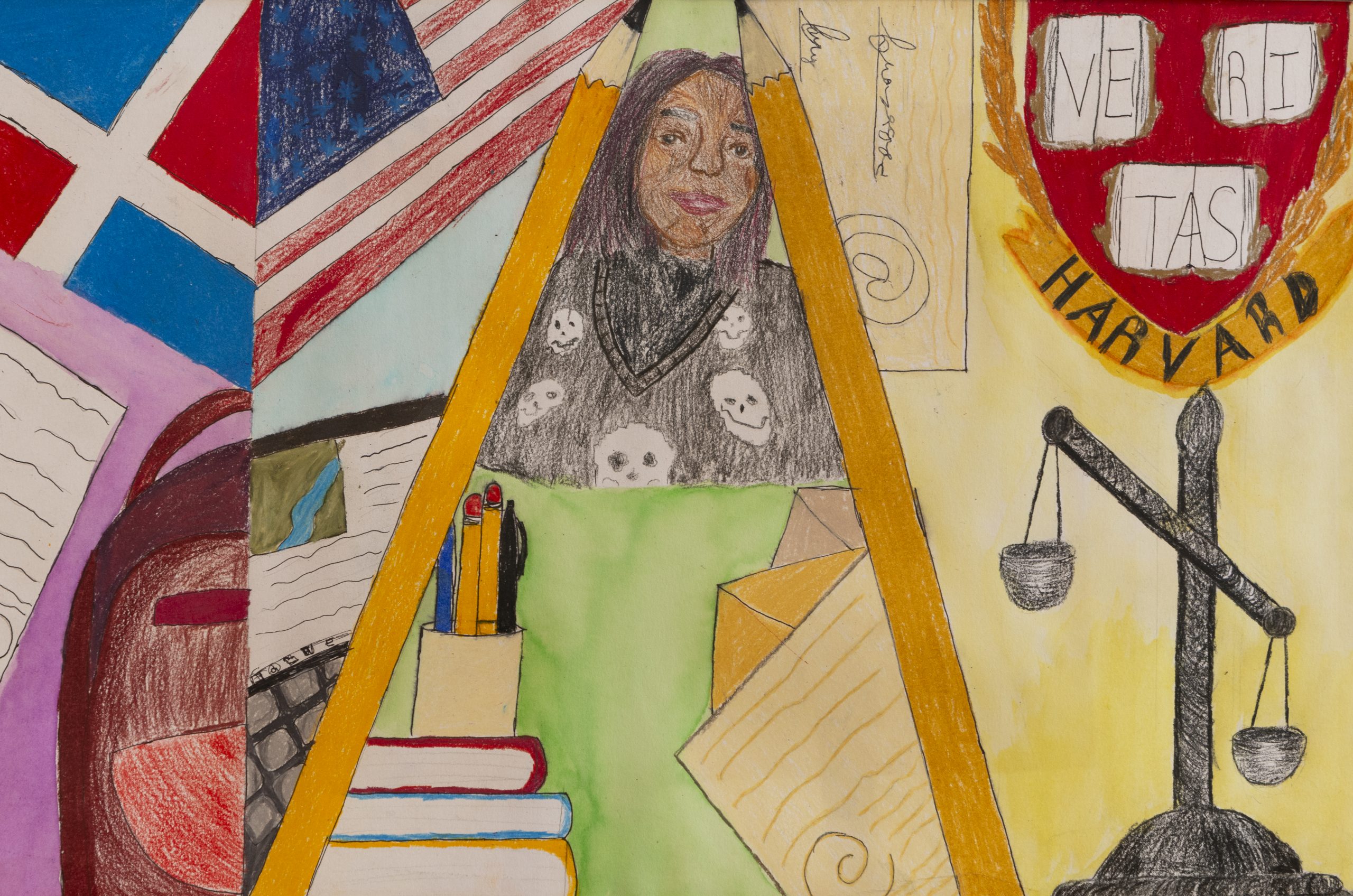
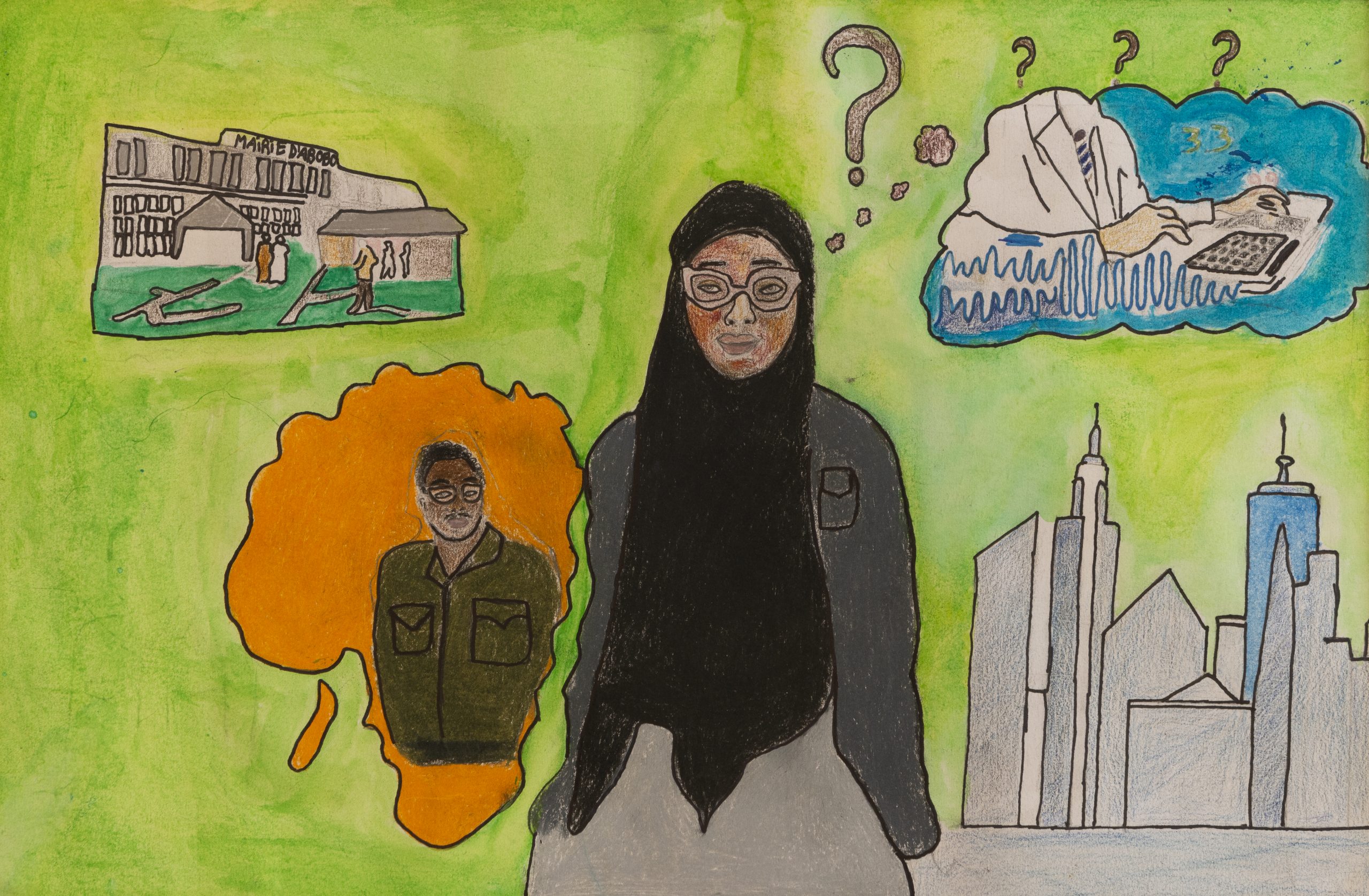
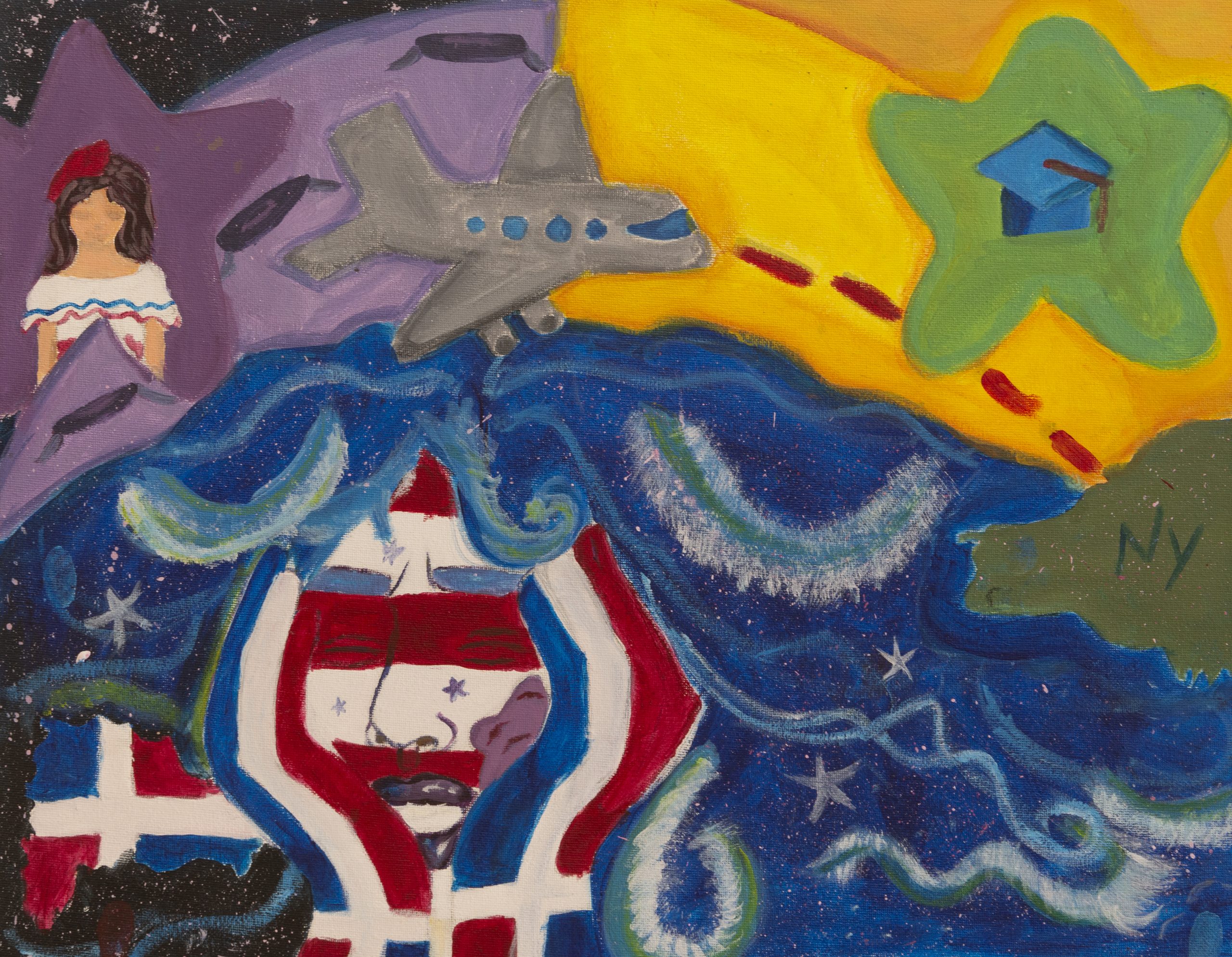
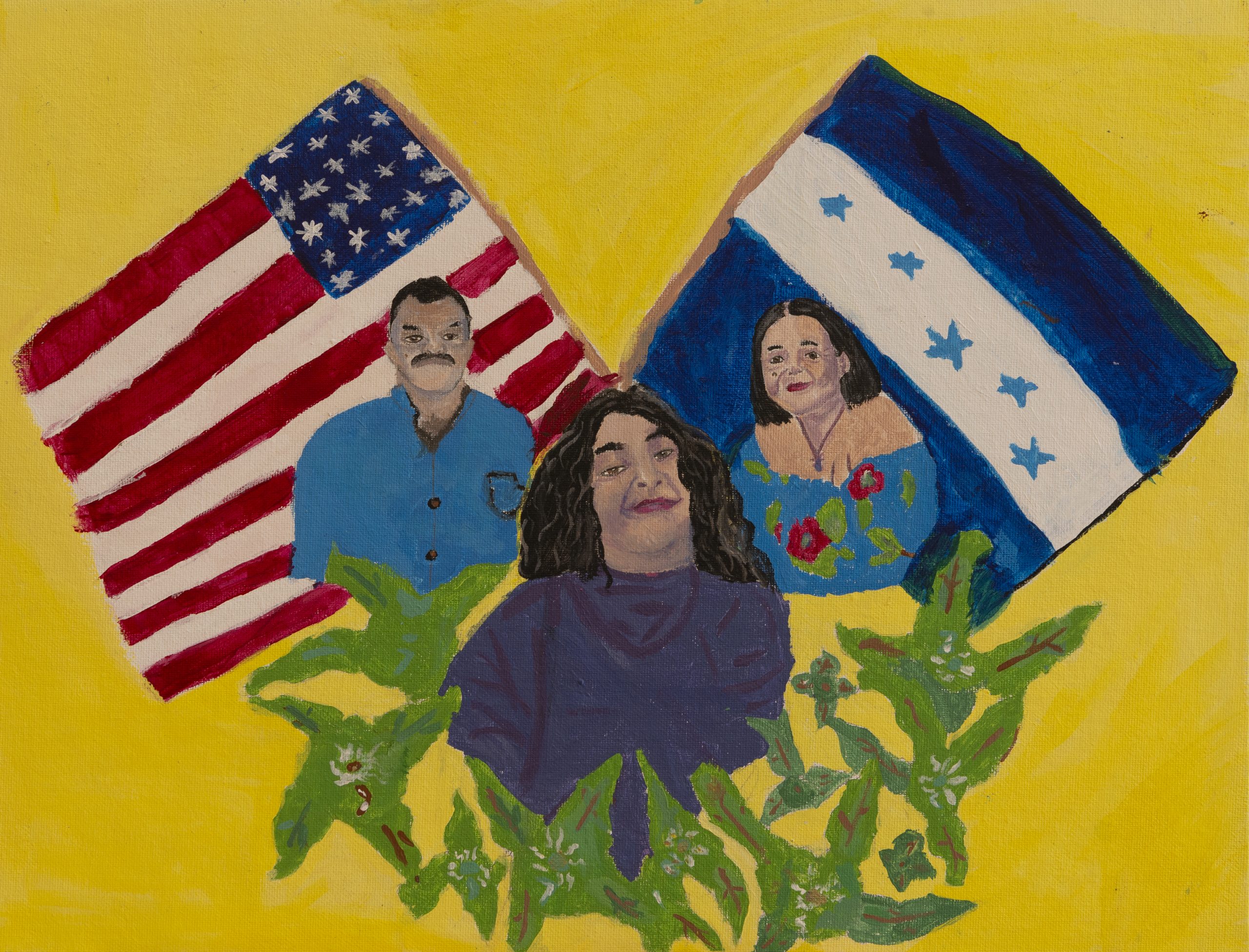
Project Title: NATURALIZATION PROCESS
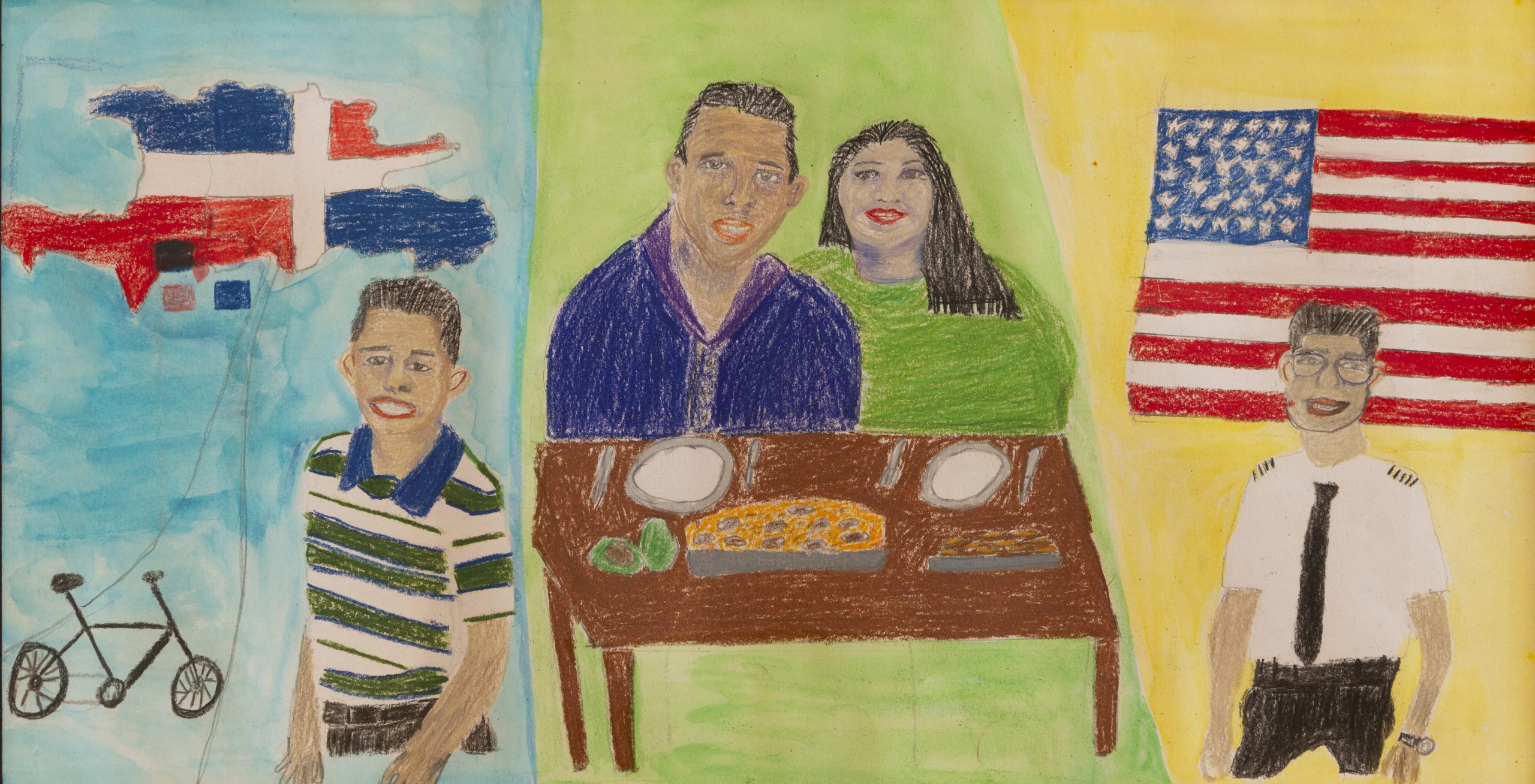
Teacher: Gordon Baldwin
Project Title: PATHWAYS TO CITIZENSHIP
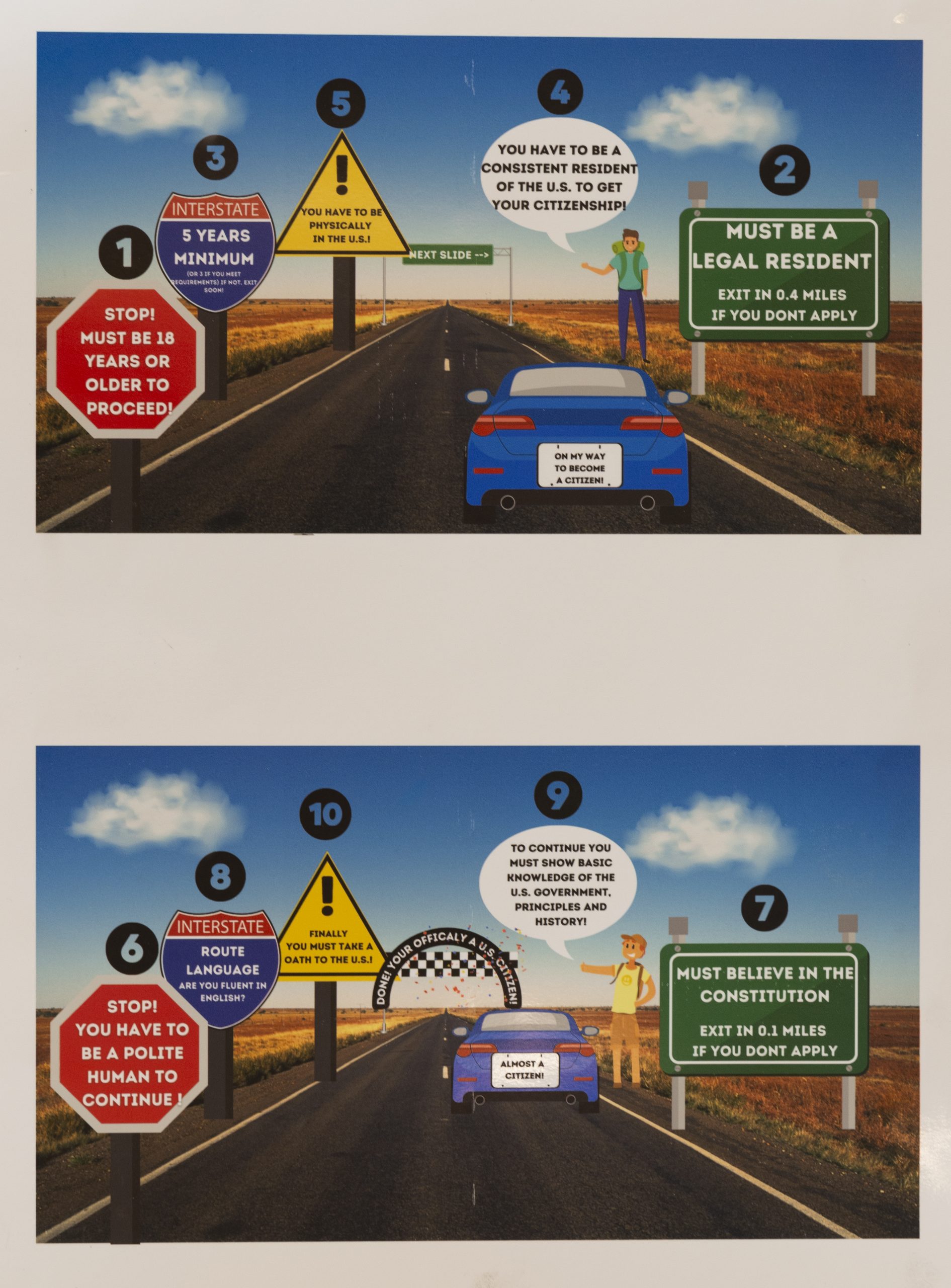
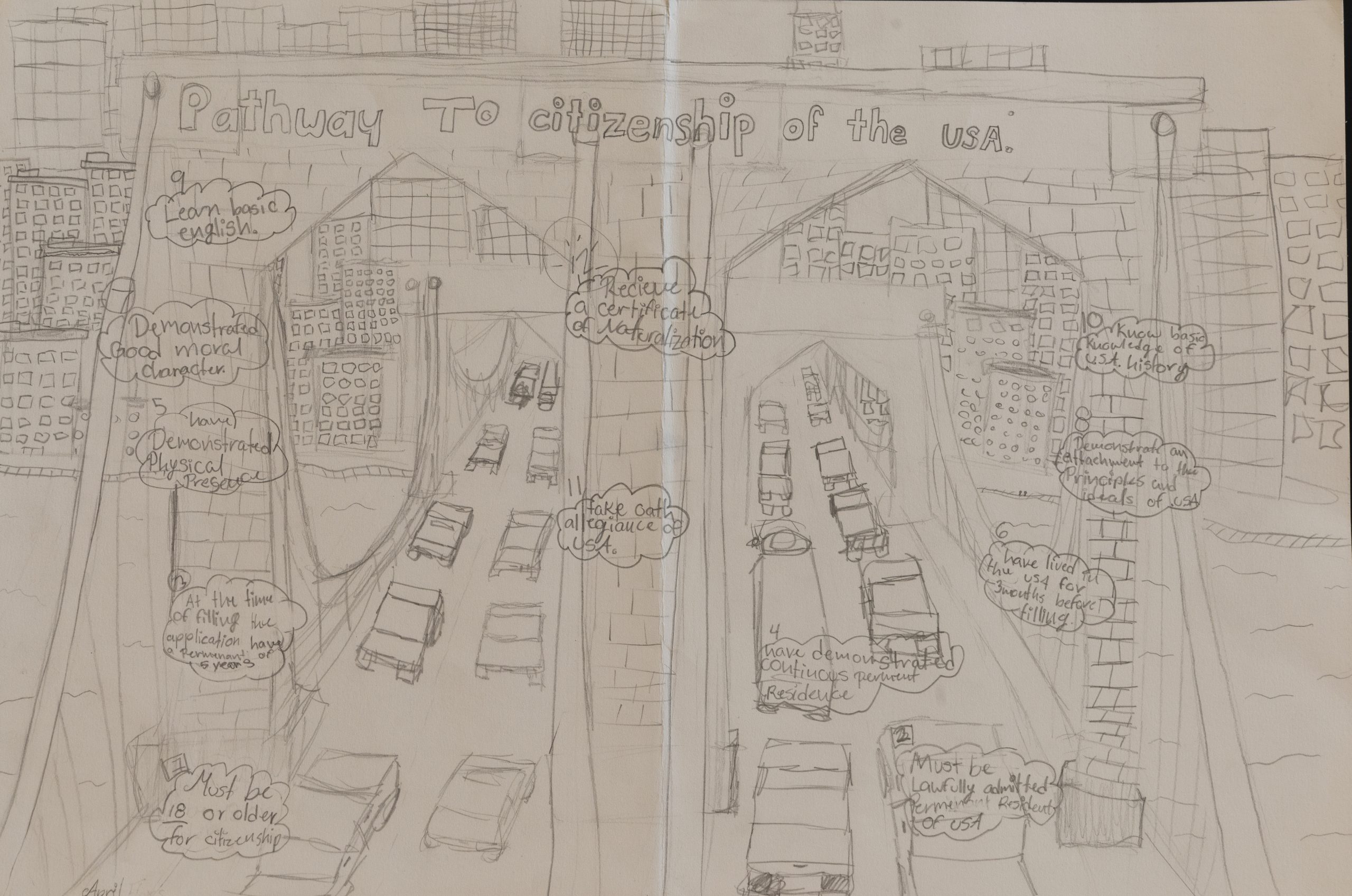
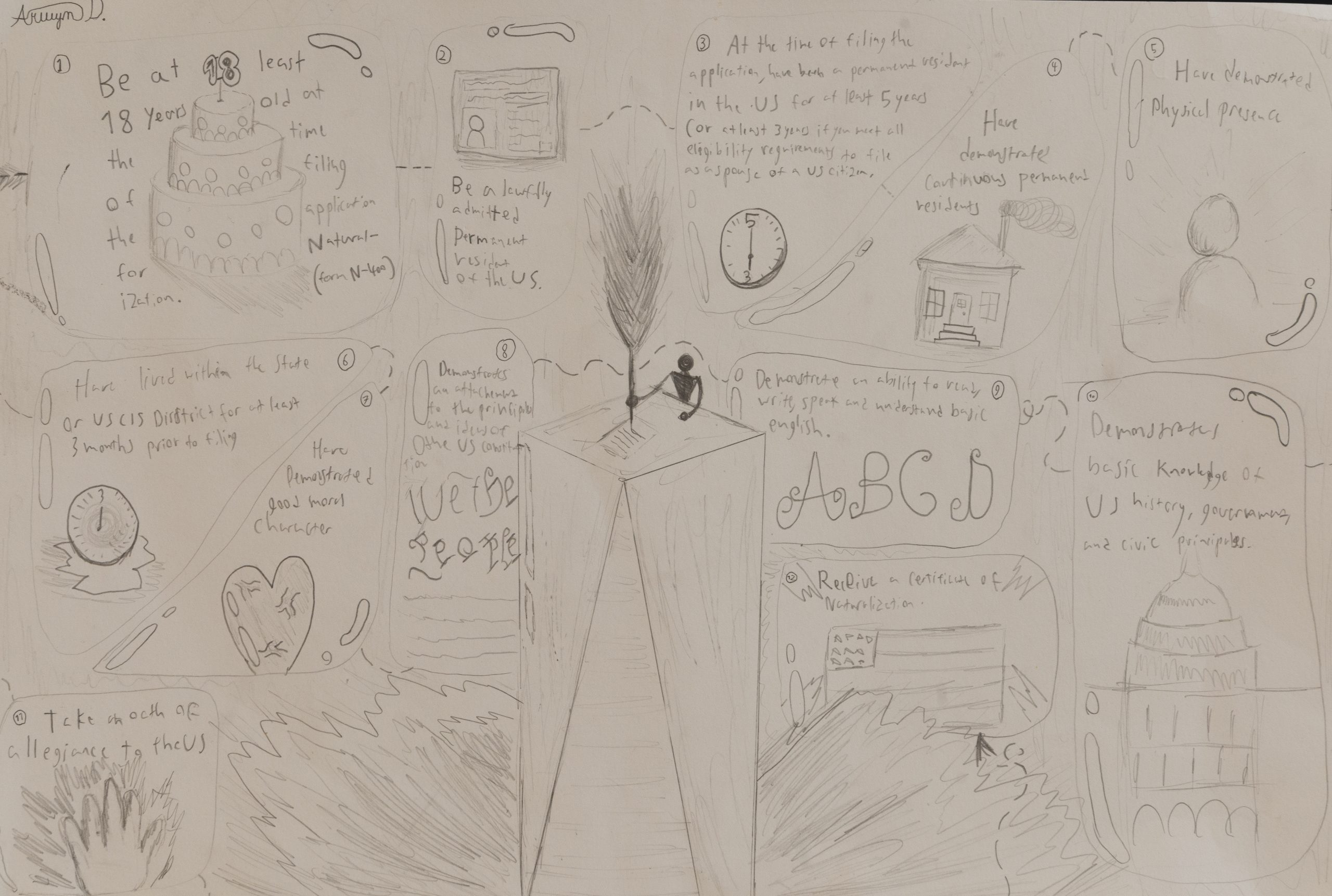
Principal: Bernadette Drysdale
Teacher: Gloria Adams
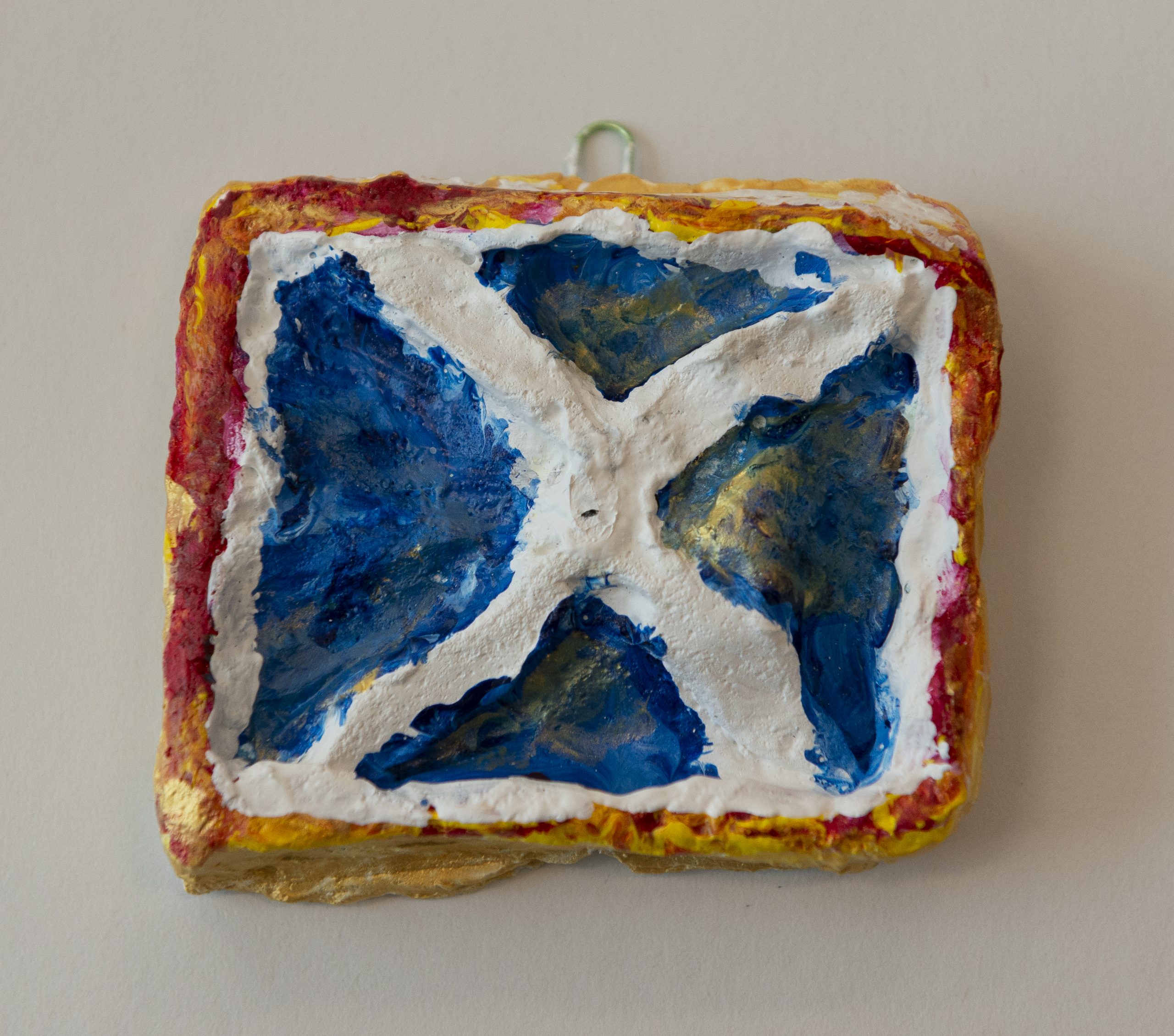
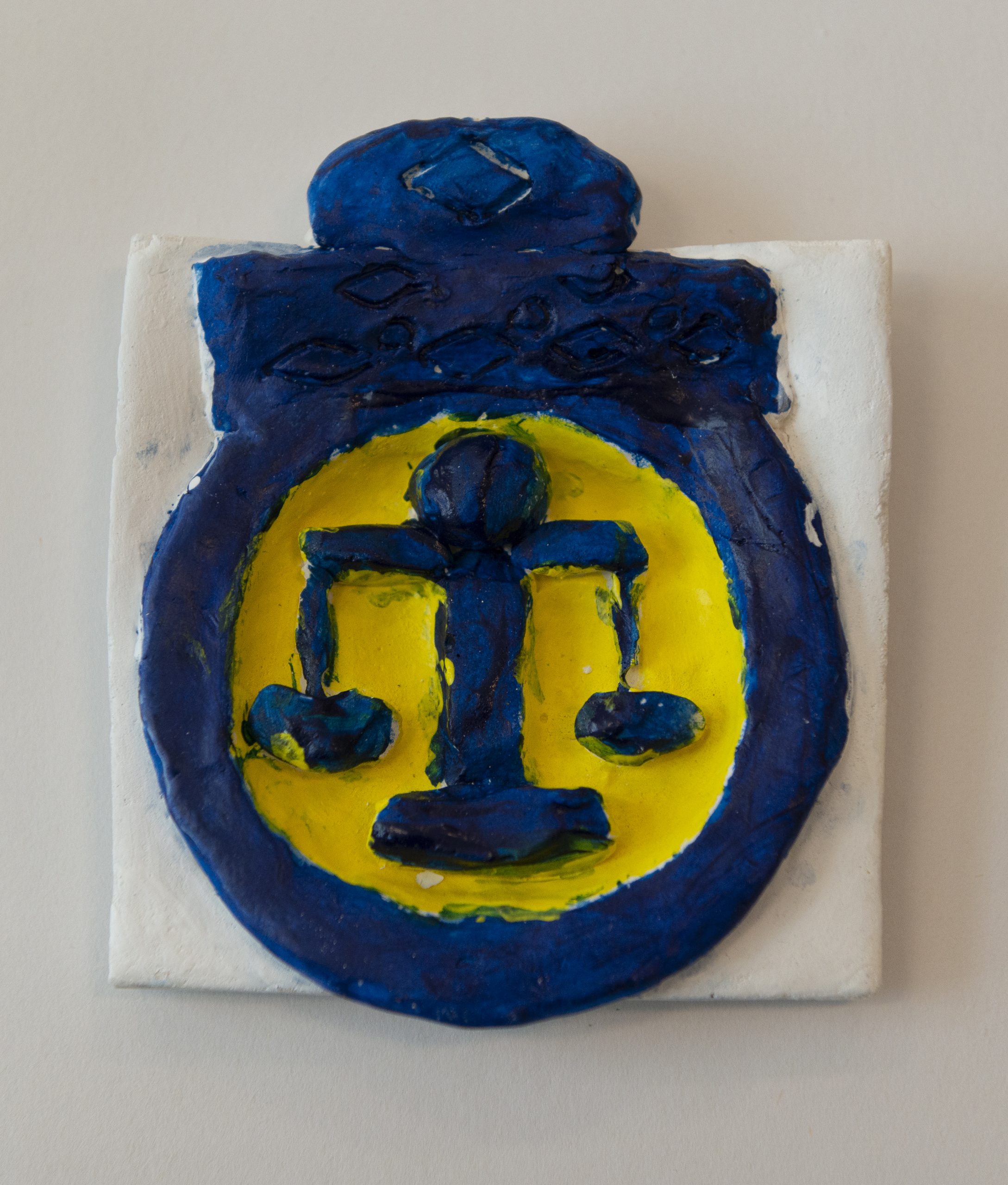
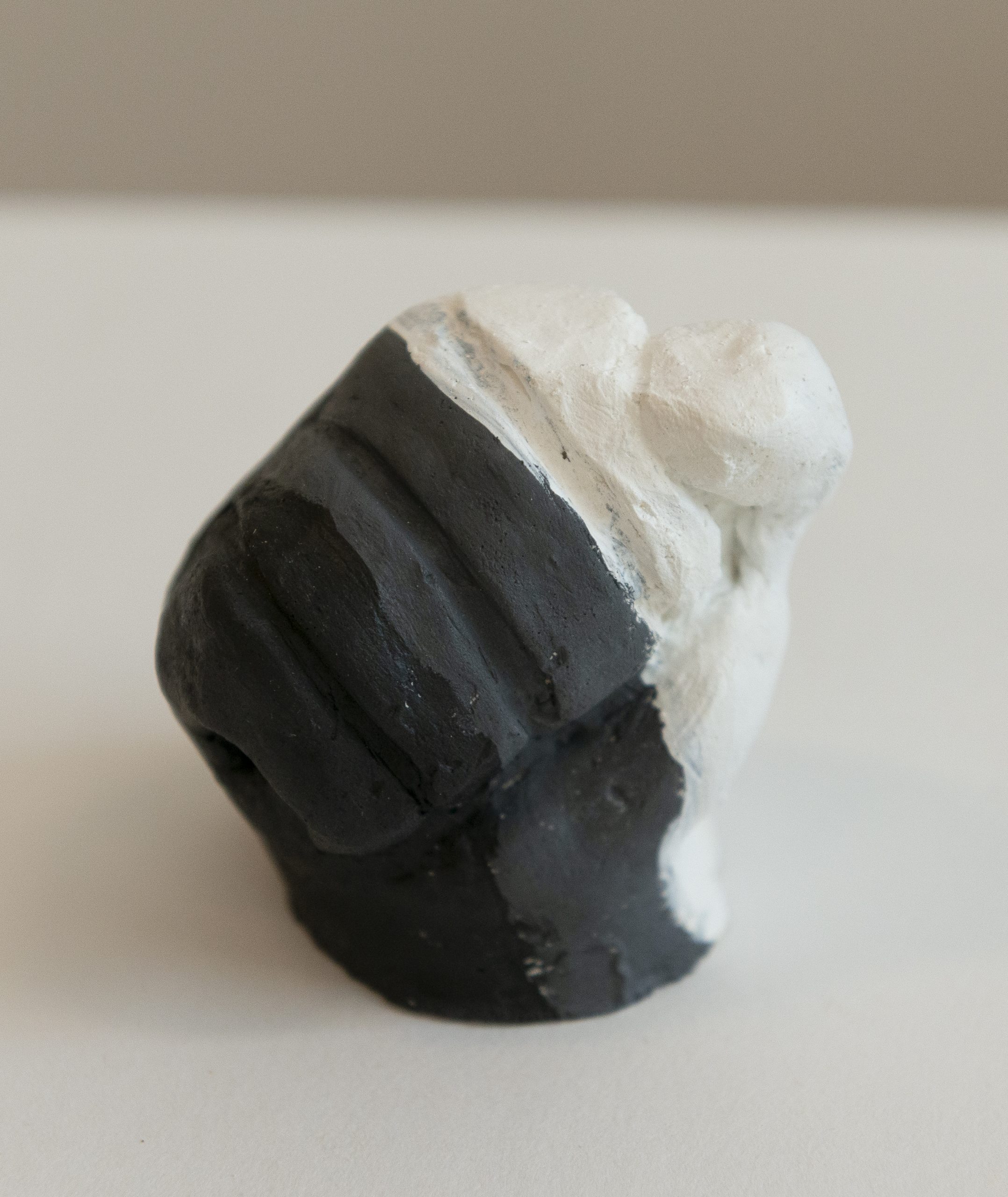
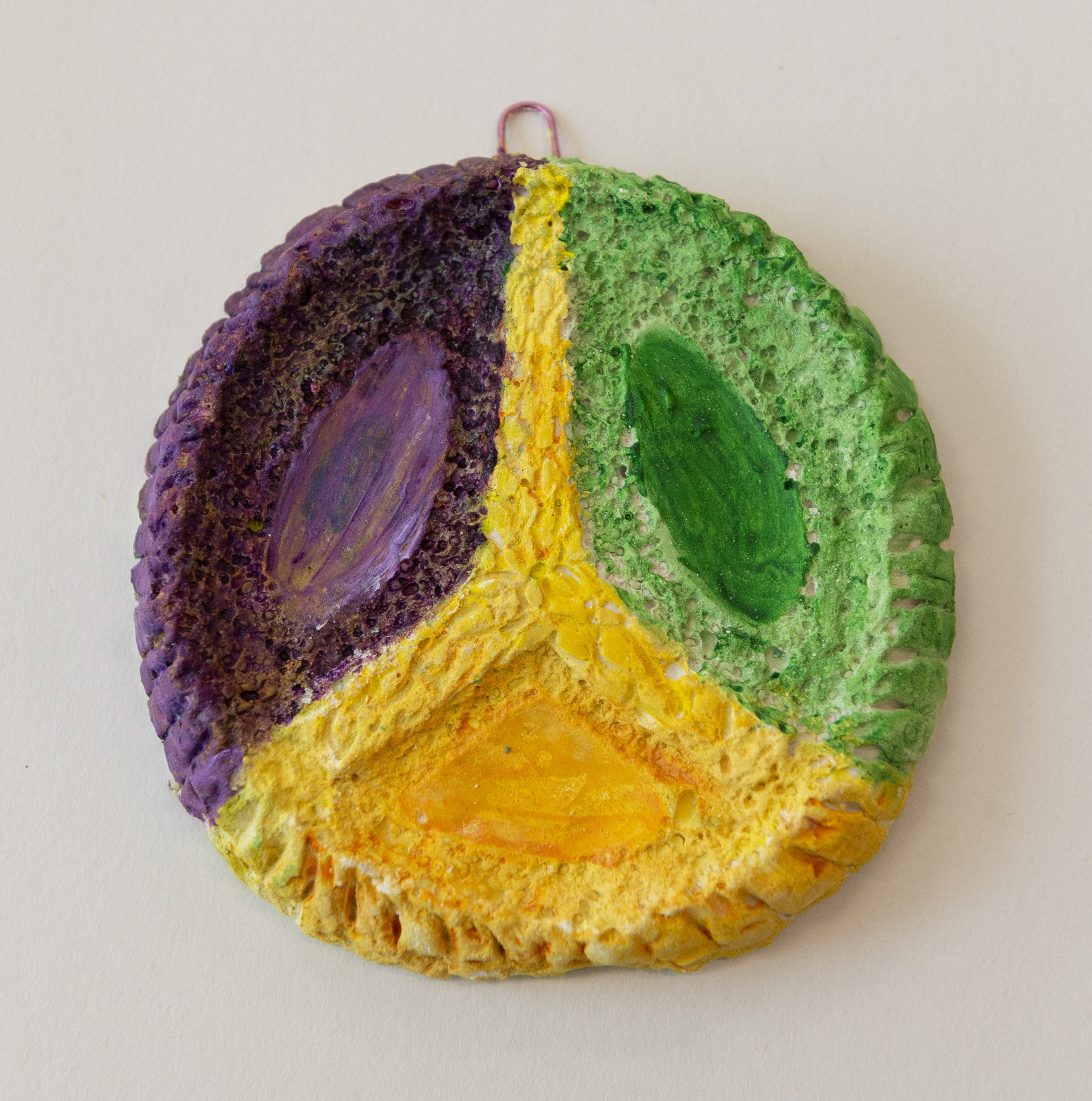
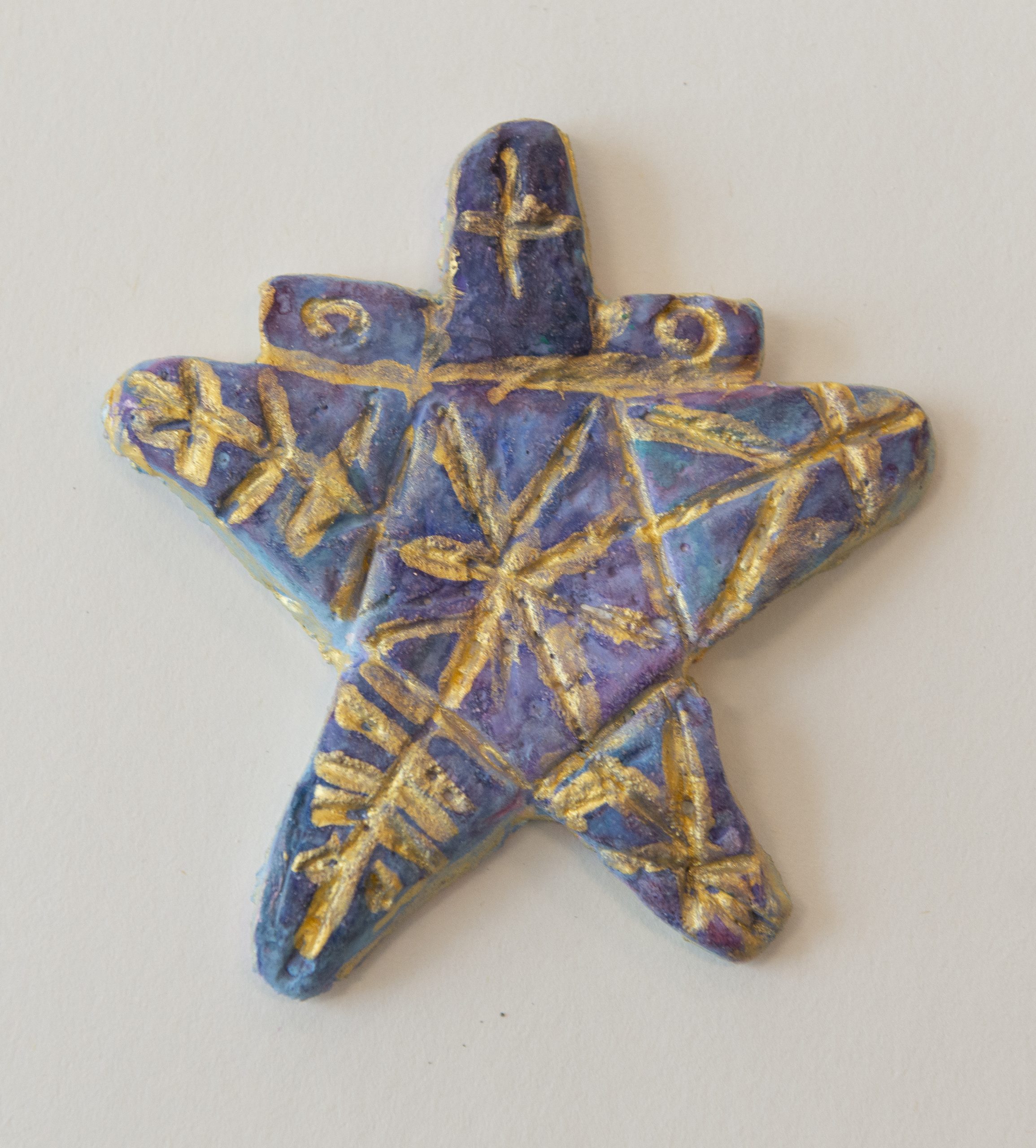
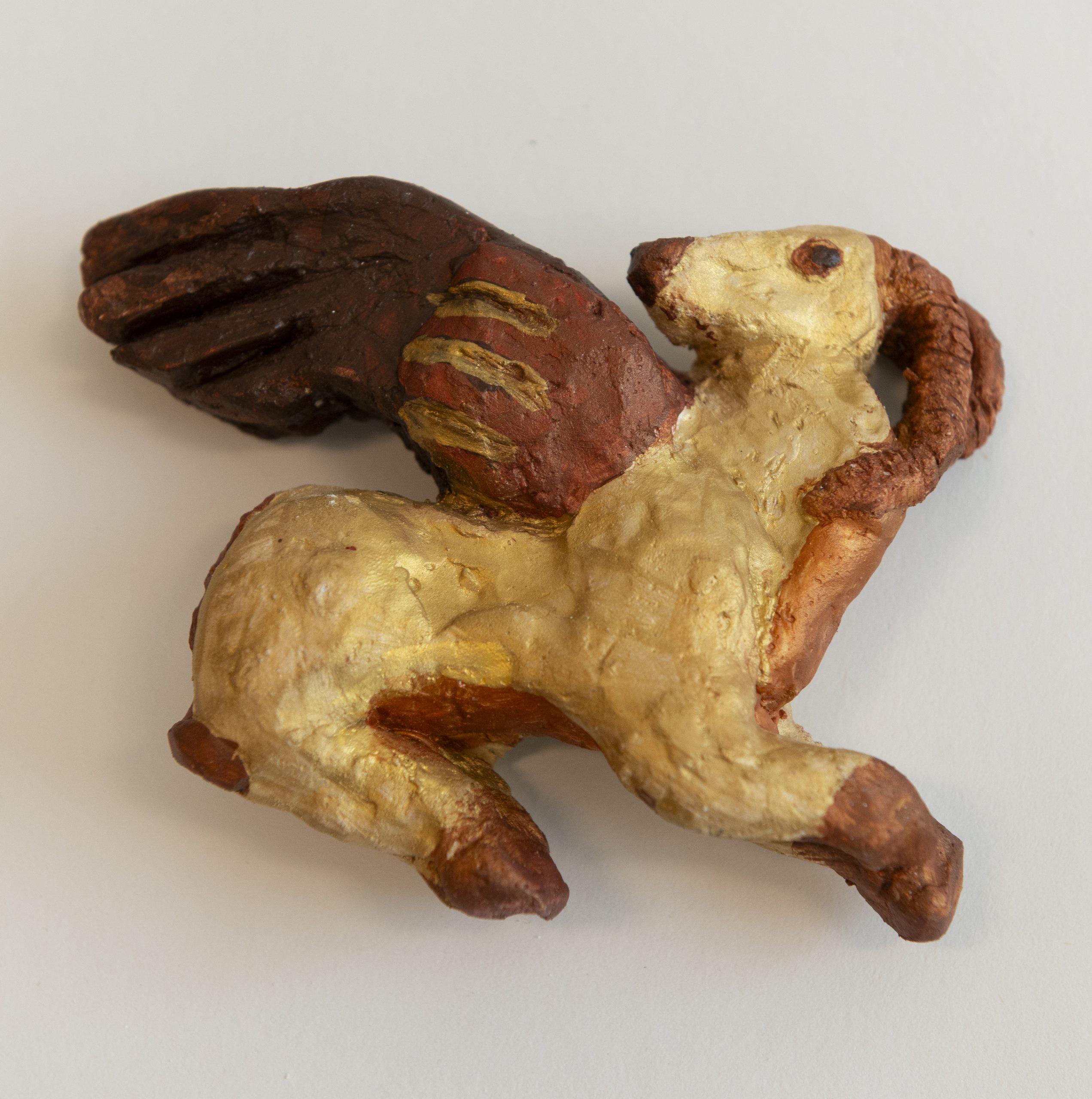
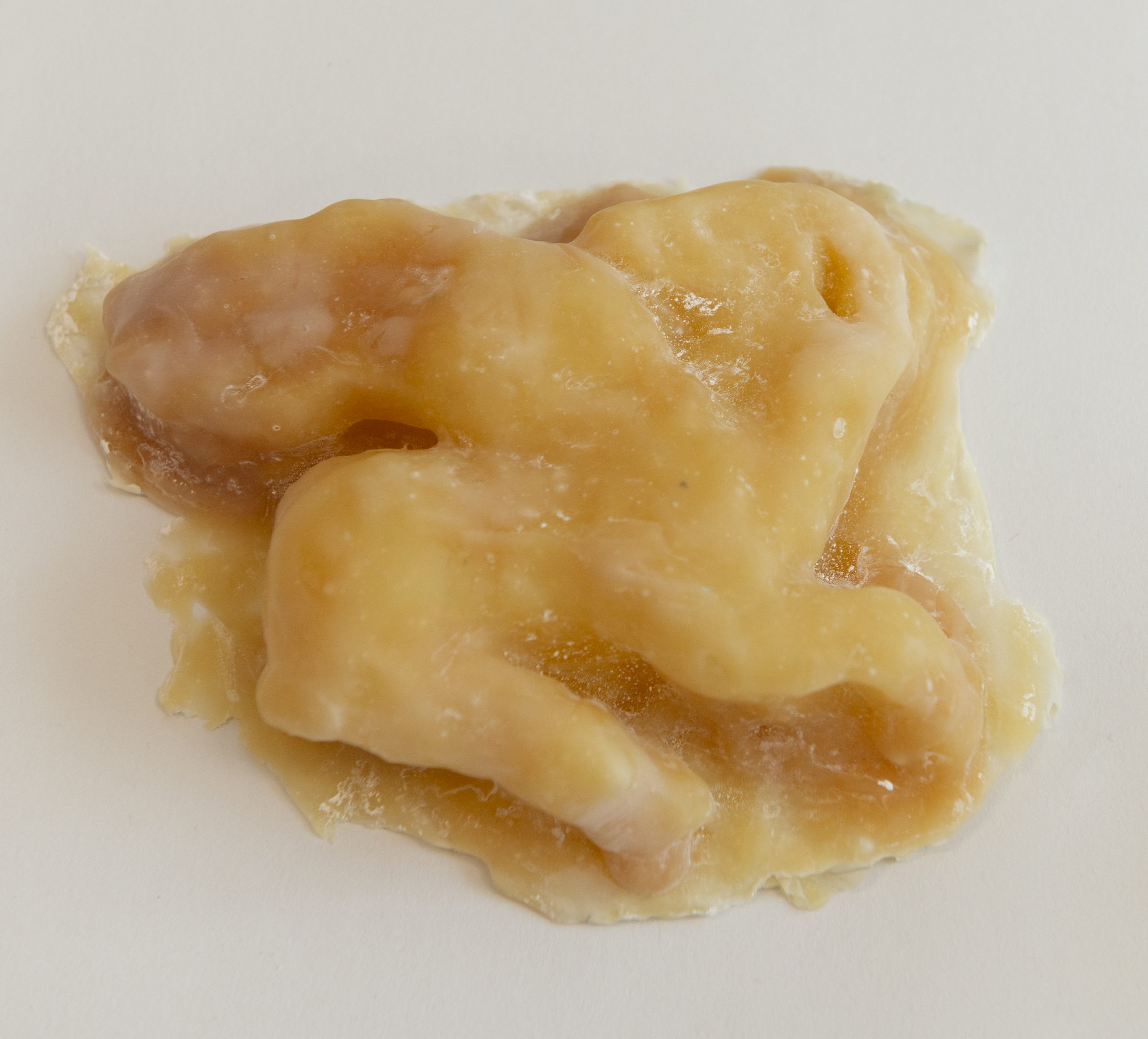
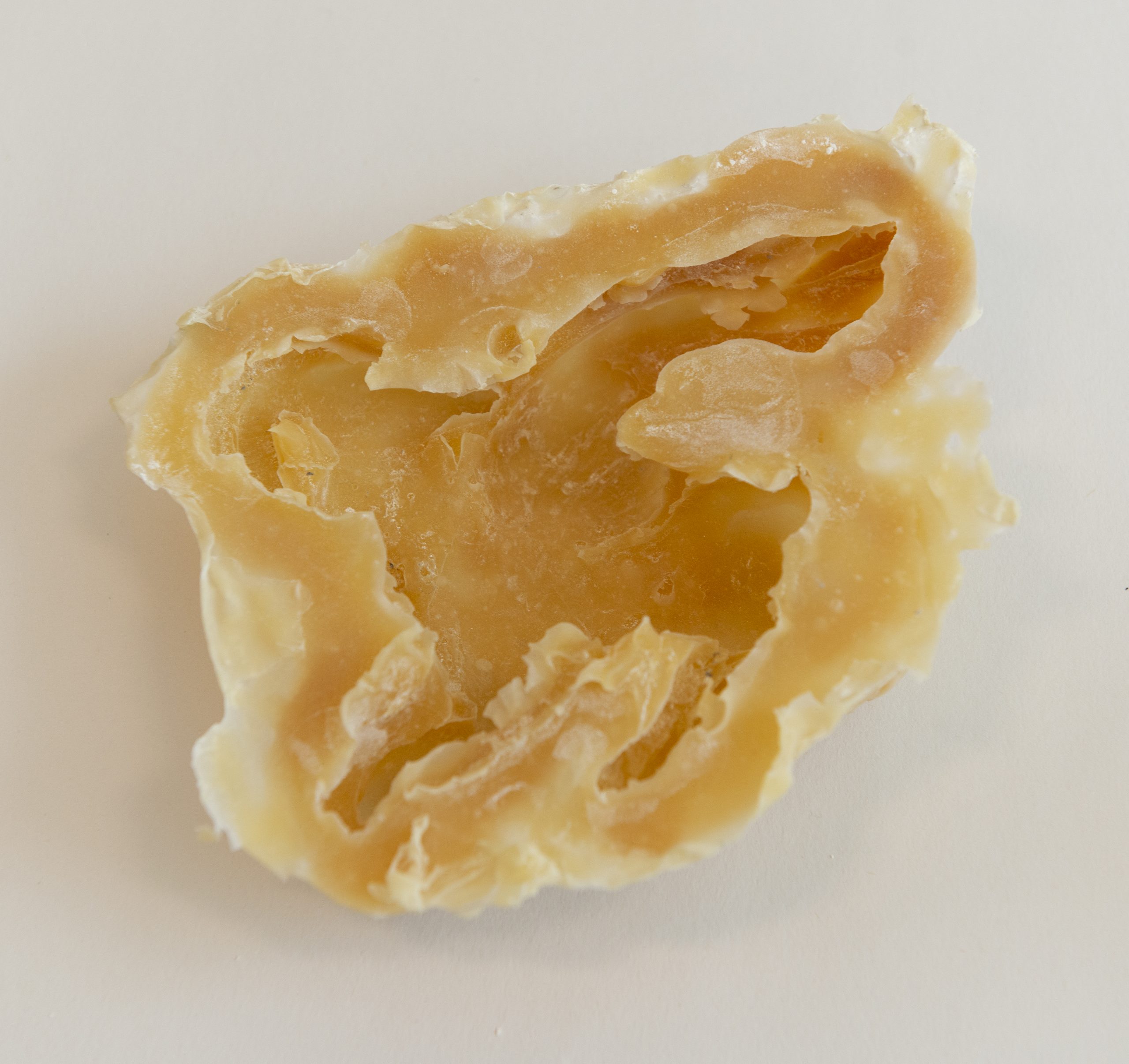
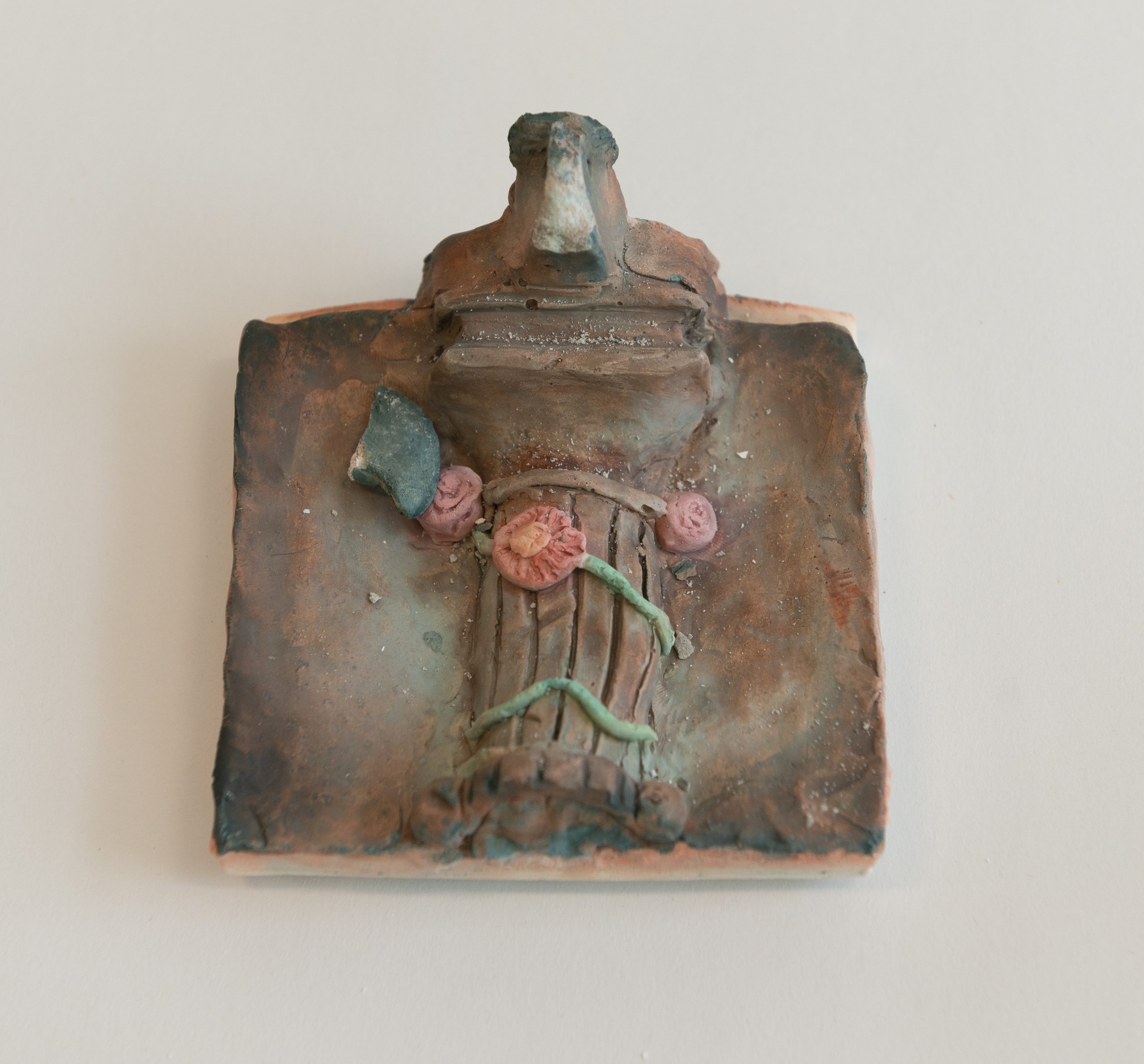
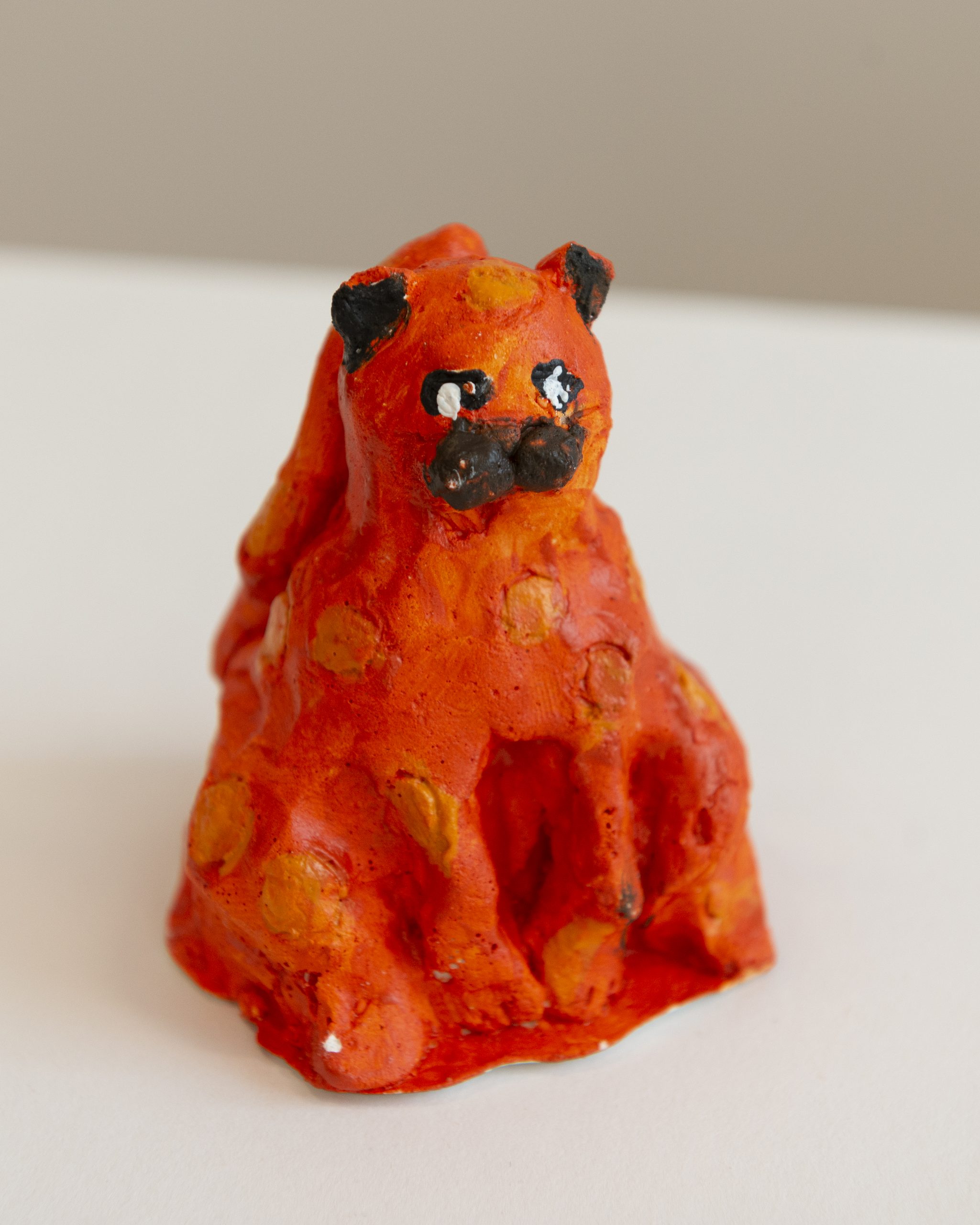
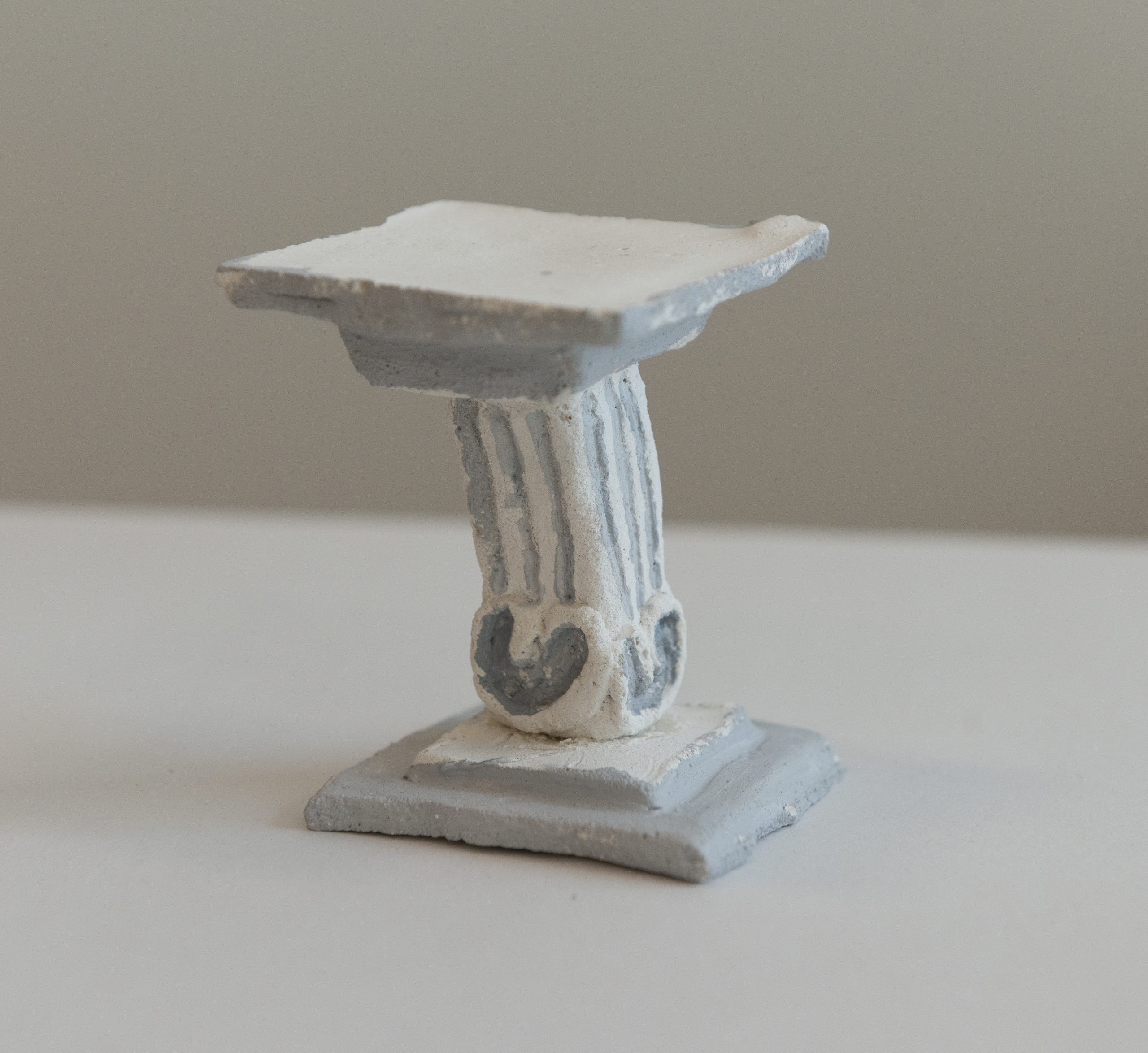
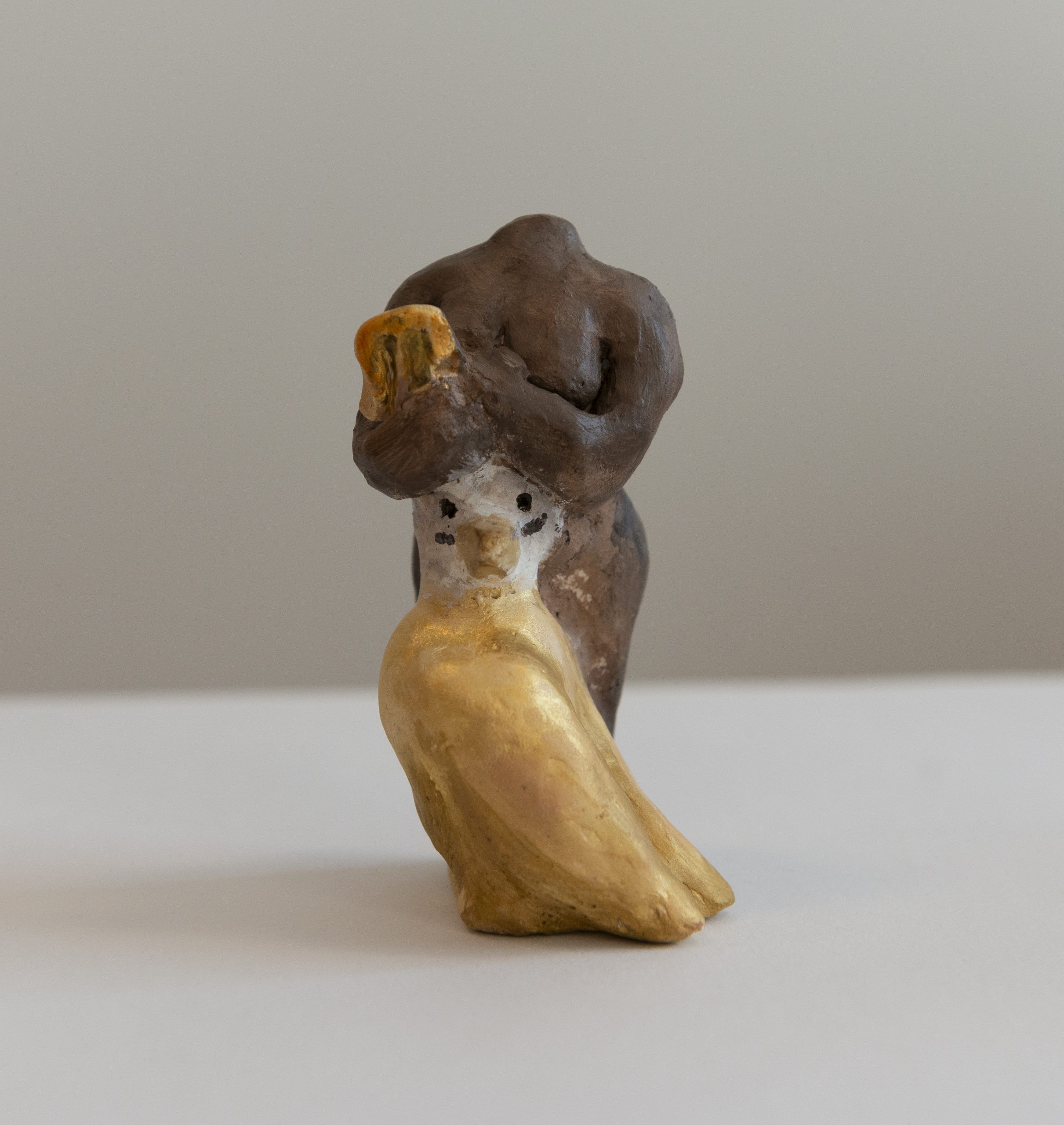
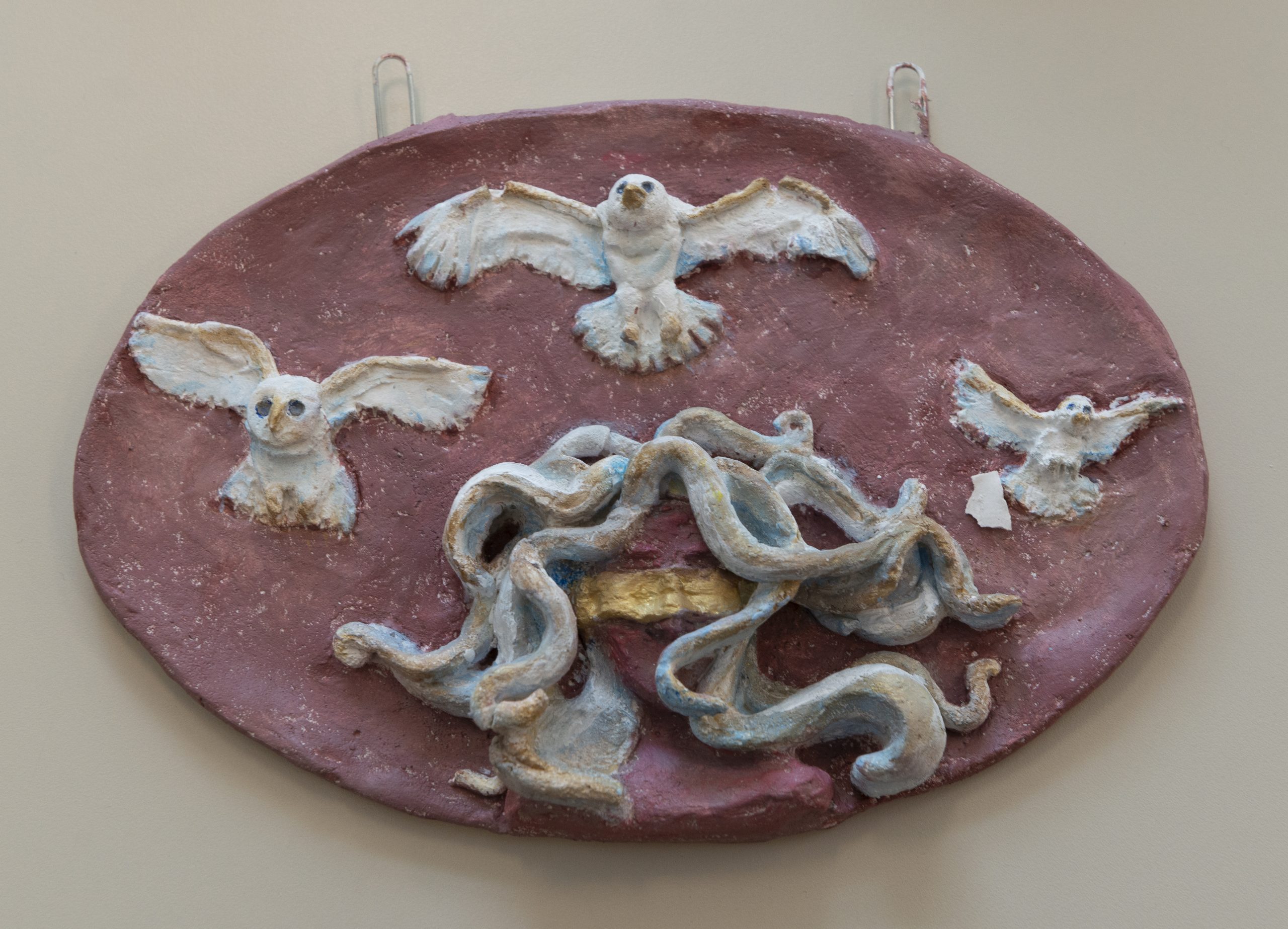
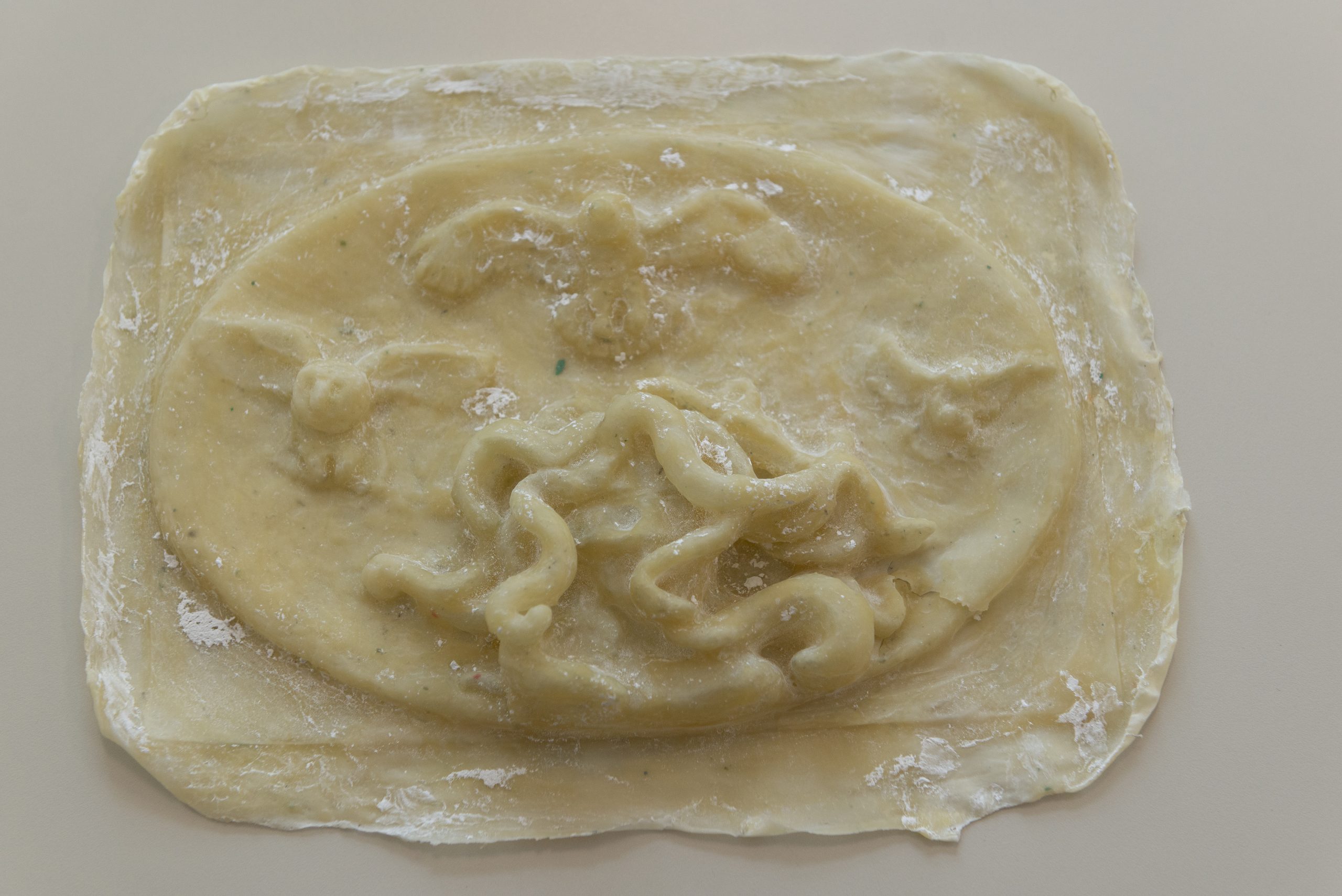
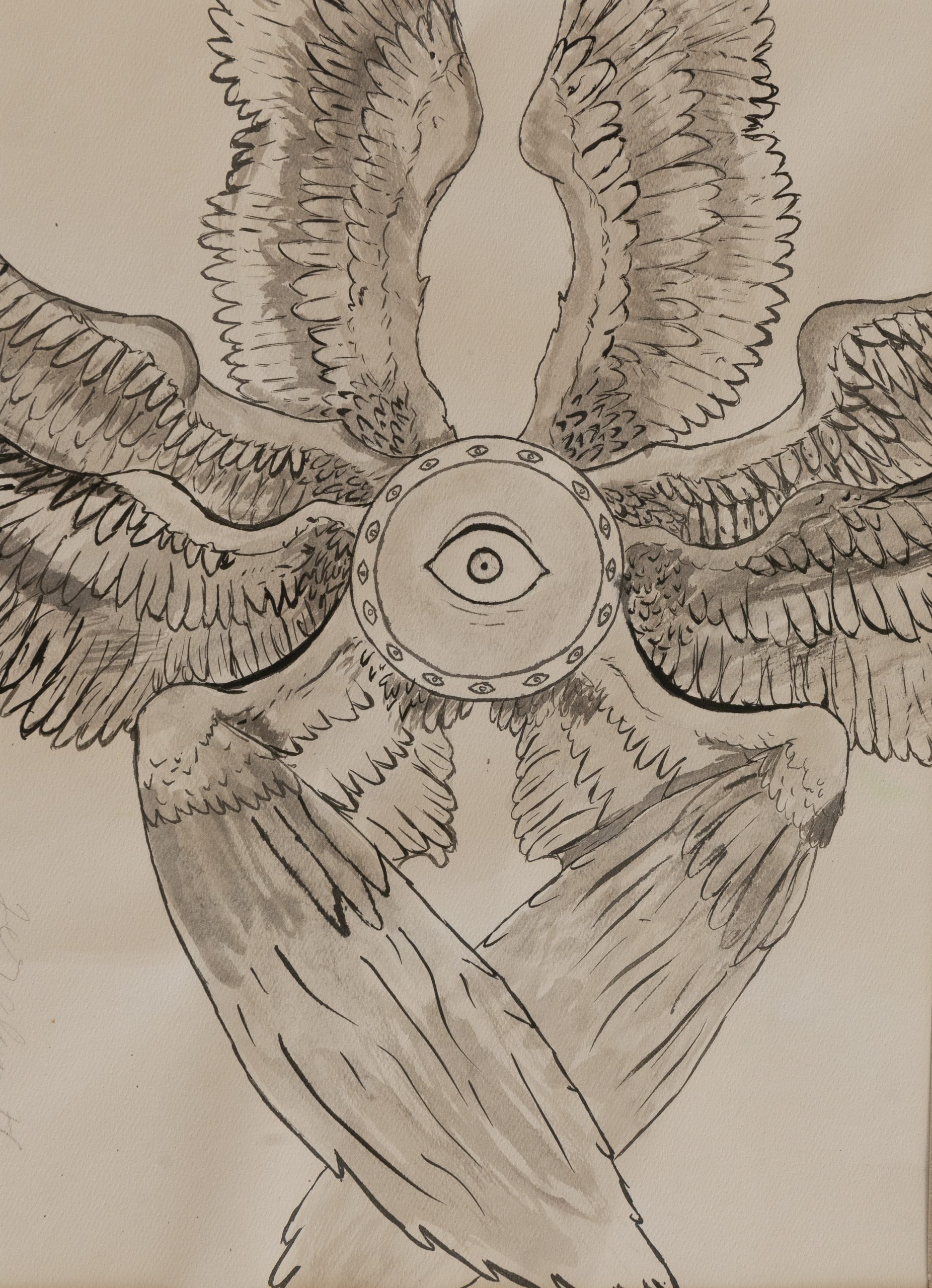
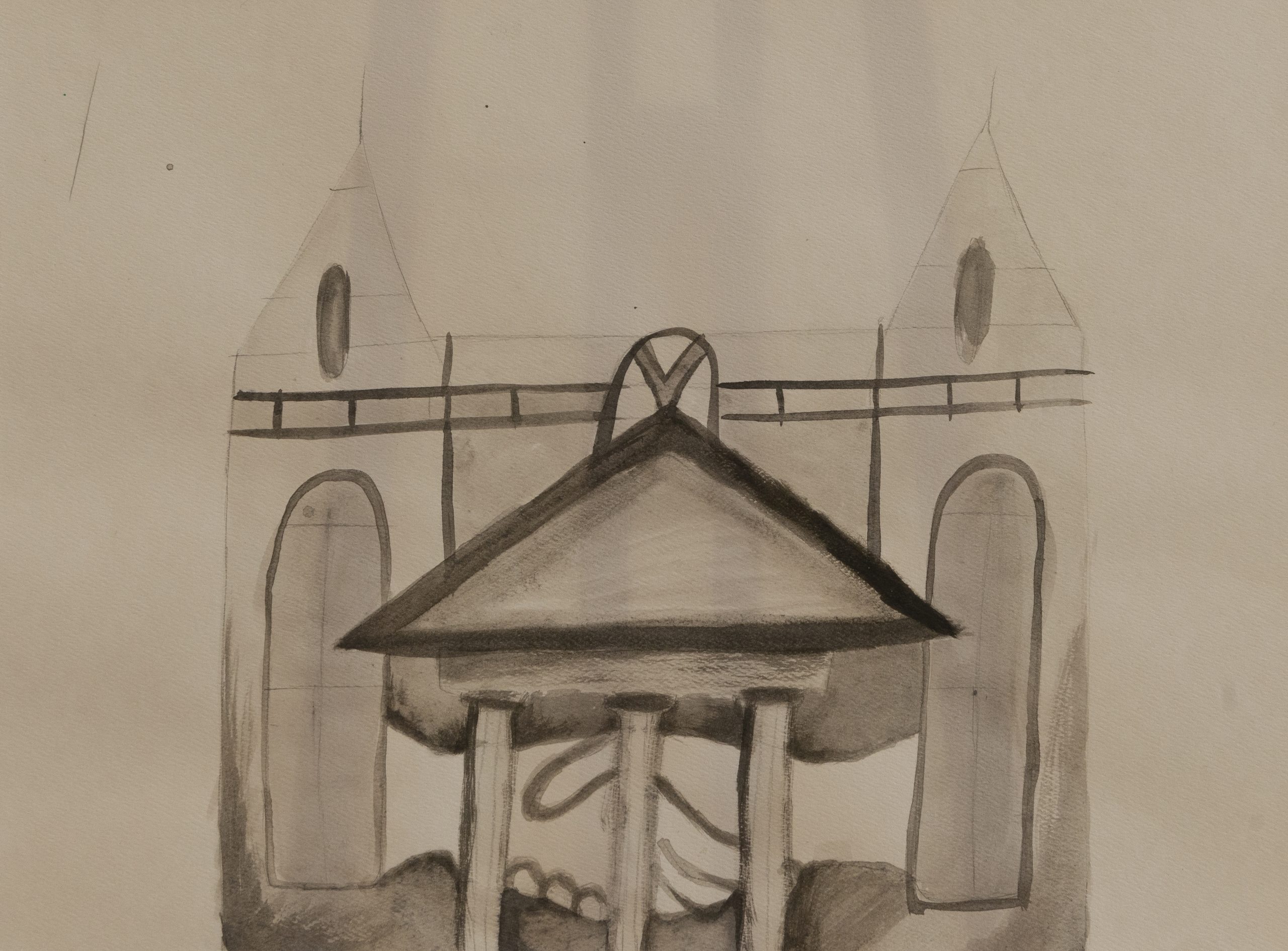
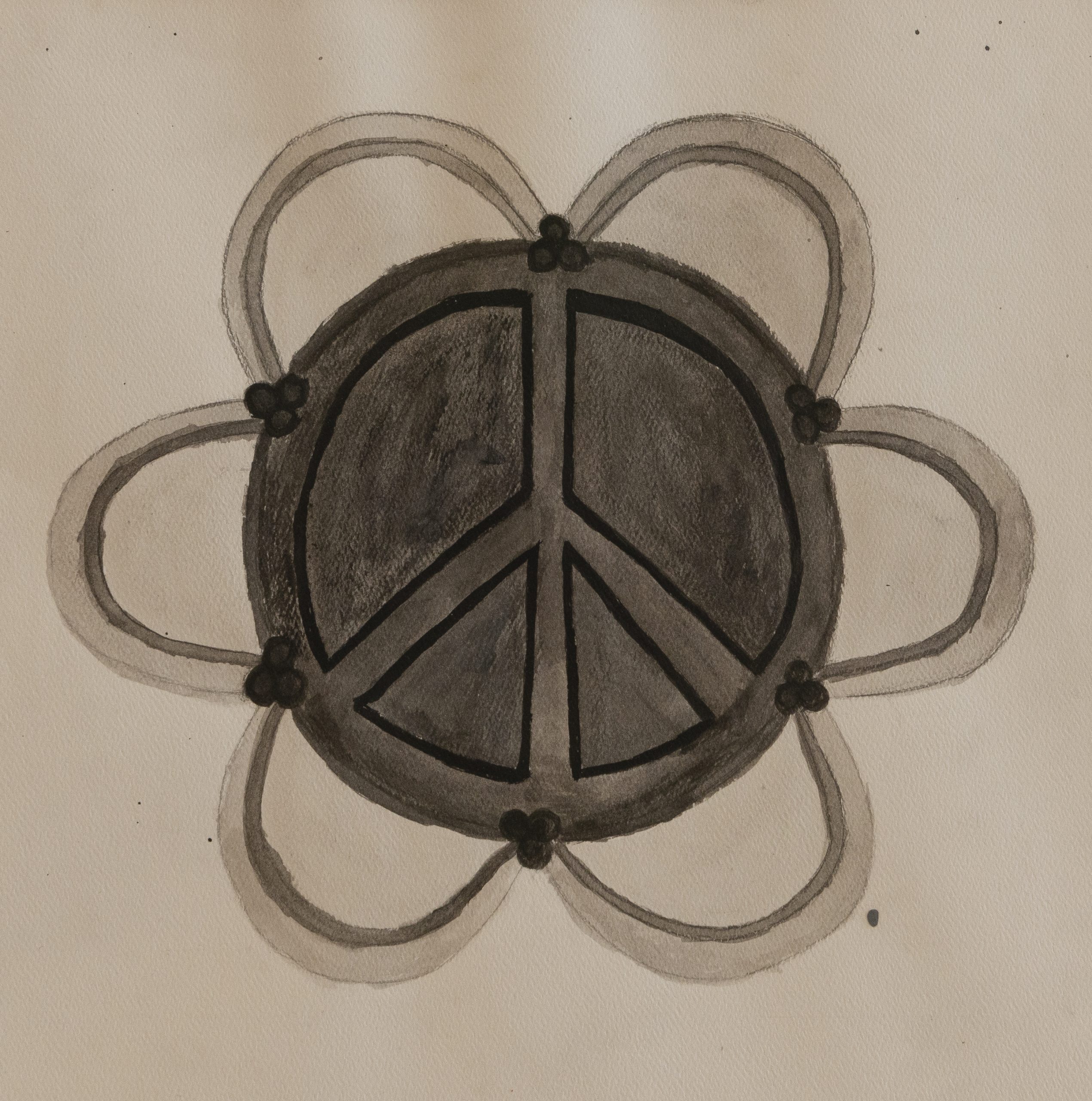
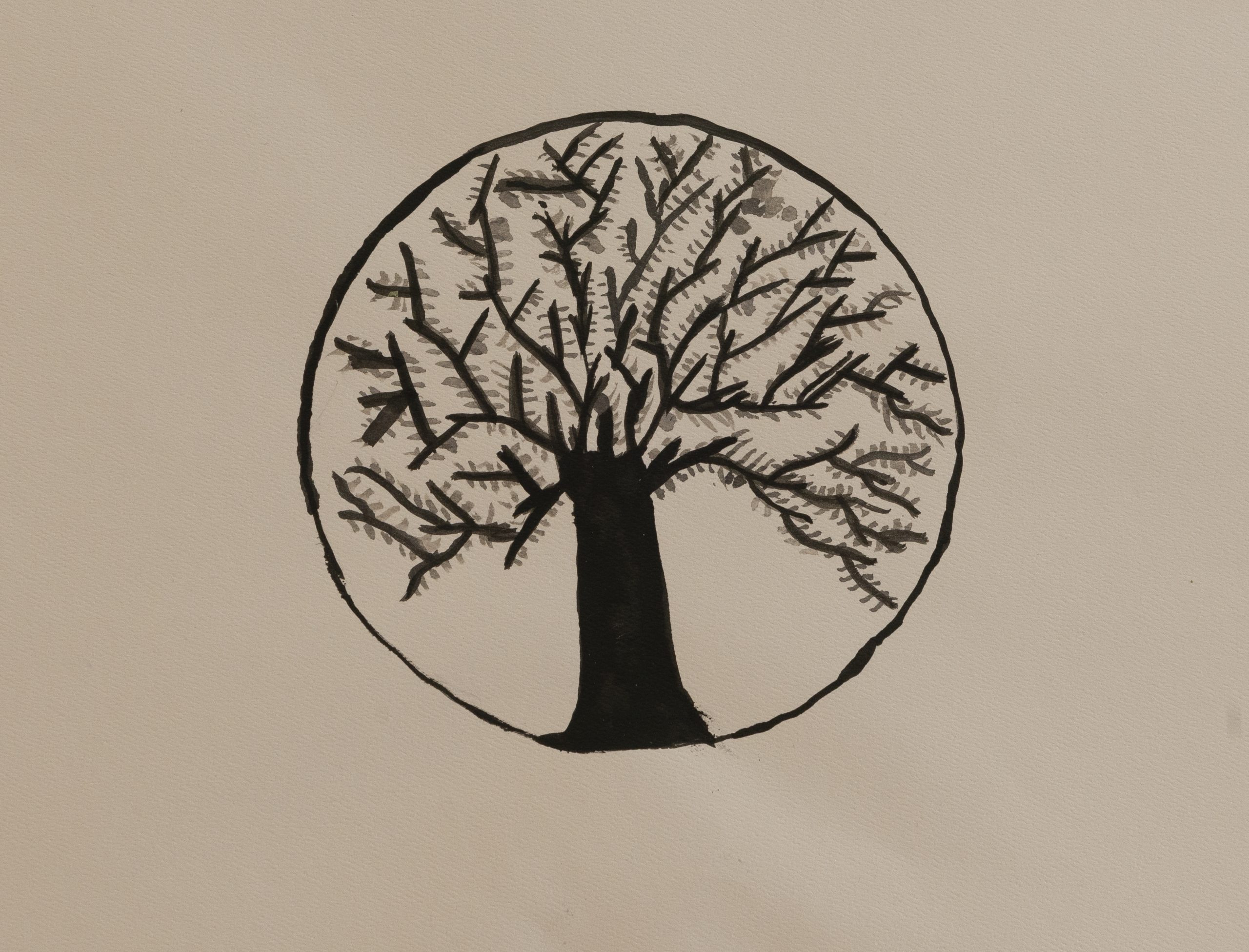
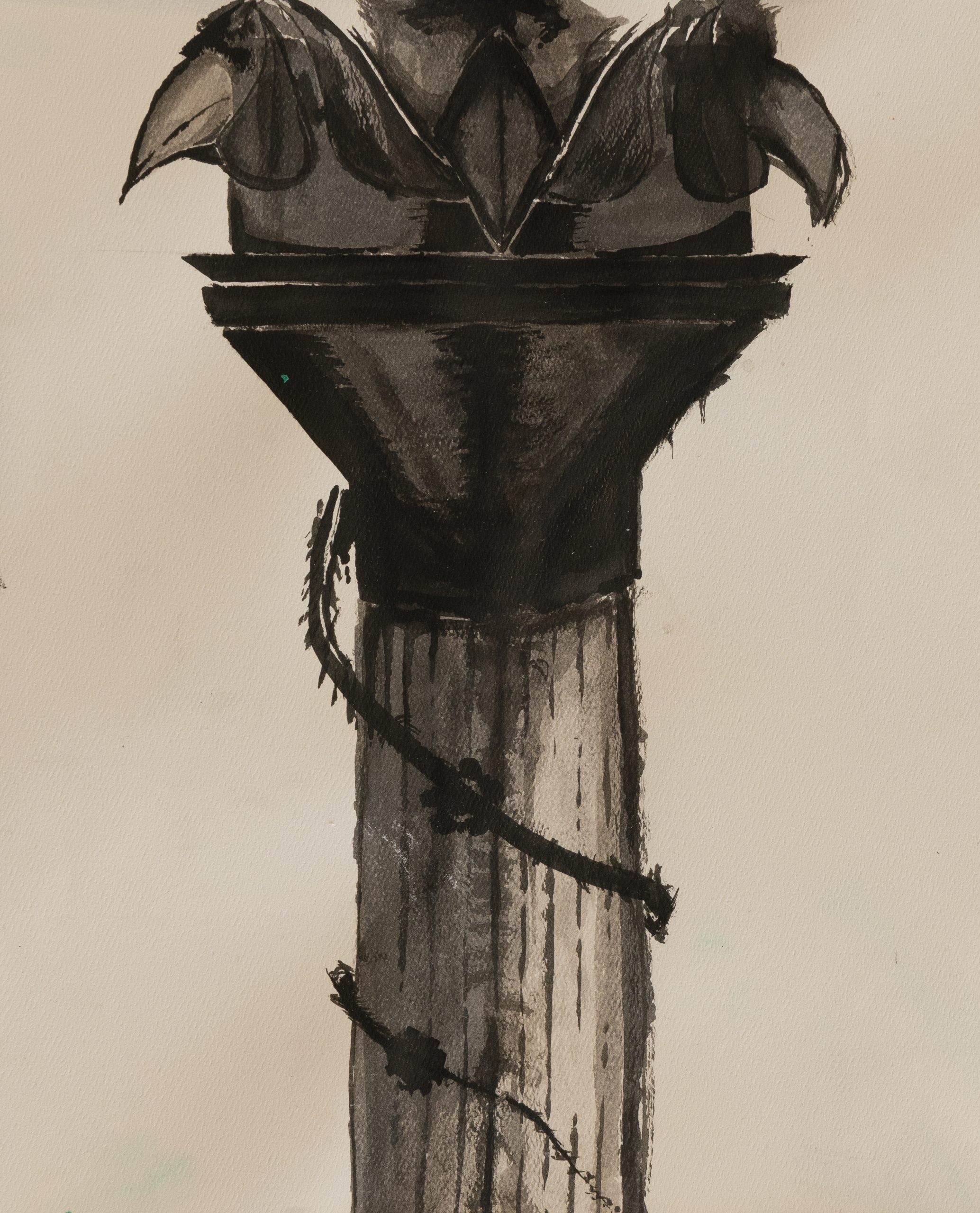
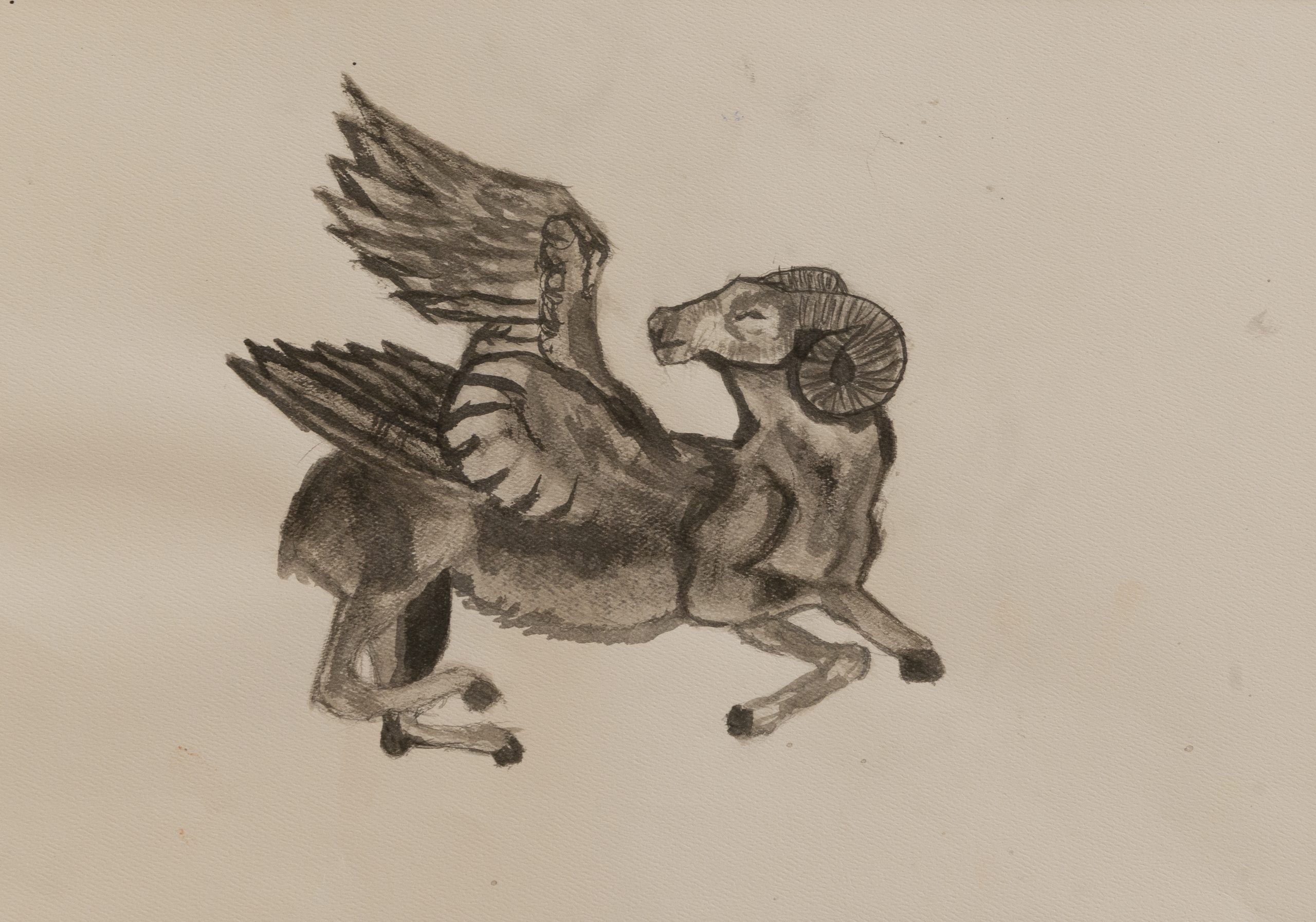
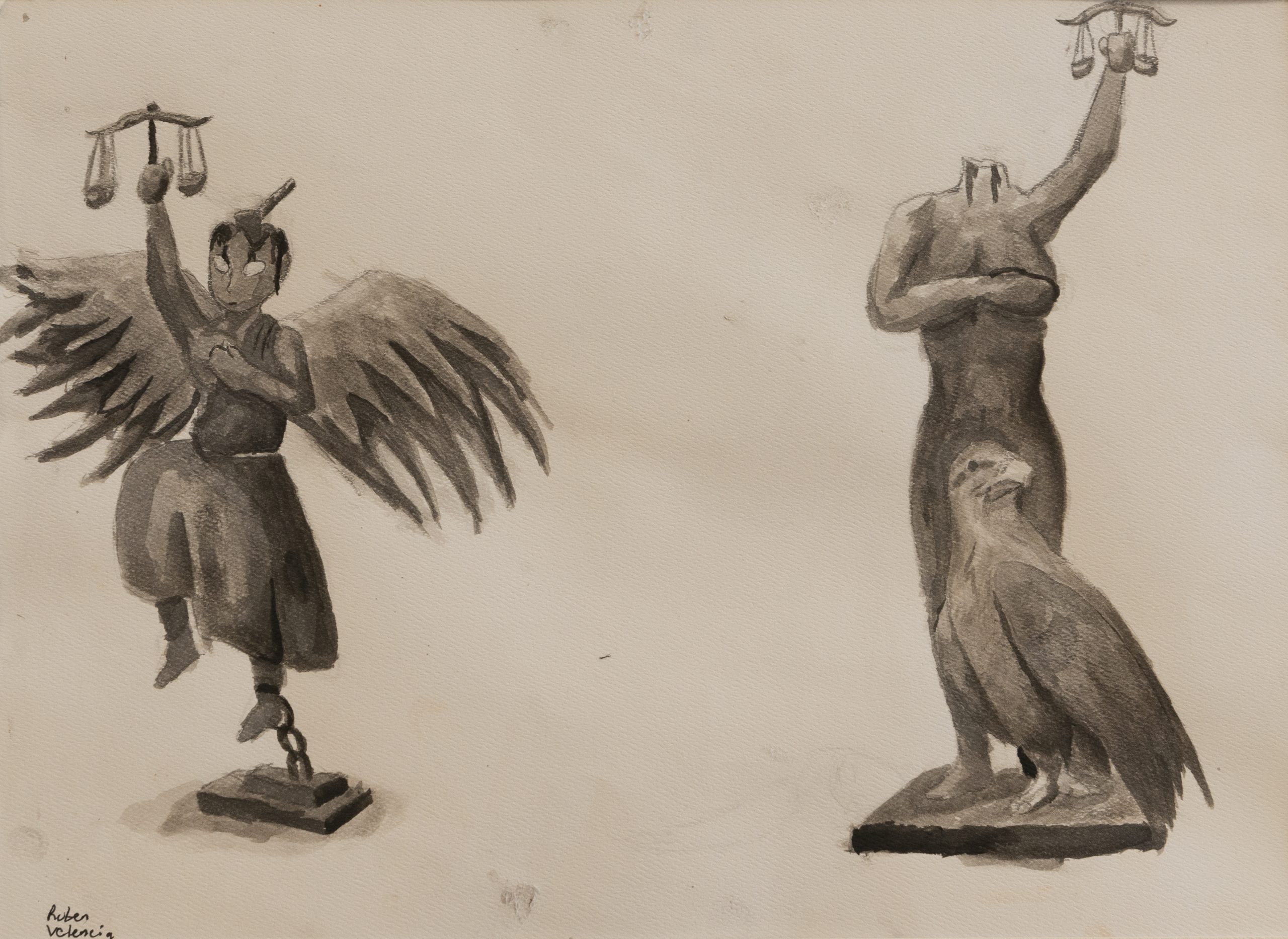
Project Title: ARCHITECTURAL ELEMENTS FOR A FUTURE COURTHOUSE
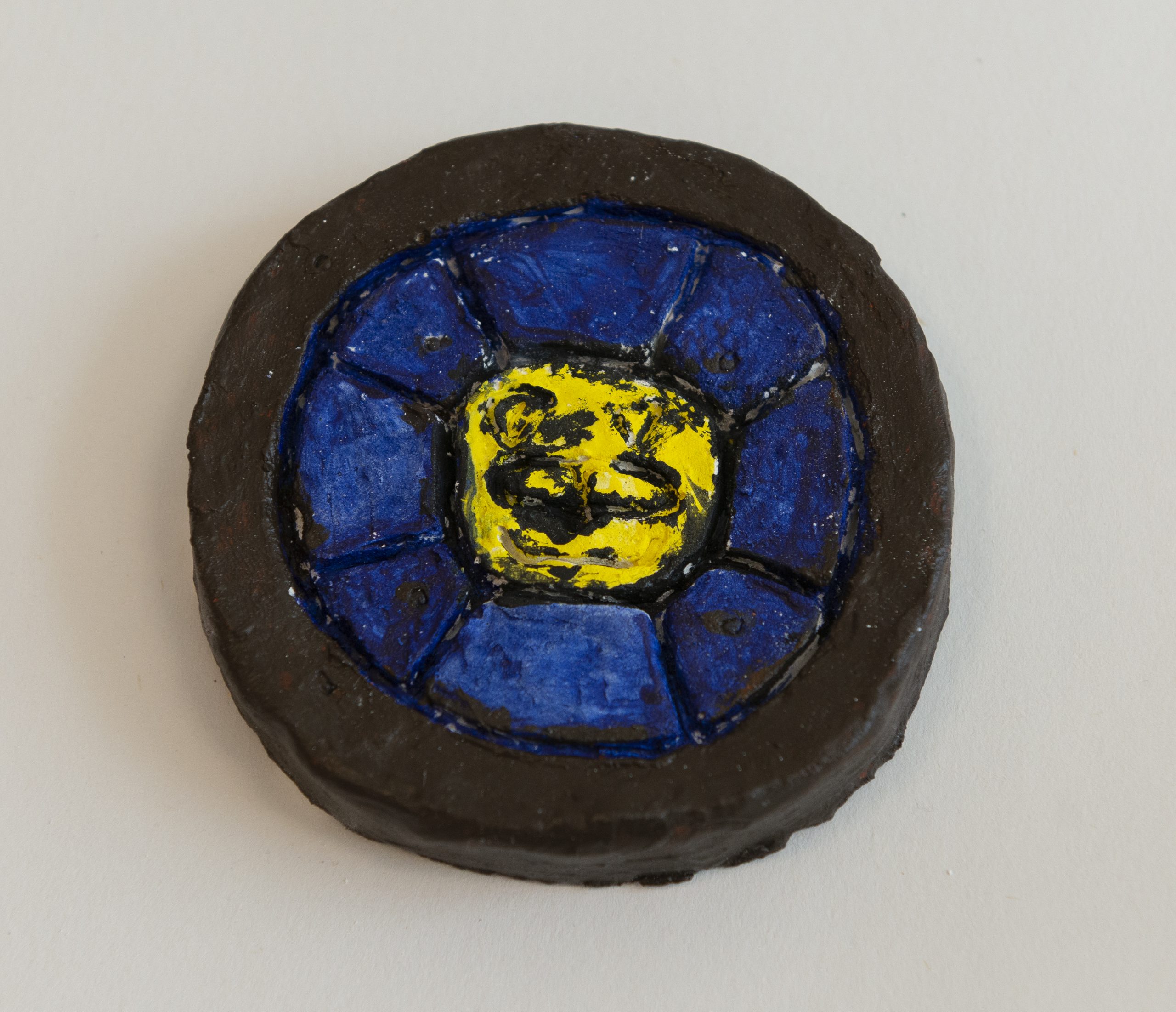
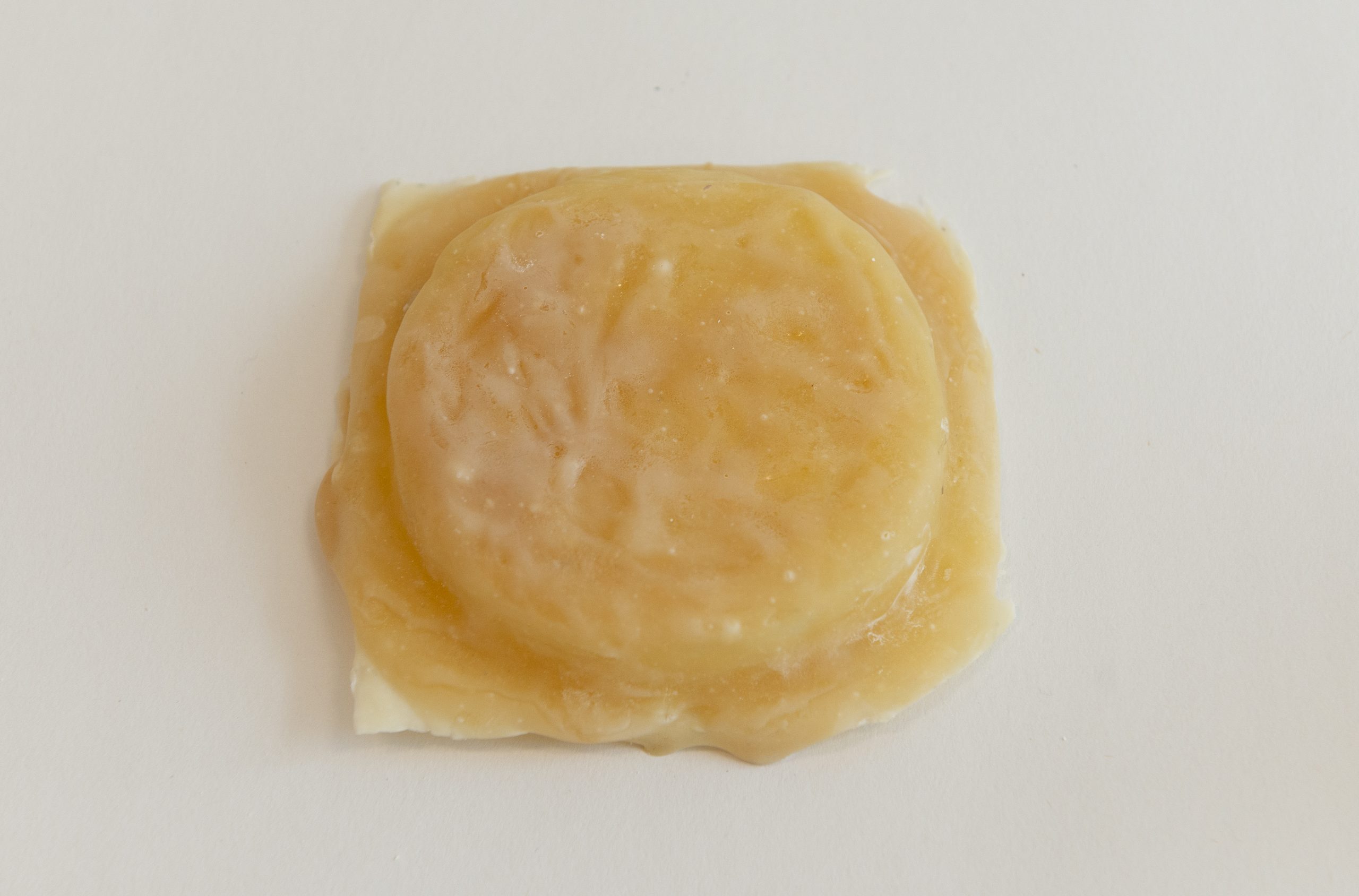
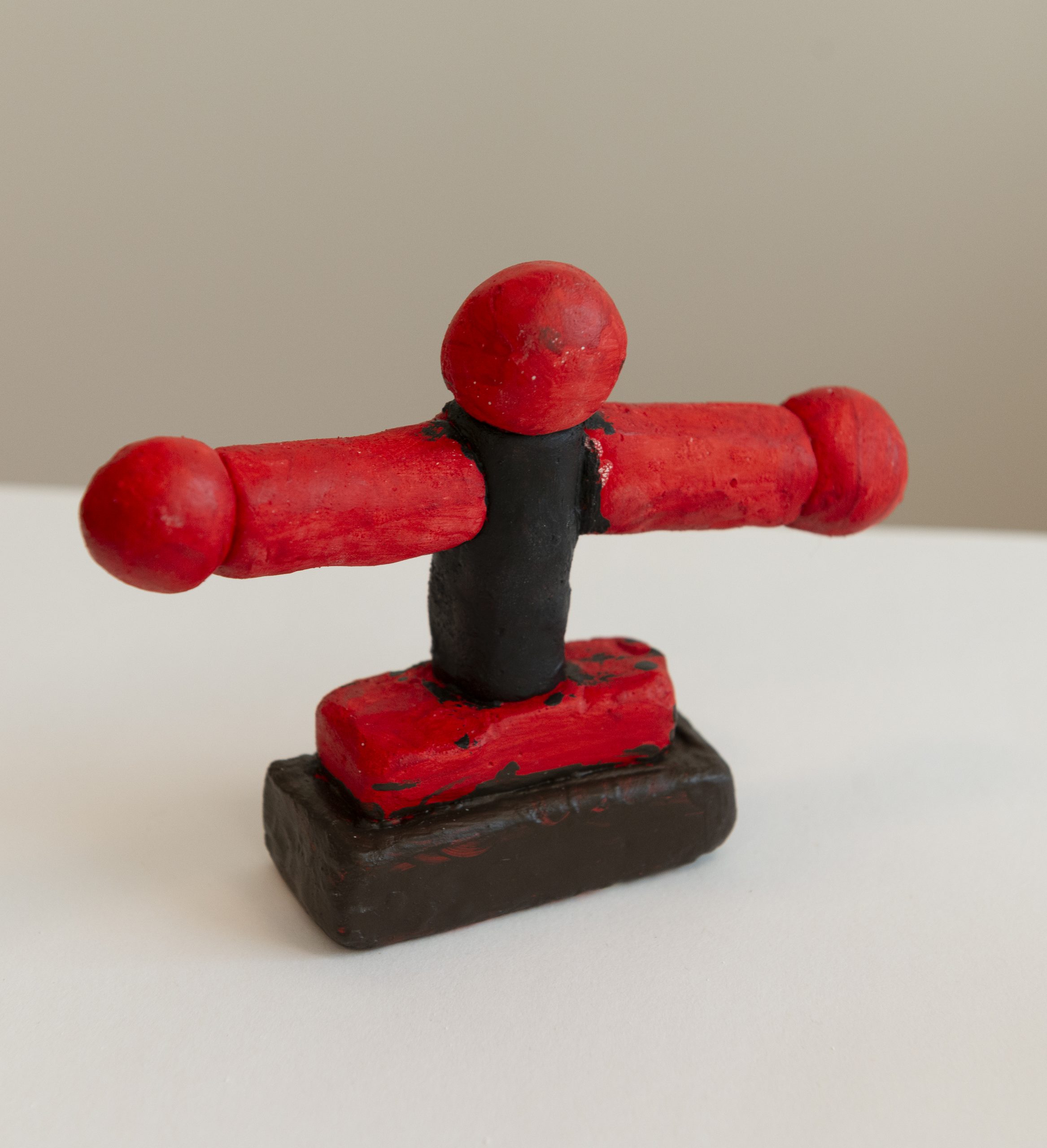
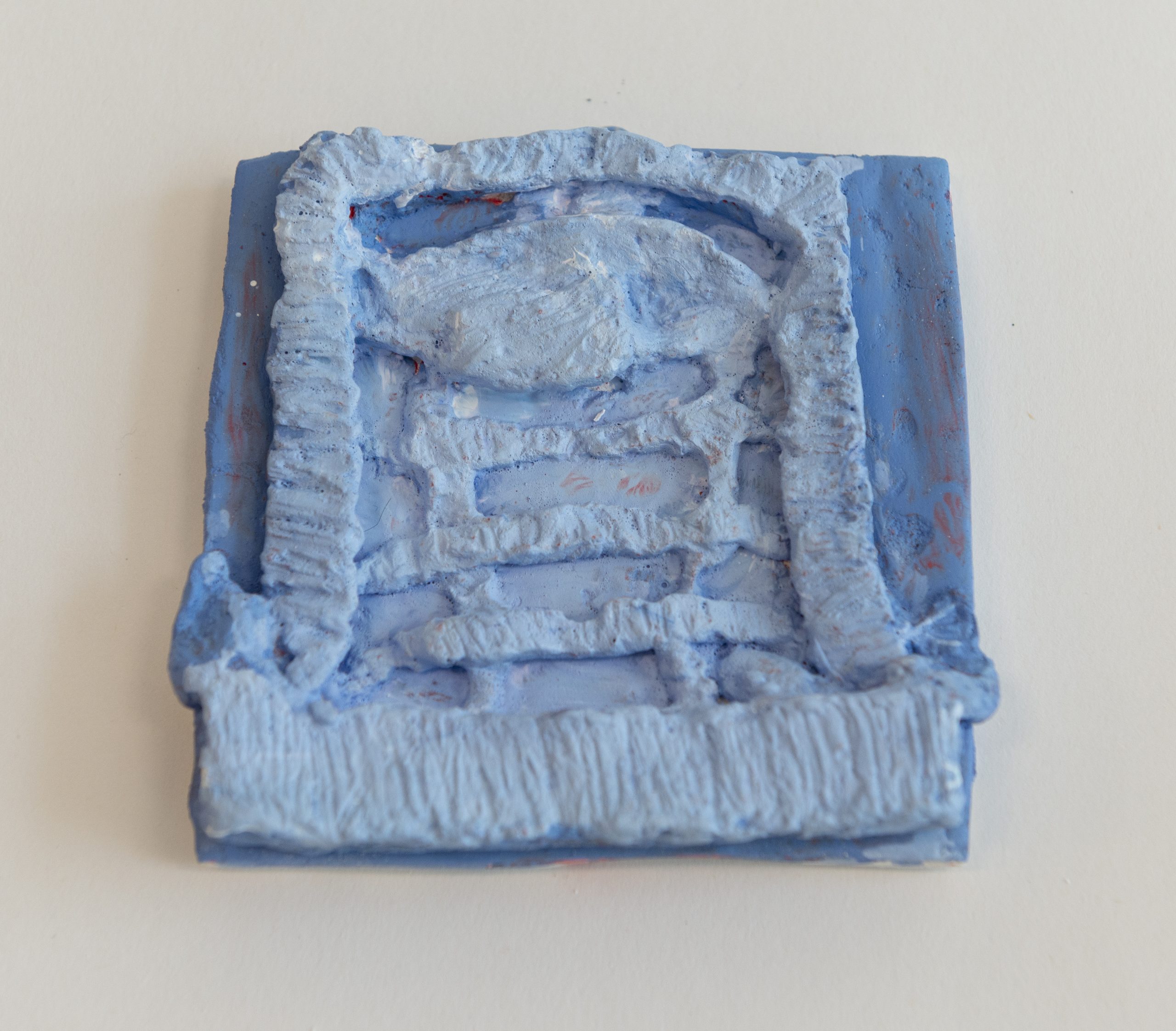

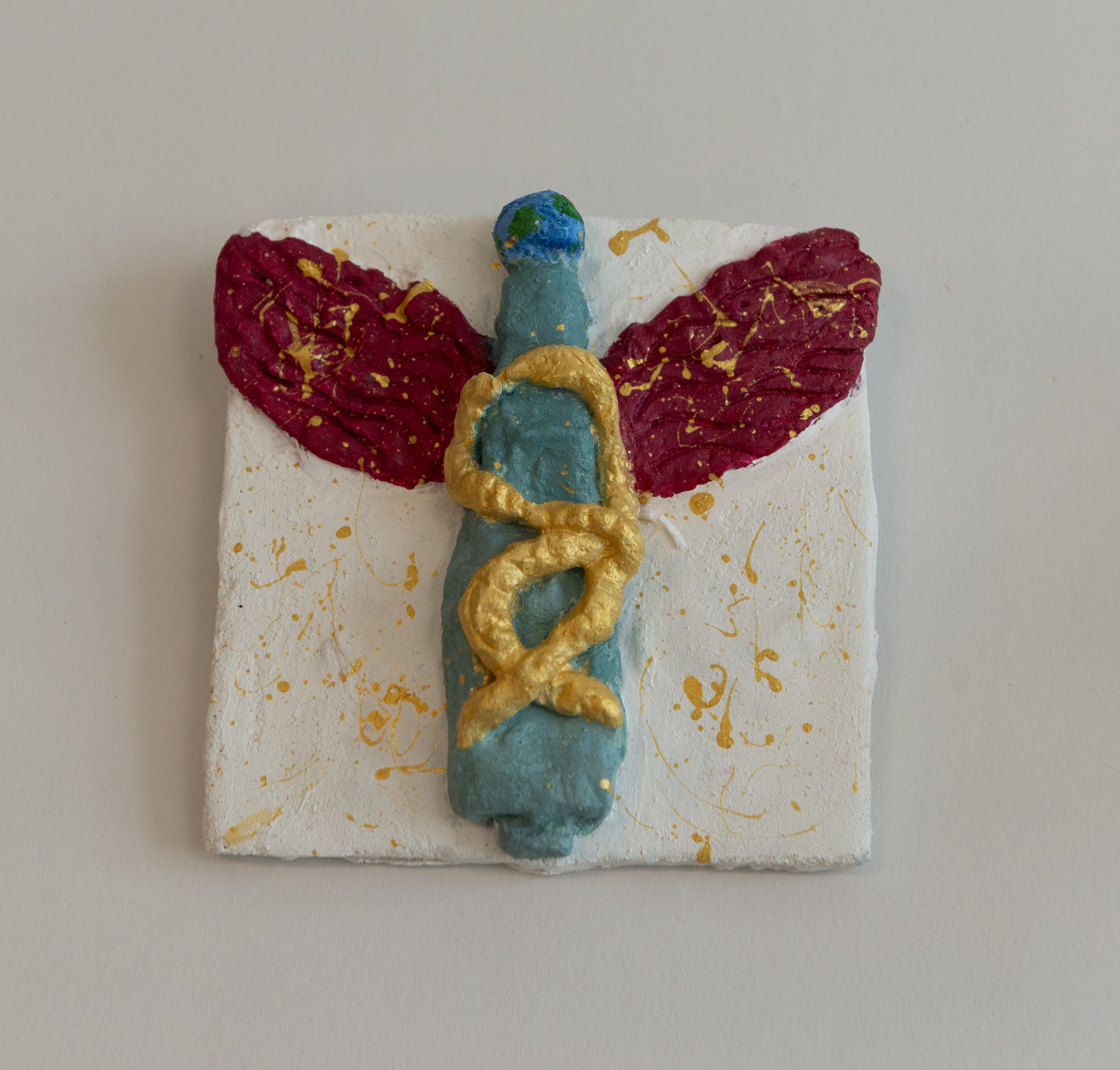
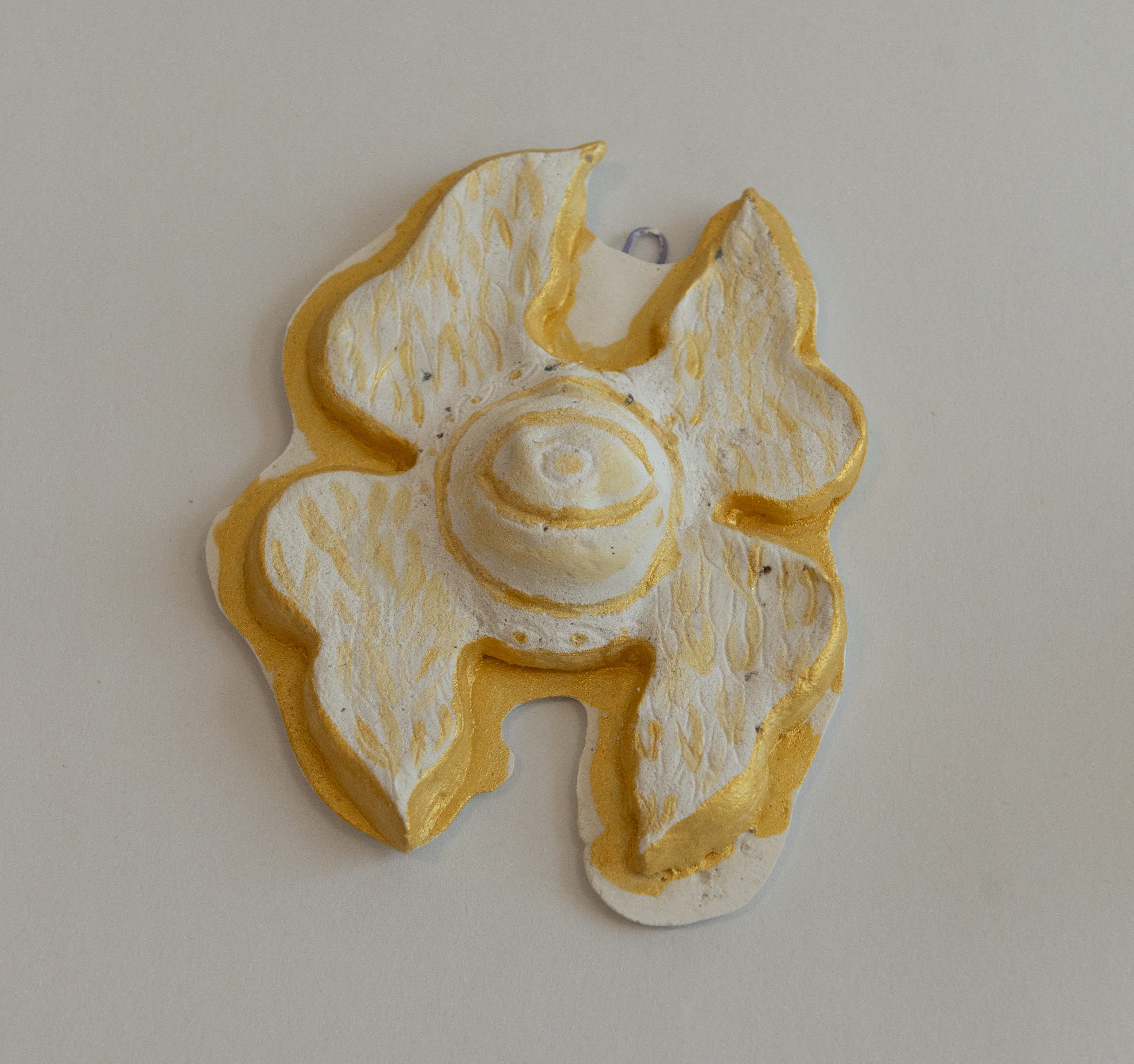
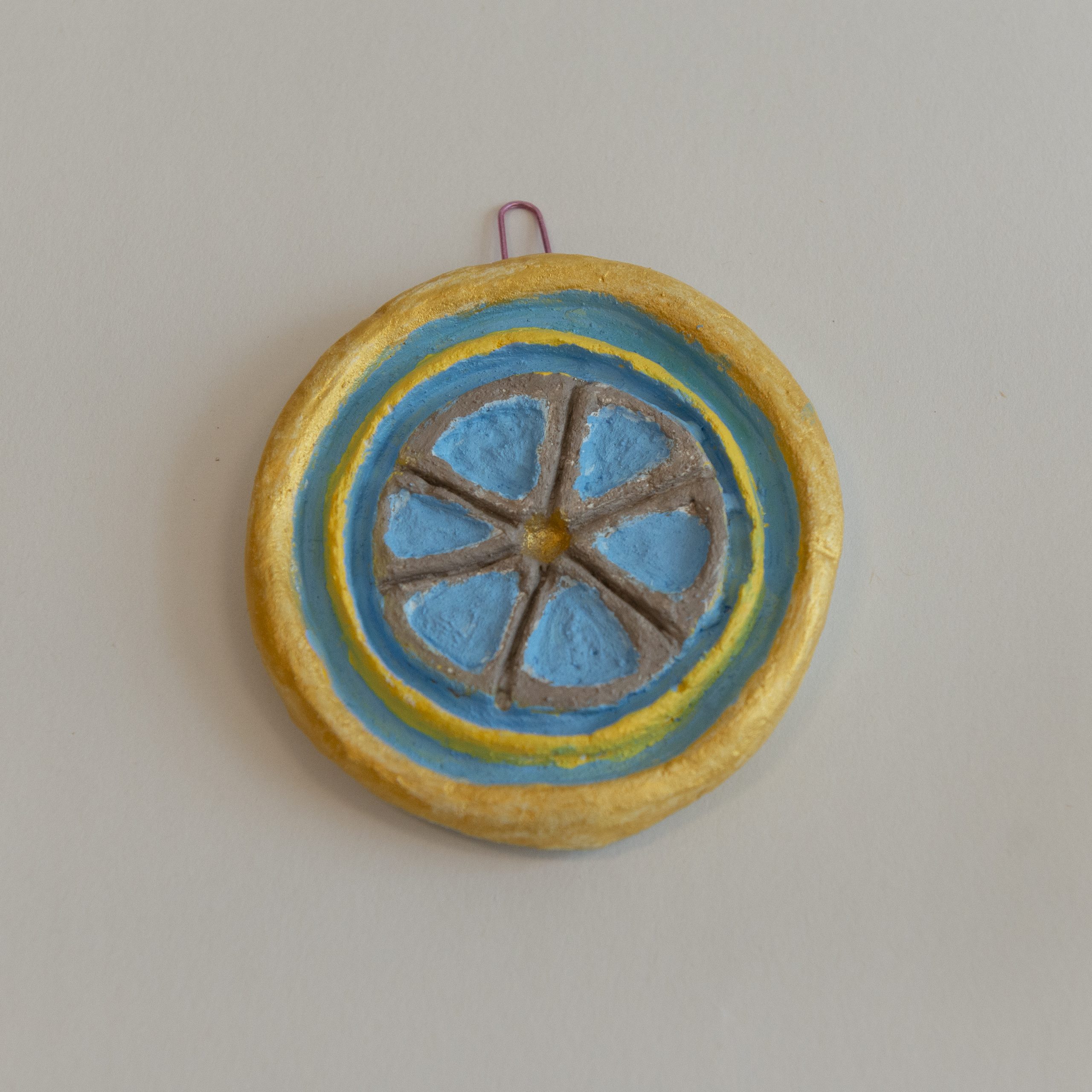
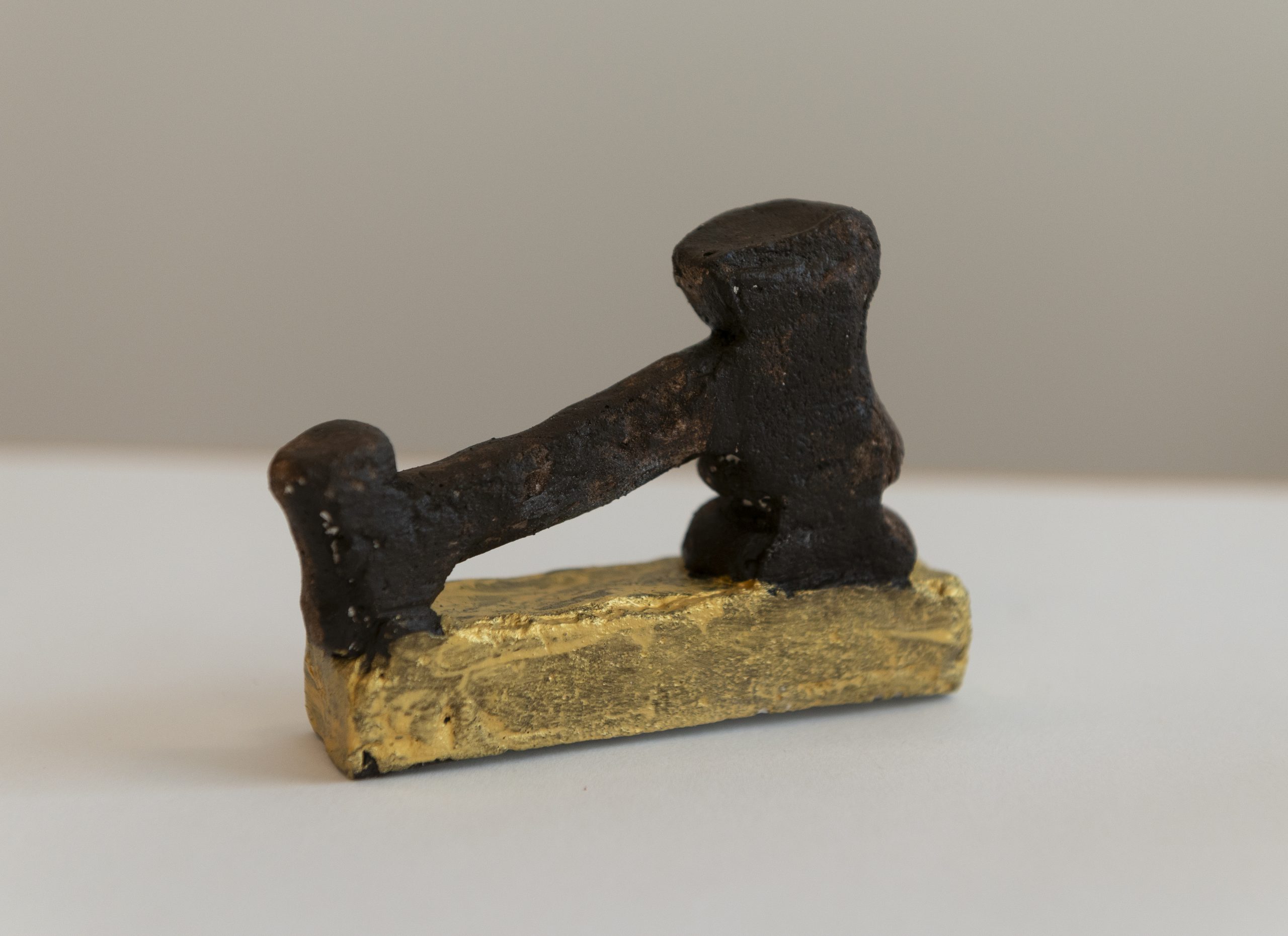
Principal: Bernadette Drysdale
Teacher: Chris Curti
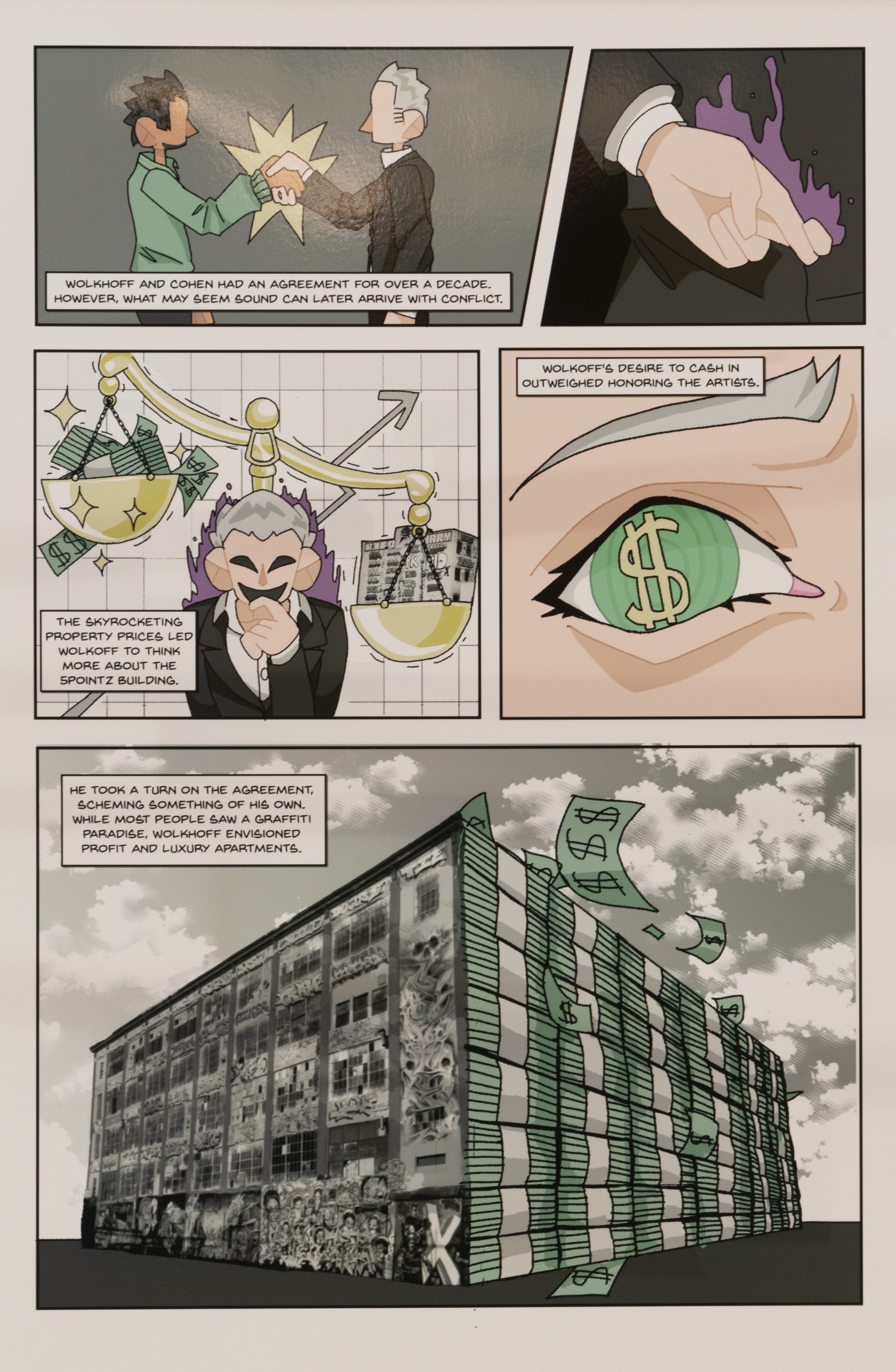
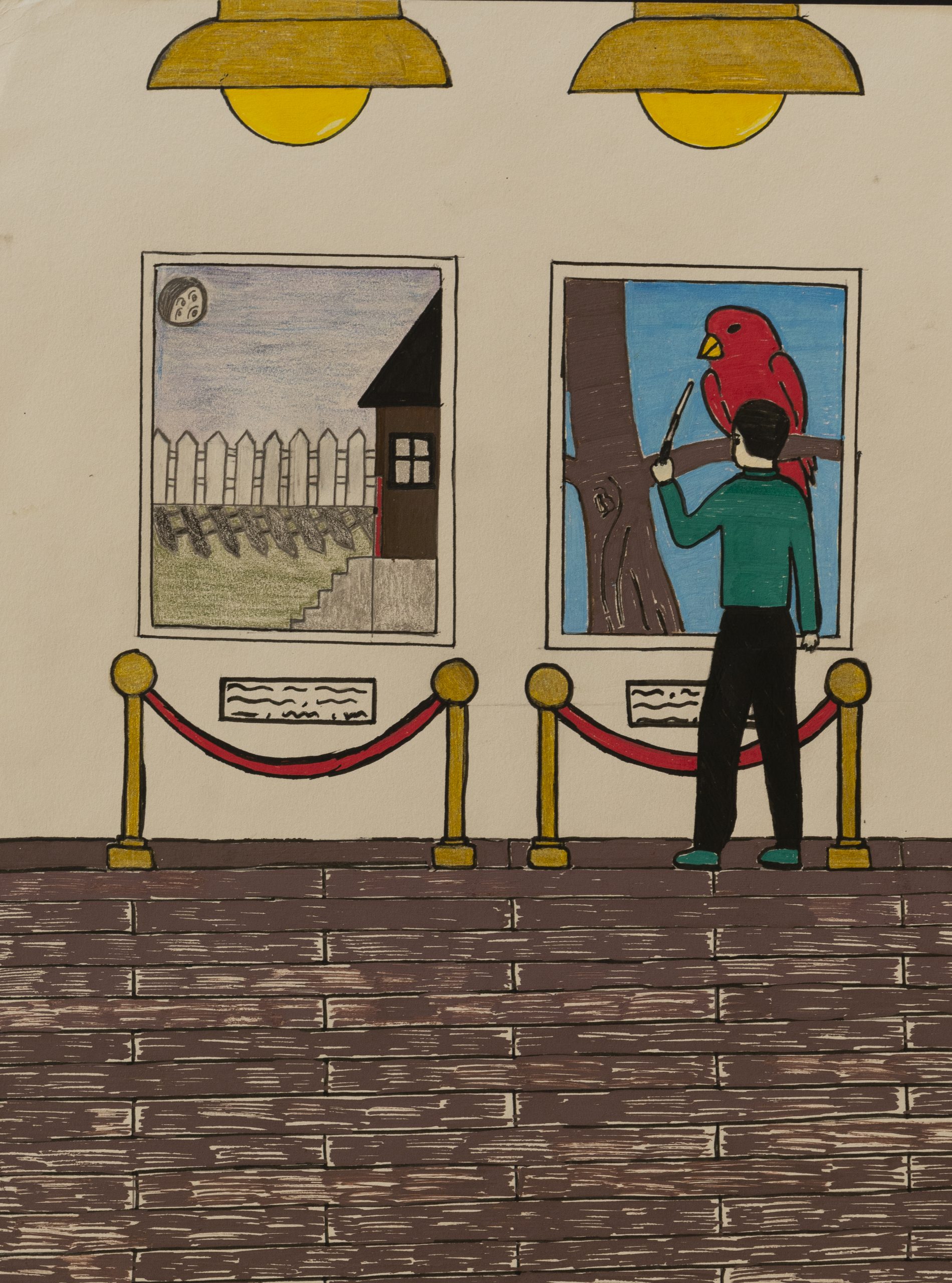
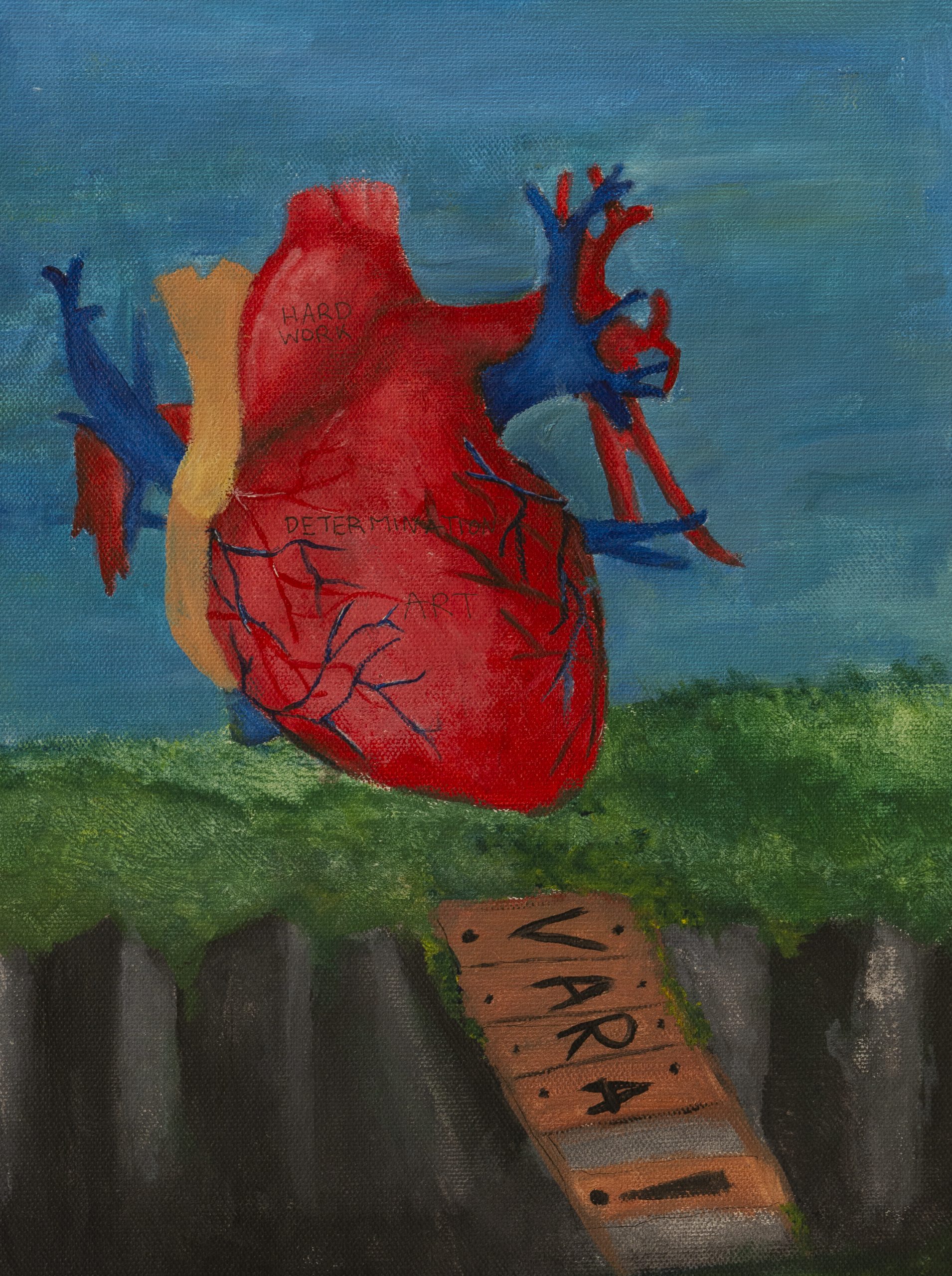
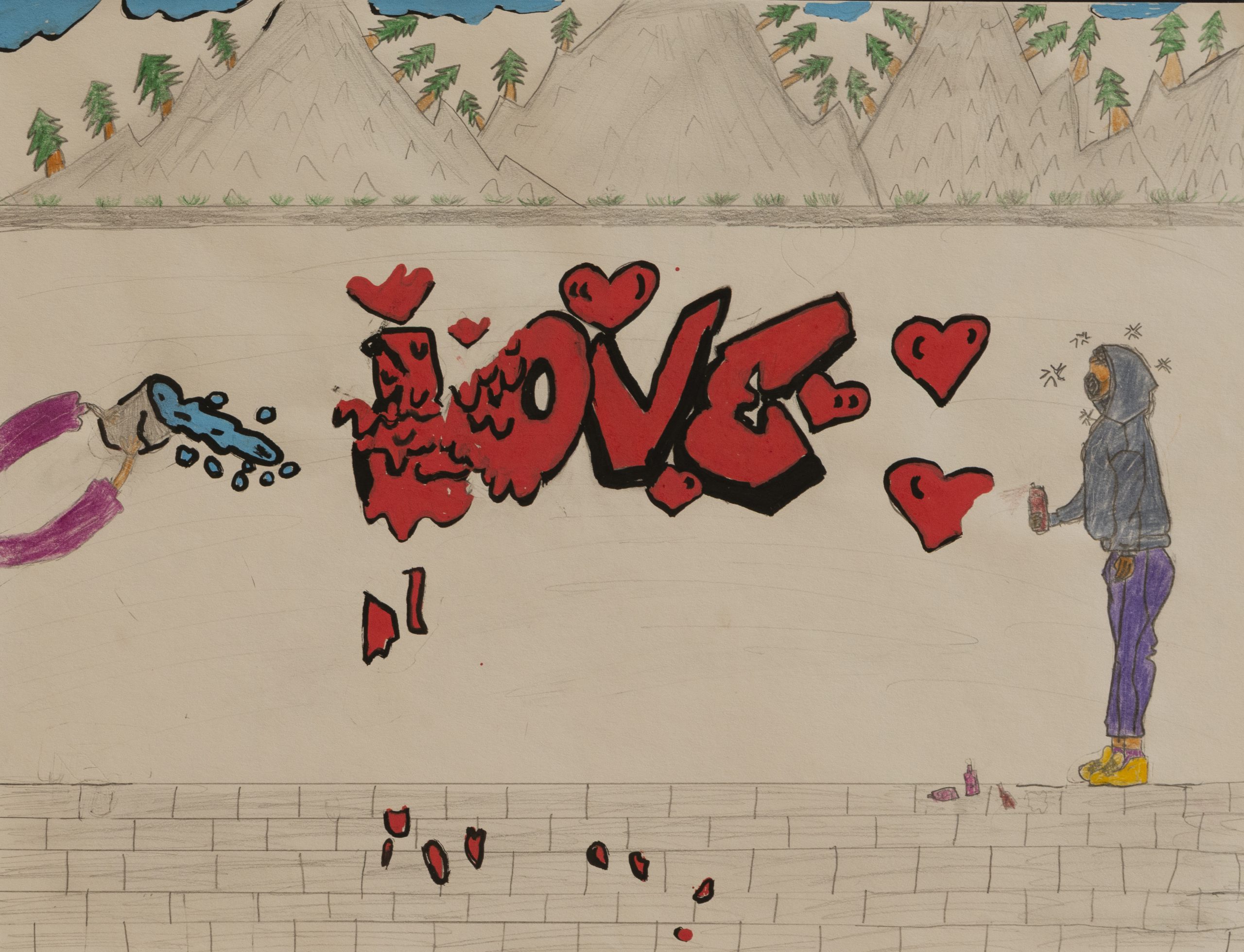
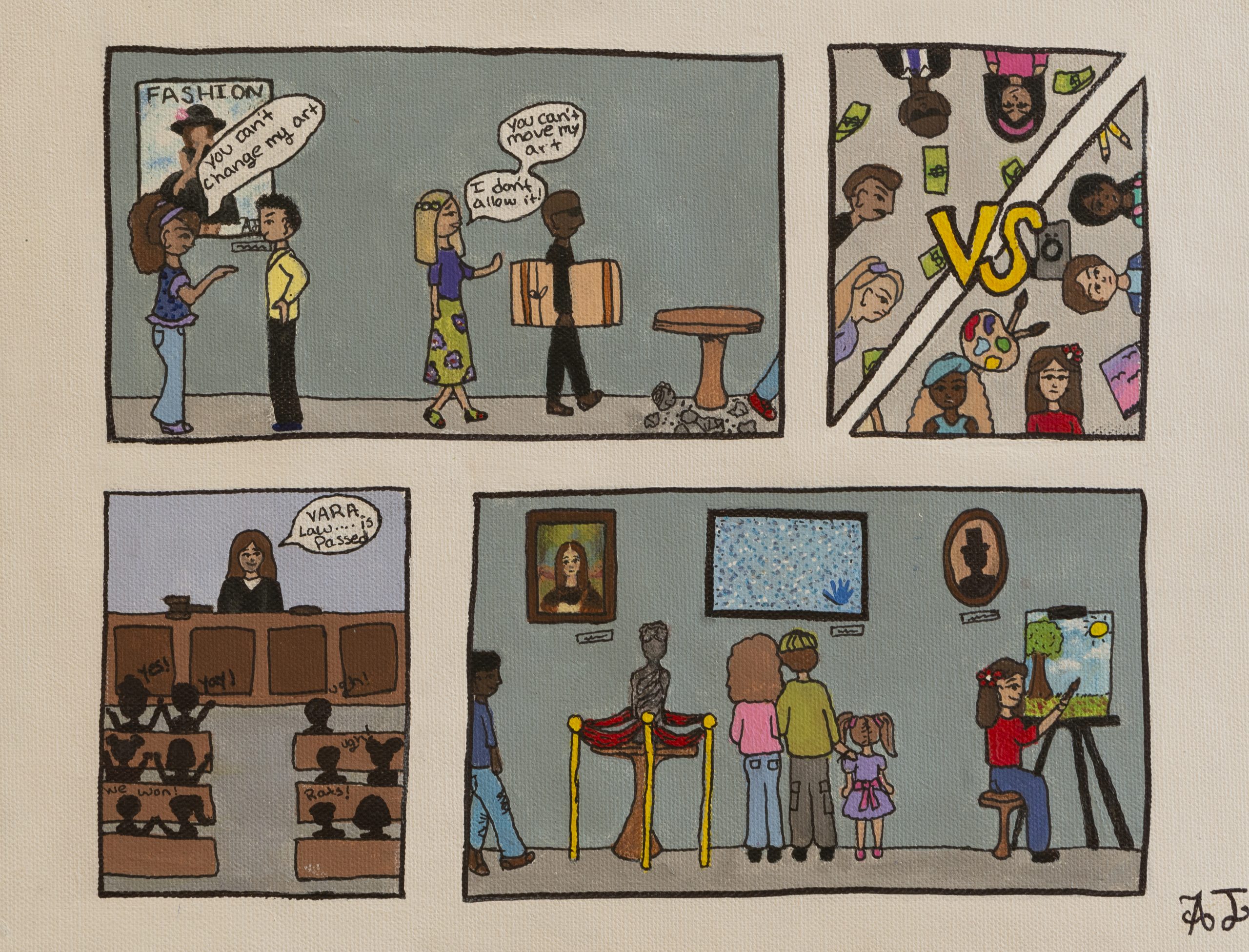
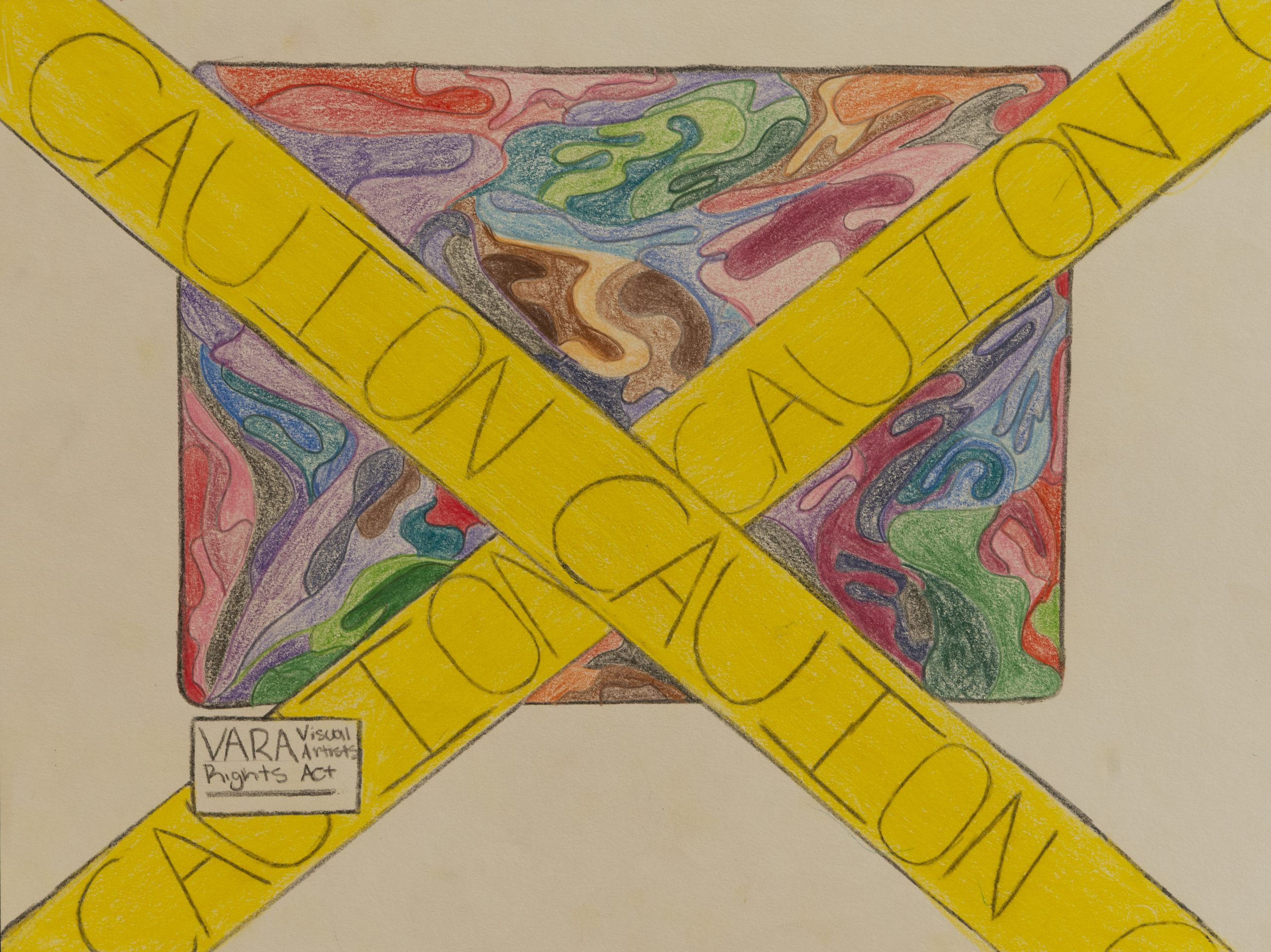
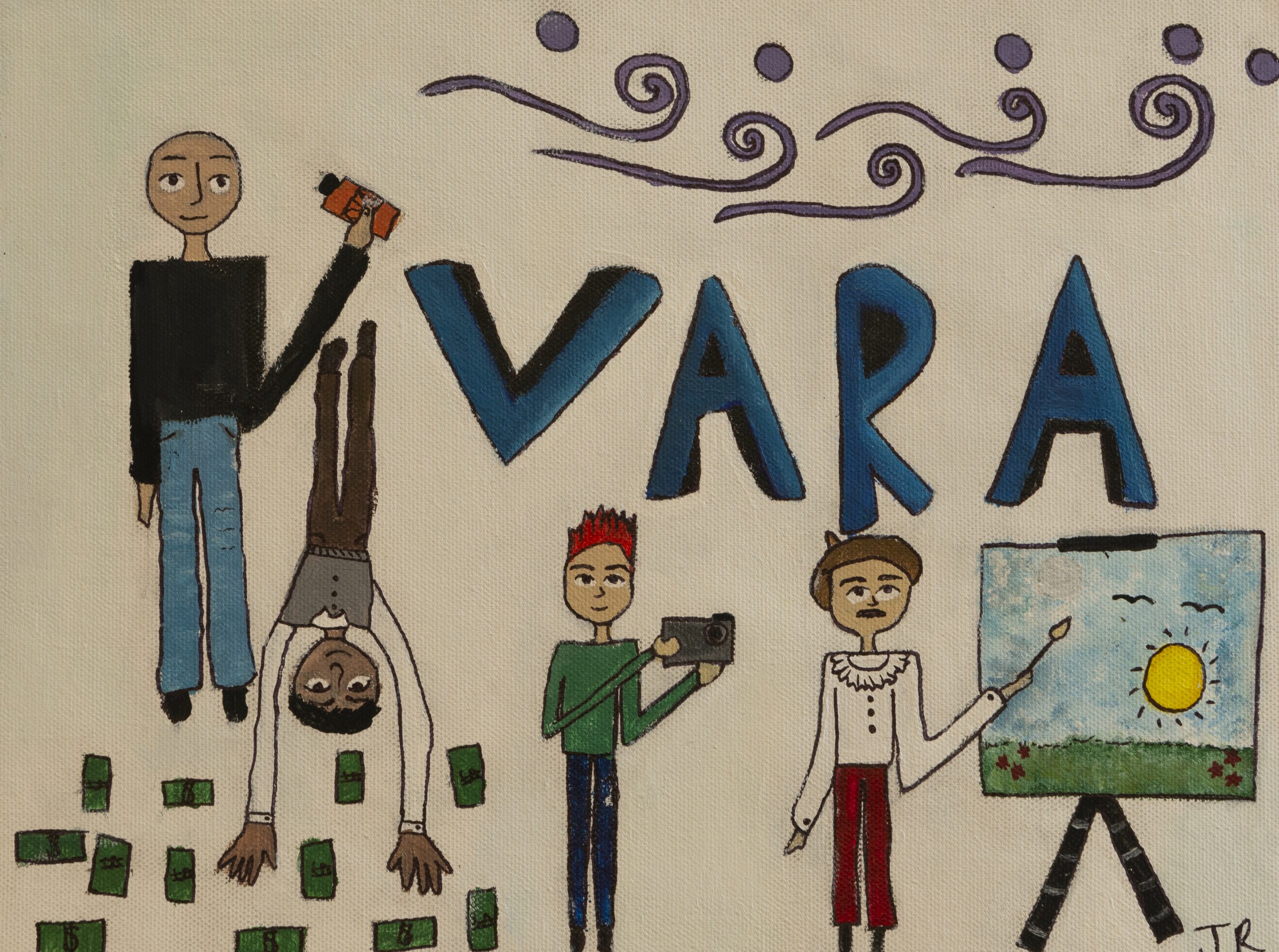
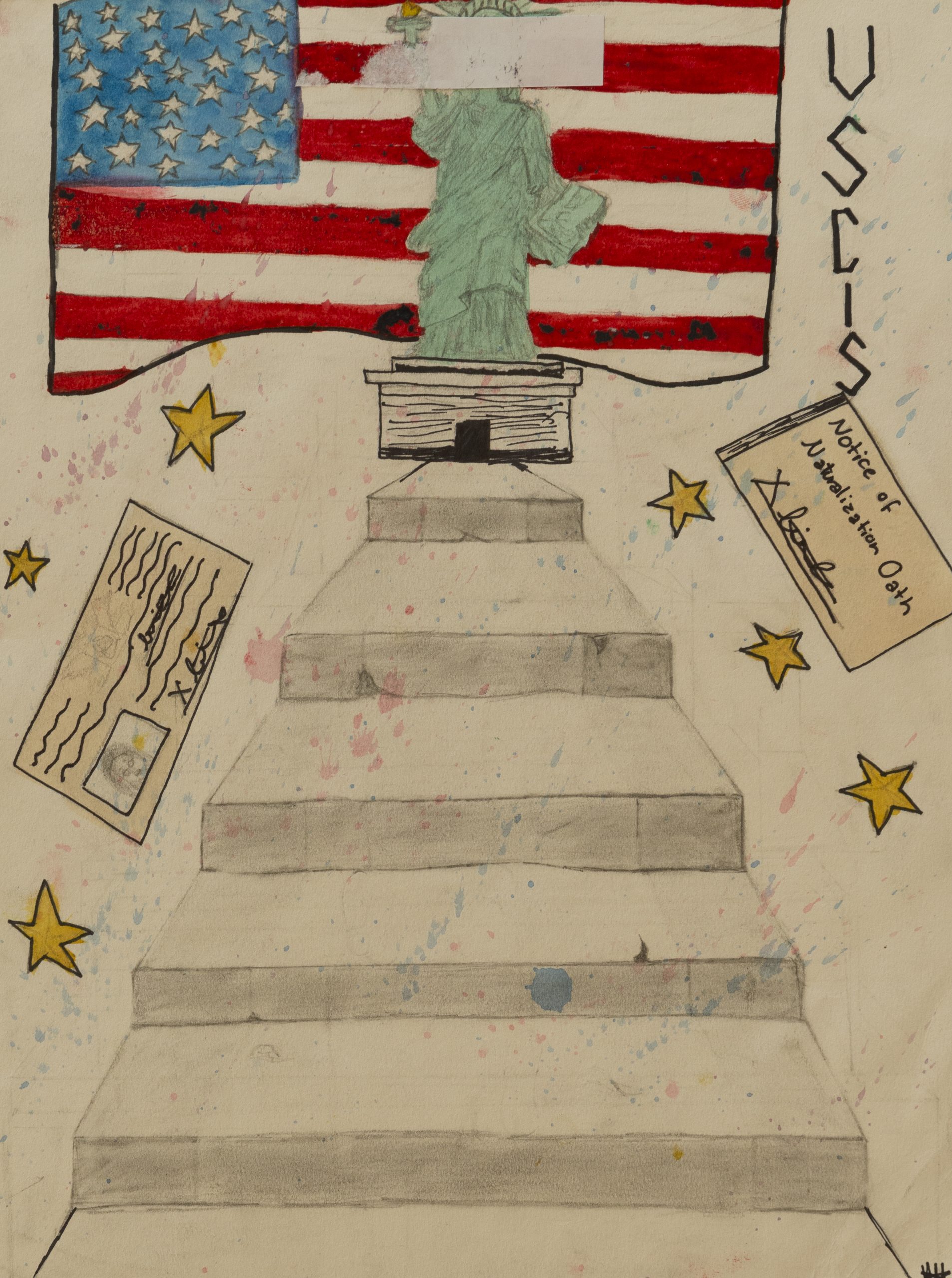
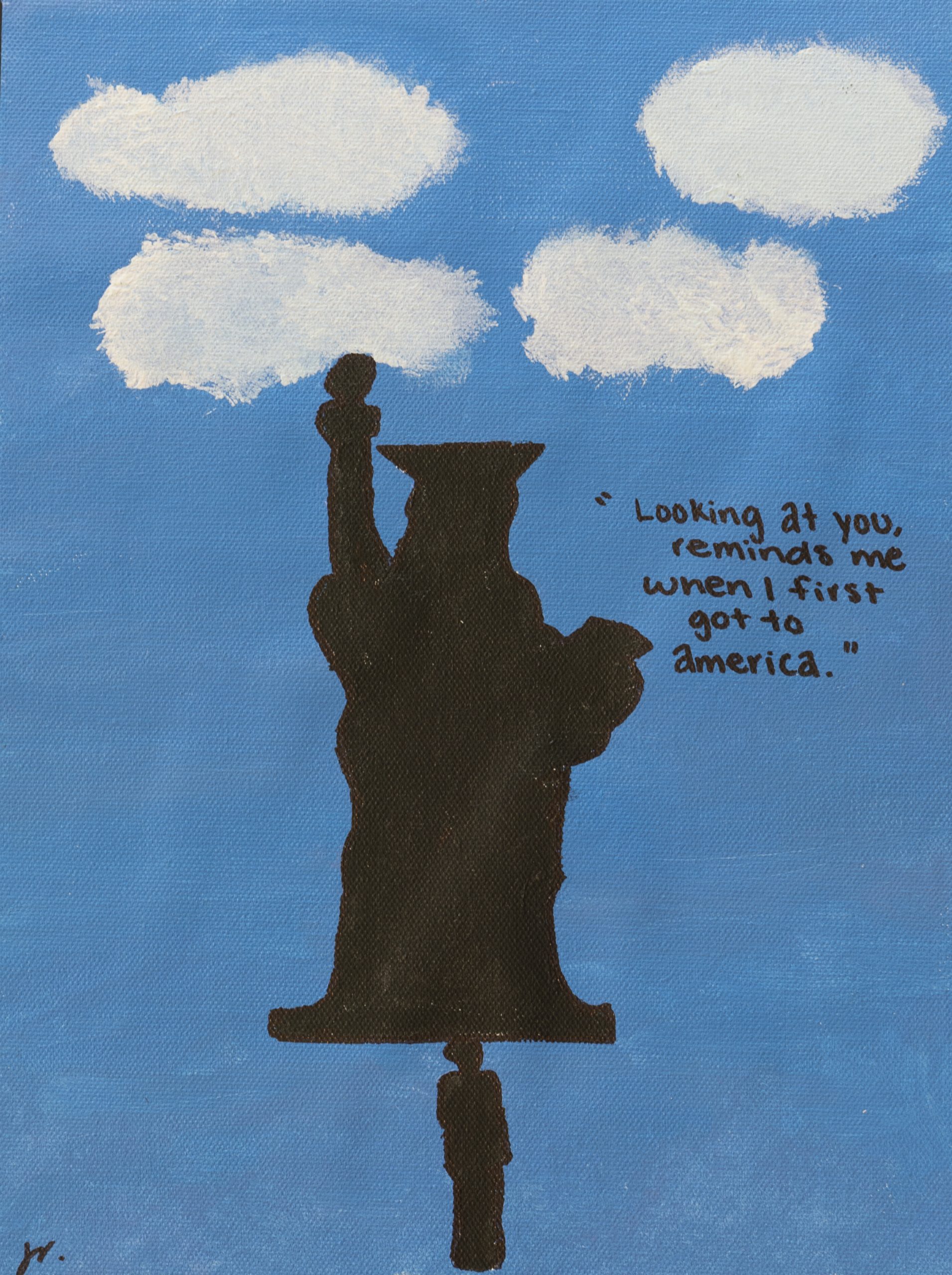
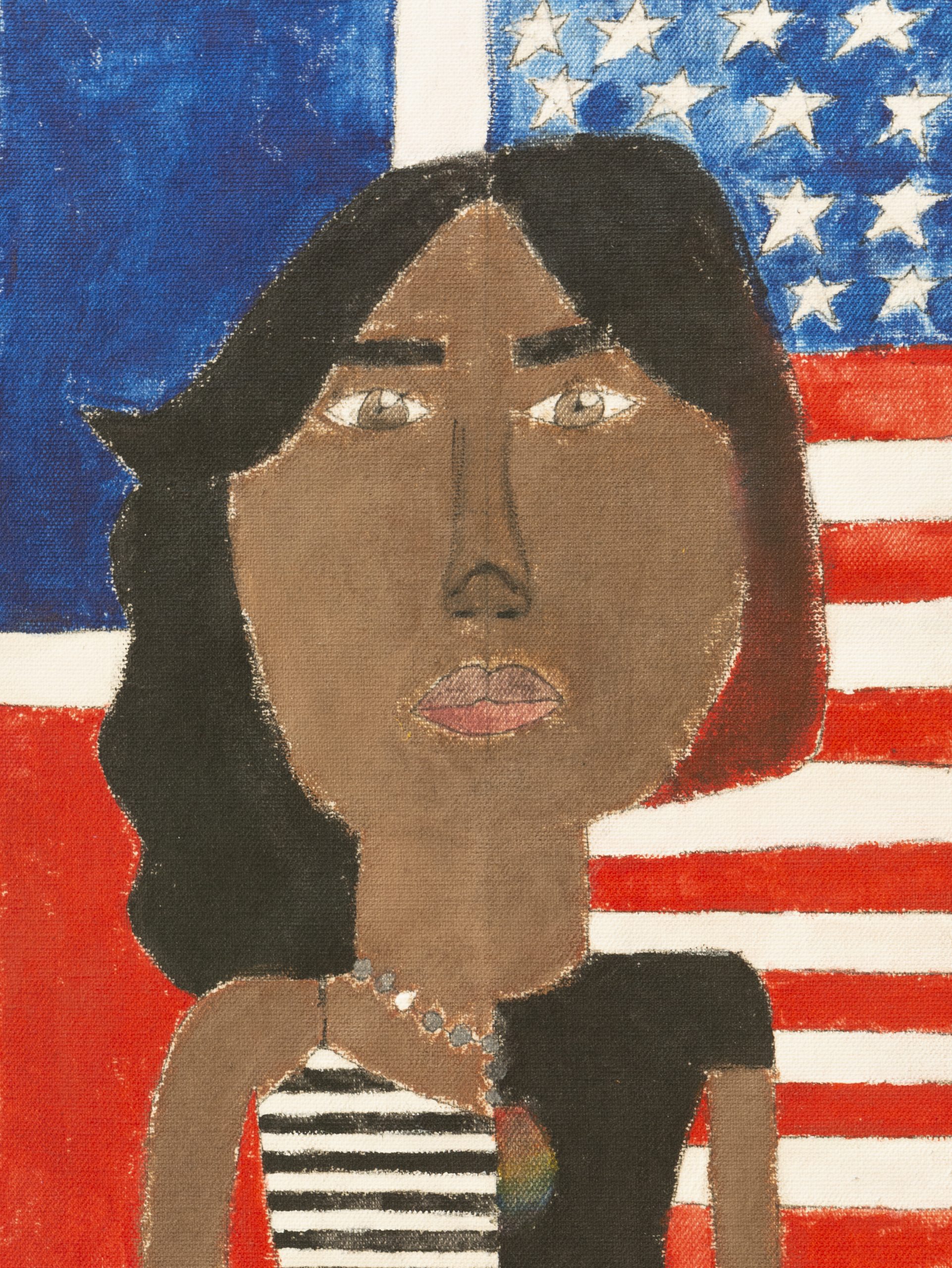
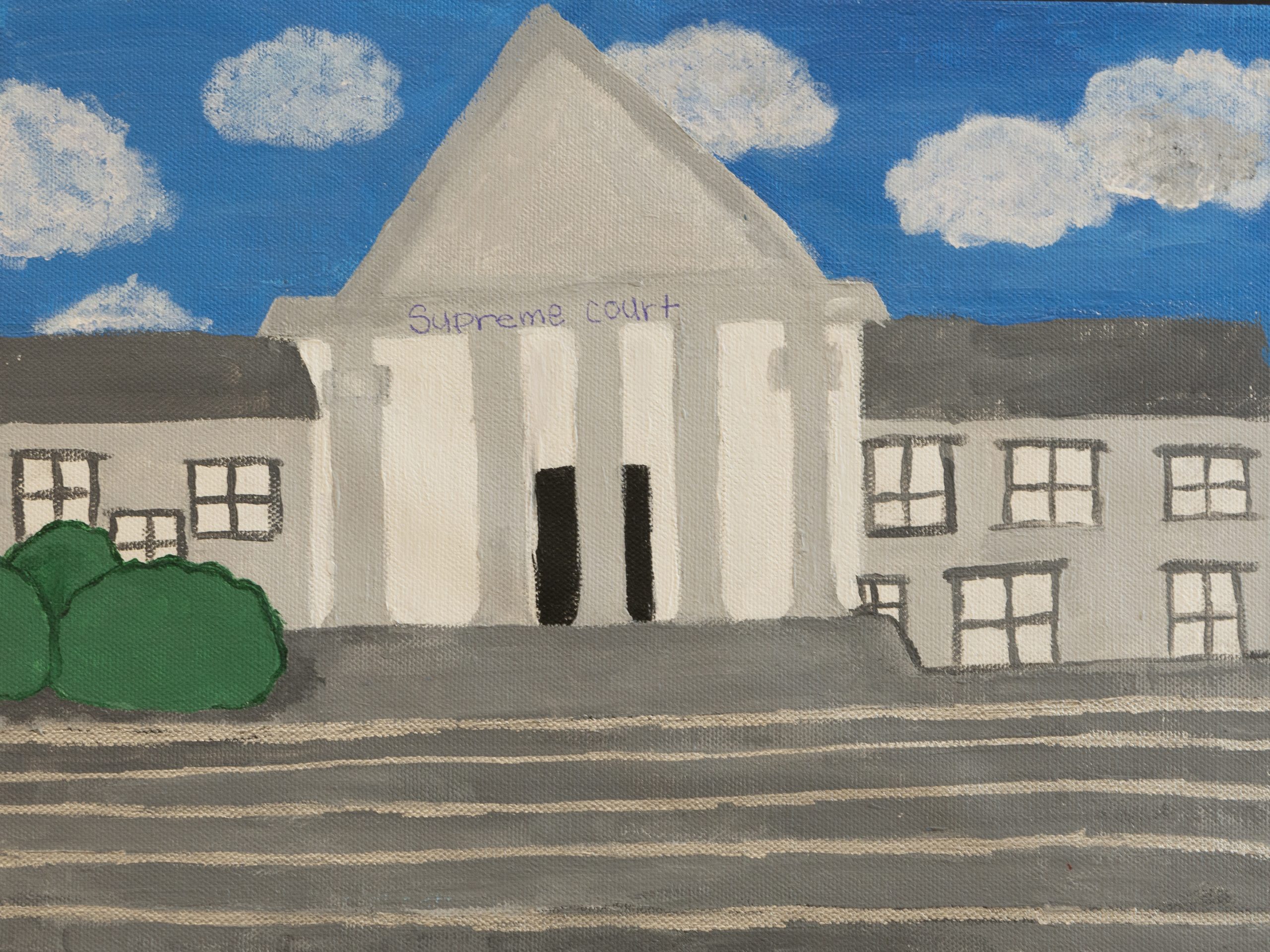
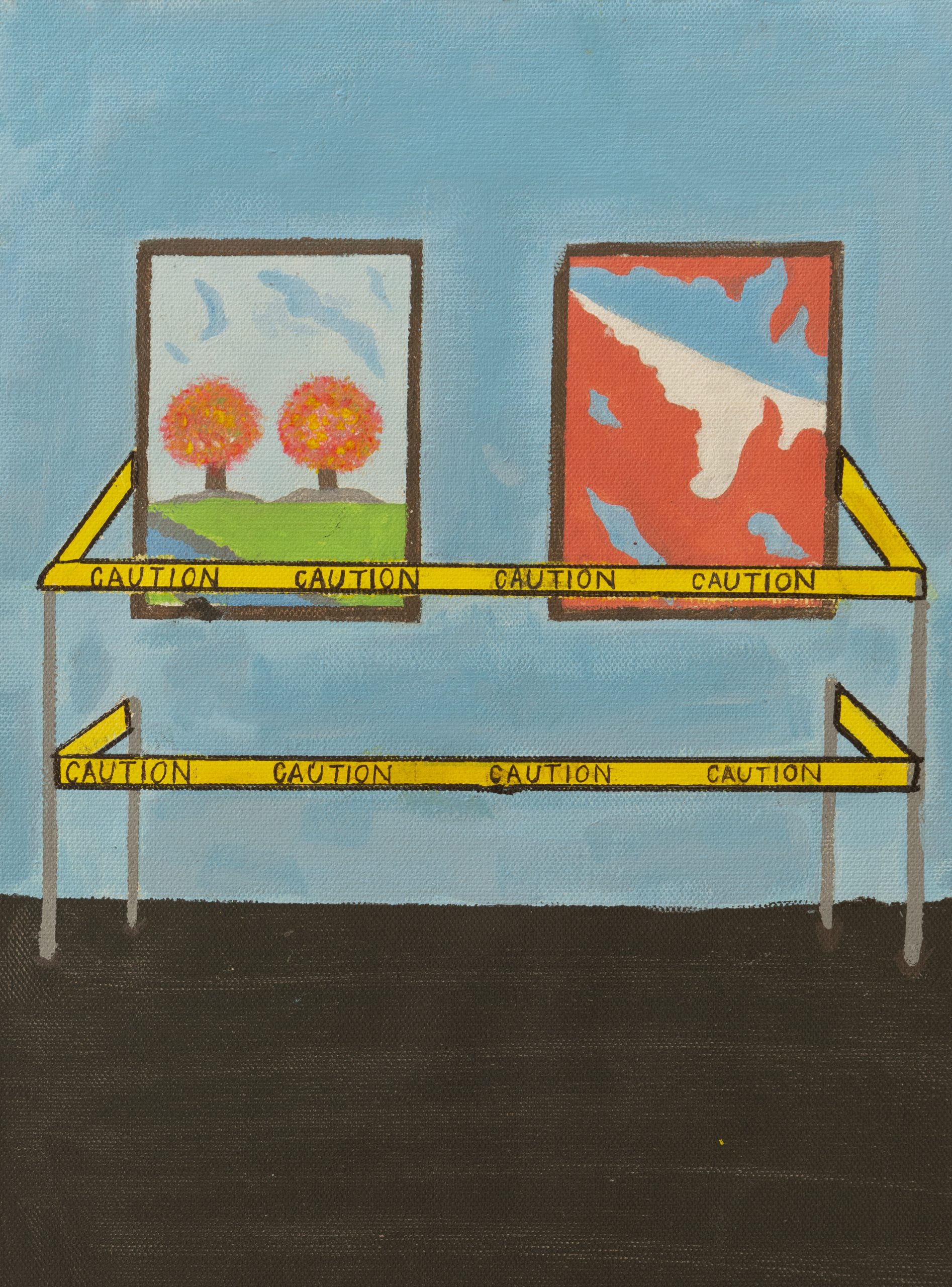
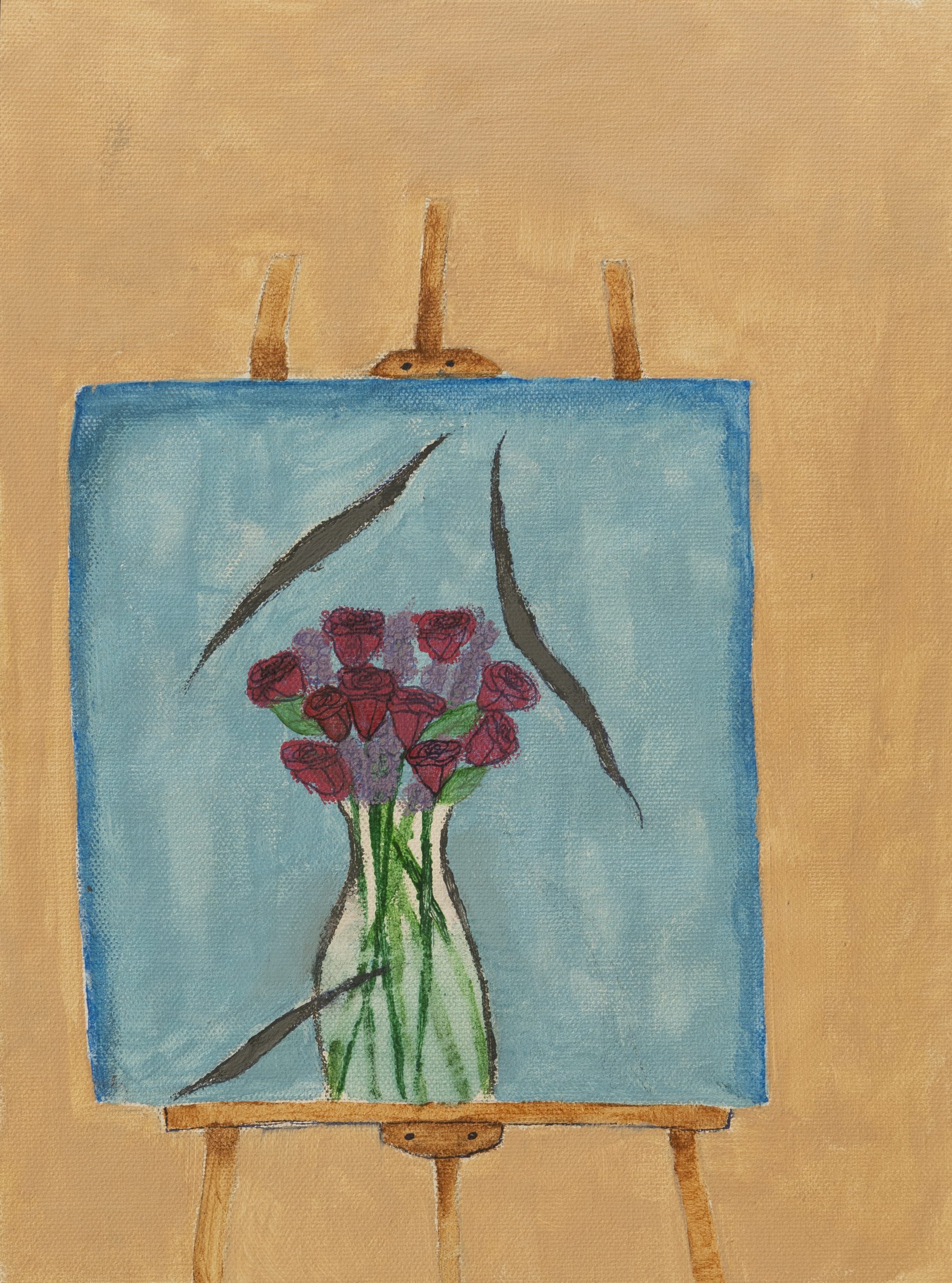
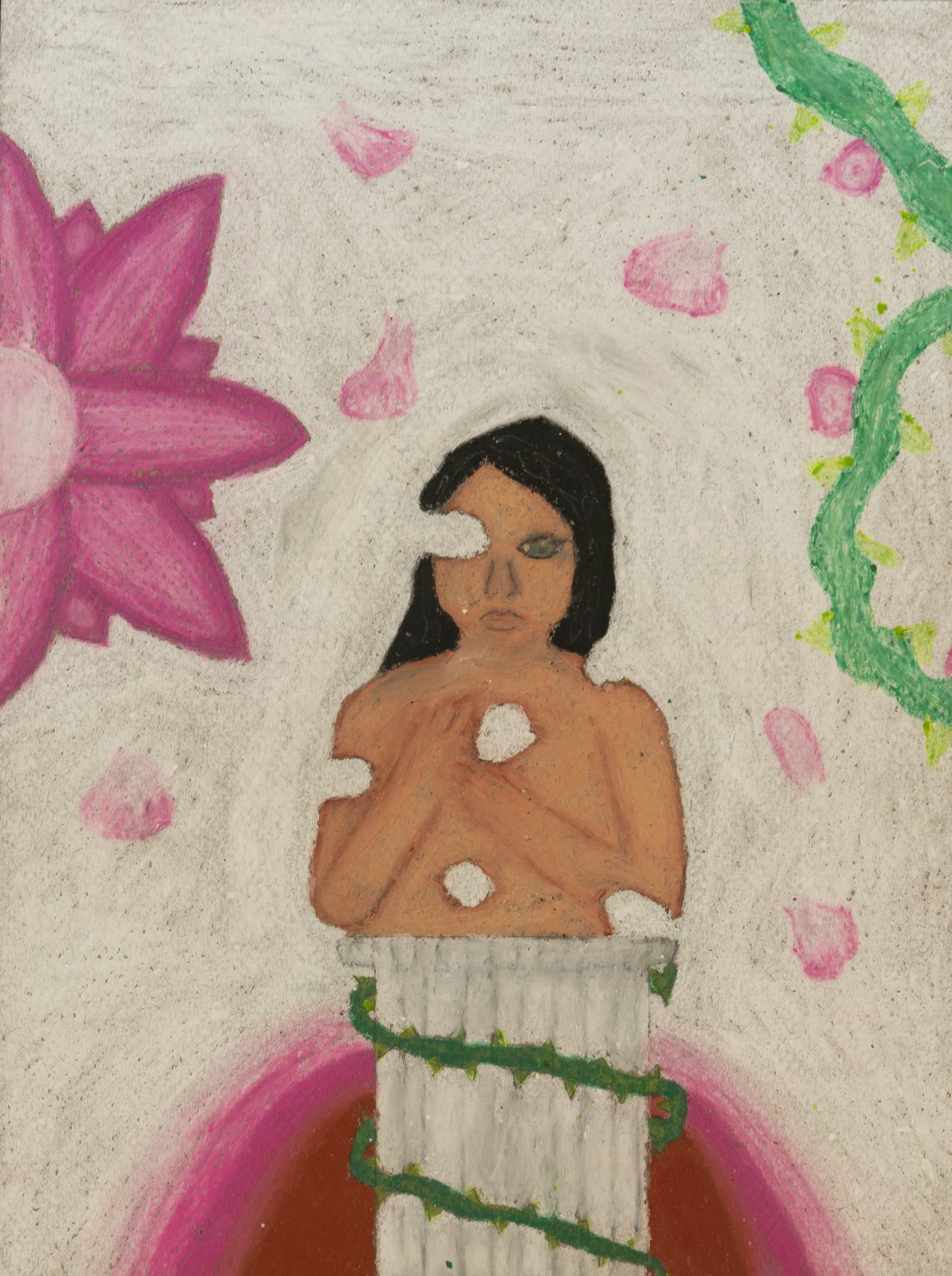
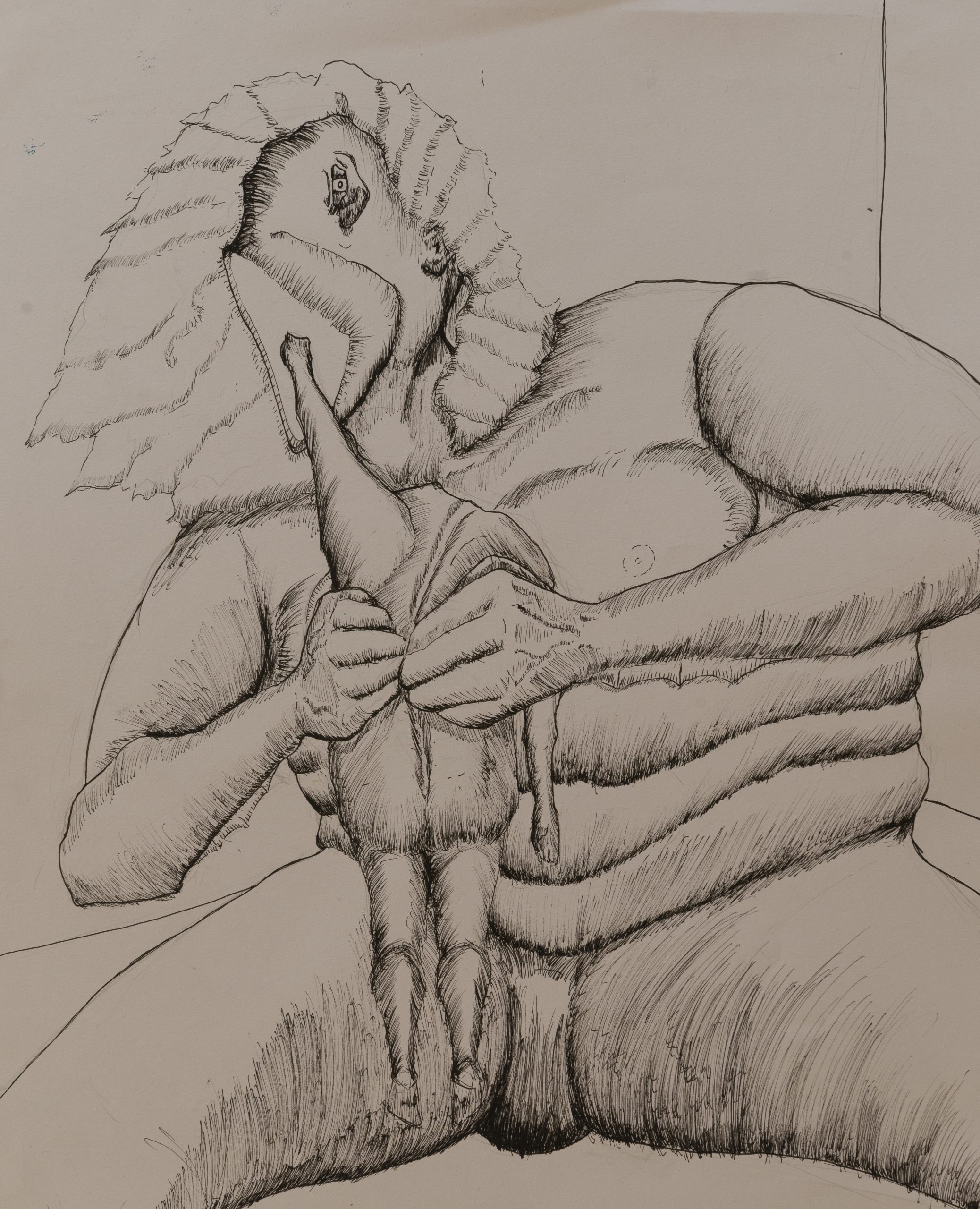
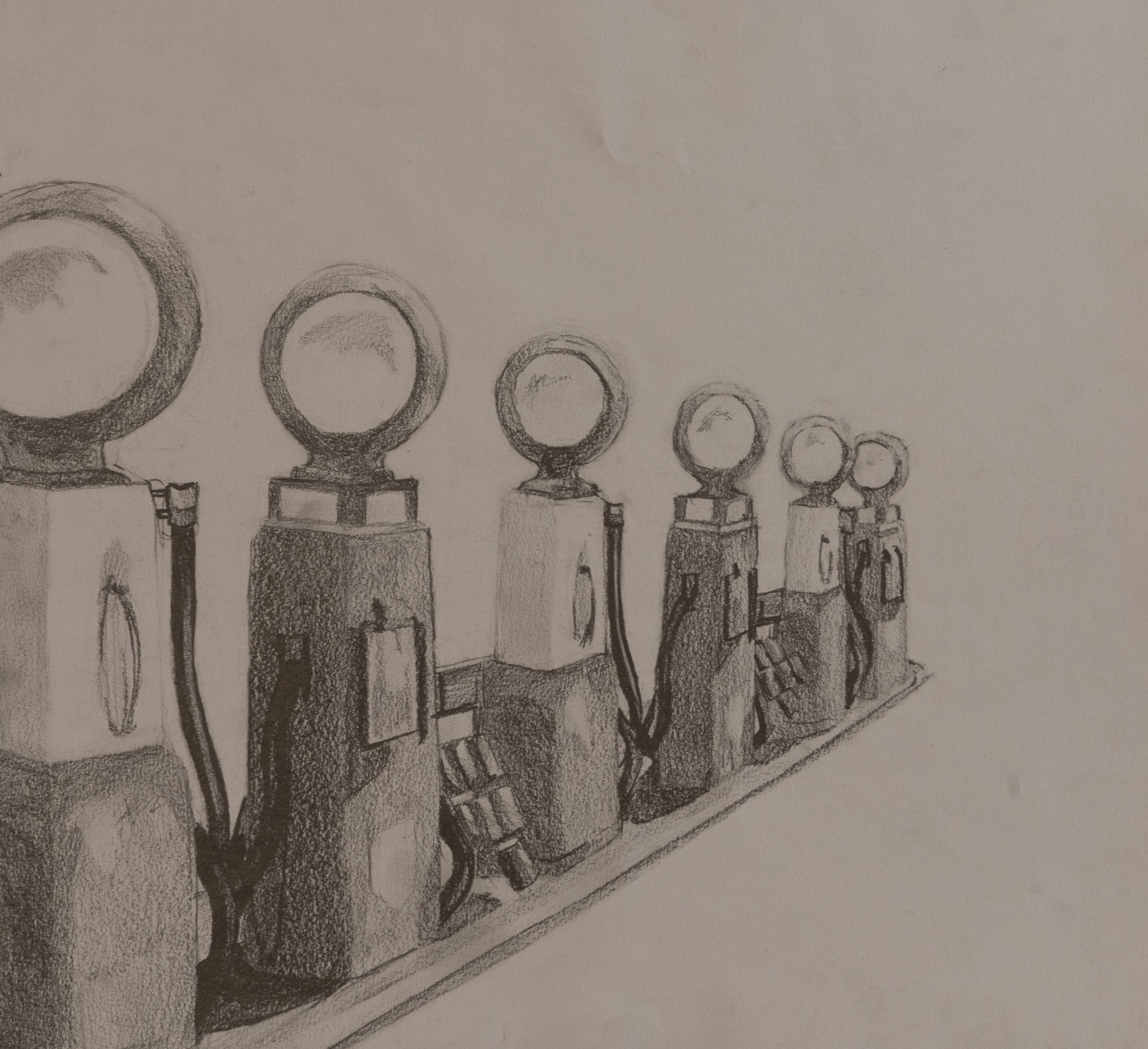
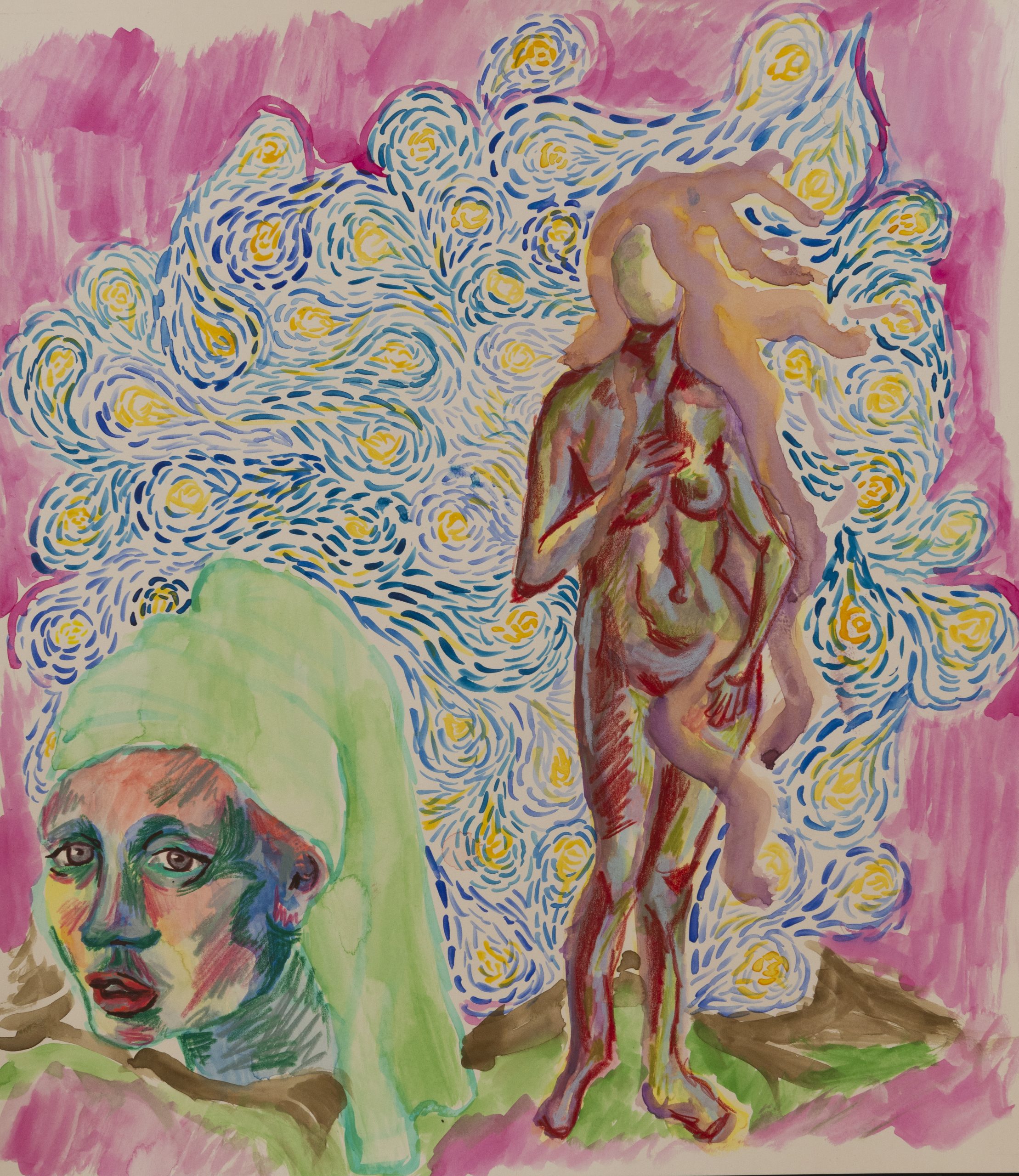
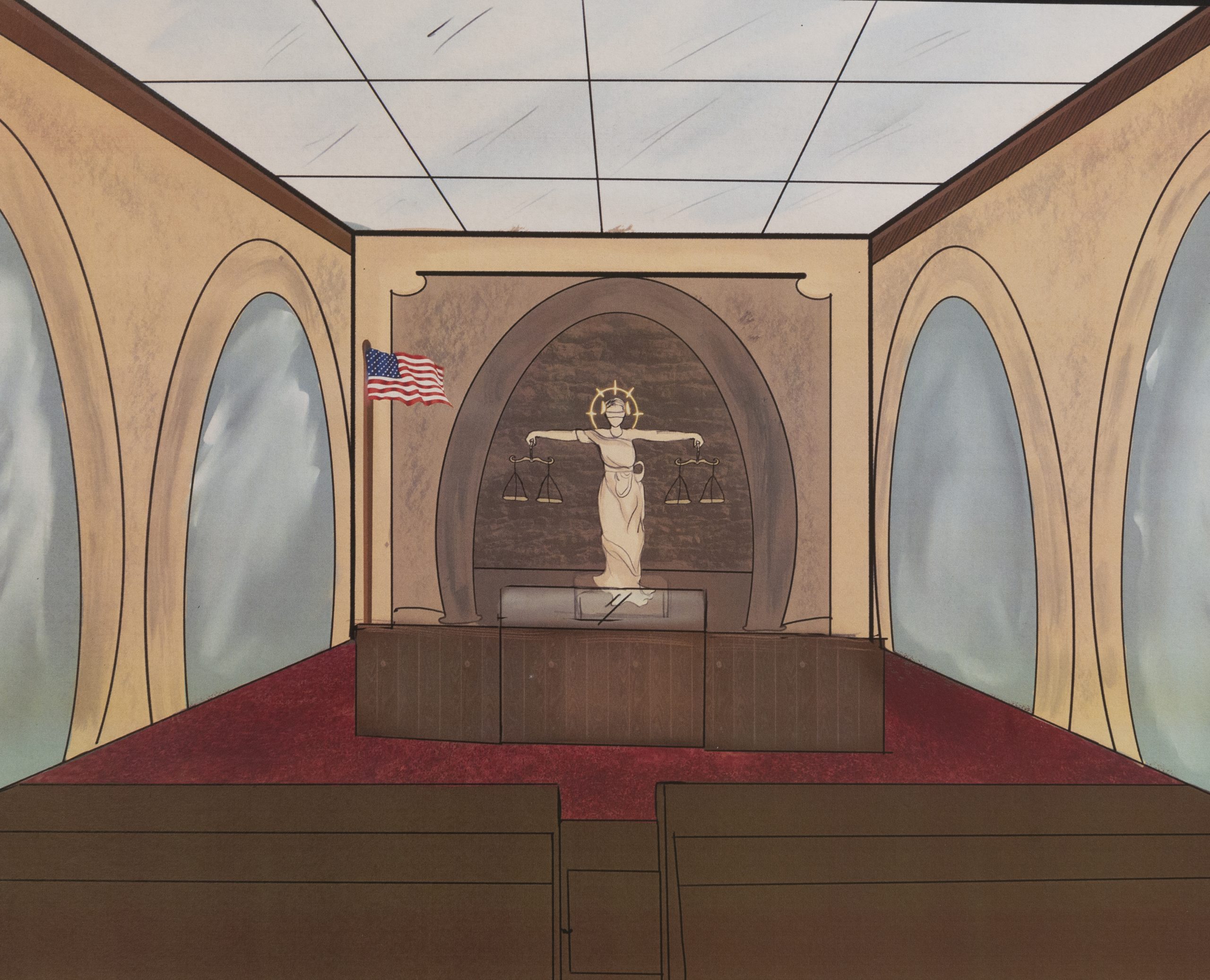
Project Title: VARA & NATURALIZATION
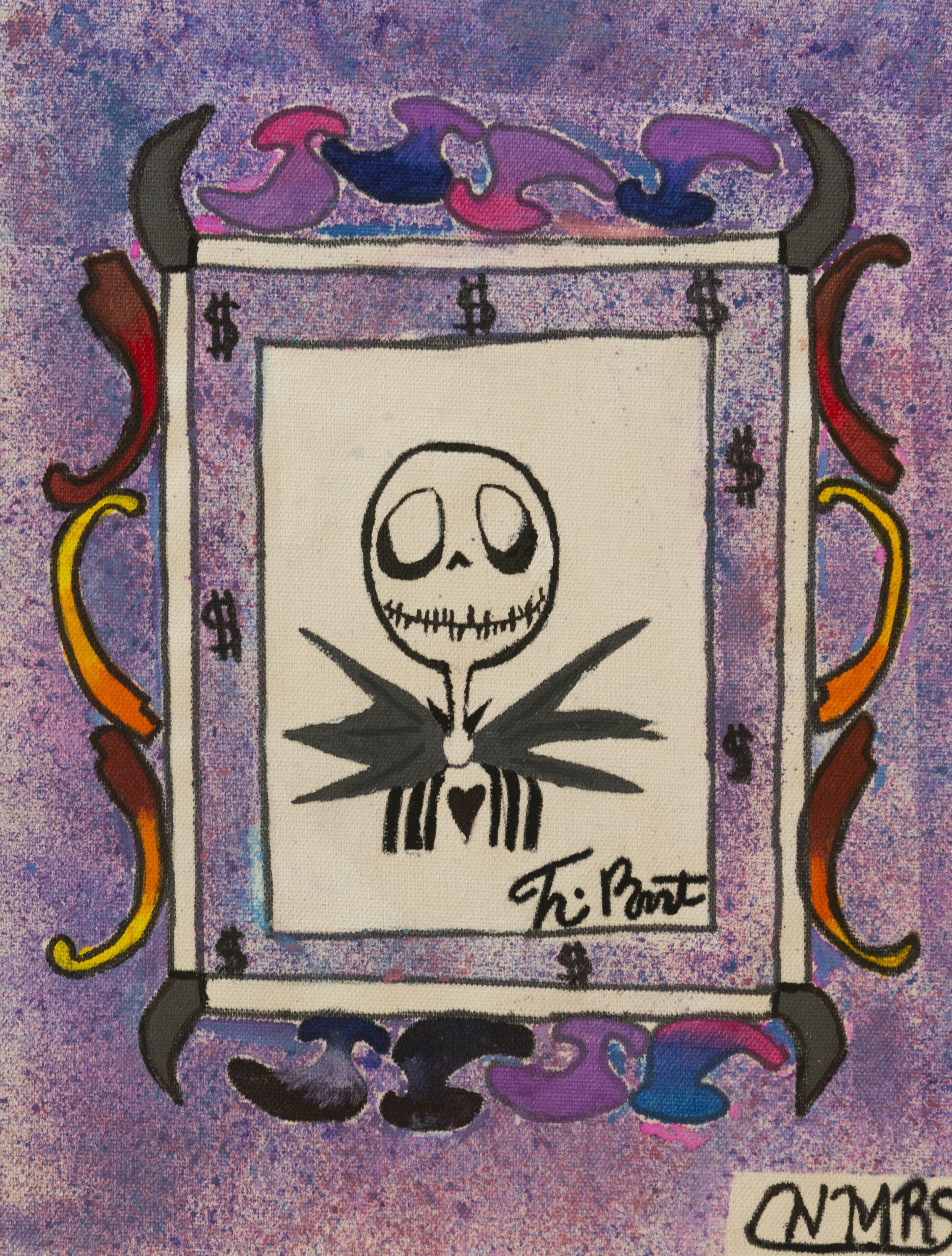
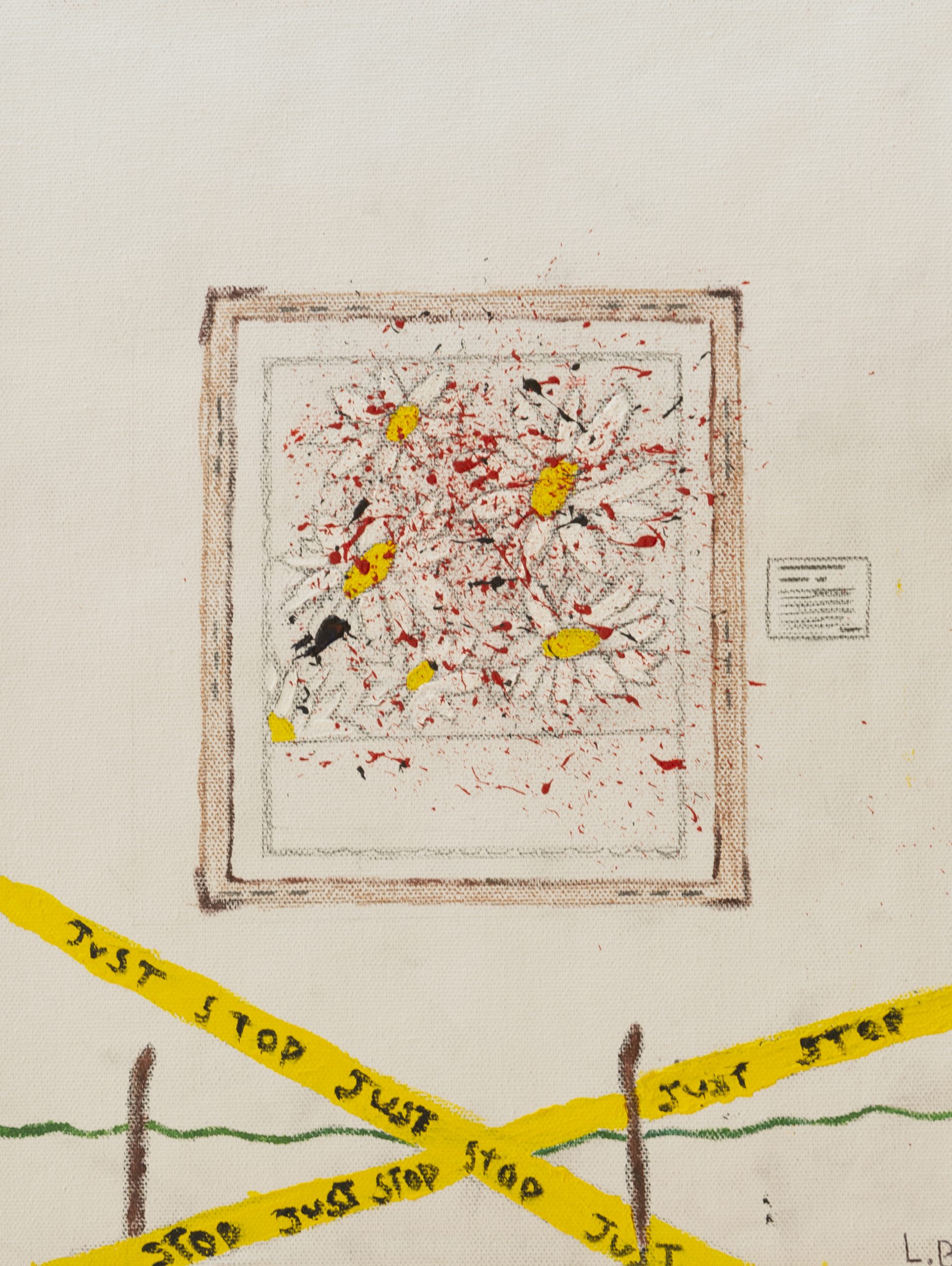
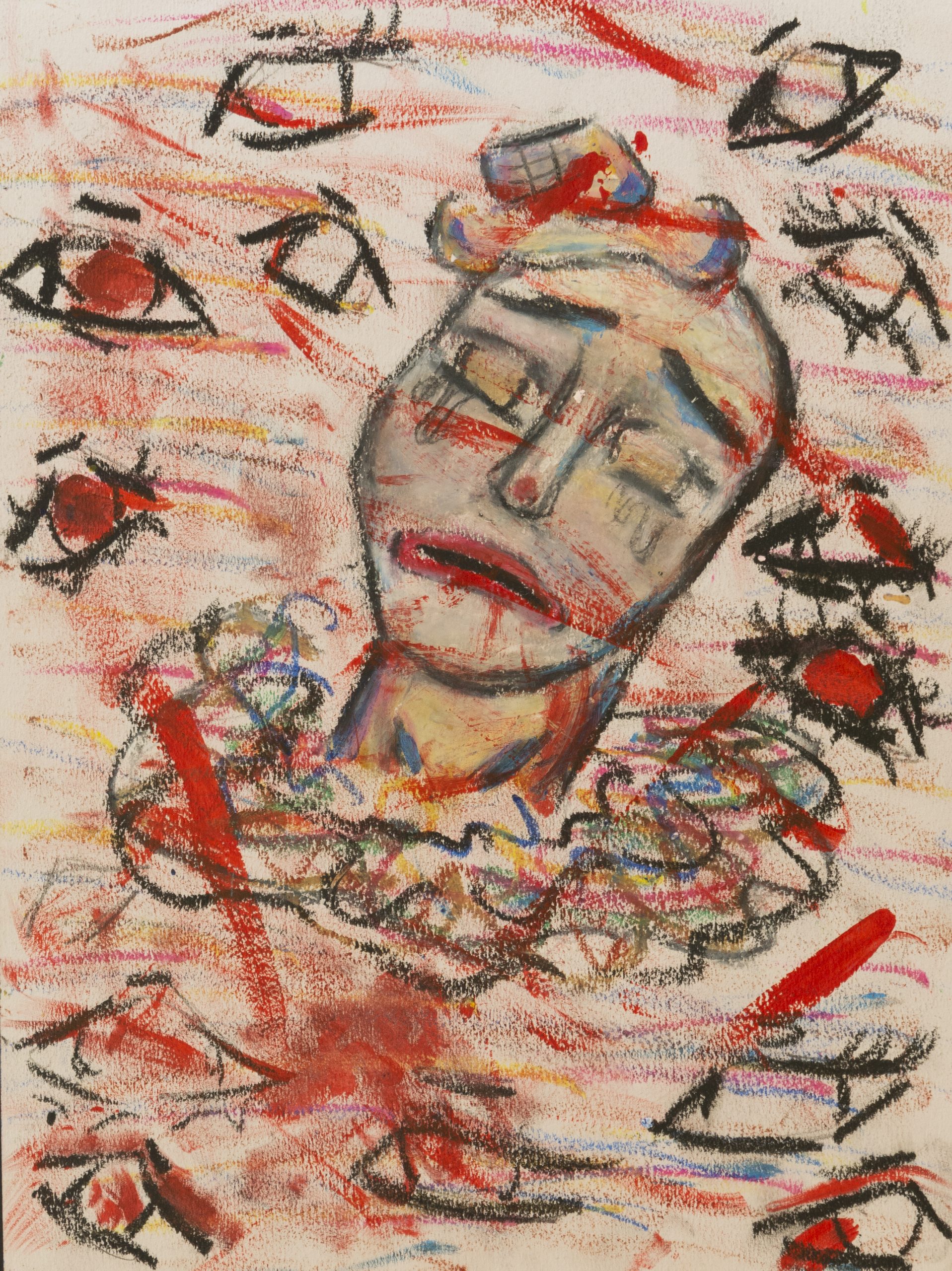
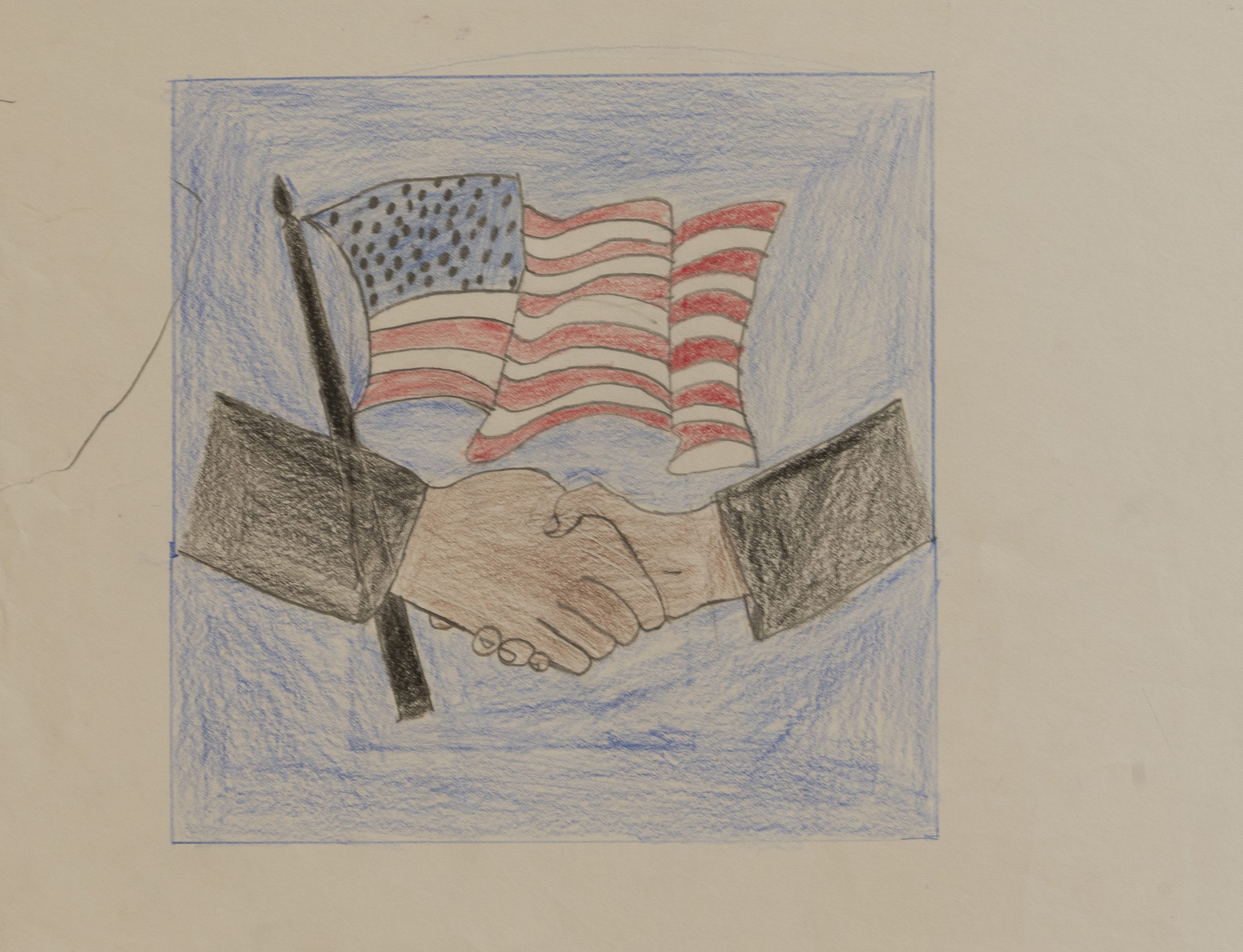
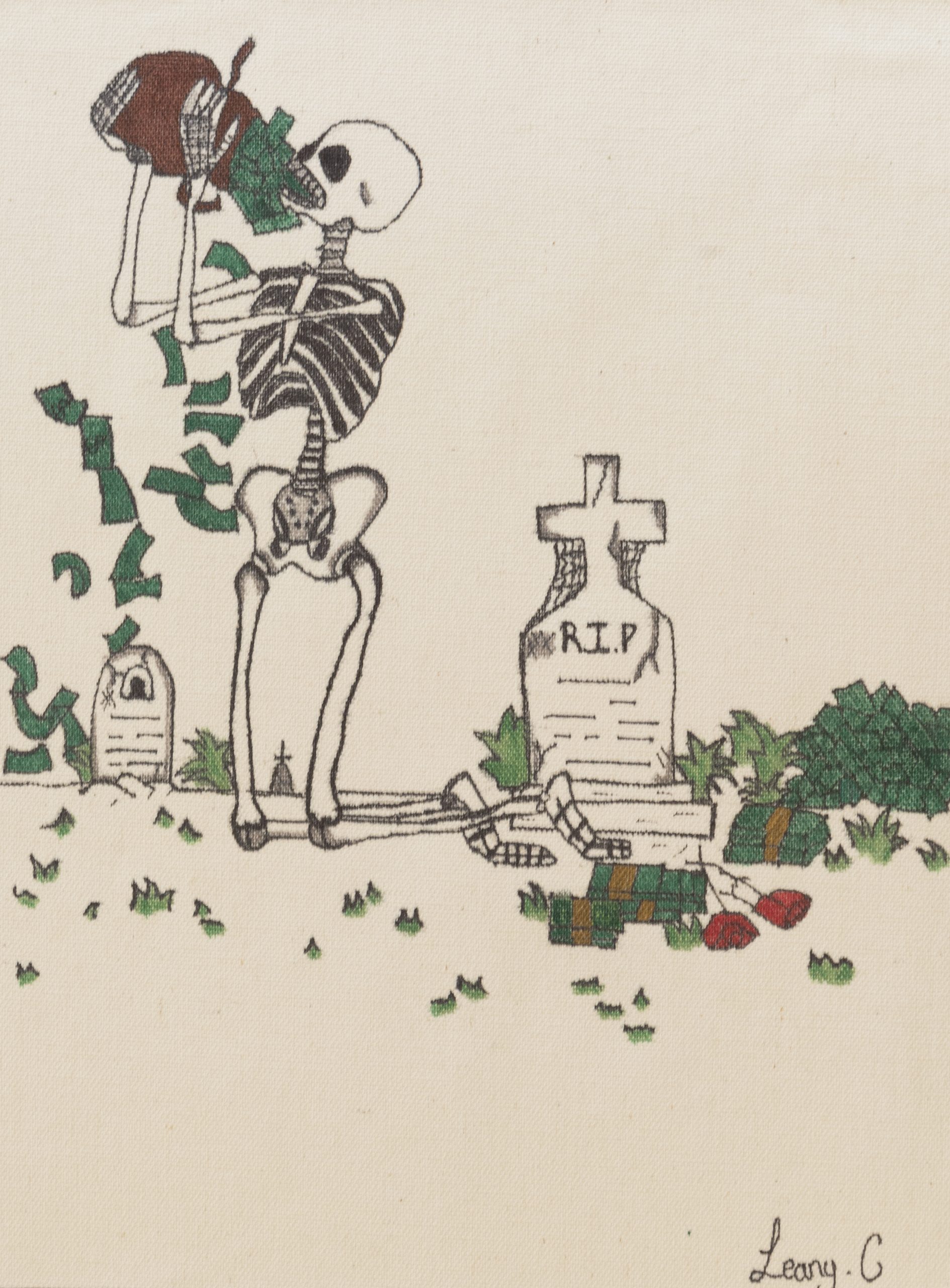
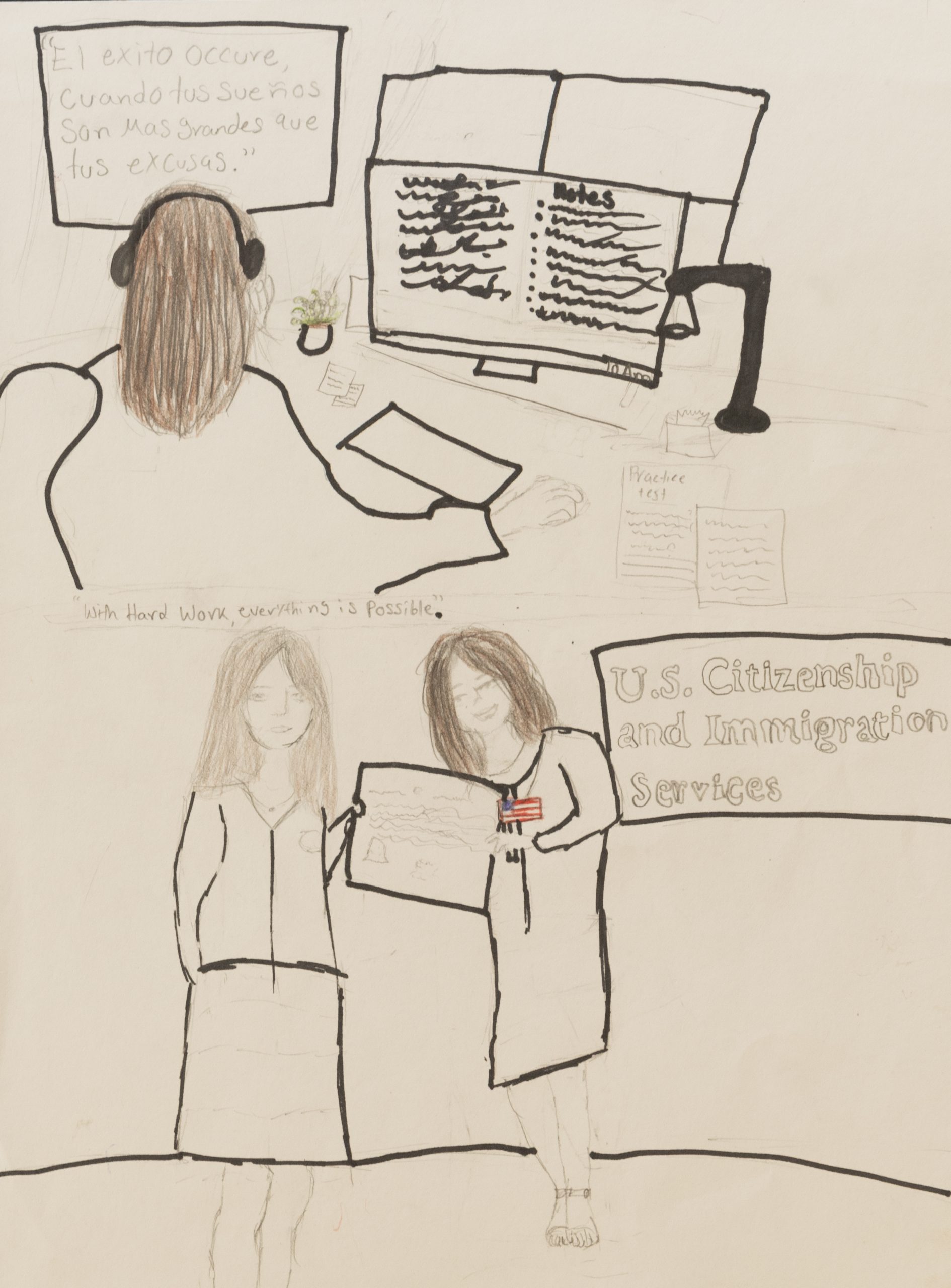
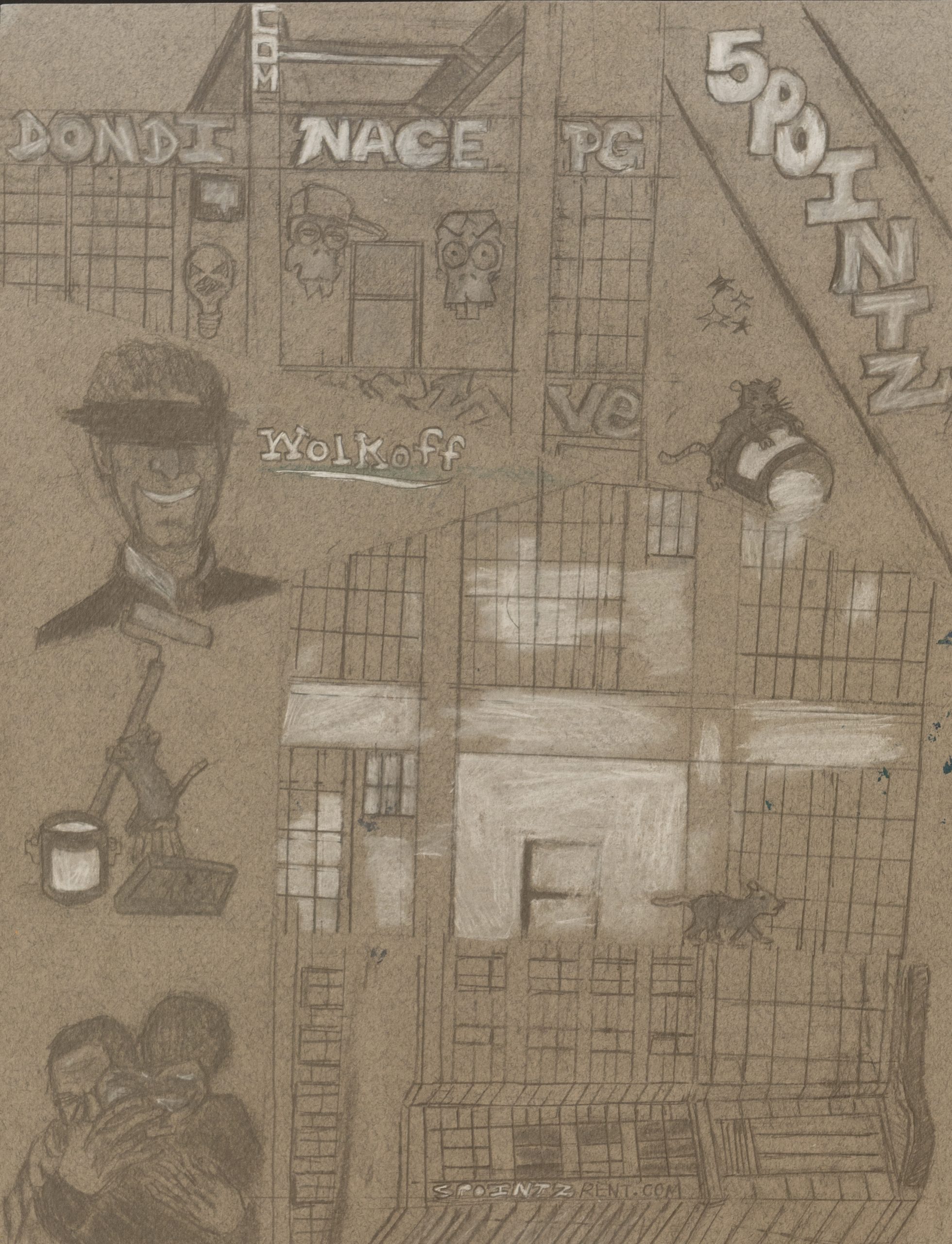
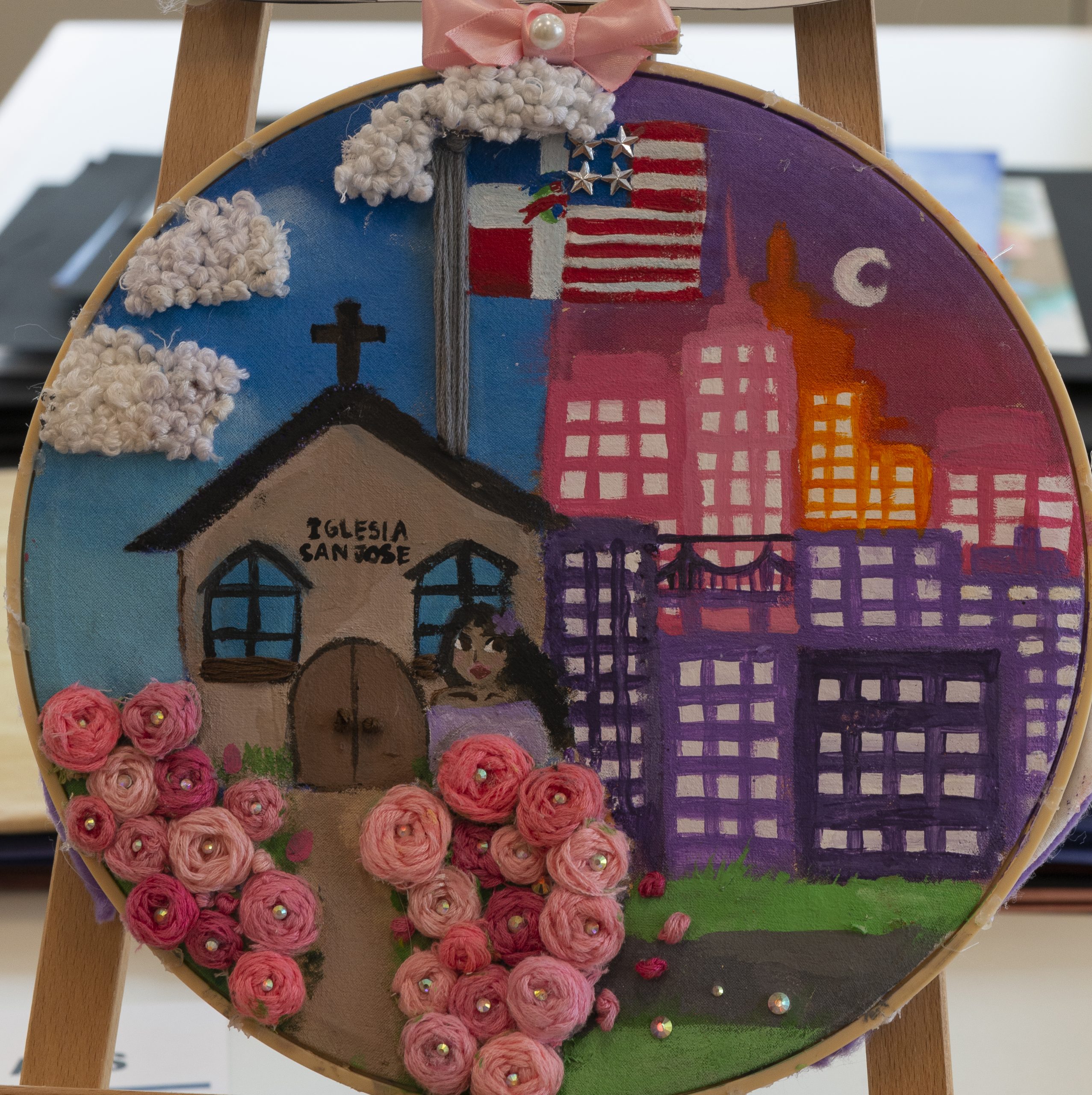
Teacher: Laura Blau
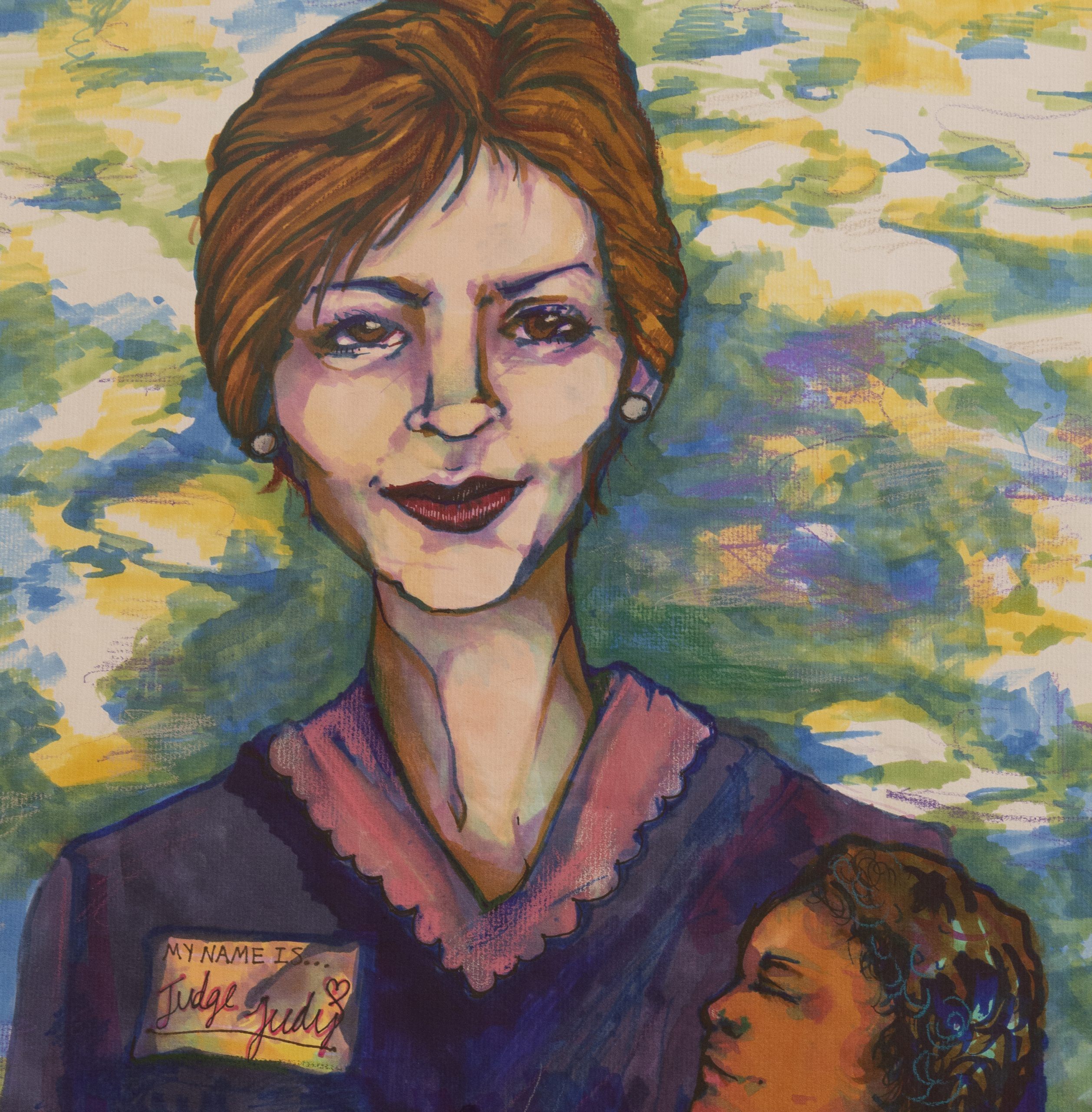
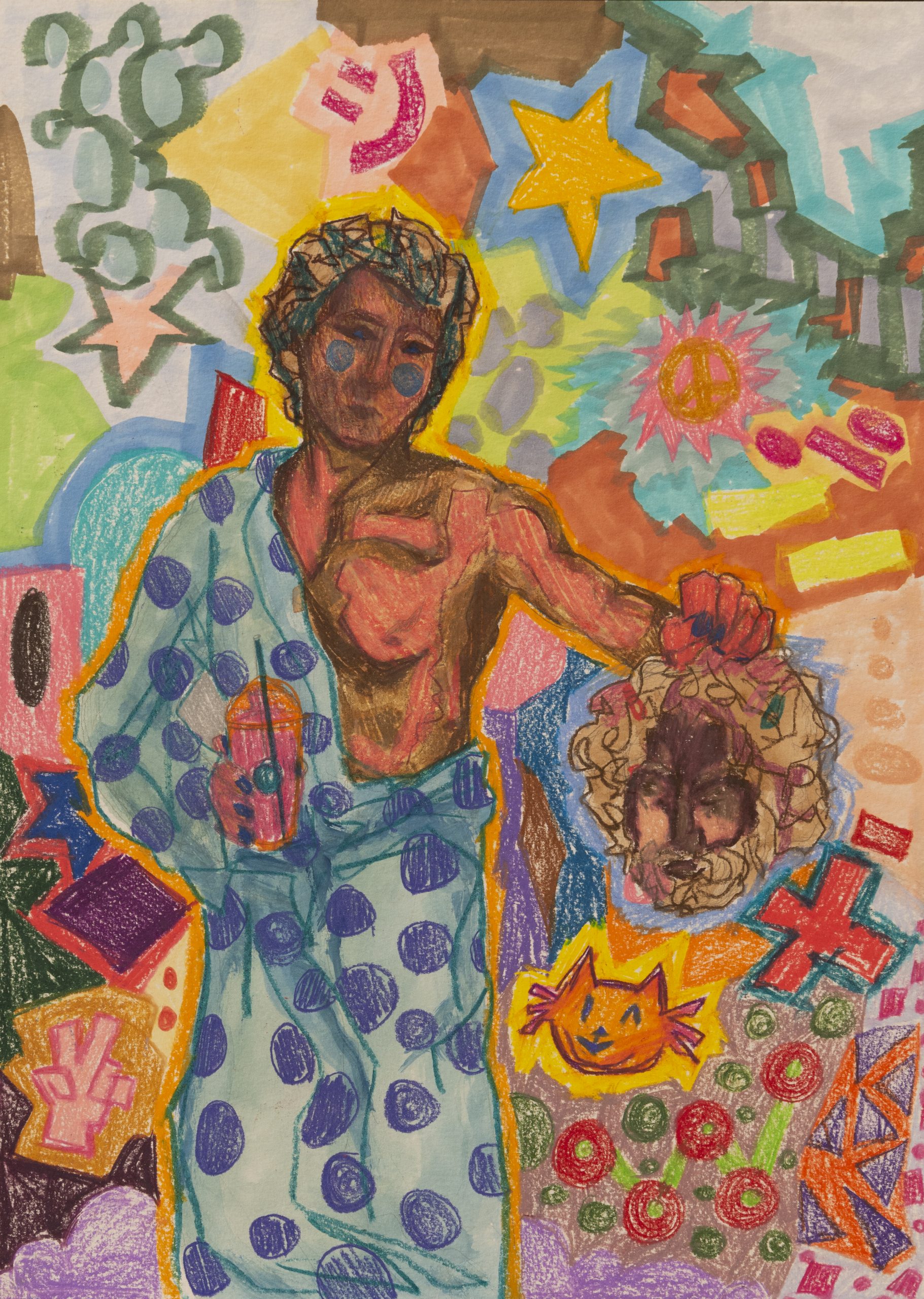
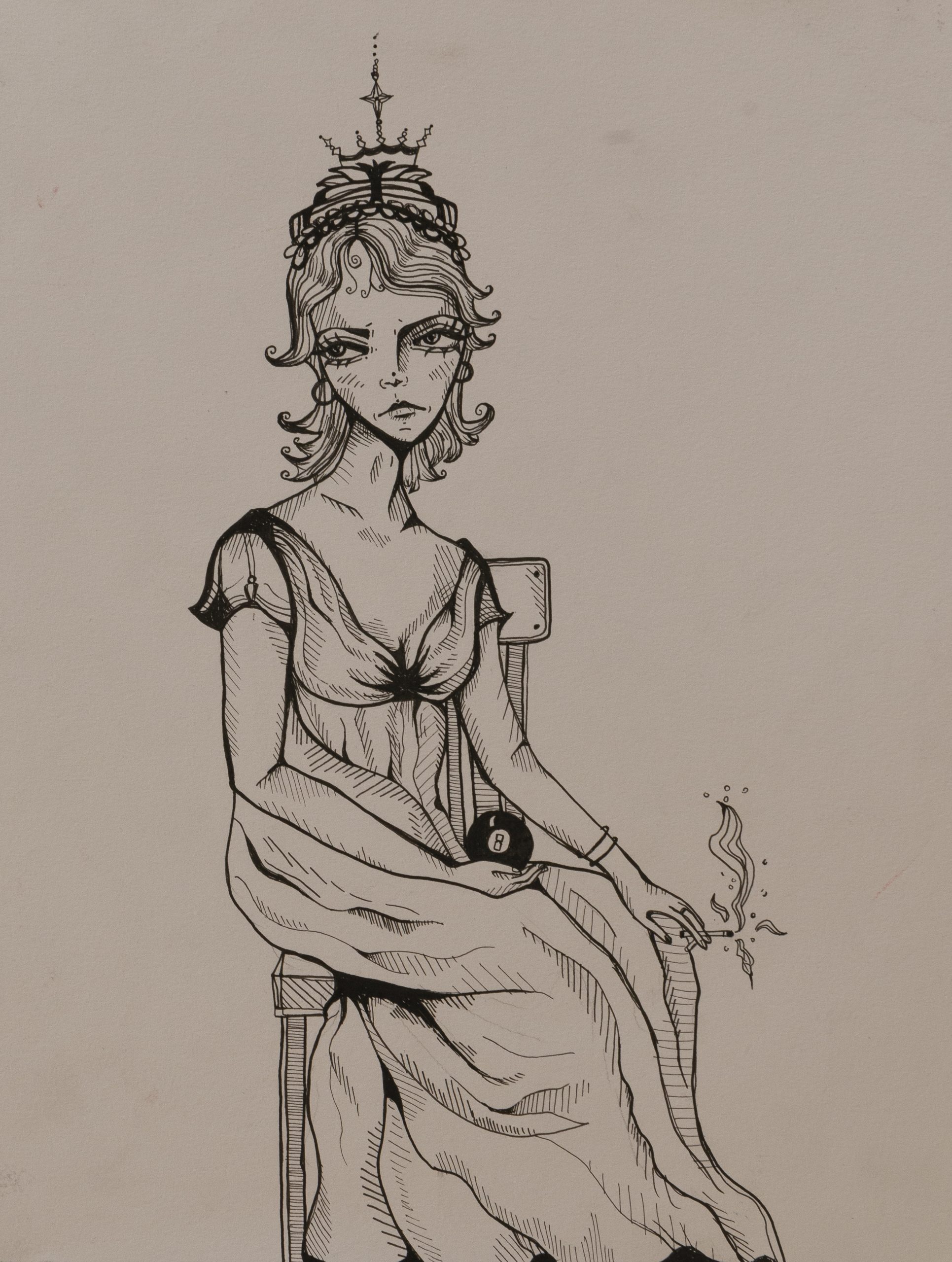
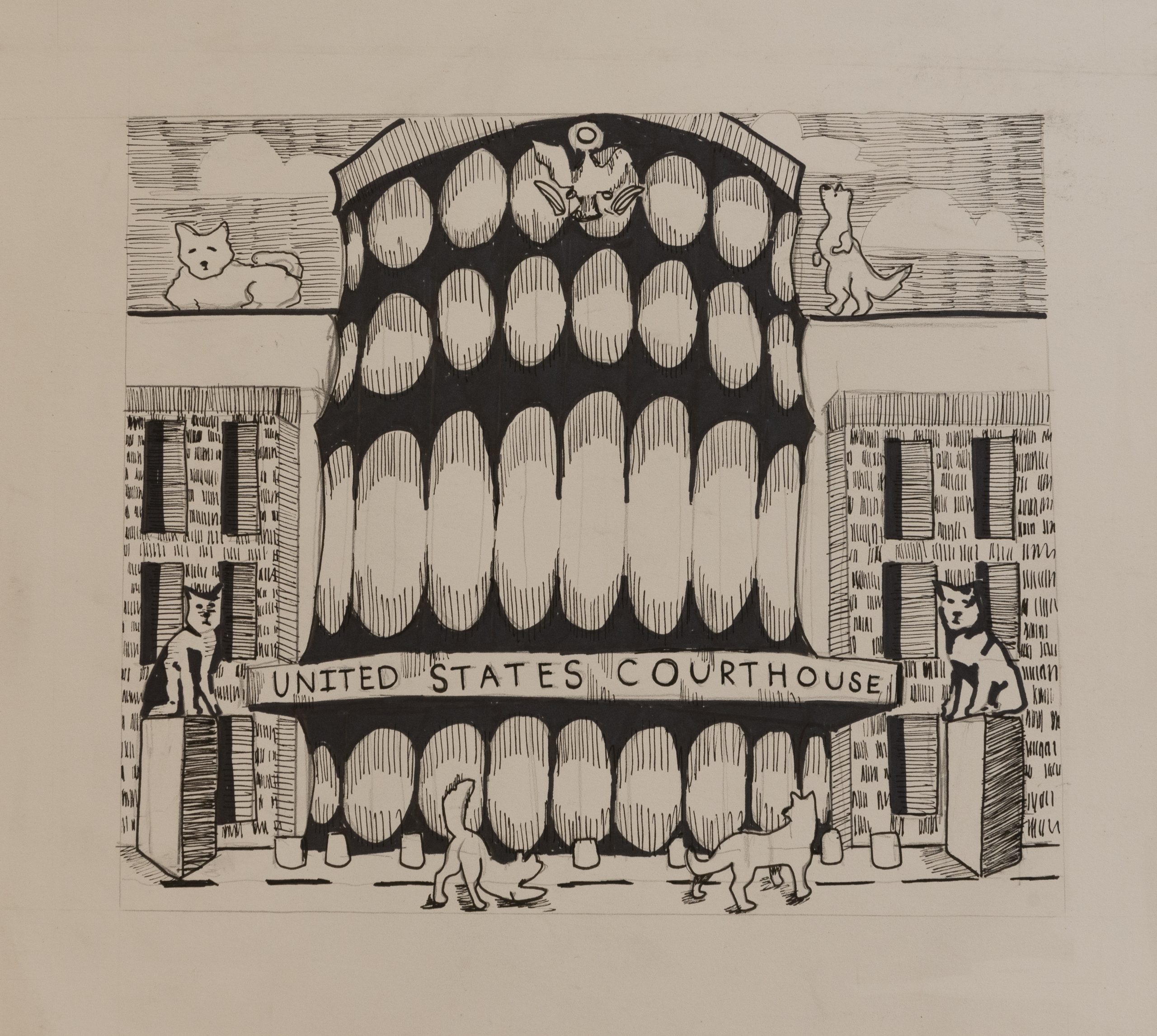
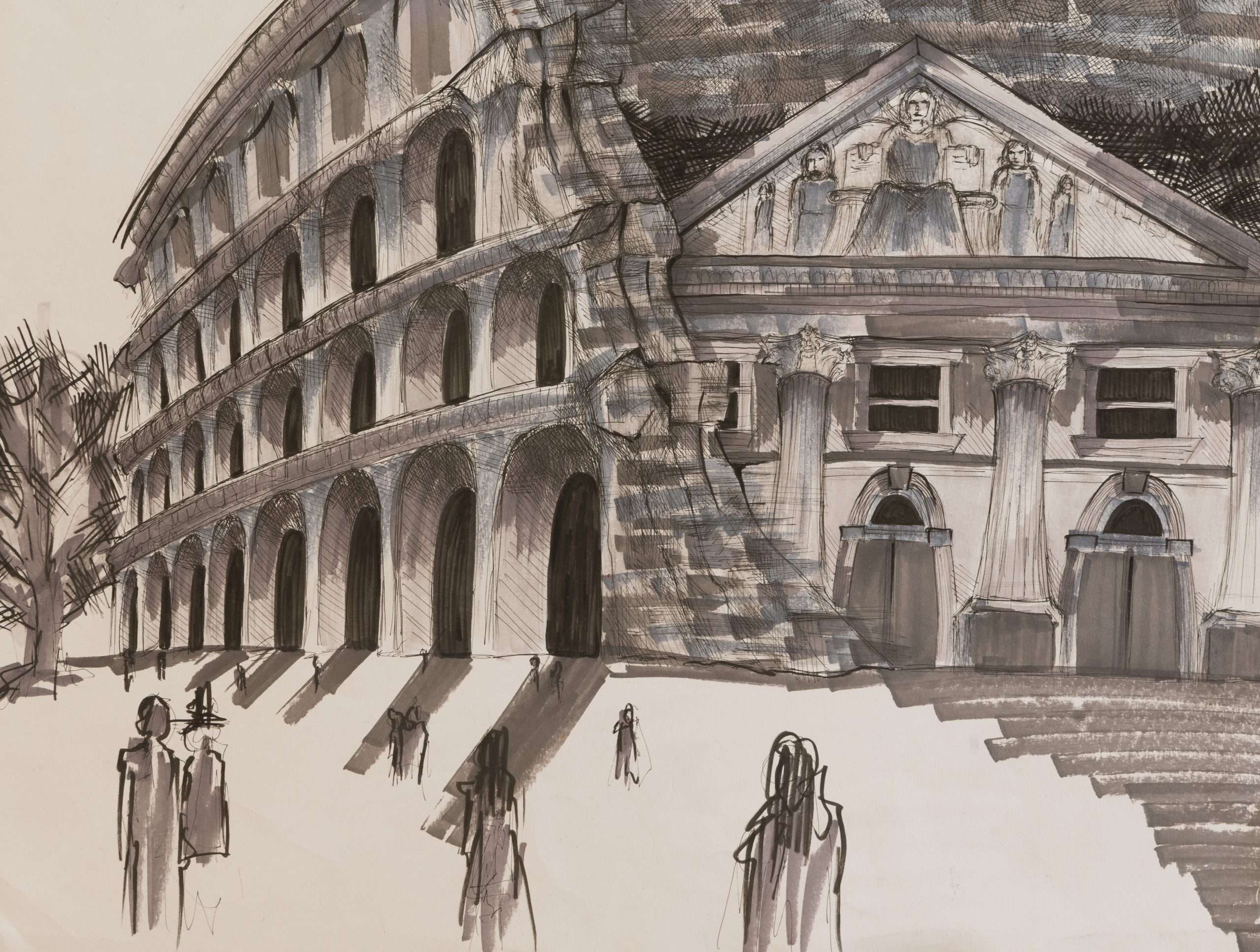
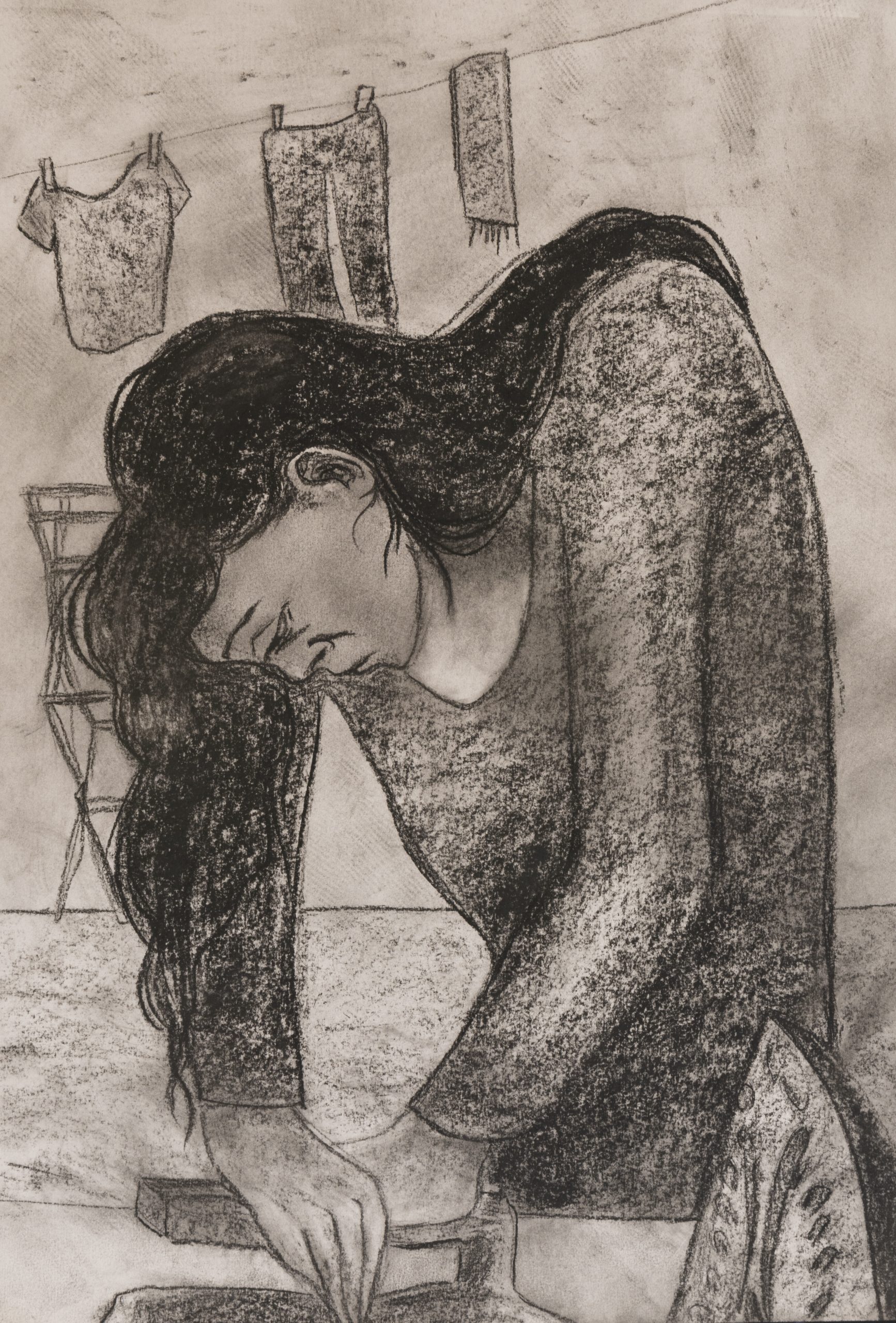
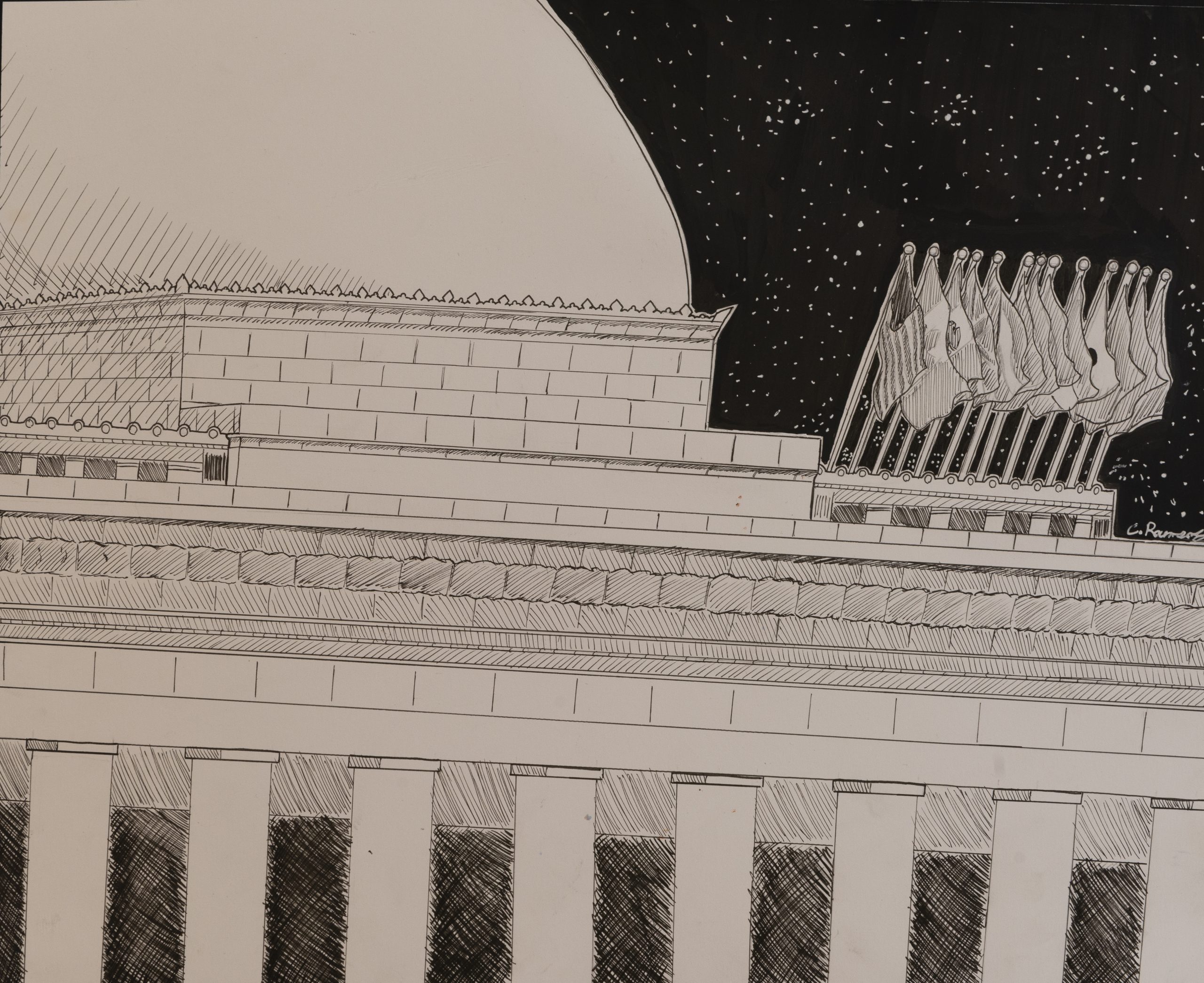
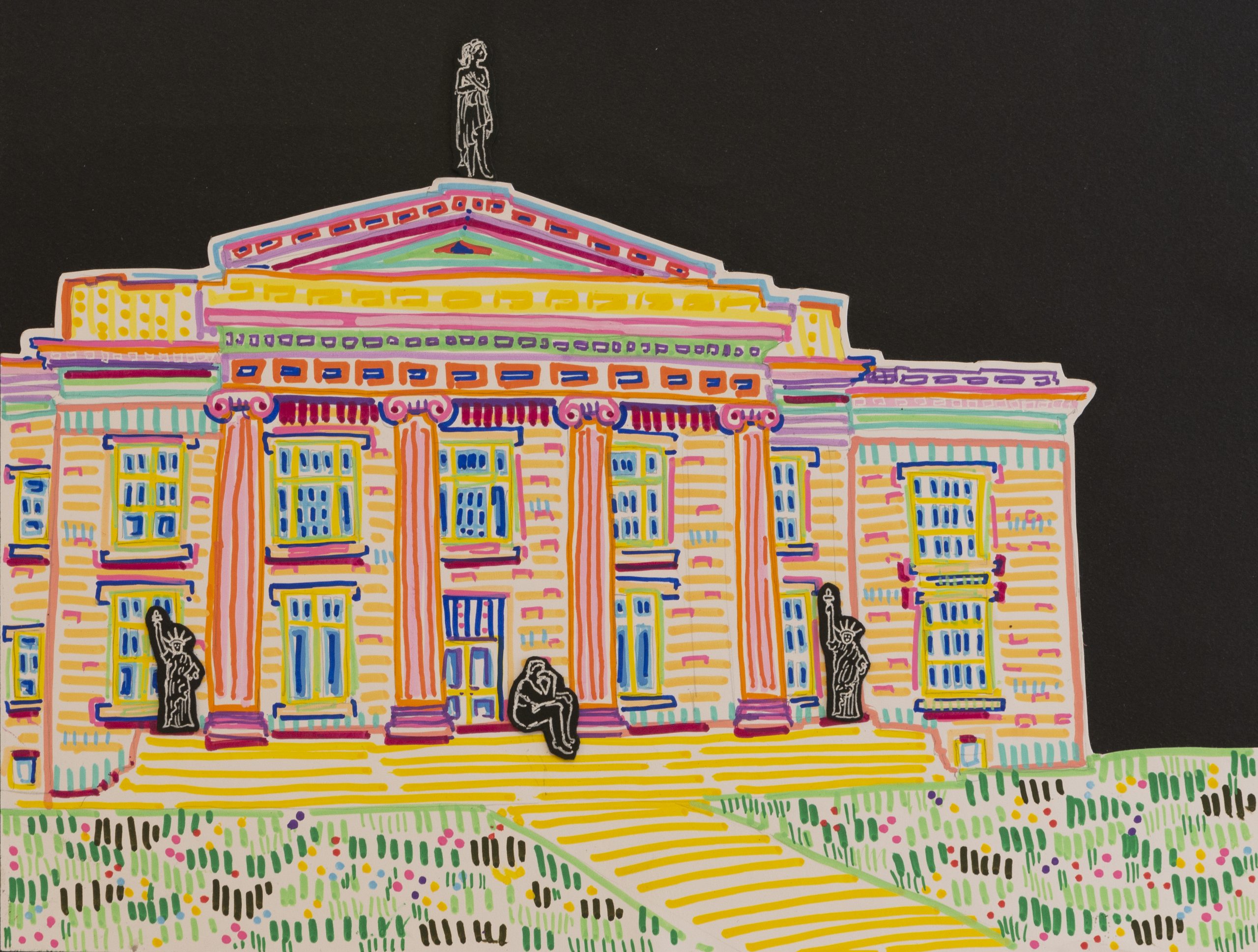
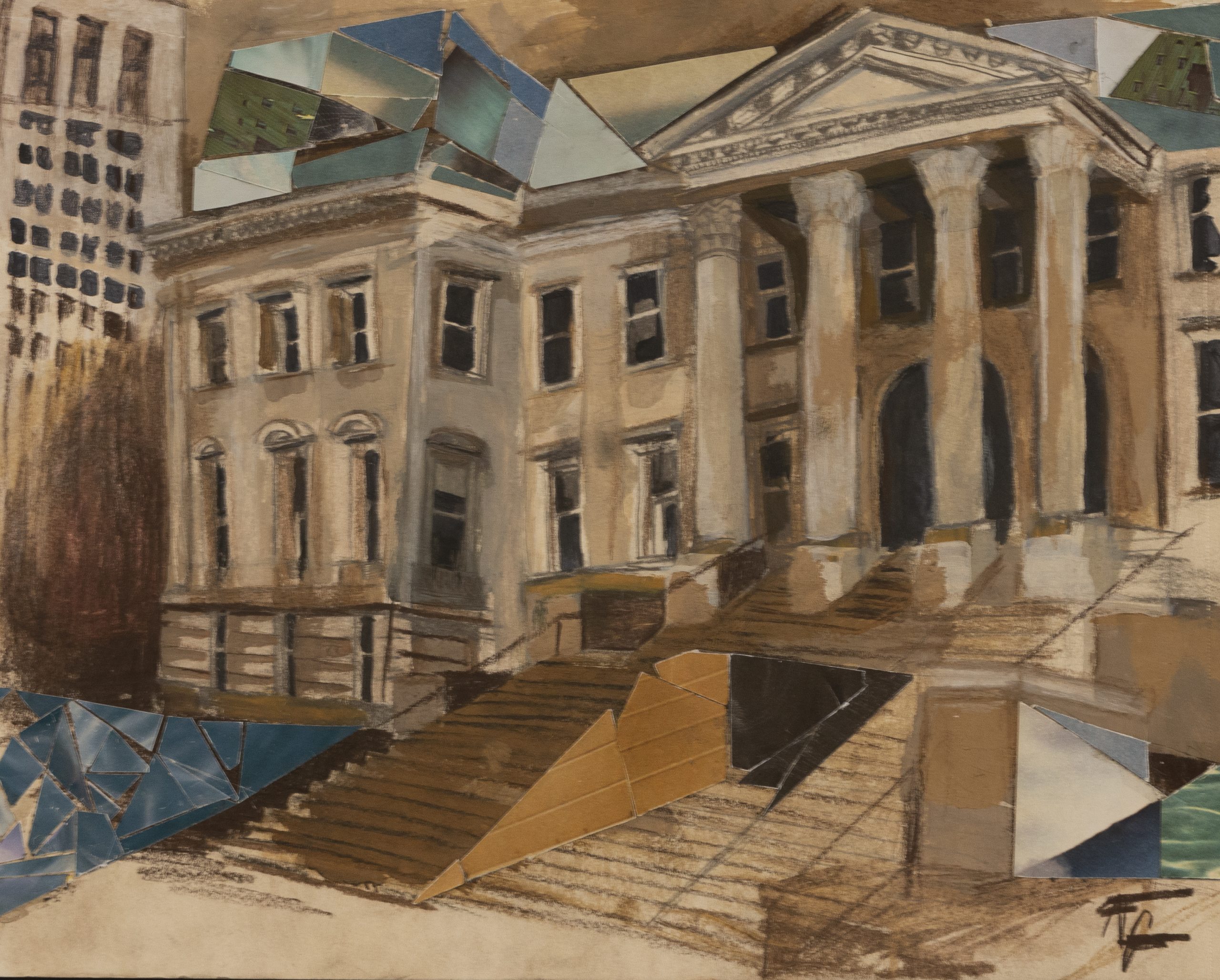
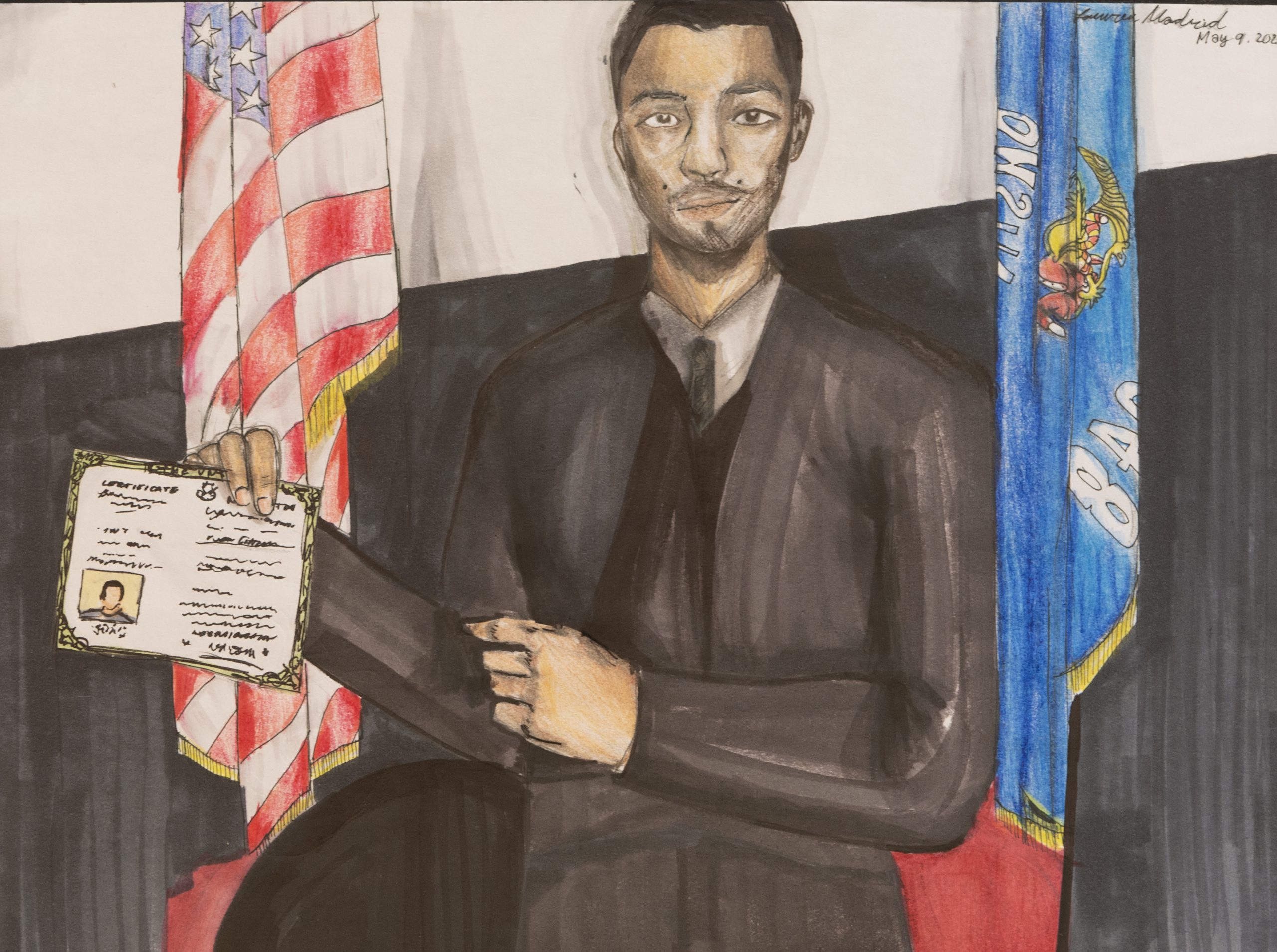
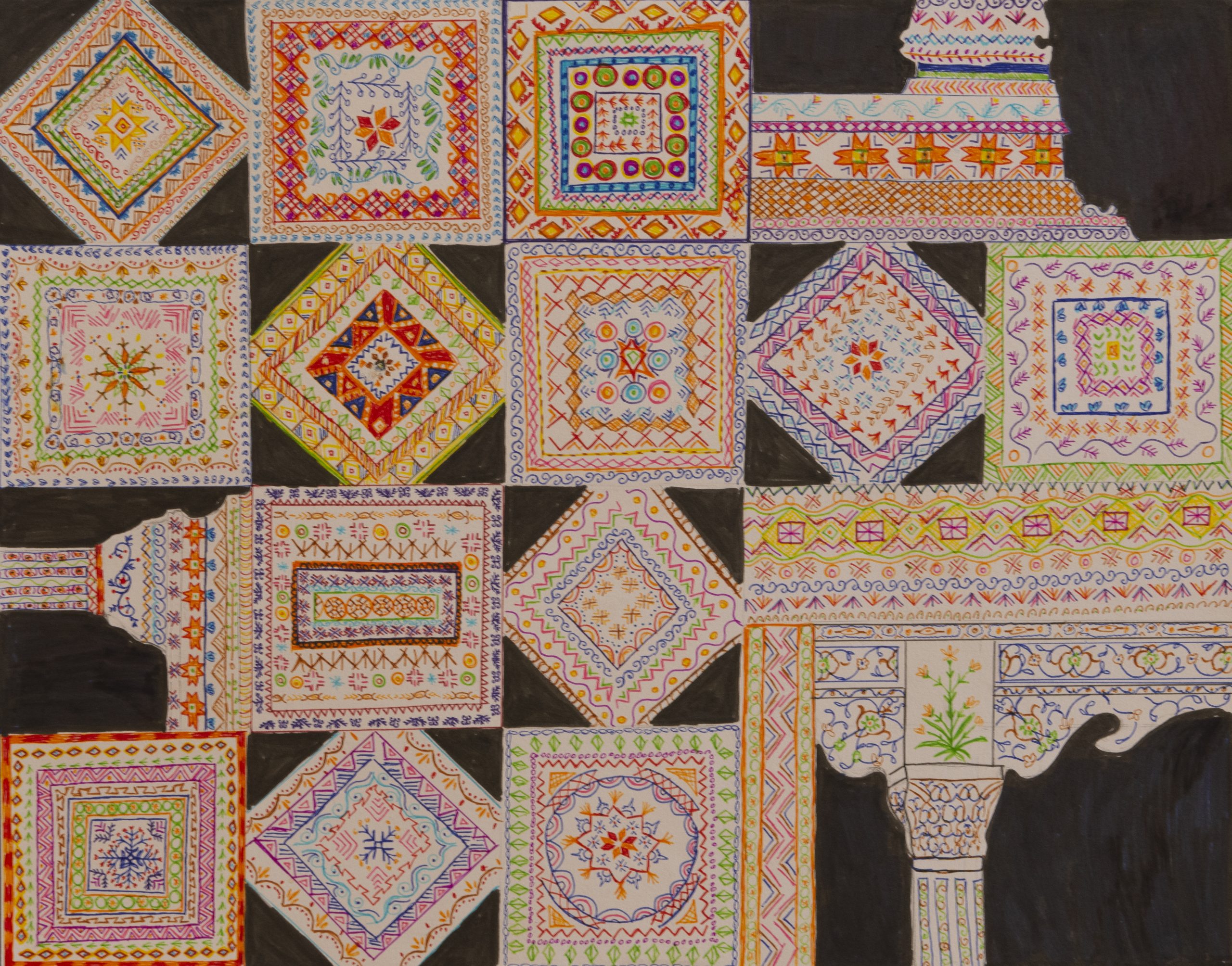
Project Title: EXPLORING THE VISUAL RIGHTS ACT, COURTHOUSE DESIGN AND THE PATHWAY TO CITIZENSHIP
Principal: Maximillian Re-Sugiura
Teacher: Matt Lassen
Project Title: PATHWAYS TO CITIZENSHIP
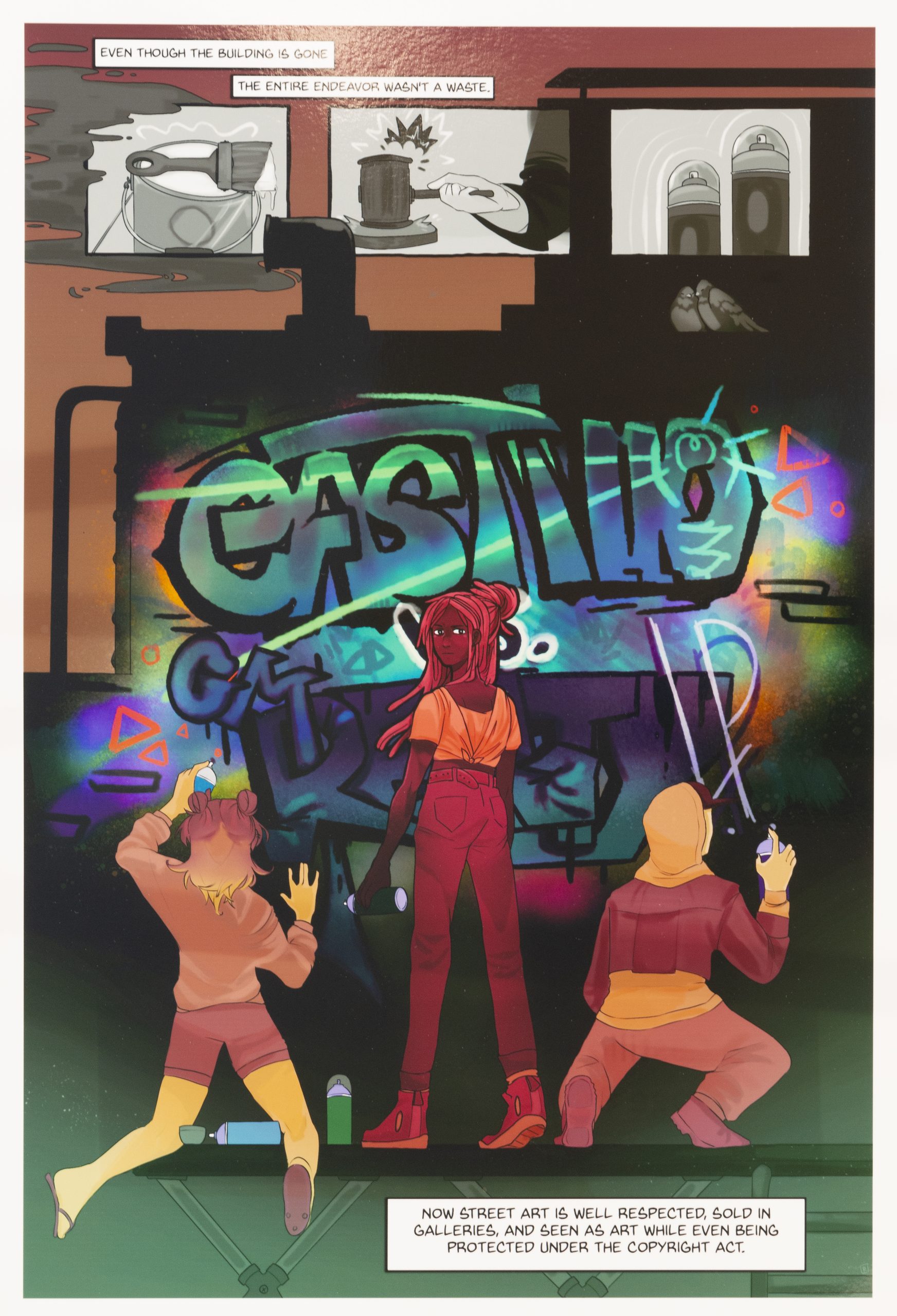
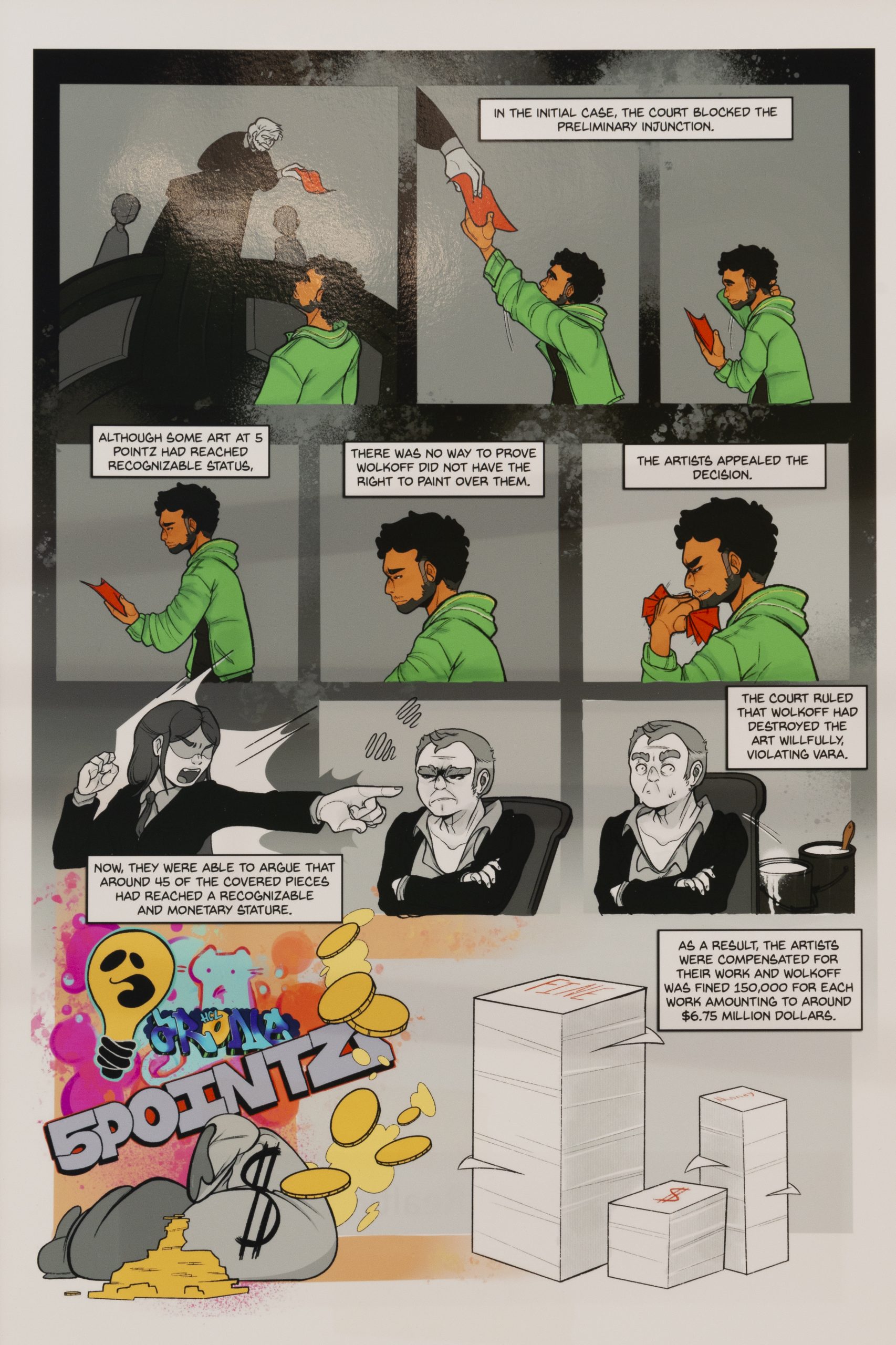
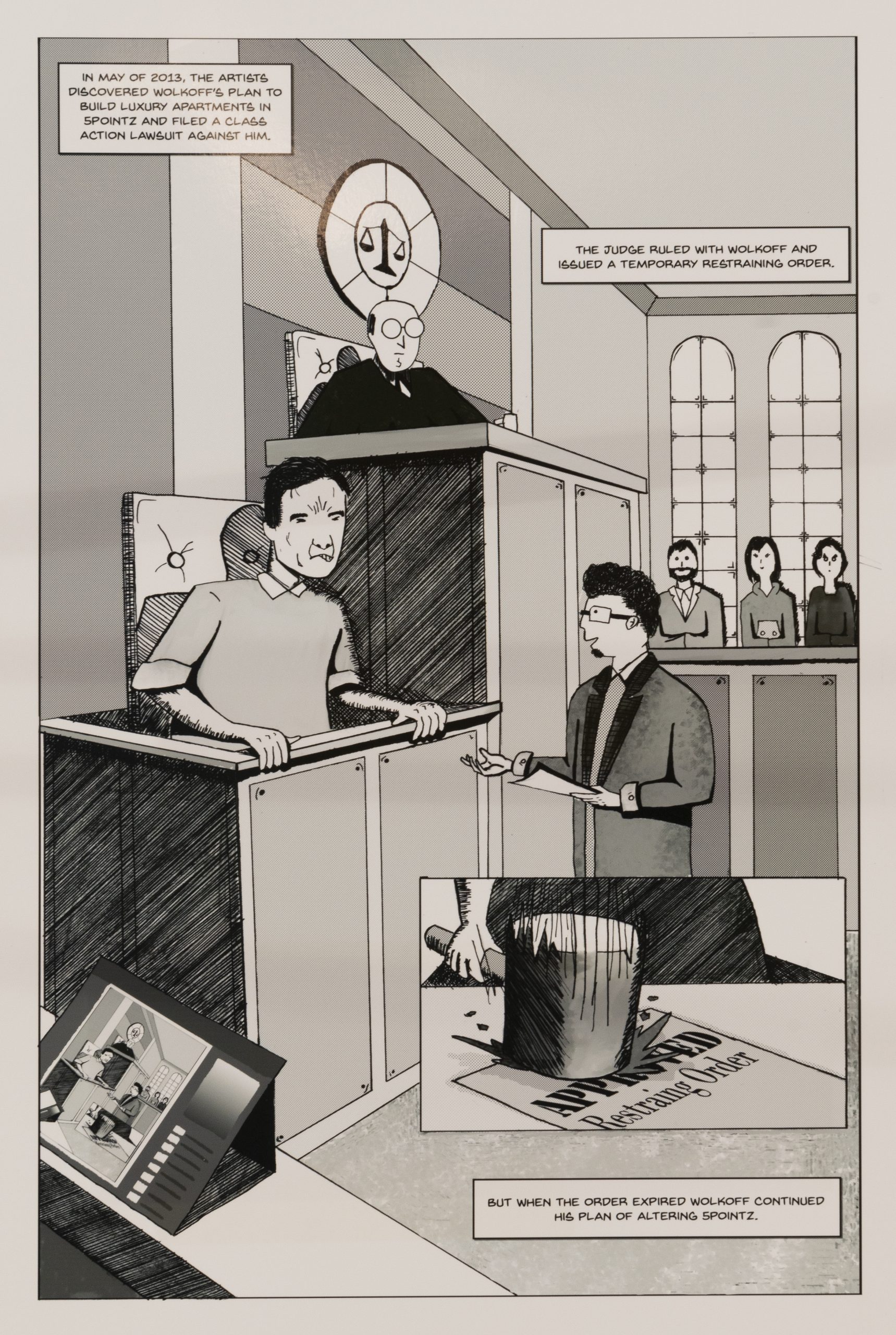
Principal: Maximillian Re-Sugiura
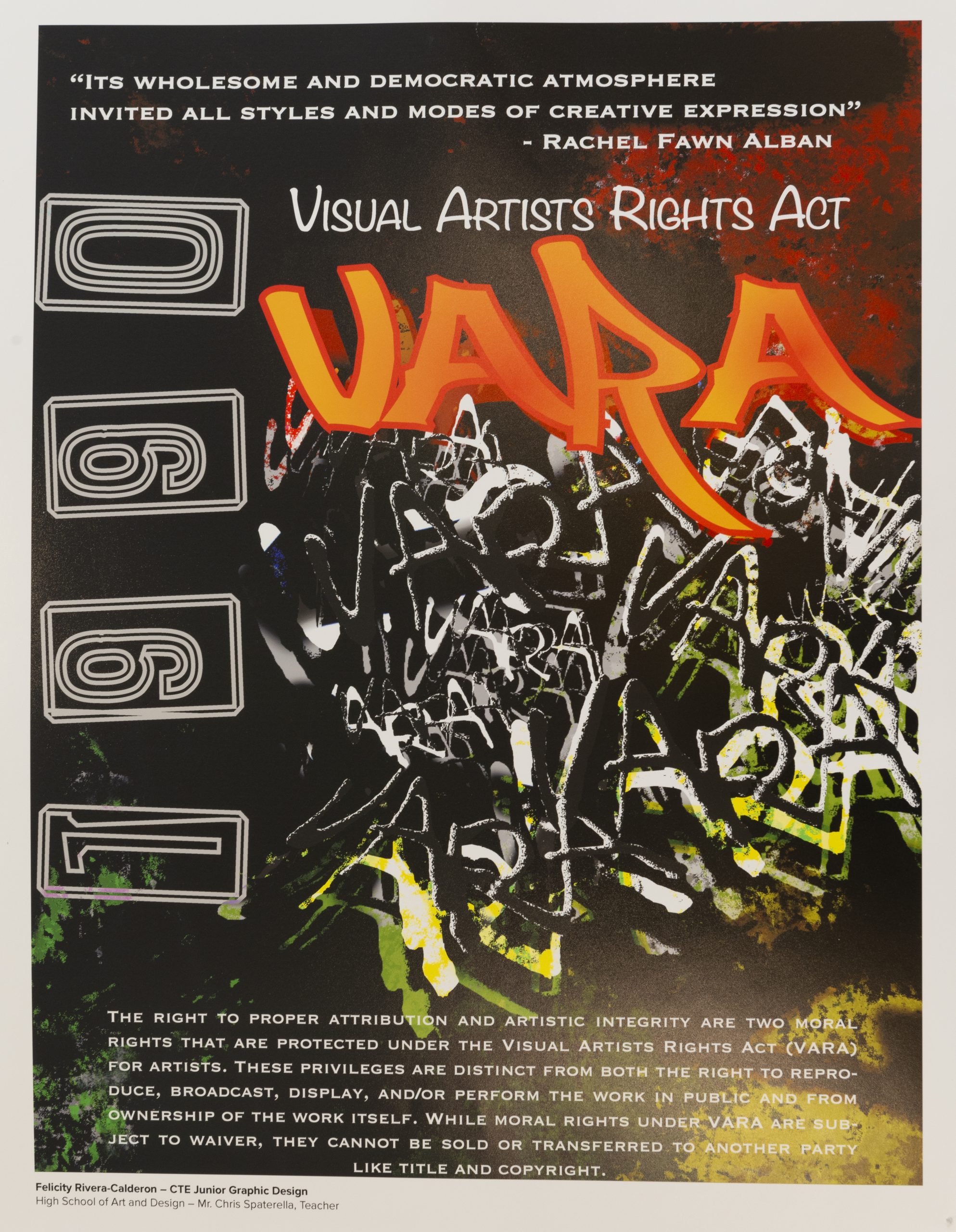
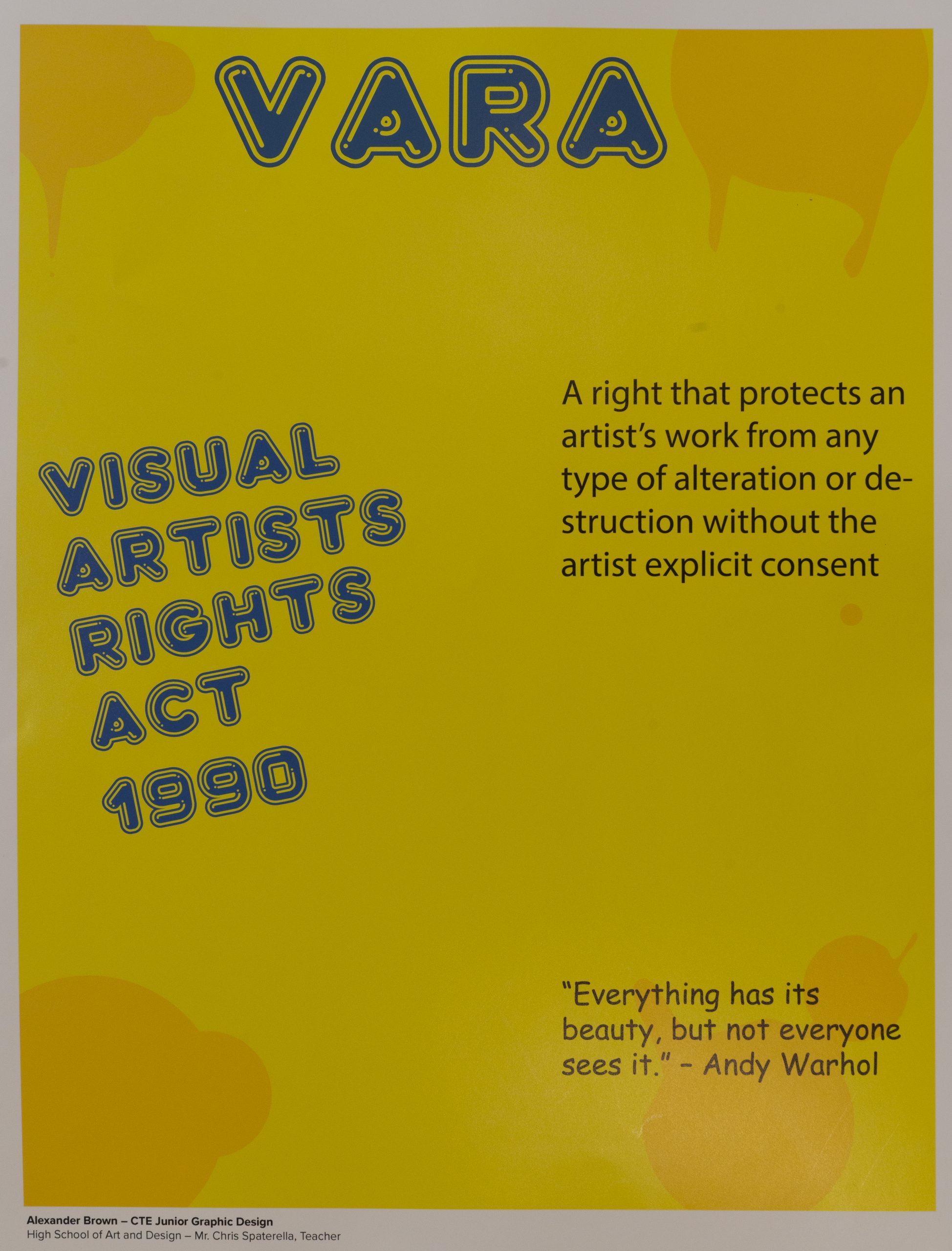
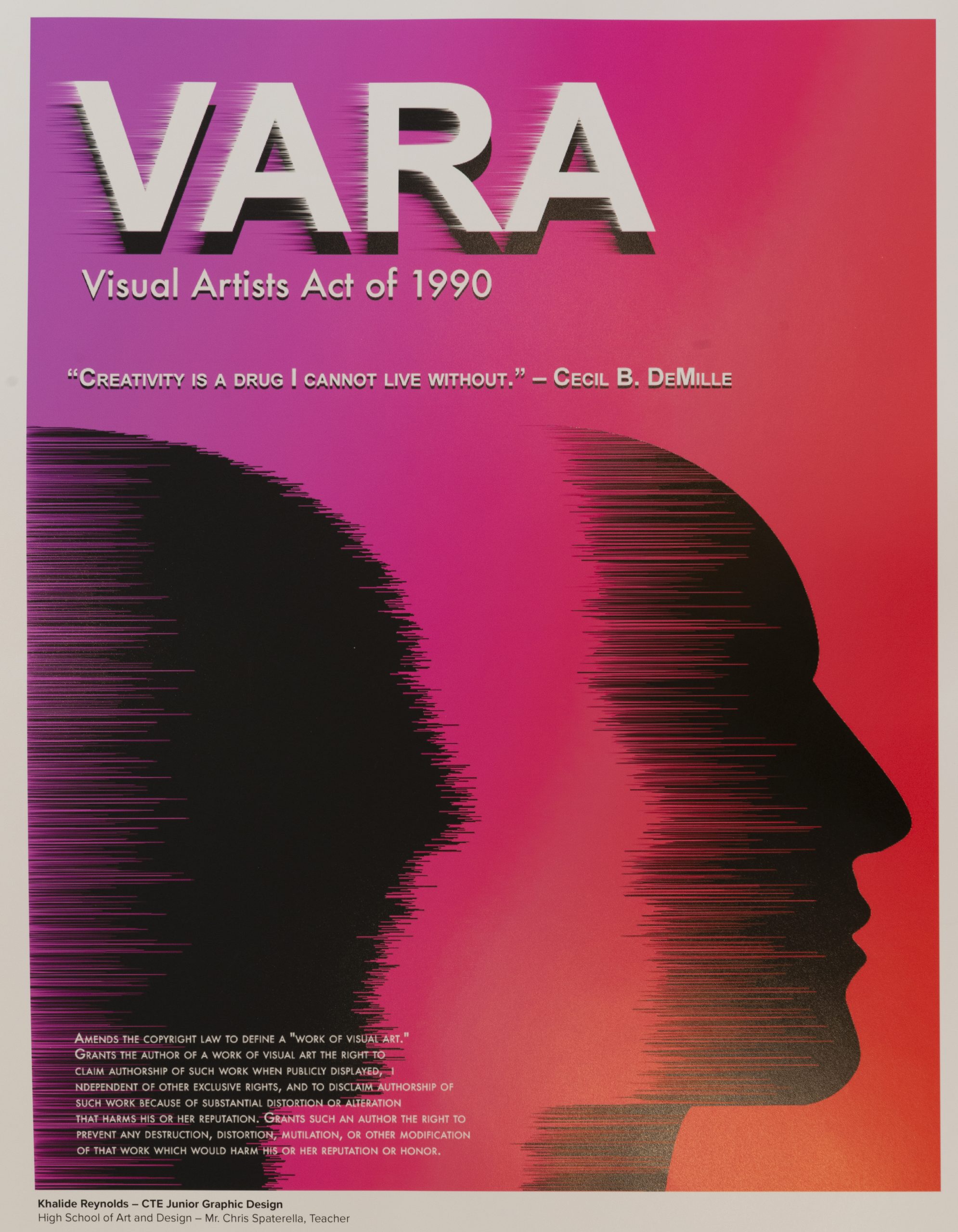
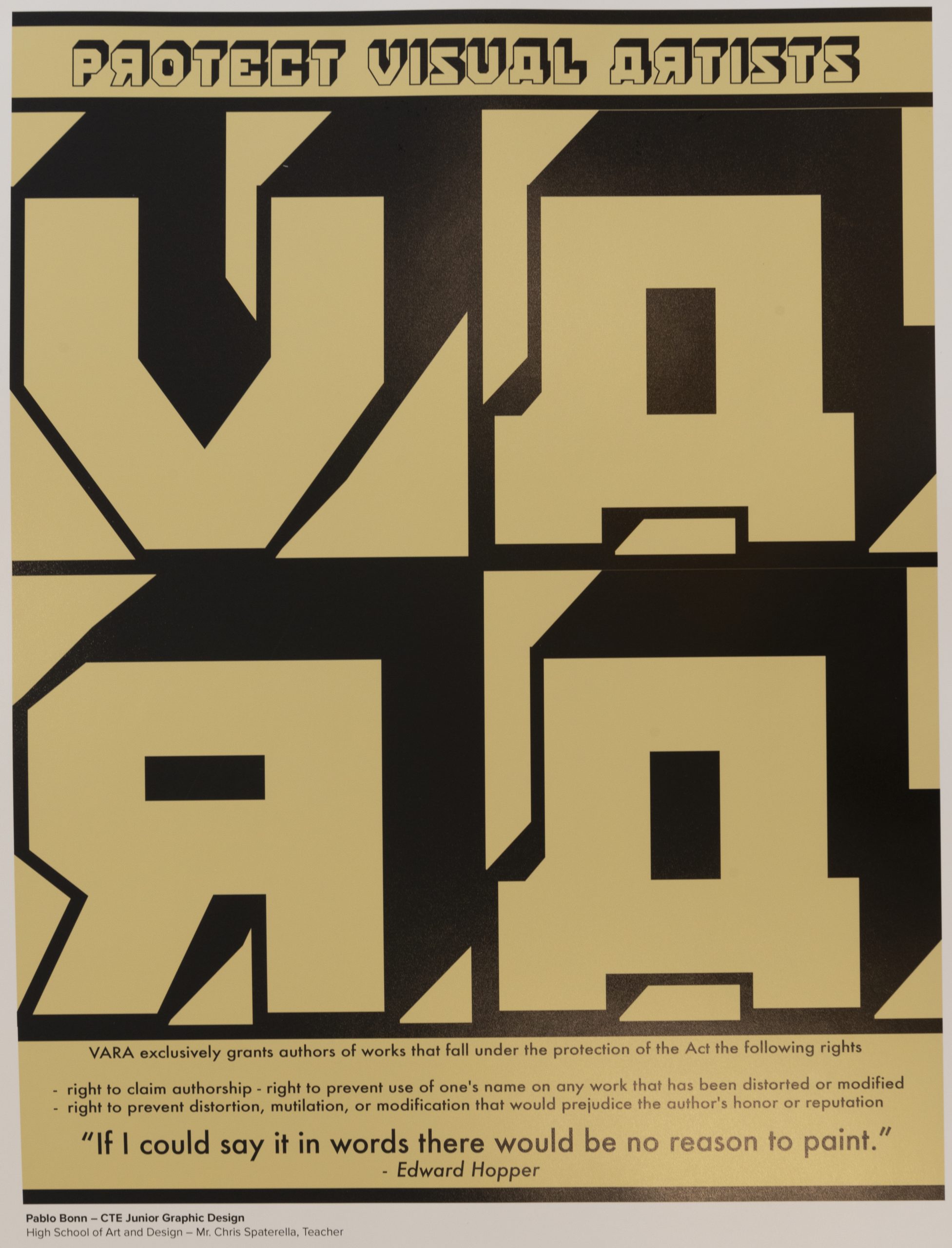
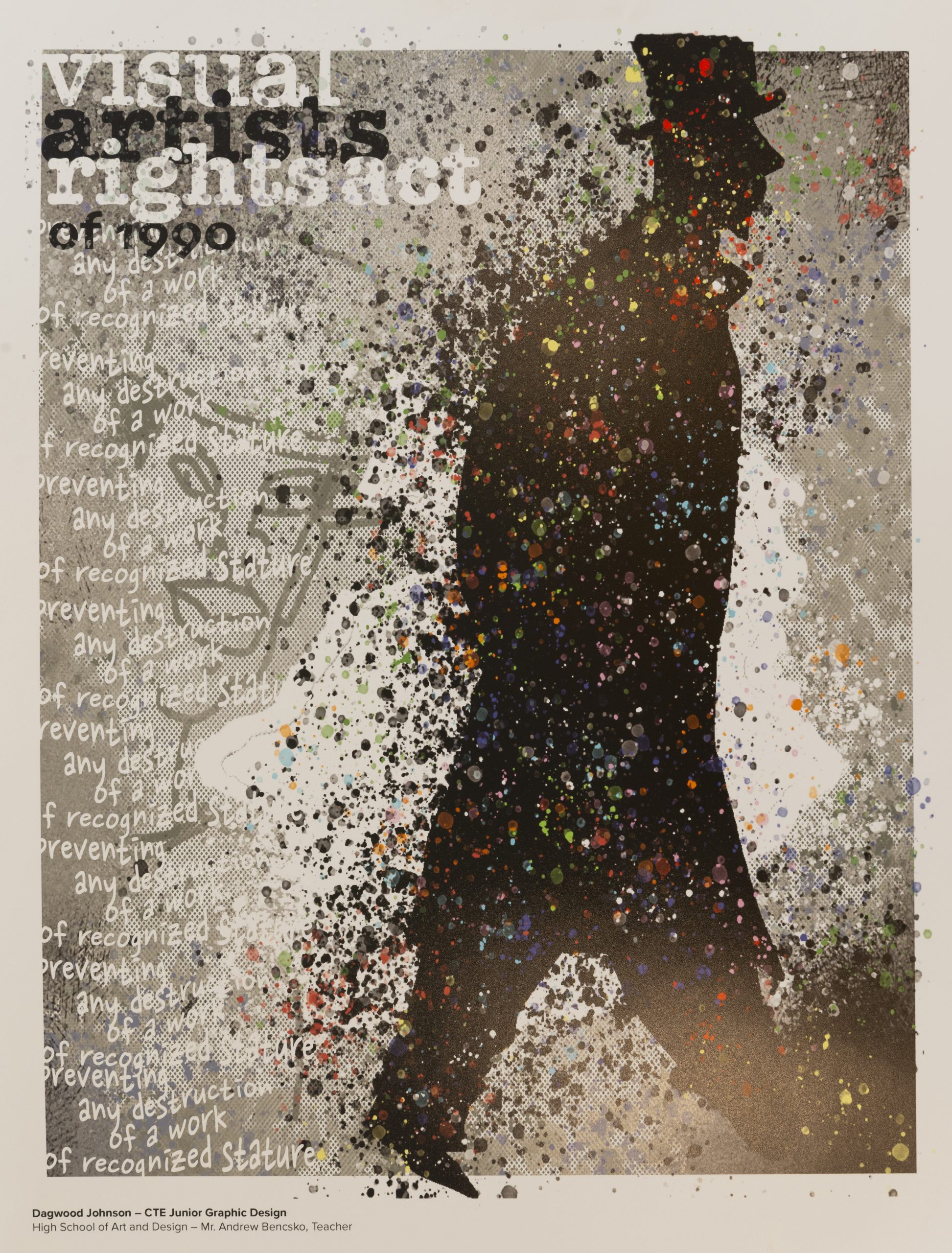
Teachers: Andrew Bencsko & Chris Spaterella
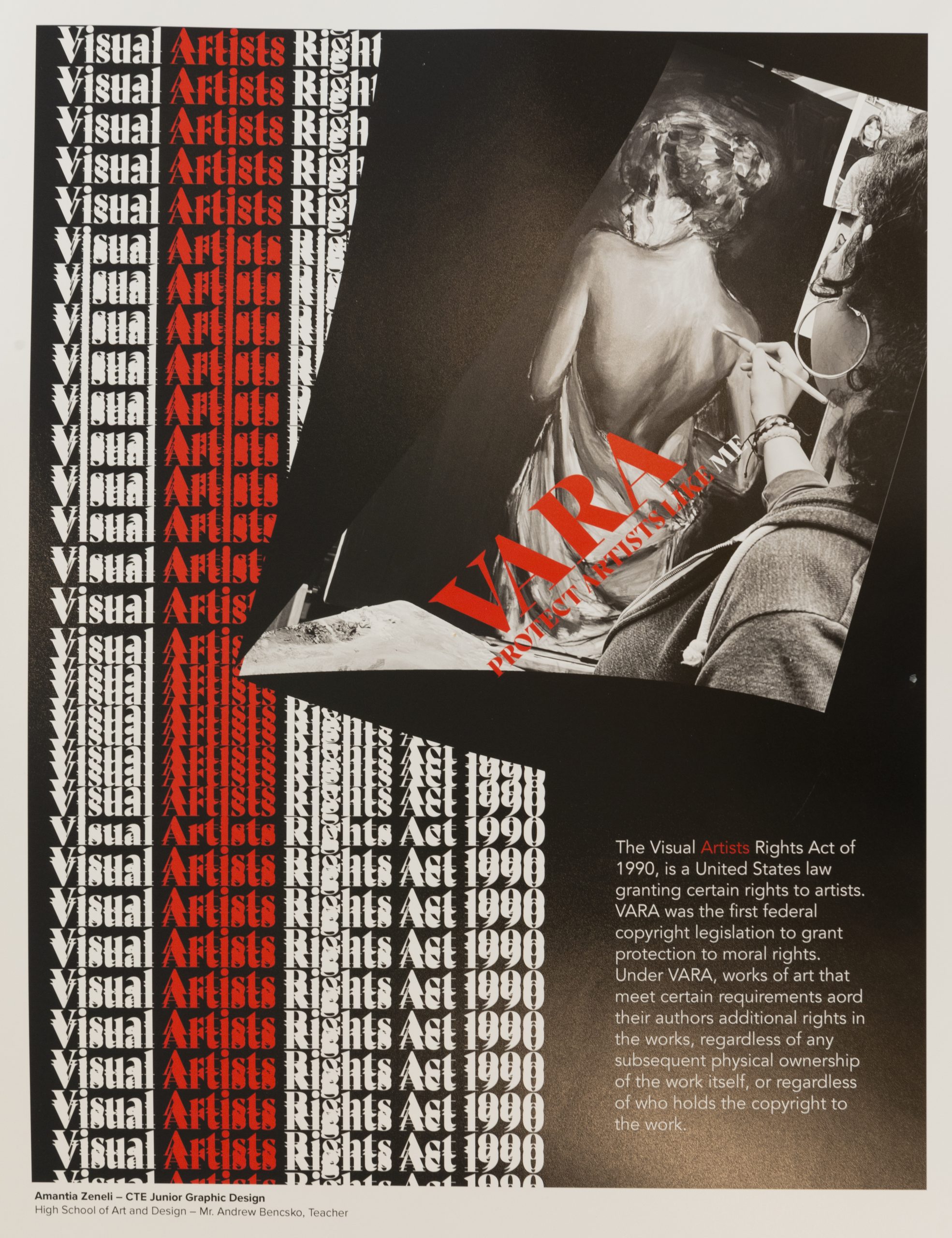
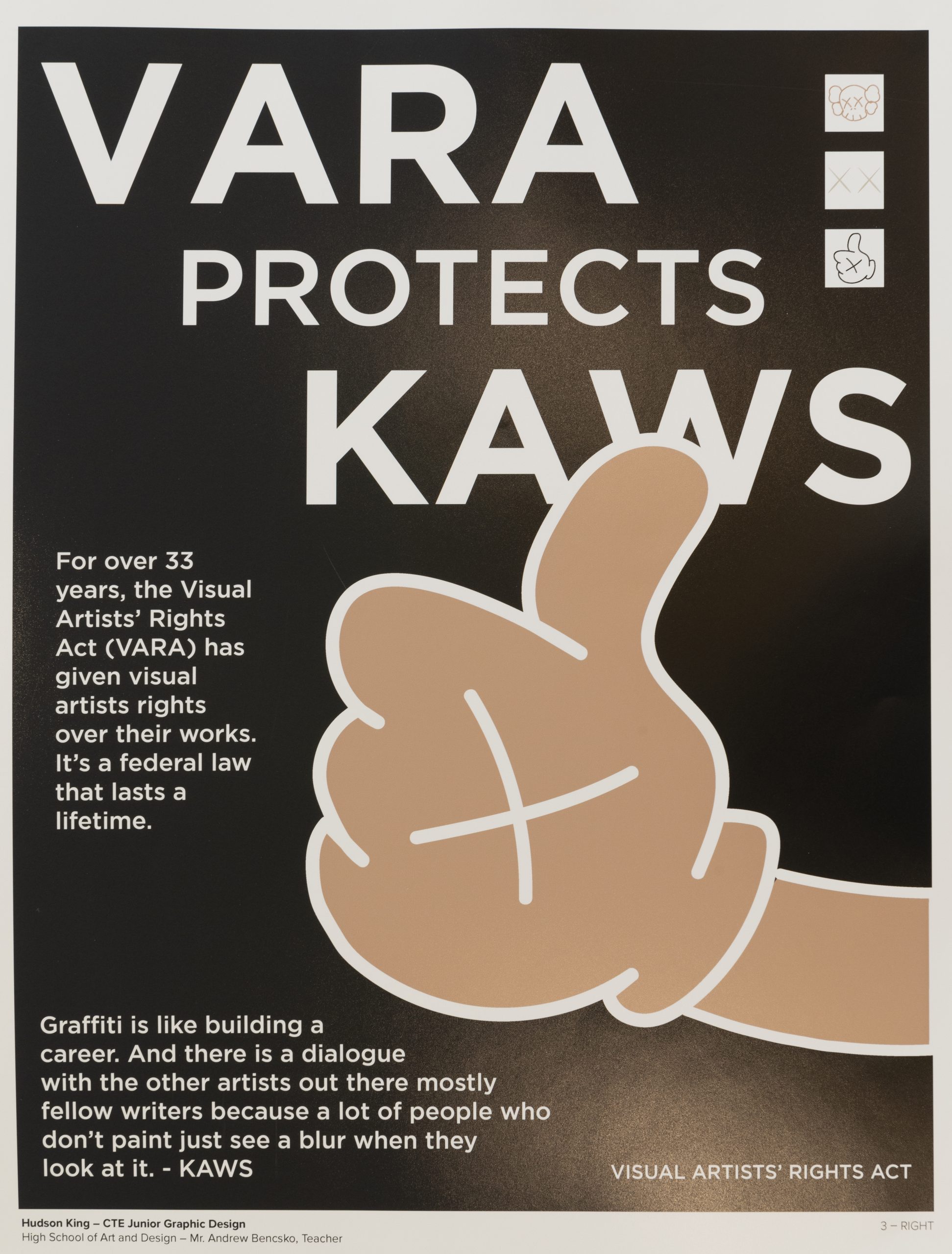
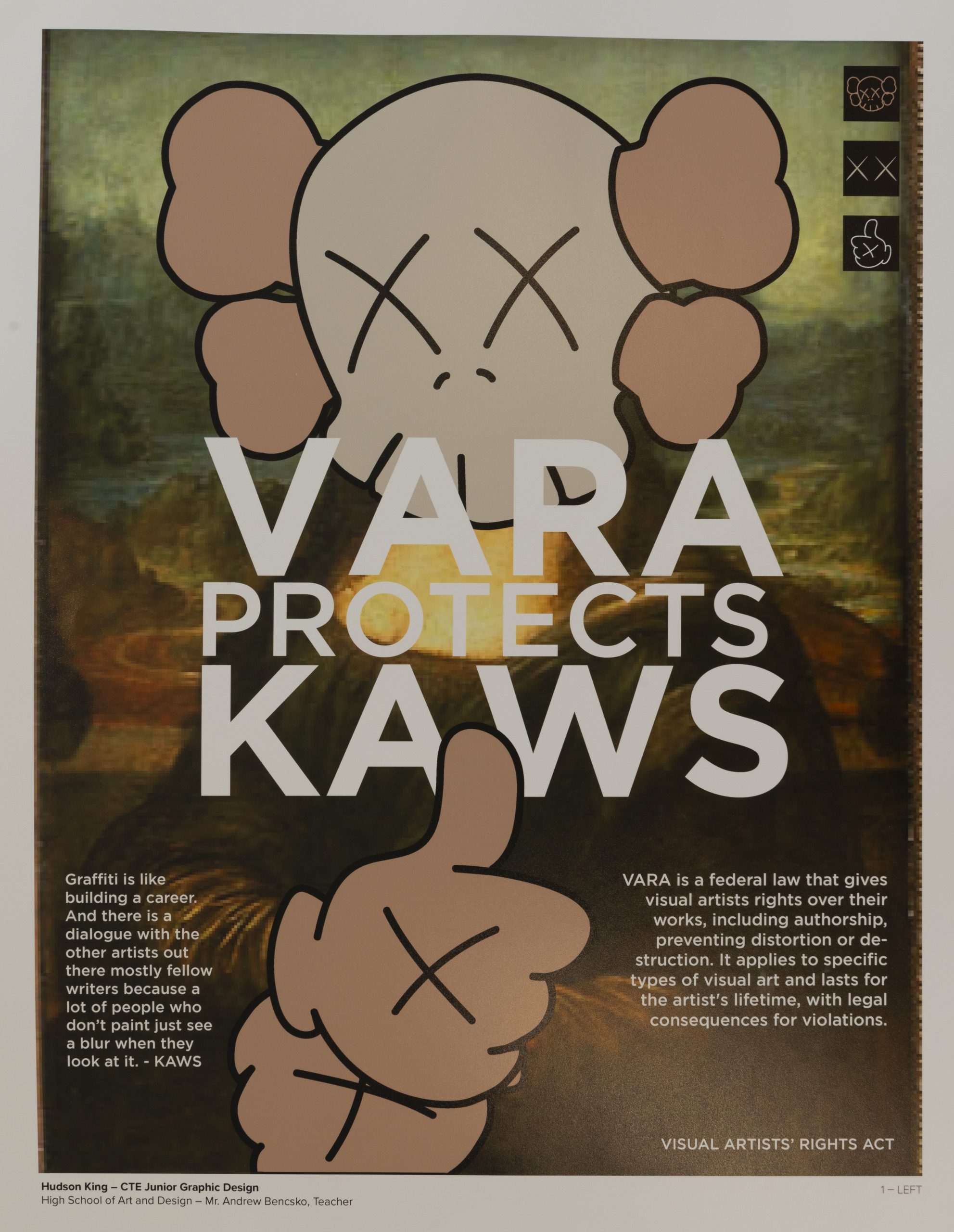
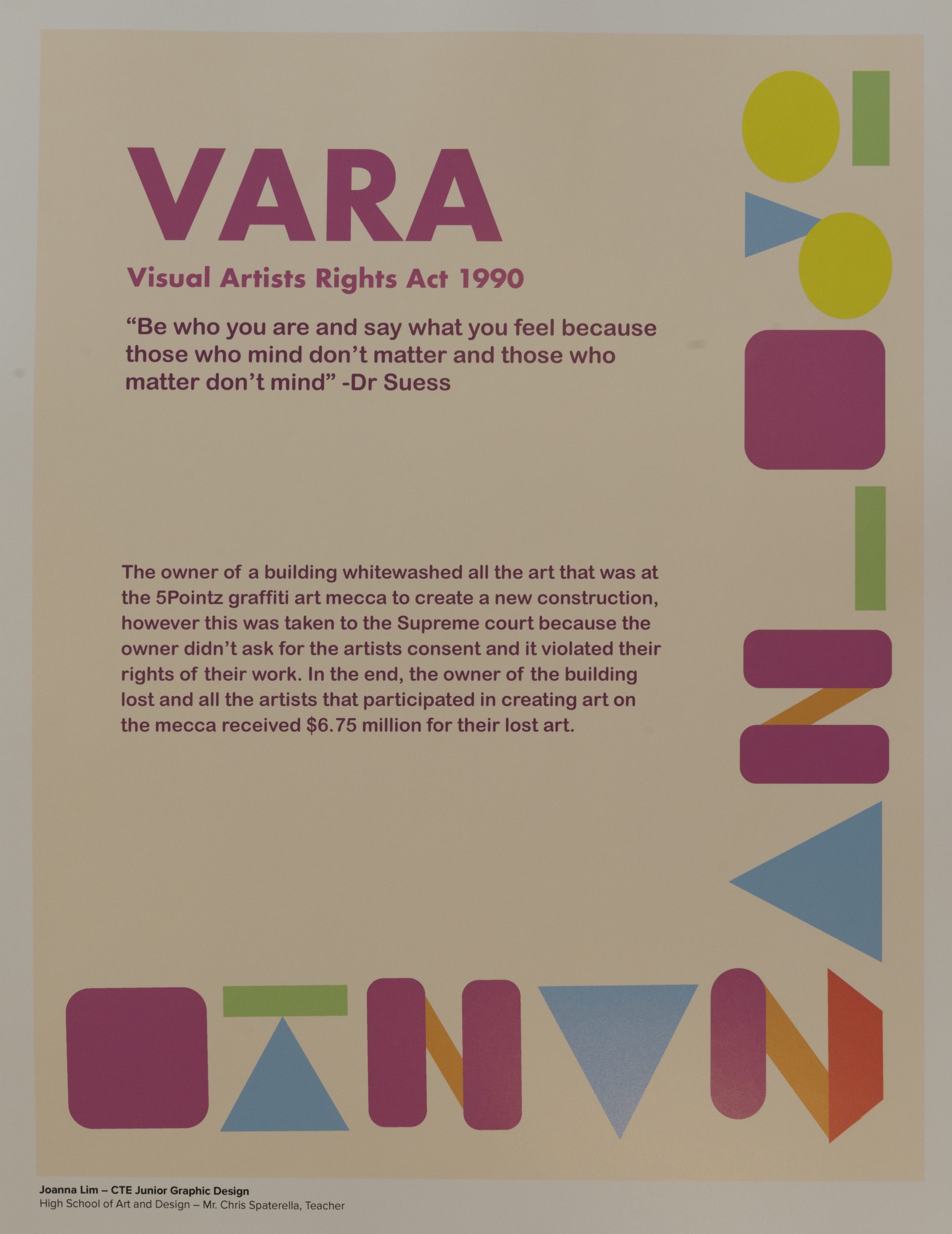
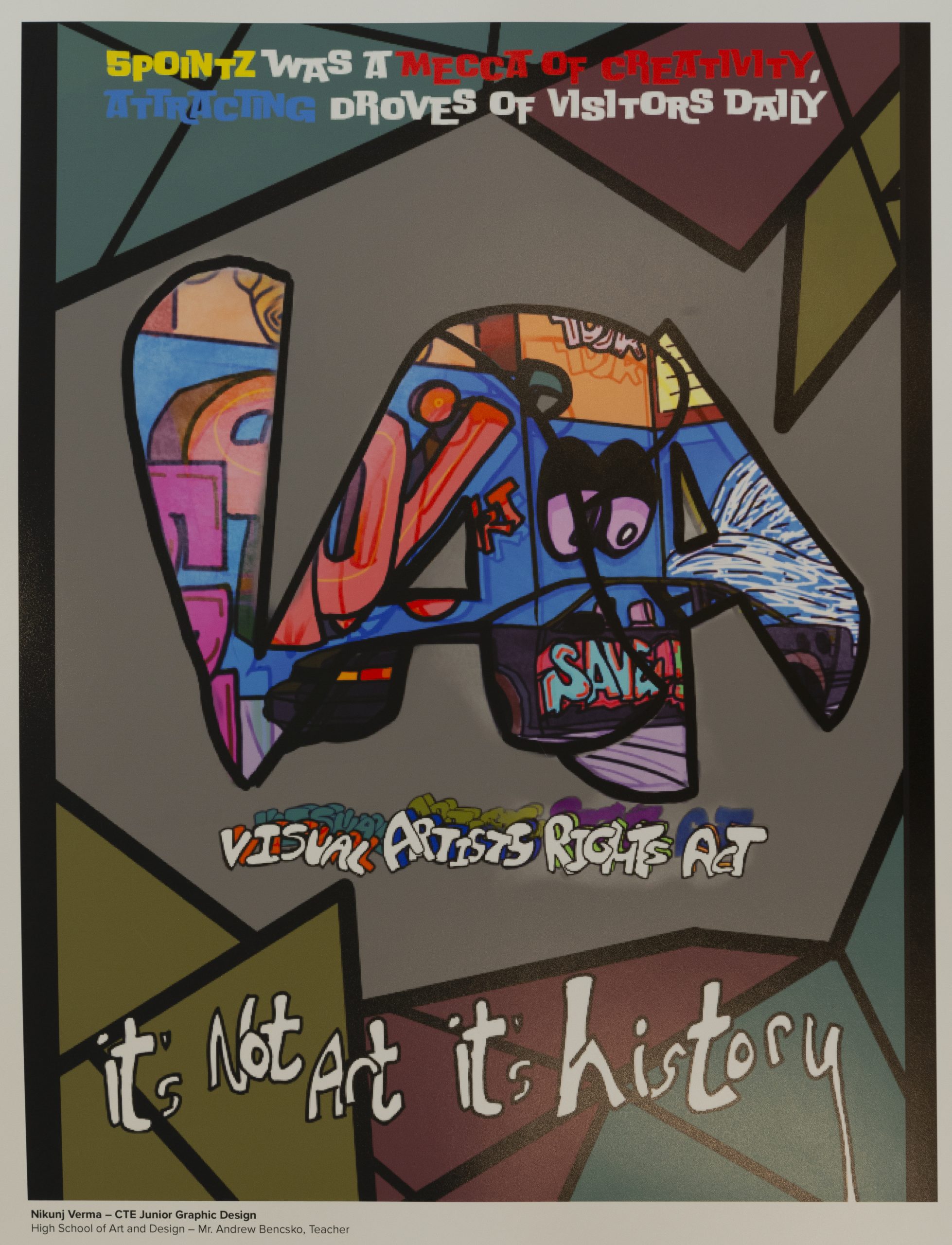
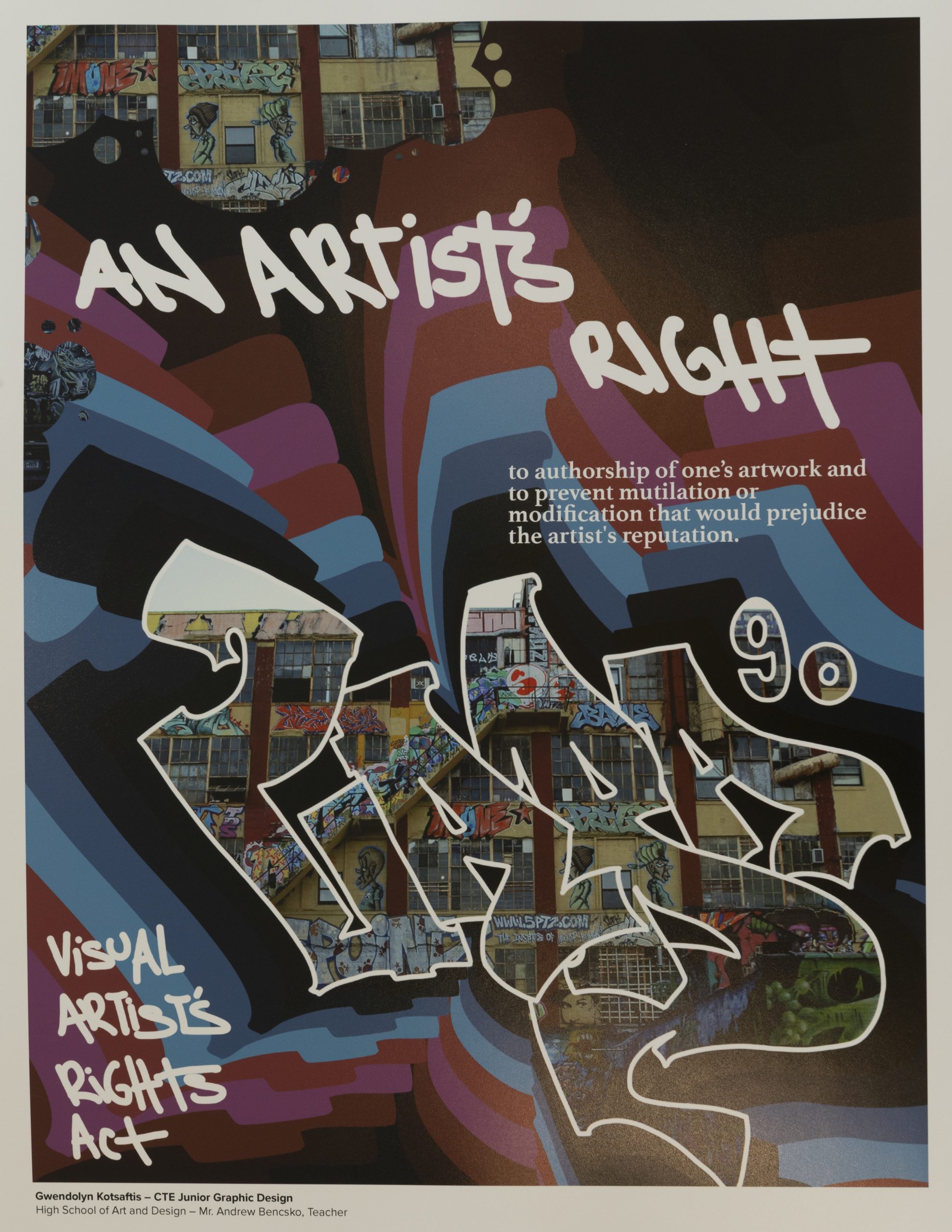
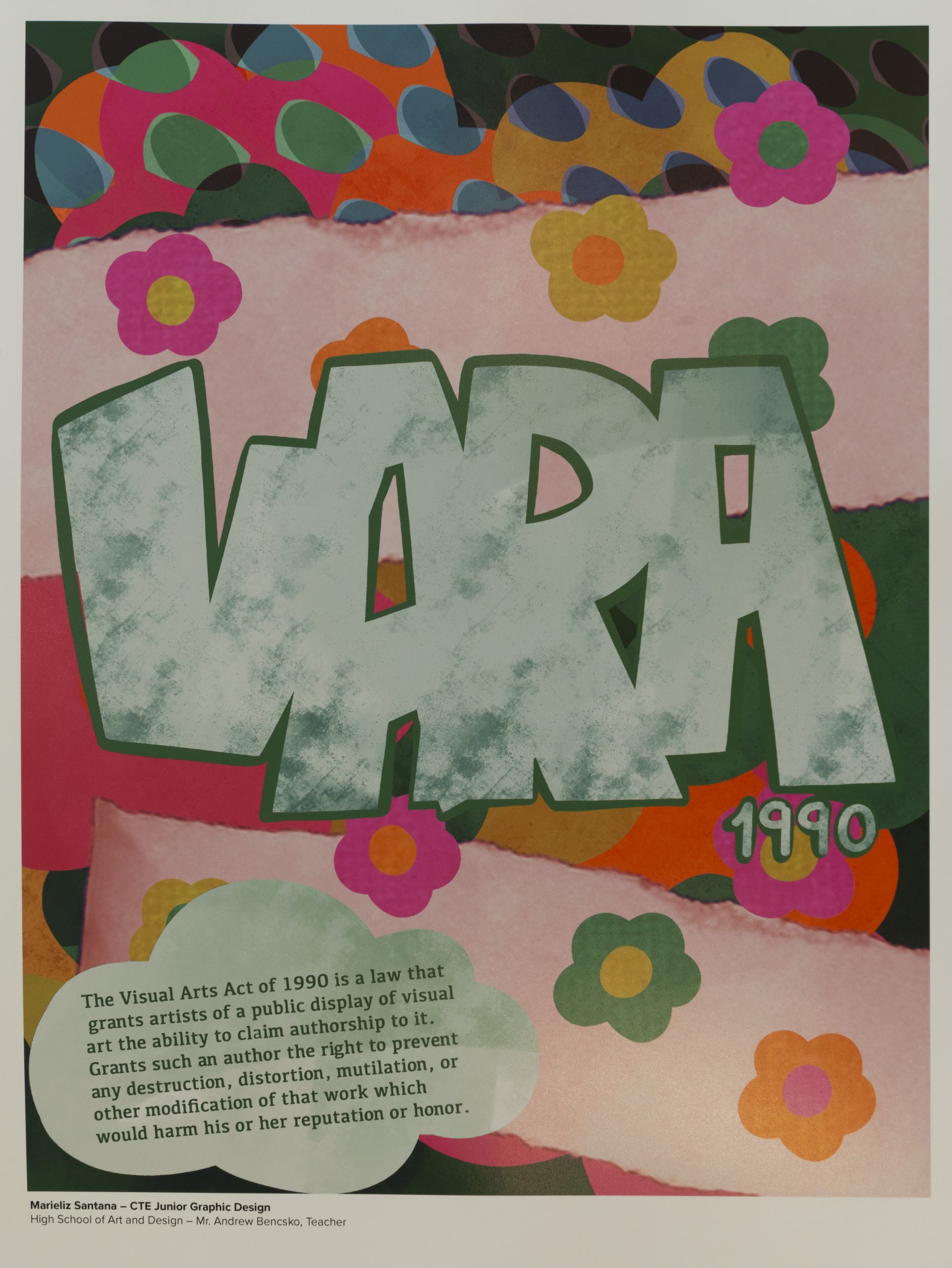
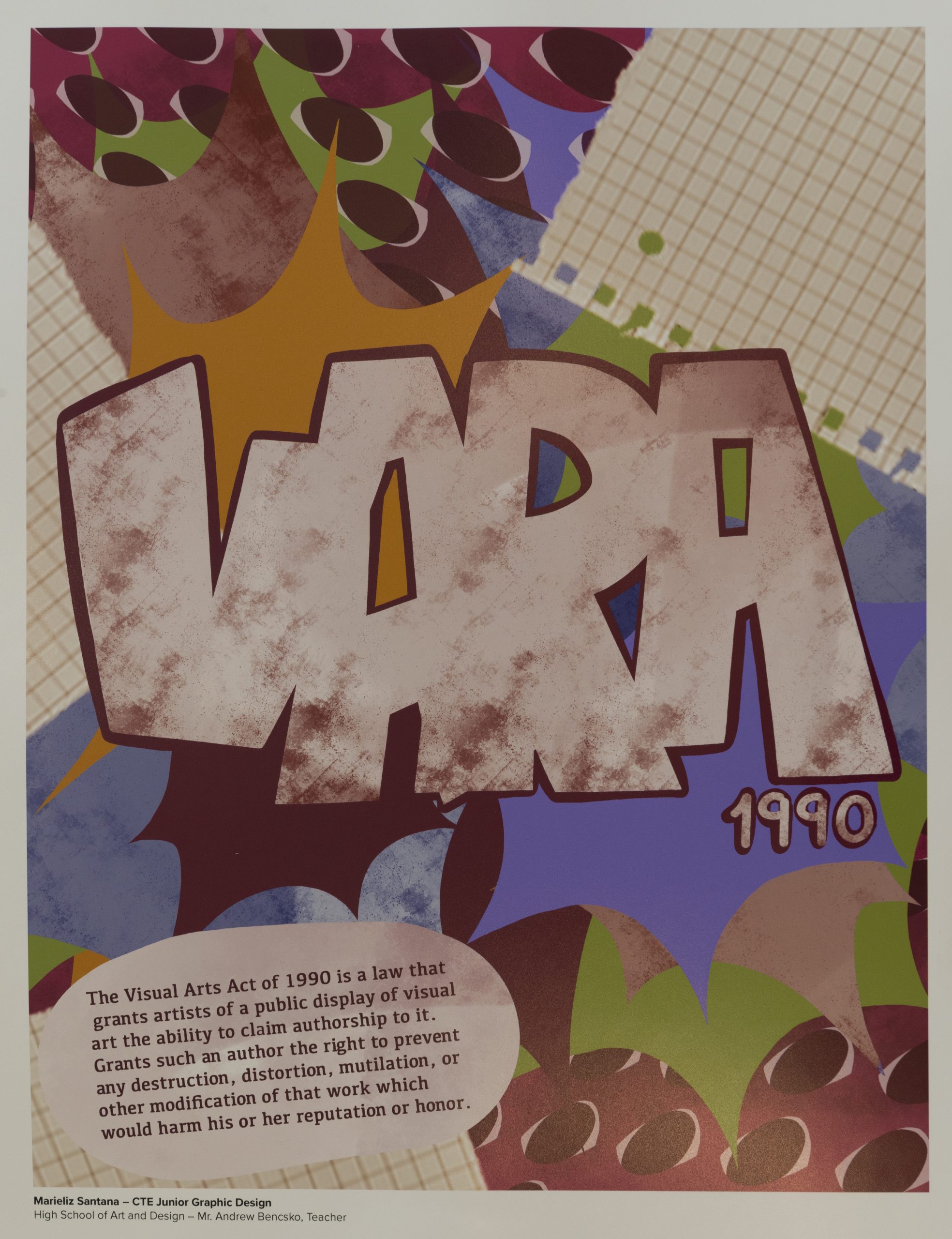
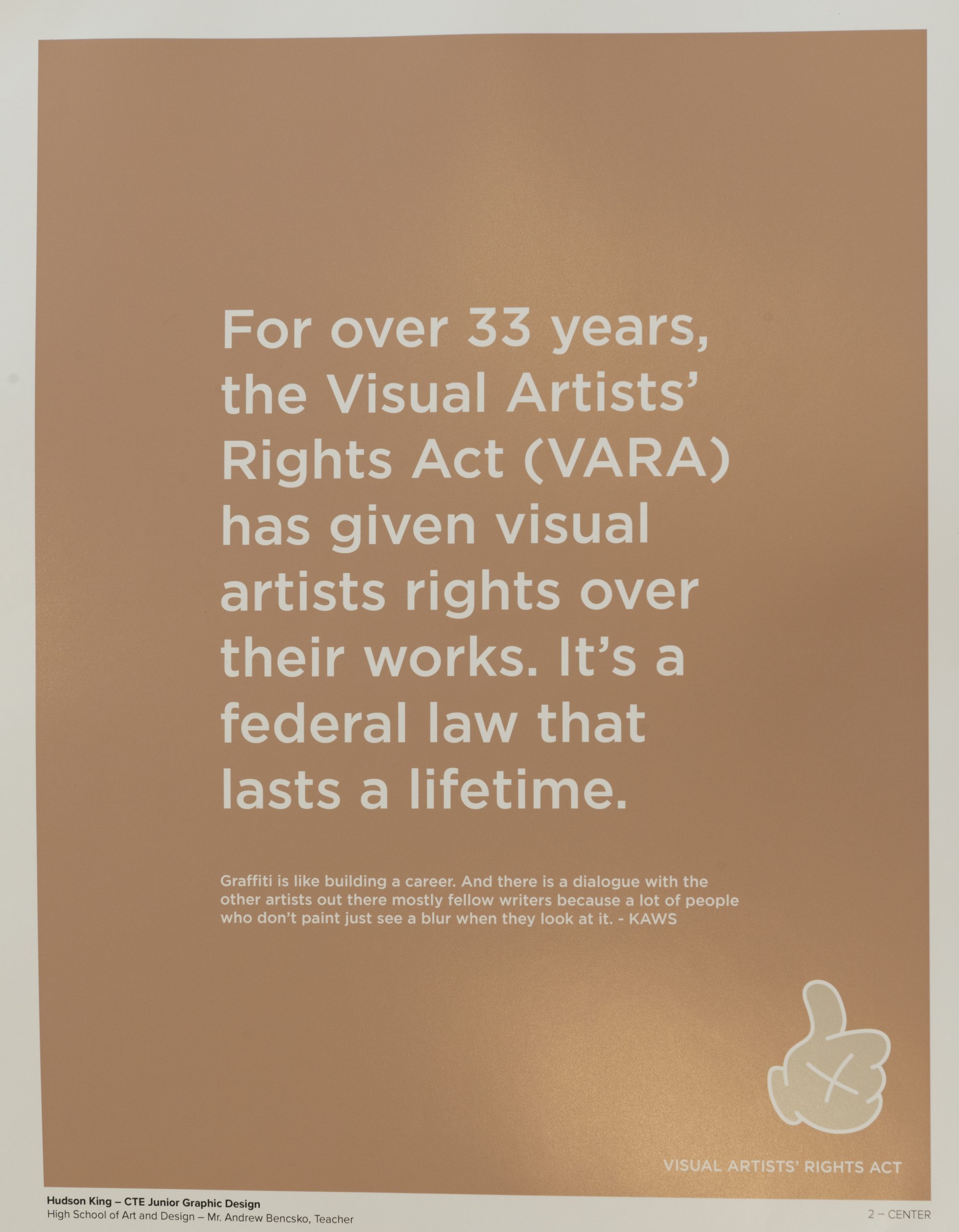
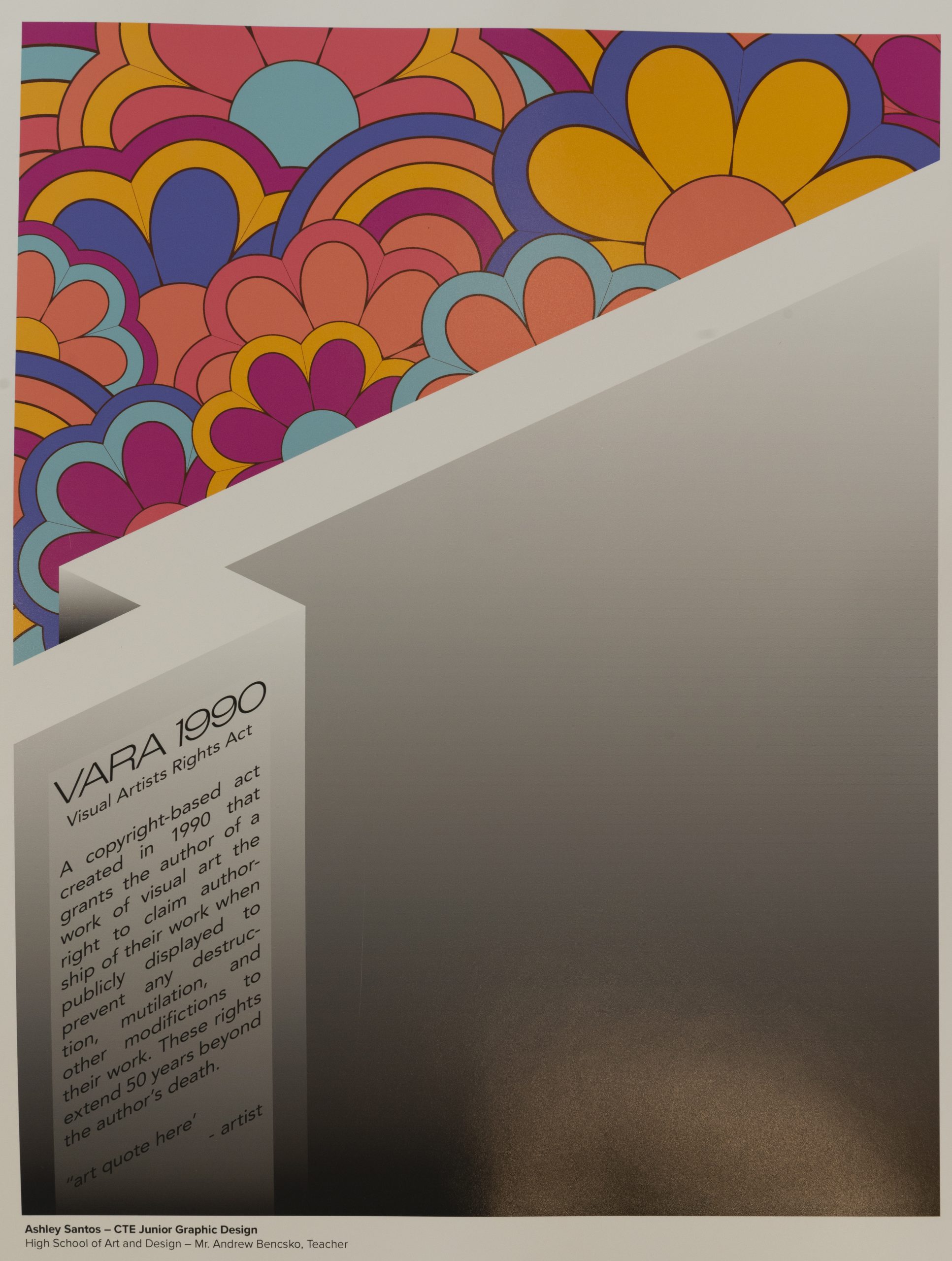
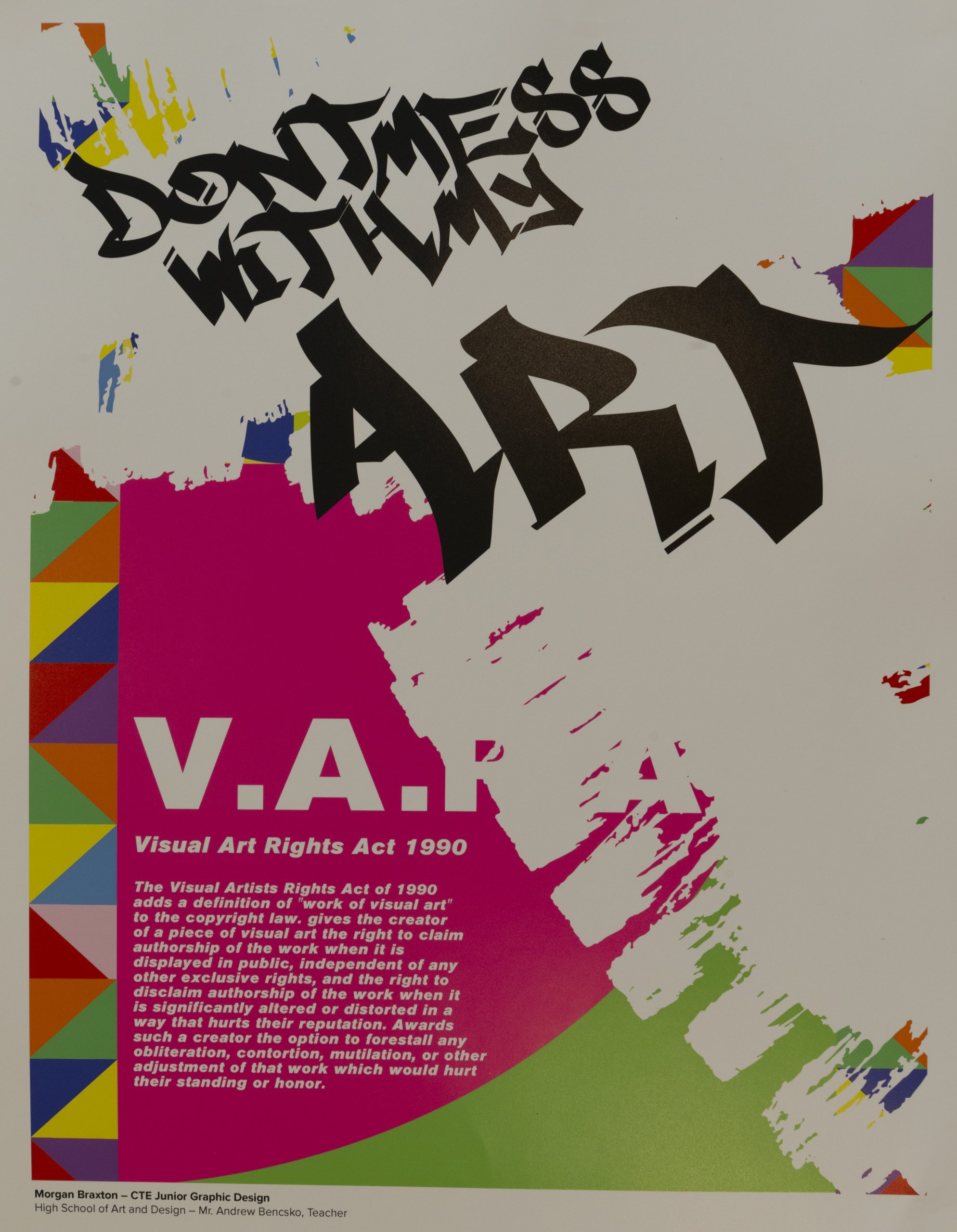
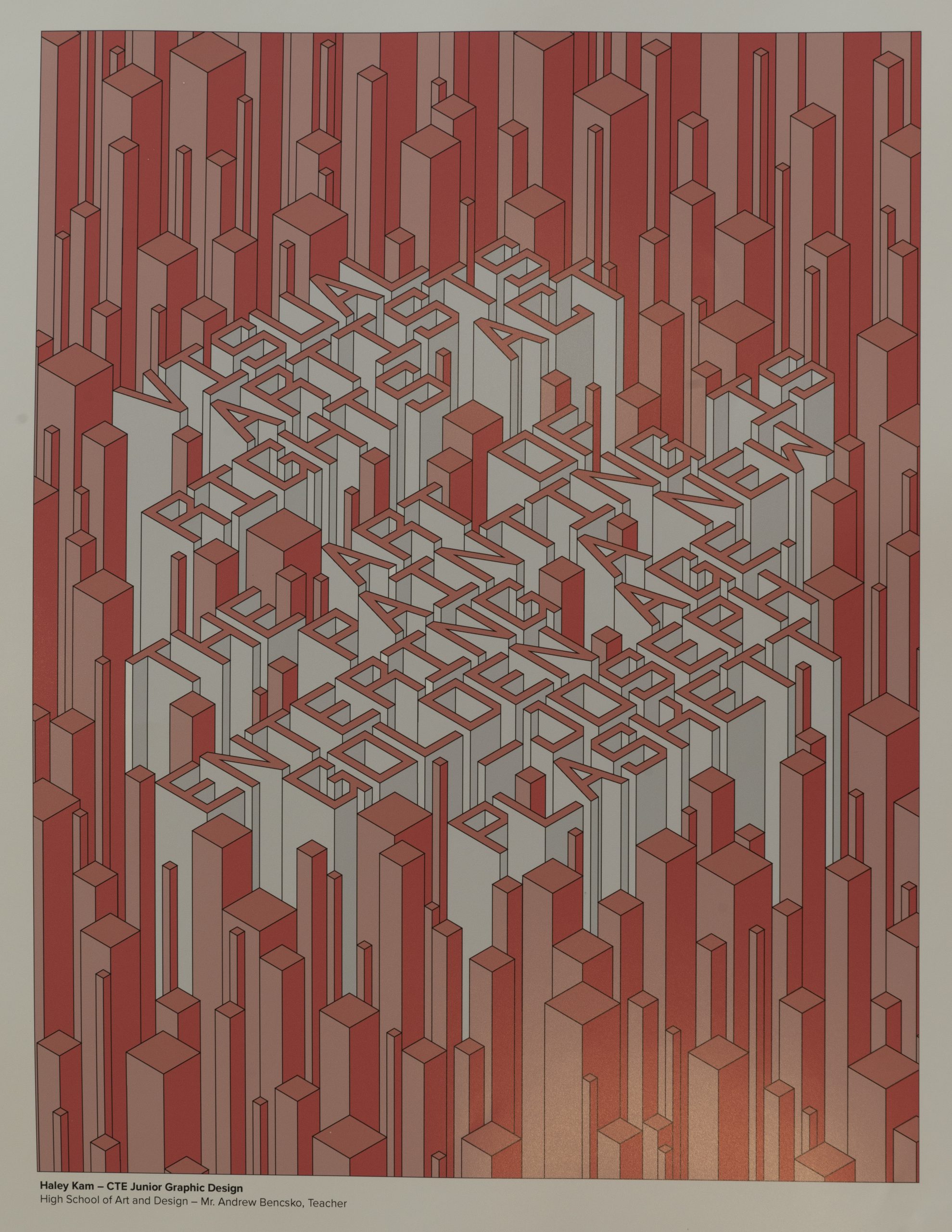
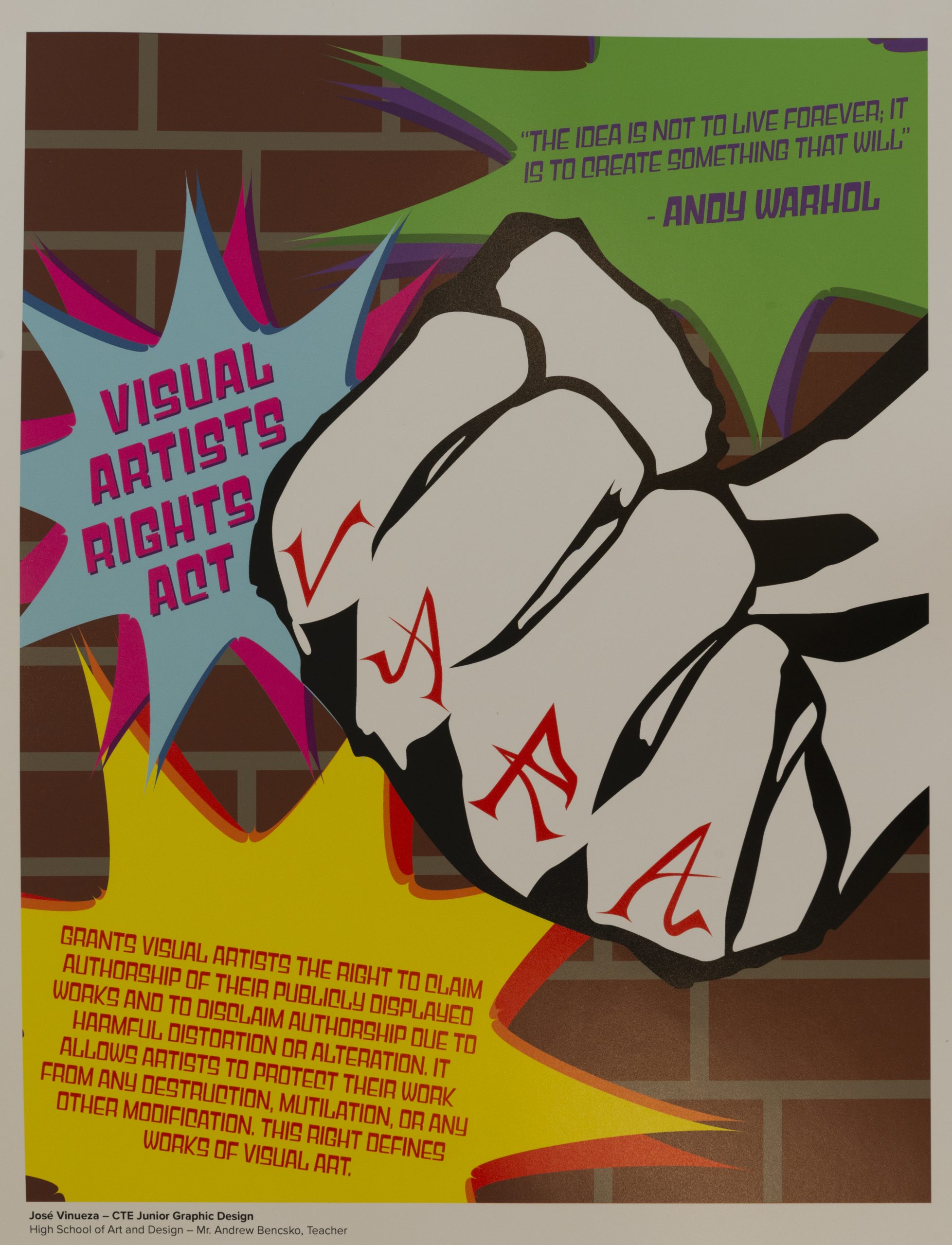
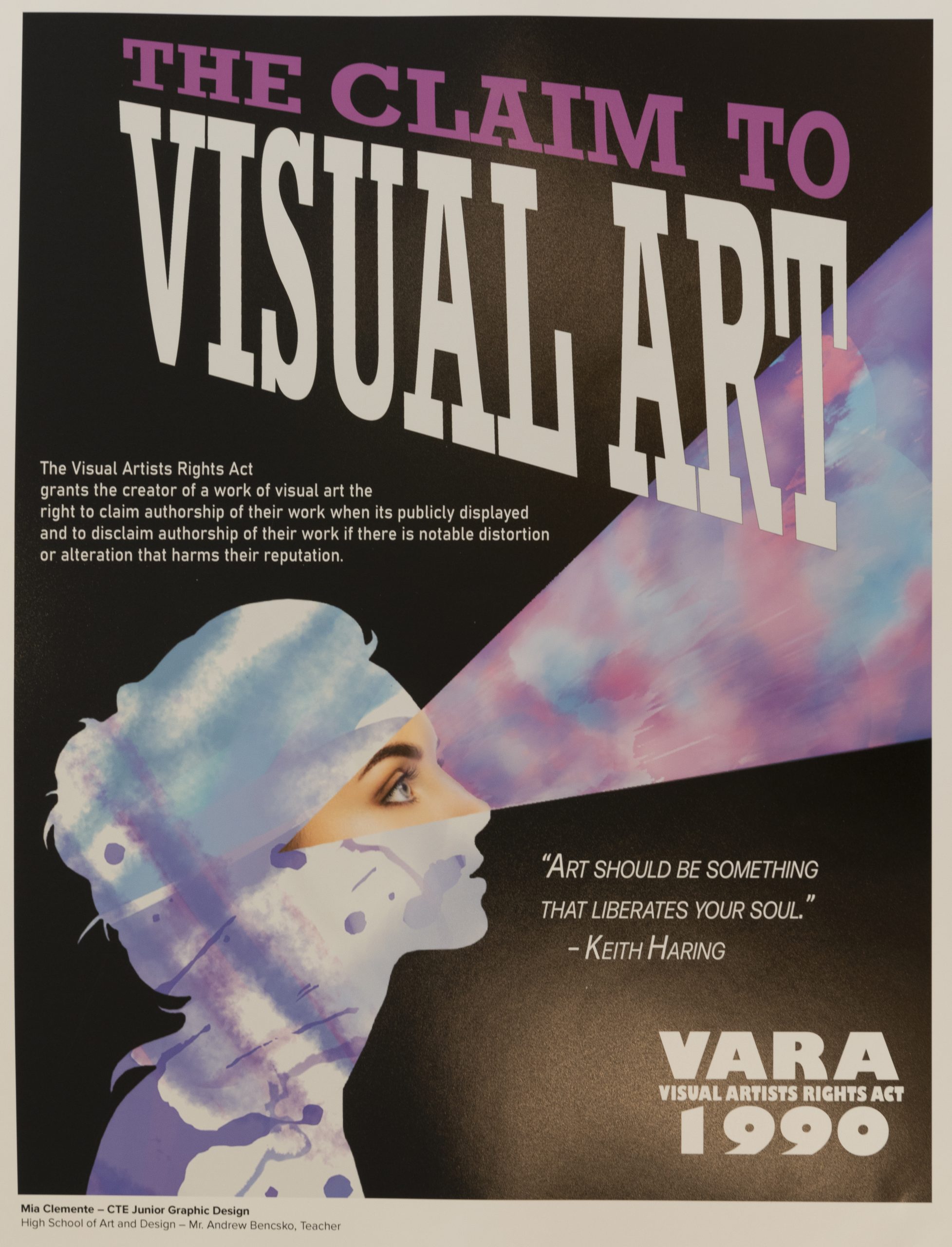
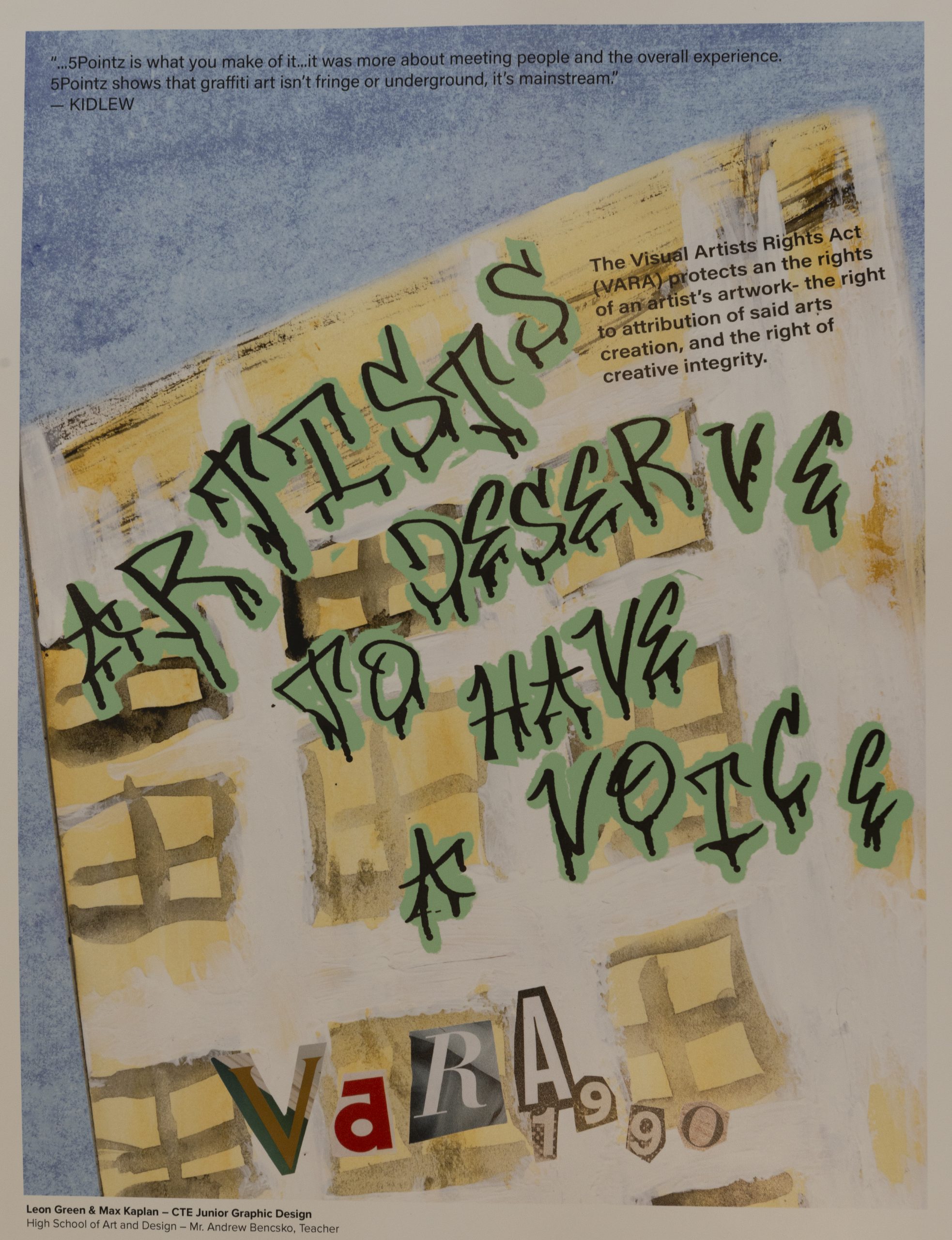
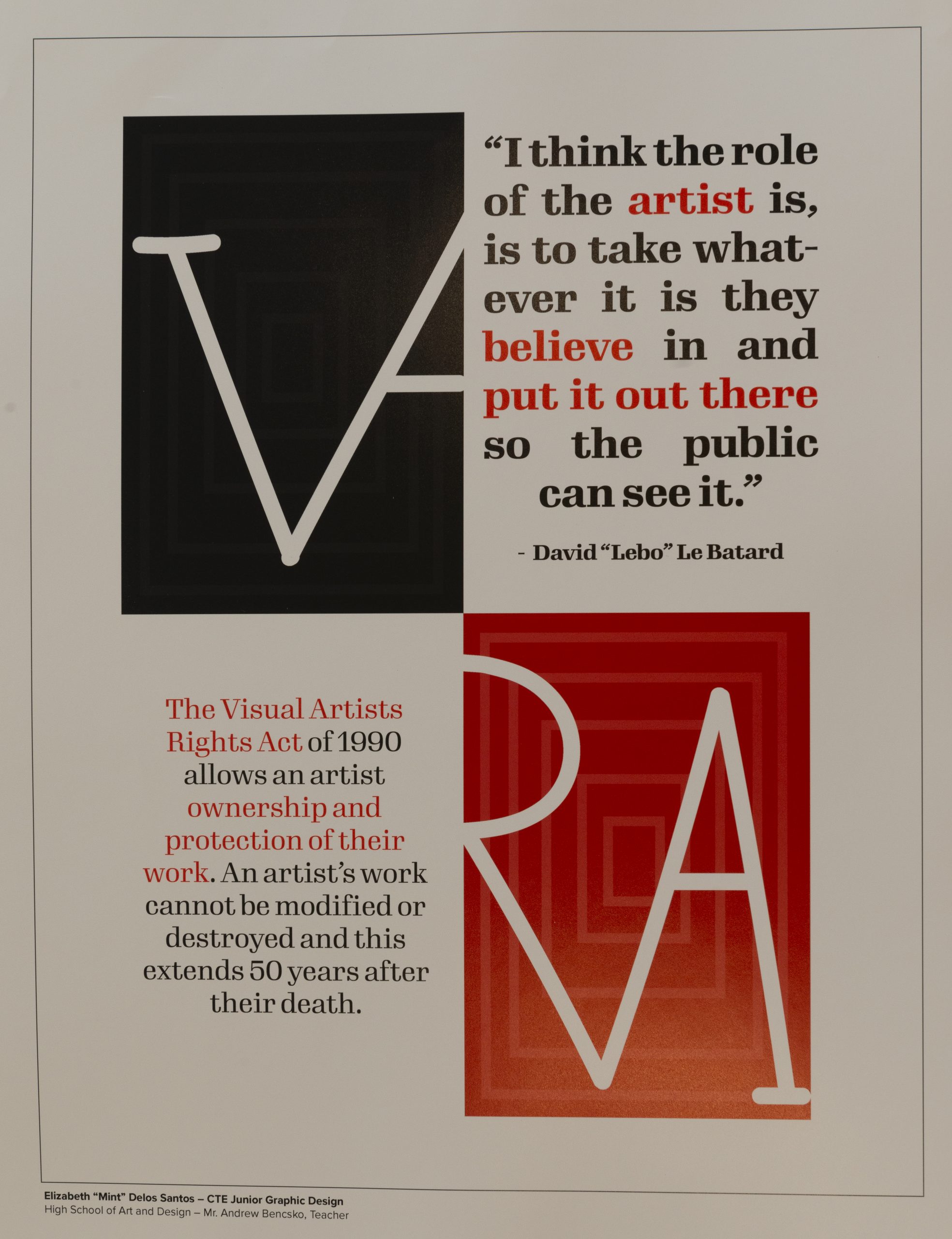
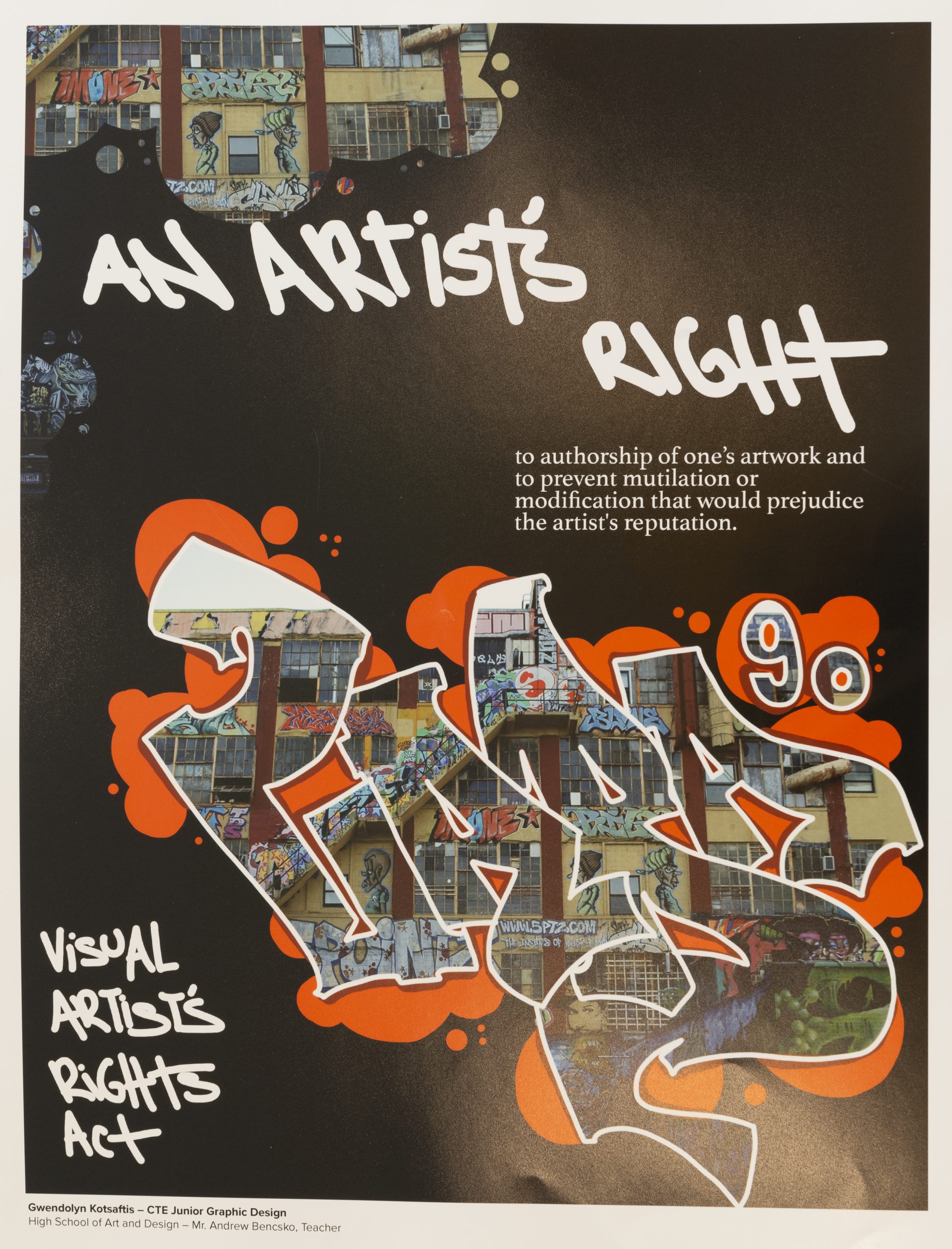
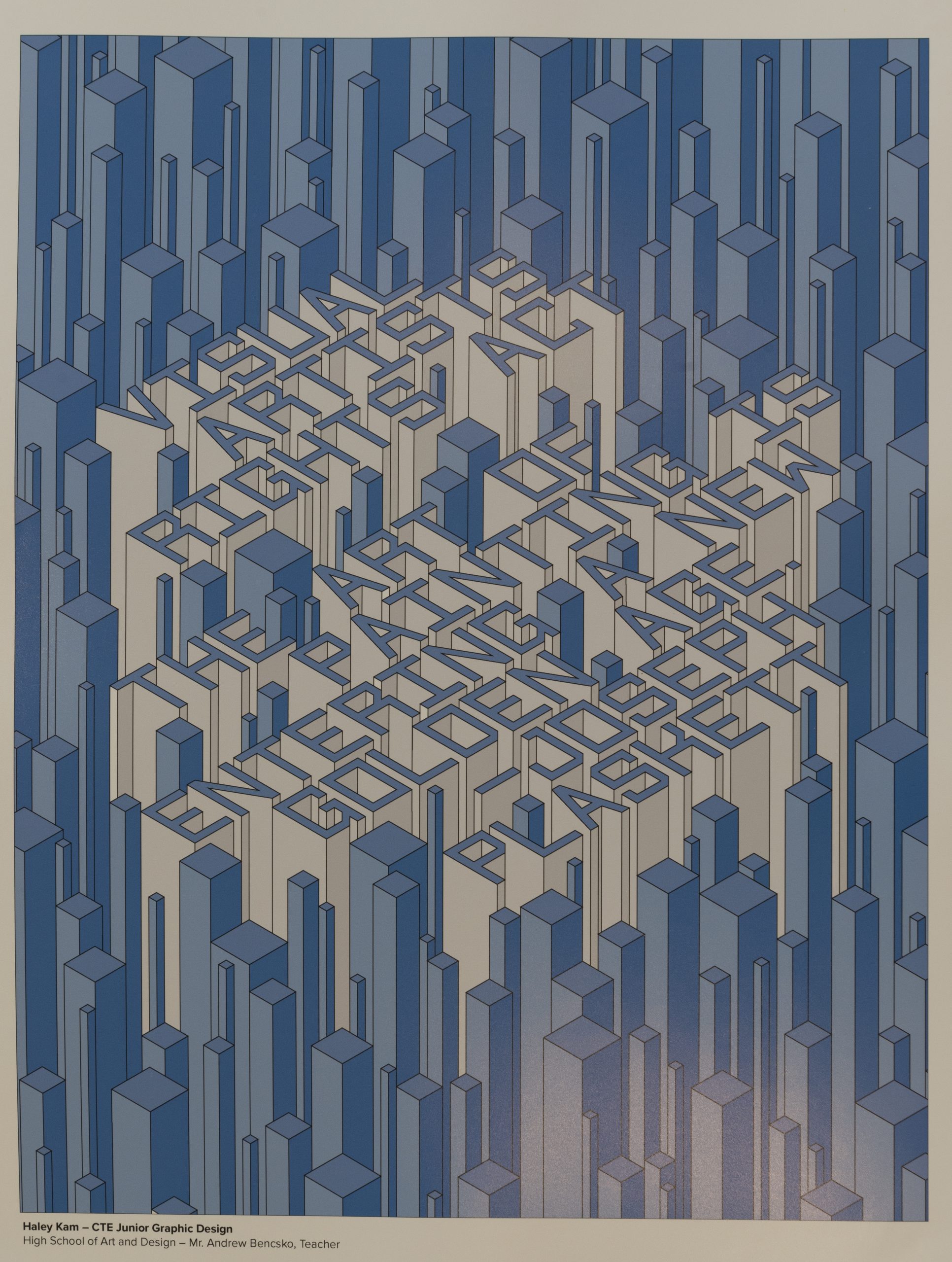
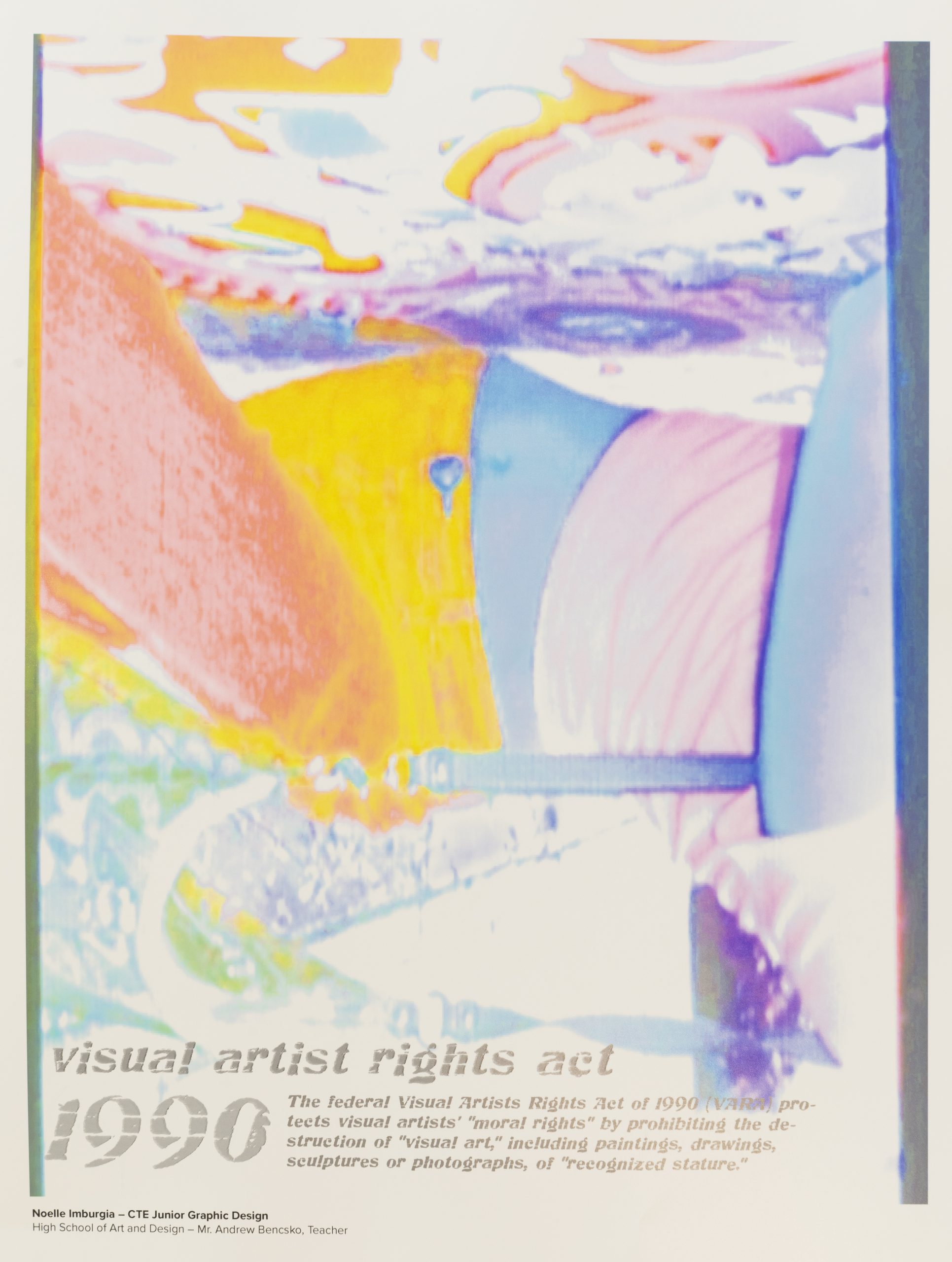
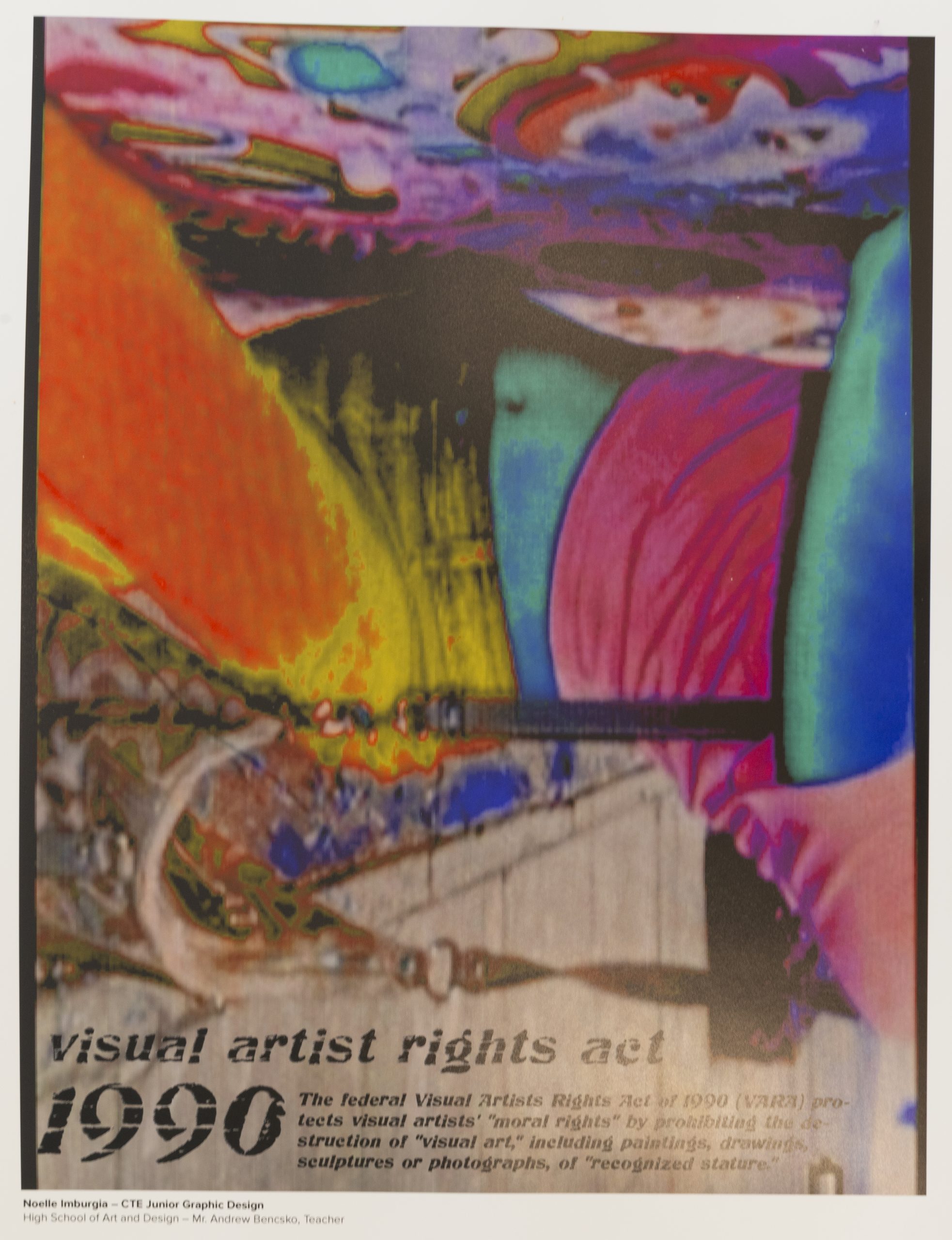
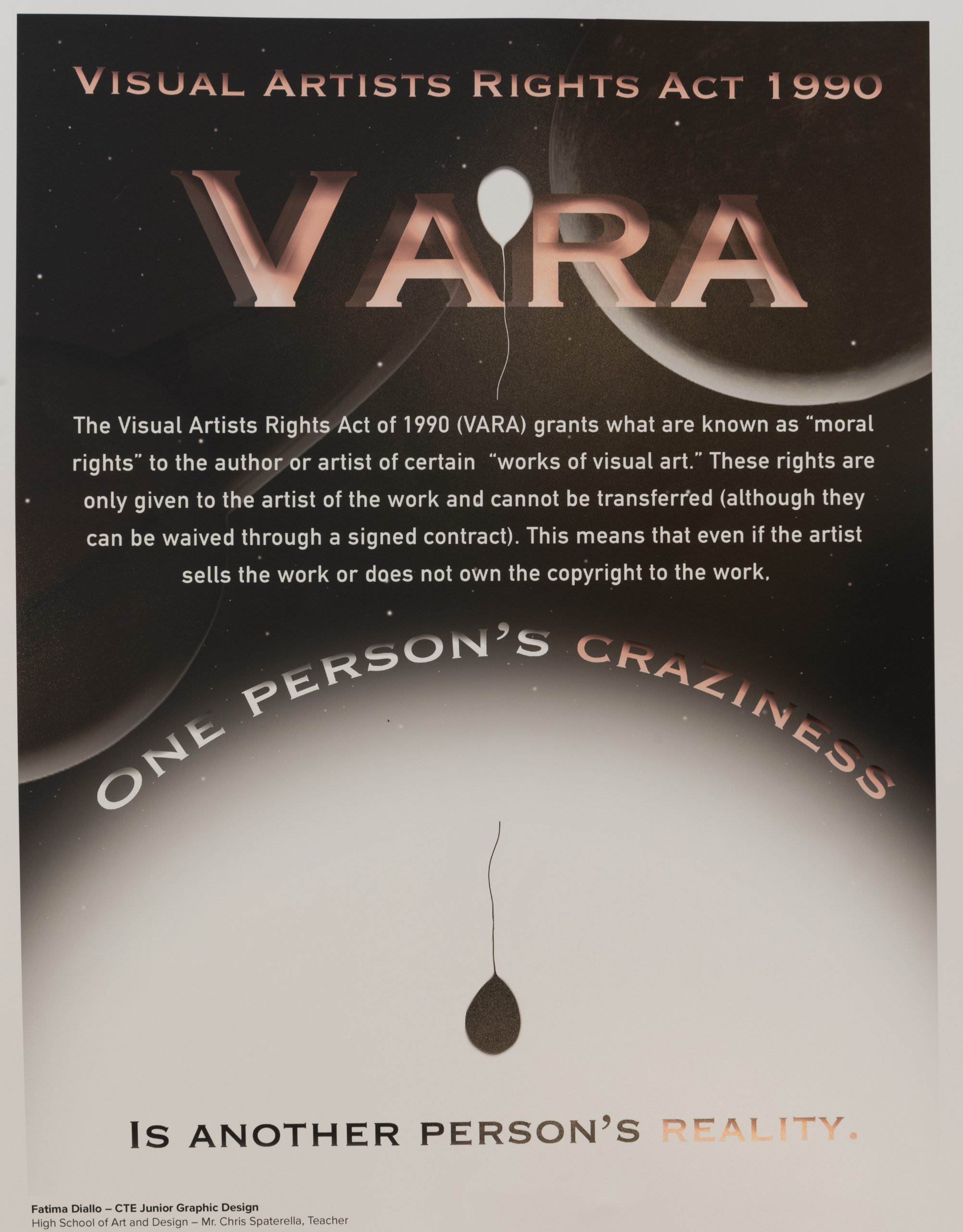
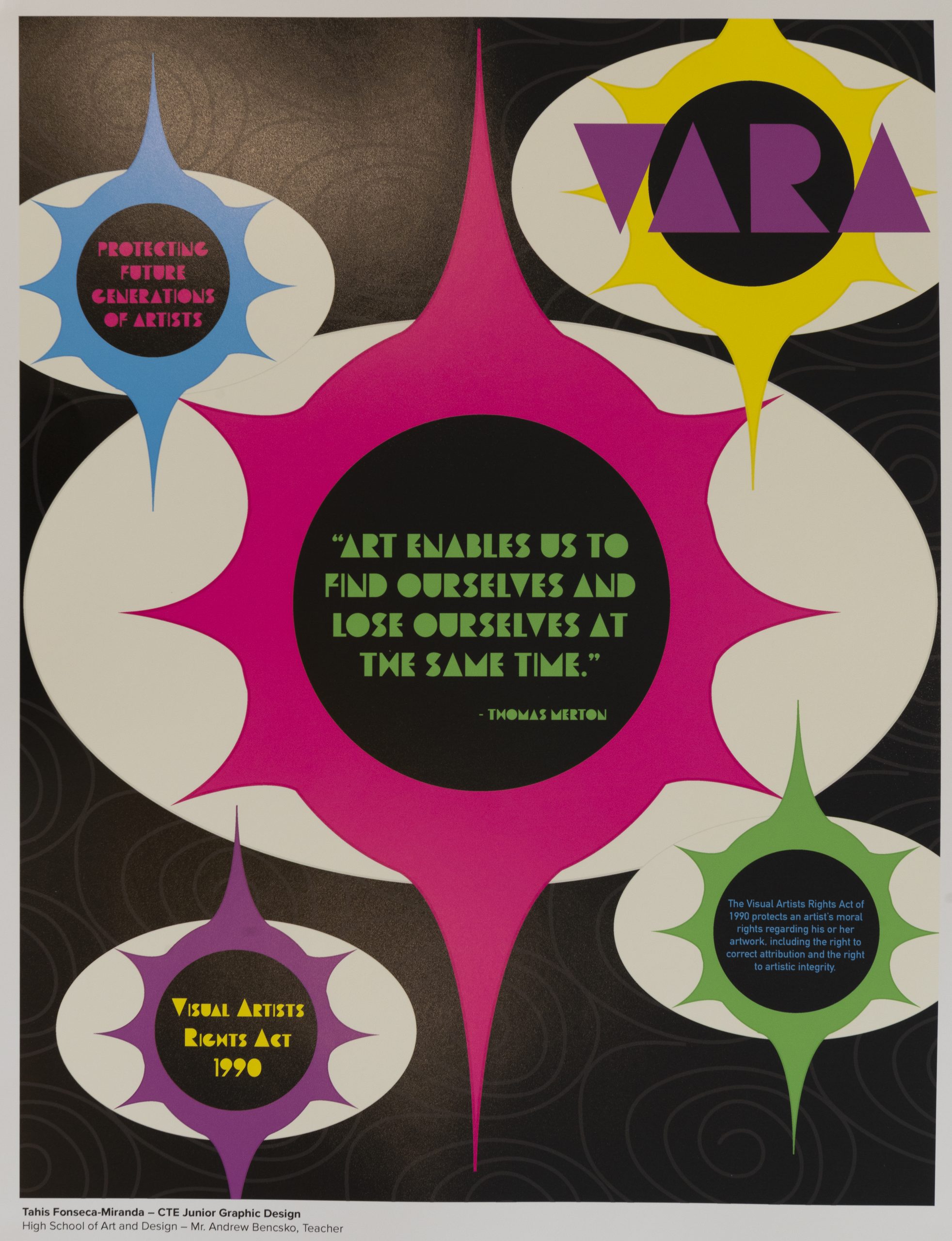
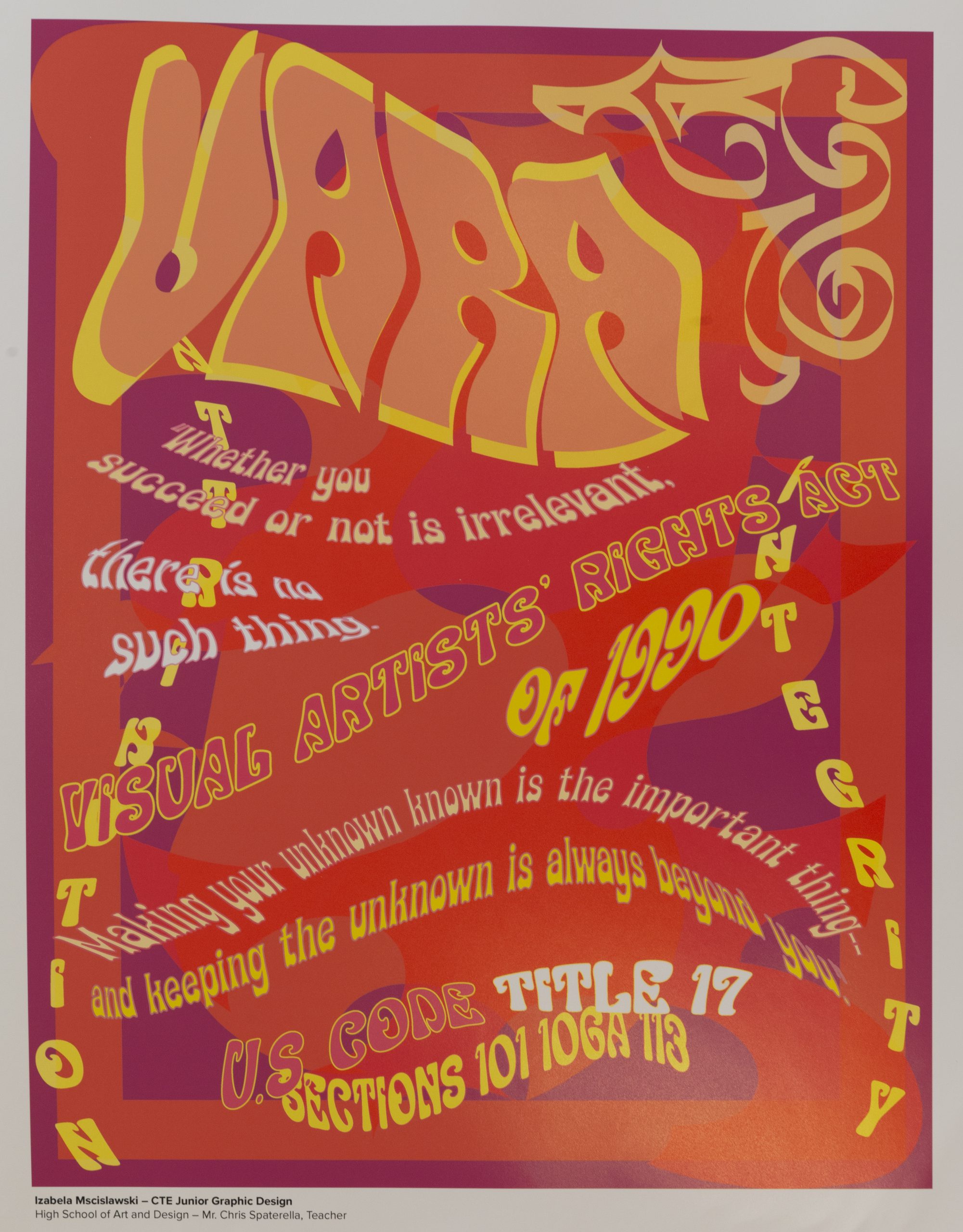
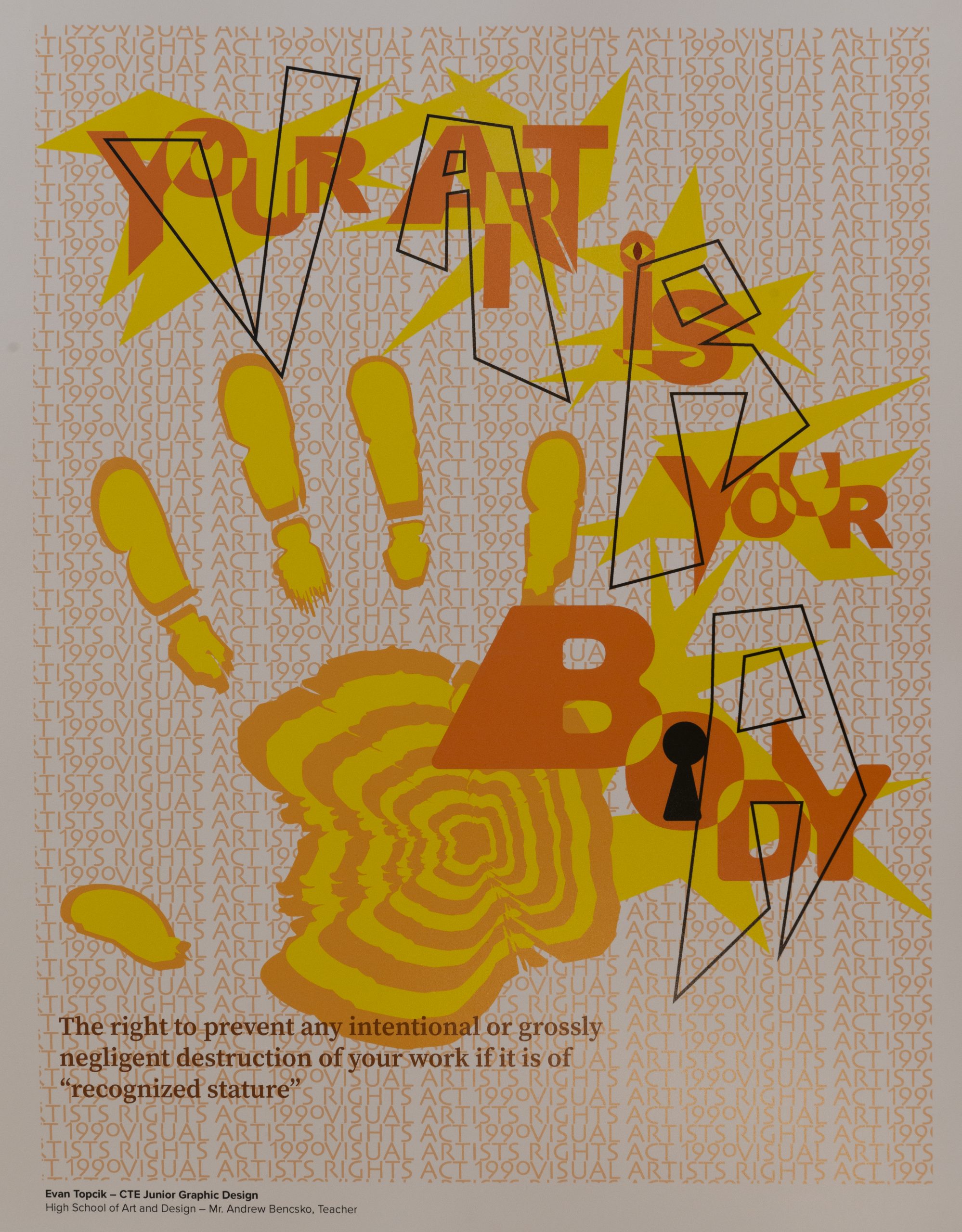
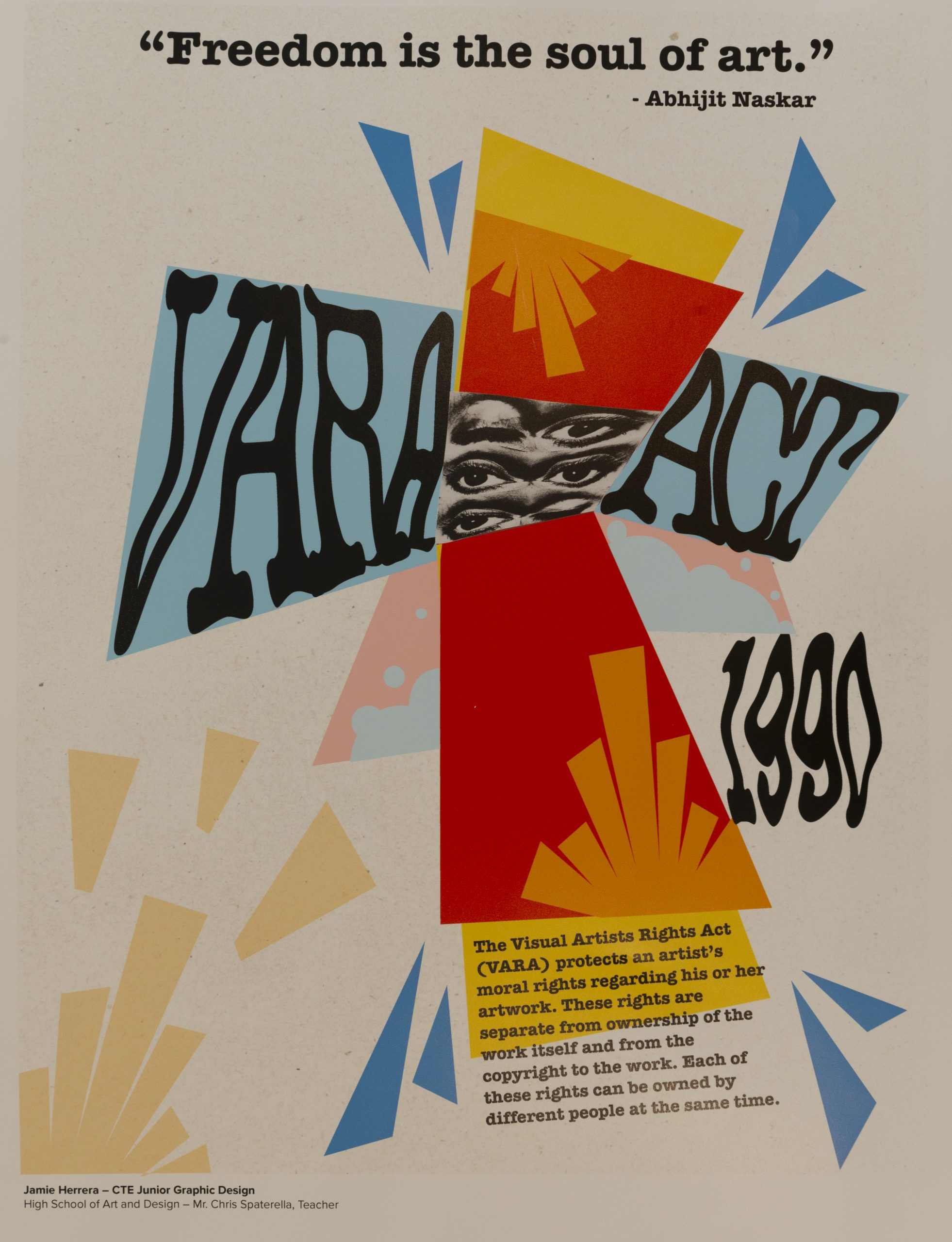
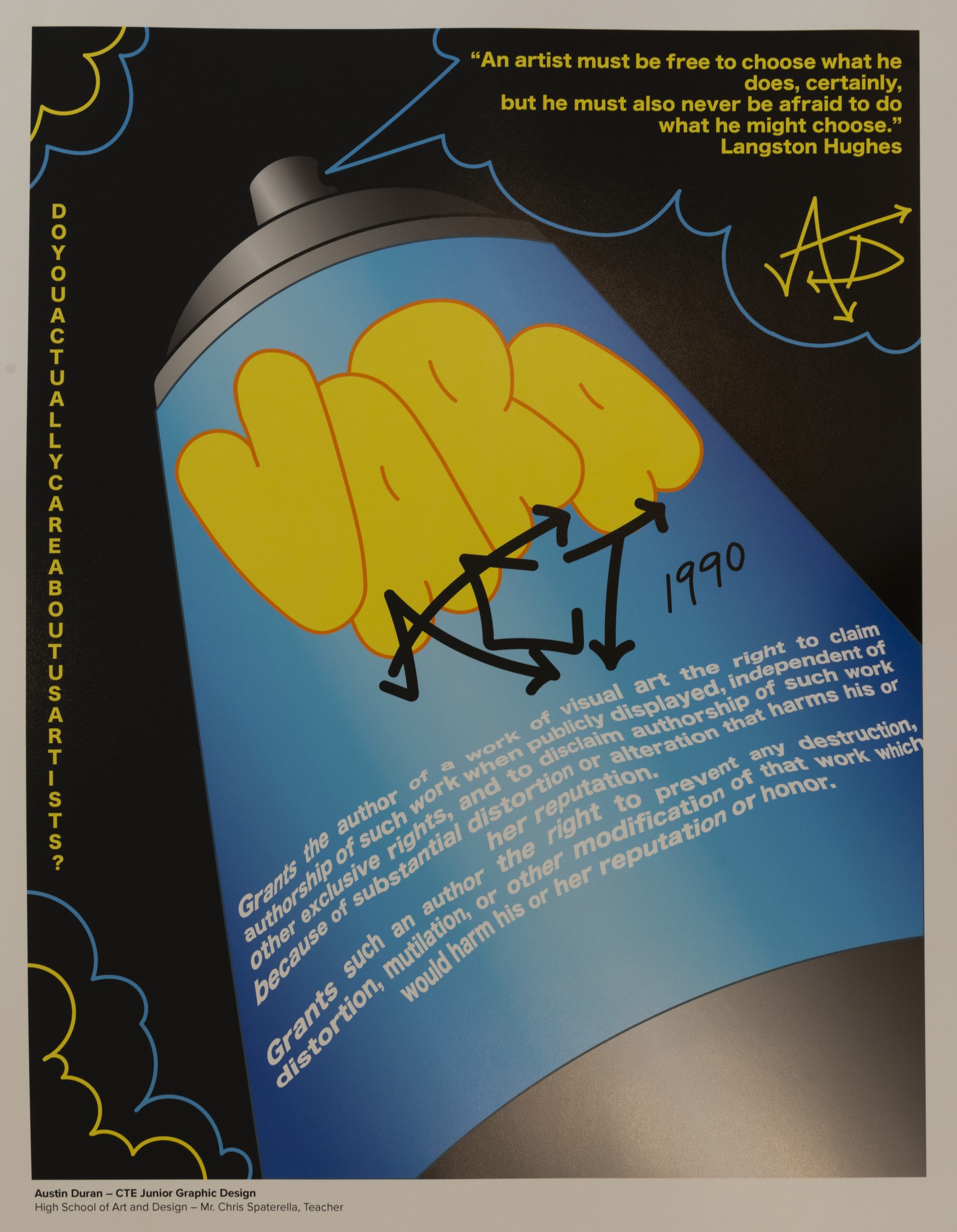
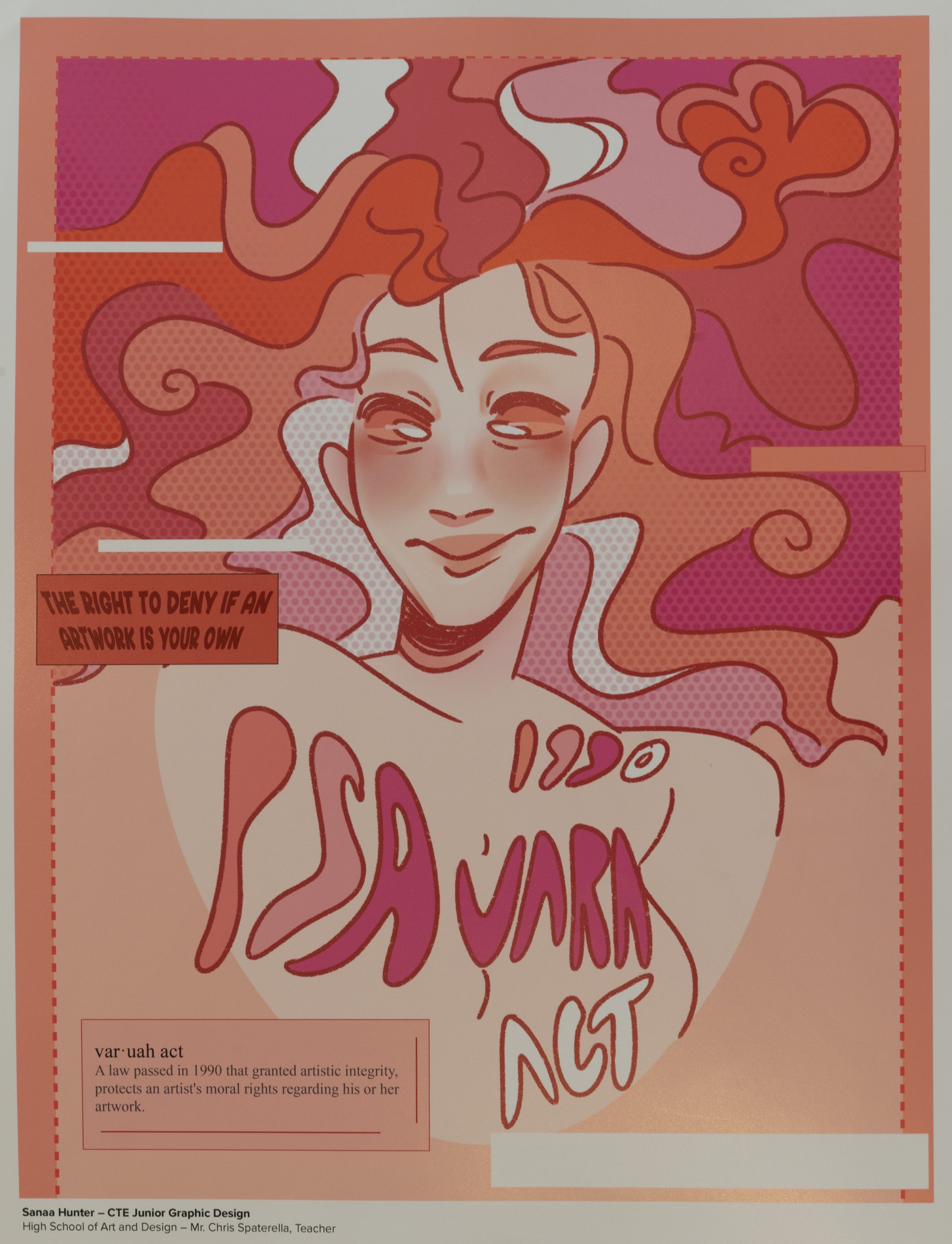
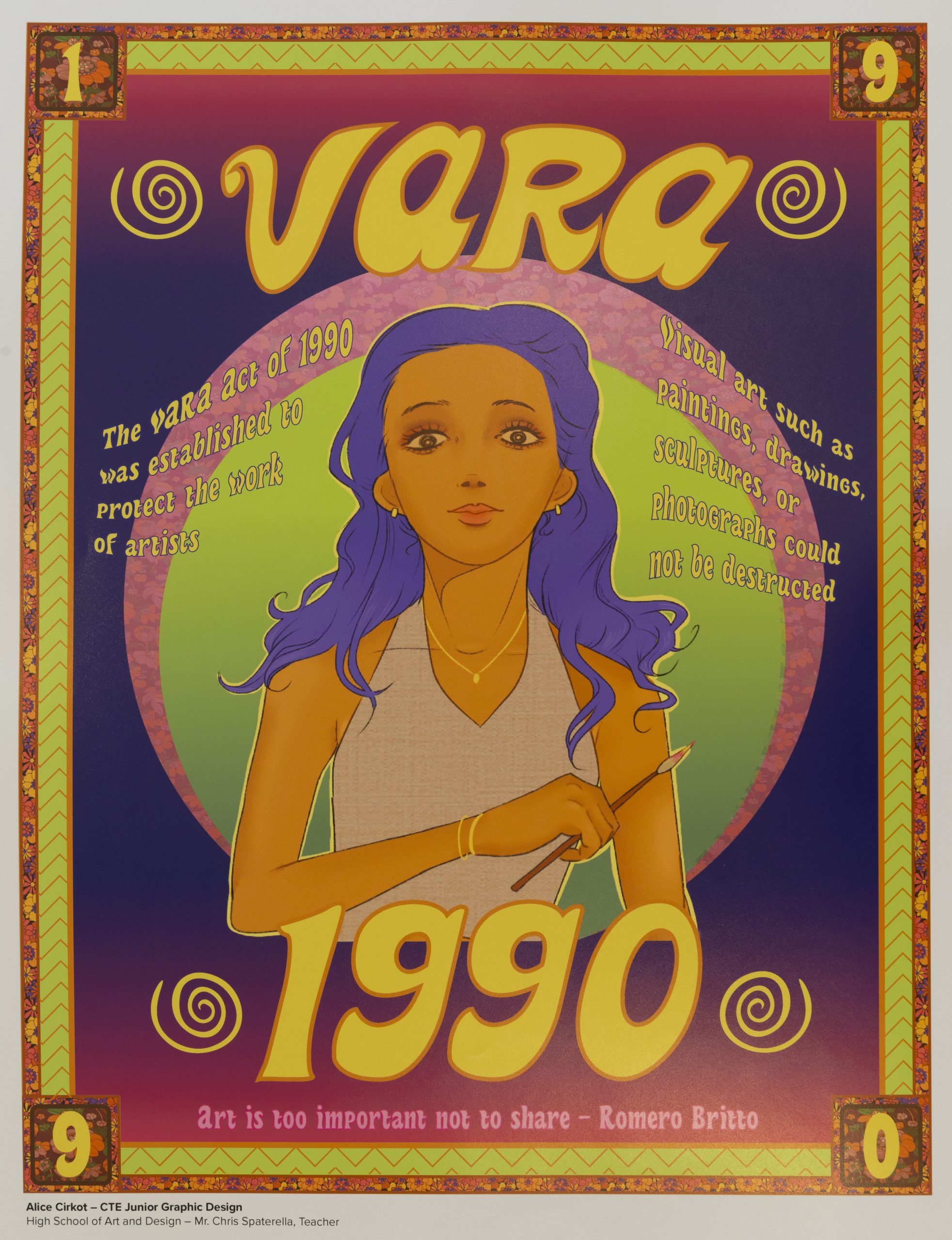
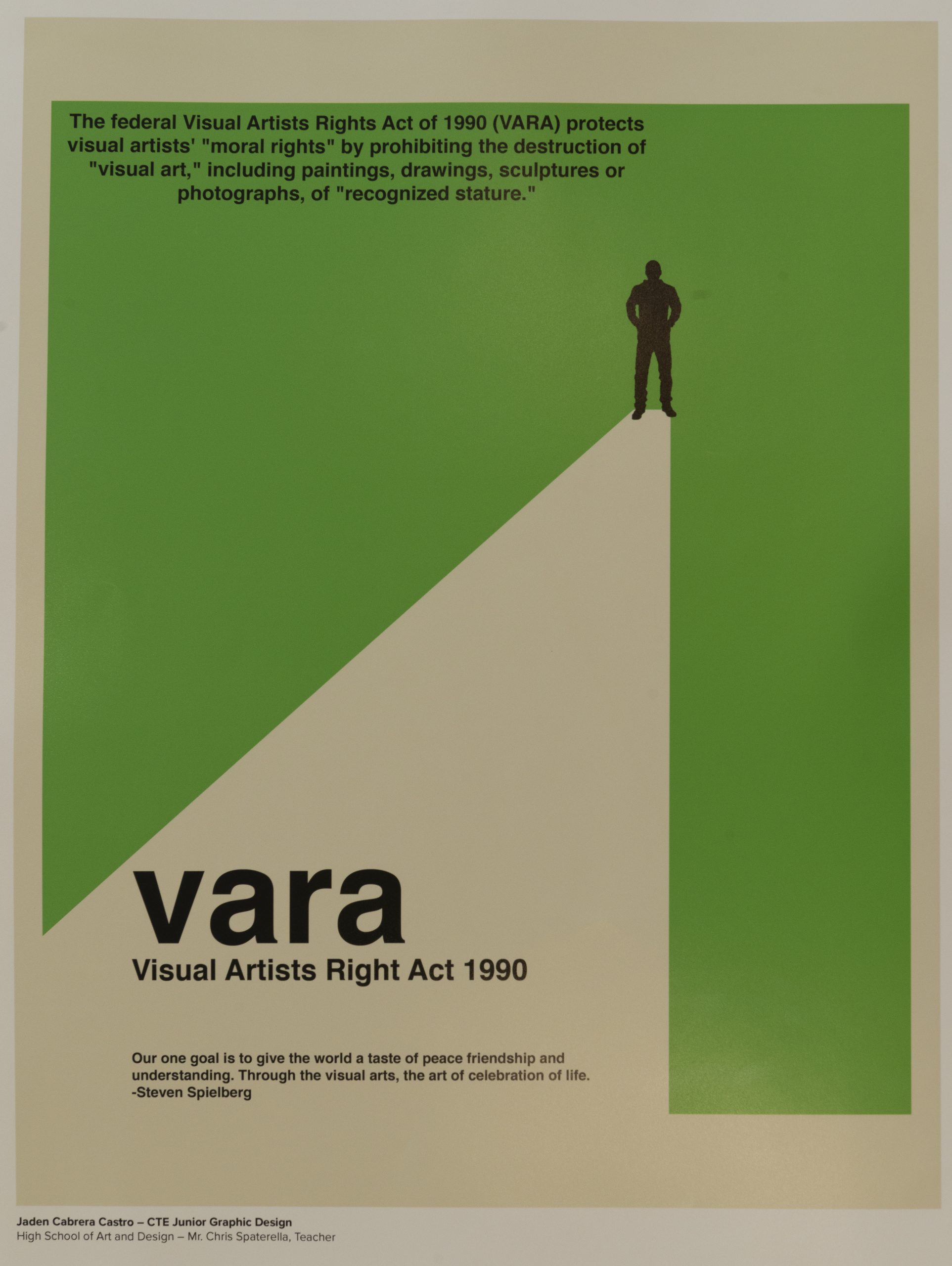
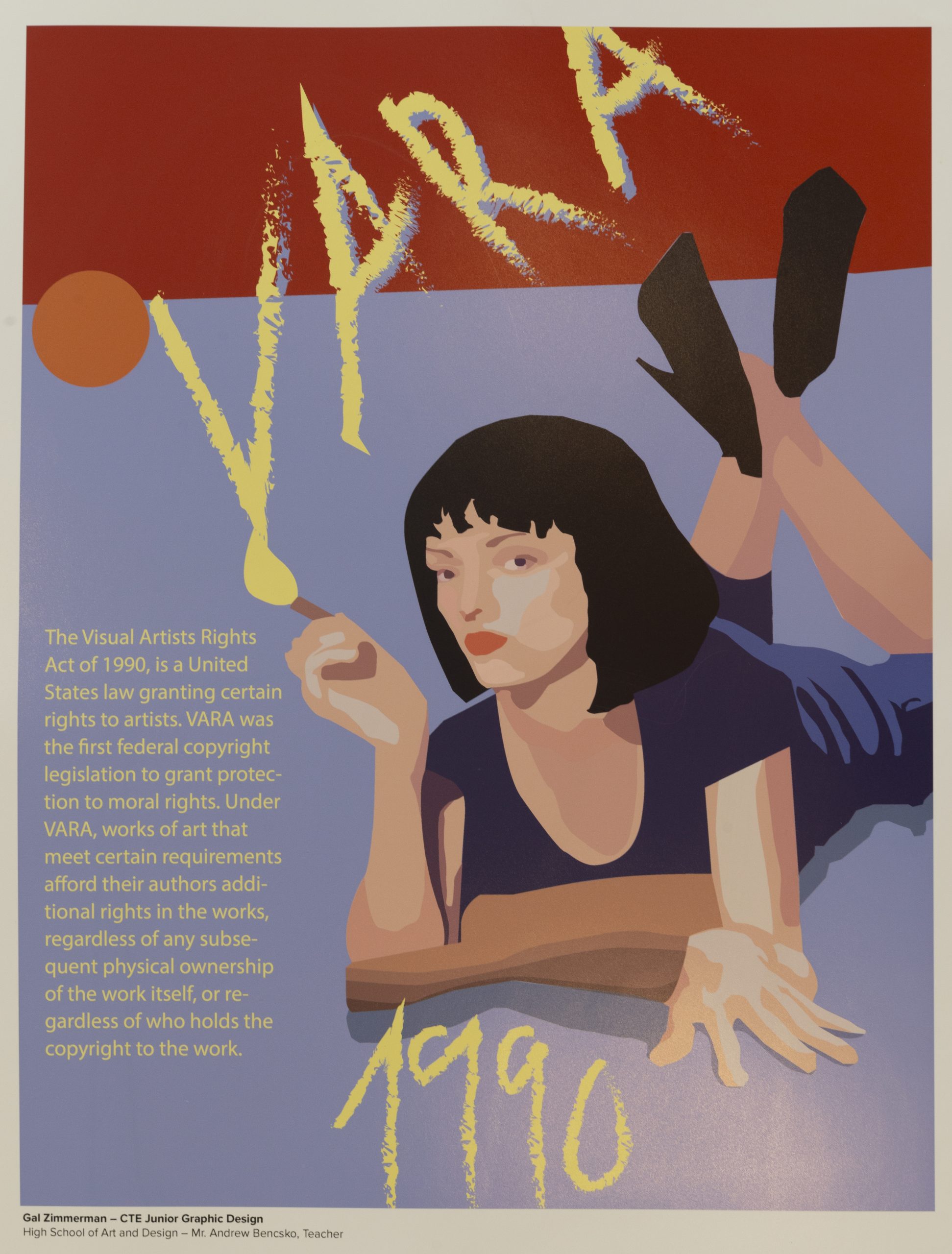
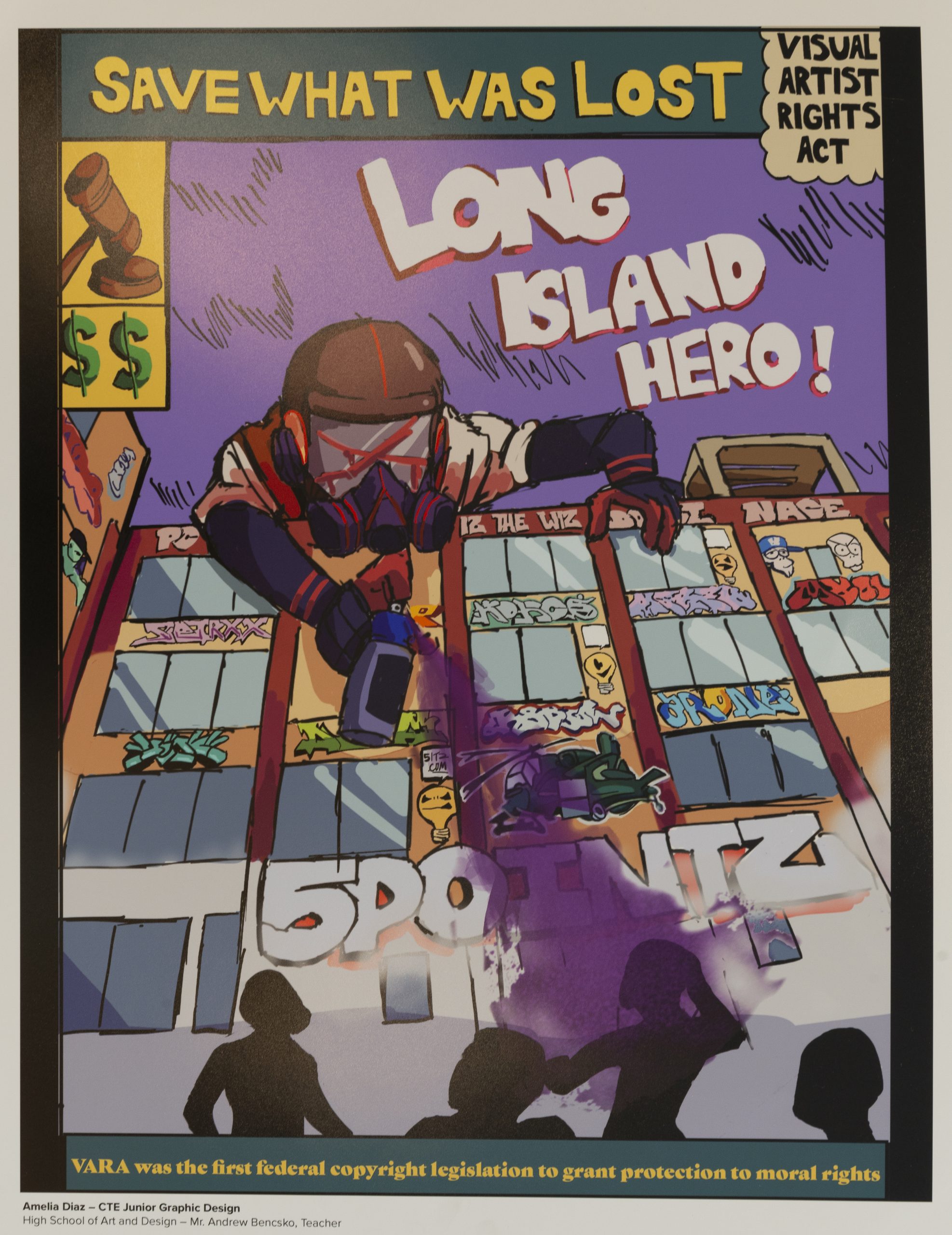
Project Title: CELEBRATING THE VISUAL ARTISTS RIGHTS ACT (VARA) OF 1990
Teacher: Adam Gordon
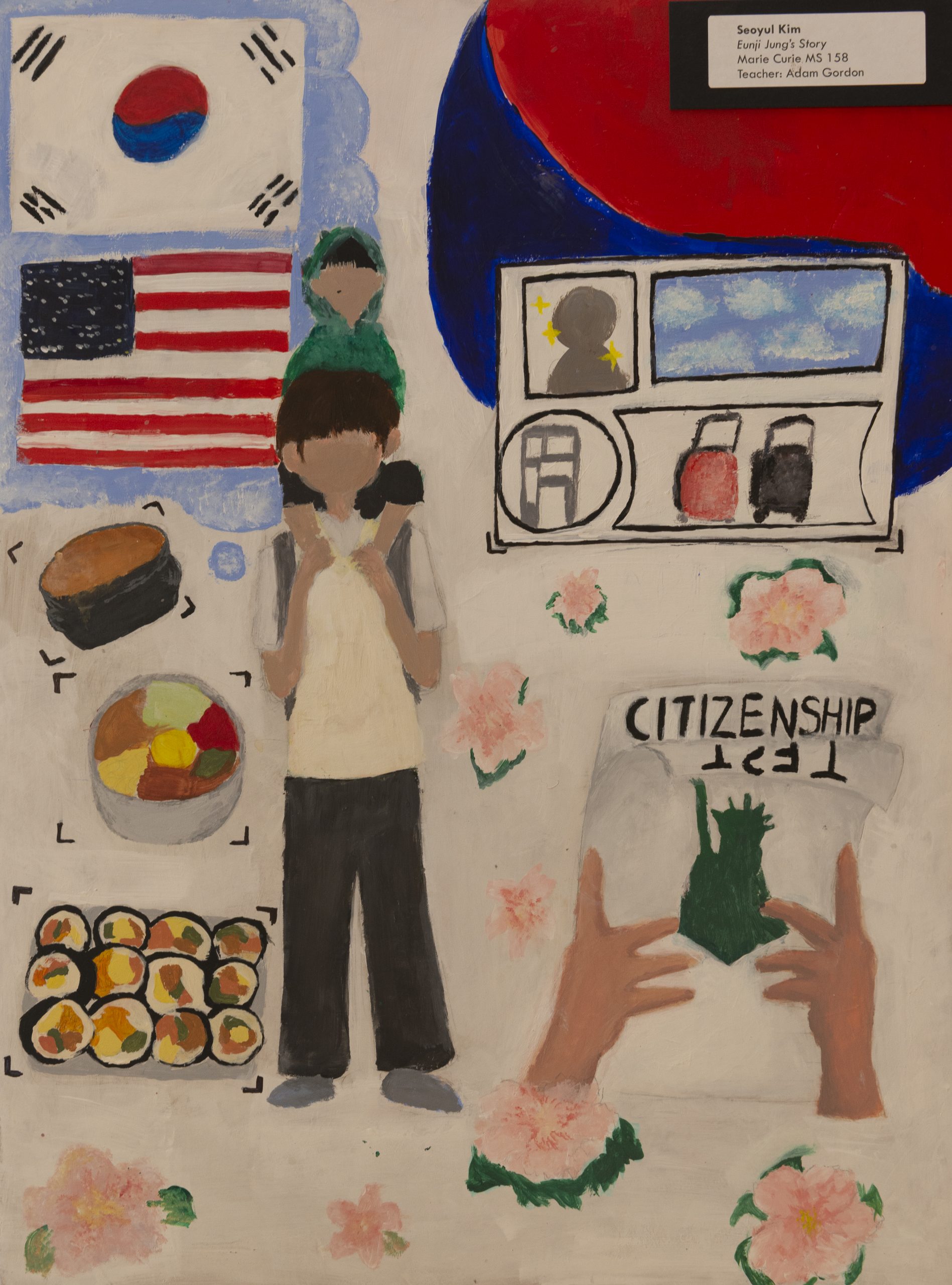
Project Title: OUR STORIES, OUR JOURNEYS
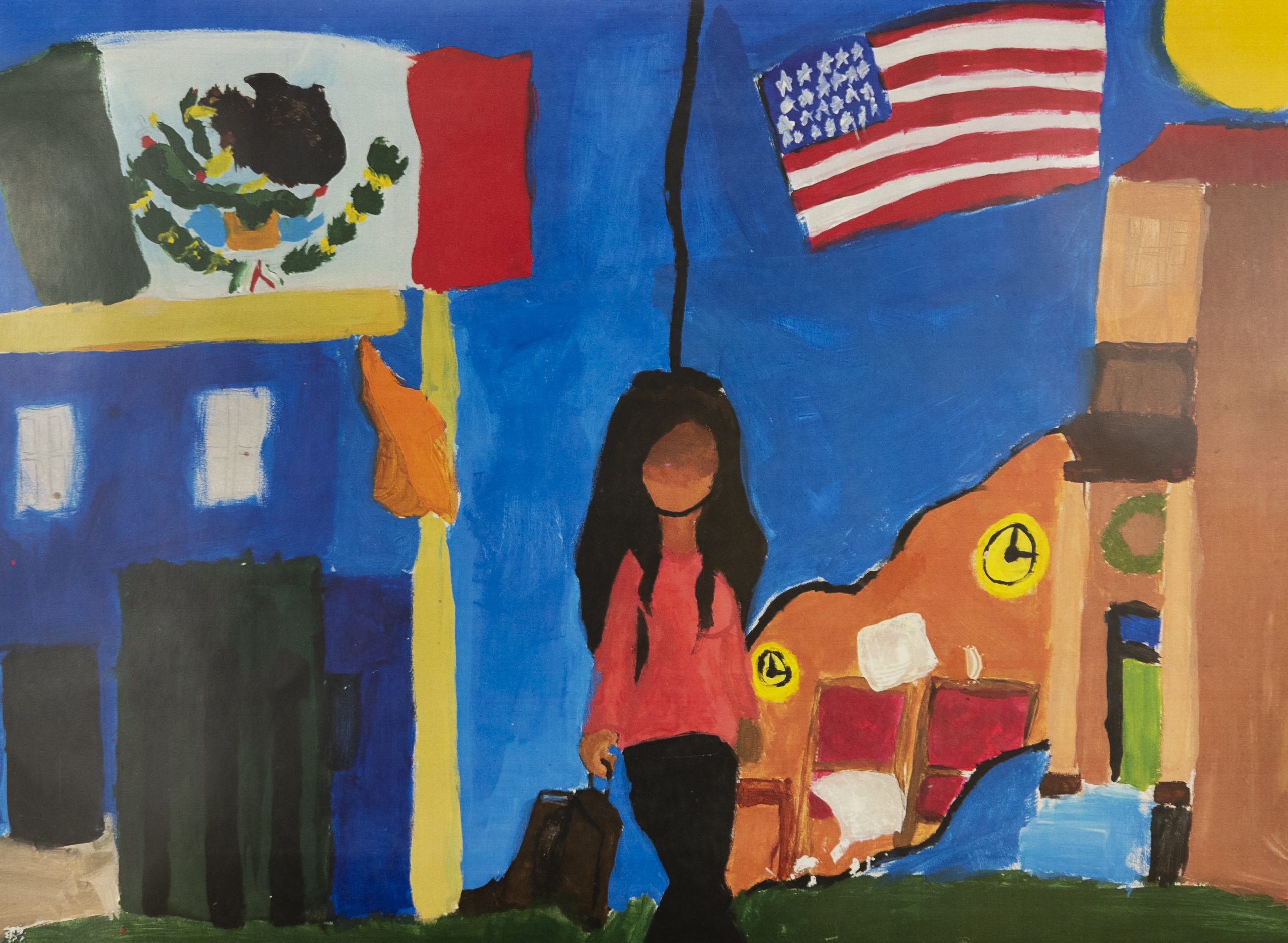
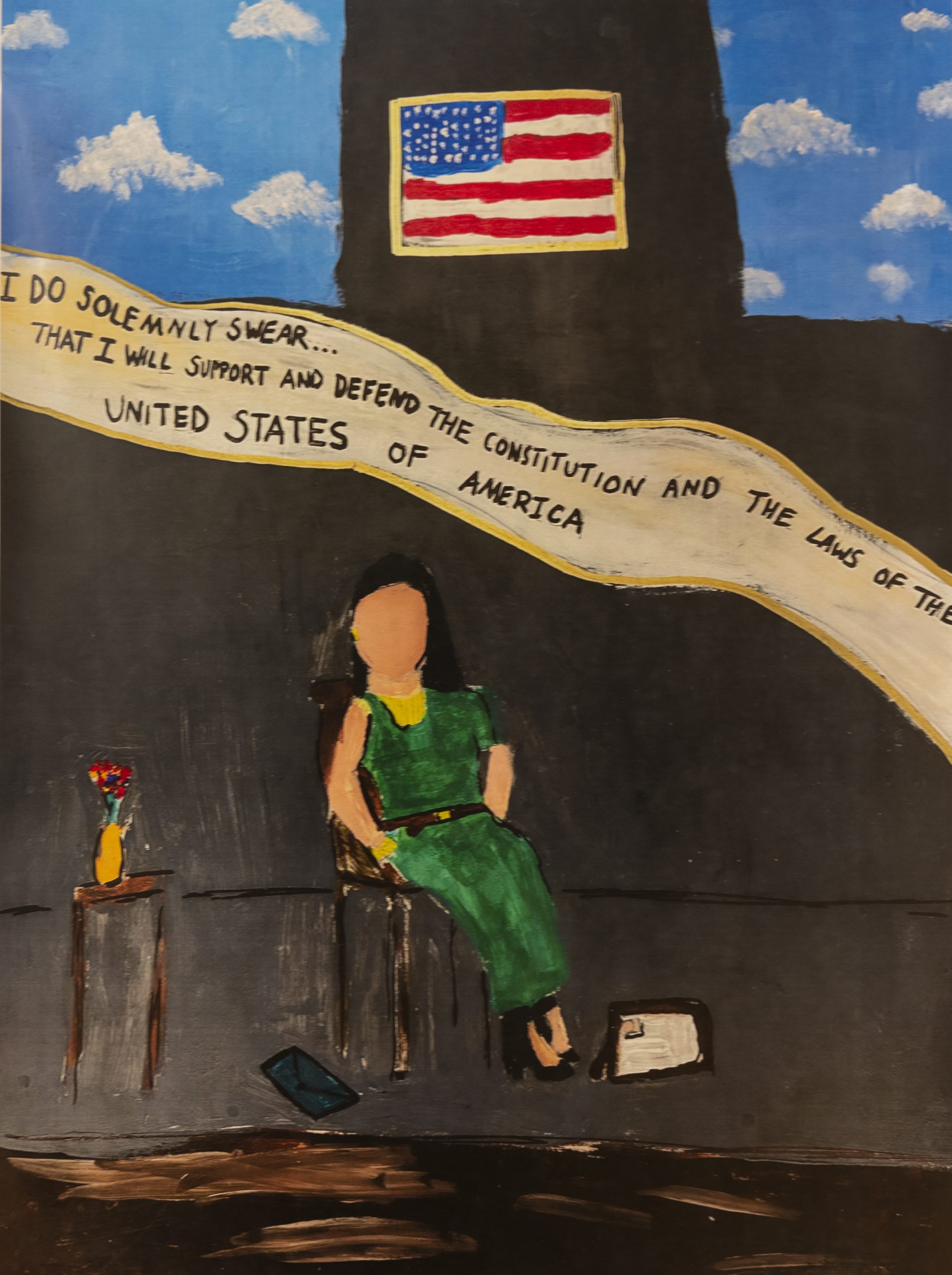
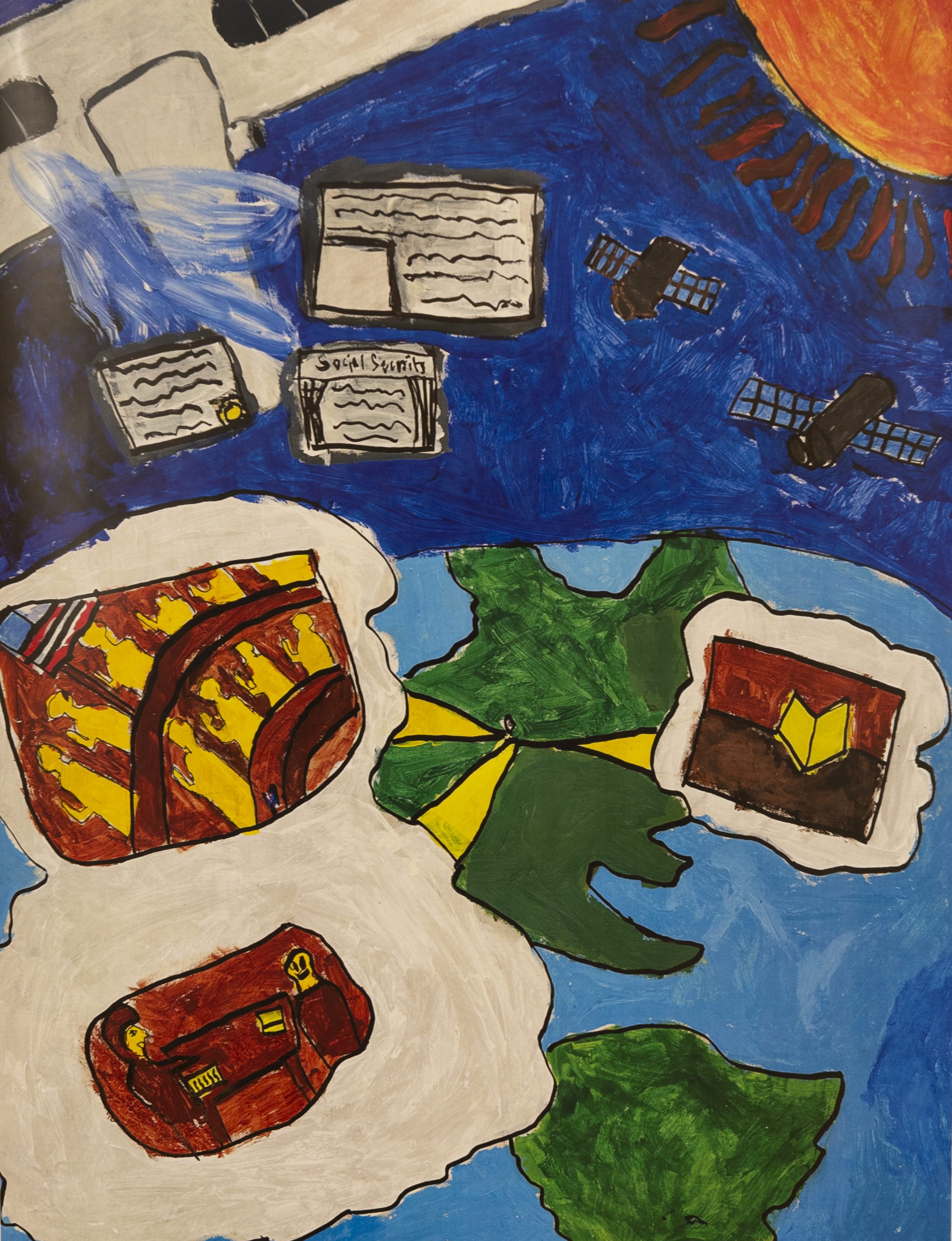
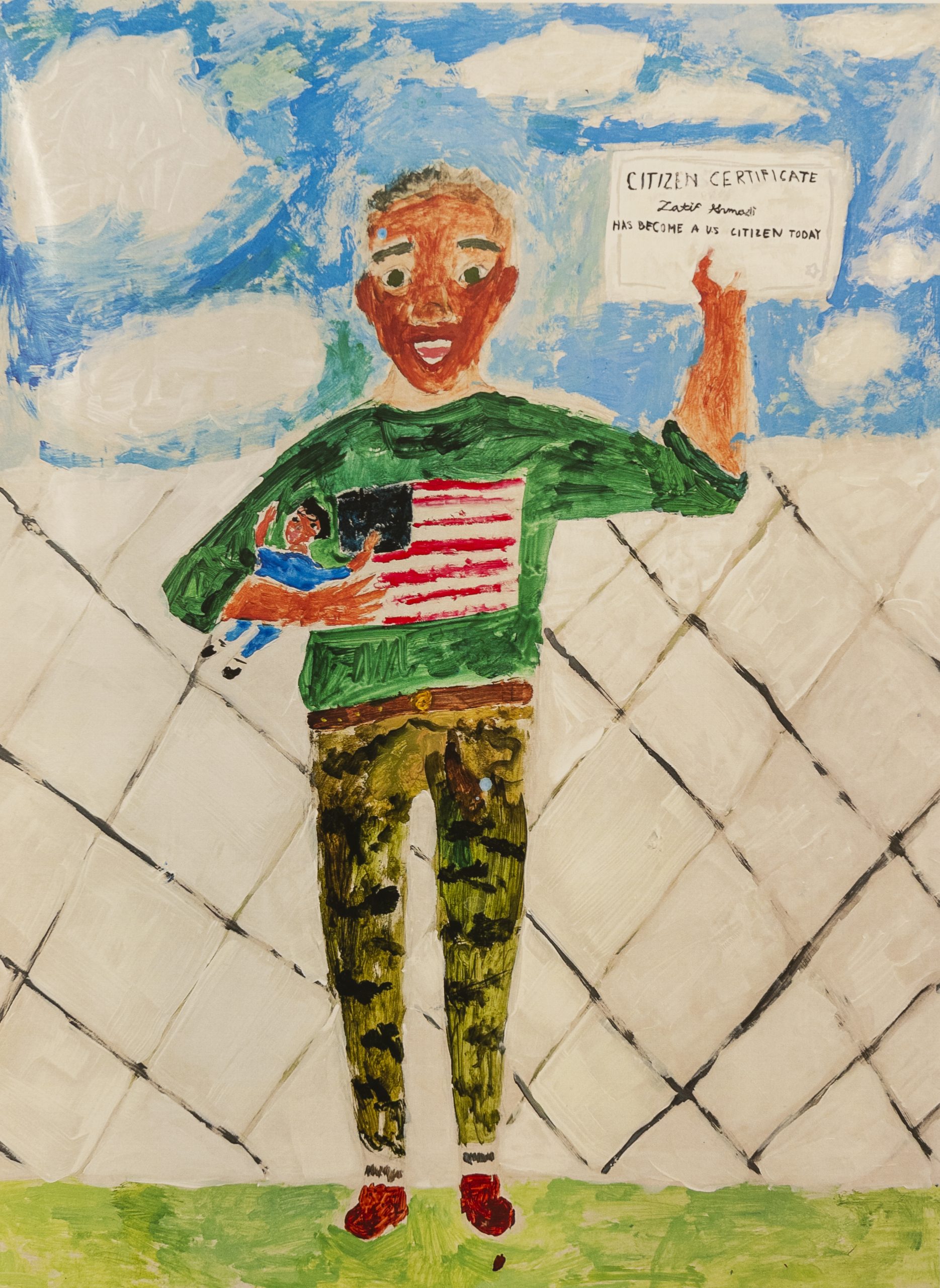
Teacher: Michael Young
Project Title: DESIGNING THE JUDICIARY
 ADDRESS:
 EMAIL
EMAIL TELEPHONE